-

Please note: the start time for this event has been moved from 3:00 to 3:15pm.

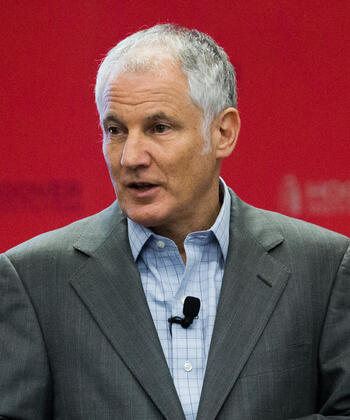
Join FSI Director Michael McFaul in conversation with Richard Stengel, Under Secretary of State for Public Diplomacy and Public Affairs. They will address the role of entrepreneurship in creating stable, prosperous societies around the world.

Richard Stengel Undersecretary of State for Public Diplomacy and Public Affairs Special Guest United States Department of State
Moderator
Panel Discussions
-
Flyer for the 2026 Oksenberg Conference, titled "Coping with a Less Predictable United States," including an image of President Trump board Air Force One.

The content, consistency, and predictability of U.S. policy shaped the global order for eight decades, but these lodestars of geopolitics and geoeconomics can no longer be taken for granted. What comes next will be determined by the ambitions and actions of major powers and other international actors.

Some have predicted that China can and will reshape the global order. But does it want to? If so, what will it seek to preserve, reform, or replace? Choices made by China and other regional states will hinge on their perceptions of future U.S. behavior — whether they deem it more prudent to retain key attributes of the U.S.-built order, with America playing a different role, than to move toward an untested and likely contested alternative — and how they prioritize their own interests.

This year’s Oksenberg Conference will examine how China and other Indo-Pacific actors read the geopolitical landscape, set priorities, and devise strategies to shape the regional order amid uncertainty about U.S. policy and the future of global governance.
 

PANEL 1 

China’s Perceptions and Possible Responses 


Moderator 

Thomas Fingar 
Shorenstein APARC Fellow, Freeman Spogli Institute for International Studies, Stanford University 

Panelists 

Da Wei 
Professor and Director, Center for International Security and Strategy, Tsinghua University 

Mark Lambert 
Retired U.S. Department of State Official, Formerly China Coordinator and Deputy Assistant Secretary 

Susan Shirk 
Research Professor, School of Global Policy and Strategy, University of California San Diego 


PANEL 2 
Other Asia-Pacific Regional Actors’ Perceptions and Policy Calculations 


Moderator 

Laura Stone 
Retired U.S. Ambassador and Career Foreign Service Officer; Inaugural China Policy Fellow at APARC, Stanford University 

Panelists

Victor Cha 
Distinguished University Professor, D.S. Song-KF Chair, and Professor of Government, Georgetown University 

Katherine Monahan 
Visiting Scholar and Japan Program Fellow 2025-2026, APARC, Stanford University 

Kathryn Stoner 
Satre Family Senior Fellow, Freeman Spogli Institute for International Studies, Stanford University 

Emily Tallo 
Postdoctoral Fellow, Center for International Security and Cooperation, Stanford University 

Thomas Fingar, Laura Stone
Victor Cha, Da Wei, Mark Lambert, Katherine Monahan, Susan Shirk, Kathryn Stoner, Emily Tallo
Symposiums
Date Label
News Type
Blogs
Date
Paragraphs

The world’s health systems face a complex and interconnected set of challenges that threaten to outpace our capacity to respond. Geopolitical fragmentation, climatic breakdown, technological disruption, pandemic threats, and misinformation have converged to strain the foundations of global health.  Building resilient global health systems requires five urgent reforms: sharpening the mandate of the World Health Organization (WHO), operationalizing the One Health concept, modernizing procurement, addressing the climate–health nexus, and mobilizing innovative financing. Together, these shifts can move the world from fragmented, reactive crisis management to proactive, equitable, and sustainable health security.

Emerging and Escalating Threats

While the global community demonstrated remarkable resilience in weathering the COVID-19 pandemic, the crisis also exposed profound structural weaknesses in global health governance and architecture. Chronic underinvestment in health systems led to coverage gaps, workforce shortages, and inadequate surveillance systems. The pandemic also revealed a fragmented global health architecture, plagued by institutional silos among key agencies (Elnaiem et al. 2023).

Years later, the aftershocks of the pandemic still resonate worldwide, with the ongoing triple burden of disease—the unfinished agenda of maternal and child health, the rising silent pandemic of noncommunicable diseases, and the reemergence of communicable diseases. These challenges, combined with the persistent challenge of malnutrition, unmet needs in early childhood development, growing concerns around mental health, and the threat of other emerging diseases, as well as the rising toll of trauma, injury, and aging populations, have placed countries across the world under immense strain. Health systems face acute infrastructure gaps, critical workforce shortages, and persistent inequities in service delivery, making it increasingly difficult to address the complex and evolving health needs of their populations. Post-pandemic fiscal tightening has constrained health budgets with debt-to-GDP ratios exceeding 70–80% in parts of the region (UN ESCAP 2023).

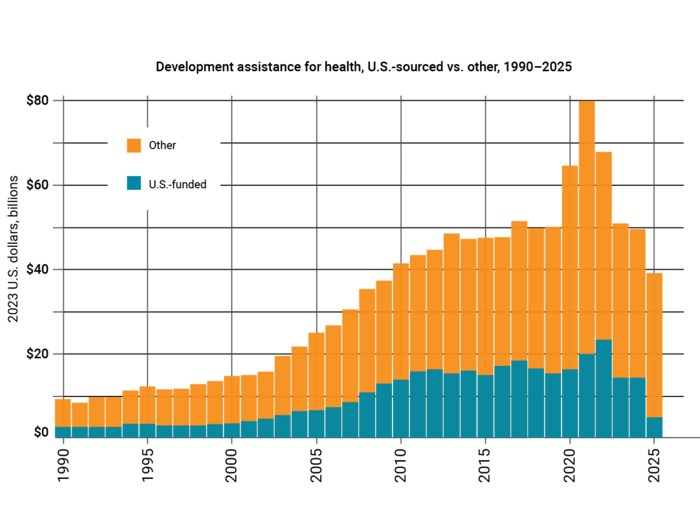
Global development assistance for health has significantly declined by more than $10 billion, with sharp cuts driven by the United States. This decline is likely to continue over the next five years.

 Furthermore, climate change is fundamentally redefining the risk landscape. Rising temperatures, more frequent floods, intensifying storms, and shifting vector ranges for organisms like mosquitoes and ticks are disrupting food systems, displacing populations, and driving new patterns of disease transmission. Over the next 25 years in low- and middle-income countries, climate change could cause over 15 million excess deaths, and economic losses related to health risks from climate change could surpass $20.8 trillion (World Bank 2024). The cost of inaction has never been higher.

Meanwhile, deepening political polarization is amplifying conflict and weakening the global cooperation essential for scientific progress. The number of geopolitical disturbances worldwide is at an all-time high, displacing over 122 million people and eroding access to essential health services (UNHCR 2024). In 2023, false and conspiratorial health claims amassed over 4 billion views across digital platforms, compromising vaccine uptake and fueling health-related conspiracy theories. (Kisa and Kisa 2025). Furthermore, exponential technological advances in artificial intelligence are outpacing public health governance systems, creating new ethical and equity dilemmas. Global development assistance for health has significantly declined by more than $10 billion, with sharp cuts driven by the United States. This decline is likely to continue over the next five years (Institute for Health Metrics and Evaluation 2025).

Image
Graph showing total development assistance for health, 1990-2025
Note: Development assistance for health is measured in 2023 real US dollars; 2025 data are preliminary estimates.
Source: Institute for Health Metrics and Evaluation 2025.
 

Sign up for APARC newsletters to receive our experts' updates >


Five Critical Reform Directions for Future-Proofing Global Health Systems


1.    WHO matters more than ever — but only if it sharpens its focus.

The World Health Organization remains the technical backbone of global health, with a mandate to set norms and standards, shape research agendas, monitor health trends, coordinate emergency responses and regulation, and provide technical assistance. COVID-19 underscored both its indispensability and its limitations. During the pandemic, WHO convened states, disseminated guidance, and spearheaded initiatives like the Solidarity Trial and COVAX to promote vaccine equity, illustrating why it remains vital as the only neutral platform where 194 member states can cooperate on pandemics, antimicrobial resistance, or climate-related health risks. Its work on universal health coverage, the “triple burden” of disease, and global health data continues to anchor policy across countries.

At the same time, the crisis exposed structural weaknesses: WHO lacks enforcement authority, relies heavily on voluntary donor-driven funding, and sometimes stretches beyond its comparative strengths. When it shifts from convening and technical guidance into direct fund management, logistics, or large-scale program delivery, it risks diluting its mandate and eroding trust. Critics argue this reflects a broader challenge of an expansive mandate and donor-driven mission creep, pushing WHO beyond what 7,000 staff and a modest budget can realistically deliver. The way forward lies in sharpening focus: leveraging its convening power and legitimacy, providing technical expertise and evidence-based guidance, coordinating emergencies under the International Health Regulations, and advocating for equity in access to medicines and care. Anchored in these core strengths, a more agile WHO can better lead during crises, sustain credibility, and ensure that global health standards are consistently applied across diverse national contexts.

2.    Animal Health as the Next Frontier

More than 70 percent of emerging infectious diseases are zoonotic in origin, with roughly three-quarters of newly detected pathogens in recent decades spilling over from animals into humans (WHO 2022; Jones, Patel, Levy, et al. 2008). The economic costs are staggering: the World Bank estimates that zoonotic outbreaks have cost the global economy over $120 billion between 1997 and 2009 through crises such as Nipah, SARS, H5N1, and H1N1 (World Bank 2012). The drivers of spillover are intensifying due to deforestation and land-use change, industrial livestock farming, wildlife trade, and climate change. These are further accelerating the emergence of novel pathogens. 

However, the governance of animal health remains fragmented. While WHO, the Food and Agriculture Organization (FAO), and the World Organization for Animal Health (WOAH) each hold mandates, they often operate in silos. The Quadripartite, expanded in 2021 to include the United Nations Environment Programme, launched a One Health Joint Plan of Action (2022–26), but it remains underfunded and lacks strong political commitment. 

There is an urgent need to move One Health from principle to practice. To fill this governance gap, the world should consider establishing an independent intergovernmental alliance for animal health with a clear mandate. This could strengthen global One Health response by augmenting joint surveillance, building veterinary workforce capacity, and integrating environmental data into early warning systems. Such an alliance should avoid creating new bureaucratic layers and instead leverage the Quadripartite as its operational backbone. Embedding One Health into national health strategies and cross-sectoral policies would enable animal, human, and environmental health systems to work in tandem and address risks at their source. Preventive investments are also very cost-effective; the World Bank estimates that annual One Health prevention investments of $10–11 billion could save multiple times that amount in avoided pandemic losses (World Bank 2012). Strengthening One Health is both a health and economic necessity. 

COVID-19 revealed how vital procurement and financial management are to global health security [...] Reform must begin by making procurement agile, transparent, and equitable.

3.    Agile Procurement: The Missing Link in Global Health Security

COVID-19 revealed how vital procurement and financial management are to global health security. A system built for routine procurement was suddenly called upon to handle crisis response on a worldwide scale, and it struggled to keep up. When vaccines became available, strict procedures, fragmented supply chains, and export restrictions meant access was uneven and often delayed. Developed countries’ advance purchase agreements stockpiled most of the supply, leaving many low- and middle-income countries waiting for doses. Within the UN system and its partners, overly complex procurement rules slowed the speed to market, and the lack of harmonized regulatory recognition caused further delays. As a result, those least able to handle shocks faced the longest waits and highest costs.

Reform must begin by making procurement agile, transparent, and equitable. Emergency playbooks should be pre-cleared to ensure that indemnity clauses and quality assurance requirements can be activated immediately when the next crisis arises. Regional pooled procurement mechanisms, like the Pan American Health Organization’s Revolving Fund or the African Union’s pooled initiatives, should be expanded to diversify supply sources and anchor distributed manufacturing. End-to-end e-procurement platforms would provide real-time shipment tracking, facility-level stock visibility, and open dashboards to strengthen accountability. Financial management must be integrated with procurement so that contingency funds, countercyclical reserves, and fast-disbursing credit lines can release resources in tandem with purchase orders. Together, these reforms would ensure that in future health emergencies, these procurement systems act as lifelines rather than bottlenecks.

4.    Addressing the Health–Climate Nexus

Climate change poses severe health risks, disproportionately affecting women and vulnerable populations in developing countries through heatwaves, poor air quality, food and water insecurity, and the spread of infectious diseases. Climate-related disasters are increasing in frequency and severity worldwide, reshaping both economies and health systems. In 2022, there were 308 climate-related disasters worldwide, ranging from floods and storms to droughts and wildfires (ADRC 2022). These events generated an estimated $270 billion in overall economic losses, with only about $120 billion insured—underscoring the disproportionate burden on low- and middle-income countries where resilience and coverage remain limited (Munich Re 2023). Over the past two decades, Asia and the Pacific have consistently been the most disaster-prone regions, accounting for nearly 40% of all global events, but every continent is now affected, from prolonged droughts in Africa and mega storms in North America to record-breaking heatwaves in Europe (UNEP n.d.).

Meeting this challenge requires a dual agenda of adaptation and mitigation. Health systems must be made climate-resilient by hardening infrastructure against floods and storms, ensuring reliable, clean energy in clinics and hospitals, and building climate-informed surveillance and early-warning systems that can anticipate disease outbreaks linked to environmental change. Supply chains need redundancy and flexibility to withstand shocks, and frontline workers require training to manage climate-driven health crises. At the same time, health systems must rapidly decarbonize. This means greening procurement and supply chains, phasing out high-emission medical products like certain inhalers and anesthetic gases, upgrading buildings and transport fleets, and embedding sustainability into financing and governance. Momentum is growing. The 2023 G20 Summit in Delhi, supported by the Asian Development Bank (ADB), recognized the health–climate nexus as a global priority, and institutions such as WHO, the World Bank, and ADB have begun to advance this agenda. The next step is to translate commitments into operational change by embedding climate-health strategies into national health plans, financing frameworks, and cross-sectoral policies. Climate action, sustainability, and resilience need to be integrated into the foundation of health systems.

5.    Mobilizing Innovative Financing

Strengthening health systems and preventing future pandemics will require massive financing, but global health funding is in decline. Innovative mechanisms to mobilize new resources are essential. This requires stronger engagement with finance ministries, development financing institutions, and the private sector to design models that attract and de-risk investment while enabling rapid disbursement during emergencies. International financing institutions (IFIs) need to unlock innovative financial pathways to amplify health investments. They need to deploy blended finance initiatives, public-private partnerships, guarantees, debt swaps, and outcome-based financing tools to mobilize private capital for health. Over the past few years, IFIs have committed billions in health-related financing worldwide. This has included landmark support for vaccine access facilities, delivery of hundreds of millions of COVID-19 vaccine doses, and mobilization of large-scale response packages that combine grants, loans, and technical assistance. 

Embedding health into climate policies and climate resilience into health strategies will ensure that future systems are both sustainable and resilient to shocks.

There is a need to broaden the financing mandate beyond investing in universal health coverage and mobilize capital for emerging areas, including the climate-health nexus, mental health, nutrition, rapid urbanization, demographic shifts, digitization, and non-communicable diseases. By leveraging their balance sheets, IFIs can generate a multiplier effect in fund mobilization and attract new financing actors. Innovative instruments are already demonstrating potential. For example, the International Finance Facility for Immunisation (IFFIm), which issues “vaccine bonds” backed by donor pledges, has raised over $8 billion for Gavi immunization programs (IFFIm 2022; Moody’s 2024).  Debt-for-health and debt-for-nature swaps have redirected debt service into social outcomes. For example, El Salvador’s 2019 Debt2Health agreement with Germany channeled approximately $11 million into strengthening its health system, while Seychelles’ debt-for-nature swap created SeyCCAT to finance marine conservation, yielding social and resilience co-benefits for coastal communities (Hu, Wang, Zhou, et al. 2024). Similarly, contingent financing facilities—such as the Innovative Finance Facility for Climate in Asia and the Pacific (IF-CAP) and the International Financing Facility for Education (IFFEd)—also hold significant potential for health (IFFEd n.d.; ADB n.d.).  These examples demonstrate how contingent financing and swaps can expand fiscal space without exacerbating debt distress.

This can create a virtuous cycle of facilitating investments that create regional cooperation for sustainable and scalable impact. In this vein, the G20 Pandemic Fund is a beacon of catalytic multilateralism funding in a fragmented world. Launched in 2022 with over $2 billion pooled from governments, philanthropies, and multilaterals, it strengthens pandemic preparedness in low- and middle-income countries. Every $1 awarded from the Pandemic Fund has mobilized an estimated $7 in additional financing. The fund demonstrates that nations can still unite around shared threats, offering hope and a template for collective action on global challenges.

Equally important is the ability to deploy funds rapidly in emergencies. During the COVID-19 pandemic, reserve and countercyclical funds, used by countries such as Germany, the Netherlands, and Lithuania, along with the Multilateral Development Bank’s fast-track financing facilities with streamlined approval and disbursement processes, provided urgent and timely financing support (Sagan, Webb, Azzopardi-Muscat, et al. 2021; Lee and Aboneaaj 2021). These mechanisms should be institutionalized in national financial management systems as well as IFIs to ensure rapid funding disbursement in future health emergencies

Moving Forward

Delivering on this reform agenda requires more than technical fixes—it demands political will, sustained financing, and cross-sectoral collaboration. Member states must empower WHO to lead within its comparative strengths, while reinforcing One Health through stronger mandates and funding. Governments, IFIs, and the private sector should jointly design agile procurement and financing mechanisms that can be activated at speed during crises. Embedding health into climate policies and climate resilience into health strategies will ensure that future systems are both sustainable and resilient to shocks. Above all, reform efforts must be anchored in equity, so that the most vulnerable are protected first.

The opportunity before the global community is to reimagine health as the backbone of resilience and prosperity in the 21st century. A whole-of-systems approach is necessary to clarify mandates, integrate animal and environmental health, develop agile and fair procurement systems, embed climate action into health systems, and mobilize innovative financing. The steps taken in the next few years can lead to a more connected, cooperative, and future-ready global health architecture. 


Works Cited

ADB (Asia Development Bank). n.d. “IF-CAP: innovative Finance Facility for Climate in Asia and the Pacific.”

ADRC (Asian Disaster Reduction Center). Natural Disasters Data Book 2022

Elnaiem, Azza, Olaa Mohamed-Ahmed, Alimuddin Zumla, et al. 2023. “Global and Regional Governance of One Health and Implications for Global Health Security.” The Lancet 401 (10377): 688–704. 

Hu, Yunxuan, Zhebin Wang, Shuduo Zhou, et al. 2024. “Redefining Debt-to-Health, a Triple-Win Health Financing Instrument in Global Health.” Globalization and Health 20 (1): 39. 

Institute for Health Metrics and Evaluation. 2025. “Financing Global Health.” 

IFFEd (International Financing Facility for Education). n.d. “A Generation of Possibilities.” 

IFFIm (International Finance Facility for Immunisation). 2022. “How the World Bank Built Trust in Vaccine Bonds.” October 21. 

Jones, Kate E., Nikkita G. Patel, Marc A. Levy, et al. 2008. “Global Trends in Emerging Infectious Diseases.” Nature 451: 990–93. 

Kisa, Adnan, and Sezer Kisa. 2025. “Health Conspiracy Theories: A Scoping Review of Drivers, Impacts, and Countermeasures.” International Journal for Equity in Health 24 (1): 93.  

Lee, Nancy, and Rakan Aboneaaj. 2021. “MDB COVID-19 Crisis Response: Where Did the Money Go?” CGD Note, Center for Global Development, November. 

Moody’s. 2024. "International Finance Facility for Immunisation—Aa1 Stable” Credit opinion. October 29. 

Munich Re. 2023. “Climate Change and La Niña Driving Losses: The Natural Disaster Figures for 2022.” January 10. 

Sagan, Anna, Erin Webb, Natasha Azzopardi-Muscat, et al. 2021. Health Systems Resilience During COVID-19: Lessons for Building Back Better. World Health Organization and the European Observatory on Health Systems and Policies. 

UN ESCAP (United Nations Economic and Social Commission for Asia and the Pacific). 2023. “Public Debt Dashboard.” 

UNEP (United Nations Environment Programme). n.d. “Building Resilience to Disasters and Conflicts.” Accessed September 1, 2025. 

UNHCR (United Nations High Commissioner for Refugees). 2024. Global Trends Report. Copenhagen, Denmark. 

WHO (World Health Organization). 2022. Zoonoses and the Environment

World Bank. 2012. People, Pathogens and Our Planet: The Economics of One Health.  

World Bank. 2024. The Cost of Inaction: Quantifying the Impact of Climate Change on Health in Low- and Middle-Income Countries. Washington D.C. 

Read More

Two farmers discuss a crop issue; one is referring to a digital tablet.
Blogs

The Green Revolution 2.0

Why We Need to Invest in Agricultural Education Now
The Green Revolution 2.0
A man walks past a bear-like sculpture at Evergrande City Plaza shopping center on September 22, 2021 in Beijing, China.
News

When the Storm Hit: How COVID Exposed China’s Flawed Fiscal System

A co-authored study by a team including Stanford political scientist Jean Oi traces how the Chinese central government’s shifting policies during the COVID pandemic exposed its fiscal fault lines and created a local government liquidity crisis.
When the Storm Hit: How COVID Exposed China’s Flawed Fiscal System
Close-up on coloured medication capsules and a stethoscope on the background of Korean won bills.
News

Spending More, Gaining Less: Lowest-Income Koreans Derive the Least Value from Health Care Investment, New Research Reveals

Despite rising health care spending, adults in South Korea’s lowest-income quintile experience the smallest relative improvement in life expectancy and well-being, according to a new study. The co-authors, including Stanford health economist Karen Eggleston, call for the country’s health policy to prioritize both equity and value, and highlight lessons for other health systems.
Spending More, Gaining Less: Lowest-Income Koreans Derive the Least Value from Health Care Investment, New Research Reveals
Hero Image
In Keny, a doctor administers to an AIDs patient holding her child.
Lab technician Martin Agunda tests a viral load sample from Ruth Gweyi, a mother living with HIV, in Kisumu, Kenya, where U.S. funding cuts to HIV programs strain local health services.
Michel Lunanga/Getty Images
All News button
1
Subtitle

Why Now Is the Time for Fundamental Reform

Date Label
News Type
Blogs
Date
Paragraphs

The world stands at a critical juncture. Today, about 2.3 billion people are living with moderate or severe food insecurity worldwide (FAO, IFAD, UNICEF, WFP and WHO 2024). By 2050, our planet will be home to nearly 10 billion people, requiring at least a 50% increase in food production from 2011 levels (FAO 2017). This challenge is not simply about producing more food. It is about doing so on degraded land, with less water, under extreme weather conditions in the face of climate change. 

The traditional, resource-intensive farming that sustained the global human population for decades is no longer a viable path forward. Reliance on labor inputs and intensive use of resources cannot meet these complex, interconnected challenges. We must transform our agricultural systems into climate-smart, high-tech agriculture—driven by data and Industry 4.0 technologies, such as AI, robotics, remote sensing, and big data. These tools hold the promise of a “quantum leap” in sustainable food productivity. Yet this transformation cannot happen without investing in agricultural education and training.

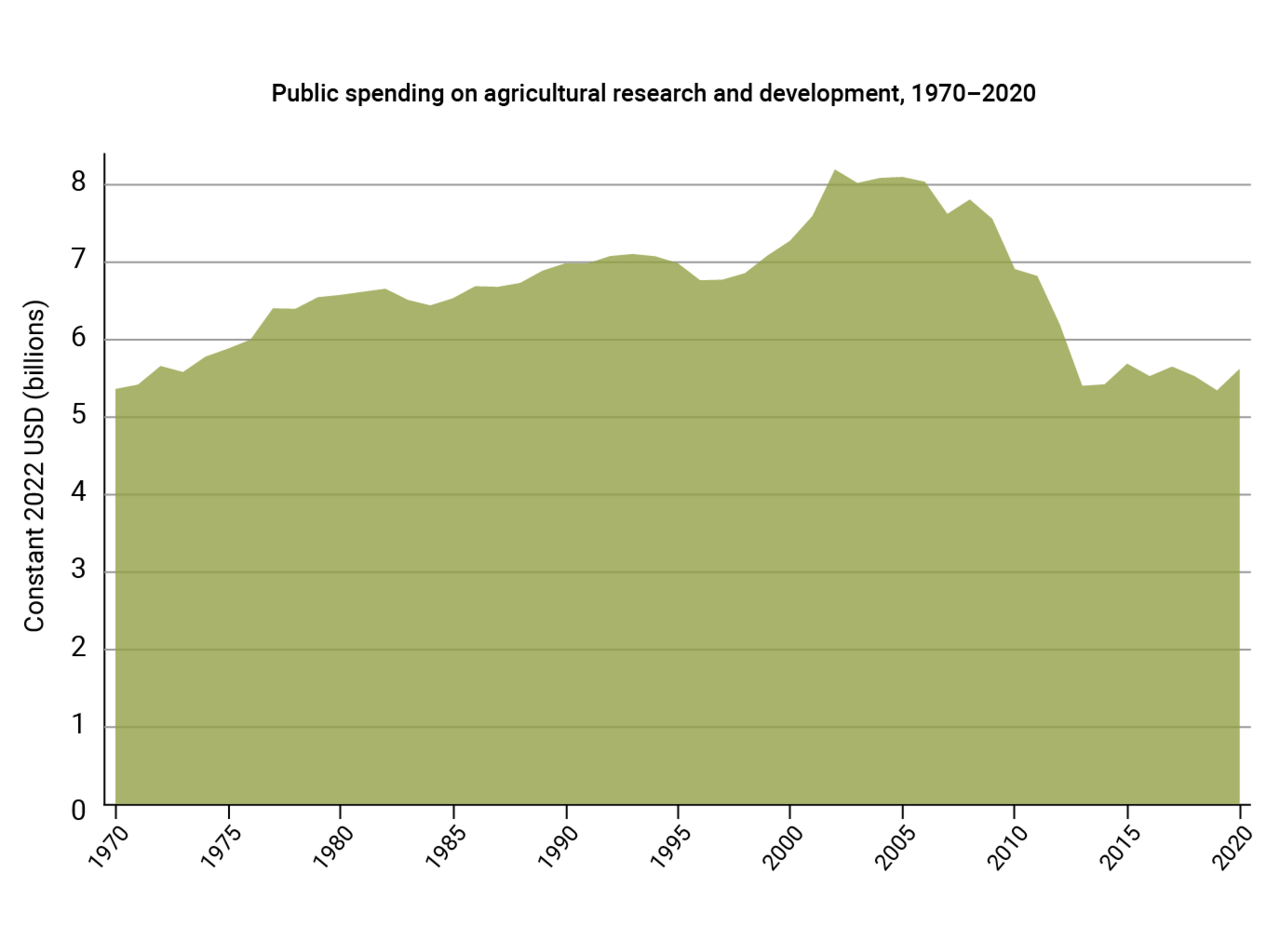
From the 1950s to the 1970s, institutions such as the Rockefeller and Ford foundations, USAID and its precursors, and multilateral development banks made significant global investments in agricultural research, education, and training. These investments laid the foundation for the Green Revolution, demonstrating that human capital and agricultural research and development (R&D) are as critical as physical inputs in driving productivity growth and food security. Since then, however, global public investment in agricultural education and R&D has declined or stagnated, except in a few countries, such as China (Ruane and Ramasamy 2023). For example, in the United States, public agricultural R&D spending—adjusted for inflation—fell by nearly one-third between its 2002 peak and 2019, returning to levels last seen in the 1970s. 

Chart of public spending on agriculture from 1970-2020. 2020 levels are as low as 1970 levels.
USDA, Economic Research Service (ERS) using data from National Science Foundation; USDA's Research, Education, and Economics Information System (REEIS); USDA's Current Research Inventory System (CRIS); and various private sector data sources.

Why Investing in Agricultural Education Is a Global Necessity


There is now an urgent need for a renewed commitment to build agricultural human resources that can lead the next transformation. This is not just about teaching farming. It is about cultivating a new generation of innovators, scientists, policymakers, and agro-entrepreneurs who can lead the Green Revolution 2.0. Here are seven compelling reasons why investing in agricultural education is a global necessity.

1. The times call for a quantum leap in sustainable productivity

The first Green Revolution helped avert mass famine through high-yield varieties, but at great environmental cost (see, inter alia, Tilman 1999 and Yang 2024). Now, we need a  Green Revolution 2.0 to drive a "quantum leap" in food production. This next revolution must be “smart” and sustainable. Agricultural education is the engine of this revolution. It will educate scientists, policymakers, and high-tech farmers, enabling them to develop new climate-resilient crops and adopt sustainable practices. Furthermore, the digital technologies driving the Green Revolution 2.0 can improve market access and help ensure fair prices for smallholder farmers.

2. Innovation adoption must be accelerated

Innovation is meaningless if it does not reach those who need it most. However, farmers, especially smallholders (e.g., small-scale and family farmers) and those with limited education, are often risk-averse in adopting new practices. Worse, the traditional systems supporting technology adoption have become ineffective. Government extension services struggle to keep up with the latest technologies, while farmers increasingly rely on commercial vendors for advice. Recent studies suggest that newer approaches, like social networks and farmer-to-farmer learning, have proven far more effective. Investing in education helps create "agropreneurs" who can champion innovation within farming communities, thereby accelerating the adoption of new technologies.

3. The agriculture workforce needs upskilling

The nature of work in agriculture is rapidly changing—vertical farms, AI-driven analytics, automated systems, and climate-resilient practices are redefining food production. Farmers need new skills in data, systems management, digital operations, and climate-resilient methods. Without education, millions risk being left behind, especially in developing countries, resulting in worsening inequality. Investment in upskilling enables farmers to collaborate with technology, thereby avoiding a poverty trap.

4. Empowering smallholder and family farmers will create opportunities and aid their survival

Unlike past mechanization that favored large farms, today’s advances in precision and digital agriculture can empower smallholders. And it creates new opportunities for smallholder farmers to serve growing niche, diverse markets. With supportive policies and education, smallholders can become key drivers of inclusive agricultural transformation.

5. Agriculture needs new, young blood

Farmers are aging worldwide, while youth are leaving rural areas to seek careers in other fields. Traditional agricultural curricula and programs fail to spark their interest. By integrating robotics, AI, biotechnology, and data science into agricultural education, coupled with the use of app-based market-access solutions, we can redesign agricultural systems and make farming an attractive, future-oriented career. Investing in high-tech agricultural education is the key to filling the labor gap with skilled, motivated, next-generation farmers

6. Greenhouse gas reduction

Agriculture is the second-largest contributor to greenhouse gas emissions and consumes 70% of global fresh water. Climate-smart farming practices can reduce emissions, store carbon, and build resilience against droughts, pests, and diseases. Education is the gateway to equipping farmers with the knowledge to implement such solutions at scale.

7. Agricultural investment boosts national prosperity and global collaboration

The benefits of investing in agricultural education extend far beyond farms. Past investments in the 1950s–70s powered the Green Revolution, saving over a billion people from starvation, reducing rural poverty, and fueling industrial development. A notable example of a successful investment is the US-funded Seoul National University (SNU) Minnesota Project (1954–1962). Under the project, the University of Minnesota helped rebuild SNU’s College of Agriculture and train a generation of agricultural scientists. These scientists not only transformed Korea from a food-deficit to a food-secure nation, but are today contributing to agricultural advancements globally. Replicating such initiatives worldwide could deliver similar results in today’s food-insecure countries.

Moving Forward


Momentum for significant investments in agriculture is building. The G20 has committed to food security, emphasizing investment in sustainable productivity. The World Bank has invested $45 billion in food and nutrition security programs since 2022, exceeding its target of $30 billion. The Asian Development Bank (ADB) pledged $40 billion (2022–2030), including $26 billion in new financing. It is encouraging that more than 50 countries have launched programs to nurture young and next-generation farmers, recognizing their vital role in food security, as well as in ensuring the future sustainability and competitiveness of the agricultural sector (although the outcomes of these programs remain mixed). Countries are also stepping up their investment in agricultural education and training. For example, Bangladesh is developing a $150 million project with ADB and the Korean Eximbank to upgrade its agricultural tertiary education, while Thailand is developing a $120 million investment project in agricultural technical and vocational education.

However, to avert a coming food crisis, these efforts need to be scaled, and to achieve that, concerted global action is necessary. One such initiative, now being proposed by ADB in partnership with a consortium of agricultural universities, is the establishment of a global climate-smart, high-tech agricultural education network to mobilize public and private investments, accelerate knowledge sharing and technology adoption, and prepare the next generation of agriculture leaders and entrepreneurs globally.

The challenges are immense, but so are the opportunities. Investing in agricultural education and training is not just about farming—it is about building a sustainable, food-secure, and climate-resilient future.


Works Cited


FAO. 2017. The Future of Food and Agriculture—Trends and Challenges.

FAO, IFAD, UNICEF, WFP, and WHO. 2024. The State of Food Security and Nutrition in the World 2024—Financing to End Hunger, Food Insecurity and Malnutrition in All Its Forms.

Ruane, John, and Selvaraju Ramasamy. 2023. Global Investments in Agricultural Research: Where Are We and Where Are We Going? Food and Agriculture Organization of the United Nations.

Tilman, David. 1999. “Global Environmental Impacts of Agricultural Expansion: The Need for Sustainable and Efficient Practices.” Proceedings of the National Academy of Sciences of the United States of America 96 (11): 5995-6000.

Yang, Yi, David Tilman, Zhenong Jin et al. 2024. “Climate Change Exacerbates the Environmental Impacts of Agriculture.” Science 385 (6713).
 

Read More

Close-up on coloured medication capsules and a stethoscope on the background of Korean won bills.
News

Spending More, Gaining Less: Lowest-Income Koreans Derive the Least Value from Health Care Investment, New Research Reveals

Despite rising health care spending, adults in South Korea’s lowest-income quintile experience the smallest relative improvement in life expectancy and well-being, according to a new study. The co-authors, including Stanford health economist Karen Eggleston, call for the country’s health policy to prioritize both equity and value, and highlight lessons for other health systems.
Spending More, Gaining Less: Lowest-Income Koreans Derive the Least Value from Health Care Investment, New Research Reveals
Gi-Wook Shin seated in his office, speaking to the camera during an interview.
News

Sociologist Gi-Wook Shin Illuminates How Strategic Human Resource Development Helped Build Asia-Pacific Economic Giants

In his new book, The Four Talent Giants, Shin offers a new framework for understanding the rise of economic powerhouses by examining the distinct human capital development strategies used by Japan, Australia, China, and India.
Sociologist Gi-Wook Shin Illuminates How Strategic Human Resource Development Helped Build Asia-Pacific Economic Giants
Sustainability Dialogue 2025 participants gather for a group photo
News

At Mongolia Sustainability Dialogue, APARC Advances Regional Cooperation on Climate Action

The Sustainability Dialogue 2025 on “Climate Action: Billions of Trees” gathered policymakers, academics, private sector leaders, and civil society representatives in Ulaanbaatar to expedite the implementation of Sustainable Development Goal 13 by strengthening Asia-Pacific regional cooperation and facilitating research-policy partnerships.
At Mongolia Sustainability Dialogue, APARC Advances Regional Cooperation on Climate Action
Hero Image
Two farmers discuss a crop issue; one is referring to a digital tablet.
All News button
1
Subtitle

Why We Need to Invest in Agricultural Education Now

Date Label
-
Flyer for the 2025 Oksenberg Symposium. Flags of China, Russia, India, and the US, with speaker portraits: Da Wei, Alex Gabuev, Sumit Ganguli, Michael McFaul, and Jean Oi.

How are Washington, Moscow, Beijing, and New Delhi recalibrating their relationships in response to evolving political, economic, and social dynamics — both within their own countries and in their interactions with one another? How are they reshaping their priorities, goals, and strategies in the Indo-Pacific? What do these shifts signal for global stability and competition?

A distinguished roundtable of experts from China, the U.S., Russia, and India joins us to examine these evolving strategic relationships and the broader implications for international affairs.


Final List of 2025 Oksenberg Symposium Speakers
Symposiums
Date Label
-

The Trans-Pacific Sustainability Dialogue convenes social science researchers and scientists from Stanford University and across the Asia-Pacific region, alongside student leaders, policymakers, and practitioners, to accelerate progress on achieving the United Nations-adopted 2030 Agenda for Sustainable Development. The conference aims to generate new research and policy partnerships to expedite the implementation of the Agenda's underlying framework of 17 Sustainable Development Goals.

The two-day event is held in Seoul, South Korea, on October 27 and 28, 2022 Korea Standard Time, and is free and open to the public.

Registration is now open for in-person attendees. The conference is also offered online. Watch the live webcast from this page below (session available in English and Korean) and follow the conversation on Twitter: @StanfordSAPARC #AsiaSDGs2022.

The Dialogue's main hosts and organizers are Stanford's Walter H. Shorenstein Asia-Pacific Research Center (APARC) and the Ban Ki-moon Foundation For a Better Future. The co-hosts are the Korea Environment Institute (KEI) and Ewha Womans University. The co-organizers include the Natural Capital Project (NatCap) of Stanford University, the Ministry of Foreign Affairs of the Republic of Korea, Korea Environmental Industry and Technology Institute (KEITI), Korea Environment Corporation (K-eco), and Korea Water Resources Corporation (K-water).

Day 1 Livestream (English)

Day 1 Livestream (Korean)

Day 2 Livestream: Expert Panel (English)

Day 2 Livestream: Expert Panel (Korean)

Day 2 Livestream: Student Panel (English)

NOTE: The times below are all in Korean Standard Time.

DAY 1: THURSDAY, OCTOBER 27, 2022

Hosted by the Korea Environment Institute

Grand Ballroom​, The Plaza Seoul
119 Sogong-Ro, Jung-gu, Seoul


9:00 – 9:30 AM
Opening Session
Welcome remarks:
Ban Ki-moon, the 8th Secretary-General of the United Nations and Chairman of the Ban Ki-moon Foundation For a Better Future
Gi-Wook Shin, Director of the Shorenstein Asia-Pacific Research Center and Korea Program, Professor of Sociology, William J. Perry Professor of Contemporary Korea, and Senior Fellow at the Freeman Spogli Institute for International Studies, Stanford University

Congratulatory remarks:
Kevin Rudd, former Prime Minister of Australia and Chief Executive Officer and President of the Asia Society (pre-recorded video message)
Han Duck-soo, Prime Minister of the Republic of Korea


Plenary 1
9:45 – 10:45 AM
World Leaders Session

Keynotes:
Ban Ki-moon, the 8th Secretary-General of the United Nations and Chairman of the Ban Ki-moon Foundation For a Better Future
Iván Duque, former President of the Republic of Colombia (live video link)
Gombojav Zandanshatar, Chairman of the State Great Hural (Parliament) of Mongolia

Moderator:
Gi-Wook Shin, Director of the Shorenstein Asia-Pacific Research Center and Korea Program, Professor of Sociology, William J. Perry Professor of Contemporary Korea, and Senior Fellow at the Freeman Spogli Institute for International Studies, Stanford University


Plenary 2
11:00 AM – 12:15 PM
Climate Change Session

Organized by the Climate Change, Energy, Environment and Scientific Affairs Bureau of the Ministry of Foreign Affairs, Republic of Korea

Keynote: 
Henry Gonzalez, Deputy Executive Director of Green Climate Fund

Panelists: 
Nabeel Munir, Ambassador of the Islamic Republic of Pakistan to the Republic of Korea and Chair of the G77 at the United Nations
Hyoeun Jenny Kim, Ambassador and Deputy Minister for Climate Change, Ministry of Foreign Affairs of the Republic of Korea
Oyun Sanjaasuren, Director of External Affairs of Green Climate Fund

Moderator:
Tae Yong Jung, Professor of Sustainable Development at the Graduate School of International Studies, Yonsei University


12:15 – 1:30 PM

Lunch 
Hosted by the Korea Environment Institute

Welcome remarks:
Chang Hoon Lee, President of the Korea Environment Institute

Congratulatory remarks:
Kim Sang-Hyup, Co-Chairperson of the 2050 Carbon Neutrality and Green Growth Commission
Eun Mee Kim, President of Ewha Womans University, Professor at the Graduate School of International Studies, and Director of the Ewha Global Health Institute for Girls and Women, Ewha Womans University


Plenary 3
1:30 – 2:45 PM
Multilateralism for a Resilient and Inclusive Recovery Towards the Achievement of the SDGs

Organized by the Development Cooperation Bureau of the Ministry of Foreign Affairs, Republic of Korea

Keynote: 
Hidehiko Yuzaki, Governor of Hiroshima Prefectural Government, Japan

Panelists:
Kaveh Zahedi, Deputy Executive Secretary, United Nations Economic and Social Commission for Asia and the Pacific (UN ESCAP) (live video link)
Kim Sook, Executive Director of the Ban Ki-moon Foundation For a Better Future and former Ambassador and Permanent Representative of the Republic of Korea to the United Nations
Won Doyeon, Director-General of the Development Cooperation Bureau, Ministry of Foreign Affairs of the Republic of Korea 

Moderator:
Eun Mee Kim, President of Ewha Womans University, Professor at the Graduate School of International Studies, and Director of the Ewha Global Health Institute for Girls and Women, Ewha Womans University


Plenary 4
3:00 – 4:15 PM
KEI Green Korea: SDGs in North Korea

Organized by the Korea Environment Institute

Keynote: 
Sung Jin Kang, Professor of the Department of Economics and the Graduate School of Energy and Environment, Korea University

Panelists:
Habil Bernhard Seliger, Representative of Hanns Seidel Stiftung - Seoul Office, Republic of Korea (pre-recorded video message)
Ganbold Baasanjav, Head of Subregional Office for East and North-East Asia, United Nations Economic and Social Commission for Asia and the Pacific (UN ESCAP)
Haiwon Lee, Emeritus Professor of Hanyang University and President of Asian Research Network for Global Partnership

Moderator:
Chang Hoon Lee, President of the Korea Environment Institute


Plenary 5
4:30 – 5:30 PM
Valuing Nature to Achieve the SDGs

Organized by the Natural Capital Project of Stanford University

Keynote:
Gretchen Daily, Bing Professor of Environmental Science in the Department of Biology, Faculty Director of the Natural Capital Project, Director of the Center for Conservation Biology, and Senior Fellow at the Woods Institute for the Environment, Stanford University

Panelists:
Juan Pablo Bonilla, Manager of the Climate Change and Sustainable Development Sector, Inter-American Development Bank
Choong Ki Kim, Senior Research Fellow, Korea Environment Institute

Moderator:
Nicole Ardoin, Emmett Faculty Scholar and Associate Professor in the Stanford Doerr School of Sustainability, Sykes Family Director of the Emmett Interdisciplinary Program in Environment and Resources, and Senior Fellow at the Woods Institute for the Environment, Stanford University


DAY 2: FRIDAY, OCTOBER 28, 2022

Hosted by Ewha Womans University 
52 Ewhayeodae-gil, Seodaemun-gu, Seoul


Expert panels are held in Room B412
Student panels (see below) are held in Room B143
ECC, Ewha Womans University


9:00 – 9:15 AM
Opening Session for Expert Panels

Welcome remarks:
Eun Mee Kim, President of Ewha Womans University, Professor at the Graduate School of International Studies, and Director of the Ewha Global Health Institute for Girls and Women, Ewha Womans University
Gretchen Daily, Bing Professor of Environmental Science in the Department of Biology, Faculty Director of the Natural Capital Project, Director of the Center for Conservation Biology, and Senior Fellow at the Woods Institute for the Environment, Stanford University


Expert Panel 1
9:15 – 10:30 AM
Livable, Sustainable Cities

Organized by the Walter H. Shorenstein Asia-Pacific Research Center of Stanford University

Keynotes:
Park Heong-joon, Mayor of Busan Metropolitan City, Republic of Korea
Khurelbaatar Bulgantuya, Member of the State Great Hural (Parliament) of Mongolia and Chair of Sustainable Development Goals Sub-Committee of Parliament

Panelists:
Anne Guerry, Chief Strategy Officer and Lead Scientist at the Natural Capital Project, Stanford University
Perrine Hamel, Assistant Professor at the Asian School of the Environment, Nanyang Technological University

Moderator:
Kiyoteru Tsutsui, Deputy Director of the Shorenstein Asia-Pacific Research Center and Director of the Japan Program, Professor of Sociology, Henri H. and Tomoye Takahashi Professor of Japanese Studies, Senior Fellow at the Freeman Spogli Institute for International Studies, and Director of the Center for Human Rights and International Justice, Stanford University


Expert Panel 2
11: 00 AM – 12:15 PM
Climate Change, Disaster Risks, and Human Security in Asia

Organized by Ewha Womans University

Panelists:
Juan M. Pulhin, Professor, Scientist, and former Dean of the College of Forestry and Natural Resources, University of the Philippines, Los Baños (live video link)
Rajib Shaw, Professor in the Graduate School of Media and Governance, Keio University
Brendan M. Howe, Professor and Dean of the Graduate School of International Studies, Ewha Womans University
Rafael Schmitt, Lead Scientist at the Natural Capital Project, Stanford University

Moderator:
Jaehyun Jung, Assistant Professor at the Graduate School of International Studies, Ewha Womans University


12:15 – 1:30 PM
Lunch 

Hosted by Ewha Womans University

Welcome remarks:
Eun Mee Kim, President of Ewha Womans University, Professor at the Graduate School of International Studies, and Director of the Ewha Global Health Institute for Girls and Women, Ewha Womans University


Expert Panel 3
1:30 – 2:45 PM
Valuing Nature in Finance for Systems Transformation


Organized by the Natural Capital Project of Stanford University

Keynote:
Elías Albagli, Director of the Monetary Policy Division of the Central Bank of Chile

Panelists:
Qingfeng Zhang, Chief of Rural Development and Food Security (Agriculture) Thematic Group and Chief of Environment Thematic Group of the Sustainable Development and Climate Change Department, Asian Development Bank (live video link)
Tong Wu, Senior Scientist and Associate Director of the China Program at the Natural Capital Project, Stanford University

Moderator:
Chung Suh-Yong, Professor at the Division of International Studies of Korea University and Director of the Center for Climate and Sustainable Development Law and Policy of Seoul International Law Academy


Expert Panel 4
3:15 – 4:30 PM
Valuing Nature to Achieve Sustainable Development


Organized by the Natural Capital Project of Stanford University

Keynote:
Mary Ruckelshaus
, Director at the Natural Capital Project, Stanford University

Panelists:
James Salzman, Donald Bren Distinguished Professor of Environmental Law at the Bren School of Environmental Science & Management at the University of California, Santa Barbara and the School of Law at the University of California, Los Angeles
Yong-Deok Cho, General Director at K-water and Secretary General of the Asia Water Council

Moderator:
Alejandra Echeverri, Senior Scientist at the Natural Capital Project, Stanford University


9:00 – 9:15 AM
Opening Session for Student Panels

Welcome remarks:
Brendan M. Howe, Professor and Dean of the Graduate School of International Studies, Ewha Womans University
Nicole Ardoin, Emmett Faculty Scholar and Associate Professor in the Stanford Doerr School of Sustainability, Sykes Family Director of the Emmett Interdisciplinary Program in Environment and Resources, and Senior Fellow at the Woods Institute for the Environment, Stanford University


Student Panel 1
9:15 – 10:30 AM
Green Financing and Sustainable Investments

Organized by Ewha Womans University

Panelists:
Assia Baric, PhD student, Graduate School of International Studies, Ewha Womans University
Siddharth Sachdeva, PhD student, Emmett Interdisciplinary Program in Environment and Resources, Stanford University
Sevde Arpaci Ayhan, PhD candidate, Graduate School of International Studies, Seoul National University 
Mae Luky Iriani, Master’s student, Department of International Relations, Universitas Katolik Parahyangan
Wu Qichun, PhD candidate, Asia-Europe Institute, University of Malaya

Moderator:
Hannah Jun
, Assistant Professor at the Graduate School of International Studies, Ewha Womans University


Student Panel 2
11:00 AM – 12:15 PM
Gender Mainstreaming and Climate Governance

Organized by Ewha Womans University

Panelists:
Vimala Asty Fitra Tunggal Jaya, PhD student, Graduate School of International Studies, Ewha Womans University 
Liza Goldberg, Undergraduate student, Computer Science Department and Earth Systems Program of the Doerr School of Sustainability, Stanford University
Gahyung Kim, PhD candidate, Global Education Cooperation Program, Seoul National University
Maria Golda Hilario, Master’s student, College of Liberal Arts, De La Salle University 
Putri Ananda, Master’s student, Osaka School of International Public Policy, Osaka University

Moderator:
Minah Kang, Professor at the Department of Public Administration, Bioethics Policy Studies, and Department of International Studies, Ewha Womans University


Student Panel 3
1:30 – 2:45 PM
Development Cooperation for Sustainable Governance

Organized by Ewha Womans University

Panelists:
Elham Bokhari, PhD student, Graduate School of International Studies, Ewha Womans University 
Suzanne Xianran Ou, PhD candidate, Department of Biology, Stanford University
So Yeon Park, PhD student, Global Education Cooperation Program, Seoul National University 
Emmanuel O. Balogun, PhD candidate, Department of Mechanical Engineering, Stanford University
Darren Mangado, PhD student, Osaka School of International Public Policy, Osaka University
 
Moderator:
Jinhwan Oh, Professor of the Graduate School of International Studies, Ewha Womans University


Student Panel 4
3:15 – 4:45 PM
Bringing Environmental Solutions to Scale Through a Business and Social Justice Lens

Organized by the Walter H. Shorenstein Asia-Pacific Research Center of Stanford University

Panelists:
Patricia Aguado Gamero, PhD candidate, Graduate School of International Studies, Ewha Womans University
Sergio Sánchez López, PhD student, Emmett Interdisciplinary Program in Environment and Resources, Stanford University
Felicia Istad, PhD candidate in Public Policy, Department of Public Administration, Korea University 
Sardar Ahmed Shah, PhD student, Osaka School of International Public Policy, Osaka University 
Ma. Ella Calaor Oplas, PhD student in Development Studies and Faculty Member, School of Economics, De La Salle University
Shiina Tsuyuki, Undergraduate student, Keio University

Moderator:
Cheryll Alipio, Associate Director for Program and Policy of the Shorenstein Asia-Pacific Research Center, Stanford University


Closing Session 
5:00 – 5:30 PM
Readying Human Capital for Sustainable Development

Organized by the Walter H. Shorenstein Asia-Pacific Research Center of Stanford University

Closing remarks:
Nicole Ardoin, Emmett Faculty Scholar and Associate Professor in the Stanford Doerr School of Sustainability, Sykes Family Director of the Emmett Interdisciplinary Program in Environment and Resources, and Senior Fellow at the Woods Institute for the Environment, Stanford University
Gi-Wook Shin, Director of the Shorenstein Asia-Pacific Research Center and Korea Program, Professor of Sociology, William J. Perry Professor of Contemporary Korea, and Senior Fellow at the Freeman Spogli Institute for International Studies, Stanford University
Brendan M. Howe, Professor and Dean of the Graduate School of International Studies, Ewha Womans University
Kim Bong-hyun, former Ambassador of the Republic of Korea to Australia, former President of Jeju Peace Institute, and Advisor to Mr. Ban Ki-moon, the 8th Secretary General of the United Nations at the Ban Ki-moon Foundation for a Better Future

Offered online via live webcast and in-person in Seoul, South Korea.

Day 1: October 27, 9 AM - 5:30 PM KST | Grand Ballroom, The Plaza Hotel, Seoul
Day 2: October 28, 9 AM - 5:30 PM KST | Room B412 (Expert Panels), Room B143 (Student Panels), ECC, Ewha Womans University

SCROLL DOWN TO WATCH THE LIVE WEBCAST

Conferences

Shorenstein APARC
Stanford University
Encina Hall
Stanford,  CA  94305-6055

0
Senior Fellow at the Freeman Spogli Institute for International Studies
Kleinheinz Senior Fellow at the Hoover Institution
steve_kotkin_2023.jpg

Stephen Kotkin is a senior fellow at Stanford’s Freeman Spogli Institute for International Studies (FSI) and the Kleinheinz Senior Fellow at the Hoover Institution. Within FSI, Kotkin is based at the Shorenstein Asia-Pacific Research Center (APARC) and is affiliated with the Center on Democracy, Development and the Rule of Law (CDDRL) and The Europe Center. He is also the Birkelund Professor in History and International Affairs emeritus at the Princeton School of Public and International Affairs (formerly the Woodrow Wilson School), where he taught for 33 years. He earned his PhD at the University of California, Berkeley and has been conducting research in the Hoover Library & Archives for more than three decades.

Kotkin’s research encompasses geopolitics and authoritarian regimes in history and in the present. His publications include Stalin: Waiting for Hitler, 1929–1941 (Penguin, 2017) and Stalin: Paradoxes of Power, 1878–1928 (Penguin, 2014), two parts of a planned three-volume history of Russian power in the world and of Stalin’s power in Russia. He has also written a history of the Stalin system’s rise from a street-level perspective, Magnetic Mountain: Stalinism as a Civilization (University of California 1995); and a trilogy analyzing Communism’s demise, of which two volumes have appeared thus far: Armageddon Averted: The Soviet Collapse 1970–2000 (Oxford, 2001; rev. ed. 2008) and Uncivil Society: 1989 and the Implosion of the Communist Establishment, with a contribution by Jan T. Gross (Modern Library, 2009). The third volume will be on the Soviet Union in the third world and Afghanistan. Kotkin’s publications and public lectures also often focus on Communist China.

Kotkin has participated in numerous events of the National Intelligence Council, among other government bodies, and is a consultant in geopolitical risk to Conexus Financial and Mizuho Americas. He served as the lead book reviewer for the New York Times Sunday Business Section for a number of years and continues to write reviews and essays for Foreign Affairsthe Times Literary Supplement, and the Wall Street Journal, among other venues. He has been an American Council of Learned Societies Fellow, a National Endowment for the Humanities Fellow, and a Guggenheim Fellow.

-
Modern Authoritarianism and Geopolitics: Thoughts on a Policy Framework

Once upon a time, there was a seductive story about twin revolutions, a political one in France and an industrial one in Britain, that supposedly ushered in our modern world. This narrative never sat well with empirical realities, yet it lives on in textbooks. What might be a more persuasive framework for a global history of the modern era? What are the implications for research and the teaching of history?

ABOUT THE SPEAKER

Image
Steve Kotkin
Stephen Kotkin is the John P. Birkelund Professor of History and International Affairs in what used to be called the Woodrow Wilson School and in the History Department of Princeton University, as well as a Senior Fellow (adjunct) at the Hoover Institution at Stanford University. He directs the Princeton Institute for International and Regional Studies and co-directs its program in History and the Practice of Diplomacy, which he founded. He also founded Princeton’s Global History Initiative. His scholarship encompasses geopolitics and authoritarian regimes in history and in the present.

Kotkin has published two volumes of a three-volume history of the world as seen from Stalin’s desk: Paradoxes of Power, 1878-1928 (Penguin, November 2014) and Waiting for Hitler, 1929-1941 (Penguin, October 2017). The final installment, Totalitarian Superpower, 1941-1990s, is underway. He writes reviews and essays for Foreign Affairs, the Times Literary Supplement, and The Wall Street Journal, and served as the business book reviewer for The New York Times Sunday Business Section. He is an occasional consultant for governments and some private companies. PhD UC Berkeley (1988).


Image
CDDRL APARC Logos

Online, via Zoom

Stephen Kotkin John P. Birkelund Professor of History and International Affairs
Lectures
-

 All CISAC events are scheduled using the Pacific Time Zone. 

SEMINAR RECORDING


About the Event: How do rising powers like China manage to build power in international systems dominated by one or more established great powers? International relations theory provides some answers, but most assume emulation of successful approaches. This paper leverages the established business literature on how new companies gain market share in markets dominated by established companies to develop a new theory of power accumulation. I argue that only under very narrow circumstances can rising powers build power and influence through emulation. Instead, China has built enough power over the past 25 years to be considered a great power competitor by doing things differently. Specifically, it exploits US blind spots, maneuvers in areas of strategic uncertainty and engages in entrepreneurial actions. I demonstrate that Chinese military strategy exhibits these components in its responses to key pillars of US foreign policy strategy like global power projection, foreign military intervention, and in conventional and nuclear posture decisions. The findings have significant implications for great power competition as well as for power transition theory.


About the Speaker: Oriana Skylar Mastro is a Center Fellow at the Freeman Spogli Institute for International Studies at Stanford University where her research focuses on Chinese military and security policy, Asia-Pacific security issues, war termination, and coercive diplomacy. She is also Non-Resident Senior Fellow at the American Enterprise Institute and an inaugural Wilson Center China Fellow. She continues to serve in the United States Air Force Reserve for which she works as a strategic planner at INDOPACOM. For her contributions to U.S. strategy in Asia, she won the Individual Reservist of the Year Award in 2016. She has published widely, including in Foreign Affairs, International Security, International Studies Review, Journal of Strategic Studies, The Washington Quarterly, The National Interest, Survival, and Asian Security. Her book, The Costs of Conversation: Obstacles to Peace Talks in Wartime, (Cornell University Press, 2019) won the 2020 American Political Science Association International Security Section Best Book by an Untenured Faculty Member. She holds a B.A. in East Asian Studies from Stanford University and an M.A. and Ph.D. in Politics from Princeton University. Her publications and other commentary can be found on twitter @osmastro and www.orianaskylarmastro.com.

Virtual only.

Stanford CISAC
Stanford University
Encina Hall
Stanford,  CA  94305-6055

0
Center Fellow at the Freeman Spogli Institute for International Studies
Courtesy Assistant Professor of Political Science
Faculty Affiliate at the Walter H. Shorenstein Asia-Pacific Research Center
OrianaSkylarMastro_2023_Headshot.jpg PhD

Oriana Skylar Mastro is a Center Fellow at the Freeman Spogli Institute for International Studies and Courtesy Assistant Professor of Political Science at Stanford University, where her research focuses on Chinese military and security policy, Asia-Pacific security issues, war termination, and coercive diplomacy. She is also a nonresident scholar at the Carnegie Endowment for International Peace and a member of the Council on Foreign Relations. She was previously an assistant professor of security studies at Georgetown University. Mastro continues to serve in the United States Air Force Reserve, for which she currently works at the Pentagon as Deputy Director of Reserve Global China Strategy. For her contributions to U.S. strategy in Asia, she won the Individual Reservist of the Year Award in 2016 and 2022 (FGO).

She has published widely, including in International Security, Security Studies, Foreign Affairs, the Journal of Strategic Studies, The Washington Quarterly, the Economist, and the New York Times. Her most recent book, Upstart: How China Became a Great Power (Oxford University Press, 2024), evaluates China’s approach to competition. Her book, The Costs of Conversation: Obstacles to Peace Talks in Wartime (Cornell University Press, 2019), won the 2020 American Political Science Association International Security Section Best Book by an Untenured Faculty Member.

She holds a B.A. in East Asian Studies from Stanford University and an M.A. and Ph.D. in Politics from Princeton University.

Her publications and commentary can be found at orianaskylarmastro.com and on Twitter @osmastro.

Selected Multimedia

CV
Date Label
Seminars

Shorenstein APARC
Stanford University
Encina Hall, Room E301
Stanford, CA 94305-6055

(650) 736-0656 (650) 723-6530
0
mike_breger.jpg

Michael (Mike) Breger joined APARC in 2021 and serves as the Center's communications manager. He collaborates with the Center's leadership to share the work and expertise of APARC faculty and researchers with a broad audience of academics, policymakers, and industry leaders across the globe. 

Michael started his career at Stanford working at Green Library, and later at the Center for Russian, East European and Eurasian Studies, serving as the event and communications coordinator. He has also worked in a variety of sales and marketing roles in Silicon Valley.

Michael holds a master's in liberal arts from Stanford University and a bachelor's in history and astronomy from the University of Virginia. A history buff and avid follower of international current events, Michael loves learning about different cultures, languages, and literatures. When he is not at work, Michael enjoys reading, painting, music, and the outdoors.

Communications Manager
Date Label
Subscribe to Russia and Eurasia