International Relations

FSI researchers strive to understand how countries relate to one another, and what policies are needed to achieve global stability and prosperity. International relations experts focus on the challenging U.S.-Russian relationship, the alliance between the U.S. and Japan and the limitations of America’s counterinsurgency strategy in Afghanistan.

Foreign aid is also examined by scholars trying to understand whether money earmarked for health improvements reaches those who need it most. And FSI’s Walter H. Shorenstein Asia-Pacific Research Center has published on the need for strong South Korean leadership in dealing with its northern neighbor.

FSI researchers also look at the citizens who drive international relations, studying the effects of migration and how borders shape people’s lives. Meanwhile FSI students are very much involved in this area, working with the United Nations in Ethiopia to rethink refugee communities.

Trade is also a key component of international relations, with FSI approaching the topic from a slew of angles and states. The economy of trade is rife for study, with an APARC event on the implications of more open trade policies in Japan, and FSI researchers making sense of who would benefit from a free trade zone between the European Union and the United States.

News Type
News
Date
Paragraphs

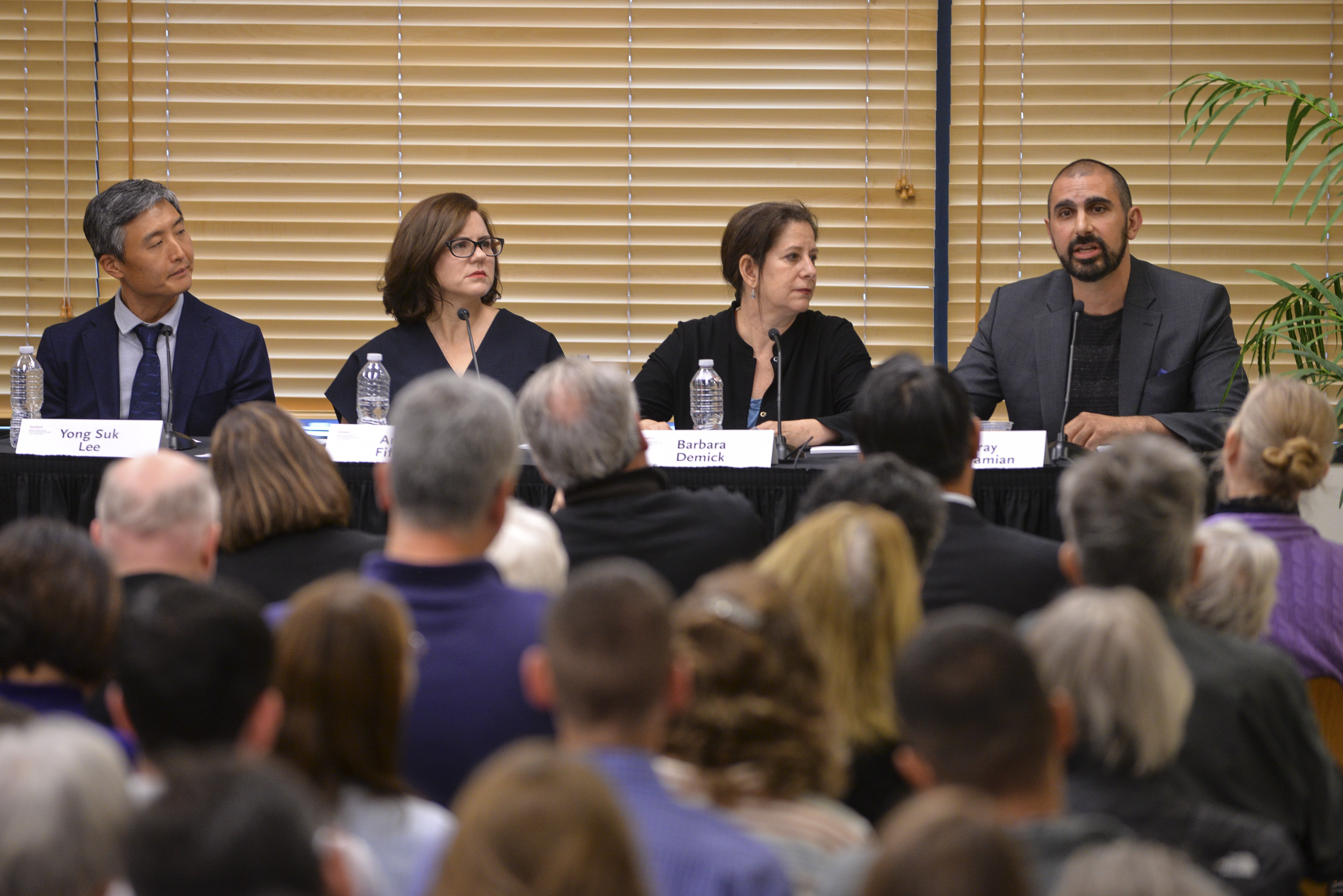
On November 14, APARC honored the 2018 Shorenstein Journalism Award recipient, Washington Post Beijing bureau chief Anna Fifield. At a Stanford event, Fifield joined a panel discussing economic changes in North Korea, as well as the country’s position in global diplomacy under the leadership of Kim Jong Un.

A recap of the panel by The Stanford Daily is now available online.

Hero Image
Anna Fifield speaks at Shrenstein Journalism Awad Panel Rod Searcey
All News button
1
Authors
Noa Ronkin
News Type
News
Date
Paragraphs

hallenges and Possibilities of Korean Studies in North America — Social Science panel
Future Visions: Challenges and Possibilities of Korean Studies in North America — Social Science panel. From left to right: UC Berkeley's Laura Nelson, University of Michigan's Jordan Siegel, Stanford's Yong Suk Lee, USC's David Kang, Harvard's Paul Chang.


How can Korean studies faculty cultivate supportive and critical scholarly communities with graduate students? What can be done to overcome the severe constraints on Korean language training in North America? Why is there a dearth of Korea scholarship in academic literature? And how should Korean studies librarians prepare for the future in the light of new technologies and young researchers’ increasing interest in digital scholarship?

These were some of the questions examined at a two-day conference, “Future Visions: Challenges and Possibilities of Korean Studies in North America,” convened by the Korea Program of Stanford’s Shorenstein Asia-Pacific Research Center (APARC) on November 1-2. Co-sponsored by the Seoul-based Foundation Academia Platonica, the conference, the first of its kind, gathered distinguished Korean studies scholars from twelve North American institutions to consider the state of the field, assess its challenges, and carry forward a vision for its future direction and potential. Its six unique panels focused not only on the major disciplines of Korean studies—history, literature, and the social sciences—but also on language education, library collections and services, and Korean Wave.

“The presentations and discussions by our fellow experts reflected the breadth and depth of Korean studies in North America,” says APARC Director and the Korea Program Director Gi-Wook Shin. “Our program was established at Stanford in 2001 and has since become a leader in Korean studies in North America, so it is a special privilege for us to bring together colleagues from eminent institutions around the continent to further advance Korean studies education and research in the academic and policy worlds, and to build upon our track record of action and achievements.”

“The field of Korean studies, however,” notes Shin, “has significantly changed over the past seventeen years and it isn’t without its challenges. This is our opportunity to consider frankly where we go next and how we could explore the path ahead together.”

Conference participants indeed engaged in deep conversations and shared ideas and dilemmas regarding teaching in the different disciplines of Korean studies in North America. Harvard sociologist Paul Chang listed three types of challenges facing the field: publication, academic, and professional challenges. David C. Kang, professor of international relations and director of the Korean Studies Institute at the University of Southern California, emphasized the publication challenge: why is it, asked Kang, that top academic journals in the discipline of political science and international relations publish so much more scholarship about Europe than they do about Korea and Asia at large, even while the rise of Asian nations is surely one of the most consequential issues of the twenty-first century? The onus, Kang argued, comes back to East Asia scholars “to produce better and more compelling scholarship, and to better train graduate students.”

University of British Columbia's Ross King and conference participants.

Yet complex issues surround the question of how to broaden graduate coursework—and whether to do so. Korean language and linguistics expert Ross King, head of the department of Asian Studies at the University of British Columbia in Vancouver, Canada, was one of several panelists who considered the obstacles to graduate training, among different aspects of academic challenges facing the field of Korean studies. King probed into how Sinocentrism and what he called the “Mandarin conceit”—that is, the notion that training in Literary Sinitic should be predicated on a near-native proficiency in modern Mandarin Chinese—are emerging as a major stumbling block to the study of premodern Korean literary culture. He also pointed to the constraints on language training in both Korean and hanmun in North America, which, he claimed, is why we can probably anticipate continued decrease in the number of ethnically non-Korean (non-Korea-educated) graduate students undertaking graduate study in Korean literature.

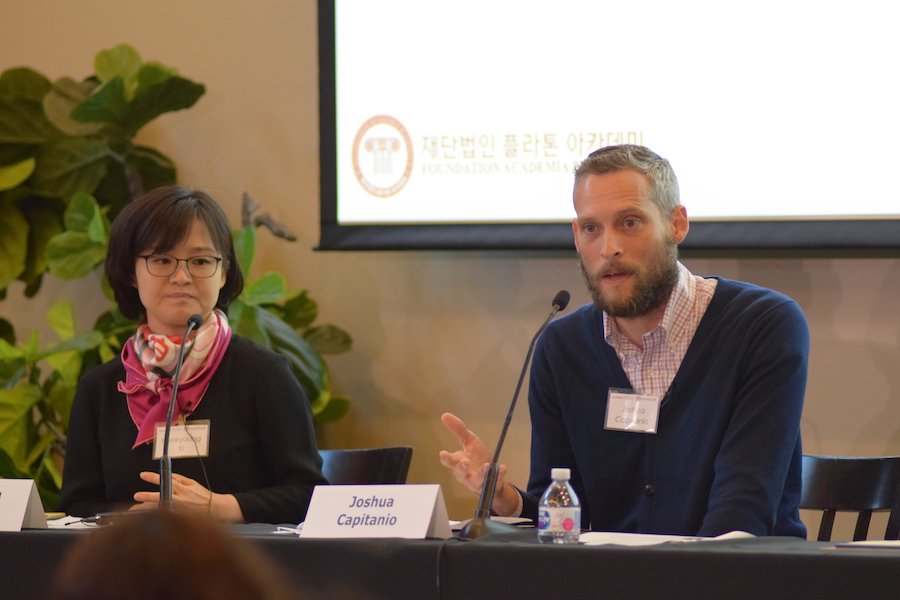
University of Washington's Hyokyoung Yi (left) and Stanford's Joshua Capitanio at a panel on library collections and service.

Sung-Ock Sohn, who coordinates the Korean language program in the department of Asian languages and cultures at the University of California – Los Angeles, further shed light on King’s prediction. She explained that while enrollments in Korean language classes have shown a sharp increase in American higher education institutions in the past decade, particularly at the introductory level and among ethnically non-Korean students, there is a high attrition rate of students from an introductory to advanced Korean classes nationwide.

How should the field move forward?

Participants proposed a host of ideas to that end. These included helping graduate students collaborate with colleagues in Korea; dedicating funding for junior faculty to spend periods of time before tenure conducting research and honing language skills in Korea at appropriate institutions, and for mid-career scholars to spend a year in Korea; emphasizing the application of social science theories and methods to premodern and modern East Asia; motivating scholars to apply a comparative lens to the study of the historical and contemporary experience of East Asia; and integrating linguistic and cultural diversity in Korean language classes by, for example, incorporating service learning in authentic contexts and extending the content spectrum to include topics such as Korean popular culture.


Image
K-pop star Siwon Choi (left) highlights closing panel on Korean Wave.

K-pop star Siwon Choi (left) highlights closing panel on Korean Wave.

Korean Wave was the focus of the conference’s widely attended closing panel that featured K-pop star Siwon Choi, a member of Korean boy band Super Junior, and multi-platinum music producer Dominique Rodriguez, managing director of SM Entertainment USA. They spoke about the global reach of Korean pop music and some of the ways in which Korean popular culture could stimulate interest in Korean studies. Dafna Zur, assistant professor in Stanford’s department of East Asian languages and cultures, who chaired the panel, challenged her students to consider “what it means not just to monetize culture but to design culture with specific markets and audience in mind.” The Stanford Daily published a detailed article on the panel.

“We are grateful to Foundation Academia Platonica for its generous support of Stanford’s Korea Program at Shorenstein APARC and for making this conference possible through our shared vision for the future of Korean studies in North America,” said Gi-Wook Shin. “Our thanks also go to our many other friends and partners, including the Korea Foundation that has helped achieve great results through its commitment to promoting understanding of Korea in academia and beyond and its support of the overseas Korean Studies Program since its establishment in 1991.”

South Korean TV company SBS NBC filmed the conference that will be featured in an upcoming documentary about Korean studies in the United States.

Read the conference report or listen to the audio recordings of the sessions, below.

Hero Image
Audience listens to panel during the conference "Future Visions: Challenges and Possibilities of Korean Studies in North America" Thom Holme, APARC
All News button
1
Authors
News Type
News
Date
Paragraphs


The two-day forum, part of a project of the American Academy of Arts and Sciences, led by the Freeman Spogli Institute’s Karl Eikenberry and Stephen Krasner, gathered experts to examine trends in civil wars and solutions moving forward.   


Image
Attendees at a two-day forum, part of a project of the American Academy of Arts and Sciences

The Council on Foreign Relations presently tracks six countries in a state of civil war, including three (South Sudan, Afghanistan, and Yemen) where the situation is currently worsening. Furthermore, three states (Central African Republic, Myanmar, and Nigeria) are experiencing sectarian violence with the potential to become larger conflicts. With two months still remaining in 2018, the combined fatalities in Afghanistan, Syria, and Yemen alone is fast approaching 100,000 for the year.

It was against this backdrop that Shorenstein APARC’s U.S.-Asia Security Initiative (USASI), the American Academy of Arts and Sciences (AAAS), and the School for International Studies at Peking University recently co-hosted the security workshop “Civil Wars, Intrastate Violence, and International Responses.” Held in Beijing, on October 22-23, the workshop brought together thirty-five U.S. and international experts to gain a wider perspective on intrastate violence and consider the possibilities for, and limits of, intervention. The workshop is the latest activity of the AAAS project on Civil Wars, Violence, and International Responses, chaired by Ambassador Karl Eikenberry, director of USASI, and by Stephen Krasner, senior fellow at the Freeman Spogli Institute for International Studies (FSI) and professor of international relations.

“Some of the major discussion topics included the appropriate political and economic development models to apply to fragile states recovering from internal conflict, justifications for intervention, and the likely impact of great power competition on the future treatment of civil wars." - Karl Eikenberry

Workshop participants included academics and professionals with expertise in political science, global health, diplomacy, refugee field work, United Nations, and the military. Countries represented at the table included the United States, Ethiopia, France, and China. Throughout the two-day session, they examined three crucial questions: What is the scope of intrastate conflicts and civil wars, and to what extent is it attributable to domestic or international factors? What types of threats to global security emanate from state civil wars? What policy options are available to regional powers and the international community to deal with such threats?


Image
USASI Director Karl Eikenberry addresses one of the sessions

USASI Director Karl Eikenberry addresses one of the sessions

China’s Emerging Role in Addressing Intrastate Violence

The workshop’s timing and location was prescient. Over the past two decades, China’s global exposure–through trade, investment, and financing–has increased dramatically. Coupled with a growing number of its citizens living abroad, China’s equity in other states has reached the point where it has a direct interest in those experiencing or are at risk of political instability and internal violence. Indeed, through its ambitious Belt and Road Initiative, China has the opportunity to help stabilize fragile states by stimulating economic development.

“The workshop revealed, at least for me, that China is backing away from its absolute defense of sovereignty and non-intervention,” said Stephen Krasner. “As Chinese interests have expanded around the world, and as both its investments and the number of its citizens living abroad have increased, the Chinese have become more concerned with political conditions in weakly governed countries.”

With China’s growing policy and academic interests in addressing civil wars and intrastate violence, as well as its higher international profile in places like United Nations peacekeeping operations, the Beijing event provided an excellent opportunity for Chinese experts to exchange views with their international colleagues.

Paul H. Wise, MD, MPH; Senior Fellow at Stanford Health Policy

Paul H. Wise, MD, MPH; Senior Fellow at Stanford Health Policy

Where We are Today, Where We Go Tomorrow

The Beijing workshop was arranged into four sessions, with themes focusing on trends in intrastate violence, the threats it poses to international security, the limits of intervention, and advice to policymakers.

Each panel included presentations of prepared papers, moderator comments, and an open discussion by all participants. A fifth and final session provided an opportunity to summarize the preceding discussions. The workshop then closed out with an open conversation, where participants offered insight and policy recommendations developed over the preceding two days of dialogue.

Image
Martha Crenshaw seated at round table
“The workshop,” observed Martha Crenshaw (shown above), a Senior Fellow at FSI, “was a unique opportunity to exchange views with Chinese colleagues on the subject of civil conflict in the contemporary world. A valuable learning experience for all of us."

The "Civil Wars, Intrastate Violence, and International Responses” workshop marks the second phase of the AAAS project by the same name that launched in 2015. The first phase of the project culminated in the publication of 28 essays across two volumes of the AAAS quarterly journal Dædalus. The ongoing second phase consists of a series of roundtables and workshops in which project participants engage with academics and with government and international organization officials to build a larger conceptual understanding of the threats posed by the collapse of state authority associated with civil wars, and to contribute to current policymaking. Project activities have included meetings with the United Nations leadership and staff; academic activities in the United States; sessions with the U.S. executive and legislative branches; and a visit to Nigeria.

Throughout the workshop, Chatham House Rule of non-attribution applied to all dialogue. A workshop report will be published by the co-hosts in early 2019.

The U.S.-Asia Security Initiative is part of Stanford University’s Walter H. Shorenstein Asia-Pacific Research Center (APARC). Led by former U.S. Ambassador and Lieutenant General (Retired) Karl Eikenberry, USASI seeks to further research, education, and policy relevant dialogues at Stanford University on contemporary Asia-Pacific security issues.

March 1, 2019 update: the workshop report is now available online. Download the report >> 

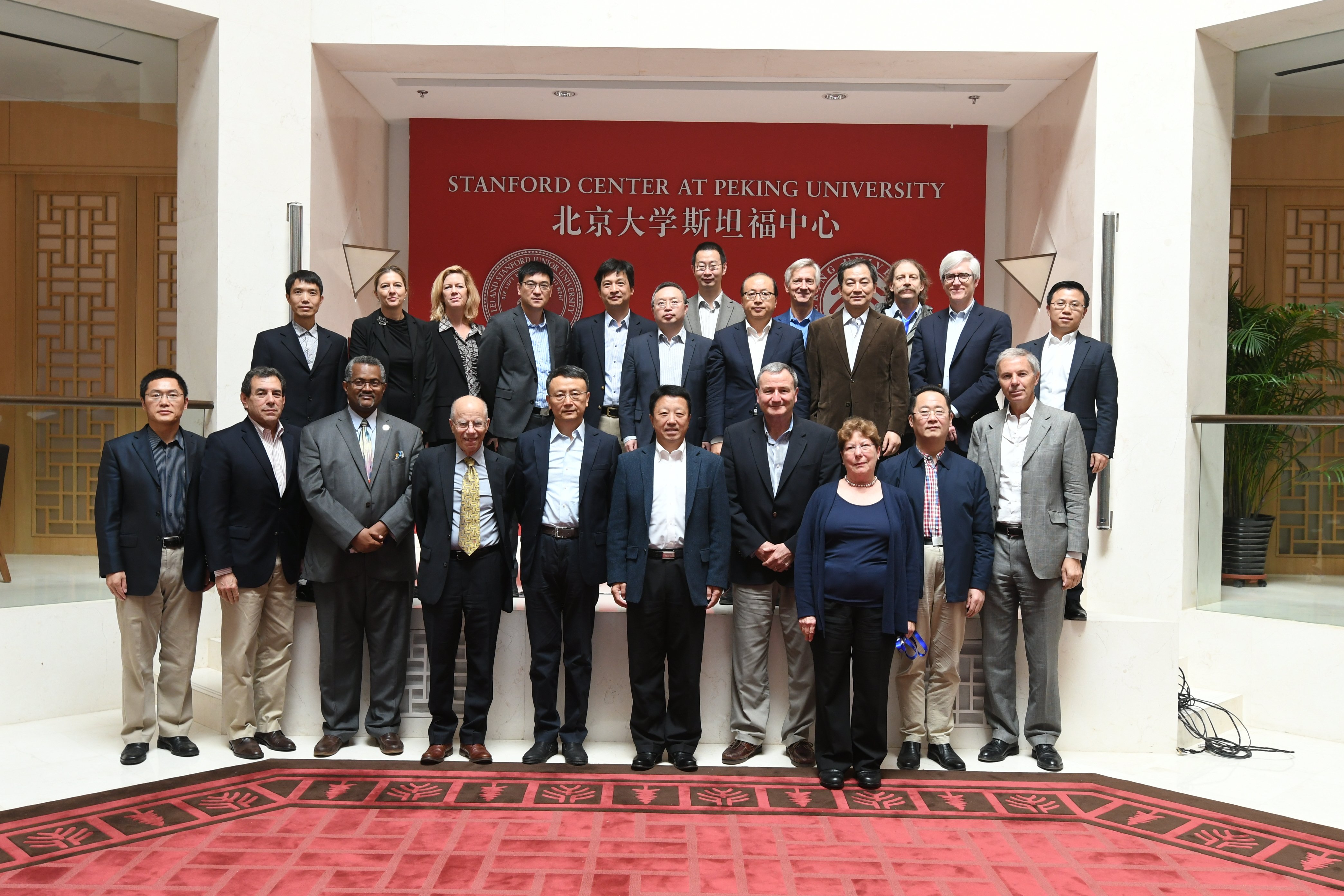
Group photo of Participants in the “Civil Wars, Intrastate Violence, and International Responses” workshop

Participants in the “Civil Wars, Intrastate Violence, and International Responses” workshop

Hero Image
Karl Eikeberry at Civil Wars, Intrastate Violence, and International Response Workshop
All News button
1
-

Four member states of the Association of Southeast Asian Nations (ASEAN) have made territorial claims in the South China Sea that conflict with China’s professed entitlement to all of the “islands and the adjacent waters.” Because the “ASEAN Way” is to make decisions by consensus, each member state can, in effect, veto what the group might otherwise decide. Prof. O’Neill will explore how China has used its financial power to divide ASEAN’s members in order to prevent them from acting collectively to resolve their territorial disputes with China in the South China Sea. He will compare China’s relations with Cambodia, the Philippines, and Myanmar in order to highlight the key role that a recipient country’s type of regime plays in enhancing or constraining Beijing’s ability to use aid, loans, and investments to influence the policies and politics of developing states. He will argue that authoritarian institutions facilitate Chinese influence while democratic institutions inhibit it.

Image
oneill dan 35 cropped
Daniel C. O’Neill’s current project is a co-authored volume on the politics of China’s Belt and Road Initiative in Southeast and South Asia. His new book, Dividing ASEAN and Conquering the South China Sea: China’s Financial Power Projection (2018), has been called “well-crafted and theoretically sound” by the highly regarded GWU Southeast Asianist Prof. Robert Sutter. O’Neill’s shorter writings have appeared in venues including Asian Survey, Contemporary Southeast Asia, the Journal of Eurasian Studies, and The Washington Post. Audiences have heard him lecture in, for example, the Philippines, China, and Kazakhstan. For three years running, the School of International Studies where he works named him “Outstanding Teacher of the Year.” His Ph.D. in political science is from Washington University in St. Louis.

Philippines Conference Room
Encina Hall, 3rd Floor
616 Serra Mall
Stanford, CA 94305

Daniel C. O’Neill Associate Professor of Political Science, School of International Studies, University of the Pacific
Seminars
Authors
News Type
News
Date
Paragraphs

5,100 miles separate Tokyo from Stanford. But for Hiroyuki Fukano, the distance was measured in more than miles. It was also a journey of time and memory–of 30 years, to be precise.

As a visiting fellow in the 1988-89 cohort of APARC’s Corporate Affiliate Program (now called Global Affiliates Program), Fukano joined Center alumni and friends from the last four decades for reunions in Beijing and Tokyo. In all, more than 100 former affiliates and visiting fellows gathered to reconnect with peers, meet new ones, and reflect on their times at Stanford.

"These gatherings are a reminder, both to our faculty and alumni, of the power of the APARC experience to change lives,” shared Director Gi-Wook Shin, who delivered welcoming remarks at both events. “We have with us alumni and affiliates from the private and public sectors, as well as from academia. They are doing amazing work in their specific fields; work influenced, in part, by their time at Stanford.”

“Clearly, the APARC experience stretches beyond barriers, both geographical and temporal.”

The gatherings also underscored the influence of the APARC experience on strengthening connections across Asia at large. For example, one Korean affiliate flew in for the Tokyo event, while a Japanese alum, now working in China, joined his Stanford peers at the Beijing gathering.

“It’s an especially unique bond that the affiliates share,” noted Global Affiliates Program Manager Denise Masumoto. “Regardless of the industry or field from which they come, their fellowship year at APARC is a unifying experience for them; it’s something each of them carries forward into everything they do.”

Fukano, who delivered remarks at the Tokyo event, echoed this sentiment. As he reflected on the thirty years that had passed since his time at Stanford, he shared that, even to this day, his year at APARC still held great significance for him.

Director Shin was joined at the events by several Center faculty members. Professor Takeo Hoshi, director of the Japan Program at APARC, updated the Tokyo audience on new research and partnerships being explored by the program.

Professor Jean Oi, director of the China Program at APARC, addressed the Beijing gathering at the Stanford Center at Peking University (SCPKU). Professor Oi spoke about the program’s collaboration this fall with SCPKU on their "On the Road to China" program, which brings Stanford students to SCPKU for three months of coursework and area experiences.

We thank everyone who joined us for these alumni events and look forward to seeing even more friends and partners next time.

Prof. Takeo Hoshi, Lei Guo (2016-17 Visiting Scholar, Peking University), and Masami Miyashita (2011-12 Corporate Affiliate, Ministry of Economy, Trade & Industry, Japan)

Prof. Takeo Hoshi, Lei Guo (2016-17 Visiting Scholar, Peking University), and Masami Miyashita (2011-12 Corporate Affiliate, Ministry of Economy, Trade & Industry, Japan)

Luguang Li (2002-03 Corporate Affiliate, PetroChina) and Professor Gi-Wook Shin

Luguang Li (2002-03 Corporate Affiliate, PetroChina) and Professor Gi-Wook Shin

Masami Miyashita (2011-12 Corporate Affiliate, METI, Japan, now based in Hong Kong) and Zhuoyan Wang (2016-17 Corporate Affiliate, PetroChina)

Masami Miyashita (2011-12 Corporate Affiliate, METI, Japan, now based in Hong Kong) and Zhuoyan Wang (2016-17 Corporate Affiliate, PetroChina)

Zhuoyan Wang (2016-17 Corporate Affiliate, PetroChina)

Zhuoyan Wang (2016-17 Corporate Affiliate, PetroChina)

Jung-Yi Lee (2013-14 Visiting Scholar, Hanmaum Peace & Research Foundation)

Jung-Yi Lee (2013-14 Visiting Scholar, Hanmaum Peace & Research Foundation)

Xiuxiao Wang (2016-17 Visiting Scholar, Central University of Finance and Economics) and Professor Gi-Wook Shin
Xiuxiao Wang (2016-17 Visiting Scholar, Central University of Finance and Economics) and Professor Gi-Wook Shin

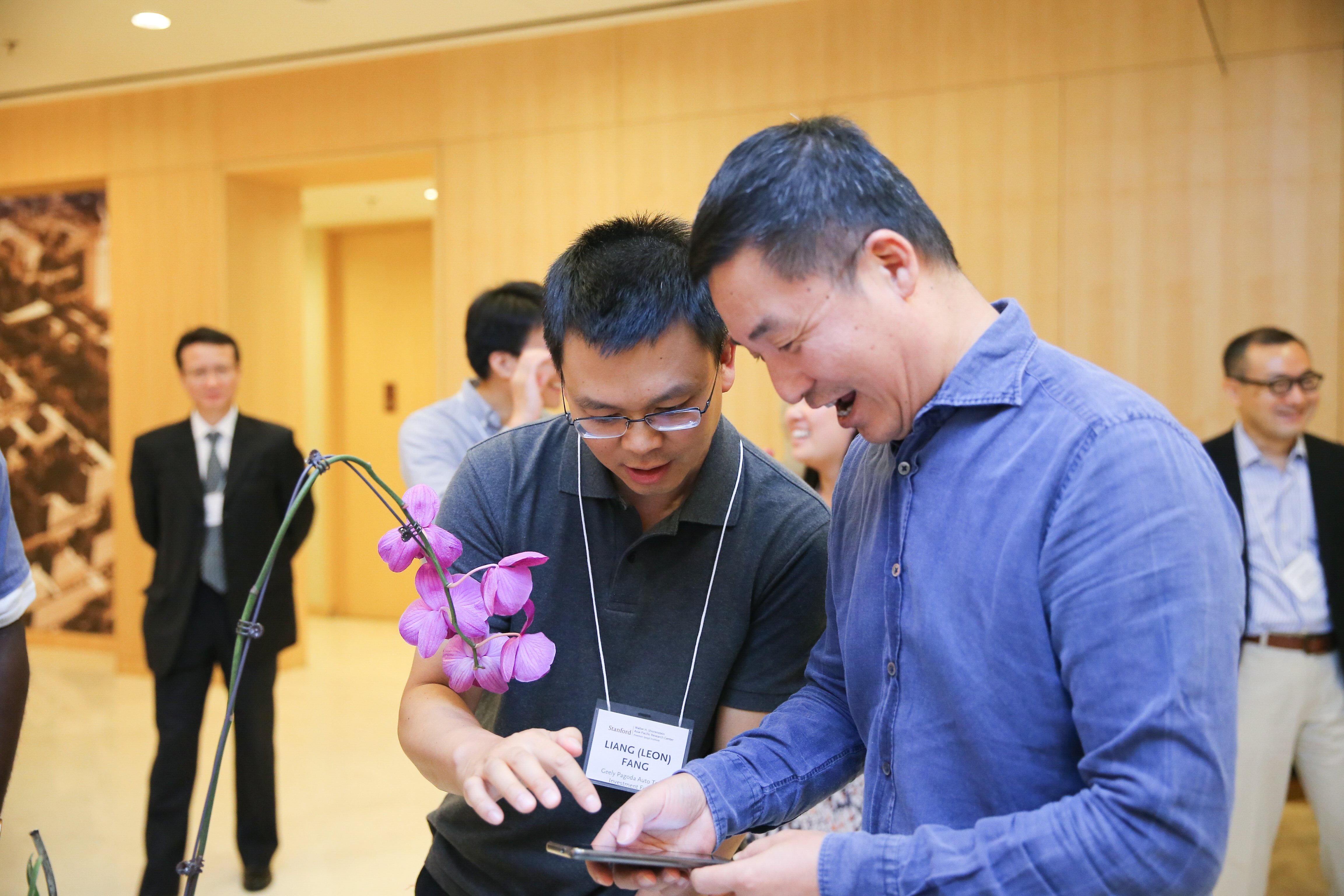
Liang (Leon) Fang (2014-15 Corporate Affiliate, China Sunrain Solar Energy Co., Ltd.) and Zhuoyan Wang (2016-17 Corporate Affiliate, PetroChina)

Liang (Leon) Fang (2014-15 Corporate Affiliate, China Sunrain Solar Energy Co., Ltd.) and Zhuoyan Wang (2016-17 Corporate Affiliate, PetroChina)

Hong Cheng (2016-17 Visiting Scholar, Wuhan University), Lei Guo (2016-17 Visiting Scholar, Peking University), Professor Takeo Hoshi, and Jianxiong Liu (2016-17 Visiting Scholar, Chinese Academy of Social Sciences)

Hong Cheng (2016-17 Visiting Scholar, Wuhan University), Lei Guo (2016-17 Visiting Scholar, Peking University), Professor Takeo Hoshi, and Jianxiong Liu (2016-17 Visiting Scholar, Chinese Academy of Social Sciences)

Professor Jean Oi and Guofeng Sun (2003-04 Corporate Affiliate, Research Institute of People’s Bank of China)
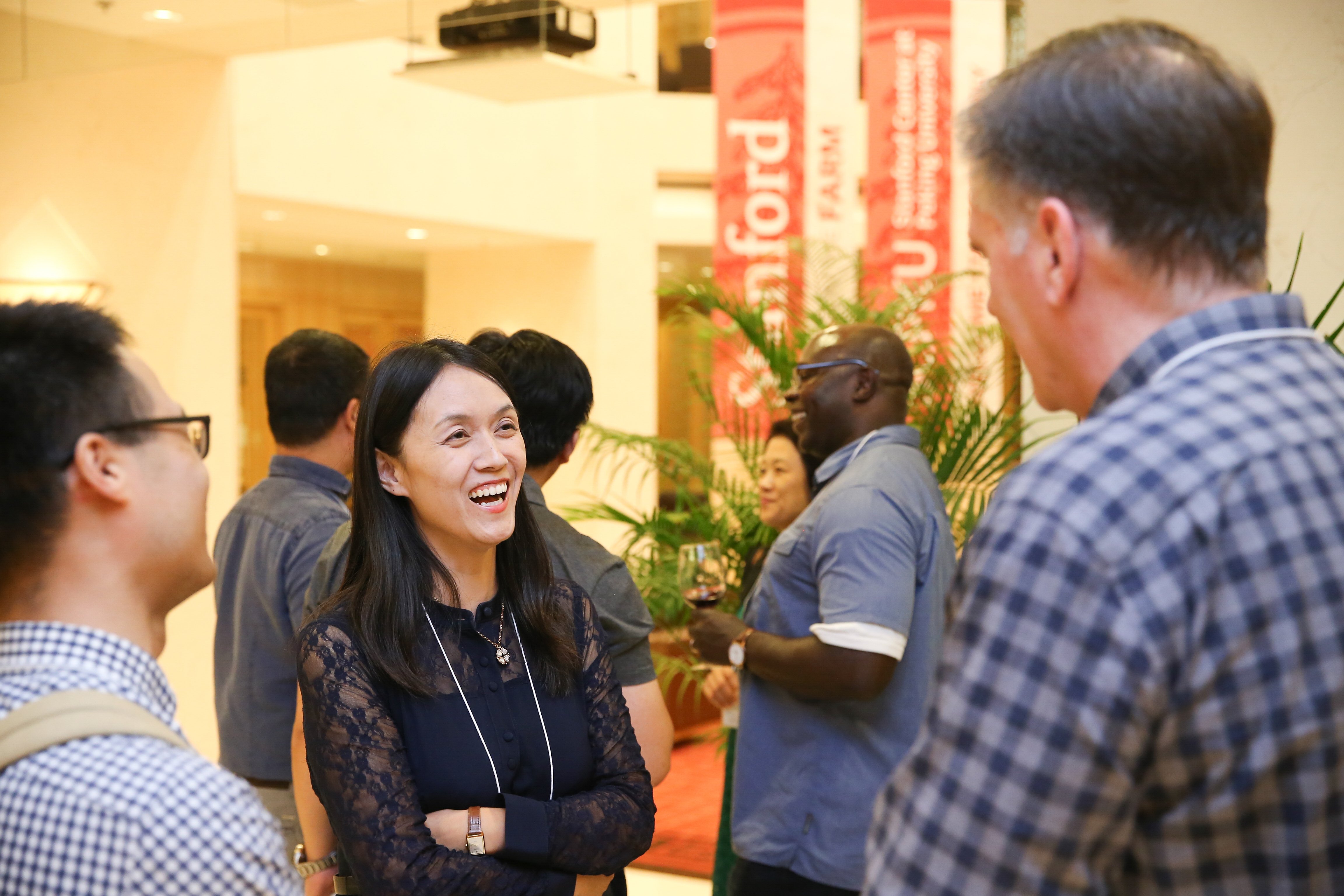
Professor Jean Oi and Guofeng Sun (2003-04 Corporate Affiliate, Research Institute of People’s Bank of China)

Lei Guo, 2016-17 Visiting Scholar from Peking University, and Professor Andy Walder

Lei Guo, 2016-17 Visiting Scholar from Peking University, and Professor Andy Walder

Image
Beijing reception on September 10, 2018
Beijing reception on September 10, 2018

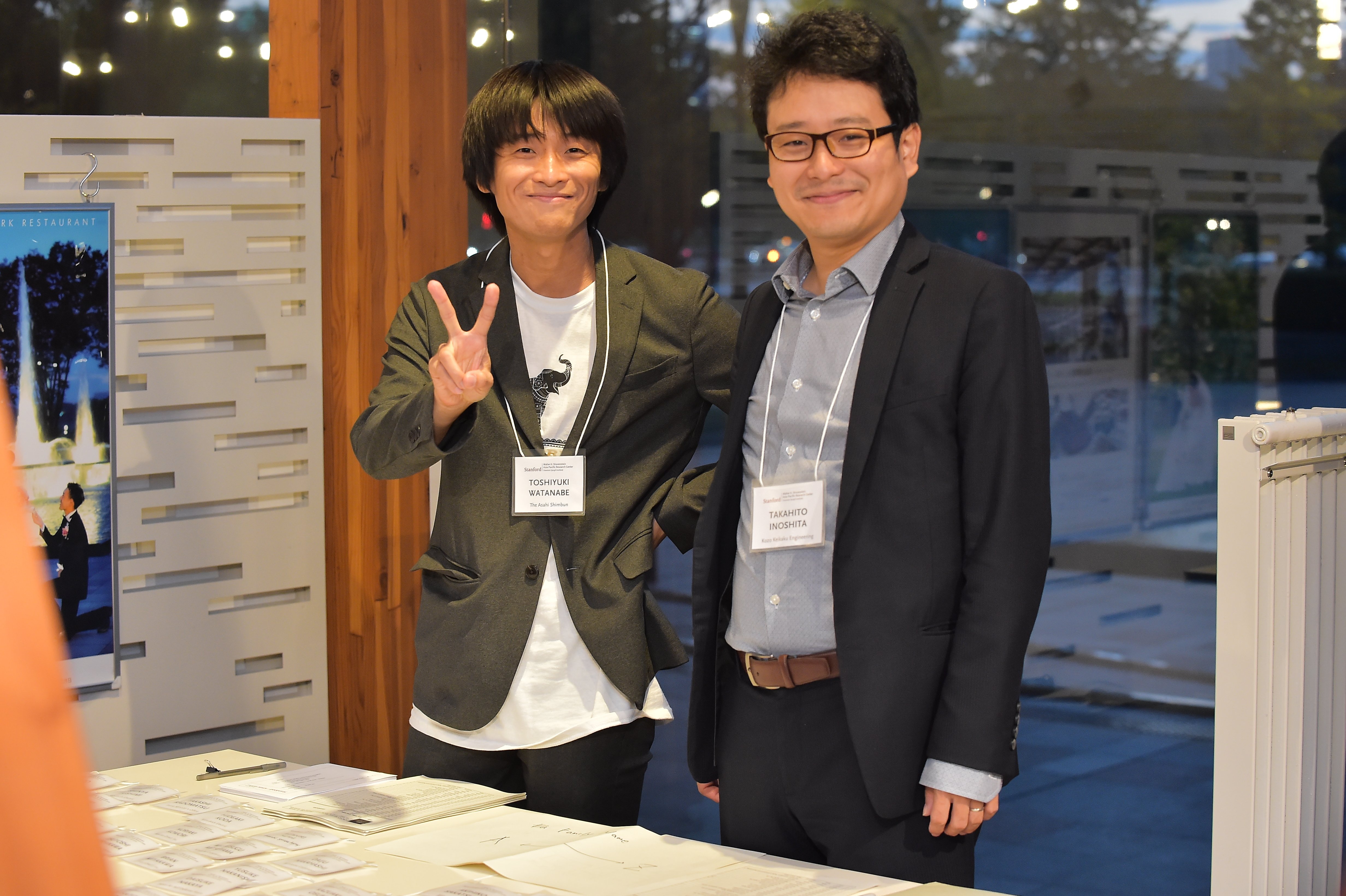
Toshiyuki Watanabe (2017-18 Corporate Affiliate, The Asahi Shimbun) and Takahito Inoshita (2017-18 Corporate Affiliate, Kozo Keikaku Engineering)

Toshiyuki Watanabe (2017-18 Corporate Affiliate, The Asahi Shimbun) and Takahito Inoshita (2017-18 Corporate Affiliate, Kozo Keikaku Engineering)

Hiroyuki Fukano (1988-89 Corporate Affiliate, ITOCHU Corporation)

Hiroyuki Fukano (1988-89 Corporate Affiliate, ITOCHU Corporation)

Takashi Imoto (1998-99 Corporate Affiliate, Kansai Electric Power Company), Yasuhiro Kanda (2005-06 Corporate Affiliate, Kansai Electric Power Company), and Professor Takeo Hoshi

Takashi Imoto (1998-99 Corporate Affiliate, Kansai Electric Power Company), Yasuhiro Kanda (2005-06 Corporate Affiliate, Kansai Electric Power Company), and Professor Takeo Hoshi

Aki Takahashi (2015-17 Corporate Affiliate, Nissoken), Kenichi Kamai and Kimie Kawamoto (affiliate representatives from Nissoken)

Aki Takahashi (2015-17 Corporate Affiliate, Nissoken), Kenichi Kamai and Kimie Kawamoto (affiliate representatives from Nissoken)

Ryuichiro Takeshita (2014-15 Corporate Affiliate, Huff Post Japan), Toshiyuki Watanabe (2017-18 Corporate Affiliate, The Asahi Shimbun) and Takahito Inoshita (2017-18 Corporate Affiliate, Kozo Keikaku Engineering)
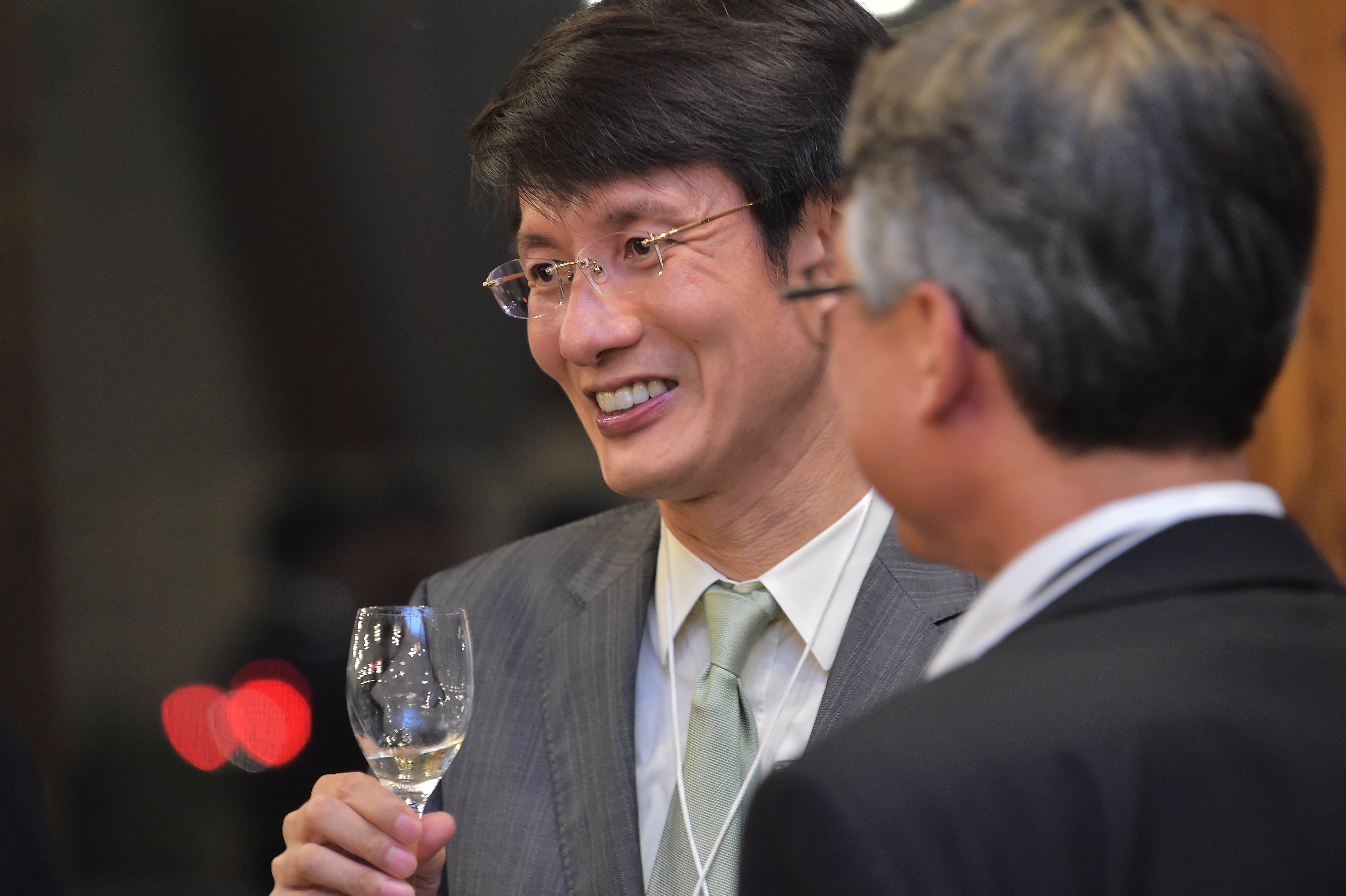
Ryuichiro Takeshita (2014-15 Corporate Affiliate, Huff Post Japan), Toshiyuki Watanabe (2017-18 Corporate Affiliate, The Asahi Shimbun) and Takahito Inoshita (2017-18 Corporate Affiliate, Kozo Keikaku Engineering)

Yotaro Akamine (2007-08 Corporate Affiliate, Tokyo Electric Power Company)

Yotaro Akamine (2007-08 Corporate Affiliate, Tokyo Electric Power Company)

Professor Gi-Wook Shin and Keiichi Uruga (2013-14 Corporate Affiliate, Ministry of Economy, Trade & Industry, Japan)
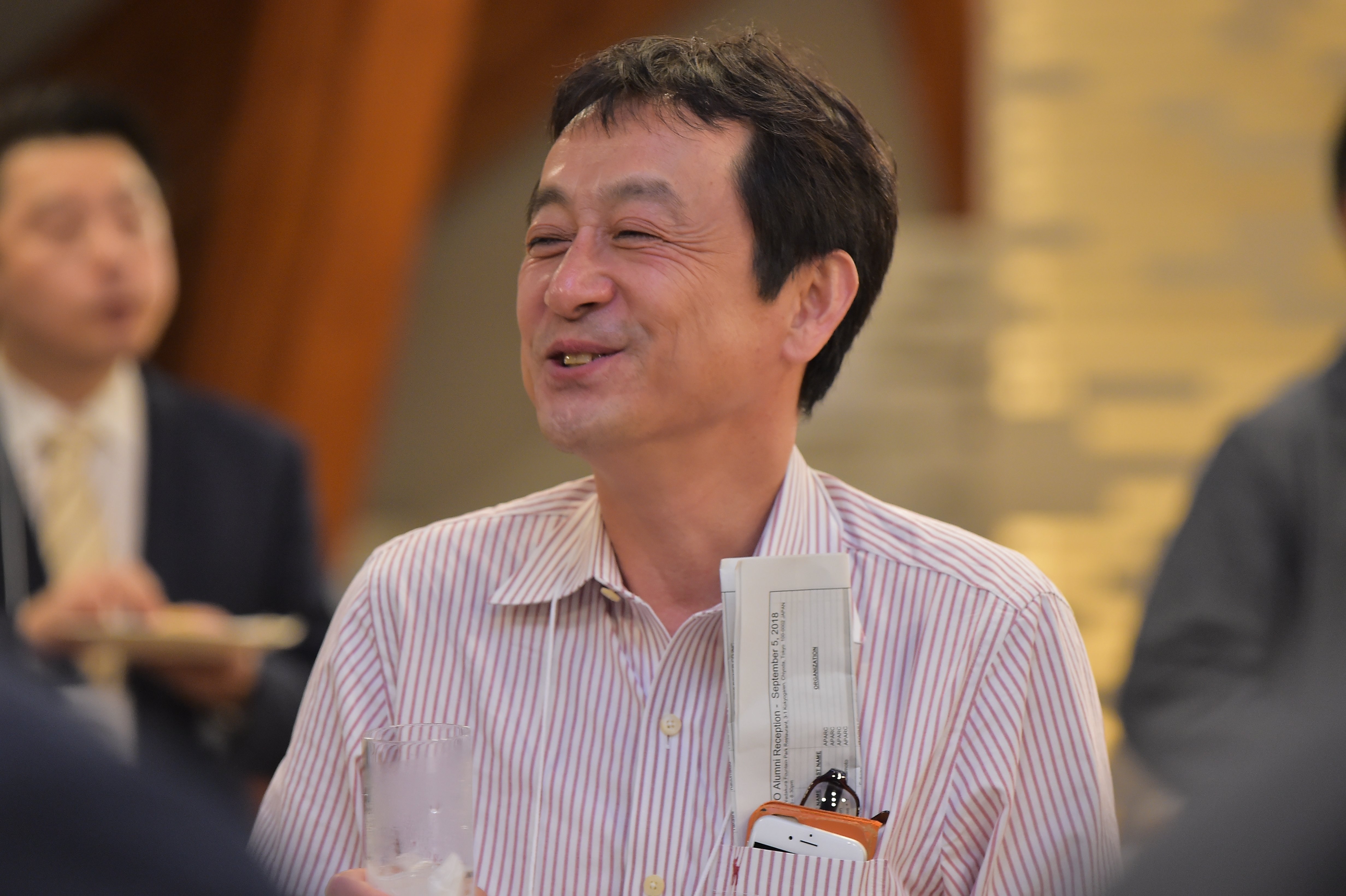
Professor Gi-Wook Shin and Keiichi Uruga (2013-14 Corporate Affiliate, Ministry of Economy, Trade & Industry, Japan)

Tadashi (Brian) Miyakawa (2000-01 Corporate Affiliate, IBM, Japan)

Tadashi (Brian) Miyakawa (2000-01 Corporate Affiliate, IBM, Japan)

Yohei Saito (2016-17 Corporate Affiliate, Future Architect Inc.), Col. Daisuke Nakaya (2016-17 Corporate Affiliate, Japan Air Self Defense Force), Akihiko Sado (2016-17 Corporate Affiliate, The Asahi Shimbun), Hiroki Morishige (2016-18 Corporate Affiliate, Shizuoka Prefectural Government) and Aki Takahashi (2015-17 Corporate Affiliate, Nissoken)

Yohei Saito (2016-17 Corporate Affiliate, Future Architect Inc.), Col. Daisuke Nakaya (2016-17 Corporate Affiliate, Japan Air Self Defense Force), Akihiko Sado (2016-17 Corporate Affiliate, The Asahi Shimbun), Hiroki Morishige (2016-18 Corporate Affiliate, Shizuoka Prefectural Government) and Aki Takahashi (2015-17 Corporate Affiliate, Nissoken)

Tokyo reception on September 5, 2018

Tokyo reception on September 5, 2018

Hero Image
Group photo of Global Affiliates Program participants for 2019-20. Rod Searcey
All News button
1
Paragraphs

On August 9, 2018, the Shorenstein Asia Pacific Research Center (APARC) hosted a conference, “Break Through: Women in Silicon Valley, Womenomics in Japan" with support from the Acceleration Program in Tokyo for Women (APT). Women thought-leaders and entrepreneurs from Stanford, Silicon Valley, and Japan came together to discuss innovative ideas for narrowing the gender gap, and cultivated interpersonal support networks and collaboration across the Pacific. The report, which is an outcome of the conference, offers an analysis and discussion of the themes and takeaways from the day. 

All Publications button
1
Publication Type
Policy Briefs
Publication Date
Journal Publisher
Japan Program at the Shorenstein Asia-Pacific Research Center
-

Image
APARC Annual Holiday Party 2018

-

The idea that good management practices matter for organizational performance is widely accepted. An expanding literature suggests that better management practices improve the performance of organizations in various industries including manufacturing, health care, education, and government. In this paper we aim to present a more contextualized perspective. In particular, we examine how management practices affect performance in complex organizations that have multiple and potentially competing performance goals, that is, higher education.

 
To examine the impact of management practices on teaching and research outcomes, we analyze unique, nationally representative, and granular data that we collected from close to 300 university departments, 5,000 faculty, and 40,000 students in India. Through analyzing these data, we produce three novel sets of findings. First, we find that better management practices, on average, do not have significant effects on domain-specific or domain-general aspects of student learning. Any positive relationship between management practices and student learning disappears once we control for selection by student ability into institutions. Second, and by contrast, we find that better management practices—in particular better target-setting and performance-oriented practices—significantly increase faculty research productivity. Third, we find that the effect of better management practices depends on the performance goals of institutions.

This lecture is part of the 2018-2019 South Asia Colloquia series co-sponsored by Shorenstein APARC and the Center for South Asia

Image

Philippines Conference Room
Encina Hall, 3rd Floor
616 Serra Mall, Stanford, CA 94305

0
Former SK Center Fellow at the Freeman Spogli Institute for International Studies
yong_resize2.jpg PhD, MPP

Yong Suk Lee was the SK Center Fellow at the Freeman Spogli Institute for International Studies and Deputy Director of the Korea Program at the Walter H. Shorenstein Asia-Pacific Research Center at Stanford University. He served in these roles until June 2021.

Lee’s main fields of research are labor economics, technology and entrepreneurship, and urban economics. Some of the issues he has studied include technology and labor markets, entrepreneurship and economic growth, entrepreneurship education, and education and inequality. He is also interested in both the North and South Korean economy and has examined how economic sanctions affect economic activity in North Korea, and how management practices and education policy affect inequality in South Korea. His current research focuses on how the new wave of digital technologies, such as robotics and artificial intelligence affect labor, education, entrepreneurship, and productivity.

His research has been published in both economics and management journals including the Journal of Urban Economics, Journal of Economic Geography, Journal of Business Venturing, Journal of Health Economics, and Labour Economics. Lee also regularly contributes to policy reports and opinion pieces on contemporary issues surrounding both North and South Korea.

Prior to joining Stanford, Lee was an assistant professor of economics at Williams College in Massachusetts. He received his Ph.D. in Economics from Brown University, a Master of Public Policy from Duke University, and a Bachelor's degree and master's degree in architecture from Seoul National University. Lee also worked as a real estate development consultant and architecture designer as he transitioned from architecture to economics.

While at APARC, Dr. Lee led and participated in several research projects, including Stanford-Asia Pacific Innovation; Digital Technologies and the Labor Market; Entrepreneurship, Technology, and Economic Development; The Impact of Robotics on Nursing Home Care in Japan; Education and Development in the Digital Economy; and New Media and Political Economy.

Former Deputy Director of the Korea Program at Shorenstein APARC
<i>Stanford University</i>
Prashant Loyalka <i>Stanford University</i>
<i>Stanford University</i>
-

Malaysia's ruling National Front (BN) coalition ran one of the most durable authoritarian governments in the world. But in May 2018, a coalition of opposition parties won power, unseating the BN government for the first time in 61 years. In two complementary talks, APARC scholars Sophie Lemière and Sebastian Dettman will examine the roots of this victory in light of the strategies, coalitions, and messianic messages used by the opposition. Using findings from their fieldwork in Malaysia, they will show how and why the opposition parties were successful and draw implications of the victory for Malaysia’s future under its new coalition government. The speakers will also convey broader insights about political competition in Southeast Asia’s semi-authoritarian polities and beyond.    

Image
dettman cropped
Sebastian Dettman completed his doctorate in the Department of Government at Cornell University in 2018. He researches party building, electoral competition, and political representation in newly democratic and authoritarian regimes, with a focus on Southeast Asia. Sebastian has an MA in Southeast Asian Studies from the University of Michigan and has worked as a consultant and researcher for organizations including the Asia Foundation, the International Crisis Group, and the Carter Center.


Image
lemiere cropped
Sophie Lemière is a political anthropologist in the Ash Center for Democracy at Harvard University. At Stanford she is working on a political biography of Malaysia’s current prime minister that features his recent election campaign. She is the editor of a series of books on politics and people in Malaysia, including Gangsters and Masters (2019), Illusions of Democracy (2017), and Misplaced Democracy (2014). She has held visiting research positions at universities in Singapore, Australia, and the US. Her PhD is from Sciences-Po in Paris.


Philippines Conference Room
Encina Hall, 3rd Floor
616 Serra Mall, Stanford, CA 94305

Sebastian Dettman 2018-19 Shorenstein Postdoctoral Fellow on Contemporary Asia
Sophie Lemière 2018-19 Lee Kong Chian NUS-Stanford Fellow on Contemporary Southeast Asia
Seminars
-

Populist leaders around the world often fight against corruption in an effort to win public support. Conventional wisdom holds that this strategy works because leaders can signal their benevolent intentions by removing corrupt officials. We argue that fighting against corruption can produce unintended consequences. By revealing scandals of corrupt officials, anti-corruption campaigns can alter citizens’ beliefs about public officials and lead to disenchantment about political institutions. We test this argument by examining how China’s current anti-corruption campaign has changed citizens’ public support for the government and the Communist Party. We analyze the results of two surveys conducted before and during the campaign, and employ a difference-in-differences strategy to show that corruption investigations decrease respondents’ support for the central government and party. We also examine our respondents’ prior and posterior beliefs, and the results support our updating mechanism. 

SPEAKER:
Image
Yuhua Wang
 
Yuhua Wang is an assistant professor in the Department of Government at Harvard University. He received his B.A. from Peking University and his Ph.D. from the University of Michigan. Yuhua's research has focused on the emergence of state institutions, with a regional focus on China. Yuhua is the author of Tying the Autocrat’s Hands: The Rise of the Rule of Law in China (Cambridge University Press, 2015). He is currently working on a book-length project to examine long-term state development in China. 

Philippines Conference Room
Encina Hall, 3rd Floor
616 Serra Mall
Stanford, CA 94305

Yuhua Wang Assistant Professor, Department of Government at Harvard University
Subscribe to International Relations