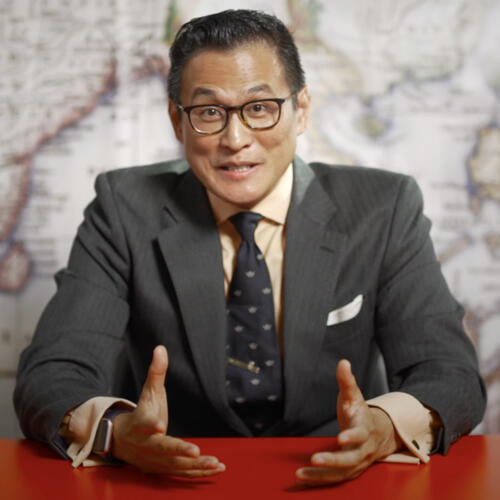
International Relations

FSI researchers strive to understand how countries relate to one another, and what policies are needed to achieve global stability and prosperity. International relations experts focus on the challenging U.S.-Russian relationship, the alliance between the U.S. and Japan and the limitations of America’s counterinsurgency strategy in Afghanistan.

Foreign aid is also examined by scholars trying to understand whether money earmarked for health improvements reaches those who need it most. And FSI’s Walter H. Shorenstein Asia-Pacific Research Center has published on the need for strong South Korean leadership in dealing with its northern neighbor.

FSI researchers also look at the citizens who drive international relations, studying the effects of migration and how borders shape people’s lives. Meanwhile FSI students are very much involved in this area, working with the United Nations in Ethiopia to rethink refugee communities.

Trade is also a key component of international relations, with FSI approaching the topic from a slew of angles and states. The economy of trade is rife for study, with an APARC event on the implications of more open trade policies in Japan, and FSI researchers making sense of who would benefit from a free trade zone between the European Union and the United States.

-

Singapore’s government is widely seen as competent, honest, and meritocratic—an exceptional case of post-colonial governance.  Nor can any elected incumbent party anywhere match Singapore’s People’s Action Party’s 59-year record of uninterrupted rule.  But recent events have cast doubt on the PAP government’s reputation for performance and stability.  Despite acknowledging its need for new leaders, the government has been unable to select a clear successor to the current prime minister, even as his talented and popular deputy is sidelined, apparently due to his ethnic-minority background.  When the government tried to ascertain public opinion on legislation against “deliberate online falsehoods,” the exercise descended into name-calling and threats against witnesses.  Resentments have meanwhile risen over socioeconomic inequality and the mismanagement of public transport, housing, and health care.

How did this happen? In his talk, Dr. Thum will explore the historical forces that have shaped Singapore's politics and governance; explain the political economy of decision-making there; and recount his own experience with the turmoil affecting the country's government.  He will argue that Singapore's post-colonial independence and governance are an evolution of—not from—British colonial rule.  The government is responsive and accountable to international capital.  But the PAP needs the approval of voting citizens to legitimize its continuation in power. The party’s leaders embody this dilemma in their struggles to reconcile two such different and competing sets of interests.

Image
pj thum cropped
Thum Ping Tjin (“PJ”) is a historian. He founded and serves as managing director of New Naratif (www.newnaratif.com), a Southeast Asian platform for research, journalism, art, and community organization that supports democracy and human rights.  He is also a founding director of Project Southeast Asia, an interdisciplinary research cluster on the region at the University of Oxford.  A Rhodes Scholar, Commonwealth Scholar, Olympic athlete, and the only Singaporean to have swum the English Channel, his scholarship centers on the history of Southeast Asian governance and politics.  In March 2018 he was questioned for six hours by Singapore’s minister for law and home affairs for his criticism of statements and actions undertaken by PAP politicians acting under internal security laws in Singapore during the Cold War.

Philippines Conference Room Encina Hall, 3rd Floor 616 Serra Street, Stanford, CA 94305
Thum Ping Tjin Visiting Research Fellow, University of Oxford
Seminars
Paragraphs

This third volume in the Japan Decides series remains the premier venue for scholarly research on Japanese elections. Spotlighting the 2017 general election, the contributors discuss the election results, party politics, coalition politics with Komeito, the cabinet, constitutional revision, new opposition parties, and Abenomics. Additionally, the volume looks at campaigning, public opinion, media, gender issues and representation, North Korea and security issues, inequality, immigration and cabinet scandals. With a topical focus and timely coverage of the latest dramatic changes in Japanese politics, the volume will appeal to researchers and policy experts alike, and will also make a welcome addition to courses on Japanese politics, comparative politics and electoral politics.

Chapter 15, Abenomics' Third Arrow: Fostering Future Competitiveness?, was written by Shorenstein APARC Research Scholar, Kenji Kushida.

All Publications button
1
Publication Type
Books
Publication Date
Authors
Kenji E. Kushida
Paragraphs

The digital transition of the world economy is now entering a phase of broad and deep societal impact. While there is one overall transition, there are many different sectoral transformations, from health and legal services to tax reports and taxi rides, as well as a rising number of transversal trends and policy issues, from widespread precarious employment and privacy concerns to market monopoly and cybercrime. This Research Handbook offers a rich and interdisciplinary synthesis of some of the recent research on the digital transformations currently under way.

This comprehensive study contains chapters covering sectoral and transversal analyses, all of which are specially commissioned and include cutting-edge research. The contributions featured are global, spanning four continents and seven different countries, as well as interdisciplinary, including experts in economics, sociology, law, finance, urban planning and innovation management. The digital transformations discussed are fertile ground for researchers, as established laws and regulations, organizational structures, business models, value networks and workflow routines are contested and displaced by newer alternatives.

This book will be equally pertinent to three constituencies: academic researchers and graduate students, practitioners in various industrial and service sectors and policy makers.

Chapter 17 of this book, The Impact of Digital Technologies on Innovation Policy, was written by Shorenstein APARC Research Scholar Kenji Kushida.

All Publications button
1
Publication Type
Books
Publication Date
Authors
Kenji E. Kushida
News Type
News
Date
Paragraphs

Stanford University’s Walter H. Shorenstein Asia-Pacific Research Center (Shorenstein APARC) is pleased to announce that The Washington Post’s Beijing Bureau Chief Anna Fifield is the 2018 recipient of the Shorenstein Journalism Award. The award, given annually by APARC, is conferred upon a journalist who has produced outstanding reporting on critical issues affecting Asia and has contributed significantly to greater understanding of the region.

Fifield has been selected in recognition of her exceptional work over a long career reporting on the Koreas, as well as on Japan and periodically other parts of Asia. She will receive the award at a special ceremony at Stanford on November 14, 2018. On that day, she will also headline an APARC-hosted panel discussion focusing on how North Korea is, and isn’t, changing under Kim Jong Un.

"We are delighted to honor Anna Fifield with the Shorenstein journalism award," says Gi-Wook Shin, Shorenstein APARC director. "Drawing on her knowledge of Asian societies and her remarkable ability to communicate insights to audiences all around the world, Anna exemplifies how crucial it is to get the complexities of Asia right and the profound role of journalism in shaping public and decision maker approaches to our counterparts in the region. Walter Shorenstein, APARC's benefactor and a champion of Asian-American relations, understood clearly that role. We are committed to upholding Walter's legacy with this award." 

As the Post's Tokyo bureau chief from 2014 to 2018, Fifield’s journalism focused primarily on Japan and the Koreas. During this period, she particularly concentrated on North Korea, working to shed light on the lives of ordinary people there and on how the regime managed to stay in power.

Fifield started as a journalist in her home country of New Zealand, then for 13 years was a correspondent for the Financial Times , covering nearly 20 countries and reporting from, among other places, Sydney, Seoul, Pyongyang, Tehran, Beirut, and finally Washington D.C., where she was White House correspondent and covered the 2012 President election campaign. Prior to joining The Washington Post, Fifield was a fellow at the Nieman Foundation for Journalism at Harvard University, where she studied how change happens in closed societies.

“For many years, Anna Fifield has been the premier Western reporter on Korea, setting the standard for coverage of a story that occupies our front pages," notes Daniel Sneider, a member of the jury for the Shorenstein Award and a long-time foreign correspondent. "But she has also broadened her Asian expertise, as the Tokyo bureau chief for the Post and now in Beijing. She moves easily across the digital as well as the print space and is a crusader for diversity in sourcing. Anna Fifield, in short, is the very definition of a journalist in our modern era.”

Sixteen journalists have previously received the Shorenstein award, which carries a cash prize of $10,000. Among the award’s recent recipients are Siddharth Varadarajan, founding editor of The Wire and former editor of the The Hindu; Ian Johnson, a veteran journalist with a focus on Chinese society, religion, and history; and Yoichi Funabashi, former editor-in-chief of the Asahi Shimbun.

RSVPs for the Shorenstein award panel discussion are requested.


About the 2018 Shorenstein Journalism Award Panel Discussion and Award Ceremony

Shorenstein Journalism Award winner Anna Fifield will deliver a keynote speech and join a panel discussion focusing on how North Korea is, and isn’t, changing under Kim Jong Un. The panel includes Andray Abrahamian, the 2018-19 Koret Fellow in the Korea Program at Shorenstein APARC, and Barbara Demick, New York correspondent of the Los Angeles Times, former head of the bureaus in Beijing and Seoul, and the 2012 recipient of the Shorenstein Journalism Award. The panel will be chaired by Yong Suk Lee, SK Center Fellow at Stanford’s Freeman Spogli Institute for International Studies and Deputy Director of the Korea Program at APARC.

November 14, 2018, 12:00 – 1:30 p.m. (PDT)

Fisher Conference Center at the Frances C. Arrillaga Alumni Center, 326 Galvez St, Stanford, CA 94305

The panel discussion is open to the public. The award ceremony will take place in the evening for a private audience.

RSVPs for the panel discussion are requested.


About the Shorenstein Journalism Award

The Shorenstein Journalism Award, which carries a cash prize of $10,000, honors a journalist not only for a distinguished body of work, but also for the particular way in which that work has helped audiences around the world to understand the complexities of Asia. The award, established in 2002, was named after Walter H. Shorenstein, the philanthropist, activist, and businessman who endowed two institutions that are focused respectively on Asia and on the press: the Walter H. Shorenstein Asia-Pacific Research Center (Shorenstein APARC) in the Freeman Spogli Institute at Stanford University, and the Joan Shorenstein Center on the Press, Politics, and Public Policy in the Kennedy School of Government at Harvard University. In 2010, Shorenstein APARC expanded the scope of the award that since then has recognized Asian journalists who, in addition to their professional excellence and contribution to knowledge of Asia, have helped defend and build a free media in their home countries.


Media contact:
Noa Ronkin, Associate Director for Communications and External Relations
noa.ronkin@stanford.edu
(650) 724-5667

Hero Image
Portrait of Anna Fifield.
All News button
1
616 Serra StreetEncina Hall E301Stanford, CA94305-6055
0
eun_young_park.jpg J.S.D., L.L.M.
Eun Young Park joins the Walter H. Shorenstein Asia-Pacific Research Center (Shorenstein APARC) during the 2018-2019 academic year from the law firm of Kim & Chang where he serves as a partner and co-chair of international arbitration and litigation practice group.  Dr. Park has served as Judge in the Seoul District Court during the Kim Young Sam government. After joining Kim & Chang he has focused on international dispute resolution including trade sanctions, transnational litigation, and international arbitration. He was appointed to Vice-President of the London Court of International Arbitration and a Member of the Court of Arbitration of the Singapore International Arbitration Centre. He has taught in many universities including SKK University School of Law as an adjunct professor. His research focuses on the possibility of establishing dispute resolution mechanism in the transition of East Asian countries. The research interests encompass decisions from international tribunal arising out of international and transnational disputes of various areas including boundaries, economic disputes, and reparation arising out of transitional justice; trends and efforts to establish an independent judicial body to cope with conflicts and disputes in the region. Dr. Park is an editor of Korean Arbitration Review and has published articles including "Appellate Review in Investor State Arbitration," Reshaping the Investor-State Dispute Settlement System: Journeys for the 21st Century and "Rule of Law in Korea," Taiwan University Journal of Law. He is an author of a book entitled "The Analysis of the Iran Sanctions Act of the United States and the Strategy of the Overseas Construction Project” (in Korean). 

He holds a J.S.D. and LL.M. from NYU School of Law and M. Jur. and B. Jur. from Seoul National University.

Visiting Scholar at APARC
0
Lecturer
Koret Fellow, 2018-19
andray_abrahamian.jpg Ph.D.
Andray Abrahamian was the 2018-19 Koret Fellow at Stanford University. He is also an Honorary Fellow at Macquarie University, Sydney and an Adjunct Fellow at the Griffith Asia Institute. He is an advisor to Choson Exchange, a non-profit that trains North Koreans in economic policy and entrepreneurship. He was previously Executive Director and Research Director for Choson Exchange. That work, along with supporting sporting exchanges and a TB project, has taken him to the DPRK nearly 30 times. He has also lived in Myanmar, where he taught at Yangon University and consulted for a risk management company. He has conducted research comparing the two countries, resulting in the publication of "North Korea and Myanmar: Divergent Paths" (McFarland, 2018). Andray has published extensively and offers expert commentary on Korea and Myanmar, including for US News, Reuters, the New York Times, Washington Post, Lowy Interpreter and 38 North.  He has a PhD in International Relations from the University of Ulsan, South Korea and an M.A. from the University of Sussex where he studied media discourse on North Korea and the U.S.-ROK alliance, respectively. Andray speaks Korean, sometimes with a Pyongyang accent.
Authors
News Type
Q&As
Date
Paragraphs


A Q&A with Paul Schuler

by Thom Holme

The start of a new academic year is always filled with excited anticipation by all of us at Shorenstein APARC. We're delighted to welcome a diverse cohort of accomplished postdoctoral fellows, research fellows, and visiting scholars to our research community for the 2018-19 academic year. Among them is Paul Schuler, who joins the Center as a Lee Kong Chian Fellow on Southeast Asia.

The Lee Kong Chian Visiting Fellowship on Southeast Asia is part of a joint initiative by the National University of Singapore (NUS) and Stanford, whose aim is to raise the visibility, extent, and quality of research on contemporary Southeast Asia. Here at Stanford, the infrastructures for research is supported by our Southeast Asia Program.

I recently spoke with Shuler about his research plans for the duration of his fellowship. An assistant professor at the University of Arizona's School of Government and Public Policy, Schuler specializes in institutions and public opinion within authoritarian regimes, with a particular focus on Vietnam. He was also a 2014-15 Shorenstein Postdoctoral Fellow on Contemporary Asia. The following conversation has been edited for clarity and length.

Q. Welcome back to Stanford! What's it like being at APARC once more?

A. It's great! It feels like I'm coming home again. It's very rare to have an institution with so much expertise on East Asia as APARC, and that contextual knowledge helps both inform the issues I'm working on and generate new research ideas. The opportunity to benefit from intellectual exchange with China experts at Stanford would be especially useful for me as I'm writing a book comparing the evolution of particular Vietnamese political institutions to those in China.

Q. What are some findings we might expect to see in this publication?

A. It is often assumed that, in China and in Vietnam, democratic politics and elections have been slowly becoming more meaningful, and that the forces that support or push for these quasi-democratic openings are the reform-minded people or the soft-liners in the regimes.

My argument is that the expansion of these democratic forces in Vietnam isn't always driven by soft-liners or reform-minded people wanting to open the institutions for democratic purposes. Oftentimes, the more conservative elements of authoritarian regimes are the ones looking to attack their more reform-minded rivals within the party. In some cases, it's actually the conservatives and the hardliners who increase the visibility of the democratic institutions for such short-term tactical reasons.

However, it's very hard to shut down the institutions once they open up. So, in some ways, conservatives facilitate democratization, but not because it was initially pushed by people supporting that process.

What trust actually does, in our opinion, is breed conservatism. If you happen to live in a democracy, then it's great because it helps breed support for that system; if you live in an autocracy, then it means that it is also hard to change that system...

Paul Schuler

Q. What drew you to research political behavior of institutions within authoritarian regimes, and specifically in Vietnam?

A: I’m fascinated by how political systems evolved the way they did. In the United States, people are largely drawn to politics because of the captivating figures and their personalities, the elections, the campaigns. By contrast, politics in Vietnam is very different. What you read in the newspapers is very much an attempt to play down the individual. In fact, many people in Vietnam have a hard time naming their politicians and top leaders.

And while this situation has changed somewhat in China with Xi Jinping, in Vietnam it's still the case that people don't have that high level of engagement with politicians that we see in democracies. And so I wondered, "How do people engage with politics? Is this, in fact, a better arrangement? Are the people satisfied with it, or just take it for granted? And, ultimately, what would it take to change that type of system?”

Q. You're working on a coauthored paper for the journal Comparative Politics on the link between trust and democratic regime change. What is the connection between the two, and how is it related to engagement with politicians—or lack thereof?

A. With counties like Vietnam, one of the topics that people are most interested in is if—and when—there will be a transition to a more democratic system. Vietnam, like China, has been shown to have a high-degree of social trust. Francis Fukuyama observed how trust helps facilitate democracy, given that people are willing to make compromises with others if they somehow trust them. Vietnam and China are anomalous in that regard because both exhibit high levels of this generalized trust, yet they are obviously not democracies. In our forthcoming paper, my coauthor and I theorize that trust does not facilitate democracy; rather, what it does is facilitate support for whatever the status quo happens to be. People who are highly trusting assume that whatever system is currently in place must be working.

What trust actually does, in our opinion, is breed conservatism. If you happen to live in a democracy, then it's great because it helps breed support for that system; if you live in an autocracy, then it means that it is also hard to change that system to something new, because generalized trust basically makes people adverse to change. We find that in Vietnam, people who score higher in this sort of trust are much less likely to advocate for regime reforms.

Q. You mentioned president Xi Jinping and the shift he represents for China. Do you see the Xi model as having influence on Vietnam’s evolution?

A. There is always a debate in Vietnam as to whether or not they should follow certain choices made by China. China, on average, has grown 2-3% faster than Vietnam annually. And while Vietnam has done very well, there is this sense for some that moving towards a system that looks more like China could actually help further increase their growth.

There are people, particularly in the Organization Committee in Vietnam and at higher levels in the Politburo, who are trying reduce the division between the party and the state; trying to centralize power in party institutions. It's not yet clear whether they'll be able to go as far as China did, let alone if they will be successful at putting forward the reforms they've already suggested.

One big difference is that in Vietnam, the president and the general secretary are different positions, whereas in China, Xi Jinping holds both roles. While there have been attempts by Vietnamese general secretaries to combine these positions, they have been rebuffed by the central committee, and I don't think that's going to happen. And while Vietnam is making changes elsewhere that mirror China, I think the greater degree of separation between the government and the party will probably survive.

Q. Social media’s impact on democracy and influence on the public’s trust in government are hotly debated issues today, both in the United States and in Southeast Asia. What have you observed in Vietnam in that regard?

A. It’s hard to study to the impact of social media on political attitudes, but one thing I've found through surveys is that people who are active online appear more likely to find their local government corrupt. They also tend to be more pessimistic about corruption.

In Vietnam, another thing we found is that social media may have different effects depending on whether one lives in an urban or rural area. There’s evidence that social media in rural areas might actually inhibit protests and social movements, because the central government is much more aware of what is happening in the countryside and can quickly launch a crackdown on protesters.

In urban areas, however, the dynamics are somewhat different: the conditions exist for more spontaneous protest, as horizontal communication overwhelms the central government’s ability to move in and stop it.

So yes, I believe social media is having an impact on people’s relationship to the government in Vietnam, but it's a complex impact. To some extent, it is inhibiting the possibilities for rural revolt, but at the same time it’s helping to facilitate spontaneous urban protest movements.

LKC Fellow Talk

On September 27, 2018, Paul Schuler delivers his seminar "Shadows on the Wall: Legislative Politics in Post-Reform Vietnam"


RSVP Now

Hero Image
A woman wearing Ao Dai culture traditional at Ho chi minh city hall in Vietnam. Natnan Srisuwan via iStock/ Getty Images Plus
All News button
1
-

Image
pekida 440

In Malaysia, criminality is a highly political question, and that is mainly why local scholarship on the topic is rare. Yet political participation by outlaws and criminalized groups is not new. Begun in 2008, Dr. Lemière’s research explores uncharted territory: how criminality related to politics in semi-authoritarian Malaysia, with a focus on the ruling party (UMNO) from 2008 to 2018.  She shows how gangs have created umbrella (Malay) NGOs, like Pekida (shown here in caricature), to formalize their ties to political parties. For gangs, political militancy has become a business; political parties (mostly UMNO) have sub-contracted political actions and violence to such groups. Dr. Lemière’s research raises question regarding the nature of civil society and democratization, and offers a new perspective of ethno-religious controversies and clashes in the 20th and 21st centuries.

Sophie Lemière is a political anthropologist at Harvard’s Ash Center for Democracy in its program on Democracy in Hard Places. Her research examines the nexus between religion, politics, and criminality in a comparative perspective. She will be at Stanford in the fall before transferring to the National University of Singapore in the spring.

Dr. Lemière has held research positions in Singapore at the Asia Research Institute (NUS) and the S. Rajaratnam School of International Studies (NTU).  She has been a visiting fellow at the University of Sydney, Cornell, UC Berkeley, and Columbia. She received her PhD from Sciences-Po in Paris. Her dissertation was the first study on the political links between gangs and umbrella NGOs in Malaysia.  Her master’s research on apostasy controversies and Islamic civil society was awarded second prize for young scholars by the International Institute for the Study of Islam in the Modern World (1998-2008) in Leiden.

Dr. Lemière believes it is essential for academics to disseminate their research findings widely, especially in the countries they study. Accordingly, her publications have been written both general and academic readers within and beyond Malaysia. She is the editor of a series of books on “Malaysian Politics and People.” Misplaced Democracy was released in 2014.  Illusions of Democracy (2017) will be re-published in 2018, and a third volume is expected in 2019, when her monograph “Gangsters and Masters: Complicit Militancy and Authoritarian Politics” will also appear. She is currently working on a political biography of Malaysia’s current prime minister during his recent campaign: “The Last Game: Malaysian Politics through Mahathir’s Eyes.”

Dr. Lemière maintains a blog on Mediapart and contributes regularly to New Mandala, The Conversation, Le Monde, and Libération among other outlets.  She has also begun to develop several documentary film projects with French production companies, including a series on arts and politics. Her first film “9/43” featuring the Malaysian cartoonist Zunar was chosen one of the 25 best movies at the French short-film festival Infracourt in 2016.

Sophie Lemière 2018-19 Lee Kong Chian NUS-Stanford Fellow on Contemporary Southeast Asia
Seminars
-

Recent scholarship suggests that, under authoritarian regimes, quasi-democratic institutions such as elections and legislatures—the velvet gloves of autocratic rule—actually enable political stability and economic growth. The political economies of China and Vietnam are indeed remarkably stable and dynamic, and compared with China’s ostensibly democratic institutions, those in Vietnam are open and raucous. That makes Vietnam a likely place to find election and legislatures performing their hypothetically salutary functions.  But are they?

Even in Vietnam, Prof. Schuler will argue, the legislature’s main function is to convey regime strength and cow possible opposition.  Using evidence drawn from more than ten years of fieldwork, survey research, and close readings of legislative debates and the debaters’ lives, he finds that electoral and legislative activity reflect intra-party debates rather than genuine citizen opinion. His results should temper expectations that such institutions can serve either as safety valves for public discontent or as enablers of tangibly better governance. Single-party legislatures are more accurately seen as propaganda tools that reduce dissent while increasing disaffection. That said, Schuler will acknowledge that opponents of authoritarian rule may manage, under certain conditions, to repurpose seemingly democratic institutions toward undermining the regime whose longevity they were developed to prolong.

Image
schuler pic
Paul Schuler is an assistant professor at the University of Arizona, where he studies Southeast Asian politics, Vietnamese politics, and authoritarian institutions. He guest-lectures and publishes widely. His latest article is “Position Taking or Position Ducking? A Theory of Public Debate in Single-Party Legislatures,” Comparative Political Studies (March 2018). Earlier scholarship has appeared in the American Political Science Review and Comparative Politics, among other outlets. He is fluent in Vietnamese and has served as a UNDP consultant in Vietnam. His political science doctorate was earned with distinction at the University of California, San Diego.


Philippines Conference Room
Encina Hall, 3rd Floor
616 Serra Street, Stanford, CA 94305

Shorenstein APARC616 Serra StreetEncina Hall E301Stanford, CA 94305-6055
0
paul_schuler.jpg Ph.D.

Paul Schuler joins the Walter H. Shorenstein Asia-Pacific Research Center as a Lee Kong Chian Southeast Asia Fellow for 2018 from the University of Arizona's School of Government and Public Policy where he is an assistant professor. 

His research focuses on institutions and public opinion within authoritarian regimes, with a particular focus on Vietnam. During his fellowship, he will be completing a book project on the evolution of the Vietnam National Assembly since 1986, which he compares to the Chinese National People's Congress. During his fellowship, he will also begin projects examining public support in Vietnam for climate change mitigation policies as well as other research on the role of personality in determining regime support. For more information on these projects, see his website: www.paulschuler.me.

Schuler's other work has appeared in top-ranking journals such as American Political Science Review, Legislative Studies Quarterly, Comparative Political Studies, and the Journal of East Asian Studies. He holds a Ph.D in political science from the University of California, San Diego. 

2018-2019 Lee Kong Chian NUS-Stanford Fellow on Contemporary Southeast Asia, Visiting Scholar
2014-2015 Shorenstein Postdoctoral Fellow on Contemporary on Contemporary Asia
2018-19 Lee Kong Chian NUS-Stanford Fellow on Contemporary Southeast Asia
Seminars
Subscribe to International Relations