International Relations

FSI researchers strive to understand how countries relate to one another, and what policies are needed to achieve global stability and prosperity. International relations experts focus on the challenging U.S.-Russian relationship, the alliance between the U.S. and Japan and the limitations of America’s counterinsurgency strategy in Afghanistan.

Foreign aid is also examined by scholars trying to understand whether money earmarked for health improvements reaches those who need it most. And FSI’s Walter H. Shorenstein Asia-Pacific Research Center has published on the need for strong South Korean leadership in dealing with its northern neighbor.

FSI researchers also look at the citizens who drive international relations, studying the effects of migration and how borders shape people’s lives. Meanwhile FSI students are very much involved in this area, working with the United Nations in Ethiopia to rethink refugee communities.

Trade is also a key component of international relations, with FSI approaching the topic from a slew of angles and states. The economy of trade is rife for study, with an APARC event on the implications of more open trade policies in Japan, and FSI researchers making sense of who would benefit from a free trade zone between the European Union and the United States.

-

This event is part of Shorenstein APARC’s fall webinar series "Shifting Geopolitics and U.S.-Asia Relations"

REGISTRATION LINK: https://bit.ly/3gPVXlt

Chair/discussant:  Donald K. Emmerson, director, Southeast Asia Program, Shorenstein Asia-Pacific Research Center, Stanford University

Topic:  Analysts of Southeast Asia, struggling to find commonalities that its eleven diverse countries share, have long distinguished the region’s mainland from its maritime portions. Aspects of the contrast include the mainland’s greater proximity to China. A controversial hypothesis follows: that subcontinental Myanmar, Laos, Cambodia, and possibly Thailand (but arguably not Vietnam) are more likely to become peninsular parts of a sphere of influence overseen by China than are the region’s more insular or archipelagic countries—Malaysia, Singapore, Brunei, Indonesia, the Philippines, and Timor-Leste. In support of the mainland versus maritime distinction, historical, cultural, and socioeconomic differences can also be cited. But how much do they really matter? Does the mainland-maritime contrast, for example, enhance or impede the ability of Southeast Asian countries to retain national independence and fashion a common front in defense of the autonomy of their region?  Or is location irrelevant?  And if other factors matter more, which ones, how, and why? The webinar will offer and explore answers to these and related questions.

Image
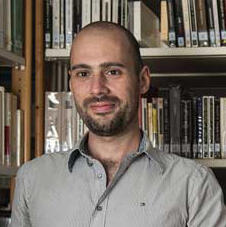
richard_heydararian_090220
Richard Heydarian is an Asia-based academic and columnist, who most recently was a Visiting Fellow at National Chengchi University, and formerly an Assistant Professor in political science at De La Salle University. As a columnist, he has written for the world’s leading publications, including The New York Times, The Guardian, Foreign Affairs, and is a regular contributor to Aljazeera English, Nikkei Asian Review, South China Morning Post, and the Straits Times. He is the author of, among other books, The Rise of Duterte: A Populist Revolt against Elite Democracy (Palgrave Macmillan, 2017) and The Indo-Pacific: Trump, China, and the New Struggle for Global Mastery (Palgrave Macmillan, 2019). As a policy adviser, he has advised Philippine presidential candidates, presidential cabinet members, senators, and the Armed Forces of the Philippines, and is also a television host in GMA Network in the Philippines.

Image
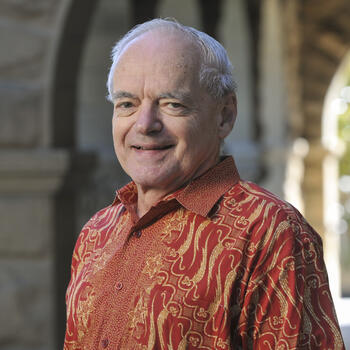
Ann Marie Murphy 090120
Ann Marie Murphy is Professor at the School of Diplomacy and International Relations, Seton Hall University, Senior Research Scholar at the Weatherhead East Asian Institute, Columbia University, and 2019-2010 ASEAN Research Program Fulbright Scholar.

Dr. Murphy's research interests include international relations and comparative politics in Southeast Asia, U.S. foreign policy toward Asia, and governance of non-traditional security issues.  She is co-author (with Amy Freedman) of Non-Traditional Security Issues in Southeast Asia: the Transnational Dimension, (2018) and co-editor (with Bridget Welsh) of Legacies of Engagement in Southeast Asia (2008). Dr. Murphy’s articles have appeared in journals such as Asian Security, Contemporary Southeast Asia, Orbis, Asia Policy, World Politics Review and PS: Political Science & Politics.  Dr. Murphy is a founding partner of the New York Southeast Asia Network and is currently completing a book on the impact of democracy on Indonesian foreign policy with the generous support of the Smith Richardson Foundation.

Image
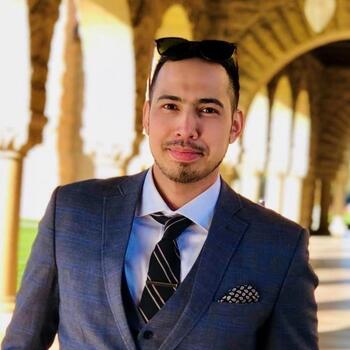
Thitinan Pongsudhirak 090120
Thitinan Pongsudhirak is the Director of the Institute of Security and International Studies and Professor at Bangkok’s Chulalongkorn University. He has authored articles, books, book chapters and over 1,000 op-eds in media outlets. His sought-after views have appeared on CNN, BBC, Bloomberg, among others. Thitinan has provided briefings to diplomatic missions, investors, and business conferences on Thai domestic politics and regional geopolitics. In 2015, he was awarded an op-ed prize from the Society of Publishers in Asia. Subsequently, he was appointed ASEAN@50 Fellow by New Zealand’s Minister of Foreign Affairs & Trade; and Australia-ASEAN Fellow by Sydney’s Lowy Institute.  He completed his M.A. at Johns Hopkins School of Advanced International Studies and Ph.D. at the London School of Economics, having lectured internationally and held visiting positions at renowned universities, including Stanford University, while serving on several editorial boards of academic journals. 

Via Zoom Webinar

Register at https://bit.ly/3gPVXlt


Richard Javad Heydarian Independent Scholar, Author, and Columnist for the Philippine Daily Inquirer, Manila
Ann Marie Murphy Professor and Director, Center for Emerging Powers and Transnational Trends, Seton Hall University, New Jersey
Thitinan Pongsudhirak Professor and Director, Institute of Security and International Studies, Chulalongkorn University, Bangkok
Seminars
-

This event has been postponed. Please see below for details.

On the heels of Prime Minister Abe's resignation, a Cabinet meeting has been called for the morning of Wednesday, September 16 prior to the Diet vote for the new Prime Minister later that day. As much as he would like to join us that morning, Defense Minister Kono has to prioritize the cabinet meeting; the whole cabinet has to resign in order for the vote to take place. Therefore, we will be postponing our seminar "Turbulence in East Asia and Japan's Security," which was planned for September 15 at 4 PM (Pacific)/September 16 at 8 AM (Japan). 
 
We will advertise the new date for the event once it has been set. We hope you will be able to join us at that time. Thank you for your interest and understanding.
 
 
Starting with a landscape overview of Japan's security and defense as it regards the Asia-Pacific region and also the world, Japanese Minister of Defense Kono Taro will discuss recent changes in Japan's security environment, the challenges and opportunities these changes present, as well as their impacts on the country's security policy. Minister Kono will also examine the major issues for Japan's defense and Japan's approach to them. The webinar will end with a short audience Q&A moderated by APARC Japan Program Director Kiyoteru Tsutsui.
 
SPEAKER
Image
Portrait of Taro Kono, Japanese Minister of Defense
Kono Taro, 56, is an eight-term Member of the House of Representatives. He has been Minister of Defense in the Abe Government since September 11, 2019.
 
Among positions he has held are Foreign Minister; Chairman of the National Public Safety Commission, or Minister in charge of the National Police Organization; Minister for Administrative Reform; Minister for Civil Service Reform; Minister for Regulatory Reform; Minister in Charge of Consumer Affairs and Food Safety; and Minister in Charge of Disaster Management in the Abe Government, Parliamentary Secretary for Public Management and Senior Vice-Minister of Justice in the Koizumi Government, and Chairman of the Standing Committee on Foreign Affairs of the House of Representatives.
 
Kono is a graduate of the School of Foreign Service, Georgetown University. He was Chairman of the Japan Race Horse Association and Chairman of the Shonan Bellmare Football Club, the 1995 Asia Champion Soccer Club. He is married to Kaori and has a son, Ippei.
Kono Taro Minister of Defense, <br>Government of Japan</br>
Seminars
Authors
Noa Ronkin
News Type
Q&As
Date
Paragraphs

Amid the intensifying security rivalry between the United States and China and the rapidly changing power balances in the Indo-Pacific, India has emerged as an increasingly important partner for U.S. interests in the region. What factors will shape India’s relationships with the world’s two largest superpowers? How should Washington interpret New Delhi’s evolving understanding of strategic autonomy? And is Indian defense policy equipped to meet today’s security threats?  

These are some of the questions that occupy Arzan Tarapore, our new research scholar on South Asia effective September 1. At APARC, Tarapore will continue his research on Indo-Pacific security and military effectiveness. He will also be at the forefront of advancing the Center’s South Asia research and engagement effort – a role to which he brings his experience that combines academic scholarship with over a decade of government service. Before his appointment at Stanford, Tarapore was an adjunct assistant professor at Georgetown University. He continues to serve as a nonresident fellow at the National Bureau of Asian Research and an adjunct researcher at the RAND Corporation.

Here, Tarapore explains how “internal balancing” may shape India’s relationships with China and the United States, considers what’s at stake for India’s military strategy, and shares some of his plans for APARC’s South Asia initiative.

[To receive stories like this directly in your inbox sign up for APARC’s newsletters]


How is India’s own tense relationship with China, which burst into view in the recent border clash in the Himalayas, poised to affect its ties with the United States and its approach to strategic partnerships with other countries, such as Japan and Australia?

Tarapore: In the last two decades, Washington has latched on to India as a strategic partner in large part because it recognizes that India is a natural competitor to China. This is rooted in structural reasons – because of India and China’s geography, history, and strategic interests. So India has pursued its own brand of strategic competition with China for over half a century – it’s just that its tactics may sometimes appear desultory to some American (and Indian!) observers. Those tactics, which in the recent past have included back-slapping summitry and avoidance of provocations, are largely rooted, at bottom, in India’s relatively modest power.

Rather than focusing just on India’s alignments – what scholars call 'external balancing' – we should watch closely for changes in India’s defense policy and military modernization – or 'internal balancing.'
Arzan Tarapore

Now, some observers have asserted (or hoped) that the current border crisis in Ladakh may shake New Delhi out of this posture and catalyze a closer relationship – even an alliance – with the United States. As I’ve argued elsewhere, an alliance with the U.S. is neither plausible nor necessary. India has forged a much closer defense relationship with the United States and other like-minded regional states like Japan and Australia. The current crisis may accelerate some of that alignment a little, but this trend was already well underway. To be sure, the crisis – and especially the Indian fatalities – has hardened popular opinion against China. But Indian officialdom did not need to be convinced of the China threat, or the merits of cooperation with the United States. Their inhibitions to an alliance – just like their threat perceptions of China – are structural and not likely to be dispelled anytime soon.

Rather than focusing just on India’s alignments – what scholars call “external balancing” – we should watch closely for changes in India’s defense policy and military modernization – or “internal balancing.” There is a chance this crisis will prompt India to correct some of the long-standing distortions in defense policy. If it does, those changes – rather than any outward displays of alignment – will have a far greater impact on India’s competition with China, and on its partnership with the United States.

One of your research areas is focused on strategic effectiveness, particularly Indian military strategy-making. In your recent Carnegie India paper, The Army in Indian Military Strategy, you argue that the Indian army must rethink its use of force to meet today’s new challenges. What is the problem with its prevailing doctrine and what are your specific recommendations for it and Indian defense policy?   

Tarapore: I’ve argued that Indian military strategy over at least the past half-century has been dominated by an army doctrine that is designed to fight large conventional wars. This doctrine drives the Indian military’s force structure and its ideas about how to use force. The problem is, the doctrine is unsuited to the more-common security challenges that India currently faces – challenges exemplified perfectly by China’s borderland grab in Ladakh this past summer.

If it does not rethink its doctrine, the Indian Army risks becoming less and less relevant as a tool of statecraft.
Arzan Tarapore

The Indian Army should certainly still prepare for major wars, but I argue in this paper that it also needs to develop new concepts for dealing with threats below the threshold of war. If it does not rethink its doctrine, it risks becoming less and less relevant as a tool of statecraft. Specifically, I argue that the Indian Army should consider new “theories of victory” that focus on denying the enemy’s goals rather than threatening to punish it; consider how to better support the air force and navy; and consider emphasizing certain niche capabilities of modern warfighting.

What are some of the projects and activities you plan to focus on at APARC, both in your research and as part of the effort to revitalize the Center’s research and education initiative on South Asia?

Tarapore: As mentioned at the outset, Washington sees India as a central partner in the Indo-Pacific. I want to position APARC and Stanford to effectively support that policy. My research, at least for now, focuses on Indian defense issues. For example, I have a book project that looks at how India has historically approached the use of force – our policymakers need to understand India’s particular constraints and patterns. Second, I will continue to engage in a stream of research on how the United States, India, and their like-minded partners can manage security risks in the Indian Ocean region.

Beyond my own research, I want to take advantage of Stanford’s community of scholars, and build on my network in the region, to work on issues that are often overlooked by Washington-based policy tribes. For example, I am keen to explore the effects of climate change across South Asia – the challenges it poses to security and governance, and how it may force regional states to respond. These issues are critically important but often overshadowed by more urgent crises.

Your career combines both academic scholarship and government experience. Tell us more about your government service, what drew you to it, and how you became interested in Indo-Pacific security issues.

Tarapore: My government work completely shaped my scholarship. I served for 13 years in the Australian Defence Department, as an analyst, leader, and liaison officer. My time there was dominated by the post-9/11 wars and security crises – so even as a civilian, I deployed on operations and worked closely with the military. This has left me with an abiding dedication to being task-oriented – ensuring that my scholarship has direct utility for decision makers – and an abiding preference for working among teams of people smarter than I am. With my professional background in Australia, my academic interest in India, and my new home in the United States, I’m entirely comfortable with the concept and the region of the “Indo-Pacific.” This is why Stanford and APARC, with policy focus and community of scholars working on Asia, are so exciting.

What is it like to begin a new academic post remotely in a COVID-19 world? How has the pandemic affected your work?

Tarapore: I’ve often thought about how fortunate I am to work in a field where I can keep working, with some adjustments, even amid a global pandemic. If we’re honest, I suspect some people even thrive on the enforced solitude. For me, it’s a nuisance and it requires adjustments – none more so than rethinking childcare arrangements. From a professional perspective, one of the biggest obstacles it creates is the inability to travel to India for fieldwork, or around the region to build our professional networks. The other, more quotidian difficulty is the obstacle to in-person teamwork. Obviously, something is lost when we have to stare at each other through screens, so I can’t wait to walk the halls of Encina Hall.

Read More

The Japanese delegation onboard the USS Missouri during the surrender ceremony on September 2, 1945.
Q&As

How WWII Continues to Shape Regional and International Relations in Asia

In an interview with Stanford News, Gi-Wook Shin, the director of APARC and the Korea Program, describes how divergent perspectives on the legacies of WWII continue to shape different understandings of history and impact inter-Asia and U.S.-Asia relations.
How WWII Continues to Shape Regional and International Relations in Asia
Encina Courtyard
News

Call for Stanford Student Applications: APARC Hiring 2020-21 Research Assistants

To support Stanford students working in the area of contemporary Asia, the Shorenstein Asia-Pacific Center is offering research assistant positions for the fall, winter, and spring quarters of the 2020-21 academic year.
Call for Stanford Student Applications: APARC Hiring 2020-21 Research Assistants
Portrait of Oriana Mastro with text: "Q&A with Oriana Skylar Mastro"
Q&As

FSI’s Incoming Center Fellow Oriana Skylar Mastro Discusses Chinese Ambitions, Deteriorating U.S.-China Relations

Mastro, whose appointment as a Center Fellow at Shorenstein APARC begins on August 1, considers the worsening relations between the world’s two largest economies, analyzes Chinese maritime ambitions, and talks about her military career and new research projects.
FSI’s Incoming Center Fellow Oriana Skylar Mastro Discusses Chinese Ambitions, Deteriorating U.S.-China Relations
Hero Image
Portrait of Arzan Tarapore and text: "Q&A with Arzan Tarapore"
All News button
1
Subtitle

Indo-Pacific security expert Arzan Tarapore, whose appointment as a research scholar at APARC begins on September 1, discusses India’s military strategy, its balancing act between China and the United States, and his vision for revitalizing the Center’s research effort on South Asia.

News Type
News
Date
Paragraphs

China's future will be determined by how its leaders manage its myriad interconnected challenges. In Fateful Decisions (Stanford University Press, May 2020), editors Thomas Fingar, a center fellow at APARC, and Jean Oi, the director of APARC’s China Program, join other experts across multiple disciplines in providing close analyses of the most critical demographic, economic, social, political, and foreign policy challenges China’s leaders face today. They outline the options and opportunity costs entailed, providing an analytic framework for understanding the decisions that will determine China's trajectory.

Fingar and Oi discussed the main arguments in their edited volume at a virtual program of the National Committee on U.S.-China Relations. Watch here:

Read More

Quote from Thomas Fingar and Jean Oi from, "China's Challeges: Now It Gets Much Harder"
Commentary

Now It Gets Much Harder: Thomas Fingar and Jean Oi Discuss China’s Challenges in The Washington Quarterly

Now It Gets Much Harder: Thomas Fingar and Jean Oi Discuss China’s Challenges in The Washington Quarterly
BEIJING, CHINA - Workers sit near a CRH (China Railway High-speed) "bullet train" at the Beijing South Railway Station under reconstruction.
News

High-Speed Rail Holds Promise and Problems for China, Explains David M. Lampton

In a new audio interview, Lampton discusses some of the challenges, uncertainties, and decisions that loom ahead of China's Belt and Road Initiative.
High-Speed Rail Holds Promise and Problems for China, Explains David M. Lampton
Elderly Chinese citizens sit together on a park bench.
Q&As

Karen Eggleston Examines China’s Looming Demographic Crisis, in Fateful Decisions

Karen Eggleston Examines China’s Looming Demographic Crisis, in Fateful Decisions
Hero Image
Cover of the book Fateful Decisions: Choices That Will Shape China's Future
All News button
1
Subtitle

Fingar and Oi joined the National Committee on U.S.-China Relations to discuss their edited volume, ‘Fateful Decisions: Choices that Will Shape China’s Future.’

-

Please register at www.eai-aparc-seminar.or.kr on the day of the event.

A panel of experts in international relations and commerce will discuss challenges facing South Korea and the country's strategy in light of the current tensions between the U.S. and China. This event is co-sponsored by East Asia Institute in Korea.

Panelists:

David Kang, Maria Crutcher Professor in International Relations; Professor of Business, and East Asia Languages and Cultures; Director of Korean Studies Institute, USC

Seungjoo Lee, Professor of Political Science and International Relations, Chung-Ang University, Korea

Charles Freeman, Senior Vice President for Asia, U.S. Chamber of Commerce

Taeho Bark, President, Lee&Ko Global Commerce Institute; former Minister of Trade, Korea

Discussants:

Yong Suk Lee, Deputy Director of the Korea Program, Shorestein APARC; SK Center Fellow, FSI,  Stanford University

Seong-Ho Sheen, Professor of International Security, Graduate School of International Studies, Seoul National University, Korea

Moderators:

Gi-Wook Shin, Director of APARC; Senior Fellow, FSI; William J. Perry Professor of Contemporary Korea; Professor of Sociology, Stanford University

Yul Sohn, President, East Asia Institute; Professor, Graduate School of International Studies, Yonsei University, Korea

Watch the recorded event at https://youtu.be/Hoz0cXtQfR4.

Live stream: Register at www.eai-aparc-seminar.or.kr on the day of the event.

Panel Discussions
Authors
News Type
Q&As
Date
Paragraphs

This interview was originally conducted and published by Melissa De Witte on behalf of the Stanford News Service.


September 2, 1945, is recognized in many American history books as the day World War II formally ended in Asia. But according to Stanford sociologist Gi-Wook Shin, the conflict was never fully resolved in the region, leading to strains in diplomatic relations today.

On the 75th anniversary of this historic milestone, Shin discusses the legacy of World War II in the Asia-Pacific, specifically the failure among nations to fully address past wrongdoings and reach a mutual understanding of the conflict.

As a result, there is a “mismatch” in how Koreans, Chinese, Japanese and also Americans memorialize the war: China celebrates its victory against Japan while Korea commemorates its liberation from Japanese oppression. Meanwhile, Japan honors the victims of the atomic bombings in Hiroshima and Nagasaki – an atrocity many Americans still feel uncomfortable talking about today, Shin points out.

Here, Shin discusses how these diverging perspectives of World War II have led to misgivings today and how, some 75 years later, relations can still be improved in the region.

Shin is a professor of sociology in the School of Humanities and Sciences, the director of the Walter H. Shorenstein Asia-Pacific Research Center, the William J. Perry Professor of Contemporary Korea, director of the Korea Program and a senior fellow at the Freeman Spogli Institute for International Studies. He has led a decade-long study on historical memory in wartime period in Asia called 'Divided Memories and Reconciliation.'

[Subscribe to our newsletters to get the latest updates from our scholars.]


As the world remembers 75 years of the war ending in Asia, what legacies from this period persist today?

War has not really ended in Asia. Even before war settlements were signed, another war broke out on the Korean peninsula and technically never ended. Furthermore, “history wars” that began in the 1980s have intensified in recent years, as Japan and its neighbors continue to fight over the unfortunate past and dispute over territories. Despite increased economic, cultural, and educational exchanges and interactions, war legacies persist to strain regional relations.

Is there anything in this history that you think has been largely forgotten, overlooked or misunderstood?

While U.S. Army Gen. Douglas MacArthur formally accepted Japan’s surrender to allied forces aboard the USS Missouri in Tokyo Bay some 75 years ago, legacies from the war have persisted, straining regional relations to this very day, according to Shin. (Image credit: United States Navy/Wikimedia Commons)

America celebrates World War II victory in Europe (Victory in Europe Day) but remains relatively quiet on its victory in the Asia-Pacific war. In contrast to the moral clarity and nobility of purpose associated with the war in Europe and the defeat of Nazi Germany, the path to war with Japan and its conclusion is far less clear and many Americans still feel uncomfortable talking about the use of atomic weapons – even if it was militarily necessary but morally questionable. Also, it was during the war that about 120,000 people in the U.S. of Japanese ancestry (62 percent being U.S. citizens) were incarcerated in concentration camps.

Compared to Europe, U.S.-led post-war settlements in Asia such as the Tokyo War Crimes Tribunal and San Francisco Peace Treaty were insufficient in addressing atrocities committed by Japan during wartime and the colonial period, sowing the seeds of current disputes and tensions between Japan and its neighbors. The Tokyo tribunal focused on Japanese actions that had most directly affected Western allies (the attack on Pearl Harbor and the mistreatment of Allied prisoners of war) and thus failed to address the massive suffering of the Chinese and the Koreans. The 1951 Peace Treaty expunged Japan’s obligations to pay reparations for its wartime acts but neither the Republic of Korea nor the People’s Republic of China was party to the treaty.

You have written extensively about the repeated failure among Koreans, Chinese and Japanese to produce a shared, historical view of World War II. Can you briefly describe what are these conflicting, historical memories? 

For Koreans and Chinese, Japanese atrocities such as the Nanjing massacre, sexual slavery and forced labor are key events that shape their historical memories. For Japanese, on the other hand, actions related to the U.S. such as the Japanese attack on the Pearl Harbor and American bombings (fire and atomic) on Japanese cities are most important to the formation of their memories of war, which led to a widely held view that they were also victims of American aggression and that post-war settlements were “victor’s justice.” These divergent memories are reflected in the ways that they commemorate the end of the war. China celebrates its victory against Japan in the war, while Korea commemorates its liberation from Japanese oppression. Japan holds its annual ceremony to honor victims of atomic bombings.

According to your scholarship, what explains these divergent perspectives?

The divergence comes from the different weight each country places on historical events in their respective memory formation. Japanese actions figure prominently for Chinese and Korean, but China and Korea are not as significant to Japanese war memories as much as the U.S. is. This mismatch creates perception gaps and misgivings, hindering historical reconciliation.

How has this tension affected relations in the region? Do you think, some 75 years later, these tensions persist today?

Yes, they are very much alive. Look at the current Japanese-South Korean relations. They are two leading economies with liberal democracies in Asia and also key U.S. allies. They are important trade partners and are facing the same demographic crisis. They share strategic interests in the face of a rising China and North Korean aggression. Nonetheless, the resurfacing of the unresolved historical issues has continued to strain the bilateral relationship. For example, the relationship deteriorated since late 2018 when the South Korea supreme court ruled that Japanese companies should compensate Koreans who were conscripted as forced laborers during the war. In response to the ruling, the Japanese government removed Korea from a list of favored trade partners and the Korean government followed suit. These governmental actions are now fueled by populist nationalism (the rightist in Japan and the leftist in Korea), which has proven to be very effective in the politics of both nations.

Can the U.S. play any role to help achieve historical reconciliation?

The U.S. can take a more proactive role in encouraging Japan to work toward achieving regional reconciliation. As noted above, Japan does not seem to be taking its Asian neighbors as seriously as it should be when it comes to historical matters, but is rather predominantly focused on reconciling with the U.S. For example, Japan had been calling for the U.S. president to visit the sites of atomic bombings as a way of “removing a historical thorn” in the relationship and President Obama did make a historic visit to Hiroshima in 2016. Japanese Prime Minister Shinzo Abe followed suit soon after by visiting Pearl Harbor to pay respects to the victims of the 1941 attack. But the reconciliation efforts stopped there and did not expand to other victim countries of the war.

When you teach this history of World War II, what do you remind students about this period? How might the past shape students’ understanding of Northeast Asia or the U.S. in the present day?

To avoid repeating the unfortunate past (colonialism and war), I ask, what and how we can learn from history? For example, was the war with Japan necessary, or was it the result of a series of accidents and miscalculations or lack of political leadership? How does the war help us to understand the current tensions between the U.S. and China? What can we learn from the experience of the Japanese internment during the war? Even though President Reagan made an official apology of the internment in 1988, why do we still see similar racialist politics in American society? Addressing these questions requires a critical reflection of the history.

<< The original interview is available via Stanford News >>

Read More

A young boy prays after releasing a floating lantern onto the Motoyasu River in front of the Atomic Bomb Dome in Hiroshima, Japan.
Commentary

Why the US-Japan Partnership Prospered Despite Hiroshima and Nagasaki

There has been little diplomatic conflict between the United States and Japan over the atomic bombings of Hiroshima and Nagasaki during WWII, but that stability could change in the future, writes Japan Program Director Kiyoteru Tsutsui in an op-ed for The Hill.
Why the US-Japan Partnership Prospered Despite Hiroshima and Nagasaki
Encina Courtyard
News

Call for Stanford Student Applications: APARC Hiring 2020-21 Research Assistants

To support Stanford students working in the area of contemporary Asia, the Shorenstein Asia-Pacific Center is offering research assistant positions for the fall, winter, and spring quarters of the 2020-21 academic year.
Call for Stanford Student Applications: APARC Hiring 2020-21 Research Assistants
Hero Image
The Japanese delegation onboard the USS Missouri during the surrender ceremony on September 2, 1945.
Wikimedia Commons
All News button
1
Subtitle

In an interview with Stanford News, Gi-Wook Shin, the director of APARC and the Korea Program, describes how divergent perspectives on the legacies of WWII continue to shape different understandings of history and impact inter-Asia and U.S.-Asia relations.

-

This is a virtual event. Please click here to register and generate a link to the talk. 
The link will be unique to you; please save it and do not share with others.


Sponsored by the Stanford China Program and the Stanford Center at Peking University.
 

International institutions established after WWII and shaped by the Cold War facilitated attainment of unprecedented peace and prosperity.  But what worked well in the past may no longer be adequate to address the challenges and opportunities in the world these institutions helped to create.  Should legacy institutions be reformed, replaced, or supplemented by new mechanisms to manage new global challenges?  This program will examine whether existing institutions of global governance are adequate, and if not, why changing them will be difficult.


Image
Dr. Thomas Fingar
Thomas Fingar is a Shorenstein APARC Fellow in the Freeman Spogli Institute for International Studies at Stanford University. He was the inaugural Oksenberg-Rohlen Distinguished Fellow from 2010 through 2015 and the Payne Distinguished Lecturer at Stanford in 2009. From 2005 through 2008, he served as the first deputy director of national intelligence for analysis and, concurrently, as chairman of the National Intelligence Council. Fingar served previously as assistant secretary of the State Department’s Bureau of Intelligence and Research (2000-01 and 2004-05), principal deputy assistant secretary (2001-03), deputy assistant secretary for analysis (1994-2000), director of the Office of Analysis for East Asia and the Pacific (1989-94), and chief of the China Division (1986-89). Between 1975 and 1986 he held a number of positions at Stanford University, including senior research associate in the Center for International Security and Arms Control.

Fingar's most recent books are The New Great Game: China and South and Central Asia in the Era of Reform, editor (Stanford, 2016), Uneasy Partnerships: China and Japan, the Koreas, and Russia in the Era of Reform (Stanford, 2017), and Fateful Decisions: Choices that will Shape China’s Future, co-edited with Jean Oi (Stanford, 2020).


Dr. Stephen J. StedmanStephen Stedman is a Freeman Spogli senior fellow at the Center on Democracy, Development, and the Rule of Law and FSI, an affiliated faculty member at CISAC, and professor of political science (by courtesy) at Stanford University. 

In 2011-12 Professor Stedman served as the Director for the Global Commission on Elections, Democracy, and Security, a body of eminent persons tasked with developing recommendations on promoting and protecting the integrity of elections and international electoral assistance. The Commission is a joint project of the Kofi Annan Foundation and International IDEA, an intergovernmental organization that works on international democracy and electoral assistance. In 2003-04 Professor Stedman was Research Director of the United Nations High-level Panel on Threats, Challenges and Change and was a principal drafter of the Panel’s report, A More Secure World: Our Shared Responsibility. In 2005 he served as Assistant Secretary-General and Special Advisor to the Secretary- General of the United Nations, with responsibility for working with governments to adopt the Panel’s recommendations for strengthening collective security and for implementing changes within the United Nations Secretariat, including the creation of a Peacebuilding Support Office, a Counter Terrorism Task Force, and a Policy Committee to act as a cabinet to the Secretary-General.  His most recent book, with Bruce Jones and Carlos Pascual, is Power and Responsibility: Creating International Order in an Era of Transnational Threats (Washington DC: Brookings Institution, 2009).

Via Zoom Webinar. Register at: https://bit.ly/3b6qmKT

Thomas Fingar Shorenstein APARC Fellow, Stanford University
Stephen Stedman Deputy Director, Center on Democracy, Development and Rule of Law, Stanford University
Seminars
-

This event is available through livestream only. Please register in advance for the webinar by using the link below.

REGISTRATION LINKhttps://bit.ly/34pAVrb

Inside the Billion Dollar Whale Scandal: 2020 Shorenstein Journalism Award Recipient Tom Wright to Headline Award Panel Discussion

The $7 billion 1Malaysia Development Bhd (1MDB) scandal, one of the largest-ever financial frauds, exposed the depths of corruption in global markets. The story starts in Malaysia, but a raft of institutions from Goldman Sachs to Big Four auditors and Manhattan lawyers enabled the graft. Five years after the story came to light, almost no one has gone to jail. What’s in store for the main players, how can our justice system ensure history does not repeat itself, and how do political actors shape the trajectories of anticorruption efforts in Asia?
 

Tom Wright, winner of the 2020 Shorenstein Journalism Award, addresses these questions and more in his keynote address.

Wright is the coauthor of the New York Times bestseller Billion Dollar Whale, which unravels the story of one of the world's greatest financial scandals involving the multibillion-dollar looting of the Malaysian sovereign wealth fund 1MDB. Wright’s work sparked investigations by law enforcement and regulators in multiple countries and outrage in Malaysia, where the ruling coalition, after 61 years in power, suffered a landslide defeat in a shocking 2018 election.

The keynote will be followed by a guided interview with the award winner led by Meredith Weiss, Professor and Chair of Political Science at the Rockefeller College of Public Affairs and Policy, University at Albany, SUNY.

The event will conclude with an audience Q&A session moderated by Donald K. EmmersonDirector of the Southeast Asia Program at the Walter H. Shorenstein Asia-Pacific Research Center.

Follow us on Twitter and use the hashtag #SJA20 to join the conversation.

Speakers:

Image
Portrait of Tom Wright, winner of 2020 Shorenstein Journalism Award
Tom Wright is an author, journalist, and speaker who over the past twenty-five years has lived and worked mainly in South and Southeast Asia. He is a Pulitzer finalist, a Loeb winner, and co-author of the New York Times bestseller Billion Dollar Whale, about the 1MDB scandal. A theme running through Tom’s work is the blight of corruption in Asia, abetted by Western companies and institutions. He started his career with Reuters in Indonesia in the 1990s at a time when Gen. Suharto’s military dictatorship was crumbling. During the Asian financial crisis of 1997-1998, Tom joined Dow Jones Newswires in Bangkok, later moving to the Wall Street Journal.
 
He has investigated corruption in Indian companies, the failure of the U.S. civilian aid program for Pakistan, and was one of the first journalists to arrive at the scene of the raid in which Navy SEALs killed Osama bin Laden. In 2013, Tom spearheaded the coverage of the Rana Plaza factory disaster in Bangladesh, which killed over 1,000 people, earning the Wall Street Journal a Sigma Delta Chi award from The Society of Professional Journalists. The series exposed how international garment manufacturers turned a blind eye to safety violations in order to reduce costs.
 
As Asia Economics Editor in Hong Kong, Tom managed a number of correspondents in the region, while continuing to report. In 2015, he began investigations into the 1MDB scandal, an almost unbelievable series of events in which bankers at Goldman Sachs helped a young Malaysian financier steal at least $4 billion from Malaysian state fund 1MDB, one of the largest financial frauds of all time. The three-year investigation showed the degree to which Western institutions, from Wall Street banks, law firms, auditors, and even Hollywood film companies, ignore malfeasance in the pursuit of profits.
 

Image
Portrait of Meredith Weiss, Professor and Chair of Political Science in the Rockefeller College of Public Affairs and Policy at the University at Albany, State University of New York
Meredith Weiss is Professor and Chair of Political Science in the Rockefeller College of Public Affairs & Policy at the University at Albany, State University of New York. Her research addresses social mobilization and civil society, the politics of identity and development, parties and elections, institutional reform and (anti)corruption, and subnational governance in Southeast Asia, with particular focus on Malaysia and Singapore. She has conducted fieldwork in those two countries as well as Indonesia, the Philippines, and Timor-Leste, and has held visiting fellowships or professorships in Australia, Japan, Malaysia, the Philippines, Singapore, and the US.

Her books include Protest and Possibilities: Civil Society and Coalitions for Political Change in Malaysia (2006), Student Activism in Malaysia: Crucible, Mirror, Sideshow (2011), The Roots of Resilience: Political Machines and Grassroots Politics in Southeast Asia (2020), and eleven edited or co-edited volumes, most recently, The Political Logics of Anticorruption Efforts in Asia (2019) and Toward a New Malaysia? The 2018 Election and Its Aftermath (2020).  Her articles appear in Asian Studies ReviewAsian SurveyCritical Asian StudiesDemocratizationJournal of Contemporary AsiaJournal of DemocracyTaiwan Journal of Democracy, and elsewhere.

Professor Weiss co-edits the Cambridge University Press Elements book series on Politics and Society in Southeast Asia and is an associate editor for Southeast Asia of the Association for Asian Studies’ (AAS) Journal of Asian Studies. She co-founded the Southeast Asian Politics related group of the American Political Science Association (APSA) and chairs the APSA’s Asia Workshops steering committee, is past chair of the AAS’s Southeast Asia Council, and is on the Southeast Asia Research Group (SEAREG) Council. She received her MA and PhD in Political Science from Yale University and a BA in Political Science, Policy Studies, and English from Rice University.


About the Shorenstein Journalism Award:

The Shorenstein Journalism Award, which carries a cash prize of US $10,000, recognizes outstanding journalists who have spent their careers helping audiences around the world understand the complexities of the Asia-Pacific region, defined broadly to include Northeast, Southeast, South, and Central Asia and Australasia. Award recipients are veteran journalists with a distinguished body of work. News organizations are also eligible for the award.

The award is sponsored and presented by the Walter H. Shorenstein Asia-Pacific Research Center (Shorenstein APARC) at Stanford University. It honors the legacy of the Center’s benefactor, Mr. Walter H. Shorenstein, and his twin passions for promoting excellence in journalism and understanding of Asia. It also symbolizes the Center’s commitment to journalism that persistently and courageously seeks accuracy, deep reporting, and nuanced coverage in an age when attacks are regularly launched on the independent news media, on fact-based truth, and on those who tell it.

An annual tradition, the Shorenstein Journalism Award alternates between recipients whose work has mostly been conveyed through American news media and recipients whose work has mostly been conveyed through news media in one or more parts of the Asia-Pacific region. Included among the latter candidates are journalists who are from the region and work there, and who, in addition to their recognized excellence, may have helped defend and encourage free media in one or more countries in the region.

Learn more at https://aparc.fsi.stanford.edu/events/shorenstein-journalism-award.

Virtual Webinar Via Zoom

Registration Link: https://bit.ly/34pAVrb

Tom Wright <br>Journalist, Author, Speaker</br><br>
Meredith Weiss <br>Professor and Chair of Political Science, University at Albany,SUNY</br>
Seminars
News Type
News
Date
Paragraphs

As the COVID-19 pandemic continues to take massive tolls on lives and livelihoods at home and abroad, students have been thrown into turmoil and are facing uncertainties about funding, graduation, research opportunities, and career choices. At Shorenstein APARC, we are committed to supporting Stanford students as best we can. We are therefore announcing today new quarter-long research assistantships for current undergraduate and graduate students working in the area of contemporary Asia. These opportunities are in addition to our recent internship and fellowship offerings.

Guidelines

Shorenstein APARC is seeking to hire motivated and dedicated undergraduate and graduate students as paid research assistants who will work with assigned APARC faculty members on projects focused on contemporary Asia, studying varied issues related to the politics, economies, populations, security, foreign policies, and international relations of the countries of the Asia-Pacific region.

2020-21 research assistant positions will be offered in the fall, winter, spring, and summer quarters. We expect to hire up to 10 research assistants per quarter.

Application Cycles
Students should submit their applications by the following deadlines:

  • Applications for fall 2020 by September 1, 2020;
  • Applications for winter 2020 by December 1, 2020;
  • Applications for spring 2021 by March 1, 2021.
     

The positions are open to current Stanford students only. Undergraduate- and graduate-level students are eligible to apply.

All positions will be up to 15 hours per week for undergraduate students and up to 20 hours per week for graduate students (minimum of 10 hours per week). The hourly pay rate is $17 for undergraduate students, $25 for graduate students.

Hiring is contingent upon verification of employment eligibility documentation.

The fall-quarter employment start date is September 16, 2020.

Successful candidates may request appointment renewal for a consecutive quarter.

Apply Now

  • Complete the application form and submit it along with these 3 required attachments:
  • Arrange for a letter of recommendation from a faculty to be sent directly to APARC. Please note: the faculty members should email their letters directly to Kristen Lee at kllee@stanford.edu.
     

We will consider only applications that include all supporting documents.

Read More

A young boy prays after releasing a floating lantern onto the Motoyasu River in front of the Atomic Bomb Dome in Hiroshima, Japan.
Commentary

Why the US-Japan Partnership Prospered Despite Hiroshima and Nagasaki

There has been little diplomatic conflict between the United States and Japan over the atomic bombings of Hiroshima and Nagasaki during WWII, but that stability could change in the future, writes Japan Program Director Kiyoteru Tsutsui in an op-ed for The Hill.
Why the US-Japan Partnership Prospered Despite Hiroshima and Nagasaki
Portrait of Oriana Mastro with text: "Q&A with Oriana Skylar Mastro"
Q&As

FSI’s Incoming Center Fellow Oriana Skylar Mastro Discusses Chinese Ambitions, Deteriorating U.S.-China Relations

Mastro, whose appointment as a Center Fellow at Shorenstein APARC begins on August 1, considers the worsening relations between the world’s two largest economies, analyzes Chinese maritime ambitions, and talks about her military career and new research projects.
FSI’s Incoming Center Fellow Oriana Skylar Mastro Discusses Chinese Ambitions, Deteriorating U.S.-China Relations
Shiran Shen (left) and Lizhi Liu (right)
News

Former Doctoral Students Win Prestigious Dissertation Awards

Interdisciplinary environmental scholar Shiran Victoria Shen is the recipient of the Harold D. Lasswell Award and political economist Lizhi Liu is the recipient of the Ronald H. Coase Award in recognition of their outstanding doctoral dissertations.
Former Doctoral Students Win Prestigious Dissertation Awards
Hero Image
Encina Courtyard Rod Searcey
All News button
1
Subtitle

To support Stanford students working in the area of contemporary Asia, the Shorenstein Asia-Pacific Center is offering research assistant positions for the fall, winter, and spring quarters of the 2020-21 academic year.

Authors
Kiyoteru Tsutsui
News Type
Commentary
Date
Paragraphs

This op-ed by Kiyoteru Tsutsui originally appeared in The Hill.


On Aug. 6, 1945, an American B-29 named the Enola Gay dropped and detonated a five-ton atomic bomb over the Japanese city of Hiroshima. The bomb’s 15-kiloton explosion claimed the lives of about 70,000 people instantly. While there’s some debate about the total number of individuals who ultimately died because of bomb-related injuries and radiation poisoning, the total number of fatalities likely exceeded 100,000 and potentially even 200,000.

Despite the colossal damage that the American military inflicted on Hiroshima, and subsequently on Nagasaki on Aug. 9, 1945, Japan soon would develop a warm, productive relationship with its war-time rival that has lasted to this day. According to a national survey of 1,586 Japanese citizens that we conducted this May, residents of Japan rank America as their best economic and military ally today and also in 20 years, when compared to other large, wealthy countries. Favorable views about America extend outside foreign policy into Japan’s culture, food, and products, which have been deeply ingrained into the fabric of Japanese cultural and social life. 

On the heels of one of the most devastating military defeats in human history, how has this pro-American sentiment been sustained for so long in Japan, and why has the dropping of atomic bombs, a potentially deeply divisive issue, rarely been politicized in the U.S.-Japan relations? (Continue reading the full article in The Hill.)

[Subscribe to our newsletters to get the latest commentary from APARC scholars.]

Read More

Prime Minister Shinzō Abe of Japan and President Donald Trump of the United States walk alongside the White House in Washington D.C.
Commentary

Don't Take Our Allies for Granted, Even Japan

As political tensions in the Asia-Pacific increase, Kiyoteru Tsutsui, senior fellow and Japan Program director, cautions the United States from taking long-standing economic and military allies like Japan for granted.
Don't Take Our Allies for Granted, Even Japan
Portrait of Kiyoteru Tstutsi
News

Kiyoteru Tsutsui Joins FSI as a Senior Fellow

Tsutsui, whose research focuses on social movements, globalization, human rights and political sociology, will lead the Japan Program at the Asia-Pacific Research Center.
Kiyoteru Tsutsui Joins FSI as a Senior Fellow
Hero Image
A young boy prays after releasing a floating lantern onto the Motoyasu River in front of the Atomic Bomb Dome in Hiroshima, Japan.
Junko Kimura, Getty Images
All News button
1
Subtitle

There has been little diplomatic conflict between the United States and Japan over the atomic bombings of Hiroshima and Nagasaki during WWII, but that stability could change in the future, writes Japan Program Director Kiyoteru Tsutsui in an op-ed for The Hill.

Subscribe to International Relations