International Relations

FSI researchers strive to understand how countries relate to one another, and what policies are needed to achieve global stability and prosperity. International relations experts focus on the challenging U.S.-Russian relationship, the alliance between the U.S. and Japan and the limitations of America’s counterinsurgency strategy in Afghanistan.

Foreign aid is also examined by scholars trying to understand whether money earmarked for health improvements reaches those who need it most. And FSI’s Walter H. Shorenstein Asia-Pacific Research Center has published on the need for strong South Korean leadership in dealing with its northern neighbor.

FSI researchers also look at the citizens who drive international relations, studying the effects of migration and how borders shape people’s lives. Meanwhile FSI students are very much involved in this area, working with the United Nations in Ethiopia to rethink refugee communities.

Trade is also a key component of international relations, with FSI approaching the topic from a slew of angles and states. The economy of trade is rife for study, with an APARC event on the implications of more open trade policies in Japan, and FSI researchers making sense of who would benefit from a free trade zone between the European Union and the United States.

-

This event is part of Shorenstein APARC's fall webinar series "Shifting Geopolitics and U.S.-Asia Relations."

This panel will review and assess various aspects of the relationship between the United States and South Korea under the leadership of President Donald Trump and President Moon Jae-in. The two leaders appeared able to work together quickly and make some bold moves on issues like North Korea, but the differences between the two have been stark on issues such as military burden sharing and policies toward China. The discussion will also compare the current dynamics of U.S.-ROK relations with that of during the George W. Bush and Roh Moo-hyun period (2003-2008), which is often referred to as the most turbulent yet the most transformative era in the history of the security relationship between the two countries.

Panelists:

Image
Laura Bicker
Laura Bicker, BBC Seoul Correspondent
Ms. Bicker has been a BBC Correspondent for 20 years. She is currently based in Seoul where she reports on both North and South Korea. She is known for her interviews with President Moon Jae-in and her coverage of the inter-Korean and US-North Korean summits. This year she has produced a number of reports on South Korea’s battle with Covid19 including the documentary "How to Fight Coronavirus." In her previous role as North America Correspondent she followed Donald Trump’s election to the White House and his first years in office, as well as a host of deployments covering a number of issues and breaking news across the United States.

Image
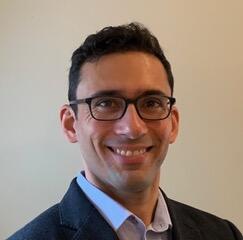
Mark Lippert
Mark Lippert, former US Ambassador to South Korea
A graduate of Stanford (BA, MA), Ambassador Lippert served as the United States ambassador extraordinary and plenipotentiary to the Republic of Korea from 2014-2017. He previously held positions in the Department of Defense, including as chief of staff to Secretary of Defense Chuck Hagel (2013-2014) and as assistant secretary of defense for Asian and Pacific Security Affairs (2012-2013). Lippert also worked in the White House as chief of staff to the National Security Council in 2009. Lippert served in the uniformed military as an intelligence officer in the United States Navy, he mobilized to active duty from 2009 to 2011 for service with Naval Special Warfare (SEALs) Development Group that included deployments to Afghanistan and other regions. From 2007 to 2008, he deployed as an intelligence officer with Seal Team One to Anbar Province, Iraq in support of Operation Iraqi Freedom.

Image
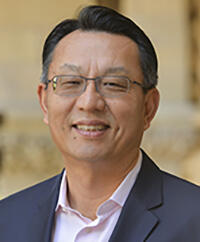
Myung Hwa Yu
Myung Hwan Yu, former Minister of Foreign Affairs, South Korea
Minister Yu has 37 years of distinguished service with the Ministry of Foreign Affairs and Trade, including Minister of Foreign Affairs and Trade from 2008 to 2010.  Minister Yu started his foreign service in Japan in 1976 as a young diplomat and returned as Ambassador to Japan in 2007. He advised on various political and economic issues concerning both the private and public sector with a view to revamp bilateral relation until his departure from Japan to join President Lee Myung Bak’s administration as a cabinet minister in 2008. He also served as Ambassador to the State of Israel; Ambassador for Anti-Terrorism and Afghanistan Issues; and also Minister of the Permanent Mission to the United Nations in New York. His experience extends across a broad range of issues in the international relations including trade and security issues, and negotiations with North Korea in particular.

Moderator:

Image
Gi-Wook Shin
Gi-Wook Shin, Director of Shorenstein APARC, Stanford University
Gi-Wook Shin is the William J. Perry Professor of Contemporary Korea; the founding director of the Korea Program; a senior fellow of the Freeman Spogli Institute for International Studies; and a professor of sociology, all at Stanford University. As a historical-comparative and political sociologist, his research has concentrated on social movements, nationalism, development, and international relations.

Webinar: Register at https://bit.ly/3j7fIHa

Panel Discussions
-

This is a virtual event. Please click here to register and generate a link to the talk. 
The link will be unique to you; please save it and do not share with others.

Most people attribute the Belt and Road Initiative (BRI) to Beijing’s imperialist ambitions. In her talk, Professor Min Ye will go beyond top-level rhetoric, however, and investigate BRI’s origins, its implementation, and its on-the-ground effects inside China. She will unpack different local governments' approaches to the BRI by discussing how subnational entities have leveraged Beijing’s grand strategy and how the implementation of projects and programs related to the BRI facilitate local economic agendas. China’s local developmentalism, which has undergirded not only the BRI but also other national-level strategies (like the Western Development Program and China Goes Global policy), has propelled the Chinese economy from a middle power in 1998 to a superpower in 2018. The talk will conclude with a discussion of COVID-19’s impact on China’s BRI as well as preliminary findings from Professor Ye’s current research into other state-mobilized development initiatives in China.
 

Image
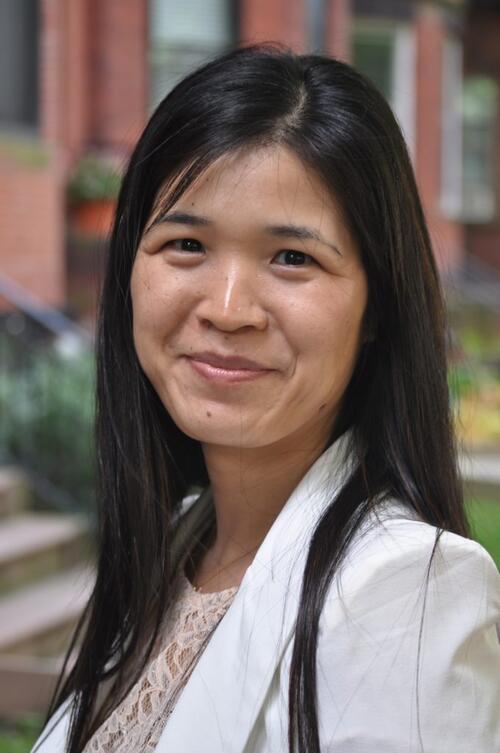
Portrait of Professor Min Ye
Min Ye is an Associate Professor at the Pardee School of Global Studies, Boston University. Her research lies in the nexus between domestic and global politics and economics and security, focusing on China, India, and regional relations. Her publications include The Belt, Road, and Beyond: State-Mobilized Globalization in China 1998 -- 2018 (Cambridge University Press, 2020), Diasporas and Foreign Direct Investment in China and India (Cambridge University Press, 2014), and The Making of Northeast Asia (with Kent Calder, Stanford University Press, 2010). She has received a Smith Richardson Foundation grant (2016-2018), the East Asia Peace, Prosperity, and Governance Fellowship (2013), Princeton-Harvard China and the World Program post-doctoral fellowship (2009-2010), and Millennium Education Scholarship in Japan (2006). In 2014-2016, Min Ye was an NCUSCR Public Intellectual Program fellow. Ye is currently the 2020 Rosenberg Scholar of East Asian Studies at Suffolk University.

Via Zoom Webinar. Register at: https://bit.ly/3kJlhM9

Min Ye Associate Professor, Pardee School of Global Studies, Boston University
Seminars
Authors
Oriana Skylar Mastro
News Type
Commentary
Date
Paragraphs

This essay by Oriana Skylar Mastro originally appeared in Cato Unbound.


In his lead essay, Eric Gomez cites profound technological changes as the main reason why the United States should rethink its nuclear policy. However, there is one drastic change he does not adequately take into account: the rise of China. This response essay, therefore, focuses on the China factor in U.S. nuclear policy.

Chinese Nuclear Modernization

Since the turn of the century, China has been modernizing its nuclear forces in earnest. Currently, Beijing’s nuclear arsenal is estimated to number in the 200s. From 2017 to 2018, warheads increased by ten, and the Pentagon anticipates that the stockpile will double over the next ten years. These modernization efforts, such as moving from silo-based liquid-fueled ICBMs to mobile solid-fueled delivery vehicles, have focused mainly on improving force survivability. China also added a sea leg to its nuclear deterrent in 2016 with the introduction of submarine-launched ballistic missiles (JL-2) on its Jin-class ballistic missile submarine.

Additionally, China is producing ballistic missile systems with multiple independently targetable reentry vehicle (MIRV) and maneuverable reentry vehicle (MaRV) technologies that enhance missiles’ effectiveness. To this end, China has launched more ballistic missiles for testing and training in 2019 than the rest of the world combined. Meanwhile, the PLA’s new hypersonic cruise missiles supposedly are capable of piercing existing missile defense systems. Furthermore, structural reforms in China’s military reveal the critical role nuclear weapons play in Chinese strategy. In 2016, the branch in charge of China’s nuclear deterrent, the Second Artillery, was upgraded to a service, the People’s Liberation Army Rocket Force. Its commander was added to China’s highest military body, the Central Military Commission.

[Sign up for our newsletters to get the latest from APARC's scholars.]

China’s drive to modernize, diversify, and expand its nuclear forces may cause some to argue with Gomez’s essential premise that new thinking is needed. This week, U.S. Strategic Commander Adm. Charles Richard remarked that China’s nuclear weapons buildup is “inconsistent” with their long-held no-first-use policy, emphasizing the need for the United States to pursue nuclear modernization. Indeed, there has been a resurgence in Cold War thinking about nuclear deterrence. For example, Former Senator Jon Kyl and Michael Morell argued for more low-yield nuclear warheads as part of an “escalate to deescalate” strategy. Similarly, Bret Stephens raised concerns that the U.S. arsenal is insufficient to prevent Chinese aggression.

However, I agree with Gomez that we need to rethink U.S. nuclear policy to ensure it can better meet contemporary challenges. Specifically, I argue that to best suit U.S. foreign policy interests, U.S. nuclear policy needs to minimize the role of nuclear weapons in U.S.-China great power competition and pave the way for arms control.

Continue reading Oriana Mastro's response essay in Cato Unbound >>

Read More

Portrait of Oriana Skylar Mastro and a 3D cover of her book, 'The Costs of Conversation: Obstacles to Peace Talks in Wartime'
News

FSI Center Fellow Wins Best Book in Security Studies Award

The American Political Science Association recognizes Oriana Skylar Mastro for her work on military strategy and mediation.
FSI Center Fellow Wins Best Book in Security Studies Award
Portrait of Oriana Mastro with text: "Q&A with Oriana Skylar Mastro"
Q&As

FSI’s Incoming Center Fellow Oriana Skylar Mastro Discusses Chinese Ambitions, Deteriorating U.S.-China Relations

Mastro, whose appointment as a Center Fellow at Shorenstein APARC begins on August 1, considers the worsening relations between the world’s two largest economies, analyzes Chinese maritime ambitions, and talks about her military career and new research projects.
FSI’s Incoming Center Fellow Oriana Skylar Mastro Discusses Chinese Ambitions, Deteriorating U.S.-China Relations
Hero Image
A missile display in the Military Museum in Beijing, China.
Guang Niu, Getty Images
All News button
1
Subtitle

Oriana Skylar Mastro explains why U.S. nuclear policy needs to minimize the role of nuclear weapons in the U.S.-China great power competition and pave the way for arms control.

-

This event is part of Shorenstein APARC’s fall webinar series "Shifting Geopolitics and U.S.-Asia Relations"

Co-sponsored with the Center for South Asia (CSA)

Since May 2020, Chinese troops have crossed the disputed Line of Actual Control (LAC) and occupied positions in the Indian union territory of Ladakh. The Chinese troops crossed in multiple places and in large numbers, and have skirmished with Indian forces. Diplomatic channels are still open, but despite numerous pledges to disengage, this Chinese action appears to be an attempt to revise the LAC. This webinar will examine the crisis’ longer-term implications for China-India-U.S. relations. Can India and China reconcile their relationship or are they destined for a more antagonistic strategic rivalry? What tools and leverage does each side have in strategic competition? How does this affect U.S. policy in the Indo-Pacific region, and what action can Washington take to advance its interests?

Image
Joe Felter 100620
Joseph Felter is a William J. Perry Fellow at the Center for International Security and Cooperation and research fellow at the Hoover Institution.  From 2017 to 2019, Felter served as US deputy assistant secretary of defense for South Asia, Southeast Asia, and Oceania, where he was responsible for defense strategies and plans in the region. He previously taught at West Point and Columbia University. A former US Army Special Forces and Foreign Area officer, Joe served in a variety of special operations and diplomatic assignments, and holds a PhD in political science from Stanford University. 

Image
Madan Tanvi 100620
Tanvi Madan is a senior fellow in the Project on International Order and Strategy in the Foreign Policy program, and director of The India Project at the Brookings Institution in Washington, DC. Madan’s work explores India’s role in the world and its foreign policy, focusing in particular on India's relations with China and the United States. Madan is the author of the book "Fateful Triangle: How China Shaped US-India Relations during the Cold War," and researching her next book on the China-India-US triangle. She holds a PhD in public policy from the University of Texas at Austin.

Image
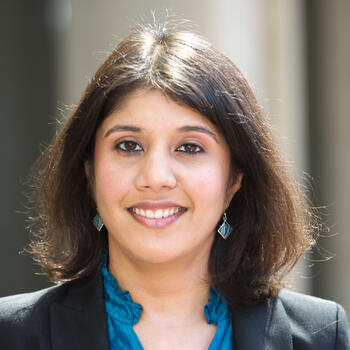
Yun Sun 100620
Yun Sun is a Senior Fellow and Co-Director of the East Asia Program and Director of the China Program at the Stimson Center. Her expertise is in Chinese foreign policy, U.S.-China relations and China’s relations with neighboring countries and authoritarian regimes. She has previously held positions at the Brookings Institution, where she focused on Chinese national security decision-making processes and China-Africa relations, and at the International Crisis Group, specializing in China’s foreign policy towards conflict countries and the developing world. She earned her master’s degree in international policy and practice from George Washington University.

Moderator:

Image
Arzan Terapore 100620
Arzan Tarapore is the South Asia research scholar at the Shorenstein Asia-Pacific Research Center at Stanford University, where he leads the newly-restarted South Asia research initiative. He is also a senior nonresident fellow at the National Bureau of Asian Research. Tarapore’s research focuses on Indian military strategy and contemporary Indo-Pacific security issues. He previously held research positions at the RAND Corporation, the Observer Research Foundation, and the East-West Center in Washington, and served in the Australian Defence Department. Tarapore holds a PhD in war studies from King’s College London.


Via Zoom Webinar

Register at https://bit.ly/2Hkx3ye

Joseph Felter William J. Perry Fellow, the Center for International Security and Cooperation and research fellow, the Hoover Institution
Tanvi Madan Senior Fellow in the Project on International Order and Strategy in the Foreign Policy program, and director of The India Project, the Brookings Institution, Washington, DC
Yun Sun Senior Fellow and Co-Director of the East Asia Program and Director of the China Program, the Stimson Center
Arzan Tarapore Moderator the South Asia research scholar, the Shorenstein Asia-Pacific Research Center, Stanford University
Seminars
Authors
Kiyoteru Tsutsui
News Type
Commentary
Date
Paragraphs

This article by Kiyoteru Tsutsui and Charles Crabtree was originally published in The Hill.


On Sept. 16, Yoshihide Suga was elected as Japan’s 99th prime minister, following the country’s longest-serving prime minister, Shinzo Abe. Suga was Abe’s right-hand man, serving as the chief cabinet secretary and achieving the longest tenure in Japanese history for this position. Now as prime minister, Suga is widely expected to continue many of Abe’s policies and has publicly vowed to do so. 

True to his words, his cabinet appointments include many holdovers, and his policy pronouncements so far demonstrate few deviations from Abe’s agenda, which Suga helped shape. Suga will first focus on measures to address health and economic setbacks caused by the coronavirus pandemic, and then will pursue other goals such as regulatory reform, digitalization to improve efficiency in government agencies, and the reorganization of small firms and local banks to increase their productivity. 

None of these is a radically new idea and, at least initially, Suga is unlikely to steer Japan away from the direction that Abe set over the past seven years and eight months. However, there are some key differences between the two men that could produce different electoral and policy outcomes for Suga’s administration.

Continue reading this article in The Hill >>

[Sign up for our newsletters to get the latest from APARC's scholars.]

Read More

Japan's outing Prime Minister Shinzo Abe and incoming Prime Minister Yoshihide Suga hold a flower bouquet
Commentary

Suga Is Fit to Lead, But Are Voters Ready to Like Him?

Japan's next prime minister is a deeply pragmatic, self-made man.
Suga Is Fit to Lead, But Are Voters Ready to Like Him?
Japanese Prime Minister Shinzo Abe speaks at a podium with audience seen at the front
Commentary

Three Hits and Three Misses: What is Prime Minister Abe’s Legacy?

Despite this long period as prime minister, it is not entirely clear that Abe accomplished major policy goals.
Three Hits and Three Misses: What is Prime Minister Abe’s Legacy?
Hero Image
Suga Yoshihide at a press conference at the Liberal Democratic Party (LDP) headquarters.
Suga Yoshihide at a press conference at the Liberal Democratic Party (LDP) headquarters in Tokyo, Japan.
Getty Images
All News button
1
Subtitle

Yoshihide Suga has promised to continue many of Shinzo Abe's policies and goals, but APARC's Japan Program Director Kiyoteru Tsutsui explains how Suga's background, experience, and political vision differ from the previous administration.

-

This event has been rescheduled to October 14, 2020

It is a good time to be interested in Southeast Asia-China relations. In addition to the three new books referenced in this webinar, additional books on the subject are forthcoming from other authors.  The timing is all the more propitious in view of the current animosity between Beijing and Washington as it may implicate Southeast Asia and American policy toward the region, depending in part on who wins the 3 November US election.  These books are both sweeping and granular.  Hiebert’s and Strangio’s country-focused chapters cover all ten members of the Association of Southeast Asian Nations (ASEAN), while Emmerson and his co-authors mix country studies with thematic arguments about China’s relations with its neighbors.

Given China’s clearly superior size and power, is Beijing’s incremental domination of its neighbors foreordained? Strangio says no: “Southeast Asia’s future will not be one of linear and inexorable Chinese advance, but rather one in which past dynamics and contradictions reproduce themselves over time at varying pitches of tension.” Is he right? Hiebert calls for the US “to support the region as it faces a rising and more assertive China”—to “remain an actively engaged partner that shows up, brings some resources, and rewrites the perception that it is often unreliable and missing in action.” Is that good advice?  For Emmerson, “strategic autonomy necessarily begins at home. Outsiders can help or hurt. But nothing can substitute for the creativity of Southeast Asian states in individual and joint pursuit of their own and their region’s security.” Is that true, and even if it is, so what?

The webinar will explore these and other aspects of Sino-Southeast Asian relations.

Image
Murray Hiebert 100520
Murray Hiebert, in addition to his position at CSIS, is research director for BowerGroup Asia. Before joining CSIS, he was senior director for Southeast Asia at the U.S. Chamber of Commerce. Earlier, he was a journalist in the China bureau of the Wall Street Journal. Prior to his posting to Beijing, he reported from Washingon on US-Asia relations for the Wall Street Journal Asia and the Far Eastern Economic Review. In the 1990s he worked for the Review while based in Kuala Lumpur and, earlier, in Hanoi, having joined the Review's Bangkok bureau in 1986 to cover developments in Vietnam, Cambodia, and Laos. He is also the author of two books on Vietnam, Chasing the Tigers (1996) and Vietnam Notebook (1993). He has a master’s degree in news media studies from American University.


Image
Sebastian Strangio 100520
Sebastian Strangio has written from and on Southeast Asia for many publications including Al Jazeera, The Atlantic, The Economist, Forbes, Foreign Policy, and The New York Times. In addition to living and working in Cambodia, where he spent three years with The Phnom Penh Post, he has reported from Indonesia, Laos, Myanmar, Thailand, Vietnam, and China, among other countries. Other previous affiliations include New America’s International Reporting Project; the Future Forum, a policy institute in Phnom Penh; and Chiang Mai University’s Regional Center for Social Science and Sustainable Development. Foreign Affairs named his first book, Hun Sen’s Cambodia, a 2015 Book of the Year. He has a master’s degree in international politics from the University of Melbourne.


Image
don emmerson 2
Donald K. Emmerson, in addition to his position in APARC, is a faculty affiliate of Stanford’s Center on Democracy, Development, and the Rule of Law. So far in 2019-2020 he has spoken on Southeast Asian topics to audiences in Bangkok, Hanoi, Kuala Lumpur, New York, Singapore, and Washington, DC.  Recent publications include “‘No Sole Control’ in the South China Sea,” Asia Policy (2019) and ASEAN @ 50, Southeast Asia @ Risk: What Should Be Done? (edited, 2018). Before moving to Stanford in 1999, he taught political science at the University of Wisconsin-Madison.  He has held visiting positions at the Institute for Advanced Studies and the Australian National University, among other institutions.  His doctorate in political science is from Yale University.

Via Zoom Webinar

Register at https://bit.ly/35WOb7o

Murray Hiebert senior associate, Southeast Asia Program, Center for Strategic and International Studies (CSIS), Washington, DC, and author of <i>Under Beijing’s Shadow: Southeast Asia’s China Challenge</i> (2020)
Sebastian Strangio journalist, analyst, Southeast Asia editor of The Diplomat, and author of <i>In the Dragon’s Shadow: Southeast Asia in the Chinese Century</i> (2020)
0
Senior Fellow Emeritus at the Freeman Spogli Institute for International Studies
Affiliated Faculty, CDDRL
Affiliated Scholar, Abbasi Program in Islamic Studies
aparc_dke.jpg PhD

At Stanford, in addition to his work for the Southeast Asia Program and his affiliations with CDDRL and the Abbasi Program in Islamic Studies, Donald Emmerson has taught courses on Southeast Asia in East Asian Studies, International Policy Studies, and Political Science. He is active as an analyst of current policy issues involving Asia. In 2010 the National Bureau of Asian Research and the Woodrow Wilson International Center for Scholars awarded him a two-year Research Associateship given to “top scholars from across the United States” who “have successfully bridged the gap between the academy and policy.”

Emmerson’s research interests include Southeast Asia-China-US relations, the South China Sea, and the future of ASEAN. His publications, authored or edited, span more than a dozen books and monographs and some 200 articles, chapters, and shorter pieces.  Recent writings include The Deer and the Dragon: Southeast Asia and China in the 21st Century (ed., 2020); “‘No Sole Control’ in the South China Sea,” in Asia Policy  (2019); ASEAN @ 50, Southeast Asia @ Risk: What Should Be Done? (ed., 2018); “Singapore and Goliath?,” in Journal of Democracy (2018); “Mapping ASEAN’s Futures,” in Contemporary Southeast Asia (2017); and “ASEAN Between China and America: Is It Time to Try Horsing the Cow?,” in Trans-Regional and –National Studies of Southeast Asia (2017).

Earlier work includes “Sunnylands or Rancho Mirage? ASEAN and the South China Sea,” in YaleGlobal (2016); “The Spectrum of Comparisons: A Discussion,” in Pacific Affairs (2014); “Facts, Minds, and Formats: Scholarship and Political Change in Indonesia” in Indonesian Studies: The State of the Field (2013); “Is Indonesia Rising? It Depends” in Indonesia Rising (2012); “Southeast Asia: Minding the Gap between Democracy and Governance,” in Journal of Democracy (April 2012); “The Problem and Promise of Focality in World Affairs,” in Strategic Review (August 2011); An American Place at an Asian Table? Regionalism and Its Reasons (2011); Asian Regionalism and US Policy: The Case for Creative Adaptation (2010); “The Useful Diversity of ‘Islamism’” and “Islamism: Pros, Cons, and Contexts” in Islamism: Conflicting Perspectives on Political Islam (2009); “Crisis and Consensus: America and ASEAN in a New Global Context” in Refreshing U.S.-Thai Relations (2009); and Hard Choices: Security, Democracy, and Regionalism in Southeast Asia (edited, 2008).

Prior to moving to Stanford in 1999, Emmerson was a professor of political science at the University of Wisconsin-Madison, where he won a campus-wide teaching award. That same year he helped monitor voting in Indonesia and East Timor for the National Democratic Institute and the Carter Center. In the course of his career, he has taken part in numerous policy-related working groups focused on topics related to Southeast Asia; has testified before House and Senate committees on Asian affairs; and been a regular at gatherings such as the Asia Pacific Roundtable (Kuala Lumpur), the Bali Democracy Forum (Nusa Dua), and the Shangri-La Dialogue (Singapore). Places where he has held various visiting fellowships, including the Institute for Advanced Study and the Woodrow Wilson International Center for Scholars. 


Emmerson has a Ph.D. in political science from Yale and a BA in international affairs from Princeton. He is fluent in Indonesian, was fluent in French, and has lectured and written in both languages. He has lesser competence in Dutch, Javanese, and Russian. A former slam poet in English, he enjoys the spoken word and reads occasionally under a nom de plume with the Not Yet Dead Poets Society in Redwood City, CA. He and his wife Carolyn met in high school in Lebanon. They have two children. He was born in Tokyo, the son of U.S. Foreign Service Officer John K. Emmerson, who wrote the Japanese Thread among other books.

Selected Multimedia

Date Label
Moderator/Discussant director, Southeast Asia Program, Shorenstein Asia Pacific Research Center (APARC), Stanford University, and editor/co-author of <em>The Deer and the Dragon: Southeast Asia and China in the 21st Century</em> (2020)
Seminars
Authors
Noa Ronkin
News Type
News
Date
Paragraphs

The Walter H. Shorenstein Asia-Pacific Research Center (APARC) invites applications for three types of postdoctoral fellowship in contemporary Asia studies for the 2021-22 academic year. Appointments for all three fellowship offerings are for one year beginning in fall quarter 2021.

APARC is committed to supporting junior scholars in the field of Asia studies to the greatest extent possible and that has become even more important during COVID-19, as graduate students are especially vulnerable to the adverse impacts of the pandemic, facing the loss of funding opportunities and access to field research.

The Center offers postdoctoral fellowships that promote multidisciplinary research on contemporary Japan, contemporary Korea, and contemporary Asia broadly defined. Learn more about each fellowship and its eligibility and specific application requirements:

Postdoctoral Fellowship on Contemporary Japan

The fellowship supports multidisciplinary research on contemporary Japan in a broad range of disciplines including political science, economics, sociology, law, policy studies, and international relations. The application deadline is January 4, 2021.

Korea Foundation-APARC Korea Program Postdoctoral Fellowship

The fellowship supports rising Korea scholars in the humanities and social sciences. The application deadline is January 20, 2021.

Shorenstein Postdoctoral Fellowship on Contemporary Asia

APARC offers two postdoctoral fellowship positions to junior scholars for research and writing on contemporary Asia. The primary research areas focus on political, economic, or social change in the Asia-Pacific region (including Northeast, Southeast, and South Asia), or international relations and international political economy in the region. The application deadline is January 4, 2021.

Read More

A young men sitting at a desk in front of computer monitors
News

Student Documentary Celebrates Transnational Brain Linkages

‘Brain Bridges,’ a documentary produced by senior Dexter Sterling Simpson, illustrates the positive gains of global talent flows.
Student Documentary Celebrates Transnational Brain Linkages
(Left) Yuen Yuen Ang; (Right) Congratulations Yuen Yuen Ang, Winner of the Theda Skocpol Prize from the American Political Science Association
News

Dr. Yuen Yuen Ang Awarded Theda Skocpol Prize for Emerging Scholars

Former China Program postdoc and Stanford Ph.D alumna Yuen Yuen Ang has received the Theda Skocpol Prize for Emerging Scholars from the American Political Science Association for her scholarship on China’s transformation into a global superpower.
Dr. Yuen Yuen Ang Awarded Theda Skocpol Prize for Emerging Scholars
Portrait of Oriana Skylar Mastro and a 3D cover of her book, 'The Costs of Conversation: Obstacles to Peace Talks in Wartime'
News

FSI Center Fellow Wins Best Book in Security Studies Award

The American Political Science Association recognizes Oriana Skylar Mastro for her work on military strategy and mediation.
FSI Center Fellow Wins Best Book in Security Studies Award
Hero Image
Encina Hall
All News button
1
Subtitle

The Center’s commitment to supporting young Asia scholars remains strong during the COVID-19 crisis.

Shorenstein APARC Encina Hall E301 Stanford University
0
Shorenstein Postdoctoral Fellow in Contemporary Asia, 2020-2021
nhu_truong_resize.png Ph.D.

Nhu Truong joined the Walter H. Shorenstein Asia-Pacific Research Center (APARC) as Shorenstein Postdoctoral Fellow for the 2020-2021 academic year. Her research focuses on authoritarian politics and the nature of communist and post-communist regimes, particularly pertaining to regime repressive-responsiveness, dynamics of social resistance, repertoires of social contention, and political legitimation. As a Shorenstein Fellow, Nhu Truong worked to develop her dissertation into a book manuscript. More specifically, she worked on buttressing the theory by contrasting Cambodia with China and Vietnam, as well as exploring the variable outcomes and knock-on effects of authoritarian responsiveness as groundwork for her next comparative project.

Nhu Truong’s dissertation explains how and why the two most similar communist, authoritarian regimes of China and Vietnam differ in their responsiveness to mounting unrest caused by government land seizures. Authoritarian regimes manage social unrest not merely by relying on raw coercive power, but also by demonstrating responsiveness to social demands. Yet, not all authoritarian regimes are equally responsive to social pressures. Despite their many similarities, Vietnam has exhibited greater institutionalized responsiveness, whereas China has been relatively more reactive. Theory and empirical findings based on 16 months of fieldwork and in-depth comparative historical analysis of China and Vietnam illuminate the divergent institutional pathways and the nature of responsiveness to social pressures under communist and authoritarian rule.

Nhu Truong obtained her Ph.D. in comparative politics in the Department of Political Science at McGill University, with an area focus on China, Vietnam, and Southeast Asia. She received an MPA in International Policy and Management from New York University, Wagner Graduate School of Public Service, an MA in Asian Studies from the University of Texas at Austin, and a BA in International Studies from Kenyon College. Prior to embarking on her doctoral study, she had work experience in international development in Vietnam, Cambodia, and policy research on China.

Authors
News Type
Commentary
Date
Paragraphs

This op-ed by Arzan Tarapore originally appeared in The Hindu.


Over four months ago, the Chinese army entered territory that India has long considered its own, and never left. In effect, the multiple incursions have changed the Line of Actual Control (LAC) and India has lost territory, at least for the time being. How could this happen?

In part, it was a failure of the warning-intelligence system. Either Indian intelligence services did not collect sufficient data of Chinese intentions and early moves, or they did not interpret it correctly, or their policy and military customers failed to take the warning seriously. Wherever the fault lay, the system apparently failed.

In part, however, the problem also lay in the Army’s concepts for defending the country’s borders. It is, as the current crisis shows, simply not postured or prepared for the type of security threat China presents. (Continue reading the full article in The Hindu.)

[Subscribe to our newsletters to get the latest commentary from APARC scholars.]

Read More

An Indian Army soldier looking through a military monocular over hills in the background
News

U.S. Policymakers Cannot Assume the Fixity of Indian Strategic Preferences, Argues South Asia Research Scholar Arzan Tarapore

In a special report published by the National Bureau of Asian Research, Tarapore analyzes possible scenarios for India’s strategic future that expose risks and tensions in current U.S. policy.
U.S. Policymakers Cannot Assume the Fixity of Indian Strategic Preferences, Argues South Asia Research Scholar Arzan Tarapore
Portrait of Arzan Tarapore and text: "Q&A with Arzan Tarapore"
Q&As

Internal Balancing Will Determine India’s Relationships with the US and China, Argues APARC’s Newest Research Scholar

Indo-Pacific security expert Arzan Tarapore, whose appointment as a research scholar at APARC begins on September 1, discusses India’s military strategy, its balancing act between China and the United States, and his vision for revitalizing the Center’s research effort on South Asia.
Internal Balancing Will Determine India’s Relationships with the US and China, Argues APARC’s Newest Research Scholar
Hero Image
A regiment of the Indian Army practices in dress uniform for Republic Day
A regiment of the Indian Army practices in dress uniform for Republic Day.
Mitul Gajera, Unsplash
All News button
1
Subtitle

The security threats India faces along its borders require new strategies, and in order to manage and prevent future risks, the military needs to overhaul its traditional playbook of deterring and defending against conventional attacks says Arzan Tarapore.

Authors
Noa Ronkin
News Type
News
Date
Paragraphs

U.S. policymakers are counting on India as a natural strategic partner. They focus on India’s increasing national power and its enticing potential as a counterbalance to China. But what happens if India’s strategic preferences shift? Will it fulfill its potential so that the U.S. strategic bet pays off?

In a special report, Exploring India's Strategic Futures, published by the National Bureau of Asian Research (NBR), APARC South Asia Research Scholar and NBR Nonresident Fellow Arzan Tarapore identifies a set of challenges for American strategists, illustrating alternative futures of India as a strategic actor and focusing on futures that may pose challenges to U.S. security interests.

Tarapore uses a novel method of major/minor trends to demonstrate that India’s strategic preferences are not fixed but could vary discontinuously under different environmental conditions. Based on detailed historical analysis, this method offers a powerful tool to sensitize decision makers to a range of possible futures. He analyzes three plausible scenarios:

First, a revisionist India driven by Hindu-nationalist ideology to settle the score with Pakistan, which will require it to keep the China front quiet and accommodate China’s Belt and Road Initiative in Eurasia. This scenario may severely complicate U.S. strategy in the Indo-Pacific and its efforts to counterbalance China.

Second, a risk-acceptant Indian military that engages in brinkmanship, which may endanger strategic stability with both Pakistan and China. In this scenario, rather than keeping the Chinese military in check, India may paradoxically have the opposite effect.

Third, an India that expands its competition with China into continental Eurasia, making common cause with U.S. rivals such as Russia and Iran. This scenario illustrates the tensions in a U.S. global strategy that lacks prioritization and prompts Washington to more carefully consider its preferences in Central Asia.

Tarapore by no means suggests that such futures are likely — they are decidedly unlikely — but rather that U.S. strategists should consider them plausible. Indeed, the three scenarios are all grounded in political processes that have long existed in India, from communalism to military adaptation, to the balancing of external threats. Therefore, argues Tarapore, U.S. policymakers should not assume Indian strategic preferences are stable. They must consider scenarios in which India might challenge U.S. security interests.

Read More

Portrait of Arzan Tarapore and text: "Q&A with Arzan Tarapore"
Q&As

Internal Balancing Will Determine India’s Relationships with the US and China, Argues APARC’s Newest Research Scholar

Indo-Pacific security expert Arzan Tarapore, whose appointment as a research scholar at APARC begins on September 1, discusses India’s military strategy, its balancing act between China and the United States, and his vision for revitalizing the Center’s research effort on South Asia.
Internal Balancing Will Determine India’s Relationships with the US and China, Argues APARC’s Newest Research Scholar
Japanese Prime Minister Shinzo Abe speaks at a podium with audience seen at the front
Commentary

Three Hits and Three Misses: What is Prime Minister Abe’s Legacy?

Despite this long period as prime minister, it is not entirely clear that Abe accomplished major policy goals.
Three Hits and Three Misses: What is Prime Minister Abe’s Legacy?
Leaders from the ASEAN league gather onstage at the 33rd ASEAN Summit in 2018 in Singapore.
Commentary

Southeast Asia's Approach to China and the Future of the Region

In an interview with The Diplomat, Donald Emmerson discusses how factors like the South China Sea, U.S.-China competition, and how COVID-19 are affecting relations between Southeast Asia, China, and the United States.
Southeast Asia's Approach to China and the Future of the Region
Hero Image
An Indian Army soldier looking through a military monocular over hills in the background
An Indian Army soldier guards the line dividing Kashmir between India and Pakistan.
Farooq Khan-Pool/ Getty Images
All News button
1
Subtitle

In a special report published by the National Bureau of Asian Research, Tarapore analyzes possible scenarios for India’s strategic future that expose risks and tensions in current U.S. policy.

Subscribe to International Relations