Health Care
Paragraphs

In Live Long and Prosper?, a new eBook edited by David Bloom, AHPP director Karen Eggleston contributes the chapter "Understanding 'Value for Money' in Healthy Ageing," in which she advocates for and explains the concept of "net value of medical care," a metric that helps quantify the social value of spending on healthcare. Understanding value for money, Eggleston writes, is a way of "determining which services and technologies are unnecessary and which are of high value," a determination that is of increasing importance for aging societies, in which "spending for chronic diseases represents a large and increasing part of public and private budgets." 

All Publications button
1
Publication Type
Books
Publication Date
Authors
Noa Ronkin
News Type
News
Date
Paragraphs

Southeast Asia, home to over 640 million people across 10 countries, is one of the world’s most dynamic and fastest growing regions. APARC just concluded the year 2019 with a Center delegation visit to two Southeast Asian capital cities, Hanoi and Bangkok, where we spent an engaging week with stakeholders in the academic, policy, business, and Stanford alumni communities.

Led by APARC Director Gi-Wook Shin, the delegation included APARC Deputy Director and Asia Health Policy Program Director Karen Eggleston, Southeast Asia Program Director Donald Emmerson, and APARC Associate Director for Communications and External Relations Noa Ronkin. Visiting Scholar Andrew Kim joined the delegation in Bangkok.

With a focus on health policy, our first day in Hanoi included a visit to Thai Nguyen University, a meeting with government representatives at the Vietnam Ministry of Health, and a seminar on healthy aging and innovation jointly with Hanoi Medical University.

Image
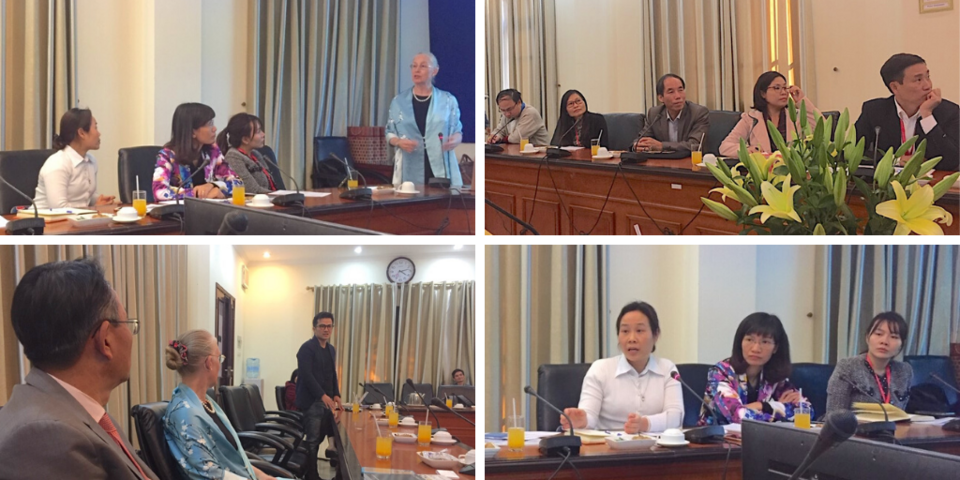
Collage of four images showing participants at a roundtable held at Hanoi Medical University with APARC delegation members

Karen Eggleston and participants at the roundtable held at Hanoi Medical University, December 9, 2019.

Throughout the day, Eggleston presented some of her collaborative research that is part of two projects involving international research teams: one that assesses public-private roles and institutional innovation for healthy aging and another that examines the economics of caring for patients with chronic diseases across diverse health systems in Asia and other parts of the world. We appreciated learning from our counterparts about the health care system and health care delivery in Vietnam.

Shifting focus to international relations and regional security, day 2 in Hanoi opened with a roundtable, “The Rise of the Indo-Pacific and Vietnam-U.S. Relations,” held jointly with the East Sea Institute (ESI) of the Diplomatic Academy of Vietnam (DAV). Following a welcome by ESI Director General Nguyen Hung Son, the program continued with remarks by Shin, Emmerson, ESI Deputy Director General To Anh Tuan, and Assistant Director General Do Thanh Hai.

Image
Participants at a roundtable held at the Diplomatic Academy of Vietnam with APARC delegation members

Roundtable at the Diplomatic Academy of Vietnam, December 10, 2019.

The long-ranging conversation with DAV members included issues such as the future of the international order in Asia; the U.S. withdrawal from multilateralism; the concern about a lack of U.S. engagement in Southeast Asia, sparked by President Trump’s absence from the November 2019 summit of the Association of Southeast Asian Nations (ASEAN) at a time when China is bolstering its influence in the region and when ASEAN hopes to set a code of conduct with China regarding disputed waters in the South China Sea; the priorities for Vietnam as it assumes the role of ASEAN chair in 2020; and the challenges for the Vietnam-U.S. bilateral relationship amid the changing strategic environment in Southeast Asia.

In the afternoon we were joined by members of the American Chamber of Commerce in Hanoi at an AmCham-hosted Lunch ‘n’ Learn session on Vietnam's challenges and opportunities amid the U.S.-China rivalry. The event featured Emmerson in conversation with AmCham Hanoi Executive Director Adam Sitkoff.

Image
Two men in conversation seated on stage and a man speaking at a podium

(Left) Donald Emmerson in conversation with Adam Sitkoff; (right) Gi-Wook Shin welcomes AmCham Hanoi members; December 10, 2019. 

Moving to Bangkok, delegation members Shin, Eggleston, Emmerson, and Kim spoke on a panel for executives of the Charoen Pokphand Group (C.P. Group), one of Thailand’s largest private conglomerates, addressing some of the core issues that lie ahead for Southeast Asia in 2020 and beyond in the areas of geopolitics, innovation, and health.

Image
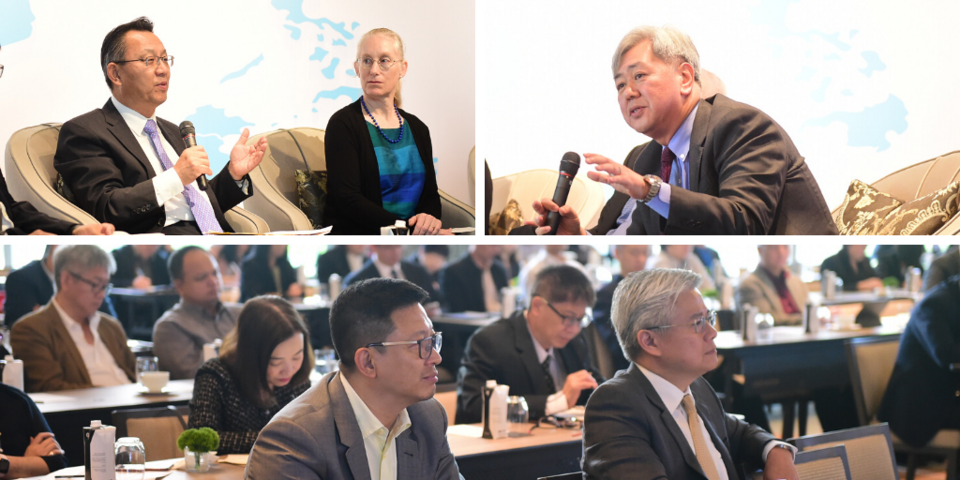
Participants at a panel discussion with APARC delegation hosted by the C.P. Group, Thailand

Top, from left to right: Gi-Wook Shin, Karen Eggleston, Andrew Kim; bottom: C.P. Group executive listening to the panel, December 12, 2019.

We also enjoyed a tour at True Digital Park, Thailand’s first startup and tech entrepreneur’s campus. Developed by the C.P. Group, True Digital Park aspires to be an open startup ecosystem that powers Thailand to become a global hub for digital innovation.

The following day, Shin and Emmerson participated in a public forum hosted by Chulalongkorn University’s Institute of Security and International Studies (ISIS Thailand), "Where Northeast Asia Meets Southeast Asia: The Great Powers, Global Disorder and Asia’s Future.” They were joined by ISIS Thailand Director Thitinan Pongsudhirak and Chulalongkorn University Faculty of Political Science Associate Dean for International Affairs and Graduate Studies Kasira Cheeppensook. The panel was moderated by Ms. Gwen Robinson, ISIS Thailand senior fellow and editor-at-large of the Nikkei Asian Review.

Image
Panelists and participants at a public forum held at Chulalongkorn University

ISIS Thailand forum participants and panelists, from left: Pngsukdhirak, Shin, Robinson, Emmerson, Cheeppensook; December 13, 2019.

As part of that discussion, Emmerson speculated that – driven by deepening Chinese economic and migrational involvement in Southeast Asia’s northern tier – Cambodia and Laos, less conceivably Myanmar, and still less conceivably Thailand could become incorporated de facto into an economically integrated “greater China” that could eventually reduce ASEAN to a more-or-less maritime membership in the region’s southern tier. Emmerson’s speculation was made in the context of his critique of ASEAN’s emphasis on its own “centrality” to the neglect of its lack of the proactivity that would serve as evidence of centrality and of a desire not to be rendered peripheral by the growing centrality-cum-proactivity of China. The event was covered by the Bangkok Post (although that report’s headline and quote of Emmerson are inaccurate, as neither the panel nor Emmerson predicted the “break-up of ASEAN.”)

Our delegation visit in Bangkok concluded with a buffet dinner reception and panel discussion jointly with the Stanford Club of Thailand.

Image
alumni event

Stanford and IvyPlus alumni listening to the panel, December 13, 2019.

Moderated by Mr. Suthichai Yoon, a veteran journalist and founder of digital media outlet Kafedam Group, the conversation focused on the changing geopolitics of Southeast Asia, innovation and health in the region, and the opportunities and challenges facing Thailand-U.S. relations. It was a pleasure to meet many new and old friends from the Stanford and IvyPlus alumni communities.

APARC would like to thank our partners and hosts in Hanoi and Bangkok for their hospitality, collaboration, and the stimulating discussions throughout our visit. We look forward to keeping in touch!

Hero Image
APARC delegation speaking to Stanford and IvyPlus alumni, Bangkok
All News button
1
Authors
Lisa Lee
News Type
News
Date
Paragraphs

Jointly with partners throughout Asia, the Asia Health Policy Program (AHPP) at Shorenstein APARC has developed comparative research on health care use, medical spending, and clinical outcomes for patients with diabetes in the region and other parts of the world as a lens for understanding the economics of chronic disease management. Karen Eggleston, AHPP director and APARC deputy director, recently traveled to South Korea, where she led three project-related events.

On November 29, a workshop on Net Value Diabetes Management was held at Seoul National University (SNU) School of Medicine. This was the third such workshop convened through the project, following two previous ones held in Beijing at the Stanford Center at Peking University. Another workshop, on diabetes modeling, hosted by the Mt. Hood Diabetes Challenge Network, was held at Chung Ang University on December 1. Finally, on December 5, Eggleston held an information session, titled Comparative Economics Research on Diabetes, during the 2019 International Diabetes Federation (IDF) at BEXCO in Busan. These events were also made available through video conferencing to enable remote participation by collaborators who were unable to travel to Korea.

[Learn more about AHPP’s Net Value in Diabetes Management research project]

Diabetes Net Value Workshop

The workshop brought together team members from multiple health systems — including South Korea, Japan, Taiwan, Hong Kong, Thailand, India, the Netherlands, and the United States — to discuss comparative research on the economics of diabetes control. Eggleston shared the results of a study outlined in a working paper on the net value of diabetes management in Japan, the Netherlands, Taiwan, and Hong Kong. This research is part of a broader series of studies aimed to help address the policy challenge of finding the best strategies to improve health through cost effective prevention and healthcare productivity in chronic disease management.

The key to this research was to measure changes in quality or health outcomes over time by predicting mortality risk using blood pressure, blood sugar, and other factors amenable to patient and provider control and improvement (controlling for age and duration of diabetes diagnosis). The research seeks to understand how we can control cost and eliminate waste without cutting out the things that are valuable and improving people’s quality of life. Further studies probe determinants of relative net value of a pay-for-performance program in Taiwan, adherence to medications and vertical integration in Japan, and net value based on a randomized controlled trial in India.

Image
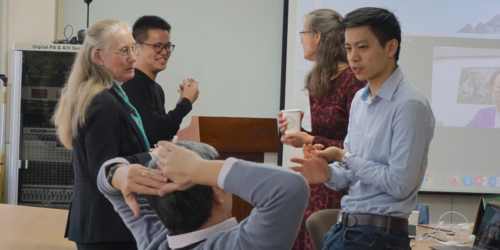
Two women and three men talking with each other in a conference room

Karen Eggleston (left) with workshop participants.

Young Kyung Do of SNU reported that according to his evaluation project for diabetes care, the quality of care and treatment in South Korea has improved and is similar to Hong Kong and Singapore. The goal of the program is to provide more comprehensive care to diabetes patients.

Talitha Feestra of the Netherlands net value team presented her proposal for joint research to develop new prediction models for specific populations as a core component of health economics decision models in Diabetes. Feestra will take the lead to develop the plan and time frame for the continuation of this research in 2020.

Several additional comparative studies were proposed and discussed. Participants who attended the workshop and contributed to discussion included Junfeng Wang from the Netherlands net value team; Jianchao Quan and Carmen Ng from Hong Kong University; Daejung Kim from the Korea Institute for Health and Social Affairs (KIHASA); Taehoon Lee, Eun Sil Yoon, and Hongsoo Kim from SNU; Piya Hanvoravongchai from Chulalongkorn University; and Gregory Ang from National University of Singapore. Remote participants included Vismanathan Baskar from Madras Diabetes Research Foundation; Wasin Laohavinij from Chulalongkorn University (visiting Stanford University autumn quarter); and Rachel Lu from Chang Gung University.

Mt. Hood Diabetes Challenge Workshop on Diabetes Modeling

Philip Clarke from the Health Economics Research Center, University of Oxford, presented the history of insulin as a cure for diabetes and discussed in detail methods for economic modeling of diabetes, including quality of life and diabetes cost, drawing from his rich experience developing the UK Prospective Diabetes Study outcomes model. The second presenter was Andrew Palmer of University of Tasmania, Australia. His presentation included many additional economic modeling pointers, especially regarding drawing in the literature for building models.

Image
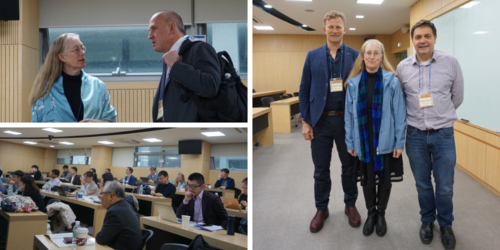
Collage of three photos showing people posing to the camera and seated in a lecture hall

Karen Eggleston with participants at the Mt. Hood Diabetes Challenge Workshop; (right hand side) from left to right: Andrew Palmer, Karen Eggleston, Philip Clarke.

We are grateful to Professors Clarke and Palmer for graciously allowing the AHPP network researchers to join the workshop both in person and remotely, adding to their chronic disease modeling skills, and for inviting Karen Eggleston to present a keynote at the Mt Hood conference that took place before the modeling workshop.

Information Session: Comparative Economics Research on Diabetes

The third and final component of the diabetes research events was held on December 5 as part of the International Diabetes Federation congress in Busan, Korea, and presented the network to clinicians and public health researchers. Participants from China, India, and Australia attended. They shared updates on their individual projects and discussed methods and ideas for future collaboration.

Hero Image
A group of people posing to the camera
All News button
1
Paragraphs

In the 2019 fourth quarter edition of the Milken Institute Review, Asia Health Policy Program director Karen Eggleston discusses the progress China has made since the 2009 reforms to its healthcare, which brought basic coverage to all and reduced patients' share of costs, and explains the many challenges that remain, including increasing the system's efficiency to ensure its sustainability and addressing the disparities in healthcare that echo the "yawning gap in living standards between China's rising middle class and its poorest citizens."

All Publications button
1
Publication Type
Journal Articles
Publication Date
Journal Publisher
Milken Institute Review
Authors
Noa Ronkin
News Type
News
Date
Paragraphs

Understanding the value of chronic disease care is critical to confronting the challenges of aging societies. In a new ebook published by the Centre for Economic Policy Research, APARC Deputy Director and Asia Health Policy Program Director Karen Eggleston provides a framework for assessing the social value of health spending.

The world population is aging faster than ever before and governments must confront the increasing burden of healthcare spending on their economies. At a time when the economics of aging is inseparable from the economics of healthcare, successful adaptations to older population age structures necessitate better understanding of the value of medical care. Policymakers, in particular, must incorporate value into considerations of healthcare cost growth, so they can determine the extent to which average health improvements offset added cost, reduce cases in which health spending rises without sufficient corresponding health outcomes, and reward those in which “we are getting what we pay for.”

A new book chapter, authored by APARC Deputy Director and Asia Health Policy Program Director Karen Eggleston, provides a framework for assessing the social value of health spending. Titled “Understanding ‘value for money’ in healthy aging,” the chapter is part of an ebook, Live Long and Prosper? The Economics of Ageing, published by the Centre for Economic Policy Research (CEPR).

[To receive more stories like this directly to your inbox subscribe to our newsletters.]

Quality-Adjusted Cost of Care

How do health economists incorporate value into measurements of health spending and how do they measure the social value of medical care? First they assume each additional year of life brings a given monetary value. Then they measure the growth in value to patients as monetized gains in “quality-adjusted life-years,” a metric that includes increases in life expectancy and quality of life. The difference between the change in health spending and the change in monetized gains on improved survival is the net change in quality-adjusted health spending or the net value of medical care.

Understanding the value of chronic disease care is especially critical in aging societies, as governments must transform their health systems to support patients who will live with chronic diseases for decades. Health benefits of medical care, however, are difficult to aggregate across disparate services and diseases, and hence focusing on management of a single important chronic disease allows researchers to develop metrics of quality improvement and value that are linked to rigorous clinical studies. Eggleston describes a recent international research collaboration, which she was part of, that did just that. The researchers studied quality adjustment for one disease of growing global prevalence, type 2 diabetes, in four different health systems: one in Europe (the Netherlands) and three in East Asia (Japan, Hong Kong, and Taiwan).

Results of the study suggest that, in each health system, the value of improved survival outweighs the increase in health spending. For example, in the case of Japan, Eggleston and her colleagues found a positive value net of $2,595 for $100,000 value of a life-year. They also compared net value across the four health systems and different patient samples, finding mean net value that ranged between $600 and $10,000 for a $100,000 value of a life-year. Moreover, net value was positive for all age groups and remains positive and significant for individuals well beyond traditional retirement ages. These results, says Eggleston, indicate “the importance of continuing investments in medical treatments and services that deliver health outcomes of commensurate or higher value.”

Policy Implications

Confronting the challenges of aging societies requires careful thinking about the value of investments in new technologies for managing chronic conditions. To promote healthy aging governments must be “resiliently persistent in measuring the value of innovations for healthy aging and rewarding those that deliver high net value,” argues Eggleston. The goal should be improving the “value for money” of medical care rather than applying largescale cost controls that might stifle important breakthroughs.

The four-system study by Eggleston and her colleagues provides a framework for developing methods for assessing quality improvement and the net value of chronic disease spending and, more broadly, for measuring the value of healthy aging.


Download Eggleston’s chapter as part of the entire ebook >>

Learn more about Dr. Karen Eggleston’s research agenda seeking to assess net value in diabetes management and to identify and analyze innovation for healthy aging.

Hero Image
Closeup on a hand of an old man.
All News button
1
Authors
Noa Ronkin
News Type
News
Date
Paragraphs

In a new article published by the Milken Institute Review, APARC Deputy Director and Asia Health Policy Program Director Karen Eggleston offers an overview of the successes of China’s health reforms and the challenges ahead if the country is to increase the efficiency of health care delivery as it expands quality and usage.

Creating a high-quality universal health care system is an immense challenge anywhere, let alone in a country as large and diverse as China. But equal access to care will become ever more important as China converges on higher incomes, slower economic growth, population aging, and dependence on a skilled workforce to approach OECD living standards. With its health reforms over the past two decades, its growing technological prowess, and its application of innovative business models, China has made significant progress towards supporting higher-quality and more convenient health care for its 1.4 billion people. However, it is yet to deal with a host of challenges.

In a new article, Healing One-Fifth of Humanity, published in fall quarter 2019 of the Milken Institute Review, APARC Deputy Director and Asia Health Policy Program Director Karen Eggleston offers a progress report on China’s efforts to provide decent health care to all of its citizens, detailing how the reforms are working and what is left to do.

[To get more stories like this delivered directly to your inbox sign up to receive our newsletters.]

A Tale of Two Chinas

One complex challenge China faces is addressing the gap in living standards between its rising middle class and its poorest citizens. Eggleston’s research shows stark gaps between urban and rural China in multiple measures, including life expectancy (almost 10 years differences as of 2013), infant mortality, and under-age-5 mortality. Health outcomes differ along other dimensions, too — between urban regions with higher and lower per capita income and among individuals with more or fewer years of schooling.

There are also striking inequalities in the burden of chronic disease and in health care and risk protection. For example, diabetes is associated with greater excess mortality in rural China, although prevalence is higher in urban areas. Moreover, although China has attained universal health coverage and put in place policies to enhance access while decreasing households’ out-of-pocket spending burden, the coverage of rural insurance is less generous than coverage for urbanites. Therefore, the prospect of catastrophic medical spending on delayed care remains substantially higher for rural than urban residents.

Additional challenges abound in multiple other areas, from addressing patient-provider tensions and trust, to changing provider incentives to promote value rather than volume, to deciding which new medical therapies qualify as basic. In broad terms, argues Eggleston, “China must build an infrastructure that increases the efficiency of health care delivery as it expands quality and usage.”

An important issue is the extent to which leveling public policy will ameliorate disparities, even as an array of social and economic forces push to widen disparities in health, health care use and burden of medical spending over a lifetime. The good news, says Eggleston, is that the process of catching up on one critical component of social justice, that is, universal health care, has begun, and there is evidence suggesting “that health investments can narrow the gaps in outcomes by compensating for health disadvantages.” There is also good reason to believe that policies that go beyond direct medical intervention – notably, investments in the quantity and quality of schooling – can have even greater influence on health and survival than access to medical care.

“The challenge now,” concludes Eggleston, “is to persist in an endeavor that requires flexibility, sensitivity to competing interests — and lots and lots of money.”


Hero Image
Young patients receive treatment at Chongqing Children's Hospital in Chongqing Municipality, China.
China Photos / Getty Images
All News button
1
Shorenstein APARC Stanford University Encina Hall E301 Stanford, CA 94305-6055
1
Asia Health Policy Postdoctoral Fellow, 2019-2022
radhika_jain.jpg Ph.D.

Radhika Jain was the Asia Health Policy Postdoctoral Fellow for 2019-2022 at the Walter H. Shorenstein Asia-Pacific Research Center (Shorenstein APARC).  Her research focuses on health care markets, the effectiveness of public health policy, and gender disparities in health.

She completed her doctorate in the Department of Global Health at Harvard University in 2019.  Her dissertation examined the extent to which government subsidies for health care under insurance are captured by private hospitals instead of being passed through to patients, and whether accountability measures can help patients claim their entitlements. Dr. Jain's research has been supported by grants from the Weiss Family Fund and the Jameel Poverty Action Lab (JPAL). She has worked on impact evaluations of health programs in India and on the implementation of HIV programs across several countries in sub-Saharan Africa. She also held a doctoral fellowship at the Center for Global Development.

At Shorenstein APARC, Radhika began new work on understanding the factors that contribute to poor female health outcomes and interventions to increase the effectiveness of public health insurance.

Shorenstein APARCStanford UniversityEncina Hall E301Stanford, CA 94305-6055
0
Visiting Scholar, 2019-20
wasin_laohavinij.jpg Ph.D.

Wasin Laohavinij joined the Walter H. Shorenstein Asia-Pacific Research Center (Shorenstein APARC) as visiting scholar with the Asia Health Policy Program for the fall quarter of 2019 from King Chulalongkorn Memorial Hospital and Chulalongkorn University, where he serves as physician and teaching assistant respectively. His research focuses on diabetes care and health service systems in Thailand.  Dr. Laohavinij received his doctorate of medicine from Chulalongkorn University in 2017.

Authors
News Type
News
Date
Paragraphs

The world is “graying” at an unprecedented rate. According to the UN’s World Population Prospects 2019, the number of persons over the age of 65 is growing the fastest and expected to more than double by 2050, then triple in another 50 years’ time.

Some Asian countries in particular, plagued by population aging, declining fertility, and gender imbalance, are facing a grim outlook for a demographic crisis. In Japan, one in five people is now 70 or older, birthrate has dropped to a historic level, and the population declined by more than a quarter of a million last year. Meanwhile, South Korea is aging more quickly than any other developed country: with seniors on the verge of making up 14% of the population, the country is on the cusp of becoming an “aged society.” The potential impact of population aging on the labor market and the fiscal pressures on the public systems of healthcare, pensions, and social protection schemes for older adults are some of the many problems that these and other countries must tackle.

Against this background, Shorenstein APARC recently held the third annual gathering of the Stanford Asia-Pacific Innovation project, a Center-led initiative that produces academic and policy-relevant research to promote innovation and entrepreneurship in East Asia. Held in Chuncheon, South Korea and organized jointly with Hallym University’s Institute for Communication Arts and Technology, this year’s conference focused on the intersection of aging, technological development, and innovation in the region.

Gi-Wook Shin stans at a podium

(Gi-Wook Shin)

APARC Director Gi-Wook Shin opened the two-day session, introducing the conference’s themes. “What policies can promote innovation and entrepreneurship in aging populations?” Shin asked. “What opportunities do new technologies offer for addressing challenges posed by East Asia’s demographic shifts, and what are the threats involved in the adoption of these new technologies?”

Joon-Shik Park, vice president of the Office of Vision and Cooperation at Hallym University,  the conference host, noted that “East Asian countries are the most important testbeds on issues related to aging and innovation,” and that sharing meaningful research and implications from the region “will provide invaluable insights for all the societies around us.”

 Yong Suk Lee , Junichi Yamanoi , Young-Bum Kim, and Jiyoung Liu seated at a table

(From left to right, Yong Suk Lee , Junichi Yamanoi , Young-Bum Kim, and Jiyoung Liu)

Family Business Succession

Demographic forces and population aging at the macro level are altering family structures and assumptions at the micro level. For example, Junichi Yamanoi of Waseda University presented a study that examined how expectations around managerial succession at family firms had a significant impact on a firm’s long-term investments.

The study surveyed over 15,000 small and medium enterprises (SMEs) in the Tokyo metropolitan area. The participants were initially asked about their firm’s attributes, CEO demographics, and succession expectations. More than a year later (a time lag that eliminated reverse causality), a sampling of respondents was then asked about their current long-term investments (e.g., R&D, new product development, and internationalization activities).

Yamanoi and his coauthors found that, when a family business’ CEO was confident that a successor would follow, their firm was more likely to engage in long-term investment. Additionally, a CEO’s expectations that the successor would be someone other than their child resulted in an even greater likelihood of long-term investment.

As part of its policy propositions, the study recommends that government agencies and SME officers eager to increase investments by SMEs introduce external candidates to such firms. Moreover, family CEOs should be cautioned against investment decisions that are too short-term in orientation, as, due to inherent aversion to losses of socioemotional wealth for the family, they may unconsciously avoid long-term investments.

Javier Miranda presents at table

(Javier Miranda)

Rethinking Age and Entrepreneurship

At a luncheon keynote address, Javier Miranda, principal economist at the U.S. Census Bureau,  shared insights into the correlations between age and high-growth entrepreneurship, considering when in life people start firms and when they start the most successful firms.

Miranda acknowledged that youth is often perceived as being crucial to entrepreneurial success, referring to Mark Zuckerberg’s dictum, “Young people are just smarter.” Venture capitalist (VC) activity seems to support this notion, said Miranda, citing a sample of 35 VC-backed “unicorns” that resulted in a mean founder age of 31. He explained that VCs' high regard of young entrepreneurs may be attributed to a belief in young people's greater deductive reasoning, transformative thinking, and higher energy, optimism, and confidence.

But does the statistical evidence support such a view? It would seem not. Miranda’s data showed that the mean age for founders of any type of firm is 41.9. Furthermore, the mean age for founders of the most successful firms (those ready for Initial Public Offering market) was 45, and a founder at age 50 was approximately twice as likely to experience successful exit or high growth compared to a founder 20 years their junior.

In fact, dependent on the starting of a firm, the probability of a founder’s success peaked in the age range of 45-59. Pointing directly to entrepreneurs like Jobs and Bezos, Miranda conceded that even extremely talented people, who may be talented enough to succeed when young, peaked in middle age.

The results of Miranda’s study seem at odds with VC attraction to younger entrepreneurs. Experience, Miranda concluded, appeared to overwhelm any potential age advantage, but more research was needed to unpack the underlying predictors of entrepreneurial success over one’s life cycle.

Role of Technology in an Aging Populace

Day two of the conference focused on the promising role technology may play as populations age. APARC Research Scholar Kenji Kushida detailed both the current and impending problems Japan faces as its population both ages and shrinks in size, and the solutions possible through technological advancement like robotics, AI, and wearable devices.

For example, Japan’s demographic shift has had a double knock-on effect on agriculture, with the percentage of farm workers age 65 or older steadily rising over the last five years and the total cultivated agricultural land decreasing each passing year. Kushida described how ICT-enabled bulldozers allow farm owners to more precisely flatten the ground in rice paddies, resulting in both greater yields and cost savings as much as 40%.

Healthcare is another significant area of concern in Japan, as healthcare costs for people over 65 are four times that of younger people and medical costs as a proportion of GDP have been increasing sharply, especially in rural areas. Shortage of physicians and diagnostic technicians is another challenge. Kushida gave an example of a technology healthcare resource that enables clinics and hospitals to upload patient medical images which are then diagnosed by medical doctors affiliated with the tool's startup developer. This low-cost solution allows smaller, rural hospitals to tap into a larger network of physicians and specialists online.

While Japan’s technological trajectory has been driven primarily by the private sector, Kushida pointed out the important role played by government actors. Specifically, within the “Abenomics” reforms of Prime Minister Shinzo Abe, several key performance indicators include support for digitizing medical records, adoption of robotics in nursing care, and extending “healthy” life expectancy.

Edited volumes collecting the papers from the annual Stanford Asia-Pacific Innovation conferences are forthcoming. These will serve as valuable references for scholars and policymakers. The first conference was held at Stanford in 2017, and examined the industrial organization of businesses and innovation clusters and how such environments affect entrepreneurship. The second conference, held in September of 2018 in Beijing, analyzed the impact of public education and financial policies pursued by East Asian countries to promote entrepreneurship.

Presenters gathered on stage


Hero Image
Gi-Wook Shin standing at Podium at Innovation Conference
All News button
1
Paragraphs
China started comprehensive health system reforms in 2009. An important goal of China’s health system reforms was to achieve universal health coverage through building a social health insurance system. Universal health coverage means that all individuals and communities should get the quality health services they need without incurring financial hardship. It has three dimensions: population coverage, covering all individuals and communities; service coverage, reflecting the comprehensiveness of the services that are covered; and cost coverage, the extent of protection against the direct costs of care.
 
The authors examine China’s progress in enhancing financial protection of social health insurance and identify the main gaps that need to be filled to fully achieve universal health coverage. They find that, after a decade of comprehensive health system reforms, China has greatly increased access to and use of health services, but needs to further enhance financial protection for poor populations to fully achieve its commitment to universal health coverage.
 
This article is part of a BMJ collection with Peking University that analyzes the achievements and challenges of the 2009 health system reforms and outlines next steps in improving China's health.
All Publications button
1
Publication Type
Journal Articles
Publication Date
Journal Publisher
BMJ
Authors
Karen Eggleston
Subscribe to Health Care