1
Shorenstein Postdoctoral Fellow on Contemporary Asia, 2024-2025
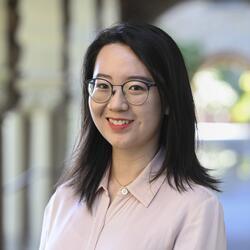
yingqiu_kuang.jpg Ph.D.

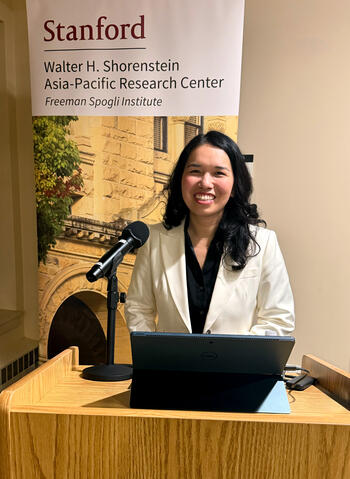
Yingqiu Kuang joined the Walter H. Shorenstein Asia-Pacific Research Center (APARC) as 2024-2025 Shorenstein Postdoctoral Fellow on Contemporary Asia beginning January 2025. She is a political scientist specializing in the comparative and international political economy of China and East Asia. Her research interests lie at the intersection of technology, law, and global governance. Her book project, “A Mosaic of Mundane Innovations: Emerging Powers, Multinational Firms, and Global 5G Technology Rules,” examines the emergence of latecomer economies like China and South Korea as key agents in the global technology governance regime. Using a mixed research method and an original, novel dataset, the project aims to explain why East Asian firms appear more effective in 5G rule-making on transnational platforms than traditional technology giants, and how the diverse behavior of these firms are reshaping global institutions.

At APARC, Yingqiu worked on expanding and revising her book manuscript. She also continued to pursue her wider scholarly agenda, which concerns the economic engagements between China, East Asia, and the world. She was particularly interested in how technological unpredictability is changing the landscape of economic governance in the region and the world.

Yingqiu completed her PhD in Political Science at the University of British Columbia. She also holds a master’s degree in political science from UBC. She developed her interest in political science and international relations in East Asia while an undergraduate student at Peking University and Waseda University in China and Japan. As a policy and technology specialist, she has also worked with the Asia Pacific Foundation of Canada, the National Energy Board of Canada and others on trade, investment, and clean energy issues.

Date Label
Authors
Michael Breger
News Type
News
Date
Paragraphs

Donald Trump’s decisive victory in the 2024 U.S. presidential election has reignited debates about the United States' role in a world increasingly defined by geopolitical tensions, economic uncertainty, and democratic recession. The return of Trump to the White House will have profound implications for Asia. To assess the stakes for the region, APARC convened a panel of experts who weighed in on the potential risks and opportunities the second Trump administration’s policies may pose for Asian nations and how regional stakeholders look at their future with the United States. Another panel, organized by APARC’s China Program, focused on what’s ahead for U.S.-China relations.

High Stakes for the Asia-Pacific

APARC’s panel, The 2024 U.S. Presidential Elections: High Stakes for Asia, examined how the return of Trump’s political ideology and the macroeconomic effects of his foreign policy will affect Asia.

“We are witnessing the solidification of Trumpism as an influential political ideology,” stated APARC and Korea Program Director Gi-Wook Shin at the opening of the discussion, “one that has begun to transcend traditional  American conservatism. Trumpism — marked by a blend of economic nationalism, nativism, and a strongman approach to leadership —could have a huge impact not only in American society but also on the liberal global order.”

According to Shin, Trump’s policies, particularly his focus on unilateralism and economic self-interest, could significantly alter the political and economic dynamics of the Asia-Pacific region.

Political scientist Francis Fukuyama, the Olivier Nomellini Senior Fellow at the Freeman Spogli Institute, argued that Trump’s victory was no longer an anomaly but part of a larger trend of working-class voters shifting allegiance from the Democratic to the Republican Party. Fukuyama expressed concerns about Trump’s aggressive economic policies, including imposing broad tariffs on allies and adversaries alike, and warned that such policies could result in inflation, trade tensions, and long-term economic instability. In addition, he asserted that Trump’s reluctance to engage in foreign conflicts could undermine the United States’ commitments to security alliances, particularly in Asia.

APARC Deputy Director and Japan Program Director Kiyoteru Tsutsui emphasized the broader geopolitical implications of Trump’s policies, noting that Trump’s "America First" approach could further erode the international liberal order. He suggested that Japan would face significant challenges navigating the unpredictability of Trump’s foreign policies. According to Tsutsui, “There might be greater pressure to line up with the United States in dealing with China economically, which would  put a great deal of strain on the Japanese economy.” Such an alignment might also muddle Japan’s own diplomatic and security interests.

Gita Wirjawan, a visiting scholar with Stanford's Precourt Institute for Energy and former visiting scholar at APARC, focused on the stakes for Southeast Asia. Wirjawan argued that Trump’s economic policies, such as protectionism and prioritizing economic growth over democratic principles, could embolden right-wing populist movements in Southeast Asia. He suggested that parts of Southeast Asia could be a natural beneficiary of a reallocation of financial capital from the U.S. as companies diversify supply chains by establishing operations outside China in response to Trump’s planned tariffs. Yet, growing economic inequality in Southeast Asia, particularly in urban areas, could fuel the rise of similar nationalist policies, undermining efforts to promote inclusive, democratic development.

Shin highlighted the challenges South Korea might face under a second Trump presidency. Trump will likely demand higher defense payments from South Korea, potentially straining the U.S.-ROK alliance. This could put President Yoon in a tough spot, especially as trilateral U.S.-Japan-Korea cooperation has been progressing well but faces uncertainty. Economically, South Korean firms may struggle if U.S. policies like the Inflation Reduction Act and CHIPS Act are rolled back, as subsidies were crucial for their investments in the U.S. On North Korea, Shin noted that Trump may resume summit diplomacy with Kim Jong Un, leaving South Korea sidelined and potentially sparking an arms race in Northeast Asia. 

The panelists all emphasized that Asia, with its diverse political landscapes, would need to navigate a new era of economic nationalism and geopolitical unpredictability, with potential challenges to economic stability and democratic norms.

A Focus on U.S.-China Relations 

The second panel, "Crossroads of Power: U.S.-China Relations in a New Administration," focused specifically on the evolving dynamics of U.S.-China relations in the wake of the election. Moderated by APARC China Program Director Jean Oi, the discussion featured Shorenstein APARC Fellow Thomas Fingar, and Peking University's Yu Tiejun, the APARC's China Policy Fellow during fall 2024. The panelists analyzed the potential trade, security, and diplomacy shifts between the two global superpowers, particularly in light of Washington's bipartisan consensus on China. 

Central to the discussion was the continuity of U.S. policy toward China under the first Trump administration and the Biden administration. Examples of this continuity included recent tariff increases on Chinese imports, a new U.S. Department of the Treasury program to screen U.S. outbound foreign investments in key sectors, and tighter export controls on critical technologies like quantum computing and advanced semiconductors. The panelists explored the economic and strategic ramifications, noting that these policies could disrupt existing trade patterns. 

Another area of concern was China’s uneven implementation of the 2020 Phase One  trade deal it negotiated with the U.S., in which China had committed to domestic reforms and $200 billion of additional U.S. imports. This failure could buttress the new administration’s plan to increase tariffs, complicating diplomatic efforts between Washington and Beijing. Fingar noted that while China has made efforts to diversify its supply chains, these changes might not be enough to shield it from the effects of U.S. economic policies, which could include escalating tariffs or additional restrictions on Chinese exports. 

The conversation also touched on broader geopolitical considerations, particularly concerning China’s role in the ongoing war in Ukraine. The panelists discussed the potential for cooperation or de-escalation in U.S.-China relations, with China’s positioning on the war serving as both a point of contention and a possible avenue for diplomatic engagement. 

Underscoring the deepening complexities in U.S.-China relations post-election, the panelists highlighted the uncertainty surrounding U.S. foreign policy under a second Trump administration, particularly regarding the role of people-to-people exchanges in fostering mutual understanding.

Both events emphasized the multifaceted consequences of Trump’s return to power for Asia and the global international order. While the discussions highlighted the challenges posed by the rise of economic nationalism, trade tensions, and shifting security priorities, they also pointed to potential areas of cooperation and the evolving dynamics of global diplomacy.


In the Media


From Center Fellow Oriana Skylar Mastro:

What a Second Trump Term Means for the World
OnPoint – WBUR, Nov 12 (interview)

Race to the White House: How the US Election Will Impact Foreign Policy
UBS Circle One, October 23 (interview)

From Visiting Scholar Michael Beeman:

On Korea-U.S. Economic Cooperation in the Era of Walking Out
Yonhap News, Nov 20 (featured)

Trump Looking for Trade 'Reset' with Most Countries: Ex-USTR Official
Nikkei, Nov 16 (interview)

How Southeast Asia Can Weather the Trump Trade Typhoon
The Economist, Nov 14 (quoted)

Read More

Gi-Wook Shin, Evan Medeiros, and Xinru Ma in conversation at the Center for Strategic and International Studies.
News

Stanford Next Asia Policy Lab Engages Washington Stakeholders with Policy-Relevant Research on US-China Relations and Regional Issues in Asia

Lab members recently shared data-driven insights into U.S.-China tensions, public attitudes toward China, and racial dynamics in Asia, urging policy and academic communities in Washington, D.C. to rethink the Cold War analogy applied to China and views of race and racism in Asian nations.
Stanford Next Asia Policy Lab Engages Washington Stakeholders with Policy-Relevant Research on US-China Relations and Regional Issues in Asia
Chris Buckley delivers remarks at the 2024 Shorenstein Journalism Award.
News

Shorenstein Journalism Award Winner Chris Buckley Considers How Historical Memory Determines China’s Present

In the era of Xi Jinping, the Chinese Communist Party has reasserted control over the recollection and retelling of the past as vital sources for shaping Chinese national identity and global power projection, says Chris Buckley, the chief China correspondent for The New York Times and the recipient of the 2024 Shorenstein Journalism Award.
Shorenstein Journalism Award Winner Chris Buckley Considers How Historical Memory Determines China’s Present
group of people standing on steps of Encina Hall at the 2024 Trans-Pacific Sustainability Dialogue
News

Driving Climate-Resilient Infrastructure and Inclusive Industrialization: Highlights from the Third Annual Trans-Pacific Sustainability Dialogue

Held at Stanford and hosted by the Shorenstein Asia-Pacific Research Center, the third annual Dialogue convened global leaders, academics, industry experts, and emerging experts to share best practices for advancing Sustainable Development Goal 9 in support of economic growth and human well-being.
Driving Climate-Resilient Infrastructure and Inclusive Industrialization: Highlights from the Third Annual Trans-Pacific Sustainability Dialogue
Hero Image
Donald Trump
All News button
1
Subtitle

APARC recently hosted two panels to consider what a second Trump presidency might mean for economic, security, and political dynamics across Asia and U.S. relations with Asian nations.

Date Label
Paragraphs

Shorenstein APARC's annual report for the academic year 2023-24 is now available.

Learn about the research, publications, and events produced by the Center and its programs over the last academic year. Read the feature sections, which look at the historic meeting at Stanford between the leaders of Korea and Japan and the launch of the Center's new Taiwan Program; learn about the research our faculty and postdoctoral fellows engaged in, including a study on China's integration of urban-rural health insurance and the policy work done by the Stanford Next Asia Policy Lab (SNAPL); and catch up on the Center's policy work, education initiatives, publications, and policy outreach. Download your copy or read it online below.

All Publications button
1
Publication Type
Annual Reports
Publication Date
Authors
Authors
Noa Ronkin
News Type
News
Date
Paragraphs

Team members of the Stanford Next Asia Policy Lab (SNAPL) recently presented findings from several of the lab’s research projects at forums and meetings with policy and academic communities in Washington, D.C. Their activities included a joint symposium with the Center for Strategic and International Studies (CSIS), a presentation at George Washington University’s Elliott School of International Affairs, and meetings with think tanks and Congress members. These policy engagements are supported by a Freeman Spogli Institute for International Studies grant.

SNAPL, which is housed at the Shorenstein Asia-Pacific Research Center (APARC), is led by sociologist Gi-Wook Shin, the William J. Perry Professor of Contemporary Korea, a senior fellow at FSI, and the director of APARC and the Korea Program. SNAPL is committed to generating evidence-based policy recommendations and promoting transnational collaboration with academic and policy institutions to advance the future prosperity of Asia and U.S.-Asia relations.

On September 16, 2024, SNAPL and CSIS co-hosted the symposium “A New Cold War?: Congressional Rhetoric and Regional Reactions to the U.S.-China Rivalry.” At this event, SNAPL team members presented fresh perspectives on the U.S.-China relationship, grounded in two original studies that challenge the application of the “new Cold War” narrative to frame the competition between the two powers. Both studies are part of SNAPL’s U.S.-Asia Relations research track.

Research Fellow Xinru Ma shared the first study, “A New Cold War? An Analysis of Congressional Discourse on U.S. Rivalries with the USSR, Japan, and China.” Discussant Evan Medeiros, Penner Family Chair in Asian Studies and the Cling Family Senior Fellow in US-China Relations at Georgetown University, commented on the study. In a following session, Postdoctoral Fellow Gidong Kim presented a second study, “The U.S. Alliance and Public Attitudes toward China: Evidence from the Asia-Pacific Region.” Discussant Matthew Kroenig, professor in the Department of Government and the Edmund A. Walsh School of Foreign Service at Georgetown University, offered feedback on the research.

Sign up for APARC newsletters to receive our scholars’ research updates > 


Moving Beyond Cold War Comparisons


Ma’s study, which analyzes over 41,000 Congressional speeches, upends the notion that today’s U.S.-China tensions mirror Cold War dynamics. The research shows that Cold War debates historically focused on two primary themes — ideological expansion and military aggression — with the former as the dominant concern. By contrast, current concerns about China center on human rights issues more than outward ideological expansion, while military concerns focus on budgetary issues rather than the kind of direct confrontations that defined the Cold War.

Ma’s findings also reveal that the current U.S.-China rivalry bears more resemblance to the U.S.-Japan economic competition of the 1980s, where economic concerns and domestic priorities took center stage rather than ideological or military threats. With these findings, the study establishes an empirical baseline for defining the current state of the U.S.-China relationship, illuminating the risks of framing it by the misleading “new Cold War” label.

Risks of the Cold War Analogy: Policy Implications


Ma’s study highlights that Cold War-era strategies are ill-suited for addressing the challenges posed by China today. Clinging to a Cold War analogy presents several risks:

  • Misguided Focus: Framing China as a Cold War-like rival risks overemphasizing military buildup and ideological competition globally, overlooking the true nature of today’s competition, which is primarily economic and technological.
  • Paranoia and Isolationism: The new Cold War analogy could foster a climate of paranoia and isolation, undermining the principles of open engagement and collaboration that have historically supported American leadership. Maintaining open dialogue and people-to-people exchanges that promote democratic values and human rights is more effective for preserving U.S. leadership in addressing ideological differences with China than confrontational ideological warfare.

The study has even further implications for U.S. domestic debates:
 

  • Impacts on the American Workforce: At a bilateral level, the economic tensions that constitute the backbone of today's challenges with China, such as concerns over the loss of American jobs, were virtually missing from the dynamics of the Cold War era. Addressing these tensions requires new strategies and measures such as reinforcing free trade practices, upgrading infrastructure, upskilling the workforce, and fostering technological innovation.
  • Overlooked U.S. Domestic Challenges: The Cold War analogy can also lead to ignorance about challenges rooted in pressing U.S. domestic issues — such as education inequality, the opioid crisis, and political polarization — which could be more consequential to American global leadership than the challenges China poses.
(From left): Gi-Wook Shin, Matthew Kroenig, and Gidong Kim in conversation at the Center for Strategic and International Studies.
(From left): Gi-Wook Shin, Matthew Kroenig, and Gidong Kim in conversation at the Center for Strategic and International Studies. | CSIS

Public Perceptions of China in U.S. Allies


Kim’s study examines how geopolitical contexts such as the U.S.-China tensions and alliance relationships shape public attitudes toward China among citizens of U.S. allies. It analyzes data from the Gallup World Poll (2006-2022) covering 22 Asia-Pacific countries and the Asian Barometer Survey (2010-2021) from 14 countries.

The study shows that U.S. alliances and the U.S.-China rivalry influence public attitudes toward China. It finds that, as U.S.-China tensions escalate, citizens in U.S. allied countries — unlike those in non-allied nations — are more likely to develop unfavorable views of China. Additionally, public opinions of China and the United States tend to move in opposite directions as the great power competition intensifies because U.S. alliance relationships help strengthen a sense of shared identity during times of geopolitical crisis.

Shapers of Anti-China Sentiments: Policy Implications
 

  • Strengthening Alliances Amid U.S.-China Tensions: The United States should understand that alliance relationships increasingly matter as U.S.-China tensions intensify. Strengthening these ties can be particularly effective in managing escalating tensions with China.
  • Alliance Diplomacy vs. Traditional Value Diplomacy: During periods of geopolitical rivalry, U.S. alliances may have a greater impact than traditional diplomacy based on democratic values. In such times, alliances serve as critical frameworks for shared identity and mutual defense.
  • Understanding Anti-China Sentiment: U.S. allies should recognize that rising anti-China sentiments among citizens are closely related to broader geopolitical dynamics. While anti-Japan or anti-America sentiments in countries like South Korea and the Philippines were historically bilateral issues, today's anti-China views are more structural issues and unlikely to diminish unless U.S.-China relations improve.
  • China’s Need for a Shift in Strategy: China should consider the geopolitical factors contributing to rising anti-China sentiment in U.S.-allied nations. China’s public diplomacy efforts to strengthen its soft power through financial and non-financial measures may be ineffective when applied to U.S. allies. The Chinese government should therefore prioritize improving its relationship with the United States to mitigate anti-China sentiments in U.S. allies.
     

National Understandings of Race and Racism in Asia


On September 17, 2024, Postdoctoral Fellow Junki Nakahara shared findings from a SNAPL project that is part of another Lab research track, Nationalism and Racism, at a discussion titled Deconstructing Racism “Denial” in Asia, hosted by George Washington University’s Sigur Center for Asian Studies.

Nakahara’s study examines how nationalism and racism intersect to create exclusion and marginalization across Asia. By analyzing state reports from 16 Asian countries submitted to the United Nations Committee on the Elimination of Racial Discrimination (CERD), the research investigates how these official reports conceptualize race and racism, uncovering pervasive patterns of their denial — literal, interpretive, and ideological. Nakahara thus offers a comparative view of how these perspectives by Asian nations align with or deviate from global norms. Her analysis also illustrates how historical identities and dominant social, political, and religious values shape national attitudes toward race in Asia.

Following Nakahara’s presentation, discussants Hiromi Ishizawa, associate professor of sociology at George Washington University, and Erin Aeran Chung, the Charles D. Miller Professor of East Asian Politics and Director of Undergraduate Studies in the Department of Political Science at Johns Hopkins University, provided insightful commentary. They emphasized the importance of studying race and racism in the Asia-Pacific region and their implications for marginalized communities. The event also sparked an engaging dialogue with the audience, addressing how racism in Asia remains a “blind spot” overlooked in policy, media, and public discourse.

See the coverage of the event in George Washington’s student newspaper >

Read More

U.S. and China flags on Constitution Avenue, Washington, DC, with the Capitol building in the background.
News

Stanford Next Asia Policy Lab Receives Grants to Advance Policy Engagement and Research Collaboration

New grants to inform U.S. Asia policy and fuel cross-disciplinary research on Asia’s role in the global system of the 21st century.
Stanford Next Asia Policy Lab Receives Grants to Advance Policy Engagement and Research Collaboration
Chris Buckley delivers remarks at the 2024 Shorenstein Journalism Award.
News

Shorenstein Journalism Award Winner Chris Buckley Considers How Historical Memory Determines China’s Present

In the era of Xi Jinping, the Chinese Communist Party has reasserted control over the recollection and retelling of the past as vital sources for shaping Chinese national identity and global power projection, says Chris Buckley, the chief China correspondent for The New York Times and the recipient of the 2024 Shorenstein Journalism Award.
Shorenstein Journalism Award Winner Chris Buckley Considers How Historical Memory Determines China’s Present
Walking Out: America’s New Trade Policy in the Asia-Pacific and Beyond
News

Walking Out: New Book Unravels the Shift in America's Trade Policy and Its Global Consequences

A new book by APARC Visiting Scholar Michael Beeman offers a timely analysis of the shift in United States' foreign trade policy, examines its recent choices to “walk out” on the principles that had defined the global trade system it had created, and offers recommendations for a redefined and more productive trade policy strategy.
Walking Out: New Book Unravels the Shift in America's Trade Policy and Its Global Consequences
Hero Image
Gi-Wook Shin, Evan Medeiros, and Xinru Ma in conversation at the Center for Strategic and International Studies.
(From left): Gi-Wook Shin, Evan Medeiros, and Xinru Ma in conversation at the Center for Strategic and International Studies, September 16, 2024.
CSIS
All News button
1
Subtitle

Lab members recently shared data-driven insights into U.S.-China tensions, public attitudes toward China, and racial dynamics in Asia, urging policy and academic communities in Washington, D.C. to rethink the Cold War analogy applied to China and views of race and racism in Asian nations.

Date Label
-

In the wake of the 2024 presidential election, the U.S. will face a new chapter under its latest administration, leaving the future of U.S.-China relations uncertain. The China Program at Stanford’s Shorenstein APARC presents a pivotal panel that convenes leading experts to analyze the implications of the U.S. election results on the evolving relationship between these two global superpowers.

Moderated by Professor Jean Oi, director of the China Program at Shorenstein APARC, this session features Shorenstein APARC Fellow Dr. Tom Fingar and Professor Yu Tiejun, international relations scholar from Peking University. Together, they will offer insights into the geopolitical shifts expected to unfold in 2025 and explore critical topics such as trade, security, and strategic diplomacy between the U.S. and China.

Jean C. Oi is the William Haas Professor of Chinese Politics in the Department of Political Science and a Senior Fellow of the Freeman Spogli Institute for International Studies (FSI) at Stanford University. A Ph.D. in Political Science from the University of Michigan, she directs the China Program at the Shorenstein Asia-Pacific Research Center and is the Lee Shau Kee Director of the Stanford Center at Peking University. She also is the current President of the Association for Asian Studies.

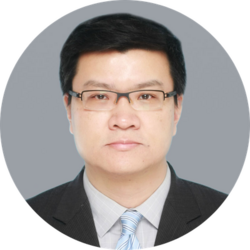
Yu Tiejun is APARC's China Policy Fellow for the 2024 fall quarter. He currently serves as President of the Institute of International and Strategic Studies (IISS) and Professor at the School of International Studies (SIS), all at Peking University (PKU). Previously, he studied at the University of Tokyo in 1998-2000. He served as visiting fellow at the Center for International Security and Cooperation at Stanford University in 2005, and also as visiting scholar at the Fairbank Center for East Asian Research at Harvard University in 2005-06.

Thomas Fingar is a Shorenstein APARC Fellow in the Freeman Spogli Institute for International Studies at Stanford University. He was the inaugural Oksenberg-Rohlen Distinguished Fellow from 2010 through 2015 and the Payne Distinguished Lecturer at Stanford in 2009. From 2005 through 2008, he served as the first deputy director of national intelligence for analysis and, concurrently, as chairman of the National Intelligence Council.

Jean Oi, William Haas Professor of Chinese Politics at Stanford University

Philippines Room, Encina Hall (3rd floor), Room C330
616 Jane Stanford Way, Stanford, CA 94305

Tiejun Yu, President of the Institute of International and Strategic Studies (IISS) at Peking University and Visiting Scholar at APARC
Thomas Fingar, Shorenstein APARC Fellow and Affiliated Scholar at the Stanford Center on China's Economy and Institutions
Panel Discussions
Date Label
Authors
Noa Ronkin
News Type
News
Date
Paragraphs

The past several years have posed difficult challenges for foreign journalists covering China. With increasing restrictions, harassment, and obstruction of the renewal of press cards by the Chinese authorities, many foreign correspondents, especially those working for U.S. media, have been expelled and now find themselves reporting on China from abroad. Chris Buckley, the chief China correspondent for The New York Times, is among those forced to leave the country he had lived and worked in for over 20 years. Since 2022, he has reported on China and Taiwan from Taipei. Still, Buckley, winner of the 2024 Shorenstein Journalism Award, hopes others will feel encouraged to plunge into the adventure of studying China.

In his keynote address at the award ceremony, Buckley reflected on his decades of covering one of the defining narratives of the 21st century: China’s rise and its evolution under Xi Jinping. Voicing his concerns about the repercussions of discouraging new generations from pursuing China-related careers, he shared the deep sense of fulfillment his work has brought him.

To receive insights and analysis from our experts and guest speakers, sign up for APARC newsletters >


The Shorenstein Journalism Award honors Buckley for his many years of exemplary reporting on China, and now also Taiwan. The Award Judging Committee notes that his body of work reflects “truly unparalleled knowledge and understanding of China” and vividly unveils the country’s political and social transformations under Xi Jinping’s rule.

Following Buckley’s keynote remarks, the award ceremony featured a conversation about key issues that put China in the news. Buckley was joined by two China scholars: Oriana Skylar Mastro, a center fellow at the Freeman Spogli Institute for International Studies (FSI) whose work focuses on Chinese military and security policy, and Xuegunag Zhou, the Kwoh-Ting Li Professor in Economic Development, a professor of sociology, and a senior fellow at FSI. William Dobson, the coeditor of the Journal of Democracy, chaired the discussion. Dobson, who also serves on the judging committee for the Shorenstein Award, is an award-winning journalist in his own right with a long career in international reporting.

The Power of History in China Under Xi


Buckley’s reporting has shed light on China's rise through deeply nuanced stories, capturing complexities and key developments across a wide range of issues. These include the country’s extraordinary economic growth and contradictions, such as the emergence of a bold consumer culture under a Communist Party that upholds Marxist ideology; the struggles of rural migrants moving into towns and cities; the Chinese government’s use of high-tech surveillance to suppress and control Uyghurs, Tibetans, and other ethnic groups; the modernization of China’s military; Beijing’s pressure on Taiwan and in the South China Sea; and, notably, the unfolding of COVID-19. Buckley spent 76 days in Wuhan during the lockdown there, covering the early onset and coverup of the pandemic — a story for which he and his team won the 2021 Pulitzer Prize in Public Service.

“Chris has been one of the most perceptive and sensitive chroniclers of modern China,” Dobson noted as he introduced Buckley at the award ceremony.

Above all, Buckley’s stories have illuminated the rise and thinking of Xi Jinping. In contrast to expectations that Xi would be a pragmatist focused on economic growth, “what we’ve seen instead is a leader who has made priorities of political security and ideological revival,” said Buckley. “A leader who sees himself as presiding over a historic transformation.”

Whatever approach we take, it helps to be attuned to the influences of China’s past and how that history is very much alive in contemporary times.
Chris Buckley

Under Xi, the Chinese Communist Party has reinforced control over Chinese society, the economy, and China’s claimed territories. Even more so, Buckley underscored, Xi and the Party have also been reasserting control over history, extending and exercising power by shaping collective memories. In China under Xi, he said, memories of war, revolution, famine, massacre, and extraordinary change are erased, rewritten, and fought over.

He described how, under this drive, publications that question the official version of past events have been shut down, religious sites in Xinjiang demolished, access to sensitive sites like a cemetery for Red Guards restricted, and the Party’s accounts of its past retold through television shows, newly built museums, and other public displays.

Buckley recalled a 2019 reporting trip to Xinyang — a rural part of Henan province, a base of the Communist revolution, and one of the worst hit areas during the Great Leap Forward famine of the late 1950s. Speaking to elderly farmers carrying the memories of their family members who died in the famine, he kept witnessing a reverence for Mao that extended to the Party and Xi.

“I was struck that even in this part of the Chinese countryside where peasants endured the greatest suffering, so many embraced the Party’s version of the past. And I think that means they also tend to embrace the Party’s story of China’s present and the future.”

According to Buckley, Xi and his generation harbor concerns about the Communist Party’s drifting away from its roots as it moves further from the founding generation. To counter this process, the Party reinforces its founding myths and narratives as vital sources of authority and legitimacy, ensuring continuity with the past.

From Master Narratives to Geopolitics


Buckley also pointed out a deeper layer of China's efforts to shape history and memory under Xi’s leadership. He noted how the Politburo and Xi have shown a keen interest in studying and retelling China’s ancient history, with official efforts to shape the discussion of history reaching back thousands of years. These actions, he said, demonstrate efforts to construct “a narrative of unbroken Chinese nationhood and values,” creating continuity from China's distant past to the present.

Furthermore, at a time when neither the master narrative of Maoist Marxism nor the image of China as a modernized, respected member of the family of great powers seems to resonate fully, Xi and the Party are “reviving narratives of civilizational greatness and destiny,” he argued.

He emphasized that the Party’s aggressive efforts to shape historical memory do not mean Chinese people accept these accounts without question, and there are individuals and groups who, often at great personal risk, continue to challenge and push back against the official version of history. Yet overall, Xi and the Chinese Communist Party have successfully embedded history in political and social structures, creating a framework that defines China’s policies and foreign policy behavior.

Contestation over history also courses through many of the great issues that put China in the news — Taiwan, the South China Sea, Tibet and Xinjiang, and China’s relationship with the United States and the West in general.
Chris Buckley

The looming power of and contestation over history is one reason why Buckley hopes others will feel encouraged to study China even in an age of shrinking access. Otherwise, he cautioned, at a time when China matters so much to the world, “the accumulated cost could be a loss of our pooled understanding, and the fresh voices that we need for healthy debate, decision-making, and reporting.”

Now living and working in Taiwan, Buckley observes the importance of history and memory from the lens of the complexity of Taiwanese domestic currents.

“The divisions between Beijing and Taiwan are a territorial dispute, but they are founded in vastly different understandings of Taiwan’s history and identity,” he noted.

The themes of cross-strait tensions and the centralization of power under Xi were the focus of the discussion with Buckley, Mastro, and Zhou.

The Shorenstein Journalism Award, which carries a cash prize of $10,000, recognizes accomplished journalists who have significantly contributed to a greater understanding of Asia throughout their careers based on their knowledge of Asian societies and the ability to draw upon it to communicate insights to audiences worldwide. To learn more, visit the Award page.

Read More

side view encina hall
News

Open Faculty Positions in Japanese Politics and Foreign Policy, Korean Studies, and Taiwan Studies

Stanford University seeks candidates for a new faculty position in Japanese politics and foreign policy, a faculty position in Korean Studies, and a new faculty position on Taiwan. All three appointments will be at the Freeman Spogli Institute for International Studies and affiliated with Shorenstein APARC.
Open Faculty Positions in Japanese Politics and Foreign Policy, Korean Studies, and Taiwan Studies
Oriana Skylar Mastro and a cover of her book, "Upstart"
News

China's Strategic Path to Power

A new book by Stanford political scientist Oriana Skylar Mastro offers a novel framework, the “upstart approach," to explain China's 30-year journey to great power status through strategic emulation, exploitation, and entrepreneurship.
China's Strategic Path to Power
(Clockwise from top left) Michael McFaul, Oriana Skylar Mastro, Gi-Wook Shin, Kiyoteru Tsutsui
News

Stanford Experts Assess the Future of the Liberal International Order in the Indo-Pacific Amid the Rise of Autocracy, Sharp Power

At the Nikkei Forum, Freeman Spogli Institute scholars Oriana Skylar Mastro, Michael McFaul, Gi-Wook Shin, and Kiyoteru Tsutsui considered the impacts of the war in Ukraine, strategies of deterrence in Taiwan, and the growing tension between liberal democracy and authoritarian populism.
Stanford Experts Assess the Future of the Liberal International Order in the Indo-Pacific Amid the Rise of Autocracy, Sharp Power
Hero Image
Chris Buckley delivers remarks at the 2024 Shorenstein Journalism Award.
Chris Buckley delivers keynote remarks, titled "There is no 'why?' here”: Memory, forgetting and reporting on China," at the 2024 Shorenstein Journalism Award on October 15, 2024, at Stanford.
Rod Searcey
All News button
1
Subtitle

In the era of Xi Jinping, the Chinese Communist Party has reasserted control over the recollection and retelling of the past as vital sources for shaping Chinese national identity and global power projection, says Chris Buckley, the chief China correspondent for The New York Times and the recipient of the 2024 Shorenstein Journalism Award.

Date Label
Paragraphs
Cover of the publication "Studying China in the Absence of Access"

As our access to Chinese data sources becomes increasingly constrained, and the political atmosphere narrows opportunities for informal collaboration, many China scholars outside China have been scrambling to find new and innovative ways to mitigate these trends. One promising — but rarely mentioned — avenue is dusting off the tools Sinologists utilized from the 1960s through the 1970s, when it was impossible to contemplate the access that many of us have been able to take for granted, but which allowed these scholars to get so many things about China right. What are these skills — the analytical tools and the strategies to deploy them — and how might we be able to adapt them to the current research climate (and the foreseeable future)? This paper combines SAIS China Research Center presentations from 2021 on this subject by four eminent Pekingologists – Joe Fewsmith, Tom Fingar, Alice Miller, and Fred Tiewes – into a single document designed to help us (re)develop our research tools to meet this challenges of this constrained access.  Anne Thurston provides a preface that provides a historical and a contemporary context for this endeavor.

All Publications button
1
Publication Type
Commentary
Publication Date
Authors
Thomas Fingar
-
Flyer for the 2024 Shorenstein Journalism Award with headshots of award winner Chris Buckley and panel speakers Oriana Skylar Mastro, Xueguan Zhou, and William Dobson.

*This event is at capacity and registration has closed*

“There is no 'why?' here”: Memory, forgetting and reporting on China


The 2024 Shorenstein Journalism Award Honors New York Times’ Chief China Correspondent Chris Buckley


In three decades of reporting in China, and now Taiwan, Chris Buckley has often grappled with how memories of war, revolution, famine, massacre and extraordinary change are preserved, erased, rewritten and fought over. In this talk, he will discuss the power of the past in China under Xi Jinping, and the challenges and rewards of reporting on — and trying to understand — China in an age of shrinking access.

Join APARC as we honor Buckley, winner of the 2024 Shorenstein Journalism Award for his exemplary reporting on societal, cultural, political, foreign policy, and security issues in China and Taiwan.

Buckley's keynote will be followed by a conversation with two experts: Oriana Skylar Mastro, a center fellow at the Freeman Spogli Institute for International Studies, and Xueguang Zhou, the Kwoh-Ting Li Professor in Economic Development, a professor of sociology, and a Freeman Spogli Institute for International Studies senior fellow. The event will conclude with an audience Q&A session.

Moderator: William Dobson, coeditor of the Journal of Democracy and a member of the selection committee for the Shorenstein Journalism Award.


Speakers   
 

Chris Buckley

Chris Buckley grew up in Sydney, Australia, and began studying Chinese at the University of Sydney and the Australian National University. After graduating with a degree in history and abandoning the beginnings of a law degree, he went to Renmin University in Beijing, where he studied Chinese Communist Party history. He later returned to the Australian National University where he did graduate studies at the Contemporary China Center.

Chris has been the Chief China Correspondent for the New York Times since 2019. Before joining the Times in 2012, he was a senior correspondent in Beijing for Reuters News Agency for 7 years, and before that worked as a researcher and reporter for the New York Times and International Herald Tribune in Beijing. He has covered Chinese politics, foreign policy, social change and environmental issues for over 20 years, but is a newcomer to Taiwan where he now lives.

Chris was with colleagues a finalist for the Pulitzer Prize in international reporting in 2020 for coverage of mass detentions and repressive controls on Uyghurs and other ethnic groups in Xinjiang region. He was also one of the team of reporters that won the Pulitzer Prize in Public Service in 2021 for coverage of the COVID pandemic. Chris spent 76 days in Wuhan during the COVID lockdown there and was then obliged to leave China in May 2020. He spent two and half years working from southern Sydney, where he grew up, and moved to Taiwan in late 2022.

Oriana Skylar Mastro

Oriana Skylar Mastro is a Center Fellow at the Freeman Spogli Institute for International Studies and Courtesy Assistant Professor of Political Science at Stanford University, where her research focuses on Chinese military and security policy, Asia-Pacific security issues, war termination, and coercive diplomacy. She is also a nonresident scholar at the Carnegie Endowment for International Peace. She was previously an assistant professor of security studies at Georgetown University. Mastro continues to serve in the United States Air Force Reserve, for which she currently works at the Pentagon as Deputy Director of Reserve Global China Strategy. For her contributions to U.S. strategy in Asia, she won the Individual Reservist of the Year Award in 2016 and 2022 (FGO).

She has published widely, including in International Security, Security Studies, Foreign Affairs, the Journal of Strategic Studies, The Washington Quarterly, the Economist, and the New York Times. Her most recent book, "Upstart: How China Became a Great Power" (Oxford University Press, 2024), evaluates China’s approach to competition. Her book, "The Costs of Conversation: Obstacles to Peace Talks in Wartime" (Cornell University Press, 2019), won the 2020 American Political Science Association International Security Section Best Book by an Untenured Faculty Member.

She holds a B.A. in East Asian Studies from Stanford University and an M.A. and Ph.D. in Politics from Princeton University.

Headshot of Xueguang Zhou

Xueguang Zhou is the Kwoh-Ting Li Professor in Economic Development, a professor of sociology, and a Freeman Spogli Institute for International Studies senior fellow. His main area of research is on institutional changes in contemporary Chinese society, focusing on Chinese organizations and management, social inequality, and state-society relationships.

One of Zhou's current research projects is a study of the rise of the bureaucratic state in China. He also studies patterns of career mobility and personnel flow among different government offices to understand intra-organizational relationships in the Chinese bureaucracy. Another ongoing project is an ethnographic study of rural governance in China.

The latest book, "The Logic of Governance in China: An Organizational Approach," draws on more than a decade of fieldwork to offer a unified theoretical framework to explain how China's centralized political system maintains governance and how this process produces recognizable policy cycles that are obstacles to bureaucratic rationalization, professionalism, and the rule of law.

His other recent publications examine the role of bureaucracy in public goods provision in rural China, interactions among peasants, markets, and capital, access to financial resources in Chinese enterprises, multiple logics in village elections, and collusion among local governments in policy implementation.

Before joining Stanford in 2006, Zhou taught at Cornell University, Duke University, and Hong Kong University of Science and Technology. He is a guest professor at Peking University, Tsinghua University, and the People's University of China. Zhou received his Ph.D. in sociology from Stanford University in 1991.

Moderator
 

William Dobson

Will Dobson is the coeditor of the Journal of Democracy. Previously, he was the Chief International Editor at NPR where he led the network’s award-winning international coverage and oversaw a team of editors and correspondents in 17 overseas bureaus and Washington, DC. He is the author of The Dictator’s Learning Curve: Inside the Global Battle for Democracy, which examines the struggle between authoritarian regimes and the people who challenge them. It was selected as one of the “best books of the year” by Foreign Affairs, the AtlanticThe Telegraph, and Prospect, and it has been translated into many languages, including Chinese, German, Japanese, and Portuguese.

Prior to joining NPR, Dobson was Slate magazine’s Washington Bureau Chief, overseeing the magazine’s coverage of politics, jurisprudence, and international news. Previously, he served as the Managing Editor of Foreign Policy, overseeing the editorial planning of its award-winning magazine, website, and nine foreign editions. Earlier in his career, Dobson served as Newsweek International’s Asia Editor, managing a team of correspondents in more than 15 countries. His articles and essays have appeared in the New York TimesWashington PostFinancial TimesWall Street Journal, and elsewhere. He has also served as a Visiting Scholar at the Carnegie Endowment for International Peace. Dobson holds a law degree from Harvard Law School and a Master’s degree in East Asian Studies from Harvard University. He received his Bachelor’s degree, summa cum laude, from Middlebury College.

William Dobson

Bechtel Conference Center
Encina Hall Central (First Floor)
616 Jane Stanford Way, Stanford, CA 94305

Chris Buckley, New York Times’ Chief China Correspondent

Stanford CISAC
Stanford University
Encina Hall
Stanford,  CA  94305-6055

0
Center Fellow at the Freeman Spogli Institute for International Studies
Courtesy Assistant Professor of Political Science
Faculty Affiliate at the Walter H. Shorenstein Asia-Pacific Research Center
OrianaSkylarMastro_2023_Headshot.jpg PhD

Oriana Skylar Mastro is a Center Fellow at the Freeman Spogli Institute for International Studies and Courtesy Assistant Professor of Political Science at Stanford University, where her research focuses on Chinese military and security policy, Asia-Pacific security issues, war termination, and coercive diplomacy. She is also a nonresident scholar at the Carnegie Endowment for International Peace and a member of the Council on Foreign Relations. She was previously an assistant professor of security studies at Georgetown University. Mastro continues to serve in the United States Air Force Reserve, for which she currently works at the Pentagon as Deputy Director of Reserve Global China Strategy. For her contributions to U.S. strategy in Asia, she won the Individual Reservist of the Year Award in 2016 and 2022 (FGO).

She has published widely, including in International Security, Security Studies, Foreign Affairs, the Journal of Strategic Studies, The Washington Quarterly, the Economist, and the New York Times. Her most recent book, Upstart: How China Became a Great Power (Oxford University Press, 2024), evaluates China’s approach to competition. Her book, The Costs of Conversation: Obstacles to Peace Talks in Wartime (Cornell University Press, 2019), won the 2020 American Political Science Association International Security Section Best Book by an Untenured Faculty Member.

She holds a B.A. in East Asian Studies from Stanford University and an M.A. and Ph.D. in Politics from Princeton University.

Her publications and commentary can be found at orianaskylarmastro.com and on Twitter @osmastro.

Selected Multimedia

CV
Date Label
Oriana Skylar Mastro

Shorenstein APARC
Stanford University
Encina Hall, E301
Stanford, CA 94305-6055

(650) 725-6392 (650) 723-6530
0
Senior Fellow at the Freeman Spogli Institute for International Studies
Kwoh-Ting Li Professor in Economic Development
Professor of Sociology
Graduate Seminar Professor at the Stanford Center at Peking University, June and July of 2014
Faculty Affiliate at the Stanford Center on China's Economy and Institutions
Xueguang Zhou_0.jpg PhD

Xueguang Zhou is the Kwoh-Ting Li Professor in Economic Development, a professor of sociology, and a Freeman Spogli Institute for International Studies senior fellow. His main area of research is on institutional changes in contemporary Chinese society, focusing on Chinese organizations and management, social inequality, and state-society relationships.

One of Zhou's current research projects is a study of the rise of the bureaucratic state in China. He works with students and colleagues to conduct participatory observations of government behaviors in the areas of environmental regulation enforcement, in policy implementation, in bureaucratic bargaining, and in incentive designs. He also studies patterns of career mobility and personnel flow among different government offices to understand intra-organizational relationships in the Chinese bureaucracy.

Another ongoing project is an ethnographic study of rural governance in China. Zhou adopts a microscopic approach to understand how peasants, village cadres, and local governments encounter and search for solutions to emerging problems and challenges in their everyday lives, and how institutions are created, reinforced, altered, and recombined in response to these problems. Research topics are related to the making of markets, village elections, and local government behaviors.

His recent publications examine the role of bureaucracy in public goods provision in rural China (Modern China, 2011); interactions among peasants, markets, and capital (China Quarterly, 2011); access to financial resources in Chinese enterprises (Chinese Sociological Review, 2011, with Lulu Li); multiple logics in village elections (Social Sciences in China, 2010, with Ai Yun); and collusion among local governments in policy implementation (Research in the Sociology of Organizations, 2011, with Ai Yun and Lian Hong; and Modern China, 2010).

Before joining Stanford in 2006, Zhou taught at Cornell University, Duke University, and Hong Kong University of Science and Technology. He is a guest professor at Peking University, Tsinghua University, and the People's University of China. Zhou received his Ph.D. in sociology from Stanford University in 1991.

CV
Date Label
Xueguang Zhou
Panel Discussions
Date Label
0
Visiting Scholar at APARC, 2024-2025
China Policy Fellow, 2024-2025
tiejun_yu_2024_headshot.jpg Ph.D.

Professor Yu Tiejun joined the Walter H. Shorenstein Asia-Pacific Research Center (APARC) as China Policy Fellow for the 2024 fall quarter. He currently serves as President of the Institute of International and Strategic Studies (IISS) and Professor at the School of International Studies (SIS), all at Peking University (PKU). Previously, he studied at the University of Tokyo in 1998-2000. He served as visiting fellow at the Center for International Security and Cooperation at Stanford University in 2005, and also as visiting scholar at the Fairbank Center for East Asian Research at Harvard University in 2005-06.

Dr. Yu has co-edited The Sino-Japanese Security and Defense Exchange: Past, Present, and Prospect (Beijing: World Affairs Press, 2012, with Zhu Feng and Akiyama Masahiro). He is also the Chinese translator of Myths of Empire by Jack Snyder (2007) and Discord and Collaboration: Essays on International Politics by Arnold Wolfers (2006). His research interests include International Security, China-U.S.-Japan Relations, and China’s National Defense Policy. He won the Excellent Teaching Award of Peking University in 2010. Dr. Yu received his Ph.D., M.A. and B.A. from Peking University.

While at APARC, he conducted research on contemporary China affairs and U.S.-China policy.

Date Label
1
Visiting Scholar at APARC, 2024-2025
Stanford Next Asia Policy Fellow, 2024-2025
brandon_yoder_2024_headshot.jpg Ph.D.

Brandon Yoder joined the Walter H. Shorenstein Asia-Pacific Research Center (APARC) as Stanford Next Asia Policy Fellow for the 2024-2025 academic year. He currently serves as Senior Lecturer at Australian National University in the School of Politics and International Relations, Australian Centre on China in the World, as well as non-resident Research Fellow at National University of Singapore's Lee Kuan Yew School of Public Policy, Centre on Asia and Globalisation. While at APARC, he worked with the Stanford Next Asia Policy Lab (SNAPL) on U.S.-Asia relations.

Date Label
Subscribe to China