-
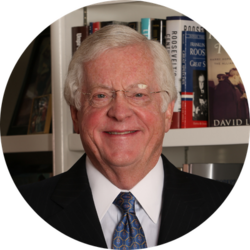
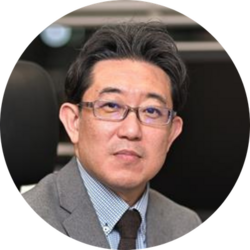
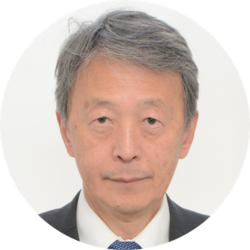
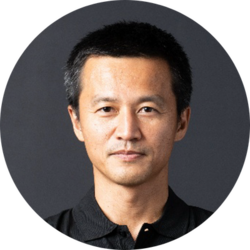
Sushi Hackathon October 3rd event digital flyer, featuring headshots of Audrey Tang, Gita Wirjawan, and Kiyoteru Tsutsui


**NOTE: Registration is for attending the keynote session and student presentations. Food will not be served at this event**


Agenda


Check-in opens: 12:30 p.m.

Welcome remarks by Kiyoteru Tsutsui: 1:00 p.m.

Keynote by Audrey Tang: 1:05-1:25 p.m.

Fireside Chat with Audrey Tang and Gita Wirjawan: 1:25-2:00 p.m.

Student Presentations: 2:00-6:20 p.m.

Award Ceremony: 6:40 p.m.

Closing Remarks: 6:55 p.m.


The Shorenstein Asia-Pacific Research Center (APARC) Japan Program hosts an interdisciplinary event highlighting the transformative potential of technology for societal benefit. Designed to pair immersive cultural engagement with advanced problem-solving, the program convenes university students who apply computer science and programming skills to urgent social and organizational challenges.

This year’s program explores the intersection of generative artificial intelligence and Japan’s fisheries sector, encouraging innovative solutions that address real-world industry needs while fostering a deeper appreciation of Japanese culture.

The event will feature a keynote address by Audrey Tang, Taiwan’s former Minister of Digital Affairs (2022–2024), on Ethical AI for Societal Good, followed by a fireside conversation with Gita Wirjawan, former Minister of Trade of the Republic of Indonesia. Subsequent sessions will showcase presentations from university student teams unveiling generative AI projects developed specifically to enhance sustainability and efficiency in Japan’s fisheries industry.

This event is hosted by the Shorenstein Asia-Pacific Research Center Japan Program and co-sponsored by GDX Co., Ltd. and SMBC


Speaker:

Headshot photo of Audrey Tang

Audrey Tang, Taiwan’s Cyber Ambassador-at-large and 1st Digital Minister (2016-2024), is celebrated for her pioneering efforts in digital freedom. Named one of TIME’s “100 Most Influential People in AI” in 2023, Tang was instrumental in shaping Taiwan’s internationally acclaimed COVID-19 response and in safeguarding the 2024 presidential and legislative elections from foreign cyber interference.
Tang is now focused on broadening her vision of Plurality — technology for collaborative diversity — to inspire global audiences.


Discussant:

Gita Wirjawan

Gita Wirjawan is a visiting scholar at Stanford's Precourt Institute for Energy and formerly a visiting scholar at Shorenstein APARC (2022-24). Wirjawan is the chairman and founder of Ancora Group and Ancora Foundation, as well as the host of the podcast "Endgame." While at APARC, he researched the directionality of nation-building in Southeast Asia and sustainability and sustainable development in the U.S. and Southeast Asia.


Moderator:

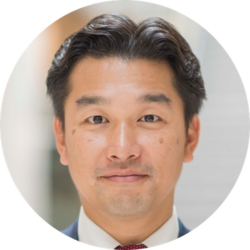
Square portrait photo of Kiyoteru Tsutsui

Kiyoteru Tsutsui is the Henri H. and Tomoye Takahashi Professor, Professor of Sociology, Senior Fellow at the Freeman Spogli Institute for International Studies, and Director of the Walter H. Shorenstein Asia-Pacific Research Center, where he is also Director of the Japan Program and Co-Director of the Southeast Asia Program. Tsutsui’s research interests lie in political/comparative sociology, social movements, globalization, human rights, and Japanese society. His most recent publication, Human Rights and the State: The Power of Ideas and the Realities of International Politics (Iwanami Shinsho, 2022), was awarded the 2022 Ishibashi Tanzan Award and the 44th Suntory Prize for Arts and Sciences.
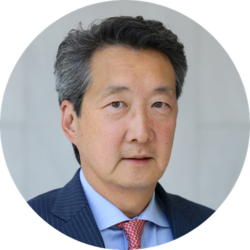
Kiyoteru Tsutsui

Arrillaga Alumni Center - McCaw Hall
326 Galvez St, Stanford, CA 94305

Gita Wirjawan
Audrey Tang
Date Label
0
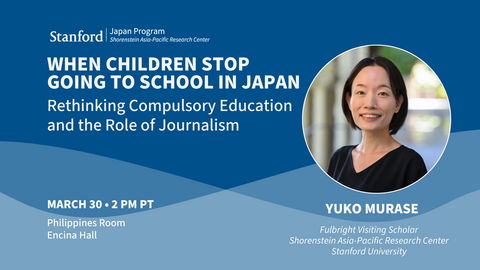
Visiting Scholar at APARC, 2025-2026
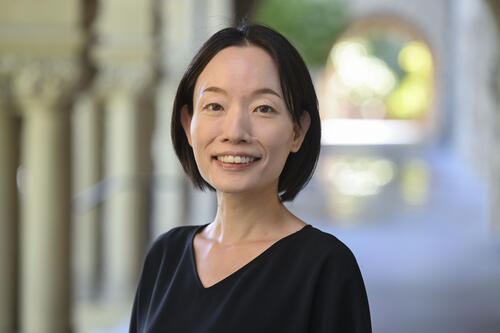
yuko_murase.jpg

Yuko Murase joins the Walter H. Shorenstein Asia-Pacific Research Center (APARC) as a visiting scholar for fall and winter quarters of the 2025-2026 academic year. She is a journalist with more than 15 years of experience at The Mainichi Shimbun, a major national daily newspaper in Japan that also operates an English-language news site. Yuko has received a Fulbright Scholar Award in Journalism in 2025, becoming the only Japanese journalist selected for that year.

Under the Fulbright program, Yuko is conducting comparative research at APARC on educational systems and practices in the United States and Japan. Drawing on her reporting on education in Japan, including her article: “Preference for 'free schools' over compulsory education stirs controversy in Japan,” she is examining alternative educational models in the United States—such as charter schools and online education in Silicon Valley—to consider their relevance for education policy discussions in Japan.

Yuko has written extensively in both English and Japanese, with a focus on education and social issues. She reported on the tragic suicide of a 13-year-old student in Shiga Prefecture, a case that garnered national attention which led to the enactment of the Act for the Promotion of Measures to Prevent Bullying (2013). Her investigative reporting of harassment within a fire department during and after the COVID-19 pandemic earned the 19th Hikita Keiichiro Award in 2025, bestowed by the Japan Federation of Newspaper Workers' Unions for news coverage that protects human rights and promotes confidence in the press.

After graduating from high school in Australia, Yuko earned a BA in International Relations from Ritsumeikan University in Kyoto. She pursued studies in journalism at Rutgers University in the United States and sociology at the University of the Philippines while at Ritumeikan. In 2004, she was selected for the Japanese University Student Delegation to Korea by the Japan–Korea Cultural Foundation.

Date Label
0
Visiting Scholar at APARC, Japan Program Fellow 2025-2026
kemy_monahan.jpg

Katherine (Kemy) joins the Walter H. Shorenstein Asia-Pacific Research Center (APARC) as a visiting scholar, Japan Program Fellow, for the 2025-2026 academic year. Ms. Monahan has completed 16 assignments on four continents in her 30 years as a Foreign Service Officer with the U.S. Department of State.  She recently returned from Tokyo, where she was Deputy Chief of Mission at the U.S. Embassy in Japan, following roles as Charge d’affaires for Papua New Guinea, Solomon Islands, and Vanuatu, and Deputy Chief of Mission to New Zealand, Samoa, Cook Islands, and Niue.  She was Director for East Asia at the National Security Council from 2022 to 2023.  Previously, she worked for the U.S. Department of Treasury in Tokyo, as Economic, Trade and Labor Counselor in Mexico City, Privatization lead in Warsaw after the fall of the Berlin Wall, Advisor to the World Bank, and Deputy Executive Director of the Secretary of State’s Global Health Initiative, among other roles.  As lead of UNICEF’s International Financial Institutions office, Ms. Monahan negotiated over $1 billion in funding for children. A member of the Bar in California and DC, Ms. Monahan began as an attorney in Los Angeles. 

Date Label
Authors
George Krompacky
Noa Ronkin
News Type
News
Date
Paragraphs

When Stanford sociologist Gi-Wook Shin left his home country of South Korea in 1983 to pursue graduate studies at the University of Washington, he was certain he would return to Korea upon graduation. More than 40 years later, Shin, the William J. Perry Professor of Contemporary Korea and a senior fellow at the Freeman Spogli Institute for International Studies, is still in the United States. 

Yet he does not consider himself a case of brain drain for Korea. Shin, who is also the founding director of the Korea Program at the Shorenstein Asia-Pacific Research Center (APARC) and APARC director, has continuously contributed to Korea by leading transnational collaborations, researching and publishing on pressing issues in Korean affairs, and otherwise engaging in diverse intellectual exchanges with the country.

Shin’s experiences sparked his interest in the sociological patterns of mobile talent and a central question: How do countries attract, develop, and retain talent in a globalized world? His new book, The Four Talent Giants (Stanford University Press, 2025), explores that question regarding transnational talent flows from a comparative lens by examining how four strikingly different Asia-Pacific nations – Japan, Australia, China, and India – have become economic powerhouses.

We interviewed Shin about his book – watch:

Sign up for APARC newsletters to receive our scholars’ research updates >


The book’s main idea, Shin explains, is that how countries manage talent is key to their strength and future success. He calls the four Asia-Pacific nations the book examines “talent giants” because each has used a distinct talent strategy that has proven critical to national development. Three of these nations – China, Japan, and India – are among the top five economies in the world in terms of GDP, and Australia, despite its relatively small population size, is third in terms of wealth per adult.

In The Four Talent Giants, Shin investigates how these four nations have become global powers and sustained momentum by responding to risks and challenges, such as demographic crises, brain drain, and geopolitical tensions, and what lessons their developmental paths hold for other countries.

There is no ‘one-size-fits-all’ path to development [...] Rather, the ‘talent giants’ have developed distinctive talent portfolios with different emphases on human versus social capital, domestic versus foreign talents, and homegrown versus foreign-educated talents.
Gi-Wook Shin

A New Framework for Studying Human Resource Development 


Asia’s robust economic growth over the past forty years is nothing short of a remarkable feat. The Asia-Pacific today continues to be the world's fastest-growing region, despite global economic uncertainty. How did this phenomenal ascendance come about?

The existing literature has emphasized common “recipes” of success among Asia-Pacific powers. Endeavoring to find one-size-fits-all formulas that could be replicated in other countries seeking rapid development, it has overlooked the distinct developmental journeys of Asian nations. “We need a new lens, or framework, to explain their successes, while also accounting for cross-national variation in development and sustainability,” writes Shin. 

In his book, Shin examines talent – the skilled occupations essential to a nation’s economy – as a key driver of economic development. While all countries rely on human resources for development, their talent strategies vary based on historical, cultural, and institutional factors. Shin introduces a new framework, talent portfolio theory (TPT), inspired by financial portfolio theory, to analyze and compare these national approaches.

“TPT views a nation’s talent development, like financial investment, as constructing a ‘talent portfolio’ that mixes multiple forms of talent – domestic, foreign, and diasporic – adjusting its portfolio over time to meet new risks and challenges,” he explains. Just as an investor may select different financial products in a mix of assets, countries can create talent portfolios by picking from various strategies.

Shin identifies four main strategies by which a country can harness talent – what he calls the four B's: 

  • Brain train” signifies efforts to develop and expand a country’s domestic talent or human capital.
  • Brain gain” refers to attracting foreign talent to strengthen the domestic workforce.
  • Brain circulation” involves bringing back nationals who have gone abroad for work or study.
  • Brain linkage” means leveraging the global networks and expertise of citizens living overseas through transnational collaboration.


Shin uses TPT as an analytical framework to examine how each of the four talent giants has constructed its distinct national talent portfolio and how this portfolio has evolved. As in an investment portfolio rebalancing, a nation can maintain diversification across the four B's and within each B. TPT therefore offers a holistic framework for understanding the overall picture of a country’s talent strategy, and how and why it may “rebalance” its talent portfolio.

Throughout the book, Shin shows that, while Japan has relied on the brain train strategy, Australia, whose population was too small for such an approach, emphasized brain gain. China used brain circulation: it first sent students and professionals abroad to learn, then implemented policies to encourage them to return. India, by contrast, established linkages among its diaspora and used them to develop its economy.

Immigrants have not just filled jobs. They have created new industries and helped the United States and their home countries alike. If the US makes it harder for talent to come in and stay, it risks hurting its long-term success.
Gi-Wook Shin

New Geopolitics of Global Talent: Lessons and Policy Implications


The case studies of the four talent giants reveal that there is no single path to talent-driven development. Each of the four Asia-Pacific countries has built its unique talent portfolio, balancing human and social capital, homegrown and foreign-educated individuals, and domestic and diasporic talents. While the talent giants use all four B's to some extent, each emphasizes them differently, reflecting diverse strategies and development paths. The core findings of these studies offer valuable insights for countries aiming to design effective talent policies. 

The four B's were instrumental in the economic rise of the four Asian nations, and they will be equally critical in addressing new challenges facing all economies, from demographic crises to emergent geopolitical tensions. For the United States, one such challenge is its sprawling competition with China, where the battle for talent is heating up in the race for technological supremacy.

Shin warns that the advantage the United States has long held in technological innovation, driven by its ability to attract skilled foreign talent, is now at risk from the Trump administration’s anti-immigration policies, pressures on universities, and cuts to research funding. “Immigrants have not just filled jobs,” he emphasizes. “They have created new industries and helped the US and their home countries. If the US makes it harder for talent to come in and stay, it risks hurting its long-term success.”

The Four Talent Giants is an outcome of Shin’s longstanding project investigating Talent Flows and Development, now one of the research tracks he leads at the Stanford Next Asia Policy Lab (SNAPL), which he launched in 2022. Housed at APARC, the lab is an interdisciplinary research initiative addressing Asia’s social, cultural, economic, and political challenges through comparative, policy-relevant studies. SNAPL’s education mission is to cultivate the next generation of researchers and policy leaders by offering mentorships and fellowship opportunities for students and emerging scholars.

Shin notes that the SNAPL team illustrates all four B’s in his talent portfolio theory, as some members are U.S.-born and trained, some come from Asia and, after working at the lab, return to their home countries, whereas some stay here, promoting linkages with their home countries. “In many ways, this project shows what is possible when we invest in talent and encourage international collaboration.”


In the Media


Stanford Scholar Reveals How Talent Development Strategies Shape National Futures
The Korean Daily, July 13, 2025 (interview)
- English version
- Korean version

Read More

College students wait in line to attend an information session at the Mynavi Shushoku MEGA EXPO in Tokyo, Japan.
News

A New Approach to Talent Development: Lessons from Japan and Singapore

Stanford researchers Gi-Wook Shin and Haley Gordon propose a novel framework for cross-national understanding of human resource development and a roadmap for countries to improve their talent development strategies.
A New Approach to Talent Development: Lessons from Japan and Singapore
Gi-Wook Shin, Evan Medeiros, and Xinru Ma in conversation at the Center for Strategic and International Studies.
News

Stanford Next Asia Policy Lab Engages Washington Stakeholders with Policy-Relevant Research on US-China Relations and Regional Issues in Asia

Lab members recently shared data-driven insights into U.S.-China tensions, public attitudes toward China, and racial dynamics in Asia, urging policy and academic communities in Washington, D.C. to rethink the Cold War analogy applied to China and views of race and racism in Asian nations.
Stanford Next Asia Policy Lab Engages Washington Stakeholders with Policy-Relevant Research on US-China Relations and Regional Issues in Asia
Lee Jae-myung, the presidential candidate of the Democratic Party, and his wife Kim Hea-Kyung celebrate in front of the National Assembly on June 4, 2025 in Seoul, South Korea.
Commentary

Is South Korea’s New President Good for Democracy?

South Koreans have elected Lee Jae-myung president. Will he be a pragmatic democratic reformer? Or will he continue the polarizing political warfare of recent South Korean leaders?
Is South Korea’s New President Good for Democracy?
Hero Image
Gi-Wook Shin seated in his office, speaking to the camera during an interview.
All News button
1
Subtitle

In his new book, The Four Talent Giants, Shin offers a new framework for understanding the rise of economic powerhouses by examining the distinct human capital development strategies used by Japan, Australia, China, and India.

Date Label
Display Hero Image Wide (1320px)
No
Authors
Michael Breger
News Type
News
Date
Paragraphs

On May 29, 2025, the Japan Program at the Shorenstein Asia-Pacific Research Center (APARC) hosted a conference titled Japan’s Global Content Industries, dedicated to exploring the global power and creative evolution of Japanese content, from anime to manga, video games, music, VTubers, and more.

Co-organized by Orange Inc. and APARC Global Affiliates Program Fellow Yasushi Maruyama, the event convened prominent influential creators, producers, technologists, and scholars from Japan and the United States. It offered a platform for interdisciplinary engagement and exploration of how Japan’s content sectors contribute not only to cultural imagination and entertainment but also to soft power diplomacy, economic strategy, and digital transformation.

“Content is the most successful export industry in Japan," noted Japan Program Director Kiyoteru Tsutsui in his opening remarks. "As of a year ago, Japan’s content has become a 43 billion USD industry, surpassing many of Japan’s traditionally successful industries, except for automobiles.” 

The Creators: Crafting Japan’s Cultural Icons


The morning session focused on creators within Japan’s content ecosystem. It featured leading voices behind some of Japan’s most influential media franchises. Junichi Masuda of The Pokémon Company opened with a reflection on the franchise’s long-term development and its transformation into a global cultural symbol. Hiroyuki Nakano, editor-in-chief of the magazine Shonen Jump, followed with insights into editorial strategies and the sustained appeal of serialized manga such as “One Piece.” Game designer Tai Yasue from SQUARE ENIX concluded the segment by discussing collaborative design approaches in creating popular video game franchises like “Final Fantasy” and “Kingdom Hearts.”

Each speaker underscored the strategic interplay between creative autonomy and organizational frameworks within Japan’s media production. Despite operating in distinct sectors, manga publishing, game development, and franchise management, the speakers emphasized the importance of creative vision, collaborative processes, and fan engagement in driving success.

Sign up for APARC newsletters to receive our event invitations and guest speaker insights >


A panel discussion, moderated by Yasushi Maruyama and joined by Susan Napier, the Goldthwaite Professor of Rhetoric, International Literary and Cultural Studies at Tufts University, placed these industry insights within broader academic and sociocultural contexts. Napier, an authority on anime and Japanese cultural studies, connected the presenters’ creative strategies to the broader narrative of Japan’s cultural exports and its influence on global audiences. The dialogue highlighted how Japanese content not only entertains but also fosters deeper cross-cultural understanding.

The Innovators: Scaling Japanese Content Globally


The afternoon session turned attention to the structural and technological transformations enabling Japan’s media to scale globally. Sony Music Entertainment (Japan) Inc., Director of the Board, CFO & CSO Hide Nagata examined corporate strategies driving global expansion of Japanese music and anime.  He emphasized the importance the anime fans have with music and leveraging data analytics in maximizing reach and impact.

Shoko Ugaki, CEO of Orange Inc., shared production methodologies that have positioned the startup manga localization studio at the forefront of innovation. The presentation highlighted how Orange Inc. leverages various AI technologies to make manga more accessible to international audiences and the challenges of automated translation. The session concluded with Motoaki Tanigo, CEO of COVER Corporation, who introduced Hololive’s virtual talent ecosystem. His remarks on VTubers underscored how digital personas and fan interactivity are redefining contemporary media engagement.

A concluding panel, moderated by Kiyoteru Tsutsui and joined by Professor Mizuko Ito of the University of California, Irvine, synthesized the day’s themes. Ito, a specialist in digital youth culture, explained how fandoms, participatory culture, and platform technologies are creating new modes of learning, connection, and commerce. The panel emphasized that Japanese media no longer function as static cultural exports, but as dynamic, interactive ecosystems integrated into everyday digital life across the globe.

Japan’s Content Power: Cultural Strategy and Global Relevance


Throughout the conference, a consistent theme emerged: Japan’s content industries are increasingly strategic in blending creativity, technology, and cross-cultural appeal. Whether in serialized manga, immersive games, or AI-driven virtual entertainment, Japanese content reflects a convergence of artistic vision, business innovation, and global ambition.

The conference demonstrated the value of interdisciplinary dialogue in understanding the evolving dynamics of global media and connected scholarly analysis with real-world developments, fostering deeper engagement between Japan and the world.

Read More

Shinichi Kitaoka
News

Japanese Politics Reexamined: Shinichi Kitaoka Leads Stanford Seminar on Japan’s Diplomatic Past and Future

Shinichi Kitaoka, a visiting scholar at APARC and Japan Program fellow, teaches a spring quarter seminar that brings students and scholars together to examine Japanese political history from the Yedo period to the present through a global and comparative lens.
Japanese Politics Reexamined: Shinichi Kitaoka Leads Stanford Seminar on Japan’s Diplomatic Past and Future
Group photo from the event Recalibrating U.S.-Japan Collaboration in a Time of Tumult
News

From Trade to Baseball: Experts Gather at Stanford to Examine U.S.-Japan Evolving Ties

As geopolitical uncertainty deepens and traditional alliances are tested, APARC’s Japan Program and the United States-Japan Foundation convened thought leaders at Stanford to explore the shifting bilateral cooperation across areas spanning global democracy, economic resilience, civil society and governance, and the unexpected power of baseball diplomacy.
From Trade to Baseball: Experts Gather at Stanford to Examine U.S.-Japan Evolving Ties
Kiyoteru Tsutsui
News

Kiyoteru Tsutsui Named as Next Director of Shorenstein Asia-Pacific Research Center

Tsutsui, whose research focuses on globalization, human rights, social movements, and political sociology, currently serves as deputy director of the center, and has been the director of the Japan Program since 2020.
Kiyoteru Tsutsui Named as Next Director of Shorenstein Asia-Pacific Research Center
Hero Image
Group photo in the APARC office
Participants from the conference Japan’s Global Content Industries: Manga, Anime, Game, Music, and More gather for a group photo. [Photo Credit: Ken Hamel]
All News button
1
Subtitle

As global audiences and digital platforms reshape cultural exchange, APARC’s Japan Program convened leading creators, producers, and scholars at Stanford to examine the creative ecosystems driving the international success of Japan’s content industries and their growing influence on innovation, fandom, and international collaboration.

Date Label
Authors
News Type
News
Date
Paragraphs

Sana Sugita is a master’s student in East Asian studies. Her research interests include democracy and freedom, nationalism, identity, and the social impact of algorithms and AI.


Yifei Cheng, ’26, is excited every week to learn about unorthodox and relatively lesser-known historical figures who played a major part in Japanese history. For instance, Onodera Makoto, a Japanese military attaché, allegedly sent a telegram to the Japanese General Staff shortly after the Yalta Conference in February 1945, warning that Stalin had promised during the conference that the USSR would attack Japan three months after the German surrender. Or Kiyosawa Kiyoshi, who criticized the Manchurian Incident, Shanghai Incident, and the Sino-Japanese War, and later turned to writing diplomatic history, keeping a detailed diary during the Pacific War.

These are some of the stories Dr. Shinichi Kitaoka, a visiting scholar at the Walter H. Shorenstein Asia-Pacific Research Center (APARC) and Japan Program fellow, weaves into his spring quarter seminar series, Reexaminations of Major Issues in Modern Japanese Politics and Diplomacy. “It has been wonderful to hear how Dr. Kitaoka introduces us to Japanese diplomacy,” says Cheng. “With his experience as the former president of the Japan International Cooperation Agency (JICA), he connects these facts and compares them to real occurrences in the 120 countries he has visited around the world.”

During the seminar series, students and the APARC community explored, through a fresh lens, new interpretations of major issues in Japanese politics and diplomacy from the Yedo period in the 17th century to the present day.

Professor Kitaoka in class
Professor Kitaoka describes Japan's official development assistance. [Photo Credit: Sana Sugita]

Sign up for APARC newsletters to receive our scholars' updates >


Cheng, a history major, was drawn to the seminar’s foreign policy perspective. “It helped me to see how domestic policies and foreign policy interact. I feel that often, they are treated separately. But, this has been a nice way to understand how they connect and see how internal dynamics and external pressures shape policy decisions on both fronts.”

The seminar was developed during Dr. Kitaoka’s quarter-long visiting fellowship at APARC. Kitaoka serves as special advisor to the president (and former president) of JICA, as well as emeritus professor at the University of Tokyo and ambassador extraordinary and plenipotentiary, deputy permanent representative of Japan to the United Nations (2004–2006).

This class originated in response to a request by Kiyoteru Tsutsui, the director of the Japan Program, due, in part, to his concern about the decline in high-quality research on Japanese politics. Kitaoka notes that current interest in Japan tends to focus on culture more than on politics and diplomacy. “I considered offering a course on Japan’s road to war, a topic I have written about in my book, From Party Politics to Militarism in Japan, 1924–1941," he says. "Instead, I decided to focus on six key topics: the Meiji restoration, Taisho democracy, surrender and occupation, the Regime of 1955, the recent development of Japan’s security policy, and Japan’s official development assistance (ODA).”

“When discussing Japanese diplomacy and history, terms such as 'fragile' and 'failed' are often used. Today, we are seeing how unstable and precarious democracy and diplomacy can be around the world. That is why I believe there are important lessons to be learned from reexamining modern Japan. This is what led me to create a class on the subject. From my experience at JICA and the United Nations, I also know how challenging democratization can be in developing countries. Studying Japan, a formerly developing country that has successfully developed, can be helpful. In particular, Japan’s unique approach to ODA offers useful insights as we think about the future.”

Each session included a 90-minute lecture followed by a Q&A, and those who wanted to stay afterward had dinner together. These more casual discussions offered a space to continue engaging with class materials and explore more questions or related topics. Kitaoka noted that he was impressed by how the students and audience responded in class. Even when the class touched on sensitive topics, like the atomic bomb and World War II, he felt they received it calmly and thoughtfully.

Experience other civilizations while you are young – non-Western civilizations, like in Asia or Africa. It really broadens your world."
Shinichi Kitaoka
Visiting Scholar, APARC

“There are students taking the seminar for credit, APARC members, faculty, and community members coming to listen,” Kitaoka says. “Everyone’s research interests are different, but they all ask a variety of questions based on what they know – that is something I have enjoyed at Stanford. In Japan, when there are experts or faculty members attending, students or people with less experience do not ask questions. At Stanford, everyone, no matter their background or level of expertise, asks. I really like that.”

“Staying at Stanford has been wonderful, just as I expected,” Kitaoka adds “The number of opportunities available for each student is incredible. Each person can try various things – from research and teaching assistant opportunities to club activities to startups – and the fact that the school encourages that is just great. In Japan, schools create more of an environment to just focus on one thing rather than trying a variety of activities.”. Interacting with faculty at APARC and the Freeman Spogli Institute for International Studies and reexamining his own scholarly work from a comparative perspective has been an engaging experience, Kitaoka notes. He believes that American political theory tends to be inward-focused and emphasizes the importance of comparative studies, especially given Asia’s rising global presence – making APARC’s work particularly important.

“Politics and diplomacy are important because their misunderstanding can lead to war. I am sad that they are a rather neglected,” Kitaoka said.

“Experience other civilizations while you are young – non-Western civilizations, like in Asia or Africa,” he advises young scholars aspiring to a future in political science. “It really broadens your world.”

After returning to Japan, he hopes to further contribute to international cooperation, which he believes is now in crisis. “More cooperation, the restoration of international cooperation, is needed – especially in the Western Pacific: Japan, South Korea, Southeast Asian countries, and Australia. Like the EU, I am envisioning a Western Pacific Union. I hope to do something in that direction to realize that,” he said.

Steven Han is a foreign area officer in the U.S. Army and a first-year master’s student in East Asian studies. “I took this class because I have a limited background in Japan, but with my job, there is a possibility I will work in or with Japan. I like how Kitaoka touches on all students’ comments from the response papers, and I get his own personal feedback every week.”

“Everything is new to me,” Han added. “It was just very different, and I am learning so much in every class.”

Read More

2025 Incoming Fellows
News

APARC Names 2025 Incoming Fellows

The Center’s new cohort of seven scholars pursues research spanning diverse topics across contemporary Asian studies.
APARC Names 2025 Incoming Fellows
Collage of headshots of Stanford students
News

Stanford Next Asia Policy Lab Research Assistants Admitted to Top Doctoral Programs

A Stanford student and four recent alumni who served as research assistants at the Stanford Next Asia Policy Lab will begin doctoral studies at top institutions in fall 2025. At the lab, which is committed to rigorous, policy-relevant research and student mentorship, they gained hands-on experience and honed skills valuable for the next stage of their academic journeys.
Stanford Next Asia Policy Lab Research Assistants Admitted to Top Doctoral Programs
Group photo from the event Recalibrating U.S.-Japan Collaboration in a Time of Tumult
News

From Trade to Baseball: Experts Gather at Stanford to Examine U.S.-Japan Evolving Ties

As geopolitical uncertainty deepens and traditional alliances are tested, APARC’s Japan Program and the United States-Japan Foundation convened thought leaders at Stanford to explore the shifting bilateral cooperation across areas spanning global democracy, economic resilience, civil society and governance, and the unexpected power of baseball diplomacy.
From Trade to Baseball: Experts Gather at Stanford to Examine U.S.-Japan Evolving Ties
Hero Image
Shinichi Kitaoka
Dr. Shinichi Kitaoka.
Photo credit: Michael Breger
All News button
1
Subtitle

Shinichi Kitaoka, a visiting scholar at APARC and Japan Program fellow, teaches a spring quarter seminar that brings students and scholars together to examine Japanese political history from the Yedo period to the present through a global and comparative lens.

Date Label
-
Digital flyer of Shorenstein Asia-Pacific Research Center Japan Program Conference "Japan's Global Content Industries: Manga, Anime, Game, Music, and More" with speaker headshots.

Join the Japan Program of the Shorenstein Asia-Pacific Research Center (APARC) at Stanford University for a full-day, in-person conference on May 29, 2025, celebrating the global power and creative evolution of Japanese content — anime, manga, video games, music, VTubers, and more.

Bringing together influential creators, producers, technologists, and scholars from Japan and the United States, this unique event examines the creative ecosystems that fuel Japan’s content industries, the future of global fandom, and the strategic pathways for collaboration between Japan and the U.S. in media, technology, and education. Focusing on creative processes in the morning and media innovations in the afternoon, the conference explores how Japanese content industries continue to shape cultural imagination and drive innovation across sectors and borders, led by visionary creators and behind-the-scenes innovators who are redefining storytelling, interactivity, and global reach in the digital age.

Held at Stanford — where innovation meets scholarship — the event reflects APARC Japan Program’s mission to foster U.S.-Japan dialogue and academic insight into real-world cultural and technological transformations. Whether you are a fan, a founder, or a future creator, join us to uncover what’s next at the intersection of Japanese content and global innovation.

This event is co-organized with Orange Inc. and Yasushi Maruyama.

Please note that submitting this form does NOT guarantee seating. We will send you a follow-up email confirming your seat for this event around a week before May 29.


Note: This event will be photographed and videotaped, and by entering this venue, you consent to Stanford University and approved media using your image and likeness. Any photography and videography may not be available for future viewing at a later date.

Media Advisory and Press Contact

Journalists interested in covering the conference should contact Shorenstein APARC’s Communications Manager, Michael Breger, at mbreger@stanford.edu by May 26 at 5 p.m. PT to register and receive accreditation. At the venue, they will be required to present a press credential from an established news organization. Freelance reporters should email a letter from the news organization for which they work to Michael Breger by the May 16 deadline. The press area is limited, and press seating is not guaranteed.


Parking Information

Click here for instructions on purchasing visitor parking. The closest visitor parking to Encina Hall can be found at the following:

  • Track House Lot (ParkMobile Parking Zone 7295)
  • Memorial Lot (ParkMobile Parking Zone 7213)
  • Littlefield Lot (ParkMobile Parking Zone 7282)
  • Knight Management Center Garage (ParkMobile Parking Zone 7207)
     

For general inquiries, contact aparc-communications@stanford.edu.

Kiyoteru Tsutsui
Kiyoteru Tsutsui
Yasushi Maruyama
Susan Napier
Mizuko Ito

Bechtel Conference Center 
Encina Hall, 1st Floor
616 Jane Stanford Way
Stanford, CA 94305

Parking
Click here for instructions on purchasing visitor parking. The closest visitor parking to Encina Hall can be found at the following:

  • Track House Lot (ParkMobile Parking Zone 7295)
  • Memorial Lot (ParkMobile Parking Zone 7213)
  • Littlefield Lot (ParkMobile Parking Zone 7282)
  • Knight Management Center Garage (ParkMobile Parking Zone 7207)
Tai Yasue Square Enix
Shoko Ugaki Orange Inc
Hiroyuki Nakano Shueisha
Junichi Masuda The Pokemon Company
Motoaki Tanigo COVER
Hide Nagata Sony Music Entertainment
Date Label
Authors
Michael Breger
News Type
News
Date
Paragraphs

As the global geopolitical landscape shifts and the United States redefines its role on the world stage, Japan, its closest ally in the Asia-Pacific, faces mounting expectations and emerging opportunities. In recognition of this critical juncture, APARC’s Japan Program and the United States-Japan Foundation convened a timely symposium at Stanford University, Recalibrating U.S.-Japan Collaboration in a Time of Tumult. The event brought together scholars, policymakers, and practitioners to explore how U.S.-Japan relations are adapting to new global realities. Over the course of five thematic sessions, participants engaged in a dialogue that spanned foreign policy, international trade, social governance, civil society, and even the cultural diplomacy of baseball.

📄  Get the event highlights below

📹  Watch the symposium sessions on our YouTube channel >

🔗  Read Nikkei coverage of the event >

📧  Sign up for APARC newsletters to receive our event invitations and guest speaker insights >

The opening session, “Global Democracy, Foreign Aid, and Regional Security: As the U.S. Pulls Back, Will Tokyo Step Up?,” featured Larry Diamond, Mosbacher Senior Fellow of Global Democracy at Stanford’s Freeman Spogli Institute, Shinichi Kitaoka, former Japanese ambassador to the United Nations and past president of the Japan International Cooperation Agency (JICA), along with APARC Japan Program Director Kiyoteru Tsutsui. Together, they examined Japan’s potential to assume a greater leadership role in defending democratic norms and providing regional public goods in an era of American retrenchment. The discussion underscored both Japan’s growing capacity and its constitutional and cultural constraints.

In the second session, “How Tariffs and Trade Wars are Reshaping the Indo-Pacific,” Wendy Cutler of the Asia Society Policy Institute and Peter Wonacott of the Stanford Doerr School of Sustainability reflected on the disruptions facing global trade. Drawing on their experience in economic policy and journalism, respectively, they traced how protectionist policies and decoupling strategies are altering regional supply chains. Their analysis emphasized the importance of maintaining open trade flows while also reinforcing economic resilience across the Indo-Pacific.

The third session, “The Future of DEI, ESG, SDGs: Will Japan Follow the U.S. or Stay the Course?,” focused on evolving norms around corporate and social governance. Keiko Tashiro, deputy president at Daiwa Securities Group, joined Gayle Peterson of Oxford’s Saïd Business School and Stanford sociologist Patricia Bromley to evaluate whether Japan’s institutions will align with American trends or continue along a distinct trajectory. Panelists discussed Japan’s historically unique approach to equity and sustainability, noting the domestic implementation of global frameworks such as the UN-sanctioned Sustainable Development Goals.

The fourth session, “Redefining the Relationship Through Civil Society: Burden Sharing, Knowledge Sharing, Picking up the Slack,” included remarks from Mike Berkowitz of the Democracy Funders Network, Laura Deal Lacey of the Milken Institute, and Jacob M. Schlesinger, president and CEO of the United States-Japan Foundation, who explored how non-state actors are increasingly stepping in to fill voids left by governments. The conversation highlighted the growing role of philanthropic networks and think tanks in shaping bilateral cooperation, particularly in areas such as disaster response, democratic resilience, and public diplomacy.

Capping the day’s proceedings was the session titled “Diamond Diplomacy Redux: Baseball as a Bilateral Bridge.” Featuring Stan Kasten, president and CEO of the Los Angeles Dodgers, and Yuriko Gamo Romer, director of the documentary “Diamond Diplomacy,” the discussion viewed U.S.-Japan relations from a cultural diplomacy perspective. The two reflected on the enduring symbolism of baseball in forging people-to-people ties, illustrating how shared pastimes can foster mutual understanding even amid geopolitical uncertainty.

The symposium served as a vital platform for reassessing the U.S.-Japan alliance in a period marked by shifting global norms. As the international system undergoes profound change, the panelists indicated that the robust partnerships must evolve not only through diplomacy and defense but also across the realms of trade, governance, civil society, and cultural exchange.

Read More

U.S. President Donald Trump holds up a chart of "reciprocal tariffs" while speaking
News

Tariffs Boost China's Image, But the US Has No Substitute, Says APARC Scholar Thomas Fingar

President Trump's tariff policy will serve no one's interests, says Thomas Fingar, a Shorenstein APARC Fellow at Stanford University's Freeman Spogli Institute for International Studies.
Tariffs Boost China's Image, But the US Has No Substitute, Says APARC Scholar Thomas Fingar
American flag and network imagery
Commentary

US Research in Retreat?

Zealous measures to defend against foreign exploitation of university-based research would be inadequate to preserve US preeminence in science and technology without much greater effort to strengthen US capabilities.
US Research in Retreat?
A woman using smartphone while walking on busy street in Tokyo, Japan.
News

Asahi Shimbun GLOBE+ Spotlights Stanford Japan Barometer’s Latest Findings on Marital Surname Choices

Approximately 20 percent of Japanese women are likely to choose a different surname if a dual-surname option for married couples is introduced, according to the latest survey of the Stanford Japan Barometer. A new installment in the Asahi Shimbun’s GLOBE+ series features these and other Japan Barometer survey results.
Asahi Shimbun GLOBE+ Spotlights Stanford Japan Barometer’s Latest Findings on Marital Surname Choices
Hero Image
Group photo from the event Recalibrating U.S.-Japan Collaboration in a Time of Tumult
Panelists and organizers of the event Recalibrating U.S.-Japan Collaboration in a Time of Tumult gather for a group photo. [Photo Credit: Shabnam Tabesh]
All News button
1
Subtitle

As geopolitical uncertainty deepens and traditional alliances are tested, APARC’s Japan Program and the United States-Japan Foundation convened thought leaders at Stanford to explore the shifting bilateral cooperation across areas spanning global democracy, economic resilience, civil society and governance, and the unexpected power of baseball diplomacy.

Date Label
Authors
News Type
News
Date
Paragraphs

This interview first appeared in the Brazilian newspaper Folha de S.Paolo, on April 6. The following English version was generated using machine translation and subsequently edited for accuracy and clarity.


WASHINGTON — The tariff hike against all countries announced last week by President Donald Trump may bolster China's image, but that doesn't mean China or any other country is poised to replace the United States, says Thomas Fingar, Shorenstein APARC Fellow at the Freeman Spogli Institute at Stanford University.

Fingar, a former chief of the State Department's China Division, among other roles in the U.S. Foreign Service and national intelligence, believes that Trump's tariffs will be bad for all nations.

"I hesitate to predict how other countries will react, except that this has more or less given everyone an incentive to bypass the U.S.," he tells Folha.

Donald Trump announced tariffs this week against virtually every country. China has already announced retaliation, imposing a 34% tariff on American products. Are we facing a trade war?

I don't think the war metaphor works for me. I don't know what Trump is trying to do. One could say that this is a game of imposing an outrageous tariff in the hope that specific targets, which are basically all countries, might give in to what they say are their demands. In doing so, they would reduce barriers to trade with the United States. To me, it doesn't make sense with the vast majority of targets of the 10% tariffs.

Why?

I hesitate to predict how other countries will react, except that this has more or less given everyone an incentive to bypass the U.S., to make the U.S. a supplier of last resort, to hold the line, to have a kind of united front to compete with each other.

If the assessment is that the Dutch or the French or the Germans or the Brazilians or somebody else is talking about doing something to eliminate a 10% tariff to gain a comparative advantage in accessing the U.S. market, if that's the logic, then fine. Maybe there's something rational about that, but I think it's more likely that the targets of those low tariffs are just getting together.

My main trade competitor has the same or higher tariffs levied against them. Why should I give in if we are competing on a level playing field?

I think Trump is going to make the U.S. pay a huge geopolitical price. But what he thinks he will gain from this, I don't know. Is it likely that he will achieve anything really significant from it? I doubt it.

You mentioned a geopolitical price tag for the United States. What would it be?

The tendency of much of the world, most of the time, was to try to work with the United States, to the extent that they couldn't automatically do what Washington wanted, but they were inclined to cooperate because they saw it as benign, if not beneficial, to their interests. I think Trump has reversed that. This is going to lead to a disinclination to work with us, an incentive to try to bypass us. I think the inclination now is going to be: I'm not going to vote with the Americans, I'm going to look elsewhere first, for my investment, for my capital, for the market, for what I'm doing, for partners.

But I don't think that these measures are necessarily going to play in favor of any particular country. Maybe China in some places, the European Union in some places, Japan in some places. It's going to be a very different environment for the United States, for American companies and diplomats to operate in. It's going to be much more difficult.

This tariff strategy that you say is hard to understand is seen by some analysts as part of Trump's isolationist policy.

As my kids would say, this is so last century. This is really 19th century, the idea of bringing industries, manufacturing back to the United States. Very little manufacturing, I think, is going to come back to the United States. We have 4% unemployment. We can't fill the jobs that we have now, imagine bringing back manufacturing of basic commodities like shoes, toys, that kind of thing.

That left the United States a long time ago and went to Japan, moved from Japan to Taiwan, moved from Taiwan to South Korea, moved from South Korea to somewhere else, and then moved to China and then to Vietnam. Those things are not coming back here because there's not enough profitability to justify investing in robots and mechanizing those things to bring them back to the United States. Our workforce is small relative to the size of the economy. It's not coming back.

It's already moving from China because labor costs are so high. The fallacy in Trump's logic is that things like furniture, construction, textiles, clothing, and manufacturing would come back. And the people who would actually do the work are the people he's persecuting with his ridiculous immigration policies.

Trump has argued that he imposed the tariffs to curb alleged abuses against the United States that would benefit China. Is he containing Beijing with this move?

I don't think he really cares about containing China. But the answer is no. These moves boost China's image. Beijing has seized on the rhetoric of defending the open, globalized international trading order that the United States has attacked. They will take advantage of that as much as they can. I don't think the tariffs are part of the U.S. rivalry with China. China's rise has not disadvantaged the United States economically — it has done so to Japan, and, to some extent, South Korea and Taiwan, but not the United States. So Trump is using this argument with false, exaggerated, and distorted statements.

Could we witness a change in the world order, the end of the American era and the beginning of a Chinese era?

No.

Not even as a consequence of tariffs?

Absolutely not. Part of the problem is that China's economy is closed. One of the reasons is that it doesn't have a consumer society because people don't have enough income. That's because of the amount of wealth that the state extracts to pay for high-speed rail, military structures, and energy development. Some of that is good, some of it is excess.

U.S. tariffs won’t create a market that can rival the size and influence of the United States. It would have to be somewhere else that is very rich, and China is not very rich. China is barely in the middle-income category, it has a per capita income at a level that Mexico has been at for decades. It's not binary. So, the U.S. retreat from its leadership position in the world order, which I don't necessarily see as a bad thing, doesn't automatically hand that role over to China, Russia, the European Union, Japan, Brazil, the BRICS, or any other set of players.

Can China gain ground by investing more in countries that are affected by tariffs?

China has invested more in countries that are affected by tariffs, like Indonesia and Vietnam. These countries are very wary of Chinese investment for various historical reasons, and to some extent for ethnic reasons. But China is actually cutting back on its overseas investments because its own population is asking: Why are we giving money to countries that are richer than us? That is a reasonable question.

They have real problems meeting the expectations, demands, and needs of their own population, which is now largely urban. The cities have to function, you can't say, "Go back to the farm and do sustainable agriculture." That phase is long gone in China. So they have to spend more. Half of the population still has rural identity cards. That means they don't get free education beyond primary school. That means 50% of the future workforce won't have more than a primary school education. This is a country with enormous challenges. Can they manage them? Probably yes, but there is not much room for maneuver. Their own slowing economy will be hurt by these tariffs. I don't think that's Trump's intention, but it will hurt them.

What impact might the tariffs have on Brazil and Latin America? Do you think China will become more attractive?

I don't know specific commodities from specific places, but my general starting point is that a 10% distribution across Latin America won't have much of an impact on the price for consumers in those countries. You'll export the same amount; we'll pay more for whatever the commodity is, flowers from Colombia, grapes, wine from Argentina or Chile. Since the tariff is general, it doesn't give Chile an advantage on wine over Argentina, because they both have the same amount. Most of what Latin America exports to the United States doesn't go to China.

In short, what are the main consequences of tariffs in terms of the geopolitical landscape and the domestic landscape?

It destabilizes the international trading system that has benefited most countries for a long time. It will force adjustments, that is number one. And number two is that it undermines the image of the United States, and therefore its influence as a stabilizing, predictable, and broadly beneficial member of the international community. It disrupts economies and undermines American influence and attractiveness.

In the end, does anyone benefit from Trump's tariff policies?

No one. This is not a policy that works to anyone's obvious benefit. It upsets everyone. And there is no alternative to the United States, in the sense that the Soviet Union was during the Cold War. China is not that, and China does not want to be that.

Read More

American flag and network imagery
Commentary

US Research in Retreat?

Zealous measures to defend against foreign exploitation of university-based research would be inadequate to preserve US preeminence in science and technology without much greater effort to strengthen US capabilities.
US Research in Retreat?
A collage of group photos featuring speakers at the Taiwan Forward conference.
News

Stanford Conference in Taipei Ponders Taiwan’s Path Forward in a Changing World

At its first convening in Taiwan, APARC’s Taiwan Program gathered scholars and industry experts to consider policy measures and practices for tackling the technological, economic, social, and demographic forces shaping the island nation’s future and strategies for ensuring its continued growth and success.
Stanford Conference in Taipei Ponders Taiwan’s Path Forward in a Changing World
Oksenberg Symposium panelists (L to R) Jean C Oi, Alex Gabuev, Sumit Ganguly, Da Wei, Michael McFaul
News

Oksenberg Symposium Panelists Analyze Evolving Strategic Dynamics Between China, Russia, India, and the United States

APARC's 2025 Oksenberg Symposium explored how shifting political, economic, and social conditions in China, Russia, India, and the United States are reshaping their strategies and relationships. The discussion highlighted key issues such as military and economic disparities, the shifting balance of power, and the implications of these changes for global stability, especially in the Indo-Pacific region.
Oksenberg Symposium Panelists Analyze Evolving Strategic Dynamics Between China, Russia, India, and the United States
Hero Image
U.S. President Donald Trump holds up a chart of "reciprocal tariffs" while speaking
U.S. President Donald Trump holds up a chart of "reciprocal tariffs" while speaking during a “Make America Wealthy Again” trade announcement event in the Rose Garden at the White House on April 2, 2025 in Washington, DC.
Photo by Chip Somodevilla/Getty Images
All News button
1
Subtitle

President Trump's tariff policy will serve no one's interests, says Thomas Fingar, a Shorenstein APARC Fellow at Stanford University's Freeman Spogli Institute for International Studies.

Date Label
-
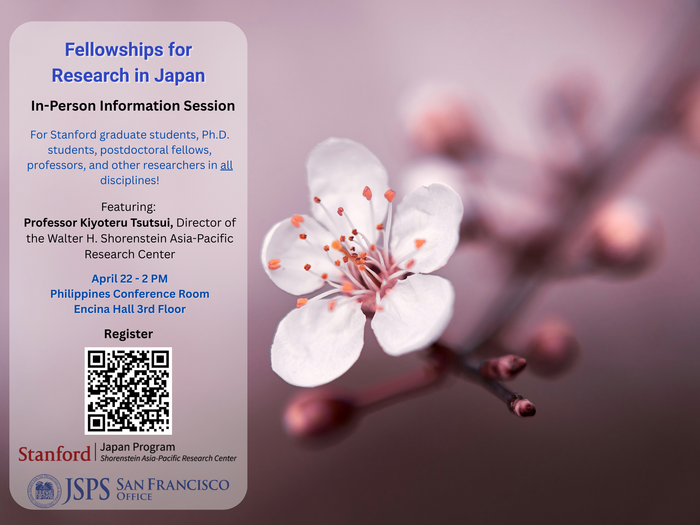
Fellowships for Research in Japan Digital flyer with Sakura Cherry Blossoms


Japan Society for the Promotion of Science (JSPS) is the largest funding agency for academic research in Japan. Fellowships are offered for graduate students, Ph.D. students, post-doctoral fellows, researchers, and professors at all levels in all fields. If you are interested in researching in Japan, join us for a hybrid information session with JSPS SFO staff to find out more. 

Featuring Prof. Kiyoteru Tsutsui, director of the Japan Program at APARC and center deputy director.

JSPS SFO will be hosting a giveaway and providing lunch! 

If you have any questions, you can reach JSPS SFO at: (510) 665-1890 or sfo-fellowship@overseas.jsps.go.jp

Kiyoteru Tsutsui

Philippines Conference Room

Encina Hall 3rd Floor
616 Jane Stanford Way, Stanford CA 94305

Seminars
Date Label
Subscribe to Japan