Authors
Noa Ronkin
News Type
News
Date
Paragraphs

How do universities in China and Singapore experiment with new types of learning in their quest to promote innovation and entrepreneurship? Is there a need to transform the traditional university into an “entrepreneurial university”? “What are the recent developments in and outstanding challenges to financing innovation in China and Japan? And what is the government’s role in promoting innovative entrepreneurship (as opposed to small- and medium-size enterprises) under the shadow of big business in South Korea?

These are some of the questions discussed at the second annual conference of APARC’s Stanford Asia-Pacific Innovation research project. The two-day conference, co-hosted jointly with Tsinghua University and titled “Analyzing Public Policies for Entrepreneurship and Innovation in East Asia,” was held on September 9-10, 2018 at the Beijing-based D&C Think Tank. It brought together scholars from the United States and Asia to explore education policies and financial policies conducive to accelerating innovation and developing a more entrepreneurial workforce in East Asia. Participants focused on entrepreneurship education in universities and on policy interventions to promote innovation financing. The conference papers will be published in an edited volume that will serve as a valuable reference for scholars and policymakers working to develop human capital for innovation in Asia.

The Stanford Asia-Pacific Innovation project is a multi-year, Center-wide effort to produce academic and policy research from comparative, regional perspectives into how Asian nations are responding to the imperative to develop the skills, competencies, long-term health, and systems that make up a platform for innovation in the twenty-first century.

The project’s lead researchers—Karen Eggleston, Takeo Hoshi, Yong Suk Lee, and Gi-Wook Shin—are preparing for publication the findings from the project’s first annual conference that was held at Stanford last year and focused on the organization of business and innovation clusters in East Asia. In 2019, the project will turn to examining the intersection of aging, technology, and innovation, with a third conference to be held in South Korea next summer.

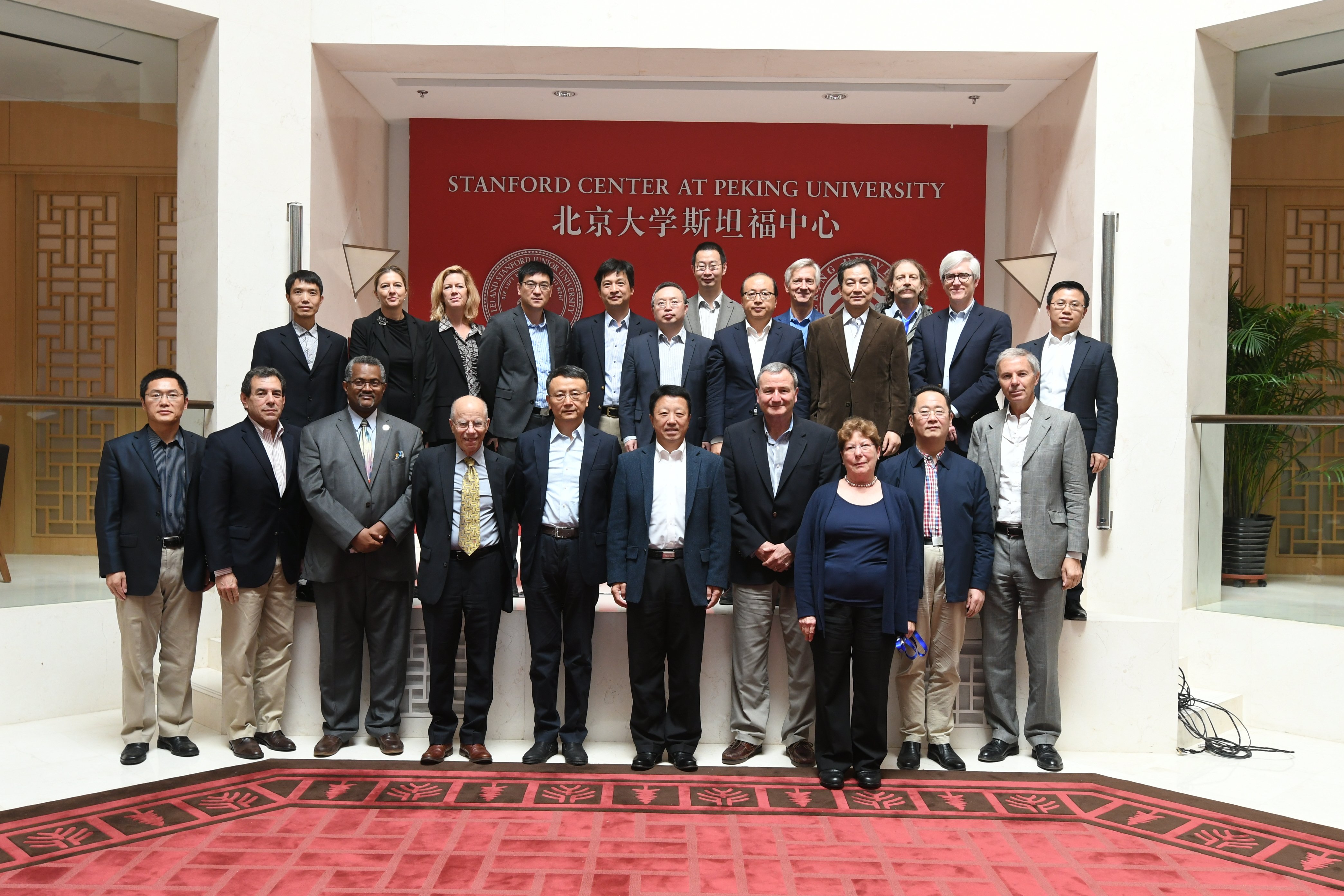
Following are several photos that capture scenes from the conference (with Karen Eggleston and Gi-Wook Shin; Takeo Hoshi; Dinsha Mistree and Yong Suk Lee; and several other conference participants). 

Gi-Wook Shin seated at table


Presenter speaks before monitor


Second speaker befre monitor


Hero Image
Asia Innovation 2018
All News button
1
-

This event is jointly sponsored by the Asia Health Policy Program and the Japan Program at the Walter H. Shorenstein Asia-Pacific Research Center (APARC).

Using unique individual-level panel data, we investigate whether preventive care triggered by health checkups is worth the cost. We exploit the fact that the health of individuals just below and above a clinical threshold is similar, whereas treatments differ according to the checkup signals they receive. For the general population, although people respond to health signals about diabetes by increasing utilization, we find no evidence that health outcomes improve after the index checkup. However, if we focus on high-risk individuals, physical measures to improve, and cost-per-life saved is comparable to conventional estimates of the value of a statistical life. This suggests that targeting programs to high-risk groups is essential.

Image
iizuka
Toshiaki Iizuka is Professor at Graduate School of Economics and Graduate School of Public Policy, the University of Tokyo. His research interests are in the field of health economics and industrial organization. He has written a number of articles on incentive and information in the health care markets, which appeared in leading economics journals, including American Economic Review, RAND Journal of Economics, and Journal of Health Economics. Dr. Iizuka served as Dean of Graduate School of Public Policy, the University of Tokyo, between 2016 and 2018. He also serves as Associate Editor for Journal of Health Economics (2019-), and is a recipient of Abe Fellowship (2018-2019). He holds a PhD in Economics from the University of California, Los Angeles, an MIA from Columbia University, and an ME and BE from the University of Tokyo.


RSVP required by 5PM on Tuesday, October 23, 2018

Philippines Conference Room Encina Hall, 3rd Floor 616 Serra Mall, Stanford, CA 94305
616 Serra StreetEncina Hall E301Stanford, CA94305-6055
0
toshiaki_iizuka.jpg Ph.D.

Toshiaki Iizuka is Professor at Graduate School of Public Policy and Graduate School of Economics, the University of Tokyo. Before joining the University of Tokyo in 2010, he taught at Vanderbilt University (2001-2005), Aoyama Gakuin University (2005-2009), and Keio University (2009-2010). He served as Dean of Graduate School of Public Policy, the University of Tokyo, between 2016 and 2018. He is a recipient of Abe Fellowship (2018-2019). 

His research interests are in the field of health economics and health policy. He has written a number of articles on incentive and information in the health care markets. His research articles have appeared in leading professional journals, including American Economic Review, RAND Journal of Economics, Journal of Health Economics, and Health Affairs, among others. Dr. Iizuka holds a PhD in Economics from the University of California, Los Angeles, an MIA from Columbia University, and an ME and BE from the University of Tokyo.
Visiting Scholar, Asia Health Policy Program at APARC
2018-2019 Visiting Scholar, APARC, Stanford University
Seminars
News Type
News
Date
Paragraphs

The Walter H. Shorenstein Asia-Pacific Research Center’s Global Affiliates Program is excited to welcome its new class of fellows to Stanford University:

  • Hiroto Akai , Ministry of Finance, Japan
  • Yasuhito Ando , Kozo Keikaku Engineering
  • Lizhong Chen, , SanJohn Capital Limited
  • Umesh Desai , Reliance Life Sciences
  • Jiazhong Fang , PetroChina
  • Yosuke Hatano , Shizuoka Prefectural Government
  • Junichiro Hirata , Hirata Holdings
  • Tetsuji Ito , Development Bank of Japan
  • Yangming Li , PetroChina
  • Akihisa Makino , Japan Patent Office
  • Yusuke Matsuda , Nippon Foundation
  • Ryoji Miyawaki , AAKEL Technologies
  • Akira Muto , Ministry of Foreign Affairs, Japan
  • Hiro Nishinaka , Ishin Co., Ltd.
  • Yuki Sakai , Mitsubishi Electric
  • Masahiro Shizu , Japan Air Self Defense Force
  • Ramachandra Siddappa , Reliance Life Sciences
  • Takanori Tomozawa , Ministry of Economy, Trade & Industry, Japan
  • Hayato Watanabe , Hamamatsu Shinkin Bank
  • Keisuke Yamasaki , The Asahi Shimbun
  • Kosuke Yokota , Future Corporation
 
Over the course of their year at Stanford University, fellows will audit classes, improve their English skills, and conduct individual research projects; at year's end, they will make a formal presentation on the findings from their research.
 
Throughout their time at the center, fellows have the opportunity to consult with Shorenstein APARC's scholars and attend events featuring visiting experts from around the world. Fellows will also participate in special events and site visits to gain a firsthand understanding of business, society, and culture in the United States.
Hero Image
2018-2019 Global Affiliates Program Fellows Rod Searcey
All News button
1
-

Image
pekida 440

In Malaysia, criminality is a highly political question, and that is mainly why local scholarship on the topic is rare. Yet political participation by outlaws and criminalized groups is not new. Begun in 2008, Dr. Lemière’s research explores uncharted territory: how criminality related to politics in semi-authoritarian Malaysia, with a focus on the ruling party (UMNO) from 2008 to 2018.  She shows how gangs have created umbrella (Malay) NGOs, like Pekida (shown here in caricature), to formalize their ties to political parties. For gangs, political militancy has become a business; political parties (mostly UMNO) have sub-contracted political actions and violence to such groups. Dr. Lemière’s research raises question regarding the nature of civil society and democratization, and offers a new perspective of ethno-religious controversies and clashes in the 20th and 21st centuries.

Sophie Lemière is a political anthropologist at Harvard’s Ash Center for Democracy in its program on Democracy in Hard Places. Her research examines the nexus between religion, politics, and criminality in a comparative perspective. She will be at Stanford in the fall before transferring to the National University of Singapore in the spring.

Dr. Lemière has held research positions in Singapore at the Asia Research Institute (NUS) and the S. Rajaratnam School of International Studies (NTU).  She has been a visiting fellow at the University of Sydney, Cornell, UC Berkeley, and Columbia. She received her PhD from Sciences-Po in Paris. Her dissertation was the first study on the political links between gangs and umbrella NGOs in Malaysia.  Her master’s research on apostasy controversies and Islamic civil society was awarded second prize for young scholars by the International Institute for the Study of Islam in the Modern World (1998-2008) in Leiden.

Dr. Lemière believes it is essential for academics to disseminate their research findings widely, especially in the countries they study. Accordingly, her publications have been written both general and academic readers within and beyond Malaysia. She is the editor of a series of books on “Malaysian Politics and People.” Misplaced Democracy was released in 2014.  Illusions of Democracy (2017) will be re-published in 2018, and a third volume is expected in 2019, when her monograph “Gangsters and Masters: Complicit Militancy and Authoritarian Politics” will also appear. She is currently working on a political biography of Malaysia’s current prime minister during his recent campaign: “The Last Game: Malaysian Politics through Mahathir’s Eyes.”

Dr. Lemière maintains a blog on Mediapart and contributes regularly to New Mandala, The Conversation, Le Monde, and Libération among other outlets.  She has also begun to develop several documentary film projects with French production companies, including a series on arts and politics. Her first film “9/43” featuring the Malaysian cartoonist Zunar was chosen one of the 25 best movies at the French short-film festival Infracourt in 2016.

Sophie Lemière 2018-19 Lee Kong Chian NUS-Stanford Fellow on Contemporary Southeast Asia
Seminars
-

Asia has achieved remarkable progress on economic development and poverty reduction over the past decades. It is now considered as the main driver of global economic growth and we are witnessing the shift of economic center of gravity toward Asia. Continued success is, however, not preordained or guaranteed. More specifically, the region has to manage several mega-challenges to realize the "Asian Century." These include remaining poverty incidence and increasing inequality, demographic changes, growing environmental pressure, climate change and disaster risk, rapid urbanization, and governance and institutional capacity concern. These increasingly complex challenges pressure Asian countries to take a more sustainable development path, moving away from more traditional development patterns. 

The world is experiencing various technological advancement —including digital and cloud technologies, big data, robotics, artificial intelligence, the internet of things, 3-D printing, blockchain, energy storage, and autonomous vehicles. These technologies will significantly change the way people live and also bring very broad and deep impact on economic and social development landscape. The progress and impacts of technological advancement may be different between developed and developing countries. Will disruptive technologies help developing countries in Asia and the Pacific to solve development challenges or harm their catch-up momentum? What are opportunities and risks posed by emerging technological changes to developing countries in that region? How will developing countries and the international development community prepare to fully harness technological advancements for sustainable development? These are some of the areas to be explored in this seminar.

Image
gilhong kim
Gilhong Kim is currently a visiting scholar in the Korea Program at Shorenstein APARC for the 2018 calendar year. Previously, he was Senior Director concurrently Chief Sector Officer of the Sustainable Development and Climate Change Department in Asian Development Bank (ADB). His research interests encompass technological development and impact on developing countries in Asia and the Pacific. Dr. Kim has more than 33 years of research and operational experience in country and regional development, sectoral strategies and operations covering clean energy, transport, water supply and sanitation, urban development, education, health and finance. Since 1996, Dr. Kim has worked for ADB in the areas of country economic assessment and country operational program development, corporate strategy and policy development, country field office head (in Lao PDR), sector operational strategy development, operational knowledge management, and promoted technology application and innovative approach.  Before joining ADB, he worked for Ministry of Finance in Korea for about 12 years in the areas of economic cooperation and international finance. He holds a PhD in economics from the University of Texas, Austin, and a BA in economics from Korea University in Korea. 

Philippines Conference Room Encina Hall, 3rd Floor 616 Serra Mall, Stanford, CA 94305


616 Serra StreetEncina Hall E301Stanford, CA94305-6055
0
gilhong_kim.jpg Ph.D.

Dr. Gilhong Kim joins the Walter H. Shorenstein Asia-Pacific Research Center for the 2018 year as visiting scholar.  He currently serves as the Senior Director and Chief Sector Officer of the Sustainable Development and Climate Change Department at the Asian Development Bank.  He will be conducting research on technological development and impact in the Asia-Pacific.

Visiting Scholar at APARC
<i>Visiting Scholar, Shorenstein APARC, Stanford University</i>
Seminars
-

China and the United States both have public needs that far outstrip the abilities of their governments alone to deliver.  Zeckhauser and Donahue will discuss their book (joint with Karen Eggleston) exploring an important, and perhaps surprising, shared feature of efforts by policymakers in China and the United States to forge prosperous, stable futures for their citizens:  public-private collaboration to accomplish some of each society’s most vital collective purposes. Collaborative governance entails private engagement in public tasks on terms of shared discretion. Zeckhauser and Donahue will discuss the two countries’ collaborative approaches to health policy and elder care, comparing and contrasting with approaches to other activities ranging from education and infrastructure to hosting the Olympics.

Image
zeckhauser richard

Richard Zeckhauser is the Frank P. Ramsey Professor of Political Economy, Kennedy School, Harvard University. He graduated from Harvard College (summa cum laude) and received his Ph.D. there. He is an elected fellow of the Econometric Society, the Institute of Medicine (National Academy of Sciences), and the American Academy of Arts and Sciences. In 2014, he was named a Distinguished Fellow of the American Economic Association. His contributions to decision theory and behavioral economics include the concepts of quality-adjusted life years (QALYs), status quo bias, betrayal aversion, and ignorance (states of the world unknown) as a complement to the categories of risk and uncertainty. Many of his policy investigations explore ways to promote the health of human beings, to help markets work more effectively, and to foster informed and appropriate choices by individuals and government agencies. Zeckhauser has published over 300 articles and several books.

Image
faculty donahue jack ms18 800x800

John D. Donahue is the Raymond Vernon Senior Lecturer in Public Policy, Kennedy School, Harvard University. He is also Faculty Chair of the Master in Public Policy (MPP) Program and the SLATE Curriculum Initiative Co-Chair for Cases and Curriculum. His teaching, writing, and research mostly deal with public sector reform and with the distribution of public responsibilities across levels of government and sectors of the economy, including extensive work with the HKS-HBS joint degree program. He has written or edited twelve books, most recently Collaborative Governance (with Richard J. Zeckhauser, 2011) and Ports in a Storm (with Mark H. Moore, 2012). He served in the first Clinton Administration as an Assistant Secretary and then as Counselor to the Secretary of Labor. Donahue has consulted for business and governmental organizations, including the National Economic Council, the World Bank, and the RAND Corporation, and serves as a trustee or advisor to several nonprofits. A native of Indiana, he holds a BA from Indiana University and an MPP and PhD from Harvard.

Philippines Conference Room Encina Hall, 3rd Floor 616 Serra Mall, Stanford, CA 94305
Richard Zeckhauser Frank Plumpton Ramsey Professor of Political Economy, Kennedy School, Harvard University
John Donahue Raymond Vernon Senior Lecturer in Public Policy, Kennedy School, Harvard University
Seminars
-

The event has reached the maximum capacity of the room. We are no longer accepting RSVPs.

The world is aging rapidly, and China’s older population is growing faster than in any other country. This demographic transition is a defining issue of our time, and it poses unprecedented challenges for China due to increasing demand for health care, long-term care and other social services.

The health system has not yet adapted to the shift in the disease burden and health care needs driven by the aging population. Although the government has introduced three public health insurance programs since 1998, the benefit packages provide limited coverage for outpatient management and care of NCDs and chronic conditions. In addition, there has been a lack of investment in training geriatric medicine professionals and incorporating geriatric principles into clinical practice.

The higher burden of total cost of health and long-term care is inevitable. How do we tackle these challenges? We will need more innovative approaches to develop multi-sector and integrated solutions to issues concerning the aging population. While the system-level efforts, such as social protection system and universal health coverage, continue to be led by the government, Public-Private Partnerships (PPP) will play a catalytic role in adding capacity to ensure the sustainability of such systems through advancement of technology, human resources and innovation. There will be an increasing need for defining the conditions and application of PPPs that are compatible with adjustments to healthcare, pension and retirement policies and  labor and capital markets. More importantly, political and public will is key to successful implementation of PPPs.

This workshop will feature PPP Initiative Ltd.’s recent efforts to develop PPP solutions for the aging population, followed by a discussion with experts from Beijing and participants on how to move from awareness to action in China. 

Agenda

5:00 - 5:30 Keynote speech by Alan M. Trager

5:30 - 5:40 Discussion with two experts from Beijing

Dr. Gordon Liu, PKU Yangtze River Scholar Professor of Economics, Peking University National School of Development (NSD) &  Director, PKU China Center for Health Economic Research (CCHER)

Dr. Linlin Hu, Associate Professor, Executive Chair, Department of Health Policy and Management, School of Public Health, Peking Union Medical College

5:40 - 6:00 Question & Answers moderated by Alan M. Trager


<!-- /* Font Definitions */ @font-face {font-family:Times; panose-1:2 0 5 0 0 0 0 0 0 0; mso-font-charset:0; mso-generic-font-family:auto; mso-font-pitch:variable; mso-font-signature:3 0 0 0 1 0;} @font-face {font-family:"MS 明朝"; mso-font-charset:78; mso-generic-font-family:auto; mso-font-pitch:variable; mso-font-signature:-536870145 1791491579 18 0 131231 0;} @font-face {font-family:"Cambria Math"; panose-1:2 4 5 3 5 4 6 3 2 4; mso-font-charset:0; mso-generic-font-family:auto; mso-font-pitch:variable; mso-font-signature:-536870145 1107305727 0 0 415 0;} @font-face {font-family:Cambria; panose-1:2 4 5 3 5 4 6 3 2 4; mso-font-charset:0; mso-generic-font-family:auto; mso-font-pitch:variable; mso-font-signature:-536870145 1073743103 0 0 415 0;} /* Style Definitions */ p.MsoNormal, li.MsoNormal, div.MsoNormal {mso-style-unhide:no; mso-style-qformat:yes; mso-style-parent:""; margin:0in; margin-bottom:.0001pt; mso-pagination:widow-orphan; font-size:12.0pt; font-family:Cambria; mso-ascii-font-family:Cambria; mso-ascii-theme-font:minor-latin; mso-fareast-font-family:"MS 明朝"; mso-fareast-theme-font:minor-fareast; mso-hansi-font-family:Cambria; mso-hansi-theme-font:minor-latin; mso-bidi-font-family:"Times New Roman"; mso-bidi-theme-font:minor-bidi; mso-fareast-language:JA;} p {mso-style-noshow:yes; mso-style-priority:99; mso-margin-top-alt:auto; margin-right:0in; mso-margin-bottom-alt:auto; margin-left:0in; mso-pagination:widow-orphan; font-size:10.0pt; font-family:Times; mso-fareast-font-family:"MS 明朝"; mso-fareast-theme-font:minor-fareast; mso-bidi-font-family:"Times New Roman";} .MsoChpDefault {mso-style-type:export-only; mso-default-props:yes; font-size:10.0pt; mso-ansi-font-size:10.0pt; mso-bidi-font-size:10.0pt; font-family:Cambria; mso-ascii-font-family:Cambria; mso-ascii-theme-font:minor-latin; mso-fareast-font-family:"MS 明朝"; mso-fareast-theme-font:minor-fareast; mso-hansi-font-family:Cambria; mso-hansi-theme-font:minor-latin; mso-bidi-font-family:"Times New Roman"; mso-bidi-theme-font:minor-bidi; mso-fareast-language:JA;} @page WordSection1 {size:8.5in 11.0in; margin:1.0in 1.25in 1.0in 1.25in; mso-header-margin:.5in; mso-footer-margin:.5in; mso-paper-source:0;} div.WordSection1 {page:WordSection1;} -->  <!-- /* Font Definitions */ @font-face {font-family:Times; panose-1:2 0 5 0 0 0 0 0 0 0; mso-font-charset:0; mso-generic-font-family:auto; mso-font-pitch:variable; mso-font-signature:3 0 0 0 1 0;} @font-face {font-family:"MS 明朝"; mso-font-charset:78; mso-generic-font-family:auto; mso-font-pitch:variable; mso-font-signature:-536870145 1791491579 18 0 131231 0;} @font-face {font-family:"Cambria Math"; panose-1:2 4 5 3 5 4 6 3 2 4; mso-font-charset:0; mso-generic-font-family:auto; mso-font-pitch:variable; mso-font-signature:-536870145 1107305727 0 0 415 0;} @font-face {font-family:Cambria; panose-1:2 4 5 3 5 4 6 3 2 4; mso-font-charset:0; mso-generic-font-family:auto; mso-font-pitch:variable; mso-font-signature:-536870145 1073743103 0 0 415 0;} /* Style Definitions */ p.MsoNormal, li.MsoNormal, div.MsoNormal {mso-style-unhide:no; mso-style-qformat:yes; mso-style-parent:""; margin:0in; margin-bottom:.0001pt; mso-pagination:widow-orphan; font-size:12.0pt; font-family:Cambria; mso-ascii-font-family:Cambria; mso-ascii-theme-font:minor-latin; mso-fareast-font-family:"MS 明朝"; mso-fareast-theme-font:minor-fareast; mso-hansi-font-family:Cambria; mso-hansi-theme-font:minor-latin; mso-bidi-font-family:"Times New Roman"; mso-bidi-theme-font:minor-bidi; mso-fareast-language:JA;} p {mso-style-noshow:yes; mso-style-priority:99; mso-margin-top-alt:auto; margin-right:0in; mso-margin-bottom-alt:auto; margin-left:0in; mso-pagination:widow-orphan; font-size:10.0pt; font-family:Times; mso-fareast-font-family:"MS 明朝"; mso-fareast-theme-font:minor-fareast; mso-bidi-font-family:"Times New Roman";} .MsoChpDefault {mso-style-type:export-only; mso-default-props:yes; font-size:10.0pt; mso-ansi-font-size:10.0pt; mso-bidi-font-size:10.0pt; font-family:Cambria; mso-ascii-font-family:Cambria; mso-ascii-theme-font:minor-latin; mso-fareast-font-family:"MS 明朝"; mso-fareast-theme-font:minor-fareast; mso-hansi-font-family:Cambria; mso-hansi-theme-font:minor-latin; mso-bidi-font-family:"Times New Roman"; mso-bidi-theme-font:minor-bidi; mso-fareast-language:JA;} @page WordSection1 {size:8.5in 11.0in; margin:1.0in 1.25in 1.0in 1.25in; mso-header-margin:.5in; mso-footer-margin:.5in; mso-paper-source:0;} div.WordSection1 {page:WordSection1;} --> 

Image
alantrager

Alan M. Trager is the Founder and President of the PPP Initiative Ltd. (pppinitiative.org), where he leads an institutional collaborative effort using public-private partnerships to address healthcare issues in Asia.  He is also the Principal Researcher of the PPP Healthcare Case Study Program, an independent research project managed by PPP Initiative Ltd., with financial support from Amgen Inc; Technical Expert, WHO Independent High-level Commission on NCDs; and Global Expert, Global Initiative on Health and the Economy, USCC.

Mr. Trager serves as Chief Specialist, International, at the Tsinghua University Center for PPP Research (TUPPP) in Beijing. Trager is the only foreign Chief Specialist at Tsinghua University.  He was a Senior Research Professor and Director, PPP Initiative, John Hopkins SAIS before forming the PPP Initiative.


Presentation
Download pdf

Highly Immersive Classroom

Stanford Graduate School of Business

Knight Management Center 
655 Knight Way, Basement 
Stanford, CA 94305-7298

Alan M. Trager Founder and President of the PPP Initiative Ltd
Workshops
-

Recent scholarship suggests that, under authoritarian regimes, quasi-democratic institutions such as elections and legislatures—the velvet gloves of autocratic rule—actually enable political stability and economic growth. The political economies of China and Vietnam are indeed remarkably stable and dynamic, and compared with China’s ostensibly democratic institutions, those in Vietnam are open and raucous. That makes Vietnam a likely place to find election and legislatures performing their hypothetically salutary functions.  But are they?

Even in Vietnam, Prof. Schuler will argue, the legislature’s main function is to convey regime strength and cow possible opposition.  Using evidence drawn from more than ten years of fieldwork, survey research, and close readings of legislative debates and the debaters’ lives, he finds that electoral and legislative activity reflect intra-party debates rather than genuine citizen opinion. His results should temper expectations that such institutions can serve either as safety valves for public discontent or as enablers of tangibly better governance. Single-party legislatures are more accurately seen as propaganda tools that reduce dissent while increasing disaffection. That said, Schuler will acknowledge that opponents of authoritarian rule may manage, under certain conditions, to repurpose seemingly democratic institutions toward undermining the regime whose longevity they were developed to prolong.

Image
schuler pic
Paul Schuler is an assistant professor at the University of Arizona, where he studies Southeast Asian politics, Vietnamese politics, and authoritarian institutions. He guest-lectures and publishes widely. His latest article is “Position Taking or Position Ducking? A Theory of Public Debate in Single-Party Legislatures,” Comparative Political Studies (March 2018). Earlier scholarship has appeared in the American Political Science Review and Comparative Politics, among other outlets. He is fluent in Vietnamese and has served as a UNDP consultant in Vietnam. His political science doctorate was earned with distinction at the University of California, San Diego.


Philippines Conference Room
Encina Hall, 3rd Floor
616 Serra Street, Stanford, CA 94305

Shorenstein APARC616 Serra StreetEncina Hall E301Stanford, CA 94305-6055
0
paul_schuler.jpg Ph.D.

Paul Schuler joins the Walter H. Shorenstein Asia-Pacific Research Center as a Lee Kong Chian Southeast Asia Fellow for 2018 from the University of Arizona's School of Government and Public Policy where he is an assistant professor. 

His research focuses on institutions and public opinion within authoritarian regimes, with a particular focus on Vietnam. During his fellowship, he will be completing a book project on the evolution of the Vietnam National Assembly since 1986, which he compares to the Chinese National People's Congress. During his fellowship, he will also begin projects examining public support in Vietnam for climate change mitigation policies as well as other research on the role of personality in determining regime support. For more information on these projects, see his website: www.paulschuler.me.

Schuler's other work has appeared in top-ranking journals such as American Political Science Review, Legislative Studies Quarterly, Comparative Political Studies, and the Journal of East Asian Studies. He holds a Ph.D in political science from the University of California, San Diego. 

2018-2019 Lee Kong Chian NUS-Stanford Fellow on Contemporary Southeast Asia, Visiting Scholar
2014-2015 Shorenstein Postdoctoral Fellow on Contemporary on Contemporary Asia
2018-19 Lee Kong Chian NUS-Stanford Fellow on Contemporary Southeast Asia
Seminars
News Type
News
Date
Paragraphs

The Walter H. Shorenstein Asia-Pacific Research Center (Shorenstein APARC) is excited to announce that its Corporate Affiliates Program has been renamed the Global Affiliates Program effective September 1, 2018.

The new name reflects the program’s evolution over the course of its history. In particular, it more accurately describes the increasingly diverse base of Asian organizations that partner with APARC as affiliate members. Our affiliates span a broad continuum including governmental agencies, nonprofit organizations, and for-profit establishments.

“The network of organizations supporting the affiliates program has expanded steadily since the program’s inception in 1982,” says Global Affiliates Program Manager Denise Masumoto. “The new name captures the breadth and depth of those partnerships, which was important for us to recognize.”

Each year, the Global Affiliates Program hosts at APARC a cohort of qualified personnel nominated by our affiliate members, who send their talent to Stanford as visiting fellows for a year of research and enrichment. Global Affiliate visiting fellows get involved in the many aspects of research and education at APARC and Stanford, and contribute to the intellectual exchange at the Center and the University at large. The Global Affiliates Program is looking forward to welcoming 21 visiting fellows for the 2018-19 academic year.

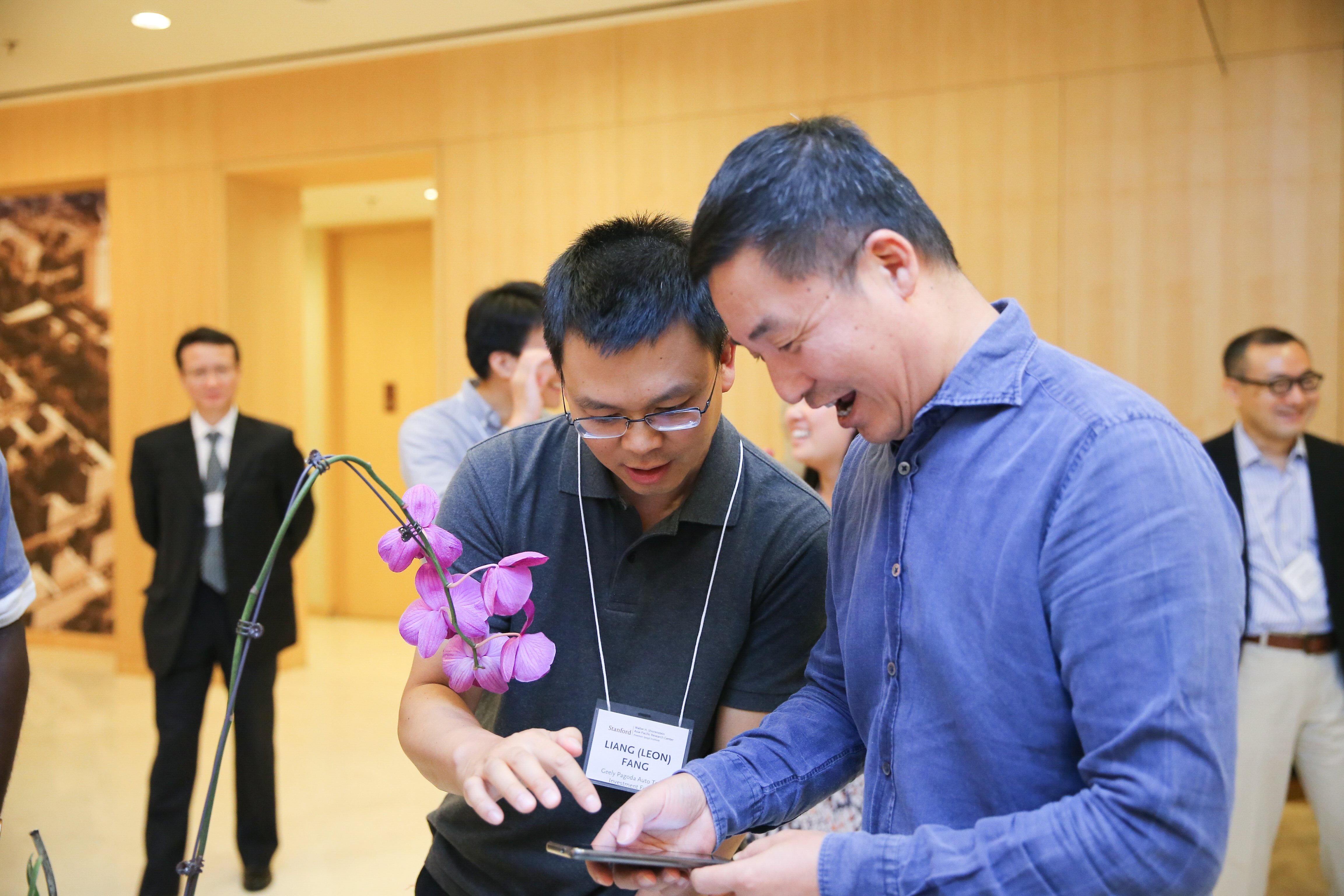
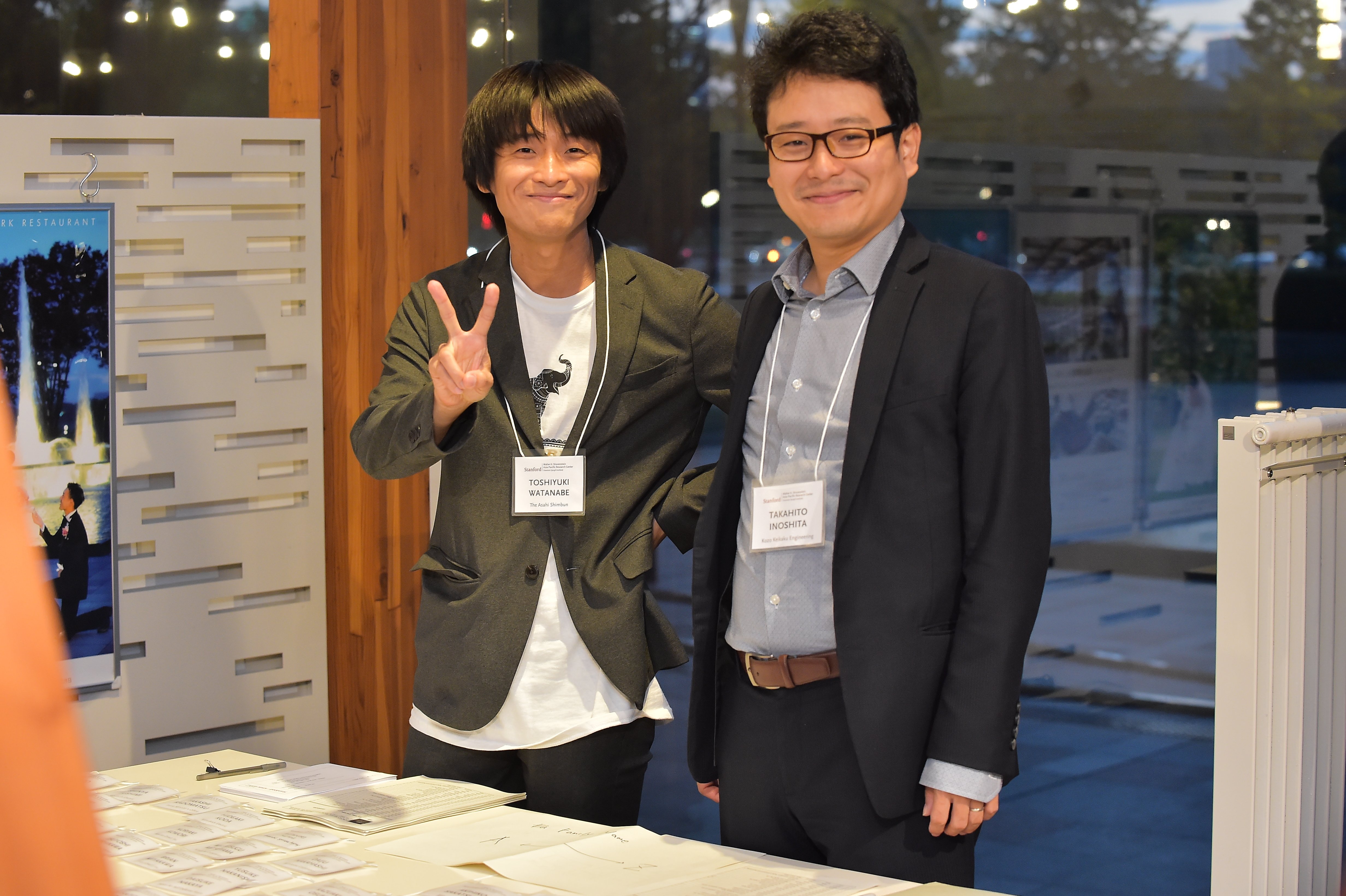
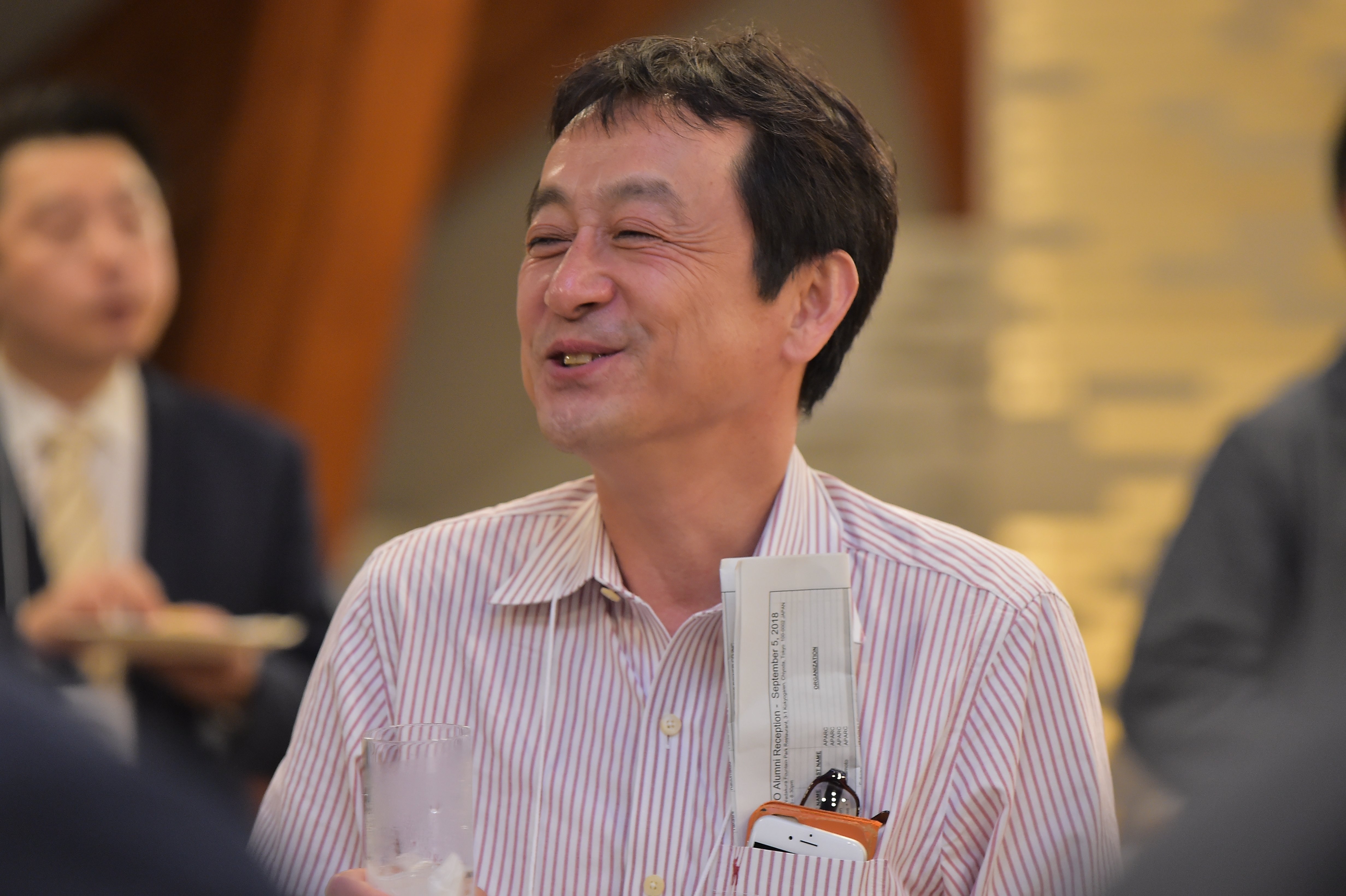
Coinciding with the announcement of the program’s new name, APARC has invited Global Affiliate alumni to join us for special receptions held in Tokyo, on September 5th, and in Beijing, on September 10th. Both events will provide an opportunity for former visiting fellows to gather with APARC faculty and friends for an evening of reconnecting, networking, and reminiscing on their shared experiences.

We invite you to check out our website for updates on both alumni receptions and on our 2018-19 Global Affiliate visiting fellows. For a monthly roundup of the latest research, publications, and insights from APARC experts sign up for our newsletter.
 

Hero Image
APARC Global Affiliates Logo
All News button
1
Subscribe to Asia-Pacific