The digital transition of the world economy is now entering a phase of broad and deep societal impact. While there is one overall transition, there are many different sectoral transformations, from health and legal services to tax reports and taxi rides, as well as a rising number of transversal trends and policy issues, from widespread precarious employment and privacy concerns to market monopoly and cybercrime. This Research Handbook offers a rich and interdisciplinary synthesis of some of the recent research on the digital transformations currently under way.
This comprehensive study contains chapters covering sectoral and transversal analyses, all of which are specially commissioned and include cutting-edge research. The contributions featured are global, spanning four continents and seven different countries, as well as interdisciplinary, including experts in economics, sociology, law, finance, urban planning and innovation management. The digital transformations discussed are fertile ground for researchers, as established laws and regulations, organizational structures, business models, value networks and workflow routines are contested and displaced by newer alternatives.
This book will be equally pertinent to three constituencies: academic researchers and graduate students, practitioners in various industrial and service sectors and policy makers.
Chapter 17 of this book, The Impact of Digital Technologies on Innovation Policy, was written by Shorenstein APARC Research Scholar Kenji Kushida.
Highly readable yet deeply researched, this book serves as an essential guide to the many ways in which Japan has risen to become one of the world's most creative and innovative societies.
• Challenges conventional views of Japan as mired in two unproductive "lost decades" by documenting the myriad ways in which the nation has embraced creativity and innovation
• Describes the ways in which Japan has transformed our lives and explains the guiding principles of one of the world's least understood, most vibrantly creative societies
• Explains how Japan, as the world's first non-Western developed nation, can inspire other nations at a time when America's economic and social models are being challenged as never before
• Argues that, in a world that seems to have lost its direction in the face of threats ranging from terrorism to angry populism, Japan can assume greater leadership in preserving global peace and prosperity
Chapter 4 of this book, Departing from Silicon Valley: Japan's New Startup Ecosystem, was written by Shorenstein APARC Research Scholar Kenji Kushida.
Stanford University’s Walter H. Shorenstein Asia-Pacific Research Center (Shorenstein APARC) is pleased to announce that The Washington Post’s Beijing Bureau Chief Anna Fifield is the 2018 recipient of the Shorenstein Journalism Award. The award, given annually by APARC, is conferred upon a journalist who has produced outstanding reporting on critical issues affecting Asia and has contributed significantly to greater understanding of the region.
Fifield has been selected in recognition of her exceptional work over a long career reporting on the Koreas, as well as on Japan and periodically other parts of Asia. She will receive the award at a special ceremony at Stanford on November 14, 2018. On that day, she will also headline an APARC-hosted panel discussion focusing on how North Korea is, and isn’t, changing under Kim Jong Un.
"We are delighted to honor Anna Fifield with the Shorenstein journalism award," says Gi-Wook Shin, Shorenstein APARC director. "Drawing on her knowledge of Asian societies and her remarkable ability to communicate insights to audiences all around the world, Anna exemplifies how crucial it is to get the complexities of Asia right and the profound role of journalism in shaping public and decision maker approaches to our counterparts in the region. Walter Shorenstein, APARC's benefactor and a champion of Asian-American relations, understood clearly that role. We are committed to upholding Walter's legacy with this award."
As the Post's Tokyo bureau chief from 2014 to 2018, Fifield’s journalism focused primarily on Japan and the Koreas. During this period, she particularly concentrated on North Korea, working to shed light on the lives of ordinary people there and on how the regime managed to stay in power.
Fifield started as a journalist in her home country of New Zealand, then for 13 years was a correspondent for the Financial Times , covering nearly 20 countries and reporting from, among other places, Sydney, Seoul, Pyongyang, Tehran, Beirut, and finally Washington D.C., where she was White House correspondent and covered the 2012 President election campaign. Prior to joining The Washington Post, Fifield was a fellow at the Nieman Foundation for Journalism at Harvard University, where she studied how change happens in closed societies.
“For many years, Anna Fifield has been the premier Western reporter on Korea, setting the standard for coverage of a story that occupies our front pages," notes Daniel Sneider, a member of the jury for the Shorenstein Award and a long-time foreign correspondent. "But she has also broadened her Asian expertise, as the Tokyo bureau chief for the Post and now in Beijing. She moves easily across the digital as well as the print space and is a crusader for diversity in sourcing. Anna Fifield, in short, is the very definition of a journalist in our modern era.”
Sixteen journalists have previously received the Shorenstein award, which carries a cash prize of $10,000. Among the award’s recent recipients are Siddharth Varadarajan, founding editor of The Wire and former editor of the The Hindu; Ian Johnson, a veteran journalist with a focus on Chinese society, religion, and history; and Yoichi Funabashi, former editor-in-chief of the Asahi Shimbun.
RSVPs for the Shorenstein award panel discussion are requested.
About the 2018 Shorenstein Journalism Award Panel Discussion and Award Ceremony
Shorenstein Journalism Award winner Anna Fifield will deliver a keynote speech and join a panel discussion focusing on how North Korea is, and isn’t, changing under Kim Jong Un. The panel includes Andray Abrahamian, the 2018-19 Koret Fellow in the Korea Program at Shorenstein APARC, and Barbara Demick, New York correspondent of the Los Angeles Times, former head of the bureaus in Beijing and Seoul, and the 2012 recipient of the Shorenstein Journalism Award. The panel will be chaired by Yong Suk Lee, SK Center Fellow at Stanford’s Freeman Spogli Institute for International Studies and Deputy Director of the Korea Program at APARC.
November 14, 2018, 12:00 – 1:30 p.m. (PDT)
Fisher Conference Center at the Frances C. Arrillaga Alumni Center, 326 Galvez St, Stanford, CA 94305
The panel discussion is open to the public. The award ceremony will take place in the evening for a private audience.
The Shorenstein Journalism Award, which carries a cash prize of $10,000, honors a journalist not only for a distinguished body of work, but also for the particular way in which that work has helped audiences around the world to understand the complexities of Asia. The award, established in 2002, was named after Walter H. Shorenstein, the philanthropist, activist, and businessman who endowed two institutions that are focused respectively on Asia and on the press: the Walter H. Shorenstein Asia-Pacific Research Center (Shorenstein APARC) in the Freeman Spogli Institute at Stanford University, and the Joan Shorenstein Center on the Press, Politics, and Public Policy in the Kennedy School of Government at Harvard University. In 2010, Shorenstein APARC expanded the scope of the award that since then has recognized Asian journalists who, in addition to their professional excellence and contribution to knowledge of Asia, have helped defend and build a free media in their home countries.
Media contact: Noa Ronkin, Associate Director for Communications and External Relations noa.ronkin@stanford.edu (650) 724-5667
Artificial Intelligence (AI) is rapidly becoming one of the underlying drivers of the next wave of industrial transformations. There is every reason to believe that we are on the cusp of a sea change in how human activities and decision-making are transformed by abundant computing power. This research note will provide the basis for understanding the conceptual building blocks and paradigmatic examples of how the development of AI is accelerating, and how its deployment will be transformative.
How do universities in China and Singapore experiment with new types of learning in their quest to promote innovation and entrepreneurship? Is there a need to transform the traditional university into an “entrepreneurial university”? “What are the recent developments in and outstanding challenges to financing innovation in China and Japan? And what is the government’s role in promoting innovative entrepreneurship (as opposed to small- and medium-size enterprises) under the shadow of big business in South Korea?
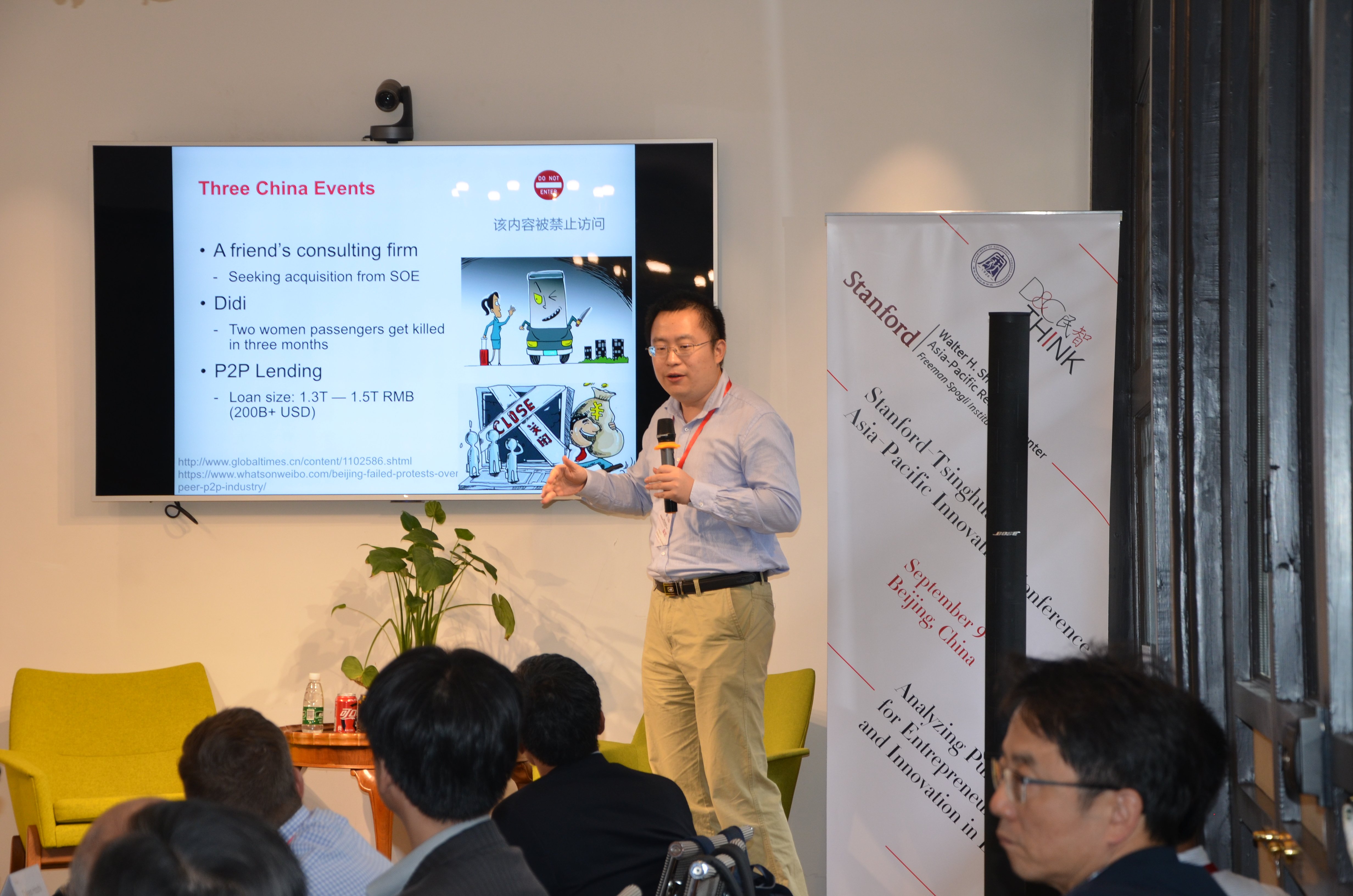
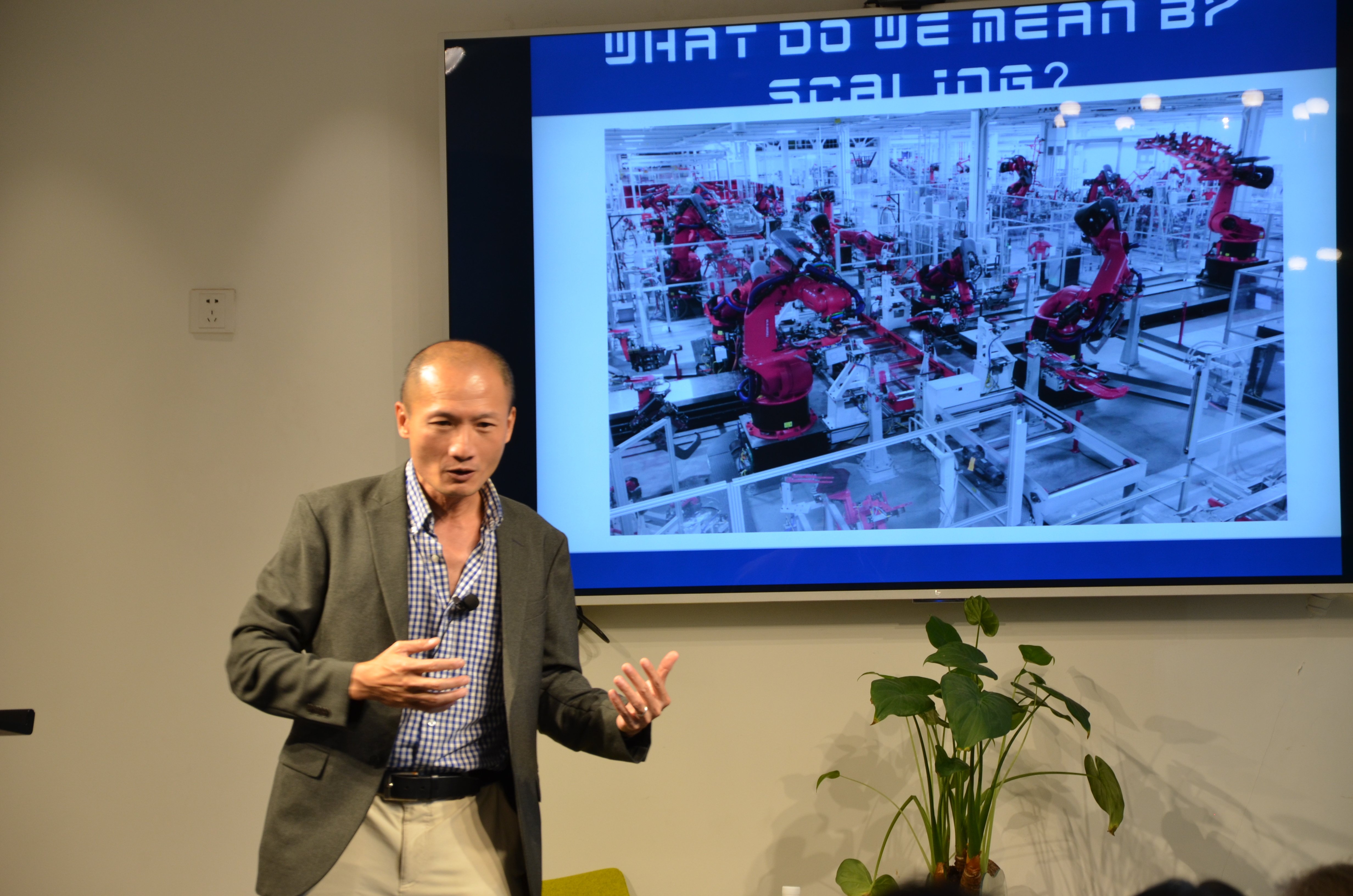
These are some of the questions discussed at the second annual conference of APARC’s Stanford Asia-Pacific Innovation research project. The two-day conference, co-hosted jointly with Tsinghua University and titled “Analyzing Public Policies for Entrepreneurship and Innovation in East Asia,” was held on September 9-10, 2018 at the Beijing-based D&C Think Tank. It brought together scholars from the United States and Asia to explore education policies and financial policies conducive to accelerating innovation and developing a more entrepreneurial workforce in East Asia. Participants focused on entrepreneurship education in universities and on policy interventions to promote innovation financing. The conference papers will be published in an edited volume that will serve as a valuable reference for scholars and policymakers working to develop human capital for innovation in Asia.
The Stanford Asia-Pacific Innovation project is a multi-year, Center-wide effort to produce academic and policy research from comparative, regional perspectives into how Asian nations are responding to the imperative to develop the skills, competencies, long-term health, and systems that make up a platform for innovation in the twenty-first century.
The project’s lead researchers—Karen Eggleston, Takeo Hoshi, Yong Suk Lee, and Gi-Wook Shin—are preparing for publication the findings from the project’s first annual conference that was held at Stanford last year and focused on the organization of business and innovation clusters in East Asia. In 2019, the project will turn to examining the intersection of aging, technology, and innovation, with a third conference to be held in South Korea next summer.
Following are several photos that capture scenes from the conference (with Karen Eggleston and Gi-Wook Shin; Takeo Hoshi; Dinsha Mistree and Yong Suk Lee; and several other conference participants).
This event is jointly sponsored by the Asia Health Policy Program and the Japan Program at the Walter H. Shorenstein Asia-Pacific Research Center (APARC).
Using unique individual-level panel data, we investigate whether preventive care triggered by health checkups is worth the cost. We exploit the fact that the health of individuals just below and above a clinical threshold is similar, whereas treatments differ according to the checkup signals they receive. For the general population, although people respond to health signals about diabetes by increasing utilization, we find no evidence that health outcomes improve after the index checkup. However, if we focus on high-risk individuals, physical measures to improve, and cost-per-life saved is comparable to conventional estimates of the value of a statistical life. This suggests that targeting programs to high-risk groups is essential.
Image
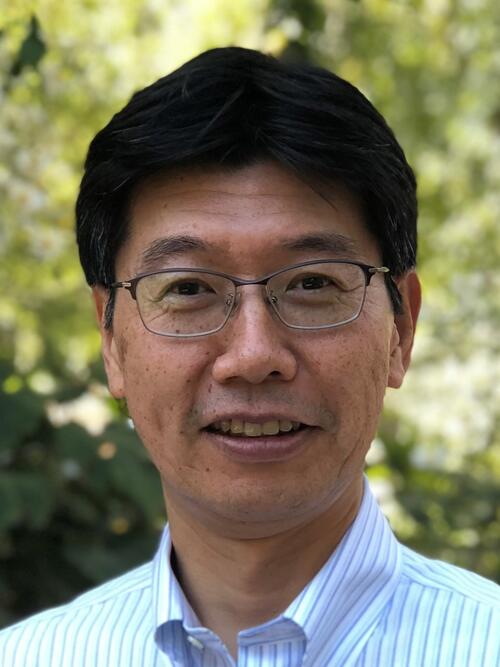
Toshiaki Iizuka is Professor at Graduate School of Economics and Graduate School of Public Policy, the University of Tokyo. His research interests are in the field of health economics and industrial organization. He has written a number of articles on incentive and information in the health care markets, which appeared in leading economics journals, including American Economic Review, RAND Journal of Economics, and Journal of Health Economics. Dr. Iizuka served as Dean of Graduate School of Public Policy, the University of Tokyo, between 2016 and 2018. He also serves as Associate Editor for Journal of Health Economics (2019-), and is a recipient of Abe Fellowship (2018-2019). He holds a PhD in Economics from the University of California, Los Angeles, an MIA from Columbia University, and an ME and BE from the University of Tokyo.
616 Serra StreetEncina Hall E301Stanford, CA94305-6055
0
tiizuka@stanford.edu
toshiaki_iizuka.jpg
Ph.D.
Toshiaki Iizuka is Professor at Graduate School of Public Policy and Graduate School of Economics, the University of Tokyo. Before joining the University of Tokyo in 2010, he taught at Vanderbilt University (2001-2005), Aoyama Gakuin University (2005-2009), and Keio University (2009-2010). He served as Dean of Graduate School of Public Policy, the University of Tokyo, between 2016 and 2018. He is a recipient of Abe Fellowship (2018-2019).
His research interests are in the field of health economics and health policy. He has written a number of articles on incentive and information in the health care markets. His research articles have appeared in leading professional journals, including American Economic Review, RAND Journal of Economics, Journal of Health Economics, and Health Affairs, among others. Dr. Iizuka holds a PhD in Economics from the University of California, Los Angeles, an MIA from Columbia University, and an ME and BE from the University of Tokyo.
Visiting Scholar, Asia Health Policy Program at APARC
2018-2019 Visiting Scholar, APARC, Stanford University
The Walter H. Shorenstein Asia-Pacific Research Center’s Global Affiliates Program is excited to welcome its new class of fellows to Stanford University:
Hiroto Akai , Ministry of Finance, Japan
Yasuhito Ando , Kozo Keikaku Engineering
Lizhong Chen, , SanJohn Capital Limited
Umesh Desai , Reliance Life Sciences
Jiazhong Fang , PetroChina
Yosuke Hatano , Shizuoka Prefectural Government
Junichiro Hirata , Hirata Holdings
Tetsuji Ito , Development Bank of Japan
Yangming Li , PetroChina
Akihisa Makino , Japan Patent Office
Yusuke Matsuda , Nippon Foundation
Ryoji Miyawaki , AAKEL Technologies
Akira Muto , Ministry of Foreign Affairs, Japan
Hiro Nishinaka , Ishin Co., Ltd.
Yuki Sakai , Mitsubishi Electric
Masahiro Shizu , Japan Air Self Defense Force
Ramachandra Siddappa , Reliance Life Sciences
Takanori Tomozawa , Ministry of Economy, Trade & Industry, Japan
Hayato Watanabe , Hamamatsu Shinkin Bank
Keisuke Yamasaki , The Asahi Shimbun
Kosuke Yokota , Future Corporation
Over the course of their year at Stanford University, fellows will audit classes, improve their English skills, and conduct individual research projects; at year's end, they will make a formal presentation on the findings from their research.
Throughout their time at the center, fellows have the opportunity to consult with Shorenstein APARC's scholars and attend events featuring visiting experts from around the world. Fellows will also participate in special events and site visits to gain a firsthand understanding of business, society, and culture in the United States.
In Malaysia, criminality is a highly political question, and that is mainly why local scholarship on the topic is rare. Yet political participation by outlaws and criminalized groups is not new. Begun in 2008, Dr. Lemière’s research explores uncharted territory: how criminality related to politics in semi-authoritarian Malaysia, with a focus on the ruling party (UMNO) from 2008 to 2018. She shows how gangs have created umbrella (Malay) NGOs, like Pekida (shown here in caricature), to formalize their ties to political parties. For gangs, political militancy has become a business; political parties (mostly UMNO) have sub-contracted political actions and violence to such groups. Dr. Lemière’s research raises question regarding the nature of civil society and democratization, and offers a new perspective of ethno-religious controversies and clashes in the 20th and 21st centuries.
Sophie Lemière is a political anthropologist at Harvard’s Ash Center for Democracy in its program on Democracy in Hard Places. Her research examines the nexus between religion, politics, and criminality in a comparative perspective. She will be at Stanford in the fall before transferring to the National University of Singapore in the spring.
Dr. Lemière has held research positions in Singapore at the Asia Research Institute (NUS) and the S. Rajaratnam School of International Studies (NTU). She has been a visiting fellow at the University of Sydney, Cornell, UC Berkeley, and Columbia. She received her PhD from Sciences-Po in Paris. Her dissertation was the first study on the political links between gangs and umbrella NGOs in Malaysia. Her master’s research on apostasy controversies and Islamic civil society was awarded second prize for young scholars by the International Institute for the Study of Islam in the Modern World (1998-2008) in Leiden.
Dr. Lemière believes it is essential for academics to disseminate their research findings widely, especially in the countries they study. Accordingly, her publications have been written both general and academic readers within and beyond Malaysia. She is the editor of a series of books on “Malaysian Politics and People.” Misplaced Democracy was released in 2014. Illusions of Democracy (2017) will be re-published in 2018, and a third volume is expected in 2019, when her monograph “Gangsters and Masters: Complicit Militancy and Authoritarian Politics” will also appear. She is currently working on a political biography of Malaysia’s current prime minister during his recent campaign: “The Last Game: Malaysian Politics through Mahathir’s Eyes.”
Dr. Lemière maintains a blog on Mediapart and contributes regularly to New Mandala, The Conversation, Le Monde, and Libération among other outlets. She has also begun to develop several documentary film projects with French production companies, including a series on arts and politics. Her first film “9/43” featuring the Malaysian cartoonist Zunar was chosen one of the 25 best movies at the French short-film festival Infracourt in 2016.
Sophie Lemière
2018-19 Lee Kong Chian NUS-Stanford Fellow on Contemporary Southeast Asia
Asia has achieved remarkable progress on economic development and poverty reduction over the past decades. It is now considered as the main driver of global economic growth and we are witnessing the shift of economic center of gravity toward Asia. Continued success is, however, not preordained or guaranteed. More specifically, the region has to manage several mega-challenges to realize the "Asian Century." These include remaining poverty incidence and increasing inequality, demographic changes, growing environmental pressure, climate change and disaster risk, rapid urbanization, and governance and institutional capacity concern. These increasingly complex challenges pressure Asian countries to take a more sustainable development path, moving away from more traditional development patterns.
The world is experiencing various technological advancement —including digital and cloud technologies, big data, robotics, artificial intelligence, the internet of things, 3-D printing, blockchain, energy storage, and autonomous vehicles. These technologies will significantly change the way people live and also bring very broad and deep impact on economic and social development landscape. The progress and impacts of technological advancement may be different between developed and developing countries. Will disruptive technologies help developing countries in Asia and the Pacific to solve development challenges or harm their catch-up momentum? What are opportunities and risks posed by emerging technological changes to developing countries in that region? How will developing countries and the international development community prepare to fully harness technological advancements for sustainable development? These are some of the areas to be explored in this seminar.
Image
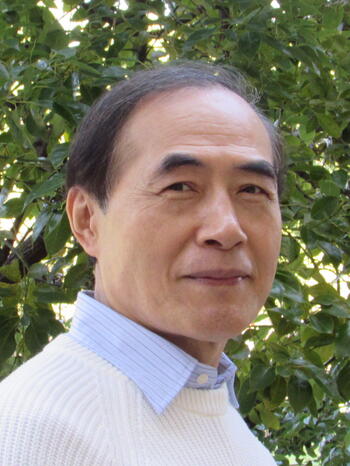
Gilhong Kim is currently a visiting scholar in the Korea Program at Shorenstein APARC for the 2018 calendar year. Previously, he was Senior Director concurrently Chief Sector Officer of the Sustainable Development and Climate Change Department in Asian Development Bank (ADB). His research interests encompass technological development and impact on developing countries in Asia and the Pacific. Dr. Kim has more than 33 years of research and operational experience in country and regional development, sectoral strategies and operations covering clean energy, transport, water supply and sanitation, urban development, education, health and finance. Since 1996, Dr. Kim has worked for ADB in the areas of country economic assessment and country operational program development, corporate strategy and policy development, country field office head (in Lao PDR), sector operational strategy development, operational knowledge management, and promoted technology application and innovative approach. Before joining ADB, he worked for Ministry of Finance in Korea for about 12 years in the areas of economic cooperation and international finance. He holds a PhD in economics from the University of Texas, Austin, and a BA in economics from Korea University in Korea.
616 Serra StreetEncina Hall E301Stanford, CA94305-6055
0
gilhongk@stanford.edu
gilhong_kim.jpg
Ph.D.
Dr. Gilhong Kim joins the Walter H. Shorenstein Asia-Pacific Research Center for the 2018 year as visiting scholar. He currently serves as the Senior Director and Chief Sector Officer of the Sustainable Development and Climate Change Department at the Asian Development Bank. He will be conducting research on technological development and impact in the Asia-Pacific.