-

"America is back, ready to lead the world, not retreat from it,” declared President-elect Joe Biden as he unveiled his foreign policy team on November 24. Now, however, with the pillars of America’s international mission — multilateralism, alliances, and democracy – significantly frayed after four years of Trumpism, and amidst pressing global challenges from the COVID-19 pandemic to shifting geopolitics and climate change, the Biden administration faces numerous hard choices. The Asia-Pacific region in particular will remain a source of major challenges as the power competition with China looms large over the U.S. foreign policy agenda. In this online panel discussion, APARC experts will examine the challenges and opportunities for U.S. engagement and leadership in Asia, assess Asian nations’ expectations from the incoming administration, and provide recommendations to achieve American economic and security interests. APARC Director Gi-Wook Shin will moderate the conversation.

Panelists 

Image
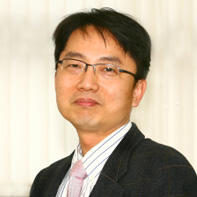
Photo of Don Emmerson
Donald K. Emmerson, Director of APARC’s Southeast Asia Program 

At Stanford, in addition to his work for the Southeast Asia Program and his affiliations with CDDRL and the Abbasi Program in Islamic Studies, Donald Emmerson has taught courses on Southeast Asia in East Asian Studies, International Policy Studies, and Political Science. He is active as an analyst of current policy issues involving Asia. In 2010 the National Bureau of Asian Research and the Woodrow Wilson International Center for Scholars awarded him a two-year Research Associateship given to “top scholars from across the United States” who “have successfully bridged the gap between the academy and policy.”

Image
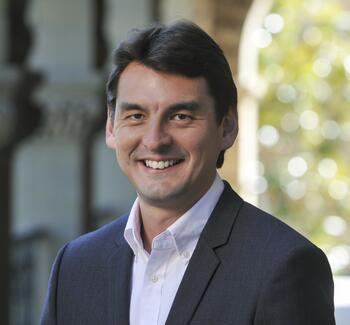
Photo of Tom Fingar
Thomas Fingar, Center Fellow, APARC 

Thomas Fingar is a Shorenstein APARC Fellow in the Freeman Spogli Institute for International Studies at Stanford University. He was the inaugural Oksenberg-Rohlen Distinguished Fellow from 2010 through 2015 and the Payne Distinguished Lecturer at Stanford in 2009.


Image
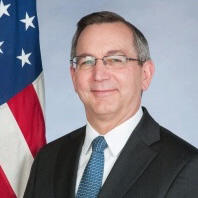
Photo of Oriana Mastro
Oriana Skylar Mastro, FSI Center Fellow at APARC 

Oriana Skylar Mastro is a Center Fellow at Stanford University’s Freeman Spogli Institute for International Studies (FSI). Within FSI, she works primarily in the Shorenstein Asia-Pacific Research Center (APARC) and the Center for International Security and Cooperation (CISAC) as well. She is also a fellow in Foreign and Defense Policy Studies at the American Enterprise Institute and an inaugural Wilson Center China Fellow.


Image
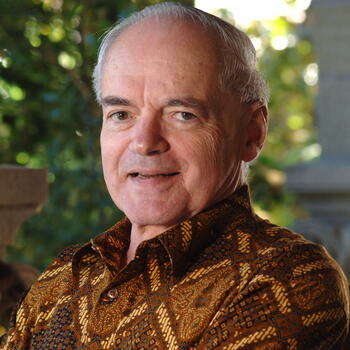
Photo of Kiyoteru Tsutsui
Kiyoteru Tsutsui, Director of APARC’s Japan Program 
Kiyoteru Tsutsui is the Henri H. and Tomoye Takahashi Professor and Senior Fellow in Japanese Studies at Shorenstein APARC, the Director of the Japan Program at APARC, a senior fellow of the Freeman Spogli Institute for International Studies, and Professor of Sociology, all at Stanford University.


Moderator

Image
Photo of Gi-Wook Shin
Gi-Wook Shin, Director of APARC and the Korea Program

Gi-Wook Shin is the director of the Walter H. Shorenstein Asia-Pacific Research Center; the William J. Perry Professor of Contemporary Korea; the founding director of the Korea Program; a senior fellow of the Freeman Spogli Institute for International Studies; and a professor of sociology, all at Stanford University. As a historical-comparative and political sociologist, his research has concentrated on social movements, nationalism, development, and international relations.

Via Zoom Webinar
Register:  https://bit.ly/39MlT1n


Donald K. Emmerson Director of APARC's Southeast Asia Program
Thomas Fingar Center Fellow, APARC
Oriana Skylar Mastro FSI Center Fellow at APARC
Gi-Wook Shin Director of APARC and the Korea Program
Kiyoteru Tsutsui Director of APARC's Japan Program
Panel Discussions
Authors
Noa Ronkin
News Type
News
Date
Paragraphs

STANFORD, CA, December 3, 2020 — The Walter H. Shorenstein Asia-Pacific Research Center (APARC), Stanford University’s hub for interdisciplinary research, education, and engagement on contemporary Asia, invites nominations for the 2021 Shorenstein Journalism Award. The award recognizes outstanding journalists who have spent their careers helping audiences around the world understand the complexities of the Asia-Pacific region. The 2021 award will honor a journalist whose work has mostly been conveyed through Asian news media. The deadline for nomination submissions is Monday, February 15, 2021.

An annual tradition since 2002, the Shorenstein Journalism Award is sponsored by APARC and carries a cash prize of US $10,000. It honors the legacy of APARC benefactor, Mr. Walter H. Shorenstein, and his twin passions for promoting excellence in journalism and understanding of Asia. Over the course of its history, the award has recognized world-class journalists who push the boundaries of coverage of the Asia-Pacific region and help advance mutual understanding between audiences in the United States and their Asian counterparts. Recent honorees include Tom Wright, Maria Ressa, Anna Fifield, Siddharth Varadarajan, Ian Johnson, and Caixin Media.

The award alternates between recipients whose work has mostly been published through Asian news media and those whose work has mostly been conveyed through American news media. The 2021 award will recognize a recipient from the former category. “Media freedom has increasingly been under attack throughout Asia, and many countries in the region are becoming dangerous places for journalists to work in,” said APARC Director Gi-Wook Shin. “It is now more crucial than ever to stand against these assaults on press freedom and support independent journalism without fear or favor.”

For the award, the Asia-Pacific region is defined broadly to include Northeast, Southeast, South, and Central Asia and Australasia. Both individual journalists with a considerable body of work and journalism organizations are eligible for the award. Nominees’ work may be in traditional forms of print or broadcast journalism and/or in new forms of multimedia journalism. The Award Selection Committee, whose members are experts in journalism and Asia research and policy, presides over the judging of nominees and is responsible for the selection of honorees.

APARC is inviting 2021 award nomination submissions from news editors, publishers, scholars, journalism associations, and entities focused on researching and interpreting the Asia-Pacific region. The Center will announce the winner by April 2021 and present the award at a public ceremony at Stanford in the autumn quarter of 2021.

Nominations are accepted electronically through Monday, February 15, 2021, at 11:59 PM PST. For information about the nomination procedures and to submit nominations please visit the award nomination entry page.

Please direct all inquiries to aparc-communications@stanford.edu.

Read More

Gi-Wook Shin presents the 2020 Shorenstein Journalism Award to Tom Wright at a virtual event
News

Shorenstein Journalism Award Winner Tom Wright Recounts Story of Global Financial Scandal

Wright, who led the investigation that unveiled the Malaysian 1MDB scandal, one of the largest-ever financial frauds, highlighted how Western institutions enable global corruption and undermine democracy in foreign countries with poor rule of law.
Shorenstein Journalism Award Winner Tom Wright Recounts Story of Global Financial Scandal
View of building roof in the Forbidden City complex and the Beijing skyline in the background
News

New Fellowship on China Policy Seeks to Strengthen U.S.-China Relations

Stanford University’s Shorenstein Asia-Pacific Center invites applications for the inaugural 2021-22 China Policy Fellowship from experts with research experience on issues vital to the U.S. China policy agenda and influence in the policymaking process.
New Fellowship on China Policy Seeks to Strengthen U.S.-China Relations
Encina Hall
News

APARC Announces 2021-22 Postdoctoral Fellowships for Emerging Scholars in Contemporary Asia, Japan, and Korea Studies

The Center’s commitment to supporting young Asia scholars remains strong during the COVID-19 crisis.
APARC Announces 2021-22 Postdoctoral Fellowships for Emerging Scholars in Contemporary Asia, Japan, and Korea Studies
Hero Image
Stanford colonnade with text announcing open nominations for the 2021 Shorenstein Journalism Award by February 15.
All News button
1
Subtitle

Sponsored by Stanford University’s Shorenstein Asia-Pacific Research Center, the annual award recognizes outstanding journalists and journalism organizations for excellence in coverage of the Asia-Pacific region. News editors, publishers, scholars, and organizations focused on Asia research and analysis are invited to submit nominations for the 2021 award through February 15.

-

Join the REDI Task Force for the next event in the "Critical Conversations: Race and Global Affairs" series featuring a conversation about how race and racism effects Asian and Asian-American studies.

This event will examine how race has historically been an important organizing principle in understanding Asia, with critical reflections on how racism has permeated research and teaching on Asia. The panelists will engage in a dialogue between ethnic studies and area studies to learn insights from Asian American studies in enriching Asian studies. 
 

About the Speakers

Gi-Wook Shin is the director of the Walter H. Shorenstein Asia-Pacific Research Center; the William J. Perry Professor of Contemporary Korea; the founding director of the Korea Program; a senior fellow of the Freeman Spogli Institute for International Studies; and a professor of sociology, all at Stanford University. As a historical-comparative and political sociologist, his research has concentrated on social movements, nationalism, development, and international relations.

Gordon Chang is Olive Palmer Professor of Humanities, Professor of History, and the founding director of Stanford's Asian American Studies Program. He is the former director of the Center of East Asian Studies. He is interested in several different areas of history, including the historical connections between race and ethnicity in America, on the one hand, and foreign relations, on the other, and trans-Pacific relations in their diplomatic as well as their cultural and social dimensions. He has written and continues to publish in the areas of U.S. diplomacy, America-China relations, the Chinese diaspora, Asian American history, and global history. His most recent books have examined the history of Chinese railroad workers in America in the 19th century.

Sharika Thiranagama is Associate Professor of Anthropology and President of the American Institude of Sri Lankan Studies. Her research explores the intersection of political mobilization and domestic life. Her work focuses on highly fraught contexts of violence, inequality, and intense political mobilization, attempting to understand (rather than romanticize) patterns of sociality and how people actually live together, often in highly fractious and unequal ways, and, to situate these processes in specific historical formations of “privates” and “publics” in South Asia.

Eiichiro Azuma is Associate Professor of History and Asian American Studies at University of Pennsylvania.  He is author of award-winning Between Two Empires: Race, History, and Transnationalism in Japanese America (Oxford 2005), and coeditor, with Gordon Chang, of Yuji Ichioka, Before Internment: Essays in Prewar Japanese American History (Stanford 2006) and, with David Yoo, of the Oxford Handbook of Asian American History (Oxford 2016).  The first two books have been translated into Japanese.  His latest monograph, In Search of Our Frontier: Japanese America and Settler Colonialism in the Construction of Japan’s Borderless Empire (California, 2019), received the 2020 John K. Fairbank Prize in East Asian History from the American Historical Association.  Azuma served as the director of Penn’s Asian American Studies Program from 2013 through 2018. 

There will be time for a Q&A. This event will be recorded and uploaded to the REDI website. 

Register here: https://stanford.zoom.us/meeting/register/tJclc--sqjkuHdcf85To1OhVqW1if…

Director, APARC
Shorenstein APARC
Encina Hall E301
616 Jane Stanford Way
Stanford, CA 94305-6055
(650) 724-8480 (650) 723-6530
0
Senior Fellow at the Freeman Spogli Institute for International Studies
Professor of Sociology
William J. Perry Professor of Contemporary Korea
Professor, by Courtesy, of East Asian Languages & Cultures
Gi-Wook Shin_0.jpg PhD

Gi-Wook Shin is the William J. Perry Professor of Contemporary Korea in the Department of Sociology, senior fellow at the Freeman Spogli Institute for International Studies, and the founding director of the Korea Program at the Walter H. Shorenstein Asia-Pacific Research Center (APARC) since 2001, all at Stanford University. In May 2024, Shin also launched the Taiwan Program at APARC. He served as director of APARC for two decades (2005-2025). As a historical-comparative and political sociologist, his research has concentrated on social movements, nationalism, development, democracy, migration, and international relations.

In Summer 2023, Shin launched the Stanford Next Asia Policy Lab (SNAPL), which is a new research initiative committed to addressing emergent social, cultural, economic, and political challenges in Asia. Across four research themes– “Talent Flows and Development,” “Nationalism and Racism,” “U.S.-Asia Relations,” and “Democratic Crisis and Reform”–the lab brings scholars and students to produce interdisciplinary, problem-oriented, policy-relevant, and comparative studies and publications. Shin’s latest book, The Four Talent Giants, a comparative study of talent strategies of Japan, Australia, China, and India to be published by Stanford University Press in the summer of 2025, is an outcome of SNAPL.

Shin is also the author/editor of twenty-six books and numerous articles. His books include Korean Democracy in Crisis: The Threat of Illiberalism, Populism, and Polarization (2022); The North Korean Conundrum: Balancing Human Rights and Nuclear Security (2021); Superficial Korea (2017); Divergent Memories: Opinion Leaders and the Asia-Pacific War (2016); Global Talent: Skilled Labor as Social Capital in Korea (2015); Criminality, Collaboration, and Reconciliation: Europe and Asia Confronts the Memory of World War II (2014); New Challenges for Maturing Democracies in Korea and Taiwan (2014); History Textbooks and the Wars in Asia: Divided Memories (2011); South Korean Social Movements: From Democracy to Civil Society (2011); One Alliance, Two Lenses: U.S.-Korea Relations in a New Era (2010); Cross Currents: Regionalism and Nationalism in Northeast Asia (2007);  and Ethnic Nationalism in Korea: Genealogy, Politics, and Legacy (2006). Due to the wide popularity of his publications, many have been translated and distributed to Korean audiences. His articles have appeared in academic and policy journals, including American Journal of SociologyWorld DevelopmentComparative Studies in Society and HistoryPolitical Science QuarterlyJournal of Asian StudiesComparative EducationInternational SociologyNations and NationalismPacific AffairsAsian SurveyJournal of Democracy, and Foreign Affairs.

Shin is not only the recipient of numerous grants and fellowships, but also continues to actively raise funds for Korean/Asian studies at Stanford. He gives frequent lectures and seminars on topics ranging from Korean nationalism and politics to Korea's foreign relations, historical reconciliation in Northeast Asia, and talent strategies. He serves on councils and advisory boards in the United States and South Korea and promotes policy dialogue between the two allies. He regularly writes op-eds and gives interviews to the media in both Korean and English.

Before joining Stanford in 2001, Shin taught at the University of Iowa (1991-94) and the University of California, Los Angeles (1994-2001). After receiving his BA from Yonsei University in Korea, he was awarded his MA and PhD from the University of Washington in 1991.

Selected Multimedia

Director of the Korea Program and the Taiwan Program, Shorenstein Asia-Pacific Research Center
Date Label
Director Moderator APARC
Gordon Chang Professor of History Panelist Department of History
Sharika Thiranagama Associate Professor of Anthropology Panelist Department of Anthropology
Eiichiro Azuma Professor of History and Asian American Studies Panelist University of Pennsylvania Department of History and Asian American Studies
Authors
News Type
News
Date
Paragraphs

On November 10th, the APARC China Program convened an expert panel focused on the Decision of the fifth plenary session of the 19th Central Committee of the Chinese Communist Party, which took place on October 26-29.  The Fifth Plenum Decision outlines not only China’s 14th Five Year Plan (2021-2025), but also Beijing’s economic blueprint through 2035 and the “goal of fully building a modern socialist country."  The CCP leadership recently articulated its “dual circulation” policy – viz., a drastic reduction in China’s dependence on U.S. technologies and increased reliance on domestic consumption while maintaining exports and attracting foreign direct investments.  At this critical juncture when the coronavirus pandemic has shrunk global trade and tensions between the U.S. and China continue to intensify, panel members were asked to examine what the Fifth Plenum Decision might signify.  Does it mark a significant shift in Beijing’s strategic economic orientation?  What are the short- and long-term implications of the Decision for China’s economic development strategy, U.S.-China relations, as well as the world’s economic and technology ecosystems?  

Guests heard from experts James Green, Damien Ma, and Xiaomeng Lu.  James Green, Senior Research Fellow at Georgeton University's Initiative for U.S.-China Dialogue on Global Issues, has worked for over two decades on U.S.-Asia relations.  He has held several positions in government, including Minister Counselor for Trade Affairs at the U.S. Embassy in Beijing and China Director of the White House’s National Security Council.  Damien Ma is the Director and co-founder of MacroPolo, the Think Tank of the Paulson Institute, which focuses on China's economics, technology, and politics.  He is also adjunct faculty at the Kellogg School of Management at Northwestern University.  Finally, Xiaomeng Lu is a senior analyst in Eurasia Group's geo-technology practice.  She focuses on many of the most important issues related to China right now, including cybersecurity, data protection, artificial intelligence, internet governance, 5G, and trade.  The panel concluded with a discussion of audience questions. Watch:

Read More

Concept of U,S.-China technology competition: brain-shaped boxing gloves covered in U.S. and China flags facing against each other on a background of a motherboard
News

Caught in the Crossfire: The Future Of U.S.-China Science Collaboration and Its Impact on University Education

Caught in the Crossfire: The Future Of U.S.-China Science Collaboration and Its Impact on University Education
Min Ye speaking
News

Domestic or International? The Belt and Road Initiative Is More Internally Focused Than We Think, Says Expert Min Ye

Domestic or International? The Belt and Road Initiative Is More Internally Focused Than We Think, Says Expert Min Ye
Photograph of the UN building in Geneva, Switzerland
News

Rebuilding International Institutions Will be Tough but Necessary, Say Stanford Experts Thomas Fingar and Stephen Stedman

Fingar and Stedman spoke as part of the APARC program “Rebuilding International Institutions,” which examined the future of international institutions such as the United Nations (UN), World Trade Organization (WTO), and World Health Organization (WHO) in our evolving global political landscape.
Rebuilding International Institutions Will be Tough but Necessary, Say Stanford Experts Thomas Fingar and Stephen Stedman
Hero Image
Photo of the Forbidden City entrance with Mao Zedong's portrait Markus Winkler on Unsplash
All News button
1
-

Co-sponsored by the Japan Program and the Southeast Asia Program

When Yoshihide Suga recently took over as prime minister of Japan, he tellingly focused his first trip abroad on Southeast Asia. The region has long been crucial to Japan’s foreign policy, and Japan has long been a key external partner to ASEAN and its constitutive states and societies. Japan’s engagement in Southeast Asia has become even more important in the era of the “Free and Open Indo-Pacific,” as the region confronts new economic, political and security challenges against the backdrop of waxing Sino-American rivalry and now a global pandemic. This webinar will examine Japan’s role in Southeast Asia in the recent past and the going forward. Drawing on the findings of a collaborative research project involving scholars from Southeast Asia, Japan, and North America – to be published as an edited volume from the University of Michigan Press – the panel will discuss Japan’s engagement in key areas such as infrastructure investment, maritime security assistance, and multilateral diplomacy, as well as Southeast Asian responses to its initiatives. They will also discuss the important roles played by non-state actors in mediating Japanese ties to Southeast Asia, and review key elements of continuity and change likely to extend into the Suga administration and beyond.   

Panelists

Image
John D Ciociari 120820 crop 4X4
John Ciorciari is Associate Professor and Director of the Weiser Diplomacy Center and International Policy Center at the Gerald R. Ford School of Public Policy, University of Michigan. He is the author of Sovereignty Sharing in Fragile States (Stanford University Press, forthcoming 2021), The Limits of Alignment: Southeast Asia and the Great Powers since 1975 (Georgetown University Press, 2010), co-author of Hybrid Justice: The Extraordinary Chambers in the Courts of Cambodia (University of Michigan Press, 2014), and co-editor of The Courteous Power: Japan and Southeast Asia in the Indo-Pacific Era (University of Michigan Press, forthcoming 2021).


Image
chanlett-avery-emma-120820_crop_4x4
Emma Chanlett-Avery is a Specialist in Asian Affairs at the Congressional Research Service. She focuses on U.S. relations with Japan, the Korean Peninsula, Thailand, and Singapore. Ms. Chanlett-Avery joined CRS in 2003 through the Presidential Management Fellowship, with rotations in the State Department on the Korea Desk and at the Joint U.S. Military Advisory Group in Bangkok, Thailand. She also worked in the Office of Policy Planning as a Harold Rosenthal Fellow. She is a member of the Mansfield Foundation U.S. – Japan Network for the Future, Vice-Chair of the Board of Trustees of the Japan America Society of Washington, and the 2016 recipient of the Kato Prize. Ms. Chanlett-Avery received an MA in international security policy from the School of International and Public Affairs at Columbia University and her BA in Russian studies from Amherst College.

Image
don emmerson 2
Donald K. Emmerson heads the Southeast Asia Program at Stanford University where he is also a faculty affiliate of the Center on Democracy, Development, and the Rule of Law and the Abbasi Program in Islamic Studies.  His new book is The Deer and the Dragon: Southeast Asia and China in the 21st Century (ed., August 2020).  Other recent publications include “Biden in Asia: America Together?,” East Asia Forum, 8 November 2020; “Donald Emmerson on Southeast Asia’s Approach to China” (interview, The Diplomat, Aug. 2020); “‘No Sole Control’ in the South China Sea,” Asia Policy (2019); ASEAN @ 50, Southeast Asia @ Risk: What Should Be Done? (ed., 2018); and “ASEAN Between China and America: Is It Time to Try Horsing the Cow?,” Trans-Regional and -National Studies of Southeast Asia (2017).  He has traveled and lectured widely in Southeast Asia, most recently in Singapore, Thailand, and Vietnam (Dec. 2019). Indonesia figured prominently in earlier fieldwork and writing. Before moving to Stanford in 1999, he taught political science at the University of Wisconsin-Madison.  He has held visiting positions at the Institute for Advanced Studies and the Australian National University, among other institutions.  His doctorate in political science is from Yale. 

Moderator

Image
Kiyoteru Tsutsui 120820 crop 4X4
Kiyoteru Tsutsui is Henri H. and Tomoye Takahashi Professor and Senior Fellow in Japanese Studies at the Walter H. Shorenstein Asia-Pacific Research Center at Stanford University, where he is also Director of the Japan Program, a Senior Fellow of the Freeman Spogli Institute for International Studies, and a Professor of Sociology. He is the author of Rights Make Might: Global Human Rights and Minority Social Movements in Japan (Oxford University Press, 2018), co-editor of Corporate Responsibility in a Globalizing World (Oxford University Press, 2016) and co-editor of The Courteous Power: Japan and Southeast Asia in the Indo-Pacific Era (University of Michigan Press, forthcoming 2021). 

Via Zoom Webinar.
Register: https://bit.ly/2HnCz3u

John Ciorciari Associate Professor and Director of the Weiser Diplomacy Center and International Policy Center, the Gerald R. Ford School of Public Policy, University of Michigan
Emma Chanlett-Avery Specialist in Asian Affairs, the Congressional Research Service
0
Senior Fellow Emeritus at the Freeman Spogli Institute for International Studies
Affiliated Faculty, CDDRL
Affiliated Scholar, Abbasi Program in Islamic Studies
aparc_dke.jpg PhD

At Stanford, in addition to his work for the Southeast Asia Program and his affiliations with CDDRL and the Abbasi Program in Islamic Studies, Donald Emmerson has taught courses on Southeast Asia in East Asian Studies, International Policy Studies, and Political Science. He is active as an analyst of current policy issues involving Asia. In 2010 the National Bureau of Asian Research and the Woodrow Wilson International Center for Scholars awarded him a two-year Research Associateship given to “top scholars from across the United States” who “have successfully bridged the gap between the academy and policy.”

Emmerson’s research interests include Southeast Asia-China-US relations, the South China Sea, and the future of ASEAN. His publications, authored or edited, span more than a dozen books and monographs and some 200 articles, chapters, and shorter pieces.  Recent writings include The Deer and the Dragon: Southeast Asia and China in the 21st Century (ed., 2020); “‘No Sole Control’ in the South China Sea,” in Asia Policy  (2019); ASEAN @ 50, Southeast Asia @ Risk: What Should Be Done? (ed., 2018); “Singapore and Goliath?,” in Journal of Democracy (2018); “Mapping ASEAN’s Futures,” in Contemporary Southeast Asia (2017); and “ASEAN Between China and America: Is It Time to Try Horsing the Cow?,” in Trans-Regional and –National Studies of Southeast Asia (2017).

Earlier work includes “Sunnylands or Rancho Mirage? ASEAN and the South China Sea,” in YaleGlobal (2016); “The Spectrum of Comparisons: A Discussion,” in Pacific Affairs (2014); “Facts, Minds, and Formats: Scholarship and Political Change in Indonesia” in Indonesian Studies: The State of the Field (2013); “Is Indonesia Rising? It Depends” in Indonesia Rising (2012); “Southeast Asia: Minding the Gap between Democracy and Governance,” in Journal of Democracy (April 2012); “The Problem and Promise of Focality in World Affairs,” in Strategic Review (August 2011); An American Place at an Asian Table? Regionalism and Its Reasons (2011); Asian Regionalism and US Policy: The Case for Creative Adaptation (2010); “The Useful Diversity of ‘Islamism’” and “Islamism: Pros, Cons, and Contexts” in Islamism: Conflicting Perspectives on Political Islam (2009); “Crisis and Consensus: America and ASEAN in a New Global Context” in Refreshing U.S.-Thai Relations (2009); and Hard Choices: Security, Democracy, and Regionalism in Southeast Asia (edited, 2008).

Prior to moving to Stanford in 1999, Emmerson was a professor of political science at the University of Wisconsin-Madison, where he won a campus-wide teaching award. That same year he helped monitor voting in Indonesia and East Timor for the National Democratic Institute and the Carter Center. In the course of his career, he has taken part in numerous policy-related working groups focused on topics related to Southeast Asia; has testified before House and Senate committees on Asian affairs; and been a regular at gatherings such as the Asia Pacific Roundtable (Kuala Lumpur), the Bali Democracy Forum (Nusa Dua), and the Shangri-La Dialogue (Singapore). Places where he has held various visiting fellowships, including the Institute for Advanced Study and the Woodrow Wilson International Center for Scholars. 


Emmerson has a Ph.D. in political science from Yale and a BA in international affairs from Princeton. He is fluent in Indonesian, was fluent in French, and has lectured and written in both languages. He has lesser competence in Dutch, Javanese, and Russian. A former slam poet in English, he enjoys the spoken word and reads occasionally under a nom de plume with the Not Yet Dead Poets Society in Redwood City, CA. He and his wife Carolyn met in high school in Lebanon. They have two children. He was born in Tokyo, the son of U.S. Foreign Service Officer John K. Emmerson, who wrote the Japanese Thread among other books.

Selected Multimedia

Date Label
Director, the Southeast Asia Program, Stanford University

Shorenstein APARC
Encina Hall
616 Jane Stanford way
Stanford, CA 94305-6055

(650) 723-2408
0
Senior Fellow at the Freeman Spogli Institute for International Studies
Professor of Sociology
Henri H. and Tomoye Takahashi Professor and Senior Fellow in Japanese Studies at the Shorenstein Asia-Pacific Research Center
Kiyo Tsutsui1_0.jpg PhD

Kiyoteru Tsutsui is the Henri H. and Tomoye Takahashi Professor and Senior Fellow in Japanese Studies at the Walter H. Shorenstein Asia-Pacific Research Center (APARC), the director of APARC and of the Japan Program at APARC, co-director of the Southeast Asia Program at APARC, executive director of the Inter-University Center for Japanese Language Studies, co-director of the Center for Human Rights and International Justice, senior fellow at the Freeman Spogli Institute for International Studies, and professor of sociology, all at Stanford University.

Prior to his appointment at Stanford in July 2020, Tsutsui was professor of sociology, director of the Center for Japanese Studies, and director of the Donia Human Rights Center at the University of Michigan, Ann Arbor.

Tsutsui’s research interests lie in political/comparative sociology, social movements, globalization, human rights, and Japanese society. More specifically, he has conducted (1) cross-national quantitative analyses on how human rights ideas and instruments have expanded globally and impacted local politics and (2) qualitative case studies of the impact of global human rights on Japanese politics. His current projects examine (a) changing conceptions of nationhood and minority rights in national constitutions and in practice, (b) populism and the future of democracy, (c) experimental surveys on public understanding about human rights, (d) campus policies and practices around human rights, (e) global expansion of corporate social responsibility and its impact on corporate behavior, and (f) Japan’s public diplomacy and perceptions about Japan in the world.

His research on the globalization of human rights and its impact on local politics has appeared in American Sociological Review, American Journal of Sociology, Social Forces, Social Problems, Journal of Peace Research, Journal of Conflict Resolution, and other social science journals. His book publications include Rights Make Might: Global Human Rights and Minority Social Movements in Japan (Oxford University Press 2018), and two co-edited volumes Corporate Social Responsibility in a Globalizing World (with Alwyn Lim, Cambridge University Press 2015) and The Courteous Power: Japan and Southeast Asia in the Indo-Pacific Era (with John Ciorciari, University of Michigan Press forthcoming). He has been a recipient of National Endowment for the Humanities Fellowship, National Science Foundation grants, the SSRC/CGP Abe Fellowship, Stanford Japan Studies Postdoctoral Fellowship, and other grants as well as awards from American Sociological Association sections on Global and Transnational Sociology (2010, 2013, 2019), Human Rights (2017, 2019), Asia and Asian America (2018, 2019), Collective Behavior and Social Movements (2018), and Political Sociology (2019). 

Tsutsui received his bachelor’s and master’s degrees from Kyoto University and earned an additional master’s degree and Ph.D. from Stanford’s sociology department in 2002.

Director, Shorenstein Asia-Pacific Research Center (APARC)
Director, Japan Program at Shorenstein APARC
Co-Director, Southeast Asia Program at Shorenstein APARC
Executive Director, Inter-University Center for Japanese Language Studies
Co-Director, Center for Human Rights and International Justice
CV
Date Label
Director, the Japan Program, Stanford University
Seminars
Authors
News Type
News
Date
Paragraphs

On October 28th, the APARC China Program hosted a panel of experts for the panel "Caught in the Crossfire: Strategic Competition, U.S.-China Science Collaboration, and U.S. Universities." Reports of Chinese espionage, IP theft and military-civil fusion strategy have all fueled concerns regarding U.S. universities’ open research ecosystem, especially in STEM. Many of the concerns focus not only on research integrity but also on potential adverse consequences to U.S. military and economic security. The October 28th panel discussed open access to U.S. universities, security risks involved, as well as the potential adverse consequences of limiting international access in science and technology (S&T) research.  

The discussion began with Professor Susan Shirk, Chair of the 21st Century China Center at UC San Diego, who gave the audience an overview of current China science and technology policy and its relationship with US-China competition and universities. Shirk was followed by Arthur Bienenstock, co-chair of the American Academy of Arts and Sciences’ Committee on International Scientific Partnerships and Professor of Photon Science, Emeritus at Stanford. Bienenstock provided important perspective from the STEM side of this debate, arguing that collaboration with China--and other foreign countries--is vital and should be encouraged. Elsa B. Kania, Adjunct Senior Fellow at the Center for a New American Security's Technology and National Security Program, gave a different perspective, explaining China's "civil-military fusion" and why many in the United States consider it a threat. Finally, Tim Stearns, the Frank Lee and Carol Hall Professor in the Department of Biology, brought things back home to Stanford. As the Senior Associate Vice Provost of Research, Stearns was able to give a unique insight into university administration and how Stanford is approaching these challenges. The panel concluded with a discussion between the panelists of audience questions. Watch:

Read More

Photograph of the UN building in Geneva, Switzerland
News

Rebuilding International Institutions Will be Tough but Necessary, Say Stanford Experts Thomas Fingar and Stephen Stedman

Fingar and Stedman spoke as part of the APARC program “Rebuilding International Institutions,” which examined the future of international institutions such as the United Nations (UN), World Trade Organization (WTO), and World Health Organization (WHO) in our evolving global political landscape.
Rebuilding International Institutions Will be Tough but Necessary, Say Stanford Experts Thomas Fingar and Stephen Stedman
Cover of the book Fateful Decisions: Choices That Will Shape China's Future
News

Thomas Fingar and Jean Oi Analyze the Choices and Challenges Facing China’s Leaders

Fingar and Oi joined the National Committee on U.S.-China Relations to discuss their edited volume, ‘Fateful Decisions: Choices that Will Shape China’s Future.’
Thomas Fingar and Jean Oi Analyze the Choices and Challenges Facing China’s Leaders
A professional looks at their phone while wearing a mask in a busy downtown area.
News

Restarting Business in China After COVID-19: New Article in 'The Diplomat' Highlights Results from China Program Survey

The survey reveals mixed progress in reopening different sectors of China's economy, but also shows that many business leaders in China are planning for some level of decoupling as access to global technology and supply chains remains uncertain.
Restarting Business in China After COVID-19: New Article in 'The Diplomat' Highlights Results from China Program Survey
Hero Image
Concept of U,S.-China technology competition: brain-shaped boxing gloves covered in U.S. and China flags facing against each other on a background of a motherboard Just Super/ Getty Images
All News button
1
Date Label
News Type
Commentary
Date
Paragraphs

FSI Center Fellow at APARC Oriana Skylar Mastro joins NPR's Weekend Edition host Scott Simon to discuss the rising tensions between China and Taiwan and how the United States should respond.

Listen to the complete interview below. This conversation originally appeared on NPR's website.

Read More

Logo of the Observer Research Foundation's 'Armchair Strategist' podcast with portraits of Oriana Skylar Mastro and Arzan Tarapore
Commentary

Assessing the Conventional Military Balance Between India and China

Oriana Skylar Mastro and Arzan Tarapore join the Observer Research Foundation’s ‘Armchair Strategist’ podcast to discuss how the Indian and Chinese militaries stack up as tensions between the two Asian neighbors continue to heat up.
Assessing the Conventional Military Balance Between India and China
Chinese President Xi Jinping (R) talks with India's Prime Minister Manmohan Singh (L) during a meeting at the Diaoyutai State Guesthouse in 2013.
Commentary

China-India: Talk is Cheap, But Never Free

Nations often hesitate to negotiate with opponents during conflict. But Oriana Skylar Mastro urges that this is precisely what India and China need to do in order to curb the potential for a protracted, costly war with devastating geopolitical implications.
China-India: Talk is Cheap, But Never Free
Portrait of Oriana Skylar Mastro and a 3D cover of her book, 'The Costs of Conversation: Obstacles to Peace Talks in Wartime'
News

FSI Center Fellow Wins Best Book in Security Studies Award

The American Political Science Association recognizes Oriana Skylar Mastro for her work on military strategy and mediation.
FSI Center Fellow Wins Best Book in Security Studies Award
Hero Image
NPR's audio streaming logo next to a portrait of Oriana Skylar Mastro.
All News button
1
Subtitle

"The current threat is that the CCP is running out of patience, and their military is becoming more and more capable. So for the first time in its history, there's the option of taking Taiwan by force," Mastro tells NPR's Weekend Edition host Scott Simon.

Authors
Noa Ronkin
News Type
News
Date
Paragraphs

The banks knew. The auditors knew. Yet the dirty money continued to flow freely. And so over 4.5 billion dollars of government money was stolen from the Malaysian sovereign wealth fund 1Malaysia Development Bhd (1MDB). Originally established to fuel economic development projects for the betterment of Malaysian citizens, the fund was instead used to launder money that passed into the global financial system. The pilfered money was diverted for the benefit of a small circle of jet-setting, art-dealing, partygoing elites and their opulent lifestyle in what has been termed “the largest financial heist in history.”

“This is an incredible story. One that shouldn't have happened,” said Tom Wright, winner of the 2020 Shorenstein Journalism Award, opening his keynote address at the award ceremony. In his former role as the Asia economics editor for the Wall Street Journal, Wright led the multiyear reporting project that exposed the 1MDB scandal. The investigation shows the degree to which Western institutions and companies — from Goldman Sachs to Big Four auditors and Manhattan lawyers — will turn a blind eye to malfeasance in the pursuit of profit.

[To receive more stories about our programming and event recordings subscribe to our newsletters]

Speaking at the Shorenstein Award’s nineteenth annual discussion, which was held virtually due to COVID-19, Wright detailed the 1MDB story and its beginning with an unknown Chinese-Malaysian Wharton graduate named Jho Low, who allegedly set in motion a fraud of unprecedented scope and magnitude. An epic true-tale of corruption and greed involving heads of state and Hollywood stars and enabled by a raft of Western institutions, the story is the subject of Wright’s coauthored bestseller Billion Dollar Whale, based on his years of reporting on the scandal for the Wall Street Journal.  Mr. Low, who was indicted by U.S. authorities and by prosecutors in Malaysia, remains at large. He has denied any wrongdoing.

Wright’s exposure of the scandal has reverberated around the world. It was read by millions of people in Malaysia and sparked popular revulsion with the corrupt government of Prime Minister Najib Razak, leading to his shocking election loss in 2018. Wright’s revelations also shook the global financial system, underpinned investigations by law enforcement and regulators in six countries, and unveiled flaws of China’s Belt and Road signature program.

Accountability Journalism in Asia

“Tom Wright’s work represents the essence of accountability journalism,” said Jay Hamilton, the Hearst Professor of Communication, Chair of the Department of Communication, and Director of the Journalism Program at Stanford, who also serves as a member of the selection committee for the Shorenstein Journalism Award. “Wright takes the time, often enumerated in months or years, to discover facts about how institutions are operating. When his work is published, the world changes, debates ensue, individuals lose jobs or an election, policies are corrected, and there are people, often in Asian governments and Western companies, who wish they had done a better job of keeping their corruption secret.”

Wright is honored with the Shorenstein Journalism Award for his stellar reporting done over 25 years, mainly in South and Southeast Asia. A theme running through Wright’s work is the blight of corruption in Asia, abetted by Western organizations. In 2008, his investigation revealed how Indian wind turbine producer Suzlon, backed by U.S. investors, was hiding technology defects that made its turbines unsafe, leading to a collapse in the company’s shares. In 2011, he broke new ground reporting about the Obama administration's multibillion-dollar civilian aid program in Pakistan. He was one of the first journalists to arrive at the scene of the raid in which Navy SEALs killed Osama bin Laden. And in 2013, Wright spearheaded the coverage of the Rana Plaza factory disaster in Bangladesh, which killed over 1,000 people, exposing how international garment manufacturers turned a blind eye to safety violations to keep costs down.

A Triumph for Impunity

Five years after the 1MDB story came to light, however, almost no one has gone to jail. In Malaysia, Najib Razak was sentenced to 12 years in jail but is now in the process of appealing the case and continues to campaign in the meantime. In July 2020, Goldman Sachs reached a $2.5 billion settlement with the Malaysian government to resolve all criminal and regulatory proceedings in the country involving the firm, and on October 19, 2020, a day before the Journalism Award discussion, it was announced that the firm had reached a $2.2 billion settlement with the U.S. Department of Justice. While the penalties will cost the firm about two-thirds of a year’s profits, Goldman will avoid the harshest sanctions that prosecutors had sought. And while a Singapore-based Goldman subsidiary tied to the misconduct was expected to plead guilty, no one at the parent firm will face criminal charges.

Western institutions need to be held accountable for their actions in foreign countries with poor rule of law.
Tom Wright
2020 Shorenstein Journalism Award Winner

“I don't think any of this is going to deter the kind of behavior that enabled this scandal,” said Wright. “Goldman just had a record-profit quarter and, astoundingly, in my view, there is no criminal liability […] We’re seeing democracy challenged around the world and, having spent so long on the 1MDB scandal, I feel very strongly that this kind of enabling behavior by Western institutions in foreign countries with poor rule of law is one of the reasons why democracy is so badly rooted in these places. Western institutions need to be held accountable for their actions in these countries.”

The Role of International Media in Exposing Global Corruption

Wright’s discussion was followed by a conversation with Meredith Weiss, professor and chair of Political Science at the University at Albany, SUNY. Weiss has published widely on the politics of identity and development, electoral politics and parties, organizational reform, and subnational governance in Southeast Asia, with particular focus on Malaysia and Singapore. Her current research projects include studies focused on “money politics” and on democratic representation and political elites in Southeast Asia, as well as a monograph on Malaysian sociopolitical development.

Meredith Weiss and Tom Wright speaking at a Zoom webinar
Meredith Weiss and Tom Wright in conversation at the 2020 Shorenstein Journalism Award.

In their conversation, Wright and Weiss addressed issues including the implications of current political trends in Southeast Asia for supporting or dismantling systems for accountability or anti-corruption, China's role in enabling corruption, how an international media outlet like the Wall Street Journal was able to carry forward the 1MDB story, the role of investigative journalism in battling endemic corrupt practice, and how the shifting media landscape — especially in the context of social media, changes in media freedom around the world, and the rise of “fake news” — affect this role in shedding light on corruption.

“It’s very important that journalists don't become pulled into the latest political trend,” said Wright. “And it's a very difficult fine line to balance. I think investigative journalism is in trouble. By the way, journalists don't call themselves ‘investigative journalists’ — we are just journalists who do our work, and if we're lucky enough to come across a big story, then so be it. But you need bosses [like I had at the Journal], who give you the space to do that kind of work, even though you don't necessarily sell more newspapers and more online subscriptions because of it.”

A Higher Standard

There have been some positive changes following the lessons learned from the IMDB scandal, such as pilot projects in the United States and in London to stop cash purchases from shell companies. Yet it is still too easy to get around such measures, said Wright. He concluded the discussion on a rather somber note, recognizing that the prospects for large-scale change are not bright. “If you've lived and worked in Asia, you know you can shake a stick in any direction and you’ll find corruption. What I learned through the process of working on the 1MDB story was just how complicit foreign institutions are in all of this. I guess I had a naive view, thinking that they had a higher standard of behavior. What I learned was that they only have a higher standard of behavior when there are rules in place to stop them from behaving badly. Maybe things can change, but I don't feel so optimistic about it.”

Read More

[Left] The Impossible State by CSIS; [Right] Director Gi-Wook Shin
Commentary

Democratic Erosion in South Korea

Gi-Wook Shin discusses the state of democracy in South Korea, and how democratic backsliding there fits into larger patterns of democratic decline underway across the globe.
Democratic Erosion in South Korea
Leaders from the ASEAN league gather onstage at the 33rd ASEAN Summit in 2018 in Singapore.
Commentary

Southeast Asia's Approach to China and the Future of the Region

In an interview with The Diplomat, Donald Emmerson discusses how factors like the South China Sea, U.S.-China competition, and how COVID-19 are affecting relations between Southeast Asia, China, and the United States.
Southeast Asia's Approach to China and the Future of the Region
Maria Ressa speaking at Stanford
News

Shorenstein Journalism Award Winner Maria Ressa Describes Philippine Broken Information Ecosystem, Democratic Recession

Shorenstein Journalism Award Winner Maria Ressa Describes Philippine Broken Information Ecosystem, Democratic Recession
Hero Image
Gi-Wook Shin presents the 2020 Shorenstein Journalism Award to Tom Wright at a virtual event
APARC Director Gi-Wook Shin presents Tom Wright with the 2020 Shorenstein Journalism Award.
All News button
1
Subtitle

Wright, who led the investigation that unveiled the Malaysian 1MDB scandal, one of the largest-ever financial frauds, highlighted how Western institutions enable global corruption and undermine democracy in foreign countries with poor rule of law.

Authors
News Type
News
Date
Paragraphs

On September 29, the APARC China Program hosted Thomas Fingar and Stephen Stedman for the program “Rebuilding International Institutions.” The program, which was moderated by China Program Director Jean Oi, examined the future of international institutions such as the United Nations (UN), World Trade Organization (WTO), and World Health Organization (WHO) in our evolving global political landscape. While Fingar and Stedman acknowledged that such institutions facilitated attainment of unprecedented peace and prosperity after WWII, they also asked difficult questions: Are these institutions still adequate? And if not, how will we change them?

Shorenstein APARC Fellow Thomas Fingar kicked off the session by asking whether or not US-China tensions would impede cooperation on major global challenges, or if those challenges were so serious as to render such rivalries immaterial. Perhaps the most obvious example of such a crisis is the current COVID-19 pandemic. The efforts to curb the virus’ spread not only by individual countries, but also by international organizations like the WHO, have proven largely inadequate. According to Fingar, our existing institutions need to be reformed or supplemented to deal with these types of threats. However, such an overhaul of our international systems will be difficult, he says.

How, then, will we go about such a massive project? Stephen Stedman, Deputy Director at Stanford’s Center on Democracy, Development, and the Rule of Law (CDDRL), responded by explaining that the current failure of international cooperation makes such undertakings tough. Globalization has been a double-edged sword: On one hand, more contact, perhaps inherently, leads to increased tension. The resurgence of traditional notions of sovereignty in 2010, kickstarted by the opposition of countries like Russia and China to what was seen as UN overreaching, has led to a reduction of international cooperation overall. On the other hand, Fingar posits that our interconnectedness may force us toward cooperation despite rivalries as we face more and more transnational threats. International institutions create rules to organize and manage our many interconnected relationships so that we can deal with our problems effectively and reduce friction.

Stedman also pointed to the upcoming US elections and the major impact their outcome will have on how these problems are addressed—or not. In the last four year, the United States has pulled back significantly from international institutions and agreements, leaving a gap that China has started to fill. Furthermore, despite the US’s retreat from international responsibility, the country still remains a critical actor in global initiatives. China’s embrace of a global leadership role is not inherently negative, but its future relationship with the US will need to be “managed in a way that you get greater cooperation and not just paralysis.” Stedman says that it is likely that progress will need to be made on a bilateral front in order to have productive conversations about international issues with China.

Concluding on an optimistic note, Fingar voiced his hope that the current tensions and negative perceptions between rivals might ultimately “be mitigated by success in dealing with a common problem,” because “experience does shape perceptions.”

A video recording of this program is available upon request. Please contact Callista Wells, China Program Coordinator at cvwells@stanford.edu with any inquiries.

Read More

View of building roof in the Forbidden City complex and the Beijing skyline in the background
News

New Fellowship on China Policy Seeks to Strengthen U.S.-China Relations

Stanford University’s Shorenstein Asia-Pacific Center invites applications for the inaugural 2021-22 China Policy Fellowship from experts with research experience on issues vital to the U.S. China policy agenda and influence in the policymaking process.
New Fellowship on China Policy Seeks to Strengthen U.S.-China Relations
Cover of the book Fateful Decisions: Choices That Will Shape China's Future
News

Thomas Fingar and Jean Oi Analyze the Choices and Challenges Facing China’s Leaders

Fingar and Oi joined the National Committee on U.S.-China Relations to discuss their edited volume, ‘Fateful Decisions: Choices that Will Shape China’s Future.’
Thomas Fingar and Jean Oi Analyze the Choices and Challenges Facing China’s Leaders
Woman in a face mask looking at a stock market board
News

Pressing “Re-start”: Business Operations in China after COVID-19 – Highlights of Survey Results and Conversation with Prominent China CxOs

“[T]he biggest challenge for us is really how to . . . navigate through all the unknowns. I mean, at that time [of COVID-19], at every stage we were facing different challenges . . . different phases” stated Zhiqiang (ZZ) Zhang, President of ABB (China).
Pressing “Re-start”: Business Operations in China after COVID-19 – Highlights of Survey Results and Conversation with Prominent China CxOs
Hero Image
Photograph of the UN building in Geneva, Switzerland Image by Mat Reding on Unsplash
All News button
1
Subtitle

Fingar and Stedman spoke as part of the APARC program “Rebuilding International Institutions,” which examined the future of international institutions such as the United Nations (UN), World Trade Organization (WTO), and World Health Organization (WHO) in our evolving global political landscape.

Date Label
-

This event is part of the Asia Health Policy Program (AHPP) 2020-21 Colloquium series "Health, medicine, and longevity: Exploring public and private roles"

A collaborating network of researchers summarize preliminary results from recent harmonized surveys on the impact of COVID-19 on individuals living with diabetes and hypertension, focusing on their access to medication and other care, loss of household income, (non)adherence to treatment, and worsening of symptoms. Researchers from China, India, Korea, and Thailand discuss empirical results from data gathered in the last few months. Understanding to what extent lapses in medication or other treatment have occurred, and whether telehealth or other options are associated with better outcomes, may enable locally tailored, evidence-based policy responses to help mitigate impacts on future morbidity and mortality.

Speakers
Nikhil Tandon, All India Institute of Medical Sciences
Kavita Singh, Public Health Foundation of India
Lijing Yan, Duke Kunshan University
Jianchao Quan, University of Hongkong
Daejung Kim, Korea Institute for Health and Social Affairs
Piya Hanvoravongchai, Chulalongkorn University
Wasin Laohavinij, Chulalongkorn University

Via Zoom Webinar.
Register: https://bit.ly/2H6oAhV

Nikhil Tandon All India Institute of Medical Sciences
Kavita Singh Public Health Foundation of India
Lijing Yan Duke Kunshan University
Daejung Kim Korea Institute for Health and Social Affairs
Piya Hanvoravongchai Chulalongkorn University
Shorenstein APARCStanford UniversityEncina Hall E301Stanford, CA 94305-6055
0
Visiting Scholar, 2019-20
wasin_laohavinij.jpg Ph.D.

Wasin Laohavinij joined the Walter H. Shorenstein Asia-Pacific Research Center (Shorenstein APARC) as visiting scholar with the Asia Health Policy Program for the fall quarter of 2019 from King Chulalongkorn Memorial Hospital and Chulalongkorn University, where he serves as physician and teaching assistant respectively. His research focuses on diabetes care and health service systems in Thailand.  Dr. Laohavinij received his doctorate of medicine from Chulalongkorn University in 2017.

Chulalongkorn University
Jianchao Quan University of Hong Kong
Seminars
Subscribe to Asia-Pacific