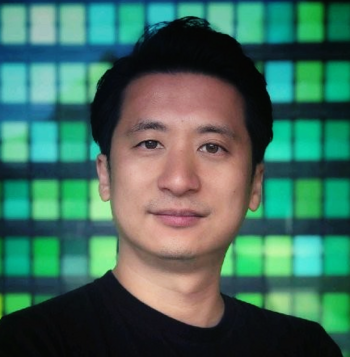
Organizational sociology may not be the first academic field people tend to look to for an explanation of the origins of a public health crisis such as the spreading Wuhan coronavirus, but from the perspective of Stanford sociologist and APARC faculty member Xueguang Zhou, who specializes in institutional change in contemporary Chinese society, the writing on the wall has long been there for all to see. Zhou, who is also Kwoh-Ting Li Professor in Economic Development and senior fellow at FSI, studies Chinese organizations, Chinese state building, and Chinese bureaucracy. His work sheds light on the characteristics of and tensions in governing China, and is pertinent to understanding the unfolding of the coronavirus crisis and the Chinese government’s response to it.
In the following interview, Zhou talks about these issues, his research into the institutional foundations of governance in China, and some of the challenges the country now faces. The conversation has been edited for length and clarity.
Q: The death toll from the coronavirus continues to rise in mainland China along with anger over the government’s response to the outbreak. What are the implications of this crisis for Chinese governance?
This is not only an outbreak of a novel virus, it's also a manifestation of the breakdown of China’s governance structures. The crisis has exposed the cracks in the system. Granted, any government might be underprepared to handle an outbreak of a new epidemic. However, based on what we now know, the new virus strain was detected in Wuhan some weeks before the beginning of the outbreak, yet the bureaucracies at several levels didn’t work and the authorities involved were not put into high alert.
I wouldn’t place the blame on the local officials, who have followed the same old pattern of crisis response. For both cultural and political reasons, their primary concern was to lie low and keep things stable just weeks before the Chinese New Year and in the lead-up to the annual gatherings of the Provincial People’s Congress. That pattern of response has been built into the Chinese bureaucracy for years. But in this case, the default behavior exposed the weaknesses of the central and local governments. We can imagine similar scenes of health crises and other problems happening in other Chinese provinces and cities, because the officials have similar mentalities. The problem is not with individual officials here or there, but rather that the general bureaucracy has been tamed to respond to such dissonant information in this manner.
I hope that this crisis becomes a turning point; that the gravity of the situation touches people's lives deeply enough to make them aware of the kind of conditions that need to be transformed. I hope it makes them realize that the government must improve its decision-making process, transparency, and openness to societal input. The present system of governance in China is designed for top-down decision implementation, not bottom-up information pooling and transmission. Therefore, even though information is abundant — as has been the case with the coronavirus — there is no efficient information transfer from localities to the upper levels. And the latter cannot deal with the load of information coming from the country’s vast territory and huge, heterogeneous population. In fact, top officials tried to shield themselves and filter information instead of open up to input the scale of which they cannot deal with.
[To get more stories like this delivered directly to your inbox sign up to receive our newsletters.]
Q: Since the coronavirus broke out, there has been a surge of interest in your research on Chinese governance. Tell us more about that.
For more than ten years, I have been doing fieldwork in China and publishing my writings on that topic in Chinese. In 2017, I published a collection of essays in a volume whose English translation is The Institutional Logic of Governance in China: An Organizational Approach. The book’s theme is the relationship between China’s central government and different levels of local government with regards to various governance issues. That relationship is fraught with frictions in and challenges for governing China, which the coronavirus crisis has now exposed.
Within six months of publication, the book was “unshelved” in China and reprint was prohibited. The publisher returned the copyrights to me. So I made a digital version of it available for free download. Since the coronavirus broke out, within a few days, references to the book have been shared on Chinese social media platform Weibo nearly 4,000 times. This set of issues that I have been discussing for more than a decade has suddenly become highly relevant. On the one hand, I am sad about this turn of events: sometimes you don't want your predictions to come true. Yet I also feel vindicated. That is to say, for the longest time, I have been studying something that I thought was fundamental yet never fully understood, and now suddenly the lines of argument I developed over the years are circulating broadly and having impact. I am working on an English translation of the book.
Q: You describe a fundamental tension in governing China. What is this tension and how is it manifested?
Given the formidable scale of governance in China, the centralization of authority inevitably introduces a separation between policymaking at the center and policy implementation at local levels. This separation gives rise to a fundamental tension between the centralization of authority and effective, local governance. The source of the tension is this: the extent of the centralization of authority is achieved at the expense of the effectiveness in local governance. That is, the centralization of authority places decision rights and resources further away from those levels that have more accurate information and capacities in problem solving. Conversely, the strengthening of local governance capacities implies the expansion of local authority, which often leads to (or is interpreted as) deviation from the center, thereby becoming an acute threat to the central authority.
Over the last several years under the new leadership, China has undergone tremendous consolidation and centralization of political power. And that's what made local governments paralyzed. They lack autonomy and initiative and shun responsibility. One outcome is that information is filtered or being blocked from one level of governance to another. Problems arise every day and never make it into media or public attention: there are accidents, crimes, corruption, and people protest, but we never hear of that. The coronavirus outbreak is one extreme case that the authorities simply cannot hide, and, temporarily, we hear more voices and criticism via social media and other informal channels.
It is my hope that this crisis will be a turning point and make Chinese society realize that information, and efficient information sharing is critical for its well-being. From time to time, I post book reviews, commentary, and my thoughts on various topics via a personal page on Weibo. A while ago, I posted my reflections after watching the HBO miniseries Chernobyl, considering the failures that caused the Chernobyl disaster from the perspective of organizational sociology. And those are all information failures. There are many parallels to what has now happened in Wuhan. Since the virus outbreak, this post of mine has been shared many times in China, in social media and various other channels.
Q: What are the implications of this fundamental tension between the centralization of authority and effective governance for China’s future?
This tension creates cycles of centralization and decentralization over time. Decentralization gives rise to diverse interests and propels economic developments in different parts of the country. Indeed, China’s decades of economic rise and reforms were marked by tremendous decentralization. It’s what made China so successful. But decentralization poses a threat to the central authority, so it reverts back to power consolidation, such as we have observed over the last several years under the new leadership.
Then again, the more resources and decision rights are centralized upward, the lower is the effectiveness of governance at local levels. This is manifested in the form of lack of initiative by local governments, which, in turn, creates burden on the central government. China’s economic slowdown has already been putting tremendous pressure on the central government and now, with the scramble to contain the spread of the coronavirus, China’s economy is virtually grinding to a halt. Economic stagnation is almost inevitable, the questions are how severe it will be and how long it will take to recover from it.
I therefore believe it is only a matter of time until China goes through yet another phase of decentralization, but that will most likely be merely another part of a perpetual cycle. The cycle will continue unless China’s challenges are translated into political action and fundamental changes are made to the institutional foundations of governance. Such changes, however, will involve the Chinese bureaucracy and official ideology and are unlikely to happen in the foreseeable future.
Q: What are some of the findings from your research into the Chinese bureaucracy?
Over the last decade, I have been conducting fieldwork and studying the inner workings of the Chinese bureaucracy in action: observing how local officials behave in problem solving, crises management, policy implementation, and interact with both higher authorities and lower-ranking bureaucrats. I have developed theoretical models and arguments about how the Chinese state has been organized and how it operates both at the local levels (bottom-up perspective) and central level (top-down perspective).
As part of that project, I have been studying patterns of career mobility among bureaucrats in the Jiangsu Province, which has the second largest economy in China, just behind Shanghai. I now have a dataset encompassing half a million records on more than 40,000 officials, detailing their career flows from 1990 to 2013. This project sheds light on many important issues related to the Chinese bureaucracy and governance in China. For example, the dual authority between the party and government lines is a defining feature of the party-state in China. We can examine the key characteristics of this phenomenon through the lens of personnel management, that is, how officials are moving through different positions between the party and government. We have a paper forthcoming on this topic.
Another line of research in this project is what I call “stratified spatial mobility,” meaning a pattern whereby just a handful of officials are able to move beyond the administrative jurisdiction along the bureaucratic ladder into the immediate next higher-level administrative jurisdiction, whereas most officials stay within their own jurisdiction for life. It’s polarized mobility, in stark contrast between spatial mobility and local mobility. That’s why in each locality there are dense social networks and strong boundaries. This type of stratified mobility in the Chinese bureaucracy has huge consequences for understanding how China is governed. For example, local networks fiercely protect each other and have strong ties with those officials at an immediate authority, resulting in collusion among local governments when they respond to crises or interact with higher authorities. The failure to keep the Wuhan coronavirus outbreak from becoming an epidemic is a case in point. So we opened this conversation with the coronavirus and end it with the same topic.


![[Left] Radhika Jain, [Right] Postdoc Spotlight, Radhika Jain, Asia Health Policy Program](https://fsi9-prod.s3.us-west-1.amazonaws.com/s3fs-public/styles/895x498_x2/public/hero/postdoc_spotlight_radhika_hero.png?h=c4d9845d&itok=DnRyQkhn)


 Alvin Shiqi Wang (王世琪) has served as CEO and President of 21Vianet Group, Inc. since February 2018. Currently, Mr. Wang serves as Vice President of TUS Digital Group, a subsidiary of TUS Holdings, and serves on the board of directors of Beijing CIC Technology Co., Ltd. and Guangzhou Tuwei Technology Co., Ltd. . Mr. Wang has nearly 20 years of experience in the telecommunications industry, working at various renowned international companies, including 11 years with Ericsson, focusing primarily on strategy development and execution, corporate management, and equity investments. Mr. Wang received a bachelor's degree from Tsinghua University and an MBA from Peking University-Vlerick MBA Programme (BiMBA).
 Xiang Wang (王翔) is President and Acting CFO of Xiaomi Corporation, responsible for platform functions and for assisting the CEO with Group operations. Mr. Wang joined Xiaomi Corporation in July 2015 served as its Senior Vice President and President for International Business, responsible for global expansion, IP strategy, and strategic partner relationship management. Mr. Wang has more than 20 years of experience in the semiconductor and communications fields, with great vision and comprehensive understanding of next-generation wireless communications. He has played an integral role in shaping Xiaomi’s international business operations including with respect to its intellectual property compliance, management and strategy throughout the world. In 2016, Mr. Wang put together an international team of sales and marketing teams to expand into more markets outside of China. Within just 3 years, he led his teams into over 90 markets. As of Q3 2019, Xiaomi’s international revenue accounted for 48.7% of its total revenue. Today, Xiaomi is ranked among top 5 smartphone brands in over 40 markets. Mr. Wang previously served as the Senior Vice President of Qualcomm and President of Qualcomm Greater China, leading the company’s business and operations in Greater China. Prior to that role, he was Vice President of Qualcomm CDMA Technology, responsible for Qualcomm chipset business and customer service in China. Under his leadership, Qualcomm rapidly extended and strengthened its partnerships with increasing numbers of Chinese manufacturing customers. Before joining Qualcomm, Mr. Wang held key positions in sales and marketing at internationally leading companies, including Motorola and Lucent/Agere. Mr. Wang earned his BSEE from Beijing Polytechnic University.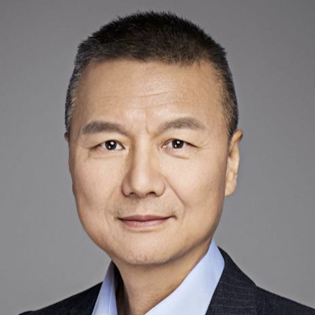
 Zhiqiang (ZZ) Zhang (张志强) is President of ABB in China since October 2018. He has extensive management experience and a deep understanding of the Chinese market, developed during his career at several large global companies over the past three decades. He joined ABB from Sandvik where he was Asia- Pacific Regional Holding Officer and President of Sandvik China, and Member of Sandvik Group Executive Committee. Prior to that, he held leadership positions at several other companies, including Nokia Siemens Networks, where he was President of the Greater China Region, and Siemens VDO Automotive, China, where he was President and CEO. Mr. Zhang is Non-Executive Board member of Georg Fischer AG (Switzerland) and Daetwyler Holding AG (Switzerland). He holds a bachelor’s degree in electronic engineering from Beijing Jiaotong University, China, and a master’s degree in business administration from the Smith School of Business at Queen’s University in Canada.
 Jean C. Oi is the William Haas Professor of Chinese Politics in the Department of Political Science and a senior fellow in the Freeman Spogli Institute for International Studies at Stanford University. She directs the China Program at the Walter H. Shorenstein Asia-Pacific Research Center and is the Lee Shau Kee Director of the Stanford Center at Peking University. Professor Oi has published extensively on China’s reforms. Recent books include Zouping Revisited: Adaptive Governance in a Chinese County, coedited with Steven Goldstein (Stanford University Press, 2018), and Challenges in the Process of China’s Urbanization, coedited with Karen Eggleston and Yiming Wang (2017). Current research is on fiscal reform and local government debt, continuing SOE reforms, and the Belt and Road Initiative.
 Christopher Thomas was most recently a partner with McKinsey & Company. He served as co-Managing Partner for the Firm’s Global Digital Strategy service line as well as its Global IoT service line; and as the leader of its Asia Semiconductor Practice. Prior to McKinsey, Mr. Thomas spent ten years at Intel. He was the General Manager of Intel China, with joint ownership for the region’s $5 billion-plus P&L. In this role, he grew revenues by more than 50% and oversaw China’s successful elevation from a sales unit to an independent regional P&L business reporting directly into headquarters. Mr. Thomas began his career as a private equity investor at The Blackstone Group in New York City. He is currently a Visiting Professor at Tsinghua University, China’s leading educational institution. He received an MBA from Stanford Business School, where he was an Arjay Miller scholar; a Master of Arts in Political Science from Stanford University; and a Bachelor of Science in Economics, summa cum laude, from the Wharton School.