Health and Medicine

FSI’s researchers assess health and medicine through the lenses of economics, nutrition and politics. They’re studying and influencing public health policies of local and national governments and the roles that corporations and nongovernmental organizations play in providing health care around the world. Scholars look at how governance affects citizens’ health, how children’s health care access affects the aging process and how to improve children’s health in Guatemala and rural China. They want to know what it will take for people to cook more safely and breathe more easily in developing countries.

FSI professors investigate how lifestyles affect health. What good does gardening do for older Americans? What are the benefits of eating organic food or growing genetically modified rice in China? They study cost-effectiveness by examining programs like those aimed at preventing the spread of tuberculosis in Russian prisons. Policies that impact obesity and undernutrition are examined; as are the public health implications of limiting salt in processed foods and the role of smoking among men who work in Chinese factories. FSI health research looks at sweeping domestic policies like the Affordable Care Act and the role of foreign aid in affecting the price of HIV drugs in Africa.

-

Air pollution is a silent and invisible killer more lethal than violence, diseases, and smoking.  More than 95 percent of the global population lives in areas with unhealthy air by WHO standards.  Moreover, long-term exposure to polluted air can increase the probability of succumbing to COVID-19.  

Scientific solutions to contain air pollution are available, but limited progress has been made in implementing them.  Temporally, there has been an uneven success in reducing pollution even in the same locality over time, as exemplified by the exercise of political power to change the color of the sky leading up to the 2008 Beijing Olympics (aka Olympic Blue).  

In this talk, Professor Shen will discuss her new book, The Political Regulation Wave: A Case of How Local Incentives Systematically Shape Air Quality in China (Cambridge University Press, 2022).  Departing from extant works, which focus on air data manipulation or the effect of campaigns, the book asks, what explains the systematic temporal variation in actual and reported air quality after controlling for top-down implementation campaigns?  Making use of new data, approaches, and techniques from across social and environmental sciences, the book shows that local leaders ordered different levels of regulation over time based on what their political superiors desired, leading to the titular “waves” of regulation and pollution.  However, the effectiveness of their regulatory efforts depends on the level of ambiguity in controlling a particular pollutant.  When ambiguity dilutes regulatory effectiveness, having the right incentives and enhanced monitoring is insufficient for successful policy implementation.

You can read and download her book in pdf format here.

Image
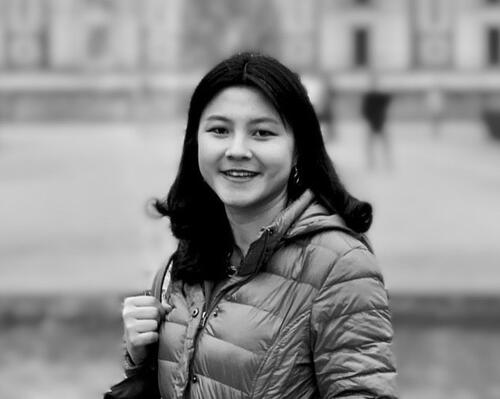
Portrait of Shiran Victoria Shen
Shiran Victoria Shen forged her own path at Stanford University by simultaneously completing a Ph.D. in political science and an MS in civil and environmental engineering in five years after graduating Phi Beta Kappa, Sigma Xi, and with high honors from Swarthmore College. Her research explores the intersections of political science, public policy, environmental sciences, and engineering, with a particular understanding of how local politics influence environmental governance. Her first book, The Political Regulation Wave: A Case of How Local Incentives Systematically Shape Air Quality in China, was published by Cambridge University Press in March 2022.  In dissertation form, it was the recipient of two major association awards, the American Political Science Association’s Harold D. Lasswell Award and the Association for Public Policy Analysis and Management’s Ph.D. Dissertation Award. Earlier versions of its parts received the American Political Science Association’s Paul A. Sabatier Award for the best paper in science, technology & environmental politics and the Southern Political Science Association’s Malcolm Jewell Award for the best overall graduate student paper.

You can learn more about her work at http://svshen.com and follow her on Twitter @SVictoriaShen.

Via Zoom

Shiran Victoria Shen National Fellow, Hoover Institution, Stanford University; Assistant Professor of Environmental Politics, University of Virginia
Seminars
-

Register: https://bit.ly/3Ncvj7B

AHPP “Aligning incentives” series final webinar: May 12th 6pm PDT, May 13th 9am in Hong Kong and Singapore

How has Myanmar’s health system dealt with the devastation caused by the coup and the pandemic, and what are the current opportunities and challenges for response and recovery? In this panel of two experts, Dr. Thin Zaw will first discuss how Myanmar’s health system and health workforce are endeavoring to respond to the syndemic crisis, a deadly combination of the global pandemic, the military coup, and post-coup civil conflicts. She will also discuss how stakeholders are working together to try to mitigate the crisis, and how a federal health system could be built up to align incentives for effective collaboration among ethnic health organizations. Second, Dr. Tun will provide a grassroots medical humanitarian perspective on what is happening in Myanmar. He will present results of a mixed-methods survey conducted in non-military-controlled areas from October to December 2021, discussing how Myanmar professionals including healthcare workers are spearheading the Civil Disobedience Movement, helping internally displaced people, and trying to address the healthcare needs of populations in conflict areas.

Image
Phyu Phyu Thin Zaw 051222
Phyu Phyu Thin Zaw (MBBS, MPP, PhD), who is a Burmese national, is a medical doctor, epidemiologist and health systems researcher currently working as a Lecturer in the School of Public Health in the Li Ka Shing Faculty of Medicine, University of Hong Kong. She is also a member of the Steering Committee of the Science in Exile initiative, which brings together at-risk, displaced and refugee scientists along with like-minded organizations who work together to strengthen systems that support, protect and integrate such affected scientists. Phyu Phyu’s research interests are equity, health and education policies, Southeast Asia health systems and policies, sexual and reproductive health, gender equality, poverty eradication, and human rights issues. Dr. Thin Zaw is also a public health and policy consultant giving technical advice to think tanks and non-governmental organizations.

Image
Nay Lin Tun 051222
Nay-Lin Tun (MD, MPP) is a medical doctor by training, and recently earned a Master in Public Policy from the National University of Singapore. He works as a program manager for a local organization that focuses on social cohesion and pluralism among diverse communities. In this role, he manages programs that help vulnerable communities in remote, hard-to-reach, and conflict-affected areas of Myanmar to get access to health services and provide financial assistance to injured civilians who need emergency referrals to private hospitals. Dr. Tun experienced a turning point in his career in 2017 when he went to the conflict-riven northern Rakhine areas. Witnessing people’s suffering and discrimination firsthand compelled him to initiate mobile health clinics and speak out in the media about health care challenges. On a voluntary basis, he is coordinating international donations and grants to field medical teams in conflict-affected areas of the country.

Karen Eggleston

Via Zoom Webinar.

Phyu Phyu Thin Zaw Lecturer, University of Hong Kong
Nay Lin Tun Physician and Medical Humanitarian in Singapore
Seminars
-

Register: bit.ly/3tymltK

Gender and socioeconomic differences affect a country's ability to support its older adult population. Specifically, the longevity risk associated with females' longer life expectancy entails different needs between genders in old age. In the first project, we aimed to quantify gender differences in the aging experience of OECD countries. Our second project compares differences in projections of disability and chronic diseases among future cohorts of older adults, including disparities by educational attainment. The model projected future chronic diseases and disability trends in Singapore and South Korea from 2020 to 2050. This presentation focuses on gender and socioeconomic differences in aging.

Cynthia Chen 042722

Dr. Cynthia Chen joins the Walter H. Shorenstein Asia-Pacific Research Center (APARC) as visiting scholar with the Asia Health Policy Program during the 2022 winter and spring quarters. She is an Assistant Professor at the National University of Singapore (NUS). Her current research focuses on the well-being and older adults, healthcare financing, and the economics of ageing. She is interested in how demographic, economic and social changes can affect the burden of care, financing needs and optimal resource allocation in the future. Her research has been supported by the Singapore’s Ministry of Health, Ministry of Education, the US National Institutes of Aging, and the Thai Health Promotion Foundation among others. To date, she has published more than 45 internationally peer-reviewed journals on societal ageing, the burden of chronic diseases, and cost-effectiveness research. Dr. Chen obtained her Ph.D. in Public Health, Masters and BSc in Statistics from NUS.


Karen Eggleston

 Via Zoom Webinar.

Shorenstein APARC Encina Hall E301 Stanford University
1
Visiting Scholar at APARC, 2021-2022
huijun_cynthia_chen.jpeg Ph.D

Dr. Cynthia Chen joined the Walter H. Shorenstein Asia-Pacific Research Center (APARC) as visiting scholar with the Asia Health Policy Program during the 2022 winter and spring quarters. She is an Assistant Professor at the National University of Singapore (NUS). Her current research focuses on the well-being and older adults, healthcare financing, and the economics of ageing. She is interested in how demographic, economic and social changes can affect the burden of care, financing needs and optimal resource allocation in the future. Her research has been supported by the Singapore’s Ministry of Health, Ministry of Education, the US National Institutes of Aging, and the Thai Health Promotion Foundation among others. To date, she has published more than 45 internationally peer-reviewed journals on societal ageing, the burden of chronic diseases, and cost-effectiveness research. Dr. Chen obtained her Ph.D. in Public Health, Masters and BSc in Statistics from NUS.

2022 Walter H. Shorenstein Asia-Pacific Research Center Visiting Scholar
Seminars
Paragraphs

Image
Cover of the journal Social Indicators Research
This study investigates the strength and significance of the associations of health workforce with multiple health outcomes and COVID-19 excess deaths across countries, using the latest WHO dataset.

Multiple log-linear regression analyses, counterfactual scenarios analyses, and Pearson correlation analyses were performed. The average density of health workforce and the average levels of health outcomes were strongly associated with country income level. A higher density of the health workforce, especially the aggregate density of skilled health workers and density of nursing and midwifery personnel, was significantly associated with better levels of several health outcomes, including maternal mortality ratio, under-five mortality rate, infant mortality rate, and neonatal mortality rate, and was significantly correlated with a lower level of COVID-19 excess deaths per 100K people, though not robust to weighting by population.

The low density of the health workforce, especially in relatively low-income countries, can be a major barrier to improving these health outcomes and achieving health-related Sustainable Development Goals (SDGs); however, improving the density of the health workforce alone is far from enough to achieve these goals. Our study suggests that investment in health workforce should be an integral part of strategies to achieve health-related SDGs, and that achieving non-health SDGs related to poverty alleviation and expansion of female education are complementary to achieving both sets of goals, especially for those low- and middle-income countries. In light of the strains on the health workforce during the current COVID-19 pandemic, more attention should be paid to health workforce to strengthen health system resilience and long-term improvement in health outcomes.

All Publications button
1
Publication Type
Journal Articles
Publication Date
Journal Publisher
Social Indicators Research
Authors
Karen Eggleston
Jinlin Liu
-

Using administrative data on over 4 million hospital visits, we document striking gender disparities within a government health insurance program that entitles 46 million poor individuals to free hospital care in Rajasthan, India. Females account for only 33% of hospital visits among children and 43% among the elderly. These shares are lower for more expensive types of care, and far lower than sex differences in illness prevalence can explain. Almost two-thirds of non-childbirth spending is on males. We combine these data with patient survey, census, and electoral data to show that 1) the program is unable to fully offset the costs of care-seeking, which results in disparities in hospital utilization because some households are willing to allocate more resources to male than female health; 2) lowering costs does not reduce disparities, because males benefit as much as females do; and 3) long-term exposure to village-level female leaders reduces the gender gap in utilization, but effects are modest and limited to girls and young women. In the presence of gender bias, increasing access to and subsidizing social services may increase levels of female utilization but fail to address gender inequalities without actions that specifically target females.

Image
Radhika Jain 4X4 022521
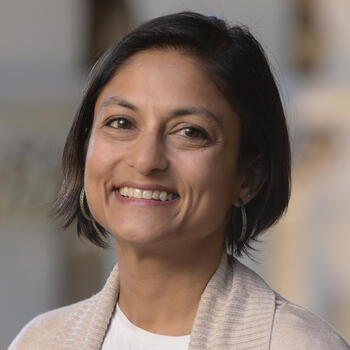
Radhika Jain is the Asia Health Policy Postdoctoral Fellow for 2019-2022 at the Walter H. Shorenstein Asia-Pacific Research Center (Shorenstein APARC).  Her research focuses on health care markets, the effectiveness of public health policy, and gender disparities in health.

She completed her doctorate in the Department of Global Health at Harvard University in 2019. Her dissertation examined the extent to which government subsidies for health care under insurance are captured by private hospitals instead of being passed through to patients, and whether accountability measures can help patients claim their entitlements. Dr. Jain's research has been supported by grants from the Weiss Family Fund and the Jameel Poverty Action Lab (JPAL). She has worked on impact evaluations of health programs in India and on the implementation of HIV programs across several countries in sub-Saharan Africa. She also held a doctoral fellowship at the Center for Global Development.

At Shorenstein APARC, Radhika is starting new work on understanding the factors that contribute to poor female health outcomes and interventions to increase the effectiveness of public health insurance.

Image
ahpp_-_aparc_spring_webinar_series_2022
This event is part of the 2022 Spring webinar series, Negotiating Women's Rights and Gender Equality in Asia, sponsored by the Walter H. Shorenstein Asia-Pacific Research Center.

Via Zoom Webinar
Register: bit.ly/3otRoDZ

Shorenstein APARC Stanford University Encina Hall E301 Stanford, CA 94305-6055
1
Asia Health Policy Postdoctoral Fellow, 2019-2022
radhika_jain.jpg Ph.D.

Radhika Jain was the Asia Health Policy Postdoctoral Fellow for 2019-2022 at the Walter H. Shorenstein Asia-Pacific Research Center (Shorenstein APARC).  Her research focuses on health care markets, the effectiveness of public health policy, and gender disparities in health.

She completed her doctorate in the Department of Global Health at Harvard University in 2019.  Her dissertation examined the extent to which government subsidies for health care under insurance are captured by private hospitals instead of being passed through to patients, and whether accountability measures can help patients claim their entitlements. Dr. Jain's research has been supported by grants from the Weiss Family Fund and the Jameel Poverty Action Lab (JPAL). She has worked on impact evaluations of health programs in India and on the implementation of HIV programs across several countries in sub-Saharan Africa. She also held a doctoral fellowship at the Center for Global Development.

At Shorenstein APARC, Radhika began new work on understanding the factors that contribute to poor female health outcomes and interventions to increase the effectiveness of public health insurance.

2019-2022 Asia Health Policy Postdoctoral Fellow, Stanford University
Seminars

This event will offer simultaneous translation between Japanese and English. 
当イベントは日本語と英語の同時通訳がついています。

This is a virtual event. Please click here to register and generate a link to the talk. 
The link will be unique to you; please save it and do not share with others.
当イベントはZoomウェビナーで行われます。ウェビナーに参加するためには、
こちらのリンクをクリックし、事前登録をして下さい。


Febuary 14, 4-5:30 p.m. California time/ February 15, 9-10:30 a.m. Japan time

This event is part of the 2022 Japan Program Winter webinar series, The Future of Social Tech: U.S.-Japan Partnership in Advancing Technology and Innovation with Social Impact


COVID-19 has changed the way we work. While remote work has become the norm, the pandemic has also highlighted the inequity in childcare, elderly care, and household work. Japanese workplaces feel a particularly acute need for adjustment, as lack of digitalization and persistent gender inequality continue to limit productivity gains and diversity in the workforce. Social entrepreneurs in Japan have started offering new technologies that address these problems and transform Japanese work environments, using matching algorithms, innovative apps, and other new technologies. How can these social technologies reshape the workplace? What principles do we need in using these technologies in practice, in order to unlock the keys to untapped human resource potentials and realize a more equitable and inclusive work environment in Japan, the United States, and elsewhere?  Fuhito Kojima, a renowned economist specializing in matching theory, will talk about market design from the perspective of regulation design and economics, and Eiko Nakazawa, an influential entrepreneur, will speak about her experiences founding education and childcare startups in the United States and Japan, moderated by Yasumasa Yamamoto, a leading expert on technology and business in Japan and the United States. 


Panelists

Image
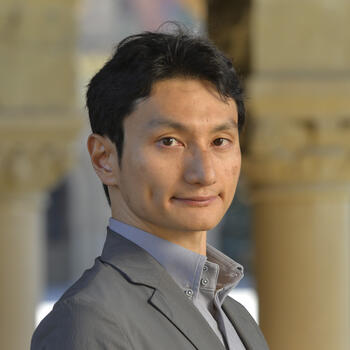
Photo of Fuhito Kojima
Fuhito Kojima is a Professor of Economics at the University of Tokyo and Director of the University of Tokyo Market Design Center. He received a B.A. at University of Tokyo (2003) and PhD at Harvard (2008), both in economics and taught at Yale (2008-2009, as postdoc) and then Stanford (2009-2020, as professor) while spending one year at Columbia in his sabbatical year. His research involves game theory, with a particular focus on “market design,” a field where game-theoretic analysis is applied to study the design of various mechanisms and institutions. His recent works include matching mechanism designs with complex constraints, and he is working on improving medical residency match and daycare seat allocation in Japan based on his academic work. Outside of academia, he serves as an advisor for Keizai Doyu Kai as well as several private companies.


Image
Photo of Eiko Nakazawa
Eiko Nakazawa is the Founder and CEO of Dearest, Inc., a VC-Backed startup in the United States that makes high-quality learning, childcare, and parenting support accessible by helping employers subsidize those costs for their working families. She also advises and invests in early-stage startups, and has recently co-founded Ikura, Inc., an education x fintech company in Japan. Prior to founding Dearest, Nakazawa spent 11 years with Sony Corporation, where she led global marketing, turnaround, and new business launch initiatives. Nakazawa earned an M.S. in Management from Stanford Graduate School of Business.


Moderator

Image
Photo of Yasumasa Yamamoto
Yasumasa Yamamoto is a Visiting Professor at Kyoto University graduate school of management and has been a specialist in emerging technology such as fintech, blockchain, and deep learning. He was previously industry analyst at Google, senior specialist in quantitative analysis of secularized products, as well as derivatives at Bank of Tokyo Mitsubishi in New York. Yamamoto holds a M.S. from Harvard University and a masters degree from University of Tokyo.


Via Zoom Webinar
Register:  https://bit.ly/3odkWFT 


Fuhito Kojima <br>Professor of Economics at the University of Tokyo<br><br>
Eiko Nakazawa <br>Founder and CEO, Dearest Inc.<br><br>
Yasumasa Yamamoto <br>Visiting Professor at Kyoto University
Panel Discussions
News Type
News
Date
Paragraphs

The Shorenstein APARC Predoctoral Fellowship supports Stanford students working within a broad range of topics related to contemporary Asia. APARC is now accepting applications for the 2022-23 Predoctoral Fellowship. Up to three fellowships are available to Ph.D. candidates who have completed all fieldwork and are nearing the completion of their dissertation. Applications are due by April 15, 2022.

The Center will give priority to candidates who are prepared to finish their degree by the end of the 2022-23 academic year.

This opportunity is open to current Stanford students only.

APARC offers a stipend of $37,230 for the 2022-23 academic year, plus Stanford's Terminal Graduate Registration (TGR) fee for three quarters. We expect fellows to remain in residence at the Center throughout the year and to participate in Center activities.

Read More

Stanford
News

Call for Stanford Student Applications: APARC Hiring 2022 Summer Research Assistants

To support Stanford students working in the area of contemporary Asia, the Shorenstein Asia-Pacific Center is offering research assistant positions for summer 2022. The deadline for submitting applications and letters of recommendation is March 1, 2022. 
Call for Stanford Student Applications: APARC Hiring 2022 Summer Research Assistants
Stanford arch and text calling for nominations for APARC's 2022 Shorenstein Journalism Award.
News

2022 Shorenstein Journalism Award Open to Nomination Entries

Sponsored by Stanford University’s Shorenstein Asia-Pacific Research Center, the annual award recognizes outstanding journalists and journalism organizations for excellence in coverage of the Asia-Pacific region. News editors, publishers, scholars, and organizations focused on Asia research and analysis are invited to submit nominations for the 2022 award through February 15.
2022 Shorenstein Journalism Award Open to Nomination Entries
Kate Imy
Q&As

How Feminist Military History Sheds Light on Colonial Rule and Warfare

In this interview, Lee Kong Chian NUS-Stanford Fellow on Southeast Asia Kate Imy discusses her research into identity in the twentieth-century British imperial world and her current book project on the colonial roots of winning "hearts and minds" in war, specifically focusing on Malaya and Singapore.
How Feminist Military History Sheds Light on Colonial Rule and Warfare
Hero Image
Encina Commons, Stanford with text about APARC's 2022-23 predoctoral fellowship
All News button
1
Subtitle

Up to three fellowships are available to Stanford Ph.D. candidates. Submissions are due by April 15, 2022.

-

This event will offer simultaneous translation between Japanese and English. 
当イベントは日本語と英語の同時通訳がついています。

This is a virtual event. Please click here to register and generate a link to the talk. 
The link will be unique to you; please save it and do not share with others.
当イベントはZoomウェビナーで行われます。ウェビナーに参加するためには、
こちらのリンクをクリックし、事前登録をして下さい。


February 7, 5-6:30 p.m. California time/ February 8, 10-11:30 a.m. Japan time

This event is part of the 2022 Japan Program Winter webinar series, The Future of Social Tech: U.S.-Japan Partnership in Advancing Technology and Innovation with Social Impact


Japan’s startup scene has become more exciting in recent years, but in the medical field, the failure to develop COVID-19 vaccines highlighted the shortcomings of Japan’s medical industry. What should Japan do to foster more impactful biotechnology entrepreneurship that would leverage vibrant medical research carried out at Japanese universities? The panel features two speakers who founded and grew their medical ventures in Japan's rapidly maturing startup ecosystem, both with deep connections to university research. 

Tadahisa Kagimoto founded his first company right after finishing his medical degree at Kyushu University, pioneering a pathway of commercializing biotechnology from Japanese university research. His second startup, Healios, founded in 2013 with the goal of becoming a pioneer in regenerative medicine utilizing iPS, was successfully listed on the Tokyo Stock Exchange in 2015 and has been growing since.

Shoko Takahashi was a PhD student in molecular bioscience at the University of Tokyo when she founded her company, Genequest, to offer home DNA testing. The firm was purchased by another biotech startup founded by a University of Tokyo graduate, Euglena, in 2017, and the company has partnered with a variety of pharmaceutical, food and beverage companies, and universities in its research. Their entrepreneurial journeys reveal Japan's changing startup ecosystem that has rapidly matured over the past decade and signal a need for further development in regulatory environments, human resource development, and university-industry collaboration in the biotechnology industry.


Panelists

Image
Photo portrait of Tadahisa Kagimoto
Hardy TS Kagimoto, MD is founder, Chairman and CEO of HEALIOS K.K., a Tokyo-based, clinical-stage world leader in regenerative medicine and cell therapy. 

After founding Healios in 2011, Dr. Kagimoto led the company’s listing on the Tokyo Stock Exchange in 2015 and has built the company to its current scale of more than 140 people across its Japan and US offices. Healios leverages the favorable Japanese regulatory framework for regenerative medicine to efficiently deliver results for patients and its stakeholders. It is currently running two pivotal clinical trials for ischemic stroke and acute respiratory distress syndrome using bone marrow-derived allogeneic multipotent adult progenitor cells. At the same time, Healios is developing best-in-class, next generation pipeline assets in immuno-oncology, ophthalmology, and organ buds utilizing its innovative, proprietary universal donor iPS cell platform.


Image
Photo of Shoko Takahashi
Shoko Takahashi founded the Japanese personal genome company Genequest Inc. in 2013 while a graduate student at the University of Tokyo. Genequest provides a web-based personal genetic service for consumers and collaborates with research institutions in a large-scale genome research project to maximize synergistic effects between research and personal genome services. She is filled with ambition to accelerate genetic research and contribute to human health all over the world. She graduated from the University of Tokyo with a Ph.D. in Molecular Bioscience in 2015, and Kyoto University with a Bachelor of Biochemistry Science in 2010. She has been awarded the Japan Venture Award and received the highest rating by the Japan Ministry of Economy. In 2015, she was commended by the Japan Minister of Education, Culture, Sports, Science and Technology as one of the researchers contributing major innovations to science technologies in Japan.

She received the 2018 Young Global Leaders award from the World Economic Forum and was selected for Newsweek's ‘100 respected Japanese in the world’ list.


Moderator

Image
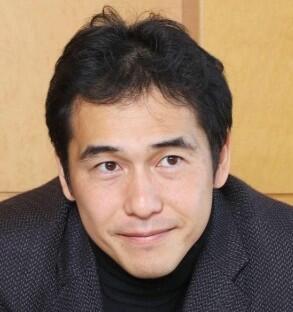
Photo portrait of Kenji Kushida
Kenji E. Kushida is a Senior Fellow, Carnegie Endowment for International Peace. He previously was with the Japan Program at the Walter H. Shorenstein Asia-Pacific Research Center as a research scholar.

Kushida’s research and projects focused on the following streams : 1) how politics and regulations shape the development and diffusion of Information Technology such as AI; 2) institutional underpinnings of the Silicon Valley ecosystem, 2) Japan's transforming political economy, 3) Japan's startup ecosystem, 4) the role of foreign multinational firms in Japan, 4) Japan's Fukushima nuclear disaster. He spearheaded the Silicon Valley - New Japan project that brought together large Japanese firms and the Silicon Valley ecosystem.

He has published several books and numerous articles in each of these streams, including “The Politics of Commoditization in Global ICT Industries,” “Japan’s Startup Ecosystem,” "How Politics and Market Dynamics Trapped Innovations in Japan’s Domestic 'Galapagos' Telecommunications Sector," “Cloud Computing: From Scarcity to Abundance,” and others. His latest business book in Japanese is “The Algorithmic Revolution’s Disruption: a Silicon Valley Vantage on IoT, Fintech, Cloud, and AI” (Asahi Shimbun Shuppan 2016).


Via Zoom Webinar
Register:  https://bit.ly/3u1A10M


Tadahisa Kagimoto, MD. <br>Founder, Chairman, and CEO, Healios K.K.<br><br>
Shoko Takahashi <br>Founder and CEO, Genequest Inc.<br><br>
0
Former Research Scholar, Japan Program
kenji_kushida_2.jpg MA, PhD
Kenji E. Kushida was a research scholar with the Japan Program at the Walter H. Shorenstein Asia-Pacific Research Center from 2014 through January 2022. Prior to that at APARC, he was a Takahashi Research Associate in Japanese Studies (2011-14) and a Shorenstein Postdoctoral Fellow (2010-11).
 
Kushida’s research and projects are focused on the following streams: 1) how politics and regulations shape the development and diffusion of Information Technology such as AI; 2) institutional underpinnings of the Silicon Valley ecosystem, 2) Japan's transforming political economy, 3) Japan's startup ecosystem, 4) the role of foreign multinational firms in Japan, 4) Japan's Fukushima nuclear disaster. He spearheaded the Silicon Valley - New Japan project that brought together large Japanese firms and the Silicon Valley ecosystem.

He has published several books and numerous articles in each of these streams, including “The Politics of Commoditization in Global ICT Industries,” “Japan’s Startup Ecosystem,” "How Politics and Market Dynamics Trapped Innovations in Japan’s Domestic 'Galapagos' Telecommunications Sector," “Cloud Computing: From Scarcity to Abundance,” and others. His latest business book in Japanese is “The Algorithmic Revolution’s Disruption: a Silicon Valley Vantage on IoT, Fintech, Cloud, and AI” (Asahi Shimbun Shuppan 2016).

Kushida has appeared in media including The New York Times, Washington Post, Nihon Keizai Shimbun, Nikkei Business, Diamond Harvard Business Review, NHK, PBS NewsHour, and NPR. He is also a trustee of the Japan ICU Foundation, alumni of the Trilateral Commission David Rockefeller Fellows, and a member of the Mansfield Foundation Network for the Future. Kushida has written two general audience books in Japanese, entitled Biculturalism and the Japanese: Beyond English Linguistic Capabilities (Chuko Shinsho, 2006) and International Schools, an Introduction (Fusosha, 2008).

Kushida holds a PhD in political science from the University of California, Berkeley. He received his MA in East Asian Studies and BAs in economics and East Asian Studies with Honors, all from Stanford University.
Kenji Kushida <br>Senior Fellow, Carnegie Endowment for International Peace
Panel Discussions
News Type
News
Date
Paragraphs

Shorenstein APARC invites highly motivated and dedicated undergraduate- and graduate-level students to join our team as paid research assistant interns for the duration of the summer 2022 quarter. The research assistants work with assigned APARC faculty members on projects focused on contemporary Asia, studying varied issues related to the politics, economies, populations, security, foreign policies, and international relations of the countries of the Asia-Pacific region.

All research assistant positions are open to current Stanford students only.

Apply Now
 

APARC is now accepting applications for our summer 2022 RA positions. The deadline for submitting applications and letters of recommendation is March 1, 2022

All summer research assistant positions will be on campus for eight weeks. The hourly pay rate is $17 for undergraduate students, $25 for graduate students.

Decisions regarding the options for telecommuting work will be made closer to the appointment start dates in accordance with the evolving COVID-19 situation and the University's recommendations.


Please follow these application guidelines

I. Prepare the following materials:

II. Fill out the online application form for summer 2022, including the above two attachments, and submit the complete form.

III. Arrange for a letter of recommendation from a faculty to be sent directly to Shorenstein APARC.
Please note: the faculty members should email their letters directly to Kristen Lee at kllee@stanford.edu.

We will consider only applications that include all supporting documents.

Read More

Stanford arch and text calling for nominations for APARC's 2022 Shorenstein Journalism Award.
News

2022 Shorenstein Journalism Award Open to Nomination Entries

Sponsored by Stanford University’s Shorenstein Asia-Pacific Research Center, the annual award recognizes outstanding journalists and journalism organizations for excellence in coverage of the Asia-Pacific region. News editors, publishers, scholars, and organizations focused on Asia research and analysis are invited to submit nominations for the 2022 award through February 15.
2022 Shorenstein Journalism Award Open to Nomination Entries
Portrait of Ma'ili Yee, 2020-21 APARC Diversity Fellow
News

Student Spotlight: Ma’ili Yee Illuminates a Vision for Building the Blue Pacific Continent

With support from Shorenstein APARC’s Diversity Grant, coterminal student Ma’ili Yee (BA ’20, MA ’21) reveals how Pacific island nations are responding to the U.S.-China rivalry by developing a collective strategy for their region.
Student Spotlight: Ma’ili Yee Illuminates a Vision for Building the Blue Pacific Continent
Kate Imy
Q&As

How Feminist Military History Sheds Light on Colonial Rule and Warfare

In this interview, Lee Kong Chian NUS-Stanford Fellow on Southeast Asia Kate Imy discusses her research into identity in the twentieth-century British imperial world and her current book project on the colonial roots of winning "hearts and minds" in war, specifically focusing on Malaya and Singapore.
How Feminist Military History Sheds Light on Colonial Rule and Warfare
Hero Image
Stanford Rod Searcey
All News button
1
Subtitle

To support Stanford students working in the area of contemporary Asia, the Shorenstein Asia-Pacific Center is offering research assistant positions for summer 2022. The deadline for submitting applications and letters of recommendation is March 1, 2022. 

-

Bhutan time: Friday, February 4th, 2022, 8am to 9am.

Asia Health Policy Program (AHPP) 2021-22 Colloquium series "Aligning Incentives for Better Health and More Resilient Health Systems in Asia”

The Minister of Health of Bhutan, Her Excellency Dasho Dechen Wangmo, will share her insights and experiences from managing the national health system during the COVID-19 crisis, serving as President of the 74th World Health Assembly, and her views on health system strengthening, innovative primary care, chronic disease control, health governance, and the global implications of the pandemic as it unfolds in its third year.

Image
Bhutan Health Minister 010522
Her Excellency Dasho Dechen Wangmo, the only female Minister in the current cabinet of Bhutan, formally took charge of the Ministry of Health on 7th November 2018. Prior to joining politic in 2018, Her Excellency worked as a public health international consultant with primary focus on health systems, governance, policy and strategic planning for governments and civil societies in many countries (USA, India, Nepal, Bangladesh, PNG, Myanmar, Sri Lanka, Thailand, Senegal). She brings her background working on various global health issues including health system strengthening, health governance, grant implementation, monitoring and evaluation system to the current portfolio.

On 17th December 2020 in recognition of her outstanding service to the Nation, she was conferred the “Red Scarf”, one of highest honors a Bhutanese civilian can receive, by His Majesty the King. Her Excellency is a passionate public health advocate and social worker at heart. Hon’ble Lyonpo was nominated as the President of the 74th World Health Assembly (WHA) by Member States of the WHO’s South East Asia Region in 2020. She will hold the office of the President for a duration of one year and it is an honour bestowed on Bhutan for the first time since it became a member of the WHO in 1982.

In addition to her memberships in professional organizations, she is also a founder of the Bhutan Cancer Society, a CSO working for the well being of cancer patients in Bhutan, and a founding chairperson for Lhaksam, the HIV-positive network in the country. Her Excellency has a Master in Public Health (MPH) from Yale School of Public Health, New Haven, USA, and a Bachelor in Cardiopulmonary Science (magna cum laude) from Northeastern University, Boston, USA.

Via Zoom Webinar
Register: bit.ly/3G0tR4i

Her Excellency Lyonpo Dechen Wangmo Minister of Health of Bhutan
Seminars
Subscribe to Health and Medicine