Health and Medicine

FSI’s researchers assess health and medicine through the lenses of economics, nutrition and politics. They’re studying and influencing public health policies of local and national governments and the roles that corporations and nongovernmental organizations play in providing health care around the world. Scholars look at how governance affects citizens’ health, how children’s health care access affects the aging process and how to improve children’s health in Guatemala and rural China. They want to know what it will take for people to cook more safely and breathe more easily in developing countries.

FSI professors investigate how lifestyles affect health. What good does gardening do for older Americans? What are the benefits of eating organic food or growing genetically modified rice in China? They study cost-effectiveness by examining programs like those aimed at preventing the spread of tuberculosis in Russian prisons. Policies that impact obesity and undernutrition are examined; as are the public health implications of limiting salt in processed foods and the role of smoking among men who work in Chinese factories. FSI health research looks at sweeping domestic policies like the Affordable Care Act and the role of foreign aid in affecting the price of HIV drugs in Africa.

-

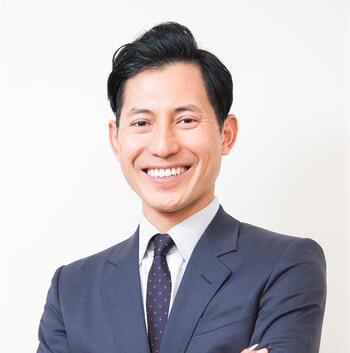
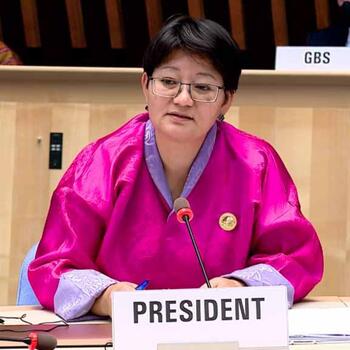
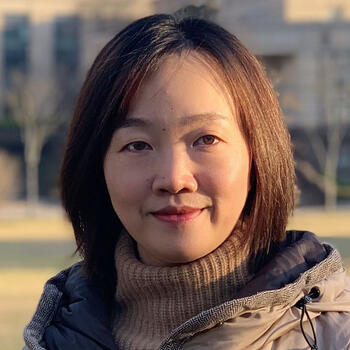
Few aspects of society are being transformed by technology more than health and medical care, with health systems challenged to finance and deliver affordable access to a burgeoning array of technologies enabling longer, healthier lives. Three speakers will address different and complementary aspects of how several Asian health systems create, evaluate, and regulate transformative technologies. Dr. Masuda’s research probes policies governing domestic and cross-border control and sharing of genetic information for medical innovation. Dr. Ahn will discuss health technology assessment (HTA) for pricing and reimbursement decisions in South Korea, where there is a young yet established HTA program, compared to Japan, where a 3-year HTA pilot program has just concluded, and China, where HTA efforts are underway but have not been formally implemented. Finally, Dr. Ho will discuss the emergence of digital medicine enabling N-of-1 regimen design for patients. Truly individualizing patient treatment requires addressing a series of challenges, from dynamic patient response to treatment regimens, to accounting for drug synergies in combination therapies which can be dose-dependent, time-dependent, and patient-specific, such as in oncology. Dr. Ho will summarize several clinical studies aiming to increase accessibility to personalized, precision medicine while reducing healthcare costs.

Image
Masuda, Sachiko 020822
Sachiko Masuda is a Visiting Scholar at the Walter H. Shorenstein Asia-Pacific Research Center (Shorenstein APARC) for the 2021-22 academic year and an Associate Professor at the University of Tokyo, Research Center for Advanced Science and Technology.  Masuda is dedicated to the study of legal systems, regulations, infrastructure and industrial structures necessary for advances in technology and a safer society, especially in the pharmaceutical and medical fields. At Shorenstein APARC, she is conducting a comparative Japan-U.S. study on "Human Genetic Information for Medical Innovation: Examining Policy Issues Related to Ensuring Domestic and Transnational Sharing and Management" supported by the ABE Fellowship Program of the Social Science Research Council. Masuda received a Ph.D. (specializing in intellectual property law) in 2006 and a B.S. in Pharmaceutical Sciences in 1997 from the University of Tokyo.

Image
Ahn, Jeonghoon 020822
Dr. Jeonghoon Ahn is a full professor at the Ewha Womans University (Seoul, Korea) and an adjunct fellow at the National Evidence-based healthcare Collaborating Agency (NECA), Seoul, Korea. He is an expert on health technology assessment (HTA) and health economics. He worked 7 years in NECA and served in various decision making and advisory committees of public agencies such as the Health Insurance Review and Assessment Services (HIRA) and the Korean Centers for Disease Control (KCDC). Professor Ahn has graduated the Seoul National University Department of International Economics for undergraduate and master program. He also received a PhD in Economics from the University of Southern California (USC) and was an assistant professor of pharmaceutical economics and Policy at the USC. Dr. Ahn has served on many international professional organizations such as ISPOR, HTAi, INAHTA, and HTAsiaLink. He is the Chair of the ISPOR Asia Consortium (2020-2022) and was a president of ISPOR Korea Chapter (2012-2014). Dr. Ahn was elected as a board director of the Health Technology Assessment International (HTAi) (2014-2016) and a board director for the International Network of Agencies for Health Technology Assessment (INAHTA) for three times (2012-2016). He also contributed to form a regional Health Technology Assessment agency network, the HTAsiaLink (www.htasialink.org), along with other experts in the region.

Image
Ho, Dean 020822
Professor Dean Ho is currently Provost’s Chair Professor, Director of The N.1 Institute for Health (N.1), Director of The Institute for Digital Medicine (WisDM) and Head of the Department of Biomedical Engineering at the National University of Singapore. Prof. Ho and collaborators successfully developed and validated CURATE.AI, a powerful digital medicine platform that has optimized human treatment for broad indications ranging from oncology to infectious diseases. He co-led the first inhuman clinical trials that have resulted in completely halted disease progression and durable patient responses that substantially outperformed standard of care approaches. Prof. Ho is a Fellow of the US National Academy of Inventors (NAI), the American Institute for Medical and Biological Engineering (AIMBE), and the Royal Society of Chemistry. He was also recently named to the HIMSS Future50 Class of 2021 for his internationally-recognised leadership in digital health. His discoveries have been featured on CNN, The Economist, National Geographic, Forbes, Washington Post, NPR and other international news outlets. Prof. Ho is also a Subgroup Lead in the World Health Organization (WHO)-ITU AI for Health Working Group for Regulatory Considerations. Prof. Ho is a recipient of the Tech Heroes from Crisis Pathfinder Award from the Singapore Computer Society, NSF CAREER Award, Wallace H. Coulter Foundation Translational Research Award, and V Foundation for Cancer Research Scholar Award, among others. He has also served as the President of the Board of Directors of the Society for Laboratory Automation and Screening (SLAS), a 26,000+ member global drug development organization.

Image
ahpp_-_aparc_winter_webinar_series_2022
This event is part of the 2022 Winter webinar series, New Frontiers: Technology, Politics, and Society in the Asia-Pacific, sponsored by the Walter H. Shorenstein Asia-Pacific Research Center.

Via Zoom Webinar
Register: https://bit.ly/3GGqOhv

Shorenstein APARC Encina Hall Stanford University
1
Visiting Scholar at APARC, 2021-2022
sachiko_masuda.jpg PhD

Sachiko Masuda joined the Walter H. Shorenstein Asia-Pacific Research Center (Shorenstein APARC) during the 2021-22 academic year from the University of Tokyo, Research Center for Advanced Science and Technology, where she serves as an associate professor.

Masuda is dedicated to the study of legal systems and regulations, infrastructure, and industrial structures necessary for advances in technology and a safer society, especially in the pharmaceutical and medical fields. During her time at Shorenstein APARC, Masuda conducted a comparative study between the US and Japan regarding “Human genetic information for medical innovation: Examining policy issues related to domestic and cross-border sharing and ensuring control” with Professor Karen Eggleston.

Masuda received a Ph.D. in Arts and Sciences (specializing in intellectual property law) in 2006 and a B.S. in Pharmaceutical Sciences in 1997 from the University of Tokyo. She is a registered patent attorney and pharmacist in Japan.

2021-2022 Walter H. Shorenstein Asia-Pacific Research Center Visiting Scholar, Stanford University.
Jeonghoon Ahn Professor, Ewha Womans University, and Adjunct Fellow, National Evidence-based Healthcare Collaborating Agency, Seoul, Korea.
Dean Ho Provost’s Chair Professor, Director, N.1 Institute for Health (N.1) and Institute for Digital Medicine (WisDM), Head, Department of Biomedical Engineering, National University of Singapore
Seminars
-

Asia Health Policy Program (AHPP) 2021-22 Colloquium series "Aligning Incentives for Better Health and More Resilient Health Systems in Asia”

How can policymakers quantify the net value of medical spending? For what medical conditions has the “bang for the buck” been greatest, and for what conditions has spending outstripped gains in health improvement? Join this virtual workshop to learn about cutting-edge methods that can be applied to health system data to understand the net value of changes in medical spending over time, and how policymakers can track the effectiveness of policies to increase productivity of medical spending. In addition to several Asian policymakers already involved, virtual workshop participants will have the opportunity to pose questions to the expert speakers about applying these methods to their own health system settings, including advice about data, outcomes, and relevance for specific policy questions.

Image
Cutler, David
David Cutler is the Otto Eckstein Professor of Applied Economics in the Department of Economics, Harvard University, with secondary appointments at the Kennedy School of Government and the School of Public Health. He was associate dean of the Faculty of Arts and Sciences for Social Sciences from 2003-2008. Professor Cutler served on the Council of Economic Advisers and the National Economic Council during the Clinton Administration and has advised several presidential campaigns, including as Senior Health Care Advisor for the Obama Presidential Campaign. He is a Research Associate at the National Bureau of Economic Research and a member of the Institute of Medicine, and he has held positions with the National Institutes of Health and the National Academy of Sciences

Image
Dunn, Abe
Abe Dunn is the Assistant Chief Economist at the Bureau of Economic Analysis.  His work has focused on the production and development of a new satellite account for health care and on evaluating and using alternative data sources for measurement purposes.  The Health Care Satellite Account uses billions of medical care claims from public and private sources to improve measurement for the U.S. health care sector, which allows researchers to analyze spending trends by medical condition.  Dr. Dunn has published research on a range of topics with a particular focus on health economic issues and measurement.  Most recently, his research has focused on measuring both the cost and the quality of medical care treatments. He received his PhD from the University of Texas at Austin with a primary focus in the areas of health economics and industrial organization.

Image
Weaver, Marcia 120121
Professor Marcia Weaver earned a PhD in economics at the University of Chicago. She specializes in cost-effectiveness analysis and has published 87 peer-reviewed articles. At the Institute for Health Metrics and Evaluation (IHME), she leads the research team on cost-effectiveness analyses of interventions to reduce the burden of disease. Prior to joining IHME she served as principal investigator of the Integrated Infectious Disease Capacity Building Evaluation in partnership with the Infectious Diseases Institute in Uganda. In the United States, she published on cost-effectiveness of interventions for people with HIV, chronic mental illness and substance abuse, and on a joint campaign to promote influenza and pneumococcal vaccines. Professor Weaver also has extensive experience with evaluating the effects of clinical training programs in Botswana, Indonesia, Namibia, South Africa, Thailand, and the Caribbean region, and served as a long-term advisor on health system reform to ministries of health in Niger and Central African Republic.

Via Zoom Webinar
Register: https://bit.ly/3D8yRBu

David M. Cutler Otto Eckstein Professor of Applied Economics, Harvard University
Abe C. Dunn Assistant Chief Economist, US Bureau of Economic Analysis
Marcia R. Weaver Research Professor, Health Metrics Sciences and Global Health, University of Washington
Seminars
Paragraphs

Shorenstein APARC's annual report for the academic year 2020-21 is now available.

Learn about the research, events, and publications produced by the Center's programs over the last twelve months. Feature sections look at how APARC has researched threats to democracy and human rights in Asia, including new and upcoming books on North Korea and Southeast Asia, and the Center's research on the new administration's Asia policy. Catch up on the Center's policy work, education initiatives, events, and outreach.

All Publications button
1
Publication Type
Annual Reports
Publication Date
-

Wednesday, November 17, 2021, 8:00am - 9:30am (Shanghai time)

Designing effective climate change mitigation and adaptation policies requires comprehensive assessment of the projected damages from climate change. However,  current climate policy is informed by outdated models lacking empirical grounding. In this talk, we use subnational mortality records across 40 countries to generate data-driven estimates of the global mortality consequences of climate change. We show that both extreme cold and extreme heat raise mortality rates, especially for the elderly, the poor, and populations that experience these extremes infrequently. These heterogeneous nonlinear responses to warming lead to highly differentiated projected impacts of climate change across the globe. In this talk we focus in particular on the Asia-Pacific region, where mortality risk generally rises with a warming climate, but projected damages differ substantially within and across countries. We conclude by demonstrating how these results can be used to inform local adaptation policy within an individual city, using Chengdu, China as a case study, and point to new developments in climate science that will enable future improvements in mortality risk assessment across Asia. 

Image
Tamma Carleton
Tamma Carleton is an Assistant Professor of Economics at the Bren School of Environmental Science and Management at the University of California, Santa Barbara. Her research combines economics with datasets and methodologies from remote sensing, data science, and climate science to quantify how environmental change and economic development shape one another. Tamma's current work focuses on climate change, water scarcity, and the use of remote sensing for global-scale environmental and socioeconomic monitoring. She is an active member of the Climate Impact Lab, an interdisciplinary team conducting an empirically-grounded global assessment of climate change impacts. Tamma joined the Bren School after a postdoc at the Energy Policy Institute at the University of Chicago. She holds a PhD in Agricultural and Resource Economics from the University of California, Berkeley, MSc.'s in Environmental Change and Management as well as Economics for Development from the University of Oxford, and a BA in Economics from Lewis & Clark College.

Image
Yuan, Jiacan
Jiacan Yuan is an Associate Professor of Climatology at the Department of Atmospheric and Oceanic Sciences at Fudan University, Shanghai, China. She is interested in understanding fundamental dynamical processes of the climate system and improving climate models, which could give us stronger predictive power and more accurate risk assessment of the changing climate. Jiacan’s current work focuses on understanding the physical processes and uncertainties in climate changes, with major emphases on compound heat-humidity extremes and sea level rise. She is also an active member of the Climate Impact Lab. Before joining Fudan University, Jiacan was an Assistant Research Professor at the Department of Earth and Planetary Sciences at Rutgers University. She holds a Ph.D. in Meteorology from Peking University.

Image
Solar panels and globe with text "Perfect Storm: Climate Change in Asia," APARC's fall 2021 webinar series
 This event is part of the 2021 Fall webinar series, Perfect Storm: Climate Change in Asia, sponsored by the Walter H. Shorenstein Asia-Pacific Research Center.

Via Zoom Webinar
Register: https://bit.ly/3DAaPA7

Tamma Carleton Assistant Professor, Environmental Economics, Climate Change, University of California, Santa Barbara
Jiacan Yuan Associate Professor of Atmospheric and Oceanic Sciences, Fudan University
Seminars
Paragraphs

Air purification in Chinese contexts over the last half century has been generative for a way of being human, what the author calls “filtered life.” This is a materially, aesthetically, and even humorously mediated form of dwelling. In it, people confront ethics and anxieties under conditions of aerosolized ruination.

This article sheds special light on links between gender binaries and filtered life. It traces how, prior to the COVID‐19 pandemic, scientists, marketers, and many others residing in urban China interacted with air filters in ways textured by the male state. Notably chronicled here is a critique of ecological ruin emergent in homes of the People's Republic of China (PRC), one mutating from ire toward husbands for smoking cigarettes in the home to more recent indictments of men despoiling the environment.

All Publications button
1
Publication Type
Journal Articles
Publication Date
Subtitle
Air Purification, Gender, and Cigarettes in the People's Republic of China
Journal Publisher
Public Culture
Authors
Matthew Kohrman
Number
2 (94)
-

Asia Health Policy Program (AHPP) 2021-22 Colloquium series "Aligning Incentives for Better Health and More Resilient Health Systems in Asia”

Friday, November 12, 2021, 7:30am - 8:30am (Jakarta time)

Dr. Alatas will discuss her research on promoting vaccination in Indonesia and the impact of the pandemic on Indonesia’s society and economy more generally, including on poverty, human capital, and development.

Image
Vivi Alatas 4X4
Vivi Alatas is an  economist with passion for evidence-based solutions.  She is CEO of Asakreativita, a consulting and Edtech company that she established in 2020. Formerly she was a Lead Economist of the World Bank, where she led a team of seasoned local and international economists in producing several flagship reports for national and global audiences, including ‘Targeting Poor and Vulnerable Households in Indonesia’, ‘Making Poverty Work in Indonesia’ , ‘Indonesia’s Rising Divide’, ‘Indonesia Jobs Report’ and “Aspiring Indonesia – Expanding the Middle Class”. She has presented various of these research findings to the President, Vice President, Ministers and Deputy Ministers. She also has written several journal articles on poverty, inequality and labour issues. Some of the papers were written in collaboration with Nobel Laureates Abhijit Banerjee and Angus Deaton (who was also her advisor at Princeton).

Via Zoom Webinar
Register: https://bit.ly/3FmTUTp

Vivi Alatas CEO, Asakreativita
Seminars

APARC Fall 2021 Webinar Series

The Asia-Pacific region is the world’s most vulnerable region to climate change risks. With its densely populated low-lying territories and high dependence on natural resources and agriculture sectors, Asia is increasingly susceptible to the impacts of rising sea levels and weather extremes. The impacts of climate change encompass multiple socioeconomic systems across the region, from livability and workability to food systems, physical assets, infrastructure services, and natural capital.

-

Asia Health Policy Program (AHPP) 2021-22 Colloquium series "Aligning Incentives for Better Health and More Resilient Health Systems in Asia”

Professor Mobarak will discuss his research on COVID-19 response in Bangladesh and beyond, including masking, vaccine equity, and appropriate pandemic response policies in low and middle income countries.

He will provide an overview of the coauthored MaskNorm study, a randomized-trial of community-level mask promotion in rural Bangladesh during COVID-19 that demonstrates a scalable and effective method to promote mask adoption and reduce symptomatic SARS-CoV-2 infections. He will also discuss efficient last-mile vaccine delivery in low-income countries and related research on the lower epidemiological and welfare value of social distancing in lower-income countries.

Image
Mobarak, Mushfiq
Ahmed Mushfiq Mobarak is a Professor of Economics at Yale University with concurrent appointments in the School of Management and in the Department of Economics.

Mobarak is the founder and faculty director of the Yale Research Initiative on Innovation and Scale (Y-RISE). He holds other appointments at Innovations for Poverty Action, the Jameel Poverty Action Lab (J-PAL) at MIT, the International Growth Centre (IGC) at LSE.

Mobarak has several ongoing research projects in Bangladesh, Brazil, Chile, Kenya, Malawi and Sierra Leone. He conducts field experiments exploring ways to induce people in developing countries to adopt technologies or behaviors that are likely to be welfare improving. He also examines the complexities of scaling up development interventions that are proven effective in such trials. For example, he is scaling and testing strategies to address seasonal poverty using migration subsidies or consumption loans in Bangladesh, Nepal and Indonesia. His research has been published in journals across disciplines, including Econometrica, Science, The Review of Economic Studies, the American Political Science Review, Proceedings of the National Academy of Sciences, and Demography, and covered by the New York Times, The Economist, Science, NPR, BBC, Wall Street Journal, the Times of London, and other media outlets around the world. He received a Carnegie Fellowship in 2017.

Mobarak is collaborating with the government of Bangladesh, NGOs and think-tanks such as BRAC and BIGD, the major Bangladeshi telecom providers, Innovations for Poverty Action, UNDP, other economists, epidemiologists, computer scientists, and public health researchers to devise evidence-based COVID response strategies for Bangladesh and for other developing countries. The approach and results have been covered by BBC, Foreign Policy, New York Times, Washington Post, Vox, and media in India, Pakistan, Bangladesh, Nigeria, Austria, Sweden, Denmark, among others.  The work is supported by the Bill and Melinda Gates Foundation, Givewell.org, the Global Innovation Fund, and Yale Macmillan Center.

Co-sponsored by


Image
South Asia logo
Image
South Asia logo

Via Zoom Webinar
Register: https://bit.ly/3ulFdLi

Ahmed Mushfiq Mobarak Professor of Economics, Yale University
Seminars
-

This is a virtual event. Please click here to register and generate a link to the talk. 
The link will be unique to you; please save it and do not share with others.

November 9, 4-5 p.m. California time/ November 10, 9-10 a.m. Japan time
(Note:  Daylight Saving Time in California ends November 7)

In April 2021, then Prime Minister Suga announced to the world that Japan will strive to achieve carbon neutrality by 2050, seemingly setting the country on a path toward accelerated energy transition primarily by renewables. Under Prime Minister Kishida, Japan’s commitment may be on a more shaky ground, as demands for steady energy supply by old industries gained more traction and calls for restarting nuclear power plants are becoming louder. In this new political environment, in which Japan’s energy policy seems to be in flux, what is the future of renewables, nuclear energy, and fossil fuels, and what is the best energy mix for Japan considering its unique geopolitical position?

Panelists 

Image
Photo of Phillip Lipscy
Phillip Lipscy is an associate professor of political science at the University of Toronto, the Chair in Japanese Politics and Global Affairs and the Director of the Centre for the Study of Global Japan at the Munk School of Global Affairs & Public Policy.  His research addresses substantive topics such as international cooperation, international organizations, the politics of energy and climate change, international relations of East Asia, and the politics of financial crises.  He has also published extensively on Japanese politics and foreign policy.  Lipscy's book from Cambridge University Press, Renegotiating the World Order: Institutional Change in International Relations, examines how countries seek greater international influence by reforming or creating international organizations.  Before arriving to the University of Toronto, Lipscy was assistant professor of political science and Thomas Rohlen Center Fellow at the Freeman Spogli Institute at Stanford University.  Lipscy obtained his Ph.D. in political science at Harvard University and received his M.A. in international policy studies and B.A. in economics and political science at Stanford University. 


Image
Photo of Mika Ohbayashi
Mika Ohbayashi is the Director at Renewable Energy Institute since its foundation in August 2011.  Before joining the Institute, she worked in Abu Dhabi for the International Renewable Energy Agency (IRENA) as Policy and Project Regional Manager for Asia Oceania. She is one of two founders of the Institute for Sustainable Energy Policies (ISEP) and served as Deputy Director for 8 years following its establishment in 2000. She also worked as Advisor for Climate Change Projects and Policies for UKFCO at the British Embassy to Japan. She started her career in the energy field by joining Citizens' Nuclear Information Center in 1992.  She was awarded the Global Leadership Award in Advancing Solar Energy Policy by the International Sola Energy Society (ISES) in 2017. 


Moderator

Image
Photo of Kiyo Tsutsui
Kiyoteru Tsutsui is the Henri H. and Tomoye Takahashi Professor, Professor of Sociology, Senior Fellow at the Freeman Spogli Institute for International Studies, and Deputy Director of the Walter H. Shorenstein Asia-Pacific Research Center, where he is also Director of the Japan Program. He is the author of Rights Make Might: Global Human Rights and Minority Social Movements in Japan (Oxford University Press, 2018), co-editor of Corporate Responsibility in a Globalizing World (Oxford University Press, 2016) and co-editor of The Courteous Power: Japan and Southeast Asia in the Indo-Pacific Era (University of Michigan Press, forthcoming 2021). 


Logo of Perfect Storm Fall webinar series


This event is part of the 2021 Fall webinar series, Perfect Storm: Climate Change in Asia, sponsored by the Walter H. Shorenstein Asia-Pacific Research Center.

Via Zoom Webinar
Register:  https://bit.ly/2YayEzo


Phillip Lipscy <br>Associate Professor of Political Science at the University of Toronto<br><br>
Mika Ohbayashi <br>Director of Renewable Energy Institute<br><br>
Kiyoteru Tsutsui <br>Director of the Japan Program and Professor of Sociology, Stanford University
Panel Discussions
Subscribe to Health and Medicine