Health and Medicine

FSI’s researchers assess health and medicine through the lenses of economics, nutrition and politics. They’re studying and influencing public health policies of local and national governments and the roles that corporations and nongovernmental organizations play in providing health care around the world. Scholars look at how governance affects citizens’ health, how children’s health care access affects the aging process and how to improve children’s health in Guatemala and rural China. They want to know what it will take for people to cook more safely and breathe more easily in developing countries.

FSI professors investigate how lifestyles affect health. What good does gardening do for older Americans? What are the benefits of eating organic food or growing genetically modified rice in China? They study cost-effectiveness by examining programs like those aimed at preventing the spread of tuberculosis in Russian prisons. Policies that impact obesity and undernutrition are examined; as are the public health implications of limiting salt in processed foods and the role of smoking among men who work in Chinese factories. FSI health research looks at sweeping domestic policies like the Affordable Care Act and the role of foreign aid in affecting the price of HIV drugs in Africa.

-

This event is part of the Asia Health Policy Program's 2021-22 Colloquium series "Aligning Incentives for Better Health and More Resilient Health Systems in Asia”

Three prominent demographers discuss China's demographic change with insights from the seventh national census. Topics include the pace of urbanization, the more balanced sex ratio, increasing educational attainment, population aging, potential impacts of the pandemic, and recently announced changes in family planning and retirement policies.

Image
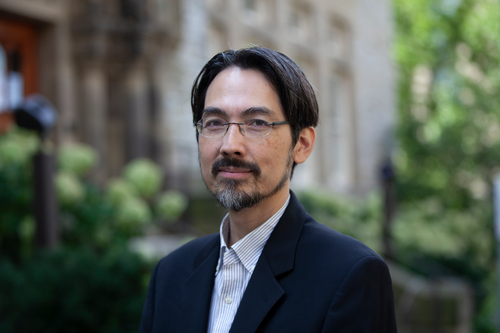
Wang Feng 2018 - 4X4
Wang Feng is professor of sociology at the University of California, Irvine, and an adjunct professor of sociology and demography at Fudan University in Shanghai, China. He has done extensive research on global social and demographic changes, comparative population and social history, and social inequality, with a focus on China. He is the author of multiple books, and his research articles have been published in venues including Population and Development Review, Demography, Science, The Journal of the Economics of Aging, The Journal of Asian Studies, The China Journal, and International Migration Review. He has served on expert panels for the United Nations, the World Economic Forum, and as a senior fellow and the director of the Brookings-Tsinghua Center for Public Policy. His work and views have appeared in media outlets, including The New York Times, The Washington Post, Financial Times, The Guardian, Economist, NPR, CNN, BBC, and others.

Image
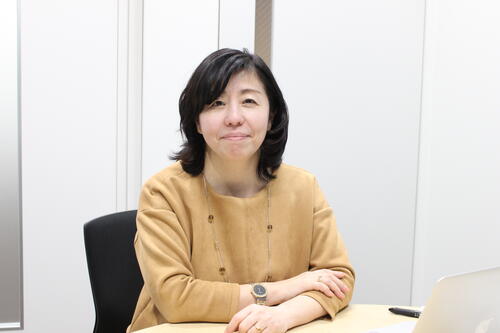
Cai Yong Photo
Cai Yong's research focuses on China's one-child policy and its implications for fertility and social policies. The one-child policy, engineered to control China's population growth by restricting fertility to one child per couple, has been controversial for many reasons, including the policy's questionable demographic and economic assumptions, the ethical concerns regarding direct state intrusion into family matters, and its negative social and demographic impacts. Cai's work has contributed to an emerging consensus on China's fertility change and the impact of the one-child policy. Specifically, his work shows that: China's fertility has dropped to a level well below the replacement; the demographic impact of the one-child policy was modest, much less than the government's claim of 400 million averted births; socioeconomic development played a critical role in driving China's fertility decline; and the socioeconomic impacts of low fertility and population aging are substantial. The consensus on these issues, to which Cai contributed, provided the empirical and scientific foundation that persuaded the Chinese government to end the three-decade-long policy.

Cai continues to monitor China's fertility in the post-one-child era, but with a new focus on international comparisons on sustained low fertility and population aging, both from a micro perspective about individual responses and family dynamics and from a macro perspective about social welfare regimes and public transfers.

Image
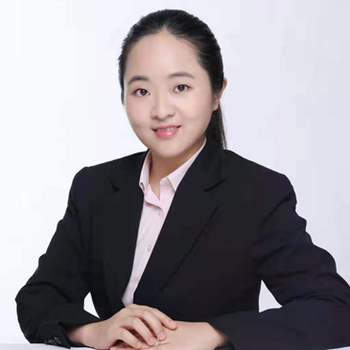
Li Shuzhuo 102121
Li Shuzhuo is currently University Distinguished Professor of Population and Development Policy Studies, Honorary Director of the Institute for Population and Development Studies, School of Public Policy and Administration, Xi’an Jiaotong University, and consulting professor at the Morrison Institute for Population and Resource Studies, Stanford University. He is a member of the Social Sciences Committee of the Ministry of Education of China. His research is focused on population and social development as well as public policies in contemporary China, including population policies and development, gender imbalance and sustainable social development, aging and health, migration and integration.

Via Zoom Webinar
Register: https://bit.ly/3ACP6GF

Wang Feng Professor, School of Social Sciences, University of California, Irvine
Cai Yong Associate Professor, Sociology, University of North Carolina, Chapel Hill
Li Shuzhuo Director and Professor, Institute for Population and Development Studies School of Public Policy and Administration, Xi’an Jiaotong University
Seminars
Authors
Noa Ronkin
News Type
News
Date
Paragraphs

The Walter H. Shorenstein Asia-Pacific Research Center (APARC) is pleased to invite applications for four types of fellowship in contemporary Asia studies for the 2022-23 academic year.

The Center offers postdoctoral fellowships that promote multidisciplinary research on contemporary Japan, contemporary Asia broadly defined, health or healthcare policy in the Asia-Pacific region, and a fellowship for experts on Southeast Asia. Learn more about each fellowship and its eligibility and specific application requirements:

Postdoctoral Fellowship on Contemporary Japan

Hosted by the Japan Program at APARC, the fellowship supports research on contemporary Japan in a broad range of disciplines including political science, economics, sociology, law, policy studies, and international relations. Appointments are for one year beginning in fall quarter 2022. The application deadline is January 3, 2022.
 

Shorenstein Postdoctoral Fellowship on Contemporary Asia

APARC offers two postdoctoral fellowship positions to junior scholars for research and writing on contemporary Asia. The primary research areas focus on political, economic, or social change in the Asia-Pacific region (including Northeast, Southeast, and South Asia), or international relations and international political economy in the region. Appointments are for one year beginning in fall quarter 2022. The application deadline is January 3, 2022.
 

Read More

Photo of Charles Crabtree
News

Charles Crabtree Appointed as a Visiting Assistant Professor with the Japan Program at APARC

Crabtree, an assistant professor at Dartmouth College, researches discrimination in politics, particularly in Japan.
Charles Crabtree Appointed as a Visiting Assistant Professor with the Japan Program at APARC
Portrait of Radhika Jain with text congratulating her on winning the inaugural Adam Wagstaff award
News

Asia Health Policy Postdoctoral Fellow Radhika Jain Wins Prestigious Health Economics Award

Jain is the recipient of the inaugural Adam Wagstaff Award for Outstanding Research on the Economics of Healthcare Financing and Delivery in Low- and middle-Income Countries. Her award-winning paper provides the first large-scale evidence on the behavior of private hospitals within public health insurance in India.
Asia Health Policy Postdoctoral Fellow Radhika Jain Wins Prestigious Health Economics Award
[Left] Postdoc Spotlight, Jeffrey Weng, Shorenstein Postdoctoral Fellow in Contemporary Asia, [Right] Jeffrey Weng
Q&As

Postdoc Spotlight: Jeffrey Weng on Language and Society

Shorenstein Postdoctoral Fellow in Contemporary Asia Jeffrey Weng shares insights from his research into how language and society shape one another, particularly how the historical use of Mandarin affects contemporary Chinese society and linguistics.
Postdoc Spotlight: Jeffrey Weng on Language and Society
Hero Image
Autumn scene on the Stanford campus with a call to apply for APARC's 2022-23 fellowships for Asia schoalrs
All News button
1
Subtitle

The Center offers fellowships for postdoctoral scholars specializing in contemporary Asia, Japan, and Asia health policy and for experts on Southeast Asia.

0
Shorenstein Postdoctoral Fellow on Contemporary Asia, 2021-22
mary-collier_wilks.jpg PhD

Mary-Collier Wilks joined the Walter H. Shorenstein Asia-Pacific Research Center (APARC) as Shorenstein Postdoctoral Fellow on Contemporary Asia for the 2021-2022 year. Her research interests include globalization, gender, and the politics of international development. Wilks' interests arose due to her work as a grant writer at a local NGO, Social Services of Cambodia. At that time, she began to think about the complicated process of foreign aid and international development, seeing how resources and ideas from all over the world flow through NGOs to affect the lives of people in Cambodia. Following from this experience, her research agenda centers meaning-making and power dynamics in international organizations. She is particularly interested in how development is encountered in people’s everyday lives, and the gendered meanings, divisions, and struggles that arise from such encounters.

Wilks recently obtained her Ph.D. in Sociology from the University of Virginia. For her dissertation, funded by the National Science Foundation and the Fulbright IIE, she conducted a multi-sited ethnography comparing INGOs from the U.S. and Japan implementing women's health programs in Cambodia. Her dissertation contributes to scholarly theories of global civil society and international development, contending that in order to adequately analyze and improve development outcomes, we must attend to national variation in INGO programs and practices. She has also worked as a consultant in the development sector, working as a researcher for a local NGO in Cambodia, conducting a gender analysis for a USAID health project, and served as a trainer for a USAID Women’s Leadership Conference.

At APARC, she worked on transforming her dissertation manuscript into a book and extending her comparative research agenda to investigate how NGO practices are shaped by the business cultures in which their donors are embedded.

Date Label
-

Asia Health Policy Program (AHPP) 2021-22 Colloquium series "Aligning Incentives for Better Health and More Resilient Health Systems in Asia”

Friday, October 29, 2021, 8:30am - 9:30am (Beijing time)

This paper investigates the impact of China’s reform of the system for medical payments from traditional fee-for-service to prospective payment in the form of diagnosis-related group. The paper explores comprehensive aspects of the reform, taking advantage of a large-scale administrative data set from a pilot city in China. It finds that medical expenditure per admission dropped by 7.3 percent, with greater impact on patients who spent a larger amount. To better understand the changes, further decompositions find that the expenditure reduction is fully explained by reduction in the quantity of services instead of using cheaper ones, and by reduction in the use of drugs but not reduction in other types of services, including examination, treatment, and nursing care. In addition, no evidence is found on quality deterioration or behavioral responses, including upcoding and cream skimming. Hospitals maintained their revenue through attracting more patients to contend with cost containment induced by the payment reform.

Image
Julie Shi 4X4
Julie Shi is Associate Professor of Health Economics in the School of Economics and the School of Global Health Development at Peking University. Dr. Shi’s research focuses on the design and impact of health care payment systems, the economics of health insurance coverage, drug regulations, and the trend of medical expenditures. Shi’s work has contributed to the theory and practice of China’s payment system reform. Her research on health insurance includes the impact of insurance on medical utilization. She has conducted academic and policy research on government regulations on prescription drugs. She also works on the trend of expenditures for patients with catastrophic diseases.

Dr. Shi’s undergraduate degree is from Tsinghua university and her PhD is from Boston University, both in economics. Before joining Peking University, she was a post-doctoral fellow at Harvard Medical School. Her work has published on leading academic journals including Journal of Public Economics, Journal of Health Economics, and Health Economics. She received awards for paper of the year in 2014 from the National Institute of Health Care Management (NIHCM) in the United States. She has conducted multiple projects for central and local governments in China for policy recommendation.


Via Zoom Webinar
Register: https://bit.ly/2YXJwkl

Julie Shi Associate Professor of Health Economics in the School of Economics and the School of Global Health Development, Peking University
Seminars
-

Fall 2021 Webinar Series Kickoff with Mr. Ban Ki-moon and Prof. Nicole Ardoin

September 28, 5-6 p.m. California time/ September 29, 9-10 a.m. Korea time

This event is held virtually via Zoom. Registration required.


The Asia-Pacific region is the world’s most vulnerable region to climate change risks. With its densely populated low-lying territories and high dependence on natural resources and agriculture sectors, Asia is increasingly susceptible to the impacts of rising sea levels and weather extremes. The impacts of climate change encompass multiple socioeconomic systems across the region, from livability and workability to food systems, physical assets, infrastructure services, and natural capital.

The Shorenstein Asia-Pacific Research Center’s Fall 2021 webinar series, “Perfect Storm: Climate Change in Asia,” explores climate change impacts and risks in the region, adaptation and mitigation strategies, and policy responses.

Join us for the series kickoff event, featuring a keynote address by former UN Secretary-General and former South Korean Foreign Minister Ban Ki-moon, who is known for putting sustainable development and climate change at the top of the UN agenda, and a discussion with Stanford social ecologist Nicole Ardoin, a leading expert in environment, sustainability, and climate change education. Mr. Ban’s keynote will focus on COVID-19 and climate change.


Panelists 

Portrait of Mr. Ban Ki-moonMr. Ban Ki-moon, Chairman of Ban Ki-moon Foundation for a Better Future, 8th Secretary-General of the UN

Ban Ki-moon is a South Korean diplomat who was the 8th Secretary-General of the United Nations and a career diplomat in South Korea’s Ministry of Foreign Affairs and in the UN.

Mr. Ban’s current leadership roles include the Chairman of South Korea’s Presidential National Council on Climate and Air Quality; Chairman of Boao Forum for Asia; Co-Chair of the Ban Ki-moon Centre for Global Citizens, Vienna; Chairman of the International Olympic Committee’s Ethics Committee; Distinguished Chair Professor and Honorary Chairman at the Institute of Global Engagement and Empowerment at Yonsei University in Seoul, Korea; and President of the Assembly and Chair of the Council of Global Green Growth Institute.

Mr. Ban served two consecutive terms as the Secretary General of the UN (2007-2016). Throughout his tenure at the UN, he strove to be a bridge builder, to give voice to the world’s poorest and the most vulnerable people, and to make the organization more transparent and effective. He successfully pressed for action to combat climate change — an effort that culminated in the adoption and rapid entry into the landmark Paris Agreement in 2016. Mr. Ban worked closely with member states of the UN to shape the 2030 Agenda for Sustainable Development and to establish UN Women, which has been advancing the organization’s work for gender equality and women’s empowerment. He also launched major efforts to strengthen UN peace operations, to protect human rights, to improve humanitarian response, and to prevent violent extremism and to revitalize the disarmament agenda.

At the time of his appointment at the UN, Mr. Ban was the Minister of Foreign Affairs and Trade of the Republic of Korea. His 37 years with the Ministry included postings in New Delhi, Washington D.C., and Vienna, and responsibilities for a variety of portfolios, including Foreign Policy Adviser to the President, Chief National Security Adviser to the President, Vice Minister, Deputy Minister for Policy Planning and Director-General for American Affairs. Mr. Ban has also been actively involved in issues relating to inter-Korean relations by serving as Chairman of the Preparatory Commission for the Comprehensive Nuclear Test Ban Treaty Organization.

Mr. Ban earned a master’s degree in public administration from the John F. Kennedy School of Government at Harvard University in 1985 and a bachelor’s degree in international relations from Seoul National University in 1970.
 

Image
Portrait of Nicole Ardoin
Nicole Ardoin, Emmett Family Faculty Scholar, is the Sykes Family Director of the Emmett Interdisciplinary Program in Environment and Resources (E-IPER) in the School of Earth, Energy, and Environmental Sciences at Stanford University. She is a senior fellow with the Stanford Woods Institute for the Environment and an associate professor in the Graduate School of Education.

Founder of the Stanford Social Ecology Lab, Professor Ardoin is an interdisciplinary social scientist who researches individual and collective environmental behavior as influenced by environmental learning and motivated by place-based connections. Professor Ardoin and members of her lab pursue their scholarship with a theoretical grounding and orientation focused on applications for practice. They often work in collaboration with community partners, including public, private, and social sector organizations at a range of scales, to co-design and implement studies that build on a theoretical frame while concurrently addressing questions of interest to the partners. This work occurs primarily in informal settings, such as parks and protected areas, nature-based tourism locales, community gathering spaces, and other everyday-life settings.

Interested in actionable knowledge and notions of co-production, Professor Ardoin and her group collaborate with sustainability, environmental conservation, and philanthropic organizations to study the design, implementation, and effectiveness of a range of social-ecological practices. Through reflective learning, curiosity, and humility, the Social Ecology Lab strives to bring theoretically based insights to sustainability opportunities and challenges.

Professor Ardoin is an associate editor of the journal Environmental Education Research, a trustee of the George B. Storer Foundation, chair of NatureBridge's Education Advisory Council, an advisor to the Student Conservation Association and Teton Science Schools, among other areas of service to the field.


Moderator

Image
Photo of Gi-Wook Shin
Gi-Wook Shin, Director of APARC and the Korea Program

Gi-Wook Shin is the director of the Walter H. Shorenstein Asia-Pacific Research Center; the William J. Perry Professor of Contemporary Korea; the founding director of the Korea Program; a senior fellow of the Freeman Spogli Institute for International Studies; and a professor of sociology, all at Stanford University. As a historical-comparative and political sociologist, his research has concentrated on social movements, nationalism, development, and international relations.

Via Zoom Webinar
Register:  https://bit.ly/3ndgszc


Mr. Ban Ki-moon <br>Chairman of Ban Ki-moon Foundation for a Better Future; 8th Secretary-General of the UN<br><br>
Nicole Ardoin <br>Emmett Family Faculty Scholar and Sykes Family Director of E-IPER, School of Earth, Energy & Environmental Sciences; Associate Professor, Graduate School of Education; Senior Fellow, Woods Institute for the Environment; Stanford University<br><br>
Gi-Wook Shin <br>Director of APARC and the Korea Program
Panel Discussions
Authors
News Type
News
Date
Paragraphs

This article was first published by the social and political economy portal IndiaSpend.


Women from poor households made about 235,000 fewer hospital visits compared to men for seven gender-neutral disease categories between January 2017 and October 2019, a new study analyzing a Rajasthan state health insurance scheme has estimated. The Bhamashah Swasthya Bima Yojana aims to provide health insurance to about 46 million persons living below the poverty line, as a step towards universal and equitable access to healthcare in the state, per the study.

Pascaline Dupas and Radhika Jain of Stanford University studied data of insurance claims from 4.2 million hospital visits under the Bhamashah scheme from its launch in December 2015 till October 2019, and the study was published as a National Bureau of Economic Research working paper. The study was conducted in partnership with the Rajasthan state government.

Women made up 45% of hospital visits under the Bhamashah scheme between January 2017 and October 2019, though their share in the population is 48%, per the study. The gender gap is starker for girls and older women. The share of girls in children aged under 10 years who visited the hospital under this insurance program was 33%, though their share of this age group's population is 47%; among those aged above 50 years, women are 51%, yet their share of hospital visits under this insurance program was 43%.

"We were struck by this discrepancy in the data. We were not expecting such a large [gender] difference," Dupas, an economist and professor at Stanford University, told IndiaSpend. In most other developed countries for which such data have been analyzed, subsidized healthcare usually caters to those who otherwise don't have access to it, added Jain, a postdoctoral fellow in Asia Health Policy at Stanford University, US.

Read More

Portrait of Radhika Jain with text congratulating her on winning the inaugural Adam Wagstaff award
News

Asia Health Policy Postdoctoral Fellow Radhika Jain Wins Prestigious Health Economics Award

Jain is the recipient of the inaugural Adam Wagstaff Award for Outstanding Research on the Economics of Healthcare Financing and Delivery in Low- and middle-Income Countries. Her award-winning paper provides the first large-scale evidence on the behavior of private hospitals within public health insurance in India.
Asia Health Policy Postdoctoral Fellow Radhika Jain Wins Prestigious Health Economics Award
Closeup on hands holding a glucometer
News

A New Validated Tool Helps Predict Lifetime Health Outcomes for Prediabetes and Type 2 Diabetes in Chinese Populations

A research team including APARC's Karen Eggleston developed a new simulation model that supports the economic evaluation of policy guidelines and clinical treatment pathways to tackle diabetes and prediabetes among Chinese and East Asian populations, for whom existing models may not be applicable.
A New Validated Tool Helps Predict Lifetime Health Outcomes for Prediabetes and Type 2 Diabetes in Chinese Populations
A woman walks past a mural referring to the Covid-19 coronavirus painted on a wall on December 10, 2020 in New Delhi, India.
News

How COVID-19 Disproportionately Impacts People with Chronic Conditions in India

A collaborative study by a group of researchers including APARC’s Karen Eggleston documents the adverse effects of COVID-19 on people with chronic conditions in India, particularly among poor, rural, and marginalized populations. The pandemic’s impacts extend beyond health disparities to encompass psychosocial and economic consequences, the study shows.
How COVID-19 Disproportionately Impacts People with Chronic Conditions in India
Hero Image
Two women standing in a street in Rajasthan, India UN Women/ Anindit Roy-Chowdhury/ Ashutosh Negi via Flickr
All News button
1
Subtitle

A new study of the Rajasthan government's Bhamashah health insurance program for poor households has found that just providing health insurance cover doesn't reduce gender inequality in access to even subsidized health care.

Authors
Radhika Jain
News Type
Commentary
Date
Paragraphs

This opinion piece was first published in the economics and policy portal Ideas for India.


Equity in healthcare is a key goal of health policy in India. Analyzing administrative data from Rajasthan, this article highlights substantial gender gaps in the utilization of subsidized hospital care under the state health insurance program. These disparities persist despite substantial program expansion and seem to be driven by households being less willing to allocate resources to female vis-à-vis male health.

Over the past 15 years, India’s central government and numerous state governments have put in place health insurance programmes that entitle low-income households to free healthcare at public and empanelled private hospitals. Health equity and universal health coverage are explicit goals of these programs. In new research, we study gender equity in the Bhamashah Swasthya Bima Yojana (BSBY)1 health insurance program, which was launched in the state of Rajasthan in 2015, and is similar in design to the national Pradhan Mantri Jan Arogya Yojana (PMJAY).

Our starting point is a dataset of insurance claims filed for all 4.2 million hospital visits between 2015 and 2019, including patient age, gender, residence address, hospital visited, dates of admission and discharge, and service(s) received. We geo-coded hospital locations and patient addresses, which allowed us to calculate proximity to hospitals and the distance traveled for every hospital visit. Finally, we linked the insurance data to the 2011 Census and data on three rounds of village-level (gram panchayat) elections. To our knowledge, the dataset we compiled from these various sources is the first dataset of its type in India and allows us to study care-seeking under insurance with unusual granularity.

Read More

Demographics and Innovation in the Asia-Pacific
News

New Book Explores the Intersection of Demographic Shifts and Innovation, Offering Lessons from Asian Nations

Contributing authors to the new volume 'Demographics and Innovation in the Asia-Pacific' convened for a virtual book launch and discussion of the challenges facing aging societies in East Asia and the roles technology and innovation may play in rebalancing them.
New Book Explores the Intersection of Demographic Shifts and Innovation, Offering Lessons from Asian Nations
A Japanese robot prototype lifts a dummy patient
News

Robot Adoption Brings Benefits to Japan’s Aging Society

In one of the first studies of service sector robotics, APARC scholars examine the impacts of robots on nursing homes in Japan. They find that robot adoption may not be detrimental to labor and may help address the challenges of rapidly aging societies.
Robot Adoption Brings Benefits to Japan’s Aging Society
[Left] A nurse assists an elderly woman in a wheel chair; [Right] Oliver Hart
News

Public-Private Partnerships for Effective Healthcare: Theory and Practice

In its 2020-21 colloquium series, the Asia Health Policy Program weighs the balance, benefits, and considerations in providing health services through national governments and contracting with private organizations.
Public-Private Partnerships for Effective Healthcare: Theory and Practice
Hero Image
Two women sitting outdoor in Khidarpur Jadoo, Rajasthan, India. @meaneggs via Unsplash
All News button
1
Subtitle

Stanford University researchers' study of Bhamashah Swasthya Bima Yojana reveals that just expanding geographical access and reducing the cost of healthcare won't reduce gender disparity.

Paragraphs

Using administrative data on over 4 million hospital visits, we document striking gender disparities within a government health insurance program that entitles 46 million poor individuals to free hospital care in Rajasthan, India. Females account for only 33% of hospital visits among children and 43% among the elderly. These shares are lower for more expensive types of care, and far lower than sex differences in illness prevalence can explain. Almost two-thirds of non-childbirth spending is on males. We combine these data with patient survey, census, and electoral data to show that 1) the program is unable to fully offset the costs of care-seeking, which results in disparities in hospital utilization because some households are willing to allocate more resources to male than female health; 2) lowering costs does not reduce disparities, because males benefit as much as females do; and 3) long-term exposure to village-level female leaders reduces the gender gap in utilization, but effects are modest and limited to girls and young women. In the presence of gender bias, increasing access to and subsidizing social services may increase levels of female utilization but fail to address gender inequalities without actions that specifically target females.

All Publications button
1
Publication Type
Working Papers
Publication Date
Subtitle
Gender Disparities in Utilization of Government Health Insurance in India
Journal Publisher
National Bureau of Economic Research
Authors
Radhika Jain
Number
Working Paper 28972
Authors
News Type
Q&As
Date
Paragraphs

This interview was first published by the Stanford News Service.


The 2020 Summer Olympics have begun this week but public support among the Japanese public for the games has been generally low and their mood can be articulated through the succinct question: “Why are we doing this now?” says Stanford sociologist and Japan Program Director Kiyoteru Tsutsui.

 
Here, Tsutsui discusses how the various challenges posed by the COVID-19 pandemic and other national scandals related to the games have led to a general dissatisfaction among the Japanese public towards their government and the International Olympic Committee. Despite low morale, the country’s mood may change once the Summer Games commence – barring any further complications or disruptions. But given that the games are pared down this year, it still may be hard to generate the same levels of excitement as in previous years, Tsutsui said.
 
Tsutsui is the Henri H. and Tomoye Takahashi Professor and director of the Japan Program at the Walter H. Shorenstein Asia-Pacific Research Center, which is part of the Freeman Spogli Institute for International Studies. Tsutsui is also a professor of sociology and his research focuses on social movements, globalization, human rights and Japanese society. He is the author of Rights Make Might: Global Human Rights and Minority Social Movements in Japan (Oxford University Press, 2018).
 

Polls among the Japanese public show mixed support for the games and meanwhile, major advertisers in the country are pulling out. As a sociologist, how do you see this mixed public sentiment affecting overall mood and morale?

There is no question that there is a strong headwind against the Olympics in the lead-up to the opening ceremony. Opinion polls are still against the games, although the numbers improved a little in recent weeks. The general public sentiment can be summed up as “Why are we doing this now?”

The road to the Tokyo Olympics has been a long and winding one complicated by COVID-19, first and foremost, and various scandals. The Japanese public has been fed up with the COVID-19-related emergency declarations and other restrictions as well as the slower pace of vaccination compared to other developed countries. The perception, right or wrong, is that the government is making decisions based on whether they help in hosting the Olympics successfully, when the focus should be on public health and economic rescue in the COVID environment.

Morale is low, but many are hoping that things will change quickly once the games begin. Whether that happens or not depends on a whole host of factors, most importantly whether major public health incidents and other unfortunate accidents happen or not, how Japanese athletes fare, who might emerge as global stars, and so on.

To what extent has the International Olympic Committee (IOC) helped or hindered support for the games among the Japanese public?

The Japanese public sees the IOC as simply pushing its economic interest without the proper regard for their safety and health. Many people do not understand that the Japanese government does not have the authority to cancel the Olympics and could have faced a lawsuit with a huge compensation at stake if it tried to do so. The IOC looks like the IMF/World Bank during the Asian economic crisis in affected countries or the EU in some European countries – an international entity that pushes its agenda without accountability to the citizens. The frustration has nowhere to go but to the Japanese government, which combined with overall COVID-19-related dissatisfaction, has led to the most recent polls showing the lowest approval rating for the government under Prime Minister Yoshihide Suga.

For Japan, hosting the 2020 Olympic Games initially symbolized the country’s rebound from the devastating Tōhoku earthquake, tsunami and Fukushima Daiichi nuclear accident in 2011 and was poised to boost their economy. Then COVID hit, and meanwhile, Olympic expenses ballooned. Are there any opportunities for the Olympic Games to help the country bounce back? 

The 2020 Olympics was initially framed as a symbol of recovery from the triple disaster in 2011, but that slogan is no longer central. The expenses were justified as a way to develop infrastructure for foreign visitors and increase inbound tourists, and the government’s goals for the number of visitors from abroad have been met already. With no spectators allowed, Japan will lose money on hosting the Olympics, but the economic damage is not irrecoverable. Once the world gets out of COVID-19, the Japanese economy will likely rebound and tourists will come back.

It will be interesting to follow how socially, in terms of the national psyche and its unity, Japan will respond to the Tokyo Olympics. Even when the games take place in other countries, the Olympics often serve as a moment of national unity, especially in Japan. With Japan being the host, many thought that it would serve as an enormous booster towards national confidence and unity. We have yet to see how the games will turn out, but these psychological impacts will likely be lessened as the games are scaled down and may not get as much global attention as typical Olympics do.

There’s still a chance for a better outcome though if the games go smoothly and offer many compelling moments. People in many countries are still more homebound than usual and the contents that the games offer could be attractive. And the Japanese public is known to swing from one side to the other very quickly and on a massive scale, so once the games begin, TV personalities who were questioning whether the games should happen will likely quickly turn around and support Japanese athletes and tout their accomplishments. That is, if no serious outbreak incidents occur.

The Olympics are often celebrated as a nonpolitical event that can unite the world. In a globally turbulent world, what do you make of that assessment? Can the Olympics be nonpolitical?

The Beijing Winter Olympics in 2022 is a case in point. Boycott of the games seems unlikely, but House Speaker Nancy Pelosi has already floated an idea of diplomatic boycott. There’s a lot at stake for the host country, and the Olympics will likely be politicized when countries like China, Russia or even the U.S. host it.

Another problem is that not many democracies would be eager to host the games anymore. Public support is needed for democracies to host the Olympics, but the growing cost of the games, combined with increasingly less clear benefits of hosting, has made it difficult to find democracies that are eager to be the host country. Meanwhile, non-democracies like China and Russia, and even smaller countries like Kazakhstan or Azerbaijan campaign to become host nations. The pattern of dictatorships hosting the Olympics and the world demanding a change in their human rights practices and, threatening a boycott, might be a recurring pattern in the coming decades.

 
Photo of Kiyoteru Tsutsui

Kiyoteru Tsutsui

Senior Fellow at FSI, Professor of Sociology, Director of the Japan Program
Full Biography

Read More

President Biden and President Suga walk through the Rose Garden colonnade at the White House
Commentary

China Looms Large, Despite a Strong US-Japan Alliance

From Taiwan and the Senkaku Islands to economics, trade, and human rights issues in Xinjiang and Hong Kong, the U.S.-Japan alliance has plenty to tackle with its policies towards China.
China Looms Large, Despite a Strong US-Japan Alliance
Logo of the New South Wales Ministry of Health's podcast Future Health
News

Robotics and the Future of Work: Lessons from Nursing Homes in Japan

On the Future Health podcast, Karen Eggleston discusses the findings and implications of her collaborative research into the effects of robot adoption on staffing in Japanese nursing homes.
Robotics and the Future of Work: Lessons from Nursing Homes in Japan
An Island that lies inside Taiwan's territory is seen with the Chinese city of Xiamen in the background.
Commentary

The Taiwan Temptation

Why Beijing Might Resort to Force
The Taiwan Temptation
Hero Image
A man cycles past a security fence outside the New National Stadium, the main stadium for the Tokyo Olympics, on June 23, 2021 in Tokyo, Japan
A man cycles past a security fence outside the New National Stadium, the main stadium for the Tokyo Olympics, on June 23, 2021 in Tokyo, Japan.
Yuichi Yamazaki/ Getty Images
All News button
1
Subtitle

While public support in Japan has been lackluster for the 2020 Tokyo Olympic Games, the mood may change once the games start – provided no major public health incidents and other unfortunate accidents occur, says Stanford sociologist Kiyoteru Tsutsui.

-

Co-sponsored with the Bush China Foundation

Image
Bush China Foundation logo 4X1

This event is part of Shorenstein APARC's spring webinar series "The United States in the Biden Era: Views from Asia."

The coronavirus pandemic has reinforced the importance of investing in population health domestically and globally, and of public-private collaboration in innovation for health goals--from technology for healthy aging to poverty alleviation and addressing other social determinants of health disparities. China, as the first health system to experience the devastation of COVID-19 and to rebound from pandemic control, offers lessons relevant beyond its borders. What can we draw from China's progress on healthcare development and its aims for innovation and public-private collaboration? In this webinar, Chinese practitioners and experts from academia and government will share their views on post-pandemic health policy and draw lessons for cooperation in global health. Scholars who have worked in and studied both the PRC and US health systems will discuss the challenges facing both—from strengthening risk protection and aligning incentives for quality improvement, to promoting goals articulated in the US’ 5th iteration of population health ‘ten-year plans’ (“Healthy People 2030”) and the PRC’s more recent “Healthy China 2030” and broader 14th Five Year Plan. What will it take to implement these ambitious goals? What is the linkage between health and China's foreign policy objectives and its place in the world? PRC experts share their views in this webinar co-hosted by Stanford’s Asia Health Policy Program and the George H. W. Bush Foundation for U.S.-China Relations.

Panelists:

Image
Cao Ying 4X4
Ying Cao is the China country director at Vital Strategies, where she leads the team to strengthen local public health systems through Vital Strategies’ Resolve to Save Lives’ global cardiovascular health initiative, tobacco control program, road safety program and evidence-based communication and policy advocacy. Dr. Cao brings over 15 years of experience in designing, leading, implementing and monitoring projects in the field of health and nutrition. She has extensive experience managing complex programs in China, with a specific focus on government and community-based programs to address unbalanced resource allocations to underprivileged areas.  Prior to joining Vital Strategies, Dr. Cao served as the director of Program Operations in Save the Children in China. Prior to Save the Children, she spent six years working in health and development within the non-profit sector and five years as a senior physician specializing in diagnostic ultrasound at Shanghai Ruijin Hospital.  Dr. Cao holds a master’s degree in public health nutrition from Wageningen University in the Netherlands and a bachelor’s degree in medicine from Shanghai Second Medical University.

Image
Gordon Liu 4X4
Gordon Liu is a leading expert on health and development economics, health policy reform, and pharmaceutical economics in China. He is a key figure in Chinese health care reform efforts and sits on the China State Council Health Reform Advisory Commission. Dr. Liu currently serves as an associate editor for Health Economics and China Economic Quarterly (CEQ) journals and was a coeditor of Value in Health, the official journal of ISPOR, and the editor-in-chief of the China Journal of Pharmaceutical Economics. He is president of the Chinese Society for Pharmacoeconomics and Outcomes Research and served as president of the Chinese Economists Society (CES). Prior to joining Peking University, Dr. Liu was a tenured associate professor at the University of North Carolina at Chapel Hill and an assistant professor at the University of Southern California.

Image
Liang Xiaofeng 4X4
 Dr. Xiaofeng Liang received his medical degree at Shanxi Medical University in 1984 and a Master's degree in Public Health from the College of Public Health of Peking University of Medicine in 1995. From 1996 to 1998, he worked as a visiting scholar at the Department of Psychiatry and Behavioral Sciences, College of Medicine, University of Miami, Florida, USA.  After his return to China, he held the positions of Vice-Director of Epidemic Prevention Station of Gansu Province (1999-2000), Vice-Director of Institute of Epidemiology and Microbiology, CAPM (2000-2001), and the Director of Immunization Program (NIP) of China CDC (2001-2011), and deputy director of China CDC.  He is the winner of the 2013 Wu Jieping-Paul Janson Medicine and Pharmacy award and has been recognized as an outstanding contribution expert of the Ministry of Health China 2011-2012. He received the special allowance subsided by the State Council of China in 2010.  Since 2008, he has been a member of the Global Strategy Advisory Group of Experts (SAGE) on Immunization of the WHO. He served as the Vice Secretary-general of the Chinese Foundation of Hepatitis Prevention (2005). He was a member of the Chinese Committee Advisory of Immunization Practice, the Chinese Association of Community Health and the Branch of Biological Products, and the Chinese Association of Prevention Medicine. He was a member of the National Polio Eradication Certification Committee and a member of the National Measles Elimination Verification Committee.  His research in public health led to advances in immunization and vaccine-preventable disease control in China. As the principal investigator on the Key Programs for Science and Technology Development of China since 2004, his main scientific research has focused on the epidemiology regularity and prevention and control countermeasures of Hepatitis B. His current research is focused on non-communicable disease control and nutrition and tobacco control. He is the author of more than 30 articles in national and international journals, such as The Lancet and, The New England Journal of Medicine.

Via Zoom Webinar.
Register: https://bit.ly/3wed6hA

Ying Cao China country director, Vital Strategies’ Resolve to Save Lives global health initiatives
Gordon Liu Professor, Peking University
Liang Xiaofeng Executive Vice President and Secretary General of the Chinese Preventive Medicine Association
Seminars
Subscribe to Health and Medicine