Governance

FSI's research on the origins, character and consequences of government institutions spans continents and academic disciplines. The institute’s senior fellows and their colleagues across Stanford examine the principles of public administration and implementation. Their work focuses on how maternal health care is delivered in rural China, how public action can create wealth and eliminate poverty, and why U.S. immigration reform keeps stalling. 

FSI’s work includes comparative studies of how institutions help resolve policy and societal issues. Scholars aim to clearly define and make sense of the rule of law, examining how it is invoked and applied around the world. 

FSI researchers also investigate government services – trying to understand and measure how they work, whom they serve and how good they are. They assess energy services aimed at helping the poorest people around the world and explore public opinion on torture policies. The Children in Crisis project addresses how child health interventions interact with political reform. Specific research on governance, organizations and security capitalizes on FSI's longstanding interests and looks at how governance and organizational issues affect a nation’s ability to address security and international cooperation.

Authors
Noa Ronkin
News Type
News
Date
Paragraphs

STANFORD, CA, April 8, 2020  — Stanford University’s Walter H. Shorenstein Asia-Pacific Research Center (APARC) is pleased to announce that journalist and author Tom Wright is the recipient of the 2020 Shorenstein Journalism Award for excellence in coverage of the Asia-Pacific region. Wright, who over the past twenty-five years has worked mainly in South and Southeast Asia, is the coauthor of the New York Times bestseller Billion Dollar Whale, which unravels the story of one of the world's greatest financial scandals involving the multibillion-dollar looting of the Malaysian sovereign wealth fund 1Malaysia Development Bhd (1MDB). The book builds on Wright’s multiyear investigative reporting for the Wall Street Journal, where he most recently served as Asia economics editor. In the coming fall quarter, Wright will receive the award at a ceremony and headline a panel discussion at Stanford.

Wright started his career with Reuters in Indonesia in the 1990s at a time when Gen. Suharto’s military dictatorship was crumbling. During the Asian financial crisis of 1997-98, he joined Dow Jones Newswires in Bangkok, later moving to the Wall Street Journal. He has investigated corruption in Indian companies, the failure of the U.S.’s civilian aid program for Pakistan, and was one of the first journalists to arrive at the scene of the raid in which Navy SEALs killed Osama bin Laden. His 2013 award-winning series on the Rana Plaza factory disaster in Bangladesh, which killed over 1,000 people, exposed how international garment manufacturers turned a blind eye to safety violations to reduce costs.

In 2015, he began investigations into the 1MDB scandal, one of the largest financial frauds of all time in which bankers at Goldman Sachs helped a young Malaysian financier steal at least $4 billion from Malaysian state fund 1MDB. The three-year investigation revealed the degree to which Western institutions, from Wall Street banks, law firms, auditors, and even Hollywood film companies, ignore malfeasance in the pursuit of profits. Wright’s work sparked investigations by law enforcement and regulators in multiple countries and outrage in Malaysia, where the ruling coalition, after 61 years in power, suffered a landslide defeat in a shocking 2018 election.

“Throughout his career, Tom Wright’s consummate reporting and persistent investigations have repeatedly shone a light on major Asian affairs and the complicity of Western institutions in the affliction of corruption in Asia,” said Gi-Wook Shin, Shorenstein APARC director. “His work embodies an unwavering commitment to the pursuit of truth and to advancing a critical consideration of both Asian and Western societies. We are delighted to recognize him with the Shorenstein Journalism Award.”

Presented annually by APARC, the Shorenstein award, which carries a $10,000 cash prize, honors the legacy of APARC’s benefactor, Mr. Walter H. Shorenstein, and his twin passions for promoting excellence in journalism and understanding of Asia. “We are grateful to the Shorenstein family for its support of our Center and its mission and to the members of the award selection committee for their expertise and service,” noted Shin.

The selection committee for the Shorenstein Journalism Award, which unanimously chose Wright as the 2020 honoree, includes Wendy Cutler, vice president and managing director, Washington, D.C. Office, Asia Society Policy Institute; James Hamilton, Hearst Professor of Communication, chair of the Department of Communication, and director of the Stanford Journalism Program, Stanford University; Raju Narisetti, global publishing director-elect, McKinsey & Company; Philip Pan, weekend editor, former Asia editor, the New York Times; and Prashanth Parameswaran, senior editor, the Diplomat

Eighteen journalists have previously received the Shorenstein award, including most recently Maria Ressa, CEO and executive editor of Rappler; Anna Fifield, the Washington Post’s Beijing bureau chief and long-time North Korea watcher; Siddharth Varadarajan, founding editor of the Wire; Ian Johnson, a veteran journalist with a focus on Chinese society, religion, and history; and Yoichi Funabashi, former editor-in-chief of the Asahi Shimbun.

Information about the 2020 Shorenstein Journalism Award ceremony and panel discussion featuring Wright will be forthcoming in the fall quarter.

Find out more at aparc.fsi.stanford.edu/events/shorenstein-journalism-award.


Media Contact:

Noa Ronkin
Associate Director for Communications and External Relations
Shorenstein APARC
noa.ronkin@stanford.edu


Hero Image
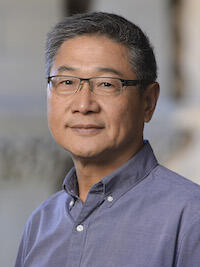
Portrait of Tom Wright
All News button
1
-

In keeping with the State of California's shelter-in-place orders, this event is available through livestream only. Please register in advance for the webinar by using the link below.

REGISTRATION LINKhttps://bit.ly/3e1r7FZ

The time of this event has changed to 4:30pm-5:30pm PDT.


As the COVID-19 pandemic continues to spread throughout the world, Japan is experiencing its second wave of coronavirus outbreak, following a first wave early on, just as it had become clear that the virus was spreading rapidly from Wuhan. In late February, travel restrictions were followed by Prime Minister Abe’s call for school closures. But as the pandemic raged through parts of Europe and then the United States, and as a growing number of countries issued shelter-in-place orders and lockdowns, Japan seemed relatively unscathed. Concerns then escalated and calls for voluntarily restricting peoples’ movement started in earnest following the decision to postpone the 2020 Olympics. On April 6, Prime Minister Abe declared a state of emergency for seven prefectures.

This panel brings together expertise on Japan’s political leadership with experience in Japan’s crisis management. Professor Harukata Takenaka has long studied how Japan’s political leadership has evolved, while Mr. Akihisa Shiozaki, an expert on crisis management, was a core member of Japan’s first private-sector investigative report after the Fukushima nuclear crisis.

This is the first in an APARC-wide series of virtual seminars that explore Asian countries’ responses to the COVID-19 pandemic. Held throughout the spring quarter, each event is led by one of APARC’s programs.

PANELISTS

Image
Aki Shiozaki Headshot

Akihisa Shiozaki, Partner, Nagashima Ohno & Tsunematsu

Akihisa Shiozaki is widely recognized for his expertise in corporate crisis management, including regulatory investigations, white collar defense, product recall, labor/employment disputes, import/export control, cyber security, media interaction and various corporate governance issues, especially those with multi-jurisdictional or parallel civil and criminal components. In recent years, he has advised both domestic and foreign clients in resolving a number of the most high profile corporate crises cases relating to Japan, including the LIBOR/TIBOR manipulation investigation, FX manipulation investigation, global product recall by a Japan auto-parts manufacturer, international trade secret theft in the semiconductor industry, government investigations against a global pharmaceutical corporation operating in Japan, and his representation of the former CEO of Olympus Corporation who brought light to the company's recent accounting scandal. He is recognized by Legal 500 as a Leading Individual in the field of Risk Management and Investigations. In 2017, Akihisa was awarded the Compliance / Investigations Lawyer of the Year at the Asian Legal Awards hosted by The American Lawyer, in association with The Asian Lawyer, China Law & Practice and Legal Week.

Akihisa worked in the Prime Minister’s office as senior policy advisor from 2006 to 2007 and is knowledgeable in Japanese regulations /rules and governmental procedures, as well as having rich experience dealing with the media. He also serves as the vice-chairman of the Anti-Yakuza Committee at the Daiichi Tokyo Bar Association and has authored many related publications. He graduated from the University of Tokyo (LL.B.), holds an M.A. in international policy from Stanford University, and completed his MBA at the Wharton School of the University of Pennsylvania where he served as class president.

Image
Harukata Takenaka Headshot

Harukata Takenka, Professor of Political Science, National Graduate Institute for Policy Studies (GRIPS)

Harukata Takenaka is a professor of political science at the National Graduate Institute for Policy Studies in Tokyo.  He specializes in comparative politics and international political economy, with a particular focus on Japanese political economy. His research interests include democracy in Japan, and Japan's political and economic stagnation since the 1990s.  He received a B.A. from the Faculty of Law of the University of Tokyo and an M.A. and Ph.D. in political science from Stanford University.  He is the author of Failed Democratization in Prewar Japan: Breakdown of a Hybrid Regime, (Stanford University Press, 2014), and Sangiin to ha [What is House of Councillors], (Chuokoron Shinsha, 2010).

Image
Portrait of Kenji Kushida

Kenji Kushida, Research Scholar, Shorenstein APARC Japan Program (Moderator)

Kenji E. Kushida is a Japan Program Research Scholar at the Walter H. Shorenstein Asia-Pacific Research Center and an affiliated researcher at the Berkeley Roundtable on the International Economy. Kushida’s research interests are in the fields of comparative politics, political economy, and information technology. He has four streams of academic research and publication: political economy issues surrounding information technology such as Cloud Computing; institutional and governance structures of Japan’s Fukushima nuclear disaster; political strategies of foreign multinational corporations in Japan; and Japan’s political economic transformation since the 1990s. Kushida has written two general audience books in Japanese, entitled Biculturalism and the Japanese: Beyond English Linguistic Capabilities (Chuko Shinsho, 2006) and International Schools, an Introduction (Fusosha, 2008). Kushida holds a PhD in political science from the University of California, Berkeley. He received his MA in East Asian studies and BAs in economics and East Asian studies, all from Stanford University.

Via Zoom Webinar. Register at https://bit.ly/3e1r7FZ

Akihisa Shiozaki, Nagashima Ohno & Tsunematsu
Harukata Takenka, National Graduate Institute for Policy Studies
Kenji Kushida, Shorenstein APARC Japan Program
Panel Discussions
News Type
News
Date
Paragraphs

To support Stanford students working in the area of contemporary Asia, the Shorenstein Asia-Pacific Research Center is offering up to ten research assistant internships for summer 2020 and up to three predoctoral fellowships for the 2020-21 academic year. The Center will review applications starting April 15 and expects to fill the positions by April 30, 2020. 

Amid the fallout of the COVID-19 pandemic, students are facing summer internship cancelations and hiring freezes. They are left wondering about the long-term implications of the current crisis for their academic careers and their access to future jobs and valuable work experience.

At Shorenstein APARC, we want to do all we can to support Stanford students. That’s why we are announcing new internship and fellowship opportunities for current students working in the area of contemporary Asia: research assistant internships for the summer quarter of 2020 and predoctoral fellowships for the 2020-21 academic year.

The summer internships are all remote: research assistants will work as telecommuters. Regarding the predoctoral fellowships, we hope we can all have a normal 2020-21 academic year, in which case we expect the fellows to be in residence, but we will reassess the evolving COVID-19 situation closer to the appointment start dates and shift to flexible, online options as needed.

APARC will review applications for both opportunities on a rolling basis starting April 15, 2020. The Center will select up to ten research assistants and up to three predoctoral fellows by April 30, 2020.

Read on to learn more about these offerings and the application requirements, and follow the guidelines below to submit your candidacy.

Summer 2020 APARC Research Assistant Internships

Shorenstein APARC is seeking highly motivated and dedicated undergraduate and graduate students to join our team as paid research assistant interns for the summer quarter of 2020. Research assistants will work with assigned APARC faculty members on projects focused on contemporary Asia, studying varied issues related to the politics, economies, populations, security, foreign policies, and international relations of the countries of the Asia-Pacific region.

All positions will be for eight weeks starting late June or early July 2020. The hourly pay rate is $17 for undergraduate students, $25 for graduate students.

Research assistant positions are open to current Stanford students only. Undergraduate- and graduate-level students are eligible to apply.

Apply Now

  • Complete the application form and submit it along with these two (2) required attachments:
    • CV;
    • A cover letter (up to 1 page).
  • Arrange for a letter of recommendation from a faculty to be sent directly to APARC. Please note: the faculty members should email their letters directly to Kristen Lee at kllee@stanford.edu.

We will consider only complete applications that include all the abovementioned supporting documents.  

2020-21 Shorenstein APARC Predoctoral Fellowships

APARC is inviting applications from current Stanford students for the 2020-21 Shorenstein APARC Predoctoral Fellowship. The fellowship supports predoctoral students working within a broad range of topics related to contemporary Asia. 

Up to three fellowships are available to Ph.D. candidates who have completed all fieldwork and are nearing the completion of their dissertation. The Center will give priority to candidates who are prepared to finish their degree by the end of the 2020-21 academic year.

Shorenstein APARC offers a stipend of $36,075 for the 2020-21 academic year, plus Stanford's Terminal Graduate Registration (TGR) fee for three quarters. We expect fellows to remain in residence at the Center throughout the year and to participate in Center activities.

Apply Now

  • Complete the application form and submit it along with these three (3) required attachments:
    • CV;
    • A cover letter including a brief description of your dissertation (up to 5 double-spaced pages);
    • A copy of your transcripts. Transcripts should cover all graduate work and include evidence of recently-completed work.
  • Arrange for two (2) letters of recommendation from members of your dissertation committee to be sent directly to Shorenstein APARC. Please note: the faculty/advisors should email their letters directly to Kristen Lee at kllee@stanford.edu.

We will consider only complete applications that include all the abovementioned supporting documents. 

Hero Image
Architectural detail on Stanford colonnade with palm trees in the background L.A. Cicero
All News button
1
Authors
Gi-Wook Shin
News Type
Commentary
Date
Paragraphs

There is a Korean expression that means “to become soaked by a drizzle without noticing.” This metaphor is a timely warning against the gradual decline of democratic norms. Though some of the changes underlying this global phenomenon are subtle, they are producing creeping, piecemeal erosions of democracy and pluralism. The signs of democratic backsliding are now emerging everywhere in South Korean society, and a failure to recognize and robustly counter their effects may create future costs that prove unbearable. 

My new article, “Korean Democracy Is Sinking Under the Guise of the Rule of Law,” published in the April 2020 issue of the South Korean magazine Shindonga (New East Asia, the oldest monthly in Korea), examines how the Moon administration is sinking into a democratic recession and considers its actions as a case study with lessons for averting broader, global trends in democratic decline.

In all corners of the world, we witness freely elected leaders gradually dismantle democratic institutional safeguards, fuse political polarization with chauvinistic populism, and focus on narrow interpretations of the national interest just as China and Russia expand their scope of influence via “sharp power,” subversive means.

Image
Chairman of the South Korean National Assembly Moon Hee-sang (second from the left of the chairman's seat) enacts a draft amendment to the election law amid vigorous resistance by members of the opposition –December 23, 2019. 
South Korea is no exception to these currents. A politics of extreme confrontation and polarizing rhetoric of "us" and "them" are becoming the country’s new normal. The Moon administration’s aggressive assertion of a Manichean logic of good and evil that justifies their vitriolic attacks on perceived opposition is evidenced in its campaign of “eradicating deep-rooted evils” from Korean society and politics.

As my analysis shows, this crusading mindset has insinuated itself into more concrete actions by the Moon government, such as the calculated blurring of the separation of powers through political interference in the courts, deliberate changes to longstanding election laws that damage the spirit of democracy, and the blatant use of double standards and ideological loyalty in the execution of national policies. Similar patterns are taking hold in populist governments the world over, and – perhaps most disconcertingly – they transpire not through the strong-arming of a military coup or violent political disruption but through the legal procedures and policies meant to keep such canker in check.

To overcome its wave of democratic recession South Korea must cast away political polarization and demonstrate a firm resolve to act in accordance with democratic norms. The upcoming April 15 legislative election must sound a clear alarm against all actors who damage these core principles, regardless of their party affiliation and irrespective of their ideology. 

Read the complete English translation of my article or the original Korean version here:

Hero Image
Opposing political rallies converge in South Korea
Pro- and anti-Moon protests in Seocho-dong, South Korea – October 5, 2019.
Dong-a Ilbo, Shindonga
All News button
1
Shorenstein APARC Stanford University Encina Hall E301 Stanford, CA 94305-6055
0
Visiting Scholar at APARC
Ph.D.

Heng Hu joined the Walter H.Shorenstein Asia-Pacific Research Center during January 2020 to January 2021 from Renmin University of China’s Institute of Qing History where he serves as Associate Professor and Vice Director of the institute.

His research focuses on the administrative jurisdictions and local organizations in Chinese history, with particular interest in the digital humanities related to the historical databases. During his visit in APARC, his research project intends to examine the spatial logic of local governance in China from 1644 to 1911, based on some new Database.

Heng Hu is a deputy editor-in-chief of Qing History Journal. He has published a book titled Imperial Power Stops at County Seats? The Administrative Districts and Social Governance Below the County Authority in the Qing Dynasty (2015), which won awards as The Top Ten Books of the Year in History and Biography (China Reading Weekly, 2015), The Puyin Humanities Award (5 award-winners, 2018), and the Youth Achievement Award of the 8th Humanities and Social Sciences Award of the Ministry of Education of China (2020).

Paragraphs

The easy phases of China’s quest for wealth and power are over. After forty years, every one of a set of favorable conditions has diminished or vanished, and China’s future, neither inevitable nor immutable, will be shaped by the policy choices of party leaders facing at least eleven difficult challenges, including the novel coronavirus. 

See also https://aparc.fsi.stanford.edu/news/tom-fingar-and-jean-oi-preview-forthcoming-volume-fateful-decisions

All Publications button
1
Publication Type
Journal Articles
Publication Date
Journal Publisher
The Washington Quarterly
Authors
Thomas Fingar
Jean C. Oi
News Type
Q&As
Date
Paragraphs

Living and studying all over East Asia, some of Hannah Kim’s most favorite activities were to meet and talk to diverse people from different backgrounds. Those conversations sparked her interest in how public opinion and perceptions of democracy differ across societies — a question that turned into the focus of her doctoral dissertation, which she completed last year at the University of California, Irvine.

Image
Dr. Hannah June Kim
Hannah is spending the 2019-20 academic year at APARC as a Shorenstein Postdoctoral Fellow in Contemporary Asia. While here, she has been researching material for a forthcoming book about the relationship between the middle class and democratic ideals in different Asian societies. Her work has been published in The Journal of Politics, PS: Political Science & Politics, and the Japanese Journal of Political Science.

We sat down with Hannah to talk about her current work and her plans for future projects.


Q: As you’ve been here at APARC researching your book, what kinds of relationships have you found between the middle classes of East Asia and their perceptions of a democratic society?

Middle-class groups in many East Asian countries are significantly different than those in other regions because they are newer and smaller. They also tend to be much more dependent on the state, and this state dependency has led to fundamentally different views of democracy than we see in other places.

Modernization theory — which is one of the most prominent theories in comparative politics — contends that higher levels of economic growth lead to a rise of a middle class. This middle class then becomes a driving force for democracy. In East Asian countries, however, state-led economic growth played a central role in the creation and development of middle-class groups, which fostered a dependent and mutually supportive relationship between middle-class groups and the state. This suggests that middle-class groups may prefer a stronger role of the state and be less likely to support liberal democracy relative to other groups.

Q: What research findings surprised you about the relationship between the middle class and democracy?

There have been a number of unexpected results. For one, middle-class East Asians are more likely to support good governance ahead of freedom and liberty, which is often reversed among middle-class groups in Western democracies. I’ve found that many East Asian middle-class citizens view democracy more illiberally and prefer a political system that has a mix of democratic and autocratic properties — a hybrid regime — rather than a liberal democracy.

For example, the most recent wave of the World Values Survey (2010-14) shows that 62% of Taiwanese respondents, 31% of Chinese respondents, 29% of Japanese respondents, and 49% of South Korean respondents stated that it is “Very good” or “Fairly good” to have a strong leader who does not have to bother with parliament and elections. This indicates a culture of implicit support for an authoritarian-like leader. Recent studies also show that there is a negative correlation between the middle class and support for democracy in China.

Q: You have also been doing work that looks at democratization and gender in East Asia. How do gender, gender roles, and traditional culture impact the progress and perception of democratization?

Even though there are three full-fledged democracies in East Asia – namely, Japan, South Korea, and Taiwan – their citizens’ views on gender equality remain far from liberal. A majority of respondents to surveys in those democracies support the ideas that men should have more employment and education opportunities than women, and that men make better political and business leaders than women. This may be in part due to the historically patriarchal culture that continues to legitimize these views. However, in my study, I suggest that culturally democratic citizens are more likely to break away from these traditional patriarchal norms and challenge gendered practices within these societies. Increasing democratic citizenship, therefore, may enhance support for gender equality and other liberal values.

Q: What pressing challenges do you see facing Asia’s democratic societies?

The last ten years have been described as a decade of decline for liberal democracies worldwide and public opinion data further shows that support for democracy is rapidly declining. East Asian democracies, many of which democratized during the so-called second and third waves of that trend in the late twentieth century, are no exception to this democratic recession. While there are many institutional limitations, the biggest challenge for East Asian democracies may come from authoritarian legacies that encourage middle-class citizens to support traditional values that often go against liberal democracy. While East Asian democracies may not necessarily evolve towards autocracy, it may be a while before the middle class and the general public in East Asian countries fully support liberal democratic values and help democracies overcome this democratic recession.

Q: What’s next on your research agenda?

After my fellowship with APARC concludes, I will be moving to Omaha, Nebraska, where I’ll be working as an assistant professor of political science at the University of Nebraska. I’m scheduled to teach Asian politics there this coming fall, which I am really looking forward to. My immediate research goal is to continue working on my book, but I would also like to start pursuing research on gender and political behavior in South Korea.

Hero Image
Hannah June Kim
All News button
1
Authors
Callista Wells
News Type
News
Date
Paragraphs

President Xi Jinping’s tenure has been marked by growing state influence over all spheres of governance in China, including a marked tightening of control over the economy.

Curtis Milhaupt, the William F. Baxter-Visa International Professor of Law at Stanford Law School, addressed the hardening of Party controls over Chinese corporate governance. His lecture to the China Program on February 6 was based on research conducted by Milhaupt in collaboration with Yu-Hsin Lin of City University of Hong Kong, and examined the expanding role of the Chinese Communist Party (CCP) within both state-owned enterprises (SOEs) and privately-owned enterprises (POEs). The influence of the CCP within these enterprises, Milhaupt says, is not as straightforward as it might seem.

Milhaupt posits that the level of control exercised by the CCP on SOEs is lower than one might generally expect. At the same time, the CCP exercises a surprisingly higher level of control over POEs than we would typically assume. To draw these conclusions, Milhaupt uses a set of ten model provisions deemed to be dangjian, or “party-building,” measures that were developed and released by the Central Committee of the CCP. From data compiled between 2015 and 2018 from the charters of publicly-listed companies, Milhaupt shows that 10% of SOEs chose not to adopt any of the provisions distributed by the Central Committee. Meanwhile, 6% of POEs had at least a low level of adoption, despite the fact that the provisions were not directed at them. The reason for such variation, according to Milhaupt, can be explained by the characteristics of the provisions, the SOEs, and the POEs.

Image
Photo of Curtis Milhaupt speaking
Milhaupt breaks the measures into three distinct groups: personnel-related, decision-making, and symbolic. Nearly every corporation that amended its charter adopted the symbolic provisions. As the name suggests, these generally did not require any substantial or meaningful change on the enterprises’ parts. There was a steep drop-off, however, in the level of adoption for the other two types. Only 58% of SOEs who amended their charters adopted the more intrusive, decision-making provisions. Similarly, only 52% of such SOEs adopted the personnel-related provisions. The numbers were even lower for POEs, with only 25% of POEs who amended their charters adopting the decision-making provisions, and only 16% adopting the personnel-related provisions.

Which enterprises adopted which provisions was highly correlated to those enterprises’ characteristics. SOEs were far more likely to amend their charters if they had direct state shareholding, but less likely to amend if they had large non-state shareholders, were further down in the state-ownership chain, or were cross-listed on international stock exchanges. POEs followed a similar structure, with enterprises being more likely to adopt provisions the more politically connected they were or the more direct state shareholding they had.

It remains unclear how the government can actually enforce the dangjian policy, and how these policies will affect the enterprises that adopt it. Despite the official rhetoric behind the dangjian policy, with claims that greater loyalty to the Party will lead to more economic success, Milhaupt expresses doubts:

“What’s [the danajian policy] going to mean for firm performance? Certainly, from a . . . straightforward economics or corporate governance perspective, one would not be optimistic that infiltrating corporations with political influence is going to do good things for firm performance.”

Milhaupt also has concerns about how the strategy will impact international investment, noting the already high levels of suspicion surrounding Chinese motivations: “This [emphasis on loyalty to the Party] would certainly seem to add fuel to the fire, and heighten concerns or suspicions with respect to Chinese outbound economic activity.” As SOEs and POEs continue to navigate both domestic and international markets with their amended charters, the future feasibility of the CCP’s reassertions over the economy is far from certain.

Hero Image
Pedestrians walk past a Madrid branch of the Industrial and Commercial Bank of China (ICBC), one of the largest state-owned enterprises in China.
Jasper Juinen / Getty Images News
All News button
1
Authors
Thomas Fingar
Jean C. Oi
News Type
Commentary
Date
Paragraphs

This is the second part of a series leading up to the publication of Fateful Decisions. You can read the first installment here.

In the last forty years, China has reemerged as a tremendous geopolitical, economic, and technological power on the world stage. But the easy phases of China’s quest for wealth and influence are over, argue Shorenstein APARC Fellow Thomas Fingar and China Program Director Jean Oi in a new article published by The Washington Quarterly.

In this piece, drawing on the findings and insights of contributors to their forthcoming edited volume Fateful Decisions: Choices That Will Shape China’s Future (Stanford University Press, available May 2020), Fingar and Oi outline the daunting array of difficult challenges China now faces and explain why its future depends on the policy choices its leaders make in what will be seen as a watershed moment.

An excerpt from their article is available below. For the full version, visit The Washington Quarterly and download the PDF.


From, “China’s Challenges: Now it Gets Much Harder”

Some years ago, one of us had a running partner who wanted a bigger challenge than the dozens of marathons he had completed. When asked to describe his first 50-mile race, he replied, “The first 30 miles weren’t bad, but after that it got really hard.” China is approaching the metaphorical 30-mile mark in its developmental marathon. The challenges it encountered and managed effectively during the past 40 years were not easy, but they pale in comparison to those looming on the horizon. The way ahead will be more difficult, less predictable, and highly contingent on the content and efficacy of complex policy choices. The easy phases of China’s quest for wealth and power are over.

We begin with this cautionary note because so much of the new narrative about China’s rise posits capabilities and evolutionary trajectories that we find implausible. That China has done well in the past does not assure that it will do equally well (or better) in the future. That the Leninist party-state system adopted in the 1950s has proven sufficiently agile to manage the easier phases of modernization does not assure that it will be equally adept at meeting the more difficult challenges of a country being transformed by past successes and demographic change. The number, magnitude, and complexity of these challenges do not foreordain that China will stagnate, fail, or fall apart, but they do raise serious questions about the putative inevitability of China’s continued rise and displacement of the United States. China’s future is neither inevitable nor immutable; its further evolution will be shaped by internal economic and social developments, the international system, and above all, the policy choices of party leaders facing a daunting array of difficult challenges.

[Like what you're reading? Sign up for our newsletters to receive more stories like this.] 

We refer to China’s current approach as “back to the future” because it seeks to resuscitate institutions, methods, and rationales adopted in the 1950s and shelved during the period of reform and rapid modernization. We do not know why party leaders decided that it is in their — and thus China’s — interest to curtail or reverse policies that facilitated sustained growth and rapid improvement of living standards and China’s international image, but speculate that they hope doing so will buy time before incurring the risks (and for the elite, the costs) of fundamental reform.

Beijing has announced a number of very ambitious goals such as moving into the ranks of highly-developed countries by the centenary of the PRC in 2049, achieving global preeminence in key technologies like robotics and artificial intelligence, providing urban social benefits to most citizens, and building a number of green megacities. The likelihood of achieving all of the proclaimed goals is nil, but China will make substantial progress on some of them. It is impossible to predict which will succeed, which will fail, and which will flounder, but we can anticipate a mix of all three outcomes. Whatever the precise mix, it is likely to produce a China that is less prosperous and less powerful than predicted by the predominant narrative about where China is headed. Whether China’s leaders will risk tackling the difficult reforms that remain or continue to embrace key and thus far counterproductive structures and methods from the past remains to be seen.  Whether the party-state system is able to maintain acceptable levels of growth and public satisfaction under the new conditions is also uncertain. The only certainty is that China can no longer ride the wave that helped along its economic growth and resultant capabilities for at least ten reasons.

Read the full text of this article via The Washington Quarterly.

Hero Image
Quote from Thomas Fingar and Jean Oi from, "China's Challeges: Now It Gets Much Harder"
All News button
1
Authors
Noa Ronkin
News Type
Q&As
Date
Paragraphs

This is the first installment in a series leading up to the publication of Fateful Decisions.

China has tremendous resources, both human and financial, but it may now be facing a perfect storm of challenges. Its future is neither inevitable nor immutable, and its further evolution will be highly contingent on the content and efficacy of complex policy choices.

Image
Fateful Decisions: Choices That Will Shape China's Future
This is the core argument in a new volume, Fateful Decisions: Choices that Will Shape China’s Future, edited by Shorenstein APARC Fellow Thomas Fingar and China Program Director Jean Oi. Forthcoming in May 2020 as part of Stanford University Press monograph series with APARC, this volume combines the expertise of researchers from across the disciplines of sociology, history, economics, health policy, and political science, who examine the factors and constraints that are likely to determine how Chinese actors will manage the daunting challenges they now face.

One of these challenges — how China must soon achieve economic growth as it grapples with the realities of a rapidly aging population and a shrinking workforce — is the subject of a chapter authored by Karen Eggleston, the deputy director of APARC and director of the Center’s Asia Health Policy Program. In the following interview, Eggleston shares perspectives from her chapter, “Demographic Challenges.”

[To get more stories like this delivered to your inbox, sign up for our newsletters]


Q: What are some of the fateful decisions China is facing regarding the responsibilities of caring for a large, aging population?

A: China has achieved impressive improvements in health and longevity. It has implemented universal health coverage and is experimenting with financial support for long-term care for older adults. Yet significant gaps between the most- and least-privileged Chinese citizens persist, and in some cases are growing. As I have written elsewhere, it is not surprising that there are wide disparities in health and healthcare between different population subgroups in a country as populous, expansive, and diverse as China. How effectively and efficiently China meets these and other health- and aging-related issues will have a major impact on its ability to manage other social and economic challenges.

In the chapter I contributed to the volume Fateful Decisions, I note that China’s current population and demographic trends — including relatively rapid aging — reflect the success of earlier investments in infectious disease control, public health measures, and other contributors to mortality reduction. The lingering effects of family planning policies, historic preferences for sons, and rapid economic development are also major considerations. Together, these factors have produced a shrinking working-age population, a growing number of elderly, a gender imbalance, and hurdles for inclusive urbanization. An urgent question for China’s future is to what extent policies will ameliorate disparities in health, healthcare use, and the burden of medical spending.

The unfolding COVID-2019 outbreak is a powerful illustration of just how fateful decisions about health systems can be. Compared to the SARS outbreak almost two decades ago, China has been better prepared for this situation. SARS raised health system reform to the top of the political agenda and, many argue, played a direct role in China’s achieving universal health coverage and vastly strengthening the public health system.

But as China has become a middle-income global economic powerhouse in the years since SARS and the ensuing wave of health policy reforms, the expectations of its citizens about their health system have also risen. Has the health system, including public health and medical care, been strengthened to the same degree as other parts of the economy and public services? The impact of and lasting response to COVID-2019 may prove a litmus test.

Q: Why do these decisions about health carry such importance for China’s future development?

Through the last four decades, China has benefitted from a demographic dividend caused by the large bulge in the working-age population. But to achieve future economic growth and productivity, investments in human capital particularly in health and education —need to be made. This higher productivity will, in turn, be the means by which a smaller workforce can support China’s large and growing cohort of retirees.

As we’ve already seen, health expenditures have increased rapidly as China has developed its system of universal health coverage. Double-digit health spending growth surpassed the rate of economic growth, and as a result, health spending absorbs an increasingly larger share of the total economy. China needs to make sure additional spending on health and elderly care is efficient and effective, while also addressing the nonmedical determinants of health and promoting healthy aging. The health system needs to be reengineered to emphasize prevention, provide coordinated health care for people with multiple chronic diseases, assure equitable access to rapidly changing medical technologies, and ensure long-term care for frail elderly, all without unsustainable increases in opportunity costs for China’s future generations.

Q: What is the Chinese government doing to improve healthcare quality and delivery, and what more could it do to affect meaningful change in its systems?

China’s current policies seek to balance individual responsibility, community support, and taxpayer redistribution through safety-net coverage funded by central and local governments. Like many countries, China would benefit from improved coordination across multiple agencies and structure incentives to avoid or mitigate unintended consequences that undermine the goals of its health system. Recent governance reforms, such as the creation of the National Healthcare Security Administration, aim to address these challenges.

China’s achievements and remaining challenges can be illustrated with the Healthcare Access and Quality Index (HAQ), which measures premature mortality from causes that should not occur if the individual had access to high-quality healthcare: among 195 countries and territories, China achieved the highest absolute increase in the HAQ Index from 2000 to 2016. However, the 43-point regional disparity in HAQ within China is the equivalent of the difference between Iceland (the highest HAQ in the world) and North Korea.

Q: The subject of your chapter, China’s demographic challenges, is one of the issues you investigate in your upcoming book, Healthy Aging in Asia. As you show in this volume, challenges at the intersection of aging, economics, demographic transition, and healthcare policy are not unique to China. How are other countries in Asia responding to them and what lessons could benefit China?

 As I note in the introduction of Healthy Aging in Asia, the demographic transition from high to low fertility and mortality has been more rapid in much of Asia than in Europe and North America. That means social institutions, such as retirement, living arrangements, and intergenerational support, have to adapt quickly. For example, extending work-lives (as is happening in Japan) will be necessary but feasible only if the added years are healthy ones and equitable only if the least advantaged also benefit from healthy aging. The blessings of longevity dim when clouded by pain, disability, and loss of dignity.

 Investment strategies in insurance and managing chronic conditions are also important considerations. Japan and Korea have adopted insurance systems for financing long-term care for frail elderly, while places like Hong Kong have good empirical research on chronic condition management.

 No country or system has a “magic pill” to address these challenges, but the empirical evidence and rich policy experience documented in Healthy Aging from health systems as diverse as those in the cities of Singapore and Hong Kong to large economies such as Japan, India, and China can certainly be instructive.

Hero Image
Elderly Chinese citizens sit together on a park bench. Getty Images
All News button
1
Subscribe to Governance