Governance

FSI's research on the origins, character and consequences of government institutions spans continents and academic disciplines. The institute’s senior fellows and their colleagues across Stanford examine the principles of public administration and implementation. Their work focuses on how maternal health care is delivered in rural China, how public action can create wealth and eliminate poverty, and why U.S. immigration reform keeps stalling. 

FSI’s work includes comparative studies of how institutions help resolve policy and societal issues. Scholars aim to clearly define and make sense of the rule of law, examining how it is invoked and applied around the world. 

FSI researchers also investigate government services – trying to understand and measure how they work, whom they serve and how good they are. They assess energy services aimed at helping the poorest people around the world and explore public opinion on torture policies. The Children in Crisis project addresses how child health interventions interact with political reform. Specific research on governance, organizations and security capitalizes on FSI's longstanding interests and looks at how governance and organizational issues affect a nation’s ability to address security and international cooperation.

-

This event is available through livestream only. Please register in advance for the webinar by using the link below.

REGISTRATION LINKhttps://bit.ly/2WSJxRx


As the complex and multi-layered US-China relationship has become increasingly strained with the global pandemic led by the US political leadership, Japan-China relations appears to have taken a different path. Despite continued security tensions in the East China Sea, Japan and China seem to have moved closer in crucial ways, according to some important popular opinion surveys and diplomatic cooperation. At the same time, the relationship is complex with Japanese manufacturers rushing to diversify production networks and supply chains to other parts of Asia and with security issues in the oceans surrounding China continuing. 

This panel brings together deep, balanced expertise on Japan-China relations and will examine an array of areas with a focus on moving forward constructively. Panelists will cover diplomatic, security, and public opinion dimensions as well as introducing China's advanced digital technology used for medical care, education, e-commence and the rapid recovery of Japanese companies supported by China's central and local governments.

PANELISTS

Image
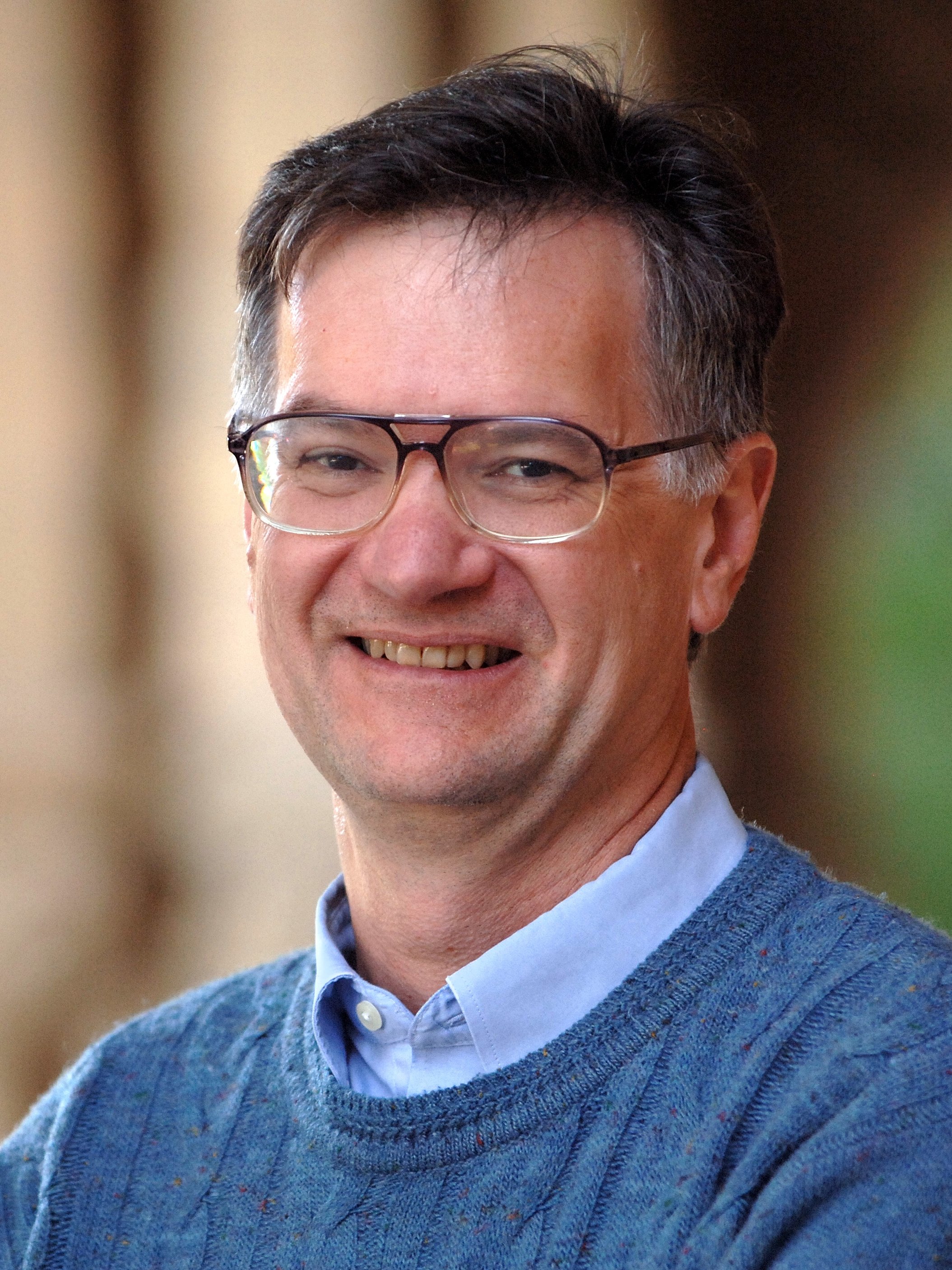
tiberghien headshot

Yves Tiberghien, Professor, Political Science and Co-Director, Center for Japanese Research, University of British Columbia

Yves Tiberghien (Ph.D. Stanford University, 2002 and Harvard Academy Scholar 2006) is a Professor of Political Science, Faculty Associate in the School of Public Policy and Global Affairs, Director Emeritus of the Institute of Asian Research, Co-Director of the Center for Japanese Research, and Executive Director of the China Council at the University of British Columbia (UBC). Yves is currently a visiting professor at Tokyo University and at Sciences Po Paris.

Yves is also a Distinguished Fellow at the Asia-Pacific Foundation of Canada. He serves as the International Steering Committee Member representing Canada at Pacific Trade and Development Conference (PAFTAD). In November 2017, he was made a Chevalier de l’ordre national du mérite by the French President.

Yves' research specializes in East Asian comparative political economy, international political economy, and global economic and environmental governance, with an empirical focus on Japan, as well as China and Korea. His published books include Entrepreneurial States: Reforming Corporate Governance in France, Japan, and Korea. 2007. Cornell University Press in the Political Economy Series directed by Peter Katzenstein and Leadership in Global Institution-Building: Minerva’s Rule, edited volume, Palgrave McMillan, 2013. He is currently working on articles related to Japan’s role in the Liberal and International Order and a book, titled Up for Grabs: Disruption, Competition and the Remaking of the Global Economic Order."

Image
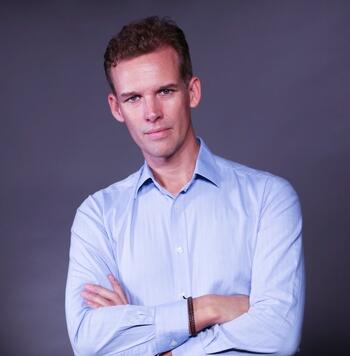
seguchi headshot updated

Kiyoyuki Seguchi, Research Director, Canon Institute for Global Studies
 
Kiyoyuki Seguchi is the Research Director at the Canon Institute for Global Studies. His research focuses on the Chinese economy and the U.S.-China-Japan trilateral relationship. Mr. Seguchi worked for the Bank of Japan from 1982 to 2009. During this time, he was Chief Representative of the Representative Office at BOJ in Beijing from 2006 to 2008. Mr. Seguchi was also the international visiting Fellow at RAND Corporation (Los Angeles, CA) from 2004 to 2005. Mr. Seguchi received his bachelor’s degree in economics from the University of Tokyo.

Image
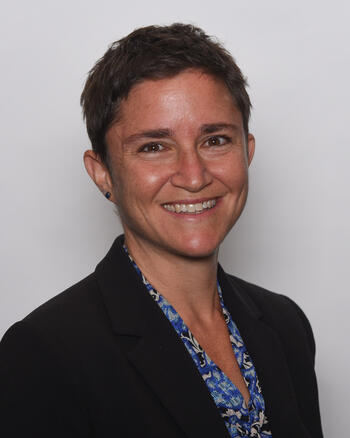
Portrait of Kenji Kushida

Kenji Kushida, Research Scholar, Shorenstein APARC Japan Program (Moderator)

Kenji E. Kushida is a Japan Program Research Scholar at the Walter H. Shorenstein Asia-Pacific Research Center and an affiliated researcher at the Berkeley Roundtable on the International Economy. Kushida’s research interests are in the fields of comparative politics, political economy, and information technology. He has four streams of academic research and publication: political economy issues surrounding information technology such as Cloud Computing; institutional and governance structures of Japan’s Fukushima nuclear disaster; political strategies of foreign multinational corporations in Japan; and Japan’s political economic transformation since the 1990s. Kushida has written two general audience books in Japanese, entitled Biculturalism and the Japanese: Beyond English Linguistic Capabilities (Chuko Shinsho, 2006) and International Schools, an Introduction (Fusosha, 2008). Kushida holds a PhD in political science from the University of California, Berkeley. He received his MA in East Asian studies and BAs in economics and East Asian studies, all from Stanford University.

Virtually via Zoom.

Registration Link: https://bit.ly/2WSJxRx

Yves Tiberghien, University of British Columbia
Kiyoyuki Seguchi, Canon Institute for Global Studies
Kenji Kushida, Stanford University
Seminars
-

Do middle-class citizens in East Asia support democracy? Do they prefer democracy to other regime types, as modernization theory contends? In this talk, Hannah Kim, a Shorenstein Postdoctoral Fellow in Contemporary Asia at the Shorenstein Asia-Pacific Research Center, examines democratic attitudes among middle-class citizens in East Asia. She argues that the classic relationship between modernization and democratization may not be applicable in East Asia due to low democratic commitment among middle-class citizens. She demonstrates this through the notion of democratic citizenship, which observes the cognitive, affective, and behavioral patterns of democratic support. Using data from the Asia Barometer Survey, Kim finds low democratic citizenship among middle-class respondents in three democracies and three nondemocracies. Moreover, she finds that middle-class respondents with higher government dependency are less likely to view democracy favorably. These results indicate that the classic causality between modernization and democratization is unlikely to be universally applicable to different cultural contexts.

Image
Hannah Kim
Hannah Kim completed her doctorate in the department of political science at the University of California, Irvine, in 2019. She received an MA in international studies from Korea University and a BA from UCLA.

Via Zoom. Register at https://bit.ly/2W9cmKv

Hannah Kim Shorenstein Postdoctoral Fellow in Contemporary Asia <i>Shorenstein Postdoctoral Fellow in Contemporary Asia</i>, Stanford University
Seminars
-

This is a virtual event. Please click here to register and generate a link to the talk. 
The link will be unique to you; please save it and do not share with others.


To celebrate its May release, contributors Karen Eggleston, Barry Naughton, and Andrew Walder will join editors Thomas Fingar and Jean Oi for a panel discussion of their volume Fateful Decisions: Choices That Will Shape China’s Future (Stanford University Press).  China has enjoyed an extraordinary run of rapid growth and development over the last 40 years.  Yet, as Fingar and Oi point out, China’s future is hardly set in stone.  Sustained economic growth, social welfare and stability will depend upon tough policy decisions confronting Beijing’s leaders today in what is a watershed moment.  Casting doubt on Beijing’s aversion to major reforms and its return to certain Mao-era policy tools, Oi and Fingar argue that China’s challenges are not only complex, but high-stakes – challenges that have become even more daunting in the aftermath of COVID-19.  As China battles the difficulties caused by an aging population, the loss of comparative economic advantage, a politically entrenched elite, and a population with rising expectations, today’s policy decisions will weigh heavily on its future. Topics explored in the volume include China's healthcare challenges in a slowing economy, its global ambitions and track record, economic aims and realities, the country’s mounting governance pressures, and more. 


Fateful Decisions is available for purchase here.


Fore more information on Fateful Decisions, check out these articles:

Karen Eggleston Examines China’s Looming Demographic Crisis, in Fateful Decisions

Now It Gets Much Harder: Thomas Fingar and Jean Oi Discuss China’s Challenges in The Washington Quarterly

China’s Challenges: Now It Gets Much Harder


Portrait of Karen EgglestonKaren Eggleston is a senior fellow at the Freeman Spogli Institute for International Studies (FSI) at Stanford University, director of the Stanford Asia Health Policy Program, and deputy director of the Walter H. Shorenstein Asia-Pacific Research Center at FSI. She is also a fellow with the Stanford Center for Innovation in Global Health and a faculty research fellow of the National Bureau of Economic Research (NBER). Eggleston earned her PhD in public policy from Harvard University, studied in China for two years, and was a Fulbright scholar in South Korea. Her research focuses on comparative health systems and health reform in Asia, especially China; government and market roles in the health sector; supply-side incentives; healthcare productivity; and economic aspects of demographic change.


Portrait of Thomas FingarThomas Fingar is a Shorenstein Distinguished Fellow in the Shorenstein Asia-Pacific Research Center at Stanford University. From May 2005 through December 2008, he served as the first deputy director of national intelligence for analysis and, concurrently, as chairman of the National Intelligence Council. Previous positions include assistant secretary of state for Intelligence and Research (2000-2001, 2004–2005), principal deputy assistant secretary (2001–2003), deputy assistant secretary for analysis (1994–2000), director of the Office of Analysis for East Asia and the Pacific, and chief of the China Division. Fingar is a graduate of Cornell University (AB in government and history) and Stanford University (MA and PhD, both in political science). His most recent books are Uneasy Partnerships: China’s Engagement with Japan, the Koreas, and Russia in the Era of Reform (editor) (Stanford University Press, 2017); The New Great Game: China’s Relations with South and Central Asia in the Era of Reform (editor) (Stanford University Press, 2016); and Reducing Uncertainty: Intelligence Analysis and National Security (Stanford University Press, 2011).


Image
Photo of Barry Naughton
Barry Naughton is the So Kwanlok Professor at the School of Global Policy and Strategy, University of California–San Diego. Naughton’s work on the Chinese economy focuses on market transition; industry and technology; foreign trade; and political economy. His first book, Growing Out of the Plan, won the Ohira Prize in 1996, and a new edition of his popular survey and textbook, The Chinese Economy: Adaptation and Growth, appeared in 2018. Naughton did his dissertation research in China in 1982 and received his PhD in economics from Yale University.


Jean C. OiJean C. Oi is the William Haas Professor of Chinese Politics in the Department of Political Science and a senior fellow in the Freeman Spogli Institute for International Studies at Stanford University. She directs the China Program at the Walter H. Shorenstein Asia-Pacific Research Center and is the Lee Shau Kee Director of the Stanford Center at Peking University. Oi has published extensively on China’s reforms. Recent books include Zouping Revisited: Adaptive Governance in a Chinese County, coedited with Steven Goldstein (Stanford University Press, 2018), and Challenges in the Process of China’s Urbanization, coedited with Karen Eggleston and Yiming Wang (2017). Current research is on fiscal reform and local government debt, continuing SOE reforms, and the Belt and Road Initiative.


Portrait of Andrew WalderAndrew G. Walder is the Denise O’Leary and Kent Thiry Professor of Sociology in the School of Humanities and Sciences, and a senior fellow in the Freeman Spogli Institute for International Studies at Stanford University. A political sociologist, Walder has long specialized in the study of contemporary Chinese society and political economy. After receiving his PhD at the University of Michigan, he taught at Columbia, Harvard, and the Hong Kong University of Science and Technology. At Stanford he has served as chair of the Department of Sociology, director of the Asia-Pacific Research Center, and director of the Division of International, Comparative, and Area Studies in the School of Humanities and Sciences. His most recent books are Fractured Rebellion: The Beijing Red Guard Movement (2009), China under Mao: A Revolution Derailed (2015), and Agents of Disorder: Inside China’s Cultural Revolution (2019).

Via Zoom Webinar.
Register at: https://bit.ly/2WiwPvm

Karen Eggleston <br> Senior Fellow at FSI; Director of the Asia Health Policy Program, Shorenstein APARC, Stanford University <br><br>
Thomas Fingar <br> Shorenstein APARC Fellow, Stanford University <br><br>
Barry Naughton <br> Sokwanlok Chair of Chinese International Affairs, School of Global Policy and Strategy, UC San Diego <br><br>
Jean C. Oi <br> Director, Stanford China Program; William Haas Professor of Chinese Politics, Stanford University <br><br>
Andrew Walder <br> Senior Fellow at FSI; Denise O'Leary and Kent Thiry Professor, Stanford University <br><br>
Panel Discussions
News Type
News
Date
Paragraphs

APARC's China Program recently hosted Center Fellow Thomas Fingar for the webinar "Was America’s China Policy a Foolish Failure? The Logic and Achievements of Engagement." In this talk, Fingar examines the longtime U.S. strategy of engagement with China as well as the potential shift toward a strategy of decoupling. "Much recent commentary on U.S. relations with China claims that the policy of 'Engagement' was a foolish and failed attempt to transform the People’s Republic into an American style democracy that instead created an authoritarian rival," he says. "This narrative mocks the policies of eight U.S. administrations to justify calls for 'Decoupling' and 'Containment 2.0.'” Fingar argues that the policy of Engagement has been fruitful and that Decoupling is not only inadvisable but also unattainable. Watch:

Read More

An empty Pennsylvania Avenue in Washington, D.C. seen with the United States Capitol  in the background.
News

APARC Fellow Thomas Fingar on the U.S. Intelligence Report that Warned of a Coronavirus Pandemic

In our online conversation, Fingar discusses the 2008 National Intelligence Council report he oversaw and that urged action on coronavirus pandemic preparedness, explains the U.S. initial failed response to the COVID-19 outbreak, and considers the implications of the current crisis for U.S.-China relations.
APARC Fellow Thomas Fingar on the U.S. Intelligence Report that Warned of a Coronavirus Pandemic
Quote from Thomas Fingar and Jean Oi from, "China's Challeges: Now It Gets Much Harder"
Commentary

Now It Gets Much Harder: Thomas Fingar and Jean Oi Discuss China’s Challenges in The Washington Quarterly

Now It Gets Much Harder: Thomas Fingar and Jean Oi Discuss China’s Challenges in The Washington Quarterly
BEIJING, CHINA - Workers sit near a CRH (China Railway High-speed) "bullet train" at the Beijing South Railway Station under reconstruction.
News

High-Speed Rail Holds Promise and Problems for China, Explains David M. Lampton

In a new audio interview, Lampton discusses some of the challenges, uncertainties, and decisions that loom ahead of China's Belt and Road Initiative.
High-Speed Rail Holds Promise and Problems for China, Explains David M. Lampton
All News button
1
Subtitle

Decoupling, according to Fingar, is not only inadvisable but also unattainable. 

-

This event is via Zoom Webinar. Please register in advance for the webinar by using the link below.

REGISTRATION LINKhttps://bit.ly/3cCbcfU

Since March, a series of escalations have heightened tensions in the South China Sea. From the sinking of a Vietnamese fishing boat to an ongoing standoff with the Malaysian navy, China has been accused of taking advantage of the COVID-19 pandemic to further its control of the South China Sea. Beijing’s actions on the water are not all that different than what it was doing just a few months ago. But having them continue amid a global health crisis has sparked a new level of outrage. And the nationalistic response from Chinese authorities has only added fuel to the fire. These developments highlight the new normal in the South China Sea, which will continue long after COVID-19 fades.

Image
poling headshot


Gregory B. Poling is Senior Fellow for Southeast Asia and Director of the Asia Maritime Transparency Initiative at CSIS. His research interests include the South China Sea disputes, democratization in Southeast Asia, and Asian multilateralism. Mr. Poling’s writings have been featured in Foreign Affairs, the Wall Street JournalNikkei Asian Review, and Foreign Policy, among others. He has authored or coauthored multiple works including The Thickening Web of Asian Security Cooperation (RAND Corporation, 2019), Building a More Robust U.S.-Philippines Alliance (CSIS, August 2015), and A New Era in U.S.-Vietnam Relations (CSIS, June 2014). Mr. Poling received an M.A. in international affairs from American University and a B.A. in history and philosophy from St. Mary’s College of Maryland.

Via Zoom Webinar

Register at https://bit.ly/3cCbcfU

Gregory B. Poling Senior Fellow for Southeast Asia and Director, Asia Maritime Transparency Initiative, Center for Strategic and International Studies
Panel Discussions
-

Co-sponsored by the King Center on Global Development and Shorenstein APARC, this virtual panel discusses the impacts of the coronavirus pandemics on China's urban and rural employment and its health care sectors. Karen Eggleston, Hongbin Li, Scott Rozelle, and Xueguang Zhou will share their expertise during this critical time as China lifts its lockdown and U.S. cases of COVID-19 ramp up.

Image
Dr. Karen Eggleston
Karen Eggleston is a senior fellow at the Freeman Spogli Institute for International Studies (FSI) at Stanford University, and director of the Stanford Asia Health Policy Program and deputy director of the Shorenstein Asia-Pacific Research Center at FSI. She is also a fellow with the Center for Innovation in Global Health at Stanford University School of Medicine, and a faculty research fellow of the National Bureau of Economic Research (NBER). Eggleston earned her PhD in public policy from Harvard University and has MA degrees in economics and Asian studies from the University of Hawaii and a BA in Asian studies summa cum laude (valedictorian) from Dartmouth College. Eggleston studied in China for two years and was a Fulbright scholar in Korea. Her research focuses on government and market roles in the health sector and Asia health policy, especially in China, India, Japan, and Korea; healthcare productivity; and the economics of the demographic transition. She served on the Strategic Technical Advisory Committee for the Asia Pacific Observatory on Health Systems and Policies, and has been a consultant to the World Bank, the Asian Development Bank, and the WHO regarding health system reforms in the PRC.


Image
Dr. Hongbin Li
Hongbin Li is the James Liang Director of the China Program at the Stanford King Center on Global Development, and a senior fellow of Stanford Institute for Economic Policy Research (SIEPR). Hongbin Li obtained a PhD in economics from Stanford University in 2001 and joined the economics department of the Chinese University of Hong Kong (CUHK), where he became full professor in 2007. He was also one of the two founding directors of the Institute of Economics and Finance at the CUHK. He taught at Tsinghua University in Beijing 2007-2016 and was C.V. Starr Chair Professor of Economics in the School of Economics and Management. He also founded and served as the executive associate director of the China Data Center at Tsinghua. He also co-directs the China Enterprise Survey and Data Center at Wuhan University, which conducts the China Employer-Employee Survey (CEES).


Image
Dr. Scott Rozelle
Scott Rozelle is the Helen F. Farnsworth Senior Fellow and the co-director of the Rural Education Action Program in the Freeman Spogli Institute for International Studies at Stanford University. He received his BS from the University of California, Berkeley, and his MS and PhD from Cornell University. Previously, Rozelle was a professor at the University of California, Davis and an assistant professor in Stanford’s Food Research Institute and department of economics. He currently is a member of several organizations, including the American Economics Association, the International Association for Agricultural Economists, and the Association for Asian Studies. Rozelle also serves on the editorial boards of Economic Development and Cultural Change, Agricultural Economics, the Australian Journal of Agricultural and Resource Economics, and the China Economic Review.


Image
Dr. Xueguang Zhou
Xueguang Zhou is the Kwoh-Ting Li Professor in Economic Development, a professor of sociology and a Freeman Spogli Institute for International Studies senior fellow. His main area of research is institutional changes in contemporary Chinese society, focusing on Chinese organizations and management, social inequality, and state-society relationships. One of his current research projects is a study of the rise of the bureaucratic state in China. He works with students and colleagues to conduct participatory observations of government behaviors in the area of environmental regulation enforcement, in policy implementation, in bureaucratic bargaining, and in incentive designs. With colleagues and students, he also studies patterns of career mobility and personnel flow among different government offices to understand intra-organizational relationships in the Chinese bureaucracy.


Via Zoom webinar.

Register at: https://bit.ly/3apHvgG

Shorenstein APARC
Stanford University
Encina Hall E301
Stanford, CA 94305-6055

(650) 723-9072 (650) 723-6530
0
Senior Fellow at the Freeman Spogli Institute for International Studies
Center Fellow at the Center for Health Policy and the Center for Primary Care and Outcomes Research
Faculty Research Fellow of the National Bureau of Economic Research
Faculty Affiliate at the Stanford Center on China's Economy and Institutions
karen-0320_cropprd.jpg PhD

Karen Eggleston is a Senior Fellow at the Freeman Spogli Institute for International Studies (FSI) at Stanford University and Director of the Stanford Asia Health Policy Program at the Shorenstein Asia-Pacific Research Center at FSI. She is also a Fellow with the Center for Innovation in Global Health at Stanford University School of Medicine, and a Faculty Research Fellow of the National Bureau of Economic Research (NBER). Her research focuses on government and market roles in the health sector and Asia health policy, especially in China, India, Japan, and Korea; healthcare productivity; and the economics of the demographic transition.

Eggleston earned her PhD in public policy from Harvard University and has MA degrees in economics and Asian studies from the University of Hawaii and a BA in Asian studies summa cum laude (valedictorian) from Dartmouth College. Eggleston studied in China for two years and was a Fulbright scholar in Korea. She served on the Strategic Technical Advisory Committee for the Asia Pacific Observatory on Health Systems and Policies and has been a consultant to the World Bank, the Asian Development Bank, and the WHO regarding health system reforms in the PRC.

Director of the Asia Health Policy Program, Shorenstein Asia-Pacific Research Center
Stanford Health Policy Associate
Faculty Fellow at the Stanford Center at Peking University, June and August of 2016
CV
Date Label
Karen Eggleston APARC Deputy Director, Asia Health Policy Program Director Shorenstein APARC
Hongbin Li James Liang Director of the China Program , Senior Fellow (SIEPR) King Center on Global Development

Encina Hall East, E404
Stanford, CA 94305-6055

0
Faculty Co-director of the Stanford Center on China's Economy and Institutions
Helen F. Farnsworth Endowed Professorship
Senior Fellow at the Freeman Spogli Institute for International Studies
Senior Fellow at the Stanford Institute for Economic Policy Research
scott_rozelle_new_headshot.jpeg PhD

Scott Rozelle is the Helen F. Farnsworth Senior Fellow and the co-director of Stanford Center on China's Economy and Institutions in the Freeman Spogli Institute for International Studies and Stanford Institute for Economic Policy Research at Stanford University. He received his BS from the University of California, Berkeley, and his MS and PhD from Cornell University. Previously, Rozelle was a professor at the University of California, Davis and an assistant professor in Stanford’s Food Research Institute and department of economics. He currently is a member of several organizations, including the American Economics Association, the International Association for Agricultural Economists, and the Association for Asian Studies. Rozelle also serves on the editorial boards of Economic Development and Cultural Change, Agricultural Economics, the Australian Journal of Agricultural and Resource Economics, and the China Economic Review.

His research focuses almost exclusively on China and is concerned with: agricultural policy, including the supply, demand, and trade in agricultural projects; the emergence and evolution of markets and other economic institutions in the transition process and their implications for equity and efficiency; and the economics of poverty and inequality, with an emphasis on rural education, health and nutrition.

Rozelle's papers have been published in top academic journals, including Science, Nature, American Economic Review, and the Journal of Economic Literature. His book, Invisible China: How the Urban-Rural Divide Threatens China’s Rise, was published in 2020 by The University of Chicago Press. He is fluent in Chinese and has established a research program in which he has close working ties with several Chinese collaborators and policymakers. For the past 20 years, Rozelle has been the chair of the International Advisory Board of the Center for Chinese Agricultural Policy; a co-director of the University of California's Agricultural Issues Center; and a member of Stanford's Walter H. Shorenstein Asia-Pacific Research Center and the Center on Food Security and the Environment.

In recognition of his outstanding achievements, Rozelle has received numerous honors and awards, including the Friendship Award in 2008, the highest award given to a non-Chinese by the Premier; and the National Science and Technology Collaboration Award in 2009 for scientific achievement in collaborative research.

Faculty affiliate at the Center on Democracy, Development, and the Rule of Law
Faculty Affiliate at the Walter H. Shorenstein Asia-Pacific Research Center
Date Label
Scott Rozelle Helen F. Farnsworth Senior Fellow, Co-director of REAP Freeman Spogli Institute

Shorenstein APARC
Stanford University
Encina Hall, E301
Stanford, CA 94305-6055

(650) 725-6392 (650) 723-6530
0
Senior Fellow at the Freeman Spogli Institute for International Studies
Kwoh-Ting Li Professor in Economic Development
Professor of Sociology
Graduate Seminar Professor at the Stanford Center at Peking University, June and July of 2014
Faculty Affiliate at the Stanford Center on China's Economy and Institutions
Xueguang Zhou_0.jpg PhD

Xueguang Zhou is the Kwoh-Ting Li Professor in Economic Development, a professor of sociology, and a Freeman Spogli Institute for International Studies senior fellow. His main area of research is on institutional changes in contemporary Chinese society, focusing on Chinese organizations and management, social inequality, and state-society relationships.

One of Zhou's current research projects is a study of the rise of the bureaucratic state in China. He works with students and colleagues to conduct participatory observations of government behaviors in the areas of environmental regulation enforcement, in policy implementation, in bureaucratic bargaining, and in incentive designs. He also studies patterns of career mobility and personnel flow among different government offices to understand intra-organizational relationships in the Chinese bureaucracy.

Another ongoing project is an ethnographic study of rural governance in China. Zhou adopts a microscopic approach to understand how peasants, village cadres, and local governments encounter and search for solutions to emerging problems and challenges in their everyday lives, and how institutions are created, reinforced, altered, and recombined in response to these problems. Research topics are related to the making of markets, village elections, and local government behaviors.

His recent publications examine the role of bureaucracy in public goods provision in rural China (Modern China, 2011); interactions among peasants, markets, and capital (China Quarterly, 2011); access to financial resources in Chinese enterprises (Chinese Sociological Review, 2011, with Lulu Li); multiple logics in village elections (Social Sciences in China, 2010, with Ai Yun); and collusion among local governments in policy implementation (Research in the Sociology of Organizations, 2011, with Ai Yun and Lian Hong; and Modern China, 2010).

Before joining Stanford in 2006, Zhou taught at Cornell University, Duke University, and Hong Kong University of Science and Technology. He is a guest professor at Peking University, Tsinghua University, and the People's University of China. Zhou received his Ph.D. in sociology from Stanford University in 1991.

CV
Date Label
Xueguang Zhouu Senior Fellow Shorenstein APARC
Panel Discussions
News Type
Commentary
Date
Paragraphs

On April 15, 2020, South Korea became the first country in the world to hold a national election amidst the coronavirus pandemic. Gi-Wook Shin, APARC's director, joined the Korea Society's Stephen Noerper and Jonathan Corrado for an open analysis of the election results and its implications.

While the safe execution of the election is certainly a success, Shin cautions that the real challenge for Moon Jae-In's reelected administration will now be to bolster the Korean economy.

“Even before the health crisis, the Korean economy was going through a very tough time . . . My worry is that the [Moon administration] might interpret the election outcome as a confidence vote on their policy, and they might push forward more aggressively even though the performance of the last three years has not been that great.”

Watch Dr. Shin's full analysis and commentary with the Korea Society below.

Hero Image
A Zoom panel of Jonathan Corrado, Gi-Wook Shin, and Stephen Noerper
All News button
1
Subtitle

The Korea Society hosts APARC's director for a timely discussion of the recent South Korean national election.

-

This is a virtual event. Please click here to register and generate a link to the talk. 
The link will be unique to you; please save it and do not share with others.

Data-intensive technologies such as AI may reshape the modern world. We propose that two features of data interact to shape innovation in data-intensive economies: first, states are key collectors and repositories of data; second, data is a non-rival input in innovation. We document the importance of state-collected data for innovation using comprehensive data on Chinese facial recognition AI firms and government contracts. Firms produce more commercial software and patents, particularly data-intensive ones, after receiving government public security contracts. Moreover, effects are largest when contracts provide more data. We then build a directed technical change model to study the state's role in three applications: autocracies demanding AI for surveillance purposes, data-driven industrial policy, and data regulation due to privacy concerns. When the degree of non-rivalry is as strong as our empirical evidence suggests, the state's collection and processing of data can shape the direction of innovation and growth of data-intensive economies.

Image
Portrait of David Yang
David Yang’s research focuses on political economy, behavioral and experimental economics, economic history, and cultural economics. In particular, David studies the forces of stability and forces of changes in authoritarian regimes, drawing lessons from historical and contemporary China. David received a B.A. in Statistics and B.S. in Business Administration from University of California at Berkeley, and PhD in Economics from Stanford. David is currently a Prize Fellow in Economics, History, and Politics at Harvard and a Postdoctoral Fellow at J-PAL at MIT. He also joined Harvard’s Economics Department as an Assistant Professor as of 2020.

Via Zoom Webinar.
Register at: https://bit.ly/2VlhaMm

David Yang Prize Fellow in Economics, History, and Politics; Department of Economics, Harvard University
Seminars
-

Presidential impeachment is becoming increasingly common in democracies around the world; however, the public’s understanding of impeachment both as a legal and a political process and how it fits into the overall political picture is relatively low.

In February this year, the United States Senate voted to acquit President Donald Trump on both articles of impeachment, bringing the three-week long impeachment trial to an end. Three years earlier in March 2017, the South Korean Constitutional Court made a unanimous decision to remove then President Park Geun-hye from office, putting an end to its three-month long trial. The fate of the two impeached presidents was in part influenced by the different political systems and impeachment mechanisms in the U.S. and South Korea.

Mira Yoo, a senior rapporteur judge, served as a spokesperson during the impeachment inquiry and trial in South Korea. In this talk, Yoo will share her assessment of the two impeachment cases in the U.S. and South Korea by discussing both the legal and the political factors that helped shape how the impeachment process and proceedings played out in the two impeachment regimes. Drawing on the similarities and differences in several important dimensions, she will discuss the broader implications of presidential impeachment, both the process and its legacy, to promote a better understanding of the historical gravity of the issue.

Image
Mira Yoo joined the Walter H. Shorenstein Asia-Pacific Research Center (APARC) as a visiting scholar for the winter and spring quarters of 2020 from the Constitutional Court of the Republic of Korea, where she serves as rapporteur judge, as well as director of the Basic Rights Research Team at the Constitutional Court's Research Institute.  At APARC, she is conducting research on Korea's international relations in politics through the lens of the constitutional adjudication.

Via Zoom

Mira Yoo <i>Visiting Scholar</i>, APARC, Stanford University
Seminars
-

This is a virtual event. Please click here to register and generate a link to the talk. 
The link will be unique to you; please save it and do not share with others.


China’s role in the COVID-19 outbreak has elicited a growing global backlash, including dueling Republican and Democratic campaign ads, alongside praise for China’s success in curbing the coronavirus and sending medical assistance overseas. How will the pandemic reshape China’s domestic and international standing, and what lies ahead for U.S.-China relations? Weiss will discuss the Chinese government’s pandemic response and what it reveals about the CCP’s domestic and international intentions.

Image
Jessica Chen Weiss
Jessica Chen Weiss is an associate professor of Government at Cornell University, China/Asia political science editor at the Washington Post Monkey Cage blog and a nonresident Senior Associate at the Center for Strategic and International Studies.  She is the author of Powerful Patriots: Nationalist Protest in China’s Foreign Relations (Oxford University Press, 2014).  Her research appears in International Organization, China Quarterly, International Studies Quarterly, Journal of Conflict Resolution, Security Studies, Journal of Contemporary China, and Review of International Political Economy, as well as in the New York Times, Foreign Affairs, and Washington Quarterly.  She was previously an assistant professor at Yale University and founded FACES, the Forum for American/Chinese Exchange at Stanford, while an undergraduate at Stanford University.  Born and raised in Seattle, Washington, she received her Ph.D. from the University of California, San Diego in 2008, where her dissertation won the 2009 American Political Science Association Award for best dissertation in international relations, law and politics.  Weiss is a term member of the Council on Foreign Relations.


Image of red flag over the Shanghai BundThis event is part of the 2020 Winter/Spring Colloquia series, The PRC at 70: The Past, Present – and Future?, sponsored by APARC's China Program.


Via Zoom Webinar.
Register at: https://bit.ly/3erPfSn 

Jessica Chen Weiss Associate Professor of Government, Cornell University
Seminars
Subscribe to Governance