Governance

FSI's research on the origins, character and consequences of government institutions spans continents and academic disciplines. The institute’s senior fellows and their colleagues across Stanford examine the principles of public administration and implementation. Their work focuses on how maternal health care is delivered in rural China, how public action can create wealth and eliminate poverty, and why U.S. immigration reform keeps stalling. 

FSI’s work includes comparative studies of how institutions help resolve policy and societal issues. Scholars aim to clearly define and make sense of the rule of law, examining how it is invoked and applied around the world. 

FSI researchers also investigate government services – trying to understand and measure how they work, whom they serve and how good they are. They assess energy services aimed at helping the poorest people around the world and explore public opinion on torture policies. The Children in Crisis project addresses how child health interventions interact with political reform. Specific research on governance, organizations and security capitalizes on FSI's longstanding interests and looks at how governance and organizational issues affect a nation’s ability to address security and international cooperation.

Authors
Kiyoteru Tsutsui
News Type
Commentary
Date
Paragraphs

On August 28, Japan’s Prime Minister Shinzo Abe announced that he will step down from the position, citing serious health concerns. What is his legacy and what lies ahead? Below, I list his three major accomplishments (hits) and disappointments (misses) and consider who is likely to succeed him.

Hit: Abe’s greatest accomplishment is that he kept winning elections and stayed in power, becoming the longest-serving prime minister in Japanese history. In a country where only one prime minister (Koizumi) lasted more than two years in the last three decades, this is a significant achievement. He started his (second) term in 2012 when Japan was still reeling from the triple disaster of 2011 and the mismanagement by the then-ruling Democratic Party of Japan (DPJ). He initially restored confidence in Japan, energized the economy with bold policies, and brought stability to Japanese politics. The weakening and eventual disintegration of the DPJ facilitated his streak of electoral victories, but he deserves credit for launching several policy initiatives to revitalize the stagnant and aging economic giant and for incorporating social welfare policies – many of which were proposed by opposition parties – to stave off dissatisfaction among voters. He raised the consumption tax rate twice and still won six straight elections, an amazing feat considering how past prime ministers faired after a tax hike.

Miss: Despite this long period as prime minister, it is not entirely clear that he accomplished major policy goals. Abenomics – Abe’s signature economic policy – reinvigorated the Japanese economy, shooting stocks up to great heights, but the economy as a whole did not grow any faster under his watch and per capita GDP shrank, exacerbating economic inequality. Revising the Constitution, widely seen as his ultimate goal as prime minister, did not come close to being a reality, even though he launched a number of trial balloons. Abe also proposed many new policy initiatives with catchy phrases – womanomics, work-life balance reform, reviving rural Japan, etc. – but was often criticized for producing only an impression that he is doing something (yatterukan) rather than actually getting things done.


Sign up for APARC newsletters to receive our experts' commentary and analysis.


Hit: Foreign policy was Abe’s strong suit. Having outserved most G7 leaders, his stature at international meetings rose to a height few Japanese prime ministers reached before. Overcoming the initial perception as a hawkish nationalist ideologue, he demonstrated savvy pragmatism in foreign affairs, developing strong relationships with the United States, particularly with President Trump, and recovering from the rocky start with President Xi to forge a practical partnership with China. His administration also passed a series of legislation that advanced realist security policies and popularized a vision of Free and Open Indo-Pacific, which other countries including the United States bought into. Furthermore, despite the U.S. withdrawal from the Trans-Pacific Partnership (TPP), Abe marched on and led the charge toward the Comprehensive and Progressive Agreement for Trans-Pacific Partnership (CPTPP), a rare example of Japan leading a multilateral agreement without support from the United States.

Miss: Yet, Abe failed to achieve some key foreign policy goals. The issue of abduction of Japanese by North Korea, which prompted him to national prominence when he was a young cabinet member under Prime Minister Koizumi, did not see any progress, nor did territorial negotiations with Russia – another foreign policy issue he expended a good deal of capital on. South Korea was another thorn on his side: the “comfort women” agreement could have been Abe’s major accomplishment, but domestic political turmoil in South Korea led to President Moon’s scuttling of the agreement, which sent the Japan-South Korea relations into a downward spiral. This development had more to do with South Korean politics than Abe, but he still could have tried to repair the damage. Instead, he threw in a towel on Moon and escalated tensions with South Korea, when the two countries should be close allies collaborating to cope with China’s assertiveness and the North Korean nuclear threat.

Hit: Abe’s cabinet accumulated enormous power over bureaucrats by holding authority on personnel decisions, which is critical in controlling them. This shift of power from bureaucrats to politicians was what the DPJ advocated when it became the ruling party. Abe nearly perfected this transfer of power and established a system under which the prime minister can take the initiative for new policies, going over opposition from career bureaucrats, and seek voters’ judgment about the merits of the policy in subsequent elections. This departs from decades of political practice in Japan, whereby bureaucrats set major policies, and most politicians merely parrot policy goals, which is unconducive to major policy changes needed to energize the stagnant economy and society. Abe leaves in place the cabinet apparatus that could empower the next prime minister to launch major policy initiatives.

Miss: The downside of the concentration of power is corruption. A series of scandals that revealed excessively cozy relationships between Abe and his supporters threatened Abe’s hold on power in the last few years. As is often the case, the coverup was worse than the initial infraction in the major financial scandals, and other transgressions challenged the public’s sense of fairness as Abe’s supporters – politicians, government officials, business leaders, journalists, or celebrities – allegedly received special treatment. The lack of accountability undermined Abe’s credibility toward the end, and the weakened administration struggled to handle the coronavirus crisis. Despite the relatively low numbers of coronavirus cases and victims in Japan, Abe received few applauses for his handling of the crisis. Even though his health was the main reason for his resignation, all these recent developments sapped the energy out of his cabinet, setting the stage for his resignation.

Who’s Next?

Abe’s abrupt departure prompted a number of party leaders to jockey for the successor position. As of this writing, Chief Cabinet Secretary Yoshihide Suga has all but secured the position, having picked up support from key factions within the ruling LDP. Fumio Kishida and Shigeru Ishiba will remain on the ballot but other major candidates such as Defense Minister Taro Kono have decided not to run this time.

Suga has been the most important partner for Abe in the cabinet along with Deputy Prime Minister Aso, contributing to the consolidation of power in the cabinet and executing various policy initiatives and legislative successes. Suga would likely carry forward many of Abe’s key policies, and with his tactical savvy and the potent cabinet apparatus that he helped create, has the potential to become a powerful prime minister. On the other hand, he would only have a year before the next election for LDP presidency (because he would be filling Abe’s remaining term) and he would have to account for Abe’s negative legacies, in some of which he is seen as complicit. These factors lead many observers to predict a short stint for him, but Suga is a scrappy self-made man who rose from a modest background, and his political instincts and already strong hold on power are not to be underestimated.

Read More

Shinzo Abe speaking from a lectern
Commentary

Reflections on the Assassination of Former Prime Minister of Japan Shinzo Abe

Abe was one of the most transformative political leaders in modern Japanese history, and his passing will change Japanese politics in a number of ways, most immediately shaking up internal politics within the ruling Liberal Democratic Party. To honor Abe’s legacy, we all need to reassert our resolve to protect our democracy in Japan, the United States, and all over the world.
Reflections on the Assassination of Former Prime Minister of Japan Shinzo Abe
The Japanese delegation onboard the USS Missouri during the surrender ceremony on September 2, 1945.
Q&As

How WWII Continues to Shape Regional and International Relations in Asia

In an interview with Stanford News, Gi-Wook Shin, the director of APARC and the Korea Program, describes how divergent perspectives on the legacies of WWII continue to shape different understandings of history and impact inter-Asia and U.S.-Asia relations.
How WWII Continues to Shape Regional and International Relations in Asia
A young boy prays after releasing a floating lantern onto the Motoyasu River in front of the Atomic Bomb Dome in Hiroshima, Japan.
Commentary

Why the US-Japan Partnership Prospered Despite Hiroshima and Nagasaki

There has been little diplomatic conflict between the United States and Japan over the atomic bombings of Hiroshima and Nagasaki during WWII, but that stability could change in the future, writes Japan Program Director Kiyoteru Tsutsui in an op-ed for The Hill.
Why the US-Japan Partnership Prospered Despite Hiroshima and Nagasaki
Hero Image
Japanese Prime Minister Shinzo Abe speaks at a podium with audience seen at the front
TOKYO, JAPAN - AUGUST 28: Japanese Prime Minister Shinzo Abe speaks during a press conference at the prime minister official residence on August 28, 2020 in Tokyo, Japan. Prime Minister Shinzo Abe announced his resignation due to health concerns.
Franck Robichon - Pool/Getty Images
All News button
1
Subtitle

Despite this long period as prime minister, it is not entirely clear that Abe accomplished major policy goals.

News Type
News
Date
Paragraphs

China's future will be determined by how its leaders manage its myriad interconnected challenges. In Fateful Decisions (Stanford University Press, May 2020), editors Thomas Fingar, a center fellow at APARC, and Jean Oi, the director of APARC’s China Program, join other experts across multiple disciplines in providing close analyses of the most critical demographic, economic, social, political, and foreign policy challenges China’s leaders face today. They outline the options and opportunity costs entailed, providing an analytic framework for understanding the decisions that will determine China's trajectory.

Fingar and Oi discussed the main arguments in their edited volume at a virtual program of the National Committee on U.S.-China Relations. Watch here:

Read More

Quote from Thomas Fingar and Jean Oi from, "China's Challeges: Now It Gets Much Harder"
Commentary

Now It Gets Much Harder: Thomas Fingar and Jean Oi Discuss China’s Challenges in The Washington Quarterly

Now It Gets Much Harder: Thomas Fingar and Jean Oi Discuss China’s Challenges in The Washington Quarterly
BEIJING, CHINA - Workers sit near a CRH (China Railway High-speed) "bullet train" at the Beijing South Railway Station under reconstruction.
News

High-Speed Rail Holds Promise and Problems for China, Explains David M. Lampton

In a new audio interview, Lampton discusses some of the challenges, uncertainties, and decisions that loom ahead of China's Belt and Road Initiative.
High-Speed Rail Holds Promise and Problems for China, Explains David M. Lampton
Elderly Chinese citizens sit together on a park bench.
Q&As

Karen Eggleston Examines China’s Looming Demographic Crisis, in Fateful Decisions

Karen Eggleston Examines China’s Looming Demographic Crisis, in Fateful Decisions
Hero Image
Cover of the book Fateful Decisions: Choices That Will Shape China's Future
All News button
1
Subtitle

Fingar and Oi joined the National Committee on U.S.-China Relations to discuss their edited volume, ‘Fateful Decisions: Choices that Will Shape China’s Future.’

-

This is a virtual event. Please click here to register and generate a link to the talk. 
The link will be unique to you; please save it and do not share with others.


Sponsored by the Stanford China Program and the Stanford Center at Peking University.
 

International institutions established after WWII and shaped by the Cold War facilitated attainment of unprecedented peace and prosperity.  But what worked well in the past may no longer be adequate to address the challenges and opportunities in the world these institutions helped to create.  Should legacy institutions be reformed, replaced, or supplemented by new mechanisms to manage new global challenges?  This program will examine whether existing institutions of global governance are adequate, and if not, why changing them will be difficult.


Image
Dr. Thomas Fingar
Thomas Fingar is a Shorenstein APARC Fellow in the Freeman Spogli Institute for International Studies at Stanford University. He was the inaugural Oksenberg-Rohlen Distinguished Fellow from 2010 through 2015 and the Payne Distinguished Lecturer at Stanford in 2009. From 2005 through 2008, he served as the first deputy director of national intelligence for analysis and, concurrently, as chairman of the National Intelligence Council. Fingar served previously as assistant secretary of the State Department’s Bureau of Intelligence and Research (2000-01 and 2004-05), principal deputy assistant secretary (2001-03), deputy assistant secretary for analysis (1994-2000), director of the Office of Analysis for East Asia and the Pacific (1989-94), and chief of the China Division (1986-89). Between 1975 and 1986 he held a number of positions at Stanford University, including senior research associate in the Center for International Security and Arms Control.

Fingar's most recent books are The New Great Game: China and South and Central Asia in the Era of Reform, editor (Stanford, 2016), Uneasy Partnerships: China and Japan, the Koreas, and Russia in the Era of Reform (Stanford, 2017), and Fateful Decisions: Choices that will Shape China’s Future, co-edited with Jean Oi (Stanford, 2020).


Dr. Stephen J. StedmanStephen Stedman is a Freeman Spogli senior fellow at the Center on Democracy, Development, and the Rule of Law and FSI, an affiliated faculty member at CISAC, and professor of political science (by courtesy) at Stanford University. 

In 2011-12 Professor Stedman served as the Director for the Global Commission on Elections, Democracy, and Security, a body of eminent persons tasked with developing recommendations on promoting and protecting the integrity of elections and international electoral assistance. The Commission is a joint project of the Kofi Annan Foundation and International IDEA, an intergovernmental organization that works on international democracy and electoral assistance. In 2003-04 Professor Stedman was Research Director of the United Nations High-level Panel on Threats, Challenges and Change and was a principal drafter of the Panel’s report, A More Secure World: Our Shared Responsibility. In 2005 he served as Assistant Secretary-General and Special Advisor to the Secretary- General of the United Nations, with responsibility for working with governments to adopt the Panel’s recommendations for strengthening collective security and for implementing changes within the United Nations Secretariat, including the creation of a Peacebuilding Support Office, a Counter Terrorism Task Force, and a Policy Committee to act as a cabinet to the Secretary-General.  His most recent book, with Bruce Jones and Carlos Pascual, is Power and Responsibility: Creating International Order in an Era of Transnational Threats (Washington DC: Brookings Institution, 2009).

Via Zoom Webinar. Register at: https://bit.ly/3b6qmKT

Thomas Fingar Shorenstein APARC Fellow, Stanford University
Stephen Stedman Deputy Director, Center on Democracy, Development and Rule of Law, Stanford University
Seminars
-

This event is available through livestream only. Please register in advance for the webinar by using the link below.

REGISTRATION LINKhttps://bit.ly/34pAVrb

Inside the Billion Dollar Whale Scandal: 2020 Shorenstein Journalism Award Recipient Tom Wright to Headline Award Panel Discussion

The $7 billion 1Malaysia Development Bhd (1MDB) scandal, one of the largest-ever financial frauds, exposed the depths of corruption in global markets. The story starts in Malaysia, but a raft of institutions from Goldman Sachs to Big Four auditors and Manhattan lawyers enabled the graft. Five years after the story came to light, almost no one has gone to jail. What’s in store for the main players, how can our justice system ensure history does not repeat itself, and how do political actors shape the trajectories of anticorruption efforts in Asia?
 

Tom Wright, winner of the 2020 Shorenstein Journalism Award, addresses these questions and more in his keynote address.

Wright is the coauthor of the New York Times bestseller Billion Dollar Whale, which unravels the story of one of the world's greatest financial scandals involving the multibillion-dollar looting of the Malaysian sovereign wealth fund 1MDB. Wright’s work sparked investigations by law enforcement and regulators in multiple countries and outrage in Malaysia, where the ruling coalition, after 61 years in power, suffered a landslide defeat in a shocking 2018 election.

The keynote will be followed by a guided interview with the award winner led by Meredith Weiss, Professor and Chair of Political Science at the Rockefeller College of Public Affairs and Policy, University at Albany, SUNY.

The event will conclude with an audience Q&A session moderated by Donald K. EmmersonDirector of the Southeast Asia Program at the Walter H. Shorenstein Asia-Pacific Research Center.

Follow us on Twitter and use the hashtag #SJA20 to join the conversation.

Speakers:

Image
Portrait of Tom Wright, winner of 2020 Shorenstein Journalism Award
Tom Wright is an author, journalist, and speaker who over the past twenty-five years has lived and worked mainly in South and Southeast Asia. He is a Pulitzer finalist, a Loeb winner, and co-author of the New York Times bestseller Billion Dollar Whale, about the 1MDB scandal. A theme running through Tom’s work is the blight of corruption in Asia, abetted by Western companies and institutions. He started his career with Reuters in Indonesia in the 1990s at a time when Gen. Suharto’s military dictatorship was crumbling. During the Asian financial crisis of 1997-1998, Tom joined Dow Jones Newswires in Bangkok, later moving to the Wall Street Journal.
 
He has investigated corruption in Indian companies, the failure of the U.S. civilian aid program for Pakistan, and was one of the first journalists to arrive at the scene of the raid in which Navy SEALs killed Osama bin Laden. In 2013, Tom spearheaded the coverage of the Rana Plaza factory disaster in Bangladesh, which killed over 1,000 people, earning the Wall Street Journal a Sigma Delta Chi award from The Society of Professional Journalists. The series exposed how international garment manufacturers turned a blind eye to safety violations in order to reduce costs.
 
As Asia Economics Editor in Hong Kong, Tom managed a number of correspondents in the region, while continuing to report. In 2015, he began investigations into the 1MDB scandal, an almost unbelievable series of events in which bankers at Goldman Sachs helped a young Malaysian financier steal at least $4 billion from Malaysian state fund 1MDB, one of the largest financial frauds of all time. The three-year investigation showed the degree to which Western institutions, from Wall Street banks, law firms, auditors, and even Hollywood film companies, ignore malfeasance in the pursuit of profits.
 

Image
Portrait of Meredith Weiss, Professor and Chair of Political Science in the Rockefeller College of Public Affairs and Policy at the University at Albany, State University of New York
Meredith Weiss is Professor and Chair of Political Science in the Rockefeller College of Public Affairs & Policy at the University at Albany, State University of New York. Her research addresses social mobilization and civil society, the politics of identity and development, parties and elections, institutional reform and (anti)corruption, and subnational governance in Southeast Asia, with particular focus on Malaysia and Singapore. She has conducted fieldwork in those two countries as well as Indonesia, the Philippines, and Timor-Leste, and has held visiting fellowships or professorships in Australia, Japan, Malaysia, the Philippines, Singapore, and the US.

Her books include Protest and Possibilities: Civil Society and Coalitions for Political Change in Malaysia (2006), Student Activism in Malaysia: Crucible, Mirror, Sideshow (2011), The Roots of Resilience: Political Machines and Grassroots Politics in Southeast Asia (2020), and eleven edited or co-edited volumes, most recently, The Political Logics of Anticorruption Efforts in Asia (2019) and Toward a New Malaysia? The 2018 Election and Its Aftermath (2020).  Her articles appear in Asian Studies ReviewAsian SurveyCritical Asian StudiesDemocratizationJournal of Contemporary AsiaJournal of DemocracyTaiwan Journal of Democracy, and elsewhere.

Professor Weiss co-edits the Cambridge University Press Elements book series on Politics and Society in Southeast Asia and is an associate editor for Southeast Asia of the Association for Asian Studies’ (AAS) Journal of Asian Studies. She co-founded the Southeast Asian Politics related group of the American Political Science Association (APSA) and chairs the APSA’s Asia Workshops steering committee, is past chair of the AAS’s Southeast Asia Council, and is on the Southeast Asia Research Group (SEAREG) Council. She received her MA and PhD in Political Science from Yale University and a BA in Political Science, Policy Studies, and English from Rice University.


About the Shorenstein Journalism Award:

The Shorenstein Journalism Award, which carries a cash prize of US $10,000, recognizes outstanding journalists who have spent their careers helping audiences around the world understand the complexities of the Asia-Pacific region, defined broadly to include Northeast, Southeast, South, and Central Asia and Australasia. Award recipients are veteran journalists with a distinguished body of work. News organizations are also eligible for the award.

The award is sponsored and presented by the Walter H. Shorenstein Asia-Pacific Research Center (Shorenstein APARC) at Stanford University. It honors the legacy of the Center’s benefactor, Mr. Walter H. Shorenstein, and his twin passions for promoting excellence in journalism and understanding of Asia. It also symbolizes the Center’s commitment to journalism that persistently and courageously seeks accuracy, deep reporting, and nuanced coverage in an age when attacks are regularly launched on the independent news media, on fact-based truth, and on those who tell it.

An annual tradition, the Shorenstein Journalism Award alternates between recipients whose work has mostly been conveyed through American news media and recipients whose work has mostly been conveyed through news media in one or more parts of the Asia-Pacific region. Included among the latter candidates are journalists who are from the region and work there, and who, in addition to their recognized excellence, may have helped defend and encourage free media in one or more countries in the region.

Learn more at https://aparc.fsi.stanford.edu/events/shorenstein-journalism-award.

Virtual Webinar Via Zoom

Registration Link: https://bit.ly/34pAVrb

Tom Wright <br>Journalist, Author, Speaker</br><br>
Meredith Weiss <br>Professor and Chair of Political Science, University at Albany,SUNY</br>
Seminars
News Type
News
Date
Paragraphs

As the COVID-19 pandemic continues to take massive tolls on lives and livelihoods at home and abroad, students have been thrown into turmoil and are facing uncertainties about funding, graduation, research opportunities, and career choices. At Shorenstein APARC, we are committed to supporting Stanford students as best we can. We are therefore announcing today new quarter-long research assistantships for current undergraduate and graduate students working in the area of contemporary Asia. These opportunities are in addition to our recent internship and fellowship offerings.

Guidelines

Shorenstein APARC is seeking to hire motivated and dedicated undergraduate and graduate students as paid research assistants who will work with assigned APARC faculty members on projects focused on contemporary Asia, studying varied issues related to the politics, economies, populations, security, foreign policies, and international relations of the countries of the Asia-Pacific region.

2020-21 research assistant positions will be offered in the fall, winter, spring, and summer quarters. We expect to hire up to 10 research assistants per quarter.

Application Cycles
Students should submit their applications by the following deadlines:

  • Applications for fall 2020 by September 1, 2020;
  • Applications for winter 2020 by December 1, 2020;
  • Applications for spring 2021 by March 1, 2021.
     

The positions are open to current Stanford students only. Undergraduate- and graduate-level students are eligible to apply.

All positions will be up to 15 hours per week for undergraduate students and up to 20 hours per week for graduate students (minimum of 10 hours per week). The hourly pay rate is $17 for undergraduate students, $25 for graduate students.

Hiring is contingent upon verification of employment eligibility documentation.

The fall-quarter employment start date is September 16, 2020.

Successful candidates may request appointment renewal for a consecutive quarter.

Apply Now

  • Complete the application form and submit it along with these 3 required attachments:
  • Arrange for a letter of recommendation from a faculty to be sent directly to APARC. Please note: the faculty members should email their letters directly to Kristen Lee at kllee@stanford.edu.
     

We will consider only applications that include all supporting documents.

Read More

A young boy prays after releasing a floating lantern onto the Motoyasu River in front of the Atomic Bomb Dome in Hiroshima, Japan.
Commentary

Why the US-Japan Partnership Prospered Despite Hiroshima and Nagasaki

There has been little diplomatic conflict between the United States and Japan over the atomic bombings of Hiroshima and Nagasaki during WWII, but that stability could change in the future, writes Japan Program Director Kiyoteru Tsutsui in an op-ed for The Hill.
Why the US-Japan Partnership Prospered Despite Hiroshima and Nagasaki
Portrait of Oriana Mastro with text: "Q&A with Oriana Skylar Mastro"
Q&As

FSI’s Incoming Center Fellow Oriana Skylar Mastro Discusses Chinese Ambitions, Deteriorating U.S.-China Relations

Mastro, whose appointment as a Center Fellow at Shorenstein APARC begins on August 1, considers the worsening relations between the world’s two largest economies, analyzes Chinese maritime ambitions, and talks about her military career and new research projects.
FSI’s Incoming Center Fellow Oriana Skylar Mastro Discusses Chinese Ambitions, Deteriorating U.S.-China Relations
Shiran Shen (left) and Lizhi Liu (right)
News

Former Doctoral Students Win Prestigious Dissertation Awards

Interdisciplinary environmental scholar Shiran Victoria Shen is the recipient of the Harold D. Lasswell Award and political economist Lizhi Liu is the recipient of the Ronald H. Coase Award in recognition of their outstanding doctoral dissertations.
Former Doctoral Students Win Prestigious Dissertation Awards
Hero Image
Encina Courtyard Rod Searcey
All News button
1
Subtitle

To support Stanford students working in the area of contemporary Asia, the Shorenstein Asia-Pacific Center is offering research assistant positions for the fall, winter, and spring quarters of the 2020-21 academic year.

Authors
News Type
Commentary
Date
Paragraphs

The fusion of political polarization and populism is characteristic of the trend of democratic recession sweeping the globe. Be it Boris Johnson, Donald Trump, Jair Bolsonaro, Rodrigo Duterte, or Narendra Modi, contemporary populist leaders are winning through populist appeals that promote chauvinistic nationalism. While populist sentiments often emerge from hyper-conservative factions of right-wing parties, liberal, leftist governments are in no way immune to power grabs fueled by nationalistic fervor. This is precisely the situation that is unfolding in South Korea and driven by the Moon Jae In’s government, fears APARC and the Korea Program Director Gi-Wook Shin.

In “South Korea's Democratic Decay,” published in the Journal of Democracy, Shin warns that the current administration in South Korea is “more than a little drunk on its own sense of moral superiority.” Moon and his administration came to power in 2017 following the impeachment of then-president Park Geun Hye on corruption charges. Their campaign rallied around the cry to “eradicate deep-rooted evils” from Korean society and politics. The rhetoric was massively popular and easily won Moon the election.

According to Shin, Korea is following the same precarious path many democracies have stumbled on to in recent years. He explains the insidious danger of leaders like Moon: they come to power through legitimate, established democratic processes, but once in power, the chauvinistic populism and seemingly righteous dogma that fueled their campaign becomes a tool for eroding democracy from within. Though not as outwardly dramatic as a regime change or military coup, the result is just as damaging to democratic ideals.

As in the Korean expression about the light drizzle that soaks you before you even notice it, the subtle subversion of democratic norms across multiple spheres could one day hit Korea’s young democracy with unbearable costs.
Gi-Wook Shin
Director of APARC and the Korea Program

In South Korea’s case, the politicization of the court system serves as a prime example of this subtle subversion. To date, Moon has named 10 of the fourteen-member Supreme Court and will have an opportunity to appoint three more before the end of his term. He has also named eight of the nine judges to the Constitutional Court. Many of these appointees have left-wing connections, and some even openly echo the administration’s rhetoric to “expel deep-rooted evils.” Many of the judges and prosecutors were appointed from partisan positions, and many have entered politics immediately following their tenures in law using a loophole in the 2017 amendment of the Korean Prosecutor’s Act.

The appointments follow the letter of the law and fall within the purview of the executive office, but the clear partisanship at work is at odds with the spirit of democratic tradition. While it technically breaks no laws, it calls into question the impartiality of the courts, the legitimacy of the law, and the separation of powers within the government.

Similarly, the administration plays favoritism with the standards of free speech, another essential element of democracy. Free speech and a politically active society served Moon Jae In well in 2017 when protestors and an ultra-loyal cohort of civically-engaged citizens propelled him to victory. But in 2018, Moon’s government declared a “war on fake news.” Rather than expunge falsehoods, it used this effort to stifle voices critical of the administration both in and outside of Korea. In February 2020, the Democratic Party sued a professor for her newspaper op-ed urging people to vote against Moon. In 2018, the U.S.-Korea Institute, a Johns-Hopkins-affiliated think tank, closed after the Moon administration ended financial support to the institution, citing concerns its directors were “too conservative.”

These actions are indications that Korea is slipping towards a “democratic depression,” says Shin. “Both the spirit of democracy and actual liberal-democratic standards are under attack,” he writes. “Opponents are demonized, democratic norms are eroded, and political life only grows more polarized.”

Left shaken by COVID-19, the trajectory of the country is uncertain. Still in control of the executive, with supportive judges stacked in the judiciary and control of a majority of seats in the legislature, there are few checks left to balance Moon’s ambitions and aggressive reforms. Though he was elected as a champion against corruption and authoritarianism, Moon’s dismantling of democratic norms now leaves him teetering on the edge of becoming the thing he promised to eradicate.

On whether or not Korea can arrest its slide towards a democratically-sanctioned regime, Shin says, “For Korea to have a chance at overcoming the polarizing forces that are pulling it apart, the president must hold himself to a higher standard. Nothing but democratic ideals hold the power to revive a politics of concord big and strong enough to contain the politics of anger and revenge.”

Read the full article at the Journal of Democracy.

Read More

A Zoom panel of Jonathan Corrado, Gi-Wook Shin, and Stephen Noerper
Commentary

Gi-Wook Shin Offers Analysis of 2020 Korean National Election

The Korea Society hosts APARC's director for a timely discussion of the recent South Korean national election.
Gi-Wook Shin Offers Analysis of 2020 Korean National Election
Opposing political rallies converge in South Korea
Commentary

Korean Democracy Is Sinking Under the Guise of the Rule of Law

Korean Democracy Is Sinking Under the Guise of the Rule of Law
Hero Image
President Moon Jae In of South Korea during his inauguration proceedings.
Getty Images
All News button
1
Subtitle

South Korea is following global trends as it slides toward a “democratic depression,” warns APARC’s Gi-Wook Shin. But the dismantling of South Korean democracy by chauvinistic populism and political polarization is the work of a leftist government, Shin argues in a ‘Journal of Democracy’ article.

Authors
Callista Wells
News Type
News
Date
Paragraphs

To celebrate its May Release, the Stanford China Program hosted a virtual book launch event for Fateful Decisions: Choices That Will Shape China’s Future (Stanford University Press) on June 2nd. Joining co-authors Thomas Fingar (Shorenstein APARC Fellow, Stanford University) and Jean C. Oi (Director, Stanford China Program; William Haas Professor of Chinese Politics, Stanford University) were contributors Karen Eggleston (Senior Fellow at FSI; Director of the Asia Health Policy Program, Shorenstein APARC, Stanford University), Barry Naughton (Sokwanlok Chair of Chinese International Affairs, School of Global Policy and Strategy, UC San Diego), and Andrew Walder (Senior Fellow at FSI; Denise O'Leary and Kent Thiry Professor, Stanford University). As Fingar and Oi point out in their volume, despite China’s extraordinary growth over the past 40 years, the country’s future is uncertain. China has enjoyed optimal conditions for development since the 1980s, but new hurdles including an aging populace, the loss of comparative economic advantage, a politically entrenched elite, and a population with rising expectations will test the country’s leaders. With each focusing on a different facet of China’s challenges, the panelists gathered to share their expertise and provide the audience with a glimpse into what the future might hold for this important country.

Following an introduction from Professor Jean Oi, the program kicked off with Professor Barry Naughton of University of California, San Diego, who discussed his chapter entitled “Grand Steerage.” Professor Naughton argued that, as it plans for the future, China’s policymaking is becoming increasingly technology-focused, particularly in the realm of economic policy. Naughton further notes that China’s economy is becoming simultaneously more state-guided and more centered around technology. This decision is a gamble, though: China is investing heavily in high-tech industries, advancing massive, centrally steered projects like the Greater Bay Area initiative and the Xiong’an New District. If they are successful, says Naughton, this will indeed be an incredible success. But, if they are not, China’s losses will be major: “There’s not really a middle ground.”

After Professor Naughton was Professor Karen Eggleston, an expert on health policy in Asia. Professor Eggleston’s chapter, “Demographic and Healthcare Challenges,” deals with emerging obstacles for China’s healthcare system, including population aging and the problems that come with it, like chronic diseases and elder care. Although China’s healthcare system has improved dramatically in recent decades, it has done so unevenly, notes Eggleston: life expectancy has greatly increased, but with disparities according to income, region, and urban vs. rural status; universal healthcare is available, but the benefit level is low, effectively limiting the standard of care many can receive. The ratio of health spending to GDP is also increasing, yet it is still modest compared to high-income countries. The COVID-19 crisis has, of course, introduced even more challenges: Will China be able to distribute future vaccines equitably? Will this crisis negatively affect young people’s decisions to choose healthcare as a career? Will telemedicine, which has seen a surge under the pandemic, improve or exacerbate existing disparities? China faces a multitude of constraints and choices going forward if it hopes to meet its population’s healthcare needs.

The audience then had a chance to hear from co-editor Thomas Fingar, speaking on his chapter, “Sources and Shapers of China’s Foreign Policy.” Fingar noted three key takeaways from both his chapter and his talk: Firstly, China’s foreign policy is a fundamental part of its national policy. Secondly, the global political environment plays an important role in shaping both foreign and domestic policy which, thirdly, plays an important role in shaping foreign policy. The conditions that allowed China to flourish over the past 40 years, emphasized Fingar, are very different from those of the present. In the 1970s and 80s, China was able to take advantage of Cold War bipolarity, globalization was in its infancy, and “China was the only significant developing country willing to embark, at that time, on the export-led path of development.” In recent years, though, China’s behavior internationally has alienated other countries; there are many competitors pursuing its style of development; and its needs and aspirations have changed, requiring more raw materials and depending upon multi-national economic agreements. Fingar suggests two potential foreign policy options: China could continue with its wolf warrior diplomacy, which has “alienated essentially all China’s neighbors to some degree,” or it could return to a style more similar to that of the 1980s and 90s Reform and Opening era. It remains to be seen which style will win out.

Finally, Professor Andrew Walder concluded the program with his discussion of China’s political future at large. His chapter, “China’s National Trajectory,” follows China’s remarkable advancement in recent years and “tr[ies] to divine what a lower growth era will mean for China’s political future.” The last 40 years of rapid growth have generated support for China’s political system, more patriotism, the near eradication of democracy movements, and an elite unity not seen in the 1970s and 80s. However, low growth rates could mean a reversal for many of these trends, says Walder. While the aforementioned support for and stability of the Chinese government was maintained by ever-improving living standards and upward mobility, a low growth period (coupled with an aging population) means the government will no longer be able to rely on these trends for popular support. Rather, it will need to improve its provision of public services to address present-day challenges. Regardless, argues Walder, the low growth era will undoubtedly lead to “dynamic changes underneath the façade of stability of Chinese politics….”

For more insights on the modern obstacles China faces and what they mean for the country’s future, check out Fateful Decisions: Choices That Will Shape China's Future, available for purchase now.

Read More

Elderly Chinese citizens sit together on a park bench.
Q&As

Karen Eggleston Examines China’s Looming Demographic Crisis, in Fateful Decisions

Karen Eggleston Examines China’s Looming Demographic Crisis, in Fateful Decisions
Quote from Thomas Fingar and Jean Oi from, "China's Challeges: Now It Gets Much Harder"
Commentary

Now It Gets Much Harder: Thomas Fingar and Jean Oi Discuss China’s Challenges in The Washington Quarterly

Now It Gets Much Harder: Thomas Fingar and Jean Oi Discuss China’s Challenges in The Washington Quarterly
Hero Image
Fateful Decisions book cover
All News button
1

Shorenstein APARC
Encina Hall
616 Jane Stanford way
Stanford, CA 94305-6055

(650) 723-2408
0
Senior Fellow at the Freeman Spogli Institute for International Studies
Professor of Sociology
Henri H. and Tomoye Takahashi Professor and Senior Fellow in Japanese Studies at the Shorenstein Asia-Pacific Research Center
Kiyo Tsutsui1_0.jpg PhD

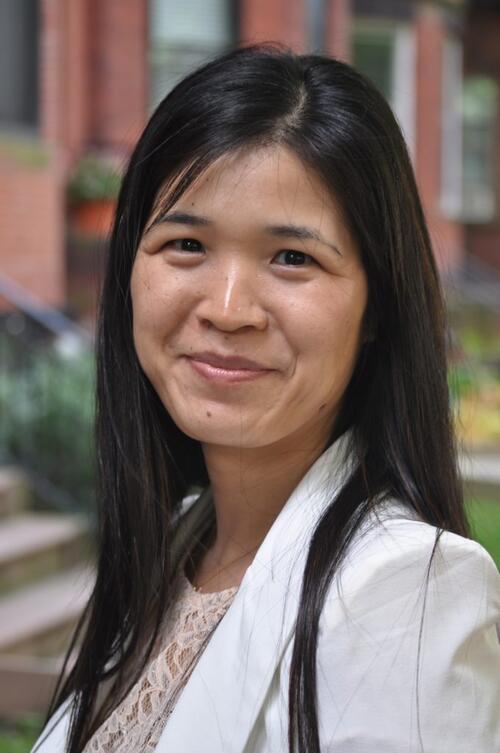
Kiyoteru Tsutsui is the Henri H. and Tomoye Takahashi Professor and Senior Fellow in Japanese Studies at the Walter H. Shorenstein Asia-Pacific Research Center (APARC), the director of APARC and of the Japan Program at APARC, co-director of the Southeast Asia Program at APARC, executive director of the Inter-University Center for Japanese Language Studies, co-director of the Center for Human Rights and International Justice, senior fellow at the Freeman Spogli Institute for International Studies, and professor of sociology, all at Stanford University.

Prior to his appointment at Stanford in July 2020, Tsutsui was professor of sociology, director of the Center for Japanese Studies, and director of the Donia Human Rights Center at the University of Michigan, Ann Arbor.

Tsutsui’s research interests lie in political/comparative sociology, social movements, globalization, human rights, and Japanese society. More specifically, he has conducted (1) cross-national quantitative analyses on how human rights ideas and instruments have expanded globally and impacted local politics and (2) qualitative case studies of the impact of global human rights on Japanese politics. His current projects examine (a) changing conceptions of nationhood and minority rights in national constitutions and in practice, (b) populism and the future of democracy, (c) experimental surveys on public understanding about human rights, (d) campus policies and practices around human rights, (e) global expansion of corporate social responsibility and its impact on corporate behavior, and (f) Japan’s public diplomacy and perceptions about Japan in the world.

His research on the globalization of human rights and its impact on local politics has appeared in American Sociological Review, American Journal of Sociology, Social Forces, Social Problems, Journal of Peace Research, Journal of Conflict Resolution, and other social science journals. His book publications include Rights Make Might: Global Human Rights and Minority Social Movements in Japan (Oxford University Press 2018), and two co-edited volumes Corporate Social Responsibility in a Globalizing World (with Alwyn Lim, Cambridge University Press 2015) and The Courteous Power: Japan and Southeast Asia in the Indo-Pacific Era (with John Ciorciari, University of Michigan Press forthcoming). He has been a recipient of National Endowment for the Humanities Fellowship, National Science Foundation grants, the SSRC/CGP Abe Fellowship, Stanford Japan Studies Postdoctoral Fellowship, and other grants as well as awards from American Sociological Association sections on Global and Transnational Sociology (2010, 2013, 2019), Human Rights (2017, 2019), Asia and Asian America (2018, 2019), Collective Behavior and Social Movements (2018), and Political Sociology (2019). 

Tsutsui received his bachelor’s and master’s degrees from Kyoto University and earned an additional master’s degree and Ph.D. from Stanford’s sociology department in 2002.

Director, Shorenstein Asia-Pacific Research Center (APARC)
Director, Japan Program at Shorenstein APARC
Co-Director, Southeast Asia Program at Shorenstein APARC
Executive Director, Inter-University Center for Japanese Language Studies
Co-Director, Center for Human Rights and International Justice
CV
Date Label
Authors
Noa Ronkin
News Type
News
Date
Paragraphs

The Walter H. Shorenstein Asia-Pacific Research Center (APARC) condemns the systemic nature and brutal expression of racism in the United States, and we stand in full support of protestors and civil rights organizations in their calls for social justice, equal access to basic rights, and accountability. Beyond reaffirming our commitment to these values, we recognize the imperative to do better as an institution and the urgent need to take concrete action to build a more inclusive community here at our Stanford home. We have joined our colleagues at the Freeman Spogli Institute for International Studies in developing specific steps towards that goal. But we also want to take initial, immediate action in moving from protest to progress.

That’s why we are announcing today a new diversity grant to support Stanford students from underrepresented minorities with an interest in studying issues related to contemporary Asia. The field of Asian studies suffers from an extreme paucity of students, scholars, and experts who self-identify as Black/African American or as affiliated with other underrepresented minority groups. “The path towards a more diverse and inclusive field isn’t easy or straightforward, but we must get on it,” says APARC Director and FSI Senior Fellow Gi-Wook Shin. “We believe that we can tackle the existing disparity if relevant stakeholders across institutes of higher learning all work together. APARC is looking to start this change at Stanford.”

Lowering Barriers to Diversity in Asian Studies

The purpose of the APARC Diversity Grant is to encourage Stanford students from underrepresented minorities (URM) to engage in study and research of topics related to contemporary Asia and U.S.-Asia relations, including economic, health, foreign policy, social, political, and security issues. We follow the University’s definition of the URM category as encompassing “all U.S. citizens and permanent residents who have self-identified as American Indian/Alaska Native, Black/African American, Hispanic/Latino, Native Hawaiian/Other Pacific Islander.” This grant opportunity is open to current Stanford undergraduate and graduate students in the URM category from any major or discipline. “This is just a small step to start lowering disciplinary, cultural, and funding barriers that hinder broader student participation in Asian studies,” notes Shin.

APARC will award a maximum of $10,000 per grant to support a wide range of research expenses such as travel to/from research sites, academic conferences, and workshops (dependent on COVID-19 restrictions); conference registration fees; professional development training programs; purchase of physical and digital books or other required materials; and access to relevant online resources. APARC will review grant applications for projects taking place in winter/spring 2021 on a rolling basis starting on September 1, 2020. Reviews of the second round of applications, for projects taking place in summer/fall 2021, will begin on April 1, 2021.

Examples of research topics, in addition to those that Asia scholars typically study, could include China’s growing activities in Africa; understanding the evolving relations between Asian Americans and African Americans in the United States; and comparative examinations of issues such as the treatment of minorities in Asia and the United States or policies that promote anti-discriminatory practices in schools, the workplace, and other settings in Asian countries and the United States.

Application Guidelines

  • Complete the application form and submit it along with these three (3) attachments:
    • A statement (no more than three pages) describing the proposed research activity or project;
    • A current CV;
    • An itemized budget request explaining research expense needs.
  • Arrange for a letter of recommendation from a faculty to be sent directly to APARC. Please note: the faculty members should email their letters directly to Kristen Lee at kllee@stanford.edu.

We will consider only applications that include all supporting documents.

Read More

Portrait of Young Kyung Do, Winner of the 2020 Rothman Epidemiology Prize
News

Asia Health Policy Program Alum Wins Rothman Epidemiology Prize

Dr. Young Kyung Do, an expert in health policy and management at the Seoul National University College of Healthy Policy and the inaugural postdoctoral fellow in Asia health policy at APARC, has been awarded the 2020 prize for his outstanding publication in the journal Epidemiology last year.
Asia Health Policy Program Alum Wins Rothman Epidemiology Prize
Cover image of the book "Healthy Aging in Asia", showing a smiling elderly Chinese woman with a cane standing in a small village.
News

New Book Highlights Policy Initiatives and Economic Research on Healthy Longevity Across Asia

Asia health policy expert Karen Eggleston’s new volume, ‘Healthy Aging in Asia,’ examines how diverse Asian economies – from Singapore and Hong Kong to Japan, India, and China – are preparing for older population age structures and transforming health systems to support patients who will live with chronic disease for decades.
New Book Highlights Policy Initiatives and Economic Research on Healthy Longevity Across Asia
Hero Image
A look at the front of Encina Hall, Stanford
All News button
1
Subtitle

To encourage Stanford students from underrepresented minorities to engage in study and research of topics related to contemporary Asia, the Shorenstein Asia-Pacific Research Center is offering a new Diversity Grant opportunity. Application reviews begin on September 1, 2020.

Center members are invited to the Shorenstein APARC 2019 - 2020 Year End Party on Friday, May 29, 2020. Please come join us to celebrate the last academic year and say farewell to this year's visitors.

Image
Year End Party Invitation

Subscribe to Governance