Security

FSI scholars produce research aimed at creating a safer world and examing the consequences of security policies on institutions and society. They look at longstanding issues including nuclear nonproliferation and the conflicts between countries like North and South Korea. But their research also examines new and emerging areas that transcend traditional borders – the drug war in Mexico and expanding terrorism networks. FSI researchers look at the changing methods of warfare with a focus on biosecurity and nuclear risk. They tackle cybersecurity with an eye toward privacy concerns and explore the implications of new actors like hackers.

Along with the changing face of conflict, terrorism and crime, FSI researchers study food security. They tackle the global problems of hunger, poverty and environmental degradation by generating knowledge and policy-relevant solutions. 

-

Plese note: we're no longer accepting RSVPs for this event.


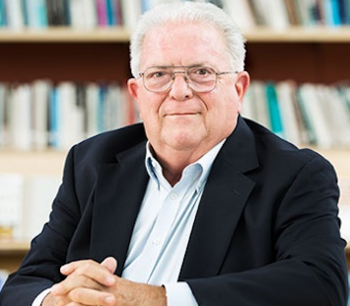
Eight years have passed since the Great East Japan Earthquake and subsequent Fukushima Daiichi Nuclear Power Plant accident. Steady progress has been made towards the reconstruction of Fukushima, repopulation of surrounding areas, and the decommissioning of the plant, of which Tokyo Electric Power Company Holdings (TEPCO) must shoulder 16 trillion yen of the 22 trillion yen, the total estimated cost of the accident. Meanwhile, with Japan having fully liberalized its electricity and gas retail market, the business environment surrounding TEPCO is undergoing a major change. In the long term, TEPCO foresees a decrease in demand for their power service and increased competition among utility companies. In this program, Naomi Hirose, who endeavored to manage the Fukushima incident spearhead reforming the company as President of TEPCO from 2012 to 2017, shares his insights on the current situation in Fukushima, lessons learned and implications from the accident.


Image
naomi hirose photo
Naomi Hirose is senior executive whose service at the Tokyo Electric Power Company (TEPCO) spans four decades.  He joined the company in 1976, having gained an appreciation for the energy industry following the 1973 Oil Shock, and worked in a number of management positions from 1992 to 2005, including corporate planning, sales, marketing, and customer relations.  Mr. Hirose became an executive officer in 2006, and in 2008, conceived and spearheaded a campaign promoting the economic and environmental benefits of electrification, called “Switch” that was a Japan-first. In 2010, he re-energized the company vision for global expansion.  Immediately after the 3.11 Fukushima Accident, Mr. Hirose dedicated himself to create the system for Nuclear Damage Compensation. After becoming President and CEO in 2012, he led the company in addressing a number of highly complex issues such as water management and decommissioning plans for the Fukushima Daiichi Nuclear Power Station, compensation for the accident and Fukushima revitalization, and keeping TEPCO competitive while facing the deregulation of Japan’s electricity market.  He currently serves as Executive Vice Chairman, Fukushima Affairs, overseeing the utility’s passionate and steadfast efforts to reconstruct and revitalize Fukushima Prefecture.  Mr. Hirose received his B.A. in Sociology from Hitotsubashi University in 1976,and his MBA from Yale School of Management in 1983.

Naomi Hirose, Vice Chairman, Tokyo Electric Power Company Holdings, Inc. (TEPCO)
Seminars
0
andrew_kim.jpg

Sung Hyun "Andrew" Kim was a visiting scholar at the Walter H. Shorenstein Asia-Pacific Research Center (APARC) through December 2019. Previously he was William J. Perry visiting scholar at APARC. Kim, who retired from the Central Intelligence Agency in 2018 as a senior intelligence officer after 28 years of service, was assistant director of the CIA's Korea Mission Center, where he helped secure the foundation for the Trump-Kim summit of June 2018.  At Stanford, he will contribute to studies of current North Korea diplomacy in comparison to previous negotiations with the DPRK, a research scope that he refers to as "U.S.-DPRK summit of the century and the tide of history."  Kim will also participate in policy engagement regarding North Korea issues through Shorenstein APARC and its Korea Program.

Kim established the CIA's Korea Mission Center in April 2017 in response to a presidential initiative to address North Korea's longstanding threat to global security. As part of his role as head of the Mission Center, he managed and guided CIA Korean analysts in providing strategic and tactical analytic products for a range of policymakers. He accompanied CIA Director and then Secretary of State Mike Pompeo to Pyongyang in meeting with the North Korean leader Kim Jong Un several times. Formerly he served as the Agency's associate deputy director for operations and technology, leading all efforts to update operational technology and incorporate a state-of-the-art doctrine into CIA training curricula.

Earlier in his career, Kim served as the CIA's chief of station in three major East Asian cities, while also managing the intelligence relationship with politically and militarily complicated foreign countries and advancing U.S. interests. In recognition of his many contributions, Kim was honored by the Agency with the Director's Award (2018), Presidential Rank Award (2012), and the Donovan Award (1990). He speaks fluent Korean, Japanese, and Mandarin Chinese.

Visiting Scholar at APARC
News Type
News
Date
Paragraphs

Prior to departing for Singapore and the second half of her Lee Kong Chian Visiting Fellowship on Southeast Asia , we sat down with Sophie Lemière , a specialist in Malaysian politics, to discuss the origins of her interest in Malaysia, the country's May 2018 electoral revolution and the prospects of its new governing coalition, what it was like to follow the Mahathir's election campaign, and some of her current projects.

A political anthropologist in the Ash Center for Democracy at Harvard University, Lemière is working on a political biography of Malaysia’s current prime minister Mohamad Mahathir that features his recent election campaign. She is the editor of a series of books on politics and people in Malaysia, including Gangsters and Masters (forthcoming 2019), Illusions of Democracy (2017), and Misplaced Democracy (2014). She has held visiting research positions at universities in Singapore, Australia, and the United States. Her PhD is from Sciences-Po in Paris.

The Lee Kong Chian Visiting Fellowship on Southeast Asia is part of a joint initiative by the National University of Singapore (NUS) and Stanford, whose aim is to raise the visibility, extent, and quality of research on contemporary Southeast Asia. Here at Stanford, the infrastructures for research is supported by our Southeast Asia Program .

Watch the video interview below. A transcript is also available.


Hero Image
Lee Kong Chian NUS-Stanford Fellow Sophie Lemiere being interviews Thom Holme, APARC
All News button
1
-

The 11th Annual Koret Workshop

A dramatic opening created by the unique strategic outlooks and personalities of Moon Jae-in, Kim Jong Un and Donald Trump instigated a series of highly symbolic summits in the early months of 2018. The process kicked off by those summits has bogged down, however, as the necessary compromises for an agreement between the United States and North Korea have proved elusive. This year's Koret Workshop will therefore invite experts from a variety of areas in order to reflect on what the stumbling blocks have been as well as prospects for overcoming them. Conference participants will work towards better understanding and supporting potential emerging solutions to the persistent conflict on the Korean Peninsula.

The workshop will consist of three sessions:

Session I: Assessments of Summit Diplomacy

Session II: Challenges and Opportunities in Media Coverage

Session III: Prospects and Pitfalls in the Near-Term

NOTE: During the conference, a keynote address is open to the general public. Please click here to register for the public event on March 15.
 
The annual Koret Workshop is made possible through the generous support of the Koret Foundation.

Bechtel Conference Center
Encina Hall, 616 Serra Street
Stanford University

Conferences
-

WE HAVE REACHED VENUE CAPACITY AND ARE NO LONGER ACCEPTING RSVPS


President Trump’s trade war has infected every domain of Sino-American relations. For better or ill, Washington appears poised to dismantle China’s interdependence with the American economy, limit its role in global governance, counter its investments, and block its technological advances. How and on what terms will this end?  The answer will depend on the capacity of the United States and China for statecraft and the effectiveness of each in raising its competitiveness. What challenges might hostile Sino-American coexistence entail for each nation?  Which country is best positioned to develop the steadiest strategies, most purposive economic policies, and the most supportive relations with other states? 

Image
freeman

Ambassador Chas W. Freeman, Jr. is a senior fellow at Brown University's Watson Institute for International and Public Affairs. He is the former assistant secretary of defense for international security affairs (1993–1994), ambassador to Saudi Arabia (1989–1992), principal deputy assistant secretary of state for African affairs (1986–1989), and chargé d'affaires at Bangkok (1984–1986) and Beijing (1981–1984). He served as vice chair of the Atlantic Council (1996-2008); co-chair of the United States China Policy Foundation (1996–2009); and president of the Middle East Policy Council (1997–2009). He was the principal American interpreter during President Nixon's path-breaking 1972 visit to Beijing, the editor of the Encyclopedia Britannica article on diplomacy, and the author of America’s Continuing Misadventures in the Middle East; Interesting Times: China, America, and the Shifting Balance of Prestige; America’s Misadventures in the Middle East; The Diplomat’s Dictionary; and Arts of Power: Statecraft and Diplomacy. A compendium of his speeches is available at chasfreeman.net

This event is part of the China Program’s Colloquia Series entitled "A New Cold War?: Sharp Power, Strategic Competition, and the Future of U.S.-China Relations " sponsored by Shorenstein APARC's China Program.

A New Cold War?: Sharp Power, Strategic Competition, and the Future of U.S.-China Relations

Image
Gears of US and China

Trade conflict has exploded. The media is rife with stories of China’s unfair trade practices, cyber theft, IP theft and forced technology transfers. Who will first scale the commanding heights of technological supremacy? Who will be the first mover in AI, robotics and biotechnology? What are the implications of Beijing’s ambitious infrastructure projects, including its Belt and Road Initiative? How is China’s “sharp power” deployed, and what are its implications for political and civic life in the U.S.? Can the Trump administration and Beijing’s leadership reach agreement on our trade disputes? Are these just the beginning salvos of an increasingly turbulent future? As U.S. policy towards China sharply veers away from “constructive engagement” to “strategic competition,” the Stanford China Program will host a series of talks by leading experts to explore the current state of our bilateral relations, its potential future, and their implications for the world order.

https://aparc.fsi.stanford.edu/china/research/new-cold-war-sharp-power-strategic-competition-and-future-us-china-relations

Ambassador Chas W. Freeman, Jr.
Seminars

Launched in 2016, this series of public lectures features academics, government practitioners, and business experts who explore contemporary issues focused on the countries of South Asia—their potential and problems, their economies, their place in the region and in the global arena, the agendas of their administrations, and their relations with the United States.

-

Image
andray book cover

The stories of North Korea and Myanmar (Burma) are two of Asia’s most difficult. For decades they were infamous as the region’s most militarized and repressed, self-isolated and under sanctions by the international community while, from Singapore to Japan, the rest of Asia saw historic wealth creation. Andray Abrahamian, author of the recent book North Korea and Myanmar: Divergent Paths (McFarland, 2018), examines and compares the recent histories of North Korea and Myanmar, asking how both became pariahs and why Myanmar has been able to find a path out of isolation while North Korea has not. 

Abrahamian finds that both countries were faced with severe security threats following decolonization. Myanmar was able to largely take care of its main threats in the 1990s and 2000s, allowing it the space to address the reasons for its pariah status. North Korea's response to its security threat has been to develop nuclear weapons, which in turn perpetuates and exacerbates its isolation and pariah status. In addition, Pyongyang has developed a state ideology and a coercive apparatus unmatched by Myanmar, insulating its decision makers from political pressures and issues of legitimacy to a greater degree.

Dr. Andray Abrahamian is currently the 2018-19 Koret Fellow in Korea Program at Stanford. He is a member of the US National Committee on North Korea and an Adjunct Fellow at Pacific Forum and at Griffith University. Working for a non-profit, Choson Exchange, has taken him to the DPRK nearly 30 times; he has also lived in Myanmar.

Philippines Conference Room Encina Hall, 3rd Floor 616 Serra Mall, Stanford, CA 94305
0
Lecturer
Koret Fellow, 2018-19
andray_abrahamian.jpg Ph.D.
Andray Abrahamian was the 2018-19 Koret Fellow at Stanford University. He is also an Honorary Fellow at Macquarie University, Sydney and an Adjunct Fellow at the Griffith Asia Institute. He is an advisor to Choson Exchange, a non-profit that trains North Koreans in economic policy and entrepreneurship. He was previously Executive Director and Research Director for Choson Exchange. That work, along with supporting sporting exchanges and a TB project, has taken him to the DPRK nearly 30 times. He has also lived in Myanmar, where he taught at Yangon University and consulted for a risk management company. He has conducted research comparing the two countries, resulting in the publication of "North Korea and Myanmar: Divergent Paths" (McFarland, 2018). Andray has published extensively and offers expert commentary on Korea and Myanmar, including for US News, Reuters, the New York Times, Washington Post, Lowy Interpreter and 38 North.  He has a PhD in International Relations from the University of Ulsan, South Korea and an M.A. from the University of Sussex where he studied media discourse on North Korea and the U.S.-ROK alliance, respectively. Andray speaks Korean, sometimes with a Pyongyang accent.
<i>2018-19 Koret Fellow, APARC, Stanford University</i>
Seminars
News Type
Commentary
Date
Paragraphs

On November 29, 2018, a working group, co-chaired by Larry Diamond, senior fellow at the Freeman Spogli Institute for International Studies and at the Hoover Institution, and Orville Schell, Arthur Ross director of the Asia Society’s Center on U.S.-China Relations, released the report “Chinese Influence and American Interests: Promoting Constructive Vigilance," which documents the extent of China’s influence-seeking activities in American society. The report details a range of assertive and opaque “sharp power” efforts that China has stepped up within the United States in multiple sectors. These, argue members of the working group, penetrate deeply the social and political fabric of our democratic society and exploit its openness. 

APARC’s Donald K. Emmerson and Thomas Fingar provided the Chinese international affairs website Dunjiaodu with their own commentaries on the report. English language versions of both pieces were published by IPP Review (here and here), and are provided below.

APARC also hosted a special roundtable discussion of the report's findings and recommendations, featuring Diamond and Schell. You can listen to the event's audio recording on our website.


Comment on "Chinese Influence and American Interests"
By Donald K. Emmerson
December 24, 2018

Chinese Influence and American Interests: Promoting Constructive Vigilance is an important and timely report. It deserves translation into Chinese and wide circulation inside the PRC. It should be made available on-line for free downloading by people in China from all walks of life, including scholars, teachers, authors, entrepreneurs, and officials from Beijing down to the lowest levels of administration throughout the country. Relations between the US and China are far too important to the citizenries of our two countries to restrict access to the report to a miniscule proportion of China’s population—the elite English-reading few who enjoy privileged (uncensored) exposure to critical facts and comments regarding the Chinese government’s behavior abroad.

I willingly attended a meeting of the Working Group on Chinese Influence Activities in the United States. My academic specialty is Southeast Asia, including its relations with China, so I chose not contribute text to the report. Understandably, not every sentence in its the 199 pages exactly matches what I might have preferred to read or decided to write. (Relevant is my “Singapore and Goliath?” in the April 2018 Journal of Democracy.) But I supported the Working Group’s work and I agree with its outcome.

Included in the report is a dissenting opinion by Susan Shirk. I respect her view. But I am less concerned than she that the report risks “putting all ethnic Chinese under a cloud of suspicion.” The word “constructive” in the report’s subtitle explicitly conveys the Working Group’s desire neither to stereotype nor denigrate people of Chinese descent. At the meeting I attended, this wish was repeatedly expressed. I endorse and appreciate the editors’ caution that, alongside our critique, we “must be mindful to do no harm,” and that the report should not be misused to disparage ethnically Chinese people, who have indeed, as the editors state, made “enormous” contributions to American progress. I would merely enlarge that gratitude to include the economic, political, and cultural benefits attributable to ethnic Chinese individuals, historically and now, throughout the world—my own specialty, Southeast Asia, notably included.


"Flies and Barriers": On the China-U.S. Relationship
By Thomas Fingar
December 20, 2018

The recent report of the Working Group on Chinese Influence Activities in the United States was not timed to coincide with the 40th anniversary of Reform and Opening and the restoration of US-China diplomatic relations but it provides “teaching moment” opportunities for reflection on the ways in which China and the United States have managed the challenges of deeper engagement. I hope that the full report will be available in China and urge readers of this commentary to read it and to think about the issues it raises. I had no role in the preparation of the report but concur with the views expressed by Susan Shirk in her dissenting opinion.

One cluster of issues centers on important asymmetries in the US-China relationship. The report describes numerous ways in which Chinese entities interact with institutions and individuals in the United States and correctly notes the almost complete absence of legal and procedural impediments to such interaction. One cannot say the same about China. Four decades into the era of reform and opening, China remains far less open to foreign ideas, interaction, and influence than is the United States. I encourage readers to ask why that is the case and to consider the consequences and implications for China’s future development. To paraphrase Deng Xiaoping, the concerns raised in the Working Group report represent “flies” that entered the United States through the window of extensive engagement with China. The report calls for dealing with the flies, not closing the window. China seems increasingly determined to prevent the intrusion of foreign “flies” by erecting (or failing to lower) barriers.

Asymmetries in access are not limited to the dimensions of US-China relations discussed in this report. The US economy remains far more open to goods, investment, and ownership from China than China is to comparable forms of engagement by Americans. For decades, US laws, policy, and citizens accepted — even fostered — such asymmetries to strengthen our allies and partners. China has benefitted from this asymmetry, as have dozens of other countries. Policies to make our partners and allies stronger and more prosperous were designed to — and did — enhance American security and prosperity, but almost three decades after the end of the Cold War, many Americans understandably ask why we continue to accept such a high degree of inequality. What made sense during the Cold War and before our partners became stronger and more prosperous now seems unfair and unwise. As a result, American thinking about the ways we interact with other nations is shifting from acceptance of asymmetries to demands for reciprocity and equal treatment.

Some Chinese commentaries on the Working Group report have asserted that it reflects waning self-confidence and fear of China’s rise. Such assessments are wrong. Belief that we should receive essentially the same treatment from other countries as they accord to the United States and American citizens, firms, NGOs, and other entities reflects the strength of our commitment to fairness, not fear of competition. The long-held consensus that US policy should treat all countries (except explicit enemies, which China was from 1950 until the late 1960s) equally regardless of how they treated the United States has eroded significantly. That consensus is being replaced by calls for stricter reciprocity and treating other countries in the same way that they treat us. This sentiment is not limited to engagement with China but the Working Group report captures the emerging consensus by noting that Chinese media have far greater access to the United States than American reporters, newspapers, and broadcasts have to Chinese audiences. That is a fact, not an expression of paranoia or lack of confidence. Indeed, readers of this commentary might reflect upon why it is that China seems to lack confidence in the ability of its people to make their own judgments about foreign ideas and compete with foreign firms.

I was in China when the report was published and many Chinese interlocutors depicted its findings and recommendations as “proof” that the United States had abandoned engagement and reverted to containment policies designed to thwart China’s rise. Both their characterization of the report and their assertions about American policy are wrong. None of these interlocutors had read the report (their opinions were based on negative commentary), and I suspect that many would change their assessment if they had a chance to do so. I also suspect that many in China would change their minds about whether the United States is attempting to “contain” China if they had access to more — and more accurate — information about American willingness to acknowledge and manage the “flies” of engagement and Chinese efforts to erect barriers to Western ideas.

Hero Image
Thomas Fingar and Donald Emmerson, aong with cover of Chinese Influence Report Rod Searcey
All News button
1
Date Label
News Type
News
Date
Paragraphs

Former head of the CIA’s Korea Mission Center Andrew Kim will bring rich perspectives and experiences on North Korea. Kim joins the Walter H. Shorenstein Asia-Pacific Research Center at the Freeman Spogli Institute for International Studies.

January 7, 2019
FOR IMMEDIATE RELEASE

STANFORD, CA — Stanford University’s Walter H. Shorenstein Asia-Pacific Research Center (Shorenstein APARC) announced today the appointment of Sung Hyun “Andrew” Kim as a William J. Perry visiting scholar through the winter quarter of 2019.

Image
Portrait of Andrew Kim
Kim, who recently retired as a senior intelligence officer from the Central Intelligence Agency after 28 years of service, is the outgoing assistant director of the CIA’s Korea Mission Center, where he helped secure the foundation for the Trump-Kim summit of June 2018. At Stanford, he will contribute to studies of current North Korea diplomacy in comparison to previous negotiations with the DPRK, a research scope that he refers to as “U.S.-DPRK summit of the century and the tide of history.” Kim will also participate in policy engagement regarding North Korea issues through Shorenstein APARC and its Korea Program, which are part of the Freeman Spogli Institute for International Studies (FSI).

“I am delighted to welcome Andrew to Stanford,” said Gi-Wook Shin, director of Shorenstein APARC and of the Korea Program. “I have known him for many years, and his extraordinary expertise and rich experiences in Korean affairs are an invaluable addition to FSI’s and APARC’s community of scholars and practitioners. I look forward to Andrew’s contributions to our explorations of ways to promote sustainable reengagement of North Korea, which reflect our mission of producing policy-relevant research and strengthening dialogue and cooperation between counterparts in the Asia-Pacific and the United States.”

Kim established the CIA’s Korea Mission Center in April 2017 in response to a presidential initiative to address North Korea’s longstanding threat to global security. As part of his role as head of the Mission Center, he managed and guided CIA Korea analysts in providing strategic and tactical analytic products for a range of policymakers. He accompanied CIA Director and then Secretary of State Mike Pompeo to Pyongyang in meeting with the North Korean leader Kim Jong Un several times. Formerly he served as the Agency’s associate deputy director for operations and technology, leading all efforts to update operational technology and incorporate a state-of-the-art doctrine into CIA training curricula.

Earlier in his career, Kim served as the CIA’s chief of station in three major East Asian cities, while also managing the intelligence relationship with politically and militarily complicated foreign countries and advancing U.S. interests. In recognition of his many contributions, Kim was honored by the Agency with the Director’s Award (2018), Presidential Rank Award (2012), and the Donovan Award (1990). He speaks fluent Korean, Japanese, and Mandarin Chinese.

###

About the Walter H. Shorenstein Asia-Pacific Research Center
The Walter H. Shorenstein Asia-Pacific Research Center (Shorenstein APARC) addresses critical issues affecting the countries of Asia, their regional and global affairs, and U.S.-Asia relations. As Stanford University’s hub for the interdisciplinary study of contemporary Asia, APARC produces policy-relevant research, provides education and training to students, scholars, and practitioners, and strengthens dialogue and cooperation between counterparts in the Asia-Pacific and the United States. Founded in 1983, APARC today is home to a scholar community of distinguished academics and practitioners in government, business, and civil society, who specialize in trends that cut across the entire Asia-Pacific region.

Media contact:
Noa Ronkin, Associate Director for Communications and External Relations
Walter H. Shorenstein Asia-Pacific Research Center
noa.ronkin@stanford.edu


Hero Image
Portrait of Andrew Kim
All News button
1
-

Co-sponsored by the Southeast Asia Program and

the Center on Democracy, Development and the Rule of Law

Indonesia features Southeast Asia’s most vibrant and dynamic democracy, but debilitating institutional dysfunctions persist.  Age-old patronage-style practices remain commonplace, despite voter demands for governance reform.  In effect, two mutually incompatible systems operate simultaneously: the rule of law on the one hand—“Ruler’s Law” on the other.  The disarray provides space for mafias and Islamist fringe groups to wield clout.  The contradiction tends to deter investment that Indonesia sorely needs in order to escape a “middle-income trap.”  What are the prospects for change in the April 2019 national elections?  Join the Indonesia political analyst Kevin O’Rourke for a presentation and discussion of poll data, political trends, and potential post-2019 scenarios in the world’s fourth most populous country. 

Image
kevin orourke cropped
Kevin O’Rourke’s Reformasi Weekly analyzes politics and policy-making for organizations operating in Indonesia. Subscribers include embassies, NGOs, universities, and companies. His firm, Reformasi Information Services, provides political risk consul­ting and customized research. His latest publication, 2019 Election Primer: Players, Playing Field and Scenarios (Nov. 2018), reviews in detail the rules, issues, and possible results of the country’s nationwide elections in April 2019. Earlier writings include Who’s Who in Yudhoyono’s Indonesia (2010) and Reformasi: The Struggle for Power in Post-Soeharto Indonesia (2002). Kevin started his career in Indonesia in 1994 as an equity research analyst. He is a graduate of Harvard University with an honors degree in government.

Philippines Conference Room Encina Hall, 3rd Floor 616 Serra Mall, Stanford, CA 94305
Kevin O’Rourke Writer and producer, Reformasi Weekly Review of Indonesian politics and policymaking
Seminars
Subscribe to Security