International Relations

FSI researchers strive to understand how countries relate to one another, and what policies are needed to achieve global stability and prosperity. International relations experts focus on the challenging U.S.-Russian relationship, the alliance between the U.S. and Japan and the limitations of America’s counterinsurgency strategy in Afghanistan.

Foreign aid is also examined by scholars trying to understand whether money earmarked for health improvements reaches those who need it most. And FSI’s Walter H. Shorenstein Asia-Pacific Research Center has published on the need for strong South Korean leadership in dealing with its northern neighbor.

FSI researchers also look at the citizens who drive international relations, studying the effects of migration and how borders shape people’s lives. Meanwhile FSI students are very much involved in this area, working with the United Nations in Ethiopia to rethink refugee communities.

Trade is also a key component of international relations, with FSI approaching the topic from a slew of angles and states. The economy of trade is rife for study, with an APARC event on the implications of more open trade policies in Japan, and FSI researchers making sense of who would benefit from a free trade zone between the European Union and the United States.

-

WE HAVE REACHED VENUE CAPACITY AND ARE NO LONGER ACCEPTING RSVPS


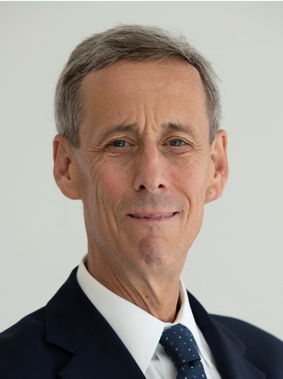
Forty years after the reestablishment of diplomatic relations between the United States and China, we are at a historic inflection point defined by more and more competition and less and less cooperation. Both countries have actively traded economic blows and we have demonstrably proven that we are most capable of hurting each other. There are voices on both sides clamoring for economic decoupling amidst a severe collapse of trust, and that trust deficit is most starkly on display in the realm of technology and innovation. In many respects, China’s technological transformation has been a boon to the United States. It is, in fact, impossible to imagine a Silicon Valley without China. But US concerns over China’s policies and practices in the high-tech sphere are very real. The US Trade Representative’s Section 301 report accurately identifies a suite of anti-competitive and unfair practices that cannot continue if cooperative innovation is to thrive. History shows that the United States and China can both choose to make progress together, or we can both choose to struggle together. There are steps China can take to right this course, steps that are in its own economic interests as well as ours.

Image
craig allen

On July 26, 2018, Ambassador Craig Allen began his tenure in Washington, DC, as the sixth President of the United States-China Business Council, a private, nonpartisan, nonprofit organization representing over 200 American companies doing business with China. Ambassador Allen began his government career in 1985 at the Department of Commerce’s International Trade Administration (ITA) where, from 1986 to 1988, he worked as an international economist in ITA’s China Office. In 1988, Allen transferred to the American Institute in Taiwan, where he served as Director of the American Trade Center in Taipei. He returned to the Department of Commerce for a three-year posting at the US Embassy in Beijing as Commercial Attaché in 1992. In 1995, Allen was assigned to the US Embassy in Tokyo where he was promoted to Deputy Senior Commercial Officer in 1998. Allen became a member of the Senior Foreign Service in 1999. Starting from 2000, he served a two-year tour at the National Center for APEC in Seattle where he worked on the APEC Summits in Brunei, China, and Mexico. In 2002, Allen first served as the Senior Commercial Officer in Beijing where he was later promoted to the Minister Counselor rank of the Senior Foreign Service. After a four-year tour in South Africa, Ambassador Allen became Deputy Assistant Secretary for Asia at the US Department of Commerce’s International Trade Administration. He later became Deputy Assistant Secretary for China. Ambassador Allen was sworn in as the United States ambassador to Brunei Darussalam on December 19, 2014 where he served until he transitioned to take up his position as President of the US-China Business Council.

The US-China Business Council is a private, nonpartisan, nonprofit organization of approximately 200 American companies that do business with China.  For more information regarding the USCBC, click here

This event is part of the China Program’s Colloquia Series entitled "A New Cold War?: Sharp Power, Strategic Competition, and the Future of U.S.-China Relations " sponsored by Shorenstein APARC's China Program.

A New Cold War?: Sharp Power, Strategic Competition, and the Future of U.S.-China Relations
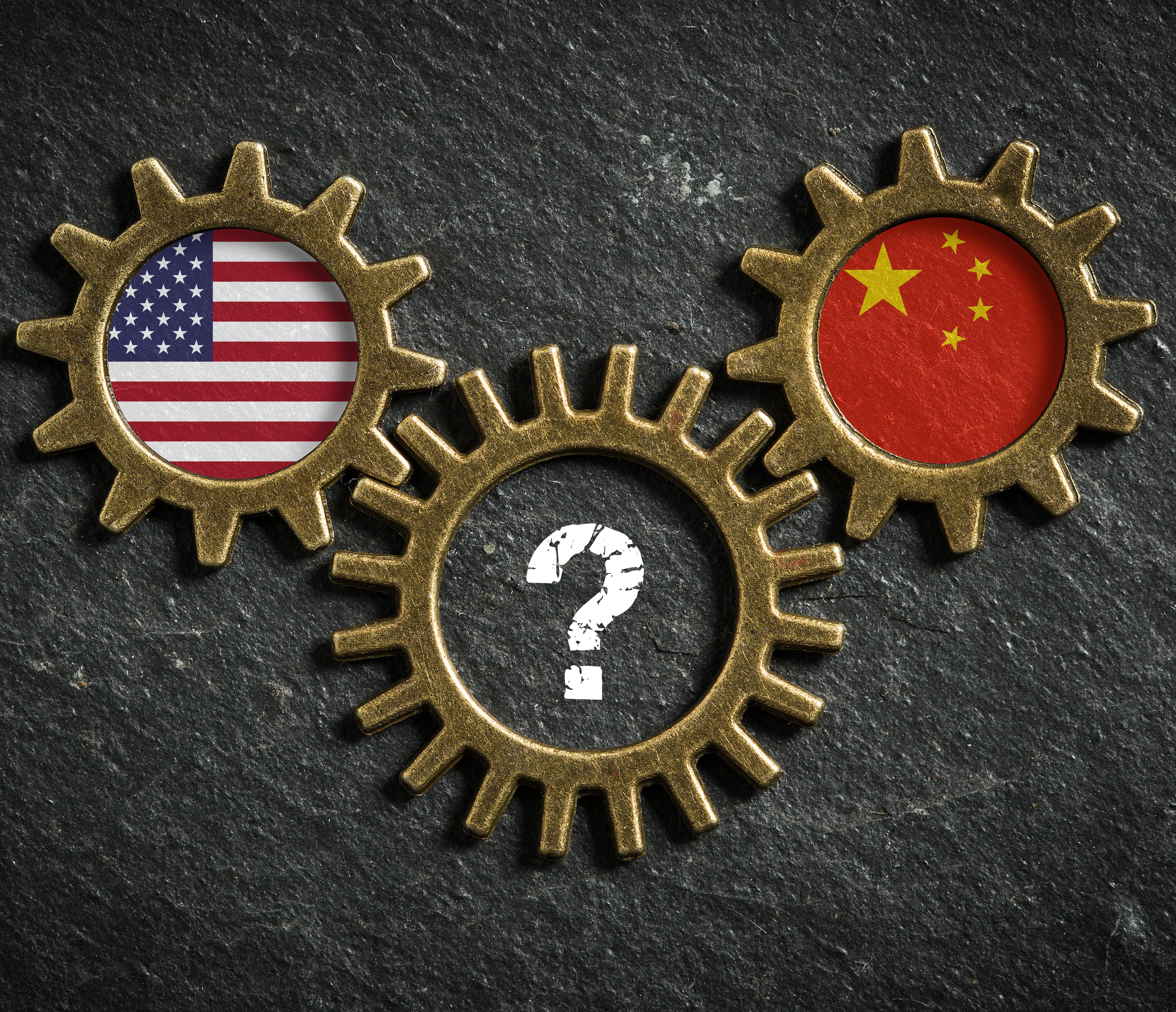
Trade conflict has exploded. The media is rife with stories of China’s unfair trade practices, cyber theft, IP theft and forced technology transfers. Who will first scale the commanding heights of technological supremacy? Who will be the first mover in AI, robotics and biotechnology? What are the implications of Beijing’s ambitious infrastructure projects, including its Belt and Road Initiative? How is China’s “sharp power” deployed, and what are its implications for political and civic life in the U.S.? Can the Trump administration and Beijing’s leadership reach agreement on our trade disputes? Are these just the beginning salvos of an increasingly turbulent future? As U.S. policy towards China sharply veers away from “constructive engagement” to “strategic competition,” the Stanford China Program will host a series of talks by leading experts to explore the current state of our bilateral relations, its potential future, and their implications for the world order.

https://aparc.fsi.stanford.edu/china/research/new-cold-war-sharp-power-strategic-competition-and-future-us-china-relations

Philippines Conference Room Encina Hall, 3rd Floor 616 Serra Mall, Stanford, CA 94305


Amb. Craig Allen <i>President of US-China Business Council</i><br><br>
Seminars
-

We are sorry that the registration is now closed. It has reached the limit of the room capacity.

Brent Christensen is the Director of the American Institute in Taiwan’s Taipei office. Mr. Christensen has been in the United States Foreign Service for more than 29 years and has extensive experience in senior positions related to Taiwan and China.  Mr. Christensen previously served as Deputy Director of the American Institute in Taiwan’s Taipei office.  Prior to that, he was Director of the State Department’s Office of Taiwan Coordination, where he had a primary role in formulating U.S. policy toward Taiwan.  He has served three assignments at the U.S. Embassy in Beijing, the most recent being Environment, Science, Technology and Health Counselor.

Mr. Christensen has also served as a Senior Level Career Development Advisor in the State Department’s Human Resources Bureau.  Prior to that assignment, he served as the Foreign Policy Advisor at the Asia-Pacific Center for Security Studies (APCSS).  Other overseas postings include Hong Kong and South Africa.  Mr. Christensen also served as a Congressional Fellow on the staff of Senator Olympia Snowe.  Prior to joining the Foreign Service, he was a captain in the U.S. Air Force.

Mr. Christensen is a career member of the Senior Foreign Service and holds the personal rank of Minister-Counselor.  Mr. Christensen earned an M.A. in East Asian Studies from the George Washington University, a B.A. in Chinese language and literature from Brigham Young University, and a Doctor of Medical Dentistry degree from the Oregon Health and Sciences University.  Mr. Christensen is married to Brenda Barrus Christensen and has three children.  He is a native of Provo, Utah.

Oksenberg Conference Room Encina Hall, 3rd Floor 616 Serra Mall, Stanford, CA 94305
Brent Christensen Director, American Institute in Taiwan
Seminars
-

We are sorry that the registration is now closed. It has reached the limit of the room capacity.

A conversation about Taiwan’s economic future, moderated by Larry Diamond, Senior Fellow, Hoover Institution and the Freeman Spogli Institute for International Studies.

Image
eric chu chopped 2017
Eric Chu was the first Mayor of the newly-created Special Municipality of New Taipei, a position he held from 2010-2018. He has also served in several other elected offices and government posts in Taiwan during his career, including as a member of the Legislative Yuan (1999-2001), Magistrate of Taoyuan County (2001-2009), and Vice Premier of the Republic of China (2009-2010). In 2015, he became the chairman of the Chinese Nationalist Party (Kuomintang), and he was the party’s nominee in the January 2016 presidential election.

Dr. Chu holds a bachelor’s degree in management from National Taiwan University, and a master’s degree in finance and a Ph.D. in accounting from New York University. He taught as an assistant professor at City University of New York before returning to Taiwan and joining the faculty of National Taiwan University, where he was promoted with tenure in 1997.

Philippines Conference Room Encina Hall, 3rd Floor 616 Serra Mall, Stanford, CA 94305
Mayor Eric Chu
-

Since its establishment, DNX Ventures (formerly Draper Nexus Ventures) has acted as a bridge between growing Silicon Valley businesses and large Japanese firms. Since 2011, DNX Ventures has created more than 100 partnerships between its portfolio companies and its over 25 large Japanese corporate LPs. During this seminar, Managing Director of DNX Ventures Hiro Rio Maeda will extrapolate from his over 15 years of experience in both corporate venture capital and venture capital and extensive experience working with both startups and large Japanese corporations to discuss the basics of venture capital, and how Japanese corporations leverage venture capital to push forward open innovation initiatives. From a VC perspective: how are decisions about strategic investments made? How does money flow? What ratio of successful investments to non-successful investments do VCs aim for? From a large Japanese corporate perspective: how do large Japanese firms use VC to achieve open innovation goals? What are some of the obstacles to Japanese large firm-startup partnerships, and what are some of the ways to overcome these challenges? Maeda will answer these questions and more, as well as share examples of successful partnerships and large Japanese firms that are successfully harnessing Silicon Valley to further open innovation efforts.  

SPEAKER:

Hiro Rio Maeda, Managing Director, DNX Ventures (formerly Draper Nexus)

BIO:

Hiro Rio Maeda is a Managing Director at venture capital firm DNX Ventures (formerly Draper Nexus). Rio focuses on investing in innovative companies in Cyber Security, mobile, storage, and retail tech area that could work on a global scale. His portfolio companies include Cylance, SafeBreach, JASK, vArmour, AppDome, Ayasdi, Remotium, Klout, Fyde, JoyMode, and Hom.ma. 

Prior to joining DNX Ventures (formerly Draper Nexus), Rio spent six years at Globespan Capital Partners where he had put his resource on both investment and business development of Japan/US portfolio companies. Palo Alto Networks(NYSE: PANW) was a good example portfolio company that he took a lead on taking them to the Japanese market.

Prior to Globespan, Rio spent seven years at Sumitomo Corporation, a Japanese conglomerate trading company in which he had built expertise his international business skill in IT technologies and consumer web services in Tokyo and his capitalist career at Presidio Ventures (Sumitomo’s corporate venture capital arm) in Santa Clara.Japanese conglomerate trading company in which he had built expertise his international business skill in IT technologies and consumer web services in Tokyo and his capitalist career at Presidio Ventures (Sumitomo’s corporate venture capital arm) in Santa Clara.

AGENDA:

4:15pm: Doors open
4:30pm-5:30pm: Talk and Discussion
5:30pm-6:00pm: Networking

RSVP REQUIRED:

Register to attend at http://www.stanford-svnj.org/22819-public-forum

For more information about the Silicon Valley-New Japan Project please visit: http://www.stanford-svnj.org/


Hiro Rio Maeda, Managing Director, DNX Ventures (formerly Draper Nexus)
Seminars
-

The event is jointly sponsored by the Japan Program at the Shorenstein Asia-Pacific Research Center and the Japan Foundation Center for Global Partnership.

The Heisei era started in 1989, with high hopes for Japan to contribute to the international order. As the Heisei era draws to an end, Japan is once again expected to “step up” with increased urgency, given the current US administration’s withdrawal from, and challenge to the international order.  In this talk, I will first look back at the thirty years of Heisei, and discuss why Japan did not take the “internationalist” path in a way that some had expected. Looking forward, I discuss how the domestic institutional changes, together with the geopolitical challenges in Asia, have prompted Japan to seek active leadership in the region and beyond. I will elaborate on the evolution of the “Free and Open Indo-Pacific Vision,” with focus on how exactly Japan seeks to achieve “free and open” in the region, and challenges and limitations going forward.

Image
hikotaniphoto2017
Takako Hikotani is Gerald L. Curtis Associate Professor of Modern Japanese Politics and Foreign Policy. She previously taught at the National Defense Academy of Japan, where she was Associate Professor, and lectured at the Ground Self Defense Force and Air Self Defense Force Staff Colleges, and the National Institute for Defense Studies. Her research focus on civil-military relations and Japanese domestic politics, Japanese foreign policy, and comparative civil-military relations. Her publications (in English) include, “The Japanese Diet and defense policy-making.” International Affairs, 94:1, July, 2018; “Trump’s Gift to Japan: Time for Tokyo to Invest in the Liberal Order,” Foreign Affairs, September/October 2017; and “Japan’s New Executive Leadership: How Electoral Rules "Japan’s New Executive Leadership: How Electoral Rules Make Japanese Security Policy" (with Margarita Estevez-Abe and Toshio Nagahisa), in Frances Rosenbluth and Masaru Kohno eds, Japan in the World (Yale University Press, 2009). She was a Visiting Professional Specialist at Princeton University as Social Science Research Council/Abe Fellow (2010-2011) and Fellow of the US-Japan Leadership Program, US-Japan Foundation (2000- ). Professor Hikotani received her BA from Keio University, MAs from Keio University and Stanford University, and PhD in Political Science from Columbia University, where she was a President’s Fellow.

Takako Hikotani Associate Professor, Modern Japanese Politics and Foreign Policy, Columbia University
Seminars
Authors
Noa Ronkin
News Type
News
Date
Paragraphs
In her acclaimed book The Third Revolution: Xi Jinping and the New Chinese State, Chinese domestic and foreign policy expert Elizabeth Economy argues that Xi Jinping’s dual-reform trajectories—a more authoritarian system at home and a more ambitious foreign policy abroad—provide Beijing with new levers of influence that the United States must learn to use to protect its own interests.
 
Economy, the C. V. Starr senior fellow and director for Asia studies at the Council on Foreign Relations and a distinguished visiting fellow at Stanford University's Hoover Institution, kicked off the China Program’s 2019 winter colloquia with a discussion of the transformations underway in China today and the future of U.S.-China relations.
 
Speaking to a packed audience, Economy described how, in the process of pursuing his vision of the rejuvenation of the Chinese dream, Xi Jinping has upended much of Deng Xiaoping’s "second revolution" and has put in motion four significant strategic shifts in Chinese domestic and foreign policy.
 
The first shift is a move away from Deng’s consensus- and collective-based decision-making process back toward a more single-man, authoritarian role. The second is a reassertion of the Chinese Communist Party more deeply into the everyday political and economic lives of the Chinese people. The third is a creation of a virtual wall of restrictions and regulations that allows Xi and the rest of the Chinese leadership to control more closely what comes into the country and what goes out. The fourth shift, the most visible one to people outside China, is the move from Deng’s low-profile foreign policy to a far more ambitious foreign policy.
 
This foreign policy shift, said Economy, is especially noteworthy in three areas: first, in Xi’s move from staking claims around Chinese sovereignty to realizing them; second, in his Belt and Road Initiative; and third, in his effort to reform institutions of global governance so that they reflect Chinese values and norms.
 
How should the United States address these changes in China’s domestic and foreign policy? Economy listed four ways of response: first, cooperation, namely, collaborating with China on global problems such as those concerning public health or the environment; second, coordination with U.S. allies; third, countering China by pushing back on, for example, its South China Sea claims and incidents of intellectual property infringement; and finally, competing with China by investing domestically in areas including education and research and technological development.
 
Listen to Economy’s discussion. A transcript is also available below.
 

Hero Image
Elizabeth Economy speaking at a podium Thom Holme
All News button
1
News Type
Commentary
Date
Paragraphs

As tension grows between China and the United States, its effects are felt across Asia. APARC's Southeast Asia Program Director Donald K. Emmerson sat down with Michael McFaul, FSI's Director and host of FSI's podcast World Class, to talk about why Southeast Asia in particular is caught in that rising tension between China and the United States and what can be done to prevent it from becoming a battle ground for a new Cold War between the two superpowers.

Listen to the conversation:


All News button
1
-

The event is sponsored by the Japan Society for Promotion of Science and
the Japan Foundation Center for Global Partnership.


abe 6364 Japanese Prime Minister Shinzo Abe speaks at Stanford about innovation in Japan and Silicon Valley. He was also joined on stage by Stanford President John Hennessy and George Shultz, the former U.S. Secretary of State and a distinguished fellow at the Hoover Institution (below).
When the Liberal Democratic Party in Japan regained the power led by Prime Minister Shinzo Abe in December 2012, Japan’s government embarked on a set of economic policies dubbed “Abenomics.” Abenomics aimed at bringing Japan back from stagnation and restoring its growth potential.  The Abe administration entered its 7th year and Prime Minister Abe looks most likely to become the prime minister with the longest reign in the post war era.  Abenomics looks seemingly successful as well.  Japan’s economy has been in the longest expansion phase in the post war era.  The unemployment rate is so low that many employers claim they cannot find workers.  Yet, the major goals of Abenomics set at the beginning, such as 2% inflation rate and 2% real economic growth, have not been achieved.  Has Abenomics really succeeded?

This panel features four experts who have been closely watching Abenomics’s impacts on the Japanese economy.  They evaluate what Abenomics has accomplished so far in various areas.


Panelists:

Joshua Hausman, Assistant Professor of Public Policy; Assistant Professor of Economics, University of Michigan

Takatoshi Ito, Professor of International and Public Affairs, Columbia University

Nobuko Nagase, Professor of Labor Economics and Social Policy, Ochanomizu University, Japan

Steven Vogel, Professor of Asian Studies; Professor of Political Science; Chair of the Political Economy Program, University of California, Berkeley

Takeo Hoshi (moderator), Director of the Japan Program at the Shorenstein Asia Pacific Research Center, Stanford University


Koret-Taube Conference Center
Gunn-SIEPR Building
366 Galvez Street, Stanford University

Panel Discussions
Authors
News Type
News
Date
Paragraphs

In the nearly seven years since assuming the role of General Secretary of the Communist Party of China, Xi Jinping has had far-ranging impact on the country’s policies at home and abroad. From his anti-corruption campaign and tightening restrictions on civil society to championing the Belt and Road initiative and abolishing China’s presidential term limits, Xi is transforming the Chinese state and its place on the global stage.

Among the cutting-edge topics that China scholars are beginning to explore is Xi’s impact on Chinese politics and its concomitant influence on what and how scholars study Chinese politics. Last December, the China Program at Shorenstein APARC hosted a conference that drew preeminent scholars of Chinese politics and comparative politics primarily from across the United States and Canada, where they gathered to assess the state of the discipline, and where the field might go next.

Too Big for One Room

The conference traces its origins to a prior gathering at the American Political Science Association (APSA). The number of attendees at that meeting outpaced any room upgrade APSA could provide. “We were impressed by the number of people studying Chinese politics,” said the China Program Director Jean Oi . “It was apparent to many of us who attended that meeting that it was time we convened a separate event with leaders in the field.”

The need to bring together the multiple generations of scholars of Chinese politics was also clear. “Younger scholars today are so much more well-equipped with various sophisticated methodologies such as machine learning and web scraping,” noted Oi. “We decided it would be useful to gather those doing various types of research, quantitative and qualitative, to think about what we don’t know about Chinese politics but would like to know; and how possibly we might go about doing that research. Our goal for this conference was to try to identify collectively some of those questions for the study of Chinese politics and how our research might contribute to the broader field of comparative politics.” The first gathering of Chinese politics scholars took place at Harvard in December 2017.

‘Burning Questions’ Light Up Second Gathering

(From left to right): Stanford Professors Jean Oi (chair), Lisa Blaydes, Beatriz Magaloni (partially hidden), Michael McFaul, and Barry Weingast during the conference plenary session with comparative politics scholars

That first conference at Harvard reinforced the utility of inter-dialog and helped organizers secure a grant from APSA, which along with support from from FSI and Shorenstein APARC facilitated the second gathering, this time at Stanford. To ensure that the sessions allowed for maximum participant engagement, attendees were assigned into seven working groups. In the months preceding the conference, each group prepared a memo identifying the key questions in the field of Chinese politics, the ways to addressing these questions, and the synergies between Chinese politics and comparative politics .

“The State of the Field in Chinese Politics” conference opened with presentations by the seven small group leaders to a plenary session, followed by discussion of the various burning questions identified by the participants. Unsurprisingly, one prominent item across many of the memos was the oversized impact of Xi on China. Other areas of interest included “elite politics,” the relationship between newfound billionaires and the party, the renewed role of state-owned enterprises in the economy, and the current status of relationships between the private sector, the Party, and the state

Several groups also expressed their desire to learn more about the internal workings of the Party, specifically the adaptation of political institutions over time. While observers often point out that China’s political institutions have changed little compared to its economic institutions, scholars have also found that, in fact, the changes within China’s governmental organizations have been subtle yet profound. But how can we determine when an organizational structure changes the ways in which it operates, and who decides? The field of Chinese politics remains uncertain about these questions.

On the second day, conference attendees were joined by several Stanford scholars of comparative politics, including FSI Director Mike McFaul and FSI Senior Fellows Lisa BlaydesBeatriz Magaloni and Barry Weingast, who responded to the group memos. Breakout discussions of methodology followed.

Keeping the Fire Going

(From left to right): Professors Kellee Tsai, Hong Kong University of Science and Technology; Jean Oi, Stanford University; Mary Gallagher, University of Michigan; and Margaret Pearson, University of Maryland confer with one another

The conference concluded with a plenary session that focused on the questions "Where are we now?” and “Where do we go next?" One conclusion from the closing was an acknowledgment of the need to more fully consider China in the context of its interactions with other countries in the region as well as globally. “I think that ‘China in the Global Context’ may very well be the theme of our next conference,” said Oi.

A third conference is tentatively scheduled for December 2019. The five partners behind the series—Stanford University, Harvard University, Duke University, MIT, and the University of Michigan—are currently seeking outside funding to keep this effort going. The hope is that the next meeting will be at Duke University.

Hero Image
China Conference Panelists
(From left to right): Three of the presenters during the first plenary session: Professors Mary Gallagher, University of Michigan; Melanie Manion, Duke University; and Jean Oi, Stanford University
Andrea Brown, APARC
All News button
1
-

Note:

  • Members of the media interested in covering this event should contact Noa Ronkin at noa.ronkin@stanford.edu by 5:00 pm, Wednesday, February 20, to register. They will also need to present their press credentials for admission. 
  • No recording allowed.
Image
sung andrew kim2

About the speaker: Andrew Kim recently retired as a senior intelligence officer from the Central Intelligence Agency after 28 years of service. He established the CIA's Korea Mission Center in April 2017 in response to a presidential initiative to address North Korea's longstanding threat to global security. As part of his role as head of the Mission Center, he managed and guided CIA Korean analysts in providing strategic and tactical analytic products for a range of policymakers. He accompanied CIA Director and then Secretary of State Mike Pompeo to Pyongyang in meeting with the North Korean leader Kim Jong Un several times. Formerly he served as the Agency's associate deputy director for operations and technology, leading all efforts to update operational technology and incorporate a state-of-the-art doctrine into CIA training curricula.

Earlier in his career, Kim served as the CIA's chief of station in three major East Asian cities, while also managing the intelligence relationship with politically and militarily complicated foreign countries and advancing U.S. interests. He speaks fluent Korean, Japanese, and Mandarin Chinese.


Philippines Conference Room Encina Hall, 3rd Floor 616 Serra Mall, Stanford, CA 94305
0
andrew_kim.jpg

Sung Hyun "Andrew" Kim was a visiting scholar at the Walter H. Shorenstein Asia-Pacific Research Center (APARC) through December 2019. Previously he was William J. Perry visiting scholar at APARC. Kim, who retired from the Central Intelligence Agency in 2018 as a senior intelligence officer after 28 years of service, was assistant director of the CIA's Korea Mission Center, where he helped secure the foundation for the Trump-Kim summit of June 2018.  At Stanford, he will contribute to studies of current North Korea diplomacy in comparison to previous negotiations with the DPRK, a research scope that he refers to as "U.S.-DPRK summit of the century and the tide of history."  Kim will also participate in policy engagement regarding North Korea issues through Shorenstein APARC and its Korea Program.

Kim established the CIA's Korea Mission Center in April 2017 in response to a presidential initiative to address North Korea's longstanding threat to global security. As part of his role as head of the Mission Center, he managed and guided CIA Korean analysts in providing strategic and tactical analytic products for a range of policymakers. He accompanied CIA Director and then Secretary of State Mike Pompeo to Pyongyang in meeting with the North Korean leader Kim Jong Un several times. Formerly he served as the Agency's associate deputy director for operations and technology, leading all efforts to update operational technology and incorporate a state-of-the-art doctrine into CIA training curricula.

Earlier in his career, Kim served as the CIA's chief of station in three major East Asian cities, while also managing the intelligence relationship with politically and militarily complicated foreign countries and advancing U.S. interests. In recognition of his many contributions, Kim was honored by the Agency with the Director's Award (2018), Presidential Rank Award (2012), and the Donovan Award (1990). He speaks fluent Korean, Japanese, and Mandarin Chinese.

Visiting Scholar at APARC
<i>William J. Perry Visiting Scholar, APARC, Stanford University </i>
Seminars
Subscribe to International Relations