International Relations

FSI researchers strive to understand how countries relate to one another, and what policies are needed to achieve global stability and prosperity. International relations experts focus on the challenging U.S.-Russian relationship, the alliance between the U.S. and Japan and the limitations of America’s counterinsurgency strategy in Afghanistan.

Foreign aid is also examined by scholars trying to understand whether money earmarked for health improvements reaches those who need it most. And FSI’s Walter H. Shorenstein Asia-Pacific Research Center has published on the need for strong South Korean leadership in dealing with its northern neighbor.

FSI researchers also look at the citizens who drive international relations, studying the effects of migration and how borders shape people’s lives. Meanwhile FSI students are very much involved in this area, working with the United Nations in Ethiopia to rethink refugee communities.

Trade is also a key component of international relations, with FSI approaching the topic from a slew of angles and states. The economy of trade is rife for study, with an APARC event on the implications of more open trade policies in Japan, and FSI researchers making sense of who would benefit from a free trade zone between the European Union and the United States.

-

The pace of China-U.S. strategic competition has accelerated in the Asia-Pacific, causing heightened concern among U.S. allies and partners in the region over China’s economic expansion, Belt and Road Initiative, and maritime ambitions that challenge U.S. dominance in the region.  Even U.S. allies as reliable as Australia are wondering openly about the capacity of the U.S. to balance Chinese influence.  The Trump administration’s isolationist rhetoric, abandonment of TPP, withdrawal from the Paris Climate Accords, and “flinch” during the recent trade war has increased this concern.  China meanwhile has demonstrated increased sophistication in diplomacy and in neutralizing historical U.S. advantages.  The new frontiers of cyber and space are the most likely domains in which these challenges will play out from a security perspective.  The choices that the U.S. makes in these realms in the next two years may establish a course for the region that cannot be corrected later.

Image
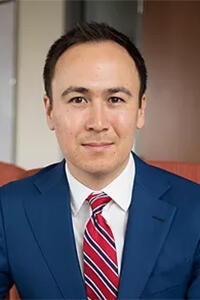
amb jeffrey bleich 8x10

Ambassador Jeffrey Bleich is the former US ambassador to Australia and Special Counsel to President Obama in the White House.  He is currently a partner at Dentons and CEO of Dentons Diplomatic Solutions, where he focuses on privacy and data security, internal investigations, market access, and cross-border disputes involving the Indo-Pacific region.

As ambassador, his term was marked by the US "rebalance" to the Asia­ Pacific, with Australia being the focal point for that shift. His efforts included overseeing record growth in trade and investment between the US and Australia, bringing the Defense Trade Cooperation Treaty into force, establishing new alliance agreements for satellites and cybersecurity, executing a new space cooperation agreement that supported the Mars Curiosity rover landing, leading joint US-Australia efforts in Afghanistan’s Uruzgan province, and promoting regional human rights efforts. For his federal service, Amb. Bleich has received numerous awards, including the highest civilian honors awarded by the Director of National Intelligence and the United States Navy. In 2014, he received the State Department's highest award for a non-career ambassador, the Sue Cobb Prize for Exemplary Diplomatic Service.


Amb. Bleich currently serves as Chair of the Fulbright Foreign Scholarship Board (appointed by President Obama) and as a member of the East-West Center (appointed by Secretary Kerry). He also serves by appointment of the Governor on the Governor's 11-member International Trade and Investment Council. He was formerly the President of the State Bar of California, and the Chair of the California State University Board of Trustees, and currently serves on the Board of Stanford’s Center For the Advanced Study of Behavior Science, and the Board of Amherst College.  He has been elected as a life member to both the American Law Institute and the Council on Foreign Relations.  


Amb. Bleich received his B.A. from Amherst College (with high honors), M.P.P. from Harvard (with highest honors), and J.D. from U.C. Berkeley (with highest honors) where he also served as Editor-in-Chief of the California Law Review.  He clerked for Judge Abner Mikva of the DC Circuit, Chief Justice William Rehnquist of the U.S. Supreme Court, and Judge Howard Holtzmann of the Iran-U.S. Claims Tribunal in the Hague, before becoming a partner at Munger Tolles & Olson.  Amb. Bleich has been regularly listed among the Daily Journal's Top 100 attorneys in California, honored as a California Lawyer Attorney of the Year and listed in Lawdragon 500 and in America's Best Lawyers as a top “Bet the Company” lawyer.

p.p1 {margin: 0.0px 0.0px 0.0px 0.0px; font: 12.0px Calibri; color: #414141} span.s1 {font-kerning: none}

This event is part of the China Program’s Colloquia Series entitled "A New Cold War?: Sharp Power, Strategic Competition, and the Future of U.S.-China Relations " sponsored by Shorenstein APARC's China Program.

A New Cold War?: Sharp Power, Strategic Competition, and the Future of U.S.-China Relations

Trade conflict has exploded. The media is rife with stories of China’s unfair trade practices, cyber theft, IP theft and forced technology transfers. Who will first scale the commanding heights of technological supremacy? Who will be the first mover in AI, robotics and biotechnology? What are the implications of Beijing’s ambitious infrastructure projects, including its Belt and Road Initiative? How is China’s “sharp power” deployed, and what are its implications for political and civic life in the U.S.? Can the Trump administration and Beijing’s leadership reach agreement on our trade disputes? Are these just the beginning salvos of an increasingly turbulent future? As U.S. policy towards China sharply veers away from “constructive engagement” to “strategic competition,” the Stanford China Program will host a series of talks by leading experts to explore the current state of our bilateral relations, its potential future, and their implications for the world order.

https://aparc.fsi.stanford.edu/china/research/new-cold-war-sharp-power-strategic-competition-and-future-us-china-relations


Philippines Conference Room Encina Hall, 3rd Floor 616 Serra Mall, Stanford, CA 94305


Amb. Jeffrey Bleich <i>Dentons</i><br><br>
Lectures
News Type
Commentary
Date
Paragraphs
APARC's Direcror of the Southeast Asia Program Donald K. Emmerson, Center Fellow Thomas Fingar, and Oksenberg-Rohlen Fellow David M. Lampton spoke with The New Silk Road Project as part of a series of conversations that explores China’s Belt and Road Initiative (BRI) from various perspectives. The New Silk Road Project is a student-led research project that aims to better understand and raise awareness of China’s BRI by documenting its land-based component and compiling interviews with leading academics. 
 
Listen to the complete interviews below.
 
Donald K. Emmerson discusses Chinese investment in ASEAN, multilateralism, and the possibility of building the Kra Canal across Thailand to help offset China’s Malacca Dilemma:
 
 
Thomas Fingar discusses how Chinese policies and priorities interact with the goals and actions of other countries in Central and South Asia:
 
 
David M. Lampton discusses China’s development of high-speed railway networks in Southeast Asia:
 

Hero Image
Chinese construction workers in Colombo, Sri Lanka
Chinese Construction workers on site at a shopping mall that is part of the Chinese managed Shangri-La retails and office complex in Colombo, Sri Lanka. For China, the relation with Sri Lanka is a critical link for its Belt and Road Initiative.
Paula Bronstein/Getty Images
All News button
1
-


EMERGING ISSUES IN CONTEMPORARY ASIA

A Special Seminar Series


RSVP required by February 22, 2019 at: https://goo.gl/forms/ZCwcHC0qTec2rzj63

VALID STANFORD ID CARD MUST BE PRESENTED UPON ARRIVAL


ABSTRACT: The United States has been the world’s dominant power for more than a century.  Now many analysts believe China is taking its place. Is China an emerging superpower? Should the United States gear up for a new cold war in Asia? In this seminar, I show that China actually lags far behind the United States by the most important measures of national wealth and power—and will probably fall further behind in the coming decades. The most likely threat to American security, therefore, is not a confident Chinese peer competitor, but a deeply insecure China that lashes out after failing to live up to the global hype about its rise. I will discuss how the United States can contain this threat without starting a cold or hot war with Beijing.   

Image
Michael Beckley
PROFILE: Michael Beckley is an assistant professor of political science at Tufts University and a fellow at Harvard's Kennedy School of Government. His research focuses on the rise of China and has received “best article” awards from the American Political Science Association and the International Studies Association and has been featured by numerous media, including CNN, Fox News, the Financial Times, the New York Times, NPR, and the Washington Post. Previously, Professor Beckley worked at the U.S. Department of Defense, the RAND Corporation, and the Carnegie Endowment for International Peace. He currently consults for the Pentagon’s Office of Net Assessment, the Joint Staff, and the National Intelligence Council. He holds a PhD in political science from Columbia University and his first book, Unrivaled: Why America Will Remain the World’s Sole Superpower, was published last fall by Cornell University Press. Part of his talk is based on a Foreign Affairs web article that was named one of the ten “best of 2018.”

Michael Beckley Assistant Professor of Political Science Tufts University
-


EMERGING ISSUES IN CONTEMPORARY ASIA

A Special Seminar Series


RSVP required by February 12, 2019 to: https://goo.gl/forms/h9RRcz4vR9Ybn5cQ2

VALID STANFORD ID CARD MUST BE PRESENTED UPON ARRIVAL


ABSTRACT: Diplomacy plays a critical role in the management and resolution of armed conflict in the international system. After a war breaks out, decision makers see the opening of talks as a constructive step in the conflict’s resolution — dialogue allows for belligerents to broker deals and coordinate the logistics of war termination. However, in modern warfare, states almost always fight initially for period of time without engaging in talks. What factors explain whether states are willing to talk to their enemy while fighting and when might their diplomatic postures change? “Talking to the Enemy” presents a framework to explain variation in countries’ approaches to wartime diplomacy, focusing on the costs of talks and how states mitigate these costs to get to the negotiating table. I test this framework with respect to Chinese decision making in the Korean and Sino-Indian Wars — one in which China was against talks for nine months before opening up and the latter in which China actively pursued talks throughout the whole conflict. The findings have significant implications for crisis management and conflict resolution in U.S.-China relations.  

Image
Oriana Mastro
PROFILE: Oriana Skylar Mastro is an assistant professor of security studies at the Edmund A. Walsh School of Foreign Service at Georgetown University where her research focuses on Chinese military and security policy, Asia-Pacific security issues, war termination, and coercive diplomacy. Dr. Mastro is also a 2017-2019 Jeane Kirkpatrick Scholar at the American Enterprise Institute (AEI) where she is working on a book about China’s challenge to U.S. primacy. Mastro continues to serve in the United States Air Force Reserve for which she works as a Senior China Analyst at the Pentagon. For her contributions to U.S. strategy in Asia, she won the Individual Reservist of the Year Award in 2016. She has published widely, including in Foreign Affairs, International Security, International Studies Review, Journal of Strategic Studies, The Washington Quarterly, The National Interest, Survival, and Asian Security, and is the author of The Costs of Conversation: Obstacles to Peace Talks in Wartime, (Cornell University Press, 2019). She holds a BA in East Asian Studies from Stanford University and an MA.and PhD in Politics from Princeton University. Her publications and other commentary can be found on twitter @osmastro and www.orianaskylarmastro.com.  


Oriana Mastro Assistant Professor of Security Studies Edmund A. Walsh School of Foreign Service, Georgetown University
Seminars
Authors
Noa Ronkin
News Type
News
Date
Paragraphs
The United States is prepared to pursue “simultaneously and in parallel” all of the commitments outlined at the Trump-Kim Singapore Summit, said the U.S. Special Representative for North Korea Stephen Biegun at an event hosted by Shorenstein APARC on Thursday, January 31.
 
Biegun's remarks, delivered as he prepares to travel to South Korea for meetings with North and South Korean officials, were his first public address since he began his appointment in August 2018. On behalf of U.S. Secretary of State Mike Pompeo, Mr. Biegun directs all U.S. policy on North Korea and leads negotiations.
 
Just prior to the event President Trump said he will announce next week the site and date for the second summit he plans with Kim Jong Un at the end of February. Biegun noted that the U.S. is prepared to move forward “provided that North Korea likewise fulfills its commitment to final, fully verified denuclearization” and that “there are many challenges that make it especially complicated for the United States and North Korea to embark upon a diplomatic initiative of this magnitude.” But he also highlighted several areas of progress and concluded his remarks by saying, “Now is the opportunity. Now is the moment. The United States is ready to turn the vision outlined by President Trump and Chairman Kim at Singapore into reality.”
 
Mr. Biegun’s public address was followed by a conversation with Robert Carlin, a specialist on U.S.–North Korea relations and a visiting scholar at Stanford’s Center for International Security and Cooperation. The event concluded with a question-and-answer session. 
 
You can read a transcript of Mr. Biegun’s remarks.
Hero Image
Stephen Biegun delivers remarks at Stanford at a Shorenstein APARC event. Linda A. Cicero / Stanford News Service
All News button
1
Date Label
-


EMERGING ISSUES IN CONTEMPORARY ASIA

A Special Seminar Series


RSVP required by February 8, 2019 to: https://goo.gl/forms/dht3i9iX06mGpNyC3

VALID STANFORD ID CARD MUST BE PRESENTED UPON ARRIVAL


ABSTRACT: Most North Korean refugees and defectors live in South Korea, but in the past decade a growing number have moved beyond the Korean peninsula to create exile communities in North America, Europe, and other locations around the world. These movements have contributed to the emergence of a new and more globally distributed North Korean diaspora. What factors have shaped the emergence of this diaspora, and what effect is it likely to have?  I find that contestation over conceptions of citizenship, at both the level of the individual and the level of government policy, have combined to shape the migration and resettlement of North Korean defectors and refugees over time and across geographic space. I then draw on a comparison with other authoritarian diasporas and extra-territorial opposition movements to show how changing North Korean resettlement patterns are likely to have significant geopolitical implications--not just for the individuals and families that migrate out of North Korea, but for American and international security and human rights policies toward North Korea.  

Image
Sheena Greitens
PROFILE: Sheena Chestnut Greitens is an Assistant Professor of Political Science at the University of Missouri, and co-director of the university’s Institute for Korean Studies. She is also a non-resident senior fellow at the Brookings Institution and an adjunct fellow with the Korea Chair at Center for Strategic and International Studies.  Dr. Greitens holds a Ph.D. from Harvard  University, M.Phil. from Oxford University, where she studied as a Marshall Scholar, and a B.A. from Stanford University. Greitens’ research focuses on security, East Asia, and the politics of democracy and dictatorship. Her work on China and North Korea has appeared in academic journals and edited volumes in English, Chinese, and Korean, and in major media outlets, and she has previously testified to Congress on security issues in the Asia-Pacific. Her first book, Dictators & Their Secret Police (Cambridge, 2016) received the 2017 Best Book Award from both the International Studies Association and the Comparative Democratization section of the American Political Science Association, and an honorable mention from APSA’s Politics and History section. She is currently working on a book manuscript on the geopolitical implications of North Korean defector and refugee resettlement.  

Sheena Greitens Assistant Professor of Political Science at the University of Missouri and co-director of the university’s Institute for Korean Studies
News Type
News
Date
Paragraphs
JANUARY 30 UPDATE
 
A live video stream of the discussion with Stephen Biegun will be available through Shorenstein APARC's Facebook page: https://www.facebook.com/stanfordsaparc.


Stephen Biegun, the U.S. Special Representative for North Korea, will deliver public remarks as part of a discussion on the DPRK hosted by Stanford University’s Walter H. Shorenstein Asia-Pacific Research Center (Shorenstein APARC) on Thursday, January 31, at 12 p.m. As Special Representative, on behalf of U.S. Secretary of State Mike Pompeo Mr. Biegun directs all U.S. policy on North Korea, leads negotiations, and spearheads U.S. diplomatic efforts with allies and partners.
 
Following his opening remarks, Mr. Biegun will be in conversation with Robert Carlin, an expert on U.S.-North Korea relations and a visiting scholar at Stanford’s Center for International Security and Cooperation. The event will conclude with a question-and-answer session. It will be held at the Koret-Taube Conference Center at the John A. and Cynthia Fry Gunn SIEPR Building.
 
The event is open to the Stanford community and the public, but a Stanford or government-issued ID must be presented for admission.
 
The event is on-the-record but off-camera: no photography or video recording will be allowed. Cameras will not be allowed inside the venue.

Media Advisory:
Journalists interested in covering the discussion on the DPRK with Special Representative for North Korea Stephen Biegun should contact Shorenstein APARC’s Associate Director for Communications and External Relations Noa Ronkin at noa.ronkin@stanford.edu by 12:00 p.m., Wednesday, January 30, to register. At the venue, they will be required to present a press credential from an established news organization. Freelance reporters should email a letter from the news organization for which they work to Noa Ronkin by the January 30 deadline. The press area is limited and press seating is not guaranteed.
 
As noted above, the event is on-the-record but off-camera.
 
Attendees and media should enter the campus via Galvez Street and park at the Galvez Lot or other designated, paid visitor parking. See also Stanford’s parking map. No parking at the Stanford Oval is allowed.


Hero Image
U.S. and DPRK Flags on Table Getty Images - Stock
All News button
1
-


UPDATE: This event will be live streamed on our Facebook page. Follow us there to make sure you don't miss the start.

This event is open to the Stanford community and the public, but a Stanford or government-issued ID must be presented for admission.

The event is on-the-record but off-camera. No photography or video recording will be permitted. Cameras will not be permitted inside the venue.

Members of the media: registration is required; please follow the directions below.


Join the Walter H. Shorenstein Asia-Pacific Research Center for a discussion on the DPRK with the U.S. Special Representative for North Korea Stephen Biegun.
 
Mr. Biegun will deliver opening remarks followed by a conversation with Robert Carlin, an expert on U.S.-North Korea relations and a visiting scholar at Stanford’s Center for International Security and Cooperation. The event will conclude with a question-and-answer session.
 
Members of the media interested in covering the event should register with Shorenstein APARC by 12:00 p.m., Wednesday, January 30. A press credential must be presented for admission.

Speaker bio

Stephen E. Biegun was appointed by Secretary of State Mike Pompeo as the U.S. Special Representative for North Korea in August 2018. As Special Representative, on behalf of the Secretary of State he directs all U.S. policy on North Korea, leads negotiations, and spearheads U.S. diplomatic efforts with allies and partners.
 
Biegun has three decades of experience in the Executive and Legislative Branches in government as well as the private sector. Most recently, Biegun was vice president of International Governmental Relations for Ford Motor Company, where—as a third generation Ford employee—he oversaw all aspects of Ford’s international governmental interactions including throughout the Indo-Pacific Region.
 
Previously, as national security advisor to Senate Majority Leader Bill Frist, he provided analysis and strategic planning for the U.S. Senate’s consideration of foreign policy, defense and intelligence matters, and international trade agreements. Prior to that, Biegun worked in the White House from 2001-2003 as Executive Secretary of the National Security Council. He served as a senior staff member to the National Security Advisor, Condoleezza Rice, and performed the function of chief operating officer for the National Security Council.
 
Before joining the White House staff, Biegun served for 14 years as a foreign policy advisor to members of both the House of Representatives and the U.S. Senate. During this time, he held the position of Chief of Staff of the U.S. Senate Committee on Foreign Relations from 1999-2000. In addition, he served as a senior staff member of the U.S. House of Representatives Committee on Foreign Affairs for six years.
 
From 1992 to 1994, Biegun served in Moscow, Russia as the Resident Director in the Russian Federation for the International Republican Institute, a democracy-building organization established under the National Endowment for Democracy.
 
He is a member of the Council on Foreign Relations and the Aspen Strategy Group, and has served on the boards of the National Bureau of Asian Research, the US-ASEAN Business Council, the US-Russia Foundation for Economic Development and the Rule of Law, and Freedom House.


Koret-Taube Conference CenterJohn A. and Cynthia Fry Gunn SIEPR Building366 Galvez Street 
Stephen Biegun, U.S. Special Representative for North Korea
Date Label
-

Please note venue change to Bechtel Conference Room (Encina Hall, 1st Floor)


This panel aims to bring together a diverse spectrum of speakers to generate discussion and debate regarding Chinese Influence and American Interests: Promoting Constructive Vigilance, a report jointly issued on November 29, 2018 by the Hoover Institution at Stanford University and the Center on U.S.-China Relations at Asia Society.

Chinese Influence and American Interests: Promoting Constructive Vigilance has sparked sharp reactions as it urges American governments, organizations and individuals to engage in “constructive vigilance” to counter China’s illicit, influence-seeking operations across a broad spectrum of American political and civic life, including U.S. federal and state governments; university campuses; and the technology sector.  What is the evidence behind these claims? What are the implications of these claims? Is the Chinese threat real or speculative? How can we responsibly assess the difference? 

Link to report found


Image
chang headshot

Gordon H. Chang is the Olive H. Palmer Professor in Humanities and professor in the Department of History at Stanford University. With degrees from Princeton and Stanford, Chang specializes in the history of U.S.-China relations and Asian American history. He has written and edited many books and essays on these topics. Among these are Friends and   Enemies: The United States, China, and the Soviet Union, 1948-1972 (Stanford University Press, 1990); Morning Glory, Evening Shadow: Yamato Ichihashi and His Internment Writing, 1942-1945 (Stanford University Press, 1997); Asian Americans and Politics: Perspectives, Experiences, Prospects (Woodrow Wilson Center Press, 2001); Chinese American Voices From the Gold Rush to the Present (University of California Press, 2006); Asian American Art: A History, 1850-1970 (Stanford University Press, 2008); and Fateful Ties: A History of America’s Preoccupation with China (Harvard University Press, 2015). At Stanford, he is co-directing the Chinese Railroad Workers in North America Project that is   recovering and interpreting the history of Chinese workers who toiled on the first transcontinental rail line and other lines in the 19th century.


Image
diamond headshot

Larry Diamond is a senior fellow at the Hoover Institution and at the Freeman Spogli Institute (FSI) for International Studies. For more than six years, he directed FSI’s Center on Democracy, Development, and the Rule of Law, where he now leads its Program on Arab Reform and Democracy and its Global Digital Policy Incubator. He is the founding co-   editor of the Journal of Democracy and also serves as Senior Consultant at the International Forum for Democratic Studies of the National Endowment for Democracy. His research focuses on democratic trends and conditions around in the world, and on policies and reforms to defend and advance democracy.  His 2016 book, In Search of Democracy,  explores the challenges confronting democracy and democracy promotion, gathering together three decades of his writing and research, particularly on Africa and Asia.  He has just completed a new book on the global crisis of democracy, which will be published in 2019, and is now writing a textbook on democratic development.


Image
economy headshot

Elizabeth C. Economy is the C.V. Starr senior fellow and director for Asia studies at the Council on Foreign Relations and a distinguished visiting fellow at Stanford University’s Hoover Institution. Her most recent book, The Third Revolution: Xi Jinping and the New Chinese State,   (Oxford University Press, 2018) analyzes the contradictory nature of reform under President Xi Jinping. She is also author of By All Means Necessary: How China's Resource Quest is Changing the World(Oxford University Press, 2014) with Michael Levi, and The River Runs   Black: The Environmental Challenge to China's Future (Cornell University Press, 2004; 2nd edition, 2010; Japanese edition, 2005; Chinese edition, 2011). She has published articles in policy and scholarly journals including Foreign Affairs, Foreign Policy, and the Harvard   Business Review; and op-eds in the New York Times and Washington Post, among others. In June 2018, she was named one of the "10 Names That Matter on China Policy" by Politico Magazine.


Image
lampton headshot

David M. Lampton is Oksenberg-Rohlen Fellow and Research Scholar at Stanford University’s Shorenstein Asia-Pacific Research Center. He also is Hyman Professor and Director of China Studies Emeritus at the Johns Hopkins School of Advanced International Studies. Having started his academic career at The Ohio State University, Lampton has been   Chairman of the The Asia Foundation (2015-2018), president of the National Committee on United States-China Relations (1988-1997), and former Dean of Faculty at SAIS (2004-2012). He is the author of: Same Bed, Different Dreams: Managing U.S.-China Relations, 1989-2000 (2001); The Three Faces of Chinese Power: Might, Money, and   Minds (2008); and, The Making of Chinese Foreign and Security Policy (editor, Stanford University Press, 2001). He received his B.A., M.A., and Ph.D. degrees from Stanford University where, as an undergraduate student, he was a fireman. Lampton has an honorary doctorate from the Russian Academy of Sciences’ Institute of Far Eastern Studies. His   newest book, Following the Leader: Ruling China, from Deng Xiaoping to Xi Jinping, was first published in January 2014 and will be reissued in paperback with a new Preface early in 2019 by the University of California Press. His current field research and book-length project focuses on Beijing’s effort to build high-speed and other rail lines to Singapore from southern China.


Image
oi headshot

Jean C. Oi is the William Haas Professor of Chinese Politics in the department of political science and a Senior Fellow of FSI at Stanford University. She is the founding director of the Stanford China Program at Shorenstein APARC. Professor Oi also is the founding Lee Shau Kee Director of the Stanford Center at Peking University. Her work focuses on comparative politics, with special expertise on political economy and the process of reform in transitional systems.  Oi has written extensively on China’s political economy. Her most recent works include, Zouping Revisited: Adaptive Governance in a Chinese County, with Steven Goldstein (2018); Challenges in the Process of China’s Urbanization, with Karen Eggleston and Yiming Wang (2017); Going Private in China: The Politics of Corporate Restructuring and System Reform (2011); and Growing Pains: Tensions and Opportunity in China’s Transformation, with Scott Rozelle and Xueguang Zhou (2010).


This event is part of the China Program’s Colloquia Series entitled "A New Cold War?: Sharp Power, Strategic Competition, and the Future of U.S.-China Relations " sponsored by Shorenstein APARC's China Program.

A New Cold War?: Sharp Power, Strategic Competition, and the Future of U.S.-China Relations

Image
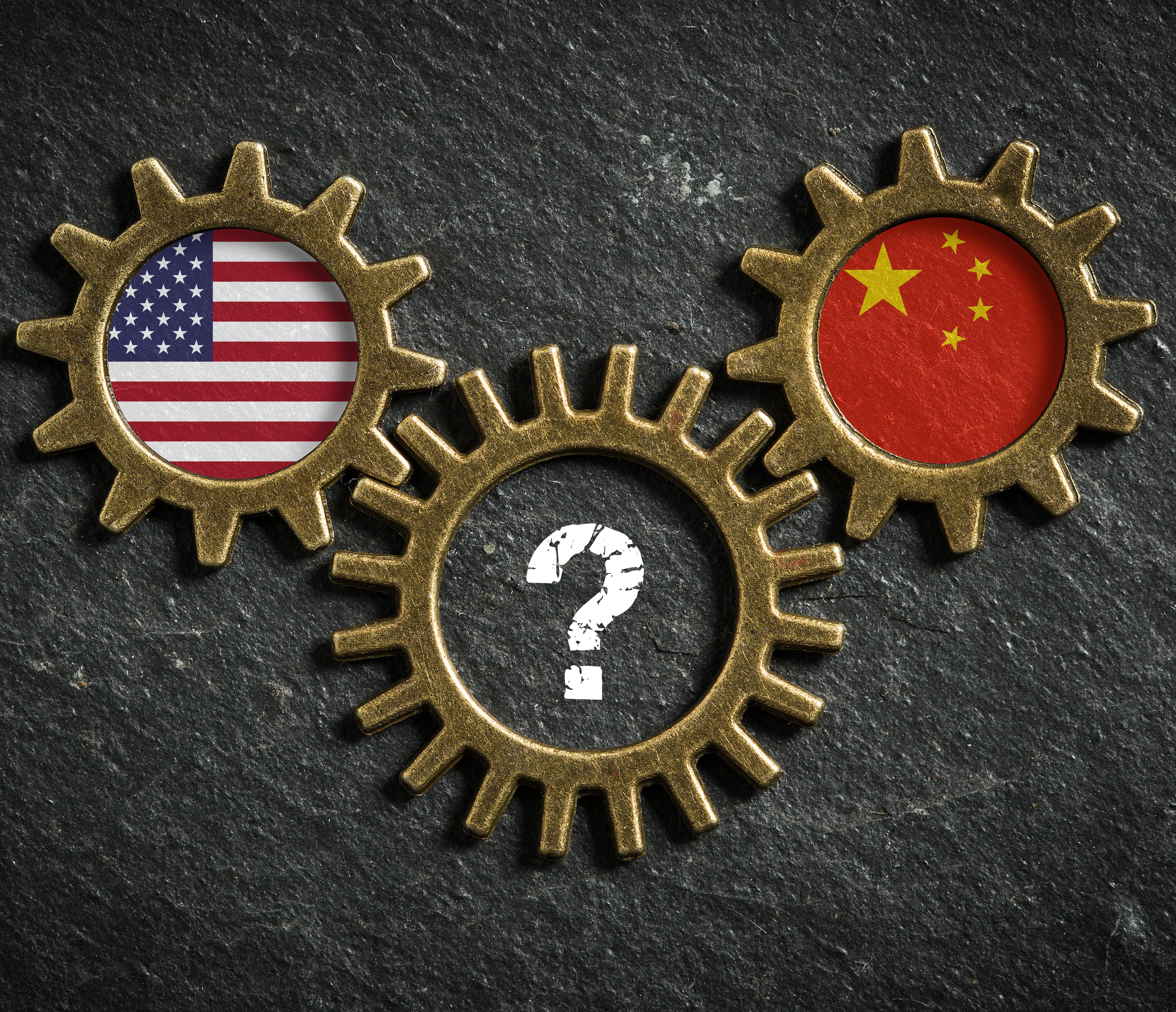
gears

Trade conflict has exploded. The media is rife with stories of China’s unfair trade practices, cyber theft, IP theft and forced technology transfers. Who will first scale the commanding heights of technological supremacy? Who will be the first mover in AI, robotics and biotechnology? What are the implications of Beijing’s ambitious infrastructure projects, including its Belt and Road Initiative? How is China’s “sharp power” deployed, and what are its implications for political and civic life in the U.S.? Can the Trump administration and Beijing’s leadership reach agreement on our trade disputes? Are these just the beginning salvos of an increasingly turbulent future? As U.S. policy towards China sharply veers away from “constructive engagement” to “strategic competition,” the Stanford China Program will host a series of talks by leading experts to explore the current state of our bilateral relations, its potential future, and their implications for the world order.

https://aparc.fsi.stanford.edu/china/research/new-cold-war-sharp-power-strategic-competition-and-future-us-china-relations


For a recap, audio, transcript and pictures of the event, please see the following link.

https://aparc.fsi.stanford.edu/china/multimedia/transcripts-chinese-influence-real-or-perceived

p.p1 {margin: 0.0px 0.0px 0.0px 0.0px; font: 12.0px Garamond} span.s1 {font-kerning: none; background-color: #fffb01} span.s2 {font-kerning: none}

Oksenberg Conference Room Encina Hall, 3rd Floor 616 Serra Mall, Stanford, CA 94305
Gordon H. Chang Professor, Department of History, Stanford University
Larry Diamond Senior Fellow, Hoover Institution, Stanford University
Elizabeth C. Economy Distinguished Visiting Fellow, Hoover Institution, Stanford University
David M. Lampton Oksenberg-Rohlen Fellow, FSI, Stanford University
Jean C. Oi Director, Stanford China Program; William Haas Professor of Chinese Studies, Stanford University
Seminars
-

The event is jointly sponsored by the Japan Program at the Shorenstein Asia-Pacific Research Center and the Japan Foundation Center for Global Partnership.

In this talk, David Leheny (Waseda University) discusses his new book Empire of Hope (Cornell University Press, 2018), which challenges current trends in debates about emotion and politics, arguing that we should instead look at the role of narrative in shaping emotional representation. In the book, Leheny draws from debates about status in international relations theory and from debates about affect and narrative in literary and historical studies to analyze cases from Japan’s Bubble and post-Bubble eras. This talk will focus especially on a 2001 crisis in US-Japan relations over a collision between a US Navy nuclear submarine and a fisheries training boat that resulted in the deaths of nine Japanese, including four high-school students. By presenting grief as both a national emotion and as one that could be narrated through the lens of timeless cultural difference, the US and Japanese governments crafted a crisis resolution that ostensibly rested on “mutual understanding” but that also hid the messier realities of power and of loss in the collision’s aftermath.

Image
lehenyphoto
David Leheny is Professor in the Graduate School of Asia-Pacific Studies at Waseda University. He previously was an assistant and associate professor of political science at the University of Wisconsin-Madison (1998-2007) and the Henry Wendt III ’55 Professor of East Asian Studies at Princeton University (2007-2017). He is the author of, in addition to Empire of Hope, The Rules of Play: National Identity and the Shaping of Japanese Leisure (Cornell University Press, 2003) and Think Global, Fear Local: Sex, Violence, and Anxiety in Contemporary Japan (Cornell University Press, 2006).

Philippines Conference Room Encina Hall, 3rd Floor 616 Serra Mall, Stanford, CA 94305
David Leheny Professor in the Graduate School of Asia-Pacific Studies Waseda University
Seminars
Subscribe to International Relations