International Relations

FSI researchers strive to understand how countries relate to one another, and what policies are needed to achieve global stability and prosperity. International relations experts focus on the challenging U.S.-Russian relationship, the alliance between the U.S. and Japan and the limitations of America’s counterinsurgency strategy in Afghanistan.

Foreign aid is also examined by scholars trying to understand whether money earmarked for health improvements reaches those who need it most. And FSI’s Walter H. Shorenstein Asia-Pacific Research Center has published on the need for strong South Korean leadership in dealing with its northern neighbor.

FSI researchers also look at the citizens who drive international relations, studying the effects of migration and how borders shape people’s lives. Meanwhile FSI students are very much involved in this area, working with the United Nations in Ethiopia to rethink refugee communities.

Trade is also a key component of international relations, with FSI approaching the topic from a slew of angles and states. The economy of trade is rife for study, with an APARC event on the implications of more open trade policies in Japan, and FSI researchers making sense of who would benefit from a free trade zone between the European Union and the United States.

Paragraphs

From October 22–23, 2018, the U.S.-Asia Security Initiative (USASI) at Stanford University, in conjunction with the Institute for China-U.S. People-to-People Exchange at Peking University and the American Academy of Arts and Sciences (AAAS), gathered scholars and policy practitioners at the Stanford Center at Peking University to participate in the “Civil Wars, Intrastate Violence, and International Responses” workshop. The workshop was an extension of a project examining the threats posed by intrastate warfare launched in 2015 and led by AAAS and Stanford University’s Freeman Spogli Institute for International Studies. The goal of this workshop was to facilitate frank discussions exposing participants to a wide range of views on intrastate violence and international responses.

The workshop was divided into sessions that assessed trends in intrastate violence since the end of the Cold War, examined the threats to international security posed by civil wars and intrastate violence, and evaluated international responses, including an analysis of the limits of intervention and a discussion of policy recommendations. Participants also had an opportunity to make closing comments and recommendations for future research.

This report provides an executive summary and summaries of the workshop sessions on a non-attribution basis.
All Publications button
1
Publication Type
Policy Briefs
Publication Date
Authors
Authors
Gi-Wook Shin
News Type
Commentary
Date
Paragraphs

President Trump caught the world by surprise once again yesterday with a decision not to sign a deal with his North Korean counterpart, Chairman Kim Jong-un, in Hanoi, Vietnam. While walking away is a common tactic in working-level negotiation, what happened in Hanoi was a rare case and the least expected outcome.

Read the full article on Axios.

Hero Image
President Trump waves to camera at Hanoi Summit
President Trump at a news conference following his second summit with North Korean leader Kim Jong-un.
Tuan Mark via Getty Images
All News button
1
Authors
Yong Suk Lee
News Type
Commentary
Date
Paragraphs

Trump and Kim share a common desire for development.

At first glance U.S. President Donald Trump and North Korean leader Kim Jong Un seem like an unlikely pair. A few years back they were calling each other “Rocket Man” and a “dotard,” and tension between the United States and North Korea was escalating rapidly in 2017. But in a few days they are slated to meet for the second time, and according to Trump they had “fallen in love” not long after their first encounter. What could have created such intimate bond between the two? The common interest that brings the two together is the desire for development — economic development in the case of Kim and property development in the case of Trump.

Read the full article on The Diplomat.

Hero Image
President Trump and Chairman Ki talking during Sinapore Summit Official White House Photo
All News button
1
Authors
Gi-Wook Shin
News Type
Commentary
Date
Paragraphs

This post was originally published on Axios.

While President Trump and North Korean leader Kim Jong-un’s June 2018 meeting ended with a broad statement — committing to “establish new U.S.-DPRK relations” for “a lasting and stable peace regime on the Korean Peninsula” — they will aim to take more concrete steps forward at their second summit in Hanoi this week.

Between the lines: To keep up the diplomatic momentum, Trump and Kim will need to minimize existing ambiguities and divergences on key issues — including the definition of denuclearization — and produce a comprehensive road map that lays out the specifics of their proclaimed shared vision. Without these agreements, the Hanoi summit could be easily denigrated as “just another show.”

Where it stands: Trump and Kim each face immense pressure, both international and domestic, to make progress.

  • Trump needs to earn political trust back in Washington to continue negotiating with North Korea. His strategy so far has been to convince Kim that North Korea’s denuclearization would bring the country a “bright future.”
  • At the same time, Trump must address Kim’s concerns about whether any agreement reached with his administration will withstand the Democrat-controlled House and survive the post-Trump era.

Between the lines: Successful diplomacy sometimes entails purposeful ambiguities, and the ambiguities of the first Trump-Kim summit might indeed have been strategic. At this critical juncture, however, a failure on Trump’s and Kim’s part to commit to defined objectives could hurt the bilateral relationship.

The bottom line: Trump and Kim need support more than ever to advance their diplomatic endeavors. While spectators have good reason to be skeptical, and one can only be cautiously hopeful with North Korea, a return to confrontation or "strategic patience" is in no one’s interest.

Gi-Wook Shin is the William J. Perry Professor of Contemporary Korea and director of the Walter H. Shorenstein Asia-Pacific Research Center at Stanford University.

Hero Image
Banner welcoming Kim and Trump to Vietnam
A banner hung opposite the Marriott Hotel in Hanoi, Vietnam, where President Trump is expected to stay during his summit with Kim Jong-un, on Feb. 25.
Carl Court via Getty Images
All News button
1
-

Image
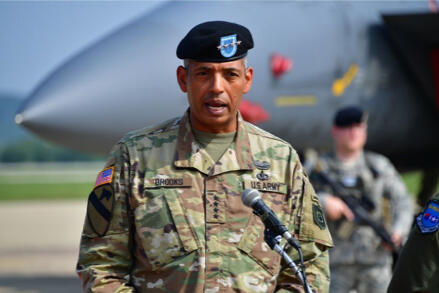
vincent brooks 2x3
About the speaker: Vincent K. Brooks is a career Army officer who recently retired from active duty as the four-star general in command of all U.S. Forces in Korea, where he concurrently commanded United Nations Command – continuously serving since 1950 and initially commanded by General of the Army Douglas MacArthur; and the Republic of Korea-U.S. Combined  Forces Command comprising over 625,000 Koreans and Americans under arms.

General Brooks, who goes by “Vince,” is a 1980 graduate of the United States Military Academy at West Point, the first class to include women, and he led the 4,000 cadets as the cadet brigade commander or “First Captain.”  He is the first African American to have been chosen for this position, and he was also the first cadet to lead the student body when women were in all four classes (freshman or “plebe” to senior or “first classman”).

General Brooks is from a career military family and claims Alexandria, Virginia as home given the long roots in maternal and paternal branches of the family tree. His areas of expertise are national security, policy, strategy, international relations, military operations, combating terrorism and countering the proliferation of weapons of mass destruction, diversity and inclusion, leadership in complex organizations, crisis leadership, and building cohesive trust-based teams. He is a combat veteran and a member of the Council on Foreign Relations.

Image
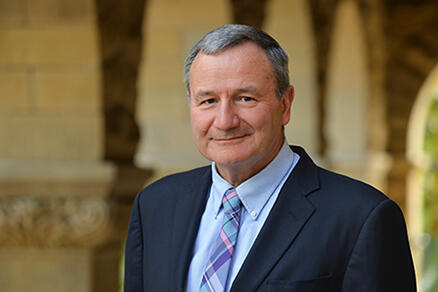
karl eikenberry 3x2 crop
Ambassador Karl Eikenberry, currently director of U.S.-Asia Security Initiative at Stanford's Shorenstein Asia-Pacific Research Center, will moderate the discussion. He served as the U.S. Ambassador to Afghanistan from 2009 until 2011. Before appointment as Chief of Mission on Kabul, Ambassador Eikenberry had a thirty-five year career in the United States Army, retiring in April 2009 with the rank of Lieutenant General.
 

This keynote event is part of the 11th annual Koret Workshop, "North Korea and the World in Flux," and open to the general public with registration.

The event is made possible through the generous support of the Koret Foundation


Oksenberg Conference Room
Encina Hall, 3rd floor
616 Serra Mall, Stanford University
 

General Vincent Brooks <i>former Commander of U.S. Forces Korea</i>
Moderated by Ambassador Karl Eikenberry
Seminars
Authors
Sung Andrew Kim
News Type
Commentary
Date
Paragraphs
In his much-anticipated first public speech, former head of the CIA’s Korea Mission Center Andrew Kim, currently our William J. Perry Visiting Scholar, provided insights into the process of diplomatic engagement with the DPRK and outlined a roadmap for achieving the U.S. goal of North Korea denuclearization. Kim, who helped orchestrate the 2018 Singapore summit between President Trump and North Korea’s Kim Jong Un, spoke at APARC on February 22 to a packed audience and members of the media. The full transcript of his remarks follows below. 

Prices for Denuclearization of North Korea

Andrew Kim
Remarks delivered at Stanford’s Shorenstein Asia-Pacific Research Center | February 22, 2019
 
 
We have a long history of negotiating with Pyongyang on denuclearization. These negotiations have been in different formats from bilateral talks to trilateral talks to four-party talks to six party talks. We learned many lessons through these engagements. These lessons provide a useful reference, but they should not close our minds to new possibilities.  
 
The North Korea that we are currently facing has the ability to produce and test ICBM and nuclear weapons that threaten its neighbors and even U.S. territories. 
 
The North Korean WMD issue has become worse over the years to the point that we can no longer wait for this problem to naturally go away. We now have a new leader in North Korea who says he wants to engage and appears to want to take his country on a new path. South Korean President Moon strongly wants to bring North Korea out of isolation. At the same time, we have a U.S. administration focused on proactively trying to resolve this national security challenge.  
 
We have new players, like President Trump, Chairman Kim Jong Un, and South Korea President Moon, who want to make this work. I can say that the stars have lined up. Personally, based on the last two years of my own engagements as a senior U.S. official with Chairman Kim, his senior officials, as well as key South Korean officials, I have come to believe that we have a great window of opportunity to engage Pyongyang and resolve this long-standing North Korean nuclear issue once and for all. 
 
To me, Chairman Kim appears to have a strong desire to improve North Korea’s relationship with the U.S., as he appears to believe that it is the only way to lead his country into prosperity and to enhance regime security at the same time. However, there is still a strong debate as to whether Kim would truly denuclearize. 
 
As the old Korean saying “dong-sang-yi-mong” goes, we are thinking the same, but dreaming differently. Perhaps that is where we are. But I believe that there is only one way to find out what Chairman Kim’s true intentions are, namely, to continue to engage him directly and test his willingness to proceed with the diplomacy of denuclearization. Let me share what I observed and heard. 
 
In early April 2018, I accompanied then-CIA Director Pompeo to Pyongyang to meet with Chairman Kim. Our main objective was to confirm one single most important point that the South Korean special envoy relayed to us a couple of weeks prior. According to the South Korean envoy, Chairman Kim stated to the South Korean delegation that he is willing to denuclearize. When Director Pompeo asked Chairman Kim directly whether the Chairman intended to denuclearize, the Chairman said that he is a father and husband and he does not want his children to live their lives carrying nuclear weapons on their back. 
 
During the meeting, Kim not only confirmed his previous statement about his willingness to denuclearize, but he also strongly emphasized the need to improve U.S.-North Korea relations in order to build trust before North Korea gives up its nuclear weapons. 
 
What Kim appeared to have meant was that after over 70 years of hostilities between the United States and North Korea, both countries need to focus on building a warm relationship and confidence before he can trust the United States enough to give up his nuclear ambitions.
 
Against this backdrop, it appears that the overarching challenge has been how the two countries can improve bilateral relationship and built trust while pursuing denuclearization. It is clear that both processes of denuclearization and improving relationship include many secondary issues and questions that must be addressed.
 
It is clear that establishing effective communication is a good starting point in establishing a new relationship and engaging in the diplomacy of denuclearization. Building mutual trust is a process that takes considerable efforts and it begins with enhancing and increasing communication. Specifically, the denuclearization process requires intense negotiations and involves not only technical and political-based communication, but also communication that is culture-informed.
 
Increasing speed and bandwidth, combined with a positive attitude, are key to successful communication, which is yet to come. Also, it is not just the content that matters, but also how you deliver it. 
 
It appears that the current Trump administration officials are fully aware of the need to increase communication with North Korea and have attempted to speed up and raise the volume of communication with their North Korean counterparts in every occasion since the 2018 Singapore summit.
 
On the other hand, North Korea continues to proceed in a measured pace and has not demonstrated its willingness to change its traditional communication method, i.e., communicate only when it is required. It is doubtful whether North Korea can strike a new friendship with the United States if it only choses to talk when it is necessary. 
 
It is understandable that Chairman Kim’s diplomatic engagements in 2018 can be described as truly high-speed and unprecedented, as he had three meetings with South Korean President Moon, three meetings with PRC President Xi, and a summit with President Trump. All these events required an extremely large amount of resources before and after the meetings. It is particularly interesting to see that North Korea uses the same officials to prepare these meetings and follow up afterward. How much these officials are stretched during this period? Have they had capacity to keep up with the U.S. demand for increased communication and meetings? 
 
North Korea's government is built on a typical top-down model. Currently, the most powerful individual is the Chairman of State Affairs Commission (KJU) and the Worker's Party has the largest decision-making power. Within the Worker’s Party, various departments follow a top-down system under the Central Committee. The current main counterpart of the U.S. negotiation team is a department within the Worker’s Party, which is appointed by Chairman Kim. Unlike the Ministry of Foreign Affairs, functioning outside of the Worker’s Party, this department has a rather small pool of resources, but maintains a strong pride being a department within the Worker’s Party.
 
I raise this background of real communication challenges because it is a very important element to overcome in order to create the right atmosphere for success in the negotiation process.
 
Let’s go back to 2017. We all remember how intense the situation was at the time, as North Korea tested missiles of all kinds almost every other month and tested the largest nuclear weapon to date. I witnessed for the first time how many South Koreans, who had been immune to the North’s threats before, were taking this threatening situation seriously. I received many phone calls from friends in Seoul asking whether it would be safe to be in Seoul at the time. I told them that my daughter had been staying in Seoul for her study abroad program and would continue to be there. I think that reassured them. It is just an illustration of the situation at the time.
 
During that intense period, critics were very vocal about the lack of U.S. engagement with North Korea. Many were concerned about the situation and asked the U.S. to engage with North Korea to defuse the tension. Now that we are engaging, the critics have changed their tune and say we are going to be played by the North. Well, I have strong confidence in our folks as they are fully aware of the challenges they are facing. As Secretary of State Pompeo says all the time, the United States is going into this path with eyes wide open. 
 
I know there is a concern that President Trump or Secretary of State Pompeo may make concessions to North Korea because they might buy into Kim Jong Un’s appeasement strategy. But, based on my own experience sitting down with our current policymakers many times to discuss our strategies forward, I assure you that they have a clear understanding that the diplomatic engagement is one of many tools in their toolbox. They assume nothing and are consistently re-evaluating their approach to North Korea at every critical juncture. 
 
Before discussing what would be the prices to be paid by both the United States and North Korea to resolve the nuclear issue, let’s review what have been done so far since 2017. Also, I would like to point out what the United States provided North Korea during the past engagements. These are important data point as we are moving into a new set of negotiation: 
  • During the Agreed Framework from 1994-2002, the international community provided approximately 1.5 billion U.S. dollars and the U.S. government provided 400 million U.S. dollars in heavy fuel oil (HFO).
  • During the Six-Party Talks from 2003-2009, the United States provided approximately 200 million dollars for the cost of HFO and dismantling a part of Yongbyon.
  • We even released over 20 million U.S. dollars back to North Korea, an amount that was blocked by a Banco Delta Asia investigation.
  • We also removed North Korea from the State Sponsors of Terrorism list.
 
Since 2017, the United States has taken the following steps:
  • The Secretary of State rolled up his sleeves and proactively engaged the North Korean leadership by visiting Pyongyang four times within one year. This level of commitment is unprecedented and a remarkable demonstration of active problem solving from our country’s top diplomat. This was the first positive response from the United States to North Korea since the 2017 Missile crisis. 
  • President Trump provided a world stage for Kim Jong Un to debut and got him the global attention that he wanted.
  • The United States and South Korea also agreed to suspend joint military exercises. I recall how, during a meeting with Chairman Kim, the Chairman noted that he understood both the U.S. and South Korea claim that the joint military exercises were defensive in nature, but that the North Korean public feels these exercises are offensive. 
 
What are the actions that North Korea side has taken since 2017?
  • It suspended missile and nuclear testing. 
  • Pyongyang released detainees without protracted negotiations.
  • The North returned the remains of U.S. servicemen killed in action during the Korean War.
  • It partially dismantled Yunsong missiles engine testing site and dismantled Punggeri nuclear weapon testing site.
  • It once again tabled Yongbyon nuclear research facilities.
 
North Korea probably believes and publicly claims that it partially dismantled its WMD programs, and they are asking for immediate rewards. 
 
I personally heard that the North claimed their concessions are much more valuable than reciprocal actions the U.S. side has taken so far. They said they took these actions as part of their commitment to build trust with the United States on denuclearization. North Korea demanded several times to evaluate all the actions Pyongyang has taken since the June 2018 Singapore summit as some sort of a major denuclearization milestone. 
 
I believe that North Korea still has a long way to go and that it needs to further demonstrate its sincerity by dismantling key strategic weapons production infrastructure. Lessons of the past place the burden of proof on the North. Pyongyang needs to convince the international community that it means what it says, because the level of skepticism is sky high, and for a reason.
 
In the end, whatever horse-trading Washington decides to do with Pyongyang, our objective needs to remain crystal clear and not waver. Our leaders need to continue to stop and check our assumptions and check what demonstrable progress we are making against our goal. 
 
And our goal is simple, although it may be long and difficult to achieve: Final Fully Verifiable Denuclearization (FFVD). What does FFVD mean?
It means:
  • The North is to halt the testing of Nuclear weapons and launches of ballistic missiles.
  • North Korea is to permit U.S. and international technical experts access to key WMD-related sites throughout the process.
  • Pyongyang is to declare and shut down all nuclear facilities.
  • The North is to completely dismantle and remove its nuclear weapons, delivery systems, facilities, and associated material from the Korean peninsula with an agreed timeline.
  • North Korea is to provide a comprehensive declaration of its nuclear and ballistic missiles, as well as chemical and biological programs.
  • North Korea is to rejoin the Non-Proliferation Treaty (NPT).
 
And what are North Korea’s goals?
  • Pyongyang wants the removal all U.N. designated sanctions.
  • The North wants resumption of inter-Korea economic projects, including Kaesong industrial Park and Kumkang mountain tourism project.
  • The North wants to obtain an End-of-War declaration.
  • It wants to be recognized as a nuclear state, if possible.
  • It wants to improve its relationship with the United States, with an eye towards establishing a diplomatic relationship.
  • It wants to place a long-lasting peace mechanism in the Korean peninsula that reassures continued Kim family rule in the North.
 
What price would the United States and North Korea each be willing to pay?
On the U.S. side, I see three incentive categories:
 
Within the Economic Incentive category:
  • The United States would be able to provide humanitarian assistance to North Korea;
  • It could ease restrictions on North Korean banking transactions;
  • It could modify or ease existing import and export gaps;
  • It could provide exemptions for joint ventures to be implemented in economic zones.
 
In the Political Incentives category:
  • The United States could lift its travel ban;
  • It could establish a liaison office;
  • It could start promoting cultural exchanges;
  • It could lift the U.S. sanctions on Kim family members and senior officials;
  • It could delist North Korea as a state sponsor of terrorism.
 
In terms of Security Incentives:
  • The United States could sign an End-of-War declaration;
  • It could begin military-to-military engagement;
  • It could sign a Peace treaty;
  • It could establish a diplomatic relationship.
And for the last step, when FFVD is seen approaching,
  • The United States could lift U.N. sanctions.
 
What are the prices that North Korea should pay?
  • The North needs to completely shut down all nuclear facilities;
  • It needs to eventually hand over a comprehensive declaration of its nuclear and ballistic missiles, as well as its chemical and biological programs;
  • It needs to accept U.S. and international experts and provide access to its WMD facilities; 
  • It needs to agree to set a timeline and work with the United States and international experts to dismantle and remove its nuclear weapons, missiles, facilities and associated material from Korea;
  • It needs to agree to rejoin the NPT; 
  • It should reform its foreign investment rules and regulation to make investment a friendly environment for the international community;
  • It should improve its human rights record. And, perhaps, they should start with ease on freedom of religion. (There was a rich history of Christianity in Pyongyang 100 years ago.) 
 
Does all of this look like an impossible mission? Probably not. I believe these are all achievable. During the diplomatic process, I assumed that the North would push the U.S. counterparts hard to obtain as much concessions as possible and would demand a concession-for-concession approach. I also assumed that it would be a one-step-back and two-steps-forward process. In the end, North Korea would prefer a transactional negotiation, but Kim Jong Un recognizes that he has to compromise, and his negotiation position has evolved throughout the process.
 
I believe that Kim Jong Un delivered on his promise to his people already: better life and economic prosperity. It appears that most North Koreans welcome Kim’s engagement policy and support his attempt to improve the economic situation in North Korea. It gives them hope. It is not a good idea for Chairman Kim to walk back and ask his people to abandon hope at this point. 
 
Past engagements, including the Agreed Framework and Six-Party Talks, all started with ambitious goals focusing on denuclearization of North Korea, improving relations between the United States and North Korea, and establishing a lasting peace regime on the Korean peninsula. However, they did not work out because both sides tried to solve all the issues tactically rather than strategically. 
 
The conflict is not only about denuclearization, it is also about redrawing the geopolitical and geo-economic map for North Korea. I hope that this time around, both sides would continue to keep a clear eye on the objectives and approach the process strategically. Imagine how a successful outcome of the current negotiations would positively impact the people of North Korea, the Korean Peninsula as a whole, the entire region, and the entire world in three to five years.   
 
Thank You.
 
Hero Image
Andrew Kim speaking at a lectern during an APARC event. Thom Holme
All News button
1
-

The Bay Area Council Economic Institute and the Walter H. Shorenstein Asia-Pacific Research Center Japan Program invite you to a forum on the critical transformations underway in Japan’s economy and the unique synergies that connect it to the Bay Area. The program will include a discussion of the high-level findings of a new report by the Bay Area Council Economic Institute on Japan’s economic engagement in the San Francisco/Silicon Valley Bay Area, and the role the region is playing as California and Japan look to expand trade and investment and accelerate innovation. Leading experts and practitioners from both Japan and the Bay Area will join us for this discussion. 

This event is brought to you by the Shorenstein Asia-Pacific Research Center Japan Program and the Bay Area Council Economic Institute, in cooperation with the Japan Society of Northern California.


Agenda


1:00pm          Welcome

     Jim Wunderman, President & CEO, Bay Area Council

     Hon. Tomochika Uyama, Consul General of Japan

     Takeo Hoshi, Director, Shorenstein APARC Japan Program

1:10pm          Introduction of Bay Area Council Economic Institute Report: High-Level Findings

     Sean Randolph, Senior Director, Bay Area Council Economic Institute

1:30pm          Observations and Silicon Valley Overview

     Kenji Kushida, Research Scholar, Stanford University

1:45pm          Panel 1: The Emerging New Japan 

     Kanetaka Maki, Associate Professor, Waseda Business School

     Mio Takaoka, CFO, Medical Note and Partner, Arbor Ventures

     Takeshi Ebihara, Founding GP, Rebright Partners

     Emre Yuasa, Principal, Globis Capital Partners

     Sean Randolph, Senior Director, Bay Area Council Economic Institute (Moderator)

2:45pm          Panel 2: Japanese Companies in Silicon Valley Creating Value in New Ways

     Hiroshi Menjo, Managing Partner, Net Service Ventures

     Tsunehiko Yanagihara, Executive VP, Mitsubishi Corp M-LAB

     Gen Isayama, General Partner & CEO, World Innovation Lab

     Dennis Clark, Managing Director, Honda Innovations

     George Saikalis, SVP & CTO, Hitachi America, Ltd.

     Kenji Kushida, Research Scholar, Stanford University (Moderator)

4:00pm         Closing Remarks 

Bechtel Conference Center
Encina Hall
616 Serra Mall, Stanford, CA 94305

Panel Discussions
News Type
News
Date
Paragraphs

Shorenstein APARC is pleased to announce the selection of two scholars as postdoctoral fellows for the 2019-20 academic year. They will begin their appointments at Stanford in the coming Autumn quarter.

The Center offers the Shorenstein Postdoctoral Fellowship on Contemporary Asia to recent doctoral graduates dedicated to research and writing on contemporary Asia, primarily in the areas of political, economic, or social change in the Asia-Pacific region, or international relations and international political economy in the region. The Center’s Asia Health Policy Program sponsors the Asia Health Policy Postdoctoral Fellowship, supporting young scholars who pursue original research on contemporary health or healthcare policy of high relevance to low- and middle-income countries in the Asia-Pacific region

Fellows develop their dissertations and other projects for publication, present their research, and participate in the intellectual life at the Center and at Stanford at large. Our postdoctoral fellows often go on to pursue careers at top universities and research organizations around the world and continue to contribute to APARC research and publications.

Meet our new postdoctoral scholars:


Image
Portrait of Radhika Jain
Radhika Jain
Asia Health Policy Postdoctoral Fellow

What are the conditions necessary to ensure the effectiveness of public health insurance programs?

Radhika Jain is completing her doctorate in the Department of Global Health at Harvard University. She studies the role of the private sector in the health system, frictions in health care markets, and the incidence of public health policy benefits.

Radhika’s dissertation examines the extent to which government subsidies for health care under insurance are captured by private hospitals instead of being passed through to patients, and whether accountability measures can help patients claim their entitlements. Radhika’s research has been supported by grants from the Weiss Family Fund and the Jameel Poverty Action Lab (JPAL). She has worked on impact evaluations of health programs in India and on the implementation of HIV programs across several countries in sub-Saharan Africa. She also held a doctoral fellowship at the Center for Global Development.

At Shorenstein APARC, Radhika will refine her dissertation research for publication in academic journals and start new work on the structure of health care markets in India and the impacts of measures to increase the effectiveness of public health insurance.  


Image
Portrait of Hannah June Kim
Hannah June Kim
Shorenstein Postdoctoral Fellow on Contemporary Asia

How does modernization influence cultural democratization in East Asia?

Hannah June Kim is completing her doctorate in the Department of Political Science at the University of California, Irvine. She researches public opinion, political behavior, theories of modernization, economic development, and democratic citizenship, focusing on East Asia.

Hannah’s dissertation examines how and why people view democracy in systematically different ways in six countries: China, Japan, Korea, Singapore, Taiwan, and Vietnam. Developing unique categories of democratic citizenship that measure the cognitive, affective, and behavioral patterns of individuals, she finds that state-led economic development limited the growth of cultural democratization among middle class groups in all three dimensions. The results imply that the classic causality between modernization and democratization may not be universally applicable to different cultural contexts.

At Shorenstein APARC, Hannah will work on developing her dissertation into a book manuscript and make progress on her next project that explores democratization and gender empowerment in East Asia. Hannah received an MA in International Studies from Korea University and a BA from UCLA. Her work has been published, or is forthcoming, in The Journal of Politics, PS: Political Science & Politics, and the Japanese Journal of Political Science.


Hero Image
encina hall
All News button
1
-

EMERGING ISSUES IN CONTEMPORARY ASIA

A Special Seminar Series


RSVP required by March 6, 2019

VALID STANFORD ID CARD MUST BE PRESENTED UPON ARRIVAL

Oral Democracy studies citizens' voices in civic and political deliberations in India's gram sabhas (village assemblies), the largest deliberative institution in human history. The book analyses nearly three hundred transcripts of gram sabhas, sampled within the framework of a natural experiment, allowing the authors to study how state policy affects the quality of discourse, citizens' discursive performances and state enactments embodied by elected leaders and public officials. By drawing out the varieties of speech apparent in citizen and state interactions, the authors’ analysis shows that citizens' oral participation in development and governance can be improved by strengthening deliberative spaces through policy. Even in conditions of high inequality and illiteracy, gram sabhas can create discursive equality by developing the “oral competence” of citizens and establishing a space in which they can articulate their interests. The authors develop the concept of 'oral democracy' to aid the understanding of deliberative systems in non-Western and developing countries. 

Vijayendra (Biju) Rao, a Lead Economist in the Development Research Group of the World Bank, works at the intersection of scholarship and practice.  He integrates his training in economics with theories and methods from anthropology, sociology and political science to study the social, cultural, and political context of extreme poverty in developing countries. He leads the Social Observatory, an inter-disciplinary lab to improve the conversation between citizens and governments.  His research, published in leading journals in Economics, Political Science and Development Studies has spanned a variety of subjects including dowries in India, domestic violence, the economics of sex work, public celebrations, community development, and deliberative democracy.   He and Ghazala Mansuri co-authored  Localizing Development: Does Participation Work? He is speaking about his latest book (with Paromita Sanyal), Oral Democracy: Deliberation in Rural India (Cambridge University Press, 2019).  It be downloaded for free from here. He was a co-author of the 2006 World Development Report on Equity and Development, and has co-edited Culture and Public ActionHistory, Historians and Development Policy, and, Deliberation and Development.  He serves on the editorial boards of several journals and is a  member of the Successful Societies Program at the Canadian Institute for Advanced Research (CIFAR).
 

Vijayendra (Biju) Rao World Bank
Authors
Gi-Wook Shin
Joyce Lee
News Type
Commentary
Date
Paragraphs
Washington and Pyongyang must agree on key concepts and eliminate ambiguities if they want a real breakthrough. 
“There is no detailed definition or shared agreement of what denuclearization entails....” These words were not from critics of ambivalence in the Trump administration’s nuclear negotiations with North Korea. Rather surprisingly, they were the words of the U.S. Special Representative for North Korea, Stephen Biegun, during his speech at Stanford University last month. He had been asked whether the United States and North Korea had consensus on the technicality of the term “denuclearization.” Yet, this is only one of the many problematic ambiguities surrounding North Korean denuclearization.
 
Donald Trump and Kim Jong-un will be shaking hands again in Hanoi, Vietnam on February 27-28. In the past year, the two adversarial countries have striven—probably the most in the history of their relations—to move away from the brink of war toward intensive communications and diplomatic endeavors. Still, amidst widespread skepticism, Trump’s diplomatic efforts with North Korea are often criticized in Washington and elsewhere for failing to produce adequate tangible deliverables on North Korean denuclearization. Even with a number of meaningful and voluntary gestures seemingly put toward denuclearization in the past year, North Korea has yet to give a clear indication of a firm decision to completely and entirely dismantle its nuclear capability. As Special Representative Biegun conveyed, progress on the nuclear front after the Singapore summit has been minimal, inviting criticism and greater skepticism regarding the upcoming summit and the Trump administration’s North Korea policy in general.
 
For this very reason, the Vietnam summit is all the more purposive. Trump and Kim must resolve the divergences and ambiguities implicit in their central questions, before they can make any meaningful progress toward denuclearization and whatever measures for the progress of denuclearization.
 
Read the full article on The National Interest.
Hero Image
South Koreans watch on a screen reporting on the U.S. President Trump meeting with North Korean leader Kim Jong-un at the Seoul Railway Station on June 12, 2018 in Seoul, South Korea Chung Sung-Jun/ Getty Images
All News button
1
Subscribe to International Relations