FSI researchers strive to understand how countries relate to one another, and what policies are needed to achieve global stability and prosperity. International relations experts focus on the challenging U.S.-Russian relationship, the alliance between the U.S. and Japan and the limitations of America’s counterinsurgency strategy in Afghanistan.
Global Affiliates Research Presentations (session 5 of 5)
The format of this presentation is each of the four speakers will have approximately 15 minutes to present their research. This will be followed by a short period of 5-10 minutes for any questions or comments from the audience.
In this session of the Global Affiliates Research Presentations, the following will be presented:
Alex Chen, SanJohn Capital, "A Happy Mind of an Investor"
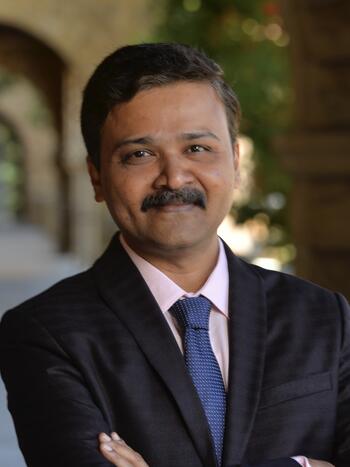
Umesh Desai, Reliance Life Sciences, "Production Management and Process Excellence Aspects in Manufacturing of Biopharmaceutical Products"
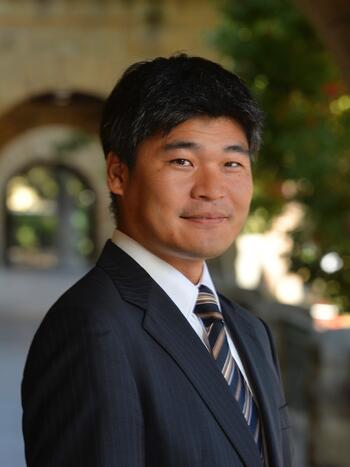
Akihisa Makino, Japan Patent Office, "Best Strategies for Intellectual Property in the Field of Medical Science"
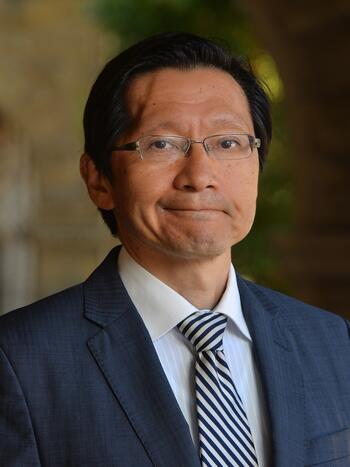
Keisuke Yamazaki, The Asahi Shimbun, "How to Encourage Internet Users to Utilize the Web with Political Balance"

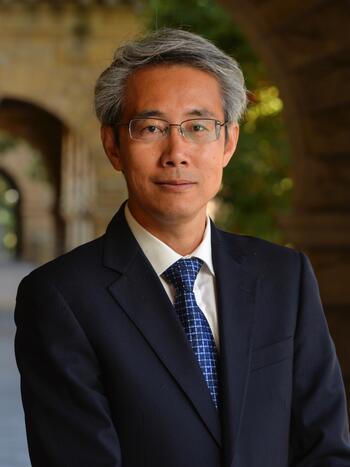
Lizhong Chen
Lizhong (Alex) Chen is a global affiliate visiting scholar at the Walter H. Shorenstein Asia-Pacific Research Center (Shorenstein APARC) for 2018-19 and 2019-20. Chen brings nearly 20 years of experience in the investment industry including brokerage firms, asset management, fund management and private equity funds. Prior to joining Shorenstein APARC, Chen was the founder of SanJohn Capital Limited in Hong Kong where he continues to manage a long-term portfolio of stocks traded on the Hong Kong, China and U.S. stock markets. He received his MBA from the Hong Kong University of Science and Technology.
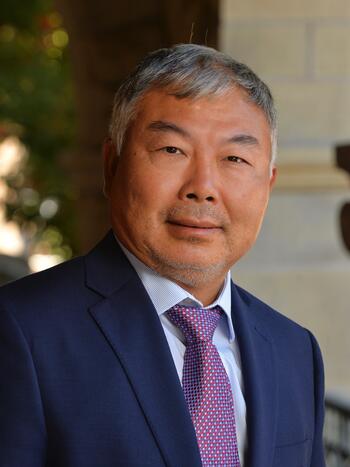
Umesh Desai
Umesh Desai is a global affiliate vising scholar at the Walter H. Shorenstein Asia-Pacific Research Center (Shorenstein APARC) for 2018-19. Desai has over 22 years experience in manufacturing of biopharmaceutical products and has been with Reliance Life Sciences Pvt. Ltd., India since 2007. Currently, he is designated as Sr. Manager in the production team. His current responsibilities include manufacturing activities (planning, execution, and manufacturing of biological products); communicating with support groups for the requirements as per the business demand within the organization; document submissions to the quality assurance group; preparation and business of BMR (Batch Manufacturing Record), BPR (Batch Packing Record) of biological products for the domestic and exports market as per the demand; and fulfilling the requirements. Desai received his degree in chemistry from the D.G. Ruparel College of Arts, Commerce and Science, Mumbai University in 1992.
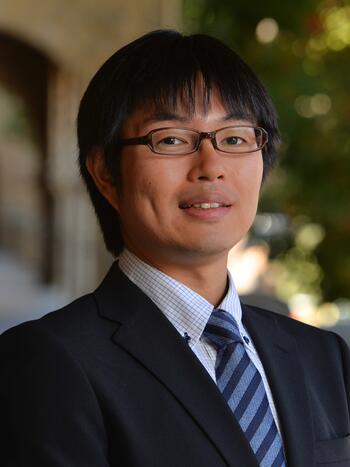
Akihisa Makino
Akihisa Makino is a global affiliate visiting scholar at the Walter H. Shorenstein Asia-Pacific Research Center (Shorenstein APARC) for 2018-19. Makino has been working since 2008 for the Japan Patent Office, one of the external agencies of the Ministry of Economy, Trade & Industry (METI) of Japan, as a patent examiner, handling applications in the fields of polymer and medical science. From 2016 to 2018, he was also in charge of the policy planning of supporting the intellectual property in universities and research institutions at the Japan Agency for Medical Research and Development (AMED).
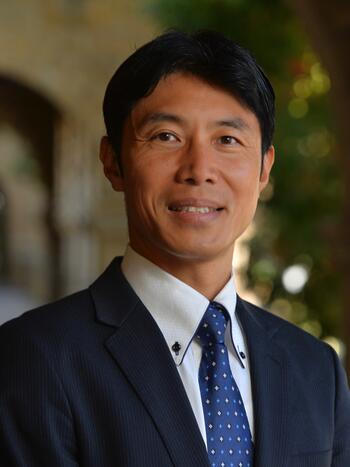
Keisuke Yamazaki
Keisuke Yamazaki is a global affiliate visiting scholar at the Walter H. Shorenstein Asia-Pacific Research Center (Shorenstein APARC) for 2018-19. Yamazaki has six years of experience as a computer engineer at The Asahi Shimbun, the national leading newspaper company in Japan. Prior to joining Shorenstein APARC, he has engaged in research and development about artificial intelligence and participated in projects related to topics such as "automatic article writer AI". Additionally, he has four years of experience as a journalist. Most recently Yamazaki was part of the Science and Medicine Department at The Asahi Shimbun reporting on the aerospace industry of Japan.



 Although Japan has the world's largest government debt, the interest rate of the Japanese Government Bond (JGB) still remains lower than most major countries. In the JGB market, Japanese banks play a key role as massive investors. However, in recent years, many business environments surrounding Japanese banks have dramatically changed. One of the biggest changes is FinTech. Given the growth of FinTech, some researchers argue that it could disrupt traditional banking. In his research, Akai provides an overview of the FinTech phenomenon, especially in the U.S., and tries to analyze the relationship between FinTech and incumbent banks. Given the characteristics in Japan's financial market, Akai tries to clarify the impact of Fintech to the investment behavior of Japanese banks.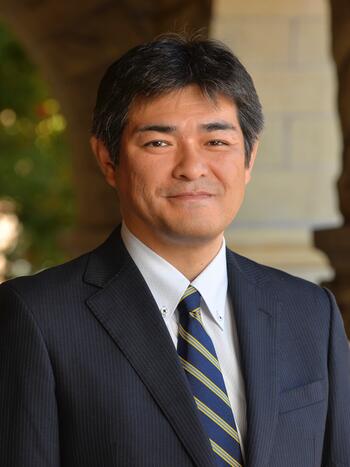

 Climate change has become more and more critical to the survival of humans. If there is no appropriate control of the total greenhouse gas emissions over the next 10-20 years, emissions will drive global temperatures to rise 1.5-2oC. Impacts related to climate change can be found in many segments of society such as human health, agriculture and food security, water supply, transportation, etc. These same areas also impact the survival of the petroleum industry. In his research, Fang has analyzed different scenarios about future clean energy implementation and emission reduction. In this presentation, he shares potential solutions of the sustainable development of the petroleum industry.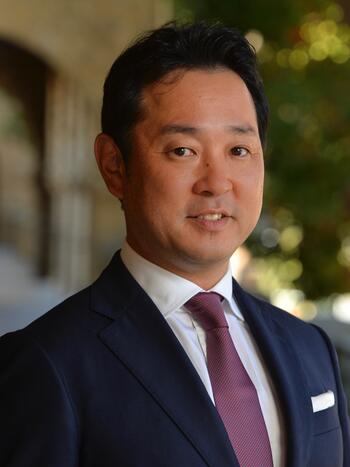

 Japan's global market share is rapidly shrinking. As a regional financial institution, the Hamamatsu Iwata Shinkin Bank focuses on supporting small and medium-sized enterprises (SMEs) with a majority of their customers in the vehicle engine parts industry. There is an increasing possibility that the pyramid of parts supply centering on automobiles will collapse in the near future. In such an era, it will be necessary for Japanese manufacturing SMEs to change their way of business in order to survive. In his research, Watanabe shares his experience of proof of concept in Silicon Valley and provides suggestions on how Japanese manufacturing SMEs need to progress their business to expand their market share.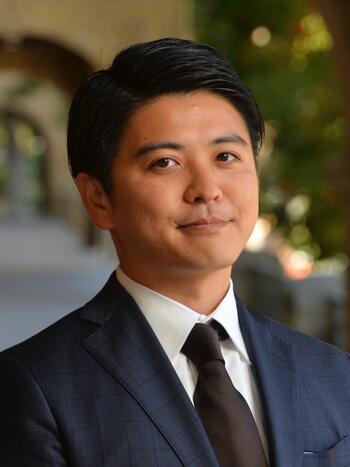
 The average annual salary of an MLB player has more than quadrupled since 1995 reaching the current high of over $4 million. Since 1995, the highest annual salary went from $10 million to now well over $30 million and is expected to continue to rise. This has been made possible by the growth of the MLB's market size itself - currently at $100 billion which is more than seven times higher than the 1995 levels. However, the average attendance per MLB game is decreasing and the average age of the MLB fan is increasing which could be a problem. On the other hand, the Japanese professional baseball market has grown by only 1.5 times over the same period. In his research, Ito analyzes MLB's growth factors and studies their contribution to the regional economy, as well as their implications for the Japanese professional baseball market and regional economy.