International Relations

FSI researchers strive to understand how countries relate to one another, and what policies are needed to achieve global stability and prosperity. International relations experts focus on the challenging U.S.-Russian relationship, the alliance between the U.S. and Japan and the limitations of America’s counterinsurgency strategy in Afghanistan.

Foreign aid is also examined by scholars trying to understand whether money earmarked for health improvements reaches those who need it most. And FSI’s Walter H. Shorenstein Asia-Pacific Research Center has published on the need for strong South Korean leadership in dealing with its northern neighbor.

FSI researchers also look at the citizens who drive international relations, studying the effects of migration and how borders shape people’s lives. Meanwhile FSI students are very much involved in this area, working with the United Nations in Ethiopia to rethink refugee communities.

Trade is also a key component of international relations, with FSI approaching the topic from a slew of angles and states. The economy of trade is rife for study, with an APARC event on the implications of more open trade policies in Japan, and FSI researchers making sense of who would benefit from a free trade zone between the European Union and the United States.

-

The 3rd Asia-Pacific Geo-Economic Strategy Forum
 

May 2, 2019

Hauck Auditorium, Hoover Institution, Stanford University

Sponsored and organized by Nikkei Inc., The Hoover Institution, and the Freeman Spogli Institue of International Studies (FSI)


RSVP REQUIRED: https://www.global-nikkei.com/19apgeo/
(RSVP starts from April 10)


Agenda

1:00pm - 1:05pm
Welcome Remark:
Adm. Gary Roughead, Hoover Institution, Stanford University


1:005pm - 1:25pm
Keynote Speech:
Itsunori Onodera, Former Minister of Defense, Japan
 

1:30pm - 2:20pm
Panel I: Indo-Pacific Strategy vs Belt & Road Initiative

Chair: Akihiko Tanaka, President, National Graduate Institute for Policy Studies

Panelists:
Masahisa Sato, State Minister for Foreign Affairs of Japan
Akio Takahara,  Tokyo University
Donald Emmerson, Freeman Spogli Institue for International Studies, Stanford University
 

2:20pm - 2:30pm
Coffee Break


2:30pm - 2:50pm
Special Speech
:
Gen. H.R. McMaster,
Hoover Institution


2:55pm - 3:50pm
Panel Discussion II: US-Japan Strategic Collaboration: Technology, Trade and Economics

Chair: Satoru Mori, Hosei University

Panelists:
Kenji Wakamiya, Former State Minister of Defense, Japan
Hideaki Watanabe, Former Commissioner of Acquisition, Technology & Logistics Agency (ATLA)
Janis Pamiljans, President, Northrop Grumman Aerospace Systems
Nelson Pedeiro, Vice President, Advanced Technology Center, Lockheed Martin
 

3:50pm - 4:00pm
Coffee Break


4:05pm - 4:55pm
Panel Discussion III: Japan`s Defense/Security Strategy

Chair: Satoshi Morimoto, Former Minister of Defense of Japan

Panelists:
Gen Nakatani, Former Minister of Defense, Japan
Itsunori Onodera, Former Minister of Defense, Japan
James Fearon, Freeman Spogli Institute for International Studies, Stanford University
 

4:55pm - 5:00pm
Closing Remark:

Adm. Gary Roughead, Hoover Institution, Stanford University


Everett and Jane Hauck Auditorium
David and Joan Traitel Building of Hoover Institution
435 Lasuen Mall, Stanford, CA 94305
Stanford University


Symposiums
-
Image
Stanford University landscape with Memorial Church and the Main Quad at the center.

The JIIA-Stanford Symposium

"The Past, Present, and Future International Order in East Asia"

May 10, 2019

Bechtel Conference Center, Encina Hall, Stanford University

Sponsored and organized by the Japan Institute for International Affairs (JIIA) and Japan Program and the US-Asia Security Initiative of the Walter H. Shorenstein Asia-Pacific Research Center (APARC) of the Freeman Spogli Institue of International Studies (FSI) at Stanford University 
 

Interstate relations in East Asia are at a critical juncture.  The post-World War II regional order, shaped by the San Francisco Treaty of 1951, underpinned by a common commitment to a liberal trade system, and led by the United States, is under stress.  The end of the Cold War, rise of China, and recent changes in America’s foreign policy orientation have transformed the environment that sustained “the San Francisco System.”  It is unclear if this system will be maintained, and if not, what will replace it.  The lineage of the San Francisco System itself reaches back to the post-World War I Versailles-Washington System.  An examination of the success and shortcomings of each of these systems can offer insights on the rise and fall of international systems, especially in an Asian context.  In this symposium, we explore the circumstances that shaped the establishment and evolution of the East Asian political, economic, and security architectures from post-WWI to present; discuss the forces that built and undermined the past and existing architecture; and debate possible regional futures.  We will emphasize the perspectives and roles of the U.S., Japan, and China, and focus on major influencing factors including historical legacies, the changing distribution of global power, alliance structures, and political ideologies.


Agenda

9:00am - 9:30am 
Registration and Breakfast 
 

9:30am - 9:45am 
Welcome Remarks: 
Gi-Wook Shin, Director, APARC, Stanford University 
Kenichiro Sasae, President, JIIA 
Takeo Hoshi, Director, Japan Program, APARC, Stanford Univeristy 
 

9:45am - 11:30am 
Panel I: Comparing “the Versailles-Washington System” and “San Francisco System”: Lessons from the Rise and Fall of International Orders in East Asia

Chair: Daniel Sneider, FSI, Stanford University

Panelists: 
Shin Kawashima, University of Tokyo 
Masaya Inoue,  Seikei University 
Lin Hsiao-ting, Hoover Institution, Stanford University 
David Kennedy, Center for International Security and Cooperation (CISAC), FSI, Stanford University 
 

11:30am - 1:15pm 
Lunch 

Keynote Speaker: Ambassador Michael Armacost


1:15pm - 3:00pm 
Panel Discussion II: Japanese, U.S. and Chinese Interests and Security

Chair: Kenichiro Sasae, JIIA 

Panelists: 
Ken Jimbo, Keio University 
Tetsuo Kotani, JIIA 
Mike Lampton, APARC, Stanford University 
Jim Schoff, Carnegie Endowment for International Peace (CEIP) 
 

3:00pm - 3:30pm 
Coffee Break 
 

3:30pm - 5:15pm 
Panel Discussion III: Alternative Future East Asia Systems

Chair: Phillip Lipscy, FSI, Stanford University 

Panelists: 
Jim Fearon, FSI, Stanford University 
Ryo Sahashi, University of Tokyo 
Kenichiro Sasae, President, JIIA 
Tom Christensen, Columbia University 
 

5:15pm - 5:35pm 
Rapporteurs' review of symposium discusisons 
 

5:35pm - 5:45pm 
Closing Remarks: 
Karl Eikenberry, Director, US-Asia Security Initiative, APARC, Stanford University 
Kenichiro Sasae, President, JIIA 
 

5:45pm - 6:30pm 
Reception (Encina Lobby)

Bechtel Conference Center
616 Serra Mall
Encina Hall, Central, 1st Floor
Stanford, CA 94305

Symposiums
Paragraphs
Kim Jong-un showcased a series of summit meetings throughout 2018, including the first-ever meeting of a North Korean leader with a sitting US president. North Korea improved its strained relations with China and South Korea. The country’s denuclearization has yet to be seen, but these events sparked considerable debate about the future.
 
All Publications button
1
Publication Type
Journal Articles
Publication Date
Journal Publisher
Asian Survey
Authors
Gi-Wook Shin
Rennie Moon
-

RSVPs for this event are now closed. This event is open only to the Stanford community; a valid Stanford ID will be required to enter. 

NOTE: THIS EVENT IS CLOSED TO THE MEDIA

Image
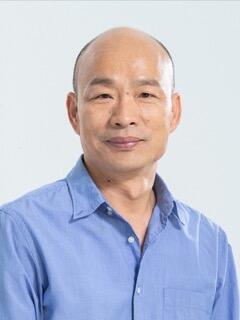
Kaohsiung Mayor Han Kuo-yu

Han Kuo-yu was elected Mayor of Kaohsiung, Taiwan, in November 2018, becoming the first member of the Kuomintang (KMT) to hold that office since 1998. He served as a member of the Legislative Yuan from Taipei County from 1993-2002, and later became the general manager of the Taipei Agricultural Products Marketing Corporation. 

Mr. Han graduated from Soochow University (Taipei) with a degree in English literature, and earned a master’s degree in law from National Chengchi University’s Graduate Institute of East Asian Studies.
 
This event is co-sponsored by the Hoover Institution and the Taiwan Democracy and Security Project, part of the U.S.-Asia Security Initiative
 

Philippines Room
616 Serra Mall
Encina Hall, 3rd Floor, Central (C330)
Stanford, CA 94305

Han Kuo-yu Mayor of Kaohsiung, Taiwan
-

Despite adverse implications for its image, when it comes to territorial disputes, China has been willing to employ coercion. But Beijing is selective regarding the timing, targets, and tools of coercion. Military coercion is rare and the forms and uses of coercion vary. In the face of what China sees as similar threats by different countries, for example, Beijing tends to tailor its responses, country by country, case by case. Dr. Zhang will focus on Chinese coercive behavior in the South China Sea. She will offer a new theory as to when, why, and how China coerces other states.  Leveraging a wealth of newly available primary documents and hundreds of hours of interviews with Chinese officials, she will trace the decision-making processes that result in coercion’s use or non-use.

Where others may view China as repetitively aggressive, Dr. Zhang sees a cautious bully that does not coerce frequently and has tended, as it has gained strength, to use non-kinetic kinds of coercion. She finds that protecting a reputation for resolve and calculating economic costs are critical elements in China’s decision-making regarding the (dis)advantages of coercing its neighbors. Nor is the intended target country necessarily clear. China often coerces one to deter another – “killing the chicken to scare the monkey.” Implications will also drawn from her research that can help in projecting China’s likely future foreign-policy behavior beyond Southeast Asia and in understanding the roles played by coercion in the strategies of states more generally.

To learn more about, watch a recent interview APARC filmed with Dr. Zhang.

Image
ketian zhang 4x
Ketian Vivian Zhang will be an Assistant Professor of International Security in the Schar School of Policy and Government at George Mason University starting in September 2019. Her book project at Stanford and a forthcoming article in International Security are on the subject of her talk. Beyond its topic, another part of her research agenda explores how the globalized economy and its chains of manufacture and supply affect the foreign-policy behaviors of states. Her 2018 PhD in political science is from the Massachusetts Institute of Technology. She is a proud Badger, having earned her BA in political science and sociology at the University of Wisconsin-Madison.

Ketian Zhang 2018-2019 Shorenstein Postdoctoral Fellow on Contemporary Asia
Seminars
News Type
News
Date
Paragraphs

On March 4, Brent Christensen, Director of the American Institute in Taiwan’s Taipei office, delivered the keynote speech at the Taiwan Democracy and Security Project's annual workshop. A video recording of the event is available below for 30 days (additionally, a transcript of Mr. Christensen's prepared remarks is available on the American Institute in Taiwan website).


Hero Image
irector of the American Institute in Taiwan, Brent Christensen Speaking to Stanford Audience
Director of the American Institute in Taiwan Brent Christensen speaks before a Stanford Audience.
Thom Holme, APARC
All News button
1
Authors
News Type
Commentary
Date
Paragraphs

Three years into the Trump administration, “the United States and the People’s Republic of China find their bilateral relationship at a dangerous crossroads,” write Orville Schell of the Asia Society and Susan Shirk of the University of California San Diego (UCSD), co-chairs of the Task Force on U.S.-China Policy, at the opening of a recently published report, Course Correction: Toward an Effective and Sustainable China Policy. The report features the second set of findings issued by the Task Force, a group comprising China specialists from around the United States, which is convened by Asia Society’s Center on U.S.-China Relations and UCSD’s 21st Century China Center and which includes Karl Eikenberry, director of APARC’s U.S.-Asia Security Initiative.

In its first report, issued in 2017, the Task Force identified the fundamental interests of the United States in its relationship with China. Since then, more stresses and strains have beset the bilateral relations between the two countries. But while “Beijing’s recent policies under Xi Jinping’s leadership are primarily driving this negative dynamic” and the “Trump administration is justified in pushing back harder against China’s actions, note Schell and Shirk, “pushback alone isn’t a strategy. It must be accompanied by the articulation of specific goals and how they can be achieved.” The new report propose a strategy to that end, which the Task Force calls “smart competition.”

APARC caught up with Ambassador Eikenberry to learn more about the report and its recommendations.

Note: the following has been edited for clarity.

How does the February 2019 report by the Task Force on U.S.-China Policy differ from its 2017 report? 

Since our Task Force’s first report was published in February 2017, the Trump Administration’s China policy has developed significantly, its defining characteristics being demonstrated in trade and economic policy and in security strategy. Our new Task Force study takes stock of the current state of U.S.-China relations and focuses on policy analysis and policy prescription. It seems clear that President Trump’s shift from a strategy of engagement to one of more explicit competition was overdue. This report suggests the best organizing principles for the management of what will likely be an increasingly competitive U.S.-China relationship in the coming years.

How does this report frame Sino-American relations?

The report underscores the fact that this is not a zero-sum game. Emphasis is placed on finding ways and means to cooperate with China when mutually advantageous—and there are many issue areas where this is or might be possible, such as climate change and denuclearization of the Korean Peninsula. But the report also makes clear that in the domains of economic exchange, security, and political values—such as individual freedom and the primacy of the rule of law—America needs to work with like-minded allies and partners to ensure the global system that has benefitted all for over seven decades is not overturned by those seeking unilateral advantage.

Several of the report’s Task Force members were also involved in the recent China report from the Hoover Institution, Chinese Influence and American Interests: Promoting Constructive Vigilance. Where do you think these two publications intersect and part ways?

There was some overlap among the contributors to the two reports—full disclosure, I had the opportunity to participate in both projects. I think the studies are actually complementary—the portion of Course Correction devoted to PRC overseas influence activities drew upon the findings published in Chinese Influence and American Interests.

What development is of greatest concern to you as you think about the future of Sino-American relations?

I’m most concerned about the blurring of the management of economic exchange (trade and investment issues) and security competition (which includes maintaining a technological advantage over one’s competitors). The proliferation of technologies with military applications is complicating efforts of those trying to maintain robust economic relations between China and the United States. If our economies decouple, we will have a new Cold War


Hero Image
U.S. Secretary Of State Mike Pompeo Meets with Chinese Foreign Minister Wang Yi
Daisuke Suzuki /Pool/Getty Images
All News button
1
-

The format of this presentation is each of the four speakers will have approximately 15 minutes to present their research.  This will be followed by a short period of 5-10 minutes for any questions or comments from the audience.

In this session of the Global Affiliates Research Presentations, the following will be presented:

Alex Chen, SanJohn Capital, "A Happy Mind of an Investor"

Image
As an investor, it's almost impossible to keep a peaceful mind and a tranquil heart.  An investor's physical, mental and spiritual states are susceptible to the market's ups=-and-downs, fluctuating with stock prices.  The emotional burden can be so heavy that many investors quit.  The defining quality of a successful investor is their ability to stay uninfluenced by external circumstances — or what is called a beginner's or happy mind.  In his presentation, Chen shares some examples of successful investments made with a new approach.

Umesh Desai, Reliance Life Sciences, "Production Management and Process Excellence Aspects in Manufacturing of Biopharmaceutical Products"

Image
Achieving excellence, especially in the manufacturing of biopharmaceutical products, is difficult, but not impossible.  Successful use of different process excellence tools such as Lean (different wastes), Kaizen (continuous improvement), and Six Sigma (reduce variation) started in the automobile industry in the 1950s with the Toyota Production System.  Some pharma manufacturers tried to introduce these concepts, but were met with difficulties due to complex production manufacturing processes, maintaining good quality products, and meeting regulatory guidelines.  Implementing and maintaining this operational excellence in pharma industries, and then shifting to the biopharma industry made the task even more challenging.  Today, you can see these concepts in the biopharma industry more, but still not fully.  In his presentation, Desai will share examples of operational excellence and show how it has been modified and applied to the biopharma industry.  He will also share some solutions to improve the production time and efficiency to get the right quality product with affordable cost to the user. 

Akihisa Makino, Japan Patent Office, "Best Strategies for Intellectual Property in the Field of Medical Science"

Image
Intellectual property (IP), such as patents, are exclusive rights and essential to make businesses with technology successful.  All companies, including startups, are required to obtain patents and plan their IP strategy properly by the time their products launch.  In the field of medical science, there are various technical fields such as cellular therapy, vaccine, small molecule organic compounds, and regenerative medicine, each with different IP strategy.  In his research, Makino has studied patent application trends in each of these technical areas as well as differences in patent application categories between small and large companies in Japan and the United States.  Additionally, after investigating patents of successful companies, in this presentation, Makino will propose the best IP strategy in this field based on his research findings.

Keisuke Yamazaki, The Asahi Shimbun, "How to Encourage Internet Users to Utilize the Web with Political Balance"

Image
Every day, we get our news in a variety of ways – browsing the web, through news feeds of social networking services and from news apps.  These systems each have their own algorithms that deliver articles to fit the user's preferences.  Though they are good tools for users to find articles, the diversity of the articles is often lost.  In his research, Yamazaki studied situations of internet bias such as a "filter bubble".  In this presentation, he shares measures he learned to avoid this bias and proposes new methods to distinguish between liberal and conservative news by using machine learning. 

0
Global Affiliate Visiting Scholar, 2018-20
SanJohn Capital Limited
alex.jpeg MBA

Lizhong (Alex) Chen is a global affiliate visiting scholar at the Walter H. Shorenstein Asia-Pacific Research Center (Shorenstein APARC) for 2018-19 and 2019-20.  Chen brings nearly 20 years of experience in the investment industry including brokerage firms, asset management, fund management and private equity funds.  Prior to joining Shorenstein APARC, Chen was the founder of SanJohn Capital Limited in Hong Kong where he continues to manage a long-term portfolio of stocks traded on the Hong Kong, China and U.S. stock markets.  He received his MBA from the Hong Kong University of Science and Technology.

SanJohn Capital
0
Global Affiliate Visiting Scholar, 2018-19
Reliance Life Sciences
fullsizeoutput_bd99.jpeg

Umesh Desai is a global affiliate vising scholar at the Walter H. Shorenstein Asia-Pacific Research Center (Shorenstein APARC) for 2018-19.  Desai has over 22 years experience in manufacturing of biopharmaceutical products and has been with Reliance Life Sciences Pvt. Ltd., India since 2007.  Currently, he is designated as Sr. Manager in the production team.  His current responsibilities include manufacturing activities (planning, execution, and manufacturing of biological products); communicating with support groups for the requirements as per the business demand within the organization; document submissions to the quality assurance group; preparation and business of BMR (Batch Manufacturing Record), BPR (Batch Packing Record) of biological products for the domestic and exports market as per the demand; and fulfilling the requirements.  Desai received his degree in chemistry from the D.G. Ruparel College of Arts, Commerce and Science, Mumbai University in 1992.  

Reliance Life Sciences
0
Global Affiliate Visiting Scholar, 2018-19
Japan Patent Office
akihisa_makino.jpg MS

Akihisa Makino is a global affiliate visiting scholar at the Walter H. Shorenstein Asia-Pacific Research Center (Shorenstein APARC) for 2018-19.  Makino has been working since 2008 for the Japan Patent Office, one of the external agencies of the Ministry of Economy, Trade & Industry (METI) of Japan, as a patent examiner, handling applications in the fields of polymer and medical science.  From 2016 to 2018, he was also in charge of the policy planning of supporting the intellectual property in universities and research institutions at the Japan Agency for Medical Research and Development (AMED).  

Japan Patent Office
0
Global Affiliate Visiting Scholar, 2018-19
The Asahi Shimbun Company
keisuke_yamazaki.jpg MS

Keisuke Yamazaki is a global affiliate visiting scholar at the Walter H. Shorenstein Asia-Pacific Research Center (Shorenstein APARC) for 2018-19.  Yamazaki has six years of experience as a computer engineer at The Asahi Shimbun, the national leading newspaper company in Japan.  Prior to joining Shorenstein APARC, he has engaged in research and development about artificial intelligence and participated in projects related to topics such as "automatic article writer AI".  Additionally, he has four years of experience as a journalist.  Most recently Yamazaki was part of the Science and Medicine Department at The Asahi Shimbun reporting on the aerospace industry of Japan.


The Asahi Shimbun
Seminars
-

The format of this presentation is each of the four speakers will have approximately 15 minutes to present their research.  This will be followed by a short period of 5-10 minutes for any questions or comments from the audience.

In this session of the Global Affiliates Research Presentations, the following will be presented:

Yosuke Hatano, Shizuoka Prefectural Government, "Digital Transformation of the Public Sector and Possibilities to Introduce to Local Government of Japan"

Image
What is needed for local governments in Japan to succeed in the age of digitalization?  How can they adapt to survive in the rapidly changing environment?  Players of the public sector in Japan are now under pressure to find ways of transforming social conditions and new tools to offer better solutions to the people.  In his research, Hatano has searched for actual cases that have used the power of digital and information technologies in the policy-making process and in public service.  In his presentation, Hatano will share an overview of the current situation as well as offer suggestions on ways to introduce digitalization to transform Japanese local governments. 

Yusuke Matsuda, Nippon Foundation, "Social Impact Investing Trends and Best Practices in the U.S."

Image
Social problems are becoming more complex and severe in current society.  It is crucial for non-profit organizations to involve and create a coalition with governmental organization, for-profit enterprises, and citizens together to solve various social issues.  Impact investment has been playing a crucial role to build this coalition of philanthropists and investors.  Impact investment is a practice distinguished by its aim to general social and environmental benefits alongside financial returns.  Currently, there is more than $70 billion in assets under management by major traditional investment funds such as BlackRock, Credit Suisse, and Goldman Sachs.  As more financial and professional talent engages in solving social issues, we have seen non-profit organizations accelerating their capacity and speed to have social impact.  In his presentation, Matsuda introduces Omydiar network, one of the most impactful investment fund's strategy, to help us learn how we can structure more effective financial schemes to solve social issues. 

Akira Muto, Ministry of Foreign Affairs, Japan, "Two Revisionist Powers in Eurasia and How to Deal with Them in the 21st Century"

Image
The world today is full of uncertainties.  During the Cold War, the containment policy worked successfully against the single adversary, the Soviet Union, and led to the victory of liberal democracies.  However, today, liberal democracies are challenged by more than one major power - first and foremost by the two revisionist powers, Russia and China, and possibly more including Iran.  Is dual containment as suggested by the US Administration's National Security Strategy and National Defense Strategy a realistic and plausible policy?  In his research, Muto explores alternative policy options and makes suggestions for U.S.-Japan Alliance to build upon FOIP (Free and Open Indo-Pacific) which has been advocated by the Japanese government in recent years with a focus on the differences between adversaries for purposes of defending and reinforcing liberal institutions.  Muto prefers containment based on the balance of power tactics, as originally considered by George Kennan, rather than the "globalized" version of containment and defeating adversaries by means of war, which would be too costly.

Ramachandra Siddappa, Reliance Life Sciences, "A Scientific Visualization to Improve Biopharmaceuticals' Technical and Operational Management"

Image
Biologics are drug products manufactured in, extracted from, or semi-synthesized from biological sources.  Demand for biologics is increasing.  The global pharmaceutical market is expected to grow at a compound annual growth rate of 9.4%, reaching $278 billion in revenue by the end of 2020.  This high rate of growth is driven by factors such as aging population and increased prevalence of chronic disease, especially in the western world.  However, the most important reason for such a high rate of increase in use of biopharmaceuticals is superior effectiveness in treating many diseases, including treating conditions for which there were previously few effective drug treatments available. 

Biologics have a very complex production process and are affected by a wide range of factors such as cell system, fermentation media, operation conditions, problems faced in scaleup and very long batch periods.  To meet the high demand of these lifesaving drugs and to overcome the challenges faced by biopharma industries, Siddappa has focused his research on strategic and operational decision making by applying mathematical programming techniques for production planning of biopharma manufacturing facilities for improved costs effectiveness and better capacity management.

0
Global Affiliate Visiting Scholar, 2018-20
Shizuoka Prefectural Government
yosuke_hatano.jpeg MA

Yosuke Hatano is a global affiliate visiting scholar at the Walter H. Shorenstein Asia-Pacific Research Center (Shorenstein APARC) for 2018-19 and 2019-20.  Hatano has over seven years experience in the global energy trading business and energy infrastructure development projects at both private companies and in the private sector, including time as a branch office representative in Indonesia.  He joined the local government of the Shizuoka prefecture in 2014 and has experience in tourism promotion and destination marketing.  He has also engaged in the policies for small- and medium-sized enterprises promoting and developing the regional economy and industry.  Most recently, Hatano worked on international general affairs between the Shizuoka and the world.  He received his masters degree in international relations from Waseda University in 2007.

Shizuoka Prefectural Government
0
Global Affiliate Visiting Scholar, 2018-19
Nippon Foundation
ed_matsuda_2.jpg MA, MBA

Yusuke Matsuda is a global affiliate visiting scholar at the Walter H. Shorenstein Asia-Pacific Research Center (Shorenstein APARC) for 2018-19.  As a graduate of Nihon University, Matsuda began his career as a physical education teacher at a private junior and senior high school in Tokyo.  There, he devised a special curriculum, "Sports English", teaching his Japanese students completely in English.  As an adviser to extracurricular club activities, he was able to bring the once minor track team to advance to national level track meets.  After moving on to the board of education in the adjacent prefecture of Chiba and serving as an analyst of educational policies, he completed his masters in educational leadership at Harvard University.  Upon his return to Japan, he worked as a consultant at PricewaterhouseCoopers before establishing several non-profit organizations including Learning for All and Teach for Japan.  In 2017, he resigned his CEO position at Teach for Japan and pursued his second masters program at Stanford Graduate School of Business.  In addition to joining Shorenstein APARC, he is also a Country Manager at Crimson Education Japan. 

Matsuda is a member of the World Economic Forum Global Shapers Community and is also a Research Associate Professor at Kyoto University.  He earned his BA degree from Nihon University in the Department of Humanities and holds a Masters degree from the Stanford Graduate School of Business and the Harvard Graduate School of Education.  He was selected as one of the 100 most influential people in Japan (Nikkei Business) and has published his book "Google, Disney yorimo hatarakitai kyositsu (a classroom you want to work more than Google and Disney)" in 2014 from Diamond.

Nippon Foundation
0
Global Affiliate Visiting Scholar, 2018-19
Ministry of Foreign Affairs - Japan
akira_muto.jpg

Akira Muto is a global affiliate visiting scholar at the Walter H. Shorenstein Asia-Pacific Research Center (Shorenstein APARC) for 2018-19.  Muto has over 25 years of experience in the Foreign Ministry of Japan with background in Russia and policy planning.  He served as director of the Russian division, deputy director general (Ambassador) in charge of former Soviet Union states, as well as director of policy coordination division.  Additionally, he served as director of free trade agreement and economic partnership division and the director of the fourth division of Intelligence Service. As a diplomat, his previous assignments included Washington D.C., Moscow and Boston (Consul General).  In recent years, he served as Cabinet Councillor at National Security Secretariat and was engaged in various international security affairs.  His research interest covers strategic relations among US-Japan Alliance, Russia and China in the Asia-Pacific region.

Ministry of Foreign Affairs, Japan
0
Global Affiliate Visiting Scholar, 2018-19
Reliance Life Sciences
rama_siddappa.jpg MS

Ramachandra Siddappa is a global affiliate visiting scholar at the Walter H. Shorenstein Asia-Pacific Research Center (Shorenstein APARC) for 2018-19.  Siddappa has over 12 years of experience in handling production and operational technical management systems and has been with Reliance Life Sciences Pvt. Ltd., India since 2007.    In his current role as Senior Manager in the Production Management Group, some of his responsibilities include the production and technical operation of microbial and mammalian cell culture products; GMP (Good Manufacturing Practice) aspects of manufacturing and documentation; audit management & compliance; technology transfer documentation and scale up design of recombinant products; equipment FAT (Factory Acceptance Test) & SAT (Site Acceptance Test) activity; and conducting & organizing internal training programs.

Prior to joining Reliance Life Sciences Pvt., Ltd., he worked for Shantha Biotechnics Pvt., Ltd. Hyderabad (Sanofi Division) in R&D upstream.  Siddappa received his post graduate degree in biotechnology from Kuvempu University, Karnatak, India in 2005.

Reliance Life Sciences
Seminars
Subscribe to International Relations