International Relations

FSI researchers strive to understand how countries relate to one another, and what policies are needed to achieve global stability and prosperity. International relations experts focus on the challenging U.S.-Russian relationship, the alliance between the U.S. and Japan and the limitations of America’s counterinsurgency strategy in Afghanistan.

Foreign aid is also examined by scholars trying to understand whether money earmarked for health improvements reaches those who need it most. And FSI’s Walter H. Shorenstein Asia-Pacific Research Center has published on the need for strong South Korean leadership in dealing with its northern neighbor.

FSI researchers also look at the citizens who drive international relations, studying the effects of migration and how borders shape people’s lives. Meanwhile FSI students are very much involved in this area, working with the United Nations in Ethiopia to rethink refugee communities.

Trade is also a key component of international relations, with FSI approaching the topic from a slew of angles and states. The economy of trade is rife for study, with an APARC event on the implications of more open trade policies in Japan, and FSI researchers making sense of who would benefit from a free trade zone between the European Union and the United States.

-

Bureaucrats become powerful when they stage emotionally calibrated performances as “servants” before state principals, earn their trust, and carve out space for action through “whispering,” “propagating,” cultivating patrons, and building coalitions behind the scenes and on the sidelines of official interaction. These servant performances involve what sociologist Arlie Hochschild calls “emotional labor,” that is, the management of feelings when fulfilling the requirements of a job. Prof. Nair will develop a theory of emotional labor in international bureaucracies that explains why bureaucrats perform such work and how, if skilfully done, it can empower them. He will test the theory with an ethnography of the Secretariat of the Association of Southeast Asian Nations (ASEAN) in Jakarta—a “hard” case that does not fit prevailing theorizations of bureaucratic power. Prof. Nair will also show how his theory can be applied to other, Euro-American bureaucracies.

Image
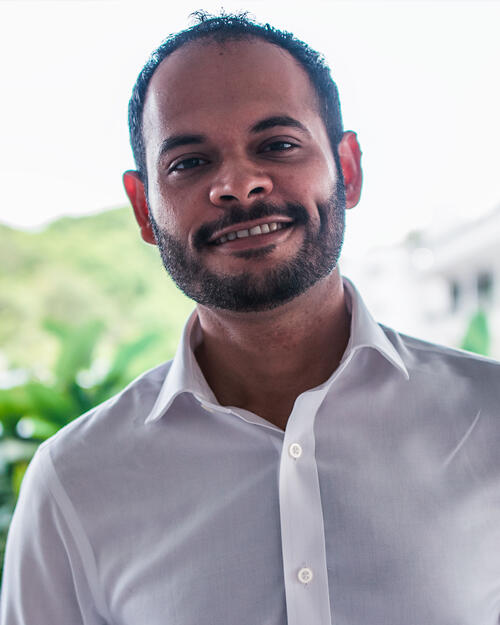
deepak 4x5
Deepak Nair researches the everyday practices and performances that produce international relations. His writings include ASEAN-related articles in journals such as International Political Sociology on topics that include golf, sociability, and diplomacy; on the practices of face-saving in diplomacy in the European Journal of International Relations; and on institutions, norms, and crisis in Asian Survey and Contemporary Southeast Asia. He earned his PhD and BA at the London School of Economics and Political Science and Delhi University, respectively.

Deepak Nair Assistant Professor of Political Science, National University of Singapore
Seminars
-

Second Conference on "The Political Economy of Japan under the Abe Government"

March 1 - 2, 2019

Philippines Conference Room

Sponsored by: Japan Society for Promotion of Science, Japan Foundation Center for Global Partnership, and Freeman Spogli Institute for International Studies (Stanford University)

Organizers: Takeo Hoshi and Phillip Lipscy


Program

3/1/2019

8:45am   Breakfast

9:05am    Welcome Remark     Toru Tamiya (JSPS San Francisco Office)
                                                   Osamu Honda (Japan Foundation Center for Global Partnership)

9:15am  "Abenomics and Japan's Entrepreneurship and Innovation: Is the Third Arrow Pointed in the Right Direction for Global Competition in the Silicon Valley Era?", Kenji Kushida (Stanford University)

Discussant:
Yong Suk Lee (Stanford University)

10:15am  Break

10:30am  "Abe’s Womanomics Policy: Did it have Effect on the closing of Gender Gap in Managers?", Nobuko Nagase (Ochanomizu University)

Discussant:
Curtis Milhaupt (Stanford University)

11:30am  Move to SIEPR Building for Lunch and Keynote Speech

11:45am  Lunch to conference participants

12:15pm  Lunch and Panel Discussion on Abenomics at SIEPR Building

Moderator: Takeo Hoshi
Panelists: Joshua Hausman
                   Takatoshi Ito
                  Nobuko Nagase
                  Steve Vogel

1:45pm   Panel ends and walk back to Encina Hall

2:00pm    "Abenomics, the Exchange Rate, and Markup Dynamics in Japanese Industries", Kyoji Fukao (Hitotsubashi University) and Shuichiro Nishioka (West Virginia University)

Discussant:
Yuhei Miyauchi (Stanford University and Boston University)

3:00pm  Break

3:30pm   "Abe's Reverse Course: How a Labor Shortage Transformed Labor Politics and Policy", Steven Vogel (University of California, Berkeley)

Discussant:
Kenji Kushida (Stanford University)


4:30pm   "The Crisis that Wasn’t: How Japan Has Avoided a Bond Market Panic", Mark T. Bamba and David E. Weinstein (Columbia University)

Discussant:
Johannes Wieland (University of California, San Diego)

5:30pm     Adjourn


3/2/2019

8:30am   Breakfast

9:00am   Welcome Remark
                 Moto Ono (Japan Foundation Center for Global Partnership)

9:10am   "The Enduring Challenges of History Issues", Mary McCarthy (Drake Univesity)

Discussant:
Phillip Lipscy (Stanford University)

10:10am  Break

10:25am "Expansion of the Prime Minister's Power in the Japanese Parliamentary System", Harukata Takenaka (National Graduate Institute for Policy Studies)

Discussants:
Patricia Maclachlan (University of Texas)

11:25pm  "Abenomics: Est. in 2013, or 2007?", Takatoshi Ito (Columbia University)

                   Discussants:
                  Takeo Hoshi (Stanford University)

12:25pm  Lunch

1:30pm  "Abenomics, Monetary Policy, and Consumption", Joshua Hausman (University of Michigan), Takashi Unayama (Hitotsubashi University), and Johannes Wieland (University of California, San Diego)

Discussant:
Thuy Lan Nguyen (Santa Clara University)

2:30pm   "The Great Disconnect: The Decoupling of Wage and Price Inflation in Japan", Takeo Hoshi (Stanford University) and Anil Kashyap (University of Chicago)

Discussant:
Takashi Unayama (Hitotsubashi University)

3:30pm  Break

4:00pm   "Introduction", Takeo Hoshi (Stanford University) and Phillip Lipscy (Stanford University)

5:30pm  Adjourn


Conferences
-

Resolution of economic disputes are well established in East Asia where economic growth and prosperity are common goals among the nations. However, other types of disputes have long plagued among East Asian countries. These include conflicts that have deep historical roots, or ones that involve state sovereignty, territorial disputes, and claims deriving from historical wrongs. These issues have harmed the regional security in East Asia for a long time, threatened its peace and security and hindered further progress, thus putting tension on the diplomatic relations among the East Asian countries. Attempts to resolve these disputes via politics or diplomacy have not been much successful. Compliance of the outcome of the dispute might prove to be challenging if the losing party decides that the benefit of resisting the unfavored outcome outweighs the cost of reputational harm.

Image
eyp 3x2web small crop
Eun-Young Park will present that, despite the difficulty, such disputes can be resolved fairly, provided that an independent neutral dispute resolution mechanism is securely in place. In this model, the states themselves voluntarily submit their disputes to a neutral third party capable of making fair and equitable decisions on the merits of the cases before it. There are advantages in opting for the region-wide system of independent and neutral dispute resolution in handling the Gordian Knot that is the complex and difficult problem of sovereignty and history of conflicts in East Asia. He will explore the possibility of establishing an inter-state arbitration system based on the fact that the East Asian countries already possess a good deal of social and legal capital that is readily applicable in resolving sensitive transnational disputes. He will also touch upon a permanent arbitral or claims tribunal in East Asia to deal with claims arising out of the Korean Unification; a monumental event after which much chaos—legal and otherwise—will most certainly ensue. Establishing a system of international dispute resolution system in East Asia is certain to pave the way in forming the East Asian legal community in which claims and grievances may be adjudicated fairly and brought without escalating political tensions among countries.

Eun-Young Park is Vice President of the London Court of International Arbitration and currently a visiting scholar at Stanford Asia-Pacific Research Center. Previously, he served as a Judge in the Seoul District Court of Republic of Korea. After leaving the bench, he has advised Korean Financial Supervisory Commission in establishing governance system in the public and private sector under the auspices of the World Bank and the IMF as a result of IMF bail-out of Korea during the Asian Financial Crisis. He has practiced law at Kim & Chang as a partner and Co-Chair of the International Arbitration and Litigation Practice Group, and focused on international dispute resolution including trade sanctions, transnational litigation, and international arbitration. He has served as a board member of the Singapore International Arbitration Centre (SIAC) and is currently a member of the Court of Arbitration of the SIAC. He has taught in various universities including Sungkyunkwan University School of Law as an adjunct professor. He holds a J.S.D. and L.L.M. from NYU School of Law, and is admitted to the New York Bar, the Korean Bar, and the Singapore International Commercial Court.


Eun Young Park Visiting Scholar, Shorenstein APARC, Stanford University
Seminars
-


EMERGING ISSUES IN CONTEMPORARY ASIA

A Special Seminar Series


RSVP required by Tuesday, May 7, 2019

RSVP Now


ABSTRACT: Why have the three most salient minority groups in Japan - the politically dormant Ainu, the active but unsuccessful Koreans, and the former outcaste group of Burakumin - all expanded their activism since the late 1970s despite the unfavorable domestic political environment? My investigation into the history of the three groups finds an answer in the galvanizing effects of global human rights on local social movements. Drawing on interviews and archival data, I document the transformative impact of global human rights ideas and institutions on minority activists, which changed the prevalent understanding about their standing in Japanese society and propelled them to new international venues for political claim making. The global forces also changed the public perception and political calculus in Japan over time, catalyzing substantial gains for the minority movements. Having benefited from global human rights, all three groups repaid their debt by contributing to the consolidation and expansion of international human rights principles and instruments. The in-depth historical comparative analysis offers rare windows into local, micro-level impact of global human rights - complementing my other projects on the relationship between international human rights and local politics, which employ cross-national quantitative analyses - and contributes to our understanding of international norms and institutions, social movements, human rights, ethnoracial politics, and Japanese society. 
 
Image
Kiyoteru Tsutsui
PROFILE:
  Kiyoteru Tsutsui is Professor of Sociology, Director of the Center for Japanese Studies, and Director of the Donia Human Rights Center at the University of Michigan, Ann Arbor. His research on globalization of human rights and its impact on local politics has appeared in American Sociological Review, American Journal of Sociology, Social Forces, Social Problems, Journal of Peace Research, Journal of Conflict Resolution, and other social science journals. His book publications include Rights Make Might: Global Human Rights and Minority Social Movements in Japan (Oxford University Press 2018), and a co-edited volume (with Alwyn Lim) Corporate Social Responsibility in a Globalizing World (Cambridge University Press 2015). He has been a recipient of National Endowment for the Humanities Fellowship, National Science Foundation grants, the SSRC/CGP Abe Fellowship, Stanford Japan Studies Postdoctoral Fellowship, and other grants as well as awards from American Sociological Association sections on Global and Transnational Sociology (2010, 2013), Human Rights (2017), Asia and Asian America (2018), and Collective Behavior and Social Movements (2018).


McClatchy Hall, Building 120, Studio 40
450 Serra Mall
Stanford University

Kiyoteru Tsutsui Professor of Sociology, University of Michigan
Seminars
-


EMERGING ISSUES IN CONTEMPORARY ASIA

A Special Seminar Series


RSVP required by Friday, April 29, 2019

RSVP Now


ABSTRACT:  Japan’s population is the oldest in the world and will continue to shrink for the foreseeable future. My first goal in this talk is to provide an overview of Japan’s distinctive demographic landscape, focusing on rapid population aging and its policy implications while also emphasizing the role that declining rates of marriage have played in accelerating population aging via their impact on fertility. After describing the centrality of marriage behavior to our understanding of demographic and societal trends in Japan, my second goal is to present results of new research documenting an unexpected reversal in educational differences in women’s marriage. For decades, highly-educated women have married later and more often remained unmarried than their less-educated counterparts – a pattern thought to reflect the high opportunity costs of marriage in Japan’s gender inegalitarian society. However, my analyses of recent data show that women with a university degree are now more likely than high school graduates to marry, a shift that hints at the possibility of changing norms and expectations regarding women’s employment and economic contributions to the family. Concurrent trends toward continued decline in marriage among low-educated men and women are consistent with emphases on the deteriorating economic circumstances of this group.
 
Image
James Raymo
PROFILE:
  Jim Raymo is Professor and Chair of the Department of Sociology at the University of Wisconsin-Madison. He is also the current Director of Graduate Training of the Center for Demography of Health and Aging and the former Director of the Center for Demography and Ecology. Raymo’s research focuses primarily on evaluating patterns and potential consequences of major demographic changes in Japan. He has published widely on key features of recent family change, including delayed marriage, extended co-residence with parents, and increases in premarital cohabitation, shotgun marriages, and divorce. In other lines of research, he has examined health outcomes at older ages in Japan and their relationship with family, work, and local area characteristics and has examined multiple dimensions of well-being among the growing population of single mothers and their children in Japan. He is currently involved in a new project that explores explanations for low fertility in Japan and another that examines inequalities in children’s development in Japan. His research has been published in top U.S. journals such as American Sociological Review, American Journal of Sociology, Demography, and Journal of Gerontology: Social Sciences as well as in Japanese journals. 


McClatchy Hall, Building 120, Studio 40
450 Serra Mall
Stanford University

James Raymo <i>Professor and Chair of the Department of Sociology at the University of Wisconsin-Madison</i>
-

General Charles Brown, Commander, Pacific Air Forces, will discuss the strategic importance and complexity of the vast Indo-Pacific Region, and the increasing interstate competition for position and influence.  He will also address how U.S. national security priorities shape the development the Pacific Air Forces strategy and operational concepts.  Last, he will explain how his Command attempts to balance the requirements of U.S. joint forces and allied nations to produce combined airpower, and the importance of partner relationships in achieving comprehensive regional security.

Image
General Charles Brown
General Charles Q. Brown Jr. is the Commander, Pacific Air Forces (PACAF); Air Component Commander for U.S. Indo-Pacific Command; and Executive Director, Pacific Air Combat Operations Staff, Joint Base Pearl Harbor-Hickam, Hawaii.  PACAF is responsible for Air Force activities spread over half the globe in a command that supports more than 46,000 Airmen serving principally in Japan, Korea, Hawaii, Alaska and Guam.

Philippines Conference Room
Encina Hall, 3rd Floor, Central (C330)
616 Serra Mall, Stanford, CA 94305

Lectures
-

EMERGING ISSUES IN CONTEMPORARY ASIA

A Special Seminar Series


RSVP required by Wednesday, April 17, 2019

RSVP Now

ABSTRACT: Why does success in combat sometimes fail to produce a stable and durable peace settlement? In the 1965 war, India successfully repelled a Pakistani invasion of the disputed territory of Kashmir, captured new territory, and launched a massive counter-offensive – but it did not improve the long-term security of Kashmir or deter future Pakistani aggression. This presentation offers an explanation that shows how war can help to establish deterrence between enduring rivals. I argue combat success is important, but must be paired with costly signals of resolve. In 1965, India achieved combat success but failed to deliver such signals of resolve: it did not permanently retain the Kashmiri territory it captured, and it deliberately limited the strategic threat posed by its counter-offensive. As a result, India defended against invasion without establishing post-war deterrence. India’s current military strategy continues to favor ineffective and potentially destabilizing concepts of deterrence. This carries implications not only for regional security, but also U.S. strategy, which increasingly depends on India to maintain a favorable and stable regional balance of power.
 
Image
Arzan Tarapore
PROFILE:
Arzan Tarapore is a nonresident fellow at the National Bureau of Asian Research, an adjunct defense analyst at the RAND Corporation, and from Fall 2019, an adjunct assistant professor at Georgetown University. His research lies at the intersection of South Asian politics and military strategy. His current book project explains the concept of strategic effectiveness, drawing on in-depth historical case studies of India’s war-fighting experience since 1965. Prior to his scholarly career, Arzan served for 13 years in the Australian Defence Department, which included operational deployments and a diplomatic posting to Washington, DC. He holds a PhD in war studies from King’s College London.


Philippines Conference RoomEncina Hall, 3rd Floor, Central616 Serra Street, Stanford, CA 94305
Arzan Tarapore Nonresident fellow at the National Bureau of Asian Research
-

U.S.-China relations has reached a watershed moment.  Even as both nations reassess the trajectory of their bilateral relationship, James Green, who recently served as Minister Counselor for Trade Affairs at the U.S. Embassy in Beijing, takes a close look at critical points in the history of U.S.-China negotiations: from anti-Soviet coordination to nonproliferation, from the Tiananmen crackdown to cyber theft, from China's WTO accession to G20 summits.  James Green is the creator of Georgetown University’s new initiative, the U.S.-China Dialogue Podcast and has conducted in-depth interviews with two dozen former U.S. cabinet secretaries, ambassadors and senior officials regarding pivotal events in U.S.-China relations.  Mr. Green will explore how U.S. Administrations from Carter to Trump have dealt with a rising China; what motivated them, and what the lessons are for future administrations.  Based on his time as the senior official in China from the Office of the United States Trade Representative (USTR), furthermore, Mr. Green will also speak about the prospects for future trade friction with China.

Image
james green

James Green has worked for over two decades on U.S.-Asia relations. For the last five years, Mr. Green was the Minister Counselor for Trade Affairs at the U.S. Embassy in Beijing.  As the senior official in China from the Office of the United States Trade Representative (USTR), Mr. Green was deeply involved in all aspects of trade negotiations, trade enforcement, and in reducing market access barriers for American entities.  In prior government service, Mr. Green worked on the Secretary of State’s Policy Planning Staff and at the State Department’s China Desk on bilateral affairs. He also served as the China Director of the White House’s National Security Council.  In the private sector, Mr. Green was a senior vice president at the global strategy firm founded by former Secretary of State Madeleine Albright and was the founding government relations manager at the American Chamber of Commerce in Shanghai, Asia’s largest AmCham.  Currently, Mr. Green is a Senior Research Fellow at Georgetown University's Initiative for U.S.-China Dialogue on Global Issues and hosts a U.S.-China Dialogue Podcast.   

Philippines Conference RoomEncina Hall, 3rd Floor616 Serra Mall, Stanford, CA 94305
James Green <i>Georgetown University</i><br><br>
Seminars
Authors
Ketian Zhang
News Type
Commentary
Date
Paragraphs

On March 31, Taiwan’s Ministry of Foreign Affairs reported that two Chinese Air Force (PLAAF) J-11 jets crossed the median line of the Taiwan Strait. This violated the long-held tacit agreement between China and Taiwan that neither side should cross the median line.

Taiwan deemed this “an intentional, reckless & provocative action,” which triggered “a 10-minute standoff” in the air. As Asia security expert Bonnie S. Glaser notes that, if intentional, this would be the first PLAAF crossing of the median line in about 20 years. In this case, it’s likely that Taiwan, not the South China Sea, prompted Beijing’s actions.

An unresolved issue from the Chinese civil war, Taiwan has always been a “core interest” to party leaders in Beijing. Here are some key takeaways from my research on China-Taiwan relations…

Read the full article in The Washington Post.


To hear more from Ketian, don't miss her recently posted video Q&A. In addition, be sure to RSVP for her April 16 seminar "Killing the Chicken to Scare the Monkey: Explaining Coercion by China in the South China Sea."

Hero Image
The marines of China navy participate in the annual military training on January 3, 2018 in Zhanjiang,
ZHANJIANG, CHINA - JANUARY 03: The marines of China navy participate in the annual military training on January 3, 2018 in Zhanjiang, Guangdong Province of China.
Pu Haiyang/VCG via Getty Images
All News button
1
News Type
Q&As
Date
Paragraphs

We sat down with our 2018-19 Shorenstein Postdoctoral Fellow in Contemporary Asia Ketian Zhang to discuss China's use of coercion in foreign policy; her research on  South China Sea disputes; her forthcoming articles; and the fellowship experience in general. To hear more from Ketian, RSVP for her April 16 seminar "Killing the Chicken to Scare the Monkey: Explaining Coercion by China in the South China Sea."

Hero Image
Ketian Zhang participating in Q&A Thom Holme, APARC
All News button
1
Subscribe to International Relations