Paragraphs
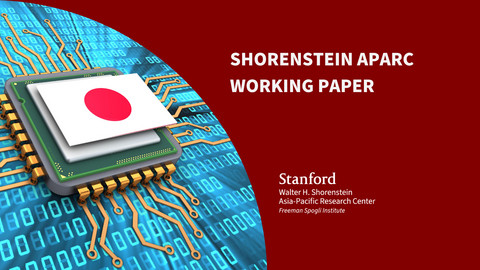
Image of Korean currency with banner "Shorenstein APARC Working Paper"


This paper examines the “Korea discount,” the chronic undervaluation of South Korean stocks compared to other developed markets. Despite Korea ranking 13th globally in market capitalization, its stock market has grown only 25% over the past decade, while the S&P 500 grew 186%. The author attributes this poor performance to weak corporate governance, particularly the dominance of family-controlled conglomerates (chaebols) that prioritize the interests of founding families over those of minority shareholders. An analysis of successful reforms in Japan, Taiwan, and the United States shows that the Korea discount could be successfully resolved by strengthening corporate disclosure requirements, resolving conflicts of interest among institutional investors, and making South Korea’s voluntary stewardship code more enforceable to encourage active shareholder engagement and improve market valuations. 

All Publications button
1
Publication Type
Working Papers
Publication Date
Subtitle

Institutional Investor–Driven Governance Reform and the Resolution of the Korea Discount

Authors
You Jung Lee
Authors
News Type
News
Date
Paragraphs

We are pleased to share the publication of a new volume, Cold War Refugees: Connected Histories of Displacement and Migration across Postcolonial Asia, edited by the Korea Program's Yumi Moon, associate professor in Stanford's Department of History.

The book, now available from Stanford University Press, revisits Cold War history by examining the identities, cultures, and agendas of the many refugees forced to flee their homes across East, Southeast, and South Asia due to the great power conflict between the US and the USSR. Moon's book draws on multilingual archival sources and presents these displaced peoples as historical actors in their own right, not mere subjects of government actions. Exploring the local, regional, and global contexts of displacement through five cases —Taiwan, Vietnam, Korea, Afghanistan, and Pakistan — this volume sheds new light on understudied aspects of Cold War history.

This book is an important new contribution to our understanding of population flows on the Korean Peninsula across decades.
Paul Chang
Deputy Director, Korea Program

The book's chapters — written by Phi-Vân Nguyen, Dominic Meng-Hsuan Yang, Yumi Moon, Ijlal Muzaffar, Robert D. Crews, Sabauon Nasseri, and Aishwary Kumar — explore Vietnam's 1954 partition, refugees displaced from Zhejiang to Taiwan, North Korean refugees in South Korea from 1945–50, the Cold War legacy in Karachi, and Afghan refugees.

Purchase Cold War Refugees at www.sup.org and receive 20% off with the code MOON20.

Read More

Korean activists released from prison on August 16, 1945.
Commentary

Can the United States and Asia Commemorate the End of the Pacific War Together?

Within Asia, World War II memories and commemorations are not only different from those in the United States but also divided and contested, still shaping and affected by politics and nationalism. Only when U.S. and Asian leaders come together to mark the end of the Asia-Pacific war can they present a credible, collective vision for the peace and prosperity of this important region.
Can the United States and Asia Commemorate the End of the Pacific War Together?
Gi-Wook Shin seated in his office, speaking to the camera during an interview.
News

Sociologist Gi-Wook Shin Illuminates How Strategic Human Resource Development Helped Build Asia-Pacific Economic Giants

In his new book, The Four Talent Giants, Shin offers a new framework for understanding the rise of economic powerhouses by examining the distinct human capital development strategies used by Japan, Australia, China, and India.
Sociologist Gi-Wook Shin Illuminates How Strategic Human Resource Development Helped Build Asia-Pacific Economic Giants
Stanford Next Asia Policy Lab team members and invited discussants during a roundtable discussion in a conference room.
News

Stanford Next Asia Policy Lab Probes Political Messaging and Public Attitudes in U.S.-China Rivalry

At a recent conference, lab members presented data-driven, policy-relevant insights into rival-making in U.S.-China relations.
Stanford Next Asia Policy Lab Probes Political Messaging and Public Attitudes in U.S.-China Rivalry
Hero Image
3d cover image of the book "Cold War Refugees," showing Asian refugees walking up from a beach, with boats in the background.
All News button
1
Subtitle

The new volume, edited by Stanford historian Yumi Moon, examines the experiences of Asian populations displaced by the conflict between the United States and the Soviet Union.

Date Label
Paragraphs

Lee Jae-myung of the Democratic Party won South Korea’s June 3 presidential election with 49.4 percent of the vote. The outcome was widely anticipated, given a political climate that strongly favored the liberal camp in the aftermath of the impeachment of President Yoon Suk Yeol. Still, Lee’s victory was not as overwhelming as some might have expected. With 99.6 percent of the votes tallied, the two main conservative candidates — Kim Moon-soo and Lee Jun-seok — together garnered a slightly higher combined vote share of 49.5 percent (41.2 percent and 8.3 percent, respectively) Why, then, did Korean voters ultimately choose Lee Jae-myung but with a measured endorsement rather than a landslide victory, and what does it mean for Korean democracy?

This election followed a period of intense political turmoil that began with President Yoon’s declaration of martial law on December 3 of last year and his impeachment just two months ago. While the election results were expected, they still raise important questions about the future of Korean democracy. Do the last six months reflect the resilience of democratic institutions — capable of self-correction through legal and electoral processes — or, have these events exposed the fragility of Korea’s democracy, with its deep political divisions and public distrust in leadership?

In many ways, the answer is both. Civic engagement and a peaceful transfer of power during such a challenging episode suggest a strong democratic foundation. At the same time, the election outcome still shows a highly polarized electorate, underscoring the hurdles that lie ahead for Korean society and politics.

Continue reading the complete piece > 

All Publications button
1
Publication Type
Commentary
Publication Date
Subtitle

Despite his election victory, Lee faces a challenging road ahead, both personally and politically. It remains to be seen whether Lee’s administration can rise above partisan politics and rebuild public trust through meaningful reforms.

Journal Publisher
Journal of Democracy
Authors
Gi-Wook Shin
Authors
Noa Ronkin
News Type
News
Date
Paragraphs

As countries confront rising health care spending, policymakers everywhere face a key question: Who benefits from these spending increases?

Consider South Korea, a nation that has sharply increased its per capita health care spending over the past decade, delivering reasonable value in improving health outcomes as measured by rising life expectancy and a reduced overall disease burden. Yet, not all South Koreans reap equal rewards from the country’s health investments, according to a new study. Rather, adults in the lowest-income quintile receive the least health gains for every dollar spent on their care.

Published in the journal Health Affairs Scholar, the study reveals stark income-based disparities in the value of health care — defined as health gains relative to spending — among South Korean adults. The research systematically quantifies how efficiently health spending translates into longer, healthier lives across income groups in South Korea, providing insights into the distribution of health gains relative to health care spending.

“While earlier research often examined disparities in access, utilization, or outcomes separately, our analysis provides a more integrated assessment by jointly examining health care costs and health gains,” explains the research team, including Stanford health economist Karen Eggleston, the director of the Asia Health Policy Program (AHPP) at APARC. Eggleston’s co-authors are Sungchul Park, an associate professor in Korea University’s Department of Health Policy and Management and an incoming visiting scholar with AHPP; Young Kyung Do, a professor in Seoul National University’s Department of Health Policy and Management and AHPP’s inaugural postdoctoral fellow; and David Cutler, the Otto Eckstein Professor of Applied Economics at Harvard University. 

Their findings are sobering: between 2010 and 2018, South Korean adults in the lowest income quintile derived the least value from increased health spending compared to those in the middle- and higher income quintiles, suggesting a system that underserves the poorest population.


Sign up for APARC newsletters to receive updates on our scholars’ research >

These findings highlight structural inequities in the South Korean health system and emphasize the need for targeted policies to promote equitable health care value.
Eggleston et al.

Poorer Health, Smaller Gains


Between 2010 and 2019, per capita health care spending in Korea increased from $1,211 to $1,903, growing nearly 6 percent annually. During that decade, life expectancy climbed from 80.5 to 83.7 years, while disability-adjusted life years – expressed as the number of years lost due to ill-health – declined significantly. These measures seemingly suggest health spending has yielded solid returns in terms of improved health outcomes.

Yet stark income inequality persists in Korea. The country has both the highest old-age poverty rate and the largest share of out-of-pocket medical expenses among OECD countries. Does rising health spending benefit all segments of society equally?

To answer this question, the researchers analyzed trends in health spending and outcomes across income quintiles (excluding the bottom 10 percent of the household income distribution) from 2010 to 2018.

They measured health care spending as total medical expenditures, including costs for inpatient and outpatient services, emergency services, and prescription medications. All spending measures were adjusted for inflation and are reported in 2021 US dollars. To asses health outcomes, they used three indicators: (1) health-related quality of life, which relies on standard questionnaires to measure individuals’ perceived physical and mental health over time; (2) life expectancy, calculated using life table methods based on enrollment data from the national health insurance system; and (3) quality-adjusted life expectancy (QALE) at age 25, a measure that reflects both longevity and the quality of life during those years – an essential consideration when evaluating the effectiveness and equity of health care systems. To quantify the value of health care across income groups, the researchers applied statistical methods.

They found that adults in the lowest-income quintile experienced the smallest relative improvement in QALE over time: an increase of 0.7 years, compared with 1.4 years in the second and third quintiles, 1.3 years in the fourth, and 1.2 years in the highest quintile. Translated into a value estimate, adults in the lowest income quintile incurred $78,209 per QALE; in contrast, adults in the second through highest income quintiles achieved greater value estimates of $47,831, $46,905, $31,757, and $53,889, respectively. Thus, the most efficient gains in both longevity and quality of life were in the middle-income groups.

“We found that per capita spending was similar across income groups, but the lowest-income quintile experienced much smaller gains in QALE,” Eggleston and her collaborators write. 

Reflecting the principle of diminishing returns, “these findings highlight structural inequities in the South Korean health system and emphasize the need for targeted policies to promote equitable health care value.” 

Adults in the lowest-income quintile derived the least value, largely due to poorer baseline health and limited access to care.
Eggleston et al.

Why Spending Does Not Equal Value


While the study did not identify causal pathways, secondary data suggest two plausible explanations for the results: poorer baseline health and greater unmet needs.

The data indicate that adults in the lowest-income quintile had significantly higher rates of chronic disease, disability, behavioral risk factors such as smoking and obesity rates, and mental health issues. These factors make it more difficult to achieve health gains.

Moreover, adults in the lowest-income quintile were less likely to receive preventive services, with markedly lower rates of medical checkups and cancer screenings. “Despite greater health needs, these adults faced persistent barriers to accessing care, particularly financial constraints,” the researchers say.

Notably, the highest value of health spending was not observed among adults in the highest-income group. One explanation is that this group may consume more low-value or marginally beneficial health services.

Policy Implications: Efficiency with Equity


Eggleston and her co-authors emphasize “the need for health policy in South Korea to prioritize both equity and value.” They highlight the following targeted strategies to improve efficiency and fairness:

  • Invest in high-value services that link spending to meaningful health outcomes:
    • Improve access to high-value preventive and primary care services by expanding financial protections, particularly for lower-income groups.
    • Improve overall system efficiency by reducing the overuse of low-value health care services.
  • Pair health care reform with broader social policies: Coordinate efforts to address upstream factors tied to health disparities, such as income inequality.
  • Aim for improvements across the entire population: Implement evidence-based clinical appropriateness guidelines to ensure health care spending yields meaningful and equitable results.

While focused on South Korea, the study’s findings illuminate how income inequality interacts with health system designs and carry lessons for other countries.

“In countries with greater income inequality and fragmented health systems, such as the United States, disparities in health care value may be even more pronounced,” the co-authors write.

As South Korea and other countries continue to invest heavily in health care, the study highlights the urgency of improving the distribution and impact of that increased spending. Without focused reforms, it risks entrenching existing inequities rather than alleviating them.

Read More

Close-up on an elderly womna's hands holding colorful puzzle pieces.
News

Confronting the Challenge of Dementia Care: Lessons from South Korea

A comprehensive review of rapidly aging South Korea’s efforts to mitigate the social and economic costs of Alzheimer’s disease and related dementias, co-authored by Stanford health economist Karen Eggleston, provides insights for nations facing policy pressures of the demographic transition.
Confronting the Challenge of Dementia Care: Lessons from South Korea
An older Korean man fills out a job application at a elderly persons' job fair in Seoul.
News

In Rapidly Aging South Korea, the Economy Is Slow in Creating “Age-Friendly” Jobs

Despite the nation’s rapidly aging demographics, South Korea's economy has not adapted as well as the United States, a new study finds. The researchers, including Stanford health economist and director of the Asia Health Policy Program at APARC Karen Eggleston, show that age-friendly jobs attract a broad range of workers and that structural barriers in the labor market influence which groups can access these roles.
In Rapidly Aging South Korea, the Economy Is Slow in Creating “Age-Friendly” Jobs
Chinese agriculture working couple standing side by side on the top of a rice terraces at Ping An Village looking to the camera.
News

China’s Unified Health Insurance System Improved Mental Well-Being Among Rural Residents, Study Finds

New research by a team including Stanford health economist Karen Eggleston provides evidence about the positive impact of China’s urban-rural health insurance integration on mental well-being among rural seniors, offering insights for policymakers worldwide.
China’s Unified Health Insurance System Improved Mental Well-Being Among Rural Residents, Study Finds
Hero Image
Close-up on coloured medication capsules and a stethoscope on the background of Korean won bills.
All News button
1
Subtitle

Despite rising health care spending, adults in South Korea’s lowest-income quintile experience the smallest relative improvement in life expectancy and well-being, according to a new study. The co-authors, including Stanford health economist Karen Eggleston, call for the country’s health policy to prioritize both equity and value, and highlight lessons for other health systems.

Date Label
Paragraphs
Image
Report cover showing democracy demonstrations in South Korea

In partnership with the the Chey Institute and the Korea Foundation for Advanced Studies (KFAS), the Shorenstein Asia-Pacific Research Center (APARC) and the Stanford Next Asia Policy Lab (SNAPL) at Stanford University presented the third installment of the “Sustainable Democracy Roundtable” series in Seoul, South Korea, where experts diagnosed the current state of democracy, its threats, and possible prescriptions for democratic prosperity. The goal of the roundtable is to create a necessary platform and opportunity for scholars of various disciplines and ranks to identify core issues and propose unique solutions to globally pertinent policy issues. This year's roundtable went a step further by holding its public sessions at the National Assembly, where legislators joined scholars and civic leaders in the search for solutions to the democratic crisis.

The roundtable series is part of SNAPL's Democratic Crisis and Reform research track.

The roundtable was made possible thanks to the generous support and partnership with the Chey Institute and the  Korea Foundation for Advanced Studies (KFAS).

This report summarizes the discussions held at the roundtable using a modified version of the Chatham House Rule, only identifying speakers by their country of origin.


All Publications button
1
Publication Type
Reports
Publication Date
Authors
0
Visiting Scholar at APARC, 2025-2026
eunkyeong_lee.jpg Ph.D.

Eunkyeong Lee joins the Walter H. Shorenstein Asia-Pacific Research Center (APARC) as a visiting scholar for the 2025-2026 academic year. She currently serves as Research Fellow at the Korea Institute of Public Finance. While at APARC, she will be conducting research on healthcare systems and utilization among the elderly in South Korea.

Date Label
0
Visiting Scholar at APARC, 2025-2026
seok_jin_eom.jpg Ph.D

Seok Jin Eom joins the Walter H. Shorenstein Asia-Pacific Research Center (APARC) at Stanford University as a visiting scholar for the 2025-2026 academic year. He is a professor of the Graduate School of Public Administration at Seoul National University, Republic of Korea, and received his Ph.D in public administration from Seoul National University. He has published numerous papers in academic journals, including Government Information Quarterly, Public Management Review, Administration & Society, Perspectives on Public Management and Governance, and The Korean Public Administration Review. He also published many books on the history of public administration and policy in Korea and Japan, as well as digital government and AI adoption in the public sector, including The Intellectual History of Korean Public Administration (2025, forthcoming), Enabling Data-Driven Innovation and AI Governance (2025), The Changes and Continuity of Japanese State Apparatus (2015), and others. Dr. Eom serves as the editor-in-chief of the Korean Public Administration Review, one of the most prestigious academic journals in Korea. His current research interests include the intellectual evolution of Korean public administration, public governance in the era of economic growth in Korea, and the evolution of governance in the AI era. (sjum21@stanford.edu; sjum21@snu.ac.kr).

Date Label
0
Visiting Scholar at APARC, 2025-2026
soo_chan_choi.jpg Ph.D.

Soo Chan Choi joins the Walter H. Shorenstein Asia-Pacific Research Center (APARC) as a visiting scholar for the 2025-2026 academic year. He currently serves as Dean and Professor of the School of Social Welfare at Yonsei University. While at APARC, he will be conducting research on the adaptation of Korean workers to overseas environments, focusing on the Bay Area.

Date Label
1
Visiting Scholar at APARC, Fall 2025
byongjin_ahn.jpg Ph.D.

Byongjin Ahn joined the Walter H. Shorenstein Asia-Pacific Research Center (APARC) as a visiting scholar for the 2025 fall quarter. He recently served at the State Affairs Planning Committee (equivalent to the transition team as President Lee had to assume his post immediately after his election in June).

He is currently a professor at Kyung Hee University's Global Academy for Future Civilizations. He has served as the Rector of the Global Academy for the Future of Civilizations at Kyung Hee University, Vice President of Kyung Hee Cyber University, Assistant Professor of International Relations at Changwon National University, and Lecturer at the City University of New York. Born in Daegu (1967), he earned a B.A. in sociology from Sogang University and an M.A. in political science from Seoul National University. He earned his Ph.D. in American politics from the New School for Social Research, founded by John Dewey. For his dissertation, he was awarded the Hannah Arendt Award.

His main specialty is the U.S. presidency and Korean politics, and he has appeared on numerous television programs and newspapers, including a panel on the U.S. presidential election specials on MBC and SBS and an interview with the New York Times. He has been a regular columnist for the JoongAng Ilbo, Kyunghyang Shinmun, and Hankyoreh, and a guest commentator for KBS. He is a co-author of South Korea's Democracy In Crisis: The Threats of Illiberalism, Populism, and Polarization (Gi-Wook Shin and Ho-Ki Kim Eds, Walter H. Shorenstein Asia-Pacific Research Center, 2022) and many other books and articles. 

Date Label
-
Seoul Cheonggyecheon
Seoul Cheonggyecheon | Getty Image

The Korea Program at Stanford University's Shorenstein Asia-Pacific Research Center (APARC) is pleased to host the 4th International Conference on the Sociology of Korea (I-CSK), September 11-12, 2025. The conference will provide a venue for scholars across the globe to come together to share their ongoing projects on Korea and the Korean diaspora. The program will consist of paper presentations that address various issues of sociological significance, including family, health, and population; gender and sexualities; (im)migration, race, and ethnicity; stratification and inequality; political sociology / economic sociology; and other topics.

8:30-9:00am: Breakfast

9:00-9:20am: Welcoming Remarks

Paul Chang, Deputy Director of Korea Program, Shorenstein APARC, Stanford University
Hyunjoon Park, Director of James Joo-Jin Kim Center for Korean Studies, University of Pennsylvania

9:20-11:00am: Family Dynamics (Moderator: Sojung Lim, Utah State University)

Optimizing Motherhood: How Mothers Understand and Manage Childcare Outsourcing in Contemporary Korea   
Jimin Gim

Causal or Selection? A Reconsideration of the Fatherhood Premium among South Korean Men
Soojin Kim and Seongsoo Choi

Balancing Work and Child: The Impact of Parental Work Hours on Children’s Education Attainment
Taehyun Kim

Socioeconomic Background and Childcare Support from Older Parents among Adult Daughters in South Korea: Cohort Differences
Jung In

11:00-11:20am: Break

11:20-1:00pm: Health and Aging (Moderator: Jaein Lee, Arkansas State University)

Generalized Anxiety, Regional Context and Gendered Suicide Intent among South Korean Adolescents: Evidence from a Nationally Representative Sample
Harris Hyun-soo Kim and Ahhyun Cho

Social Precision Modeling for Depression in South Korea
Haesol Kim, Woojin Kim, Minjee Jung, Kyu-man Han, and Eun Kyong Shin

Exploration of the Association Between Active Leisure Time and Mental Health of Older Adults in South Korea
Jaein Lee and Sujung Lee

Aging with Work: Manifest and Latent Benefits of Later-Life Employment in an Aging Society
Sungsik Hwang and Chaeyoon Lim

1:00-2:00pm: Lunch

2:00-3:40pm: The Korean Diaspora (Moderator: Hyunjoon Park, University of Pennsylvania)

Gender Differences in Educational Selectivity among Korean Immigrants in the US
Minyoung An

Asian American Poverty: Myths, Realities, and Complexities
ChangHwan Kim and Andrew Taeho Kim

Gendered Experiences of the Covid-19 Pandemic: How Korean Immigrant Families Negotiate Gendered Roles
Byung Soo Lee

An Empirical Analysis of Social Capital of the Korean Community in Ho Chi Minh City (Viet Nam)
Ta Thi Lan Khanh

3:40-4:00pm: Break

4:00-5:40pm: Education and Technology (Moderator: Jung In, Soongsil University)

Highbrow Culture and Academic Achievement: Comparing Individual and Organized Participation among Elementary Students in Seoul
Soo-yong Byun, Haram Jeon, and Hee Jin Chung

Achievement, Growth, and Impact: Analyzing School Effectiveness Using Longitudinal Data from the Korean National Assessment of Educational Achievement
Sookyung Han and Seongsoo Choi                      

Ivy League Dreams, but Greater Returns with “SKY”? Shifting Cultural Reproduction in the Era of Globalization
HongJin Jo

How Generative AI Transforms Programmers: The Role of Usage Frequency, Sense of Agency, and Occupational Self-Efficacy
Chankyu Kim

6:00pm: Reception & Dinner
Keynote Address: Gi-Wook Shin, Director of Korea Program, APARC; William J. Perry Professor of Contemporary Korea, Stanford University
2025 I-CSK Student Paper Award

Philippines Conference Room
Encina Hall, 3rd Floor, C330
616 Jane Stanford Way, Stanford University
Directions > 

By invitation only

Conferences
Date Label
Subscribe to South Korea