
AI for Aging-In-Place (AI4AIP): Asian Perspectives
AI for Aging-In-Place (AI4AIP): Asian Perspectives
Tuesday, June 2, 20266:00 PM - 7:30 PM (Pacific)
Zoom

During Stanford’s “Health AI” week, join experts from Korea, China, and Singapore to learn about applications of AI supporting healthy aging in Asia. The webinar will explore the promise of health AI for enabling everyone to enjoy healthy aging to avoid or postpone institutionalization.
Korea, the world's fastest-ageing society, is building a comprehensive system for aging in place — anchored in Universal Health Coverage, long-term care insurance, social care, and the newly enacted Integrated Care Act (March 2026). Professor Kim will share how AI is being embedded across public health, long-term care, and community services, drawing on national applications (AI care calls, social robots, frailty prediction) and a SNU-Stanford collaborative project, with attention to questions of equity, gender, and ethical, legal, and social implications.
Professor Ma of Peking University will then discuss an economic evaluation of integrating AI-enabled diabetic retinopathy (DR) care into primary diabetes care in rural China. Finally, Professor Wong will discuss his research, leadership, and policy experience in Singapore and China, including DR screening, dementia screening, PRIMARY-AI, and the landscape of medical AI in the region. The speakers’ presentations will be followed by Q&A.
This annual event fosters conversations between the US and Asian research communities about AI for healthy aging, including incentive alignment, task augmentation vs automation within health labor markets, and health policymakers’ approaches to accountability, governance, and social impact.
Speakers:
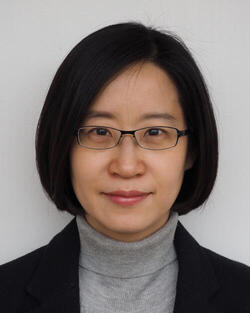
Hongsoo Kim is a professor of health policy and aging at the Graduate School of Public Health and director of the Center for AI in Health and Care at the Artificial Intelligence Institute at Seoul National University (SNU), South Korea. Dr. Kim’s research areas include aging and health policy, long-term care systems, health-care system performance and evaluation, and care innovation. She has conducted numerous government-funded research projects and also participated in reviews of health and long-term care policies at various levels. She was a 2016-2017 Fulbright Visiting Scholar & Takemi Fellow in International Health at Harvard School of Public Health. She has been the recipient of an AXA Research Award (2016) and a Humboldt Research Fellowship (2019). She is currently an expert member of the WHO advisory group for the UN Decade of Healthy Aging (2021-2030). Dr. Kim received her PhD from New York University, where she worked as an assistant professor before she joined SNU.
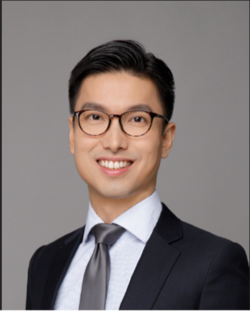
Xiaochen Ma is an assistant professor of health economics at the China Center for Health Development Studies (CCHDS), Peking University. As a health and development economist, Dr. Ma’s research focuses on health decision-making and health system strengthening. In the past and ongoing projects, he has led several large-scale randomized trials on improving access to quality care through digital health and nudge interventions to disadvantaged communities in China. His work has appeared in leading medical and economics journals such as BMJ and the Journal of Health Economics.
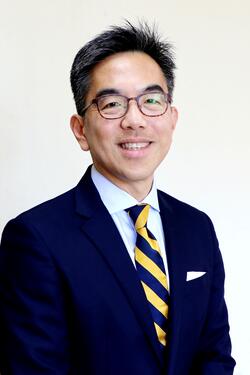
Tien Yin Wong is a physician-scientist-innovator and the Senior Vice-Chancellor of Tsinghua Medicine and Vice-Provost of Tsinghua University, China. He has worked and held senior leadership roles in Singapore and Australia, including at the National University of Singapore, SingHealth Duke-NUS Medical School, Singapore National Eye Centre, and University of Melbourne.
Professor Wong is a practicing retinal specialist with a research portfolio on retinal diseases, ocular imaging, AI, and digital technology. He has published >1,700 peer-reviewed papers (H-index >230, highly cited researcher 2020-2025), given >600 invited named, plenary, and symposium lectures, and received >US$100 million in grant funding. Prof Wong has been recognized with multiple international awards, including the Arnall Patz Medal (Macula Society), Jose Rizal Medal (Asia Pacific Academy of Ophthalmology), and Friedenwald Award (ARVO). He has received Singapore’s President’s Science and Technology Award. He is an elected Member/Fellow of five national academies: the US National Academy of Medicine, the UK Royal Society, the Singapore National Academy of Science, the Australian Academy of Health and Medical Sciences, and the US National Academy of Inventors.