1
Visiting Scholar at APARC, 2024-2025
Lee Kong Chian NUS-Stanford Fellow on Southeast Asia, Fall 2024-Winter 2025
Meredith Weiss_0.jpg Ph.D.

Meredith L. Weiss joined the Walter H. Shorenstein Asia-Pacific Research Center (APARC) as 2024-2025 Lee Kong Chian NUS-Stanford Fellow on Southeast Asia from September 2024 to April 2025. She is Professor of Political Science in the Rockefeller College of Public Affairs & Policy at the University at Albany, State University of New York (SUNY). In several books—most recently, The Roots of Resilience: Party Machines and Grassroots Politics in Southeast Asia (Cornell, 2020), and the co-authored Mobilizing for Elections: Patronage and Political Machines in Southeast Asia (Cambridge, 2022)—numerous articles, and over a dozen edited or co-edited volumes, she addresses issues of social mobilization, civil society, and collective identity; electoral politics and parties; and governance, regime change, and institutional reform in Southeast Asia, especially Malaysia and Singapore. She has conducted years of fieldwork in those two countries, along with shorter periods in Indonesia, the Philippines, Thailand, and Timor-Leste, and has held visiting fellowships or professorships in Australia, Japan, Malaysia, Myanmar, the Philippines, Singapore, and the US. Weiss is the founding Director of the SUNY/CUNY Southeast Asia Consortium (SEAC) and co-edits the Cambridge Elements series, Politics & Society in Southeast Asia. As a Lee Kong Chian NUS–Stanford fellow, she worked primarily on a book manuscript on Malaysian sociopolitical development.

Date Label
Authors
Michael Breger
News Type
Q&As
Date
Paragraphs

Indonesia’s “New Order,” the authoritarian military regime led by General Suharto from 1966-1998, originated following the kidnapping and killing of six Army generals on September 30th-October 1, 1965. The conventional narrative often depicts this regime change as a sudden event, but historian Norman Joshua, APARC's 2023-24 Shorenstein postdoctoral fellow on contemporary Asia, challenges this view.  Joshua’s research explains why the civil-military relationships and social militarization that emerged in Indonesia from the period under Dutch colonial rule in the preceding decade allowed the New Order to solidify power in 1965.

In a recent seminar hosted by APARC’s Southeast Asia Program, “Militarization Overlooked: Rethinking the Origins of Indonesia’s New Order, 1950-1965,” Joshua shared his insights into the complex phenomenon of militarization within Indonesian society, spanning from the tumultuous post-independence era to the present day. Through a historian's lens, he traces the origins of militarization and its far-reaching impacts on political, social, and cultural dynamics in Indonesia.

An Environment Conducive to Militarization


At the heart of this narrative lies the period following Indonesia's revolutionary struggle and independence from Dutch colonial rule. Scholars have portrayed the 1950s favorably as a time when Indonesia embarked on an experiment with liberal and constitutional democracy. Joshua, however, argues that, instead of heralding an era of stability and democratic governance, “the post-revolutionary landscape was fraught with underdevelopment, persistent conflict, and political instability.” This environment provided fertile ground for the gradual militarization of Indonesian society, as the military sought to quell armed groups and revolutionary violence.

"In essence, my current project is an endeavor to write a social and cultural history of Indonesian authoritarianism," Joshua explains. He frames this process as militarization, wherein civil society organizes itself for the production of violence.

Joshua's scholarly curiosity about Indonesian authoritarianism stems from his deep-seated interest in the country's post-revolutionary period. He is particularly drawn to the oft-overlooked years of the 1950s and 1960s, which he deems pivotal in comprehending Indonesia's authoritarian trajectory. He was also drawn to the topic by a family member’s involvement in the revolutionary and Communist movements, leading to their exile from Indonesia after the 1965 massacres, “which sparked my interest in studying ‘those who were on the wrong side of history,' so to speak.”

Joshua sheds light on the role of armed revolutionary factions like the Gerombolan, whose lingering presence posed a challenge to the nascent Indonesian government's efforts to establish control and maintain order, even bearing responsibility for the murder of Yale professor Raymond Kennedy and Time-Life reporter Robert Doyle.

"Militarization produced a militarized society that was regimented and conditioned towards the use of violence," Joshua asserts. His analysis reveals how militarization permeated various facets of Indonesian society, from the adoption of military symbolism to the normalization of violence in everyday life.

An Enduring Legacy of Militarization


Joshua cites the continuing role of the military and police in post-1998 Indonesian society. The Army—and the Police, which is in many ways a constabulary force—have retained their territorial organization, and former and active-duty military and police often participate in non-security affairs. He also highlights the important role of security forces in facing domestic challenges such as the ongoing insurgency in Papua.

Joshua considers militarization from a cultural standpoint, including the fetishization of uniforms, marches, and militia-like organizations. Militarization, he notes, is often manifested in slogans, songs, ceremonies, and indoctrination programs. For example, the slogan "Ganyang Malaysia," originating from Sukarno's call to "crush" Malaysia, became emblematic of Indonesian nationalism and militarism.

Challenges for Democracy


Despite the downfall of the New Order regime, Joshua underscores the implications of the enduring legacy of militarization in contemporary Indonesia. Just two months ago, Indonesian voters elected Prabowo Subianto, a former special forces commander with a controversial history, as their next president. Expressing apprehensions about the potential for further militarization, Joshua points to the ascendancy of leaders like Prabowo. "Militarization under Prabowo would be evident in two ways," he cautions, citing increased military budgets and an expanded role for the military in non-security affairs. “While we have yet to hear about the shape of Prabowo’s cabinet, I believe that we will see an increasing role for the military and police—whether active-duty or retired—in non-military affairs,” he said.

“This trend started during the Jokowi administration and will continue under Prabowo, and has invited concerns from civil rights organizations and human rights groups. Ultimately, I think Prabowo’s election is a test for Indonesia’s democratic values and how resilient the civil society is.”

Assessing the health of Indonesian democracy, Joshua notes fluctuations that warrant concern. "Indonesian democracy is still working well, especially compared to neighboring countries," he observes. “I think the election of Prabowo shows the robustness of Indonesian democratic procedures, as the 2024 Presidential Election was conducted peacefully and with relatively minor complaints of voting fraud or irregularities.” However, he highlights potential challenges ahead. “It appears that Indonesian democracy will face a great challenge in the next four years, and we will see if the guardrails of democratic procedure will hold or not.”

An Interdisciplinary Scholar Community


As a Shorenstein Postdoctoral Fellow, Joshua connected with APARC scholars to further his research. “I work mostly with Southeast Asia Program Director Don Emmerson and am glad to be connected with APARC faculty Stephen Kotkin, who I found as an inspiration for my work,” he notes. Engaging with Lee Kong Chian Fellow on Southeast Asia Soksamphoas Im, who works on authoritarian politics in Cambodia, with fellow scholar Yuya Ouchi, and Visiting Scholar Gita Wirjawan, who is an expert practitioner of Indonesian politics, has also been an enriching experience, Joshua says. conversations with .”

Delving into the Hoover Institution archives, Joshua examined the papers of Guy Pauker, an Indonesianist and “Cold Warrior” in the 1960s, and his engagement with Indonesian poet, writer, and scholar Sutan Takdir Alisjahbana, who was a fellow at Stanford’s Center for Advanced Study in the Behavioral Sciences.

“I am grateful to have spent my postdoctoral fellowship at APARC, as it allows me to spend more time working on my dissertation toward transforming it into a monograph,” said Joshua.

“The interdisciplinary nature of APARC is particularly helpful for a young scholar like me and helped the process of refining my arguments, especially in terms of engaging with people outside of my field and academic discipline."

After his time at APARC, Joshua will serve as the Hoover History Lab’s Research and Teaching Fellow at the Hoover Institution under Condoleezza Rice and Stephen Kotkin.

Joshua’s research provides a comprehensive exploration of the nature of civil-military relations within Indonesian society. By tracing its historical roots and examining its contemporary manifestations, he provides valuable insights into how militarization has shaped Indonesia's political, social, and cultural milieu.

His analysis of the militarizing process offers scholars insights into an understudied period in Indonesian history and helps us better understand the origins of authoritarian military regimes worldwide. As Indonesia continues to navigate its path forward, grappling with the legacies of its militarized past will undoubtedly remain a complex and pressing challenge.

“I believe that history serves as more than just a chronicle of the past,” Joshua reflects. “It serves as a vital lens through which we can comprehend and contextualize the events that are still unfolding in our contemporary world.”
 

Read More

South Korea's main opposition Democratic Party (DP) leader Lee Jae-myung (C) and candidates, watches TVs broadcasting the results of exit polls for the parliamentary election at the National Assembly on April 10, 2024 in Seoul, South Korea.
Commentary

“Korea Is Facing a Crisis in Political Leadership”: Stanford Sociologist Gi-Wook Shin Unpacks the Korean Parliamentary Elections

Following the disappointing performance of South Korea’s ruling People Power Party in the April 10 parliamentary elections, Stanford sociologist and APARC Director Gi-Wook Shin analyzes the implications of the election outcomes for President Yoon’s domestic and foreign policies and Korean society and economy.
“Korea Is Facing a Crisis in Political Leadership”: Stanford Sociologist Gi-Wook Shin Unpacks the Korean Parliamentary Elections
Robert Carlin, Siegfried Hecker, and Victor Cha
News

A Perilous Crossroads: Deciphering North Korea's Escalating Belligerence

Amid North Korea’s increasing provocations, APARC’s Korea Program hosted three experts — Robert Carlin, Victor Cha, and Siegfried Hecker — to consider whether Pyongyang plans to go to war.
A Perilous Crossroads: Deciphering North Korea's Escalating Belligerence
Portrait of Kiyoteru Tsutsui and a silhouette of the Toyko Syline at night.
News

Decoding Japan's Pulse: Insights from the Stanford Japan Barometer

The Asahi Shimbun is publishing a series highlighting the Stanford Japan Barometer, a periodic public opinion survey co-developed by Stanford sociologist Kiyoteru Tsutsui and Dartmouth College political scientist Charles Crabtree, which unveils nuanced preferences and evolving attitudes of the Japanese public on political, economic, and social issues.
Decoding Japan's Pulse: Insights from the Stanford Japan Barometer
Hero Image
Norrman Joshua
Photo Credit: Aaron Kehoe
All News button
1
Subtitle

Shorenstein Postdoctoral Fellow Norman Joshua examines how state-society interactions in Indonesia produced an authoritarian political culture, tracing the implications of the country’s enduring legacy of militarization.

-
Reconsidering Southeast Asia, May 16

Join us in celebrating a quarter-century of scholarship, learning, and intellectual exchange on Southeast Asia at Stanford! This special all-day event will bring together experts to discuss a variety of current issues in Southeast Asia including geopolitical competition, environmental sustainability, and gender inequality. The economic and sociopolitical futures of the region will also be debated, and alumni of the Southeast Asia Program will share their scholarly experiences and findings.

8:00-8:30 a.m.
Registration


8:30-8:40 a.m.

Welcome remarks
Gi-Wook Shin
Director of Shorenstein APARC, Stanford University

Celebratory remarks
Richard Saller
President of Stanford University

8:40-9:00 a.m.

Opening remarks
Don Emmerson
Director of the Southeast Asia Program, Shorenstein APARC, Stanford University

Celebratory remarks
Kathryn Stoner
Mosbacher Director of the Center on Democracy, Development and Rule of Law

Video messages
The Honourable Dato’ Seri Anwar Ibrahim
Prime Minister of Malaysia
Pita Limjaroenrat
Member of Parliament, Prime Ministerial Candidate of Move Forward Party, Thailand 


9:00-10:30 a.m.
Panel 1 — The Anthropocene in Southeast Asia: Two Rivers

Panelists
James Scott
Sterling Professor Emeritus, Political Science; Acting Director, Agrarian Studies; Professor Emeritus, School of Forestry & Environmental Studies and Anthropology and Institute for Social and Policy Studies, Yale University (via Zoom)

Brian Eyler
Senior Fellow and Director, Southeast Asia Program and the Energy, Water, and Sustainability Program, Stimson Center

Moderator 
Rebakah Daro Minarchek
Assistant Teaching Professor, Integrated Social Sciences, University of Washington


10:30-10:45 a.m.
Coffee and Tea Break


10:45 a.m.-12:15 p.m.
Panel 2 — Geopolitics and U.S. Policy in Southeast Asia

Panelists            
Yuen Foong Khong
Co-Director of the Centre on Asia and Globalization and Li Ka Shing Professor in Political Science, National University of Singapore (via Zoom).

Scot Marciel
Oksenberg-Rohlen Fellow at Shorenstein APARC and Former U.S. Ambassador to Myanmar, Indonesia, and ASEAN

Elina Noor
Senior Fellow, Asia Program, Carnegie Endowment for International Peace

Gregory B. Poling
Senior Fellow/Director, Southeast Asia Program & Asia Maritime Transparency Initiative, Center for Strategic and International Studies

Moderator 
Don Emmerson
Director of the Southeast Asia Program, Shorenstein APARC, Stanford University


12:15-1:00 p.m.
Lunch Break


1:00-2:30 p.m.
Panel 3 — Lee Kong Chian NUS-Stanford Fellowship on Southeast Asia: Looking Back and Forward 

Panelists
Jacques Bertrand
Professor of Political Science and Director of the Collaborative Master’s Specialization in Contemporary East and Southeast Asian Studies at the Asian Institute of the Munk School of Global Affairs and Public Affairs, University of Toronto

Paul Schuler
Associate Professor, University of Arizona School of Government and Public Policy

Gerald Sim
Professor of Film and Media Studies, Florida Atlantic University

Mark R. Thompson
Chair Professor of Public and international Affairs and Director, Southeast Asia Research Centre, City University of Hong Kong

David Timberman
Independent Analyst and Consultant; Former Director of Asia Programs, Freedom House

Angie Ngọc Trần
Professor of Political Economy in the Social Sciences and Global Studies Department, California State University, Monterey Bay

Moderator 
Robert Hefner
Professor, Department of Anthropology and the Pardee School of Global Affairs, Boston University


2:30-2:45 p.m.
Coffee and Tea Break


2:45-4:15 p.m.        
Panel 4 — Gender Inequality in Southeast Asia: Causes, Consequences, Solutions

Panelists
Mina Roces
Professor of History in the School of Humanities and Languages in the Faculty of Arts, Design and Architecture, The University of New South Wales

Mala Htun
Professor of Political Science, the University of New Mexico

Moderator 
Barbara Watson Andaya
Professor in the Asian Studies Program and former Director of the Center for Southeast Asian Studies, University of Hawaiʻi at Mānoa


4:15 - 4:30 p.m.
Coffee and Tea Break


4:30-5:45 p.m.
Panel 5 — The Future of Southeast Asia

Gita Wirjawan
Visiting Scholar at Shorenstein APARC and Former Minister of Trade of the Republic of Indonesia

Richard Heydarian
Columnist and Senior Lecturer at the Asian Center of the University of the Philippines, Diliman

Moderator 
Don Emmerson
Director of the Southeast Asia Program, Shorenstein APARC, Stanford University


5:45-6:00 p.m.

Closing Remarks
Don Emmerson
Director of the Southeast Asia Program, Shorenstein APARC, Stanford University

Conferences
1
Visiting Scholar at APARC, 2023-2024
Lee Kong Chian NUS-Stanford Fellow on Southeast Asia
Gerhard Hoffstaedter.jpeg Ph.D.

Gerhard Hoffstaedter joined the Walter H. Shorenstein Asia-Pacific Research Center (Shorenstein APARC) as Visiting Scholar and Lee Kong Chian NUS-Stanford Fellow on Southeast Asia for the 2024 spring quarter. He currently serves as Associate Professor in Anthropology at the University of Queensland, Brisbane. While at APARC, he conducted research on the effects of irregular migration trajectories of refugees in Southeast Asia.

Date Label
Paragraphs
An Indian woman stands on a hill of coal, wielding a sledgehammer above her head. Next to her is the text "Shorenstein APARC Working Paper," with the organization logo.

Highlights

  • The sustainability narrative has become central to 21st-century development policy, but it resonates primarily with the population of the developed economies. The same narrative appears elitist for the remaining 84 percent of the global population focused on meeting daily needs.
  • The paradox of sustainability arises from placing equally high expectations on both developed and developing economies to achieve sustainable development. While developed countries are responsible for the vast majority of historical carbon emissions, developing countries attempting to modernize and feed themselves are under pressure to curb emissions and pursue low-carbon development trajectories.
  • An examination of the degree of electrification in developing countries demonstrates the difficulty of attaining carbon neutrality by 2050. Many developing economies, like Indonesia and India, are electrified only to around 1,000 kWh per capita, far below a “modern” level of electrification at 6,000 kWh per capita. At current levels of capacity building, most Southeast Asian countries will require more than 26 years to reach this level of electrification, with Indonesia requiring 121 years.
  • There are challenges facing the energy equation both on the demand and supply sides. The long-term demand for fossil fuels is not likely to decline, whereas, on the supply side, there are technological and economic challenges. Southeast Asian countries will need more than $1.8 trillion to build out renewable power generation capabilities — a Herculean task given their lack of robust fiscal spaces, low monetary supply availabilities, and limited ability to attract foreign direct investment.
  • To advance carbon neutrality for all, developed economies must increase their investment in clean energy opportunities in developing economies, channeling for this purpose the $100 trillion of liquidity funds they have generated under long periods of prosperity.
  • Southeast Asian countries, on their part, should focus on investing more in education to improve their economic performance and better inform citizens about the unintended consequences of detrimental environmental practices. They should also prioritize advancing a more robust political culture conducive to a stronger alignment between talent and power, thus encouraging capacity and institutional building as well as better prospects for meaningful regional and global collaboration.


Summary

This paper analyzes the paradox of sustainability that stems from the high expectations placed upon developed and developing nations' environmental and economic progress. Focusing on the coal-powered electricity sector, which has underpinned most of the world’s electrification, the author examines the time it took for Western European countries and the United States of America to modernize and the time it will take for developing economies, like those in Southeast Asia and India, to modernize while pursuing a quest for sustainable development. The author also proposes potential solutions, including renewable energy and multilateralism, to mitigate the challenges of achieving modernization and sustainability through greater collaboration among countries. The focus is on how developing countries must concentrate on increasing their renewable energy production capability. The paper does not address other elements of the sustainability narrative, such as reducing pre-existing carbon emissions, environmental protection, poverty, and hunger; responsible consumerism; or the circular economy.

Gita Wirjawan

Gita Wirjawan

Visiting Scholar
Bio
All Publications button
1
Publication Type
Policy Briefs
Publication Date
Subtitle

A Critique of the Modern World's Approach to Sustainable Development

Authors
Gita Wirjawan
Authors
News Type
News
Date
Paragraphs

The possibility of a Chinese invasion of Taiwan has been front and center to the simmering tensions between China and the United States, but American and other world leaders are failing to take the measures necessary to deter China from taking Taiwan by force, argues Oriana Skylar Mastro, a center fellow at the Freeman Spogli Institute for International Studies and an expert on Chinese military and Asia-Pacific security. Mastro, who is also affiliated with APARC, joined the Center's Visiting Scholar Gita Wirjawan, host of the "Endgame" video podcast, to consider the likelihood of a war over Taiwan, Chinese military modernization, Beijing's ambitions in the South China Sea, and the future of Asia. 

Mastro believes Xi Jinping will use force to compel Taiwan to unite with the mainland once he is confident in the Chinese military’s ability to succeed in relevant joint operations, like an amphibious attack. She predicts that the flashpoint is likely to occur in 2027 — by which time, "if the pieces are on the board in a relatively similar manner" and the Chinese military is convinced it can quickly take over the island before the United States can intervene with force, then there will be nothing left "to convince Xi not to resolve this most important issue for the Communist Party."

This conversation with Mastro is part of an "Endgame" interview series Wirjawan is recording with Stanford experts during his residency at APARC.

Read More

Gi-Wook Shin, Amb. Jung-Seung Shin, and Oriana Skylar Mastro at the Winter Payne Lecture
News

Payne Distinguished Fellow Examines South Korea’s Strategic Path Amid U.S.-China Competition

Ambassador Jung-Seung Shin, the Winter 2023 Payne Distinguished Fellow, offered insights into the dynamics of the trilateral U.S.-China-South Korea relationship, the impacts of the great power competition between the United States and China on South Korea, and the prospects for enhanced Korea-U.S. collaboration.
Payne Distinguished Fellow Examines South Korea’s Strategic Path Amid U.S.-China Competition
Submarine with operators standing atop tower.
Commentary

What the Quad Could Learn From AUKUS

If the four powers decide to adopt a greater security role, they should go beyond empty signals.
What the Quad Could Learn From AUKUS
Hero Image
Oriana Skylar Mastro during an interview on the video podcast "Endgame."
All News button
1
Subtitle

FSI Center Fellow Oriana Skylar Mastro, an expert on Chinese military and Asia-Pacific security, joined APARC Visiting Scholar Gita Wirjawan, host of the “Endgame” video podcast, to consider the possibility of a Chinese invasion of Taiwan and what measures could help deter a potential war over the island.

Authors
News Type
News
Date
Paragraphs

As Russia's full-scale invasion of Ukraine reaches the two-year mark, the geopolitical reverberations of the assault have changed the dynamics of Western alliance systems, taxed the "no-limits" China-Russia partnership, and created an unexpected U.S.-E.U. alignment on China policy, tells Stanford historian and Russia expert Stephen Kotkin, a senior fellow at the Freeman Spogli Institute for International Studies, to APARC Visiting Scholar Gita Wirjawan, host of the popular 'Endgame" video podcast.

Kotkin, who is also APARC faculty and the Kleinheinz Senior Fellow at the Hoover Institution, posits that the war in Ukraine has shocked Western European nations out of a dependence on Russian energy and increased scrutiny on partnerships with autocratic states that flaunt the rules-based international order. He calls this new dynamic a revival of Transatlanticism, arguing that a Transatlantic alliance could be deemed as a "pivot to Asia" and that the strengthening of institutional ties between the U.S. and the E.U. is vital to counter an ascendant China. 

In contrast with the popular portrayal of the U.S.-China competition as purely bilateral, Kotkin argues that, to compete with China, the United States must incorporate allies and other like-minded "institutional Western" nations (as opposed to geographically Western nations) in multilateral engagement.

"We have to share the planet with China," says Kotkin, but what are the terms of such coexistence, he asks, "and how do we negotiate those terms so that we preserve the free and open societies, the rule of law, the institutional West that accounts for our peace and prosperity?"

Throughout the conversation, Kotkin also addresses the perception of the increasing hegemony of China with respect to Southeast Asia, shares his intellectual influences, and talks about the importance of history in navigating the future.

This conversation with Kotkin is part of an "Endgame" interview series Wirjawan is recording with Stanford experts during his residency at APARC.

Read More

Chinese President Xi Jinping and Russian President Vladimir Putin
Commentary

The Next Tripartite Pact?

China, Russia, and North Korea’s New Team Is Not Built to Last
The Next Tripartite Pact?
US-China meeting at the Filoli estate prior to APEC 2023 in San Francisco
News

Stopping the Spiral: Threat Perception and Interdependent Policy Behavior in U.S.-China Relations

A new article for The Washington Quarterly, co-authored by Thomas Fingar and David M. Lampton, investigates the drivers of Chinese policy behavior, assesses the role of U.S. policy in shaping it, and suggests steps to reduce the heightened tensions between the two superpowers.
Stopping the Spiral: Threat Perception and Interdependent Policy Behavior in U.S.-China Relations
An F/A-18E Super Hornet assigned to the “Golden Dragons” of Strike Fighter Squadron (VFA) 192 launches off the flight deck of the Nimitz-class aircraft carrier USS Carl Vinson (CVN 70), Jan. 23, 2022.
News

How the U.S. Should Adjust Its Defense Budget to Address China's Military Modernization

With contributions from military, government, and academic experts, a new volume explores what changes will be necessary in the U.S. military budget to keep the nation secure in a new geopolitical environment. A chapter by Center Fellow Oriana Skylar Mastro focuses on how to update military spending to enhance U.S. capability to deter Chinese ambitions in Taiwan and beyond.
How the U.S. Should Adjust Its Defense Budget to Address China's Military Modernization
Hero Image
FSI Senior Fellow Stephen Kotkin
All News button
1
Subtitle

FSI and APARC Senior Fellow Stephen Kotkin joined APARC Visiting Scholar Gita Wirjawan, host of the “Endgame” video podcast, to share his analysis of Russia's invasion of Ukraine, consider the threats posed by autocratic powers, and propose future avenues for the United States to effectively compete with China in a multilateral context.

Authors
News Type
News
Date
Paragraphs

As tensions continue to grow between China and the United States, Southeast Asian nations remain locked in the epicenter of an emergent geopolitical competition. Many questions remain as to how these countries will respond to the external pressures generated by this rivalry.

To address these questions, Southeast Asia Program Director Donald K. Emmerson recently joined ONE News Philippines host Richard Heydarian for an interview in an episode of the series The View From Manila. The full interview is available below:

Heydarian opened the conversation by asking whether great power competition between China and the United States constituted a new Cold War. According to Emmerson, this was not the case, and another Cold War in the region is unlikely to happen due in part to the economic interconnectedness between China and the United States.

Over the course of the conversation, Emmerson discussed the various challenges ASEAN member nations face as they balance their own domestic needs and desire for autonomy with the increasingly tenuous international political scene in the South China Sea.

Emmerson emphasized the potential vulnerability of ASEAN member states amidst clashes between superpower countries. “It's natural that the diversity of Southeast Asia would be an opportunity for large, powerful outsiders to come in and try to establish support that would further divide Southeast Asia,” he said of the potential for great power rivalry to continue and perhaps worsen the multiple divisions and distinctions that already exist within Southeast Asia.

Read More

Panelists discuss the US-Japan alliance
News

A Pivotal Partnership: The U.S.-Japan Alliance, Deterrence, and the Future of Taiwan

A panel discussion co-hosted by Shorenstein APARC and the Sasakawa Peace Foundation USA examined the key dynamics at play in the unfolding regional competition over power, influence, and the fate of Taiwan.
A Pivotal Partnership: The U.S.-Japan Alliance, Deterrence, and the Future of Taiwan
Norman Joshua
News

Postdoc Perspective: Norman Joshua

Norman Joshua, APARC’s Shorenstein Postdoctoral Fellow on Contemporary Asia for the 2023-24 academic year, reflects on his work and career path.
Postdoc Perspective: Norman Joshua
U.S. President Joe Biden talks with Thai Prime Minister Srettha Thavisin as they and other World leaders arrive for a "family photo" during the 2023 Asia-Pacific Economic Cooperation (APEC) Leaders' Week.
Commentary

Navigating New Realities: The Future of U.S.–Thai Relations

While a return to the U.S.-Thailand alliance's heyday may seem improbable, patience, persistence, and an acknowledgment of new geopolitical realities can pave the way for a more productive relationship between Washington and Bangkok.
Navigating New Realities: The Future of U.S.–Thai Relations
Hero Image
Richard Heydarian and Donald Emmerson
All News button
1
Subtitle

In a new interview, Southeast Asia Program Director Donald K. Emmerson discusses the history and politics that have shaped great power competition in Southeast Asia and how the intensifying rivalry between China and the United States might affect ASEAN member states.

-
Indonesia's Landmark Election

Indonesia is the world’s third most populous democracy. Indonesians will vote to elect a president, vice-president, and national and local legislators on 14 February in the world’s largest election held on a single day. If none of the three presidential candidates receives more than half of the total popular vote, the two with the most votes will compete in a second round on 26 June. Leading in the polls is Indonesia’s current minister of defense and former army general Prabowo Subianto. Implicated in human rights violations, he was dishonorably discharged from the military in 1998 and later denied entry into the United States, a ban lifted in 2020. Opposing him are Ganjar Pranowo and Anies Baswedan, former governors of Central Java and Jakarta, respectively, and both younger than Prabowo. The panel will discuss the impact of the election on Indonesia’s democracy and the country’s domestic and foreign policies going forward. 

Image
Jaffrey Sana 022024

Sana Jaffrey, resident at ANU, is a nonresident scholar at the Carnegie Endowment for International Peace.  She has more than 15 years of experience doing research in Indonesia.  As director of the Institute for Policy Analysis of Conflict (IPAC) in Jakarta (2021-2022), she and her research team reported on violent conflict and extremism in Southeast Asia. At the World Bank (200-2013) she led the implementation of its National Violence Monitoring System (NVMS) data project in Indonesia. Outlets that have carried her writings include Comparative Politics, Foreign Policy, the Journal of East Asian Studies, and Studies in Comparative International Development.  Her doctorate is from the University of Chicago.

Image
Liddle Bill 022024

R. William Liddle specializes in the politics of Southeast Asia, especially political leadership and voting behavior in Indonesia. His many publications include Dua Negeri, Empat Pemimpin [Two Countries, Four Leaders] (2021) comparing Indonesian and American presidents, written in Indonesian for the Jakarta daily Kompas. His media venues have included the PBS NewsHour, the BBC, and many Indonesian TV and radio broadcasts. His scholarship and his mentorship of Indonesian students were honored by Indonesia’s Ministry of Education in 2018 and the Achmad Bakrie Foundation and the Freedom Institute in 2022. He is the first non-Indonesian to have received the Bakrie Award since its inception in 2003. His doctorate is from Yale.

Image
Wirjawan Gita 022024

Gita Wirjawan, at Stanford, is researching the directions that nation-building is taking in Southeast Asia and related sustainability issues involving the US. His experience in government and business has included positions such as Indonesia’s Minister of Trade; chair of Indonesia’s Investment Coordinating Board; and founding chair of the Jakarta-based equity fund Ancora Group and the Ancora Foundation. He has held key positions with Goldman Sachs and JPMorgan, served as commissioner of Indonesia’s state oil company, Pertamina, and continues to host the popular education podcast “Endgame.” His advanced degrees are from the Harvard Kennedy School (MPA) and Baylor University (BA).

Donald K. Emmerson
Donald K. Emmerson, Director, Southeast Asia Program, APARC

Online via Zoom Webinar

Sana Jaffrey, Research Fellow, Department of Political and Social Change, Australian National University
R. William Liddle, Professor Emeritus, Department of Political Science, Ohio State University
0
Visiting Scholar at APARC, 2022-24
Gita_Wirjawan.jpg

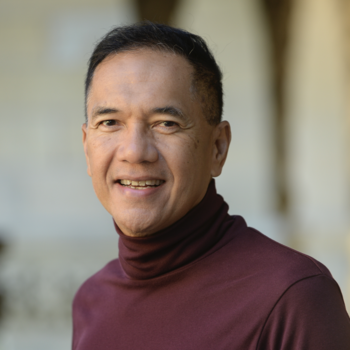
Gita Wirjawan joined the Walter H. Shorenstein Asia-Pacific Research Center (Shorenstein APARC) as a visiting scholar for the 2022-23 and 2023-2024 academic years. In the 2024-25 year, he is a visiting scholar with Stanford's Precourt Institute for Energy. Wirjawan is the chairman and founder of Ancora Group and Ancora Foundation, as well as the host of the podcast "Endgame." While at APARC, he researched the directionality of nation-building in Southeast Asia and sustainability and sustainable development in the U.S. and Southeast Asia.

Date Label
Gita Wirjawan, 2022-24 Visiting Scholar, Asia-Pacific Research Center (APARC), Stanford University
Seminars
Authors
News Type
News
Date
Paragraphs

This profile of Norman Joshua originally appeared in The Stanford Report, part of a profile of three university postdoctoral scholars.


As an Indonesian and a historian, I have always been captivated by how Indonesia thrived under former President Suharto’s New Order regime for 32 years. Yet at the same time, society also buckled under the illiberal and authoritarian rule of the military.

After the fall of Suharto in 1998, the country began to open up. Many archives became much more accessible and writing about topics like the military and government were no longer taboo nor dangerous. That sparked my curiosity about how societies work, and I later earned my undergraduate degree in history from the University of Indonesia and a PhD in history from Northwestern University.

I’m looking specifically at how and why the military became involved in non-military affairs, such as politics, culture, and the economy.
Norman Joshua
Shorenstein Postdoctoral Fellow on Contemporary Asia

Today, I spend a lot of time working on my book proposal, which explores the origins of authoritarianism in Indonesia. It’s a story about how the Indonesian state and society – following a four-year revolution after World War II – gradually became preoccupied with order and security. I’m looking specifically at how and why the military became involved in non-military affairs, such as politics, culture, and the economy.

During the winter closure, I’ll be in Indonesia to do some work before the Christmas holiday, like visiting archives and libraries. I’ll also be attending a conference in London to present one of my book chapters.

I’m really enjoying the privilege of being at Stanford. Through the Freeman Spogli Institute for International Studies, the Asia-Pacific Research Center, The Hoover Institution, and other centers, I’ve been able to talk with experts who have inspired my work. I’m really enjoying working with the faculty here – everyone’s been really welcoming and supportive.

Read More

Gidong Kim
Q&As

Popular Political Sentiments: Understanding Nationalism and Its Varied Effects on Liberal Democracy

Korea Program Postdoctoral Fellow Gidong Kim discusses his research into nationalism and its behavioral consequences in Korea and East Asia.
Popular Political Sentiments: Understanding Nationalism and Its Varied Effects on Liberal Democracy
Gi-Wook Shin on a video screen in a TV studio speaking to a host of South Korean-based Arirang TV.
News

Video Interview: Gi-Wook Shin's 2024 Forecast for South Korea's Politics, Diplomacy, and Culture

APARC and Korea Program Director Gi-Wook Shin joined Arirang News to examine geopolitical uncertainty surrounding the Korean Peninsula in 2024, North Korea's intentions, Japan-U.S.-South Korea trilateral cooperation, Seoul-Beijing relations, tensions over Taiwan, and South Korean politics and soft power.
Video Interview: Gi-Wook Shin's 2024 Forecast for South Korea's Politics, Diplomacy, and Culture
US-China meeting at the Filoli estate prior to APEC 2023 in San Francisco
News

Stopping the Spiral: Threat Perception and Interdependent Policy Behavior in U.S.-China Relations

A new article for The Washington Quarterly, co-authored by Thomas Fingar and David M. Lampton, investigates the drivers of Chinese policy behavior, assesses the role of U.S. policy in shaping it, and suggests steps to reduce the heightened tensions between the two superpowers.
Stopping the Spiral: Threat Perception and Interdependent Policy Behavior in U.S.-China Relations
Hero Image
Norman Joshua
Photo credit: Aaron Kehoe
Aaron Kehoe
All News button
1
Subtitle

Norman Joshua, APARC’s Shorenstein Postdoctoral Fellow on Contemporary Asia for the 2023-24 academic year, reflects on his work and career path.

Subscribe to Southeast Asia