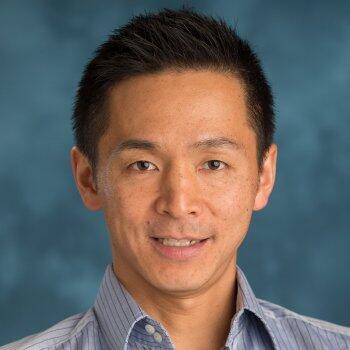
Authors
Kiyoteru Tsutsui
News Type
Commentary
Date
Paragraphs

This op-ed by Kiyoteru Tsutsui originally appeared in Nikkei Asia.


In one of the few unscripted moments in the meticulously planned U.S.-Japan summit meeting last Friday, President Joe Biden referred to Prime Minister Yoshihide Suga as "vice president" before quickly correcting himself.

In a different era, this could have turned into a diplomatic incident, with right-leaning Japanese pundits calling it evidence of the U.S.'s patronizing approach to Japan. Fortunately for Biden, the current geopolitical environment is not conducive to such provocation, and no major media picked up on the slip.

[Subscribe to APARC's newsletters to receive updates on our scholars.]

Much has been made of Suga being the first foreign leader to meet Biden in person. According to the U.S. State Department Office of the Historian, this is only the second time ever that a Japanese prime minister became the first foreign leader to meet a new president in the White House.

The other time was in 1989, when Prime Minister Noboru Takeshita visited President George H.W. Bush. Back then, Japan was a major threat to U.S. economic hegemony. Today, China is that threat, and not just in the economic domain. China is the first bona fide competitor to the U.S. since the Soviet Union, and its threat extends to every nook and cranny of the globe.

To counter China's ascension, the U.S. needs its allies, and Japan is the most important partner for that purpose. This is the context in which Suga visited the White House despite all the COVID-related restrictions.

Not surprisingly, the statements were carefully crafted to send strong signals to China. Building on the two-plus-two dialogue in March, the joint statement touched on the importance of peace and stability in the Asia-Pacific, from the East and South China seas to even Hong Kong, Xinjiang and Taiwan.

Japan certainly wanted a reference to the Senkaku Islands, which Beijing claims and calls the Diaoyu, and the applicability there of Article V of the U.S.-Japan Treaty of Mutual Cooperation and Security. The Biden administration had made that commitment earlier, calming concerns among Japanese leaders that the new administration may be softer on China than the Trump administration.

Biden has, in fact, been quite tough on China and has given almost a perfect answer to what Japanese foreign policymakers wanted. In return, the U.S. wanted Japan to be squarely on Washington's side. The wording of the joint statement — negotiated until the last minute — saw Japan agree to include a reference to Taiwan for the first time in 52 years, but with Japan's preferred wording, encouraging "the peaceful resolution of the cross-Strait issues."

Predictably, China reacted quickly and strongly, accusing the two countries of interfering in its domestic affairs and warning Japan about siding with the U.S. We have yet to see what retaliatory actions China might take, but the reference to Taiwan signals the beginning of a new trilateral relationship between China, Japan and the U.S.

The summit covered other important issues, all with China in the background. One key issue is economic security. In particular, supply chain decoupling will become a battle cry for the U.S. and its allies as they seek to reduce dependence on materials from China. Semiconductors are especially critical, as they power all the major growth areas in the new economy. Taiwan's dominance in the semiconductor industry is the main reason why Taiwan is so important to both sides.

To remain in the driver's seat in the new economy, the joint statement announced a new U.S.-Japan Competitiveness and Resilience (CoRe) Partnership. The most concrete proposal was an initial commitment of $4.5 billion from the two governments toward fifth generation (5G) and 6G networks, reflecting concerns about China's dominance in the key digital infrastructure of the future.

Human rights is another thorny issue, with the joint statement specifying concerns over Xinjiang and Hong Kong. With some companies joining the boycott campaign on cotton from Xinjiang, and China countering by criticizing racial division in the U.S., the clash between China and the U.S. will intensify in this area as well. Japan has stepped out of its comfort zone and criticized China on human rights, following the American approach more explicitly than before. In this regard, it is notable that Suga also referred to rising violence against Asians in the U.S.

One area in which China might be more of a partner than a competitor is climate change, with all three countries committing to zero emissions by mid-21st century. Almost concurrently with the Biden-Suga meeting, American and Chinese climate envoys — John Kerry and Xie Zhenhua — met in China and issued a joint statement affirming their commitment to work together on global climate challenges.

All these initiatives and commitments are potentially meaningful and consequential developments that can reshape the Indo-Pacific, although more concrete ideas are needed before we can evaluate their impact. The biggest take-away ought to be the confirmation that the U.S.-Japan alliance is gearing up for a new era of competition with China.

Japan more than reaffirmed its commitment to the alliance with the U.S., risking its economic relations with China. The U.S. will be sure to ask for more concrete actions from Japan on the basis of the joint statement, and Japan can no longer evade questions about what it would do in a confrontation with China. Japan has to navigate a tough terrain of standing with the U.S. in the competition with China while preventing the escalation of tensions between Beijing and Washington, and at the same time protecting its own national interests.

A new phase of the trilateral relationship has just begun, and like it or not, other Asian nations might face the same decision that Japan faced, and sooner rather than later.

Read More

Protesters hold signs and chant slogans during a Black Lives Matters Peaceful March on June 14, 2020 in Tokyo, Japan.
Commentary

What Japan and the U.S. Can Learn from Each Other

Japan Program Director Kiyoteru Tsutsui explores the cost of racial division versus the cost of homogeneity by comparing the experiences of Japan and the United States.
What Japan and the U.S. Can Learn from Each Other
President Biden walks past a row of Chinese and American flags.
News

APARC Experts on the Outlook for U.S.-Asia Policy Under the Biden Administration

Ahead of President-elect Biden’s inauguration and on the heels of the attack on the U.S. Capitol by a pro-Trump mob that has left America shaken, an APARC-wide expert panel provides a region-by-region analysis of what’s next for U.S. policy towards Asia and recommendations for the new administration.
APARC Experts on the Outlook for U.S.-Asia Policy Under the Biden Administration
President-elect Joe Biden and Chinese President Xi Jinping
News

Biden Administration Will Rely On U.S. Allies for Support as Tensions with China Continue to Rise

On the World Class Podcast, international security expert Oriana Skylar Mastro says conflict between China and Taiwan is plausible within the next 15 years, and the U.S. will likely be involved.
Biden Administration Will Rely On U.S. Allies for Support as Tensions with China Continue to Rise
Hero Image
President Biden and President Suga walk through the Rose Garden colonnade at the White House Getty Images
All News button
1
Subtitle

The time is near when other Asian nations will have to pick a side in the great power competition between the United States and China, says Japan Program Director Kiyoteru Tsutsui.

-

This event is part of Shorenstein APARC's spring webinar series "The United States in the Biden Era: Views from Asia."

American politics, especially presidential elections, have always drawn significant attention from Japanese policy makers and the public, because of their enormous impact on Japanese politics. The recent developments in the U.S. – from the Trump presidency to the contested election and the unconventional transition of power that included a riot at the Capitol – have engendered an elevated level of curiosity and concern about the state of American politics in Japan. This webinar will examine how Japanese leaders and citizens have processed what unfolded in the U.S. and how it may have shaped their current views on US-Japan relations, featuring two leading experts on the topic, Keiko Iizuka (Yomiuri Shimbun) and Toshihiro Nakayama (Keio University). Moderated by Kiyoteru Tsutsui, Director of the Japan Program at APARC, the webinar will have a Q&A session, and the participants are welcome to submit their questions in advance using the registration form and at the event using the Q&A function of Zoom.

SPEAKERS

Image
Keiko Iizuka
Keiko Iizuka is Senior Political Writer/Editorial Writer at The Yomiuri Shimbun and lead commentator for the nightly news program “News in Depth (Shinso News)” on the BS4 channel. Her expertise is international relations specially focusing on Indo-Pacific, Japan-U.S. relations, and European affairs. Her U.S. experience includes working at the Brookings Institution as a visiting fellow (2008-2009) and a role of Washington Bureau Chief with Yomiuri (2013-2015). She has held several other positions at the paper including chief editor for international news department (2015-2017) and chief political correspondent at the Prime Minister’s office of Japan (2006-2007). She was posted twice in London as correspondent (2003-2006, 2017-2019).

Image
Toshihiro Nakayama
Toshihiro Nakayama, Ph.D, is a Professor of American Politics and Foreign Policy at the Faculty of Policy Management at Keio University. He is also a Senior Adjunct Fellow at the Japan Institute of International Affairs (JIIA). He was a Special Correspondent for the Washington Post at the Far Eastern Bureau (1993-94), Special Assistant at the Permanent Mission of Japan to the United Nations in New York (1996-98), Senior Research Fellow at The Japan Institute of International Affairs (2004-06), Associate Professor at Tsuda College (2006-10), and Professor at Aoyama Gakuin University (2010-14). He was also a CNAPS Visiting Fellow at the Brookings Institution (2005-06), Sir Howard Kippenberger Chair Visiting Professor at the Center for Strategic Studies, Victoria University in Wellington (2017) , Japan Scholar at the Woodrow Wilson Center (2018-2019), and an Advisor to the Ministry of Defense (2019-2020). He received his M.A.(1993) and Ph.D.(2001) from Aoyama Gakuin University. He has written two books and numerous articles on American politics, foreign policy and international relations. Recipient of Nakasone Yasuhiro Award (Incentive Award) in 2014.

MODERATOR 

Image
Kiyoteru Tsutsui
Kiyoteru Tsutsui is Henri H. and Tomoye Takahashi Professor and Senior Fellow in Japanese Studies at the Walter H. Shorenstein Asia-Pacific Research Center at Stanford University, where he is also Director of the Japan Program, a Senior Fellow of the Freeman Spogli Institute for International Studies, and a Professor of Sociology. He is the author of Rights Make Might: Global Human Rights and Minority Social Movements in Japan (Oxford University Press, 2018), co-editor of Corporate Responsibility in a Globalizing World (Oxford University Press, 2016) and co-editor of The Courteous Power: Japan and Southeast Asia in the Indo-Pacific Era (University of Michigan Press, forthcoming 2021). 

This event is being held virtually via Zoom. Please register for the webinar via the following link: https://bit.ly/3sfxcVs

Keiko Iizuka <br><i>Senior Political Writer/Editorial Writer at The Yomiuri Shimbun</i><br><br>
Toshihiro Nakayama <br><i>Professor of American Politics and Foreign Policy at the Faculty of Policy Management at Keio University</i><br><br>
Seminars
-

The Tokyo Olympics-Paralympics Games are scheduled to open in late July with various adjustments to address concerns about COVID-19 such as no foreign visitors to watch the game. The unusual Olympics has sparked heated debates in Japan and elsewhere, but what will it look like when it opens and what should the organizers seek to accomplish? In the process of planning for the Olympics, a number of issues around governance and gender in Japanese sports associations got exposed. How should we go about resolving these issues and create an environment that is most desirable for athletes? Our seminar features two prominent former Olympians who continue to wield significant influence in Japanese sports scenes, Yuko Arimori and Dai Tamesue, to discuss these issues and the future of the Japanese sports world beyond the Tokyo Olympics. Moderated by our program director Kiyoteru Tsutsui, the seminar includes a Q&A session featuring questions from the audience. Simultaneous interpretation will be provided. 

コロナ禍の東京五輪と日本スポーツ界におけるガバナンスとジェンダー

東京オリンピック・パラリンピックの開幕を7月下旬に控え、コロナ対策のために外国人観戦客を受け入れないなど、通常の五輪とは異なる大会へ向けた準備が進んでいる。日本国内でも世界でも様々な意見が交錯する今回の五輪はどのような大会になるのか、どのような大会を目指すべきなのか。また、東京五輪への準備の中で、様々な日本スポーツ界の問題点、特にそのガバナンスとジェンダー・バランスの問題が浮き彫りになってきた。頻発するこのような問題を解決し、アスリートにとって理想的な環境を提供するにはどうすれば良いのか。今回のセミナーでは、高名なオリンピアンで、日本スポーツ界で大きな影響力を持つ、有森裕子氏と為末大氏に御登壇いただき、これらの問題について考え、五輪後も見据えた日本のスポーツ界の将来を語っていただく。当プログラム所長の筒井清輝をモデレーターとして、両氏に参加者からの質問に答えてもらう質疑応答の時間も予定されている。

このイベントは日本語で行われます。同時通訳がついています。

This event will be held in Japanese. Simultaneous translation will be offered. 

SPEAKERS 

Image
Yuko Arimori
Yuko Arimori was born in 1966 in Okayama prefecture. After graduating from Nippon Sport Science University, she joined Recruit. She won silver and bronze medals in the women's marathon event at the Barcelona Olympics and the Atlanta Olympics, which marked the beginning of the “Golden era of the Marathon” for Japanese female athletes. She became the first professional marathon runner in the country after the Atlanta Olympics. After her retirement, in addition to her running and marathon activities, she has served as a member of the International Olympic Committee (IOC), Sports and Active Social Committee, Director of the Japan Association of Athletics Federations, a Representative Director of the Heart of Gold, a president of Special Olympics Nippon, and Vice President of the University Sports Association (UNIVAS). In June 2010, she was the first Japanese to win the (IOC) Women and Sports Award.

有森裕子は1966年岡山県生まれ。日本体育大学卒業後、リクルート入社。バルセロナオリンピック、アトランタオリンピックの女子マラソンでは銀メダル、銅メダルを獲得し、その後に続く日本女子マラソン黄金期の幕開けを切った。アトランタオリンピック後、国内のプロマラソンランナー第1号に。現役引退後は、ランニングやマラソンに関わる活動以外にも、国際オリンピック委員会(IOC)スポーツと活動的社会委員会委員、日本陸上競技連盟理事、ハート・オブ・ゴールド代表理事、スペシャルオリンピックス日本理事長、大学スポーツ協会(UNIVAS)副会長などを務めている。2010年6月、国際オリンピック委員会(IOC)女性スポーツ賞を日本人として初めて受賞


Image
Dai Tamesue
Dai Tamesue, born in 1978 in Hiroshima, is the first Japanese medalist in a world competition for a sprint event.  He also participated in three Olympics and holds the Japanese record for men's 400m hurdles (as of April 2021). Dai currently serves as CEO of Deportare Partners. He is also the Director of Shin-toyosu Brillia Running Stadium, and the author of “Winning Alone” "The Philosophy of Running" "The Strength to Give Up," among other titles.

1978年広島県生まれ。スプリント種目の世界大会で日本人として初のメダル獲得者。男子400メートルハードルの日本記録保持者(2021年4月現在)。現在は執筆活動、会社経営を行う。Deportare Partners代表。新豊洲Brilliaランニングスタジアム館長。Youtube為末大学(Tamesue Academy)を運営。主な著作に『Winning Alone』『走る哲学』『諦める力』など。


MODERATOR 

Image
Kiyoteru Tsutsui
Kiyoteru Tsutsui is Henri H. and Tomoye Takahashi Professor and Senior Fellow in Japanese Studies at the Walter H. Shorenstein Asia-Pacific Research Center at Stanford University, where he is also Director of the Japan Program, a Senior Fellow of the Freeman Spogli Institute for International Studies, and a Professor of Sociology. He is the author of Rights Make Might: Global Human Rights and Minority Social Movements in Japan (Oxford University Press, 2018), co-editor of Corporate Responsibility in a Globalizing World (Oxford University Press, 2016) and co-editor of The Courteous Power: Japan and Southeast Asia in the Indo-Pacific Era (University of Michigan Press, forthcoming 2021). 

This event is being held virtually via Zoom. Please register for the webinar via the following link: https://bit.ly/3sfNNs2

Yuko Arimori <br><i>Two Time Olympic Marathon Medalist/バルセロナ・アトランタ オリンピック女子マラソンメダリスト</i><br><br>
Dai Tamesue <br><i>Three Time Olympian and CEO, Deporte Partners/ 元陸上選手・Deportare Partners代表</i><br><br>
Seminars
Authors
Kiyoteru Tsutsui
News Type
Commentary
Date
Paragraphs

This op-ed by Kiyoteru Tsutsui originally appeared in Nikkei Asia.


As the summer of racial unrest forced America to confront its racist past and present yet again, a book by Heather McGhee, The Sum of Us: What Racism Costs Everyone and How We Can Prosper Together, which documents how racial division prevents Americans from uniting to lift everyone's lot, has attracted a good deal of attention.

From welfare to education to policing, Americans have generally supported policies that lifted the white middle class. But as the middle class has become more racially diverse, politics has become a divisive zero-sum game, with many whites seeing government spending as shifting money away from them toward minorities, even if whites also benefit.

This politics of racial division forecloses a social consensus that could boost the U.S. as a whole, leading to flagging social infrastructure, sputtering criminal justice system reform and challenges in offering broad economic support even to counter the pandemic.

This is not a problem unique to the United States. Social scientists have studied the relationship between racial division and low levels of public goods provision in multiple countries and established that ethno-racially heterogeneous societies tend to provide less in the way of public services.

Plagued by suspicions that some groups might benefit more than others, diverse societies tend to have greater difficulty in reaching consensus and working together on a strategy for economic and social development that would improve everyone's lives.

On this count, Japan is at the other end of the spectrum. More ethno-racially homogenous than most other advanced democracies, Japan has fared well when it comes to providing public goods such as efficient public transportation systems, low crime rates and universal health care.

Japan is often quick to reach a broad consensus about government spending on public services, since people generally feel that everyone benefits if they all support each other. Strong social cohesion, facilitated by the relative homogeneity of the population, enables this social consensus that supports spending on public goods.

The flip side of this coin is Japanese society's persistent resistance to diversity and disruption. Used to the comfort of living and working with similar people, Japan has been criticized for its reluctance to accept immigrants.

In response, the Japanese government has rather clumsily allowed immigrant workers in recent decades, first encouraging the migration of Japanese-Brazilians on the basis of shared ethnic roots that were supposed to make it easy for them to assimilate.

Learning that the reality of Japanese-Brazilians' life in Japan did not support this idea, Japan then adopted trainee programs to bring in foreign workers on a temporary basis. With the emphasis squarely on the temporary nature of their stay, those who came to Japan under this scheme could not contribute toward the country's long-term diversity.

Faced with a declining population, Japan needs immigrant labor, and its business leaders have consistently supported accepting more migrant workers. In addition to addressing the labor shortage, a more diverse workforce would likely stimulate innovation and facilitate adaptation to changing economic environments. Much social science research has demonstrated positive relationships between diversity and innovation.

Yet Japan's leaders are having a hard time pressing ahead. While it is easy for the public to come to a consensus for policies that boost all Japanese, it has proved difficult for them to support any policy that would undermine Japan's homogeneity.

Aside from ethnic diversity, Japan's consensus-oriented society is generally resistant to change. Valuing the protection of all members, companies have been slow to streamline and transform their operations to adapt to the changing economic environment, resulting in the prolonged economic decline since the 1990s.

While Brazil is home to the world's largest overseas Japanese population, many Japanese-Brazilians who moved to Japan discovered it was not easy for them to assimilate.

Urged on by American consultants, Japan imported America's neoliberal economic model to revitalize its economy through this period, and the lifetime employment and seniority-based salary system has given way to a rise in temp workers and various attempts to introduce a merit-based salary system. These efforts have not met with much success, leaving behind a questionable legacy, including the suppression of wages after the labor shortage of recent years.

In the U.S., racial division undermines the provision of public goods that would reduce economic inequality. But its acceptance of diversity contributes to innovation and economic revitalization that keeps the U.S. at the vanguard of a new economy.

In Japan, ethno-racial harmony facilitates public goods provision that prevents economic inequality from spiraling out of control. But aversion to diversity and dissent makes it difficult to accept much-needed immigrant labor and to adapt to changes in the economic environment.

In both countries, these characteristics are ingrained into their social fabric and resistant to change. However, the two largest economies with a democratic polity have much to learn from each other, and they should work together to find solutions for their problems.

Otherwise, China's nondemocratic model could become the dominant model for economic success, with its top-down forced consensus and suppression of diversity.

Democracies have long proven better at correcting their mistakes and adjusting to changes in their environment. As the two largest democratic economies in the world, the U.S. and Japan should be able to overcome the cost of racial division and the cost of homogeneity respectively even if it takes decades to achieve that.

Read More

Demonstrators in South Korea sitting on the ground and carrying signs in Korean
Q&As

Gi-Wook Shin on Racism in South Korea

Protections against gender and sexual discrimination are increasing in South Korea, but addressing longstanding racial discriminations based in nationalism and building a multicultural identity still has a long way to go, says Gi-Wook Shin in a new interview with Asia Experts Forum.
Gi-Wook Shin on Racism in South Korea
A man wearing a face mask prays for the new year at Meiji Shrine in Tokyo, Japan.
Commentary

Japan's Challenges in the Next Year are Greater than its Opportunities

Surging coronavirus cases and ongoing political scandals have docked Suga's approval ratings, but successfully handling the upcoming Olympics and taking further strides with the United States, ASEAN, and South Korea may help him rebound.
Japan's Challenges in the Next Year are Greater than its Opportunities
Hero Image
Protesters hold signs and chant slogans during a Black Lives Matters Peaceful March on June 14, 2020 in Tokyo, Japan.
Takashi Aoyama, Getty Images
All News button
1
Subtitle

Japan Program Director Kiyoteru Tsutsui explores the cost of racial division versus the cost of homogeneity by comparing the experiences of Japan and the United States.

Authors
News Type
News
Date
Paragraphs

Across the world, societies are experiencing unprecedented demographic shifts as migration and aging reshape population landscapes. At the forefront of this global transformation is the Asia-Pacific region, particularly the countries of East Asia. Demographics and Innovation in the Asia-Pacific — a new book edited by APARC Director Gi-Wook Shin, Deputy Director Karen Eggleston, and Joon-Shik Park, a professor in the Department of Sociology at Hallym University in Chuncheon, Korea — provides a multidisciplinary examination of the demographic challenges facing East Asian nations and possible solutions.

At a virtual book launch held on March 2, 2021, contributing chapter authors James FeyrerJoon-Shik Park, and Kenji Kushida joined Karen Eggleston to discuss their findings.

[Subscribe to our newsletters to get updates on our experts' latest research.]

Published in APARC’s in-house series, the book is the second volume resulting from APARC’s Stanford Asia-Pacific Research Innovation project. It collects the research findings of participants at the project’s third conference that was held in South Korea in June 2019.

James Liang, a research professor of economics at Peking University and a leading scholar of demographics and social studies, opened the event by situating the discussion about population structure in the context of the U.S.-China technology race. China is quickly catching up with the United States in the quality of its talent pool and the number of its labor resources. It will continue to outpace and surpass the United States in talent and innovation power in the next 10-20 years, Liang says.

China, however, is on a demographic cliff, facing severe population aging and low fertility rates. Its population of young workers aged 25-44 year-olds is projected to decline much faster and sooner than its overall population, leveling out against the labor and innovation gains the United States makes through the inflow of international talent into U.S. universities and entrepreneurial ventures. To sustain its long-term growth in labor quality and innovation, China will need higher birth rates and additional talent gains through migration, argues Liang.

James Feyrer’s book chapter examines the macroeconomic relationship between workforce demographics and aggregate productivity in Asia. Feyrer confirms that the high-income Asian nations like Japan and Korea, and even some middle-income countries of the region, will no longer enjoy a “demographic dividend” boosting aggregate productivity. However, he finds that the negative consequences of shifting to an older population structure may be less severe than previously projected, and even weakening with time. Feyrer believes this may be a result of improved food security and better overall health experienced by old cohorts in childhood, reinforcing the long-reaching impacts of healthcare on societal well-being.

Joon-Shik Park focused on the specific challenges facing Korean society, where birth rates have dropped severely. These historic declines continue to contribute to rising social and political unevenness across Korean society today. Initially seen most visibly in rural areas and smaller villages, Park’s now sees this unevenness affecting the dynamics of medium-sized towns and more urban areas as well. Korea and other aging societies must find viable solutions to address these issues if they are to prevent demographic divides from hobbling development and innovation, Park says.

Closing the book launch event, APARC Research scholar Kenji Kushida offers perspectives from rapidly aging Japan. where the challenges of shrinking and aging populations, rural-to-urban population distribution, and labor shortages spur advances in technology and innovation. Kushida documents this trend across multiple sectors.

He shows that drone technology has increased the productivity of short-staffed surveying firms, while AI-assisted industrial machines allow a broader range of laborers to work in manufacturing. Even in traditionally human-dominated environments like nursing homes, staff increasingly use robots to help improve the physical and mental well-being of elderly patients. Rather than strictly retarding growth, Kushida makes the case that demographic challenges serve as a catalyst for the development and implementation of new technologies.

As the research collected in Demographics and Innovation in the Asia-Pacific demonstrates, the challenges facing aging Asian societies are complex, but there is reason to look to the future with optimism. As the editors of the volume state in their introduction to the book, “Few concepts are as critical for sustained improvement in living standards as innovation.” New technologies and solutions will be foundational to addressing the challenges of the new demographic frontiers many societies are now approaching.

Read More

A Japanese robot prototype lifts a dummy patient
News

Robot Adoption Brings Benefits to Japan’s Aging Society

In one of the first studies of service sector robotics, APARC scholars examine the impacts of robots on nursing homes in Japan. They find that robot adoption may not be detrimental to labor and may help address the challenges of rapidly aging societies.
Robot Adoption Brings Benefits to Japan’s Aging Society
Shifting Gears in Innovation Policy: Strategies from Asia
News

New Book Outlines the Role of Innovation and Entrepreneurship for Future Economic Growth in East Asia

Yong Suk Lee explains in the new volume, Shifting Gears in Innovation Policy, that while ‘catch-up’ strategies have been effective in promoting traditional economic growth in Asia, innovative policy tools that foster entrepreneurship will be needed to maintain competitiveness in the future.
New Book Outlines the Role of Innovation and Entrepreneurship for Future Economic Growth in East Asia
Stanford students participate in class.
News

University Entrepreneurship Programs May Not Increase Entrepreneurship Rates, Stanford Researchers Find

A study by Yong Suk Lee, the deputy director of APARC’s Korea Program, and Management Science and Engineering professor Charles Eesley investigates the efficacy of two major Stanford entrepreneurship education initiatives, suggesting they may not increase entrepreneurial activity.
University Entrepreneurship Programs May Not Increase Entrepreneurship Rates, Stanford Researchers Find
Hero Image
Demographics and Innovation in the Asia-Pacific
"Demographics and Innovation in the Asia-Pacific" examines the impacts of Asia's demographic challenges on the development of new technology and innovation.
All News button
1
Subtitle

Contributing authors to the new volume 'Demographics and Innovation in the Asia-Pacific' convened for a virtual book launch and discussion of the challenges facing aging societies in East Asia and the roles technology and innovation may play in rebalancing them.

Paragraphs
Book cover showing a robotic hand holding an older human hand.

Demographic transition, along with the economic and geopolitical re-emergence of Asia, are two of the largest forces shaping the twenty-first century, but little is known about the implications for innovation. The countries of East Asia have some of the oldest age structures on the planet: between now and 2050, the population that is age 65 and older will increase to more than one in four Chinese, and to more than one in three Japanese and Koreans. Other economies with younger populations, like India, face the challenge of fully harnessing the “demographic dividend” from large cohorts in the working ages.

This book delves into how such demographic changes shape the supply of innovation and the demand for specific kinds of innovation in the Asia-Pacific. Social scientists from Asia and the United States offer multidisciplinary perspectives from economics, demography, political science, sociology, and public policy; topics range from the macroeconomic effects of population age structure, to the microeconomics of technology and the labor force, to the broader implications for human well-being. Contributors analyze how demography shapes productivity and the labor supply of older workers, as well as explore the aging population as consumers of technologies and drivers of innovations to meet their own needs, as well as the political economy of spatial development, agglomeration economies, urban-rural contrasts, and differential geographies of aging.

Desk, examination, or review copies can be requested through Stanford University Press.

Table of contents and chapter 1, introduction
Download pdf
All Publications button
1
Publication Type
Books
Publication Date
Authors
Karen Eggleston
Gi-Wook Shin
Book Publisher
Shorenstein APARC
Authors
Noa Ronkin
News Type
News
Date
Paragraphs

Technological progress boosts productivity and has made societies wealthier, but the impact of new digital technologies could be different from anything seen before. Some experts predict a future with robots and other forms of automation increasingly replacing workers, contributing to stagnant income, and worsening inequality. Yet it is difficult to pinpoint the net impact of advanced technologies on labor. There is anecdotal evidence that robotics and automation reduce manufacturing employment and wages, but evidence from the service sector remains scant. Collaborative research by APARC experts is now starting to fill this gap.

The researchers — including Karen Eggleston, APARC deputy director and director of the Asia Health Policy Program (AHPP), Yong Suk Lee, the deputy director of the Korea Program, and University of Tokyo health economist Toshiaki Iizuka, a former AHPP visiting scholar — set out to probe the impact of robots on services provided in nursing homes in Japan. Their study, one of the first investigations of service sector robots, offers an offset to the dystopian predictions of robot job replacement.

Published by the National Bureau of Economic Research, the study suggests that robot adoption has increased employment opportunities for non-regular care workers, helped mitigate the turnover problem that plagues nursing homes, and provided greater flexibility for workers. It is also published in AHPP's working paper series and is part of a broader research project by Eggleston, Lee, and Iizuka, that explores the impact of robots on nursing home care in Japan and the implications of robotic technologies adoption in aging societies.

Since we are currently still in the early phase of robot diffusion in the service sector, researchers and policymakers need to continue to monitor and assess the extent to which robots complement or augment some types of labor while substituting for others.
Eggleston, Lee, and Iizuka

[Subscribe to APARC's newsletters for the latest analysis from our experts.]

Japan has been on the front lines of a demographic crisis, grappling with a declining overall population, increasing proportion of seniors, and aversion to large-scale immigration. It has also been an early adopter of robots to address the shortage of care workers relative to a growing demand for long-term care services. Japan’s experience is especially instructive as more countries face aging populations, helping shed light on how demographics interact with new automation technologies.

In a VoxEU.org article, Eggleston, Lee, and Iizuka describe their study, its findings, and its implications. Examining the relationship between robot adoption and nursing home staffing in Japan, they find that robot-adopting nursing homes had between 3% and 8% more staff than their non-adopting counterparts. The increases in staffing occurred entirely among the non-regular employees. Nursing homes with robots also appeared to have higher management quality and were better able to reduce the burden on care workers. The results suggest “that the wave of technologies that inspires fear in many countries could help remedy the social and economic challenges posed by population aging in others.”

The Financial Times Magazine has recently featured the study by Eggleston, Lee, and Iizuka, calling it “groundbreaking in several ways but perhaps most clearly for setting its sights not on manufacturing but on the services sector, where robots are only just beginning to make their mark.” The great value of the study, the article notes, is that it lays the foundation for an empirical debate “on a subject that will be deluged with human emotion as robots continue their march into the services sector.”

You can also listen to a Financial Times podcast that features the new study (the segment starts at 4:52).

Read More

[Left] A nurse assists an elderly woman in a wheel chair; [Right] Oliver Hart
News

Public-Private Partnerships for Effective Healthcare: Theory and Practice

In its 2020-21 colloquium series, the Asia Health Policy Program weighs the balance, benefits, and considerations in providing health services through national governments and contracting with private organizations.
Public-Private Partnerships for Effective Healthcare: Theory and Practice
Male Japanese doctor showing senior patient records on a clipboard
News

Health Signals Increase Preventive Care, Improve Health Outcomes for Individuals at High Risk of Diabetes, Evidence from Japan Shows

Among the general population, however, researchers including Asia Health Policy Program Director Karen Eggleston find no evidence that additional care improves health outcomes.
Health Signals Increase Preventive Care, Improve Health Outcomes for Individuals at High Risk of Diabetes, Evidence from Japan Shows
A man with interacts with 'Emiew,' a humanoid robot.
News

“Co-Bots,” Not Overlords, Are the Future of Human-Robot Labor Relationships

Yong Suk Lee and Karen Eggleston’s ongoing research into the impact of robotics and AI in different industries indicates that integrating tech into labor markets adjusts, but doesn’t replace, the long-term roles of humans and robots.
“Co-Bots,” Not Overlords, Are the Future of Human-Robot Labor Relationships
Hero Image
A Japanese robot prototype lifts a dummy patient
Ri-man, a Japanese robot prototype under development to help assist nurses to lift patients from their bed. As Japan's society ages and nursing shortage increases, there will be a need for a robot to do the heavy lifting, especially since nurses themselves are aging.
Karen Kasmauski via Getty Images
All News button
1
Subtitle

In one of the first studies of service sector robotics, APARC scholars examine the impacts of robots on nursing homes in Japan. They find that robot adoption may not be detrimental to labor and may help address the challenges of rapidly aging societies.

-

This event is co-sponsored with the generous support of the Japan External Trade Organization (JETRO), the Japan Society of Northern California, and the Japanese Chamber of Commerce of Northern California.

Simultaneous interpretation (English <=> Japanese) will be offered. 同時通訳があります。

Ten years have passed since the Great East Japan Earthquake devastated Japan’s northeast. As a country that has experienced a variety of natural disasters throughout its history, Japan has developed various preventive and remedial technologies and social mechanisms, especially since the 1995 Hanshin Earthquake and the 2011 Great East Japan Earthquake. California has had similar experiences with natural disasters, particularly earthquakes, and it has developed its own preventive measures. On the occasion of the tenth anniversary of the Great East Japan Earthquake, this conference features two keynote speakers who have directly dealt with the aftermaths of recent earthquakes in Japan – Makoto Iokibe, who was the Chairman of the Reconstruction Design Council in Response to the Great East Japan Earthquake and is the author of The Era of Great Disasters, and Ikuo Kabashima, who as the Governor of Kumamoto led the recovery efforts from a major earthquake in 2016 and flooding in 2020. The conference will also provide a forum for speakers from Japan and California to learn from each other the cutting-edge approaches toward reducing the damages of natural disasters. 

大災害の時代における防災の最前線:東日本大震災から10年を経て

東日本大震災が関東・東北地方に大被害をもたらしてからすでに10年が経とうとしている 。その歴史の中で、多くの自然災害を経験してきた日本は、特に1995年の阪神大震災と2011年の東日本大震災以来、様々な防災・減災のための技術やシステムの開発に取り組んできた。一方で、地震など同じような自然災害を多く経験してきたカリフォルニアでも、独自の災害対策が進められてきた。東日本大震災から10年の節目に当たって、このコンフェレンスでは、東日本大震災復興会議議長として、復興への道のりをリードしてきた五百旗頭真氏(近著「大災害の時代」)と、熊本県知事として、2016年の地震と2020年の水害という大きな災害からの復興を指揮してきた蒲島郁夫氏の二人に基調講演をお願いし、日本の災害と復興の歩みについてご報告いただく。さらには、日本とカリフォルニアそれぞれから防災・減災の最前線で活躍する識者を招き、双方の取り組みについての理解を深め、新たな災害対策の道筋を探ることを目指す。

AGENDA (Pacific Time)

4:00 – 4:15 PM Opening remarks and Greetings from Gi-Wook Shin (Director of Shorenstein APARC, Stanford University), Ambassador Eleni Kounalakis (Lieutenant Governor of California) and Toru Maeda (Consul General of Japan, San Francisco)

4:15 – 5:00 PM Presentation from Cal OES, Keidanren, Fujitsu Laboratories, Research Institute for Earth Science Visualization Technology and JETRO

5:00 – 6:30 PM Keynote speakers: Kumamoto Governor, Ikuo Kabashima

Talk title: Dreams in Adversity & Making the Impossible Possible: The Politics of Disaster Response. 逆境の中にこそ夢がある ~不可能を可能に 災害対応の政治~

Makoto Iokibe, Chairman of the Reconstruction Design Council in Response to the Great East Japan Earthquake

Talk title: On Reconstruction from the Great East Japan Earthquake. 東日本大震災の復興について

6:30 – 7:00 PM Q&A Session 

SPEAKERS

Image
Ikuo Kabashima
Ikuo Kabashima, previously a Professor of Law at the University of Tokyo, became the Governor of Kumamoto Prefecture in 2008 and is currently serving in his fourth term. He displayed his leadership and creative thinking skills when he led the recovery efforts following both the 2016 Kumamoto Earthquake and the 2020 Kyushu Flooding disasters. After graduating from high school in Kumamoto he worked at a local agricultural cooperative. Ikuo Kabashima moved to the United States in 1968 as an agricultural research student and enrolled in the faculty of agriculture at the University of Nebraska in 1971, where he researched preservation techniques for pig semen. He entered a Master’s program at the University of Nebraska in 1974. Following this he pursued a Ph.D in Political Economy at Harvard University. After returning to Japan he became a professor at the Institute of Policy and Planning Sciences at Tsukuba University, and eventually became a Professor of Law at the University of Tokyo in 1997 where he specialized in political process theory and quantitative methods in political science. He was named a Professor Emeritus of the University of Tokyo in 2008. Kabashima has also served as the chairman of the Japanese Association of Electoral Studies and the vice-president of the International Political Science Association (IPSA). Under the guidance of Samuel P. Huntington, he is also credited with achievements for his empirical research on voting behavior and political development theory surrounding political participation in the United States. 

2008年4月、東京大学法学部教授から熊本県知事に就任し、現在4期目。2016年の熊本地震、2020年の豪雨災害などで、災害対応の陣頭指揮を執り、創造的復興に手腕を発揮。熊本県の高校を卒業後、地元農協に勤務。1968年に農業研究生として渡米し、1971年ネブラスカ大学農学部に入学。豚の精子の保存方法を研究し、1974年、ネブラスカ大学大学院修士課程に進学。その後、ハーバード大学大学院博士課程に入学。政治経済学を研究し、博士号を取得。帰国後、筑波大学社会工学系教授などを歴任した後、1997年から東京大学法学部教授に着任。専門は、政治過程論、計量政治学。2008年、東京大学名誉教授。日本選挙学会理事長、世界政治学会副会長などを歴任。アメリカではサミュエル・ハンチントンなどの指導を受け、投票行動の実証的研究や政治参加に関する政治発展理論において業績をあげる。

Image
Iokibe
Makoto Iokibe is Chancellor of the University of Hyogo and President of the Hyogo Earthquake Memorial 21st Century Research Institute. He is also Professor Emeritus of Japanese political and diplomatic history, Kobe University and Former President of the National Defense Academy of Japan. After the 2011 Great East Japan Earthquake, Professor Iokibe was appointed Chairperson of the Reconstruction Design Council in Response to the Great East Japan Earthquake, a government-established advisory panel of scholars and experts for formulating governmental reconstruction guidelines. Following the 2016 Kumamoto Earthquake, he served as Chairperson of the Expert Group for Reconstruction and Recovery from the Kumamoto Earthquake. Among his many publications, his volume Nichibeikankeishi (Yuhikaku, 2008) has recently been translated by the Japan Library and published as “The History of US-Japan Relations: From Perry to the Present” (Palgrave Macmillan, 2017). His most recent book is “The Era of Great Disasters: Japan and Its Three Major Earthquakes” (University of Michigan Press 2020), a translation of Daisaigai no Jidai(Mainichi Shinbun Shuppan 2016).

1943年兵庫県西宮市生まれ。京都大学法学部卒業。同大学院法学研究科修士課程修了。法学博士。専門は日本政治外交史。神戸大学法学部教授、防衛大学校長、熊本県立大学理事長などを経て、現在(公財)ひょうご震災記念21世紀研究機構理事長、兵庫県立大学理事長。この間、日本政治学会理事長、政府の東日本大震災復興構想会議議長、くまもと復旧・復興有識者会議座長なども歴任。文化功労者。主な著書に「米国の日本占領政策」上下(中央公論社、サントリー学芸賞受賞)、「日米戦争と戦後日本」(講談社学術文庫、吉田茂賞受賞)、「大災害の時代」(毎日新聞出版)ほか多数。

PRESENTERS 

Image
Gi-Wook Shin
Gi-Wook Shin, (Stanford University), is the William J. Perry Professor of Contemporary Korea in Sociology and Senior Fellow at the Freeman Spogli Institute for International Studies.  He established Stanford’s Korea Program in 2001 and has been directing the Walter H. Shorenstein Asia-Pacific Research Center at Stanford since 2005.  His research concentrates on social movements, nationalism, development, and international relations, with focus on Korea and broader Asia. Shin is the author/editor of over 20 books and numerous articles, including Divergent Memories: Opinion Leaders and the Asia-Pacific WarOne Alliance, Two Lenses: U.S.-Korea Relations in a New EraCross Currents: Regionalism and Nationalism in Northeast Asia; and Ethnic Nationalism in Korea.  Shin’s current research initiatives include Global Talent Flows and Rise of Populism and Nationalism. Before coming to Stanford, Shin taught at the University of Iowa and the University of California, Los Angeles. He holds a B.A from Yonsei University in Korea and M.A and Ph.D from the University of Washington.

Image
Eleni-Kounalakis
Ambassador Eleni Kounalakis, (Lieutenant Governor of California) was sworn in as the 50th Lieutenant Governor of California by Governor Gavin Newsom on January 7th, 2019. She is the first woman elected to the post. From 2010 to 2013, Kounalakis served as US Ambassador to the Republic of Hungary and in 2015 published her acclaimed memoir, “Madam Ambassador, Three Years of Diplomacy, Dinner Parties and Democracy in Budapest” (The New Press). Prior to her service, Kounalakis spent 18 years as an executive at one of California’s most respected housing development firms, AKT Development. Throughout her career, she served on numerous boards and commissions including California’s First 5 Commission, the San Francisco War Memorial, San Francisco Port Commission and the Association of American Ambassadors. Eleni Kounalakis graduated from Dartmouth College in 1989, earned her MBA from U.C. Berkeley’s Haas School of Business in 1992 and holds an Honorary Doctorate of Laws from the American College of Greece. She is married to Dr. Markos Kounalakis and the couple has two teenage sons, Neo and Eon.

Image
Toru Maeda
Toru Maeda, (Consul General of Japan in San Francisco), began his career at the Ministry of Foreign Affairs of Japan in 1985 and has been in the foreign service for the last 35 years. Prior to his arrival in San Francisco in February 2020, he served as Minister / Deputy Chief of Mission of the Embassy of Japan in Myanmar. Over the past decade, he has held several senior positions in both overseas and domestic assignments, including Director General and subsequently Senior Vice President of the Japan International Cooperation Agency (JICA), Minister / Head of Chancery of the Permanent Mission of Japan in Geneva, and Minister in charge of economic affairs of the Embassy of Japan in Indonesia. His other postings in the Ministry of Foreign Affairs include Director positions in the International Cooperation Bureau and Intelligence and Analysis Service. He received his B.A. in Law from the University of Tokyo and M.S. in Foreign Service from Georgetown University.

Image
Ichiro Sone
Ichiro Soné, (Executive Vice President, JETRO), was appointed Executive Vice President of the Japan External Trade Organization in October 2019. Previously, Mr. Soné served as Director-General of JETRO Osaka, overseeing the Kansai and Hokuriku regions. Before Osaka, he served as Chief Executive Director of JETRO Chicago, where he oversaw the office’s activities designed to facilitate trade and investment between Japan and 12 Midwestern states. Mr. Soné  joined JETRO in 1988 after graduating Doshisha University in Kyoto with a bachelor’s degree in art and aesthetics. He has a deep knowledge in international business through working in the Trade Fair Department and Invest Japan Department at JETRO Headquarters in Tokyo, and the North America Bureau of the Ministry of Foreign Affairs. His previous overseas postings were JETRO offices in Los Angeles, San Francisco and Chicago.

Yasuhiro Uozumi, (Executive Director of Keidanren USA), 

Image
Yasuhiro Uozumi
has been Executive Director of Keidanren USA since June 2018. Mr. Uozumi joined Keidanren more than two decades ago. In the course of his career there, he is noted for his expertise on such issues as accounting, taxation, industrial policies, transportation and emerging markets, especially in Southeast Asia and Latin America. He also served as Secretary to the Keidanren Chairman. Mr. Uozumi earned his B.A. in Economics at the University of Tokyo and his MBA from Said Business School at the University of Oxford. He also conducted research on accounting at the Program on U.S.-Japan Relations of the Weatherhead Center for International Affairs at Harvard University. He is a Certified Public Accountant. Keidanren is committed to the realization of Society 5.0 for SDGs. 

Image
Lori Nezhura
Lori Nezhura, (Cal OES Deputy Director of Planning, Preparedness, and Prevention), has worked for the State of California since 2006. She is currently the Deputy Director of Planning, Preparedness, and Prevention, a role which includes oversite of the agency’s seismic hazards branch, dam safety, radiological preparedness, and statewide all-hazards emergency and continuity planning efforts. Additionally, she oversees the California Specialized Training Institute, a statewide enterprise with responsibility for supporting training, exercises, and education in wide variety of areas including, but not limited to, emergency management, public safety, homeland security, hazardous materials, disaster recovery, and crisis communications. Prior to her current role, Lori spent almost six years as the Legislative Coordinator at the California Governor’s Office of Emergency Services and nine years at the California Student Aid Commission as Legislative Director, Program Manager, and various Analyst roles. Lori received her baccalaureate degree from Arizona Christian University in Phoenix and her post-baccalaureate teacher certification at Arizona State University in Tempe. After receiving her teaching credential, she moved to Saitama Prefecture in Japan for two years to teach English as a Second Language. Upon her return to the United States, she taught elementary classes at Carden Christian Academy for ten years before going into state service.

Image
Akihiro Shibahara
Dr. Akihiko Shibahara, (CEO, Research Institute for Earth Science Visualization Technology Co.,), is a geologist, paleontologist, and 3D-CAM (computer-aided manufacturing) engineer. He received a Doctorate degree of Science from Tsukuba University, and he worked as a curator at the Geological Museum in AIST.  His recent research has focused on the visualization of earth science, such as underground data or hazard maps using 3D modeling techniques.  In 2016, he established the Institute for Earth Science Visualization Technology as an AIST Start-ups to implement his research activity. He is also working at the Institute of Dinosaur Research Investigation in Fukui Prefectural University as a Visiting Professor to visualize the spatial relationship between geology and paleontology. Earth Science Visualization Technology established several techniques of building up finely-detailed 3D miniatures to visualize geological information and hazard maps. 

Image
Yusuke Oishi
Dr. Yusuke Oishi​, (Fujitsu Laboratories LTD.), is a project director of Artificial Intelligence Laboratory at Fujitsu Laboratories LTD. Since 2014 he has also been a specially appointed associate professor of International Research Institute of Disaster Science (IRIDeS), Tohoku University. He joined Fujitsu Laboratories Ltd. in 2007 and has been engaged in research on simulation, high performance computing, and artificial intelligence. From 2010 to 2014, he was a visiting researcher at Imperial College London, where he was engaged in tsunami research using 3D fluid simulation. In collaboration with Tohoku University, the University of Tokyo, and Kawasaki City, he and his collaborators started a joint project in 2017 for disaster mitigation utilizing cutting-edge ICT such as artificial intelligence and supercomputing. The project aims to realize effective disaster mitigation by repeatedly implementing technology development, technology evaluation by citizens, and technology improvement.

MODERATOR 

Image
Kiyoteru Tsutsui
Kiyoteru Tsutsui, (Stanford University), is Henri H. and Tomoye Takahashi Professor and Senior Fellow in Japanese Studies at the Walter H. Shorenstein Asia-Pacific Research Center at Stanford University, where he is also Director of the Japan Program, a Senior Fellow of the Freeman Spogli Institute for International Studies, and a Professor of Sociology. He is the author of Rights Make Might: Global Human Rights and Minority Social Movements in Japan (Oxford University Press, 2018), co-editor of Corporate Responsibility in a Globalizing World (Oxford University Press, 2016) and co-editor of The Courteous Power: Japan and Southeast Asia in the Indo-Pacific Era (University of Michigan Press, forthcoming 2021). 

This event is being held virtually via Zoom. Please register for the webinar via the following link/登録はこちらから​: https://bit.ly/3s7hAnl


Ikuo Kabashima <br><I>Governor of Kumamoto Prefecture</i><br><br>
Makoto Iokibe <br><I>Chairman of the Reconstruction Design Council in Response to the Great East Japan Earthquake</i><br><br>
Gi-Wook Shin <br><I>Stanford University</i><br><br>
Ambassador Eleni Kounalakis <br><I>Lieutenant Governor of California</i><br><br>
Toru Maeda <br><I>Consul General of Japan, San Francisco</i><br><br>
Ichiro Sone <br><I>Executive Vice President, JETRO</i><br><br>
Yasuhiro Uozumi <br><I>Executive Director of Keidanren USA</i><br><br>
Lori Nezhura <br><I>Cal OES Deputy Director of Planning, Preparedness, and Prevention</i><br><br>
Akihiro Shibahara <br><I>Research Institute for Earth Science Visualization Technology</i><br><br>
Yusuke Oishi​ <br><I>Fujitsu Laboratories</i><br><br>
Authors
News Type
Q&As
Date
Paragraphs

We often think of language as a democratic field, but it is not quite the common property of its speakers, argues Jeffrey Weng, APARC’s 2020-21 postdoctoral fellow on contemporary Asia. Rather, language is a skill that must be learned, says Weng, and it creates social divisions as much as it bridges divides. 

Weng studies the social, cultural, and political nature of language, with a focus on the evolution of language, ethnicity, and nationalism in China. His doctoral dissertation investigates the historical codification of Mandarin as the dominant language of contemporary mainland China. This summer, he will begin his appointment as an assistant professor at National Taiwan University. In this interview, Weng discusses the dynamics between linguistic and social change and the implications of his research for Asian societies today.


[Subscribe to APARC's newsletters to stay informed on our scholars' research.]


What has shaped your interest and research into the study of language and linguistic dissemination?

As a first-grade student in the early 1990s attending Chinese school in central New Jersey on Saturday mornings, I learned how to write my first complete sentence in the language: “I am an overseas Chinese.” Now, this was a curious sentence to teach to a class full of American-born children of Taiwanese parents, and it’s a reminder that language is never a neutral conveyor of meaning. Language cannot but be freighted with social, cultural, and political import, a lesson reinforced in my high-school Spanish classes, in which I made my first forays into literature in a foreign language: stories by the great writers of Spain and Latin America not only spoke a wholly different language, but they told wholly different stories from those of their British and American counterparts.

Linguistic difference also is a signal of individual and social difference: my childhood visits with family in Taiwan opened my ears to a cacophonous Babel in the media and on the streets—though we spoke Mandarin at home, whenever we went out, people speaking Taiwanese were everywhere to be seen and heard. This was further amplified when I visited mainland China for the first time in my early 20s. Beijing, the supposed wellspring of the nation’s language, was bewildering—I could not understand much of the unselfconscious speech of the locals. And traveling several hundred miles in any direction would only deepen my incomprehension. And yet, on the radio and on TV, during formal events and on university campuses, there was always Mandarin to clear the way. I wanted to learn more about how this language situation came to be. For me, studying the social, cultural, and political nature of language is a way to a deeper understanding of how people are united and divided in vastly different contexts across the globe.

As you’ve looked deeper into how language shapes society and society shapes language, what is something surprising you’ve come to realize about that relationship?

People often see language as the ultimate democratic field when it comes to cultural practice. No matter how much you might tell people not to split their infinitives or end their sentences with prepositions, popular practice will always win the day. Or so we English speakers think. Ever since Merriam-Webster came out with its infamously descriptivist Third New International Dictionary in 1961, Anglophone language nerds have fought over whether dictionaries should be “prescriptive”—that is, rule-setting—or “descriptive”—reflective of popular usage. But really, these are two sides of the same coin. We take it for granted that privately-owned publishers of dictionaries spell out the supposed norms of our language. Not only that, we even think this ought to be the case. French is the usual counterexample: when government language authorities in Quebec or Paris try to stem the Anglophone tide, we think it absurd that so-called authorities would ever try to rule over something so fundamentally unruly as language.

In my research, however, I learned how fundamentally invented Mandarin as a language is—from its highly artificial pronunciation to the way its orthography has been stabilized. There used to be a lot of variability in how characters were written and how they could be used, much like English spelling before the 18th century. Mandarin, both spoken and written, was standardized only in the 1920s to facilitate mass literacy and national cohesion. So linguistic change might often follow and reflect social change, but the process can also operate in reverse—a government can change language in hopes of facilitating social change.

In your latest journal publication, you argue that language nationalization in Japan, Korea, and Vietnam between 1870-1950 was a state-led, top-down process directed at remaking society rather than the more traditional view of diffusion through trade, economics, and cultural exchange. Why is this an important distinction to make?

Again, we often see language as a democratic field, the common property of its speakers, but it isn’t really. Sociolinguists are often quick to remind us that linguistic differences reflect class differences—“proper” language is that of “educated” speakers. But language is a skill, and skills must be learned. Some people can learn skills more easily than others, whether through natural ability or, more importantly, the life circumstances they were born into. Rich people can more easily get a good education. Educational disparities are now part and parcel of today’s broader debates about inequality. But the very fact that we think this is a problem is a product of developments in the late 19th and early 20th centuries.

Before then, broad swaths of humanity were totally illiterate and had no chance at being educated, and most people did not think this was a problem. In Europe, the language of the Church and academia, even to some extent in Protestant areas, was Latin until the 18th century. Local vernaculars had gradually developed as independent media of communication in government chancelleries and popular literature since the Middle Ages, but they did not really gain ascendancy until the age of print-capitalism and nationalism in the 18th and 19th centuries. Marxian-influenced scholars have therefore concluded that the rise of national languages coincided with the rise of the bourgeoisie, whose own languages became those of the nations they constructed.

In France, for example, while revolutionaries in the 1790s advocated the use of Parisian French to unify a country divided by hundreds of local forms of speech, into the mid-19th century, even journeying 50 miles outside Paris found travelers having trouble making themselves understood to the locals. It took more than a century for French to gain a foothold in most of the country. Asia, too, was a polyglot patchwork for millennia, unified at the top by an arcane language much like Latin—Classical Chinese. This situation became politically untenable in the 19th century as European imperialism encroached on traditional sovereignties in China, Japan, Korea, and Vietnam. In order to counter the foreign threat, governments sought to strengthen their societies by educating their populations, which required making it easier to learn how to read and write. While standard languages have been described by historians and sociolinguists as “artificial” for less-privileged learners, Asia’s standard languages were artificial even to their bourgeois inventors.

Our understanding of the present is invariably colored by our interpretation of the past: if we understand a national language to be a bourgeois imposition that diffused via economic development, then we more easily see its continued imposition as a perpetuation of class prejudices. If on the other hand, we see an invented national language as a tool for bridging regional divisions and expanding economic opportunity for our children, then we feel much more positively about the spread of such languages. Both interpretations can be true at the same time, but we must remember that one is inseparable from the other.

Do you see any parallels between how language nationalization has occurred in the past to how language and society are shaping one another in the present?

The number of “standard” Mandarin speakers in the early 1930s could be counted on one hand. Today, it’s the world’s largest language by a number of “native” speakers. Though it began as an elite nationalizing project that was largely ignored by the masses of people in China, Mandarin is now more often seen as a hegemonic threat to local languages and cultures. Language can thus bridge divides, but also create new divisions. People in China are often ambivalent about the pace of change these days. When I visited cousins in rural Fujian during the Lunar New Year a few years ago, I noticed that all my nieces and nephews spoke Mandarin in almost all situations, to their parents, and especially to one another. Only my grandparents’ generation used the local Fuqing dialect as a matter of course. My parents’ generation spoke dialect to their parents, but a mix of Mandarin and dialect to their children—the cousins of my generation, who were able to speak the dialect, but were more comfortable speaking Mandarin among themselves and to their children. One of my young nieces who’d grown up in Beijing, where her parents had moved for work, even had a perfect Beijing accent. In a span of three generations, migration due to expanded opportunity had wrought enormous change in language habits. Much had been gained, but also much had been lost.

How has your time at APARC as one of our Shorenstein Postdoctoral Fellows aided your research project?

It’s certainly been a strange year to be a postdoc, given how we’ve all been operating remotely. Nevertheless, life and work have continued, and we’ve all been able to find new ways of building community and getting things done. I’ve personally benefited from the access to the vast academic resources of Stanford—library access, even online alone, is a lifeline to any researcher. Moreover, I’ve had the opportunity to chat on Zoom with Stanford faculty about research and connect with my fellow postdocs to support one another as we figure out how to move forward in our careers in these challenging times.

With your recent appointment as an assistant professor at National Taiwan University in Taipei, how do you anticipate your research interests growing and developing given the tension between Taiwan and China?

I am gratified to begin my academic career in a place of such diversity and openness as Taiwan. Language and identity are constant sites of contention in Taiwan's politics, and I look forward to expanding my on-the-ground understanding of these issues as I begin teaching in the sociology department at National Taiwan University. It is nothing short of miraculous that democracy has flourished at such an intersection of empires, colonialism, repressions, and struggles. And it is unsettling to see that flourishing takes place in such a precarious geopolitical location. NTU's sociology department is at the forefront of understanding all of these vital issues as we barrel forward into an ever more uncertain future.

Read More

Stanford campus, main quad with cloudy sky
News

APARC Offers Fellowship and Funding Opportunities to Support, Diversify Stanford Student Participation in Contemporary Asia Research

The Center has launched a suite of offerings including a predoctoral fellowship, a diversity grant, and research assistant internships to support Stanford students interested in the area of contemporary Asia.
APARC Offers Fellowship and Funding Opportunities to Support, Diversify Stanford Student Participation in Contemporary Asia Research
[Left] Radhika Jain, [Right] Postdoc Spotlight, Radhika Jain, Asia Health Policy Program
Blogs

Postdoctoral Fellow Spotlight: Radhika Jain on Reducing Inequalities in Health Care and Outcomes

Radhika Jain, a postdoctoral fellow with the Asia Health Policy Program, shares insights on her research into India’s health care system and how it is responding to both the COVID-19 pandemic and standard healthcare needs of citizens.
Postdoctoral Fellow Spotlight: Radhika Jain on Reducing Inequalities in Health Care and Outcomes
Spring blooms in the courtyard near History Corner, Stanford University.
News

APARC Names 2021-22 Shorenstein Postdoctoral Fellows

Political scientist Dr. Diana Stanescu and sociologist Mary-Collier Wilks will join APARC as Shorenstein postdoctoral fellows on contemporary Asia for the 2021-22 academic year.
APARC Names 2021-22 Shorenstein Postdoctoral Fellows
Hero Image
[Left] Postdoc Spotlight, Jeffrey Weng, Shorenstein Postdoctoral Fellow in Contemporary Asia, [Right] Jeffrey Weng
Jeffrey Weng's research examines the relationship between how language shapes society and society shapes language.
All News button
1
Subtitle

Shorenstein Postdoctoral Fellow in Contemporary Asia Jeffrey Weng shares insights from his research into how language and society shape one another, particularly how the historical use of Mandarin affects contemporary Chinese society and linguistics.

Paragraphs

This study investigates the marginal value of information in the context of health signals that people receive after checkups. Although underlying health status is similar for individuals just below and above a clinical threshold, treatments differ according to the checkup signals they receive. For the general population, whereas health warnings about diabetes increase healthcare utilization, health outcomes do not improve. However, among high-risk individuals, outcomes do improve, and improved health is worth its cost. These results indicate that the marginal value of health information depends on setting appropriate thresholds for health warnings and targeting individuals most likely to benefit from follow-up medical care.

All Publications button
1
Publication Type
Journal Articles
Publication Date
Journal Publisher
Journal of Public Economics
Authors
Karen Eggleston
Toshiaki Iizuka
Subscribe to Japan