News Type
News
Date
Paragraphs

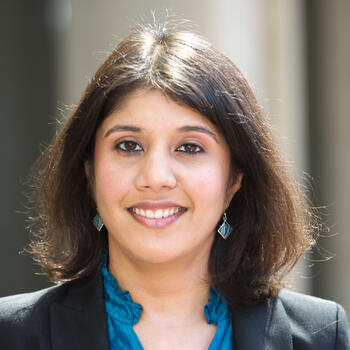
APARC is pleased to share that Stanford alumnae Shiran Victoria Shen and Lizhi Liu have won prestigious awards for best dissertation in their fields. Both Shen and Liu earned their doctoral degrees in Political Science in 2018 and worked with Jean Oi, director of the China Program at APARC, during their tenure as doctoral students.

Shen, who is currently an assistant professor at the University of Virginia, has won the 2020 Harold D. Lasswell Award for her dissertation The Political Pollution Cycle: An Inconvenient Truth and How To Break It. The award is given annually by the American Political Science Association for “the best doctoral dissertation in the field of public policy.” Using a wide array of data, techniques, and research designs, Shen’s work explains how environmental change influences and is shaped by politics and policy. It centers on the critical case of air pollution control policies and uses China as a natural experiment.

Liu, whose doctoral research focuses on the political economy of e-commerce in China, has won the 2020 Ronald H. Coase Best Dissertation Award from the Society for Institutional and Organizational Economics. Her study proposes that China has devised a novel solution, that is, institutional outsourcing, to the central question of how developing states build market-supporting institutions. She is currently an assistant professor in the McDonough School of Business and a faculty affiliate of the Department of Government at Georgetown University.

Congratulations, Shiran and Lizhi, on your excellent work and prestigious awards!

Read More

Portrait of Young Kyung Do, Winner of the 2020 Rothman Epidemiology Prize
News

Asia Health Policy Program Alum Wins Rothman Epidemiology Prize

Dr. Young Kyung Do, an expert in health policy and management at the Seoul National University College of Healthy Policy and the inaugural postdoctoral fellow in Asia health policy at APARC, has been awarded the 2020 prize for his outstanding publication in the journal Epidemiology last year.
Asia Health Policy Program Alum Wins Rothman Epidemiology Prize
Hero Image
Shiran Shen (left) and Lizhi Liu (right)
Shiran Shen (left) and Lizhi Liu (right).
All News button
1
Subtitle

Interdisciplinary environmental scholar Shiran Victoria Shen is the recipient of the Harold D. Lasswell Award and political economist Lizhi Liu is the recipient of the Ronald H. Coase Award in recognition of their outstanding doctoral dissertations.

Paragraphs

Effective as of July 1, 2018, South Korea set a new cap on employees’ weekly working hours, decreasing the maximum number from 68 to 52. In this study, we comprehensively analyze the effectiveness of the law’s implementation by observing changes in work time, health status, health care utilization, health behavior, monthly expenses, and satisfaction between pre- and post-implementation periods (2014–2017 vs. 2019). We find evidence of both intended and unintended consequences—and, in this last category, some are beneficial and some not. As intended, employees eligible for the 52-hour work week saw their average working hours decrease, while their monthly spending on leisure increased substantially. A beneficial unintended consequence was that work time also decreased in firms with less than 300 employees that had not yet implemented the 52-hour work schedule (they have done so since, in January 2020). Among adverse unintended consequences, the most notable were heterogeneous effects across employment types (full-time vs. precarious employment) and, in particular, negative impacts on precarious employees (that is, those facing relatively high levels of job insecurity). Despite almost no change in their work time, precarious employees saw substantial increases in outpatient visits and monthly expenses for health care, indicating suggestive evidence of adverse health consequences. Another adverse unintended consequence was that overall job satisfaction decreased among several groups of employees. This may reflect a heavy workload among employees still expected to work overtime, especially experienced employees or those working in large firms. While employment rates increased after the new schedule’s implementation, the majority were in precarious jobs. This has negative implications because of the adverse health impacts of being in precarious employment; also, the workload of experienced employees in this field might have intensified amid all the new hiring. Our findings suggest key policy recommendations for how to leverage the benefits of the 52-hour cap on weekly working hours while addressing its negative unintended consequences.

All Publications button
1
Publication Type
Working Papers
Publication Date
Journal Publisher
Asia Health Policy Program working paper # 59
Authors
-

Panel discussion on U.S.-North Korea relations co-sponsored by the Shorenstein Asia-Pacific Research Center​

This event will take place on Zoom. Register here: https://stanford.zoom.us/webinar/register/WN_F-MOOfvpSxWbYwfYRa1phQ

Tensions on the Korean Peninsula have intensified sharply in recent weeks, exposing the volatility of the region’s political and security conditions. No progress in denuclearization talks has been made since "no deal" in Hanoi early last year and inter-Korean relations have soured. Pyongyang abruptly cut off all communication lines with Seoul in protest against anti-DPRK leaflets sent across the border, demolished a joint liaison office in the border town of Kaesong, and vowed to redeploy troops to frontline areas. At the same time, a humanitarian crisis is unfolding in the DPRK, as its economy shrinks under pressure from international sanctions and coronavirus-constrained China trade.

As part of the Freeman Spogli Institute for International Studies’ (FSI) summer seminar series, this event offers an expert analysis of where we stand with North Korea after active summit diplomacy under the Trump administration and where we are heading amid the growing friction on the Korean Peninsula and the approaching U.S. presidential election. Gi-Wook Shin, director of the Shorenstein Asia-Pacific Research Center and Korea Program, will moderate the conversation with panelists Robert Carlin, a visiting scholar at the Center for International Security and Cooperation, Victor Cha, professor of government at Georgetown University and Korea Chair at the Center for Strategic and International Studies, Oriana Mastro, Assistant Professor of Security Studies at Georgetown University's Edmund A. Walsh School of Foreign Service and an FSI Centre Fellow starting August 2020, and Siegfried Hecker, senior fellow emeritus at FSI and professor emeritus in the Department of Management Science and Engineering.


Panel Discussions
Paragraphs
Cover of the book 'Being in North Korea'

** See our dedicated book page for more information about the book, including praise, reviews, and author commentary. **

In 2010, while working on a PhD in South Korea, Andray Abrahamian visited the other Korea, a country he had studied for years but never seen. He returned determined to find a way to work closely with North Koreans. Ten years and more than thirty visits later, Being in North Korea tells the story of his experiences helping set up and run Choson Exchange, a non-profit that teaches North Koreans about entrepreneurship and economic policy.

Abrahamian was provided a unique vantage into life in North Korea that belies stereotypes rampant in the media, revealing instead North Koreans as individuals ranging from true believers in the system to cynics wishing the Stalinist experiment would just end; from introverts to bubbly chatterboxes, optimists to pessimists. He sees a North Korea that is changing, invalidating some assumptions held in the West, but perhaps reinforcing others.

Amid his stories of coping with the North Korean system, of the foreigners who frequent Pyongyang, and of everyday relationships, Abrahamian explores the challenges of teaching the inherently political subject of economics in a system where everyone must self-regulate their own minds; he looks at the role of women in the North Korean economy, and their exclusion from leadership; and he discusses how information is restricted, propaganda is distributed and internalized, and even how Pyongyang’s nominally illicit property market functions. Along with these stories, he interweaves the historical events that have led to today’s North Korea.

Drawing on the breadth of the author’s in-country experience, Being in North Korea combines the intellectual rigor of a scholar with a writing style that will appeal to a general audience. Through the personal elements of a memoir that provide insights into North Korean society, readers will come away with a more realistic picture of the country and its people, and a better idea of what the future may hold for the nation.

This book is part of APARC's in-house series, distributed by Stanford University Press. Desk, examination, or review copies can be requested through Stanford University Press.

About the Author

Andray Abrahamian is a non-resident fellow at the Korea Economic Institute, a visiting scholar at George Mason University Korea, and a senior adjunct fellow at Pacific Forum. During the 2018-19 academic year, he was the Koret Fellow in Korean Studies at Stanford University’s Shorenstein Asia-Pacific Research Center.

Andray was heavily involved in Choson Exchange, a nonprofit organization that trains North Koreans in economic policy and entrepreneurship, where he previously served as executive director and research director. That work, along with sporting exchanges and a TB project, has taken him to the DPRK over 30 times. He has also lived in Myanmar, where he taught at Yangon University and consulted for a risk management company. His research comparing the two countries resulted in the publication of North Korea and Myanmar: Divergent Paths (McFarland, 2018). His expert commentary on Korea and Myanmar has appeared in numerous outlets, including the New York Times, the Washington Post, Foreign Policy, and Reuters. 

Andray holds a PhD in international relations from the University of Ulsan, South Korea, and an MA from the University of Sussex, where he studied media discourse on North Korea and the U.S.-ROK alliance. He speaks Korean, sometimes with a Pyongyang accent.

All Publications button
1
Publication Type
Books
Publication Date
Authors
Andray Abrahamian
Book Publisher
Shorenstein APARC
Paragraphs

COVID-19 presents humanity with not just a health crisis but also a governance crisis as leaders around the globe confront the challenges of stemming the spread of the virus. Various governments have responded in various ways to slow the transmission of the virus. Ideally, the leaders of a country should approach the crisis with a two-pronged attack. The first is to flatten the epidemic curve (epi curve), which is simply a graphical representation of the number of cases and date of onset of the illness, and the second is to raise or strengthen the capacity of the health system. 

Flattening the epi curve includes mass testing for COVID-19, which has been done in South Korea, for example. Decreasing the incidence also includes quarantine, isolation, and other social distancing strategies, which have been done by various countries in varying degrees. For example, in China, total lockdown (cordon sanitaire) was implemented in Wuhan, of the Hubei province, while in the Philippines, the entire Luzon, which consists of eight administrative regions, including the national capital region (NCR), was in total lockdown (enhanced community quarantine, or ECQ) since March 16 (World Health Organization [WHO] 2020a). Other parts of the Philippines were under different degrees of quarantine at different periods since the appearance of local transmission.

Raising the health care system capacity of a country may include, but is not limited to, training of health care workers, increasing facilities or hospitals that receive COVID patients, and providing adequate personal protective equipment (PPE).

This paper offers a brief epidemiological review of COVID-19 since its first case in China and how the hotspots for this disease evolved and changed over a relatively short period. This paper also aims to provide a short descriptive review of the existing data on COVID-19 in the Association of Southeast Asian Nations (ASEAN) region and the government response of its ten member countries, so that we can somehow draw lessons and learn from these myriad experiences as we continue to combat the spread of this dangerous pathogen. The findings in this paper are preliminary, and more rigorous analysis is expected to be performed as the data becomes more extensive and available.

All Publications button
1
Publication Type
Working Papers
Publication Date
Journal Publisher
Asia Health Policy Program working paper # 58
Authors
Marjorie Pajaron
Authors
Noa Ronkin
News Type
News
Date
Paragraphs

The Walter H. Shorenstein Asia-Pacific Research Center (APARC) condemns the systemic nature and brutal expression of racism in the United States, and we stand in full support of protestors and civil rights organizations in their calls for social justice, equal access to basic rights, and accountability. Beyond reaffirming our commitment to these values, we recognize the imperative to do better as an institution and the urgent need to take concrete action to build a more inclusive community here at our Stanford home. We have joined our colleagues at the Freeman Spogli Institute for International Studies in developing specific steps towards that goal. But we also want to take initial, immediate action in moving from protest to progress.

That’s why we are announcing today a new diversity grant to support Stanford students from underrepresented minorities with an interest in studying issues related to contemporary Asia. The field of Asian studies suffers from an extreme paucity of students, scholars, and experts who self-identify as Black/African American or as affiliated with other underrepresented minority groups. “The path towards a more diverse and inclusive field isn’t easy or straightforward, but we must get on it,” says APARC Director and FSI Senior Fellow Gi-Wook Shin. “We believe that we can tackle the existing disparity if relevant stakeholders across institutes of higher learning all work together. APARC is looking to start this change at Stanford.”

Lowering Barriers to Diversity in Asian Studies

The purpose of the APARC Diversity Grant is to encourage Stanford students from underrepresented minorities (URM) to engage in study and research of topics related to contemporary Asia and U.S.-Asia relations, including economic, health, foreign policy, social, political, and security issues. We follow the University’s definition of the URM category as encompassing “all U.S. citizens and permanent residents who have self-identified as American Indian/Alaska Native, Black/African American, Hispanic/Latino, Native Hawaiian/Other Pacific Islander.” This grant opportunity is open to current Stanford undergraduate and graduate students in the URM category from any major or discipline. “This is just a small step to start lowering disciplinary, cultural, and funding barriers that hinder broader student participation in Asian studies,” notes Shin.

APARC will award a maximum of $10,000 per grant to support a wide range of research expenses such as travel to/from research sites, academic conferences, and workshops (dependent on COVID-19 restrictions); conference registration fees; professional development training programs; purchase of physical and digital books or other required materials; and access to relevant online resources. APARC will review grant applications for projects taking place in winter/spring 2021 on a rolling basis starting on September 1, 2020. Reviews of the second round of applications, for projects taking place in summer/fall 2021, will begin on April 1, 2021.

Examples of research topics, in addition to those that Asia scholars typically study, could include China’s growing activities in Africa; understanding the evolving relations between Asian Americans and African Americans in the United States; and comparative examinations of issues such as the treatment of minorities in Asia and the United States or policies that promote anti-discriminatory practices in schools, the workplace, and other settings in Asian countries and the United States.

Application Guidelines

  • Complete the application form and submit it along with these three (3) attachments:
    • A statement (no more than three pages) describing the proposed research activity or project;
    • A current CV;
    • An itemized budget request explaining research expense needs.
  • Arrange for a letter of recommendation from a faculty to be sent directly to APARC. Please note: the faculty members should email their letters directly to Kristen Lee at kllee@stanford.edu.

We will consider only applications that include all supporting documents.

Read More

Portrait of Young Kyung Do, Winner of the 2020 Rothman Epidemiology Prize
News

Asia Health Policy Program Alum Wins Rothman Epidemiology Prize

Dr. Young Kyung Do, an expert in health policy and management at the Seoul National University College of Healthy Policy and the inaugural postdoctoral fellow in Asia health policy at APARC, has been awarded the 2020 prize for his outstanding publication in the journal Epidemiology last year.
Asia Health Policy Program Alum Wins Rothman Epidemiology Prize
Cover image of the book "Healthy Aging in Asia", showing a smiling elderly Chinese woman with a cane standing in a small village.
News

New Book Highlights Policy Initiatives and Economic Research on Healthy Longevity Across Asia

Asia health policy expert Karen Eggleston’s new volume, ‘Healthy Aging in Asia,’ examines how diverse Asian economies – from Singapore and Hong Kong to Japan, India, and China – are preparing for older population age structures and transforming health systems to support patients who will live with chronic disease for decades.
New Book Highlights Policy Initiatives and Economic Research on Healthy Longevity Across Asia
Hero Image
A look at the front of Encina Hall, Stanford
All News button
1
Subtitle

To encourage Stanford students from underrepresented minorities to engage in study and research of topics related to contemporary Asia, the Shorenstein Asia-Pacific Research Center is offering a new Diversity Grant opportunity. Application reviews begin on September 1, 2020.

Center members are invited to the Shorenstein APARC 2019 - 2020 Year End Party on Friday, May 29, 2020. Please come join us to celebrate the last academic year and say farewell to this year's visitors.

Image
Year End Party Invitation

-

This event is via Zoom Webinar. Please register in advance for the webinar by using the link below.

REGISTRATION LINKhttps://bit.ly/2xZHser

Part of APARC series COVID-19 IN ASIA: RESPONSES AND IMPLICATIONS FOR THE REGION

Co-sponsored by the Asia Health Policy Program and the Southeast Asia Program

Speakers (live and pre-recorded):

Dr. Dorairaj Prabhakaran, Professor of chronic disease epidemiology, Public Health Foundation of India, and Executive Director, Center for Chronic Disease Control.

Dr. Pham Quang Thai, Member of the Vietnam Steering Committee for COVID-19 Prevention and Control

Dr. HAC Van Vinh, Associate Professor & former Dean of Research & International Relations, Thai Nguyen University of Medicine and Pharmacy

Dr. Richard Cash, Senior Lecturer on Global Health, T.H. Chan School of Public Health, Harvard University

Dr. Radhika Jain, Asia Health Policy Postdoctoral Fellow, APARC, FSI, Stanford University

Dr. Arzan Tarapore, Research Scholar, APARC, FSI, Stanford University

How is the pandemic impacting health systems and society in south and southeast Asia? Numerous experts share their perspectives on topics ranging from COVID-19 challenges in Bangladesh, India and Vietnam, to geopolitical considerations for U.S. policy in the wider Indo-Pacific.

Via Zoom Webinar.

Register at https://bit.ly/2xZHser

Dorairaj Prabhakaran Professor of chronic disease epidemiology, Public Health Foundation of India, and Executive Director, Center for Chronic Disease Control.
Pham Quang Thai Member of the Vietnam Steering Committee for COVID-19 Prevention and Control
HAC Van Vinh Associate Professor & former Dean of Research & International Relations, Thai Nguyen University of Medicine and Pharmacy
Richard Cash Senior Lecturer on Global Health, T.H. Chan School of Public Health, Harvard University
Shorenstein APARC Stanford University Encina Hall E301 Stanford, CA 94305-6055
1
Asia Health Policy Postdoctoral Fellow, 2019-2022
radhika_jain.jpg Ph.D.

Radhika Jain was the Asia Health Policy Postdoctoral Fellow for 2019-2022 at the Walter H. Shorenstein Asia-Pacific Research Center (Shorenstein APARC).  Her research focuses on health care markets, the effectiveness of public health policy, and gender disparities in health.

She completed her doctorate in the Department of Global Health at Harvard University in 2019.  Her dissertation examined the extent to which government subsidies for health care under insurance are captured by private hospitals instead of being passed through to patients, and whether accountability measures can help patients claim their entitlements. Dr. Jain's research has been supported by grants from the Weiss Family Fund and the Jameel Poverty Action Lab (JPAL). She has worked on impact evaluations of health programs in India and on the implementation of HIV programs across several countries in sub-Saharan Africa. She also held a doctoral fellowship at the Center for Global Development.

At Shorenstein APARC, Radhika began new work on understanding the factors that contribute to poor female health outcomes and interventions to increase the effectiveness of public health insurance.

Asia Health Policy Postdoctoral Fellow, APARC, FSI, Stanford University
Arzan Tarapore Research Scholar, APARC, FSI, Stanford University
Panel Discussions
Authors
Noa Ronkin
News Type
News
Date
Paragraphs

Rapid population aging is transforming societies around the world, and the Asia-Pacific region is on the frontlines of this unprecedented demographic shift. Life expectancy in Japan, South Korea, and much of urban China has now outpaced that of the United States and other high-income countries. With this triumph of longevity, however, comes a host of health, social, and economic challenges.

Longer lifespans will necessitate working to older ages, “but extending work lives will only be feasible if the added years are healthy ones, and will only be equitable if the least advantaged also benefit from healthy aging,” writes APARC Deputy Director and Asia Health Policy Program Director Karen Eggleston in her new book, Healthy Aging in Asia. “The great blessing of longer lives dims when clouded by pain, disability, and loss of dignity.”

[Listen to our conversation with Eggelston about the book and continue reading below. To receive stories like this directly in your inbox sign up for APARC newsletters]

Shorenstein APARC · Healthy Aging In Asia | Karen Eggleston

Image
Poster featuring the book Healthy Aging in Asia


Societies around the world must reduce disparities in health outcomes and address the older age-associated rise in the burden of noncommunicable diseases (NCDs) such as diabetes, hypertension, and cancer. Indeed, the COVID-19 pandemic has underscored the vulnerability of older adults suffering from NCDs to newly emerging pathogens and the importance of building long-term, resilient health systems.


How are health systems in Asia promoting evidence-based policies for healthy aging? What strategies have they used to prevent NCDs, screen for early disease detection, raise the quality of care, improve medication adherence, reduce unnecessary hospitalizations, and increase “value for money” in health spending?

The concise chapters in Healthy Aging in Asia examine these questions, covering multiple aspects of policy initiatives and economic research on healthy longevity in diverse Asian economies — from cities such as Singapore and Hong Kong to powerhouses such as Japan, India, and China — as they transform their health systems to support wellbeing in older age. Eggleston edited and contributed multiple chapters to this new volume, now available via Brookings Institution Press. This publication is part of APARC’s in-house series with the Brookings Institution.

Dr. Karen Eggleston

Karen Eggleston

Senior Fellow at the Freeman Spogli Institute for International Studies, Director of the Asia Health Policy Program, and Deputy Director of the Shorenstein Asia-Pacific Research Center
Full Biography

Read More

Karen Eggleston speaking to an online panel.
News

Karen Eggleston Testifies on China’s Healthcare System to Congressional Review Commission

Asia health policy expert Karen Eggleston provides testimony for a U.S.-China Economic and Security Review Commission hearing on China's domestic healthcare infrastructure and the use of technology in its healthcare system amid COVID-19.
Karen Eggleston Testifies on China’s Healthcare System to Congressional Review Commission
Elderly Chinese citizens sit together on a park bench.
Q&As

Karen Eggleston Examines China’s Looming Demographic Crisis, in Fateful Decisions

Karen Eggleston Examines China’s Looming Demographic Crisis, in Fateful Decisions
Michael McFaul, Xueguang Zhou, Karen Eggleston, Gi-Wook Shin, Don Emmerson, and Yong Suk Lee
News

FSI Hosts APARC Panel on COVID-19 Impacts in Asia

Scholars from each of APARC's programs offer insights on policy responses to COVID-19 throughout Asia.
FSI Hosts APARC Panel on COVID-19 Impacts in Asia
All News button
1
Subtitle

Asia health policy expert Karen Eggleston’s new volume, ‘Healthy Aging in Asia,’ examines how diverse Asian economies – from Singapore and Hong Kong to Japan, India, and China – are preparing for older population age structures and transforming health systems to support patients who will live with chronic disease for decades.

Authors
Noa Ronkin
News Type
News
Date
Paragraphs

What are the Chinese government’s objectives for the development of its healthcare system? How do these ambitions affect its interaction with U.S. and other foreign healthcare markets? And what policy recommendations should lawmakers consider regarding the development of China's healthcare system and its implications for U.S. national interests? These are some of the questions that APARC Deputy Director and Asia Health Policy Program Director Karen Eggleston discussed in her testimony before the U.S.-China Economic and Security Review Commission on May 7, 2020.

Watch Eggleston’s testimony (start time 23:25]

Read Eggleston's complete testimony
Download pdf

[To receive more stories like this in your inbox sign up for APARC’s newsletters]

Chaired by Dr. Robin Cleveland, the commission’s hearing, “China’s Evolving Healthcare Ecosystem: Challenges and Opportunities,” focused on China's domestic healthcare infrastructure and its use of technology in the light of the COVID-19 pandemic. The commission listened as Eggleston reviewed the strides China has made in its national health reforms and highlighted the many challenges its health system now faces. “It is in the interest of Americans and Chinese to have a strong, resilient healthcare system in China,” she said. “The United States should reemphasize scientific, evidence-based health policy and regulation, and encourage China to do so as well.”

The commission’s mandate is to investigate and submit to Congress an annual report on the national security implications of the bilateral trade and economic relationship between the United States and China and to provide recommendations to Congress for legislative action.

Ambitious Goals, Complex Challenges

Reforms over the past two decades, noted Eggleston, have brought China’s health system closer to a level of reliability and accessibility commensurate with the country’s dramatic economic growth. The government has already achieved its goal of providing universal health coverage and has made significant progress in many of the areas outlined in its “Healthy China 2030” blueprint, including tackling health disparities between regional and urban/rural population subgroups and building a more comprehensive and higher quality health service delivery system.

Still, China faces many daunting challenges, from dealing with COVID-19 and its aftermath to other urgent and lingering needs, such as tackling its looming demographic crisis and promoting healthy aging, addressing patient-provider tensions and trust, and changing provider payment to promote “value” rather than volume. If China is to make its investments in universal health coverage and rapid medical spending growth sustainable, said Eggleston, then it must build an infrastructure that increases health system efficiency, strengthens primary care, reforms provider payment system, and protects the most vulnerable from illness-induced poverty.

Constructive policies in support of health system improvements in both the United States and China could strengthen the global capacity to control future pandemics and avoid the devastating social and economic effects of future outbreaks on the scale of COVID-19.
Karen Eggleston

Technology and COVID-19 Response

Like other countries, China’s government and private sector have utilized various technologies in response to the COVID-19 crisis, such as telemedicine, “internet-plus” healthcare, and contact tracing applications, and are deploying digital and biotechnologies in efforts focused on epidemic mentoring and on treatment and vaccine development. Eggleston noted that the response to COVID-19 “will leave an indelible mark on health policies for decades to come,” not only in terms of technology adoption but also organizational innovation. One would hope to see future prioritization in resource allocation and renewed investment in the diagnosis and treatment of health system weaknesses, she added.

Recommendations for Congress

In all our policies and interactions, Eggleston concluded her testimony, we should remember that China is large and diverse, that local government agencies are those that make many important decisions in health policies as in other policies, and that the “Chinese people” are not synonymous with any given leader. “Avoid politicizing the COVID-19 pandemic and other health and humanitarian issues,” she noted. “In other geopolitical considerations in bilateral US-China relations, uphold U.S. interests while encouraging the PRC to be active as a globally responsible stakeholder.”

The U.S. government should encourage China and its scientists and firms to work collaboratively with multilateral efforts to prevent and control future pandemics, she argued. Specific recommended actions include supporting efforts to strengthen primary care and population health interventions with proven cost-effectiveness; sharing experiences with regional, community-based efforts to address the social determinants of health and promote multisector policies for healthy aging; encouraging public-private collaborative governance arrangements to strengthen the health sector in China; promoting transparent peer review of research and international collaboration between Chinese and American scientists, medical educators, health systems researchers, and technology developers; and collaborating with Chinese counterparts to address regional issues of population health importance, such as health problems in the DPRK and integration of public health priorities into China’s Belt and Road Initiative.

Read Eggleston's complete testimony >> 

Read More

Elderly Chinese citizens sit together on a park bench.
Q&As

Karen Eggleston Examines China’s Looming Demographic Crisis, in Fateful Decisions

Karen Eggleston Examines China’s Looming Demographic Crisis, in Fateful Decisions
Young patients receive treatment at Chongqing Children's Hospital in Chongqing Municipality, China.
News

On China’s Dramatic Health Care System Improvements – and Its Tortuous Road Ahead

On China’s Dramatic Health Care System Improvements – and Its Tortuous Road Ahead
Michael McFaul, Xueguang Zhou, Karen Eggleston, Gi-Wook Shin, Don Emmerson, and Yong Suk Lee
News

FSI Hosts APARC Panel on COVID-19 Impacts in Asia

Scholars from each of APARC's programs offer insights on policy responses to COVID-19 throughout Asia.
FSI Hosts APARC Panel on COVID-19 Impacts in Asia
Hero Image
Karen Eggleston speaking to an online panel.
All News button
1
Subtitle

Asia health policy expert Karen Eggleston provides testimony for a U.S.-China Economic and Security Review Commission hearing on China's domestic healthcare infrastructure and the use of technology in its healthcare system amid COVID-19.

Subscribe to Asia-Pacific