-

The digital transformation of Southeast Asia is in full swing.  In 2021, 8 of the 10 ASEAN countries had internet penetration rates higher than those for Asia (64%) and the world (66%).  But digital access is unevenly distributed between and within Southeast Asian countries.  How are the new technologies impacting the region?  Are they helping civil society or the surveillance state—free speech and economic growth or unaccountable concentrations of power and wealth?  Are Huawei and the Digital Silk Road creating a future with Chinese characteristics?  Who will write the rules of the digital road?  How are specific countries coping?  What is ASEAN’s role?  What should the US do?  Two leading experts, Huong Le Thu and Elina Noor, will discuss these and related questions.

Image
Huong Le Thu
Huong Le Thu is a co-author of Digital Southeast Asia, a just-published policy-focused study of the webinar topic.  A prolific and influential policy analyst of security and diplomacy in the region, she has written widely in journals and global media and for international think tanks including, as a non-resident fellow, the Center for Strategic and International Studies (Wash., DC).  She has held positions at the Australian National University, the ISEAS Yusof Ishak Institute, and the Institute of International Relations in Taipei. Her alma maters include National Chengchi University (Taiwan, PhD) and Jagiellonian University (Poland, Master’s).  She speaks five languages and has published in four.

Image
Elina Noor
Elina Noor has just launched a podcast, “Between the Binary: Tech and the Global South.”  It assesses technology’s intersections with history, gender, power, and economic growth through the underheard voices of guests from developing countries.  Cybersecurity has figured prominently in her many publications on Southeast Asia.  She is a member of the Global Commission on the Stability of Cyberspace and has held key positions at the Inouye Asia-Pacific Center for Security Studies (Hawaii), the Institute of Strategic and International Studies (Malaysia), and the Council for Security Cooperation in the Asia Pacific (CSCAP). Her higher degrees are from the London School of Economics and Political Science (LLM) and Georgetown University (MA).

Image
Winter2022_series_NewFrontiers
This event is part of the 2022 Winter webinar series, New Frontiers: Technology, Politics, and Society in the Asia-Pacific, sponsored by the Walter H. Shorenstein Asia-Pacific Research Center.

Via Zoom Webinar
Register: bit.ly/3LjVVTj

Huong Le Thu Senior Analyst, Australian Strategic Policy Institute, Canberra
Elina Noor Director, Political-Security Affairs, and Deputy Director, Asia Society Policy Institute, Washington, DC
Moderator: Moderator
0
Senior Fellow Emeritus at the Freeman Spogli Institute for International Studies
Affiliated Faculty, CDDRL
Affiliated Scholar, Abbasi Program in Islamic Studies
aparc_dke.jpg PhD

At Stanford, in addition to his work for the Southeast Asia Program and his affiliations with CDDRL and the Abbasi Program in Islamic Studies, Donald Emmerson has taught courses on Southeast Asia in East Asian Studies, International Policy Studies, and Political Science. He is active as an analyst of current policy issues involving Asia. In 2010 the National Bureau of Asian Research and the Woodrow Wilson International Center for Scholars awarded him a two-year Research Associateship given to “top scholars from across the United States” who “have successfully bridged the gap between the academy and policy.”

Emmerson’s research interests include Southeast Asia-China-US relations, the South China Sea, and the future of ASEAN. His publications, authored or edited, span more than a dozen books and monographs and some 200 articles, chapters, and shorter pieces.  Recent writings include The Deer and the Dragon: Southeast Asia and China in the 21st Century (ed., 2020); “‘No Sole Control’ in the South China Sea,” in Asia Policy  (2019); ASEAN @ 50, Southeast Asia @ Risk: What Should Be Done? (ed., 2018); “Singapore and Goliath?,” in Journal of Democracy (2018); “Mapping ASEAN’s Futures,” in Contemporary Southeast Asia (2017); and “ASEAN Between China and America: Is It Time to Try Horsing the Cow?,” in Trans-Regional and –National Studies of Southeast Asia (2017).

Earlier work includes “Sunnylands or Rancho Mirage? ASEAN and the South China Sea,” in YaleGlobal (2016); “The Spectrum of Comparisons: A Discussion,” in Pacific Affairs (2014); “Facts, Minds, and Formats: Scholarship and Political Change in Indonesia” in Indonesian Studies: The State of the Field (2013); “Is Indonesia Rising? It Depends” in Indonesia Rising (2012); “Southeast Asia: Minding the Gap between Democracy and Governance,” in Journal of Democracy (April 2012); “The Problem and Promise of Focality in World Affairs,” in Strategic Review (August 2011); An American Place at an Asian Table? Regionalism and Its Reasons (2011); Asian Regionalism and US Policy: The Case for Creative Adaptation (2010); “The Useful Diversity of ‘Islamism’” and “Islamism: Pros, Cons, and Contexts” in Islamism: Conflicting Perspectives on Political Islam (2009); “Crisis and Consensus: America and ASEAN in a New Global Context” in Refreshing U.S.-Thai Relations (2009); and Hard Choices: Security, Democracy, and Regionalism in Southeast Asia (edited, 2008).

Prior to moving to Stanford in 1999, Emmerson was a professor of political science at the University of Wisconsin-Madison, where he won a campus-wide teaching award. That same year he helped monitor voting in Indonesia and East Timor for the National Democratic Institute and the Carter Center. In the course of his career, he has taken part in numerous policy-related working groups focused on topics related to Southeast Asia; has testified before House and Senate committees on Asian affairs; and been a regular at gatherings such as the Asia Pacific Roundtable (Kuala Lumpur), the Bali Democracy Forum (Nusa Dua), and the Shangri-La Dialogue (Singapore). Places where he has held various visiting fellowships, including the Institute for Advanced Study and the Woodrow Wilson International Center for Scholars. 


Emmerson has a Ph.D. in political science from Yale and a BA in international affairs from Princeton. He is fluent in Indonesian, was fluent in French, and has lectured and written in both languages. He has lesser competence in Dutch, Javanese, and Russian. A former slam poet in English, he enjoys the spoken word and reads occasionally under a nom de plume with the Not Yet Dead Poets Society in Redwood City, CA. He and his wife Carolyn met in high school in Lebanon. They have two children. He was born in Tokyo, the son of U.S. Foreign Service Officer John K. Emmerson, who wrote the Japanese Thread among other books.

Selected Multimedia

Date Label
Director, Southeast Asia Program, Asia-Pacific Research Center, Stanford University
Seminars
-

Using administrative data on over 4 million hospital visits, we document striking gender disparities within a government health insurance program that entitles 46 million poor individuals to free hospital care in Rajasthan, India. Females account for only 33% of hospital visits among children and 43% among the elderly. These shares are lower for more expensive types of care, and far lower than sex differences in illness prevalence can explain. Almost two-thirds of non-childbirth spending is on males. We combine these data with patient survey, census, and electoral data to show that 1) the program is unable to fully offset the costs of care-seeking, which results in disparities in hospital utilization because some households are willing to allocate more resources to male than female health; 2) lowering costs does not reduce disparities, because males benefit as much as females do; and 3) long-term exposure to village-level female leaders reduces the gender gap in utilization, but effects are modest and limited to girls and young women. In the presence of gender bias, increasing access to and subsidizing social services may increase levels of female utilization but fail to address gender inequalities without actions that specifically target females.

Image
Radhika Jain 4X4 022521
Radhika Jain is the Asia Health Policy Postdoctoral Fellow for 2019-2022 at the Walter H. Shorenstein Asia-Pacific Research Center (Shorenstein APARC).  Her research focuses on health care markets, the effectiveness of public health policy, and gender disparities in health.

She completed her doctorate in the Department of Global Health at Harvard University in 2019. Her dissertation examined the extent to which government subsidies for health care under insurance are captured by private hospitals instead of being passed through to patients, and whether accountability measures can help patients claim their entitlements. Dr. Jain's research has been supported by grants from the Weiss Family Fund and the Jameel Poverty Action Lab (JPAL). She has worked on impact evaluations of health programs in India and on the implementation of HIV programs across several countries in sub-Saharan Africa. She also held a doctoral fellowship at the Center for Global Development.

At Shorenstein APARC, Radhika is starting new work on understanding the factors that contribute to poor female health outcomes and interventions to increase the effectiveness of public health insurance.

Image
ahpp_-_aparc_spring_webinar_series_2022
This event is part of the 2022 Spring webinar series, Negotiating Women's Rights and Gender Equality in Asia, sponsored by the Walter H. Shorenstein Asia-Pacific Research Center.

Via Zoom Webinar
Register: bit.ly/3otRoDZ

Shorenstein APARC Stanford University Encina Hall E301 Stanford, CA 94305-6055
1
Asia Health Policy Postdoctoral Fellow, 2019-2022
radhika_jain.jpg Ph.D.

Radhika Jain was the Asia Health Policy Postdoctoral Fellow for 2019-2022 at the Walter H. Shorenstein Asia-Pacific Research Center (Shorenstein APARC).  Her research focuses on health care markets, the effectiveness of public health policy, and gender disparities in health.

She completed her doctorate in the Department of Global Health at Harvard University in 2019.  Her dissertation examined the extent to which government subsidies for health care under insurance are captured by private hospitals instead of being passed through to patients, and whether accountability measures can help patients claim their entitlements. Dr. Jain's research has been supported by grants from the Weiss Family Fund and the Jameel Poverty Action Lab (JPAL). She has worked on impact evaluations of health programs in India and on the implementation of HIV programs across several countries in sub-Saharan Africa. She also held a doctoral fellowship at the Center for Global Development.

At Shorenstein APARC, Radhika began new work on understanding the factors that contribute to poor female health outcomes and interventions to increase the effectiveness of public health insurance.

2019-2022 Asia Health Policy Postdoctoral Fellow, Stanford University
Seminars
Authors
Oriana Skylar Mastro
News Type
Commentary
Date
Paragraphs

This essay was originally published in Foreign Affairs magazine.

On January 30, North Korea fired an intermediate-range ballistic missile from the north province of Jagang, its seventh rocket test this year. At first glance, this may not seem like a huge deal. The rockets are not, after all, the nuclear bombs and intercontinental ballistic missiles (ICBMs) that North Korea has tested in the past. Russia is currently massing troops on the Ukrainian border, and COVID-19 cases are surging around the world thanks to the Omicron variant. By comparison, the launches may look like a lesser concern—just another routine military provocation from Pyongyang.

But the tests aren’t coming at a routine moment. Instead, they are occurring at a time of stark, rising competition between the United States and the Pacific’s other great power: China. Washington sold nuclear submarines to Australia as part of a new, trilateral security arrangement along with the United Kingdom. U.S. assistant secretary of defense Ely Ratner declared that deterring China from attacking Taiwan is “an absolute priority.” In explaining the United States’ withdrawal from Afghanistan, U.S. President Joe Biden argued Washington needed to refocus its energy and resources on the “serious competition with China.” The pivot to Asia, long elusive, is clearly underway.


Sign up for APARC newsletters to receive our experts' commentary and analysis.


In this context, North Korea’s tests take on a new meaning—and it is dangerous for U.S. ambitions. The heightened threat of North Korean missile attacks incentivizes both Japan and South Korea to avoid alienating Beijing, which they hope will help keep Pyongyang in check. (China is North Korea’s main patron and sole ally.) It also means both Japan and South Korea are likely to redouble their militaries’ focus on Pyongyang rather than support U.S. operations elsewhere in Asia. And if the United States has to bolster its armed posture on the Korean Peninsula, whether to assuage Seoul’s and Tokyo’s fears, better deter North Korea, or fight in an actual conflict, Washington will need to reposition forces designed to constrain China elsewhere. Pyongyang’s weapons program was long seen as a liability for Beijing, given the erratic and unpredictable behavior of North Korea’s leaders. Now, it is becoming an asset.

For China, this switch comes at an opportune time. Under President Xi Jinping, Beijing has grown more impatient, expansionist, and belligerent. It is increasingly possible that China will try to seize control of Taiwan, especially since the peaceful unification of the mainland and the island is clearly no longer an option. Xi is closely watching the U.S. response to North Korea’s provocations and drawing lessons about Washington’s credibility. To prevent conflict in the Korean Peninsula and keep pace in its competition with Beijing, the United States will need to come up with new ways to unite its allies and prove its resolve in the region.

Cracking Through

North Korea’s latest rockets may not be capable of reaching the continental United States, but that hardly means they aren’t dangerous. Missile defense systems cannot see low-flying objects until they are near their targets, and this year’s first and second tests were of hypersonic advanced boost-glide vehicle missiles, which can travel at low altitudes, evade radar, and maneuver to avoid last-second interception. In the third test, the North Korean military successfully launched a missile off a moving train, indicating that Pyongyang can fire rockets from a mobile system, in turn making both tracking and targeting even more difficult (especially given the country’s vast railway system). In other words, these recent tests may have neutralized U.S. missile defense capabilities, such as the U.S.-deployed Terminal High Altitude Area Defense missile system and the Aegis Ballistic Missile Defense system.

These capabilities were designed to protect Japan and, especially, South Korea. Their erosion comes at a tricky time for the United States’ relations with the latter. Biden has yet to designate a U.S. ambassador to Seoul, and he appointed a special envoy for North Korea only in May of last year. The president placed new sanctions on North Korea in December 2021, but they were human rights-related and largely viewed as symbolic. In response to January’s missile threats, the Biden administration implemented its first weapons-related sanctions, but they were relatively limited in scope. Some South Korean analysts now believe that the administration discusses North Korean issues with Seoul not because it seriously intends to resolve them but more to persuade the South Korean government to help the United States compete against Beijing. South Koreans fear that the Biden administration’s prioritization of China comes at the expense of the denuclearization of North Korea.

North Korea has explicitly tied its missiles to U.S. involvement in Taiwan.
Sungmin Cho and Oriana Skylar Mastro

This is a welcome development for Beijing. Chinese analysts view South Korea as a weak link in the United States’ East Asian alliances, and Beijing is trying to divide Washington and Seoul through a combination of compliments and threats. In August 2020, Chinese media praised South Korea’s efforts to "be objective and keep its friendship with China," and several weeks later, Chinese scholars commended South Korea’s “kindness to China” in a time of “U.S. suppression.” But after South Korean President Moon Jae-in discussed Taiwan with Biden at their May 2021 summit, China’s Foreign Ministry warned South Korea not to “play with fire.” It is telling that Chinese scholars at a government-affiliated institute are arguing openly that China needs to raise the cost of South Korea’s cooperation with the United States on Taiwan.

North Korea’s missile capabilities are helping accomplish this task. The newer rockets more effectively threaten South Korea, and they increase Seoul’s doubts about the efficacy of U.S. deterrence. North Korea has explicitly tied its menacing assets to the issues surrounding the island. Pyongyang has publicly criticized the United States policies’ on Taiwan and threatened that “tragic consequences” will result from U.S. support. “The indiscreet meddling by the U.S. into the issue of Taiwan entails a potential danger of touching off a delicate situation on the Korean peninsula,” North Korea’s vice foreign minister said in a statement. These words could make Seoul think twice about backing the United States in the Taiwan Strait.

Japan is more difficult to split from Washington. But North Korea’s activities can certainly draw some of Japan’s attention away from Beijing. Although Tokyo was getting onboard with playing a greater role in deterring China and defending Taiwan, Japan’s Ministry of Defense has identified North Korea’s military capabilities as a “grave and imminent” threat, and there is no doubt that the government’s focus will shift if Pyongyang escalates its provocations. In the White House’s statement regarding Biden’s January 21 meeting with Japanese Prime Minister Fumio Kishida, Taiwan was mentioned only once. In comparison, the two leaders cited North Korea three times, condemned the country’s recent missile tests, and committed to work with South Korea more closely. Although Tokyo could theoretically focus on both North Korea and China, in practice it might struggle. Pyongyang poses a far more direct threat to Japanese lives and territory than does Beijing, and it would be hard for Japanese leaders to concentrate on China if North Korea grows more belligerent.

Drawing the Heat

North Korea’s new capabilities don’t help Beijing just diplomatically. The tests provide tangible, military benefits. The United States has been attempting to enlist South Korea in its efforts to strengthen deterrence across the Taiwan Strait. But Pyongyang’s new missiles mean Seoul is less likely to focus its military somewhere other than North Korea, especially if it continues the provocations. Indeed, a South Korean expert on Chinese politics has argued that when Washington asks for support in its contest with Beijing, Seoul should explain that it is too busy handling Pyongyang.

To reassure its allies, the United States may also need to refocus military attention on the Korean Peninsula, reducing its ability to operate in other parts of Asia. In 2017, when North Korea conducted ICBM and nuclear tests, the United States responded by sending more strategic assets, including heavy naval power, near the Korean Peninsula. If tensions rise high enough, Washington may have to do so again, including by shifting the Seventh Fleet’s operational focus to the area. Stationed in the middle of Japan, this fleet has been one of the United States’ primary tools for deterring Beijing, conducting patrols near the Taiwan Strait and promoting freedom of navigation in the South China Sea. But given past positioning patterns, a crisis on the Korean Peninsula would also most certainly drag the fleet farther north, undermining Washington’s ability to carry out operations elsewhere.

A major war on the Korean Peninsula would prove particularly devastating to the United States’ competition with Beijing. In addition to the Seventh Fleet, the United States Forces Korea’s 28,000 soldiers, 40 F-16 fighters, 90 military aircrafts, 40 attack helicopters, and other assets would immediately become unavailable for operations beyond the peninsula. A majority of the United States Forces Japan’s aircraft, ships, and approximately 55,000 military personnel would also be deployed to Korea. Japan’s own military, which could help the United States if it needed to fight China, would grow busy providing combat support to protect U.S. naval forces—including antisubmarine operations and sea minesweeping—as U.S. troops prepared for an amphibious landing on the peninsula.

For China, a crisis on the Korean Peninsula would be a golden opportunity.
Sungmin Cho and Oriana Skylar Mastro

Beijing, by comparison, is in a better position. The United States has to worry that China will use a North Korea–spurred crisis to invade Taiwan, but the inverse isn’t true: Beijing isn’t concerned that Seoul or Washington will start a war over Taiwan if Pyongyang launches an attack. China’s commitment to North Korea is also not as comprehensive as the United States’ is to Seoul. In the event of a renewed Korean war, China plans to send mostly ground forces into the North. Its air and naval assets would remain focused across the Taiwan Strait.

For China, therefore, a crisis on the peninsula—especially one that evolves into a conflict—would be a golden opportunity to expand its power. It may even make it possible to defeat Taipei. With U.S. intelligence assets supporting troops in Korea, a Chinese amphibious force might be able to move on the island without giving the United States advanced warning. China could establish beachheads on Taiwan long before U.S. forces, bogged down on the peninsula, have time to arrive. The war’s eventual outcome would be a fait accompli.

North Korea’s latest tests may have already made a Chinese attack more likely. As Chinese media happily pointed out, Pyongyang’s January 11 missile launch briefly confused the United States Northern Command’s warning system, grounding some commercial airplanes for 15 minutes. China has the most advanced ballistic and cruise missile program in the world. If North Korea’s offensive strike capability can jeopardize the U.S. early warning system, it surely bodes well for Beijing’s ability to surprise and defeat Washington’s forces.

Better Together

To counter North Korea’s new missile threats and prevent them from helping China, the Biden administration needs a stronger North Korea strategy—one that deters further provocations, reassures South Korea, and demonstrates Washington’s continued resolve and credibility to Beijing. That means Washington must support South Korea’s efforts to advance its offensive capabilities, such as the development of nuclear-powered submarines. South Korea, meanwhile, must scale up its combined exercises with the United States. A stronger U.S.–South Korean alliance will improve the two countries’ combat readiness, which is especially critical at a time when North Korea appears to be building up to another round of ICBM and nuclear tests. Finally, closer ties would make it easier for the United States to marshal allies in its competition against China, including in the Taiwan Strait.

The United States should also use the renewed tensions on the Korean Peninsula to encourage closer Japanese–South Korean cooperation. Seoul has long had highly fraught relations with its former colonial ruler, and the two states have especially struggled to get along in recent years. But for better or worse, the Korean Peninsula, East China Sea, and Taiwan Strait are increasingly intertwined in the current era of strategic competition. Pyongyang's provocations against the United States and its allies on the peninsula can embolden the Chinese Communist Party to act in other regions. And if Beijing can weaken or defeat the United States and its Asian allies anywhere, both the Chinese Communist Party and the Kim regime will be emboldened to act on the peninsula. To cope with this changing security environment, it makes sense for strategists in Washington, Seoul, and Tokyo to package these issues together. By demonstrating greater coordination, the three countries would also make it harder for China or North Korea to fracture Washington’s East Asia alliances, regardless of the contingency.

Finally, these three states must prepare for simultaneous provocations in East Asia, including concurrent conflicts in Taiwan and on the Korean Peninsula. In consultation with one another, the United States and its allies must demonstrate a strong willingness to cooperate and take strategic risks. They should hold more trilateral defense minister meetings, more thoroughly review various contingency scenarios, and discuss how to enhance their combined capabilities. Hopefully, these countries will never need to put these plans and abilities into practice. But to deter Kim Jong Un and Xi Jinping, they need to prove that they can fight two wars—and win both—if the need arises.

Headshot of Oriana Skylar Mastro

Oriana Skylar Mastro

Center Fellow at the Freeman Spogli Institute for International Studies
Full Biography

Read More

Chinese military propaganda depicting the Second Taiwan Strait Crisis of 1958.
News

Reassessing China’s Capabilities and Goals for Strategic Competition

On the World Class podcast, Oriana Skylar Mastro argues that in order to set effective policy toward China, the United States needs to better understand how and why China is projecting power.
Reassessing China’s Capabilities and Goals for Strategic Competition
Taiwan
Commentary

America's Future in Taiwan

Intensifying threats of a military conflict over Taiwan have brought uncertainty to the stability of regional security for Southeast Asia, according to Center Fellow Oriana Skylar Mastro on radio show On Point.
America's Future in Taiwan
An Island that lies inside Taiwan's territory is seen with the Chinese city of Xiamen in the background.
Commentary

The Taiwan Temptation

Why Beijing Might Resort to Force
The Taiwan Temptation
Hero Image
President Xi and Kim Jong Un meet on a TV screen Chung Sung-Jun, Getty Images
All News button
1
Subtitle

Pyongyang’s Missiles Could Fracture America’s Alliances

Date Label
-

Time:  7:30am-8:45am  California, USA 15 February 2022 
3:30pm-4:45pm London, UK 15 February 2022
11:30pm-12:45am  Singapore, 15-16 February 2022

How does India’s civil-military relationship affect its security? Historically, civil-military relations have been characterized by an “absent dialogue,” with the military enjoying almost complete operational autonomy in planning and fighting wars. But that arrangement has produced some mixed results for Indian national security, and is coming under increasing strain in an environment of intensifying peacetime strategic competition. New Delhi recognizes the need for reform, and has made some halting progress. This webinar will examine the evolution of civil-military relations in India, the challenges with the current configuration, and the agenda for reform that will face the next Chief of Defence Staff.

Speakers: 

Image
anit_mukherjee
Anit Mukherjee is an Associate Professor at the S. Rajaratnam School of International Studies (RSIS), Nanyang Technological University, in Singapore. He is the award-winning author of The Absent Dialogue: Politicians, Bureaucrats and the Military in India, the definitive analysis of Indian civil-military relations. He is also Non-Resident Visiting Scholar at the Center for the Advanced Study of India (CASI), University of Pennsylvania, and at Centre for Social and Economic Progress (CSEP), New Delhi. Prior to his academic career, he was a Major in the Indian Army and is an alumnus of India’s National Defence Academy (NDA), Khadakwasla. Anit holds a Ph.D. from Johns Hopkins University.

Image
saawani
Saawani Raje-Byrne is a lecturer (assistant professor) in International History at the Department of War Studies, King’s College London. She is currently working on a book, based on her PhD dissertation, that presents novel theoretical analysis and detailed historical case studies of Indian civil-military relations. She previously taught at Defence Studies Department at King’s, and the Joint Services Command and Staff College at Shrivenham, and was a researcher at the Centre for Policy Research, New Delhi. She holds a PhD from King’s College London, and a BA from the University of Cambridge.

Moderated by :
Arzan Tarapore, South Asia research scholar at the Shorenstein Asia-Pacific Research Center, Stanford University

This event is co-sponsored by Center for South Asia

Via Zoom  Register at:
https://bit.ly/3HpyMMO

Seminars
-

This event is co-sponsored by  Center for South Asia and is part of Shorenstein APARC's winter 2022 webinar series, New Frontiers: Technology, Politics, and Society in the Asia-Pacific

How does India’s democratic system foster or impede the country’s command of key technologies? Conversely, how can technology reinforce or undermine the health of Indian democracy? Technological expertise and democratic vitality are both widely viewed as central features of Indian national identity and sources of Indian national power. But technology and democracy interact in complex and sometimes surprising ways. This webinar will explore how the Indian state can harness technology, and how technology impacts its democratic credentials – especially with the emergence of revolutionary new technologies, and the continuing evolution of the Indian political landscape.

Speakers:
Arun SukumarArun Mohan Sukumar is a PhD candidate at The Fletcher School, Tufts University, and a pre-doctoral research fellow at Fletcher’s Centre for International Law and Governance. He previously headed the Cyber Initiative at the Observer Research Foundation, one of India’s biggest think-tanks. His first book, Midnight’s Machines: A Political History of Technology in India, won the Ramnath Goenka Award for Non-Fiction (2019) and was shortlisted for several other awards. Arun was previously a member of World Economic Forum’s Global Future Council on the Digital Economy and Society, and appointed by India’s National Security Advisor to a 'Study Group on Cyber Norms' that advised the Indian government on a national strategy towards the development and negotiation of global cybersecurity norms.

Julie OwonoJulie Owono is the Executive Director of the Content Policy & Society Lab (CPSL) and a fellow of the Program on Democracy and the Internet (PDI) at Stanford University. She is also the Executive Director of digital rights organization Internet Sans Frontières, one of the inaugural members of the Facebook Oversight Board, and an affiliate at the Berkman Klein Center at Harvard University. She holds a Master’s degree in International Law from la Sorbonne University in Paris, and practiced as a lawyer at the Paris Bar. Julie is a member of the Global Partnership on AI (GPAI) created by France and Canada, as well as a member of the World Economic Forum’s Global Future Council on AI for Humanity, and of the WEF Council on the Connected World.

Arzan Tarapore, South Asia Research Scholar of APARC at Stanford University, will moderate the discussion.

Via Zoom. Register at  https://bit.ly/3KQ6JZ8

Seminars
Paragraphs

Image
Cover of Issue 34(1) of Asia Pacific Journal of Public Health, January 2022
This study aims to provide evidence on how the COVID-19 pandemic has impacted chronic disease care in diverse settings across Asia. Cross-sectional surveys were conducted to assess the health, social, and economic consequences of the pandemic in India, China, Hong Kong, Korea, and Vietnam using standardized questionnaires.

Overall, 5672 participants with chronic conditions were recruited from 5 countries. The mean age of the participants ranged from 55.9 to 69.3 years. A worsened economic status during the COVID-19 pandemic was reported by 19% to 59% of the study participants. Increased difficulty in accessing care was reported by 8% to 24% of participants, except Vietnam: 1.6%. The worsening of diabetes symptoms was reported by 5.6% to 14.6% of participants, except Vietnam: 3%. In multivariable regression analyses, increasing age, female participants, and worsened economic status were suggestive of increased difficulty in access to care, but these associations mostly did not reach statistical significance. In India and China, rural residence, worsened economic status and self-reported hypertension were statistically significantly associated with increased difficulty in access to care or worsening of diabetes symptoms.

These findings suggest that the pandemic disproportionately affected marginalized and rural populations in Asia, negatively affecting population health beyond those directly suffering from COVID-19.

All Publications button
1
Publication Type
Journal Articles
Publication Date
Journal Publisher
Asia Pacific Journal of Public Health
Authors
Karen Eggleston
News Type
News
Date
Paragraphs

The Shorenstein APARC Predoctoral Fellowship supports Stanford students working within a broad range of topics related to contemporary Asia. APARC is now accepting applications for the 2022-23 Predoctoral Fellowship. Up to three fellowships are available to Ph.D. candidates who have completed all fieldwork and are nearing the completion of their dissertation. Applications are due by April 15, 2022.

The Center will give priority to candidates who are prepared to finish their degree by the end of the 2022-23 academic year.

This opportunity is open to current Stanford students only.

APARC offers a stipend of $37,230 for the 2022-23 academic year, plus Stanford's Terminal Graduate Registration (TGR) fee for three quarters. We expect fellows to remain in residence at the Center throughout the year and to participate in Center activities.

Read More

Stanford
News

Call for Stanford Student Applications: APARC Hiring 2022 Summer Research Assistants

To support Stanford students working in the area of contemporary Asia, the Shorenstein Asia-Pacific Center is offering research assistant positions for summer 2022. The deadline for submitting applications and letters of recommendation is March 1, 2022. 
Call for Stanford Student Applications: APARC Hiring 2022 Summer Research Assistants
Stanford arch and text calling for nominations for APARC's 2022 Shorenstein Journalism Award.
News

2022 Shorenstein Journalism Award Open to Nomination Entries

Sponsored by Stanford University’s Shorenstein Asia-Pacific Research Center, the annual award recognizes outstanding journalists and journalism organizations for excellence in coverage of the Asia-Pacific region. News editors, publishers, scholars, and organizations focused on Asia research and analysis are invited to submit nominations for the 2022 award through February 15.
2022 Shorenstein Journalism Award Open to Nomination Entries
Kate Imy
Q&As

How Feminist Military History Sheds Light on Colonial Rule and Warfare

In this interview, Lee Kong Chian NUS-Stanford Fellow on Southeast Asia Kate Imy discusses her research into identity in the twentieth-century British imperial world and her current book project on the colonial roots of winning "hearts and minds" in war, specifically focusing on Malaya and Singapore.
How Feminist Military History Sheds Light on Colonial Rule and Warfare
Hero Image
Encina Commons, Stanford with text about APARC's 2022-23 predoctoral fellowship
All News button
1
Subtitle

Up to three fellowships are available to Stanford Ph.D. candidates. Submissions are due by April 15, 2022.

News Type
News
Date
Paragraphs

Shorenstein APARC invites highly motivated and dedicated undergraduate- and graduate-level students to join our team as paid research assistant interns for the duration of the summer 2022 quarter. The research assistants work with assigned APARC faculty members on projects focused on contemporary Asia, studying varied issues related to the politics, economies, populations, security, foreign policies, and international relations of the countries of the Asia-Pacific region.

All research assistant positions are open to current Stanford students only.

Apply Now
 

APARC is now accepting applications for our summer 2022 RA positions. The deadline for submitting applications and letters of recommendation is March 1, 2022

All summer research assistant positions will be on campus for eight weeks. The hourly pay rate is $17 for undergraduate students, $25 for graduate students.

Decisions regarding the options for telecommuting work will be made closer to the appointment start dates in accordance with the evolving COVID-19 situation and the University's recommendations.


Please follow these application guidelines

I. Prepare the following materials:

II. Fill out the online application form for summer 2022, including the above two attachments, and submit the complete form.

III. Arrange for a letter of recommendation from a faculty to be sent directly to Shorenstein APARC.
Please note: the faculty members should email their letters directly to Kristen Lee at kllee@stanford.edu.

We will consider only applications that include all supporting documents.

Read More

Stanford arch and text calling for nominations for APARC's 2022 Shorenstein Journalism Award.
News

2022 Shorenstein Journalism Award Open to Nomination Entries

Sponsored by Stanford University’s Shorenstein Asia-Pacific Research Center, the annual award recognizes outstanding journalists and journalism organizations for excellence in coverage of the Asia-Pacific region. News editors, publishers, scholars, and organizations focused on Asia research and analysis are invited to submit nominations for the 2022 award through February 15.
2022 Shorenstein Journalism Award Open to Nomination Entries
Portrait of Ma'ili Yee, 2020-21 APARC Diversity Fellow
News

Student Spotlight: Ma’ili Yee Illuminates a Vision for Building the Blue Pacific Continent

With support from Shorenstein APARC’s Diversity Grant, coterminal student Ma’ili Yee (BA ’20, MA ’21) reveals how Pacific island nations are responding to the U.S.-China rivalry by developing a collective strategy for their region.
Student Spotlight: Ma’ili Yee Illuminates a Vision for Building the Blue Pacific Continent
Kate Imy
Q&As

How Feminist Military History Sheds Light on Colonial Rule and Warfare

In this interview, Lee Kong Chian NUS-Stanford Fellow on Southeast Asia Kate Imy discusses her research into identity in the twentieth-century British imperial world and her current book project on the colonial roots of winning "hearts and minds" in war, specifically focusing on Malaya and Singapore.
How Feminist Military History Sheds Light on Colonial Rule and Warfare
Hero Image
Stanford Rod Searcey
All News button
1
Subtitle

To support Stanford students working in the area of contemporary Asia, the Shorenstein Asia-Pacific Center is offering research assistant positions for summer 2022. The deadline for submitting applications and letters of recommendation is March 1, 2022. 

Authors
Noa Ronkin
News Type
News
Date
Paragraphs

The Walter H. Shorenstein Asia-Pacific Research Center (APARC) is pleased to share that Professor Jean C. Oi has been elected to serve as vice president of the Association for Asian Studies (AAS), an international, 5,000-member organization dedicated to the advancement of scholarly study of Asia. She will begin her term after the AAS Annual Conference in March 2022, serving on a four-year AAS leadership ladder of vice president, president, and past president.

“I am honored to have been elected as the AAS Vice President and look forward to steering it through its next chapter of development,” says Oi, a China expert who has served on the Stanford faculty since 1997. She is the William Haas Professor of Chinese Politics in the department of political science, a senior fellow at the Freeman Spogli Institute for International Studies, the founding director of the China Program at APARC, and the founding Lee Shau Kee Director of the Stanford Center at Peking University.

[Sign up for APARC newsletters to receive the latest updates from our scholars]

One of my most firmly held beliefs is that area studies — with their in-depth, multidisciplinary perspective — offer invaluable insights into trends and pressing problems that traditional disciplines often miss.
Jean Oi

In a letter to AAS members, Oi highlights her desire to attract to the AAA the younger generation of scholars, who increasingly focus on their disciplines rather than on area expertise. “As Asia gains in importance, our responsibility to educate scholars who not only possess mastery over their disciplinary knowledge but also area expertise seems increasingly critical,” she says.

Representing all the regions and countries of Asia and all academic disciplines, the AAS is the largest organization of its kind. The Association’s objectives are to promote cooperative activities and exchange of information within the field of Asian studies, facilitate contact and exchange of information between scholars and scholarly organizations in North America interested in Asian studies and those in other countries, and provide means for the publication of research and educational materials designed to advance Asian studies.

Oi’s research focuses on comparative politics, Chinese political economy, corporate restructuring, and governance in Asia. She has conducted fieldwork in China since the mid-1980s and has written extensively on China's rural politics, central-local relations, and how China’s political and economic institutions have adapted to the tensions and opportunities wrought by the country’s dramatic transformation. Her most recent book, the edited volume, Fateful Decisions: Choices That Will Shape China's Future, analyzes today's most critical demographic, economic, social, political, and foreign policy challenges facing China's leaders that will determine the country's future course. Her newest research project focuses on China going global with its Belt and Road Initiative.

Oi brings to her new role with the AAS over three decades of experience in advancing social science research on contemporary China, and a track record of building platforms for Asia education, research, and engagement that benefit scholars, students, and professionals across disciplines. She has been a member of the AAS since 1974. Her commitment to the organization is reflected in her previous service to the organization, including as a member and chair of the China and Inner Asia Council, and her responsibilities on the Annual Conference Program Committee.
 

Learn more about Jean Oi’s Research

Read More

Chinese military propaganda depicting the Second Taiwan Strait Crisis of 1958.
News

Reassessing China’s Capabilities and Goals for Strategic Competition

On the World Class podcast, Oriana Skylar Mastro argues that in order to set effective policy toward China, the United States needs to better understand how and why China is projecting power.
Reassessing China’s Capabilities and Goals for Strategic Competition
"Engaging China: Fifty Years of Sino-American Relations" book cover
News

Engaging China: Fifty Years of Sino-American Relations

Was the strategy of engagement with China worthwhile? Experts Mary Bullock, Thomas Fingar, David M. Lampton, and Anne Thurston discuss their recent release, "Engaging China: Fifty Years of Sino-American Relations."
Engaging China: Fifty Years of Sino-American Relations
Protesters participate in a rally oppose a planned visit by Chinese Foreign Minister Wang Yi near the Chinese Embassy on November 25, 2020 in Seoul, South Korea.
Commentary

The Rise of Anti-Chinese Sentiments in South Korea: Political and Security Implications

APARC and Korea Program Director Gi-Wook Shin shares insights on rising anti-China sentiments in South Korea and their implications for the upcoming South Korean presidential election.
The Rise of Anti-Chinese Sentiments in South Korea: Political and Security Implications
Hero Image
Jean Oi
All News button
1
Subtitle

APARC’s Jean Oi, a China expert, will begin her term with the AAS in March 2022, serving on a four-year leadership ladder of vice president, president, and past president. Representing all the regions and countries of Asia and all academic disciplines, the AAS is the largest professional association of its kind.

Shorenstein APARC Stanford University Encina Hall, Room C319 Stanford, CA 94305-6055

(650) 723-9744 (650) 723-6530
0
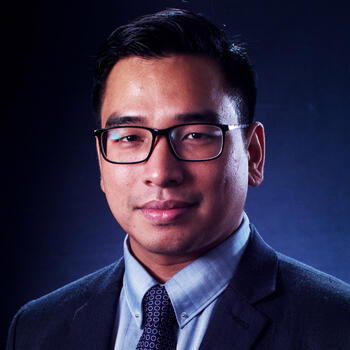
Kana Limpanukorn.jpg

Kana most recently has worked at San Mateo Nippon Gakuyen and previously at the University of California, Davis, in various capacities. They hold a Bachelor of Arts in Japanese and International Relations from UC Davis with a minor in East Asian Studies. Kana's hobbies include listening to Japanese music of all genres, watching J-dramas, and reading 1900s-modern Japanese novels.

Japan Program Coordinator
Date Label
Subscribe to Asia-Pacific