-
The Power of Nudges in Environmental and Health Behaviors: The Case of Disposable Cutlery Consumption and Antibiotics Utilization

Co-sponsored by Peking University Institute for Global Health and Development, and the Asia Health Policy Program

Plastic pollution and antibiotic resistance are significant threats to human health. The overuse of plastic products and antibiotics, often driven by individual behaviors, plays a major role in these challenges. The presence of externalities leads to further overuse, intensifying the problem. In this webinar, we will present two research studies that employ the nudge strategy to explore its effectiveness as a low-cost method in promoting socially desirable behaviors. We will focus on the contexts of disposable cutlery consumption and antibiotic utilization, providing insights into how subtle behavioral interventions can have a meaningful impact.

Title 1: Reducing single-use cutlery with green nudges: Evidence from China’s food-delivery industry

Rising consumer demand for online food delivery has increased the consumption of disposable cutlery, leading to plastic pollution worldwide. In this work, we investigate the impact of green nudges on single-use cutlery consumption in China. In collaboration with Alibaba’s food-delivery platform, Eleme (which is similar to Uber Eats and DoorDash), we analyzed detailed customer-level data and found that the green nudges—changing the default to “no cutlery” and rewarding consumers with “green points”— increased the share of no-cutlery orders by 648%. The environmental benefits are sizable: If green nudges were applied to all of China, more than 21.75 billion sets of single-use cutlery could be saved annually, equivalent to preventing the generation of 3.26 million metric tons of plastic waste and saving 5.44 million trees. 

Title 2: The Impact of Self- or Social-regarding Messages: Experimental Evidence on Antibiotics Purchases in China

We study two interventions in Beijing, China, that provide patients with information on antibiotic resistance via text message to discourage the overuse of antibiotics. The messages were sent once a month for five months. One intervention emphasizes the threat to the recipient's own health and is found to have negligible effects. The other intervention, which highlights the overall threat to society, reduces antibiotics purchases by 17% in dosage without discouraging healthcare visits and other medicine purchases. The results demonstrate that prosocial messaging can have the potential to address public health issues that require collective action.

Image
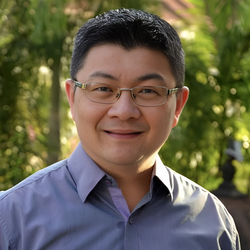
Yuhang Pan 120623

Yuhang Pan's research fields include environmental economics, health economics, and development economics, with a particular focus on using causal inference approach to study the impact of environmental pollution, public policy, and climate change on health and social welfare. His works have been published in both economics and scientific journals, such as Science, Nature Sustainability, and the Journal of Environmental Economics and Management. Dr. Pan obtained his undergraduate degree from Beijing Normal University in 2015 and his doctoral degree from the Hong Kong University of Science and Technology in 2021. Prior to joining Peking University, he worked as a postdoctoral researcher at the Faculty of Business and Economics at the University of Hong Kong.

Image
Jianan Yang 120623

Jianan Yang's primary research fields are health economics and development economics, with specific interests in health policy reform, medical behavior, and pharmaceutical innovation. She employs both experimental and quasi-experimental methods to explore policy-related questions, particularly examining their impact on patient welfare. She has published in top journals like the Journal of Development Economics. She earned her bachelor’s degrees in Economics and Mathematics from Renmin University of China in 2016, and her Ph.D. in Economics from the University of California, San Diego in 2022. Before joining Peking University, she was the 2022-2023 Developing Asia Health Policy Postdoctoral Fellow at Stanford University. 

Karen Eggleston

Online via Zoom Webinar

Yuhang Pan, Assistant Professor of Economics, Institute for Global Health and Development, Peking University
Jianan Yang, Assistant Professor of Economics, Institute for Global Health and Development, Peking University
Seminars
-
How Welfare Policy Promotes Authoritarian Legitimacy  The Case of Cambodia

In the course of his reign as Cambodia’s prime minister from 1985 to 2023, Hun Sen forcibly dissolved the opposition Cambodian National Rescue Party (CNRP) and turned his country into a one-party state under his Cambodian People’s Party (CPP). After summarizing that history, Dr. Im will show how Hun Sen copied and expanded the CNRP’s commitment to social welfare, including cash transfers to Cambodia’s poorest and most vulnerable households. The 2013 election could have led to Hun Sen’s downfall. Instead, by combining coercive capacity with policy reform, he managed to legitimize his regime. Dr. Im will portray Hun Sen’s rule as a unique case study in authoritarian legitimation that stands in contrast to the survival strategies of other autocratic states such as China.

Image
Soksamphoas Im 112923

Soksamphoas Im is a Research Affiliate at the University of Michigan’s Center for Southeast Asian Studies. At Stanford, she is working on a book manuscript provisionally entitled Authoritarian Resiliency: The Politics of Social Protection Policy in Cambodia. Her latest writings on Cambodia (2023) have appeared in the Journal of Industrial Relations, Research on Ageing and Social Policy, Asian Politics & Policy, and forthcoming in Asian Studies Review, Routledge Handbook of Autocratization in Southeast Asia, and Annals of Tourism Research Empirical Insights. She holds an MA and a PhD in Political Science from the University of Hawai’i at Mānoa and an MSc in Defense, Development, and Diplomacy from Durham University in the UK.

Donald K. Emmerson

Online via Zoom Webinar

Soksamphoas Im, 2023-24 Lee Kong Chian NUS-Stanford Fellow on Southeast Asia, APARC
Seminars
-
Brain Health and Dementia in Asia and Beyond

In this hybrid seminar, Professor Lee will reflect on her pioneering and collaborative research on late-life cognition and dementia across multiple settings. Drawing on empirical evidence and carefully harmonized surveys of health and aging (e.g., for Korea, Japan, China, India, the US and Europe), Professor Lee will assess the state of knowledge and evidence regarding risk and resilience factors and the potential for preventing cognitive decline. Her talk will conclude with discussion of current initiatives and global dialogues (political, academic, and industry) about healthy brain aging.

Image
Lee Jinkook 112823

Dr. Jinkook Lee is a Research Professor of Economics and the Program Director of Global Aging, Health, and Policy at the University of Southern California. Her research focuses on the economics of aging, with interdisciplinary training and expertise in large-scale population surveys. As the Principal Investigator on several NIH-funded grants, she laid the groundwork for studying Alzheimer’s Disease and Related Dementia and their risk factors and impacts in low and middle-income countries. She has developed the country’s first and only population representative dementia study in India and helped developing sister studies in China, Kenya, Nepal, Pakistan, and Malawi. She provides scientific advice for WHO, OECD, World Bank, and Asia Development Bank and serves on the editorial boards for several scientific journals. She previously held a professorship at Ohio State University and the Pardee RAND Graduate School. She received her Ph.D. from Ohio State University and B.S. from Seoul National University.

Karen Eggleston

The Philippines Conference Room, Encina Hall, 3rd Floor Central & Online via Zoom Webinar

Jinkook Lee, Research Professor of Economics, Dornsife College of Letters, Arts, and Science; Director of Global Aging, Health & Policy, Center for Economic and Social Research, University of Southern California.
Seminars
-
Flyer for the seminar "The Future of Multilateral Institutions in the Era of Great Power Competition"

As part of Stanford's Asia Pacific Research Center (APARC) event series focused on APEC 2023, the China Program is pleased to present the concluding session, 'The Future of Multilateral Institutions in the Era of Great Power Competition.' We invite you to join us for this session, where we will delve into how the U.S., China, and other APEC members are adapting and evolving their strategies for engaging within international organizations. We’ll also cast a spotlight on the outcomes of APEC 2023 and their implications for understanding how multilateral institutions are adjusting to the challenges of an era marked by geopolitical rivalry.

This event is part of the series Exploring APEC’s Role in Facilitating Regional Cooperation.

Matthew Goodman

Matthew P. Goodman is distinguished fellow for global economic policy and director of the Greenberg Center for Geoeconomic Studies at the Council on Foreign Relations (CFR). He leads a cross-cutting program on global economics at CFR that works to develop new approaches to trade and other international economic policies. Prior to joining CFR in September 2023, Goodman was senior vice president for economics and Simon chair in political economy at the Center for Strategic and International Studies (CSIS). From 2010 to 2012, he served as director for international economics on the National Security Council staff, helping the U.S. president prepare for global and regional summits, including for the Group of 20, Asia-Pacific Economic Cooperation (APEC), and East Asia Summit. Prior to serving in the White House, he was senior advisor to the undersecretary for economic affairs at the U.S. Department of State. Before joining the Barack Obama administration in 2009, Goodman worked for five years at Albright Stonebridge Group, where he was managing director for Asia. From 2002 to 2004, he served at the White House as director for Asian economic affairs on the National Security Council staff. Prior to that, he spent five years at Goldman Sachs, heading the bank’s government affairs operations in Tokyo and London. From 1988 to 1997, he worked as an international economist at the U.S. Treasury Department, including five years as financial attaché at the U.S. embassy in Tokyo. Goodman holds a BSc in economics from the London School of Economics and an MA in international relations from the Johns Hopkins University’s School of Advanced International Studies.

Michael McFaul

Michael McFaul is Director at the Freeman Spogli Institute for International Studies, the Ken Olivier and Angela Nomellini Professor of International Studies in the Department of Political Science, and the Peter and Helen Bing Senior Fellow at the Hoover Institution. He joined the Stanford faculty in 1995. Dr. McFaul also is as an International Affairs Analyst for NBC News and a columnist for The Washington Post. He served for five years in the Obama administration, first as Special Assistant to the President and Senior Director for Russian and Eurasian Affairs at the National Security Council at the White House (2009-2012), and then as U.S. Ambassador to the Russian Federation (2012-2014). He has authored several books, most recently the New York Times bestseller From Cold War to Hot Peace: An American Ambassador in Putin’s Russia. Earlier books include Advancing Democracy Abroad: Why We Should, How We Can; Transitions To Democracy: A Comparative Perspective (eds. with Kathryn Stoner); Power and Purpose: American Policy toward Russia after the Cold War (with James Goldgeier); and Russia’s Unfinished Revolution: Political Change from Gorbachev to Putin. His current research interests include American foreign policy, great power relations, and the relationship between democracy and development. Dr. McFaul was born and raised in Montana. He received his B.A. in International Relations and Slavic Languages and his M.A. in Soviet and East European Studies from Stanford University in 1986. As a Rhodes Scholar, he completed his D. Phil. in International Relations at Oxford University in 1991.

Laura Stone, China Policy Fellow

Laura Stone, a member of the US Department of State, is the Inaugural China Policy Fellow for the 2022-2023 academic year at the Walter H. Shorenstein Asia-Pacific Research Center (Shorenstein APARC).  She was formerly Deputy Assistant Secretary of State for India, Nepal, Sri Lanka, Bangladesh, Bhutan, and Maldives, the Acting Deputy Assistant Secretary for China and Mongolia, the Director of the Office of Chinese and Mongolian Affairs, and the Director of the Economic Policy Office in the Bureau of East Asia and Pacific Affairs. She served in Beijing, Bangkok, Tokyo, the Public Affairs Bureau, the Pentagon Office of the Secretary of Defense, and the Bureau of Intelligence and Research. While at APARC, she is conducting research with the China Program on contemporary China affairs and U.S.-China policy.

Laura Stone
Matthew Goodman, Michael McFaul
Panel Discussions
Authors
Michael Breger
News Type
News
Date
Paragraphs

Since its formation in 1989, the Asia-Pacific Economic Cooperation (APEC) has functioned as a platform for economic engagement and cooperation across the Pacific Rim. The forum, which expanded to include 21 member economies, emerged following the success of other regional trade blocs, aiming to draw upon the increasing level of interdependence of Asia-Pacific economies to make progress on multiple member-defined priorities. Traditionally trade-focused, APEC has expanded its cooperation to other areas such as human resources, marine conservation, and public health.

On October 6, 2023, Shorenstein APARC kicked off its fall 2023 seminar series, Exploring APEC’s Role in Facilitating Regional Cooperation, to accompany APEC’s upcoming convening in San Francisco on the week of November 12. Meetings between the member economies will cover trade, innovation and digitalization, energy, and other related issues, with a special emphasis on fostering sustainable economic growth and prosperity across the region.

The first event in the series, APEC’s Role in the Evolving Asia-Pacific Order, featured panelists Aida Safinaz Allias, the minister for economic affairs at the Embassy of Malaysia to the United States and a former APEC senior official for Malaysia; Ambassador Kurt Tong, a managing partner at The Asia Group, former U.S. Ambassador for APEC, and former U.S. consul general and chief of mission in Hong Kong and Macau; and moderator Michael Beeman, a visiting scholar at APARC and former assistant U.S. trade representative for Japan, Korea, and APEC at the Office of the U.S. Trade Representative.

Sign up for APARC newsletters to receive updates about our events and insights from our guest speakers >


Beeman opened the session by acknowledging that “these are very complicated and often tense times in the Asia-Pacific region.” APEC has been charged with being a facilitator for economic cooperation in the region and “current challenges in the region have impacted and, in many ways, limited the ambition that APEC held at its inception,” said Beeman.

Beeman recognized that there are many who question the value of multilateral groupings like APEC, but said that “APEC is in its 34th year and the level of activity and work in APEC going on under the surface is as high as it's ever been…although it has faded from public attention, it is still valued by its members and there are hundreds of meetings going on every year in APEC, with thousands of participants joining.”

APEC has bent but not broken, which is an important attribute in this day and time, and it may be more valuable today in the current environment.
Michael Beeman
Visiting Scholar, APARC

Throughout the session, participants examined the extent to which APEC still has value in the region, can still shape the region and its future, and whether APEC is “worse for wear.” The panelists investigated the degree to which the forum remains a flexible way of maintaining cohesion on economic cooperation and setting an agenda while promoting ongoing engagement “under the surface.” For Beeman, APEC still maintains its usefulness because of its flexibility, and “in many ways, APEC has bent but not broken, which is an important attribute in this day and time, and it may be more valuable today in the current environment.”

Speaking from her experience as a former APEC official, Aida Safinaz Allias outlined the relevance of APEC over the years and its distinct mechanisms that separate it from other multilateral groupings. Allias discussed the unique elements of APEC’s mission and its voluntary, non-binding, and consensus-building principles.

Allias referenced the three pillars of APEC's agenda: Trade and investment liberalization, business facilitation, and economic and technical cooperation. “APEC’s three pillars are very important for a country like Malaysia because it balances out things like liberalizing trade and investment, but it also builds [Malaysia’s] capacity to work out its own issues further…It's not just liberalizing the digital regime but upgrading skills and infrastructure in many parts of the Pacific.”

In 2020, during the height of the COVID pandemic, Malaysia hosted APEC and members agreed upon the tenets of a new 20-year plan, Putrajaya Vision 2040. Allias outlined the initiative to establish an open, dynamic, resilient, and peaceful Asia-Pacific community by 2040. The Vision is predicated upon the goals of driving trade and investment to ensure that the Asia-Pacific remains a dynamic and interconnected regional economy driven by innovation and digitalization to empower people and businesses and promote sustainable and inclusive growth to increase resilience to shocks, crises, and pandemics.

Ambassador Kurt Tong further elaborated on some of the prevailing challenges facing APEC member economies and forecasted that such challenges would dominate the upcoming forum discussions in San Francisco. First and foremost, according to Tong, is the issue of global supply chain resilience, which “is not really a liberalization issue but rather an information issue.” Tong questioned whether solutions to global supply chain interruptions might be found and made useful through coordination between economies at the upcoming APEC convenings.

Tong also listed green growth as a top priority for member nations and asked, “Can APEC capture the desire of every economy to have less of an environmental impact while still growing rapidly?” He indicated that the primary impediment to energy transformation is the question of “who's going to pay for it, and can APEC make a contribution?” Tong listed other pressing issues including the mobility of people between economies, educational coordination, and cooperation between economies in the digital age.

The participants agreed that APEC still has an important role to play in bridging the divide between different constituent groups in the Asia-Pacific and directing economic policy that may lead to genuine public-private cooperation across boundaries, not just within economies but across economies. For Ambassador Tong, “APEC is well organized to accomplish that kind of discussion… [which is] very important if you want to try and drive things forward.”

Read More

Picture of building
News

FSI Plans to Offer a Faculty-led Quarter in Beijing in Partnership with the Bing Overseas Studies Program in 2024

This pilot overseas offering is planned to take place at the Stanford Center at Peking University.
FSI Plans to Offer a Faculty-led Quarter in Beijing in Partnership with the Bing Overseas Studies Program in 2024
TPSD Speakers
News

Second Annual Trans-Pacific Sustainability Dialogue Aligns Researchers, Industry Leaders, and Policymakers to Propel Energy Security Solutions

The Trans-Pacific Sustainability Dialogue, a joint initiative by the Shorenstein Asia-Pacific Research Center and the Ban Ki-moon Foundation For a Better Future, convened for the second annual meeting in Seoul, South Korea, to generate new research and policy collaborations to advance energy security, the seventh of the 17 Sustainable Development Goals.
Second Annual Trans-Pacific Sustainability Dialogue Aligns Researchers, Industry Leaders, and Policymakers to Propel Energy Security Solutions
Stanford architectural columns with text "Call for Applications: Fall 2024 Fellowships" and APARC logo.
News

APARC Invites Fall 2024 Asia Studies Fellowship Applications

The Center offers a suite of fellowships for Asia researchers to begin in fall quarter 2024. These include postdoctoral fellowships on Asia-focused health policy, contemporary Japan, and the Asia-Pacific region, postdoctoral fellowships and visiting scholar positions with the Stanford Next Asia Policy Lab, and fellowships for experts on Southeast Asia.
APARC Invites Fall 2024 Asia Studies Fellowship Applications
Hero Image
Panelists gather to discuss APEC
(L to R) Amb. Kurt Tong, Aida Safinaz Allias, Michael Beeman
All News button
1
Subtitle

Ahead of the 2023 Asia-Pacific Economic Cooperation (APEC) convening in San Francisco, APARC kicked off its fall seminar series, Exploring APEC’s Role in Facilitating Regional Cooperation, with a panel discussion that examined APEC’s role and continued relevance in a rapidly-evolving Asia-Pacific region.

-
Flyer for the seminar "Asia-Pacific Energy Challenges and the Role of APEC," part of APARC fall 2023 series "Exploring APEC’s Role in Facilitating Regional Cooperation"

This event is part of the series Exploring APEC’s Role in Facilitating Regional Cooperation.

Energy is essential for economic development, but energy use is a major contributor to global warming.  Most can agree that transition from fossil fuels to sustainable (green) energy is imperative for long-term sustainability, but how to make that transition while maintaining and increasing growth and prosperity is not self-evident.  This panel will examine energy challenges in general, how they play out and are perceived in the APEC region, and how APEC has attempted to find cooperative solutions.

Panelists:
 

Larry Goulder

Larry Goulder, Professor in Environmental and Resource Economics, Director of the Stanford Center for Environmental and Energy Policy Analysis, Senior Fellow at the Stanford Institute for Economic Policy Research, Senior Fellow at Stanford’s Precourt Institute for the Environment, Research Associate at the National Bureau of Economic Research; and a University Fellow of Resources of the Future

Lawrence H. Goulder is the Shuzo Nishihara Professor in Environmental and Resource Economics at Stanford University and Director of the Stanford Center for Environmental and Energy Policy Analysis. He is also a Senior Fellow at the Stanford Institute for Economic Policy Research, a Senior Fellow at Stanford's Precourt Institute for the Environment, a Research Associate at the National Bureau of Economic Research; and a University Fellow of Resources for the Future. Goulder's research covers a range of environmental issues, including green tax reform, the design of environmental tax systems and emissions trading policies, climate change policy, and comprehensive wealth measurement ("green" accounting). He has served on several advisory committees to the US Environmental Protection Agency’s Science Advisory Board and the California Air Resources Board, and as co-editor of the Journal of Environmental Economics and Management and the Review of Environmental Economics and Policy.

Larry Greenwood

Larry Greenwood, Chairman of the Board of the Japan Society of Northern California, Senior Adviser at BowerGroupAsia, US Ambassador to the Asia Pacific Economic Cooperation group from 2000-2003

Larry Greenwood is Senior Adviser at BowerGroupAsia, a strategic advisory firm that specializes in the Asia-Pacific.  He is also Chair of the Japan Society of Northern California after serving as its President from 2016-2020.  From 2011-2015, Larry was Senior Managing Director for Government Relations in Asia for MetLife based in Tokyo responsible for shaping insurance policies and regulations in Asia and from 2006-2011 was Vice President at the Asian Development Bank in Manila, Philippines where he oversaw ADB’s annual loan and grant operations of about $7 billion in East and Southeast Asia and the Pacific Island countries. 

Larry was a career diplomat from 1976-2006 where he worked on economic issues in the State Department in Washington, DC and at US Embassies in Manila, Dakar, Singapore and twice in Tokyo.  He served as US Ambassador to the Asia Pacific Economic Cooperation group and retired as Deputy Assistant Secretary in the Economic Bureau of the State Department where he was responsible for international financial and development matters. He holds a BA from Eckerd College in St. Petersburg, Florida and an MALD from the Fletcher School of Law and Diplomacy in Medford Massachusetts.  He speaks and reads Japanese and French.

Gita Wirjawan

Gita Wirjawan, Former Minister of Trade and former Chairman of the Investment Coordinating Board of the Republic of Indonesia, Founder of Ancora Group and Ancora Foundation, Visiting Scholar at Shorenstein APARC

Gita Wirjawan is a visiting scholar at the Walter H. Shorenstein Asia Pacific Research Center, Freeman Spogli Institute, Stanford University. He is the host of a Southeast Asia educational podcast called Endgame, a member of the Board of Governors of the Asia School of Business (MIT Sloan), a member of the international council of the Yale School of Management, and chairman of the Advisory Board of the School of Government and Public Policy (SGPP) Indonesia. While as chairman of Ancora Group, a business group based in Indonesia, he is also a partner at Ikhlas Capital, a Singapore-based Southeast Asia private equity fund. He is also an adviser to a number of Southeast Asia-based venture capital firms, including Alpha JWC Ventures, Monk's Hill Ventures, Jungle Ventures, and Intudo Ventures. He is also a member of the International Advisory Board of Chubb. Previously, he was trade minister and chairman of the Investment Coordinating Board of the Republic of Indonesia during the years 2009–2014, a banker at JP Morgan, Goldman Sachs, and Citibank, and a public accountant. He received his MPA at Harvard University Kennedy School of Government, MBA at Baylor University, and BBA at the University of Texas, Austin.

Moderator:

Thomas Fingar

Thomas Fingar, Fellow at the Walter H. Shorenstein Asia-Pacific Research Center at Stanford University, former U.S. Department of State Assistant Secretary of the Bureau of Intelligence and Research, Deputy Assistant Secretary for Analysis, Director of the Office of Analysis for East Asia and the Pacific, and Chief of the China Division, former Deputy Director of National Intelligence for Analysis, and Chairman of the National Intelligence Council

Thomas Fingar is a Shorenstein APARC Fellow in the Freeman Spogli Institute for International Studies at Stanford University. From 2005 through 2008, he served as the first Deputy Director of National Intelligence for Analysis and, concurrently, as Chairman of the National Intelligence Council. Previous positions include Assistant Secretary of the State Department’s Bureau of Intelligence and Research (2000-2001 and 2004-2005), Principal Deputy Assistant Secretary (2001-2003), and Deputy Assistant Secretary for Analysis (1994-2000). Dr. Fingar is a graduate of Cornell University (A.B. in Government and History, 1968), and Stanford University (M.A., 1969 and Ph.D., 1977 both in Political Science).  Recent books include Reducing Uncertainty:  Intelligence Analysis and National Security (Stanford University Press, 2011), Fateful Decisions: Choices that will Shape China’s Future (edited with Jean Oi, Stanford, 2020); and From Mandate to Blueprint: Lessons from Intelligence Reform (Stanford University Press, 2021).

For more information about on-campus parking, visit our Contact page.

Thomas Fingar
Thomas Fingar
Larry Goulder, Larry Greenwood, Gita Wirjawan
-
Asia-Pacific Digital Health Innovation

This event is part of the series Exploring APEC’s Role in Facilitating Regional Cooperation.

Digital health technologies hold great promise to strengthen health systems in the Asia-Pacific region and provide affordable access for remote and vulnerable populations. But what is the evidence about how digital health initiatives work in practice in low resource settings? What incentive structures and provider skillsets are needed to improve health equity, health service quality, and health system resilience at an affordable cost? What is the role of APEC in promoting these innovations while also addressing concerns about data privacy and security? This colloquium explores these questions with case studies from South and Southeast Asia. Our three expert speakers discuss how APEC members are actively experimenting with “innovative digital health solutions to increase access to, and delivery of, health services,” as highlighted in the Chair's Statement of the 13th APEC High-Level Meeting on Health and the Economy. 

Panelists:

CK Cheruvettolil

CK Cheruvettolil, Senior Strategy Officer, Digital Health and Artificial Intelligence, Bill & Melinda Gates Foundation

CK Cheruvettolil is a Senior Strategy Officer on the Gates Foundation Artificial Intelligence Taskforce. He leads the deployment of AI solutions in Asia and works closely with governments, public health agencies and health service providers to identify and fund digital technologies that could have impact. CK has been at the Gates Foundation for 12 years in a variety of roles including financing and strategy for global vaccine development and disease surveillance. 
Prior to joining the Gates Foundation, CK spent 8-years as a consultant to the US Centers for Disease Control and Prevention. In this capacity, he played a crucial role in designing the technical framework for the Environmental Public Health Tracking Network.

Shri Kiran Gopal Vaska

Kiran Gopal Vaska, Director of the National Health Authority of India

Mr. Kiran Gopal Vaska is an officer of the Indian Administrative Service (IAS) currently working at the National Health Authority, New Delhi. In his earlier roles, he worked at various levels of government in the areas of power, rural development, health and family welfare, education, and industrial development, among others. As Managing Director of MP Eastern Zone Power Distribution Company, he led the digitization of the company including GIS mapping of the entire power network, introduction of smart meter technologies, and more. He led the development of an online single window system and was instrumental in Madhya Pradesh state ranking among the top 5 states in Ease of Doing Business (EoDB) in India for 2016. Before joining government service, he worked in the finance industry performing risk analytics for hedge funds and banks.

Moderator:

Siyan Yi

​​Dr. Siyan Yi, Assistant Professor and Director of Integrated Research Program at National University of Singapore; 2011-12 Developing Asia Health Policy Fellow, Shorenstein APARC

Dr. Yi is a medical doctor and an infectious disease epidemiologist by training. He received his PhD from the School of International Health of the University of Tokyo in Japan in 2010. He was a postdoctoral fellow at the Asia Health Policy Program, Walter H. Shorenstein Asia Pacific Research Center, Stanford University from 2011-2012. He is an Assistant Professor and Director of the Integrated Research Program at Saw Swee Hock School of Public Health, National University of Singapore. He also serves as Director of KHANA Center for Population Health Research in Cambodia and Adjunct Associate Professor at Touro University California, the United States. His implementation research program focuses on developing and evaluating community-based innovative interventions for improving access to prevention, treatment, and care services for HIV/AIDS, tuberculosis, sexual and reproductive health, and maternal and child health among vulnerable and marginalized populations in Southeast Asia.

For more information about on-campus parking, visit our Contact page.

Siyan Yi
Dr. Siyan Yi
CK Cheruvettolil, Kiran Gopal Vaska
-
Flyer for Oct 6 seminar, "APEC's Role in the Evolving Asia-Pacific Order"

*Registration for this event has closed. Secure your spot at the upcoming events in our fall series Exploring APEC’s Role in Facilitating Regional Cooperation.

Ever since its informal beginnings in late 1989, the Asia-Pacific Economic Cooperation (APEC) forum has been a central hub for economic engagement and cooperation around the Pacific Rim, both shaping and being shaped by developments in the region over an extraordinary period of trade and economic expansion.  As leaders from 21 APEC member economies prepare to meet in San Francisco in November, we will explore APEC's evolution over its three-decade-plus history to consider both its role and contributions in the Asia-Pacific region to date, as well as explore its challenges and relevance in the region going forward.  Is APEC still hitting its regional economic cooperation target and how might APEC better achieve its goals?

Speakers

Portrait of Aida Allias

Aida Safinaz Allias, Minister for Economic Affairs, Embassy of Malaysia to the United States; Former APEC Senior Official for Malaysia.

Ms. Aida Safinaz Allias currently serves as the Minister (Economic Affairs) at the Embassy of Malaysia in Washington, D.C. This is her second time in D.C., her first being during her intern days at the US-Asia Institute in DC circa the mid-90s.

She has served in the Malaysian Ministry of International Trade & Industry (MITI) for 23 years, since the year 2000, starting at the Industry Wing in various capacities including with the iron & steel, E&E, and investment units, before crossing over to the Trade Wing at the Multilateral Trade Policy and Negotiations Division. Subsequently, she was posted to the Permanent Mission of Malaysia to the WTO, Geneva, Switzerland as the Economic Counsellor in charge of Services trade negotiations from 2005-2007.

Following that, she returned to HQ and was posted at the FTA Coordination Division as the Principal Assistant Director (2007-2009). From 2011-2013, she gained her first experience in APEC work at the APEC Division in MITI as the Malaysian Lead at the Committee on Trade and Investment (CTI), during which she had the opportunity to serve as the Market Access Group (MAG) Convenor.

Pursuant to that she was again posted as Minister Counsellor (Economic Affairs) at the Malaysian High Commission in New Delhi from 2013-2016. Later, she returned to MITI HQ as Director of the Services Sector Development Division before she was tasked to lead the Substantive Unit of the APEC 2020 National Secretariat in 2018 when it was established for the Malaysian hosting of APEC 2020. Ms. Allias was then promoted to Senior Director of APEC Division in 2019 (also overseeing the APEC 2020 National Secretariat, which was incidental to the successful hosting of APEC 2020). From 2019 - 2021, she also served as the Malaysian APEC Senior Official. During the hosting of APEC 2020, she led the Malaysian Delegation to the successful drafting and conclusion of many important consensus documents at APEC, the most notable being the APEC Putrajaya Vision 2040.

She received a Bachelor of Arts (B.A) in International Relations from Syracuse University, New York. She also holds a Diploma in Public Administration from the Malaysian National Public Administration Institute (INTAN).

Kurt Tong

Amb. Kurt Tong, Managing Partner, The Asia Group; Former U.S. Ambassador for APEC; Former U.S. Consul General and Chief of Mission in Hong Kong and Macau.

Ambassador Kurt Tong is Managing Partner and member of the Executive Committee at The Asia Group, where he leads consulting teams focused on Japan, China, and Hong Kong, and on East Asia regional policy matters. He also leads the firm’s innovative thought leadership programs. A leading expert in diplomacy and economic affairs in East Asia, Ambassador Tong brings thirty years of experience in the Department of State as a career Foreign Service Officer and member of the Senior Foreign Service.

Moderator

michael_beeman_square

Michael Beeman, Former Assistant U.S. Trade Representative for Japan, Korea and APEC at the Office of the U.S. Trade Representative; Visiting Scholar at Shorenstein APARC.

Michael Beeman is a Visiting Scholar during 2023 at Shorenstein APARC. Previously, he served as Assistant U.S. Trade Representative for Japan, Korea, and APEC at the Office of the U.S. Trade Representative (USTR). In that role, he led the renegotiation of the U.S.-Korea Free Trade Agreement and the U.S.-Japan Trade Agreement, among other initiatives. After joining the U.S. government in 1998, he served in various other capacities for the Department of Commerce, for the U.S. Executive Director to the World Bank, and for USTR. He received his D.Phil. (Ph.D.) in Politics from the University of Oxford in 1998 and is the author of Public Policy and Economic Competition in Japan (Routledge, 2002).

For more information about on-campus parking, visit our Contact page.

Michael Beeman
Michael Beeman
Aida Safinaz Allias
Amb. Kurt Tong
Authors
Noa Ronkin
News Type
News
Date
Paragraphs

The Walter H. Shorenstein Asia-Pacific Research Center (APARC) at Stanford University and the Ban Ki-moon Foundation For a Better Future are pleased to announce the second annual Trans-Pacific Sustainability Dialogue (TPSD) in Seoul, Republic of Korea, set to take place on September 12-14, 2023. This convening, designed to accelerate progress on achieving the United Nations-adopted 2030 Agenda for Sustainable Development, will focus on energy security, the seventh of the Agenda’s underlying 17 Sustainable Development Goals (SDGs).

APARC and the Ban Ki-moon Foundation launched the dialogue initiative to spur new research and policy collaborations between experts from the United States and Asia to expedite the implementation of the SDGs by governments and non-state actors. This year’s event builds upon the success of the inaugural Tran-Pacific Sustainability Dialogue, held in Seoul in October 2022, and the continued momentum generated through its resultant regional convening, the Trans-Altai Sustainability Dialogue, which took place earlier this summer in Mongolia.  

The Korea Environment Institute, Korea Energy Economics Institute, Korea Environmental Industry & Technology Institute, K-water, and Ewha Womans University will co-host the second annual Trans-Pacific Sustainability Dialogue. The event’s supporters include the Ministry of Foreign Affairs of the Republic of Korea, the Graduate School of International Studies at Yonsei University, and the Asian Development Bank. Award-winning Korean actor and director Cha In-pyo has been named honorary ambassador of the TPSD. Mr. Cha will deliver remarks at the opening session of the dialogue. 

At the core of the 2023 TPSD is the pivotal theme of energy security, SDG7, which proposes to ensure access to affordable, reliable, and sustainable energy for all. The challenge of energy production, transportation, and security poses a critical barrier to a shared sustainable future. Despite ongoing progress toward sustainable energy targets on a global scale, recent data indicates that the pace of advancements is insufficient to meet the SDG7 targets by 2030 and varies significantly across different regions. The latest report from the SDG7 Indicator Custodian Agencies also finds that the policy measures required to tackle the global energy crisis, exacerbated by the war in Ukraine, continue to lag and that international public financial support for clean energy in low and middle-income countries has been declining since before the onset of the COVID-19 pandemic.

By extending a platform for leading experts to combine rigorous scientific research, policy analysis, and industry insights, I am confident in our ability to advance tangible solutions and real-world action to propel us forward in pursuit of a decarbonized world.
Gi-Wook Shin
Director, Shorenstein APARC

“Energy security is pivotal to the SDGs. Without securing clean energy, the climate crisis remains insurmountable. However, the clean energy future is under serious threat from the war in Ukraine sparked by Russia,” says Mr. Ban Ki-moon, the 8th Secretary-General of the United Nations. “In this regard, I expect the second annual Trans-Pacific Sustainability Dialogue to play an important role in convening world-renowned researchers, policymakers, and students to address energy security and advance clean energy technologies,” he adds.

In pursuit of genuine progress, the second annual TPSD will convene esteemed academics, government officials, industry experts, and leading professionals from Stanford University and across Asia. Together, they will interact in dynamic discussions that bridge multiple disciplines and climate science, exploring technological and policy solutions to expedite the transition toward a future free from fossil fuels and other unsustainable energy practices.

“As we approach the 2023 TPSD, we find ourselves at a crucial juncture, crossing the mid-point of the implementation of the UN 2030 Agenda for Sustainable Development with mixed results,” notes Gi-Wook Shin, the William J. Perry Professor of Contemporary Korea at Stanford and director of APARC. “By extending a platform for leading experts to combine rigorous scientific research, policy analysis, and industry insights, I am confident in our ability to advance tangible solutions and real-world action to propel us forward in pursuit of a decarbonized world.”

The first day of the dialogue, co-hosted by the Korea Environment Institute and the Korea Energy and Economics Institute, will convene at The Plaza Seoul. A World Leaders Session will kick off the event, headlined by Mr. Ban Ki-moon; Chairman of the State Great Hural (Parliament) of Mongolia Zandanshatar Gombojav; former U.S. Secretary of Energy and Nobel Prize Laureate in Physics, Stanford Professor Steven Chu; and Managing Director General of the Asian Development Bank Woochong Um. The following plenary sessions will examine the intersections of energy security, sustainability, and issues such as geopolitics, green technologies, and clean energy co-benefits.

The second day will be held at Ewha Womans University and hosted by Ewha’s Center for Climate/Environmental Change Prediction Research. The day’s discussion topics will include, among others, energy-efficient technologies and principles for energy security education. With the mission of empowering young leaders to drive the climate change and sustainable development agenda, the second day will offer opportunities for emerging scholars and young professionals to present their research and applied work in championing progress toward energy security.

The 2023 TPSD underscores APARC’s and the Ban Ki-moon Foundation's shared commitment to fostering ambitious action toward delivering the 2030 Agenda and its Sustainable Development Goals. APARC and our partners, co-hosts, and supporters warmly invite scholars, students, policy experts, and professionals to join us at the TPSD and get involved with our efforts to shape a sustainable and resilient future for the Asia-Pacific region and beyond.

Visit the 2023 TPSD page to register to attend the event in person and access the complete program agenda and list of speakers.


About the Walter H. Shorenstein Asia-Pacific Research Center
The Walter H. Shorenstein Asia-Pacific Research Center (Shorenstein APARC) is Stanford University's esteemed institute dedicated to addressing critical issues impacting Asia and its relations with the United States. Through interdisciplinary research, education, and dialogue, APARC seeks to shape innovative policy solutions and enhance collaboration among countries in the Asia-Pacific region. For more information, visit aparc.stanford.edu.

About the Ban Ki-moon Foundation For a Better Future
The Ban Ki-moon Foundation For a Better Future upholds the legacy and vision of Ban Ki-moon, the 8th Secretary-General of the United Nations. Guided by the principles of unification, communication, co-existence, and dedication, the Foundation works tirelessly towards achieving peace, security, development, and human rights. Collaborating with international organizations and stakeholders, the Foundation actively supports the UN's Sustainable Development Goals and the 2050 carbon net-zero target set by the Paris Climate Accord. For more information, visit eng.bf4bf.or.kr.

Contact

For further information on the Trans-Pacific Sustainability Dialogue, contact Cheryll Alipio, Shorenstein APARC’s Associate Director for Program and Policy at calipio@stanford.edu.

Read More

Solar panel array
Commentary

The High Stakes of Indonesia’s $20 Billion Just Energy Transition Partnership

Last November, the U.S. and its partners promised to supercharge the country’s green energy transition, but their efforts are already facing obstacles.
The High Stakes of Indonesia’s $20 Billion Just Energy Transition Partnership
Participants of the Trans-Altai Sustainability Dialogue
News

Trans-Altai Sustainability Dialogue Brings Together Scholars and Policymakers to Promote Gender Equality and Sustainable Development

The Trans-Altai Sustainability Dialogue, part of a joint initiative by the Shorenstein Asia-Pacific Research Center and the Ban Ki-moon Foundation For a Better Future, convened at the State Palace in Ulaanbaatar, Mongolia, to stimulate cooperative action to expedite the implementation of gender equality and women’s empowerment, the fifth of the 17 Sustainable Development Goals underlying the United Nations-adopted 2030 Agenda for Sustainable Development.
Trans-Altai Sustainability Dialogue Brings Together Scholars and Policymakers to Promote Gender Equality and Sustainable Development
Participants from the Inaugural Trans-Pacific Sustainability Dialogue
News

Inaugural Trans-Pacific Sustainability Dialogue Spotlights Climate Finance Mobilization and Green Innovation Strategies

Co-organized by Stanford’s Walter H. Shorenstein Asia-Pacific Research Center and the Ban Ki-moon Foundation for a Better Future, the inaugural Trans-Pacific Sustainability Dialogue brought together a new network of social science researchers, scientists, policymakers, and practitioners from Stanford University and across the Asia-Pacific region to accelerate action on the United Nations-adopted Sustainable Development Goals (SDGs).
Inaugural Trans-Pacific Sustainability Dialogue Spotlights Climate Finance Mobilization and Green Innovation Strategies
Hero Image
Flyer for the 2023 Trans-Pacific Sustainability Dialogue
All News button
1
Subtitle

The second annual convening of the Trans-Pacific Sustainability Dialogue will gather social science researchers and scientists from Stanford University and across the Asia-Pacific region alongside young leaders, policymakers, and practitioners, to expedite energy security solutions, investment, and policy support. Held in Seoul, Republic of Korea, on September 12-14, 2023, the dialogue features award-winning actor and director Cha In-pyo as honorary ambassador.

-
The Market for Healthcare in Low Income Countries

AHPP 2023-24 Colloquium series, “Technology, Trust, and Healthy Aging

Patient trust is an important driver of the demand for healthcare. But it may also impact supply: doctors who realize that patients may not trust them may adjust their behavior in response. We assemble a large dataset that assesses clinical performance using standardized-patients (akin to audit studies in economics) in low-income countries to investigate this possibility; most of these data are on healthcare providers who practice in the private sector on a fee-for-service basis. 

We establish that patients receive low quality of care, with a generous definition suggesting that fewer than 50% of cases are correctly managed, and between 70% and 90% of expenditures are medically unnecessary. Strikingly, and in contrast to the literature suggesting that the main problem with fee-for-service provision is over-treatment, the majority of these unnecessary expenditures are incurred because patients are incorrectly rather than over-treated. 

We then rule out two plausible explanations for low quality of care: low levels of medical knowledge and low market incentives to invest effort. In our data, there are many healthcare providers who know how to correctly treat the patient and could substantially increase their revenue by doing so given the price-quality gradients we estimate, but still treat the patient incorrectly. 

A model of the patient-provider relationship in which patients have incomplete information about the quality of providers generates predictions consistent with our findings. The theory additionally suggests that issuing a credible signal of quality should raise the average quality of care among providers, even if their underlying ability remains unchanged. 

We assess this prediction through an evaluation of a highly publicized training program with informal healthcare providers in West Bengal, India. The program has no impact on knowledge, yet substantially raises the quality of care, leading to an increase in the likelihood of correct treatment, a 19% decline in unnecessary expenditures for patients and a 9% increase in revenues for providers. We conclude that low trust undermines clinical performance in an economically and medically significant manner.

Image
Reshmaan Hussam 102623

Reshmaan Hussam is an assistant professor of business administration in the Business, Government and International Economy Unit at Harvard University's Business School, a Faculty Research Fellow at the National Bureau of Economic Research (NBER), and a faculty affiliate at the Abdul Latif Jameel Poverty Action Lab (J-PAL) and the Bureau for Research and Economic Analysis of Development (BREAD).

Her research explores questions at the intersection of development and behavioral economics, with research in three areas: migration, health, and finance.  Her most recent work engages refugee populations including the Rohingya in Bangladesh, examining the psychosocial value of employment in contexts of mass unemployment, the role of home in migration decision-making, and refugee preferences for repatriation, integration, and resettlement. In her work in health, which involves field experiments across South Asia, she considers the puzzle of the ubiquitously low adoption of low-cost, high-return goods, behaviors, and technologies in the developing world, exploring the role of learning and habit formation in behavior change. Her work in finance explores how to identify high-return microentrepreneurs using local community knowledge in India and how to increase credit access and returns to capital among refugee communities in Uganda.

Prior to joining HBS, Professor Hussam was a postdoctoral fellow at the Economic Growth Center at Yale University. She received her SB and PhD in economics from MIT.

Karen Eggleston

Online via Zoom Webinar

Reshmaan N. Hussam, Assistant Professor of Business Administration, Harvard University
Seminars
Subscribe to Asia-Pacific