Media
Authors
Noa Ronkin
News Type
News
Date
Paragraphs

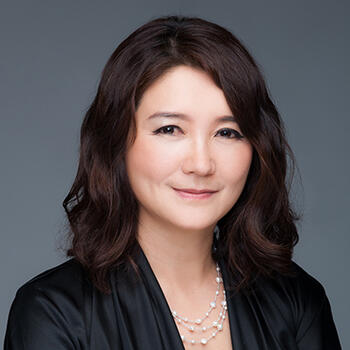
Stanford University’s Walter H. Shorenstein Asia-Pacific Research Center (APARC) is pleased to announce that NPR's Beijing Correspondent Emily Feng is the recipient of the 2022 Shorenstein Journalism Award for excellence in coverage of the Asia-Pacific region. The award recognizes Feng’s eloquent and influential reporting on China amid unprecedented hurdles facing foreign journalists seeking to report in and on the country. She will receive the award at a public ceremony in fall 2022.

Feng, who joined NPR in 2019, roves around China through its big cities and small villages, reporting on social trends as well as economic and political news coming out of Beijing. She contributes to NPR’s newsmagazines, newscasts, podcasts, and digital platforms. Previously, she served as Beijing correspondent for the Financial Times, covering a broad range of topics, including human rights and technology.

Emily Feng’s reporting is crucially important journalism that pushes the industry forward and tells powerful stories of Chinese citizens amid intense pressure by the Chinese government over investigative stories on the country.
Gi-Wook Shin
APARC Director

Sign up for APARC newsletters to receive our experts' analysis and commentary


During her tenure at the Financial Times, she began to report extensively on the region of Xinjiang, becoming the first foreign reporter to uncover that China was separating Uyghur children from their parents and sending them to state-run orphanages, and discovering that China was introducing forced labor in Xinjiang’s detention camps.

“Emily Feng’s reporting is crucially important journalism that pushes the industry forward and tells powerful stories of Chinese citizens amid intense pressure by the Chinese government over investigative stories on the country,” said Gi-Wook Shin, Shorenstein APARC director. “We applaud her courage and outstanding work and are delighted to recognize her with the Shorenstein Journalism Award.”

Presented annually by APARC, the Shorenstein award, which carries a $10,000 cash prize, honors the legacy of APARC’s benefactor, Mr. Walter H. Shorenstein, and his twin passions for promoting excellence in journalism and understanding of Asia. The selection committee for the award, which unanimously chose Feng as the 2022 honoree, noted that her work embodies the purpose of the award, stating that her reporting on China’s persecution and treatment of the Uyghurs “stands out as some of the most stunning of the past few years.”

The committee members are William Dobson, co-editor of the Journal of Democracy; Anna Fifield, editor of the Dominion Post and Wellington editor for New Zealand's news site Stuff, who is also the recipient of the 2018 Shorenstein Journalism Award; James Hamilton, Hearst Professor of Communication, chair of the Department of Communication, and director of the Stanford Journalism Program, Stanford University; Louisa Lim, senior lecturer, Audio-Visual Journalism Culture and Communication, University of Melbourne; and Raju Narisetti, Publisher, McKinsey Global Publishing, McKinsey and Company.

Feng's reporting has let her nerd out over semiconductors and drones, travel to environmental wastelands, and write about girl bands and art. She has filed stories from the bottom of a coal mine, the top of a mosque in Qinghai, and from inside a cave Chairman Mao once lived in. Her human rights coverage has been shortlisted by the British Journalism Awards in 2018, recognized by the Amnesty Media Awards in February 2019, and won a Human Rights Press merit that May. Her radio coverage of the coronavirus epidemic in China earned her another Human Rights Press Award, was recognized by the National Headliners Award, and won a Gracie Award. She was also named a Livingston Award finalist in 2021.

Feng graduated cum laude from Duke University with a dual B.A. degree from Duke's Sanford School in Asian and Middle Eastern studies and in public policy.

Twenty journalists previously received the Shorenstein award, including most recently Swe Win, editor-in-chief of the independent Burmese news organization Myanmar Now; Tom Wright, co-author of the bestseller Billion Dollar Whale and a veteran Asia reporter; and Nobel Laureate Maria Ressa, CEO and executive editor of the Philippines-based news organization Rappler.

Information about the 2022 Shorenstein Journalism Award ceremony and panel discussion featuring Feng will be forthcoming in the fall quarter.

Read More

Vladamir Putin and Xi Jinping shake hands.
Commentary

Beijing Is Used to Learning from Russian Failures

The invasion of Ukraine is offering useful lessons for the PLA.
Beijing Is Used to Learning from Russian Failures
Tongtong Zhang
Q&As

Predoctoral Fellow Spotlight: Tongtong Zhang Examines Channels for Public Deliberation in China

Political Scientist and APARC Predoctoral Fellow Tongtong Zhang explores how the Chinese Communist Party maintains control through various forms of political communication.
Predoctoral Fellow Spotlight: Tongtong Zhang Examines Channels for Public Deliberation in China
millward
News

Unpacking the Crisis in Xinjiang: James Millward on China's Assimilationist Policies and U.S.-China Engagement

APARC Visiting Scholar James Millward discusses PRC ethnicity policy, China's crackdown on Uyghur Muslims and other minorities in Xinjiang province, and the implications of the Xinjiang crisis for U.S. China strategy and China's international relations.
Unpacking the Crisis in Xinjiang: James Millward on China's Assimilationist Policies and U.S.-China Engagement
Hero Image
Portrait of Emily Feng with text about her winning the 2022 Shorenstein Journalism Award.
All News button
1
Subtitle

Feng, whose compelling and bold reporting has amplified the voices of Chinese citizens amid rapidly deteriorating press freedom in the country, is the recipient of the 21st Shorenstein Journalism Award.

-

The Korea Program at Stanford will mark its 20-year anniversary with a conference focused on North Korean issues and South Korea’s pop culture wave (Hallyu), two aspects of Korea that continue to intrigue the public, exploring how to translate this public attention into an increased academic interest in Korea.

This event is made possible by generous support from the Korea Foundation and other friends of the Korea Program.

Bukchon Hanok village and text about Stanford's Korea Program 20th anniversary conference on May 19-20, 2022.

Featuring a keynote address by
Ban Ki-moon, former Secretary-General of the United Nations


DAY 1: Thursday, May 19, 9:00 a.m. - 5:15 p.m.

9:00-9:15 a.m.
Opening and Welcome Remarks

Gi-Wook Shin, Director of Asia-Pacific Research Center and Korea Program, Stanford
Michael McFaul, Director of the Freeman Spogli Institute for International Studies, Stanford
Gabriella Safran, Senior Associate Dean of Humanities and Arts, Stanford


9:15-10:45 a.m.
Panel on North Korea

Moderated by Yumi Moon, Associate Professor of History, Stanford

Siegfried Hecker, Professor Emeritus, Management Science and Engineering; Senior Fellow Emeritus, FSI, Stanford
Kim Sook, former ROK Ambassador to UN; Executive Director, Ban Ki-moon Foundation for a Better Future
Joohee Cho, Seoul Bureau Chief, ABC News


11:00-11:50 a.m. 
Korea Program at Stanford: Past, Present, and Future 

Moderated by Kelsi Caywood, Research Associate, Korea Program, APARC, Stanford

Paul Chang, Associate Professor of Sociology, Harvard University
Joon-woo Park, former ROK Ambassador to EU and Singapore; 2011-12 Koret Fellow
Jong Chun Woo, former president of Stanford APARC-Seoul Forum; Professor Emeritus, Seoul National University
Megan Faircloth, Senior in East Asian Languages and Cultures, Stanford


11:50 a.m.-12:30 p.m.        Lunch Break


12:30-1:30 p.m.
Keynote Address by Ban Ki-moon, former Secretary-General of the United Nations

Image
portrait of UN Secretary General Ban Ki-moon

Introduction by H.R. McMaster, former National Security Advisor; Fouad and Michelle Ajami Senior Fellow, Hoover Institution, Stanford

Moderated by Gi-Wook Shin, Director of APARC and Korea Program, Stanford


2:00-3:30 p.m.
Panel on the Korean Wave

Moderated by Dafna Zur, Associate Professor of East Asian Languages and Cultures; Director of Center for East Asian Studies, Stanford

SUHO, Leader of EXO
Angela Killoren, CEO of CJ ENM America, Inc.
Marci Kwon, Assistant Professor of Art and Art History, Stanford


3:45-5:15 p.m.
Documentaries on K-pop
 and North Korean Human Rights (teaser)*

Moderated by Haley Gordon, Research Associate, Korea Program, APARC, Stanford

Introduction of the films by Director Hark Joon Lee and Director of Photography Byeon Jaegil 

Vivian Zhu, Junior in International Relations and East Asian Studies, Stanford
Youlim Kim, Third-year PhD student in Microbiology & Immunology, Stanford
*The documentaries will not be shown on the livestream


Conference speakers
Conference speakers include (from left to right) Ban Ki-moon, Kathryn Moler, SUHO, Soo-Man Lee, Marci Kwon, Michael McFaul, Siegfried Hecker, Kim Hyong-O, Dafna Zur, H.R. McMaster, Michelle Cho, Gabriella Safran.

Day 2: Friday, May 20, 9:00 a.m. - 12:00 p.m.

9:00-10:30 a.m.
How to Translate Interest in North Korea and K-pop into Korean Studies

Moderated by Gi-Wook Shin, Director of Asia-Pacific Research Center and Korea Program

David Kang, Professor of International Relations and Business, USC
Yumi Moon, Associate Professor of History, Stanford
Michelle Cho, Assistant Professor of East Asian Studies, University of Toronto
Dafna Zur, Associate Professor of East Asian Languages and Cultures; Director of Center for East Asian Studies, Stanford


10:45 a.m.-12:00 p.m.
Future Visions of K-pop

Image
Soo-Man Lee
Keynote speech by Soo-Man Lee, Founder and Chief Producer of SM Entertainment

Introduction by Gi-Wook Shin, Director of Asia-Pacific Research Center and Korea Program

Conversation with:
Dafna Zur, Associate Professor of East Asian Languages and Cultures; Director of Center for East Asian Studies, Stanford
SUHO, Leader of EXO

Conferences
-

This event is made possible by generous support from the Korea Foundation and other friends of the Korea Program.

South Korean popular culture has spread to all corners of the globe, including South Korea’s closed-off neighbor to the north. While North Korea’s Kim Jong Un regime has sought to eradicate the presence of K-pop and South Korean television dramas in his country — even threatening execution for those who consume these cultural products — their popularity endures in North Korea. This panel will address questions relating to the spread of the Korean Wave (Hallyu) in North Korea. How widespread is consumption of South Korean popular culture in the North? Are these cultural products contributing to social change in North Korea, and if so, to what extent? Does the Korean Wave have the potential to contribute to political unrest and change in North Korea?

Speakers:

Image
portrait of Sunny Yoon

Sunny Yoon is a professor of Media and Communication at Hanyang University in Seoul. Her research encompasses the globalization of Korean media, the interaction of religion and new media, cultural politics, youth culture, and fandom of Korean popular culture. She is the author of Communication Technology and Creative Industries and Global Media and Asian Identity: Cultural Hybridity or Cultural Resistance, and she has authored papers and a book chapter on the impact of mobile media and South Korean media on North Korean youth culture and social change. She has served as Section Head for Visual Culture in the International Association for Media and Communication Research, as well as the editor-in-chief of the journal of Asian Communication Research. She has been a visiting fellow at Yale University and University of Cambridge, as well as a visiting professor at Doshisha University in Japan, National Taiwan University, and King's College London. Professor of Media and Communication, Hanyang University, Korea

Image
portrait of Suk-Young Kim

Suk-Young Kim is a professor of Theater and Performance Studies at UCLA where she also directs Center for Performance Studies. She is the author of Illusive Utopia :Theater, Film, and Everyday Performance in North Korea (Michigan, 2010), DMZ Crossing: Performing Emotional Citizenship Along the Korean Border (Columbia, 2014), and most recently, K-pop Live: Fans, Idols, and Multimedia Performance (Stanford, 2018). Her scholarship has been recognized by the James Palais Book Prize from the Association for Asian Studies, the Association for Theater in Higher Education Outstanding Book Award, and ACLS/SSRC/NEH International and Area Studies Fellowship. Currently She is working on a book titled Way Ahead of Squid Game (forthcoming in 2023), Millennial North Korea: Forbidden Media and Living Creatively with Surveillance (Stanford UP, under contract) and is editing Cambridge Companion to K-Pop. Her comments on Korean cultural politics have been featured in major media outlets, such as Billboard, CNN, NPR, and the New York Times.

Moderator: Haley Gordon, Research Associate in Korea Program at APARC, Stanford University

Via Zoom. Register at https://bit.ly/3JlGJDM

Panel Discussions
Paragraphs
3D mockup cover of APARC's volume 'South Korea's Democracy in Crisis'

Like in many other states worldwide, democracy is in trouble in South Korea, entering a state of regression in the past decade, barely thirty years after its emergence in 1987. The society that recently had ordinary citizens leading “candlelight protests” demanding the impeachment of Park Geun-hye in 2016-17 has become polarized amid an upsurge of populism, driven by persistent structural inequalities, globalization, and the rise of the information society. 

The symptoms of democratic decline are increasingly hard to miss: political opponents are demonized, democratic norms are eroded, and the independence of the courts is whittled away. Perhaps most disturbing is that this all takes place under a government dominated by former pro-democracy activists.

The contributors to this volume trace the sources of illiberalism in today’s Korea; examine how political polarization is plaguing its party system; discuss how civil society and the courts have become politicized; look at the roles of inequality, education, and social media in the country’s democratic decline; and consider how illiberalism has affected Korea’s foreign policy. 

Table of Contents

Introduction
Korea’s Democratic Decay: Worrisome Trends and Pressing Challenges
Gi-Wook Shin and Ho-Ki Kim

1. Why Is Korean Democracy Majoritarian but Not Liberal?
Byongjin Ahn

2. Uses and Misuses of Nationalism in the Democratic Politics of Korea
Aram Hur

3. The Weakness of Party Politics and Rise of Populism in Korea
Kwanhu Lee

4. The Politicization of Civil Society: No Longer Watchdogs of Power, Former Democratic Activists Are Becoming New Authoritarian Leaders 
Myoung-Ho Park

5. The Politicization of the Judiciary in Korea: Challenges in Maintaining the Balance of Power
Seongwook Heo

6. Two Divergences in Korea’s Economy and Democracy: Regional and Generational Disparities
Jun-Ho Jeong and Il-Young Lee

7. Democracy and the Educational System in Korea 
Seongsoo Choi

8. Social Media and the Salience of Polarization in Korea
Yong Suk Lee

9. Illiberalism in Korean Foreign Policy
Victor Cha

10. The Democratic Recession: A Global and Comparative Perspective
Larry Diamond

Epilogue
Korea’s 2022 Presidential Election: Populism in the Post-Truth Era
Ho-Ki Kim and Gi-Wook Shin

Media Coverage

To celebrate the publication of South Korea's Democracy in Crisis, APARC held a book launch seminar in Seoul on June 14, 2022. The event received extensive coverage in Korean media, including the following:

Desk, examination, or review copies can be requested through Stanford University Press.

All Publications button
1
Publication Type
Books
Publication Date
Subtitle

The Threats of Illiberalism, Populism, and Polarization

Authors
Gi-Wook Shin
Book Publisher
Shorenstein APARC
Authors
Noa Ronkin
News Type
News
Date
Paragraphs

The Walter H. Shorenstein Asia-Pacific Research Center (APARC), Stanford University’s hub for interdisciplinary research, education, and engagement on contemporary Asia, invites nominations for the 2022 Shorenstein Journalism Award. The award recognizes outstanding journalists who have spent their careers helping audiences worldwide understand the complexities of the Asia-Pacific region. The 2022 award will honor a recipient whose work has primarily appeared in American news media. APARC invites 2022 award nomination submissions from news editors, publishers, scholars, journalism associations, and entities focused on researching and interpreting the Asia-Pacific region.  Submissions are due by Tuesday, February 15, 2022.

Sponsored by APARC, the award carries a cash prize of US $10,000. It alternates between recipients whose work has primarily appeared in Asian news media and those whose work has primarily appeared in American news media. The 2022 award will recognize a recipient from the latter category. For the purpose of the award, the Asia-Pacific region is defined broadly to include Northeast, Southeast, South, and Central Asia and Australasia. Both individual journalists with a considerable body of work and journalism organizations are eligible for the award. Nominees’ work may be in traditional forms of print or broadcast journalism and/or in new forms of multimedia journalism. The Award Selection Committee, whose members are experts in journalism and Asia research and policy, presides over the judging of nominees and is responsible for the selection of honorees.

An annual tradition since 2002, the award honors the legacy of APARC benefactor, Mr. Walter H. Shorenstein, and his twin passions for promoting excellence in journalism and understanding of Asia. Over the course of its history, the award has recognized world-class journalists who push the boundaries of coverage of the Asia-Pacific region and help advance mutual understanding between audiences in the United States and their Asian counterparts. Recent honorees include Burmese journalist and human rights defender Swe Win; former Wall Street Journal investigative reporter Tom Wright; the internationally esteemed champion of press freedom Maria Ressa, CEO and executive editor of the Philippine news platform Rappler and winner of the 2021 Nobel Peace Prize; former Washington Post Beijing and Tokyo bureau chief Anna Fifield; and Editor of the Wire Siddharth Varadarajan.

Award nominations are accepted electronically through Tuesday, February 15, 2022, at 11:59 PM PST. For information about the nomination procedures and to submit a nomination please visit the award nomination entry page. The Center will announce the winner by April 2022 and present the award at a public ceremony at Stanford in the autumn quarter of 2022.

Please direct all inquiries to aparc-communications@stanford.edu.

Read More

Burmese journalist Swe Win
News

‘There Is No Space Left for Any Freedom’: Shorenstein Journalism Award Recipient Swe Win Depicts Myanmar’s Return into Darkness

Amidst the crisis in Myanmar, Burmese investigative journalist Swe Win, editor-in-chief of the independent news outlet Myanmar Now, continues to lead the newsroom from exile while his team is in hiding.
‘There Is No Space Left for Any Freedom’: Shorenstein Journalism Award Recipient Swe Win Depicts Myanmar’s Return into Darkness
Autumn scene on the Stanford campus with a call to apply for APARC's 2022-23 fellowships for Asia schoalrs
News

APARC Announces 2022-23 Fellowships for Asia Specialists

The Center offers fellowships for postdoctoral scholars specializing in contemporary Asia, Japan, and Asia health policy and for experts on Southeast Asia.
APARC Announces 2022-23 Fellowships for Asia Specialists
North Korea Conundrum Book cover
News

How to Solve the North Korean Conundrum: The Role of Human Rights in Policy Toward the DPRK

APARC's new edited volume, 'The North Korean Conundrum,' shines a spotlight on the North Korean human rights crisis and its connection to nuclear security. In the book launch discussion, contributors to the volume explain why improving human rights in the country ought to play an integral part of any comprehensive U.S. engagement strategy with the DPRK.
How to Solve the North Korean Conundrum: The Role of Human Rights in Policy Toward the DPRK
Hero Image
Stanford arch and text calling for nominations for APARC's 2022 Shorenstein Journalism Award.
All News button
1
Subtitle

Sponsored by Stanford University’s Shorenstein Asia-Pacific Research Center, the annual award recognizes outstanding journalists and journalism organizations for excellence in coverage of the Asia-Pacific region. News editors, publishers, scholars, and organizations focused on Asia research and analysis are invited to submit nominations for the 2022 award through February 15.

Authors
Noa Ronkin
News Type
News
Date
Paragraphs

In summer 2019, Burmese journalist and human rights defender Swe Win had to flee Myanmar with his family, fearing for their safety after surviving an assassination attempt coordinated by an army chief. The attack came after Myanmar Now, the Yangon-based, independent news outlet that Swe Win leads, had published investigative reports on the business interests of Min Aung Hlaing, Myanmar's armed forces commander-in-chief.

The COVID-19 pandemic derailed Swe Win’s plans to return to the country ahead of the national elections the following year. Then, on February 1, 2021, everything changed when the military seized power in a coup, ousting the democratically-elected government led by Aung San Suu Kyi. “The coup has put an abrupt end to Myanmar people’s hopes for liberty and democracy,” said Swe Win, the recipient of APARC’s 2021 Shorenstein Journalism Award, at the award ceremony. “Every form of free speech is brutally suppressed. There is no space left for any freedom.”

Transcript of Swe Win's award acceptance remarks.
Download pdf

[Watch more APARC events and subscribe to our YouTube channel.


One victim of the coup has been Myanmar’s independent press. Like other news organizations and publications, Myanmar Now saw its newsroom raided, its operating license revoked, and its website blocked, and most of its staff were forced to flee to territories alongside the country's border areas. Swe Win leads the news outlet from exile while his team, in hiding, courageously continues to report on what is happening in the country.

The future of the media in Myanmar is bleak. State-run news outlets have now begun to support military propaganda. There are no options left for professional reporters to work independently under the junta.
Swe Win
2021 Shorenstein Journalism Award Recipient

Speaking at the Shorenstein award’s twentieth annual discussion, which was held virtually on October 12, 2021, Swe Win described Myanmar’s post-coup assault on the free press. “Newsgathering on the ground, in Yangon and other parts of the country, is very dangerous,” he said. Reporters inside the country are subject to an unprecedented level of surveillance, can no longer identify themselves as working with Myanmar Now or other news organizations, and risk their lives with every interview they conduct.

Any criticism of the military junta, even a mere suggestion of sympathy with the resistance movement, is easily interpreted as indicating dissidence and leads to immediate arrests. “The future of the media in Myanmar is bleak,” Swe Win said. “Under the military junta, there are no options left for professional reporters to work independently.”

The award event also included a discussion with Eileen Donahoe, the executive director of the Global Digital Policy Incubator (GDPI) at Stanford’s Cyber Policy Center, and Scot Marciel, a career diplomat, former U.S. ambassador to Myanmar, and currently a visiting practitioner fellow on Southeast Asia at APARC. Southeast Asia Program Director Donald K. Emmerson chaired the discussion.

Unflinching Pursuit of Truth

The Shorenstein Journalism Award recognizes accomplished journalists who have significantly contributed to a greater understanding of the complexities of Asia. It alternates between recipients affiliated mostly with American news media and those primarily affiliated with Asian news media, who often also work on the frontline of the battle to defend press freedom in their home countries. The 2019 awardee in that category is Maria Ressa, winner of the 2021 Nobel Peace Prize.

“The Shorenstein Award has put a spotlight on courageous journalists around the world for a long time, and our honoree this year richly deserves its recognition,” noted Raju Narisetti, director of global publishing at McKinsey & Company and a member of the selection committee for the Shorenstein Journalism Award, as he introduced Swe Win. “From a very young age, he set off on a path to speaking truth to power — something that he has passionately done at a heavy price.”

To us, journalism is like science, its power is in the truth – that is what’s driving us.
Swe Win
2021 Shorenstein Journalism Award Recipient

Swe Win launched his journalism career after being held for seven years as a political prisoner on national security-related charges for joining the democracy movement as a college student. Throughout his career, Swe Win has shined a light on human rights cases that involve physical injury, death, unlawful detention, and miscarriage of justice in Myanmar. Under his leadership, Myanmar Now has gained recognition for its unflinching reports of crimes against the Rohingya and spotlights on the lives of Myanmar’s impoverished communities, for criticizing ultranationalist Buddhist monks, and for its bold coverage of Aung San Suu Kyi’s administration and the Myanmar military, the Tatmadaw.

On multiple occasions, Swe Win had to defend himself against physical attacks and frivolous litigation intended to derail the reporting of Myanmar Now. “To us, journalism is like science, its power is in the truth – that is what’s driving us […] We do not mix activism with journalistic work, but rather let the facts tell the story,” he replied when asked how he balances the roles of a journalist and a human rights defender.

Eileen Donahoe and Scot Marciel

The Rise of Digital Authoritarianism

Donahoe, who served in the Obama administration as the first U.S. ambassador to the UN Human Rights Council in Geneva during the period when Myanmar seemed as if it was transitioning to a functioning democracy, described the sense of hope and optimism at that time and how disheartening it is “to recognize how much we can go backward in just a decade of time.”

In her current role, Donahoe leads GDPI’s efforts to advance policies that reinforce human rights and democratic values in a digitized society. She emphasized the need to recognize both the risks of digital disinformation and techno-authoritarianism, on the one hand, and the importance of digital technologies for human rights defenders, journalists, and civil society actors, who depend on them to do their work. “The problem is that the same tools that serve very beneficial purposes in society are now being weaponized by maligned actors. Unfortunately, this is a geopolitical trend, what I would call digital authoritarianism.”

The Myanmar Coup: Regional and International Implications

The coverage of the Myanmar coup and its aftermath has rightly focused on the suffering and the lost freedoms of Myanmar’s people, but, more broadly, the crisis profoundly impacts other countries in the region as well as the United States.

The coup has failed in the sense that the Myanmar military has not been able to control and govern the country.
Scot Marciel
Career Diplomat, Former U.S. Ambassador to Myanmar; Visiting Practitioner Fellow on Southeast Asia, Shorenstein APARC

Within Southeast Asia, explained Ambassador Marciel, the coup has become a complex challenge for the Association of Southeast Asian Nations (ASEAN), which has been unable to figure out how to address the crisis. By creating massive regional instability, the coup has also put the two giants on Myanmar’s borders — India and China — in a situation they dislike. “The coup has failed in the sense that the Myanmar military has not been able to control and to govern the country,” Marciel said.

As for the United and its engagement with Southeast Asia, the coup and Myanmar’s current descent further into violence are a major setback. Marciel highlighted the role the United States can play in the upcoming ASEAN summit to advance solutions to the crisis. Donahoe also emphasized the opportunity to put Myanmar at the top of the agenda of the Biden administration’s upcoming Summit for Democracy, whose three pillars are combating authoritarianism, combating kleptocracy, and protecting human rights. “These are highly relevant to the case of Myanmar, and digital technology runs through all three,” said Donahoe.

At the close of the discussion, both Donahoe and Marciel underscored the need for and opportunity in funding and training independent media groups in Myanmar, like Myanmar Now.

Despite the enormous difficulties and risks ahead, Swe Win emphasized that he and his colleagues believe the current crisis is an opportunity for greater and better changes in Myanmar. He ended the conversation on an optimistic note: “You may be depressed about what is happening in our nation and in other places, but the people of Myanmar are not depressed. As long as we are with the truth, we are always winning.”

Read More

Forest fires burn
News

Ban Ki-moon Urges Global Cooperation to Address Twin Crises of Climate Change, COVID-19

“We need an all hands on deck approach underpinned by partnership and cooperation to succeed...we must unite all global citizens and nations...indeed we are truly all in this together.”
Ban Ki-moon Urges Global Cooperation to Address Twin Crises of Climate Change, COVID-19
Mongolian parliamentary delegation
News

Mongolian Parliamentary Delegation Discusses the Nation's Democratic Future

At an in-person address to a panel of parliament members and Stanford scholars, Speaker Gombojav Zandanshatar assessed the nation's experiment in deliberative democracy and offered reflections on the challenges that face maturing democracies.
Mongolian Parliamentary Delegation Discusses the Nation's Democratic Future
Gi-Wook Shin presents the 2020 Shorenstein Journalism Award to Tom Wright at a virtual event
News

Shorenstein Journalism Award Winner Tom Wright Recounts Story of Global Financial Scandal

Wright, who led the investigation that unveiled the Malaysian 1MDB scandal, one of the largest-ever financial frauds, highlighted how Western institutions enable global corruption and undermine democracy in foreign countries with poor rule of law.
Shorenstein Journalism Award Winner Tom Wright Recounts Story of Global Financial Scandal
Hero Image
Burmese journalist Swe Win
Swe Win, chief editor of Myanmar Now, gives remarks upon receiving the Shorenstein Journalism Award, October 12, 2021.
All News button
1
Subtitle

Amidst the crisis in Myanmar, Burmese investigative journalist Swe Win, editor-in-chief of the independent news outlet Myanmar Now, continues to lead the newsroom from exile while his team is in hiding.

0
Global Affiliate Visiting Scholar, 2021-22
The Asahi Shimbun Company
masa_oishi.jpg MBA

Masahiko Oishi is a global affiliate visiting scholar at the Walter H. Shorenstein Asia-Pacific Research Center (Shorenstein APARC) for 2021-22.

Authors
Noa Ronkin
News Type
News
Date
Paragraphs

STANFORD, CA, April 27, 2021 — Stanford University’s Walter H. Shorenstein Asia-Pacific Research Center (APARC) announced today that Burmese journalist Swe Win is the recipient of the 2021 Shorenstein Journalism Award. An acclaimed investigative journalist and human rights defender, Swe Win is the co-founder and editor-in-chief of Myanmar Now, an independent news agency that produces features, analysis, and investigative reports on life in the country in both Burmese and English. Presented annually by APARC, the Shorenstein award is conferred upon a journalist who has contributed significantly to a greater understanding of Asia through outstanding reporting on critical issues affecting the region. Swe Win will receive the award in fall quarter 2021.

Throughout his journalistic career, Swe Win has focused on underreported cases involving physical injury, wrongdoing, and miscarriage of justice in Myanmar. Under his leadership, Myanmar Now has gained recognition for its in-depth, unflinching reports of crimes against the Rohingya and spotlights on the lives of Myanmar’s impoverished communities, for criticizing ultranationalist Buddhist monks, and for its bold coverage of Aung San Suu Kyi’s administration and the Myanmar military, the Tatmadaw. Since the February 1, 2021 military coup, the Myanmar Now team has continued its brave coverage amid physical threats, violence, police raids, and arrests. Swe Win currently leads the Yangon-based Myanmar Now 40-member editorial team from exile and his newsroom is in hiding.

Swe Win has set a shining example to others with his undaunted commitment to advancing human rights and freedom of expression in Myanmar. His work demonstrates the moral force of independent, investigative journalism to speak truth to power.
Gi-Wook Shin
Director, Shorenstein APARC

Swe Win has faced multiple encounters with the military due to his investigative journalism work. In August 2019, soon after Myanmar Now published exposés of the vast business interests of top generals including Min Aung Hlaing, the commander-in-chief of the country’s armed forces, he sustained a gunshot wound while traveling in Rakhine State, a targeted shooting attack in which both civilian and military officials seem to have been involved. Two years earlier, he was arrested and had to defend himself against defamation charges for a Facebook post critical of U Wirathu, a fundamentalist Buddhist monk known for his anti-Muslim rhetoric. In 1998, as a college student during the time of Myanmar’s military regime, he was apprehended for joining the democracy movement and held for seven years as a political prisoner on national security-related charges.

Following his release from prison, Swe Win earned a Master’s degree in journalism from the University of Hong Kong, then worked for the Irrawaddy Magazine and freelanced for international publications including The New York Times and Al Jazeera. When the junta-era media censorship was lifted in 2012, he set up an independent newspaper, The Yangon Globe, and in 2015 cofounded Myanmar Now.

“Swe Win has set a shining example to others with his undaunted commitment to advancing human rights and freedom of expression in Myanmar,” said Gi-Wook Shin, Shorenstein APARC director. “His work demonstrates the moral force of independent, investigative journalism to speak truth to power, and he now leads a courageous, resilient fight for press freedom in the face of brutal attacks on democracy and liberty. It is our honor to recognize him with the Shorenstein Journalism Award.”

Swe Win is the recipient of the 2019 Ramon Magsaysay Award for Emergent Leadership, which is regarded as Asia's equivalent of the Nobel Prize, the 2017 European Union’s Schuman Award for Human Rights, and the 2016 Presidential Certificate of Honor for Social Service through Journalism from the Myanmar Ministry of Information for his groundbreaking investigation into years-long abuse of domestic workers at a Yangon tailor shop.

The Shorenstein Journalism Award, which carries a $10,000 cash prize, honors the legacy of APARC’s benefactor, Mr. Walter H. Shorenstein, and his twin passions for promoting excellence in journalism and understanding of Asia. “This year marks the twentieth anniversary of the Shorenstein Award,” noted Shin. “At a time when the Asia-Pacific region has the biggest number of ‘Predators of Press Freedom,’ to quote Reporters Without Borders, we are grateful more than ever to the Shorenstein family for its support of our Center’s mission and the journalism award program, and to the members of the award selection committee for their expertise and service.”

The selection committee for the Shorenstein Journalism Award includes Wendy Cutler, Vice President and Managing Director, Washington, D.C. Office, Asia Society Policy Institute; James Hamilton, Hearst Professor of Communication, Chair of the Department of Communication, and Director of the Stanford Journalism Program, Stanford University; Raju Narisetti, Publisher, McKinsey Global Publishing, McKinsey and Company; Philip Pan, Weekend Editor and former Asia Editor, The New York Times; and Prashanth Parameswaran, Senior Columnist, The Diplomat.

Nineteen journalists have previously won the Shorenstein award, including most recently Tom Wright, the co-author of the bestseller Billion Dollar Whale and a long-time Asia reporter; the internationally-esteemed journalist and press freedom champion Maria Ressa, CEO and executive editor of the Philippine news platform Rappler; Anna Fifield, formerly the Washington Post’s Beijing Bureau Chief and a veteran North Korea watcher; and Siddharth Varadarajan, the founding editor of the Wire and former editor of The Hindu.

APARC will share information about the 2021 Shorenstein Journalism Award program featuring Swe Win in the fall quarter.

Read More

People holding up images in protest
News

Terms of Engagement: Ambassador Scot Marciel on U.S.-Southeast Asia Relations

The book Ambassador Marciel is writing at Stanford examines policy issues from the implications of the Myanmar crisis to the future of America’s relations with other Southeast Asian nations and the prospects for a U.S. strategic regional focus.
Terms of Engagement: Ambassador Scot Marciel on U.S.-Southeast Asia Relations
[Top left] Gi-Wook Shin; [top right] Roberta Cohen; [bottom left] Tomás Ojea Quintana; [bottom right] Joon Oh
News

Using the UN to Create Accountability for Human Rights Crimes in North Korea

Experts on human rights agree that the UN needs to work through multiple channels to support ongoing investigations and build evidence for future litigations in order to create accountability and pressure the DPRK to desist in committing human rights crimes.
Using the UN to Create Accountability for Human Rights Crimes in North Korea
President Biden and President Suga walk through the Rose Garden colonnade at the White House
Commentary

U.S. and Japan Gear Up for a New Era of Competition with China

The time is near when other Asian nations will have to pick a side in the great power competition between the United States and China, says Japan Program Director Kiyoteru Tsutsui.
U.S. and Japan Gear Up for a New Era of Competition with China
Hero Image
Portrait of Swe Win with text "2021 Shorenstein Journalism Award Recipient" Photograph: Thet Htoo for the Mekong Review - https://mekongreview.com/cause-and-karma
All News button
1
Subtitle

An esteemed investigative journalist and human rights defender, Swe Win is the recipient of the twentieth Shorenstein Award. He currently leads the editorial team of the independent news agency Myanmar Now from exile and his newsroom is in hiding.

-

This is a virtual event. Please click here to register and generate a link to the talk. 
The link will be unique to you; please save it and do not share with others.


Presented by the Stanford China Program and the Stanford Center at Peking University.

Tuesday, April 27 
6:00 pm – 7:15 pm (PST) 
Wednesday, April 28 
9:00 am – 10:15 am (China) 

A large amount of ink has been spilled in the last few years--and even more so since COVID-19--in the U.S. regarding American perceptions of the P.R.C.  Relatively little, however, has been conveyed regarding how China might view the U.S. today.  In this talk, we bring together two eminent professors, Professor Jia Qingguo and Professor Wang Dong, from the School of International Studies, Peking University, to examine how policymakers, professionals, and average citizens in China might perceive the United States and what that might imply for the U.S.-China bilateral relationship.  Dr. Thomas Fingar, Shorenstein APARC Fellow, will moderate the conversation.

This event is part of Shorenstein APARC's spring webinar series.


Image
Portrait of Thomas Fingar
Thomas Fingar is a Shorenstein APARC Fellow in the Freeman Spogli Institute for International Studies at Stanford University. He was the inaugural Oksenberg-Rohlen Distinguished Fellow from 2010 through 2015 and the Payne Distinguished Lecturer at Stanford in 2009. From 2005 through 2008, he served as the first deputy director of national intelligence for analysis and, concurrently, as chairman of the National Intelligence Council. Fingar served previously as assistant secretary of the State Department’s Bureau of Intelligence and Research (2000-01 and 2004-05), principal deputy assistant secretary (2001-03), deputy assistant secretary for analysis (1994-2000), director of the Office of Analysis for East Asia and the Pacific (1989-94), and chief of the China Division (1986-89). Between 1975 and 1986 he held a number of positions at Stanford University, including senior research associate in the Center for International Security and Arms Control. Fingar's most recent books are Fateful Decisions: Choices that will Shape China’s Future, co-edited with Jean Oi (Stanford, 2020), and From Mandate to Blueprint: Lessons from Intelligence Reform (Stanford University Press, 2021).
 

Image
Portrait of Jia Qingguo
Jia Qingguo acquired his PhD at the Department of Government, Cornell University. He has been a member of the Standing Committee of the 11th, 12th and 13th National Committees of the Chinese People’s Political Consultative Conference (CPPCC), and was elected in March 2013 as a member of the Committee of Foreign Affairs of the 13th CPPCC. He is a professor and doctoral supervisor, and the former Dean of the School of International Studies at Peking University. He is a member of the Standing Committee of the Central Committee of the China Democratic League and the Director of its Education Committee. He is the Vice Chairman of the Beijing Municipal Committee, Director of the Research Center for International Economic Strategy of China, a member of the Academic Evaluation Committee of the China Foundation for International and Strategic Studies, a member of the Academic Committee of Quarterly Journal of International Politics of Tsinghua University, as well as an adjunct professor at Nankai University and Tongji University. Jia is also a senior researcher of the Hong Kong and Macao Research Institute under the Development Research Center of the State Council. His research mainly focuses on international politics, China-U.S. relations, China’s diplomacy, Cross-Strait relations, China’s rise, and the adjustment of China’s diplomacy. His major publications include: China’s Diplomacy in the 21st Century; Unrealized Reconciliation: China-U.S. Relations in the Early Cold War; and Intractable Cooperation: Sino-U.S. Relations After the Cold War.
 

Image
Portrait of Wang Dong
Wang Dong obtained his PhD in Politics at the University of California, Los Angeles (UCLA). He is now a full professor and doctoral supervisor at the School of International Studies, Executive Director of the Institute for Global Cooperation and Understanding, Vice President of the Office of Humanities and Social Sciences, and Deputy Secretary-General of the American Studies Center (National and Regional Research Base of the Ministry of Education) of Peking University. In addition, he is also the Secretary-General of the Academic Committee of the Pangoal Institution, member of the Steering Committee of the East Asia Security Forum of Western Returned Scholars Association, a member of the Advisory Committee of the Global Times and The Carter Center “Forum for Young Chinese and American Scholars” and a researcher of the Peace in East Asia Program of the Department of Peace and Conflict Research at Uppsala University, Sweden. Wang has led major programs of the National Social Science Fund of China, undertaken major projects of the Ministry of Education, Ministry of Foreign Affairs, and Ministry of Science and Technology, and been funded by the National Social Science Fund of China many times. He was shortlisted for “Munich Young Leader” in 2016 and Beijing “Outstanding Young Scientist” in 2018. He is interested in research on international relations theory, the Cold War, US diplomacy, China-US relations, etc.

Via Zoom Webinar. Register at: https://bit.ly/3rAcwXC

Thomas Fingar <br>Shorenstein APARC Fellow, Stanford University<br><br>
Jia Qingguo (贾庆国) <br>Former Dean and Professor, School of International Studies, Peking University<br><br>
Wang Dong (王栋) <br>Professor, School of International Studies, Peking University; Executive Director, Institute for Global Cooperation and Understanding (iGCU), Peking University<br><br>
Seminars
News Type
News
Date
Paragraphs

The 2018 blockbuster Crazy Rich Asians is many people’s first and only experience seeing Southeast Asia portrayed onscreen. Kevin Kwan’s enthralling, uber-rich characters jet-set across glittering scenes of cosmopolitan Singapore and paradisiacal beaches in Malaysia. But for Gerald Sim, APARC’s 2016-17 Lee Kong Chian Fellow at the Southeast Asia Program, the scope of cinema in Southeast Asia is much broader than the occasional Hollywood breakout success.

In a new book, Postcolonial Hangups in Southeast Asian Cinema, Sim examines how countries in Southeast Asia navigate the legacies of their unique colonial histories through film media. His writing focuses on Singapore, Malaysia, and Indonesia and how their cultural identities and postcolonial experiences are stylistically portrayed across commercial films, art cinema, and experimental works.

Sim explores the nuance of these works beyond the typical tropes of hybridity and syncretism in postcolonial identity. His analysis unpacks themes such as Singapore’s preoccupation with space, the importance of sound in Malay culture, and the ongoing investment Indonesia has made into genre and storytelling. Taken together, the book helps situate the regional cinematic traditions and local ideologies in the broader narrative of globalization.

The book builds on research Sim undertook as a fellow at APARC with support from the Lee Kong Chian NUS-Stanford Fellowship on Southeast Asia. He is currently an associate professor of Film and Media Studies at Florida Atlantic University, where he continues to teach about and research the thriving but understudied contributions of Southeast Asian film to world cinema.

Postcolonial Hangups in Southeast Asian Cinemas will be available for purchase from Amsterdam University Press on September 1.

Read Amsterdam University Press' interview with Sims about the book.

Read More

Cover of the book 'The Deer and the Dragon' on the background of a Southeast Asia map
News

New Book Analyzes the Dynamics of Inequality Between China and Southeast Asia

In a new volume, Donald Emmerson explores how the ASEAN nations are navigating complex political and policy issues with China during a time when political cohesion within ASEAN is fractured and China is increasingly assertive in its goals.
New Book Analyzes the Dynamics of Inequality Between China and Southeast Asia
Encina Courtyard
News

Call for Stanford Student Applications: APARC Hiring 2020-21 Research Assistants

To support Stanford students working in the area of contemporary Asia, the Shorenstein Asia-Pacific Center is offering research assistant positions for the fall, winter, and spring quarters of the 2020-21 academic year.
Call for Stanford Student Applications: APARC Hiring 2020-21 Research Assistants
Hero Image
[Left] Gerald Sim, [Right] the cover of 'Postcolonial Hangups in Southeast Asian Cinema'
Gerald Sim, a former LKC Fellow at APARC's Southeast Asia Program and his new book 'Postcolonial Hangups in Southeast Asian Cinema.'
All News button
1
Subtitle

Gerald Sim, a former Lee Kong Chian Fellow with the Southeast Asia Program, explores how Southeast Asian identities, histories, and cultures are portrayed in film in a new book, ‘Postcolonial Hangups in Southeast Asian Cinema.’

Subscribe to Media