Economic Affairs
-

As Japan faces a shrinking and aging population, it must pursue productivity growth to remain a wealthy nation. Women, long underrepresented Japan’s workforce, are receiving renewed attention with the Abe administration’s slogan of Womenomics as part of his Abenomics economic reform package. In the second World Assembly for Women in Tokyo (named WAW!) in late August 2015, Prime Minister Abe even went so far as to say “Abenomics is Womenomics.” At the same time as the WAW! meeting, the National Diet passed a law requiring large companies to analyze their current status of women and set numerical targets in one of several areas. Now that the issue of women in the workplace is being taken more seriously than ever before, it is time to mobilize serious research in the form of policy evaluation, create a new dialogue that can spark innovative ideas by injecting Silicon Valley ideas and people into U.S.-Japan policy discussions, and link entrepreneurs, policymakers, and researchers from both sides to cultivate sustained interpersonal networks. 

This conference takes on the issue of women leadership and women’s positions in the Japanese workforce and society, with the objective to bring issues to the table and explore concrete mechanisms by which government policy, business practices, and social factors can be influences to make concrete progress for women's leadership and participation in Japan.

Sponsored by the US-Japan Foundation (USJF), Japan Society for the Promotion of Science (JSPS), and Stanford University's Shorenstein Asia-Pacific Research Center (S-APARC) and Clayman Institute for Gender Research.


*The below program is subject to change.

Conference Program

8:55-9:25                  Registration and Breakfast

9:25-9:40                  Welcome & Opening Remarks

Takeo Hoshi (Stanford University)

David Janes (US-Japan Foundation)

Toru Tamiya (Japan Society for the Promotion of Science)

9:40-11:00                Panel Discussion I:

Women in the Silicon Valley Ecosystem- Progress and Challenges

                                  Chair:                     Shelley Correll (Stanford University)

                                  Panelists:             Ari Horie (Women's Startup Lab)

 Yoky Matsuoka

                                  Emily Murase (San Francisco Department on the Status of Women)

Mana Nakagawa (Facebook)


11:00-11:20              Coffee Break

11:20-12:40              Panel Discussion II:                                 

Women in the Japanese Economy- Progress and Challenges

                                  Chair:                    Mariko Yoshihara Yang (Stanford University)

                                  Panelists:             Mitsue Kurihara (Development Bank of Japan)

 Akiko Naka (Wantedly)

 Yuko Osaki (Ministry of Internal Affairs and Communications, Japanese Government)

                                  Machiko Osawa (Japan Women's University)


12:40-14:00              Lunchtime

14:00-15:20              Panel Discussion III:  

Women's Advancement in the Workplace

                                  Chair:                 Takeo Hoshi (Stanford University)

 Panelists:             Keiko Honda (Multilateral Investment Guarantee Agency (MIGA), the World Bank Group)

 Chiyo Kobayashi (Washington Core)

                                  Sachiko Kuno (S&R Foundation)

  Kazuo Tase (Deloitte Tohmatsu Consulting)        


15:20-15:40             Coffee Break

15:40-17:00             Panel Discussion IV:  

Work-Life Balance and Womenomics

                                  Chair:                     Kenji Kushida (Stanford University)

                                  Panelists:            Diane Flynn (ReBoot Career Accelerator for Women)

Atsuko Horie (Sourire)

Nobuko Nagase (Ochanomizu Women's University)

                                 Myra Strober (Stanford University)

17:00-17:05            Closing Remarks


Conferences
Authors
Lisa Griswold
News Type
News
Date
Paragraphs

South Korea is facing a number of challenges. Not unlike other advanced economies in Asia, the country is confronted with a declining working-age population, reduction in birth rates, and risk of long-term stagnation.

A team of Stanford researchers at Stanford’s Shorenstein Asia-Pacific Research Center (APARC), in collaboration with other scholars from around the world, is increasingly thinking about those challenges and is working on a number of research initiatives that explore potential solutions in leveraging benefits from globalization.

The researchers propose that Korea can extract value from two major movements of people – outflows of its own population (diaspora) and inflows of foreigners (immigrants and visitors), all of whom hold the capacity to build social capital – a network of people who have established trust and in turn spread ideas and resources across borders.

Engaging diaspora

Emigration is traditionally viewed as a loss of human capital – ‘brain drain’ – movement of skills out of one country and into another, but Stanford professor Gi-Wook Shin and Koret Fellow Joon Nak Choi support an alternative view of outward flows of citizens.

Shin and Choi suggest that people who leave their countries of origin but never return can still provide value to their home country through ‘brain linkage,’ which advocates that there is economic opportunity in cross-national connections despite a lack of physical presence. This concept is a focus of their research which was recently published in the book Global Talent: Skilled Labor and Mobility in Korea.

“What we’re trying to do is to extend the thinking – to not just look at potential losses of having your people go abroad but also the potential gains,” Choi said. “Previous studies have found that if you have more of these relationships or ‘brain linkages,’ you have more trade and more flow of innovations between countries.”

People who stay in a host country become participants in the local economy and often conduct influential activities such as starting companies, providing advice and sitting on boards of directors, Choi said, and these transactions enact flows of resources from home country to host country and vice versa.

Choi, who outside of his fellowship is an assistant professor at Hong Kong University of Science and Technology, said that this way of thinking pulls away from a zero-sum view of the world and instead sees it as “more globalized, cosmopolitan and diffuse.”

He leads a research project with Shin focused on global talent and cultural movement in East Asia, and over the past quarter, taught a graduate seminar on the Korean development model.

“Cross-national ties are harder to establish than those that are geographically close, but they provide invaluable means of sharing information and brokering cooperation that may otherwise be impossible on other levels,” said Shin, who is also the director of Shorenstein APARC. “In many ways, social ties can be a good strategy to gain a competitive edge. This is an area we endeavor to better understand through our research efforts on Korea.”

Shin has described his own identity of being a part of the very system they are studying. He grew up in Korea, arrived in the United States as a graduate student and has since stayed for three decades and frequently engages the academic and policy communities in Korea.

One cross-national initiative that he recently started is a collaborative study between scholars at Shorenstein APARC and Kyung Hee University in Seoul. The two-year study evaluates the social capital impact of a master’s degree program at the Korean university that trains select government officials from developing countries.


Image
internationalization embed 1

An international cohort including many researchers from Stanford’s Shorenstein Asia-Pacific Research Center have been conducting group interviews with international students at Korean and Japanese universities to better understand their motivations to stay or go following their completion of a degree or non-degree program at Korean universities. Their initial results reveal that gaps in cross-cultural understanding and opportunities cause feelings of disassociation, but recent internationalization efforts are helping to address those gaps and support innovation, knowledge sharing and local economic growth. An op-ed on the topic authored by Stanford professor Gi-Wook Shin and Yonsei University associate professor Rennie Moon can be viewed here. Credit: Flickr/SUNY – Korea/crop and brightness applied


Harnessing foreign skilled labor

Globalization has also led to migration of people to regions that lack an adequate supply of skilled workers in their labor force. This new infusion of people is an opportunity to bridge the gap, according to the researchers.

“In order to be successful, countries need a large talented labor pool to invest in,” said Yong Suk Lee, the SK Center Fellow in the Freeman Spogli Institute for International Studies and affiliate of the Korea Program. “Innovation is not something like a technology ladder which has a more obvious and strategic trajectory, it’s more about investing in people and taking risks on their ideas.”

Korea currently has a shortage of ‘global talent’ – individuals who hold skills valuable in the international marketplace. Yet, Korea is well positioned to reduce the shortage.

The country produces a vast amount of skilled college graduates. Nearly 70 percent of Koreans between the age of 25 and 34 have the equivalent of a bachelor’s degree. Korea has the highest percentage of young adults with a tertiary education among Organisation for Economic Co-operation and Development (OECD) countries. Another study found that the foreign student population in Korea has risen by 13 percent in the past five years.

Universities are moving to “internationalize” in seeking to both recruit faculty and students from abroad and to retain them as skilled workers in the domestic labor force. A new book published by Shorenstein APARC Internationalizing Higher Education in Korea: Challenges and Opportunities in Comparative Perspective assesses efforts by institutions in Korea, China, Japan, Singapore and the United States through nine separately authored chapters.


[[{"fid":"223565","view_mode":"crop_870xauto","fields":{"format":"crop_870xauto","field_file_image_description[und][0][value]":"","field_file_image_alt_text[und][0][value]":false,"field_file_image_title_text[und][0][value]":false,"field_credit[und][0][value]":"","field_caption[und][0][value]":"","field_related_image_aspect[und][0][value]":"","thumbnails":"crop_870xauto"},"type":"media","field_deltas":{"2":{"format":"crop_870xauto","field_file_image_description[und][0][value]":"","field_file_image_alt_text[und][0][value]":false,"field_file_image_title_text[und][0][value]":false,"field_credit[und][0][value]":"","field_caption[und][0][value]":"","field_related_image_aspect[und][0][value]":"","thumbnails":"crop_870xauto"}},"link_text":null,"attributes":{"width":"870","class":"media-element file-crop-870xauto","data-delta":"2"}}]]


Shin and Yonsei University associate professor Rennie Moon, who served as book editors and chapter authors, found that Korea has on average more outbound students (students who leave Korea to study elsewhere) than inbound students (international students who come to Korea to study). The figure above compares five countries and finds that Korea and China are more outbound-driven while Singapore, Japan and the United States are more inbound-driven.

“For most national and private universities in Korea, internationalization is more inbound-oriented—attracting foreign students, especially from China and Southeast Asia,” said Yeon-Cheon Oh, president of Ulsan University and former Koret Fellow at Shorenstein APARC who co-edited Internationalizing Higher Education in Korea. “In many ways, it’s about filling up students numbers. There needs to be a balance in inbound and outbound student numbers in order for internationalization to have an optimal effect.”

International students that do come to Korea are on average not staying long after graduation, though. The researchers identify reasons being difficulty in adapting to the local culture, inability to attain dual citizenship, language barriers, and low wages in comparison to that of native Koreans; in short – it is not easy to assimilate fully.

These and other barriers facing foreigners in Korea are a focus of a broader research project led by Shin and Moon that aims to propose functional steps for policymakers striving to internationalize their countries and to shift the discourse on diversity.

Developing a narrative

The Korean government has expanded efforts to recruit foreign students to study at Korean universities – many of which now rank in the top 200 worldwide – but addressing education promotion is only one area.

“The challenge is to propose a pathway that rallies around a general narrative,” Lee said, citing a need for internationalization to be coordinated across immigration policy, labor standards, and social safety nets.

An international group of experts in Korean affairs gathered at Stanford earlier this year at the Koret Workshop to address the challenge of creating a cohesive narrative, focused on Korea as the case study. The Koret Foundation of San Francisco funds the workshop and fellowship in its mission to support scholarly solutions to community problems and to create societal and policy change in the Bay Area and beyond.


Image
internationalization embed 3

The Koret Workshop brings together an international panel of experts on Korean affairs at Stanford. From 2015-2016, the workshops focused on higher education, globalization and innovation in Korea. Above, Michelle Hsieh (far right) speaks during a question and answer session following her presentation on Korean and Taiwanese small and medium enterprises, next to her is former U.S. Ambassador to the Republic of Korea Kathleen Stephens, Stanford consulting professor Richard Dasher, former U.S. foreign affairs official David Straub, and Korea University professor Myeong Hyeon Cho.


The interdisciplinary nature of the workshop was an important aspect, according to Lee, and Michelle Hsieh, one of 27 participants of the conference that covered a range of areas from entrepreneurship to export promotion policies in Korea.

“The workshop demonstrated how internationalization of higher education – and academic research in general – can be achieved by constructing cross-cutting ties,” said Hsieh, who was a postdoctoral fellow at Shorenstein APARC from 2006-07 and is now an associate research fellow at Academia Sinica in Taiwan.

“Participating in the workshop made me realize I really miss the lively and rigorous discussions at Shorenstein APARC, where researchers are interdisciplinary with diverse backgrounds yet focused on a common research interest,” Hsieh said. “I think debate and discussion in that kind of setting can illuminate a completely different take.”

The workshop will result in a book that features multiple areas and policy directions for Korea’s development. The lessons included are also envisioned to apply to other emerging countries facing similar trends of demographic change and economic slowdown. Shorenstein APARC expects to publish the book next year.

Hero Image
internationalization headline
Getty Images
All News button
1
616 Serra StreetEncina Hall E301Stanford, CA94305-6055
(650) 723-9741 (650) 723-6530
1
Hirofumi Takinami.jpg
Hirofumi Takinami, aged 44, is a member of the House of Councillors, Japan, corresponding to a Senator in the U.S.. He was first elected to this upper house of Japan by gaining over 70 percent of the votes at the Fukui District that comprises entire Fukui Prefecture as the candidate of ruling LDP (Liberal Democratic Party) in his very first run for an election in 2013. Representing the Fukui Prefecture known as the most gathering place of nuclear power plants in Japan, he has been notably engaging in Japan’s energy policy as a member of the Committee on Economy and Industry as well as the Special Committee on Nuclear Power Issues. Now he is the Director of both Committees at the House.  At the Party, he is undertaking the Deputy Director of the Treasury and Finance Division, the Economy, Trade and Industry Division, the Environmental Division, as well as the Youth Division. His policy making coverage is very wide including, not only finance, energy, environment, but also women empowerment, law enforcement, infrastructure, welfare for disabled etc.. Before starting his political career, he was a Director, Ministry of Finance. During his about-20-years’ service at the Ministry, he was once dispatched to Stanford University as a Visiting Fellow for 2009-11. He undertook a comparative research on the political economy of financial crises in Japan and the U.S. under the guidance of Ambassador Mike Armacost, and published a collaborative article in a journal with Professor Phillip Lipscy, Department of Political Science, Stanford University. As a Japanese government official, he has served, among others, in policy coordination and management positions notably in the public finance area, including Public Relations Director, Director for Office of Planning and Personnel Management, Deputy Budget Examiner on social security expenditures at the Ministry of Finance; Deputy Cabinet Counselor in charge of coordinating domestic and economic policies at the Cabinet Secretariat. In addition to positions related to domestic policy, Takinami also worked internationally, attending as one of Japanese delegates to meetings, including Ministerial-level, of Asia-Pacific Economic Cooperation (APEC) and the Asia Europe Meeting (ASEM). While sent to the Ministry of Justice, he served as Special Advisory Staff to the Director-General of Criminal Affairs Bureau, addressing international economic crimes. Takinami graduated from the University of Tokyo in 1994, earning a Bachelor of Law.  In his first dispatch to the United States by the Ministry of Finance, he received a Master of Public Policy (MPP) from the University of Chicago in 1998 with a major in finance and public finance. He and his wife were classmates at the University of Chicago, and both of them hold US CPA (Certified Public Accountant), Illinois. Takinami was born and raised in Fukui Prefecture, located next to Kyoto, known also for producing many CEO's in Japan. He is proud of inheriting the virtues of "diligence, honesty and gratitude" of this snowy country. 
Visiting Scholar
Paragraphs
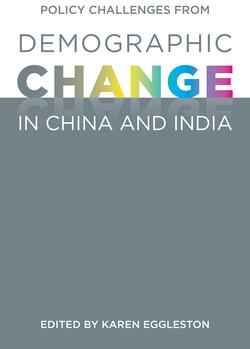
Abstract cover image for book Policy Challenges from Demographic Change in China and India

The world’s two most populous countries face numerous policy challenges from rapid demographic change. Drawing on social science expertise from China, India, and the United States, the contributors examine the social and economic challenges for policies across a range of domains, from China’s changed family planning policies and India’s efforts to address gender imbalance, to both countries’ policies regarding old-age support, human capital investment, poverty alleviation, and broader issues of governance.

Sections focus on:

  • Policy Challenges and Economic Impact
  • Fertility and Sex Imbalance
  • Human Capital and Urbanization
  • Population Aging

Desk or examination copies can be ordered from Stanford University Press.

All Publications button
1
Publication Type
Books
Publication Date
Authors
Karen Eggleston
Book Publisher
Shorenstein APARC
Authors
Lisa Griswold
News Type
News
Date
Paragraphs

As the inaugural meeting of the Asian Infrastructure Investment Bank sets to convene, Stanford researcher Thomas Fingar discusses findings from his new book that seeks to study China’s objectives and methods of engagement with other countries. Much of China’s behavior is determined by its own cost-benefit analysis of the perceived effect engagement would have on its security and development.

As China has pursued modernization over the past 35 years, patterns have emerged that shed light on the government’s foreign policy decision-making, according to new research by Thomas Fingar, a Stanford distinguished fellow at the Shorenstein Asia-Pacific Research Center (APARC).

Since 1979, China’s foreign policy has been underscored by two priorities – security and development. Knowing those priorities, analysts can attempt to better study and anticipate China’s relations with other countries even in the wake of unforeseen events in the global system.

“China’s increased activity around the world has elicited both anxiety and admiration in neighboring countries eager to capitalize on opportunities but worried about Beijing’s growing capabilities. Yet as is the case with all countries, what China can do is shaped by global and regional developments beyond its control,” said Fingar, the editor of The New Great Game: China and South and Central Asia in the Era of Reform.

The book, which has a total of 13 authors, is the first in a series published by Stanford University Press that examines China’s changing relationships in Asia and with other portions of the world. It is also an outcome of the research project “China and the World.” Fingar, who heads the project, draws upon his experience from five decades working on Asia and more than 25 years in U.S. government, including as chairman of the National Intelligence Council.

Framework to analyze China’s foreign policy

One dimension of the research project examines how China’s policies and priorities are shaped by China’s perceptions about how much a country threatens or addresses China’s security concerns; a second dimension examines China’s perceptions about how much a country can contribute to China’s pursuit of sustained economic growth and modernization.

To explore these relationships, Fingar developed a framework for analysis using a matrix that displays, on one axis, China’s perceptions about the threat to China’s security posed by a country or region, and on the other axis, China’s perceptions about a country or region’s capacity to contribute to China’s development.

By comparing the position of a given country or region from one period to another, the matrix both predicts the character of China’s policies and reveals a pattern over time. The figure below illustrates China’s views in 1979 and 2016.


[[{"fid":"223290","view_mode":"crop_870xauto","fields":{"format":"crop_870xauto","field_file_image_description[und][0][value]":"","field_file_image_alt_text[und][0][value]":false,"field_file_image_title_text[und][0][value]":false,"field_credit[und][0][value]":"","field_caption[und][0][value]":"","field_related_image_aspect[und][0][value]":"","thumbnails":"crop_870xauto"},"type":"media","field_deltas":{"1":{"format":"crop_870xauto","field_file_image_description[und][0][value]":"","field_file_image_alt_text[und][0][value]":false,"field_file_image_title_text[und][0][value]":false,"field_credit[und][0][value]":"","field_caption[und][0][value]":"","field_related_image_aspect[und][0][value]":"","thumbnails":"crop_870xauto"}},"link_text":null,"attributes":{"width":"870","class":"media-element file-crop-870xauto","data-delta":"1"}}]]


In 1979, India and countries in Central Asia figured high on the threat axis because of their relationship with the Soviet Union and low on capacity to provide the resources China needed to jumpstart its economy, Fingar said.

At that time, China sought to address both its priority security concerns and developmental goals by improving ties with Europe, Japan and the United States. South and Central Asia were afforded lower priority, he said.

In the 1990s, however, China’s perceptions shifted as a result of the demise of the Soviet Union and a decade of economic success in China, Fingar explained. Shown in the matrix, China’s policies toward Central Asia changed as the region transitioned to a more favorable security position by 2000 and as China required additional resources (energy, technology, training, etc.) to fuel its growing economy.

Fingar said China’s increased engagement with South Asia was buttressed by a need for markets and investment opportunities, and furthered along by a reduction in the threat environment as India altered its relationship with Russia and Pakistan became a less valuable security partner.

Calculating who China will engage with and how has become much clearer, yet in some ways it has also become more complicated, according to Fingar.

“The countries that can do the most for China today often pose the greatest perceived long-term threat, namely the United States and its allies,” he said. “Conversely, China’s proclaimed closest friends—North Korea and Pakistan—can do little to assist China’s development and pose increasing danger to its security.”

Current policy applications

Over the past three years, Chinese President Xi Jinping has embarked on numerous projects with neighbors and other countries around the world, such as the “new Silk Road,” a trans-continental trade route that will link countries together, and the Asian Infrastructure Investment Bank (AIIB), a multilateral development bank that plans to lend money to poorer parts of Asia for building infrastructure.

The objectives of both initiatives are consistent with the China’s prioritization of security and development, Fingar said. The AIIB and Silk Road initiative indicate that China assumes there are gains from economic integration, and this is largely due to the fact that China has already benefited from past projects.

In 2001, the Chinese government launched concerted efforts to improve its relationships with Central Asian countries because of China’s concern that the United States was seeking to “contain” China, he said. Outcomes have included newfound markets for China’s manufactured goods and increased stability in separatist areas near or on its borders.

“By taking such a big stake in building infrastructure, China has changed the dynamic of the region,” he said. “Anybody can use a road, railroad or bridge. China has helped stitch together the economies of different countries in ways they have never been before.”

For China, the AIIB and the Silk Road initiative are also a form of “soft power,” said Fingar. The approach by the Chinese government evokes memories of U.S. “dollar diplomacy” early in the last century and Japanese “yen diplomacy” when financial assistance was extended to developing countries.

But Fingar doubts that “buying friends by building infrastructure” will be a major contributor to China’s quest for security and development. Going forward, the Chinese government must face the growing paradox between its foreign infrastructure projects and its principle of respect for sovereignty and territorial integrity, he said.

“When working in other countries, China cannot afford to dismiss internal stability, governance, rule of law,” he said. “Those facets are the baseline for building infrastructure.”

Related links:

The Diplomat - Q&A on Chinese diplomacy in the 21st century

Hero Image
chinese worker sri lanka port
A Chinese laborer works at a construction site in Colombo, Sri Lanka, Oct. 2015. | Getty Images / Buddhika Weerasinghe
All News button
1
-

South Korea has relied on its export-oriented development model to become an economic powerhouse, but has now reached the limits of this model. Indeed, Korea’s phenomenal growth has incubated the seeds of its own destruction. Learning from the Korean developmental experience, China has adopted key elements of the Korean development model and has become a potent competitor in electronics and the heavy industries. Meanwhile, the organizational and institutional legacies of late industrialization have constrained Korean efforts to move into technology entrepreneurship and the service sector. These strategic challenges are compounded by a demographic bomb, as social development has led to collapsing birthrates in Korea, much like other developed countries in Europe and Asia. Within the next few years, the Korean workforce will start diminishing in size and aging rapidly, straining the country’s resources and curtailing its growth. In this seminar, Joon Nak Choi, 2015-16 Koret Fellow at Stanford's Shorenstein Asia-Pacific Reserach Center, will discuss innovations in business strategy, educational policy and social structure that are directly relevant to these problems, and that would alleviate or perhaps even reverse Korea’s economic malaise.

Image
joon nak choi 7 cropped
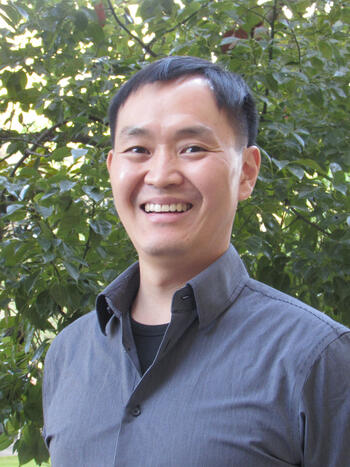
A Stanford graduate and sociologist by training, Choi is an assistant professor of management at the School of Business and Management, Hong Kong University of Science and Technology. His research and teaching areas include economic development, social networks, organizational theory, and global and transnational sociology, within the Korean context. He coauthored Global Talent: Skilled Labor as Social Capital in Korea (Stanford University Press, 2015).

This public event is made possible through the generous support of the Koret Foundation.

Shorenstein APARC
Encina Hall
Stanford University
Stanford, CA 94305-6055

0
joon_nak_choi_7_cropped.jpg

Joon Nak Choi is the 2015-2016 Koret Fellow in the Korea Program at Stanford University's Walter H. Shorenstein Asia-Pacific Research Center (Shorenstein APARC). A sociologist by training, Choi is an assistant professor at Hong Kong University of Science and Technology. His research and teaching areas include economic development, social networks, organizational theory, and global and transnational sociology, within the Korean context.

Choi, a Stanford graduate, has worked jointly with professor Gi-Wook Shin to analyze the transnational bridges linking Asia and the United States. The research project explores how economic development links to foreign skilled workers and diaspora communities.

Most recently, Choi coauthored Global Talent: Skilled Labor as Social Capital in Korea with Shin, who is also the director of the Korea Program. From 2010-11, Choi developed the manuscript while he was a William Perry postdoctoral fellow at Shorenstein APARC.

During his fellowship, Choi will study the challenges of diversity in South Korea and teach a class for Stanford students. Choi’s research will buttress efforts to understand the shifting social and economic patterns in Korea, a now democratic nation seeking to join the ranks of the world’s most advanced countries.
 
Supported by the Koret Foundation, the Koret Fellowship brings leading professionals to Stanford to conduct research on contemporary Korean affairs with the broad aim of strengthening ties between the United States and Korea. The fellowship has expanded its focus to include social, cultural and educational issues in Korea, and aims to identify young promising scholars working on these areas.


2015-2016 Koret Fellow
Visiting Scholar
<i>2015-16 Koret Fellow, Shorenstein APARC, Stanford University</i>
Seminars
-

In this session of the Corporate Affiliates Research Presentations, the following will be presented:

Wataru Fukuda, Shizuoka Prefectural Government, "Software Solutions of Tourism Promotion"

In his research, Fukuda investigates the possibilities of expanding the inbound tourism market in Japan, especially in the Shizuoka prefecture, a local area of Japan.  He provides an overview of the online travel industry and how they are expanding their market with new technologies and innovations.  After reviewing how software services for international travelers is currently being used in Japan, he focuses on specific applications with the highest potential to make Shizuoka more accessible and attractive for international travelers.  Additionally, he reviews regulations and obstacles that could prevent these new technologies and innovations from being implemented.  As a result, Fukuda suggests that the suppliers of local tourism provide their services with a holistic utilization of the applications.


Catherine Huang, Beijing Shanghe Shiji Investment Company, "How the U.S. Capital Market Helps Enterprises Grow From the Infant State to Mature Businesses"

China is slowing down its pace for development, facing the so-called “middle income trap”.  While the attention to the macroeconomic picture is necessary, it is not sufficient.  Extraordinary monetary policies buy time, but they do not solve the fundamental problem.  The focus needs to be on the structural reforms – the microeconomic entities, to which the capital market acts like a lifeline, will drive future growth.  The productivity, competition and innovation in all sectors – all of which are largely fueled by an efficient, healthy and accessible capital market – ensure a productive supply-side growth.  In her research, Huang explores the culture, participants and regulatory system of the U.S. capital market and tries to figure out what China’s capital market development can learn from this system.


Yuichiro Muramatsu, Mitsubishi Electric, "Manufacturing Industry with Big Data Analysis on IoT"

The Internet of Things (IoT) is major technology that connects devices and cloud service.  Cloud service computes device data and returns meaningful results for abnormal detection, performance improvement and prediction.  One key component of IoT is big data analysis.  Japan’s Ministry of Economy, Trade and Industry’s 2015 Whitepaper states that innovation in the manufacturing industry by using IoT and big data analysis is about to launch, but few cases exist in Japan.  Innovative companies like Netflix, Uber and AirBnB are data driven companies and the manufacturing industry is also expected to have smart factories with big data analysis.  In his research, Muramatsu investigates the use of big data analysis on IoT and identifies useful cases of business efficiency and the methodology that supports big data analysis.


Fred Yang, MissionCare, "Private Hospitals in Taiwan and the Implications"

In most East Asian countries, including Japan, South Korea and Taiwan, private hospitals are the majority in the market.  In China, even though private hospitals have been in fast growth for the past 10 years, their size remains small and the market is still dominated by large public hospitals.  In the most recent move of healthcare reform in China, the government emphasized and encouraged the entry of private-non-profit hospitals into the market. 

In the National Health Insurance Administration’s (NHIA) Open Information System, a set of quality indicators is computed based on hospitals’ reimbursement data.  A committee comprised of representatives from government, academia and hospitals select these indicators and the data is published to the general public on a quarterly basis. 

By using statistical tools such as descriptive analysis, univariate analysis, and multivariable analysis, Yang focused on the comparison of hospital performance by ownership in Taiwan.  The results revealed limited differences among three types of hospitals by ownership, which is consistent with findings of most studies.  Based on his findings, Yang provides policy implications to the market and policy makers that include 1) hospital ownership might not be a key determinant of a hospital’s quality and 2) the real challenge to the government may be creating an environment where hospitals are committee to improve the quality of care.


0
Corporate Affiliate Visiting Fellow, 2014-16
wataru_fukuda.jpg MA

Wataru Fukuda is a corporate affiliate visiting fellow at the Walter H. Shorenstein Asia-Pacific Research Center (Shorenstein APARC) for 2014-15 and 2015-16.  He has worked for the Shizuoka Prefectural Government in Japan for over 10 years, representing Shizuoka, the "home of Mt. Fuji".  He has experience in both international and domestic marketing of tourism.  During his fellowship at Shorenstein APARC, his research will focus on inbound tourism, destination marketing and promotion.

Date Label
Shizuoka Prefectural Government
0
Corporate Affiliate Visiting Fellow, 2015-16
catherine_huang.jpg MA

Huang (Catherine) Huang is a corporate affiliate visiting fellow at the Walter H. Shorenstein Asia-Pacific Research Center (Shorenstein APARC) for 2015-16. Huang is the Founder and Managing Director of Beijing Shanghe Shiji Investment Co. Ltd. and has over 13 years of experience in private equity investment, equity/fund portfolio management and investment banking business.  Previously, she worked as Vice President at JP Morgan Securities in HK, Division Chief of equity investment at China Reinsurance Group and Portfolio Manager at CITIC Fund.  Huang received her EMBA degree from Peking University, Master of Economics from Tsinghua University and Bachelors of Finance & Literature from Xiamen University in China.

Date Label
Beijing Shanghe Shiji Investment Company
0
Corporate Affiliate Visiting Fellow, 2015-16
yuichiro_muramatsu.jpg

Yuichiro Muramatsu is a corporate affiliate visiting fellow at the Walter H. Shorenstein Asia-Pacific Research Center (Shorenstein APARC) for 2015-16.  He started his career as a software engineer for Mitsubishi Electric Corporation, Tokyo, Japan.  Muramatsu has been engaged in system engineering designing and consulting tendency analysis for many companies, as well as bridge system engineering that brings and localizes the off-shore software product to Japan and aboard.  Muramatsu graduated from Chiba University with a B.S. in electric engineering.

Date Label
Mitsubishi Electric
0
Corporate Affiliate Visiting Fellow, 2015-17
fred_yang.jpg MD

Hung-Jen (Fred) Yang is a corporate affiliate visiting fellow at the Walter H. Shorenstein Asia-Pacific Research Center (Shorenstein APARC) for 2015-17.  Dr. Yang is a physician executive and is currently Chairman of MissionCare Inc., and President of Healthcare Corporation of Asia, a company that owns and operates four community hospitals and seven long-term care facilities in northern Taiwan.  After graduating from National Taiwan University Medical School with an MD degree in 1994, Yang pursued a career in healthcare management.  He earned a Master of Public Health (PH) degree from Harvard in 1995 and an MBA from the Drucker School of Management at Claremont Graduate University, CA in 1997.  Before going back to Taiwan in 1998, he worked as a financial analyst for Tenet Healthcare System, the second largest hospital chain in the U.S. Since 1998, Yang has been actively serving the MissionCare Group in many capacities, such as Chief Financial Officer, Chief Operation Officer and Chief Executive Officer.   Over the past ten years. Yang has made significant contributions not only to his company but also to the healthcare industry in Taiwan.  Under his leadership, MissionCare became Taiwan's first JCI accredited hospital, hence helping to elevate Taiwan's healthcare quality to a higher level.  In addition to hospital management, Yang also excels at health economics, financial engineering and strategic management.  In 2010, he received  an Ernst & Young Taiwan Entrepreneur Award for conducting the successful listing of his company on the Taipei OTC, making it the only hospital group listed in Taiwan.

Date Label
MissionCare
Seminars
-

In this session of the Corporate Affiliates Research Presentations, the following will be presented:

Yuta Aikawa, Ministry of Economy, Trade & Industry, Japan, "A Study About a Government Policy to Develop Defense Industry"

In April 2014, under consideration of the recent situation of international cooperation and developing defense equipment in the world, the government of Japan decided on the “Three Principles on Transfer of Defense Equipment and Technology”.  Additionally, the Acquisition, Technology and Logistics Agency was newly established in the Ministry of Defense (MOD) in October 2015, consolidating and reorganizing acquisition-related organization in the MOD to address the new age and duties.  These recent changes could have a big impact on the defense industry in Japan.  In his research, Aikawa tries to figure out how to develop the defense industry by looking at the situation in South Korea, whose government recently developed to export defense equipment to other countries.  Aikawa uses this example to illustrate implications for the government of Japan on the future of the defense industry.


Tsuzuri Sakamaki, MInistry of Finance, Japan, "What Impact Would the Ongoing Basel III Implementation Procedure Have on Banks' Value Creation and Risk Management?"

Basel III has been developed in response to the financial crisis that started in 2007 and reached one of its many peaks with the Lehman Brothers bankruptcy in September 2008.  The aim of the Basel Committee on Banking Supervision (BCBS) implementing Basel III is to make the banking system more resilient to market stress, but this new regulation inevitably limits the ability of banks to take deposits and lend money to the real economy.  Banks are also under constant pressure from their own shareholders who are providing them with equity capital to maximize the usage of the capital in order to achieve high returns for them.  With all these regulatory policy intensions and market economic constraints taken into account, Sakamaki has researched into whether the Basel III would indeed lead to increased stability of the banking system, or what possibly unintended negative consequences could develop in its implementation process.


Ravishankar Shivani, Reliance Life Sciences, "Pharmaceutical Process Validation — A Science and Risk-Based Approach to Evaluate Impact of Changes on Regulatory Filings"

Regional differences in regulatory oversight of post-approval changes exists in the ICH regions and there is an urgent need for clarification of current expectations and how best to optimize the use of relevant regulatory tools in place in the different regions.  The key aspects considered are 1) inclusion of risk-based regulatory commitment approach to enable post-approval changes and continual improvement,  2) establishing criteria for an harmonized risk-based change management system, and 3) introducing the concept of post-approval change management plan for regulatory overview. 

Shivani has researched the possibilities of changes to the attributes of a product over the life cycle that are necessary to maintain product quality and efficacy.  His research identifies the methodology for inclusion of the proposed changes during the development phase as commitments in dossiers to facilitate regulatory assessment. 


0
Corporate Affiliate Visiting Fellow, 2015-16
yuta_aikawa.jpg MS

Yuta Aikawa is a corporate affiliate visiting fellow at the Walter H. Shorenstein Asia-Pacific Research Center (Shorenstein APARC) for 2015-16.  Prior to joining Shorenstein APARC, he served as deputy director for policy making and implementation at the Government of Japan's Ministry of Economy, Trade & Industry (METI), where he was in charge of security export control, developing retail industry and consumer credit industry, and financial policy for small and medium companies.  Aikawa received his master's degree of science from the Graduate School of Science and Technology at Keio University in 2005.

Date Label
Ministry of Economy, Trade & Industry, Japan
0
Corporate Affiliate Visiting Fellow, 2015-16
tsuzuri_sakamaki.jpg MBA

Tsuzuri Sakamaki is a corporate affiliate visiting fellow at the Walter H. Shorenstein Asia-Pacific Research Center (Shorenstein APARC) for 2015-16.  From 2008 to 2013, Sakamaki was a chief advisor seconded from Japan’s Ministry of Finance (MOF) to the State Bank of Vietnam (SBV) to carry out a technical assistance project to enhance the nation’s central bank’s banking supervision capacity.  During this time, Sakamaki instructed the SBV supervisors in methodologies and techniques regarding CAMELS off-site monitoring of the financial conditions of Vietnamese credit institutions and demonstrated Japan’s newly launched bank rating system (FIRST) to help the bank supervisors utilize the financial monitoring results and evaluate the banks’ risk management in an efficient and effective manner.   Prior to joining Shorenstein APARC, Sakamaki managed an office of MOF to oversee the development, implementation and maintenance of procedures and practices for measuring, monitoring and managing information security risk incurred by the MOF’s Local Finance Bureaus’ information systems and networks.

Date Label
Ministry of Finance, Japan
0
Corporate Affiliate Visiting Fellow, 2015-16
ravi_shivani.jpg MS

Ravishankar Shivani is a corporate affiliate visiting fellow at the Walter H. Shorenstein Asia-Pacific Research Center (Shorenstein APARC) for 2015-16.  Shivani has more than 16 years of experience in handling pharmaceuticals quality management systems and has been with Reliance Life Sciences Pvt. Ltd., India since 2007.  Currently, Shivani is Deputy General Manager in the Quality Management group and is accountable for pharmaceutical quality control and validation functions including laboratory controls, change control, deviation/OOS handling, process and cleaning validation, facility and equipment qualification, stability programs, technology transfer, investigations, documnetation control and supporting regulatory filing.  Prior to joining Reliance Life Sciences Pvt. Ltd., he worked in different capacities involving quality management with AstraZeneca Pharma India Limited, Wintac Limited and MicroLabs Limited at Bangalor.  Shivani received his post graduate degree in microbiology from Kuvempu University, Karnataka, India in 1998.


Date Label
Reliance Life Sciences
Seminars
News Type
Commentary
Date
Paragraphs

A recent review published in International Migration Review (IMR) lauded “Global Talent: Skilled Labor as Social Capital in Korea,” by Stanford professor Gi-Wook Shin and Joon Nak Choi. IMR reviewer Keumjae Park said the book makes an important contribution to the literature on foreign skilled workers and the problems that countries like South Korea face with demographic and economic change.

Park said the book “offers provocative policy questions” about how South Korea can encourage the development of social and cultural ties in its highly skilled labor markets, which in turn, support local and transnational markets through spread of information, innovation and trust.

Park also highlights the book’s approachability, saying it “offers theoretical lessons for general research” while it “invites attention of policy makers and business strategists.”

“Global Talent” is a part of Korea’s Global Talent, an ongoing research project at the Shorenstein Asia-Pacific Research Center. The project analyzes the potential benefits of transnational bridges between South Korea and the United States, and aims to provide insights that could be applied to other Asian countries.

Read the full review below and on the IMR website.

Hero Image
gettyimages 515156526
Getty Images
All News button
1
Subscribe to Economic Affairs