Policy Analysis
Authors
Callista Wells
News Type
News
Date
Paragraphs

On February 24, 2021, the China Program at Shorenstein APARC hosted Dr. Thomas Wright, director of the Center on the United States and Europe and a senior fellow in the Project on International Order and Strategy at the Brookings Institution. Professor Jean Oi, William Haas Professor of Chinese Politics and director of the APARC China Program, moderated the event.

The program, entitled "U.S.-China Relations in the Biden Era," explored the future of US-China relations based on experience from past administrations. Under former President Trump, U.S. relations with China evolved into outright rivalry. In his talk, Dr. Wright discussed whether this rivalry will continue and evolve during a Biden administration by analyzing the roots of strategic competition between the two countries and various strands of thinking within the Biden team. According to Wright, the most likely outcome is that the competition between the two countries will evolve into a clash of governance systems and the emergence of two interdependent blocs where ideological differences become a significant driver of geopolitics. Cooperation is possible but it will be significantly shaped by conditions of rivalry. Watch now:

Read More

Min Ye speaking
News

Domestic or International? The Belt and Road Initiative Is More Internally Focused Than We Think, Says Expert Min Ye

Domestic or International? The Belt and Road Initiative Is More Internally Focused Than We Think, Says Expert Min Ye
Banner of Hau L. Lee
News

The Pandemic, U.S.-China Tensions and Redesigning the Global Supply Chain

The Pandemic, U.S.-China Tensions and Redesigning the Global Supply Chain
Photograph of Xi Jinping and Vladmir Putin walking in front of two lines of armed Chinese soldiers
News

Military Competition with China: Harder to Win Than During the Cold War?

On February 10th, the APARC China Program hosted Professor Oriana Mastro to discuss military relations between the US and China, and why deterrence might be even more difficult than during the Cold War.
Military Competition with China: Harder to Win Than During the Cold War?
Hero Image
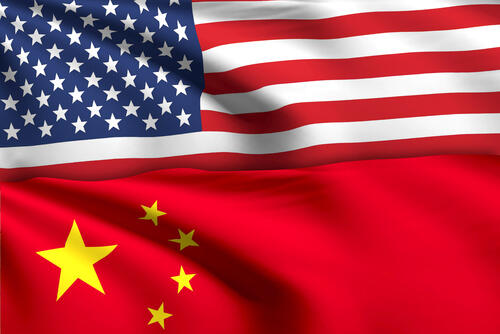
American and Chinese flags
All News button
1
Subtitle

Dr. Thomas Wright examines the recent history of US-China relations and what that might mean for the new administration.

Authors
News Type
News
Date
Paragraphs

Across the world, societies are experiencing unprecedented demographic shifts as migration and aging reshape population landscapes. At the forefront of this global transformation is the Asia-Pacific region, particularly the countries of East Asia. Demographics and Innovation in the Asia-Pacific — a new book edited by APARC Director Gi-Wook Shin, Deputy Director Karen Eggleston, and Joon-Shik Park, a professor in the Department of Sociology at Hallym University in Chuncheon, Korea — provides a multidisciplinary examination of the demographic challenges facing East Asian nations and possible solutions.

At a virtual book launch held on March 2, 2021, contributing chapter authors James FeyrerJoon-Shik Park, and Kenji Kushida joined Karen Eggleston to discuss their findings.

[Subscribe to our newsletters to get updates on our experts' latest research.]

Published in APARC’s in-house series, the book is the second volume resulting from APARC’s Stanford Asia-Pacific Research Innovation project. It collects the research findings of participants at the project’s third conference that was held in South Korea in June 2019.

James Liang, a research professor of economics at Peking University and a leading scholar of demographics and social studies, opened the event by situating the discussion about population structure in the context of the U.S.-China technology race. China is quickly catching up with the United States in the quality of its talent pool and the number of its labor resources. It will continue to outpace and surpass the United States in talent and innovation power in the next 10-20 years, Liang says.

China, however, is on a demographic cliff, facing severe population aging and low fertility rates. Its population of young workers aged 25-44 year-olds is projected to decline much faster and sooner than its overall population, leveling out against the labor and innovation gains the United States makes through the inflow of international talent into U.S. universities and entrepreneurial ventures. To sustain its long-term growth in labor quality and innovation, China will need higher birth rates and additional talent gains through migration, argues Liang.

James Feyrer’s book chapter examines the macroeconomic relationship between workforce demographics and aggregate productivity in Asia. Feyrer confirms that the high-income Asian nations like Japan and Korea, and even some middle-income countries of the region, will no longer enjoy a “demographic dividend” boosting aggregate productivity. However, he finds that the negative consequences of shifting to an older population structure may be less severe than previously projected, and even weakening with time. Feyrer believes this may be a result of improved food security and better overall health experienced by old cohorts in childhood, reinforcing the long-reaching impacts of healthcare on societal well-being.

Joon-Shik Park focused on the specific challenges facing Korean society, where birth rates have dropped severely. These historic declines continue to contribute to rising social and political unevenness across Korean society today. Initially seen most visibly in rural areas and smaller villages, Park’s now sees this unevenness affecting the dynamics of medium-sized towns and more urban areas as well. Korea and other aging societies must find viable solutions to address these issues if they are to prevent demographic divides from hobbling development and innovation, Park says.

Closing the book launch event, APARC Research scholar Kenji Kushida offers perspectives from rapidly aging Japan. where the challenges of shrinking and aging populations, rural-to-urban population distribution, and labor shortages spur advances in technology and innovation. Kushida documents this trend across multiple sectors.

He shows that drone technology has increased the productivity of short-staffed surveying firms, while AI-assisted industrial machines allow a broader range of laborers to work in manufacturing. Even in traditionally human-dominated environments like nursing homes, staff increasingly use robots to help improve the physical and mental well-being of elderly patients. Rather than strictly retarding growth, Kushida makes the case that demographic challenges serve as a catalyst for the development and implementation of new technologies.

As the research collected in Demographics and Innovation in the Asia-Pacific demonstrates, the challenges facing aging Asian societies are complex, but there is reason to look to the future with optimism. As the editors of the volume state in their introduction to the book, “Few concepts are as critical for sustained improvement in living standards as innovation.” New technologies and solutions will be foundational to addressing the challenges of the new demographic frontiers many societies are now approaching.

Read More

A Japanese robot prototype lifts a dummy patient
News

Robot Adoption Brings Benefits to Japan’s Aging Society

In one of the first studies of service sector robotics, APARC scholars examine the impacts of robots on nursing homes in Japan. They find that robot adoption may not be detrimental to labor and may help address the challenges of rapidly aging societies.
Robot Adoption Brings Benefits to Japan’s Aging Society
Shifting Gears in Innovation Policy: Strategies from Asia
News

New Book Outlines the Role of Innovation and Entrepreneurship for Future Economic Growth in East Asia

Yong Suk Lee explains in the new volume, Shifting Gears in Innovation Policy, that while ‘catch-up’ strategies have been effective in promoting traditional economic growth in Asia, innovative policy tools that foster entrepreneurship will be needed to maintain competitiveness in the future.
New Book Outlines the Role of Innovation and Entrepreneurship for Future Economic Growth in East Asia
Stanford students participate in class.
News

University Entrepreneurship Programs May Not Increase Entrepreneurship Rates, Stanford Researchers Find

A study by Yong Suk Lee, the deputy director of APARC’s Korea Program, and Management Science and Engineering professor Charles Eesley investigates the efficacy of two major Stanford entrepreneurship education initiatives, suggesting they may not increase entrepreneurial activity.
University Entrepreneurship Programs May Not Increase Entrepreneurship Rates, Stanford Researchers Find
Hero Image
Demographics and Innovation in the Asia-Pacific
"Demographics and Innovation in the Asia-Pacific" examines the impacts of Asia's demographic challenges on the development of new technology and innovation.
All News button
1
Subtitle

Contributing authors to the new volume 'Demographics and Innovation in the Asia-Pacific' convened for a virtual book launch and discussion of the challenges facing aging societies in East Asia and the roles technology and innovation may play in rebalancing them.

-

This is a virtual event. Please click here to register and generate a link to the talk. 
The link will be unique to you; please save it and do not share with others.


This event is co-sponsored by the Center on Democracy, Development, and the Rule of Law.

How does autocratic lobbying affect political outcomes and media coverage in democracies? This talk focuses on a dataset drawn from the public records of the US Foreign Agents Registration Act. It includes over 10,000 lobbying activities undertaken by the Chinese government between 2005 and 2019. The evidence suggests that Chinese government lobbying makes legislators at least twice as likely to sponsor legislation that is favorable to Chinese interests. Moreover, US media outlets that participated in Chinese-government sponsored trips subsequently covered China as less threatening. Coverage pivoted away from US-China military rivalry and the CCP’s persecution of religious minorities and toward US-China economic cooperation. These results suggest that autocratic lobbying poses an important challenge to democratic integrity.


Portrait of Erin Baggott CarterErin Baggott Carter is an Assistant Professor at the Department of Political Science and International Relations at the University of Southern California. There, she is also a Co-PI at the Lab on Non-Democratic Politics. She received a Ph.D. in Government from Harvard University, is currently a visiting scholar at the Stanford Center on Democracy, Development and the Rule of Law, and was previously a Fellow at the Stanford Center for International Security and Cooperation.

Dr. Carter's research focuses on Chinese politics and propaganda. She recently completed a book on autocratic propaganda based on an original dataset of eight million articles in Arabic, Chinese, English, French, Russian, and Spanish drawn from state-run newspapers in nearly 70 countries. She is currently working on a book on how domestic politics influence US-China relations. Her other work has appeared or is forthcoming in the British Journal of Political ScienceJournal of Conflict Resolution, and International Interactions. Her work has been featured by the New York Times, the Brookings Institution, and the Washington Post Monkeycage Blog.


Image
American and Chinese flags
This event is part of the 2021 Winter/Spring Colloquia series, Biden’s America, Xi’s China: What’s Now & What’s Next?, sponsored by APARC's China Program.


Via Zoom Webinar. Register at: https://bit.ly/3beG7Qz

Erin Baggott Carter Assistant Professor, Department of Political Science and International Relations, University of Southern California; Visiting Scholar, Center on Democracy, Development and the Rule of Law, Stanford University
Seminars
-


4:00-5:00pm California, 18-February 2021
7:00-8:00pm Washington DC, 18-February 2021
3:00-4:00am  Kenya, 19-February 2021
11:00am-12:00pm Sydney, Australia 19-February 2021


The Bay of Bengal, while split by national boundaries and even our concepts of distinct South and Southeast Asian regions, is re-emerging as a connected geographic and demographic space. Some of Asia’s most consequential transnational policy challenges will be most starkly presented here, across the borders of India, Bangladesh, and Burma – and traditional policy-making structures are already struggling to cope with environmental disasters, the mass movement of people, and the yawning need for economic connectivity. This webinar will examine these policy challenges, from the fragility of the Sundarbans ecosystem to the transnational implications of the Burma coup, and whether existing state and multilateral institutions are capable of addressing them.

SPEAKERS:

Image
Kelley Eckels Currie
Kelley Eckels Currie served as U.S. Ambassador-at-Large for Global Women’s Issues and the U.S. Representative at the United Nations Commission on the Status of Women.  Prior to her appointment, she led the Department of State’s Office of Global Criminal Justice (2019) and served under Ambassador Nikki Haley as the United States’ Representative to the UN Economic and Social Council and Alternative Representative to the UN General Assembly (2017-2018).  Throughout her career, Ambassador Currie has specialized in human rights, political reform, development and humanitarian issues, with a focus on the Asia-Pacific region. She has held senior policy positions with the Department of State, the U.S. Congress, the Project 2049 Institute, and several international and non-governmental human rights and humanitarian organizations.  Ambassador Currie holds a Juris Doctor from Georgetown University Law Center.

Image
Tanaya D Gupta
Tanaya Dutta Gupta is a PhD Candidate in Sociology at the University of California, Davis. Tanaya’s dissertation research focuses on climate change, (im)mobilities and borders in the Bengal delta region of Bangladesh and India. Her educational background includes MA in Sociology and Geography. As visiting researcher with the International Centre for Climate Change and Development and collaborator with the Observer Research Foundation, Tanaya participates in policy conversations through her research. Her research has been funded by the National Geographic Society and UC Davis Graduate Program Fellowships. 

Image
Constantin Xavier
Constantino Xavier is a Fellow in Foreign Policy and Security Studies at the Centre for Social and Economic Progress, in New Delhi, where he leads the Sambandh Initiative on regional connectivity. He is also a non-resident fellow in the Foreign Policy program at the Brookings Institution. His research and publications focus on India’s changing role as a regional power, and the challenges of security, connectivity and democracy across South Asia and the Indian Ocean. Dr. Xavier regularly lectures at various Indian, European and American universities, as well as at civilian and military training institutions in India. He holds a Ph.D. in South Asian studies from the Johns Hopkins University, School of Advanced International Studies, and an M.A. and M.Phil. from Jawaharlal Nehru University.  

MODERATOR:

Image
Arzan Tarapore
Arzan Tarapore is the South Asia research scholar at the Shorenstein Asia-Pacific Research Center at Stanford University, where he leads the newly-restarted South Asia research initiative. He is also a senior nonresident fellow at the National Bureau of Asian Research. His research focuses on Indian military strategy and contemporary Indo-Pacific security issues. He previously held research positions at the RAND Corporation, the Observer Research Foundation, and the East-West Center in Washington. Prior to his scholarly career, he served as an analyst in the Australian Defence Department, which included operational deployments as well as a diplomatic posting to Washington, DC. Arzan holds a PhD in war studies from King’s College London.


This event is co-sponsored by: Center for South Asia 


This is a virtual event via Zoom.  Please  Register at: https://bit.ly/3txBBVq
Kelley Eckels Currie former Ambassador-at-Large for Global Women's Issues
Tanaya Dutta Gupta University of California, Davis
Constantino Xavier Centre for Social and Economic Progress- New Delhi
Seminars
-

This is a virtual event. Please click here to register and generate a link to the talk. 
The link will be unique to you; please save it and do not share with others.

Since the death of Mao Zedong in 1976, the Communist Party of China (CCP) has been vexed by a simple question: What is it fighting for? As the country began to adopt market reforms in the 1980s and 1990s, CCP theorists were forced into contortions providing ideological justifications for policies that appeared overtly capitalist. Deng Xiaoping’s concept of “Socialism with Chinese characteristics” came to be seen as a theoretical fig leaf rather than a description of an egalitarian economic system, and by the 2000s, a consensus emerged that the CCP had completely abandoned any pretense of pursuing the Marxist vision it purported to hold. With the rise of Xi Jinping, however, the Party talks with renewed vigor about Marxism-Leninism and the goal of achieving actual, existing socialism. Has the CCP re-discovered communism?  In this talk, CSIS Freeman Chair in China Studies Jude Blanchette will discuss the abandoned and existing legacies of Mao Zedong, Marxism-Leninism, and the CCP’s vision of socialism.
 

Image
Portrait of Jude Blanchette
Jude Blanchette holds the Freeman Chair in China Studies at the Center for Strategic and International Studies (CSIS).  Previously, he was engagement director at The Conference Board’s China Center for Economics and Business in Beijing, where he researched China’s political environment with a focus on the workings of the Communist Party of China and its impact on foreign companies and investors.  Prior to working at The Conference Board, Blanchette was the assistant director of the 21st Century China Center at the University of California, San Diego.  Blanchette has written for a range of publications, including Foreign Affairs and Foreign Policy, and his Chinese translations have appeared in the Wall Street Journal and the Financial Times. His book, China’s New Red Guards: The Return of Radicalism and the Rebirth of Mao Zedong, was published by Oxford University Press in 2019.


Image
American and Chinese flags
This event is part of the 2021 Winter/Spring Colloquia series, Biden’s America, Xi’s China: What’s Now & What’s Next?, sponsored by APARC's China Program.


Via Zoom Webinar. Register at: https://bit.ly/35KfpgE

Jude Blanchette Freeman Chair in China Studies, Center for Strategic and International Studies
Seminars
-

This is a virtual event. Please click here to register and generate a link to the talk. 
The link will be unique to you; please save it and do not share with others.

As US-China competition intensifies, experts debate the degree to which the current strategic environment resembles that of the Cold War. Those that argue against the analogy often highlight how China is deeply integrated into the US-led world order. They also point out that, while tense, US-China relations have not turned overtly adversarial. But there is another, less optimistic reason the comparison is unhelpful: deterring and defeating Chinese aggression is harder now than it was against the Soviet Union. In this talk, Dr. Mastro analyzes how technology, geography, relative resources and the alliance system complicate U.S. efforts to enhance the credibility of its deterrence posture and, in a crisis, form any sort of coalition.


Photo of Oriana MastroOriana Skylar Mastro is a Center Fellow at Stanford University’s Freeman Spogli Institute for International Studies (FSI). Within FSI, she works primarily in the Shorenstein Asia-Pacific Research Center (APARC) and the Center for International Security and Cooperation (CISAC) as well. She is also a fellow in Foreign and Defense Policy Studies at the American Enterprise Institute and an inaugural Wilson Center China Fellow.

Mastro is an international security expert with a focus on Chinese military and security policy issues, Asia-Pacific security issues, war termination, and coercive diplomacy. Her research addresses critical questions at the intersection of interstate conflict, great power relations, and the challenge of rising powers. She has published widely, including in Foreign Affairs, International Security, International Studies Review, Journal of Strategic Studies, The Washington Quarterly, The National Interest, Survival, and Asian Security, and is the author of The Costs of Conversation: Obstacles to Peace Talks in Wartime (Cornell University Press, 2019).

She also continues to serve in the United States Air Force Reserve, for which she works as a Strategic Planner at INDOPACOM. Prior to her appointment at Stanford in August 2020, Mastro was an assistant professor of security studies at the Edmund A. Walsh School of Foreign Service at Georgetown University. She holds a B.A. in East Asian Studies from Stanford University and an M.A. and Ph.D. in Politics from Princeton University.


Image
American and Chinese flags
This event is part of the 2021 Winter/Spring Colloquia series, Biden’s America, Xi’s China: What’s Now & What’s Next?, sponsored by APARC's China Program.


Via Zoom Webinar. Register at: bit.ly/2MYJAdw

Oriana Skylar Mastro Center Fellow at the Freeman Spogli Institute for International Studies
Seminars
Authors
News Type
News
Date
Paragraphs

On November 10th, the APARC China Program convened an expert panel focused on the Decision of the fifth plenary session of the 19th Central Committee of the Chinese Communist Party, which took place on October 26-29.  The Fifth Plenum Decision outlines not only China’s 14th Five Year Plan (2021-2025), but also Beijing’s economic blueprint through 2035 and the “goal of fully building a modern socialist country."  The CCP leadership recently articulated its “dual circulation” policy – viz., a drastic reduction in China’s dependence on U.S. technologies and increased reliance on domestic consumption while maintaining exports and attracting foreign direct investments.  At this critical juncture when the coronavirus pandemic has shrunk global trade and tensions between the U.S. and China continue to intensify, panel members were asked to examine what the Fifth Plenum Decision might signify.  Does it mark a significant shift in Beijing’s strategic economic orientation?  What are the short- and long-term implications of the Decision for China’s economic development strategy, U.S.-China relations, as well as the world’s economic and technology ecosystems?  

Guests heard from experts James Green, Damien Ma, and Xiaomeng Lu.  James Green, Senior Research Fellow at Georgeton University's Initiative for U.S.-China Dialogue on Global Issues, has worked for over two decades on U.S.-Asia relations.  He has held several positions in government, including Minister Counselor for Trade Affairs at the U.S. Embassy in Beijing and China Director of the White House’s National Security Council.  Damien Ma is the Director and co-founder of MacroPolo, the Think Tank of the Paulson Institute, which focuses on China's economics, technology, and politics.  He is also adjunct faculty at the Kellogg School of Management at Northwestern University.  Finally, Xiaomeng Lu is a senior analyst in Eurasia Group's geo-technology practice.  She focuses on many of the most important issues related to China right now, including cybersecurity, data protection, artificial intelligence, internet governance, 5G, and trade.  The panel concluded with a discussion of audience questions. Watch:

Read More

Concept of U,S.-China technology competition: brain-shaped boxing gloves covered in U.S. and China flags facing against each other on a background of a motherboard
News

Caught in the Crossfire: The Future Of U.S.-China Science Collaboration and Its Impact on University Education

Caught in the Crossfire: The Future Of U.S.-China Science Collaboration and Its Impact on University Education
Min Ye speaking
News

Domestic or International? The Belt and Road Initiative Is More Internally Focused Than We Think, Says Expert Min Ye

Domestic or International? The Belt and Road Initiative Is More Internally Focused Than We Think, Says Expert Min Ye
Photograph of the UN building in Geneva, Switzerland
News

Rebuilding International Institutions Will be Tough but Necessary, Say Stanford Experts Thomas Fingar and Stephen Stedman

Fingar and Stedman spoke as part of the APARC program “Rebuilding International Institutions,” which examined the future of international institutions such as the United Nations (UN), World Trade Organization (WTO), and World Health Organization (WHO) in our evolving global political landscape.
Rebuilding International Institutions Will be Tough but Necessary, Say Stanford Experts Thomas Fingar and Stephen Stedman
Hero Image
Photo of the Forbidden City entrance with Mao Zedong's portrait Markus Winkler on Unsplash
All News button
1
-

This is a virtual event. Please click here to register and generate a link to the talk. 
The link will be unique to you; please save it and do not share with others.


The Stanford China Program convenes an expert panel focused on the Decision of the fifth plenary session of the 19th Central Committee of the Chinese Communist Party, which took place on October 26-29.  The Fifth Plenum Decision outlines not only China’s 14th Five Year Plan (2021-2025), but also Beijing’s economic blueprint through 2035 and the “goal of fully building a modern socialist country."  The CCP leadership recently articulated its “dual circulation” policy – viz., a drastic reduction in China’s dependence on U.S. technologies and increased reliance on domestic consumption while maintaining exports and attracting foreign direct investments.  At this critical juncture when the coronavirus pandemic has shrunk global trade and tensions between the U.S. and China continue to intensify, our panel members will be asked to examine what the Fifth Plenum Decision might signify.  Does it mark a significant shift in Beijing’s strategic economic orientation?  What are the short- and long-term implications of the Decision for China’s economic development strategy, U.S.-China relations, as well as the world’s economic and technology ecosystems?  
 

Speakers

Portrait of James GreenJames Green has worked for over two decades on U.S.-Asia relations. For five years, Green was the Minister Counselor for Trade Affairs at the U.S. Embassy in Beijing (2013-2018).  As the senior official in China from the Office of the United States Trade Representative (USTR), Green was deeply involved in all aspects of trade negotiations, trade enforcement, and in reducing market access barriers for American entities.  In prior government service, Green worked on the Secretary of State’s Policy Planning Staff and at the State Department’s China Desk on bilateral affairs. He also served as the China Director of the White House’s National Security Council.  In the private sector, Green was a senior vice president at the global strategy firm founded by former Secretary of State Madeleine Albright and was the founding government relations manager at the American Chamber of Commerce in Shanghai, Asia’s largest AmCham.  Currently, Green is a Senior Research Fellow at Georgetown University's Initiative for U.S.-China Dialogue on Global Issues and hosts a U.S.-China Dialogue Podcast.   

Image
Portrait of Xiaomeng Lu
Xiaomeng Lu is a senior analyst in Eurasia Group's geo-technology practice. She focuses on the interactions of emerging technologies with geopolitics, market dynamics, and regulatory norms. Lu provides in-depth analysis on key policy issues such as cybersecurity, data protection, artificial intelligence, internet governance, 5G, and trade.

Before joining Eurasia Group, Lu was the China practice lead at the consulting firm Access Partnership. In this capacity, she helped top financial and cloud service providers of the US enter China's market amid the trade war between the two countries. She also played a key role in establishing and expanding the company's first office in Asia, which generated over $1 million in revenue in three years. Previously, Lu worked as a global policy director at the Information Technology Industry Council, where she conducted successful advocacy campaigns that led to the suspension of onerous regulatory regimes, helping global electronics manufacturers save billions in potential losses. Lu has a master's degree in international trade policy from the Middlebury Institute of International Studies at Monterey and a bachelor's degree in economics from Renmin University of China.

Image
Photo of Damien Ma
Damien Ma is Director and co-founder of MacroPolo, the Think Tank of the Paulson Institute. He is also adjunct faculty at the Kellogg School of Management at Northwestern University. Previously, Ma was a Senior Analyst at Eurasia Group, the political risk research and advisory firm. At Eurasia Group, he mainly focused on the China and East Asian markets, covering areas that spanned energy and commodities and industrial policy to elite politics and US-China relations. Prior to joining Eurasia Group, he was a manager of publications at the US-China Business Council in Washington, DC, where he was also an adjunct instructor at Johns Hopkins SAIS. 

In addition, Ma has published widely, including in The AtlanticNew York TimesForeign AffairsThe New RepublicForeign Policy, and Bloomberg, among others. He has also appeared in a range of broadcast media such as the Charlie Rose Show, BBC, NPR, and CNBC. He is the author or editor of the books, In Line Behind a Billion People: How Scarcity Will Define China’s Ascent in the Next DecadeThe Economics of Air Pollution in China (by Ma Jun), and China’s Economic Arrival: Decoding a Disruptive Rise, published by Palgrave Macmillan. Ma was named a “99 under 33” foreign policy leader by the Young Professionals in Foreign Policy. 


This event is part of the 2020 Fall Colloquia series, Shifting Geopolitics and U.S.-Asia Relations​, sponsored by Shorenstein APARC.

Via Zoom. Register at: https://bit.ly/2T8a3VV

James Green <br><i>Senior Research Fellow, Initiative for U.S.-China Dialogue on Global Issues, Georgetown University</i><br><br>
Xiaomeng Lu <br><i>Senior Analyst, Geo-Technology, Eurasia Group</i><br><br>
Damien Ma <br><i>Director and co-founder, MacroPolo, Paulson Institute</i><br><br>
Panel Discussions
Authors
Noa Ronkin
News Type
News
Date
Paragraphs

The Walter H. Shorenstein Asia-Pacific Research Center (APARC) is pleased to announce its new China Policy Fellowship, which will bring to Stanford mid-career to senior-level experts with extensive research experience on issues vital to U.S. China policy and influence in the policymaking process. With this new offering, APARC seeks to apply cutting-edge academic analysis to pressing challenges affecting U.S. policy toward China and to strengthen U.S.-China relations.

The fellowship will be awarded annually to one expert. While at Stanford, the China Policy Fellow will undertake original research in his/her area of expertise and will play a lead role in organizing a major conference on a topic central to the U.S.-China policy agenda. Each fellow’s work and annual conference will result in a publication that will help advance a deeper understanding of China and its aims.

The fellowship will be hosted by APARC’s China Program, whose mission is to facilitate multidisciplinary, social science-oriented research on contemporary China, with a dual emphasis on basic and policy-relevant research. The appointment of the inaugural 2021-22 China Policy Fellow will begin in the fall quarter of 2021. The new fellowship is made possible thanks to the generosity of an APARC supporter.

“The need to enhance understanding within the United States about China has never been more critical,” says China Program Director Jean Oi, a senior fellow at the Freeman Spogli Institute for International Studies and the William Haas Professor of Chinese Politics. “In these times when divergent claims and bellicose propositions are regularly made by politicians and policymakers in the United States and in China, the China Policy Fellowship will help us promote dialogue between the two nations and empirically-driven research relevant to U.S. China relations. I am delighted that we are able to offer this new fellowship opportunity.”

The application deadline for the 2021-22 China Policy Fellowship is February 15, 2021.

Read More

A missile display in the Military Museum in Beijing, China.
Commentary

The United States Must Avoid a Nuclear Arms Race with China

Oriana Skylar Mastro explains why U.S. nuclear policy needs to minimize the role of nuclear weapons in the U.S.-China great power competition and pave the way for arms control.
The United States Must Avoid a Nuclear Arms Race with China
Encina Hall
News

APARC Announces 2021-22 Postdoctoral Fellowships for Emerging Scholars in Contemporary Asia, Japan, and Korea Studies

The Center’s commitment to supporting young Asia scholars remains strong during the COVID-19 crisis.
APARC Announces 2021-22 Postdoctoral Fellowships for Emerging Scholars in Contemporary Asia, Japan, and Korea Studies
(Left) Yuen Yuen Ang; (Right) Congratulations Yuen Yuen Ang, Winner of the Theda Skocpol Prize from the American Political Science Association
News

Dr. Yuen Yuen Ang Awarded Theda Skocpol Prize for Emerging Scholars

Former China Program postdoc and Stanford Ph.D alumna Yuen Yuen Ang has received the Theda Skocpol Prize for Emerging Scholars from the American Political Science Association for her scholarship on China’s transformation into a global superpower.
Dr. Yuen Yuen Ang Awarded Theda Skocpol Prize for Emerging Scholars
Hero Image
View of building roof in the Forbidden City complex and the Beijing skyline in the background Image by 可欣 任 from Pixabay
All News button
1
Subtitle

Stanford University’s Shorenstein Asia-Pacific Center invites applications for the inaugural 2021-22 China Policy Fellowship from experts with research experience on issues vital to the U.S. China policy agenda and influence in the policymaking process.

Authors
Kiyoteru Tsutsui
News Type
Commentary
Date
Paragraphs

On August 28, Japan’s Prime Minister Shinzo Abe announced that he will step down from the position, citing serious health concerns. What is his legacy and what lies ahead? Below, I list his three major accomplishments (hits) and disappointments (misses) and consider who is likely to succeed him.

Hit: Abe’s greatest accomplishment is that he kept winning elections and stayed in power, becoming the longest-serving prime minister in Japanese history. In a country where only one prime minister (Koizumi) lasted more than two years in the last three decades, this is a significant achievement. He started his (second) term in 2012 when Japan was still reeling from the triple disaster of 2011 and the mismanagement by the then-ruling Democratic Party of Japan (DPJ). He initially restored confidence in Japan, energized the economy with bold policies, and brought stability to Japanese politics. The weakening and eventual disintegration of the DPJ facilitated his streak of electoral victories, but he deserves credit for launching several policy initiatives to revitalize the stagnant and aging economic giant and for incorporating social welfare policies – many of which were proposed by opposition parties – to stave off dissatisfaction among voters. He raised the consumption tax rate twice and still won six straight elections, an amazing feat considering how past prime ministers faired after a tax hike.

Miss: Despite this long period as prime minister, it is not entirely clear that he accomplished major policy goals. Abenomics – Abe’s signature economic policy – reinvigorated the Japanese economy, shooting stocks up to great heights, but the economy as a whole did not grow any faster under his watch and per capita GDP shrank, exacerbating economic inequality. Revising the Constitution, widely seen as his ultimate goal as prime minister, did not come close to being a reality, even though he launched a number of trial balloons. Abe also proposed many new policy initiatives with catchy phrases – womanomics, work-life balance reform, reviving rural Japan, etc. – but was often criticized for producing only an impression that he is doing something (yatterukan) rather than actually getting things done.


Sign up for APARC newsletters to receive our experts' commentary and analysis.


Hit: Foreign policy was Abe’s strong suit. Having outserved most G7 leaders, his stature at international meetings rose to a height few Japanese prime ministers reached before. Overcoming the initial perception as a hawkish nationalist ideologue, he demonstrated savvy pragmatism in foreign affairs, developing strong relationships with the United States, particularly with President Trump, and recovering from the rocky start with President Xi to forge a practical partnership with China. His administration also passed a series of legislation that advanced realist security policies and popularized a vision of Free and Open Indo-Pacific, which other countries including the United States bought into. Furthermore, despite the U.S. withdrawal from the Trans-Pacific Partnership (TPP), Abe marched on and led the charge toward the Comprehensive and Progressive Agreement for Trans-Pacific Partnership (CPTPP), a rare example of Japan leading a multilateral agreement without support from the United States.

Miss: Yet, Abe failed to achieve some key foreign policy goals. The issue of abduction of Japanese by North Korea, which prompted him to national prominence when he was a young cabinet member under Prime Minister Koizumi, did not see any progress, nor did territorial negotiations with Russia – another foreign policy issue he expended a good deal of capital on. South Korea was another thorn on his side: the “comfort women” agreement could have been Abe’s major accomplishment, but domestic political turmoil in South Korea led to President Moon’s scuttling of the agreement, which sent the Japan-South Korea relations into a downward spiral. This development had more to do with South Korean politics than Abe, but he still could have tried to repair the damage. Instead, he threw in a towel on Moon and escalated tensions with South Korea, when the two countries should be close allies collaborating to cope with China’s assertiveness and the North Korean nuclear threat.

Hit: Abe’s cabinet accumulated enormous power over bureaucrats by holding authority on personnel decisions, which is critical in controlling them. This shift of power from bureaucrats to politicians was what the DPJ advocated when it became the ruling party. Abe nearly perfected this transfer of power and established a system under which the prime minister can take the initiative for new policies, going over opposition from career bureaucrats, and seek voters’ judgment about the merits of the policy in subsequent elections. This departs from decades of political practice in Japan, whereby bureaucrats set major policies, and most politicians merely parrot policy goals, which is unconducive to major policy changes needed to energize the stagnant economy and society. Abe leaves in place the cabinet apparatus that could empower the next prime minister to launch major policy initiatives.

Miss: The downside of the concentration of power is corruption. A series of scandals that revealed excessively cozy relationships between Abe and his supporters threatened Abe’s hold on power in the last few years. As is often the case, the coverup was worse than the initial infraction in the major financial scandals, and other transgressions challenged the public’s sense of fairness as Abe’s supporters – politicians, government officials, business leaders, journalists, or celebrities – allegedly received special treatment. The lack of accountability undermined Abe’s credibility toward the end, and the weakened administration struggled to handle the coronavirus crisis. Despite the relatively low numbers of coronavirus cases and victims in Japan, Abe received few applauses for his handling of the crisis. Even though his health was the main reason for his resignation, all these recent developments sapped the energy out of his cabinet, setting the stage for his resignation.

Who’s Next?

Abe’s abrupt departure prompted a number of party leaders to jockey for the successor position. As of this writing, Chief Cabinet Secretary Yoshihide Suga has all but secured the position, having picked up support from key factions within the ruling LDP. Fumio Kishida and Shigeru Ishiba will remain on the ballot but other major candidates such as Defense Minister Taro Kono have decided not to run this time.

Suga has been the most important partner for Abe in the cabinet along with Deputy Prime Minister Aso, contributing to the consolidation of power in the cabinet and executing various policy initiatives and legislative successes. Suga would likely carry forward many of Abe’s key policies, and with his tactical savvy and the potent cabinet apparatus that he helped create, has the potential to become a powerful prime minister. On the other hand, he would only have a year before the next election for LDP presidency (because he would be filling Abe’s remaining term) and he would have to account for Abe’s negative legacies, in some of which he is seen as complicit. These factors lead many observers to predict a short stint for him, but Suga is a scrappy self-made man who rose from a modest background, and his political instincts and already strong hold on power are not to be underestimated.

Read More

Shinzo Abe speaking from a lectern
Commentary

Reflections on the Assassination of Former Prime Minister of Japan Shinzo Abe

Abe was one of the most transformative political leaders in modern Japanese history, and his passing will change Japanese politics in a number of ways, most immediately shaking up internal politics within the ruling Liberal Democratic Party. To honor Abe’s legacy, we all need to reassert our resolve to protect our democracy in Japan, the United States, and all over the world.
Reflections on the Assassination of Former Prime Minister of Japan Shinzo Abe
The Japanese delegation onboard the USS Missouri during the surrender ceremony on September 2, 1945.
Q&As

How WWII Continues to Shape Regional and International Relations in Asia

In an interview with Stanford News, Gi-Wook Shin, the director of APARC and the Korea Program, describes how divergent perspectives on the legacies of WWII continue to shape different understandings of history and impact inter-Asia and U.S.-Asia relations.
How WWII Continues to Shape Regional and International Relations in Asia
A young boy prays after releasing a floating lantern onto the Motoyasu River in front of the Atomic Bomb Dome in Hiroshima, Japan.
Commentary

Why the US-Japan Partnership Prospered Despite Hiroshima and Nagasaki

There has been little diplomatic conflict between the United States and Japan over the atomic bombings of Hiroshima and Nagasaki during WWII, but that stability could change in the future, writes Japan Program Director Kiyoteru Tsutsui in an op-ed for The Hill.
Why the US-Japan Partnership Prospered Despite Hiroshima and Nagasaki
Hero Image
Japanese Prime Minister Shinzo Abe speaks at a podium with audience seen at the front
TOKYO, JAPAN - AUGUST 28: Japanese Prime Minister Shinzo Abe speaks during a press conference at the prime minister official residence on August 28, 2020 in Tokyo, Japan. Prime Minister Shinzo Abe announced his resignation due to health concerns.
Franck Robichon - Pool/Getty Images
All News button
1
Subtitle

Despite this long period as prime minister, it is not entirely clear that Abe accomplished major policy goals.

Subscribe to Policy Analysis