Policy Analysis
-

This event has been postponed. Please see below for details.

On the heels of Prime Minister Abe's resignation, a Cabinet meeting has been called for the morning of Wednesday, September 16 prior to the Diet vote for the new Prime Minister later that day. As much as he would like to join us that morning, Defense Minister Kono has to prioritize the cabinet meeting; the whole cabinet has to resign in order for the vote to take place. Therefore, we will be postponing our seminar "Turbulence in East Asia and Japan's Security," which was planned for September 15 at 4 PM (Pacific)/September 16 at 8 AM (Japan). 
 
We will advertise the new date for the event once it has been set. We hope you will be able to join us at that time. Thank you for your interest and understanding.
 
 
Starting with a landscape overview of Japan's security and defense as it regards the Asia-Pacific region and also the world, Japanese Minister of Defense Kono Taro will discuss recent changes in Japan's security environment, the challenges and opportunities these changes present, as well as their impacts on the country's security policy. Minister Kono will also examine the major issues for Japan's defense and Japan's approach to them. The webinar will end with a short audience Q&A moderated by APARC Japan Program Director Kiyoteru Tsutsui.
 
SPEAKER
Image
Portrait of Taro Kono, Japanese Minister of Defense
Kono Taro, 56, is an eight-term Member of the House of Representatives. He has been Minister of Defense in the Abe Government since September 11, 2019.
 
Among positions he has held are Foreign Minister; Chairman of the National Public Safety Commission, or Minister in charge of the National Police Organization; Minister for Administrative Reform; Minister for Civil Service Reform; Minister for Regulatory Reform; Minister in Charge of Consumer Affairs and Food Safety; and Minister in Charge of Disaster Management in the Abe Government, Parliamentary Secretary for Public Management and Senior Vice-Minister of Justice in the Koizumi Government, and Chairman of the Standing Committee on Foreign Affairs of the House of Representatives.
 
Kono is a graduate of the School of Foreign Service, Georgetown University. He was Chairman of the Japan Race Horse Association and Chairman of the Shonan Bellmare Football Club, the 1995 Asia Champion Soccer Club. He is married to Kaori and has a son, Ippei.
Kono Taro Minister of Defense, <br>Government of Japan</br>
Seminars
Authors
Callista Wells
News Type
News
Date
Paragraphs

To celebrate its May Release, the Stanford China Program hosted a virtual book launch event for Fateful Decisions: Choices That Will Shape China’s Future (Stanford University Press) on June 2nd. Joining co-authors Thomas Fingar (Shorenstein APARC Fellow, Stanford University) and Jean C. Oi (Director, Stanford China Program; William Haas Professor of Chinese Politics, Stanford University) were contributors Karen Eggleston (Senior Fellow at FSI; Director of the Asia Health Policy Program, Shorenstein APARC, Stanford University), Barry Naughton (Sokwanlok Chair of Chinese International Affairs, School of Global Policy and Strategy, UC San Diego), and Andrew Walder (Senior Fellow at FSI; Denise O'Leary and Kent Thiry Professor, Stanford University). As Fingar and Oi point out in their volume, despite China’s extraordinary growth over the past 40 years, the country’s future is uncertain. China has enjoyed optimal conditions for development since the 1980s, but new hurdles including an aging populace, the loss of comparative economic advantage, a politically entrenched elite, and a population with rising expectations will test the country’s leaders. With each focusing on a different facet of China’s challenges, the panelists gathered to share their expertise and provide the audience with a glimpse into what the future might hold for this important country.

Following an introduction from Professor Jean Oi, the program kicked off with Professor Barry Naughton of University of California, San Diego, who discussed his chapter entitled “Grand Steerage.” Professor Naughton argued that, as it plans for the future, China’s policymaking is becoming increasingly technology-focused, particularly in the realm of economic policy. Naughton further notes that China’s economy is becoming simultaneously more state-guided and more centered around technology. This decision is a gamble, though: China is investing heavily in high-tech industries, advancing massive, centrally steered projects like the Greater Bay Area initiative and the Xiong’an New District. If they are successful, says Naughton, this will indeed be an incredible success. But, if they are not, China’s losses will be major: “There’s not really a middle ground.”

After Professor Naughton was Professor Karen Eggleston, an expert on health policy in Asia. Professor Eggleston’s chapter, “Demographic and Healthcare Challenges,” deals with emerging obstacles for China’s healthcare system, including population aging and the problems that come with it, like chronic diseases and elder care. Although China’s healthcare system has improved dramatically in recent decades, it has done so unevenly, notes Eggleston: life expectancy has greatly increased, but with disparities according to income, region, and urban vs. rural status; universal healthcare is available, but the benefit level is low, effectively limiting the standard of care many can receive. The ratio of health spending to GDP is also increasing, yet it is still modest compared to high-income countries. The COVID-19 crisis has, of course, introduced even more challenges: Will China be able to distribute future vaccines equitably? Will this crisis negatively affect young people’s decisions to choose healthcare as a career? Will telemedicine, which has seen a surge under the pandemic, improve or exacerbate existing disparities? China faces a multitude of constraints and choices going forward if it hopes to meet its population’s healthcare needs.

The audience then had a chance to hear from co-editor Thomas Fingar, speaking on his chapter, “Sources and Shapers of China’s Foreign Policy.” Fingar noted three key takeaways from both his chapter and his talk: Firstly, China’s foreign policy is a fundamental part of its national policy. Secondly, the global political environment plays an important role in shaping both foreign and domestic policy which, thirdly, plays an important role in shaping foreign policy. The conditions that allowed China to flourish over the past 40 years, emphasized Fingar, are very different from those of the present. In the 1970s and 80s, China was able to take advantage of Cold War bipolarity, globalization was in its infancy, and “China was the only significant developing country willing to embark, at that time, on the export-led path of development.” In recent years, though, China’s behavior internationally has alienated other countries; there are many competitors pursuing its style of development; and its needs and aspirations have changed, requiring more raw materials and depending upon multi-national economic agreements. Fingar suggests two potential foreign policy options: China could continue with its wolf warrior diplomacy, which has “alienated essentially all China’s neighbors to some degree,” or it could return to a style more similar to that of the 1980s and 90s Reform and Opening era. It remains to be seen which style will win out.

Finally, Professor Andrew Walder concluded the program with his discussion of China’s political future at large. His chapter, “China’s National Trajectory,” follows China’s remarkable advancement in recent years and “tr[ies] to divine what a lower growth era will mean for China’s political future.” The last 40 years of rapid growth have generated support for China’s political system, more patriotism, the near eradication of democracy movements, and an elite unity not seen in the 1970s and 80s. However, low growth rates could mean a reversal for many of these trends, says Walder. While the aforementioned support for and stability of the Chinese government was maintained by ever-improving living standards and upward mobility, a low growth period (coupled with an aging population) means the government will no longer be able to rely on these trends for popular support. Rather, it will need to improve its provision of public services to address present-day challenges. Regardless, argues Walder, the low growth era will undoubtedly lead to “dynamic changes underneath the façade of stability of Chinese politics….”

For more insights on the modern obstacles China faces and what they mean for the country’s future, check out Fateful Decisions: Choices That Will Shape China's Future, available for purchase now.

Read More

Elderly Chinese citizens sit together on a park bench.
Q&As

Karen Eggleston Examines China’s Looming Demographic Crisis, in Fateful Decisions

Karen Eggleston Examines China’s Looming Demographic Crisis, in Fateful Decisions
Quote from Thomas Fingar and Jean Oi from, "China's Challeges: Now It Gets Much Harder"
Commentary

Now It Gets Much Harder: Thomas Fingar and Jean Oi Discuss China’s Challenges in The Washington Quarterly

Now It Gets Much Harder: Thomas Fingar and Jean Oi Discuss China’s Challenges in The Washington Quarterly
Hero Image
Fateful Decisions book cover
All News button
1
1
Oksenberg-Rohlen Fellow
scot_marciel.jpg

Scot Marciel was the Oksenberg-Rohlen Fellow at the Freeman Spogli Institute for International Studies, affiliated with the Walter H. Shorenstein Asia-Pacific Research Center from 2022-2024. Previously, he was a 2020-22 Visiting Scholar and Visiting Practitioner Fellow on Southeast Asia at APARC.  A retired diplomat, Mr. Marciel served as U.S. Ambassador to Myanmar from March 2016 through May 2020, leading a mission of 500 employees during the difficult Rohingya crisis and a challenging time for both Myanmar’s democratic transition and the United States-Myanmar relationship.  Prior to serving in Myanmar, Ambassador Marciel served as Principal Deputy Assistant Secretary for East Asia and the Pacific at the State Department, where he oversaw U.S. relations with Southeast Asia.

From 2010 to 2013, Scot Marciel served as U.S. Ambassador to Indonesia, the world’s fourth most populous country.  He led a mission of some 1000 employees, expanding business ties, launching a new U.S.-Indonesia partnership, and rebuilding U.S.-Indonesian military-military relations.  Prior to that, he served concurrently as the first U.S. Ambassador for ASEAN Affairs and Deputy Assistant Secretary of State for Southeast Asia from 2007 to 2010.

Mr. Marciel is a career diplomat with 35 years of experience in Asia and around the world.  In addition to the assignments noted above, he has served at U.S. missions in Turkey, Hong Kong, Vietnam, Brazil and the Philippines.  At the State Department in Washington, he served as Director of the Office of Maritime Southeast Asia, Director of the Office of Mainland Southeast Asia, and Director of the Office of Southern European Affairs.  He also was Deputy Director of the Office of Monetary Affairs in the Bureau of Economic and Business Affairs.

Mr. Marciel earned an MA from the Fletcher School of Law and Diplomacy, and a BA in International Relations from the University of California at Davis.  He was born and raised in Fremont, California, and is married with two children.

Date Label
-

This event is available through livestream only. Please register in advance for the webinar by using the link below.

REGISTRATION LINKhttps://bit.ly/2ziVGY2


Japan's startup ecosystem has matured dramatically over the past decade, with greater societal legitimacy, business success, and government support than most observers would have expected 20 years ago. Despite the challenging times ahead with the global pandemic, Japan's startup ecosystem is still poised to inject flexibility and innovation in a system often criticized as too rigid. This panel brings together scholars who have studied and participated in the ecosystem, and one of the key government officials pushing policy supporting the startup ecosystem. 

PANELISTS

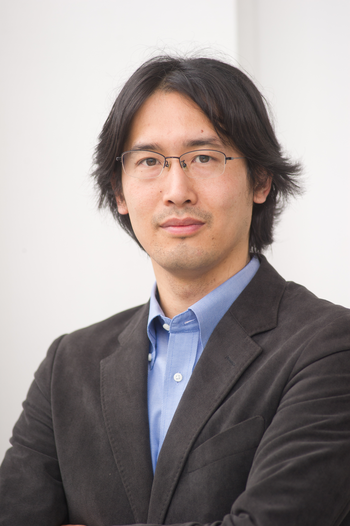
Image
Headshot of Masahiro Kotosaka
Masahiro Kotosaka, Associate Professor, Keio University
 
Masahiro Kotosaka is an Associate Professor at Keio University and advisor to several global start-up companies. Before moving to Keio, he was a faculty at Ritsumeikan, a junior faculty at University of Oxford, and was a consultant at McKinsey & Company (Frankfurt/Tokyo). As a practitioner, he worked for sixteen client organizations across nine industries and nine countries, and spent four years running three profitable IT/Retail businesses before joining McKinsey. He graduated from University of Oxford with D.Phil. (PhD) in Management Studies and MSc in Management Research with Distinction.

Image
ishii headshot 2

Yoshiaki Ishii, Director of Science, Technology and Innovation, Cabinet Office, Government of Japan

Since getting his start at the government's Small and Middle Enterprise Agency, Dr. Yoshiaki Ishii has shaped his career almost exclusively around supporting young companies and enhancing innovation. Now, he is the director of the Cabinet Office and responsible for determining how to execute the government's mission of supporting deep tech start-ups and creating an innovation ecosystem. Previously, he served as director of the New Business Policy Office, Economic and Industrial Policy Bureau, METI. He has demonstrated expertise in Small and Medium-sized Enterprises (SME), and Venture Business Policy, Industrial Organisation, and Innovation Policy. Dr. Ishii earned his PhD from Waseda University, in 2012, after completing an MBA at Aoyama Gakuin, in 2000.

Image
Portrait of Kenji Kushida
Kenji Kushida, Research Scholar, Shorenstein APARC Japan Program (Moderator)
 
Kenji E. Kushida is a Japan Program Research Scholar at the Walter H. Shorenstein Asia-Pacific Research Center and an affiliated researcher at the Berkeley Roundtable on the International Economy. Kushida’s research interests are in the fields of comparative politics, political economy, and information technology. He has four streams of academic research and publication: political economy issues surrounding information technology such as Cloud Computing; institutional and governance structures of Japan’s Fukushima nuclear disaster; political strategies of foreign multinational corporations in Japan; and Japan’s political economic transformation since the 1990s. Kushida has written two general audience books in Japanese, entitled Biculturalism and the Japanese: Beyond English Linguistic Capabilities (Chuko Shinsho, 2006) and International Schools, an Introduction (Fusosha, 2008). Kushida holds a PhD in political science from the University of California, Berkeley. He received his MA in East Asian studies and BAs in economics and East Asian studies, all from Stanford University.

Virtual Webinar Via Zoom.

Registration Link: https://bit.ly/2ziVGY2

Yoshiaki Ishii, Government of Japan
Masahiro Kotosaka, Keio University
Kenji Kushida, Stanford University
Seminars
-

This is a virtual event. Please click here to register and generate a link to the talk. 
The link will be unique to you; please save it and do not share with others.


To celebrate its May release, contributors Karen Eggleston, Barry Naughton, and Andrew Walder will join editors Thomas Fingar and Jean Oi for a panel discussion of their volume Fateful Decisions: Choices That Will Shape China’s Future (Stanford University Press).  China has enjoyed an extraordinary run of rapid growth and development over the last 40 years.  Yet, as Fingar and Oi point out, China’s future is hardly set in stone.  Sustained economic growth, social welfare and stability will depend upon tough policy decisions confronting Beijing’s leaders today in what is a watershed moment.  Casting doubt on Beijing’s aversion to major reforms and its return to certain Mao-era policy tools, Oi and Fingar argue that China’s challenges are not only complex, but high-stakes – challenges that have become even more daunting in the aftermath of COVID-19.  As China battles the difficulties caused by an aging population, the loss of comparative economic advantage, a politically entrenched elite, and a population with rising expectations, today’s policy decisions will weigh heavily on its future. Topics explored in the volume include China's healthcare challenges in a slowing economy, its global ambitions and track record, economic aims and realities, the country’s mounting governance pressures, and more. 


Fateful Decisions is available for purchase here.


Fore more information on Fateful Decisions, check out these articles:

Karen Eggleston Examines China’s Looming Demographic Crisis, in Fateful Decisions

Now It Gets Much Harder: Thomas Fingar and Jean Oi Discuss China’s Challenges in The Washington Quarterly

China’s Challenges: Now It Gets Much Harder


Portrait of Karen EgglestonKaren Eggleston is a senior fellow at the Freeman Spogli Institute for International Studies (FSI) at Stanford University, director of the Stanford Asia Health Policy Program, and deputy director of the Walter H. Shorenstein Asia-Pacific Research Center at FSI. She is also a fellow with the Stanford Center for Innovation in Global Health and a faculty research fellow of the National Bureau of Economic Research (NBER). Eggleston earned her PhD in public policy from Harvard University, studied in China for two years, and was a Fulbright scholar in South Korea. Her research focuses on comparative health systems and health reform in Asia, especially China; government and market roles in the health sector; supply-side incentives; healthcare productivity; and economic aspects of demographic change.


Portrait of Thomas FingarThomas Fingar is a Shorenstein Distinguished Fellow in the Shorenstein Asia-Pacific Research Center at Stanford University. From May 2005 through December 2008, he served as the first deputy director of national intelligence for analysis and, concurrently, as chairman of the National Intelligence Council. Previous positions include assistant secretary of state for Intelligence and Research (2000-2001, 2004–2005), principal deputy assistant secretary (2001–2003), deputy assistant secretary for analysis (1994–2000), director of the Office of Analysis for East Asia and the Pacific, and chief of the China Division. Fingar is a graduate of Cornell University (AB in government and history) and Stanford University (MA and PhD, both in political science). His most recent books are Uneasy Partnerships: China’s Engagement with Japan, the Koreas, and Russia in the Era of Reform (editor) (Stanford University Press, 2017); The New Great Game: China’s Relations with South and Central Asia in the Era of Reform (editor) (Stanford University Press, 2016); and Reducing Uncertainty: Intelligence Analysis and National Security (Stanford University Press, 2011).
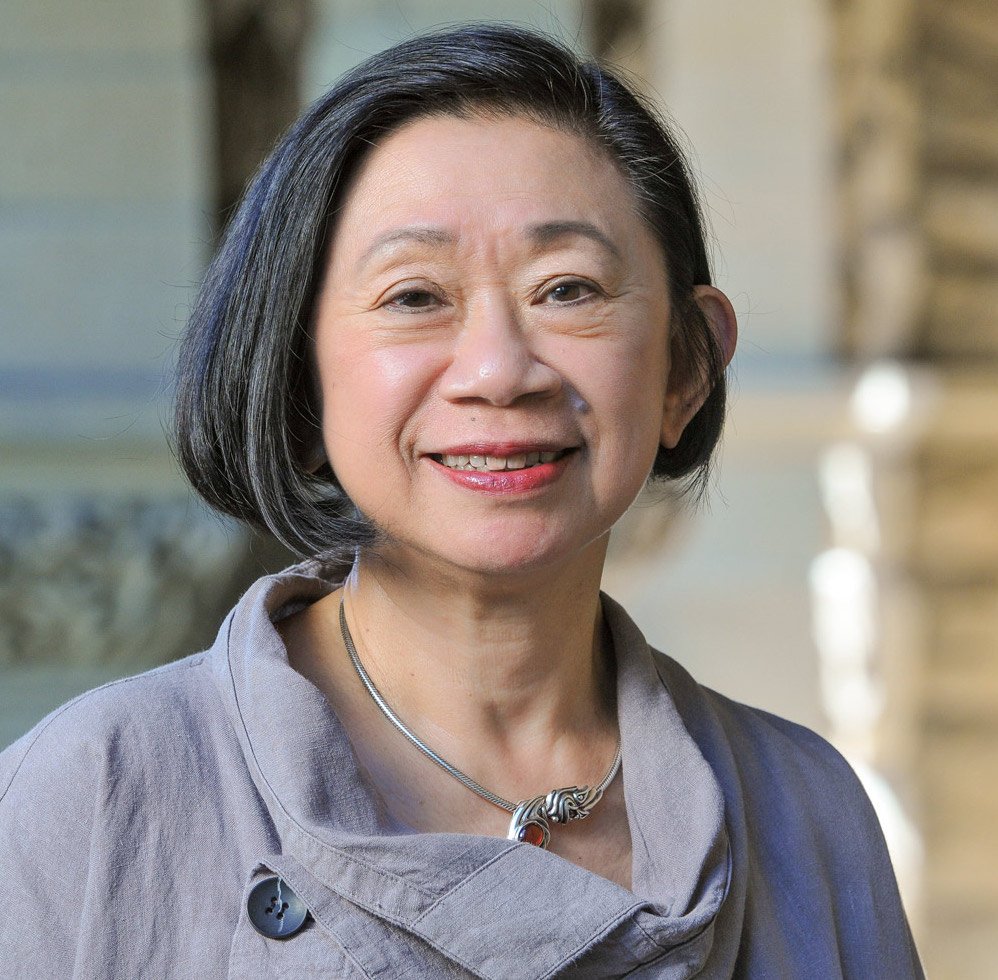
 

Image
Photo of Barry Naughton
Barry Naughton is the So Kwanlok Professor at the School of Global Policy and Strategy, University of California–San Diego. Naughton’s work on the Chinese economy focuses on market transition; industry and technology; foreign trade; and political economy. His first book, Growing Out of the Plan, won the Ohira Prize in 1996, and a new edition of his popular survey and textbook, The Chinese Economy: Adaptation and Growth, appeared in 2018. Naughton did his dissertation research in China in 1982 and received his PhD in economics from Yale University.


Jean C. OiJean C. Oi is the William Haas Professor of Chinese Politics in the Department of Political Science and a senior fellow in the Freeman Spogli Institute for International Studies at Stanford University. She directs the China Program at the Walter H. Shorenstein Asia-Pacific Research Center and is the Lee Shau Kee Director of the Stanford Center at Peking University. Oi has published extensively on China’s reforms. Recent books include Zouping Revisited: Adaptive Governance in a Chinese County, coedited with Steven Goldstein (Stanford University Press, 2018), and Challenges in the Process of China’s Urbanization, coedited with Karen Eggleston and Yiming Wang (2017). Current research is on fiscal reform and local government debt, continuing SOE reforms, and the Belt and Road Initiative.


Portrait of Andrew WalderAndrew G. Walder is the Denise O’Leary and Kent Thiry Professor of Sociology in the School of Humanities and Sciences, and a senior fellow in the Freeman Spogli Institute for International Studies at Stanford University. A political sociologist, Walder has long specialized in the study of contemporary Chinese society and political economy. After receiving his PhD at the University of Michigan, he taught at Columbia, Harvard, and the Hong Kong University of Science and Technology. At Stanford he has served as chair of the Department of Sociology, director of the Asia-Pacific Research Center, and director of the Division of International, Comparative, and Area Studies in the School of Humanities and Sciences. His most recent books are Fractured Rebellion: The Beijing Red Guard Movement (2009), China under Mao: A Revolution Derailed (2015), and Agents of Disorder: Inside China’s Cultural Revolution (2019).

Via Zoom Webinar.
Register at: https://bit.ly/2WiwPvm

Karen Eggleston <br> Senior Fellow at FSI; Director of the Asia Health Policy Program, Shorenstein APARC, Stanford University <br><br>
Thomas Fingar <br> Shorenstein APARC Fellow, Stanford University <br><br>
Barry Naughton <br> Sokwanlok Chair of Chinese International Affairs, School of Global Policy and Strategy, UC San Diego <br><br>
Jean C. Oi <br> Director, Stanford China Program; William Haas Professor of Chinese Politics, Stanford University <br><br>
Andrew Walder <br> Senior Fellow at FSI; Denise O'Leary and Kent Thiry Professor, Stanford University <br><br>
Panel Discussions
Authors
News Type
News
Date
Paragraphs

The signing of President Trump’s Phase One trade deal with China has rekindled speculations about the future of the world’s second-largest economy. Many analysts have cited trade frictions between the United States and China as a driving force behind the slowdown the Chinese economy has experienced in recent years. It is not a tariff crossfire, however, that explains the slowdown, argues Nicholas Lardy, a leading expert on the Chinese economy.

Lardy, the Anthony M. Solomon Senior Fellow at the Peterson Institute for International Economics, offered a different view on China’s slowing economy in a lecture presented at the China Program’s 2020 winter/spring colloquia series, which examines the past, present, and future of the PRC at 70. Using data and trends from the last forty years of China’s economic growth, Lardy presented the case that the slowing trend in the Chinese economy is directly related to changes in how the government lends credit and to what he terms “resource misallocation.”

Image
Nicholas Lardy lecturing at APARC.
According to Lardy, the Chinese economy is slowing from the inside. The government’s recent campaign to deleverage the amount of credit coming out of the shadow banking system was arguably justified, but it has nonetheless reduced the amount of credit available to businesses, particularly private companies. As a result, the credit-to-GDP ratio has plateaued in the last several years and is growing in-pace with the economy instead of ahead of it. 

Coupled with this is the observation that Xi Jinping’s government has actively sought to increase the size and scope of state-owned enterprises. Lardy’s research indicates that the assets of state-owned, non-financial companies in China are growing twice as fast as the overall GDP, a situation he feels is only possible if state companies are being allocated a disproportional share of credit and loans. Lardy shows that pre-2012, funding to private companies was at $3.6 trillion USD, but by 2016 it dropped to a mere $600 billion.

Taking these factors together, Lardy argues that the economic slowdown will continue if the Chinese government continues to aggressively emphasize party control and the importance of the state sector over private companies. While reporting on trade deals may dominate the media, “We will increasingly see friction not on tariffs, but on technology transfer and issues of technology,” he says. “The key thing to watch is whether or not Xi Jinping gets serious about reforming state-owned enterprises and having a financial system that allocates credit more efficiently.”

Listen to highlights from Lardy’s presentation above, also available on our SoundCloud channel. A transcript is available

.


Hero Image
Image of Chinese Yuan Thanakorn Phanthura / EyeEm / Getty Images
All News button
1
-

Moon Jae-in administration increased South Korea’s minimum wage by nearly 30 percent in 2018 and 2019 under its political slogan of "income-led growth." The idea was that the higher minimum wage would boost low-wage earners’ earnings, thus the income inequality would be reduced while promoting economic growth with increased labor income and expenditure of low-wage workers and their households. This idea was, however, heavily criticized by those who argued that the minimum wage could not be a tool for economic growth and there could be a negative effect on employment.

Lee will discuss empirical findings from his research on the Korean minimum wage including the effect of the recent wage hikes. Using employer-employee matched data and longitudinal data on the universe of establishments, he estimated the effect of the minimum wage on net job growth and tried to decompose the effect into job creation and destruction by existing establishments as well as by establishment entry and exit. He found a significant negative effect of the minimum wage on employment growth; and also that ignoring the minimum wage’s effect on the self-employed could underestimate the adverse effect on total employment. To explain the mechanism, he focuses on the Korean labor market's unique feature—a high share of the self-employed in the workforce and their financial marginality. His findings demonstrate that the minimum wage’s effect and its channels should differ across countries depending on labor market institutions and structure.

Image
Jungmin Lee
Jungmin Lee is a professor of economics at Seoul National University in Korea, and also a Research Fellow at the Institute for the Study of Labor in Germany and at the Center for Research & Analysis of Migration at University College London in UK. Previously, he was an assistant professor at University of Arkansas and Florida International University, and an associate professor at Sogang University in Korea. His current research focuses on Korean labor market and education policies, interactions between health and labor market outcomes, and North Korean refugees. He has been a member of editorial board of many economics journals in Korea. He was the chief editor for the Korean Journal of Labor Economics and he is currently a Co-Editor for the Korean Economic Review; and was a member of the committee on youth employment of the Korea Tripartite Commission. He has published more than 50 papers in academic journals, mostly about the Korean economy. He received a bachelor’s degree in international economics from Seoul National University and PhD in economics from the University of Texas at Austin.

Jungmin Lee <i>Professor of Economics, Seoul National University</i>
Seminars
Shorenstein APARCStanford UniversityEncina Hall E301Stanford, CA 94305-6055
0
Koret Fellow, 2019-20
Visiting Scholar at APARC, Winter 2020
victor_cha-koret_fellow.jpg Ph.D.

Victor Cha, professor of government and international affairs at Georgetown University, joined the Walter H. Shorenstein Asia-Pacific Research Center and the Korea Program as the Koret Fellow for the winter quarter of 2020. He is the author of five books, including The Impossible State: North Korea, Past and Future (Harper Collins, 2012) and Powerplay: Origins of the American Alliance System in Asia (Princeton University Press, 2016). He holds Georgetown's Dean's Award for teaching for 2010, the Distinguished Research Award for 2011, and a Distinguished Principal Investigator Award for 2016.

Professor Cha left the White House in 2007 after serving since 2004 as Director for Asian Affairs at the National Security Council, where he was responsible for Japan, the Korean peninsula, Australia/New Zealand, and Pacific Island affairs. He serves as Senior Advisor at CSIS, and is a non-resident Fellow in Human Freedom at the George W. Bush Institute in Dallas, Texas. He received a Ph.D. from Columbia University, M.A. from the University of Oxford, and MIA and B.A. from Columbia University.

News Type
Commentary
Date
Paragraphs
What is strategic thinking? Are the foreign policies of some Southeast Asian states more strategic than those of others? If so, in what way, and with what implications for U.S. policy?
 
APARC's Southeast Asia Program Director Donald K. Emmerson examines these questions at the seminar "Beyond the Grass and the Elephants: Strategic Thinking in Southeast Asia," hosted by the New York Southeast Asia Network on September 19, 2019.
 
Watch the video here:
 

Hero Image
U.S. Secretary of State Michael R. Pompeo meets with Chinese State Councilor and Foreign Minister Wang Yi in Bangkok, Thailand, on August 1, 2019.
U.S. Secretary of State Michael Pompeo meets with Chinese State Councilor and Foreign Minister Wang Yi in Bangkok, Thailand on August 1, 2019.
State Department Photo by Ron Przysucha/ Public Domain
All News button
1
Subscribe to Policy Analysis