Environment

FSI scholars approach their research on the environment from regulatory, economic and societal angles. The Center on Food Security and the Environment weighs the connection between climate change and agriculture; the impact of biofuel expansion on land and food supply; how to increase crop yields without expanding agricultural lands; and the trends in aquaculture. FSE’s research spans the globe – from the potential of smallholder irrigation to reduce hunger and improve development in sub-Saharan Africa to the devastation of drought on Iowa farms. David Lobell, a senior fellow at FSI and a recipient of a MacArthur “genius” grant, has looked at the impacts of increasing wheat and corn crops in Africa, South Asia, Mexico and the United States; and has studied the effects of extreme heat on the world’s staple crops.

-

This event is via Zoom Webinar. Please register in advance for the webinar by using the link below.

REGISTRATION LINKhttps://bit.ly/2Kpjiww

A Discussion between Matthew Kohrman and Gan Quan, co-editors of Poisonous Pandas: Chinese Cigarette Manufacturing in Critical Historical Perspectives (Stanford University Press, 2018).

Image
gan quan


Gan Quan (PhD, Berkeley) is the director of Tobacco Control of the International Union Against Tuberculosis and Lung Disease. His research tackles various topics pertaining to tobacco control in China.


Image
mathew kohrman


Matthew Kohrman (PhD, Harvard) is an associate professor in Stanford’s Department of Anthropology and senior fellow by courtesy at APARC/FSI. His research brings anthropological methods to bear on the ways health, culture, and politics are interrelated.


Via Zoom Webinar.

Register at https://bit.ly/2Kpjiww

Gan Quan Director of Tobacco Control of the International Union Against Tuberculosis and Lung Disease
Matthew Kohrman Associate Professor of Anthropology, Stanford University
Panel Discussions
News Type
News
Date
Paragraphs

When economists, policymakers, and media commentators discuss growth or compare living standards across countries, they typically turn to a single measure: Gross Domestic Product (GDP). In layman’s terms, GDP is the monetary value of all goods and services made or exchanged in a country during a specific period of time. The calculation of a nation’s GDP is complex and takes in a multitude of country-specific caveats, but the final figure per capita is supposedly a proxy for a nation’s economic health.

Image
Amit Kapoor

Using GDP as a measure of welfare, however, has multiple problems. Just ask Dr. Amit Kapoor, an expert in economic development and business strategy, who rebuts the focus often placed on the importance of GDP. As the chair of the Shared Value Institute of India, president and CEO of the India Council on Competitiveness, and as an affiliate faulty member with the Institute of Strategy and Competitiveness of the Harvard Business School, Kapoor has spent a great deal of time and effort working with the governments of India and other countries on measuring social progress and developing living standards, performance, and progress indices. In a recent lecture as part of APARC’s South Asia Colloquia, Kapoor made his case for looking past GDP when considering the overall well-being of nations.

GDP, says Kapoor, originated in the 1940s as a wartime estimate to provide a window into a region’s economic situation and is based on the paradigm that economic objectives equal social objectives. Yet economic development doesn’t always lead to advancements in social progress and human prosperity. To gain a complete understanding of a nation’s growth, he argued, it is important directly to measure social progress, which includes indicators of human well-being such as access to education, equal opportunity, health services, sanitation and clean water, social inclusion, and even tolerance.

 Our world as we know it is facing multiple threats, Kapoor reminds us, from environmental extinction to the rise of populism and to the crisis of capitalism. We can only address these issues “by creating alternate measures of how we assess human well-being.”

Kapoor points to the apparent growing gap between economic gains and social parity as evidence that GDP-centricity gives a very pixelated, partial picture of national development. In the past 80 years, economies as a whole have gained exponentially, as indeed reflected in GDP measurements, but progress on issues such as basic human needs, personal well-being, and opportunities for individual fulfillment have seemed to lag.

Kapoor’s issue with GDP is that it fails to account for these other kinds of social, environmental, and cultural factors. To this end, he advocates considering other means of measuring success and development, such as the Human Development Index, or his research to gauge and codify “ease of living” measurements in his home country of India.

Image
Data from the Human Development Index

That research, says Kapoor, shows there exists a non-linear relationship between ease of living and per capita GDP. Therefore, the impact of economic development on a population’s ease of living will depend on where the region is placed. Moreover, if one is at a lower level of economic development, then investing in economic well-being will translate into social well-being, but after the cutoff is reached, higher economic development will lead to a fall in the ease of living.    

“In an economy with well-being at its heart, economic growth will simply be another tool to guide it in the direction that the society chooses. In such an economy, the percentage points of GDP, which are rarely connected with the lives of average citizens, will cease to take the center stage. The focus would instead shift towards more desirable and actual determinants of welfare.”

You can read more of Amit Kapoor’s perspectives and learn more about his work to redefine development in India in his Harvard Business Review article, “GDP Is Not a Measure of Human Well-Being.

Hero Image
An ice cream vendor pushes his cart in front of Lodhi Gardens in New Delhi, India. Daniel Berehulak / Getty Images
All News button
1
-

More than 80% of cardiovascular diseases (CVD) and diabetes mellitus (DM) burden now lies in low and middle-income countries. Thus, there is an urgent need to identify and implement the most cost-effective interventions, particularly in the resource-constraint South Asian settings. A 2018 systematic review evaluated the cost-effectiveness of individual-level, group-level and population-level interventions to control CVD and DM in South Asia. Of the 2949 identified studies through a search of 14 electronic databases up to 2016, 42 met full inclusion criteria. Critical appraisal of studies revealed 15 excellent, 18 good and 9 poor quality studies. Most studies were from India (n=37), followed by Bangladesh (n=3), Pakistan (n=2) and Bhutan (n=1). The economic evaluations were based on observational studies (n=9), randomised trials (n=12) and decision models (n=21). Together, these studies evaluated 301 policy or clinical interventions or combination of both. We found a large number of interventions were cost-effective aimed at primordial prevention (tobacco taxation, salt reduction legislation, food labelling and food advertising regulation), and primary and secondary prevention (multidrug therapy for CVD in high-risk group, lifestyle modification and metformin treatment for diabetes prevention, and screening for diabetes complications every 2–5 years). Significant heterogeneity in analytical framework and outcome measures used in these studies restricted meta-analysis and direct ranking of the interventions by their degree of cost-effectiveness. The cost-effectiveness evidence for CVD and DM interventions in South Asia is growing, but most evidence is from India and limited to decision modelled outcomes. There is an urgent need for formal health technology assessment and policy evaluations in South Asia and other low- and middle- income countries using local research data.

Image
kavita
I am Dr. Kavita Singh, interested in global cardiometabolic disease epidemiology and economic evaluations of interventions for prevention and control of chronic diseases in low- and middle- income countries. I am an Epidemiologist by training, and work as a research scientist at the Public Health Foundation of India. My research work has primarily focused on evaluating the long-term effectiveness and cost-effectiveness of a multicomponent quality improvement intervention (consisting of decision-support electronic health records to enhance physician’s responsiveness and care coordinators to improve patient’s adherence to therapy) in 1,146 patients with type 2 diabetes attending 10 tertiary care clinics in India and Pakistan as part of the National Heart Lung Blood Institute funded CARRS Trial. Recently, I have been awarded the Emerging Global Leader Award (K43 grant, 2019-2024), funded by the National Institutes of Health, Fogarty International Centre to conduct a research project that aims to develop and test the feasibility of a multicomponent cardiovascular quality improvement strategy for patients with established cardiovascular diseases (CVD) in India.

Kavita Singh 2019-2020 Walter H. Shorenstein Asia-Pacific Research Center Visiting Scholar
Seminars
Authors
Noa Ronkin
News Type
News
Date
Paragraphs

Southeast Asia, home to over 640 million people across 10 countries, is one of the world’s most dynamic and fastest growing regions. APARC just concluded the year 2019 with a Center delegation visit to two Southeast Asian capital cities, Hanoi and Bangkok, where we spent an engaging week with stakeholders in the academic, policy, business, and Stanford alumni communities.

Led by APARC Director Gi-Wook Shin, the delegation included APARC Deputy Director and Asia Health Policy Program Director Karen Eggleston, Southeast Asia Program Director Donald Emmerson, and APARC Associate Director for Communications and External Relations Noa Ronkin. Visiting Scholar Andrew Kim joined the delegation in Bangkok.

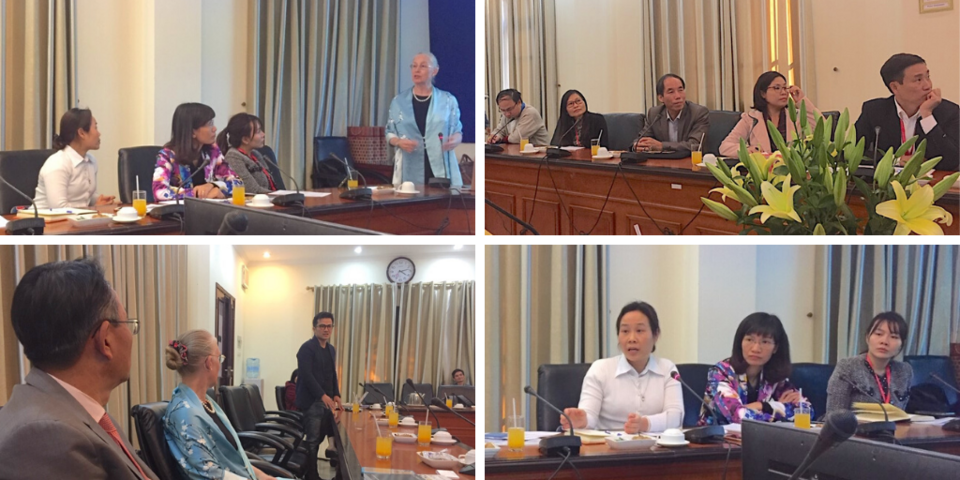
With a focus on health policy, our first day in Hanoi included a visit to Thai Nguyen University, a meeting with government representatives at the Vietnam Ministry of Health, and a seminar on healthy aging and innovation jointly with Hanoi Medical University.

Image
Collage of four images showing participants at a roundtable held at Hanoi Medical University with APARC delegation members

Karen Eggleston and participants at the roundtable held at Hanoi Medical University, December 9, 2019.

Throughout the day, Eggleston presented some of her collaborative research that is part of two projects involving international research teams: one that assesses public-private roles and institutional innovation for healthy aging and another that examines the economics of caring for patients with chronic diseases across diverse health systems in Asia and other parts of the world. We appreciated learning from our counterparts about the health care system and health care delivery in Vietnam.

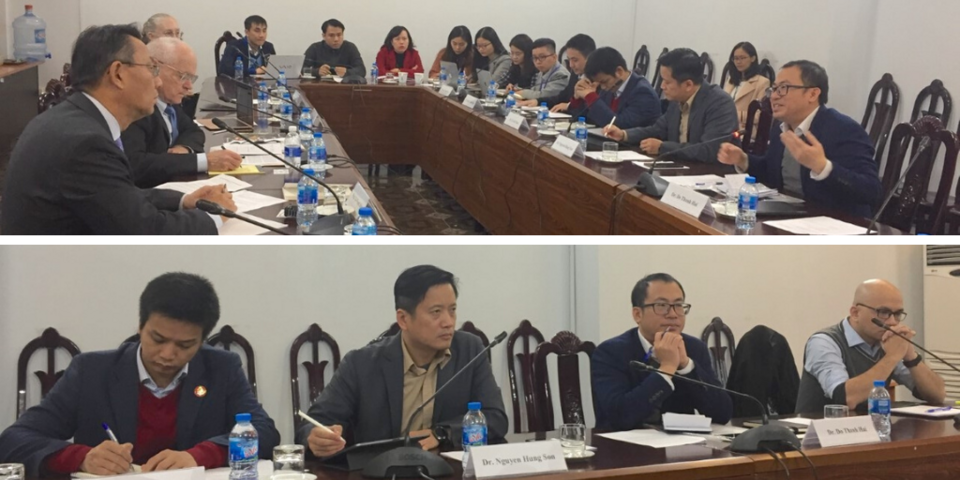
Shifting focus to international relations and regional security, day 2 in Hanoi opened with a roundtable, “The Rise of the Indo-Pacific and Vietnam-U.S. Relations,” held jointly with the East Sea Institute (ESI) of the Diplomatic Academy of Vietnam (DAV). Following a welcome by ESI Director General Nguyen Hung Son, the program continued with remarks by Shin, Emmerson, ESI Deputy Director General To Anh Tuan, and Assistant Director General Do Thanh Hai.

Image
Participants at a roundtable held at the Diplomatic Academy of Vietnam with APARC delegation members

Roundtable at the Diplomatic Academy of Vietnam, December 10, 2019.

The long-ranging conversation with DAV members included issues such as the future of the international order in Asia; the U.S. withdrawal from multilateralism; the concern about a lack of U.S. engagement in Southeast Asia, sparked by President Trump’s absence from the November 2019 summit of the Association of Southeast Asian Nations (ASEAN) at a time when China is bolstering its influence in the region and when ASEAN hopes to set a code of conduct with China regarding disputed waters in the South China Sea; the priorities for Vietnam as it assumes the role of ASEAN chair in 2020; and the challenges for the Vietnam-U.S. bilateral relationship amid the changing strategic environment in Southeast Asia.

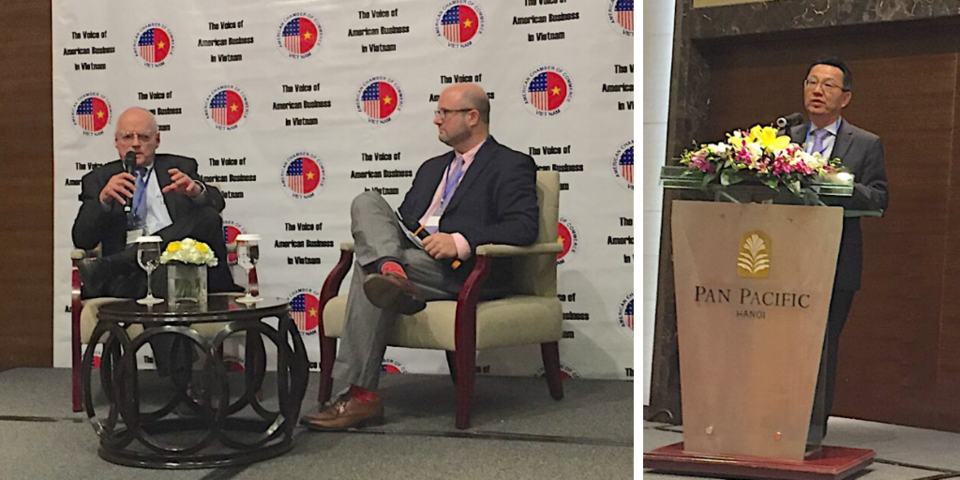
In the afternoon we were joined by members of the American Chamber of Commerce in Hanoi at an AmCham-hosted Lunch ‘n’ Learn session on Vietnam's challenges and opportunities amid the U.S.-China rivalry. The event featured Emmerson in conversation with AmCham Hanoi Executive Director Adam Sitkoff.

Image
Two men in conversation seated on stage and a man speaking at a podium

(Left) Donald Emmerson in conversation with Adam Sitkoff; (right) Gi-Wook Shin welcomes AmCham Hanoi members; December 10, 2019. 

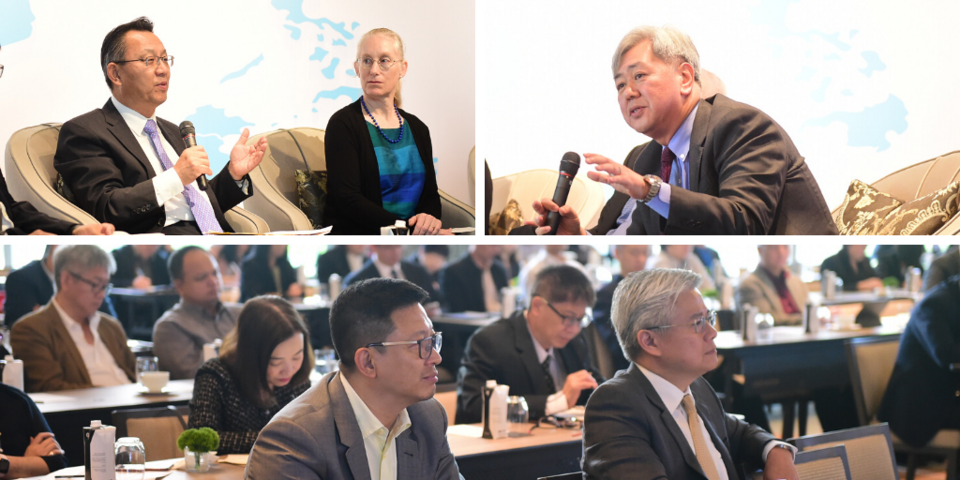
Moving to Bangkok, delegation members Shin, Eggleston, Emmerson, and Kim spoke on a panel for executives of the Charoen Pokphand Group (C.P. Group), one of Thailand’s largest private conglomerates, addressing some of the core issues that lie ahead for Southeast Asia in 2020 and beyond in the areas of geopolitics, innovation, and health.

Image
Participants at a panel discussion with APARC delegation hosted by the C.P. Group, Thailand

Top, from left to right: Gi-Wook Shin, Karen Eggleston, Andrew Kim; bottom: C.P. Group executive listening to the panel, December 12, 2019.

We also enjoyed a tour at True Digital Park, Thailand’s first startup and tech entrepreneur’s campus. Developed by the C.P. Group, True Digital Park aspires to be an open startup ecosystem that powers Thailand to become a global hub for digital innovation.

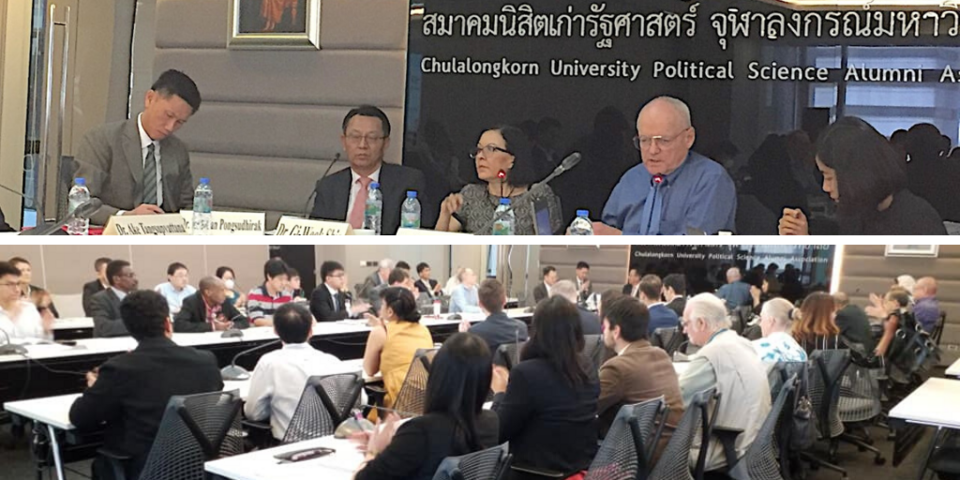
The following day, Shin and Emmerson participated in a public forum hosted by Chulalongkorn University’s Institute of Security and International Studies (ISIS Thailand), "Where Northeast Asia Meets Southeast Asia: The Great Powers, Global Disorder and Asia’s Future.” They were joined by ISIS Thailand Director Thitinan Pongsudhirak and Chulalongkorn University Faculty of Political Science Associate Dean for International Affairs and Graduate Studies Kasira Cheeppensook. The panel was moderated by Ms. Gwen Robinson, ISIS Thailand senior fellow and editor-at-large of the Nikkei Asian Review.

Image
Panelists and participants at a public forum held at Chulalongkorn University

ISIS Thailand forum participants and panelists, from left: Pngsukdhirak, Shin, Robinson, Emmerson, Cheeppensook; December 13, 2019.

As part of that discussion, Emmerson speculated that – driven by deepening Chinese economic and migrational involvement in Southeast Asia’s northern tier – Cambodia and Laos, less conceivably Myanmar, and still less conceivably Thailand could become incorporated de facto into an economically integrated “greater China” that could eventually reduce ASEAN to a more-or-less maritime membership in the region’s southern tier. Emmerson’s speculation was made in the context of his critique of ASEAN’s emphasis on its own “centrality” to the neglect of its lack of the proactivity that would serve as evidence of centrality and of a desire not to be rendered peripheral by the growing centrality-cum-proactivity of China. The event was covered by the Bangkok Post (although that report’s headline and quote of Emmerson are inaccurate, as neither the panel nor Emmerson predicted the “break-up of ASEAN.”)

Our delegation visit in Bangkok concluded with a buffet dinner reception and panel discussion jointly with the Stanford Club of Thailand.

Image
alumni event

Stanford and IvyPlus alumni listening to the panel, December 13, 2019.

Moderated by Mr. Suthichai Yoon, a veteran journalist and founder of digital media outlet Kafedam Group, the conversation focused on the changing geopolitics of Southeast Asia, innovation and health in the region, and the opportunities and challenges facing Thailand-U.S. relations. It was a pleasure to meet many new and old friends from the Stanford and IvyPlus alumni communities.

APARC would like to thank our partners and hosts in Hanoi and Bangkok for their hospitality, collaboration, and the stimulating discussions throughout our visit. We look forward to keeping in touch!

Hero Image
APARC delegation speaking to Stanford and IvyPlus alumni, Bangkok
All News button
1
-

This seminar will present empirical evidence about policies to promote healthy lifestyles in China from a professor and a policymaker from the PRC.

As a result of economic growth, urbanization, lifestyle change, and population aging, Noncommunicable Diseases (NCDs) have become China’s leading cause of death, accounting for 86.6% of annual deaths. Almost two-thirds of NCDs can be prevented by reducing unhealthy lifestyle choices such as tobacco use, physical inactivity, harmful use of alcohol, and unhealthy diets. In particular, dietary risk factors and insufficient physical activity increasingly contribute to the surging burden of obesity in China and globally.

In 2016, President Xi Jinping announced the “Healthy China 2030” Blueprint. Three years later, a corresponding action plan was released and encompassed 15 goals, including reducing obesity, increasing overall physical activity, and preventing NCDs. The presenters will discuss results of research on the determinants of healthy diet, physical activity, obesity, and noncommunicable diseases, and provide evidence for implementation of Healthy China 2030. Their research includes aspects on (1) unhealthy food and beverage marketing to children; (2) the link between green space, physical activity, and health outcomes; (3) a strategy to involve government and non-health sectors in the prevention and control of NCDs in China; and (4) preventive vaccinations and primary care management for individuals living with NCDs like diabetes.

Image
bai di
Juan Zhang is Associate Professor at School of Public Health, Peking Union Medical College (PUMC) & China Academy of Medical Science (CAMS). She conducts research on risk factors of noncommunicable disease (NCD), such as obesity, hypertension, diabetes, nutrition, physical activity, using policy, socio-ecological, and behavioral approaches. She currently is principal investigators to (1) assessing mass media (mainly television) food advertisement, (2) investigate underlying family environment, school policy and environment of preschool children overweight and obesity, (3) evaluate the implementation and impact of government-led programs to prevent and control NCD. Prior to joining PUMC, Dr. Zhang has had diverse working experience over 10 years across national government agency, WHO, academic institutions, and multinational pharmaceutical company.

Dr. Juan ZHANG holds a Ph.D. in Health Behavior from the Indiana University Bloomington. She has published in the areas of chronic disease epidemiology, economic cost and behavioral determinants of obesity, and public health program evaluation. She serves as members of several professional societies, like Committee of Diabetes Prevention and Control of Chinese Preventive Medicine Association (CPMA), Committee of NCD Disease Prevention and Control of CPMA, Committee of Health Communication of China Health Education Association, and Committee of Student Nutrition and Health, Chinese Student Nutrition and Health Promotion Federation.

Image
photo of xiangyuchen 4x6
Xiangyu Chen is a working staff from Non-communicable Disease (NCDs) Control and Prevention Department in Zhejiang Provincial Center for Disease Control and Prevention. He is a public health physician and his ongoing areas of research include development of risk prediction models using health check-up data, and cost-effectiveness evaluation for flu shots among the diabetes. He completed his MS in Epidemiology and BA in Preventive Medicine at Soochow University.

Juan Zhang Associate Professor, School of Public Health, Peking Union Medical College (PUMC) & China Academy of Medical Science (CAMS)
Xiangyu Chen Non-communicable Disease (NCDs) Control and Prevention Department, Zhejiang Provincial Center for Disease Control and Prevention
Seminars
News Type
News
Date
Paragraphs

David M. Lampton gave a talk titled “Chinese Power and Rail Connectivity in Southeast Asia” before the Stanford China Program audience on February 6th. He addressed three issues in particular: the scope of his research project, conducted in partnership with two co-authors based in Singapore and Malaysia; the long genesis of this railroad construction idea from Southeast Asia to China; and, third, the overarching question of whether China can effectively implement the gargantuan feat – technologically, financially, and politically. The high-and conventional-speed rail project will span seven Southeast Asian countries, plus China, Lampton highlighted.  This project is not only geographically forbidding, but the political terrain, and its socio-economic variety, is an even greater challenge.  Lampton’s talk comprised part of Stanford China Program’s 2019 Colloquia Series, “A New Cold War?: Sharp Power, Strategic Competition, and the Future of U.S.-China Relations.”

Lampton began by clarifying that the vision of rail connectivity through Southeast Asia into China is not the brainchild of either China’s leadership or Xi Jinping. This idea has a long history, he stated, beginning with the British and the French in the 19th century when they were occupying Burma and Indochina, respectively; and even during World War II when Japan further entertained building railroads from the Korean Peninsula to Singapore to advance their military ambitions. In contemporary times, ASEAN had articulated a plan in 1995 to develop a rail line from Singapore to Kunming city, P.R.C. In 2010, ASEAN again put forth a master connectivity plan for 2025 where railroad development comprised a prominent part. Only in the aftermath of these many plans and proposals did Xi Jinping, in 2013, officially announce China’s Belt and Road Initiative (BRI), an infrastructure initiative with a scope far greater than simply Southeast Asia. The idea of infrastructural connectivity in the region, in other words, has a long history that predates China entering the picture as a major actor. Only recently has China amassed the technological capacity and financial wherewithal to realize this enormous project, with economic, diplomatic, and strategic military implications.

Next he described the key role that Beijing’s industrial policy has played in the rapid development of China’s high-speed rail. From a nonexistent industry in 2001, China has built a sector that is now an international powerhouse in high-speed rail technology. As of 2014, China boasted four trunk lines, North and South; and four trunk lines, East and West, crisscrossing the P.R.C. China’s industrial policy has clearly delivered striking results (as well as some setbacks) not only with respect to high-speed rail but also in other industries.  In light of this, Lampton opined that China is not likely to yield to U.S. demands for major structural reforms in onoing trade talks with China. 

Lampton described the progress in high-speed and conventional-speed rail construction with partners in Southeast Asia (ASEAN) that the Chinese have made, with Laos and Thailand furthest along in implementation. Nonetheless, Beijing also has met with significant resistance due to the complicated political situation in various regions. Lampton described, for example, the drawn-out financial negotiations between Singapore and Malaysia with respect to the rail line connecting Singapore to Kuala Lumpur; and the jockeying among various heads of Malaysia’s federation of local states. The election of Mr. Mahathir in 2018 also put an at least temporary halt to the construction and planning of two rail projects for many reasons, including the corruption of the preceding regime of Najib in Kuala Lumpur. Although Lampton expressed overall confidence that the rail lines will get built to Kuala Lumpur and Bangkok, for example, in the not-too-distant future, the political complexities of the region and China’s ability to successfully navigate them are still open questions.

He also described the competing world views regarding infrastructure construction and economic development. There are powerful constituents in China – now backed by Xi Jinping himself – who believe that infrastructure development drives growth: i.e., “if you want to get rich, build a road.” By contrast, the U.S. and entities such as the World Bank are more cautious, seeing all the negative social and environment extenalities such massive projects create. They also want to see greater assurances of projected returns from these infrastructure projects before devoting resources. Having said this, both multilateral financial and development institutions, and the United States Government, are gradually adopting a more supportive posture on large infrastructure projects, in part not wishing to abandon the commercial and strategic battlegrounds of the future to the PRC.

Lastly, Lampton debunked the notion that the BRI is a unified, top-down “plan.” Rather, he described it as Beijing’s “umbrella policy” that “creates a predisposition [among Chinese entities] to build infrastructure.” It incentivizes “entrepreneurial SOEs, provinces, localities, overseas Chinese . . . to push their pet projects . . . onto . . . the national largesse.” This being the case, Lampton described the BRI as a dynamic, chaotic and, sometimes, even a rapacious process for the transit countries. Yunnan Province, for example, started a rail line even before the central government had approved it; and Guangdong Province began developing its own special economic zone and port construction in Malacca all without central approval. As Lampton stated, the “BRI isn’t just about Xi Jinping and Beijing . . . . [I]t’s about local initative, and how Beijing can or cannot control or . . . under what circumstances, it chooses to control [its local actors].”

The recording and transcript are available below.  

Hero Image
lampton photo 2
David M. Lampton, Oksenberg-Rohlen Fellow and Research Scholar at APARC, speaks at Stanford's China Program on February 6th, 2019.
All News button
1
-


EMERGING ISSUES IN CONTEMPORARY ASIA

A Special Seminar Series


RSVP required by Tuesday, May 7, 2019

RSVP Now


ABSTRACT: Why have the three most salient minority groups in Japan - the politically dormant Ainu, the active but unsuccessful Koreans, and the former outcaste group of Burakumin - all expanded their activism since the late 1970s despite the unfavorable domestic political environment? My investigation into the history of the three groups finds an answer in the galvanizing effects of global human rights on local social movements. Drawing on interviews and archival data, I document the transformative impact of global human rights ideas and institutions on minority activists, which changed the prevalent understanding about their standing in Japanese society and propelled them to new international venues for political claim making. The global forces also changed the public perception and political calculus in Japan over time, catalyzing substantial gains for the minority movements. Having benefited from global human rights, all three groups repaid their debt by contributing to the consolidation and expansion of international human rights principles and instruments. The in-depth historical comparative analysis offers rare windows into local, micro-level impact of global human rights - complementing my other projects on the relationship between international human rights and local politics, which employ cross-national quantitative analyses - and contributes to our understanding of international norms and institutions, social movements, human rights, ethnoracial politics, and Japanese society. 
 
Image
Kiyoteru Tsutsui
PROFILE:
  Kiyoteru Tsutsui is Professor of Sociology, Director of the Center for Japanese Studies, and Director of the Donia Human Rights Center at the University of Michigan, Ann Arbor. His research on globalization of human rights and its impact on local politics has appeared in American Sociological Review, American Journal of Sociology, Social Forces, Social Problems, Journal of Peace Research, Journal of Conflict Resolution, and other social science journals. His book publications include Rights Make Might: Global Human Rights and Minority Social Movements in Japan (Oxford University Press 2018), and a co-edited volume (with Alwyn Lim) Corporate Social Responsibility in a Globalizing World (Cambridge University Press 2015). He has been a recipient of National Endowment for the Humanities Fellowship, National Science Foundation grants, the SSRC/CGP Abe Fellowship, Stanford Japan Studies Postdoctoral Fellowship, and other grants as well as awards from American Sociological Association sections on Global and Transnational Sociology (2010, 2013), Human Rights (2017), Asia and Asian America (2018), and Collective Behavior and Social Movements (2018).


McClatchy Hall, Building 120, Studio 40
450 Serra Mall
Stanford University

Kiyoteru Tsutsui Professor of Sociology, University of Michigan
Seminars
-

The event is jointly sponsored by the Japan Program at the Shorenstein Asia-Pacific Research Center and the Japan Foundation Center for Global Partnership.

The Heisei era started in 1989, with high hopes for Japan to contribute to the international order. As the Heisei era draws to an end, Japan is once again expected to “step up” with increased urgency, given the current US administration’s withdrawal from, and challenge to the international order.  In this talk, I will first look back at the thirty years of Heisei, and discuss why Japan did not take the “internationalist” path in a way that some had expected. Looking forward, I discuss how the domestic institutional changes, together with the geopolitical challenges in Asia, have prompted Japan to seek active leadership in the region and beyond. I will elaborate on the evolution of the “Free and Open Indo-Pacific Vision,” with focus on how exactly Japan seeks to achieve “free and open” in the region, and challenges and limitations going forward.

Image
hikotaniphoto2017
Takako Hikotani is Gerald L. Curtis Associate Professor of Modern Japanese Politics and Foreign Policy. She previously taught at the National Defense Academy of Japan, where she was Associate Professor, and lectured at the Ground Self Defense Force and Air Self Defense Force Staff Colleges, and the National Institute for Defense Studies. Her research focus on civil-military relations and Japanese domestic politics, Japanese foreign policy, and comparative civil-military relations. Her publications (in English) include, “The Japanese Diet and defense policy-making.” International Affairs, 94:1, July, 2018; “Trump’s Gift to Japan: Time for Tokyo to Invest in the Liberal Order,” Foreign Affairs, September/October 2017; and “Japan’s New Executive Leadership: How Electoral Rules "Japan’s New Executive Leadership: How Electoral Rules Make Japanese Security Policy" (with Margarita Estevez-Abe and Toshio Nagahisa), in Frances Rosenbluth and Masaru Kohno eds, Japan in the World (Yale University Press, 2009). She was a Visiting Professional Specialist at Princeton University as Social Science Research Council/Abe Fellow (2010-2011) and Fellow of the US-Japan Leadership Program, US-Japan Foundation (2000- ). Professor Hikotani received her BA from Keio University, MAs from Keio University and Stanford University, and PhD in Political Science from Columbia University, where she was a President’s Fellow.

Takako Hikotani Associate Professor, Modern Japanese Politics and Foreign Policy, Columbia University
Seminars
-

The event is sponsored by the Japan Society for Promotion of Science and
the Japan Foundation Center for Global Partnership.


abe 6364 Japanese Prime Minister Shinzo Abe speaks at Stanford about innovation in Japan and Silicon Valley. He was also joined on stage by Stanford President John Hennessy and George Shultz, the former U.S. Secretary of State and a distinguished fellow at the Hoover Institution (below).
When the Liberal Democratic Party in Japan regained the power led by Prime Minister Shinzo Abe in December 2012, Japan’s government embarked on a set of economic policies dubbed “Abenomics.” Abenomics aimed at bringing Japan back from stagnation and restoring its growth potential.  The Abe administration entered its 7th year and Prime Minister Abe looks most likely to become the prime minister with the longest reign in the post war era.  Abenomics looks seemingly successful as well.  Japan’s economy has been in the longest expansion phase in the post war era.  The unemployment rate is so low that many employers claim they cannot find workers.  Yet, the major goals of Abenomics set at the beginning, such as 2% inflation rate and 2% real economic growth, have not been achieved.  Has Abenomics really succeeded?

This panel features four experts who have been closely watching Abenomics’s impacts on the Japanese economy.  They evaluate what Abenomics has accomplished so far in various areas.


Panelists:

Joshua Hausman, Assistant Professor of Public Policy; Assistant Professor of Economics, University of Michigan

Takatoshi Ito, Professor of International and Public Affairs, Columbia University

Nobuko Nagase, Professor of Labor Economics and Social Policy, Ochanomizu University, Japan

Steven Vogel, Professor of Asian Studies; Professor of Political Science; Chair of the Political Economy Program, University of California, Berkeley

Takeo Hoshi (moderator), Director of the Japan Program at the Shorenstein Asia Pacific Research Center, Stanford University


Koret-Taube Conference Center
Gunn-SIEPR Building
366 Galvez Street, Stanford University

Panel Discussions
-

Plese note: we're no longer accepting RSVPs for this event.


Eight years have passed since the Great East Japan Earthquake and subsequent Fukushima Daiichi Nuclear Power Plant accident. Steady progress has been made towards the reconstruction of Fukushima, repopulation of surrounding areas, and the decommissioning of the plant, of which Tokyo Electric Power Company Holdings (TEPCO) must shoulder 16 trillion yen of the 22 trillion yen, the total estimated cost of the accident. Meanwhile, with Japan having fully liberalized its electricity and gas retail market, the business environment surrounding TEPCO is undergoing a major change. In the long term, TEPCO foresees a decrease in demand for their power service and increased competition among utility companies. In this program, Naomi Hirose, who endeavored to manage the Fukushima incident spearhead reforming the company as President of TEPCO from 2012 to 2017, shares his insights on the current situation in Fukushima, lessons learned and implications from the accident.


Image
naomi hirose photo
Naomi Hirose is senior executive whose service at the Tokyo Electric Power Company (TEPCO) spans four decades.  He joined the company in 1976, having gained an appreciation for the energy industry following the 1973 Oil Shock, and worked in a number of management positions from 1992 to 2005, including corporate planning, sales, marketing, and customer relations.  Mr. Hirose became an executive officer in 2006, and in 2008, conceived and spearheaded a campaign promoting the economic and environmental benefits of electrification, called “Switch” that was a Japan-first. In 2010, he re-energized the company vision for global expansion.  Immediately after the 3.11 Fukushima Accident, Mr. Hirose dedicated himself to create the system for Nuclear Damage Compensation. After becoming President and CEO in 2012, he led the company in addressing a number of highly complex issues such as water management and decommissioning plans for the Fukushima Daiichi Nuclear Power Station, compensation for the accident and Fukushima revitalization, and keeping TEPCO competitive while facing the deregulation of Japan’s electricity market.  He currently serves as Executive Vice Chairman, Fukushima Affairs, overseeing the utility’s passionate and steadfast efforts to reconstruct and revitalize Fukushima Prefecture.  Mr. Hirose received his B.A. in Sociology from Hitotsubashi University in 1976,and his MBA from Yale School of Management in 1983.

Naomi Hirose, Vice Chairman, Tokyo Electric Power Company Holdings, Inc. (TEPCO)
Seminars
Subscribe to Environment