Health and Medicine

FSI’s researchers assess health and medicine through the lenses of economics, nutrition and politics. They’re studying and influencing public health policies of local and national governments and the roles that corporations and nongovernmental organizations play in providing health care around the world. Scholars look at how governance affects citizens’ health, how children’s health care access affects the aging process and how to improve children’s health in Guatemala and rural China. They want to know what it will take for people to cook more safely and breathe more easily in developing countries.

FSI professors investigate how lifestyles affect health. What good does gardening do for older Americans? What are the benefits of eating organic food or growing genetically modified rice in China? They study cost-effectiveness by examining programs like those aimed at preventing the spread of tuberculosis in Russian prisons. Policies that impact obesity and undernutrition are examined; as are the public health implications of limiting salt in processed foods and the role of smoking among men who work in Chinese factories. FSI health research looks at sweeping domestic policies like the Affordable Care Act and the role of foreign aid in affecting the price of HIV drugs in Africa.

-

This is a virtual event. Please click here to register and generate a link to the talk. 
The link will be unique to you; please save it and do not share with others.


To celebrate its May release, contributors Karen Eggleston, Barry Naughton, and Andrew Walder will join editors Thomas Fingar and Jean Oi for a panel discussion of their volume Fateful Decisions: Choices That Will Shape China’s Future (Stanford University Press).  China has enjoyed an extraordinary run of rapid growth and development over the last 40 years.  Yet, as Fingar and Oi point out, China’s future is hardly set in stone.  Sustained economic growth, social welfare and stability will depend upon tough policy decisions confronting Beijing’s leaders today in what is a watershed moment.  Casting doubt on Beijing’s aversion to major reforms and its return to certain Mao-era policy tools, Oi and Fingar argue that China’s challenges are not only complex, but high-stakes – challenges that have become even more daunting in the aftermath of COVID-19.  As China battles the difficulties caused by an aging population, the loss of comparative economic advantage, a politically entrenched elite, and a population with rising expectations, today’s policy decisions will weigh heavily on its future. Topics explored in the volume include China's healthcare challenges in a slowing economy, its global ambitions and track record, economic aims and realities, the country’s mounting governance pressures, and more. 


Fateful Decisions is available for purchase here.


Fore more information on Fateful Decisions, check out these articles:

Karen Eggleston Examines China’s Looming Demographic Crisis, in Fateful Decisions

Now It Gets Much Harder: Thomas Fingar and Jean Oi Discuss China’s Challenges in The Washington Quarterly

China’s Challenges: Now It Gets Much Harder


Portrait of Karen EgglestonKaren Eggleston is a senior fellow at the Freeman Spogli Institute for International Studies (FSI) at Stanford University, director of the Stanford Asia Health Policy Program, and deputy director of the Walter H. Shorenstein Asia-Pacific Research Center at FSI. She is also a fellow with the Stanford Center for Innovation in Global Health and a faculty research fellow of the National Bureau of Economic Research (NBER). Eggleston earned her PhD in public policy from Harvard University, studied in China for two years, and was a Fulbright scholar in South Korea. Her research focuses on comparative health systems and health reform in Asia, especially China; government and market roles in the health sector; supply-side incentives; healthcare productivity; and economic aspects of demographic change.


Portrait of Thomas FingarThomas Fingar is a Shorenstein Distinguished Fellow in the Shorenstein Asia-Pacific Research Center at Stanford University. From May 2005 through December 2008, he served as the first deputy director of national intelligence for analysis and, concurrently, as chairman of the National Intelligence Council. Previous positions include assistant secretary of state for Intelligence and Research (2000-2001, 2004–2005), principal deputy assistant secretary (2001–2003), deputy assistant secretary for analysis (1994–2000), director of the Office of Analysis for East Asia and the Pacific, and chief of the China Division. Fingar is a graduate of Cornell University (AB in government and history) and Stanford University (MA and PhD, both in political science). His most recent books are Uneasy Partnerships: China’s Engagement with Japan, the Koreas, and Russia in the Era of Reform (editor) (Stanford University Press, 2017); The New Great Game: China’s Relations with South and Central Asia in the Era of Reform (editor) (Stanford University Press, 2016); and Reducing Uncertainty: Intelligence Analysis and National Security (Stanford University Press, 2011).


Image
Photo of Barry Naughton
Barry Naughton is the So Kwanlok Professor at the School of Global Policy and Strategy, University of California–San Diego. Naughton’s work on the Chinese economy focuses on market transition; industry and technology; foreign trade; and political economy. His first book, Growing Out of the Plan, won the Ohira Prize in 1996, and a new edition of his popular survey and textbook, The Chinese Economy: Adaptation and Growth, appeared in 2018. Naughton did his dissertation research in China in 1982 and received his PhD in economics from Yale University.
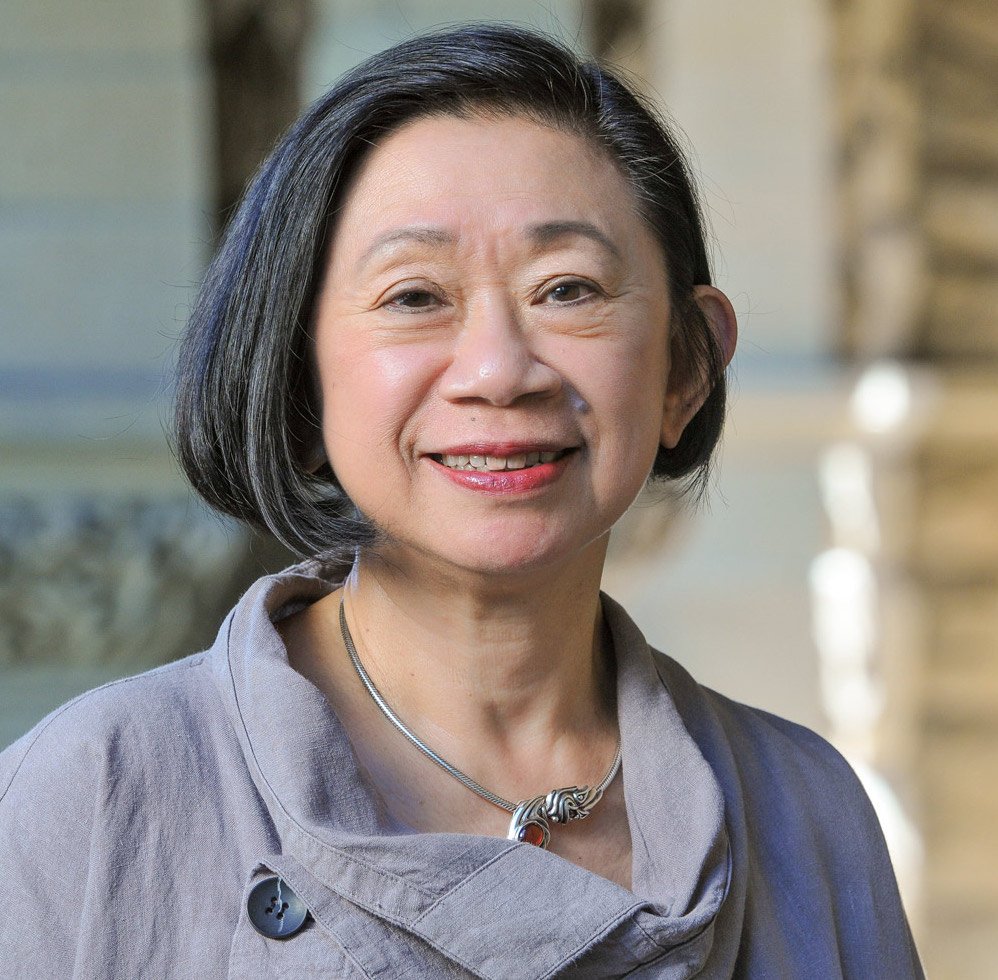
 

Jean C. OiJean C. Oi is the William Haas Professor of Chinese Politics in the Department of Political Science and a senior fellow in the Freeman Spogli Institute for International Studies at Stanford University. She directs the China Program at the Walter H. Shorenstein Asia-Pacific Research Center and is the Lee Shau Kee Director of the Stanford Center at Peking University. Oi has published extensively on China’s reforms. Recent books include Zouping Revisited: Adaptive Governance in a Chinese County, coedited with Steven Goldstein (Stanford University Press, 2018), and Challenges in the Process of China’s Urbanization, coedited with Karen Eggleston and Yiming Wang (2017). Current research is on fiscal reform and local government debt, continuing SOE reforms, and the Belt and Road Initiative.


Portrait of Andrew WalderAndrew G. Walder is the Denise O’Leary and Kent Thiry Professor of Sociology in the School of Humanities and Sciences, and a senior fellow in the Freeman Spogli Institute for International Studies at Stanford University. A political sociologist, Walder has long specialized in the study of contemporary Chinese society and political economy. After receiving his PhD at the University of Michigan, he taught at Columbia, Harvard, and the Hong Kong University of Science and Technology. At Stanford he has served as chair of the Department of Sociology, director of the Asia-Pacific Research Center, and director of the Division of International, Comparative, and Area Studies in the School of Humanities and Sciences. His most recent books are Fractured Rebellion: The Beijing Red Guard Movement (2009), China under Mao: A Revolution Derailed (2015), and Agents of Disorder: Inside China’s Cultural Revolution (2019).

Via Zoom Webinar.
Register at: https://bit.ly/2WiwPvm

Karen Eggleston <br> Senior Fellow at FSI; Director of the Asia Health Policy Program, Shorenstein APARC, Stanford University <br><br>
Thomas Fingar <br> Shorenstein APARC Fellow, Stanford University <br><br>
Barry Naughton <br> Sokwanlok Chair of Chinese International Affairs, School of Global Policy and Strategy, UC San Diego <br><br>
Jean C. Oi <br> Director, Stanford China Program; William Haas Professor of Chinese Politics, Stanford University <br><br>
Andrew Walder <br> Senior Fellow at FSI; Denise O'Leary and Kent Thiry Professor, Stanford University <br><br>
Panel Discussions
Paragraphs
Cover of Healthy Aging in Asia that shows an elderly woman in a Chinese village.
Life expectancy in Japan, South Korea, and much of urban China has now outpaced that of the United States and other high-income countries. With this triumph of longevity, however, comes a rise in the burden of noncommunicable diseases (NCDs) like diabetes and hypertension, reducing healthy life years for individuals in these aging populations, as well as challenging the healthcare systems they rely on for appropriate care.  
 
The challenges and disparities are even more pressing in low- and middle-income economies, such as rural China and India. Moreover, the COVID-19 pandemic has underscored the vulnerability to newly emerging pathogens of older adults suffering from NCDs, and the importance of building long-term, resilient health systems. 
 
What strategies have been tried to prevent NCDs—the primary cause of morbidity and mortality — as well as to screen for early detection, raise the quality of care, improve medication adherence, reduce unnecessary hospitalizations and increase “value for money” in health spending? 
 
Fourteen concise chapters cover multiple aspects of policy initiatives for healthy aging and economic research on chronic disease control in diverse health systems — from cities such as Singapore and Hong Kong to large economies such as Japan, India, and China. 
 

Desk, examination, or review copies can be requested through Stanford University Press.

All Publications button
1
Publication Type
Books
Publication Date
Authors
Karen Eggleston
Book Publisher
Shorenstein APARC
Authors
Noa Ronkin
News Type
News
Date
Paragraphs

In 2008, the U.S. National Intelligence Council (NIC) published the fourth installment in its effort to identify “megatrends” likely to shape world events a decade or more into the future. Shorenstein APARC Fellow and China expert Thomas Fingar, the then chairman of the NIC, oversaw that report, Global Trends 2025. The unclassified report uses scenarios to illustrate some of the ways in which the factors driving world events – from climate change to demographic decline to changing geopolitical powers – may interact to generate challenges and opportunities for future decisionmakers. One of these scenarios is the emergence of a global pandemic that bears a chilling resemblance to COVID-19.

We sat down with Fingar for an online conversation about the NIC report and its pandemic scenario, the government action it spurred, the United States’ failed initial response to the COVID-19 outbreak, and the implications of the current crisis for U.S.-China relations. Watch:

Twelve years after its publication, the NIC’s "Potential Emergence of a Global Pandemic" scenario (p. 75) has proven to be woefully accurate:

“The emergence of a novel, highly transmissible, and virulent human respiratory illness for which there are no adequate countermeasures could initiate a global pandemic. If a pandemic disease emerges by 2025, […] it probably will first occur in an area marked by high population density and close association between humans and animals, such as many areas of China and Southeast Asia […] Slow public health response would delay the realization that a highly transmissible pathogen had emerged […] Despite limits imposed on international travel, travelers with mild symptoms or who were asymptomatic could carry the disease to other continents. Waves of new cases would occur every few months. The absence of an effective vaccine and near-universal lack of immunity would render populations vulnerable to infection.”

[To get more stories like this delivered to your inbox sign up for our newsletters]

It was not a prediction, recalls Fingar, but rather an attempt to urge policymakers to think “beyond tomorrow,” past the end of their administration, and to stimulate strategic thinking about how to reinforce positive trends and change or ameliorate negative ones. If the report and its global pandemic scenario are precise, he notes, it is because the NIC’s effort involved the best specialists within the U.S. intelligence community and engaged numerous and varied groups of non-U.S. Government experts.

Yet the United States has been unprepared for the COVID-19 pandemic and the crisis is now worsening U.S.-China tensions. To address the crisis, however, argues Fingar, both countries must cooperate in the international fora. “Let that be the way that builds towards a better bilateral relationship.”

Headshot of Thomas Fingar
Thomas Fingar is a Shorenstein APARC Fellow in the Freeman Spogli Institute for International Studies at Stanford University. From 2005 through 2008, he served as the first deputy director of national intelligence for analysis and, concurrently, as chairman of the National Intelligence Council. His forthcoming edited volume is 'Fateful Decisions: Choices That Will Shape China's Future' (Stanford University Press, May 2020).
Full Biography

Read More

BEIJING, CHINA - Workers sit near a CRH (China Railway High-speed) "bullet train" at the Beijing South Railway Station under reconstruction.
News

High-Speed Rail Holds Promise and Problems for China, Explains David M. Lampton

In a new audio interview, Lampton discusses some of the challenges, uncertainties, and decisions that loom ahead of China's Belt and Road Initiative.
High-Speed Rail Holds Promise and Problems for China, Explains David M. Lampton
Quote from Thomas Fingar and Jean Oi from, "China's Challeges: Now It Gets Much Harder"
Commentary

Now It Gets Much Harder: Thomas Fingar and Jean Oi Discuss China’s Challenges in The Washington Quarterly

Now It Gets Much Harder: Thomas Fingar and Jean Oi Discuss China’s Challenges in The Washington Quarterly
Adam Segal lectures at APARC
News

Technology Tensions Redefining U.S.-China Relations, Says Security Expert Adam Segal

Technology Tensions Redefining U.S.-China Relations, Says Security Expert Adam Segal
Hero Image
An empty Pennsylvania Avenue in Washington, D.C. seen with the United States Capitol  in the background.
Vehicle traffic is almost non-existent on Pennsylvania Avenue as the United States Capitol is reflected in a rainwater puddle during the novel coronavirus pandemic April 13, 2020 in Washington, DC. COVID-19 has sent lawmakers home and brought the business of the nation’s capital to a near-total halt.
Chip Somodevilla/ Getty Images
All News button
1
Subtitle

In our online conversation, Fingar discusses the 2008 National Intelligence Council report he oversaw and that urged action on coronavirus pandemic preparedness, explains the U.S. initial failed response to the COVID-19 outbreak, and considers the implications of the current crisis for U.S.-China relations.

-

This event is via Zoom Webinar. Please register in advance for the webinar by using the link below.

REGISTRATION LINKhttps://bit.ly/2Kpjiww

A Discussion between Matthew Kohrman and Gan Quan, co-editors of Poisonous Pandas: Chinese Cigarette Manufacturing in Critical Historical Perspectives (Stanford University Press, 2018).

Image
gan quan


Gan Quan (PhD, Berkeley) is the director of Tobacco Control of the International Union Against Tuberculosis and Lung Disease. His research tackles various topics pertaining to tobacco control in China.


Image
mathew kohrman


Matthew Kohrman (PhD, Harvard) is an associate professor in Stanford’s Department of Anthropology and senior fellow by courtesy at APARC/FSI. His research brings anthropological methods to bear on the ways health, culture, and politics are interrelated.


Via Zoom Webinar.

Register at https://bit.ly/2Kpjiww

Gan Quan Director of Tobacco Control of the International Union Against Tuberculosis and Lung Disease
Matthew Kohrman Associate Professor of Anthropology, Stanford University
Panel Discussions
-

This is a virtual event. Please click here to register and generate a link to the talk. 
The link will be unique to you; please save it and do not share with others.


China’s role in the COVID-19 outbreak has elicited a growing global backlash, including dueling Republican and Democratic campaign ads, alongside praise for China’s success in curbing the coronavirus and sending medical assistance overseas. How will the pandemic reshape China’s domestic and international standing, and what lies ahead for U.S.-China relations? Weiss will discuss the Chinese government’s pandemic response and what it reveals about the CCP’s domestic and international intentions.

Image
Jessica Chen Weiss
Jessica Chen Weiss is an associate professor of Government at Cornell University, China/Asia political science editor at the Washington Post Monkey Cage blog and a nonresident Senior Associate at the Center for Strategic and International Studies.  She is the author of Powerful Patriots: Nationalist Protest in China’s Foreign Relations (Oxford University Press, 2014).  Her research appears in International Organization, China Quarterly, International Studies Quarterly, Journal of Conflict Resolution, Security Studies, Journal of Contemporary China, and Review of International Political Economy, as well as in the New York Times, Foreign Affairs, and Washington Quarterly.  She was previously an assistant professor at Yale University and founded FACES, the Forum for American/Chinese Exchange at Stanford, while an undergraduate at Stanford University.  Born and raised in Seattle, Washington, she received her Ph.D. from the University of California, San Diego in 2008, where her dissertation won the 2009 American Political Science Association Award for best dissertation in international relations, law and politics.  Weiss is a term member of the Council on Foreign Relations.


Image of red flag over the Shanghai BundThis event is part of the 2020 Winter/Spring Colloquia series, The PRC at 70: The Past, Present – and Future?, sponsored by APARC's China Program.
 

Via Zoom Webinar.
Register at: https://bit.ly/3erPfSn 

Jessica Chen Weiss Associate Professor of Government, Cornell University
Seminars
-

In keeping with the State of California's shelter-in-place orders, this event is available through livestream only. Please register in advance for the webinar by using the link below.

REGISTRATION LINKhttps://bit.ly/3e1r7FZ

The time of this event has changed to 4:30pm-5:30pm PDT.


As the COVID-19 pandemic continues to spread throughout the world, Japan is experiencing its second wave of coronavirus outbreak, following a first wave early on, just as it had become clear that the virus was spreading rapidly from Wuhan. In late February, travel restrictions were followed by Prime Minister Abe’s call for school closures. But as the pandemic raged through parts of Europe and then the United States, and as a growing number of countries issued shelter-in-place orders and lockdowns, Japan seemed relatively unscathed. Concerns then escalated and calls for voluntarily restricting peoples’ movement started in earnest following the decision to postpone the 2020 Olympics. On April 6, Prime Minister Abe declared a state of emergency for seven prefectures.

This panel brings together expertise on Japan’s political leadership with experience in Japan’s crisis management. Professor Harukata Takenaka has long studied how Japan’s political leadership has evolved, while Mr. Akihisa Shiozaki, an expert on crisis management, was a core member of Japan’s first private-sector investigative report after the Fukushima nuclear crisis.

This is the first in an APARC-wide series of virtual seminars that explore Asian countries’ responses to the COVID-19 pandemic. Held throughout the spring quarter, each event is led by one of APARC’s programs.

PANELISTS

Image
Aki Shiozaki Headshot

Akihisa Shiozaki, Partner, Nagashima Ohno & Tsunematsu

Akihisa Shiozaki is widely recognized for his expertise in corporate crisis management, including regulatory investigations, white collar defense, product recall, labor/employment disputes, import/export control, cyber security, media interaction and various corporate governance issues, especially those with multi-jurisdictional or parallel civil and criminal components. In recent years, he has advised both domestic and foreign clients in resolving a number of the most high profile corporate crises cases relating to Japan, including the LIBOR/TIBOR manipulation investigation, FX manipulation investigation, global product recall by a Japan auto-parts manufacturer, international trade secret theft in the semiconductor industry, government investigations against a global pharmaceutical corporation operating in Japan, and his representation of the former CEO of Olympus Corporation who brought light to the company's recent accounting scandal. He is recognized by Legal 500 as a Leading Individual in the field of Risk Management and Investigations. In 2017, Akihisa was awarded the Compliance / Investigations Lawyer of the Year at the Asian Legal Awards hosted by The American Lawyer, in association with The Asian Lawyer, China Law & Practice and Legal Week.

Akihisa worked in the Prime Minister’s office as senior policy advisor from 2006 to 2007 and is knowledgeable in Japanese regulations /rules and governmental procedures, as well as having rich experience dealing with the media. He also serves as the vice-chairman of the Anti-Yakuza Committee at the Daiichi Tokyo Bar Association and has authored many related publications. He graduated from the University of Tokyo (LL.B.), holds an M.A. in international policy from Stanford University, and completed his MBA at the Wharton School of the University of Pennsylvania where he served as class president.

Image
Harukata Takenaka Headshot

Harukata Takenka, Professor of Political Science, National Graduate Institute for Policy Studies (GRIPS)

Harukata Takenaka is a professor of political science at the National Graduate Institute for Policy Studies in Tokyo.  He specializes in comparative politics and international political economy, with a particular focus on Japanese political economy. His research interests include democracy in Japan, and Japan's political and economic stagnation since the 1990s.  He received a B.A. from the Faculty of Law of the University of Tokyo and an M.A. and Ph.D. in political science from Stanford University.  He is the author of Failed Democratization in Prewar Japan: Breakdown of a Hybrid Regime, (Stanford University Press, 2014), and Sangiin to ha [What is House of Councillors], (Chuokoron Shinsha, 2010).

Image
Portrait of Kenji Kushida

Kenji Kushida, Research Scholar, Shorenstein APARC Japan Program (Moderator)

Kenji E. Kushida is a Japan Program Research Scholar at the Walter H. Shorenstein Asia-Pacific Research Center and an affiliated researcher at the Berkeley Roundtable on the International Economy. Kushida’s research interests are in the fields of comparative politics, political economy, and information technology. He has four streams of academic research and publication: political economy issues surrounding information technology such as Cloud Computing; institutional and governance structures of Japan’s Fukushima nuclear disaster; political strategies of foreign multinational corporations in Japan; and Japan’s political economic transformation since the 1990s. Kushida has written two general audience books in Japanese, entitled Biculturalism and the Japanese: Beyond English Linguistic Capabilities (Chuko Shinsho, 2006) and International Schools, an Introduction (Fusosha, 2008). Kushida holds a PhD in political science from the University of California, Berkeley. He received his MA in East Asian studies and BAs in economics and East Asian studies, all from Stanford University.

Via Zoom Webinar. Register at https://bit.ly/3e1r7FZ

Akihisa Shiozaki, Nagashima Ohno & Tsunematsu
Harukata Takenka, National Graduate Institute for Policy Studies
Kenji Kushida, Shorenstein APARC Japan Program
Panel Discussions
News Type
News
Date
Paragraphs

To support Stanford students working in the area of contemporary Asia, the Shorenstein Asia-Pacific Research Center is offering up to ten research assistant internships for summer 2020 and up to three predoctoral fellowships for the 2020-21 academic year. The Center will review applications starting April 15 and expects to fill the positions by April 30, 2020. 

Amid the fallout of the COVID-19 pandemic, students are facing summer internship cancelations and hiring freezes. They are left wondering about the long-term implications of the current crisis for their academic careers and their access to future jobs and valuable work experience.

At Shorenstein APARC, we want to do all we can to support Stanford students. That’s why we are announcing new internship and fellowship opportunities for current students working in the area of contemporary Asia: research assistant internships for the summer quarter of 2020 and predoctoral fellowships for the 2020-21 academic year.

The summer internships are all remote: research assistants will work as telecommuters. Regarding the predoctoral fellowships, we hope we can all have a normal 2020-21 academic year, in which case we expect the fellows to be in residence, but we will reassess the evolving COVID-19 situation closer to the appointment start dates and shift to flexible, online options as needed.

APARC will review applications for both opportunities on a rolling basis starting April 15, 2020. The Center will select up to ten research assistants and up to three predoctoral fellows by April 30, 2020.

Read on to learn more about these offerings and the application requirements, and follow the guidelines below to submit your candidacy.

Summer 2020 APARC Research Assistant Internships

Shorenstein APARC is seeking highly motivated and dedicated undergraduate and graduate students to join our team as paid research assistant interns for the summer quarter of 2020. Research assistants will work with assigned APARC faculty members on projects focused on contemporary Asia, studying varied issues related to the politics, economies, populations, security, foreign policies, and international relations of the countries of the Asia-Pacific region.

All positions will be for eight weeks starting late June or early July 2020. The hourly pay rate is $17 for undergraduate students, $25 for graduate students.

Research assistant positions are open to current Stanford students only. Undergraduate- and graduate-level students are eligible to apply.

Apply Now

  • Complete the application form and submit it along with these two (2) required attachments:
    • CV;
    • A cover letter (up to 1 page).
  • Arrange for a letter of recommendation from a faculty to be sent directly to APARC. Please note: the faculty members should email their letters directly to Kristen Lee at kllee@stanford.edu.

We will consider only complete applications that include all the abovementioned supporting documents.  

2020-21 Shorenstein APARC Predoctoral Fellowships

APARC is inviting applications from current Stanford students for the 2020-21 Shorenstein APARC Predoctoral Fellowship. The fellowship supports predoctoral students working within a broad range of topics related to contemporary Asia. 

Up to three fellowships are available to Ph.D. candidates who have completed all fieldwork and are nearing the completion of their dissertation. The Center will give priority to candidates who are prepared to finish their degree by the end of the 2020-21 academic year.

Shorenstein APARC offers a stipend of $36,075 for the 2020-21 academic year, plus Stanford's Terminal Graduate Registration (TGR) fee for three quarters. We expect fellows to remain in residence at the Center throughout the year and to participate in Center activities.

Apply Now

  • Complete the application form and submit it along with these three (3) required attachments:
    • CV;
    • A cover letter including a brief description of your dissertation (up to 5 double-spaced pages);
    • A copy of your transcripts. Transcripts should cover all graduate work and include evidence of recently-completed work.
  • Arrange for two (2) letters of recommendation from members of your dissertation committee to be sent directly to Shorenstein APARC. Please note: the faculty/advisors should email their letters directly to Kristen Lee at kllee@stanford.edu.

We will consider only complete applications that include all the abovementioned supporting documents. 

Hero Image
Architectural detail on Stanford colonnade with palm trees in the background L.A. Cicero
All News button
1
Paragraphs

The easy phases of China’s quest for wealth and power are over. After forty years, every one of a set of favorable conditions has diminished or vanished, and China’s future, neither inevitable nor immutable, will be shaped by the policy choices of party leaders facing at least eleven difficult challenges, including the novel coronavirus. 

See also https://aparc.fsi.stanford.edu/news/tom-fingar-and-jean-oi-preview-forthcoming-volume-fateful-decisions

All Publications button
1
Publication Type
Journal Articles
Publication Date
Journal Publisher
The Washington Quarterly
Authors
Thomas Fingar
Jean C. Oi
-

This event is via Zoom Webinar. Please register in advance for the webinar by using the link below.

REGISTRATION LINKhttps://bit.ly/2VUQmTJ

The prevalence of obesity for adults aged 19 and over in Korea has risen from 25.8% in 1998 to 35.5% 2016, while it is still low compared with other developed countries. Body mass index (BMI), focusing on weight for a given height, has traditionally been used to define obesity despite of its shortcomings of not distinguishing between muscle and fat, being inaccurate in predicting the percentage of body fat (PBF), and being not a good measure for the risk of heart attack, stroke, or death. Another measure of abdominal obesity, the z-score of the log-transformed A Body Shape Index (LBSIZ), has been recently introduced to focus on waist circumference for a given both weight and height. We examine their respective association with the risk of diabetes using a cohort data from the Korean Genome and Epidemiology Study.

Image
picturewankyo cropped 4x4
Wankyo Chung is a Professor in the Department of Public Health Science, Graduate School of Public Health at Seoul National University, Seoul Korea. His research interests include economic evaluation of health care programs, equity in health, health policy, and prevention. He has been active as a board member of the Korea Expert Committee on Immunization Practices at Korea CDC, the Information Disclosing Council at Korea HIRA, and an editorial board member of the Korean Journal of Health Economics and Policy and the KDI Journal of Economic Policy. His work has been published regularly in leading international journals. He is currently studying risk prediction models for diabetes at the CEAS, Stanford.

Last few years, China have implemented several national initiatives, for example, the National Healthcare Improvement Initiative (NHII) launched in 2015, to improve patient experiences in healthcare, harmonize the relationship between patients and healthcare workers (i.e., doctors and nurses), and decrease medical disputes in public hospitals. However, reports of medical disputes and violence (verbal abuse or physical violence) against healthcare workers in tertiary public hospitals are still making headlines in China. To help understand and tackle these problems, based on a three-year longitudinal study (2017-2019) conducted in six leading tertiary public hospitals in Shaanxi, a west province of China, we try to depict these problems’ changes, identify the healthcare workers who are at a high risk of medical dispute and violence from patients or their families, and explore the potential causes. These findings could help governments and hospitals protect healthcare workers with more pertinence and build a better medical environment in China.

Image
jinlin liu hr 4x4
Jinlin Liu joins the Walter H. Shorenstein Asia-Pacific Research Center as visiting scholar during the 2019-2020 academic year from Xi'an Jiaotong University, where he serves as a researcher for the Research Center for the Belt and Road Health Policy and Health Technology Assessment. His research lies in the areas of health system and health policy in China, with emphasis on the public hospital governance and development of human resources for health. He obtains a Ph.D. in Public Administration from Xi'an Jiaotong University in 2018.

Via Zoom Webinar.

Register at https://bit.ly/2VUQmTJ


Wankyo Chung Professor in the Department of Public Health Science, Graduate School of Public Health, Seoul National University, Seoul Korea
Shorenstein APARC Stanford University Encina Hall E301 Stanford, CA 94305-6055
0
Visiting Scholar at APARC, 2019-20
jinlin_liu.jpg Ph.D.

Jinlin Liu joined the Walter H. Shorenstein Asia-Pacific Research Center (Shorenstein APARC) as visiting scholar during the 2019-2020 academic year from Xi'an Jiaotong University, where he serves as a researcher for the XJTU Research Center for the Belt and Road Health Policy and Health Technology Assessment.  His research focuses on public health services and healthcare governance and reform in China.  Dr. Liu obtained his Ph.D. in Public Administration from Xi'an Jiaotong University in 2018.

2019-2020 Walter H. Shorenstein Asia-Pacific Research Center Visiting Scholar
Panel Discussions
Paragraphs

Explore our series of multimedia interviews and Q&As with the contributors to this volume: 


China's future will be determined by how its leaders manage its myriad interconnected challenges. In Fateful Decisions, leading experts from a wide range of disciplines eschew broad predictions of success or failure in favor of close analyses of today's most critical demographic, economic, social, political, and foreign policy challenges. They expertly outline the options and opportunity costs entailed, providing a cutting-edge analytic framework for understanding the decisions that will determine China's trajectory.

Xi Jinping has articulated ambitious goals, such as the Belt and Road Initiative and massive urbanization projects, but few priorities or policies to achieve them. These goals have thrown into relief the crises facing China as the economy slows and the population ages while the demand for and costs of education, healthcare, elder care, and other social benefits are increasing. Global ambitions and a more assertive military also compete for funding and policy priority. These challenges are compounded by the size of China's population, outdated institutions, and the reluctance of powerful elites to make reforms that might threaten their positions, prerogatives, and Communist Party legitimacy. In this volume, individual chapters provide in-depth analyses of key policies relating to these challenges. Contributors illuminate what is at stake, possible choices, and subsequent outcomes. This volume equips readers with everything they need to understand these complex developments in context.

Available May 2020.

This book is part of the Stanford University Press series, "Studies of the Walter H. Shorenstein Asia-Pacific Research Center"

All Publications button
1
Publication Type
Books
Publication Date
Journal Publisher
Stanford University Press
Authors
Jean C. Oi
Thomas Fingar
Subscribe to Health and Medicine