Business
Authors
Jean C. Oi
News Type
News
Date
Paragraphs

Industries all over the world are grappling with new protocols and adaptations needed to safely reopen amongst changes the COVID-19 pandemic has wrought on the global economy. Nowhere have these changes been more apparent than in China, the original epicenter of the pandemic. Now, China is one of the countries leading the way in reopening its national economy.

To explore how business leaders and entrepreneurs in China responded to the lockdown and how they’re planning for the future, the China Program conducted a survey in coordination with the Stanford Center at Peking University and Stanford Business School alumni Christopher Thomas and Xue (Xander) Wu. Though taken from a small sample, the results are one of the best samples to date of how businesses in China are responding to the uncertain geopolitical environment the pandemic and current U.S.-China relations are creating.

High-tech firms and firms with a digital presence or the ability to quickly adapt to a digital environment have faired the best, as might be expected. Less expected are the indications that many of the business leaders surveyed are planning for some degree of 'decoupling' or economic separation from U.S.-based suppliers and markets. Both the pandemic and fluctuating U.S.-China relations have made access to global technologies uncertain and both factors are accelerating desires to create localized supply chains. While the long-term implications of these findings are still unknown, the survey provides a valuable snapshot of the current economic landscape within China. 

Read an excerpt from the article below, and find the full article at The Diplomat. A Chinese language version is available on Caixin.

[Subscribe to our newsletters to always get the latest research from APARC.]


From, "After COVID-19: Rebooting Business in China"

China was the first country to experience the ravages of COVID-19, having lost 4,634 people to the pandemic with 83,565 confirmed cases to date. Draconian measures were used to bend the curve and essentially stop the spread of the disease, although reports indicate that recently new cases have emerged, including those stemming from a Beijing market. For the most part, however, China has loosened restrictions and re-opened large parts of its economy. Individuals scan government-mandated QR health codes with their smartphones, and daily life has been restored to some sense of normalcy with restaurants serving customers and retail shops open to shoppers.

In this pivotal and important time, with streams of foreign policy arguments and opinion pieces sharply analyzing current U.S.-China geopolitical tensions continuing to pour forth, we at the Stanford China Program wanted to take stock of how businesses and the overall economy are coping as China tries to reopen its businesses and reboot its economy. Toward this effort, we conducted a collaborative survey of 135 senior executives in China from May 13-26. The survey was designed to help us better comprehend the variation in how Chinese businesses are reopening as well as how Chinese business leaders are viewing their prospects for the future. The research findings, based on one of the largest surveys to date of senior executives in China, helped us explore the following types of questions: What kinds of businesses have done better and what kinds have done worse? What role has the government played in economic assistance and business reopening? And how do China’s business leaders view the deterioration in U.S.-China relations, the possibility of decoupling, and even future access to technology?


Read the full article at The Diplomat.

Watch the panel discussion on the survey led by Jean Oi, Christopher Thomas, and Xue (Xander) Wu with Alvin Shiqi Wang (王世琪), Xiang Wang (王翔), Simon Yang (杨士宁), and Zhiqiang (ZZ) Zhang (张志强).

Read More

Fateful Decisions book cover
News

Fateful Decisions: Choices That Will Shape China’s Future – Book Launch Panel Discusses Critical Challenges Facing China’s Policymakers

Fateful Decisions: Choices That Will Shape China’s Future – Book Launch Panel Discusses Critical Challenges Facing China’s Policymakers
Shiran Shen (left) and Lizhi Liu (right)
News

Former Doctoral Students Win Prestigious Dissertation Awards

Interdisciplinary environmental scholar Shiran Victoria Shen is the recipient of the Harold D. Lasswell Award and political economist Lizhi Liu is the recipient of the Ronald H. Coase Award in recognition of their outstanding doctoral dissertations.
Former Doctoral Students Win Prestigious Dissertation Awards
Picture of a stethoscope on top of a world map.
News

Public Health Experts Gather Together to Reflect upon Public Health Collaborations with China Amidst COVID-19

Public Health Experts Gather Together to Reflect upon Public Health Collaborations with China Amidst COVID-19
Hero Image
A professional looks at their phone while wearing a mask in a busy downtown area.
All News button
1
Subtitle

The survey reveals mixed progress in reopening different sectors of China's economy, but also shows that many business leaders in China are planning for some level of decoupling as access to global technology and supply chains remains uncertain.

-

看微信网页:https://bit.ly/3gRDy8Q
View this page on WeChat: https://bit.ly/3gRDy8Q


This is a virtual event. Please click here to register and generate a link to the talk. 
The link will be unique to you; please save it and do not share with others.


Sponsored by the Stanford China Program and the Stanford Center at Peking University.

The ravages of COVID-19 are now global. But the pandemic first struck in China, and the nation suffered a 6.8% decline in its first-quarter GDP. China is also the first country to move towards a recovery, however, rolling out government measures, re-opening businesses, and re-starting its economy. In this key moment, the Stanford China Program, in collaboration with alumni members of the Stanford Graduate School of Business, surveyed senior executives in China as their companies reboot their operations. In this two-part program, we first unveil potential trends and key takeaways from the survey. In the second half, we host a panel of prominent CxOs from China who give their insights and experiences rebooting their businesses. What are short-term challenges that companies in China currently face? What are some long-term implications of COVID-19 for their operational model, supply chain strategies, technology, and business digitization? What might they also mean, if any, for global trade relations and the future of globalization?

Agenda (in Pacific Time)

5:00-5:30 PM   Survey Presentation: Key Takeaways
5:30-6:15 PM   China CxO Panel: Discussion
6:15-6:45 PM   Audience Q&A

Agenda (in China)

8:00-8:30 AM   Survey Presentation: Key Takeaways
8:30-9:15 AM   China CxO Panel: Discussion
9:15-9:45 AM   Audience Q&A


PANEL SPEAKERS

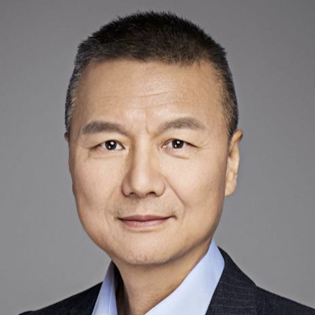
Portrait of Shiqi WangAlvin Shiqi Wang (王世琪) has served as CEO and President of 21Vianet Group, Inc. since February 2018. Currently, Mr. Wang serves as Vice President of TUS Digital Group, a subsidiary of TUS Holdings, and serves on the board of directors of Beijing CIC Technology Co., Ltd. and Guangzhou Tuwei Technology Co., Ltd. . Mr. Wang has nearly 20 years of experience in the telecommunications industry, working at various renowned international companies, including 11 years with Ericsson, focusing primarily on strategy development and execution, corporate management, and equity investments. Mr. Wang received a bachelor's degree from Tsinghua University and an MBA from Peking University-Vlerick MBA Programme (BiMBA).


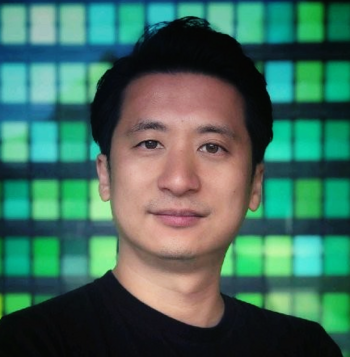
Portrait of Xiang WangXiang Wang (王翔) is President and Acting CFO of Xiaomi Corporation, responsible for platform functions and for assisting the CEO with Group operations. Mr. Wang joined Xiaomi Corporation in July 2015 served as its Senior Vice President and President for International Business, responsible for global expansion, IP strategy, and strategic partner relationship management. Mr. Wang has more than 20 years of experience in the semiconductor and communications fields, with great vision and comprehensive understanding of next-generation wireless communications. He has played an integral role in shaping Xiaomi’s international business operations including with respect to its intellectual property compliance, management and strategy throughout the world. In 2016, Mr. Wang put together an international team of sales and marketing teams to expand into more markets outside of China. Within just 3 years, he led his teams into over 90 markets. As of Q3 2019, Xiaomi’s international revenue accounted for 48.7% of its total revenue. Today, Xiaomi is ranked among top 5 smartphone brands in over 40 markets. Mr. Wang previously served as the Senior Vice President of Qualcomm and President of Qualcomm Greater China, leading the company’s business and operations in Greater China. Prior to that role, he was Vice President of Qualcomm CDMA Technology, responsible for Qualcomm chipset business and customer service in China. Under his leadership, Qualcomm rapidly extended and strengthened its partnerships with increasing numbers of Chinese manufacturing customers. Before joining Qualcomm, Mr. Wang held key positions in sales and marketing at internationally leading companies, including Motorola and Lucent/Agere. Mr. Wang earned his BSEE from Beijing Polytechnic University.


Image
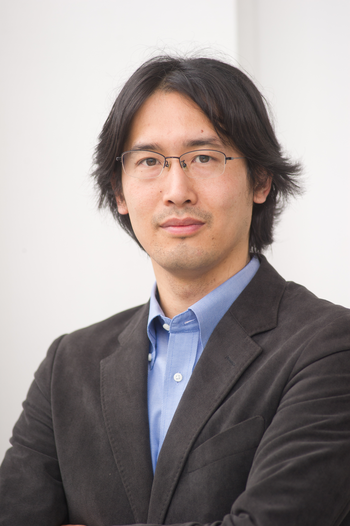
Portrait of Simon Yang
Simon Yang (杨士宁) is the CEO of Yangtze Memory Technologies Co., Ltd. (YMTC), who brings YMTC to a new height in 3D NAND industry. As an experienced executive in the semiconductor industry for over 30 years, Dr. Yang served as the CEO of XMC, COO/CTO of SMIC, and CTO/SVP of Chartered Semiconductor (Now GlobalFoundries), in charge of fab operation and technical R&D. Before that, he was in the Portland Technology Development sector of Intel for more than 10 years, in which he led a series of technical R&D projects. Dr. Yang obtained a Bachelor’s Degree from Shanghai University of Science & Technology, and a Master’s Degree and a Doctoral Degree from Rensselaer Polytechnic Institute.


Portrait of Zhiqiang (ZZ) ZhangZhiqiang (ZZ) Zhang (张志强) is President of ABB in China since October 2018. He has extensive management experience and a deep understanding of the Chinese market, developed during his career at several large global companies over the past three decades. He joined ABB from Sandvik where he was Asia- Pacific Regional Holding Officer and President of Sandvik China, and Member of Sandvik Group Executive Committee. Prior to that, he held leadership positions at several other companies, including Nokia Siemens Networks, where he was President of the Greater China Region, and Siemens VDO Automotive, China, where he was President and CEO. Mr. Zhang is Non-Executive Board member of Georg Fischer AG (Switzerland) and Daetwyler Holding AG (Switzerland). He holds a bachelor’s degree in electronic engineering from Beijing Jiaotong University, China, and a master’s degree in business administration from the Smith School of Business at Queen’s University in Canada.


SURVEY PRESENTERS

Jean C. OiJean C. Oi is the William Haas Professor of Chinese Politics in the Department of Political Science and a senior fellow in the Freeman Spogli Institute for International Studies at Stanford University. She directs the China Program at the Walter H. Shorenstein Asia-Pacific Research Center and is the Lee Shau Kee Director of the Stanford Center at Peking University. Professor Oi has published extensively on China’s reforms. Recent books include Zouping Revisited: Adaptive Governance in a Chinese County, coedited with Steven Goldstein (Stanford University Press, 2018), and Challenges in the Process of China’s Urbanization, coedited with Karen Eggleston and Yiming Wang (2017). Current research is on fiscal reform and local government debt, continuing SOE reforms, and the Belt and Road Initiative.


Photo of Christopher ThomasChristopher Thomas was most recently a partner with McKinsey & Company. He served as co-Managing Partner for the Firm’s Global Digital Strategy service line as well as its Global IoT service line; and as the leader of its Asia Semiconductor Practice. Prior to McKinsey, Mr. Thomas spent ten years at Intel. He was the General Manager of Intel China, with joint ownership for the region’s $5 billion-plus P&L. In this role, he grew revenues by more than 50% and oversaw China’s successful elevation from a sales unit to an independent regional P&L business reporting directly into headquarters. Mr. Thomas began his career as a private equity investor at The Blackstone Group in New York City. He is currently a Visiting Professor at Tsinghua University, China’s leading educational institution. He received an MBA from Stanford Business School, where he was an Arjay Miller scholar; a Master of Arts in Political Science from Stanford University; and a Bachelor of Science in Economics, summa cum laude, from the Wharton School.


Image
Portrait of Xander Wu
Xander Wu (吴雪) oversees industry development and builds partnerships with the world’s top cloud computing companies for China Mobile International (USA). He helps clients expand their global footprint and advises companies on best practices for digital transformation. Mr. Wu has 13 years' experience in the global 4G and 5G industry, with a track record of achieving a number of the world’s first milestones in 5G and several de-facto standards for 4G and data networks. Mr. Wu graduated from Stanford Graduate School of Business, where he researched digital transformation and advised startups in the energy sector. He serves as a mentor at several incubators such as Plug and Play, helping startups find the right product/market fit and tailor go-to-market strategy.


 

Via Zoom Webinar.
Register at: https://bit.ly/2U2r30q

Alvin Shiqi Wang (王世琪) <br>CEO, President of 21Vianet Group, Inc.<br><br>
Xiang Wang (王翔) <br>President of Xiaomi Corporation<br><br>
Simon Yang (杨士宁) <br>CEO of Yangtze Memory Technologies Co., Ltd. (YMTC)<br><br>
Zhiqiang (ZZ) Zhang (张志强) <br>President, ABB (China)<br><br>
Jean C. Oi <br>Director of Shorenstein APARC China Program; William Haas Professor of Chinese Politics, Stanford University<br><br>
Christopher Thomas <br>Visiting Professor, Tsinghua University<br><br>
Xander Wu (吴雪) <br>China Mobile International (USA)<br><br>
Panel Discussions
-

This event is available through livestream only. Please register in advance for the webinar by using the link below.

REGISTRATION LINKhttps://bit.ly/2ziVGY2


Japan's startup ecosystem has matured dramatically over the past decade, with greater societal legitimacy, business success, and government support than most observers would have expected 20 years ago. Despite the challenging times ahead with the global pandemic, Japan's startup ecosystem is still poised to inject flexibility and innovation in a system often criticized as too rigid. This panel brings together scholars who have studied and participated in the ecosystem, and one of the key government officials pushing policy supporting the startup ecosystem. 

PANELISTS

Image
Headshot of Masahiro Kotosaka
Masahiro Kotosaka, Associate Professor, Keio University
 
Masahiro Kotosaka is an Associate Professor at Keio University and advisor to several global start-up companies. Before moving to Keio, he was a faculty at Ritsumeikan, a junior faculty at University of Oxford, and was a consultant at McKinsey & Company (Frankfurt/Tokyo). As a practitioner, he worked for sixteen client organizations across nine industries and nine countries, and spent four years running three profitable IT/Retail businesses before joining McKinsey. He graduated from University of Oxford with D.Phil. (PhD) in Management Studies and MSc in Management Research with Distinction.

Image
ishii headshot 2

Yoshiaki Ishii, Director of Science, Technology and Innovation, Cabinet Office, Government of Japan

Since getting his start at the government's Small and Middle Enterprise Agency, Dr. Yoshiaki Ishii has shaped his career almost exclusively around supporting young companies and enhancing innovation. Now, he is the director of the Cabinet Office and responsible for determining how to execute the government's mission of supporting deep tech start-ups and creating an innovation ecosystem. Previously, he served as director of the New Business Policy Office, Economic and Industrial Policy Bureau, METI. He has demonstrated expertise in Small and Medium-sized Enterprises (SME), and Venture Business Policy, Industrial Organisation, and Innovation Policy. Dr. Ishii earned his PhD from Waseda University, in 2012, after completing an MBA at Aoyama Gakuin, in 2000.

Image
Portrait of Kenji Kushida
Kenji Kushida, Research Scholar, Shorenstein APARC Japan Program (Moderator)
 
Kenji E. Kushida is a Japan Program Research Scholar at the Walter H. Shorenstein Asia-Pacific Research Center and an affiliated researcher at the Berkeley Roundtable on the International Economy. Kushida’s research interests are in the fields of comparative politics, political economy, and information technology. He has four streams of academic research and publication: political economy issues surrounding information technology such as Cloud Computing; institutional and governance structures of Japan’s Fukushima nuclear disaster; political strategies of foreign multinational corporations in Japan; and Japan’s political economic transformation since the 1990s. Kushida has written two general audience books in Japanese, entitled Biculturalism and the Japanese: Beyond English Linguistic Capabilities (Chuko Shinsho, 2006) and International Schools, an Introduction (Fusosha, 2008). Kushida holds a PhD in political science from the University of California, Berkeley. He received his MA in East Asian studies and BAs in economics and East Asian studies, all from Stanford University.

Virtual Webinar Via Zoom.

Registration Link: https://bit.ly/2ziVGY2

Yoshiaki Ishii, Government of Japan
Masahiro Kotosaka, Keio University
Kenji Kushida, Stanford University
Seminars
-

This is a virtual event. Please click here to register and generate a link to the talk. 
The link will be unique to you; please save it and do not share with others.

Data-intensive technologies such as AI may reshape the modern world. We propose that two features of data interact to shape innovation in data-intensive economies: first, states are key collectors and repositories of data; second, data is a non-rival input in innovation. We document the importance of state-collected data for innovation using comprehensive data on Chinese facial recognition AI firms and government contracts. Firms produce more commercial software and patents, particularly data-intensive ones, after receiving government public security contracts. Moreover, effects are largest when contracts provide more data. We then build a directed technical change model to study the state's role in three applications: autocracies demanding AI for surveillance purposes, data-driven industrial policy, and data regulation due to privacy concerns. When the degree of non-rivalry is as strong as our empirical evidence suggests, the state's collection and processing of data can shape the direction of innovation and growth of data-intensive economies.

Image
Portrait of David Yang
David Yang’s research focuses on political economy, behavioral and experimental economics, economic history, and cultural economics. In particular, David studies the forces of stability and forces of changes in authoritarian regimes, drawing lessons from historical and contemporary China. David received a B.A. in Statistics and B.S. in Business Administration from University of California at Berkeley, and PhD in Economics from Stanford. David is currently a Prize Fellow in Economics, History, and Politics at Harvard and a Postdoctoral Fellow at J-PAL at MIT. He also joined Harvard’s Economics Department as an Assistant Professor as of 2020.

Via Zoom Webinar.
Register at: https://bit.ly/2VlhaMm

David Yang Prize Fellow in Economics, History, and Politics; Department of Economics, Harvard University
Seminars
Authors
Callista Wells
News Type
News
Date
Paragraphs

The Stanford Center at Peking University (SCPKU), the Center on Democracy, Development and the Rule of Law (CDDRL), and the APARC China Program jointly hosted a workshop on China’s Belt and Road Initiative (BRI) in early March. The workshop, held on March 2 and 3, welcomed researchers from around the world with expertise in the Initiative. Unfortunately, because of the rapidly developing health emergency related to the coronavirus, participants from not only China, but also Japan, were prevented from attending. As described by Professor Jean Oi, founding director of SCPKU and the China Program, and Professor Francis Fukuyama, director of CDDRL and the Ford Dorsey Master's in International Policy, who co-chaired the workshop, the meeting aimed to provide a global perspective on the BRI, consolidate knowledge on this opaque topic, and determine the best method and resources for future research.  

The workshop began with presentations from several of the invited guests. Dr. Atif Ansar from the University of Oxford’s Saïd Business School kicked off the first day by describing not only the tremendous opportunity that the BRI presents to developing economies, but also the serious pitfalls that often accompany colossal infrastructure projects. Pointing out the poor returns on investment of mega infrastructure projects, Ansar examined the frequest cost and schedule overruns, random disasters, and environmental degradation that outweigh the minimal benefits that they generally yield. China’s own track record from domestic infrastructure projects does little to mitigate fear of these risks, Ansar claimed. In response, he urged professional management of BRI investments, institutional reforms, and intensified deployment of technology in BRI projects. Dr. Ansar was followed by Dr. Xue Gong of the S. Rajaratnam School of International Studies, Nanyang Technological University, Singapore. Dr. Gong’s analysis centered on the extent to which China’s geopolitical motivations influenced its outward foreign direct investments (OFDI). Although her research was still in the early stages, her empirical analysis of China’s OFDI inflows into fifty BRI recipient countries from 2007-2018 nevertheless revealed that geopolitical factors often outweigh economic factors when it comes to China’s OFDI destinations.

Image
Amit Bhandari of Gateway House: Indian Council on Global Relations presents his research at the Belt and Road Workshop.
Participants then heard presentations from Amit Bhandari of Gateway House: Indian Council on Global Relations and Professor Cheng-Chwee Kuik of the National University of Malaysia. Mr. Bhandari’s talk focused on Chinese investments in India’s six neighboring countries, which tend to center more on energy rather than connectivity projects. He first found that the investments are generally not economical for the host countries because they come with high costs and high interest rates. Secondly, he argued that these projects often lacked a clear economic rationale, appearing instead to embed a geopolitical logic not always friendly to India. Professor Kuik, by contrast, provided a counterexample in his analysis of BRI projects in Southeast Asia. He described how, in Southeast Asia, host countries’ reception of the BRI has varied substantially; and how various stakeholders, including states, sub-states and other entities, have used their leverage to shape outcomes more or less favorable to themselves. Kuik’s analysis injected complexity into the often black-and-white characterizations of the BRI. He highlighted the multidimensional dynamics that play out among local and state-level players in pursuit of their goals, and in the process of BRI implementation.

Professor Curtis J. Milhaupt and Scholar-in-Residence Jeffrey Ball, both at Stanford Law School, followed with individual presentations on the role of State-Owned Enterprises (SOEs) in the BRI and the emissions impact of the BRI on climate change, respectively. Professor Milhaupt  characterized Chinese SOEs as both geopolitical and commercial actors, simultaneously charged with implementing Party policies and attaining corporate profits. Chinese SOEs are major undertakers of significant overseas BRI projects, acting not only as builders but also as investors, partners, and operators. This situation, Milhaupt asserted, carries significant risks for SOEs because these megaprojects often provide dismal returns, have high default rates, and can trigger political backlash in their localities. Milhaupt highlighted the importance of gathering firm-level data on businesses actually engaged in BRI projects to better infer geostrategic, financial, or other motivations. Jeffrey Ball turned the discussion to carbon emissions from BRI projects and presented preliminary findings from his four-country case studies. He concluded that, on aggregate, the emissions impact of the BRI is still “more brown than green.” Twenty-eight percent of global carbon emissions may be accounted for by BRI projects, Ball asserted, underscoring the importance of the BRI to the future of global climate change.

The day concluded with presentations by  Michael Bennon, Managing Director at the Stanford Global Projects Center, and Professor David M. Lampton, Oksenberg-Rohlen Fellow at the Freeman Spogli Institute for International Studies. Bennon first presented findings from two empirical case studies of BRI projects and then went on to describe how the BRI is now practically the “only game in town” for infrastructure funding for developing countries. Lengthy environmental review processes at Western multilateral banks have turned the World Bank, for example, from a lending bank into a “knowledge bank,” he argued. He also highlighted that, in general, economic returns on BRI projects for China are very poor, even though recipient countries may accrue macroeconomic benefits from these projects. Finally, Professor Lampton turned the discussion back to Southeast Asia, where China is currently undertaking massive cross-border high-speed rail projects through eight ASEAN countries. He described how each host country had varying capacity to negotiate against its giant neighbor, and how the sequential implementation of these cross-border rail projects also had varying impacts on the negotiating positions of these host countries. BRI played out differently in each country, in other words, eliciting different reactions, push-backs and negotiated terms.

The second day of the workshop was dedicated to working toward a collaborative approach to future BRI research. The group discussed the key gaps in the existing research, including how to know what China’s true intentions are, how to measure those intentions, who the main players and their interests in both China and the host countries are, and even what the BRI is, exactly. Some cautioned that high-profile projects may not be representative of the whole. Participants brainstormed about existing and future sources of data, and stressed the importance of diversifying studies and seeking empirical evidence.

Hero Image
Participants in the Belt and Road Initiative Workshop at Stanford University, March 2-3, 2020.
All News button
1
Authors
Callista Wells
News Type
News
Date
Paragraphs

President Xi Jinping’s tenure has been marked by growing state influence over all spheres of governance in China, including a marked tightening of control over the economy.

Curtis Milhaupt, the William F. Baxter-Visa International Professor of Law at Stanford Law School, addressed the hardening of Party controls over Chinese corporate governance. His lecture to the China Program on February 6 was based on research conducted by Milhaupt in collaboration with Yu-Hsin Lin of City University of Hong Kong, and examined the expanding role of the Chinese Communist Party (CCP) within both state-owned enterprises (SOEs) and privately-owned enterprises (POEs). The influence of the CCP within these enterprises, Milhaupt says, is not as straightforward as it might seem.

Milhaupt posits that the level of control exercised by the CCP on SOEs is lower than one might generally expect. At the same time, the CCP exercises a surprisingly higher level of control over POEs than we would typically assume. To draw these conclusions, Milhaupt uses a set of ten model provisions deemed to be dangjian, or “party-building,” measures that were developed and released by the Central Committee of the CCP. From data compiled between 2015 and 2018 from the charters of publicly-listed companies, Milhaupt shows that 10% of SOEs chose not to adopt any of the provisions distributed by the Central Committee. Meanwhile, 6% of POEs had at least a low level of adoption, despite the fact that the provisions were not directed at them. The reason for such variation, according to Milhaupt, can be explained by the characteristics of the provisions, the SOEs, and the POEs.

Image
Photo of Curtis Milhaupt speaking
Milhaupt breaks the measures into three distinct groups: personnel-related, decision-making, and symbolic. Nearly every corporation that amended its charter adopted the symbolic provisions. As the name suggests, these generally did not require any substantial or meaningful change on the enterprises’ parts. There was a steep drop-off, however, in the level of adoption for the other two types. Only 58% of SOEs who amended their charters adopted the more intrusive, decision-making provisions. Similarly, only 52% of such SOEs adopted the personnel-related provisions. The numbers were even lower for POEs, with only 25% of POEs who amended their charters adopting the decision-making provisions, and only 16% adopting the personnel-related provisions.

Which enterprises adopted which provisions was highly correlated to those enterprises’ characteristics. SOEs were far more likely to amend their charters if they had direct state shareholding, but less likely to amend if they had large non-state shareholders, were further down in the state-ownership chain, or were cross-listed on international stock exchanges. POEs followed a similar structure, with enterprises being more likely to adopt provisions the more politically connected they were or the more direct state shareholding they had.

It remains unclear how the government can actually enforce the dangjian policy, and how these policies will affect the enterprises that adopt it. Despite the official rhetoric behind the dangjian policy, with claims that greater loyalty to the Party will lead to more economic success, Milhaupt expresses doubts:

“What’s [the danajian policy] going to mean for firm performance? Certainly, from a . . . straightforward economics or corporate governance perspective, one would not be optimistic that infiltrating corporations with political influence is going to do good things for firm performance.”

Milhaupt also has concerns about how the strategy will impact international investment, noting the already high levels of suspicion surrounding Chinese motivations: “This [emphasis on loyalty to the Party] would certainly seem to add fuel to the fire, and heighten concerns or suspicions with respect to Chinese outbound economic activity.” As SOEs and POEs continue to navigate both domestic and international markets with their amended charters, the future feasibility of the CCP’s reassertions over the economy is far from certain.

Hero Image
Pedestrians walk past a Madrid branch of the Industrial and Commercial Bank of China (ICBC), one of the largest state-owned enterprises in China.
Jasper Juinen / Getty Images News
All News button
1
-

Many observers, and many investors, believe that young people are especially likely to produce the most successful new firms. Integrating administrative data on​ firms, workers, and owners, we study startups systematically in the U.S. and find​ that successfull entrepreneurs are middle-aged, not young. The mean age at​ founding for the 1-in-1,000 fastest growing new ventures is 45.0. The findings are​ similar when considering high-technology sectors, entrepreneurial hubs, and​ successful firm exits. Prior experience in the specific industry predicts much greater​ rates of entrepreneurial success. These findings strongly reject common hypotheses​ that emphasize youth as a key trait of successful entrepreneurs.

Speaker:

Image
dsc 0355 javier miranda

Javier Miranda, Principal Economist, Economy-Wide Statistics Division, US Census Bureau

Bio:

Javier Miranda is Principal Economist at the U.S. Census Bureau where he began his career in 1998. Javier received his Ph.D. in Economics from American University in 2004. Previous to joining the Census Javier was a research consultant at the World Bank and the Urban Institute. Javier has published papers in the areas of industrial organization, technological change, job creation, entrepreneurship and firm financing. Among his publications are articles in the American Economic Review, Journal of Economic Literature, American Economic Journal Macroeconomics, Review of Economic and Statistics, IMF Review, World Bank Economic Review, Journal of Business Valuation and Economic Loss, NBER Macroeconomics Annual, and multiple books and chapters.  Javier received the Director's Award for Innovation (2007) and the U.S. Department of Commerce Bronze Medal (2011). His contributions to data infrastructure are notable. Javier Miranda is responsible for the development of the Longitudinal Business Database and the Business Dynamics Statistics and is the Synthetic Longitudinal Business Database v3. Together with the USPTO Javier has led the development the Business Dynamics Statistics of Innovative Firms a longitudinal database of firms, patents, and inventors. Javier Miranda is also President of the Board of SEM an adult education and job readiness program designed to address the root causes of poverty, illiteracy, and violence in Washington DC.

Advisory on Novel Coronavirus (COVID-19)

In accordance with university guidelines, if you (or a spouse/housemate) have returned from travel to mainland China or South Korea in the last 14 days, we ask that you DO NOT come to campus until 14 days have passed since your return date and you remain symptom-free. For more information and updates, please refer to the Stanford Environmental Health & Safety website: https://ehs.stanford.edu/news/novel-coronavirus-covid-19.


Javier Miranda, Principal Economist, Economy-Wide Statistics Division, US Census Bureau
Seminars
-

IMPORTANT EVENT UPDATE: 

In keeping with Stanford University's March 3 message to the campus community on COVID-19 and current recommendations of the CDC, the Asia-Pacific Research Center is electing to postpone this event until further notice. We apologize for any inconvenience this may cause, and appreciate your understanding and cooperation as we do our best to keep our community healthy and well. 


Data-intensive technologies such as AI may reshape the modern world. We propose that two features of data interact to shape innovation in data-intensive economies: first, states are key collectors and repositories of data; second, data is a non-rival input in innovation. We document the importance of state-collected data for innovation using comprehensive data on Chinese facial recognition AI firms and government contracts. Firms produce more commercial software and patents, particularly data-intensive ones, after receiving government public security contracts. Moreover, effects are largest when contracts provide more data. We then build a directed technical change model to study the state's role in three applications: autocracies demanding AI for surveillance purposes, data-driven industrial policy, and data regulation due to privacy concerns. When the degree of non-rivalry is as strong as our empirical evidence suggests, the state's collection and processing of data can shape the direction of innovation and growth of data-intensive economies.

Image
Portrait of David Yang
David Yang’s research focuses on political economy, behavioral and experimental economics, economic history, and cultural economics. In particular, David studies the forces of stability and forces of changes in authoritarian regimes, drawing lessons from historical and contemporary China. David received a B.A. in Statistics and B.S. in Business Administration from University of California at Berkeley, and PhD in Economics from Stanford. David is currently a Prize Fellow in Economics, History, and Politics at Harvard and a Postdoctoral Fellow at J-PAL at MIT. He also joined Harvard’s Economics Department as an Assistant Professor as of 2020.

David Yang Prize Fellow in Economics, History, and Politics; Department of Economics, Harvard University
Seminars
Shorenstein APARC Stanford University Encina Hall E301 Stanford, CA 94305-6055
0
Visiting Scholar at APARC
Ph.D.

Ming Zeng joined the Walter H. Shorenstein Asia-Pacific Research Center (APARC) as visiting scholar for the 2020 calendar year from Alibaba Group, where he serves as chairman of the Academic Council and formerly as Chief Strategy Officer, and the Hupan School of Entrepreneurship, where he serves as founding Dean and Professor of Strategy. At APARC, he will be conducting research on innovation and entrepreneurship in the Asia-Pacific, specifically on the globalization of Chinese digital companies across Asia.  Prior to coming to APARC, Zeng was a visiting scholar at the Stanford King Center on Global Development at SIEPR.

-

WE HAVE REACHED VENUE CAPACITY AND ARE NO LONGER ACCEPTING RSVPS


Image
Portrait of Nicholas Lardy
China has grown faster for longer than any country in recorded history.  Is it market-oriented reform, state industrial policy, or some sophisticated blend of the two that explains this success?  In this talk, Dr. Nicholas Lardy will also further examine what might explain China’s slowdown of recent years.  Is China falling into the frequently fatal middle-income trap?  Or have domestic policy choices led to the slowdown?  Have trade frictions with the United States also contributed to China’s slowing growth?  In addition, what should U.S. policy stance be towards China?  Should the United States continue to ramp up restrictions on two-way flows of technology to try to further slow China’s growth?  How successful is such a strategy likely to be and what costs to the United States would be inherent in such an approach?

Nicholas R. Lardy is the Anthony M. Solomon Senior Fellow at the Peterson Institute for International Economics.  He joined the Institute in March 2003 from the Brookings Institution, where he was a senior fellow from 1995 until 2003.  Before Brookings, he served at the University of Washington, where he was the director of the Henry M. Jackson School of International Studies from 1991 to 1995.  From 1997 through the spring of 2000, he was also the Frederick Frank Adjunct Professor of International Trade and Finance at the Yale University School of Management.  He is an expert on the Chinese economy.  Lardy's most recent books are The State Strikes Back: The End of Economic Reform in China? (2019), Markets over Mao: The Rise of Private Business in China (2014), Sustaining China's Economic Growth after the Global Financial Crisis (2012), The Future of China's Exchange Rate Policy (2009), and China's Rise: Challenges and Opportunities (2008). 


Image of red flag over the Shanghai Bund

This event is part of the 2020 Winter/Spring Colloquia series, The PRC at 70: The Past, Present – and Future?, sponsored by APARC's China Program.


Nicholas Lardy Anthony M. Solomon Fellow Peterson Institute for International Economics
Seminars
Subscribe to Business