FSI researchers consider international development from a variety of angles. They analyze ideas such as how public action and good governance are cornerstones of economic prosperity in Mexico and how investments in high school education will improve China’s economy.
They are looking at novel technological interventions to improve rural livelihoods, like the development implications of solar power-generated crop growing in Northern Benin.
FSI academics also assess which political processes yield better access to public services, particularly in developing countries. With a focus on health care, researchers have studied the political incentives to embrace UNICEF’s child survival efforts and how a well-run anti-alcohol policy in Russia affected mortality rates.
FSI’s work on international development also includes training the next generation of leaders through pre- and post-doctoral fellowships as well as the Draper Hills Summer Fellows Program.
President Xi Jinping is scheduled to pay a state visit to Japan this spring. How have the relations between Japan and China been evolving during the last several years? How has the U.S.-China “trade war” been affecting the Japan-China relations? What is the best way for us to address China’s trade issues? The U.S. and Japan have been promoting cooperation under the Free and Open Indo Pacific (FOIP). Will Japan cooperate with China’s Belt and Road Initiative? How can the U.S. and Japan expand the cooperation under the FOIP?
Image
Speaker:
Noriyuki Shikata, Former Envoy Extraordinary and Minister Plenipotentiary, Deputy Chief of Mission, Embassy of Japan in Beijing
Bio:
Noriyuki Shikata holds a B.A. in Law from Kyoto University and Master of Public Policy (MPP) from Harvard Kennedy School of Government. Most recently, he was the Envoy Extraordinary and Minister Plenipotentiary, Deputy Chief of Mission, Embassy of Japan in China. His other prior positions include: Deputy Director General, Asian and Oceanian Affairs Bureau; Director, Economic Treaties Division, International Legal Affairs Bureau; and Director, Second North America Division, North America Bureau. Mr. Shikata has also been a Visiting Professor at Kyoto University’s Graduate School of Law/Public Policy. He is currently at Harvard conducting research on an emerging U.S. policy toward China and the Indo-Pacific region. His Twitter handle is: @norishikata.
Noriyuki Shikata, Former Envoy Extraordinary and Minister Plenipotentiary, Deputy Chief of Mission, Embassy of Japan in Beijing
In the eyes of China’s neo-authoritarian reformers, Singapore, despite being a tiny city-state, long exemplified a state of affairs for which the PRC should strive: resilient authoritarianism alongside but unweakened by liberalizing steps conducive to economic growth. On behalf of Beijing’s effort to learn from Singapore, tens of thousands of officials visited the city-state and thousands of articles and books were written about it. Today, however, Xi Jiinping has derided foreign templates and relegated adopting the “Singapore model” to a path not taken by China’s current hard-line leadership and unavailable for authoritarian reformers to pursue. Although the demotion was triggered by Xi’s anti-reformism and China’s rise, Singapore’s loss of “model” character was also path-dependent. Chinese academics studying Singapore had long misunderstood fundamental institutional differences between the two countries that went back to the city-state’s colonial past and China’s Stalinist-Maoist revolution. Efforts to model reforms on the Singaporean “state-party” ran into the prerogatives of the Chinese party-state. Proposals to strengthen market forces, impose limited legal constraints on the party, and introduce semi-competitive elections were seen as threatening the institutional foundations of the CPC. Moreover, despite a (partial) revival of Confucianism in China that imitated the city-state’s attraction to “Asian values,” Singapore’s neo-liberal “pragmatism” and multi-racialism contradicted the CPC’s self-portrayal as an engine of Marxist socialism embodying the Han-Chinese nation.
Image
Mark R. Thompson heads the Southeast Asia Research Centre at the City University of Hong Kong. He is president of the Hong Kong Political Science Association (HKPSA) and a former president of the Asian Political and International Studies Association (2013-14). A comparativist specializing in Southeast Asian politics, his publications include China’s “Singapore Model” and Authoritarian Learning, ed. with Stephan Ortmann (forthcoming 2020); Authoritarian Modernism in East Asia (2019); The Routledge Handbook of the Contemporary Philippines, ed. with Eric Batalla (2018); Dynasties and Female Political Leaders in Asia, ed. with Claudia Derichs (2014); Democratic Revolutions: Asia and Eastern Europe (2004); and The Anti-Marcos Struggle (1995).
Shorenstein APARC
Stanford University
Encina Hall E301
Stanford, CA 94305-6055
(650) 725-6459
(650) 723-6530
0
mrthom@stanford.edu
MarkThompson[1].JPG
PhD
Professor Thompson builds on Barrington Moore's insight that there are different "paths to the modern" world. Thompson's manuscript explores alternatives to the familiar South Korean-and Taiwan-based model of "late democratization." According to that model, political pluralism follows a formative period of economic growth during which labor is demobilized and big business, religious leaders, and professionals depend upon and are co-opted by the state.
Thompson argues that even when these preconditions are in place, democratization need not follow. Singapore is an illuminating case in point. The autocratic growth model pays insufficient attention to politics, including the sometimes crucial role of student activists in challenging developmental authoritarianism and triggering a democratic transition, as in Indonesia. As political actors, students (rather than a progressive bourgeoisie) may fill the oppositional vacuum created by the preconditions that characterized predemocratic South Korean and Taiwan.
In his critique of Northeast Asian-style, post-authoritarian "late democratization" and its emphasis on economic growth as the driver of political change, Professor Thompson uses evidence drawn from paired comparisons of Vietnam with China, Hong Kong with Singapore, and between South Korea and Taiwan on the one hand and other major Southeast Asian cases on the other.
Mark R. Thompson is a professor of political science at the University of Erlangen-Nuremberg in Germany. A Chicago native, he took his first degree in religious studies at Brown University followed by postgraduate work at Cambridge University and the University of the Philippines. Fascinated by Philippine people power, he wrote his dissertation at Yale University on the anti-Marcos struggle (Yale University Press, 1996). After moving to Germany, he witnessed popular uprisings in East Germany and Eastern Europe, inspiring him to conceptualize democratic revolutions in essays later published as a book (Routledge, 2004). He is in residence at Stanford as Lee Kong Chian Distinguished Fellow in Southeast Asian Studies from February through April 2009.
Lee Kong Chian NUS-Stanford Distinguished Fellow on Southeast Asia
Head and Professor of Politics, Department of Asian and International Studies, City University of Hong Kong
WE HAVE REACHED VENUE CAPACITY AND ARE NO LONGER ACCEPTING RSVPS
Image
China has grown faster for longer than any country in recorded history. Is it market-oriented reform, state industrial policy, or some sophisticated blend of the two that explains this success? In this talk, Dr. Nicholas Lardy will also further examine what might explain China’s slowdown of recent years. Is China falling into the frequently fatal middle-income trap? Or have domestic policy choices led to the slowdown? Have trade frictions with the United States also contributed to China’s slowing growth? In addition, what should U.S. policy stance be towards China? Should the United States continue to ramp up restrictions on two-way flows of technology to try to further slow China’s growth? How successful is such a strategy likely to be and what costs to the United States would be inherent in such an approach?
Nicholas R. Lardy is the Anthony M. Solomon Senior Fellow at the Peterson Institute for International Economics. He joined the Institute in March 2003 from the Brookings Institution, where he was a senior fellow from 1995 until 2003. Before Brookings, he served at the University of Washington, where he was the director of the Henry M. Jackson School of International Studies from 1991 to 1995. From 1997 through the spring of 2000, he was also the Frederick Frank Adjunct Professor of International Trade and Finance at the Yale University School of Management. He is an expert on the Chinese economy. Lardy's most recent books are The State Strikes Back: The End of Economic Reform in China? (2019), Markets over Mao: The Rise of Private Business in China (2014), Sustaining China's Economic Growth after the Global Financial Crisis (2012), The Future of China's Exchange Rate Policy (2009), and China's Rise: Challenges and Opportunities (2008).
In keeping with Stanford University's March 3 message to the campus community on COVID-19 and current recommendations of the CDC, the Asia-Pacific Research Center is electing to make this event available through live stream only. We appreciate your understanding and cooperation as we do our best to keep our community healthy and well.
Please join the live stream via Zoom by clicking here at the scheduled time, 4:30 PM, on March 4 to view Adam Segal's talk.
Analysts on both sides of the Pacific have described an escalating “technology cold war” between Beijing and Washington. Chinese hackers attack American technology companies and Beijing is reportedly planning on the removal of foreign software and hardware from government offices. Washington is blocking Chinese investments, using punitive measures against Huawei and Chinese surveillance companies, and scrutinizing research collaboration with Chinese universities as well as scientists and students. Both sides believe they are in and have to win a race to dominate 5G, AI, quantum, and other emerging technologies. What are the weapons of the tech cold war, and are the US and China doomed to ever more competition, or can they find common ground for cooperation? What does increasing competition between China and the United States mean for the rest of the world?
Image
Adam Segal is the Ira A. Lipman Chair in emerging technologies and national security and Director of the Digital and Cyberspace Policy Program at the Council on Foreign Relations (CFR). An expert on security issues, technology development, and Chinese domestic and foreign policy, Segal was the project director for the CFR-sponsored Independent Task Force reports titled Innovation and National Security: Keeping Our Edge. His most recent book, The Hacked World Order: How Nations Fight, Trade, Maneuver, and Manipulate in the Digital Age (PublicAffairs, 2016), describes the increasingly contentious geopolitics of cyberspace. His work has appeared in the Financial Times, the New York Times, Foreign Policy, the Wall Street Journal, and Foreign Affairs, among others. He currently writes for the blog, “Net Politics.”
The annual award, which carries a US $10,000 cash prize, is sponsored by Stanford University’s Walter H. Shorenstein Asia-Pacific Research Center. It recognizes outstanding journalists and journalism organizations for excellence in coverage of the Asia-Pacific region. News editors, publishers, scholars, journalism associations, and organizations focused on Asia research and analysis are invited to submit nominations for the 2020 award through Friday, February 14.
STANFORD, CA, December 3, 2019 — The Walter H. Shorenstein Asia-Pacific Research Center (APARC), Stanford University’s hub for interdisciplinary research, education, and engagement on contemporary Asia, invites nominations for the 2020 Shorenstein Journalism Award. The award recognizes outstanding journalists who have spent their careers helping audiences around the world understand the complexities of the Asia-Pacific region. The 2020 award will honor a journalist whose work has mostly been conveyed through American news media. The deadline for nomination submissions is Friday, February 14, 2020.
An annual tradition since 2002, the Shorenstein Journalism Award is sponsored by APARC and carries a cash prize of US $10,000. It honors the legacy of APARC benefactor, Mr. Walter H. Shorenstein, and his twin passions for promoting excellence in journalism and understanding of Asia. “In the face of a shifting geopolitical landscape and amid global declines of democracy, political rights, and civil liberties, it is more crucial than ever before to support independent journalism that seeks accuracy, deep reporting, and nuanced U.S.-Asia dialogue,” said APARC Director Gi-Wook Shin.
Over the course of its history, the award has recognized world-class journalists who push the boundaries of coverage of the Asia-Pacific region and help advance mutual understanding between audiences in the United States and their Asian counterparts. Recent honorees include Maria Ressa, Anna Fifield, Siddharth Varadarajan, Ian Johnson, and Caixin Media. The award alternates between recipients whose work has mostly been published through Asian news media and those whose work has mostly been conveyed through American news media. The 2020 award will recognize a recipient from the latter category.
For the award, the Asia-Pacific region is defined broadly to include Northeast, Southeast, South, and Central Asia and Australasia. Both individual journalists with considerable body of work and journalism organizations are eligible for the award. Nominees’ work may be in traditional forms of print or broadcast journalism and/or in new forms of multimedia journalism. The Award Selection Committee, whose members are experts in journalism and Asia research and policy, presides over the judging of nominees and is responsible for the selection of honorees.
APARC is seeking 2020 award nomination submissions from news editors, publishers, scholars, journalism associations, and entities focused on researching and interpreting the Asia-Pacific region. The Center will announce the winner by April 2020 and present the award at a public ceremony at Stanford in autumn quarter of 2020.
Nominations are accepted electronically through Friday, February 14, 2020 at 11:59 PM PST. For information about the nomination procedures and to submit nominations please visit the award nomination entry page.
About the Walter H. Shorenstein Asia-Pacific Research Center The Walter H. Shorenstein Asia-Pacific Research Center (Shorenstein APARC) addresses critical issues affecting the countries of Asia, their regional and global affairs, and U.S.-Asia relations. As Stanford University’s hub for the interdisciplinary study of contemporary Asia, APARC produces policy-relevant research, provides education and training to students, scholars, and practitioners, and strengthens dialogue and cooperation between counterparts in the Asia-Pacific and the United States. Founded in 1983, APARC today is home to a scholar community of distinguished academics and practitioners in government, business, and civil society, who specialize in trends that cut across the entire Asia-Pacific region. Learn more about APARC and about the Shorenstein Journalism Award.
On 20 October 2019, Indonesia’s president Joko “Jokowi” Widodo began his second five-year term in office. In his first successful presidential campaign in 2014, he promised to transform the country into a “Global Maritime Fulcrum”—a seemingly keystone role between the Indian and Pacific Oceans that comprise the now popular term “Indo-Pacific.” How has that vision fared, and what priority will it have in 2019-2024? How will Indonesia deal with Sino-American strategic competition? Will Indonesia’s national and regional security policies change or stay the same? In addressing these questions, the talk will feature not only the president but his new ministers’ political, bureaucratic, and personal goals and differences as well. Laksmana will argue that, in practice, the GMF’s promise of proactive centrality has not been to date and is unlikely to be met in future.
Image
Evan A. Laksmana, in addition to his position at CSIS in Jakarta, is completing his doctorate in political science at Syracuse University’s Maxwell School of Citizenship and Public Affairs, where he has been a Fulbright Presidential Scholar. He has held visiting fellowships and research positions with the National Bureau of Asian Research, Sydney University’s Southeast Asia Centre, the Lowy Institute for International Policy, the German Marshall Fund of the United States, and the S. Rajaratnam School of International Studies. Journals that have carried his scholarly work include Asian Politics & Policy, Asian Security, Contemporary Southeast Asia, Defense & Security Analysis, and the Journal of Contemporary Asia. Other writings have appeared in Foreign Affairs, Foreign Policy, The New York Times, and The Washington Post, among other publications.
On October 1st, with a massive National Day parade down Chang’an Avenue in Beijing, the People’s Republic of China celebrated the 70th anniversary of its establishment in 1949. Like a split-screen T.V., however, on the other side of the border in Hong Kong, black-clad protesters wearing gas masks and goggles undertook one of the most violent protests in Hong Kong SAR since the 1997 handover.
With those contrasting images still fresh on everyone’s minds, FSI, Shorenstein APARC, Stanford China Program, and the Center for East Asian Studies jointly sponsored a conference on October 2nd titled “Hong Kong: A City in Turmoil” to an overflow audience. Jean Oi, Director of the Stanford China Program who moderated the program opened the conference by quoting Stanford President Marc Tessier-Lavigne and Provost Persis Drell who, in a campus-wide message, had recently encouraged the university community to not shy away from difficult conversations. “We have an extraordinary opportunity [at Stanford],” she quoted from their email, “to learn from each other, to have our thinking challenged, to sharpen our arguments and to develop better ideas from a thoughtful debate.” Even while explicitly aware, therefore, that differing opinions rage on both sides of the debate regarding Hong Kong’s protests, but trusting that “there are thoughtful people on both sides of the debate,” she continued, “we have decided to organize this special event.”
The former Chief Secretary for Administration of the Hong Kong Government (1993-2001) Anson Chan gave the keynote speech followed by a panel discussion featuring Harry Harding, University Professor and Professor of Public Policy, University of Virginia; David M. Lampton, Oksenberg-Rohlen Fellow, FSI, Stanford University; and Ming Sing, Associate Professor, The Hong Kong University of Science and Technology.
The Honorable Anson Chan speaks at Hong Kong: A City in Turmoil conference.
The Honorable Anson Chan gives the keynote speech at the "Hong Kong: A City in Turmoil" conference.
Keynote Speech
In her keynote, Anson Chan first recalled the handover ceremony in 1997, which she attended as Hong Kong SAR’s Chief Secretary, bridging the transition from British sovereignty to Chinese sovereignty. Chan spoke of her dawning realization at the time that the transition of sovereignty “would call Hong Kong people to forge a new identity” that “reconciled our community both with its past and future.” She noted “that many Hong Kong people, particularly the young, have indeed forged a new identity, but not as loyal, submissive Chinese patriots that Beijing had hoped for.” The central government had “singularly failed to win hearts and minds,” Chan added, especially of its young people. Hong Kong is, indeed, now at a crossroads and, she admitted, is a “city in turmoil.”
In Chan’s recollection, the central government exercised its power with “great restraint” following the handover. At first, the SAR government, too, was vigilant in protecting Hong Kong’s high degree of autonomy. Gradually, however, the city’s autonomy and civil liberties, she asserted, suffered increasing erosion. In particular, “[o]ver the past fifteen years, things changed drastically.” Describing the series of events that have caused Hong Kong’s residents increasing alarm -- including the forced abduction of Hong Kong-based booksellers; disappearance of a mainland Chinese billionaire from a luxury hotel in Hong Kong; Legislative Council members’ oath-taking controversy; the resulting disqualification of six legislative members; and the political screening of pro-democracy electoral candidates, etc. -- she further noted that the “snail’s pace of progress” in implementing full universal suffrage for the election of the Chief Executive and all members of the legislature promised in the Basic Law also brought on mounting popular frustration and despair.
“Was this progressive erosion of Hong Kong’s autonomy inevitable?” Chan asked. “I don’t think so,” she answered. Since 1997, Hong Kong SAR’s successive Chief Executives, she countered, have progressively failed to reassure the Hong Kong people that, first and foremost, they will do their utmost to uphold “one country, two systems,” and to defend Hong Kong’s autonomy. In an unsparing critique, she noted, they have instead increasingly come across as “mouthpieces of the central government, toeing the Beijing line.” Chan also suggested that “some years back, Beijing began to both lose confidence in the judgment and competence of the Hong Kong administration and to fear that growing sense of people’s identity as ‘Hong Kongers’ rather than Chinese citizens could pose a threat to the long-term, successful integration of Hong Kong into the motherland.” This growing distrust, then, proved catalytic to increasing tensions and difficulties in Hong Kong-PRC relations.
Characterizing 2003 as the first watershed moment when large public demonstrations – Hong Kong people’s “first taste of people power” -- forced the SAR government to withdraw its proposed bill under Hong Kong Basic Law Article 23, Chan recounted the failure of the constitutional reform consultation process in 2013-2014, the decision of the Standing Committee of the National People’s Congress on August 31, 2014 to set institutional limits on universal suffrage, and the resulting 2014 Occupy Movement, which later morphed into the Umbrella Movement. These popular movements failed to yield genuine universal suffrage, however, and this failure, Chan stated, “left wounds that went unhealed and festered quietly.”
The million-strong protests on June 9th and 16th to register popular opposition to Hong Kong SAR government’s introduction of its extradition bill “broke all records,” Chan noted. Recounting the five demands of the current protesters, Chan voiced support for the establishment of an independent commission with “carefully crafted terms of reference” that could objectively examine the handling of the current unrests. Such a commission could go a long way towards pacifying the protesters, she suggested, and “[s]top the violence, at least for the time being.” She also urged the reopening of broad-based consultation on political reforms, lain dormant since the collapse of the Umbrella Movement in 2014; and to even consider a measure of amnesty to exonerate a subset of both the protesters and the police. Recognizing how problematic such a recommendation might be in the face of spiraling violence and vandalism, she noted, “we are in an unprecedented crisis, and for society to heal, unprecedented measures such as an amnesty applying to certain actions by the protesters and the police force may well prove to be necessary.”
Calling herself an “unrepentant optimist” even against formidable odds, Chan highlighted how Hong Kong has come through many challenges before and after the handover. She sought to emphasize how “[t]he majority [of Hong Kong people] are not anti-China and accepts that Hong Kong is a part of China.” However, she continued, “they are also proud of their Hong Kong identity and fiercely protective of the rights and freedoms they enjoy and which are guaranteed by the Joint Declaration and the Basic Law.” Condemning the violence committed by both the police and the protesters, Chan ended her speech with the following words.
So, on this seventieth anniversary of the founding of the People’s Republic of China, we in Hong Kong recognize the huge progress that our country has made in a breathtakingly short time, lifting hundreds of millions out of poverty, improving living standards and achieving economic growth and social advancement that are the envy of the world. We are proud of the unique contribution that Hong Kong has made to our nation’s spectacular achievements and modernization. But we are distressed that the central government feels it necessary to be increasingly repressive towards its Hong Kong subjects. I urge the Beijing leadership to act with greater confidence and to trust us more completely with stewardship of our own future by allowing us to elect our own leaders. In these troubled times, we ask Beijing respectfully to listen with greater understanding to the voices of Hong Kong’s upcoming generations, to recognize and respond to their fears and aspirations and, above all, to harness their talent, their energy and commitment for the benefit of the city we all love and for the benefit of our nation as a whole.
Panel Commentary
Harry Harding, University Professor and Professor of Public Policy, University of Virginia, next spoke from the panel. He applauded the clear and concise rendering that Chan provided of how Hong Kong arrived at the current crisis but noted that his was “a more pessimistic forecast” of Hong Kong’s future. With “one country, two systems” due to expire in 2047, he surmised that Beijing will further whittle away at Hong Kong’s key institutions, such as the judiciary, the press, and universities, and, perhaps, even the freedom of expression of its business community. With respect to Taiwan, Harding noted the increasing urgency in President Xi Jinping’s call for Taiwan to be reunified with the motherland. Yet, Harding noted, the developments in Hong Kong have made “one country, two systems” increasingly unpalatable to even those traditionally favorably disposed towards Beijing. For the U.S., the recent protests have enabled Hong Kong to take center stage with legislative action around the Hong Kong Human Rights and Democracy Act, the PROTECT Hong Kong Act, and debates surrounding the Hong Kong Policy Act. The recent unrest has also contributed to declining favorability ratings for the PRC from all sectors of the United States, he noted.
Harry Harding, one of the panelists at the conference, gives his thoughts on the situation in Hong Kong.
Harry Harding, one of the panelists for the conference, gives his thoughts on the situation in Hong Kong.
Ming Sing, Associate Professor, The Hong Kong University of Science and Technology, first delineated the increasing levers of political and economic controls imposed by the PRC government upon Hong Kong SAR since 2003; and the corresponding rise in intensity of political protests in Hong Kong. He then provided a fine-grained analysis of the different phases of the 2019 protests, which began as a peaceful mobilization of public resistance, then grew in violence and counter-violence. He further presented a number of surveys that showed how the majority of the protesters are, indeed, well-educated and young with many of the frontline protesters being university and secondary students. Despite media reports that have suggested that economic discontent lies at the heart of protesters’ grievances, Sing presented survey data that the demonstrators’ grievances are, in fact, mainly political, including Hong Kong’s lack of universal suffrage and central government intervention, among others. Such data, he concluded, further highlights the gaping distrust between Hong Kong’s youth and the central government.
Ming Sing speaks during the Hong Kong: A City in Turmoil conference.
Ming Sing explains the information presented in his slides.
David M. Lampton Oksenberg-Rohlen Fellow, FSI, Stanford University, characterized himself as “hopeful but worried” about the situation in Hong Kong. Raising five observations in particular, Lampton noted the first worrying sign: i.e., neither the outside world nor the SAR have a “road map to the future” with the PRC. Neither the Basic Law nor the Joint Declaration of 1984 can now serve as such a “roadmap,” Lampton asserted, and without a “shared vision,” he stated, “[i]t’s hard to be optimistic.” Secondly, in this “leaderless” protest movement, Lampton asked whether anyone can authoritatively negotiate with and enforce upon its followers any agreement reached with Beijing, should any transpire, so that it can lead to an effective resolution. Thirdly, as evidenced by the PRC’s mass display of “muscular nationalism” on October 1st, Lampton questioned whether Xi Jinping has any incentives to accommodate Hong Kong protesters’ demands, especially when Beijing’s leadership may have its own worries about domestic stability in the PRC. Fourth, with constitutional crises engulfing both the U.S. and Great Britain, Lampton noted, Western democracies are also hampered from effectively and responsibly addressing the situation in Hong Kong. And lastly, Lampton acknowledged how, in the policy vacuum left by the Trump White House with respect to Hong Kong, U.S. Congress was speeding towards adopting punitive legislation against the PRC. But Lampton again expressed doubts as to whether sanctions and threats are effective tools to extract concessions from the PRC government under Xi Jinping.
David M. Lampton shares his viewpoint with the other panelists.
David M. Lampton shares his viewpoint with the other panelists.
Image
The Honorable Anson Chan gives summarizing remarks to close out the "Hong Kong: A City in Turmoil" conference.
Watch the conference proceedings on our YouTube channel:
Hero Image
Professor Thomas Fingar (left) introduces the "Hong Kong: A City in Turmoil" conference keynote speaker, The Honorable Anson Chan.
Celebrated for its natural beauty and its abundance of wildlife, the Mekong River runs thousands of miles through China, Myanmar, Laos, Thailand, Cambodia, and Vietnam. Its basin is home to more than 70 million people and has for centuries been one of the world's richest agricultural areas and a biodynamic wonder. Today, however, it is undergoing profound changes. Development policies, led by a rising China in particular, aim to interconnect the region and urbanize the inhabitants. A series of dams will harness the river's energy. But they will also disrupt its natural cycles and cut off food supplies for swathes of the population. Based on conversations with the diverse people he has encountered from the Mekong’s headwaters in China to its delta in southern Vietnam, Eyler will review and assess the urgent struggle to save the Mekong and its unique ecosystem. Copies of his latest book, Last Days of the Mighty Mekong (2019), will be available for sale.
Image
Image
Brian Eyler is an expert on transboundary issues in the Mekong region, a specialist on China's economic cooperation with Southeast Asia, and co-founder of the website http://eastbysoutheast.com/. Of his more than 15 years living and working in the PRC, he has spent the last ten doing research with stakeholders in the Mekong region. In China, before coming to the Stimson Center, he directed the IES Kunming Center at Yunnan University and served as a consultant to the UNDP Lancang-Mekong Economic Cooperation program. His degrees are from UC-San Diego and Bucknell.
Brian Eyler
Director, Southeast Asia Program, and Senior Fellow, Stimson Center, Washington, DC
Interpreting U.S.-China Trade War: Background, Negotiations and Consequences
Since March 2018, the US–China trade conflict has escalated from a tariff war to a technology war, and a strategic competition between the two giants. The direction of the trade war and China–US relations will reshape the world order of the future. In this talk, Professor Wang Yong will explore questions like: What major goals does the US have in the trade war against China? How should one evaluate the influence of domestic structural changes in the two countries on the trade conflict? Will a possible deal stop the spiraling of strategic competition between the two major powers? By answering these questions, Professor Wang will analyze the political and economic forces driving this current US–China trade war and the factors affecting the negotiations. Major arguments include that trade frictions have deep roots in the restructuring of domestic politics taking place in the two countries; while extreme thoughts define US–China relationship from the perspectives of ideology and strategic rivalry, economic interdependence and shared stakes set the ground for negotiation and possible compromise between the two countries. Rebuilding political trust will be the key to dealing with strategic rivalry and avoiding a new cold war between China and the US.
Image
Professor Wang Yong is director of the Center for International Political Economy and professor at the School of International Studies, both at Peking University. He is also professor at the Party School of the Ministry of Foreign Affairs of China and president-appointed professor for the Hong Kong Special Administrative Region Senior Civil Servants Training Program on Chinese Affairs at Peking University and a member of the Ministry of Commerce Economic Diplomacy Expert Working Group. Professor Wang was formerly a consultant of the Asia Development Bank, Visiting Chevalier Chair Professor at the Institute of Asian Research at the University of British Columbia and a member of the World Economic Forum Global Agenda Council on Global Trade and Foreign Direct Investment.
Professor Wang received his B.A. and M.A. in law and international politics and Ph.D. in law from Peking University. He joined the faculty of the School of International Studies at Peking University in 1990. He studied at the Hopkins-Nanjing Center (an educational collaboration between the School of Advanced International Studies of Johns Hopkins University and Nanjing University) and was also a visiting scholar at the University of California San Diego and a joint visiting fellow at the Pacific Council on International Policy and the University of Southern California.
His major authored books include International Political Economy in China: The Global Conversation (co-edited with Greg Chin and Margaret Pearson, Routledge, 2015), Political Economy of International Trade (China Market Press, 2008) and Political Economy of China-U.S. Trade Relations (China Market Press, 2007), which was awarded the first prize for Excellent Social Sciences Works by the Beijing Municipal Government and the Beijing Confederation of Social Scientists in 2008.
Philippines Conference Room 616 Jane Stanford Way Encina Hall, Central, 3rd Floor Stanford, CA 94305
WANG Yong
<br><i>Director, Center for International Political Economy; Professor of International Studies, Peking University</i><br><br>

 FSI researchers consider international development from a variety of angles. They analyze ideas such as how public action and good governance are cornerstones of economic prosperity in Mexico and how investments in high school education will improve China’s economy.

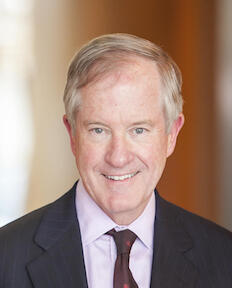


 The Honorable Anson Chan speaks at Hong Kong: A City in Turmoil conference.
 Harry Harding, one of the panelists at the conference, gives his thoughts on the situation in Hong Kong.
 Ming Sing speaks during the Hong Kong: A City in Turmoil conference.
 David M. Lampton shares his viewpoint with the other panelists.