International Development

FSI researchers consider international development from a variety of angles. They analyze ideas such as how public action and good governance are cornerstones of economic prosperity in Mexico and how investments in high school education will improve China’s economy.

They are looking at novel technological interventions to improve rural livelihoods, like the development implications of solar power-generated crop growing in Northern Benin.

FSI academics also assess which political processes yield better access to public services, particularly in developing countries. With a focus on health care, researchers have studied the political incentives to embrace UNICEF’s child survival efforts and how a well-run anti-alcohol policy in Russia affected mortality rates.

FSI’s work on international development also includes training the next generation of leaders through pre- and post-doctoral fellowships as well as the Draper Hills Summer Fellows Program.

-

Bureaucrats become powerful when they stage emotionally calibrated performances as “servants” before state principals, earn their trust, and carve out space for action through “whispering,” “propagating,” cultivating patrons, and building coalitions behind the scenes and on the sidelines of official interaction. These servant performances involve what sociologist Arlie Hochschild calls “emotional labor,” that is, the management of feelings when fulfilling the requirements of a job. Prof. Nair will develop a theory of emotional labor in international bureaucracies that explains why bureaucrats perform such work and how, if skilfully done, it can empower them. He will test the theory with an ethnography of the Secretariat of the Association of Southeast Asian Nations (ASEAN) in Jakarta—a “hard” case that does not fit prevailing theorizations of bureaucratic power. Prof. Nair will also show how his theory can be applied to other, Euro-American bureaucracies.

Image
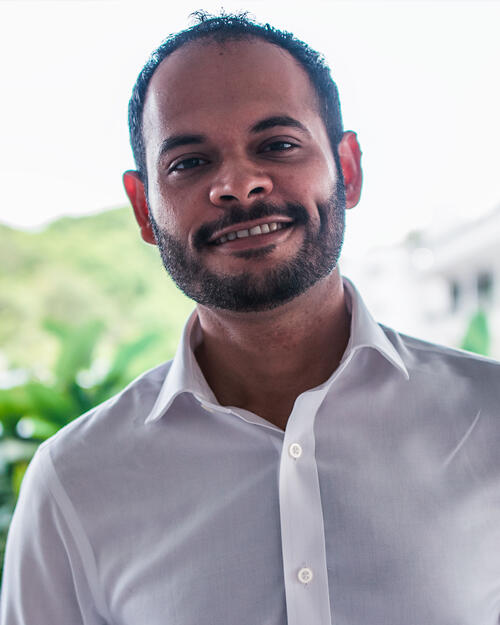
deepak 4x5
Deepak Nair researches the everyday practices and performances that produce international relations. His writings include ASEAN-related articles in journals such as International Political Sociology on topics that include golf, sociability, and diplomacy; on the practices of face-saving in diplomacy in the European Journal of International Relations; and on institutions, norms, and crisis in Asian Survey and Contemporary Southeast Asia. He earned his PhD and BA at the London School of Economics and Political Science and Delhi University, respectively.

Deepak Nair Assistant Professor of Political Science, National University of Singapore
Seminars
-
Image
Stanford University landscape with Memorial Church and the Main Quad at the center.

The JIIA-Stanford Symposium

"The Past, Present, and Future International Order in East Asia"

May 10, 2019

Bechtel Conference Center, Encina Hall, Stanford University

Sponsored and organized by the Japan Institute for International Affairs (JIIA) and Japan Program and the US-Asia Security Initiative of the Walter H. Shorenstein Asia-Pacific Research Center (APARC) of the Freeman Spogli Institue of International Studies (FSI) at Stanford University 
 

Interstate relations in East Asia are at a critical juncture.  The post-World War II regional order, shaped by the San Francisco Treaty of 1951, underpinned by a common commitment to a liberal trade system, and led by the United States, is under stress.  The end of the Cold War, rise of China, and recent changes in America’s foreign policy orientation have transformed the environment that sustained “the San Francisco System.”  It is unclear if this system will be maintained, and if not, what will replace it.  The lineage of the San Francisco System itself reaches back to the post-World War I Versailles-Washington System.  An examination of the success and shortcomings of each of these systems can offer insights on the rise and fall of international systems, especially in an Asian context.  In this symposium, we explore the circumstances that shaped the establishment and evolution of the East Asian political, economic, and security architectures from post-WWI to present; discuss the forces that built and undermined the past and existing architecture; and debate possible regional futures.  We will emphasize the perspectives and roles of the U.S., Japan, and China, and focus on major influencing factors including historical legacies, the changing distribution of global power, alliance structures, and political ideologies.


Agenda

9:00am - 9:30am 
Registration and Breakfast 
 

9:30am - 9:45am 
Welcome Remarks: 
Gi-Wook Shin, Director, APARC, Stanford University 
Kenichiro Sasae, President, JIIA 
Takeo Hoshi, Director, Japan Program, APARC, Stanford Univeristy 
 

9:45am - 11:30am 
Panel I: Comparing “the Versailles-Washington System” and “San Francisco System”: Lessons from the Rise and Fall of International Orders in East Asia

Chair: Daniel Sneider, FSI, Stanford University

Panelists: 
Shin Kawashima, University of Tokyo 
Masaya Inoue,  Seikei University 
Lin Hsiao-ting, Hoover Institution, Stanford University 
David Kennedy, Center for International Security and Cooperation (CISAC), FSI, Stanford University 
 

11:30am - 1:15pm 
Lunch 

Keynote Speaker: Ambassador Michael Armacost


1:15pm - 3:00pm 
Panel Discussion II: Japanese, U.S. and Chinese Interests and Security

Chair: Kenichiro Sasae, JIIA 

Panelists: 
Ken Jimbo, Keio University 
Tetsuo Kotani, JIIA 
Mike Lampton, APARC, Stanford University 
Jim Schoff, Carnegie Endowment for International Peace (CEIP) 
 

3:00pm - 3:30pm 
Coffee Break 
 

3:30pm - 5:15pm 
Panel Discussion III: Alternative Future East Asia Systems

Chair: Phillip Lipscy, FSI, Stanford University 

Panelists: 
Jim Fearon, FSI, Stanford University 
Ryo Sahashi, University of Tokyo 
Kenichiro Sasae, President, JIIA 
Tom Christensen, Columbia University 
 

5:15pm - 5:35pm 
Rapporteurs' review of symposium discusisons 
 

5:35pm - 5:45pm 
Closing Remarks: 
Karl Eikenberry, Director, US-Asia Security Initiative, APARC, Stanford University 
Kenichiro Sasae, President, JIIA 
 

5:45pm - 6:30pm 
Reception (Encina Lobby)

Bechtel Conference Center
616 Serra Mall
Encina Hall, Central, 1st Floor
Stanford, CA 94305

Symposiums
Authors
Noa Ronkin
News Type
News
Date
Paragraphs

We are happy to share that FSI’s SK Center Fellow and APARC's Korea Program Deputy Director Yong Suk Lee is the recipient of the 2018 Urban Land Institute United Kingdom Academic Prize for his paper “Entrepreneurship, small business and economic growth in cities.”

The winner of the Urban Land Institute Prize is selected by The Journal of Economic Geography (JoEG) Editors, Oxford University Press, and the Urban Land Institute. The prize is awarded annually to the author(s) of the best JoEG paper published online in the previous calendar year. Papers are evaluated on the basis of their creativity, quality of scholarship, and contribution to advancing understanding of the geographic nature of economic systems and global economic change.

Lee’s paper investigates whether entrepreneurship causes local employment and wage growth, and if so, how large the impact is. Empirical analysis of this question is difficult due to the joint determination of entrepreneurship and economic growth. Lee’s article uses two different sets of variables—the homestead exemption levels in state bankruptcy laws from 1975 and the share of metropolitan statistical area (MSA) overlaying aquifers—to instrument for entrepreneurship and examine urban employment and wage growth between 1993 and 2002. Lee’s research shows that the creation of small businesses indeed causes substantial employment and payroll growth in cities.

Download Lee’s paper >>

Hero Image
Portrait of Yong Suk Lee
All News button
1
-

Despite adverse implications for its image, when it comes to territorial disputes, China has been willing to employ coercion. But Beijing is selective regarding the timing, targets, and tools of coercion. Military coercion is rare and the forms and uses of coercion vary. In the face of what China sees as similar threats by different countries, for example, Beijing tends to tailor its responses, country by country, case by case. Dr. Zhang will focus on Chinese coercive behavior in the South China Sea. She will offer a new theory as to when, why, and how China coerces other states.  Leveraging a wealth of newly available primary documents and hundreds of hours of interviews with Chinese officials, she will trace the decision-making processes that result in coercion’s use or non-use.

Where others may view China as repetitively aggressive, Dr. Zhang sees a cautious bully that does not coerce frequently and has tended, as it has gained strength, to use non-kinetic kinds of coercion. She finds that protecting a reputation for resolve and calculating economic costs are critical elements in China’s decision-making regarding the (dis)advantages of coercing its neighbors. Nor is the intended target country necessarily clear. China often coerces one to deter another – “killing the chicken to scare the monkey.” Implications will also drawn from her research that can help in projecting China’s likely future foreign-policy behavior beyond Southeast Asia and in understanding the roles played by coercion in the strategies of states more generally.

To learn more about, watch a recent interview APARC filmed with Dr. Zhang.

Image
ketian zhang 4x
Ketian Vivian Zhang will be an Assistant Professor of International Security in the Schar School of Policy and Government at George Mason University starting in September 2019. Her book project at Stanford and a forthcoming article in International Security are on the subject of her talk. Beyond its topic, another part of her research agenda explores how the globalized economy and its chains of manufacture and supply affect the foreign-policy behaviors of states. Her 2018 PhD in political science is from the Massachusetts Institute of Technology. She is a proud Badger, having earned her BA in political science and sociology at the University of Wisconsin-Madison.

Ketian Zhang 2018-2019 Shorenstein Postdoctoral Fellow on Contemporary Asia
Seminars
News Type
Q&As
Date
Paragraphs

We sat down with our 2018-19 Koret Fellow in Korean Studies Andray Abrahamian to discuss North Korea denuclearization and the approaching Trump-Kim second summit in Hanoi; Abrahamian's work with the nonprofit organization Choson Exchange that took him to North Korea nearly thirty times; his book that compares North Korea and Myanmar; and his fellowship experience. Watch: 


Hero Image
Andray Abrahamian sitting down for an interview at Stanford.
All News button
1
News Type
News
Date
Paragraphs
Hero Image
Kendra Mysore, ’20, with former U.S. Secretary of State Madeleine Albright in Washington, D.C.
Courtesy of Kendra Mysore
All News button
1
-

The event is jointly sponsored by the Japan Program at the Shorenstein Asia-Pacific Research Center and the Japan Foundation Center for Global Partnership.

In this talk, David Leheny (Waseda University) discusses his new book Empire of Hope (Cornell University Press, 2018), which challenges current trends in debates about emotion and politics, arguing that we should instead look at the role of narrative in shaping emotional representation. In the book, Leheny draws from debates about status in international relations theory and from debates about affect and narrative in literary and historical studies to analyze cases from Japan’s Bubble and post-Bubble eras. This talk will focus especially on a 2001 crisis in US-Japan relations over a collision between a US Navy nuclear submarine and a fisheries training boat that resulted in the deaths of nine Japanese, including four high-school students. By presenting grief as both a national emotion and as one that could be narrated through the lens of timeless cultural difference, the US and Japanese governments crafted a crisis resolution that ostensibly rested on “mutual understanding” but that also hid the messier realities of power and of loss in the collision’s aftermath.

Image
lehenyphoto
David Leheny is Professor in the Graduate School of Asia-Pacific Studies at Waseda University. He previously was an assistant and associate professor of political science at the University of Wisconsin-Madison (1998-2007) and the Henry Wendt III ’55 Professor of East Asian Studies at Princeton University (2007-2017). He is the author of, in addition to Empire of Hope, The Rules of Play: National Identity and the Shaping of Japanese Leisure (Cornell University Press, 2003) and Think Global, Fear Local: Sex, Violence, and Anxiety in Contemporary Japan (Cornell University Press, 2006).

Philippines Conference Room Encina Hall, 3rd Floor 616 Serra Mall, Stanford, CA 94305
David Leheny Professor in the Graduate School of Asia-Pacific Studies Waseda University
Seminars
News Type
News
Date
Paragraphs

Prior to departing for Singapore and the second half of her Lee Kong Chian Visiting Fellowship on Southeast Asia , we sat down with Sophie Lemière , a specialist in Malaysian politics, to discuss the origins of her interest in Malaysia, the country's May 2018 electoral revolution and the prospects of its new governing coalition, what it was like to follow the Mahathir's election campaign, and some of her current projects.

A political anthropologist in the Ash Center for Democracy at Harvard University, Lemière is working on a political biography of Malaysia’s current prime minister Mohamad Mahathir that features his recent election campaign. She is the editor of a series of books on politics and people in Malaysia, including Gangsters and Masters (forthcoming 2019), Illusions of Democracy (2017), and Misplaced Democracy (2014). She has held visiting research positions at universities in Singapore, Australia, and the United States. Her PhD is from Sciences-Po in Paris.

The Lee Kong Chian Visiting Fellowship on Southeast Asia is part of a joint initiative by the National University of Singapore (NUS) and Stanford, whose aim is to raise the visibility, extent, and quality of research on contemporary Southeast Asia. Here at Stanford, the infrastructures for research is supported by our Southeast Asia Program .

Watch the video interview below. A transcript is also available.


Hero Image
Lee Kong Chian NUS-Stanford Fellow Sophie Lemiere being interviews Thom Holme, APARC
All News button
1
Subscribe to International Development