Institutions and Organizations
Authors
Noa Ronkin
News Type
News
Date
Paragraphs

STANFORD, CA, April 27, 2021 — Stanford University’s Walter H. Shorenstein Asia-Pacific Research Center (APARC) announced today that Burmese journalist Swe Win is the recipient of the 2021 Shorenstein Journalism Award. An acclaimed investigative journalist and human rights defender, Swe Win is the co-founder and editor-in-chief of Myanmar Now, an independent news agency that produces features, analysis, and investigative reports on life in the country in both Burmese and English. Presented annually by APARC, the Shorenstein award is conferred upon a journalist who has contributed significantly to a greater understanding of Asia through outstanding reporting on critical issues affecting the region. Swe Win will receive the award in fall quarter 2021.

Throughout his journalistic career, Swe Win has focused on underreported cases involving physical injury, wrongdoing, and miscarriage of justice in Myanmar. Under his leadership, Myanmar Now has gained recognition for its in-depth, unflinching reports of crimes against the Rohingya and spotlights on the lives of Myanmar’s impoverished communities, for criticizing ultranationalist Buddhist monks, and for its bold coverage of Aung San Suu Kyi’s administration and the Myanmar military, the Tatmadaw. Since the February 1, 2021 military coup, the Myanmar Now team has continued its brave coverage amid physical threats, violence, police raids, and arrests. Swe Win currently leads the Yangon-based Myanmar Now 40-member editorial team from exile and his newsroom is in hiding.

Swe Win has set a shining example to others with his undaunted commitment to advancing human rights and freedom of expression in Myanmar. His work demonstrates the moral force of independent, investigative journalism to speak truth to power.
Gi-Wook Shin
Director, Shorenstein APARC

Swe Win has faced multiple encounters with the military due to his investigative journalism work. In August 2019, soon after Myanmar Now published exposés of the vast business interests of top generals including Min Aung Hlaing, the commander-in-chief of the country’s armed forces, he sustained a gunshot wound while traveling in Rakhine State, a targeted shooting attack in which both civilian and military officials seem to have been involved. Two years earlier, he was arrested and had to defend himself against defamation charges for a Facebook post critical of U Wirathu, a fundamentalist Buddhist monk known for his anti-Muslim rhetoric. In 1998, as a college student during the time of Myanmar’s military regime, he was apprehended for joining the democracy movement and held for seven years as a political prisoner on national security-related charges.

Following his release from prison, Swe Win earned a Master’s degree in journalism from the University of Hong Kong, then worked for the Irrawaddy Magazine and freelanced for international publications including The New York Times and Al Jazeera. When the junta-era media censorship was lifted in 2012, he set up an independent newspaper, The Yangon Globe, and in 2015 cofounded Myanmar Now.

“Swe Win has set a shining example to others with his undaunted commitment to advancing human rights and freedom of expression in Myanmar,” said Gi-Wook Shin, Shorenstein APARC director. “His work demonstrates the moral force of independent, investigative journalism to speak truth to power, and he now leads a courageous, resilient fight for press freedom in the face of brutal attacks on democracy and liberty. It is our honor to recognize him with the Shorenstein Journalism Award.”

Swe Win is the recipient of the 2019 Ramon Magsaysay Award for Emergent Leadership, which is regarded as Asia's equivalent of the Nobel Prize, the 2017 European Union’s Schuman Award for Human Rights, and the 2016 Presidential Certificate of Honor for Social Service through Journalism from the Myanmar Ministry of Information for his groundbreaking investigation into years-long abuse of domestic workers at a Yangon tailor shop.

The Shorenstein Journalism Award, which carries a $10,000 cash prize, honors the legacy of APARC’s benefactor, Mr. Walter H. Shorenstein, and his twin passions for promoting excellence in journalism and understanding of Asia. “This year marks the twentieth anniversary of the Shorenstein Award,” noted Shin. “At a time when the Asia-Pacific region has the biggest number of ‘Predators of Press Freedom,’ to quote Reporters Without Borders, we are grateful more than ever to the Shorenstein family for its support of our Center’s mission and the journalism award program, and to the members of the award selection committee for their expertise and service.”

The selection committee for the Shorenstein Journalism Award includes Wendy Cutler, Vice President and Managing Director, Washington, D.C. Office, Asia Society Policy Institute; James Hamilton, Hearst Professor of Communication, Chair of the Department of Communication, and Director of the Stanford Journalism Program, Stanford University; Raju Narisetti, Publisher, McKinsey Global Publishing, McKinsey and Company; Philip Pan, Weekend Editor and former Asia Editor, The New York Times; and Prashanth Parameswaran, Senior Columnist, The Diplomat.

Nineteen journalists have previously won the Shorenstein award, including most recently Tom Wright, the co-author of the bestseller Billion Dollar Whale and a long-time Asia reporter; the internationally-esteemed journalist and press freedom champion Maria Ressa, CEO and executive editor of the Philippine news platform Rappler; Anna Fifield, formerly the Washington Post’s Beijing Bureau Chief and a veteran North Korea watcher; and Siddharth Varadarajan, the founding editor of the Wire and former editor of The Hindu.

APARC will share information about the 2021 Shorenstein Journalism Award program featuring Swe Win in the fall quarter.

Read More

People holding up images in protest
News

Terms of Engagement: Ambassador Scot Marciel on U.S.-Southeast Asia Relations

The book Ambassador Marciel is writing at Stanford examines policy issues from the implications of the Myanmar crisis to the future of America’s relations with other Southeast Asian nations and the prospects for a U.S. strategic regional focus.
Terms of Engagement: Ambassador Scot Marciel on U.S.-Southeast Asia Relations
[Top left] Gi-Wook Shin; [top right] Roberta Cohen; [bottom left] Tomás Ojea Quintana; [bottom right] Joon Oh
News

Using the UN to Create Accountability for Human Rights Crimes in North Korea

Experts on human rights agree that the UN needs to work through multiple channels to support ongoing investigations and build evidence for future litigations in order to create accountability and pressure the DPRK to desist in committing human rights crimes.
Using the UN to Create Accountability for Human Rights Crimes in North Korea
President Biden and President Suga walk through the Rose Garden colonnade at the White House
Commentary

U.S. and Japan Gear Up for a New Era of Competition with China

The time is near when other Asian nations will have to pick a side in the great power competition between the United States and China, says Japan Program Director Kiyoteru Tsutsui.
U.S. and Japan Gear Up for a New Era of Competition with China
Hero Image
Portrait of Swe Win with text "2021 Shorenstein Journalism Award Recipient" Photograph: Thet Htoo for the Mekong Review - https://mekongreview.com/cause-and-karma
All News button
1
Subtitle

An esteemed investigative journalist and human rights defender, Swe Win is the recipient of the twentieth Shorenstein Award. He currently leads the editorial team of the independent news agency Myanmar Now from exile and his newsroom is in hiding.

-

Please note the event time has been changed to 10:30AM (PT) to 12:00PM (PT).


This is a virtual event. Please click here to register for the talk. 


This event is presented in partnership with Global:SF and the State of California Governor’s Office of Business and Economic Development.
 

U.S.-China economic relations have grown increasingly fraught and competitive.  Even amidst intensifying tensions, however, our two major economies remain intertwined.  While keeping alert to national security concerns, the economic strength of the United States will depend on brokering a productive competition with China, the world’s fastest growing economy.  Precipitous decoupling of trade, investment, and human talent flows between the two nations will inflict unnecessary harm to U.S. economic interests -- and those of California.  

Chinese trade and investments into California have grown exponentially over the last decade.  But they have come under increasing pressure following geopolitical and economic tensions between the two nations, particularly in the science and technology sectors.  This session will explore the role of Chinese economic activity in California in the context of the greater US-Chinese relationship. 


Portrait of Ambassador Craig AllenCraig Allen began his tenure in Washington, DC, as the sixth President of the United States-China Business Council, a private, nonpartisan, nonprofit organization representing over 200 American companies doing business with China. Ambassador Allen began his government career in 1985 at the Department of Commerce’s International Trade Administration (ITA) where, from 1986 to 1988, he worked as an international economist in ITA’s China Office. In 1988, Allen transferred to the American Institute in Taiwan, where he served as Director of the American Trade Center in Taipei. He returned to the Department of Commerce for a three-year posting at the US Embassy in Beijing as Commercial Attaché in 1992. In 1995, Allen was assigned to the US Embassy in Tokyo where he was promoted to Deputy Senior Commercial Officer in 1998. Allen became a member of the Senior Foreign Service in 1999. Starting from 2000, he served a two-year tour at the National Center for APEC in Seattle where he worked on the APEC Summits in Brunei, China, and Mexico. In 2002, Allen first served as the Senior Commercial Officer in Beijing where he was later promoted to the Minister Counselor rank of the Senior Foreign Service. After a four-year tour in South Africa, Ambassador Allen became Deputy Assistant Secretary for Asia at the US Department of Commerce’s International Trade Administration. He later became Deputy Assistant Secretary for China. Ambassador Allen was sworn in as the United States ambassador to Brunei Darussalam on December 19, 2014 where he served until he transitioned to take up his position as President of the US-China Business Council.
 

Image
Portrait of David Cheng
David Cheng is the chair and managing partner of Nixon Peabody’s China and Asia-Pacific practice. He is qualified in both the United States and Hong Kong. He focuses on cross-border transactions, litigations and investigations, advising on issues ranging from acquisitions, capital financing (initial public offering), intellectual property protection and disputes to fraud, FCPA and SEC investigations. He has a client portfolio from all over the world, including the United States, Middle East, Europe, Japan, Singapore, Taiwan, mainland China and Hong Kong.
 

james greenJames Green has worked for over two decades on U.S.-Asia relations. For five years, Green was the Minister Counselor for Trade Affairs at the U.S. Embassy in Beijing (2013-2018).  As the senior official in China from the Office of the United States Trade Representative (USTR), Green was deeply involved in all aspects of trade negotiations, trade enforcement, and in reducing market access barriers for American entities.  In prior government service, Green worked on the Secretary of State’s Policy Planning Staff and at the State Department’s China Desk on bilateral affairs. He also served as the China Director of the White House’s National Security Council.  In the private sector, Green was a senior vice president at the global strategy firm founded by former Secretary of State Madeleine Albright and was the founding government relations manager at the American Chamber of Commerce in Shanghai, Asia’s largest AmCham.  Currently, Green is a Senior Research Fellow at Georgetown University's Initiative for U.S.-China Dialogue on Global Issues and hosts a U.S.-China Dialogue Podcast.  He was most recently named as APARC's inaugural China Policy Fellow
 

Image
Portrait of Anja Manuel
Anja Manuel is Co-Founder and Principal, along with former Secretary of State Condoleezza Rice, former National Security Advisor Stephen Hadley and former Secretary of Defense Robert Gates, in Rice, Hadley, Gates & Manuel LLC, a strategic consulting firm that helps US companies navigate international markets. She currently serves on two corporate boards: Overseas Shipping Group, Inc., a NYSE listed energy transportation company, and Ripple Labs Inc., a leading blockchain payments company. Manuel also serves on several advisory boards, including Former Governor Brown’s California Export Council. From 2005-2007, she served as an official at the U.S. Department of State, responsible for South Asia Policy. She is a frequent commentator on foreign policy and technology policy, for TV and radio (NBC/MSNBC, Fox Business, BBC, Bloomberg, Charlie Rose, NPR, etc.) and writes for publications ranging from the New York Times, to the Financial Times, Fortune, The Atlantic, and Newsweek, among others. She is the author of the critically acclaimed This Brave New World: India, China and the United States, published by Simon and Schuster in 2016. A graduate of Harvard Law School and Stanford University, Manuel now also lectures and is a Research Affiliate at Stanford University. She is the Director of the Aspen Strategy Group and Aspen Security Forum -- the premier bipartisan forum on foreign policy in the U.S. -- and is a member of the Council on Foreign Relations.


This Session is part of a larger conference series titled “The New Economy Conference – California’s Place in the New Global Economy”.   The New Economy Conference will broadcast public programs from April 21-May 25 on a weekly basis, designed to inform and identify the impact of COVID-19 on the economic competitiveness and resilience of the State of California.  Topics addressed will include Challenges and Opportunities Post-COVID in California (4/21); the International Dimension (4/28), Investing in the New Economy and Keeping Businesses in California (5/5); Sustainability and Urbanism (5/12); Navigating Chinese Investment, Trade and Technology (5/19); and Where do We Go from Here? (6/09).


Via Zoom Webinar. Register at: https://www.globalsf.biz/session-5-nec 

Amb. Craig Allen <br><i>President of US-China Business Council</i><br><br>
David K. Cheng <br><i>Chair and Managing Partner of China & Asia Pacific Practice, Nixon Peabody LLP</i><br><br>
James Green <br><i>Senior Research Fellow, Initiative for U.S.-China Dialogue on Global Issues, Georgetown University</i><br><br>
Anja Manuel <br><i>Co-Founder and Principal, Rice, Hadley, Gates & Manuel LLC</i><br><br>
Seminars
Authors
Callista Wells
News Type
News
Date
Paragraphs

The China Program at Shorenstein APARC had the pleasure of hosting Ryan Hass, Michael H. Armacost Chair in Foreign Policy Studies at the Brookings Institution for the program "Partner, Competitor, and Challenger: Thoughts on the Future of America’s China Strategy." Hass explored cooperation and competition between the United States and China before engaging in a lively Q&A session with the audience. Professor Jean Oi, William Haas Professor of Chinese Politics and director of the APARC China Program, moderated the event.

Presently, China is at once a major and increasingly hostile competitor to the U.S., a formidable challenger to U.S. regional and global leadership, and an important partner on a range of transnational challenges. An important and pressing question for many is whether or not it will be possible for both sides to coexist amidst intensifying competition. In his talk, Ryan Hass explored this question by delving into the present and future of US-China relations, as well as the discourse that shapes and is shaped by that relationship. He also discussed the likelihood of conflict between the two countries, particularly surrounding Taiwan, suggesting that it might not be as likely as many of us fear. Listen now: 

Read More

National Emblem of the People's Republic of China on the Great Hall of the People
News

What’s ‘Communist’ about the Communist Party of China?

Is the Chinese Communist Party really communist at all? Expert Jude Blanchette, Freeman Chair in China Studies at the Center for Strategic and International Studies, weighs in.
What’s ‘Communist’ about the Communist Party of China?
Banner of Hau L. Lee
News

The Pandemic, U.S.-China Tensions and Redesigning the Global Supply Chain

The Pandemic, U.S.-China Tensions and Redesigning the Global Supply Chain
American and Chinese flags
News

U.S.-China Relations in the Biden Era

Dr. Thomas Wright examines the recent history of US-China relations and what that might mean for the new administration.
U.S.-China Relations in the Biden Era
Hero Image
Paper boats with Chinese and American flags pengpeng on Getty Images
All News button
1
Subtitle

Ryan Hass, Michael H. Armacost Chair in Foreign Policy Studies at the Brookings Institution, discusses the future of US-China relations. Can we find room for cooperation in this contentious relationship?

Authors
News Type
News
Date
Paragraphs

Political attention is turning once again to the Korean Peninsula and the United States’ policy towards both the Democratic People's Republic of Korea. On April 15, 2021, the Human Rights Commission of the United States Congress convened a hearing on “Civil and Political Rights in the Republic of Korea: Implications for Human Rights on the Peninsula.” This follows on the announcement of the first face-to-face White House visit between President Biden and President Moon Jae-In where “North Korea is likely to be high on the agenda.”

In the first of three public events on North Korea Human Rights, APARC’s Korea Program hosted Tomás Ojea Quintana, United Nations Special Rapporteur on the situation of human rights in DPRK; Roberta Cohen, co-chair emeritus of the Committee for Human Rights in North Korea; and former South Korean Ambassador to the United Nations Joon Oh for a discussion of what role the United Nations plays in creating accountability for the ongoing human rights violations and crimes against humanity being enacted by the North Korean government against its people.

The full discussion is available to watch below.

[Subscribe to APARC’s newsletters for updates on our scholars’ research.]

Exploring Means of Enforcing Accountability

Speaking as an independently acting investigator, Special Rapporteur Tomás Ojea Quintana echoed the findings of his predecessors in warning that the activity within North Korea has escalated from human rights violations to international crimes against humanity, including extermination, enslavement, torture, sexual violence, and knowingly inflicting prolonged starvation.

What governing body has the ability to hold national leadership at the highest level accountable for such crimes? Quintana outlines several options. One is the International Criminal Court, the international tribunal seated in The Hauge. However, superpower nations such as the United States, China, and Russia are historically recalcitrant to the jurisdiction of this legal body and could feasibly veto a case against the DPRK sent to the ICC.

Another option is for the UN Security Council to create a hybrid tribunal through which international prosecution could litigate. This option is more ad hoc, but would circumvent some of the potential veto pitfalls to using the ICC.

The Secretary General of the United Nations could also use the pejoratives given under Article 99 of the United Nations Charter to force action and accountability forward. This would be a difficult and even unprecedented means of jurisdiction, but it is supported by an already existing, if rarely enacted, legal framework.

Moving Forward

Each of the avenues proposed by Special Rapporteur Quintana has varying levels of efficacy and shortcomings, particularly in the immediate context of the ongoing COVID-19 pandemic and the further hindrance it has created to gathering evidence and intelligence directly from North Korea. As Roberta Cohen notes,

“No possibility exists right now for International Criminal Court referral, or establishing an ad hoc tribunal, but progress is nonetheless being made in laying the groundwork for eventual criminal prosecution and other aspects of transitional justice.”

Former Ambassador Joon Oh echoes the importance of keeping the issue of human rights and international crimes in North Korea in the spotlight even if immediate legal options stall.

“The issue of accountability is extremely important. These alternative ways [of creating accountability] should be explored. Exploring these avenues adds pressure on North Korea. Even remote possibilities add pressure, which might help change their behavior.”

On April 26, 2021, Ambassador Robert King, former U.S. Special Envoy for North Korean human rights issues will continue the dialogue on accountability in North Korea with a discussion of his forthcoming book, Patterns of Impunity: Human Rights in North Korea and the Role of the U.S. Special Envoy, and the role the South Korean and U.S. governments play in promoting human rights in North Korea. Registration for the book launch is open through the day of the event.  

Read More

Brightly colored ribbons tied to fences around Imjingak Village in the DMZ on the North Korean Border.
News

Koret Conference Convenes Virtually to Discuss Human Rights Crisis in North Korea

Amid escalating inter-Korean tension and increasing economic and social strain on North Koreans in the era of COVID-19, the importance of keeping international attention on the DRPK’s human rights violations is more urgent than ever.
Koret Conference Convenes Virtually to Discuss Human Rights Crisis in North Korea
Small flags of North Korea and China for sale near the China-North Korea border
Commentary

China’s Dangerous Double Game in North Korea

Biden must force Beijing to cooperate fully with Washington or pivot to obvious obstruction writes FSI Center Fellow Oriana Skylar Mastro in her latest op-ed for Foreign Affairs.
China’s Dangerous Double Game in North Korea
(From left to right) Siegfried Hecker, Victor Cha, Oriana Mastro, Gi-Wook Shin, Robert Carlin
News

Experts Discuss Future U.S. Relations with North Korea Amid Escalations

Led by APARC, a panel of scholars hosted by the Freeman Spogli Institute weighs in on the implications of recent events on the Korean peninsula and the ongoing uncertainties in charting a future course with the DPRK.
Experts Discuss Future U.S. Relations with North Korea Amid Escalations
Hero Image
[Top left] Gi-Wook Shin; [top right] Roberta Cohen; [bottom left] Tomás Ojea Quintana; [bottom right] Joon Oh
All News button
1
Subtitle

Experts on human rights agree that the UN needs to work through multiple channels to support ongoing investigations and build evidence for future litigations in order to create accountability and pressure the DPRK to desist in committing human rights crimes.

Authors
Callista Wells
News Type
News
Date
Paragraphs

The China Program at Shorenstein APARC had the privilege of hosting Jude Blanchette, the Freeman Chair in China Studies at the Center for Strategic and International Studies (CSIS). The program, entitled "What’s ‘Communist’ about the Communist Party of China?," explored the goals and ideology of the Chinese Communist Party (CCP), as well as what they might mean for the future of China in the global community. Professor Jean Oi, William Haas Professor of Chinese Politics and director of the APARC China Program, moderated the event.

After the death of Mao Zedong in 1976, the goals of the CCP became less clear. As the country began to adopt market reforms in the 1980s and 1990s, CCP theorists were forced into contortions providing ideological justifications for policies that appeared overtly capitalist. Deng Xiaoping’s concept of “Socialism with Chinese characteristics” came to be seen as a theoretical fig leaf rather than a description of an egalitarian economic system, and by the 2000s, a consensus emerged that the CCP had completely abandoned any pretense of pursuing the Marxist vision it purported to hold. With the rise of Xi Jinping, however, the Party talks with renewed vigor about Marxism-Leninism and the goal of achieving actual, existing socialism. Has the CCP re-discovered communism?  In his talk, Blanchette discussed the abandoned and existing legacies of Mao Zedong, Marxism-Leninism, and the CCP’s vision of socialism. Watch now: 

Read More

Min Ye speaking
News

Domestic or International? The Belt and Road Initiative Is More Internally Focused Than We Think, Says Expert Min Ye

Domestic or International? The Belt and Road Initiative Is More Internally Focused Than We Think, Says Expert Min Ye
Banner of Hau L. Lee
News

The Pandemic, U.S.-China Tensions and Redesigning the Global Supply Chain

The Pandemic, U.S.-China Tensions and Redesigning the Global Supply Chain
American and Chinese flags
News

U.S.-China Relations in the Biden Era

Dr. Thomas Wright examines the recent history of US-China relations and what that might mean for the new administration.
U.S.-China Relations in the Biden Era
Hero Image
National Emblem of the People's Republic of China on the Great Hall of the People
All News button
1
Subtitle

Is the Chinese Communist Party really communist at all? Expert Jude Blanchette, Freeman Chair in China Studies at the Center for Strategic and International Studies, weighs in.

Authors
Noa Ronkin
News Type
News
Date
Paragraphs

China and the United States are usually cast as fierce rivals, but there are broad areas of society where the two nations share profound similarities. As they confront growing demands to provide their citizens with goods and services such as healthcare, education, housing, and transportation, both the Chinese and U.S. governments engage the private sector in the pursuit of public value, although they do so in different ways.

This type of engagement, in which the government calls on the private sector to meet public goals, is known as collaborative governance and it is becoming an increasing share of the economy in both China and the United States. A new book, The Dragon, the Eagle, and the Private Sector (Cambridge University Press), analyzes the application of collaborative governance in a wide range of policy arenas in China and the United States.

The book itself is the result of collaborative research by three co-authors: APARC Deputy Director Karen Eggleston, Harvard Kennedy School Raymond Vernon Senior Lecturer in Public Policy John Donahue, and Harvard Kennedy School’s Frank P. Ramsey Professor of Political Economy Richard Zeckhauser. On March 5, 2021, the three co-authors gathered for a virtual book launch, an event co-sponsored by Shorenstein APARC and the Mossavar-Rahmani Center for Business and Government at the Harvard Kennedy School.

[Sign up for APARC newsletters to receive the latest updates from our experts.]

Introducing the new book, Lawrence H. Summers, president emeritus of Harvard University and the Charles W. Eliot University Professor at the Kennedy School, called the co-authors’ analysis of collaborative governance “micro microeconomics” that shows how particular tasks and particular commitments of resources, once decided on, are going to be best accomplished. This work, Summers noted, sheds light on situations involving both cooperation and competition — aspects that affect almost any complex problem yet are rarely considered by economists.

A key element of collaborative governance, noted Zeckhauser, is the sharing of discretion. Rather than contracting at one pole and complete laissez-faire at the opposite pole, in a collaborative governance process, the two parties involved play a role in determining what is produced and how it is produced. It is a process that calls on the best capabilities of both the private and public sectors and that grants each of them an element of control. Sometimes that process results in triumphs, sometimes in tragedies, and other times in outcomes that are “in-between.” The book analyses cases of this entire gamut. “We hope that this volume provides guidance on how the triumphs can become more common, the tragedies more scarce, and the in-between outcomes improved,” said Zeckhauser.

This book provides a key to understanding how to achieve [...] quality-public-private collaboration, done right. Delving deep into two very different societies, the US and China, the authors provide lessons that illuminate and should inform scholars and policymakers alike.
Fareed Zakaria
Journalist and Author

Collaborative Governance in the Time of COVID-19

The unfolding of the COVID-19 pandemic provides dramatic current illustrations of collaborative governance. The urgent need for an effective vaccine created the conditions for a successful partnership between the U.S. government and the pharmaceutical sector, with the former offering both regulatory processes and significant financing, the latter its innovation. Consider the Moderna vaccine, which, based on evidence from clinical trials, is over 90% effective at preventing laboratory-confirmed COVID-19 illness. The vaccine was created within less than a year using a new approach, based on Messenger RNA technology, by a company that had never before produced a commercial product. “This is a triumph of collaborative governance,” said Zeckhauser.

The vaccine distribution process in the United States, however, has proved to be challenging and chaotic. Zeckhauser contrasted this experience with China’s activation of technology giant Tencent, which is using its ubiquitous WeChat application to allow individuals to easily find where the vaccine is distributed and sign up for vaccination appointments. “There is probably a lesson here in the way these two outcomes came about. We hope that individuals in both China and the United States will examine the lessons in this volume to see how they can achieve outcomes for their citizens that produce public benefits more effectively.”

A Spectrum of Policy Domains

The book details how China and the United States grapple with the complexity of producing the goods and services they need to meet a broad array of public goals. Eggleston surveyed the five broad policy domains she and her co-authors examine in the book through detailed historical legacies and case studies of the application of collaborative governance in both countries.

These domains include the railroads that build the nation historically in both countries and China’s high-speed rail network; real estate's intricate tangle of public and private partnerships; hosting the Olympic Games and the experience of the public and private sectors in that endeavor in both countries; education provision; and state and market in population health and health care in both countries. The book spotlights the different ways in which both countries produce public goods and services in these broad policy domains.

It is crucial for China to embrace the transparency imperative because the evil twin of collaborative governance is cronyism or corruption.
John Donahue
Harvard University

East and West

Professor Yijia Jing of Fudan University, an expert on privatization, governance, and collaborative service delivery, participated in the discussion with the book co-authors and shared insights on public-private relationships in China. Collaborative governance in the country, he said, has undergone a gradual process of institutionalization. He observed that Chinese local governments apply different strategies in collaborating with private companies. For example, local governments like Guangdong and Shanghai partner in different ways with digital giants Tencent and Alibaba to build up their digital capacities — collaborations through which they have been learning how to balance their multiple roles as partners, policymakers, and market regulators.

Jing noted that China uses collaborative governance not only in domestic arenas but also in areas of international development, through entities such as the BRICS Development Bank and the Asian Infrastructure Investment Bank. China is also promoting collaborative governance as part of its Belt and Road initiative.

A Call for Transparency

The Dragon, the Eagle, and the Private Sector helps decision-makers apply the principles of collaborative governance to effectively serve the public. The book's overarching conclusion is that transparency is the key to the legitimate growth of collaborative governance. In the United States, said Donahue, the principle of governmental transparency is widely accepted as a broad-spectrum accountability device. He recognized that he and his co-authors do not expect China to adopt the U.S. approach to transparency, but expressed their hope to see more transparency “with Chinese characteristics.” “It is crucial for China to embrace the transparency imperative because the evil twin of collaborative governance is cronyism or corruption,” Donahue argued.

In many countries and policy arenas, collaborative governance could effectively increase innovation but is not available because the populace is convinced that any interaction between the public and private sectors amounts to corruption on the part of elites against the public interest. The potential in China to create public value through interaction between its public and private sectors is enormous, concluded Donahue. ”It would be a shame to squander that.”

Read More

Demographics and Innovation in the Asia-Pacific
News

New Book Explores the Intersection of Demographic Shifts and Innovation, Offering Lessons from Asian Nations

Contributing authors to the new volume 'Demographics and Innovation in the Asia-Pacific' convened for a virtual book launch and discussion of the challenges facing aging societies in East Asia and the roles technology and innovation may play in rebalancing them.
New Book Explores the Intersection of Demographic Shifts and Innovation, Offering Lessons from Asian Nations
[Left] A nurse assists an elderly woman in a wheel chair; [Right] Oliver Hart
News

Public-Private Partnerships for Effective Healthcare: Theory and Practice

In its 2020-21 colloquium series, the Asia Health Policy Program weighs the balance, benefits, and considerations in providing health services through national governments and contracting with private organizations.
Public-Private Partnerships for Effective Healthcare: Theory and Practice
A Japanese robot prototype lifts a dummy patient
News

Robot Adoption Brings Benefits to Japan’s Aging Society

In one of the first studies of service sector robotics, APARC scholars examine the impacts of robots on nursing homes in Japan. They find that robot adoption may not be detrimental to labor and may help address the challenges of rapidly aging societies.
Robot Adoption Brings Benefits to Japan’s Aging Society
Hero Image
3D mockup of the book 'The Dragon, the Eagle, and the Private Sector'
All News button
1
Subtitle

In their new book, APARC Deputy Director Karen Eggleston and co-authors John Donahue and Richard Zeckhauser of Harvard University seek to empower decision-makers to more wisely engage the private sector in the pursuit of public value by analyzing how China and the United States use collaborative governance strategies to meet growing demands for public services.

Authors
Callista Wells
News Type
News
Date
Paragraphs

On February 24, 2021, the China Program at Shorenstein APARC hosted Dr. Thomas Wright, director of the Center on the United States and Europe and a senior fellow in the Project on International Order and Strategy at the Brookings Institution. Professor Jean Oi, William Haas Professor of Chinese Politics and director of the APARC China Program, moderated the event.

The program, entitled "U.S.-China Relations in the Biden Era," explored the future of US-China relations based on experience from past administrations. Under former President Trump, U.S. relations with China evolved into outright rivalry. In his talk, Dr. Wright discussed whether this rivalry will continue and evolve during a Biden administration by analyzing the roots of strategic competition between the two countries and various strands of thinking within the Biden team. According to Wright, the most likely outcome is that the competition between the two countries will evolve into a clash of governance systems and the emergence of two interdependent blocs where ideological differences become a significant driver of geopolitics. Cooperation is possible but it will be significantly shaped by conditions of rivalry. Watch now:

Read More

Min Ye speaking
News

Domestic or International? The Belt and Road Initiative Is More Internally Focused Than We Think, Says Expert Min Ye

Domestic or International? The Belt and Road Initiative Is More Internally Focused Than We Think, Says Expert Min Ye
Banner of Hau L. Lee
News

The Pandemic, U.S.-China Tensions and Redesigning the Global Supply Chain

The Pandemic, U.S.-China Tensions and Redesigning the Global Supply Chain
Photograph of Xi Jinping and Vladmir Putin walking in front of two lines of armed Chinese soldiers
News

Military Competition with China: Harder to Win Than During the Cold War?

On February 10th, the APARC China Program hosted Professor Oriana Mastro to discuss military relations between the US and China, and why deterrence might be even more difficult than during the Cold War.
Military Competition with China: Harder to Win Than During the Cold War?
Hero Image
American and Chinese flags
All News button
1
Subtitle

Dr. Thomas Wright examines the recent history of US-China relations and what that might mean for the new administration.

-

This is a virtual event. Please click here to register and generate a link to the talk. 
The link will be unique to you; please save it and do not share with others.


This event is co-sponsored by the Center on Democracy, Development, and the Rule of Law.

How does autocratic lobbying affect political outcomes and media coverage in democracies? This talk focuses on a dataset drawn from the public records of the US Foreign Agents Registration Act. It includes over 10,000 lobbying activities undertaken by the Chinese government between 2005 and 2019. The evidence suggests that Chinese government lobbying makes legislators at least twice as likely to sponsor legislation that is favorable to Chinese interests. Moreover, US media outlets that participated in Chinese-government sponsored trips subsequently covered China as less threatening. Coverage pivoted away from US-China military rivalry and the CCP’s persecution of religious minorities and toward US-China economic cooperation. These results suggest that autocratic lobbying poses an important challenge to democratic integrity.


Portrait of Erin Baggott CarterErin Baggott Carter is an Assistant Professor at the Department of Political Science and International Relations at the University of Southern California. There, she is also a Co-PI at the Lab on Non-Democratic Politics. She received a Ph.D. in Government from Harvard University, is currently a visiting scholar at the Stanford Center on Democracy, Development and the Rule of Law, and was previously a Fellow at the Stanford Center for International Security and Cooperation.
Dr. Carter's research focuses on Chinese politics and propaganda. She recently completed a book on autocratic propaganda based on an original dataset of eight million articles in Arabic, Chinese, English, French, Russian, and Spanish drawn from state-run newspapers in nearly 70 countries. She is currently working on a book on how domestic politics influence US-China relations. Her other work has appeared or is forthcoming in the British Journal of Political ScienceJournal of Conflict Resolution, and International Interactions. Her work has been featured by the New York Times, the Brookings Institution, and the Washington Post Monkeycage Blog.


Image
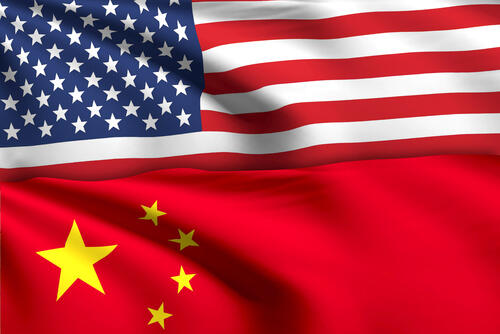
American and Chinese flags
This event is part of the 2021 Winter/Spring Colloquia series, Biden’s America, Xi’s China: What’s Now & What’s Next?, sponsored by APARC's China Program.


Via Zoom Webinar. Register at: https://bit.ly/3beG7Qz

Erin Baggott Carter Assistant Professor, Department of Political Science and International Relations, University of Southern California; Visiting Scholar, Center on Democracy, Development and the Rule of Law, Stanford University
Seminars
Authors
Callista Wells
News Type
News
Date
Paragraphs

On February 10, 2021, the China Program at Shorenstein APARC hosted Professor Oriana Skylar Mastro, Center Fellow at the Freeman Spogli Institute for International Studies​ for the virtual program "Military Competition with China: Harder to Win Than During the Cold War?" Professor Jean Oi, William Haas Professor of Chinese Politics and director of the APARC China Program, moderated the event.

As US-China competition intensifies, experts debate the degree to which the current strategic environment resembles that of the Cold War. Those that argue against the analogy often highlight how China is deeply integrated into the US-led world order. They also point out that, while tense, US-China relations have not turned overtly adversarial. But there is another, less optimistic reason the comparison is unhelpful: deterring and defeating Chinese aggression is harder now than it was against the Soviet Union. In her talk, Dr. Mastro analyzed how technology, geography, relative resources and the alliance system complicate U.S. efforts to enhance the credibility of its deterrence posture and, in a crisis, form any sort of coalition. Mastro and Oi's thought-provoking discussion ranged from the topic of why even US allies are hesitant to take a strong stance against China to whether or not Taiwan could be a catalyst for military conflict. Watch now: 

Read More

Min Ye speaking
News

Domestic or International? The Belt and Road Initiative Is More Internally Focused Than We Think, Says Expert Min Ye

Domestic or International? The Belt and Road Initiative Is More Internally Focused Than We Think, Says Expert Min Ye
Concept of U,S.-China technology competition: brain-shaped boxing gloves covered in U.S. and China flags facing against each other on a background of a motherboard
News

Caught in the Crossfire: The Future Of U.S.-China Science Collaboration and Its Impact on University Education

Caught in the Crossfire: The Future Of U.S.-China Science Collaboration and Its Impact on University Education
Banner of Hau L. Lee
News

The Pandemic, U.S.-China Tensions and Redesigning the Global Supply Chain

The Pandemic, U.S.-China Tensions and Redesigning the Global Supply Chain
Hero Image
Photograph of Xi Jinping and Vladmir Putin walking in front of two lines of armed Chinese soldiers Getty Images
All News button
1
Subtitle

On February 10th, the APARC China Program hosted Professor Oriana Mastro to discuss military relations between the US and China, and why deterrence might be even more difficult than during the Cold War.

Authors
Noa Ronkin
News Type
Q&As
Date
Paragraphs

This week in Hanoi, the city’s streets are lined with Vietnam’s ruling Communist Party flags and posters to promote the 13th Party Congress, the most important political event in the state. Held every five years, the weeklong congress meets to approve future policy and help select Vietnam’s highest-level leaders. This time, the announcement of the next leadership team will determine key questions that will have major implications for the evolution of the role of the state’s legislative body, the Vietnam National Assembly (VNA), says Paul Schuler, APARC’s former Lee Kong Chian fellow on Southeast Asia and former Shorenstein postdoctoral fellow.

Schuler, an assistant professor of political science at the University of Arizona’s School of Government and Public Policy, is an expert on politics in Vietnam and the author of the new book United Front: Projecting Solidarity through Deliberation in Vietnam’s Single-Party Legislature (Stanford University Press, in its monograph series with APARC). In this volume, Schuler examines the past and present functioning of the VNA. Applying a diverse range of social science methods on a wealth of original data, his findings shed light on the role of institutions in Vietnam as well as in authoritarian regimes more broadly.

Here, Schuler explains how the electoral process works in Vietnam’s one-party system, discusses the ways in which the VNA differs from the conventional image of single-party legislatures, and offers insights into how the 13th Party Congress currently underway is poised to shape Vietnam’s future.


[Sign up for APARC's newsletters to get the latest updates from our scholars.]

Your book explores why Vietnam, a single-party state, has well-developed electoral and legislative institutions. How is the state’s legislative body, the Vietnam National Assembly, organized and how has it evolved in recent years?

Schuler: Vietnam’s electoral and legislative institutions are some of the most open and active in the communist world. Unlike China, Cuba, and North Korea, as well as most former communist countries in Eastern Europe, Vietnam allows direct elections for National Assembly candidates with more candidates than seats available. Additionally, the legislature allows public debate, including televised queries of high-ranking government officials, including the prime minister.

In terms of its evolution, the legislature has gradually become more professionalized and active since the Doi moi economic opening in 1986 largely to deal with the increased legal complexity required to integrate with the global economy. The electoral process, however, has not changed as much, meaning that the party exerts tremendous control over who is nominated to participate in the elections. The control over the election process is key, because this gives the party a key lever it can use to moderate debate in the legislature. 

How does the electoral process work in a one-party system like Vietnam’s and what does your research reveal about Vietnamese voting behavior?

Schuler: Vietnam’s electoral system is somewhat unique compared to other communist regimes, past and present. Cuba, for example, allows direct elections for its legislature, but only one candidate is allowed to compete for each seat. China’s National People’s Congress elections are indirect, with lower-level legislatures essentially choosing the candidates for the national level. In Vietnam, by contrast, more candidates are allowed than seats. Furthermore, some non-party members are allowed to compete in these direct elections.

Despite this relative openness, the elections are limited in important ways. First, local election committees retain veto power over who gets to run. This means that while in the past few elections, some independent voices have tried to run, they have been barred from competing. Second, there are strict limits on campaigning. Candidate lists are only finalized a few weeks before the elections, and candidates are not allowed to reach out to voters independently and draw contrasts between themselves and their opponents. They are only allowed to campaign in a handful of party-controlled events with a limited number of attendees.

This has several implications for voting behavior. Because of the vetting process, voters may perceive the candidates as indistinguishable. Furthermore, even where there might be differences between the candidates, voters have little opportunity to learn about these differences. Hence, voters have low levels of awareness of their candidates and representatives and are forced to rely on observable cues such as gender, age, or party membership when voting. Interestingly, voters actually prefer party member candidates to independents. Other research I have done with Professor Edmund Malesky suggests that this is because voters at least have some information about the ideological orientation of party member candidates and because they presume these candidates will have better access to government resources.

An important question is whether the party continues its policy of merging party and government positions and bolstering party policymaking organs.
Paul Schuler

According to your research, what is the primary role of the VNA? How do your findings differ from the conventional wisdom about legislative institutions under authoritarian rule?

Schuler: Recent research challenges the conventional image of single-party legislatures as rubber stamps, suggesting that legislatures can provide some constraints on leaders in these regimes and provide regime leaders with information about citizen preferences. In terms of the VNA, I don’t find evidence that its main role is to constrain the party. Furthermore, it rarely provides information that the party doesn’t already have through other channels. Instead, the role of the VNA, since 1986, has been to take some of the increasing lawmaking burden that resulted from opening Vietnam’s economy from the party and the government. VNA participation lends legitimacy to these laws.

How, then, do we explain cases where the legislature appears active and critical? For example, how do we explain the case in 2010 where a delegate challenged the prime minister to a vote of no confidence? More recently, ahead of the current party congress, how do we explain a delegate challenging a deputy prime minister to explain the government’s delayed investigation of a company’s producing fraudulent fertilizer? I suggest these incidences are best seen as efforts by party leaders to restrain government officials through the VNA. This, in turn, reflects a key difference between Vietnam and other communist regimes, which is the relative balance of power between the prime minister and general secretary. Given this greater separation, the party has greater use for the VNA to challenge the government than the Chinese party leadership does.

The 13th National Congress of the Vietnamese Communist Party is taking place this week. What are its expected outcomes and how will they shape Vietnam’s future?

Schuler: The Party Congress is the most important national political event in Vietnam, as this is when the top-ranking positions for the next five years are selected. The announcement of the next leadership team will answer three key questions that will have implications for the evolution of the role of the VNA. First, will Nguyen Phu Trong continue as general secretary? If he does, this will likely mean the continuation of Vietnam’s anticorruption campaign. Just as important, it will also contravene an important norm, which is a two-term limit for the general secretary. While age exceptions have been made in the past, the term limit exception could set a precedent for future leaders to remain in power.

Second, will the presidency once again be separate from the general secretary position? Unlike China and other communist nations, in Vietnam, the presidency has traditionally been held by separate officials. This has contributed to an overall more balanced distribution of power in the Politburo than in other contexts, where the general secretary is a far more powerful position. This separation ended with the death of Tran Dai Quang in 2018, when Trong was appointed to replace him. If the position is once again handed to a different leader, this signals that the party will remain committed to some degree of power sharing at the top.

Third, to what degree will the party move to merge state and party functions? Consistent with the decision to merge the positions of the general secretary and president, one of the contenders for power in the Politburo, Pham Minh Chinh, experimented during his leadership of Quang Ninh province with merging party and state positions at the local level. Vietnam has also reestablished party committees, such as the Central Economic Committee, which could exert more direct control over the government. An important question, therefore, is whether the party continues its policy of merging party and government positions and bolstering party policymaking organs.

The answers to these last two questions have particular importance for the VNA. Given that the party uses the VNA to ensure the government is following its direction, if the party bolsters its own direct control mechanisms, either by empowering party committees or merging party and state positions, this could render legislative institutions increasingly superfluous. We could thus see a less visible legislature, and one focused mainly on ironing out technical details of legislation rather than playing a visible role in challenging the government.

View Schuler's New Book

Read More

Barack Obama addresses a crowd of young leaders from ASEAN nations.
Commentary

A Global Town Hall Welcomes America Back

Despite the reversals of the Trump era, a flurry of online diplomacy served as a reminder that the U.S. is welcome in Southeast Asia writes Donald K. Emmerson in The Diplomat.
A Global Town Hall Welcomes America Back
A loaded shipping liner sails out of port.
Commentary

Let's Keep it the 'Free and Open' Indo-Pacific

Both Japan's Suga and the incoming Biden administration should maintain the language of the "free and open Indo-Pacific" for consistency and to signal their ongoing commitment to maintaining a firm policy stance on China's ambitions.
Let's Keep it the 'Free and Open' Indo-Pacific
Stanford campus, main quad with cloudy sky
News

APARC Offers Fellowship and Funding Opportunities to Support, Diversify Stanford Student Participation in Contemporary Asia Research

The Center has launched a suite of offerings including a predoctoral fellowship, a diversity grant, and research assistant internships to support Stanford students interested in the area of contemporary Asia.
APARC Offers Fellowship and Funding Opportunities to Support, Diversify Stanford Student Participation in Contemporary Asia Research
Hero Image
Portrait of Paul Schuler and the cover of his book, 'United Front'
All News button
1
Subtitle

As the 13th National Congress of Vietnam's Communist Party is selecting a new leadership team that will set the country’s course for the next five years, Vietnamese politics expert Paul Schuler discusses his new book on the state’s single-party legislature.

Subscribe to Institutions and Organizations