Security

FSI scholars produce research aimed at creating a safer world and examing the consequences of security policies on institutions and society. They look at longstanding issues including nuclear nonproliferation and the conflicts between countries like North and South Korea. But their research also examines new and emerging areas that transcend traditional borders – the drug war in Mexico and expanding terrorism networks. FSI researchers look at the changing methods of warfare with a focus on biosecurity and nuclear risk. They tackle cybersecurity with an eye toward privacy concerns and explore the implications of new actors like hackers.

Along with the changing face of conflict, terrorism and crime, FSI researchers study food security. They tackle the global problems of hunger, poverty and environmental degradation by generating knowledge and policy-relevant solutions. 

-

Jakarta time: Thursday, January 27, 2022, 8:00am to 9:30am

Southeast Asia is famously diverse.  Yet, all the ASEAN member states have committed themselves to ASEAN Community, including ASEAN Political and Security Community, with the expressed commitment to protect and promote democratic principles, human rights and good governance.

As democracy retreats around the world, will autocracy spread throughout Southeast Asia?  How can countries of Southeast Asia navigate the complex dynamics between protection and promotion of democratic principles and human rights on the one hand, and the principle of non-interference in internal affairs on the other?  How can they navigate the similarly complex dynamic between protection and promotion of democratic principles and human rights on the one hand, and the geopolitical tensions and rivalries currently prevailing in the region?   Does ASEAN matter? Few are better positioned by knowledge and experience than former Indonesian foreign minister Marty Natalegawa to address these and related questions.
 
Image
Marty Natalegawa 102722
In addition to his productive record as Indonesia’s foreign minister (2009-2014), Dr. R. M. Marty M. Natalegawa has served his country in multiple high-level diplomatic positions, including as ambassador to the UN and the UK and as his foreign ministry’s Director General for ASEAN Cooperation. He holds a PhD from ANU, an MPhil from the University of Cambridge, and a BSc from the London School of Economics and Political Science. 

Via Zoom Webinar
Register: bit.ly/3K2zEZu

Marty Natalegawa Distinguished Fellow, Asia Society Policy Institute, and former Minister of Foreign Affairs, Indonesia
Seminars
-

This event is part of Shorenstein APARC's winter 2022 webinar series, New Frontiers: Technology, Politics, and Society in the Asia-Pacific.

While North Korea’s nuclear capabilities often make headlines, the DPRK increasingly poses a risk that is more difficult to see, in the form of sophisticated cyber attacks. Neighboring South Korea, one of the most digitized nations in the world, must closely monitor and defend against North Korea’s cyber threat, as attacks can disrupt economic, social, and defense infrastructures. This panel will discuss what kind of cyber threat North Korea poses to South Korea and beyond, how South Korea addresses the North Korean cyber attacks, and what other countries can learn from their response.

Speakers:

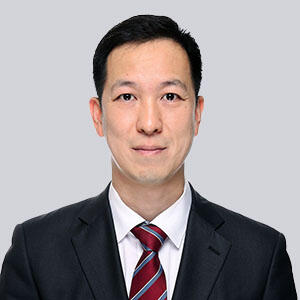
portrait of Jenny JunJenny Jun is a PhD Candidate in the Department of Political Science at Columbia University and Nonresident Fellow at the Atlantic Council’s Cyber Statecraft Initiative. Her current research explores the dynamics of coercion in cyberspace. Her broader interests include cyber conflict, North Korea, and security issues in East Asia. Jenny is a co-author of the 2015 Center for Strategic and International Studies (CSIS) report North Korea’s Cyber Operations: Strategy and Responses, published by Rowman & Littlefield. She has presented her work on North Korea’s cyber operations at various panels and has provided multiple government briefings and media interviews on the topic. She received her MA and BS each from the Security Studies Program (SSP) and the School of Foreign Service (SFS) at Georgetown University.

Image
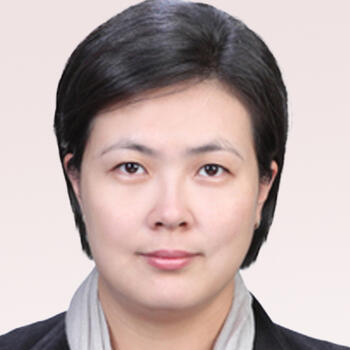
portrait of So Jeong Kim

So Jeong Kim is a principal researcher at the National Security Research Institute where she joined in 2004. She currently leads the cybersecurity policy team and provides recommendations on cybersecurity policy and regulatory issues. She was involved in drafting South Korea’s National Cyber Security Strategy published in April 2019, in the 4thand 5th UN Group of Governmental Experts as an adviser, and in the MERIDIAN process as an advisor and organizer. Her main research area is in national cybersecurity policy, international norm-setting processes, confidence building measures, critical information infrastructure protection, law and regulations, and cybersecurity evaluation development. She received her PhD in Engineering from the Graduate School of Information Security at Korea University in 2005.

Gi-Wook Shin, director of APARC and the Korea Program at Stanford University, will moderate the discussion.

Via Zoom. Register at https://bit.ly/3mXJSQW

Panel Discussions
Authors
Noa Ronkin
News Type
News
Date
Paragraphs

The Walter H. Shorenstein Asia-Pacific Research Center (APARC), Stanford University’s hub for interdisciplinary research, education, and engagement on contemporary Asia, invites nominations for the 2022 Shorenstein Journalism Award. The award recognizes outstanding journalists who have spent their careers helping audiences worldwide understand the complexities of the Asia-Pacific region. The 2022 award will honor a recipient whose work has primarily appeared in American news media. APARC invites 2022 award nomination submissions from news editors, publishers, scholars, journalism associations, and entities focused on researching and interpreting the Asia-Pacific region.  Submissions are due by Tuesday, February 15, 2022.

Sponsored by APARC, the award carries a cash prize of US $10,000. It alternates between recipients whose work has primarily appeared in Asian news media and those whose work has primarily appeared in American news media. The 2022 award will recognize a recipient from the latter category. For the purpose of the award, the Asia-Pacific region is defined broadly to include Northeast, Southeast, South, and Central Asia and Australasia. Both individual journalists with a considerable body of work and journalism organizations are eligible for the award. Nominees’ work may be in traditional forms of print or broadcast journalism and/or in new forms of multimedia journalism. The Award Selection Committee, whose members are experts in journalism and Asia research and policy, presides over the judging of nominees and is responsible for the selection of honorees.

An annual tradition since 2002, the award honors the legacy of APARC benefactor, Mr. Walter H. Shorenstein, and his twin passions for promoting excellence in journalism and understanding of Asia. Over the course of its history, the award has recognized world-class journalists who push the boundaries of coverage of the Asia-Pacific region and help advance mutual understanding between audiences in the United States and their Asian counterparts. Recent honorees include Burmese journalist and human rights defender Swe Win; former Wall Street Journal investigative reporter Tom Wright; the internationally esteemed champion of press freedom Maria Ressa, CEO and executive editor of the Philippine news platform Rappler and winner of the 2021 Nobel Peace Prize; former Washington Post Beijing and Tokyo bureau chief Anna Fifield; and Editor of the Wire Siddharth Varadarajan.

Award nominations are accepted electronically through Tuesday, February 15, 2022, at 11:59 PM PST. For information about the nomination procedures and to submit a nomination please visit the award nomination entry page. The Center will announce the winner by April 2022 and present the award at a public ceremony at Stanford in the autumn quarter of 2022.

Please direct all inquiries to aparc-communications@stanford.edu.

Read More

Burmese journalist Swe Win
News

‘There Is No Space Left for Any Freedom’: Shorenstein Journalism Award Recipient Swe Win Depicts Myanmar’s Return into Darkness

Amidst the crisis in Myanmar, Burmese investigative journalist Swe Win, editor-in-chief of the independent news outlet Myanmar Now, continues to lead the newsroom from exile while his team is in hiding.
‘There Is No Space Left for Any Freedom’: Shorenstein Journalism Award Recipient Swe Win Depicts Myanmar’s Return into Darkness
Autumn scene on the Stanford campus with a call to apply for APARC's 2022-23 fellowships for Asia schoalrs
News

APARC Announces 2022-23 Fellowships for Asia Specialists

The Center offers fellowships for postdoctoral scholars specializing in contemporary Asia, Japan, and Asia health policy and for experts on Southeast Asia.
APARC Announces 2022-23 Fellowships for Asia Specialists
North Korea Conundrum Book cover
News

How to Solve the North Korean Conundrum: The Role of Human Rights in Policy Toward the DPRK

APARC's new edited volume, 'The North Korean Conundrum,' shines a spotlight on the North Korean human rights crisis and its connection to nuclear security. In the book launch discussion, contributors to the volume explain why improving human rights in the country ought to play an integral part of any comprehensive U.S. engagement strategy with the DPRK.
How to Solve the North Korean Conundrum: The Role of Human Rights in Policy Toward the DPRK
Hero Image
Stanford arch and text calling for nominations for APARC's 2022 Shorenstein Journalism Award.
All News button
1
Subtitle

Sponsored by Stanford University’s Shorenstein Asia-Pacific Research Center, the annual award recognizes outstanding journalists and journalism organizations for excellence in coverage of the Asia-Pacific region. News editors, publishers, scholars, and organizations focused on Asia research and analysis are invited to submit nominations for the 2022 award through February 15.

Authors
News Type
Q&As
Date
Paragraphs

This interview was first published by the Stanford News Service.


When President Joe Biden meets with his Chinese counterpart President Xi Jinping next week, they will both want to show the world that the two countries have common and compatible objectives and that cooperation is possible, says Stanford scholar Thomas Fingar.

While there are real differences between the two countries, global threats exist that require joint effort to address, such as nuclear proliferation and the danger of new arms races, said Fingar in an interview with Stanford News Service.

In anticipation of the upcoming summit scheduled for Monday, Fingar discusses what to expect when the two leaders meet and what goals Biden will want to work towards as it fits with his larger objectives for the U.S.

Fingar is a Shorenstein fellow at The Walter H. Shorenstein Asia-Pacific Research Center (APARC), which is part of the Freeman Spogli Institute for International Studies. He is leading a multi-year study, China and the World, that seeks to better understand China’s global engagement.

Fingar returned to Stanford in 2009 after having served as the first deputy director of national intelligence for analysis and, concurrently, as chairman of the National Intelligence Council. Fingar served previously as assistant secretary of the State Department’s Bureau of Intelligence and Research (2000-01 and 2004-05), principal deputy assistant secretary (2001-03), deputy assistant secretary for analysis (1994-2000), director of the Office of Analysis for East Asia and the Pacific (1989-94) and chief of the China Division (1986-89). Between 1975 and 1986 he held several positions at Stanford University, including senior research associate in the Center for International Security and Arms Control.

Where does diplomacy between the U.S. and China now stand?

Friction between Beijing and Washington did not put an end to diplomatic exchanges, but having markedly different approaches has inhibited the two sides. Simply stated, the United States has sought to work on specific global and bilateral problems to achieve priority objectives such as limiting greenhouse gases and reducing the dangers of unconstrained nuclear, space and cyber competition. China has maintained that “building trust” and improvement of the overall bilateral relationship are prerequisites for progress on specific issues. Developments in the run-up to the summit, such as the joint climate statement in Glasgow, suggest that Beijing has relaxed its preconditions.

How does the summit symbolize a diplomatic reset?

Both symbolically and substantively, the summit will empower lower-level officials in both countries to work on issues within their purview. This is more significant in China, where clear signals from the top are necessary for subordinates to engage, but it will also help to mitigate paralysis on the U.S. side resulting from competing visions of how best to address China-related issues.

What issues will be top of mind for Biden and Xi?

Both will want to diminish exaggerated characterizations of bilateral friction as evidence that we have entered a new Cold War and may be on the verge of conflict, and that cooperation on any issue is impossible. We have very real disagreements, but we also have many common or compatible objectives. Helping domestic and external audiences to understand that things are not nearly as dire as many observers contend will be a priority objective. Beyond that, I think clarifying matters of greatest concern to the other side and establishing mechanisms to address them will be on the agenda.

What areas can they agree on and where can they make progress?

They are likely to find it easier to agree on issues requiring joint effort than on the best way to address issues like nuclear proliferation (Iran and North Korea), new weapons systems and the danger of new arms races (hypersonic glide vehicles, cyber and kinetic threats to nuclear surveillance and command and control systems) and transition to cleaner energy sources.

What areas will spark disagreement and will these issues come up?

I suspect that both leaders will feel compelled to raise all of the high salience concerns in their countries. For Biden, that list includes Xinjiang, Hong Kong, PRC [People’s Republic of China] actions near Taiwan and the rollback of opportunities for Americans in China. Xi will raise U.S. military operations around China’s periphery, arms sales and relations with Taiwan, restrictions on visas for Chinese citizens and Chinese investment in the U.S., among other issues.

What would signal that the meeting was productive?

The fact that it has occurred will be significant because it will open the door to other, hopefully, less contentious exchanges across a broad spectrum of issues. Easing of travel restrictions should be easy to achieve but of more than symbolic importance. I doubt that the meeting is designed to solve any of the difficult issues in our relationship.

What do you think about Biden’s approach to China?

I agree with the President’s focus on his largely domestic “Build Back Better” agenda. Spending the time, effort and political capital necessary to secure approval of measures to address infrastructure, energy, education, childcare, internet access and a host of social justice, pandemic and voter protection issues are, in my opinion, more important than trying to improve relations with China for the sake of improving the relationship. Where working with China is necessary and/or perceived to be possible for achieving other domestic and foreign policy goals, he should do so. I think the fact that this summit is taking place is a sign that he is attempting to do that, but I judge that he is unwilling to jeopardize his ability to achieve higher priority objectives by making concessions to Beijing merely to create the appearance of a better relationship.

Tom Fingar

Thomas Fingar

Shorenstein APARC Fellow
Full Biography

Read More

Taiwan
Commentary

America's Future in Taiwan

Intensifying threats of a military conflict over Taiwan have brought uncertainty to the stability of regional security for Southeast Asia, according to Center Fellow Oriana Skylar Mastro on radio show On Point.
America's Future in Taiwan
Cover of the book "From Mandate to Blueprint" and a portrait of Thomas Fingar
News

New Book by Thomas Fingar Offers Guidance to Government Appointees

Drawing on his experience implementing one of the most comprehensive reforms to the national security establishment, APARC Fellow Thomas Fingar provides newly appointed government officials with a practical guide for translating mandates into attainable mission objectives.
New Book by Thomas Fingar Offers Guidance to Government Appointees
President Biden walks past a row of Chinese and American flags.
News

APARC Experts on the Outlook for U.S.-Asia Policy Under the Biden Administration

Ahead of President-elect Biden’s inauguration and on the heels of the attack on the U.S. Capitol by a pro-Trump mob that has left America shaken, an APARC-wide expert panel provides a region-by-region analysis of what’s next for U.S. policy towards Asia and recommendations for the new administration.
APARC Experts on the Outlook for U.S.-Asia Policy Under the Biden Administration
Hero Image
Xi and Biden Tim Rue/Getty Images
All News button
1
Subtitle

In this Q&A, Stanford scholar Thomas Fingar discusses what to expect when President Biden meets with Chinese President Xi Jinping.

Authors
News Type
Commentary
Date
Paragraphs

Center Fellow Oriana Skylar Mastro discussed America's strategic, military, and economic interests in Taiwan, as well as the potential for an outbreak of armed conflict on WBUR's "On Point" with Meghna Chakrabarti. 

Mastro first reflected on the escalation of Chinese miliary activity in the Taiwan Strait and the potential likelihood of conflict in the immediate future, stating that, "The increase in recent tensions does not tell us that there's a higher likelihood of war...we have this uptick in Chinese military activity in the vicinity of Taiwan...the number of air incursions in particular has increased exponentially."

The month of October, in particular, saw record high rates of Chinese aircraft with a record high on October 4 with 56 aircraft, and 159 aircraft total entering Taiwan's air defense identification zone.


Sign up for APARC newsletters to receive our experts' commentary and analysis.

I think this is mainly political signaling, Beijing is trying to tell Taiwan, you're on your own...as much as the United States can make statements, can make agreements like AUKUS with the Australians, when push comes to shove, they are not here
Oriana Skylar Mastro

Mastro then suggested that the recent displays of military power are not indicative of a plan to invade Taiwan immediately. "I think this is mainly political signaling, Beijing is trying to tell Taiwan, you're on your own...as much as the United States can make statements, can make agreements like AUKUS with the Australians, when push comes to shove, they are not here," she said.

Mastro indicated that the situation with Taiwan is part of a larger great power competition in which China aims to exert global influence. "The bottom line is that China has a different vision of what it wants the world to be like. And it's not only that China wants to control what governments do, they want to control what corporations, universities, individuals can say and do," she said.

"China has demonstrated whenever it has economic power, diplomatic power, or military power, they are more than willing to use it to hurt others...if [U.S.] national security has been free from foreign dictation, being free from other countries telling the United States and the American people what to do, then it's absolutely critical that we stand up to China," said Mastro.

When asked about the prevention of armed conflict, Mastro argued that "War is very easy to prevent, you just give the other side everything they want. The difficulty is ensuring our own peace and security, stability and prosperity in the face of this challenge. And so for that reason, I think [Taiwan] is very important, and Taiwan is only the the biggest Flashpoint and the first step to ensuring that the United States maintains its position in Asia and therefore its position in the world."

Listen to the full conversation here.

Read More

An Island that lies inside Taiwan's territory is seen with the Chinese city of Xiamen in the background.
Commentary

The Taiwan Temptation

Why Beijing Might Resort to Force
The Taiwan Temptation
Figures of Kuomintang soldiers are seen in the foreground, with the Chinese city of Xiamen in the background, on February 04, 2021 in Lieyu, an outlying island of Kinmen that is the closest point between Taiwan and China.
Commentary

Strait of Emergency?

Debating Beijing’s Threat to Taiwan
Strait of Emergency?
Taiwan Wall
Commentary

Would the United States Come to Taiwan's Defense?

On CNN's GPS with Fareed Zakaria, APARC Center Fellow Oriana Skylar Mastro shares insights about China's aspirations to take Taiwan by force and the United States' role, should a forceful reunification come to pass.
Would the United States Come to Taiwan's Defense?
Hero Image
Taiwan TangChi Lee
All News button
1
Subtitle

Intensifying threats of a military conflict over Taiwan have brought uncertainty to the stability of regional security for Southeast Asia, according to Center Fellow Oriana Skylar Mastro on radio show On Point.

-

To watch the recording of the event, click here.

This event is co-hosted with the East Asia Institute (EAI) in Korea.

Event Time: November 18, 4:00 - 6:00 PM (PST) / November 19, 9:00 - 11:00 PM (Japan and Korea)
Please register for this event at EAI event page.

The ROK-U.S. and U.S.-Japan joint statements have increased expectations for a possible expansion of security and economic cooperation among South Korea, the U.S. and Japan. However, heightened U.S.-China strategic competition, as well as persistent challenges in the region such as historical tensions and the North Korea threat, have complicated the strategic calculus of U.S., South Korea and Japan. Under these circumstances, the South Korea, the U.S. and Japan must define their economic and security interests and seek ways to maintain friendly relations among the three countries. This seminar will discuss security and economic cooperation among Korea, the United States and Japan in the era of strategic competition between the U.S. and China.

Panel 1 on security:

Park Joon Woo, former Chairman of the Sejong Institute; former South Korean Ambassador to E.U. and to Singapore

Tomiko Ichikawa, Director General of the Japan Institute of International Affairs

Gen. Vincent Brooks, former USFK Commander

Moderated by Young Sun Ha, Chairman of East Asia Institute; Professor Emeritus, Seoul National University

Panel 2 on economic cooperation:

Young Ja Bae, Professor of Political Science and Diplomacy, Konkuk University, Korea

Andrew Grotto, Director of the Program on Geopolitics, Technology and Governance, FSI, Stanford University

Kimura Fukunari, Professor of Economics, Keio University, Japan

Moderated by Thomas Fingar, Shorenstein APARC Fellow, Stanford University


Via Zoom. Register at https://bit.ly/3w7Ak9g

Panel Discussions
Authors
Michael Breger
News Type
News
Date
Paragraphs

North Korea remains one of the worst human rights catastrophes in the modern era. Yet in recent years, the momentum to bring human dignity to the citizens of North Korea has ground to a halt. The predominant focus has been on nuclear security issues to the exclusion of the human rights crisis in the country. But human rights ought to play a key role in any comprehensive policy toward the DPRK. This is the premise of APARC’s new volume, The North Korea Conundrum: Balancing Human Rights and International Security.

Edited by APARC Director Gi-Wook Shin and Ambassador Robert R. King, a senior adviser at the Center for Strategic and International Studies (CSIS) Korea Chair and former special envoy for North Korean human rights issues at the U.S. Department of State, the book draws on the work of scholars and practitioners presented and discussed at a conference on North Korean human rights held by APARC’s Korea Program. On October 28, 2021, APARC and CSIS gathered contributors to the volume for a book launch discussion of the intertwining relationship between the North Korean denuclearization and human rights agendas.

[Explore more APARC events on our YouTube channel and subscribe to receive our video updates.


Studies of human rights in North Korea are even more important now, in light of North Korea’s response to COVID-19, said Shin at the opening of the discussion. The DPRK has kept its borders closed for nearly two years, resulting in reduced trade and worsening the economic and social situation of its population.

Ambassador King, who was also a 2019-20 Koret Fellow and Visiting Scholar at APARC, identified the guiding questions of the volume, indicating that “This conundrum that we talk about in the title is an interaction between security and human rights. Is there a tradeoff? If we focus on human rights, does that make it more difficult for us to deal with security issues? If we focus on security issues do we have to ignore human rights?” 

The first principle we must accept is that integrating human rights into our strategy is not a choice, but a necessity. Moreover, mainstreaming human rights in the U.S.–North Korea agenda strengthens U.S. leverage in negotiations and is politically smart.
Victor Cha
Senior Vice President and Korea Chair, CSIS

An Error of Zero-Sum Thinking

While North Korea’s nuclear weapons and the security threat it poses have occupied the center stage and eclipsed other issues in recent years, the book’s contributors posit that human rights promotion remains an integral part of U.S. policy on the Korean peninsula. In his chapter, Victor Cha, Senior Vice President and Korea Chair at CSIS and former Koret Fellow and Visiting Scholar at APARC, analyzes the error in the zero-sum logic of North Korean human rights. "The United States sees a zero-sum relationship between pressing for human rights and denuclearization negotiations, while South Korea sees a zero-sum relationship between pressing for human rights and inter-Korean engagement," explains Cha. But the denuclearization and human rights agendas are inextricably intertwined.

The lost ground on addressing the North Korean human rights crisis is still recoverable, the contributors to The North Korean Conundrum believe. How could North Korea engage on human rights? The chapters in the volume lay out a number of ways. One opportunity to address human rights issues is through health and humanitarian assistance. Another way is to promote the economic and consumer rights of North Korean citizens to improve their quality of life and help foster a nascent civil society. And yet another way is to support information flow to the North. 

Interwoven Challenges

Nat Kretchun, Vice President for Programs at the Open Technology Fund, examines in his chapter the changing information environment in North Korea, observing how the information control system North Korean authorities are constructing is broadly characterized by an effort to move communications and media consumption onto state-controlled networks via state-sanctioned devices. The central aim is to create a “clean” information environment in which North Korean citizens use approved networked devices that technologically prevent the consumption and spread of unsanctioned content. At the same time, North Korean authorities have come to terms with a more marketized economic future. "Mobile phones have the ability to facilitate market-based economic transactions, the primary driver of much of what (limited) internal economic growth the country is seeing," notes Kretchun.

The contributors all agree that the challenge of human rights in North Korea is a complex one. It is intertwined with a host of issues, including life in the North Korean police state, inter-Korean relations, denuclearization, access to information, and international cooperation—all topics the volume addresses. We frequently separate these issues for analytical purposes or because they are dealt with in different ways or by different entities. But in fact, they are inseparable. Recognizing this interrelationship is the first step toward moving forward in a way that addresses the very serious North Korean security concerns while at the same time bringing human rights and humanitarian concerns into the equation.

Read More

"Patterns of Impunity" by Robert King on a backgorund showing the flags of North Korea, South Korea, and the United States.
News

Why North Korean Human Rights Matter: Book Talk with Robert R. King

In his new book, "Patterns of Impunity," Ambassador King, the U.S. special envoy for North Korean human rights from 2009 to 2017, shines a spotlight on the North Korean human rights crisis and argues that improving human rights in the country is an integral part of U.S. policy on the Korean peninsula.
Why North Korean Human Rights Matter: Book Talk with Robert R. King
[Top left] Gi-Wook Shin; [top right] Roberta Cohen; [bottom left] Tomás Ojea Quintana; [bottom right] Joon Oh
News

Using the UN to Create Accountability for Human Rights Crimes in North Korea

Experts on human rights agree that the UN needs to work through multiple channels to support ongoing investigations and build evidence for future litigations in order to create accountability and pressure the DPRK to desist in committing human rights crimes.
Using the UN to Create Accountability for Human Rights Crimes in North Korea
Flags of Asian states and text "Symposium: The Stakes in Asia"
Commentary

Talking Democracy: A Symposium on Asia

On a panel discussion hosted by the political quarterly 'Democracy,' Donald K. Emmerson joins experts to assess how the Biden administration is navigating the U.S. relationships in Asia.
Talking Democracy: A Symposium on Asia
Hero Image
North Korea Conundrum Book cover
All News button
1
Subtitle

APARC's new edited volume, 'The North Korean Conundrum,' shines a spotlight on the North Korean human rights crisis and its connection to nuclear security. In the book launch discussion, contributors to the volume explain why improving human rights in the country ought to play an integral part of any comprehensive U.S. engagement strategy with the DPRK.

News Type
Commentary
Date
Paragraphs

Center Fellow Oriana Skylar Mastro discussed America's Taiwan policy with CNN's Fareed Zakaria and Council on Foreign Relations President Richard Haass. 

After President Biden affirmed that the United States would protect Taiwan from a Chinese attack, the White House clarified that the President was not announcing a shift in U.S. policy, which is purposefully left ambiguous.

When asked why Taiwan was such a pressing issue for China, Mastro indicated that "there's political, social, and emotional components...the emotional component has to do with the fact that the Communist Party won the Civil War in 1949, the nationalists fled to Taiwan, and that war is not over until Taiwan becomes part of China." They believe that their "national rejuvenation cannot be complete until the seven decades-long civil war comes to an end."


Sign up for APARC newsletters to receive our experts' commentary and analysis.

"If you had asked me four years ago what is the likelihood that China would attack Taiwan I would have put it at zero percent, and now I put it at 60 percent"
Oriana Skylar Mastro

"If you had asked me four years ago what is the likelihood that China would attack Taiwan I would have put it at zero percent, and now I put it at 60 percent, and that is largely because Deng Xiaoping had to kick the can down the road because he didn't have a lot of options, and then they decided to build their economy so they had the economic power base, and then under Xi Jinping they really accelerated the military modernization," said Mastro.

In the intervew, Mastro, Haass, and Zakaria also discuss the economic and diplomatic risks that China would face should the nation attempt to invade Taiwan. 

Watch the full intervew here.

Read More

An Island that lies inside Taiwan's territory is seen with the Chinese city of Xiamen in the background.
Commentary

The Taiwan Temptation

Why Beijing Might Resort to Force
The Taiwan Temptation
Figures of Kuomintang soldiers are seen in the foreground, with the Chinese city of Xiamen in the background, on February 04, 2021 in Lieyu, an outlying island of Kinmen that is the closest point between Taiwan and China.
Commentary

Strait of Emergency?

Debating Beijing’s Threat to Taiwan
Strait of Emergency?
missile
Commentary

Balance of Power: Surprise China Missile Test

APARC Center Fellow Oriana Skylar Mastro shares insights about China's hypersonic missile capabilities, and the implications of further military buildup.
Balance of Power: Surprise China Missile Test
Hero Image
Taiwan Wall An Rong Xu
All News button
1
Subtitle

On CNN's GPS with Fareed Zakaria, APARC Center Fellow Oriana Skylar Mastro shares insights about China's aspirations to take Taiwan by force and the United States' role, should a forceful reunification come to pass.

News Type
Commentary
Date
Paragraphs

China's hypersonic missile test signals that it "no longer feels deterred by the presence of the U.S. military in Asia and therefore we can expect a much more aggressive and difficult China in future years," said Center Fellow Oriana Skylar Mastro in conversation with Bloomberg's David Westin.

"This is hugely significant, from the very specifics of the ability of the United States to protect the homeland against nuclear attack, to the broader great power competition in tech. China now has the ability not only to deliver a nuclear weapon to the United States, but because this vehicle flies lower and is more maneuverable it can evade any missile defenses that the United States has," she said.


Sign up for APARC newsletters to receive our experts' commentary and analysis.

"The Chinese have been far more advanced in some technologies, like this hypersonic boost vehicle that they tested, and other areas like artificial intelligence and quantum computing."
Oriana Skylar Mastro

Mastro describes Chinese military technology advancements, and their implications for the United States and the broader arena of technological development. "The Chinese have been far more advanced in some technologies, like this hypersonic boost vehicle that they tested, and other areas like artificial intelligence and quantum computing. These are areas where the Chinese government has invested a lot of resources," said Mastro. 

In the intervew, Mastro and Westin also discuss the shifting threat perception of NATO, and the potential impact that a broadening of its strategic mission might entail for Chinese military ambitions.

Listen to the full interview here.

Read More

Figures of Kuomintang soldiers are seen in the foreground, with the Chinese city of Xiamen in the background, on February 04, 2021 in Lieyu, an outlying island of Kinmen that is the closest point between Taiwan and China.
Commentary

Strait of Emergency?

Debating Beijing’s Threat to Taiwan
Strait of Emergency?
Indian Prime Minister Narendra Modi rides in a tank at Longewala in Jaisalmer, Rajasthan, 14 November 2020.
Commentary

India, China, and the Quad’s Defining Test

The Ladakh crisis between China and India seems to have settled into a stalemate, but its trajectory could again turn suddenly. If it flares into a limited conventional war, one of its incidental victims could be the Quad.
India, China, and the Quad’s Defining Test
A case holding lunar rock and debris collected from the Moon by China's space program that is part of a display at the National Museum of China is seen on March 2, 2021 in Beijing,
Commentary

Chinese Space Ambition

On the American Foreign Policy Council Space Strategy podcast, Center Fellow Oriana Skylar Mastro discusses how China views space and why the United States must not surrender global leadership in pursuing aspirational and inspirational space goals.
Chinese Space Ambition
Hero Image
missile Guang Niu
All News button
1
Subtitle

APARC Center Fellow Oriana Skylar Mastro shares insights about China's hypersonic missile capabilities, and the implications of further military buildup.

Date Label
-

This is a virtual event. Please click here to register and generate a link to the talk. 
The link will be unique to you; please save it and do not share with others.

November 10, 5:00-6:15 p.m. California time / November 11, 9:00-10:15 a.m. China time
 

Based on his recent Oxford University Press book Protecting China's Interests Overseas: Securitization and Foreign Policy, Dr. Andrea Ghiselli will discuss the role of the actors that contributed to the emergence and evolution of China's approach to the protection of its interests overseas. He will show how the securitization of non-traditional security threats overseas played a key role in shaping the behavior and preferences of Chinese policymakers and military elites, especially with regard to the role of the armed forces in foreign policy. 

While Chinese policymakers were able to overcome important organizational challenges, the future of China's approach to the protection of its interests overseas remains uncertain as Chinese policymakers face important questions about the possible political and diplomatic costs associated with different courses of action.

For more information about Protecting China's Interests Overseas or to purchase a copy, please click here.


Image
Portrait of Andrea Ghiselli
Dr. Andrea Ghiselli is an Assistant Professor at the School of International Relations and Public Affairs of Fudan University. He is also the Head of Research of the TOChina Hub's ChinaMed Project. His research focuses on the relationship between China's economic interests overseas and its foreign and defense policy. Besides his first monograph Protecting China's Interests Overseas: Securitization and Foreign Policy published by Oxford University Press, Dr. Ghiselli's research has been published in a number of peer-reviewed journals like the China Quarterly, the Journal of Strategic StudiesArmed Forces & Society, and the Journal of Contemporary China.


Via Zoom Webinar. Register at: https://bit.ly/3AUnPi3

Andrea Ghiselli Assistant Professor, School of International Relations and Public Affairs, Fudan University
Seminars
Subscribe to Security