International Relations

FSI researchers strive to understand how countries relate to one another, and what policies are needed to achieve global stability and prosperity. International relations experts focus on the challenging U.S.-Russian relationship, the alliance between the U.S. and Japan and the limitations of America’s counterinsurgency strategy in Afghanistan.

Foreign aid is also examined by scholars trying to understand whether money earmarked for health improvements reaches those who need it most. And FSI’s Walter H. Shorenstein Asia-Pacific Research Center has published on the need for strong South Korean leadership in dealing with its northern neighbor.

FSI researchers also look at the citizens who drive international relations, studying the effects of migration and how borders shape people’s lives. Meanwhile FSI students are very much involved in this area, working with the United Nations in Ethiopia to rethink refugee communities.

Trade is also a key component of international relations, with FSI approaching the topic from a slew of angles and states. The economy of trade is rife for study, with an APARC event on the implications of more open trade policies in Japan, and FSI researchers making sense of who would benefit from a free trade zone between the European Union and the United States.

-

The Shorenstein Asia-Pacific Research Center (APARC) Japan Program with the Freeman Spogli Institute of International Studies (FSI) as well as the Stanford Graduate School of Business, the Stanford Institute for Economic Policy Research (SIEPR), and the Stanford Department of Economics will be hosting a memorial conference and service on December 4th and 5th in honor of the late Masahiko Aoki. December 4th will be a full day conference featuring topics within Masa's extensive field of study and research including theoretical and applied economics, theory of institutions, corporate architecture and governance, and the Japanese and Chinese economies. The day will culminate with a cocktail reception. The Celebration of Life on December 5th will be a gathering for family and friends in remembrance of Masa with a light lunch reception to follow.

December 4, 2015

Memorial Conference

Bechtel Conference Center, 616 Serra Street
Stanford University

Agenda

8:30am - 8:50am            Breakfast & Registration

8:50am - 9:00am            Welcome Remarks: Takeo Hoshi (Stanford University)

9:00am - 9:30am            Kenneth Arrow (Stanford University), “The Role of Organizational Structure in the Economy”

9:30am - 10:00am          Paul Milgrom (Stanford University), "Designing the US Incentive Auction"

10:00am - 10:30am        Break

10:30am - 11:00am        Koichi Hamada, Yale University, “Masahiko Aoki: A Social Scientist"

11:00am - 11:30am        Kotaro Suzumura (Hitotsubashi University), “Masahiko Aoki (1938-2015): Recollections of his Pilgrimage and Legacy in Japan”

11:30am - 12:00pm       Yingyi Qian (Tsinghua University), "Masahiko Aoki and China"

12:00pm - 1:15pm          Lunch

1:15pm - 1:45pm            Jiahua Che (Chinese University of Hong Kong) presenting Masahiko Aoki's

                                            "Three-person game of institutional resilience vc transition: A model and

                                              China-Japan comparative history"

1:45pm - 2:15pm           Miguel Angel Garcia Cestona (Universitat Autonoma de Barcelona), "Corporate Governance and Employee Participation: some lessons from Mondragon"

2:15pm - 2:45pm           Herbert Gintis (Santa Fe Institute), "General Social Equilibrium and its Dynamics"

2:45pm - 3:15pm           Break

3:15pm - 3:45pm           Dale Jorgenson (Harvard University), "

"

3:45pm - 4:15pm           Avner Greif (Stanford University), "Comparative Institutional Analysis: China and Europe Compared"

4:15pm - 4:45pm           Francis Fukuyama (Stanford University), "Asian Kinship, Industrial Structure, and Trust in Government"

4:45pm - 5:00pm           Closing, Takeo Hoshi (Stanford University)

5:00pm - 6:00pm           Cocktail Reception

*Agenda is subject to change and will be updated as speakers are confirmed


December 5, 2015

Celebration of Life

Bechtel Conference Center, 616 Serra Street
Stanford University

Agenda

10:30am - 11:00am          Registration

11:00am - 12:00pm          Celebration of Life

12:00pm - 1:30pm            Lunch Reception


Bechtel Conference Center616 Serra StreetStanford UniversityStanford, CA 94305
Conferences
Authors
Denise Masumoto
News Type
News
Date
Paragraphs

As the new academic year gets underway, the Walter H. Shorenstein Asia-Pacific Research Center’s Corporate Affiliates Program is excited to welcome its new class of fellows to Stanford University:

  • Yuta AikawaMinistry of Economy, Trade & Industry, Japan
  • Wataru FukudaShizuoka Prefectural Government
  • Huang (Catherine) HuangBeijing Shanghe Shiji Investment Company
  • Avni JethwaReliance Life Sciences
  • Satoshi Koyanagi, Ministry of Economy, Trade & Industry, Japan
  • An Ma, PetroChina
  • Huaxiang Ma, Peking University
  • Yuichiro Muramatsu, Mitsubishi Electric
  • Tsuzuri Sakamaki, Ministry of Finance, Japan
  • Tsuneo SasaiThe Asahi Shimbun
  • Ravishankar Shivani, Reliance Life Sciences
  • Aki Takahashi, Nissoken
  • Mariko Takeuchi, Sumitomo Corporation
  • Hideaki Tamori, The Asahi Shimbun
  • Ryo Washizaki, Japan Patent Office
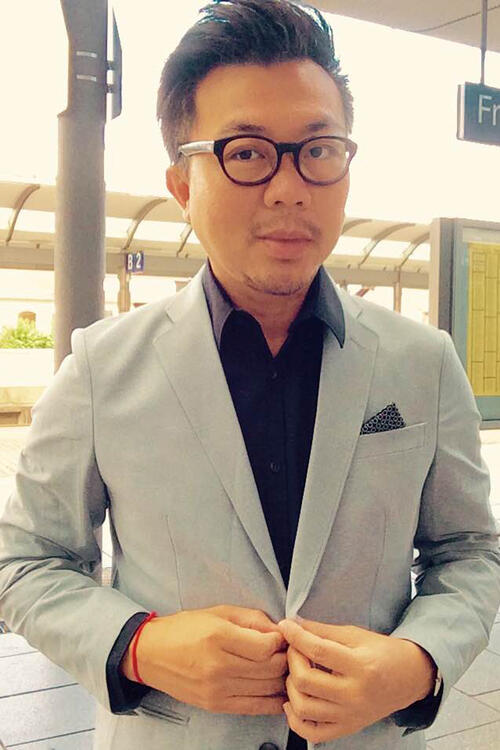
  • Hung-Jen (Fred) Yang, MissionCare

During their stay at Stanford University, the fellows will audit classes, work on English skills, and conduct individual research projects; at the end of the year they will make a formal presentation on the findings from their research. During their stay at the center, they will have the opportunity to consult with Shorenstein APARC's scholars and attend events featuring visiting experts from around the world. The fellows will also participate in special events and site visits to gain a firsthand understanding of business, society and culture in the United States.


Hero Image
rsd15 070 0045a Rod Searcey
All News button
1
-

Toru Hashimoto was a member of the Board of Directors and President and Chief Executive Officer of the Development Bank of Japan Inc. (DBJ) from June 2011 to June 2015. He is currently Senior Advisor of the DBJ. Previously, Mr. Hashimoto was Chairman of Deutsche Securities Inc., an investment banking subsidiary in Japan of Deutsche Bank, from July 2003 to September 2008 after serving as Senior Advisor from January 2003 to June 2003. Prior to joining Deutsche Securities, he was Chairman of the Board of Directors of the Fuji Bank, Limited (currently the Mizuho Financial Group) from June 1996 to March 2002. Earlier, he was President and Chief Executive Officer from 1991 to 1996. He began his career at the bank in 1957. Mr. Hashimoto served as Vice Chairman of the Board of Councilors of the Japan Federation of Economic Organizations from 1997 to 2001 and Chairman of the Japanese Bankers Association from 1995 to 1996. He was also Vice Chairman of the Institute of International Finance, Inc. from 1997 to 1999. Mr. Hashimoto received a bachelor's degree in law from the University of Tokyo in 1957. He was a Fulbright Scholar at the Graduate School of Economics of the University of Kansas from 1959 to 1960.

DBJ Initiatives for Japan's Growth Strategy Presentation
Download pdf
Philippines Conference RoomEncina Hall, 3rd Floor616 Serra StreetStanford, CA 94305
Toru Hashimoto, Former President and CEO, Development Bank of Japan Inc.
Seminars
-
RSVP Required


Agenda
4:15pm: Doors open
4:30pm-5:30pm: Lecture, followed by discussion
5:30pm-6:00pm: Networking


For more information about the Silicon Valley-New Japan Project please visit: http://www.stanford-svnj.org/

3rd Floor, Encina Hall616 Serra StreetStanford, CA 94305
Kenji Kushida, Stanford Japan Program Research Associate
Lectures
News Type
News
Date
Paragraphs

The Walter H. Shorenstein Asia-Pacific Research Center (APARC) at Stanford University is now accepting applications for the Shorenstein Postdoctoral Fellowship in Contemporary Asia, an opportunity made available to two junior scholars for research and writing on Asia.

Fellows conduct research on contemporary political, economic or social change in the Asia-Pacific region, and contribute to Shorenstein APARC’s publications, conferences and related activities. To read about this year’s fellows, please click this link.

The fellowship is a 10-mo. appointment during the 2016-17 academic year, and carries a salary rate of $52,000 plus $2,000 for research expenses.

For further information and to apply, please click this link. The application deadline is Dec. 15, 2015.

Hero Image
Encina Hall arches
All News button
1
-

Prof. Pavin will explain the concept of “neo-royalism” that Thai royalists have promoted; relate it to the present twilight of King Bhumibol Adulyadej’s long reign; and use it to forecast the future of the royal institution in Thailand. Pavin will assess the prospects of the king-in-waiting, Vajiralongkorn, and imagine the position of a new monarch in a new political environment. He will portray “neo-royalism” as a dangerous entrapment for Bhumibol’s successor and for the monarchy itself. The undemocratic nature of royal power is incompatible with the country’s changing political landscape. If Vajiralongkorn inherits the throne, he may try to consolidate top-down power, risking failure and rejection. Alternatively, he could reform the monarchy by placing it clearly within constitutional bounds. Recent evidence suggests that he may play an activist role.

Image
pavin4x6
Pavin Chachavalpongpun is an associate professor at the Center for Southeast Asian Studies in Kyoto University. His many publications include Reinventing Thailand: Thaksin and His Foreign Policy (2010) and A Plastic Nation: The Curse of Thainess in Thai-Burmese Relations (2005), and he is chief editor of the multilingual on-line Kyoto Review of Southeast Asia.  His PhD is from the University of London School of Oriental and African Studies.

Following Pavin’s fierce criticism of the May 2014 military coup in Thailand, the junta twice summoned him to Bangkok. He did not comply; instead, he reaffirmed his opposition to the coup. A warrant was eventually issued for his arrest, his Thai passport was revoked, and he was obliged to apply for refugee status in Japan.

Philippines Conference Room

Encina Hall, 3rd Floor central

616 Serra Street

Stanford, CA 94305

Pavin Chachavalpongpun 2015-16 Lee Kong Chian National University of Singapore-Stanford University Distinguished Fellow on Southeast Asia
Seminars
-

Sponsored by the Taiwan Democracy Project and the U.S. Asia Security Initiative at the Asia-Pacific Research Center (APARC)

Abstract

During the recent meeting between PRC President Xi Jinping and Taiwan President Ma Ying-jeou, the “1992 One China Consensus” served as a mutually acceptable paradigm for maintaining “peaceful and stable” conditions across the Taiwan Strait.  For Xi Jinping, the warmth of the visit thinly veiled a message to Taiwan’s leaders and electorate, as well as to onlookers in Washington.  Chinese officials and media clearly link the talks and confirmation of the 1992 Consensus to “the great rejuvenation of the Chinese nation”—a concept that is increasingly unpalatable to many in Taiwan.  Xi hopes to keep DPP presidential candidate Tsai Ing-wen (and perhaps even future KMT leaders) in the 1992 Consensus “box” and to co-opt the U.S. in this effort, but perhaps underestimates the political transformation underway on Taiwan. 

The Xi administration has also hardened its position regarding “core interests” such as Taiwan, embodied in a “bottom line principle” policy directive that eschews compromise.  Although many commentators and most officials across the region have shied away from stating that the PRC and Taiwan are at the crossroads of crisis, the collision of political transformation on Taiwan and the PRC’s “bottom line principle” will challenge the fragile foundations of peaceful cross-Strait co-existence.  Changes in the regional balance of military power brought about by a more muscular People’s Liberation Army compounds the potential for increased friction, providing Beijing with more credible options for coercion and deterrence.

This talk will consider the politics and principles involved in cross-Taiwan Strait relations in light of the upcoming 2016 Taiwan elections and the policies of the Xi Jinping administration; and will discuss some of the possible implications for China’s national security policy, regional stability, and the future of cross-Strait relations.

Bio

Image
Cortez Cooper
Mr. Cortez A. Cooper III joined RAND in April 2009, providing assessments of security challenges across political, military, economic, cultural, and informational arenas for a broad range of U.S. government clients.  Prior to joining RAND, Mr. Cooper was the Director of the East Asia Studies Center for Hicks and Associates, Inc.  He has also served in the U.S. Navy Executive Service as the Senior Analyst for the Joint Intelligence Center Pacific, U.S. Pacific Command.  As the senior intelligence analyst and Asia regional specialist in the Pacific Theater, he advised Pacific Command leadership on trends and developments in the Command’s area of responsibility.  Before his Hawaii assignment, Mr. Cooper was a Senior Analyst with CENTRA Technology, Inc., specializing in Asia-Pacific political-military affairs.  Mr. Cooper’s 20 years of military service included assignments as both an Army Signal Corps Officer and a China Foreign Area Officer.  In addition to numerous military decorations, the Secretary of Defense awarded Mr. Cooper with the Exceptional Civilian Service Award in 2001.

2016 Taiwan Elections and Implications for Cross-Strait and Regional Security
Download pdf
Cortez Cooper Senior International Policy Analyst RAND Corporation
Seminars
-

While Prime Minister Abe Shinzo has emerged as the strongest Japanese leader in a decade, the dark underside of his administration has been widespread accusations of heavy-handed intimidation of the press. Especially in the last year, there have been numerous high-profile cases in which major media organizations have appeared to capitulate to such pressure, often engaging in a preemptive self-censorship known in Japan as jishuku, or “self-restraint.” A close examination of some of these cases reveals that the Abe administration has indeed engaged in an aggressive effort to shape press coverage using both the carrot of access, and the stick of political pressure and unbridled nationalist intimidation. However, much of the blame also belongs in the media organizations themselves, which have appeared unable, at least initially, to resist the administration’s pressure tactics. Indeed, the Abe government has appeared adept at exploiting weaknesses in Japan’s major media that include a competitive obsession with scoops, a heavy dependence on government sources seen in the so-called press club system and the lack of a shared sense of professional ethics and identity. The collapse of political opposition parties, and the strengthening of state secrecy laws during the second Abe administration also play roles. Deeper historical trends will also be considered, including weak notions of civil society and a moral centrality of the state that has its roots in the crash nation-building of the Meiji period.

Martin Fackler is currently Journalist-in-Residence at the Rebuild Japan Initiative Foundation, a Tokyo-based think tank. From 2009 to 2015, he covered Japan and the Korean peninsula as Tokyo bureau chief for the New York Times. In 2012, he was a finalist for the Pulitzer Prize in international reporting for his and his colleagues' investigative stories on the Fukushima Daiichi nuclear meltdown that the prize committee said offered a "powerful exploration of serious mistakes concealed by authorities in Japan." Martin is also the author (in Japanese) of the bestseller “Credibility Lost: The Crisis in Japanese Newspaper Journalism after Fukushima,” a critical look at Japanese media coverage of the 2011 earthquake and nuclear disaster. In total, he spent a decade in the Tokyo bureau of the New York Times, where he also served as economics correspondent. Before joining the Times in 2005, he worked in Tokyo for the Wall Street Journal, the Far Eastern Economic Review, the Associated Press and Bloomberg News, and in Beijing and Shanghai for AP. He has Masters degrees in journalism from the University of Illinois at Urbana and in East Asian history from the University of California, Berkeley.

Martin Fackler Journalist-in-Residence at the Rebuild Japan Initiative Foundation
Seminars
Date Label
Encina Hall E301616 Serra StreetStanford, CA94305-6055
(650) 725-2507 (650) 723-6530
0
Booseung_Chang.jpg Ph.D.

Booseung Chang joins the Walter H. Shorenstein Asia-Pacific Research Center as Shorenstein Postdoctoral Fellow for the 2015-16 year.  His research interests span comparative foreign policy and policymaking process.

Currently, he is working on two projects. One deals with application of game-theoretic approaches to the inter-Korean relations. Specifically, he is interested in how the tools of the game theory can contribute to the improvement of the cooperation as well as the security in the Korean peninsula. The topic of the other article will be the change of Japanese foreign policy. The goal of this article is to shed light on the implications of the recent change in Japanese security-related laws and to measure its domestic, regional, and global impact.

His dissertation, which he seeks to build upon, is titled “The Sources of Japanese Conduct: Asymmetric Security Dependence, Role Conceptions, and the Reactive Behavior in response to U.S. Demands.” It is a qualitative comparative case study of how key U.S. allies in Asia – namely Japan and South Korea – and major powers in Europe - the United Kingdom and France - responded to the U.S.-led Persian Gulf War and the Iraq War.

Chang completed his doctorate in political science from the Paul H. Nitze School of Advanced International Studies (SAIS) of Johns Hopkins University in 2014.

Before joining the Walter H. Shorenstein Asia-Pacific Research Center, he worked for the South Korean Foreign Service for 15 years between 2000 and 2015. During the service, he mostly worked on Northeast Asian affairs including the North Korean nuclear issue. He spent three years in the embassy in Beijing and two and a half years in the consulate general in Vladivostok. 

2015-16 Shorenstein Postdoctoral Fellow
Encina Hall E301616 Serra StreetStanford, CA94305-6055
(650) 724-5595 (650) 723-6530
0
Pavin_Chachavalpongpun.png Ph.D.

Pavin Chachavalpongpun joins the Walter H. Shorenstein Asia-Pacific Research Center (Shorenstein APARC) during the 2015-2016 academic year from the Center for Southeast Asian Studies at Kyoto University, where he serves as associate professor.

His research interests include Thailand's domestic political and international relations, particularly the role of the Thai monarchy in the political domain in the past decades; politics of Myanmar and Indochinese states; politics of ASEAN; and the concept of nationalism and its relevance to domestic and foreign policy. During his time at Shorenstein APARC, Pavin will work on the concept of neo-royalism and the future of the Thai monarchy--an issue which is important at this critical juncture of the royal succession in Thailand.  Pavin is the author of two books: "A Plastic Nation: The Curse of Thainess in Thai-Burmese Relations" and "Reinventing Thailand: Thaksin and His Foreign Policy". He is also a chief editor of the online journal Kyoto Review of Southeast Asia. After the coup of 2014, Pavin was twice summoned by the Thai military for his critical comments on its political intervention. Denying the legitimacy of the coup, Pavin rejected the summons. Shortly afterwards, a warrant was issued for his arrest and his passport was revoked. This situation forced him to apply for a refugee status with Japan. Pavin received his PhD from the School of Oriental and African Studies, University of London. He earned his BA from the Department of Political Science, Chulalongkorn University, Thailand.
2015-16 Lee Kong Chian NUS-Stanford Distinguished Fellow on Contemporary Southeast Asia
Subscribe to International Relations