International Relations

FSI researchers strive to understand how countries relate to one another, and what policies are needed to achieve global stability and prosperity. International relations experts focus on the challenging U.S.-Russian relationship, the alliance between the U.S. and Japan and the limitations of America’s counterinsurgency strategy in Afghanistan.

Foreign aid is also examined by scholars trying to understand whether money earmarked for health improvements reaches those who need it most. And FSI’s Walter H. Shorenstein Asia-Pacific Research Center has published on the need for strong South Korean leadership in dealing with its northern neighbor.

FSI researchers also look at the citizens who drive international relations, studying the effects of migration and how borders shape people’s lives. Meanwhile FSI students are very much involved in this area, working with the United Nations in Ethiopia to rethink refugee communities.

Trade is also a key component of international relations, with FSI approaching the topic from a slew of angles and states. The economy of trade is rife for study, with an APARC event on the implications of more open trade policies in Japan, and FSI researchers making sense of who would benefit from a free trade zone between the European Union and the United States.

Paragraphs

It is tempting to characterize the recent round of North Korea missile and nuclear tests as only the latest example of the provocative behavior of its brash young leader, Kim Jong Un. A simultaneous launch of three medium-range missiles, mounted on mobile launchers, was defiantly timed to coincide with China’s hosting of the G20 summit in Hangzhou. And the latest nuclear test, the fifth carried out by North Korea, seemed designed to assert its status as a nuclear weapons power ahead of the U.S. presidential vote, Sneider writes.

All Publications button
1
Publication Type
Commentary
Publication Date
Journal Publisher
Toyo Keizai Online
Authors
News Type
News
Date
Paragraphs

Last month, Admiral Scott H. Swift, the commander of U.S. Pacific Fleet, spoke to an audience at the Stanford Center at Peking University (SCPKU) and at Stanford via their linked Highly Immersive Classrooms (HIC). Against the backdrop of increasing tensions and hostility in the South China Sea, Swift stressed the importance of building a trust-based relationship between China and the United States. Stanford professor Jean Oi opened the roundtable by introducing Swift at SCPKU while Karl Eikenberry, director of the U.S.-Asia Security Initiative and former U.S. ambassador to Afghanistan, chaired the session at Stanford’s Graduate School of Business.

After his formal remarks, Swift engaged in a roundtable discussion with Chinese and American scholars on both sides of the Pacific. The participants at SCPKU included experts from Peking University and Chinese think tanks. Participants at Stanford included a diverse group of scholars from across campus with a number from the Shorenstein Asia-Pacific Research Center. The HIC allowed a lively interactive session where Swift fielded questions from SCPKU and Stanford.


Image
dsc 1361


Hero Image
dsc 1386
All News button
1
-

RSVPS ARE NO LONGER BEING ACCEPTED AS WE HAVE REACHED VENUE CAPACITY. PRESS FILMING IS PROHIBITED.

Seating is first come, first served.


Image
amb  he cropped
A Panel Discussion Featuring

Ambassador HE Yafei

Former China Ambassador

to the United Nations


Panelists:

Ambassador Michael H. Armacost

Shorenstein APARC Distinguished Fellow, former U.S. Ambassador to Japan and the Philippines

Ambassador Karl W. Eikenberry

Director, U.S.-Asia Security Initiative; former U.S. Ambassador to Afghanistan

Professor Jean C. Oi (Moderator)

Director Shorenstein APARC China Program; William Haas Professor of Chinese Politics


Ambassador HE Yafei served as Vice Minister of the Overseas Chinese Affairs Office of the State Council of the People’s Republic of China.; Counselor of the Chinese Permanent Mission to the United Nations; Deputy Director General of the Arms Control Department of the Ministry of Foreign Affairs; Minister Counselor and Minister of the Embassy of China in the United States; Director General of the America and Pacific Department; Assistant Minister and Vice Minister of the Ministry of Foreign Affairs; and Representative and Ambassador of the Permanent Mission of China to the United Nations Office at Geneva and other international organizations in Switzerland.


Co-sponsored by the Shorenstein Asia-Pacific Research Center’s U.S.–Asia Security Initiative and the China Program

Seminars
-

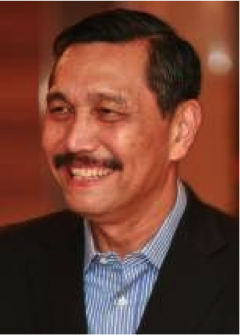
Since its formation in 2014, the administration of Indonesian President Joko Widodo (“Jokowi”) has faced opportunities and challenges in many sectors and on many issues: security and economy, terrorism and radicalism, maritime resources and incursions, not to mention foreign-policy dynamics with the US, China, and the rest of Southeast Asia. How has Indonesia responded to these chances and concerns? How will it manage them going forward? Few Indonesians are better equipped to address these questions than retired Brig. Gen. Pandjaitan, who has dealt with them daily since joining Jokowi’s administration in 2014 as the president’s chief of staff and in subsequent cabinet positions.

Image
luhut panjaitan
Luhut Binsar Pandjaitan began his current ministership in July 2016 after serving as Coordinating Minister for Political, Legal, and Security Affairs in 2015-16. Earlier civilian positions include vice-chair of the Golkar Party’s advisory council (2008-2014); founding president of a resources company (2004-2014); trade and industry minister (2000-01); and ambassador to Singapore (1999-2000). His Indonesian army service dates back in time from an assignment as training and education commander (1997-99) through a series of leadership positions to his award as the best graduate of the army academy (1970). Other honors include Ernst & Young Entrepreneur of the Year (2011) and a national best coaching award related to his work on behalf of karate in Indonesia (2001-2010). In 1990-91 he studied in Washington DC at the National Defense University and George Washington University, earning an MPA from GWU (1991), and he is an alumnus of the Indonesia Army Staff College (1983).


Presentation slides
Luhut B. Pandjaitan Coordinating Minister for Maritime Affairs, Republic of Indonesia
Seminars
News Type
News
Date
Paragraphs

Rennie J. Moon has been selected as the 2016-17 Koret Fellow in the Korea Program at Stanford’s Shorenstein Asia-Pacific Research Center (APARC). She will join the center next January to study diversity in higher education and teach a student course.

Image
rennie moon

Moon is an associate professor at the Underwood International College at Yonsei University in Seoul, South Korea. Her research explores the interrelationships among globalization, migration and citizenship, and internationalization of higher education.

Moon, a graduate of Stanford’s Graduate School of Education, Ph.D. ‘09, has collaborated with Stanford professor Gi-Wook Shin on a multiyear research project that examines diversity in higher education in East Asia. She co-edited the book Internationalizing Higher Education in Korea: Challenges and Opportunities in Comparative Perspective published earlier this year.

Stanford professor Francisco O. Ramirez, an expert on international comparative education and sociology of education, recognized her scholarly contributions to the field.

“Moon is a creative contributor to the ‘world society perspective’ in the social sciences,” said Ramirez, noting that Moon's work has been published in leading journals of international comparative education, Comparative Education Review and Comparative Education.

Supported by the Koret Foundation, the Koret Fellowship brings professionals to Stanford to conduct research on contemporary Korean affairs. In 2015, the fellowship expanded its focus to include social, cultural and educational issues in North and South Korea, and aims to identify emerging scholars working on those areas.

During her fellowship, Moon will also give public talks and be a lead organizer of the Koret Workshop, an international conference held annually at Stanford.

“As an alum, I’m very pleased and excited to spend my sabbatical year at Stanford,” Moon said. “Over the last few years, I’ve been collaborating on various research projects with Professor Shin and other colleagues at APARC. I’m looking forward to a productive fellowship during which I hope to bring these evolving projects to fruition.”

Moon holds a doctorate and master’s degree in international comparative education from Stanford and a bachelor’s degree in French from Wellesley College.

Hero Image
rennie moon crop
All News button
1
Authors
Gi-Wook Shin
News Type
Commentary
Date
Paragraphs

Japan and South Korea face serious demographic crises. Japan has the oldest population in the world and South Korea is one of the most rapidly aging. Together they top the list in terms of proportion of elderly by 2050, with 40.1% and 35.9% respectively being 65 and over, according to a U.S. Census Bureau forecast. Both nations are seeing shrinking working-age populations, with their birthrates among the lowest in the world. This puts them at great risk as they struggle to find new engines of economic growth.

Some experts argue that Japan and South Korea should encourage immigration. The former head of Tokyo's Immigration Bureau, Hidenori Sakanaka, said that "we need an immigration revolution to bring in 10 million people in the next 50 years, otherwise the Japanese economy will collapse." Jongryn Mo, a professor at Yonsei University in Seoul has written a book, "Strong Immigration Nation," urging a similar policy for South Korea.

Is migration the answer?

Japan and South Korea are already supplementing their shrinking workforce with foreign labor, mostly unskilled migrant workers from China and Southeast Asia doing jobs that locals shun.

But it is time to attract more skilled workers. In Japan, only 18.4% of foreign workers were technicians or professionals in 2015, while the figure in Korea is just 7.8% this year. Skilled foreign workers can fill many jobs from staffing hospitals to working as technicians in middle-tier companies and software engineers in large ones.

The challenge, however, is that both countries remain exclusionary, closed societies despite a substantial rise in the numbers of foreigners. Politicians fear losing votes from workers worried about foreigners taking their jobs.

According to a recent report by the French business school INSEAD, Japan and South Korea are ranked 53rd and 61st, respectively in their level of tolerance for immigrants. Most foreign skilled workers have little intention to settle down in Japan or South Korea on a permanent basis, although unskilled ones might be more willing to stay.

Maria, a Guatemalan professional, decided to leave South Korea after working for six years in the overseas marketing department of a large Korean corporation. "Some Koreans complain that foreigners leave after a few years, but we leave because we're never included in the first place. Korean companies pay a lot to bring foreigners here. And then they don't even ask these people about their opinion."

Srey, a Cambodian student studying in Japan, said, "The Japanese are very helpful and very friendly, but at the same time they look at me as a 'gaijin' no matter how good I am at Japanese or able to speak to them. I am not planning to work in Japan."

Bridging strategy

South Korea and Japan need to find a more creative strategy in utilizing foreign talent. In particular, they should pay close attention to their transnational networks rather than pushing for permanent migration. Not only should both countries focus on the knowledge and skills of foreign labor talent, but also the social networks they can possess.

This calls for a particular type of social capital: transnational bridging. A person who has social ties in more than one place can serve as a bridge between those different places. Such bridging can be performed within a city or a country or across borders, but the latter is becoming more important with globalization. By bridging distant networks, people can connect disparate cultures, build trust and facilitate cross-national cooperation that are essential in business transactions. Many Indian and Chinese entrepreneurs and engineers working in Silicon Valley are active in transnational bridging with their home country.

Transnational bridging can be a good new strategy for South Korea and Japan in attracting foreign skilled labor since they can offer valuable experiences and networks as advanced economies, if not permanent places to live. They can help foreign talent to build social ties while studying and working and encourage them to serve as a bridge between South Korea and Japan and their next destination once they leave in what could be called "brain linkage."

They can still contribute to South Korea or Japan even after they depart. Maria said she was willing to do business involving both South Korea and her home country. Srey is also eager to do business with Japan after graduating, even though he will not work in the country.

South Korea and Japan should adopt a policy of "Study-Work-Bridge" rather than the "Study-Work-Migration" pathway commonly encouraged by settler societies. This new policy framework would establish programs providing systematic networking opportunities for skilled foreigners while in Japan or South Korea. It would upgrade the quality of campus life for foreign students and work environments for foreign professionals so they leave with positive experiences.

Most importantly, it would provide institutional support to help maintain transnational networks between foreigners and South Koreans and Japanese.

In Japan, a Study-Work framework has already begun to take shape. Among foreign students seeking employment in Japan in 2013, approximately 24% found jobs. According to the country's ministry of justice, 10,696 of 11,698 foreign students are successful in applying for a change of visa status after graduating from college. This is very encouraging. Still, foreign students feel that Japanese companies are reluctant to embrace their full potential and largely expect them to assimilate, often leading them to stay in Japan only for a short time.

In South Korea, with a shorter history of foreign student intake, a Study-Work framework has yet to emerge. While 64.3% of South Korean companies say they need and want to hire foreign students, only a very small portion of foreign students work in South Korean companies after graduation, perhaps as low as 1%. South Korea's immigration laws for foreign students have eased slightly in recent years, but there is an urgent need to develop solid, institutionalized support for responding to the substantial demand by foreign students who wish to find employment after their studies.

Challenges ahead

Both countries are moving in the right direction, but until they are ready to embrace a more comprehensive migration policy down the road, they should develop the "bridging" component of a Study-Work-Bridge framework as an interim strategy. That means considering how foreign skilled labor can contribute to their economies even if they stay only temporarily.

This non-migration-bridging concept can be also appealing to foreign workers who like to move on after gaining valuable experiences and networks. By activating the social networks they have left behind, foreigners can later become powerful "transnational bridges." With economic globalization, such linkages will be all the more important.

Research shows that science and engineering majors may have more to contribute as human capital, but business and social science majors are more inclined to play a bridging role. Universities and corporations should establish diversity offices, as seen in the U.S. and elsewhere, to promote a culture of tolerance and non-discrimination.

The challenges associated with aging, depopulation and a shrinking workforce are expected to intensify in the coming years. Yet foreign talent is readily at hand for both countries. They need to look no further than the skilled foreigners who already have connections with South Korea or Japan either through schooling or employment and to continue to cultivate such connections through a Study-Work-Bridge approach.


Gi-Wook Shin is director of the Walter H. Shorenstein Asia-Pacific Research Center at Stanford University and co-author of Global Talent: Skilled Labor as Social Capital in Korea. Rennie J. Moon is an associate professor at the Underwood International College at Yonsei University in Seoul.

This article was originally carried by Nikkei Asian Review on Aug. 31 and reposted with permission.

Hero Image
aging japan
Two elderly women chat at a park in Kyoto, Japan.
Flickr/Silvia Sala
All News button
1
Paragraphs

The sixteenth session of the Korea-U.S. West Coast Strategic Forum, held at Stanford University on June 28, 2016, convened senior South Korean and American policymakers, scholars and regional experts to discuss North Korea policy and recent developments on the Korean Peninsula. Hosted by the Korea Program at the Walter H. Shorenstein Asia-Pacific Research Center at Stanford University, the Forum is also supported by the Sejong Institute.

All Publications button
1
Publication Type
Policy Briefs
Publication Date
Journal Publisher
Shorenstein APARC
-

Image
Three-time U.S. Ambassador (Korea, Philippines, Tunisia), former North Korea Special Envoy, and Fletcher School Dean Emeritus, Stephen Bosworth, was the 2014 Payne Distinguished Lecturer at the Freeman Spogli Institute for International Studies, Stanford University.  During his Stanford appointment, he gave three lectures, drawing lessons from his own diplomatic career, examining efforts to deal with North Korea’s nuclear ambitions, and discussing the role of U.S. alliances in Asia. Ambassador Bosworth also actively engaged with students and colleagues throughout the Stanford community, sharing his wisdom, wit, and experience.  We mourn his passing earlier this year.

The panel, all of whom knew and worked closely with Ambassador Bosworth – and in who succeeded him in several of his postings – will carry forward a discussion of the themes from Bosworth’s Payne lectures, including the challenges facing U.S. diplomacy, particularly in East Asia, and how to address them.


Panelists:


Ambassador Sung Kim

U.S. Special Envoy for North Korea 

Former U.S. Ambassador to Republic of Korea

Ambassador-designate to Philippines


Ambassador Michael Armacost

Former U.S. Ambassador to Japan and Philippines


Ambassador Kathleen Stephens

Former U.S. Ambassador to Republic of Korea


Ambassador Bosworth’s Payne Lecture transcripts are available for free download from our website


Panel Discussions
News Type
News
Date
Paragraphs

The Koret Foundation of San Francisco has extended its gift to Stanford’s Shorenstein Asia-Pacific Research Center (APARC) in support of contemporary Korean studies.

Two more years have been added to a three-year gift awarded to the Center in 2015, totaling to 12 years of lifetime support from the Foundation, whose mission is to endow scholarly solutions to community problems and to invest in leading institutions that serve as levers for achieving impact.

The gifts have allowed the Center to bring eminent professionals from Asia and the United States to Stanford for an annual fellowship and an annual international conference known as the Koret Workshop, all of which aims to promote greater understanding and closer ties between Korea and the United States.

“The Koret Foundation’s gift represents its commitment to strengthening research and finding solutions to challenges in Korea and the United States,” said Shorenstein APARC Director Gi-Wook Shin. “Their support over the past eight years has enabled our Korea Program to invite numerous visiting scholars, offer new courses to students, and foster important conversations in the Bay Area community and beyond. We greatly value our relationship with the Foundation and thank them for their enduring generosity.”

Since 2008, eight Koret fellows have conducted research at the Center, many public seminars have been held, and each workshop has yielded a book published by Shorenstein APARC and the Brookings Institution Press.

Hero Image
uskorea flags
All News button
1
-

As Japan faces a shrinking and aging population, it must pursue productivity growth to remain a wealthy nation. Women, long underrepresented Japan’s workforce, are receiving renewed attention with the Abe administration’s slogan of Womenomics as part of his Abenomics economic reform package. In the second World Assembly for Women in Tokyo (named WAW!) in late August 2015, Prime Minister Abe even went so far as to say “Abenomics is Womenomics.” At the same time as the WAW! meeting, the National Diet passed a law requiring large companies to analyze their current status of women and set numerical targets in one of several areas. Now that the issue of women in the workplace is being taken more seriously than ever before, it is time to mobilize serious research in the form of policy evaluation, create a new dialogue that can spark innovative ideas by injecting Silicon Valley ideas and people into U.S.-Japan policy discussions, and link entrepreneurs, policymakers, and researchers from both sides to cultivate sustained interpersonal networks. 

This conference takes on the issue of women leadership and women’s positions in the Japanese workforce and society, with the objective to bring issues to the table and explore concrete mechanisms by which government policy, business practices, and social factors can be influences to make concrete progress for women's leadership and participation in Japan.

Sponsored by the US-Japan Foundation (USJF), Japan Society for the Promotion of Science (JSPS), and Stanford University's Shorenstein Asia-Pacific Research Center (S-APARC) and Clayman Institute for Gender Research.


*The below program is subject to change.

Conference Program

8:55-9:25                  Registration and Breakfast

9:25-9:40                  Welcome & Opening Remarks

Takeo Hoshi (Stanford University)

David Janes (US-Japan Foundation)

Toru Tamiya (Japan Society for the Promotion of Science)

9:40-11:00                Panel Discussion I:

Women in the Silicon Valley Ecosystem- Progress and Challenges

                                  Chair:                     Shelley Correll (Stanford University)

                                  Panelists:             Ari Horie (Women's Startup Lab)

 Yoky Matsuoka

                                  Emily Murase (San Francisco Department on the Status of Women)

Mana Nakagawa (Facebook)


11:00-11:20              Coffee Break

11:20-12:40              Panel Discussion II:                                 

Women in the Japanese Economy- Progress and Challenges

                                  Chair:                    Mariko Yoshihara Yang (Stanford University)

                                  Panelists:             Mitsue Kurihara (Development Bank of Japan)

 Akiko Naka (Wantedly)

 Yuko Osaki (Ministry of Internal Affairs and Communications, Japanese Government)

                                  Machiko Osawa (Japan Women's University)


12:40-14:00              Lunchtime

14:00-15:20              Panel Discussion III:  

Women's Advancement in the Workplace

                                  Chair:                 Takeo Hoshi (Stanford University)

 Panelists:             Keiko Honda (Multilateral Investment Guarantee Agency (MIGA), the World Bank Group)

 Chiyo Kobayashi (Washington Core)

                                  Sachiko Kuno (S&R Foundation)

  Kazuo Tase (Deloitte Tohmatsu Consulting)        


15:20-15:40             Coffee Break

15:40-17:00             Panel Discussion IV:  

Work-Life Balance and Womenomics

                                  Chair:                     Kenji Kushida (Stanford University)

                                  Panelists:            Diane Flynn (ReBoot Career Accelerator for Women)

Atsuko Horie (Sourire)

Nobuko Nagase (Ochanomizu Women's University)

                                 Myra Strober (Stanford University)

17:00-17:05            Closing Remarks


Conferences
Subscribe to International Relations