
Halloween Pumpkin Carving and Dessert Potluck 2019
-
Image

 FSI researchers strive to understand how countries relate to one another, and what policies are needed to achieve global stability and prosperity. International relations experts focus on the challenging U.S.-Russian relationship, the alliance between the U.S. and Japan and the limitations of America’s counterinsurgency strategy in Afghanistan.
Foreign aid is also examined by scholars trying to understand whether money earmarked for health improvements reaches those who need it most. And FSI’s Walter H. Shorenstein Asia-Pacific Research Center has published on the need for strong South Korean leadership in dealing with its northern neighbor.
FSI researchers also look at the citizens who drive international relations, studying the effects of migration and how borders shape people’s lives. Meanwhile FSI students are very much involved in this area, working with the United Nations in Ethiopia to rethink refugee communities.
Trade is also a key component of international relations, with FSI approaching the topic from a slew of angles and states. The economy of trade is rife for study, with an APARC event on the implications of more open trade policies in Japan, and FSI researchers making sense of who would benefit from a free trade zone between the European Union and the United States.
Prof. Tan will assess how Southeast Asian countries and the Association of Southeast Asian Nations (ASEAN) have responded to the various Indo-Pacific strategies promoted by the US and the other “Quad” countries (Australia, India, and Japan). The Southeast Asians’ nuanced ripostes imply a persistent commitment to limited and contingent alignments in the face of growing great-power rivalry and the lack of a clear Indo-Pacific vision among the Quad states. This hedging strategy is likely to continue in the face of American and Chinese pressure to take sides, as the ASEAN states cooperate selectively with Washington and Beijing. Given the US’s desire to balance China and Trump’s disregard for multilateralism, ASEAN’s ability to maintain its centrality in the evolving regional architecture is in doubt. The success of Washington’s strategy depends on its ability to build and sustain a requisite coalition to balance Beijing. Also at stake is the ability of ASEAN to redefine its regional centrality in an era of great-power discord that is undermining multilateralism in Asia.
See Seng Tan, in addition to his NTU professorship, is President/CEO-elect of International Students Inc. (ISI), a nonprofit based in Colorado Springs, CO. His latest book is The Legal Authority of ASEAN as a Security Institution (2019). Forthcoming work includes another book, The Responsibility to Provide in Southeast Asia: Towards an Ethical Explanation, and a chapter on Singapore-China relations in The Deer and the Dragon: Southeast Asia and China in the 21st Century. His degrees are from Arizona State University (PhD) and the University of Manitoba (MA and BA with Honors).Image
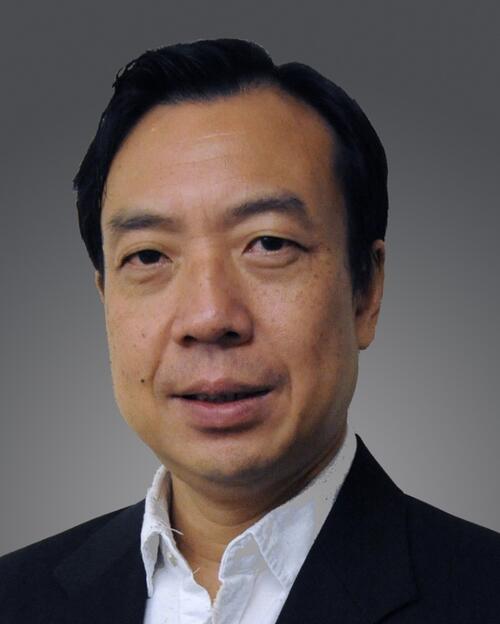
Robert R. King was a Visiting Scholar, Koret Fellow at the Walter H. Shorenstein Asia-Pacific Research Center (Shorenstein APARC) during the 2019 fall term. He is the former U.S. Special Envoy for North Korean Human Rights Issues at the U.S. Department of State (2009-2017). He is Special Advisor to the Korea Chair at the Center for Strategic and International Studies (CSIS), a non-resident Fellow at the Korea Economic Institute, and a member of the board of the Committee for Human Rights in North Korea.
Ambassador King’s research interests include North Korea human rights, Northeast Asia, U.S. foreign policy, and the Congressional role in U.S. foreign affairs. During his time at Shorenstein APARC, he researched the United States efforts to promote human rights in North Korea.
Before assuming his position at the Department of State, King was Staff Director and Minority Staff Director of the Foreign Affairs Committee of the U.S. House of Representatives (2001-2009). He served as Chief of Staff to Congressman Tom Lantos of California (1983-2008). He was a White House Fellow on the staff of the National Security Council (1977-1978), and Senior Analyst and Assistant Director of Research at Radio Free Europe in Munich, Germany (1970-1977).
King holds a PhD and an MALD in international relations from the Fletcher School of Law and Diplomacy and a BA in political Science from Brigham Young University.
Japan and South Korea enjoyed a period of relatively stable trade and diplomatic relations, with expanding trade, deepening cultural and social ties, and a consistent but relatively managed level of friction. They both remain critical US allies in the region, with North Korea’s security threats and the rising power of China creating uncertainty in the regional security landscape. However, the sudden escalation of diplomatic and trade disputes between South Korea and Japan has alarmed numerous observers, angered people in both countries, and is generally confusing to many around the world to whom the two countries seem to have much to lose and little to gain by this escalation.
This event will shed light into the critical questions surrounding this current conflict. What has been the historical trajectory of the two countries’ diplomatic and trade relations? Is the current escalation part of the historical pattern of cycles of conflict and tension, or an aberration? What are the underlying forces at work that are driving the conflict? Are these new forces, or the same historical forces coming to a head? How much are factors from the international environment, such as the behavior of the United States, influencing the current escalation of trade conflict? What are the domestic political dynamics at work in each of the countries? What has been the historical role of the US in the South Korea-Japan relationship, and is it different this time? This conference brings together experts in the international affairs and trade relations of South Korea, Japan, and the United States.
1:00pm-1:05pm Opening Remarks, Gi-Wook Shin, Director of Shorenstein APARC, Stanford University
1:05pm-2:25pm Panel 1 – Diplomacy and International Relations
Panelists
Kak-Soo Shin, former Korean Ambassador to Japan
Hitoshi Tanaka, Chairman of the Institute for International Strategy at the Japan Research Institute, ltd.
Joseph Yun, former Deputy Assistant Secretary of the State for Korea and Japan; former Special Representative on North Korea
Kenji Kushida (Moderator), Research Scholar, Shorenstein APARC Japan Program, Stanford University
2:25pm-2:45pm Panel 1 Audience Q&A
2:45pm-3:00pm Break
3:00pm-4:20pm Panel 2 - Trade Issues
Panelists
Yukiko Fukagawa, Professor, School of Political Science and Economics at Waseda University
Seokyoung Choi, former Korean Ambassador to WTO and UN in Geneva; former Deputy Minister for Trade
Aiko Lane, Executive Director of the US-Japan Business Council, U.S. Chamber of Commerce
Yong Suk Lee (Moderator), Deputy Director, Shorenstein APARC Korea Program, Stanford University
4:20pm-4:40pm Panel 2 Audience Q&A
4:40pm-4:45pm Closing Remarks, Gi-Wook Shin, Director of Shorenstein APARC
Pay parking spaces for the event will be available in the Galvez Event Lot and parking instructions including walking directions from the Galvez Lot to Encina Hall will be sent out to all registered attendees the week of the event.
Required by 10/17/19. Limited seating available.
Registration link: https://www.eventbrite.com/e/japan-south-korea-on-the-brink-escalating-friction-amidst-an-uncertain-world-tickets-72308158649
If you are part of the media and attending the event, please contact Noa Ronkin at noa.ronkin@stanford.edu
Bechtel Conference Center
Encina Hall, First floor, Central
616 Serra Mall, Stanford, CA 94305

South Korea's decision to end its military agreement with Japan will damage the prospect of continued close security ties among Seoul, Washington and Tokyo because the pact has been a symbol of smooth trilateral military cooperation between them and regarded as a key deterrent against North Korea.
"It is a big mistake," Shin Gi-wook, a Korea studies expert at Stanford University, said in a recent interview adding Seoul's withdrawal from the General Security of Military Information Agreement (GSOMIA) puts the "trilateral security framework at risk."
"The Japan-South Korea relationship may not have hit rock bottom, but it could further deteriorate in the coming months," Shin said. "This is all the more important with the continuing threat of North Korean WMD and the escalating conflict between the U.S. and China in the region. I am concerned that South Korea could be further isolated in the Northeast Asian region—the Moon administration should see the big picture," the professor said…
Read the full article in The Korea Times.

Xinru Ma’s research focuses on nationalism, great power politics, and East Asian security with a methodological focus on formal and computational methods. More broadly, Xinru’s research encompasses three main objectives: Substantively, she aims to better theorize and enhance cross-country perspectives on critical phenomena such as nationalism and its impact on international security; Methodologically, she strives to improve measurement and causal inference based on careful methodologies, including formal modeling and computational methods like natural language processing; Empirically, she challenges prevailing assumptions that inflate the perceived risk of militarized conflicts in East Asia, by providing original data and analysis rooted in local knowledge and regional perceptions.
She is the co-author of Beyond Power Transitions: The Lessons of East Asian History and the Future of U.S.-China Relations (Columbia University Press, 2024). Her work has been published in the Journal of East Asian Studies, The Washington Quarterly, the Journal of Global Security Studies, and the Journal of European Public Policy, and in edited volumes via Palgrave.
At SNAPL, Xinru will lead the research group in collaborative projects that focus on US-Asia relations. One of the projects will contrast the rhetoric and debates in US politics surrounding the historical phenomenon of "Japan bashing" and the current perception of a "China threat.” By applying automated text analysis and qualitative analysis to public opinion data and textual data from various sources, such as congressional hearings and presidential speeches, this project uncovers the similarities, differences, and underlying factors driving the narratives and public discourse surrounding US-Asia relations. She will also provide mentorship to student research assistants and research associates.
Before joining SNAPL, Xinru was an assistant professor at the School of International Relations and Diplomacy at Beijing Foreign Studies University, where she led the Political Science Research Lab, a lab committed to closing the gender gap in computational methods and political science research by offering big-data methods training and professionalization workshops to students. Before that, Xinru was a postdoctoral fellow at the Center for International Security and Cooperation at Stanford University (2019-2020) and a pre-doctoral fellow at the Department of Political Science at Vanderbilt University (2018-2019). In 2023, Xinru was selected as an International Strategy Forum fellow by Schmidt Futures, an initiative that recognizes the next generation of problem solvers with extraordinary potential in geopolitics, innovation, and public leadership.
In the past six weeks, I have been in mainland China, Hong Kong (three times), and Washington. From these trips and recent developments, I have concluded that Hong Kong is a huge tragedy in the making. Proactive and positive moves by all parties to this rapidly deteriorating situation are required.
Though Washington is not a principal party in these developments, it should be a constructive force rather than irrelevant or counterproductive...
The elements of the current crisis are many. In Hong Kong, there is a leaderless movement on the ground. There are rising levels of political and socio-economic frustration among many Hong Kong citizens stemming from mobility and economic considerations, as well as perceptions of political retrogression in the special administrative region.
There is a tone-deaf, neutered local leadership that is prideful and unwilling to admit that it made a huge strategic misstep pushing forward with an ill-conceived extradition bill. And there are local tycoons who curry favour with Beijing rather than protecting the rule of law that is in their own long-term interests...
Read the full article on South China Morning Post.
For more by Okseberg-Rohlen Fellow David M. Lampton, read our recently posted Q&A in which he analyzes the escalating U.S.-China conflict.

The U.S.-China relationship is in a dangerous downward spiral. The crisis in the relationship has spread virtually to every arena, from the intensifying trade war between the two largest economies to their escalating technology rivalry that is rippling into a U.S. government crackdown on foreign influence on research, and from security concerns over China’s growing military power in the Asia-Pacific region to mounting tensions over the antigovernment protests in Hong Kong and over longstanding frictions with respect to Taiwan.
Renowned Chinese politics expert David M. Lampton has been busy discussing these developing issues with academics and policymakers in China, Hong Kong, and Washington, D.C., and researching his book project about Chinese power and rail connectivity in Southeast Asia. In a conversation with APARC’s Associate Director of Communications and External Relations Noa Ronkin, the Oksenberg-Rohlen Fellow at the Freeman Spogli Institute and Shorenstein APARC analyzes the escalating U.S.-China conflict, one that will affect not only bilateral ties, but the regional and world systems beyond.
Q: What risks in the conflict are you most concerned about?
There are a number of problems on the agenda. Certainly trade is top of mind for people in Beijing and Washington. But I think the situation in Hong Kong has great potential to do tremendous harm to the U.S.-China relationship. The predicate is being laid for the possible use of force in Hong Kong. I don't think a decision has been made to do so, and I believe Beijing would prefer not to do so. However, remembering 1989 in Tiananmen, we shouldn't underestimate the willingness of China’s central government to use force to protect its power. You see the increasing spread of demonstrations within Hong Kong, which are very worrisome to the PRC government, and indicators are accumulating that to me signal a significant possibility that the Special Administrative Region and/or Beijing will use tough means to bring demonstrators under control. Such an outcome will, of course, feed into the policy and security anxieties in Washington, not to mention be a tragedy for Hong Kong itself. So, I think Hong Kong is a top concern.
Q: Can you expand on the politics and the context of the U.S.-China trade war?
We're in a situation in which each side thinks it can and will benefit by outwaiting the other. I think Beijing sees at least a significant possibility that Mr. Trump would not be reelected and fervently hopes that's the case. They're in no hurry, thinking that the U.S.-China trade dispute undermines Trump with his natural constituencies and makes his economic story harder to tell to the American people. Beijing believes that, by virtue of the United States’ being a democracy, China has a higher threshold for pain than we do, and so simply inflicting pain on key American constituencies and industries will turn up the political heat on the administration so that compromise would look increasingly attractive to Washington.
The Trump administration, on the other hand, looks at the high percentage of China's GDP that's involved in exports, particularly exports to the United States, which is over three percent. If you subtract the value added of all the components China imports in order to assemble these exports, then still approximately two percent of China's GDP is directly involved in trade with the United States, and the Trump administration believes that China has a lot to lose. The United States is not nearly as dependent on China's exports—that's one of our complaints, that we don't export enough. Therefore Mr. Trump sees Mr. Xi as facing many domestic problems and thinks he can outwait Mr. Xi.
We have then two leaders who are locked into the view that the other is going to blink first. I believe both sides benefit from an economic relationship, but both have the capacity to do without the other if they're forced to. And so I think the trade war can go on for a protracted period.
Q: The trade war, big as it is, is part of a more encompassing rivalry between China and the United States. How do you see this competition between the world’s two superpowers and its consequences?
What has fundamentally happened here—even more important than the economic and cultural dimensions of the U.S.-China dispute—is a deterioration of the security dimension in the relationship. For the first three decades of engagement since the Nixon era, our security relationship with China was generally positive, based first on an anti-Soviet rationale, then counter-terrorism, and finally jointly tackling global issues such as climate change. Up through the Obama administration we had a security rationale for positive relations. Most countries and people prioritize their security, and hence as long as Americans and Chinese could feel the relationship had value for their security, they downplayed thorny issues such as human rights or economic frictions, even though they were unhappy with each other in those other domains.
But as China's military and economic capabilities have increased, so has its assertiveness abroad and its efforts to resolve longstanding disputes in its favor: in the South China Sea, in cross-Strait relations with Taiwan, against Japan, even against South Korea. From its more capable position today, China is pushing the perimeter of U.S. influence back away from the Chinese coast as far as possible, while the United States resists. And so we have a severe security competition that, in turn, has infected the economic relationship, because what makes a competitive military today is largely technological capability, which China is forging ahead with and using to develop new weapons systems. The United States thinks much of this capability is coming through the illicit acquisition of intellectual property and proprietary technology, and through university collaborations and exchanges. So the security competition is ramifying through the economic relationship and the cultural/educational relationship.
Q: If the competition between the two superpowers is here to stay, what steps, at home and abroad, are essential to achieve stable coexistence with China?
We have assumed that a huge, complex authoritarian society such as China has many disadvantages, which it does, but we're in danger of not realizing what it can achieve nonetheless. I'm worried about the competition with China because I don't think we are taking the right steps to put ourselves in the best possible competitive position, and I don’t mean just militarily.
If you consider the space race against the Soviet Union, there was a galvanizing vision of a serious competitor, yet there nonetheless was an abiding belief that we could prevail if we properly organized ourselves with discipline, commitment, and allocation of resources. We need the same sort of galvanizing spirit, not grounded in seeing China as an enemy, but in the realization that we Americans make up but four percent of the world's people and that if we're going to keep a strong position economically, intellectually, and socially, then we have to perform better than others, because we're just too small a percentage of the world's people. And I don't think anybody believes we're performing at our peak today.
Competition in general is a good thing. We surely recognize this in our own domestic lives, and free trade theories in international economics recognize that competition is an engine for positive forward motion. So I don't think we should be afraid of competing with China. Our society has been designed for competition from the ground up. And China has tremendous problems: demographic problems, educational quality problems, and debt problems. But what we must avoid is a destructive competition in which we're hurting our own ability to innovate by attempting to keep China from advancing. For instance, targeting foreign students in American research institutions and labs is a major problem.
Q: You have been studying China’s Belt and Road Initiative (BRI) and its implications across the Asia-Pacific. What are some of the takeaways from your research so far?
The Chinese learned a lesson from U.S. policy in the post-WWII era, namely, that you build your own greatness by integrating other countries into your economy and by building their strength. The Chinese are now looking at their underdeveloped periphery and think, "How can we build the new connectivity in the 21st century that will make China central to all countries along its enormous periphery and beyond?" BRI is therefore a big umbrella concept, based on the notion that you create economic growth through building infrastructure, and particularly transportation and communications, in an attempt to increase China's comprehensive national power and centrality in the emerging global system. It could be described as an “all roads lead to Rome concept.”
Some argue that BRI is a strategy, a master plan. And here's where I think we get it wrong. It isn't really a plan. China has created this umbrella policy concept, has said it will devote resources to it, but local provinces, state enterprises, private enterprises, foreign governments all are in effect lobbying Beijing to approve their pet projects that are shoved under this umbrella. So, you see a big vision painted by Beijing, but an extremely entrepreneurial system below Beijing is trying to grab as much of this money and opportunity, and build their locality into this vision. It's a combination of spontaneous combustion at the middle and lower levels and a grand general idea at the top.
Right now what we're seeing is the implementation of numerous projects—some are unmitigated fiascos, some are successful to a limited degree, and some are likely to become quite successful. There will be a sorting out process. In fact, Beijing, for its own welfare, is already starting to constrain the system and apply more economic analysis to differentiate between good and bad projects. But because BRI is so entrepreneurial and so many people at the bottom are trying to grab a piece of this policy, it's very difficult for Beijing to get its arms around all that's going on.
I think that one of the policy implications of BRI is that we—the United States, the West, American allies—must realize that BRI isn't necessarily a bad idea. This is how development occurs: big infrastructure projects create urbanization, pathways for production chains, and so forth. And if we were to sit back and say, "This is destined to fail," or "The Chinese are biting off more than they can chew," or essentially decide that we have a "no” policy, then we will essentially abandon what I believe is largely a sound concept. The U.S. government is, I think, beginning to understand that it has to respond with something, not nothing. The United States needs to use its creativity, capital, and capacity to get others to cooperate and be more active in showing our private sector where it can get involved.
We're in a transition stage. I think that one of the big problems right now is that it's hard to induce our allies to cooperate when we’re badgering them about defense expenditures and so forth. We need a remake of our foreign policy process before we'll be able to consistently pursue a vision for development. On some projects we might even choose to cooperate with the Chinese. In fact, we're already cooperating through the World Bank, the Asian Development Bank, and even indirectly through the Asian Infrastructure Investment Bank, which has gotten almost all U.S. allies involved with it. So we shouldn't absolutely oppose China on all fronts, but evaluate the alternatives and tradeoffs in each particular case.
Q: Your current book project focuses on China’s development of high-speed rail between southern China and Singapore. What have you found in researching this project?
My core interest has always been Chinese politics, and particularly what I call the "implementation problem." That is, the realization that what Beijing says isn't necessarily implemented faithfully down the hierarchy in localities, despite the assumption that, because China is authoritarian, there ought to be a high correlation between what the top says and what the bottom actually does. The idea to build connectivity between China and the seven continental Southeast Asian nations south of it makes for a fascinating implementation case study. The underlying question for my book is: “Does China have the capacity to pull off such a gigantic initiative?”
In the case of this particular railway connectivity vision linking China and seven Southeast Asian neighbors, the idea was not Chinese, but rather, a vision of Southeast Asians themselves. In the past, China didn't have the technology, capital, or frankly the inclination to build somebody else's rail system. Around 2012, however, China decided to step out and build infrastructure beyond its borders, and essentially adopted the Southeast Asian idea of rail connectivity. What interests me is the implementation question: if it's difficult to get things done within China itself, how do you create an interconnected system that transits seven more countries, from Thailand, Malaysia, and Singapore, through Myanmar, Laos, Vietnam, and Cambodia? It's a fantastically complicated project, with financing, environmental, and displaced population problems, among many others.
The results so far are mixed, but you would be surprised at the progress that China has made. I believe that within a few years, certainly before 2030, there will be a high-speed and conventional-speed rail system that connects south China to at least Bangkok and another link that connects Singapore to Kuala Lumpur, with the major uncertainty being the stretch from Kuala Lumpur to Bangkok. It’s less clear whether it will also eventually go through Myanmar and Vietnam. But the Chinese are well on the way to finishing the Laos railroad and began construction on some railroad in Thailand, so I think that probably by 2025 you'll see a railroad to Bangkok, which would be a major change in the economic geography of the region. What bothers me is seeing the United States mired in our own preoccupation with ourselves and not reacting in a way that is most productive for our future given what China is doing and how other countries are moving forward.

The Korea Program at the Walter H. Shorenstein Asia-Pacific Research Center is pleased to welcome Robert R. King and Victor Cha as Koret fellows in Korean studies during the 2019-20 academic year. Supported by the Koret Foundation, the Koret Fellowship brings leading professionals to Stanford to conduct research on contemporary Korean affairs with the broad aim of strengthening ties between the United States and Korea.

Robert R. King will join the Korea Program as Koret Fellow during the fall quarter of 2019. King served as special envoy for North Korean human rights Issues, an ambassadorial ranked position at the Department of State (2009-2017). The role was established by Congress in the North Korea Human Rights Act with a mandate to “coordinate and promote efforts to improve respect for the fundamental human rights of the people of North Korea.” Since leaving the Department of State, Ambassador King has been senior advisor to the Korea chair at the Center for Strategic and International Studies (CSIS), a senior fellow at the Korea Economic Institute (KEI), and a board member of the Committee for Human Rights in North Korea (HRNK).
Earlier, Ambassador King served for 25 years (1983-2008) on Capitol Hill as chief of staff to Congressman Tom Lantos (D-California), and as staff director and minority staff director of the House Foreign Affairs Committee (2001-2008). King received a Ph.D. in International Relations from the Fletcher School of Law and Diplomacy, Tufts University and a B.A. from Brigham Young University.

Victor Cha, professor of government and international affairs at Georgetown University, will join the Korea Program as the Koret Fellow through the winter quarter of 2020. He is the author of five books, including The Impossible State: North Korea, Past and Future (Haper Collins, 2012) and Powerplay: Origins of the American Alliance System in Asia (Princeton University Press, 2016). He holds Georgetown's Dean's Award for teaching for 2010, the Distinguished Research Award for 2011, and a Distinguished Principal Investigator Award for 2016.
Professor Cha left the White House in 2007 after serving since 2004 as Director for Asian Affairs at the National Security Council, where he was responsible for Japan, the Korean peninsula, Australia/New Zealand, and Pacific Island affairs. He serves as Senior Advisor at CSIS, and is a non-resident Fellow in Human Freedom at the George W. Bush Institute in Dallas, Texas. He received a Ph.D. from Columbia University, M.A. from the University of Oxford, and MIA and B.A. from Columbia University.