International Relations

FSI researchers strive to understand how countries relate to one another, and what policies are needed to achieve global stability and prosperity. International relations experts focus on the challenging U.S.-Russian relationship, the alliance between the U.S. and Japan and the limitations of America’s counterinsurgency strategy in Afghanistan.

Foreign aid is also examined by scholars trying to understand whether money earmarked for health improvements reaches those who need it most. And FSI’s Walter H. Shorenstein Asia-Pacific Research Center has published on the need for strong South Korean leadership in dealing with its northern neighbor.

FSI researchers also look at the citizens who drive international relations, studying the effects of migration and how borders shape people’s lives. Meanwhile FSI students are very much involved in this area, working with the United Nations in Ethiopia to rethink refugee communities.

Trade is also a key component of international relations, with FSI approaching the topic from a slew of angles and states. The economy of trade is rife for study, with an APARC event on the implications of more open trade policies in Japan, and FSI researchers making sense of who would benefit from a free trade zone between the European Union and the United States.

-

This is a virtual event. Please click here to register and generate a link to the talk. 
The link will be unique to you; please save it and do not share with others.

The disruption of the 2020 pandemic, coupled with significant economic tensions between China and the US, have resulted in global companies rethinking their supply chains.  Many have called for drastic changes - reshoring, near-shoring, regionalization of vertical supply chains, increasing redundancies, or diversification of Chinese manufacturing to Southeast Asia, South Asia, Africa or Latin America, etc.  Empirical data, however, reveal that many are taking a more cautious approach.  Leading companies are continuing to develop innovative ways to redesign their supply chains that still preserve China as their key supply source.  This talk will share some of these innovative ways that, in the end, may provide better long term values.


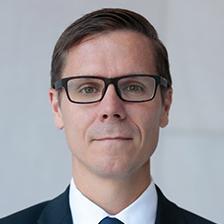
Portrait of Hau L. LeeHau L. Lee is the Thoma Professor of Operations, Information and Technology at the Graduate School of Business at Stanford University.  He was the founding faculty director of the Stanford Institute for Innovation in Developing Economies (SEED), and is the current Co-Director of the Stanford Value Chain Innovations Initiative.  Professor Lee’s expertise is on global supply chain management and value chain innovations.  He has published widely in top journals on supply chain management.  He was inducted to the US National Academy of Engineering, and elected a Fellow of MSOM, POMS; and INFORMS.   He was the previous Editor-in-Chief of Management Science.  In 2006-7, he was the President of the Production and Operations Management Society.  His article, “The Triple-A Supply Chain,” was the Second Place Winner of the McKinsey Award for the Best Paper in 2004 in the Harvard Business Review.  In 2004, his co-authored paper in 1997, “Information Distortion in a Supply Chain: The Bullwhip Effect,” was voted as one of the ten most influential papers in the history of Management Science.  His co-authored paper, “The Impact of Logistics Performance on Trade,” won the Wickham Skinner Best Paper Award by the Production and Operations Management Society in 2014. In 2003, he received the Harold Lardner Prize for International Distinction in Operations Research, Canadian Operations Research Society.  Professor Lee obtained his B.Soc.Sc. degree in Economics and Statistics from the University of Hong Kong, his M.Sc. degree in Operational Research from the London School of Economics, and his M.S. and Ph.D. degrees in Operations Research from the Wharton School of the University of Pennsylvania.  He was awarded an Honorary Doctor of Engineering degree by the Hong Kong University of Science and Technology, and an Honorary Doctorate from the Erasmus University of Rotterdam.


Image
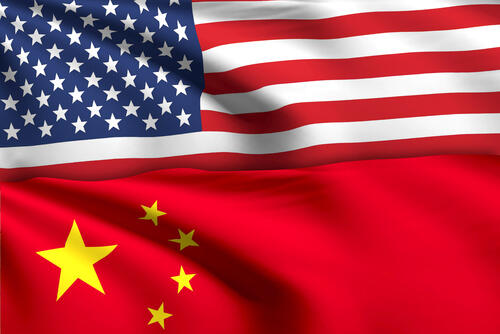
American and Chinese flags
This event is part of the 2021 Winter/Spring Colloquia series, Biden’s America, Xi’s China: What’s Now & What’s Next?, sponsored by APARC's China Program.


Via Zoom Webinar. Register at: https://bit.ly/35bMWQx

Hau L. Lee Thoma Professor of Operations, Information and Technology, Stanford Graduate School of Business
Seminars
Authors
Noa Ronkin
News Type
News
Date
Paragraphs

While U.S. policymakers and military planners have been heavily focused on China’s maritime expansion in the western rim of the Pacific Ocean and the South China Sea, Beijing has been steadily growing its capacity in the Indian Ocean region. The United States and its partners should take realistic and effective steps that address the strategic risks they face in the region and realize their vision of a “free and open Indo-Pacific,” writes APARC’s South Asia Research Scholar Arzan Tarapore in the latest issue of The Washington Quarterly.

[Subscribe to our newsletters to stay up-to-date on the latest from our scholars.]

The United States’ strategic competition with China now extends to the Indian Ocean region, albeit it takes a different form compared with the heavily militarized territorial disputes of the western rim of the Pacific Ocean and the South China Sea. The People’s Liberation Army Navy (PLAN) fleet is increasingly designed for oceanic deployments beyond China’s near seas and is rapidly expanding its amphibious capability. The PLAN conducts frequent oceanographic survey and submarine deployments, maintaining a constant presence of at least seven or eight navy ships in the Indian Ocean at any time. Having established its first-ever overseas military base on the western edge of the ocean, in Djibouti in 2017, China continues to develop other ports from Tanzania to Indonesia under the banner of the Belt and Road Initiative. It is also expanding security cooperation with regional states.

“This military expansion poses strategic risks for the United States and its allies and partners,” argues Tarapore. “It gives China rapidly increasing capacity to use military coercion in the Indian Ocean region, both directly, through military intervention, and indirectly, by compelling changes in regional states’ security policies.” It also gives China advantages in case of a potential war in the region.

Despite the dangers, the United States and its likeminded partners have not arrested this increase in China’s regional military power. Their response to date has been based, in some cases, on flawed strategic logic and, in other cases, on unrealistic assumptions.
Arzan Tarapore

The United States and its partners have proclaimed their commitment to the “free and open Indo-Pacific” vision. However, the four powers with the greatest interest and capacity to push back on China’s inroads —namely, the United States, India, Japan, and Australia, which banded together as the “Quad” — have failed to mitigate Beijing’s challenge. Their haphazard response “does little to curtail China’s capacity to coerce small states or posture for war,” says Tarapore.

He then offers a strategic assessment and a conceptual framework by which the United States and its partners can more effectively mitigate the risks of Chinese military expansion. Their most urgent task, he claims, is to build “strategic leverage,” that is, develop their political relationships and military capabilities in ways that consolidate their advantages. By doing so, they would ideally convince Beijing that coercive policies are unworkable or prohibitively costly, which would then impede China’s capacity to coerce regional states or posture for wartime. Tarapore is convinced that India has a key role to play within this framework if the latter also accounts for India’s particular resource and policy constraints.

Read Tarapore's paper

Read More

A loaded shipping liner sails out of port.
Commentary

Let's Keep it the 'Free and Open' Indo-Pacific

Both Japan's Suga and the incoming Biden administration should maintain the language of the "free and open Indo-Pacific" for consistency and to signal their ongoing commitment to maintaining a firm policy stance on China's ambitions.
Let's Keep it the 'Free and Open' Indo-Pacific
A warship sailing in the South China Sea and a photo of three soldiers standing guard in front of a Chinese traditional building
News

China’s South China Sea Strategy Prioritizes Deterrence Against the US, Says Stanford Expert

Analysis by FSI Center Fellow Oriana Skylar Mastro reveals that the Chinese military has taken a more active role in China’s South China Sea strategy, but not necessarily a more aggressive one.
China’s South China Sea Strategy Prioritizes Deterrence Against the US, Says Stanford Expert
Battleships patrolling in the open ocean.
Commentary

Beijing’s Line on the South China Sea: “Nothing to See Here”

China’s official denials of growing military capability in the region look a lot like gaslighting.
Beijing’s Line on the South China Sea: “Nothing to See Here”
Hero Image
U.S. Navy and Indian Navy ships steam in formation in the Indian Ocean.
INDIAN OCEAN (July 20, 2020) The Nimitz Carrier Strike Group, consisting of flagship USS Nimitz (CVN 68), Ticonderoga-class guided missile cruiser USS Princeton (CG 59), and Arleigh Burke-class guided missile destroyers USS Sterett (DDG 104) and USS Ralph Johnson (DDG 114), along with Indian Navy ships Rana, Sahyadri, Shivalik and Kamorta, steam in formation during a cooperative deployment in the Indian Ocean.
U.S. Navy photo by Mass Communication 2nd Class Donald R. White Jr.
All News button
1
Subtitle

China’s expanding military capacity in the Indian Ocean region poses risks for the United States and its partners, writes South Asia Research Scholar Arzan Tarapore in 'The Washington Quarterly,' offering a framework by which the Quad and others can build strategic leverage to curtail China’s capacity to coerce small states or posture for war.

Paragraphs
Cover of the The Washington Quarterly journal (Vol. 43, issue 4) and a portrait of Arzan Tarapore
Over the past decade, China has established a permanent and escalating military presence in the Indian Ocean region. The littoral states, islands, and waters of the Indian Ocean—defined here by the choke points of the Cape of
Good Hope, Bab el-Mandeb, the Strait of Hormuz, the Malacca Strait, and the Torres Strait—are part of the wider Indo-Pacific region, but they constitute a distinct strategic landscape. The United States’ strategic competition with China does extend to the Indian Ocean region, but it does not take the same form as the heavily militarized territorial disputes of the western rim of the Pacific Ocean or the South China Sea, which attract the lion’s share of attention
from US policymakers and military planners. The Indian Ocean faces a particular set of strategic risks and a particular constellation of likeminded partners—an effective strategy must account for those particularities.
All Publications button
1
Publication Type
Journal Articles
Publication Date
Subtitle
The United States and its likeminded partners, particularly India — if four constraints are more realistically accounted for — and other members of the Quad, can more effectively mitigate the risks of Chinese military expansion by building “strategic leverage” along these four lines of effort in the Indian Ocean region.
Journal Publisher
The Washington Quarterly
Authors
Number
4
Authors
Kiyoteru Tsutsui
News Type
Commentary
Date
Paragraphs

This op-ed originally appeared in Nikkei Asia 


If his recent diplomatic contacts are any indication, Prime Minister Yoshihide Suga is off to an auspicious start in managing Japan's two most important relationships: the U.S. and China.

Last month, Suga got a pleasant surprise when he spoke to Joe Biden, with the President-elect explicitly stating that the Senkaku Islands, which China claims as the Diaoyu, fall under the protection of Article 5 of the U.S.-Japan Security Treaty. A few weeks later, Suga received China's foreign minister Wang Yi, who was there largely to consolidate the warm economic relationships between the two countries -- except for a prickly comment about the Senkakus at the end. Clearly, the U.S. and China both see Japan as a critically important player in their competition for Asia-Pacific hegemony.

[Sign up for APARC's newsletters to get the latest commentary from our scholars.]

This is a far cry from the precarious position Japan found itself in at the beginning of Shinzo Abe's first and second terms. In 2007, the young Prime Minister Abe elevated a spontaneous joint response by the U.S., Japan, Australia, and India to the 2004 Indian Ocean tsunami into a quadrilateral working-level group involving regular meetings and maritime exercises. Dubbed the Quad, Abe sought to make the group a counter to China's increasingly expansionist threats in the Indo-Pacific region.

When Abe's first term was cut short, he was succeeded by the more China-friendly Yasuo Fukuda, who prioritized relations with China and stepped back from the Quad. Combined with a leadership change in Australia that saw the pro-China Kevin Rudd become Prime Minister, the Quad fizzled out.

After Abe returned to the prime ministership in 2012, lingering suspicion over his hawkish nationalism and anti-China sentiment was exacerbated by his 2013 visit to the controversial Yasukuni Shrine. That provoked rebuke not only from Japan's East Asian neighbors but from then U.S. Vice President Biden.

With U.S. policymakers still hoping that China's surging middle-class wealth would transform the country into a peace-loving democracy, the Quad seemed like a misguided attempt by Japan's China-hawks best left forgotten. Some in Tokyo were even starting to worry about a "grand bargain" between the U.S. and China that would relegate Japan to a small supporting role in the Asia-Pacific.

How times have changed. Few in Washington believe China will ever metamorphose into a moderate democracy, while in 2017, Abe harnessed Donald Trump's anti-China agenda to revive the Quad, as all four countries realized the need for a viable strategy to contain China. The new Quad has quickly gathered momentum, with India allowing Australia to join the Malabar naval exercises in November for the first time in 13 years so that all Quad members could participate.

As the Quad's main architect, Abe played a central role in bringing the group to this point, pairing it with the Free and Open Indo-Pacific vision, another influential framework for the region for which he can claim authorship. By Abe's side throughout these developments, and now in charge of Japan's foreign policy, how will Suga handle the Quad, and what are its pros and cons?

The highest aspiration for the Quad is that it becomes an Asian version of NATO that can contain China. The combined military capabilities of the four countries are formidable, with the U.S. obviously leading the way and India possibly needing some catching up. The geostrategic impact of a formal alliance to pressure China would be tremendous.

Such an alliance would be even more effective if it included other countries in the region. Some, such as South Korea, New Zealand, the Philippines, Indonesia, and Vietnam, have begun to participate in multilateral forums headlined by the Quad, possibly foreshadowing the development of a Quad Plus grouping that could exert significant pressure on China to moderate its expansionist approaches.

While Suga will likely tread carefully in expanding the Quad's activities to avoid damaging important economic relations with China, he has a clear understanding that China will only respond to power, and the game-changing power of the Quad alliance would surely appeal to him.

For all its potential, the Quad is not there yet. Fundamentally, it remains a coalition of like-minded countries discussing their concerns about China. At their most recent meeting in Tokyo in October, the four countries could not even muster a joint statement -- instead releasing separate readouts in each country's capital. Becoming an alliance with reciprocal obligations is clearly much further down the line.

Unless greater institutionalization becomes reality, China's divide and conquer approach will remain a threat, as it will try to target one or another country to break the Quad. China has already successfully done so before, pushing Australia to break from the Quad in 2008.

Today, the Quad's greatest utility for Suga is the threat it poses to China. The potential for this loose coalition to coalesce into a formidable alliance would increase if China continues to engage in provocative actions and further alienate the four countries. This threat could be effective in deterring China's aggressive behavior in the Indo-Pacific.

At this point, Suga will likely use the Quad as a card, gradually deepening its engagements but also preparing to develop it into a stronger alliance if China keeps poking at the Senkakus. The fact that Suga has that leverage today speaks to Japan's improved position relative to the early days of the first Abe administration.

Kiyoteru Tsutsui 120820 crop 4X4

Kiyoteru Tsutsui

Kiyoteru Tsutsui is the Henri H. and Tomoye Takahashi Professor and Senior Fellow in Japanese Studies at Shorenstein APARC, the director of APARC's Japan Program, a senior fellow at FSI, and professor of sociology, all at Stanford.
Full Biography

Read More

A man walks past a digital screen showing images of President-elect Joe Biden in a news program.
Commentary

Japan's Role Could Redefine Asia-Pacific Relations Under Biden and Suga

President-elect Biden's early conversations with Japan's prime minister Yoshihide Suga seem to signal a renewed commitment to coordination on issues of security, environmentalism, human rights, and China's influence.
Japan's Role Could Redefine Asia-Pacific Relations Under Biden and Suga
Battleships patrolling in the open ocean.
Commentary

Beijing’s Line on the South China Sea: “Nothing to See Here”

China’s official denials of growing military capability in the region look a lot like gaslighting.
Beijing’s Line on the South China Sea: “Nothing to See Here”
President-elect Joseph Biden addresses a campaign crowd
Commentary

Biden in Asia: America Together?

Southeast Asia Program Director Donald K. Emmerson considers how the incoming Biden administration's "internationalization" agenda may affect U.S.-Asia relations and partnerships with the global community.
Biden in Asia: America Together?
Hero Image
Photos of China's Xi Jinping walking and Japan's Yoshihide Suga speaking at a podium
All News button
1
Subtitle

The strengths and weaknesses of the Quad

Authors
Oriana Skylar Mastro
News Type
Commentary
Date
Paragraphs

This op-ed by Oriana Skylar Mastro and Zack Cooper originally appeared in Australian Financial Review.


Australia’s trials are not the first time Beijing has used economic coercion against another country.

It has become so common that we are becoming desensitised to it. Some notable examples include Beijing’s limitations on rare earth exports to Japan in 2010, Norwegian fish exports in 2010, Philippine tropic fruit exports in 2012, Vietnam’s tourist industry in 2014, Mongolian commodities trade in 2016, and South Korean businesses in 2017. In each case, Beijing sought to achieve a political objective by imposing economic penalties.

This case is different. Beijing has typically been ambiguous about the purpose or nature of its coercive economic statecraft. Despite evidence otherwise, it blamed the Japanese ban on meeting a yearly quota, the Philippine ban on pesticide exposure, the tourism drop to Vietnam on changing Chinese preferences, and the closure of South Korean stores on fire code violations. In Australia’s case, though, Beijing is doing away with these pretenses.

[Sign up for APARC's newsletters to get the latest commentary from our scholars.]

China has not been shy this time about connecting its punitive actions to its unhappiness with Australian policies. The Chinese foreign ministry has listed a “series of wrong moves” by Australia for the disruption in relations. Beijing’s embassy in Canberra then gave a list of 14 “mistakes” to the Australian press.

These grievances include Australia’s foreign interference legislation, foreign investment reviews, funding for Australian think tanks, and unfriendly media reporting. Some of these criticisms are particularly ironic coming from Beijing, which often objects to foreign interference in other countries’ domestic affairs.

A core component of China’s strategy is a disinformation and propaganda effort designed to paint its moves as merely defensive, a proportionate and legitimate response to actions taken by the other side.

Australia has done nothing ‘wrong’


Let’s be clear: Australia has done nothing “wrong” in promoting and protecting its democratic institutions at home. It should not censor its media, obstruct analysis by outside experts, or shy away from safeguarding its democratic processes.

This time, the current trade restrictions are about more than making an example of Australia or showing smaller powers that they’ll pay if they have something to say about how the Chinese Communist Party governs at home. Beijing’s aims have taken on new proportions. Party leaders are now willing to punish democracies simply for upholding basic democratic principles within their own countries.

The message is clear: curtail some of your democratic principles or pay the price.

The US needs to work with like-minded states around the world to address this new threat. Free countries need to speak out together in Australia’s defence. If democracies do not hang together, they will hang separately. We should articulate that China’s actions are more than a violation of international law; they threaten the health of our democracies at home. Such a reframing would show Beijing that economic coercion will no longer be treated as a low-stakes tactic.

But words are not enough. We need coordinated action. US alliances are designed primarily to deter and defend against military attacks. Chinese actions make clear, however, that there are alternative methods for undermining peace, prosperity and freedom that our alliances do not adequately address. New alliance consultations to protect against economic attack would enhance our deterrence against China.

Washington should also launch a series of discussions with its allies to determine what new institutional mechanisms, commitments, and structures are needed to defend against economic attacks, not just military ones.

We should ensure the ability to take joint reciprocal action against Beijing in the economic realm, particularly to defend smaller countries. China engages in economic coercion because it is effective and relatively risk-free. But if instead like-minded countries responded together when one was attacked economically, this would go a long way in discouraging Beijing from employing such tactics.

Using all the tools of power


A critical first step is mapping dependencies on China and investigating how to limit over-dependence that open democracies to unacceptable economic vulnerability. As in the military realm, we need to enhance our resiliency against attack by avoiding over-dependence on any single import, export, or supply chain decency. This is a task that the so-called D10 (G7 plus Australia, India, and South Korea) should take up early next year.

The good news is a collective response to Chinese economic coercion will be more feasible under a Biden administration. President-elect Joe Biden and his senior advisers have articulated a preference for multilateral responses to Chinese aggression.

And while President Donald Trump relied mainly on military moves to warn and punish Beijing, Biden’s team prefers to make use of all tools of power. For these reasons, there has even been talk of rejuvenating past efforts like TPP. US allies and partners are also likely to see Biden as more reliable, making them more willing to undertake the risky venture of joining forces against Beijing.

The United States, Australia, and other allies and partners tried to welcome China into the international community. This was the right move. It has been good economically for many advanced economies, including Australia and the United States. But there is a flip side to every coin.

Australia has become too vulnerable to the whims of Beijing. And the US has few options to protect against such economic pressure. The incoming Biden administration needs to fundamentally rethink the nature of alliances so that countries like Australia have a third option the next time Beijing forces a choice between freedom and prosperity.

Read More

A warship sailing in the South China Sea and a photo of three soldiers standing guard in front of a Chinese traditional building
News

China’s South China Sea Strategy Prioritizes Deterrence Against the US, Says Stanford Expert

Analysis by FSI Center Fellow Oriana Skylar Mastro reveals that the Chinese military has taken a more active role in China’s South China Sea strategy, but not necessarily a more aggressive one.
China’s South China Sea Strategy Prioritizes Deterrence Against the US, Says Stanford Expert
Battleships patrolling in the open ocean.
Commentary

Beijing’s Line on the South China Sea: “Nothing to See Here”

China’s official denials of growing military capability in the region look a lot like gaslighting.
Beijing’s Line on the South China Sea: “Nothing to See Here”
Oriana Skylar Mastro at a conference
Q&As

Center Fellow Oriana Skylar Mastro Discusses How Her Scholarship and Military Career Impact One Another

An expert on Chinese military and security issues, Mastro also talks about how her learning style informs her teaching style.
Center Fellow Oriana Skylar Mastro Discusses How Her Scholarship and Military Career Impact One Another
Hero Image
The Australian flag flies outside the Great Hall of the People in Beijing
The Australian flag flies outside the Great Hall of the People in Beijing.
Feng Li, Getty Images
All News button
1
Subtitle

The Biden administration needs to rethink the entire nature of alliances for an era of heavy-handed economic diplomacy from Beijing says Oriana Skylar Mastro and Zack Cooper in an op-ed for the Australian Financial Review.

-

"America is back, ready to lead the world, not retreat from it,” declared President-elect Joe Biden as he unveiled his foreign policy team on November 24. Now, however, with the pillars of America’s international mission — multilateralism, alliances, and democracy – significantly frayed after four years of Trumpism, and amidst pressing global challenges from the COVID-19 pandemic to shifting geopolitics and climate change, the Biden administration faces numerous hard choices. The Asia-Pacific region in particular will remain a source of major challenges as the power competition with China looms large over the U.S. foreign policy agenda. In this online panel discussion, APARC experts will examine the challenges and opportunities for U.S. engagement and leadership in Asia, assess Asian nations’ expectations from the incoming administration, and provide recommendations to achieve American economic and security interests. APARC Director Gi-Wook Shin will moderate the conversation.

Panelists 

Image
Photo of Don Emmerson
Donald K. Emmerson, Director of APARC’s Southeast Asia Program 

At Stanford, in addition to his work for the Southeast Asia Program and his affiliations with CDDRL and the Abbasi Program in Islamic Studies, Donald Emmerson has taught courses on Southeast Asia in East Asian Studies, International Policy Studies, and Political Science. He is active as an analyst of current policy issues involving Asia. In 2010 the National Bureau of Asian Research and the Woodrow Wilson International Center for Scholars awarded him a two-year Research Associateship given to “top scholars from across the United States” who “have successfully bridged the gap between the academy and policy.”

Image
Photo of Tom Fingar
Thomas Fingar, Center Fellow, APARC 

Thomas Fingar is a Shorenstein APARC Fellow in the Freeman Spogli Institute for International Studies at Stanford University. He was the inaugural Oksenberg-Rohlen Distinguished Fellow from 2010 through 2015 and the Payne Distinguished Lecturer at Stanford in 2009.


Image
Photo of Oriana Mastro
Oriana Skylar Mastro, FSI Center Fellow at APARC 

Oriana Skylar Mastro is a Center Fellow at Stanford University’s Freeman Spogli Institute for International Studies (FSI). Within FSI, she works primarily in the Shorenstein Asia-Pacific Research Center (APARC) and the Center for International Security and Cooperation (CISAC) as well. She is also a fellow in Foreign and Defense Policy Studies at the American Enterprise Institute and an inaugural Wilson Center China Fellow.


Image
Photo of Kiyoteru Tsutsui
Kiyoteru Tsutsui, Director of APARC’s Japan Program 
Kiyoteru Tsutsui is the Henri H. and Tomoye Takahashi Professor and Senior Fellow in Japanese Studies at Shorenstein APARC, the Director of the Japan Program at APARC, a senior fellow of the Freeman Spogli Institute for International Studies, and Professor of Sociology, all at Stanford University.


Moderator

Image
Photo of Gi-Wook Shin
Gi-Wook Shin, Director of APARC and the Korea Program

Gi-Wook Shin is the director of the Walter H. Shorenstein Asia-Pacific Research Center; the William J. Perry Professor of Contemporary Korea; the founding director of the Korea Program; a senior fellow of the Freeman Spogli Institute for International Studies; and a professor of sociology, all at Stanford University. As a historical-comparative and political sociologist, his research has concentrated on social movements, nationalism, development, and international relations.

Via Zoom Webinar
Register:  https://bit.ly/39MlT1n


Donald K. Emmerson Director of APARC's Southeast Asia Program
Thomas Fingar Center Fellow, APARC
Oriana Skylar Mastro FSI Center Fellow at APARC
Gi-Wook Shin Director of APARC and the Korea Program
Kiyoteru Tsutsui Director of APARC's Japan Program
Panel Discussions
Authors
Donald K. Emmerson
News Type
Commentary
Date
Paragraphs

This op-ed by Donald K. Emmerson originally appeared in The Diplomat.


On November 20, 8,300 people in 83 countries attended a virtual Global Town Hall to watch and hear 66 speakers in multiple countries discuss “Rebuilding from the Covid-19 World.” Organized in Jakarta by the Foreign Policy Community of Indonesia (FPCI), the event ran 15 consecutive hours.

Few would choose virtual diplomacy over the in-person kind, other things being equal. When speakers are confined to flat boxes on small screens watched by strangers, the disincentives to candor and creativity are too high—not to mention the necessarily disadvantageous clashing of time zones. Gone are the clues and nuances of physical proximity, the creative chats in coffee breaks, the security from digitally prying eyes and ears afforded by a conversational stroll outdoors. But the technology of virtual discourse is here to stay, at least until such time as direct brain-to-brain or bot-to-bot communication is innovated and programmed on a planetary scale.

[Subscribe to APARC's newsletters to never miss an update from our scholars.]

Viewed in this cautionary light, the November town hall was distinctive and promising. It was organized not in the world of industrialized democracies where the ubiquity of electronic gatherings has already prompted webinar fatigue.  Nor was it sponsored by the United Front Department of the Communist Party of China or by Russia’s Internet Research Agency to propagandize for Beijing or Moscow. Indonesia’s virtual Global Town Hall was the brainchild of Dr. Dino Patti Djalal, a public figure well known in and outside his country for having founded and led the FPCI. (Although I know him, I played no role in the event or its preparation.)

The Community’s mission is to encourage “healthy internationalism” in Indonesia; “resist xenophobia”; “bring foreign policy to the grassroots”; and serve as “a dynamic meeting point” where Indonesians can interact on foreign affairs with each other and with foreigners “as equals.”

The Global Town Hall lived up to these promises in the size of its audience, the length and scope of its program, and the diversity of its many panels and speakers. Topics discussed during the marathon ranged from narrow to vast—from vaccines against Covid-19 to broad concepts and challenges such as the Indo-Pacific and climate change; development and democracy; nationalism and populism; emerging leaders and world order.

The conference was designed to call for new beginnings in a post-pandemic world.  One session debated the need for a “great social reset.” Another considered the contours of a no less urgent “geo-political reset.”  A third looked for “the light at the end of [a] tunnel” of global contagion and conflict, while a fourth pictured “the worst economic recession of our time” as “the edge of a cliff.” Just as Djalal and his team had intended, the sense of a global turning point calling for creative responses was palpable throughout.

Soft power is perishable. Goodwill can be transient. But the pop-up Global Town Hall delivered an encouraging reminder: America is welcome.
Donald K. Emmerson
Southeast Asia Prograom Director

The pandemic is not only planet-wide.  It is an all-of-society problem that cannot be reduced to adjustments in foreign policy. Accordingly, the town hall’s speakers were not only from different countries but from different walks of life as well.  Impressively, they included, alongside the foreign ministers of Australia, China, the European Union, India, Indonesia, Russia, and South Africa, influencers and analysts from think tanks, international organizations, and universities around the world.

The absence of someone from the Trump administration did not create a vacuum filled by China. On the contrary, the five speakers from the PRC were outnumbered three-to-one by the 15 Americans who spoke.  Yet the program was not stacked against Beijing.  Brainstorming in public is not China’s forte. In any conference that invites originality, creativity, and diversity, China is structurally disadvantaged by its authoritarian system, which limits what people are willing to say. Why invite speakers who are limited to thinking and speaking inside the box traced by a one-party line?

Only one Chinese think tank was among the town hall’s 44 sponsors and partners—the China Institute of International Studies (CIIS), an adjunct of China’s foreign ministry. Beijing actively promotes Chinese centers of research and opinion as no less deserving of praise and influence than their counterparts in democratic countries. But that campaign for global legitimacy is not helped by the oxymoronic status of free thinking and speaking in an unfree society.

Barack Obama greets attendants at the Young Southeast Asian Leaders Initiave (YSEALI) Town Hall event at Taylor's University Lakeside Campus on November 22, 2015.
Barack Obama greets attendants at the Young Southeast Asian Leaders Initiave (YSEALI) Town Hall event at Taylor's University Lakeside Campus on November 22, 2015. | Flikr, United States Embassy Kuala Lumpur

A case in point is the Pangoal Institution, an ostensibly non-governmental think tank in Beijing. On its website, it upholds “objectiveness, openness, inclusiveness,”  and “innovation.” Yet in 2018, its president warned China’s think tanks to shun “the Western model” of what a think tank should be; eschew “so-called ‘independence’”; and adhere instead “to the leadership of the [Chinese Communist Party] and socialism with Chinese characteristics.” The risk of not channeling the groupthink required by the CPC was implied, as was the need to think “Xi Jinping Thought,” a guideline added to the CPC’s constitution in 2017.

China’s handicap in free speech and candor was also implicitly displayed at the very end of the conference, in its 12th and final panel. Harvard’s Joseph Nye and a balanced set of Washington-based analysts freely and critically discussed a range of sensitive issues in foreign and domestic policy including the jeopardized transition to a Joe Biden presidency. The event was coordinated with the Center for Strategic and International Studies, one of three American think tanks chosen by FPCI to partner in holding the town hall.

[For more news from the Southeast Asia Program, be sure to sign up for updates.]

Even more telling than the remarks the Americans made at that final panel, however, was its title, chosen by Djalal and the FPCI, which amounted to a collective sigh of relief after Donald Trump: “Welcome Back, America!”  The welcome suggested that the challenge of “Rebuilding from the Covid-19 World” posed by the Global Town Hall could not be met without the United States fully on board, as if, once on board, Joe Biden would do the right thing.

In November 2019, by a two-to-one margin, elite respondents in Southeast Asia named China over the U.S. as the outside power with the most “political and strategic influence” in their region. But of those who picked China, merely 15 percent welcomed Chinese influence, a fraction of the 53 percent of U.S.-choosers who welcomed American influence.

Soft power is perishable. Goodwill can be transient. But the pop-up Global Town Hall put together so creatively by Djalal and his colleagues in Indonesia, apart from its value as an experiment in worldwide policy discourse, delivered an encouraging reminder: America is welcome. The anti-multilateral jingoism of Donald Trump has failed to destroy the willingness of Djalal, his colleagues, and policy influentials elsewhere in Southeast Asia to work with a United States that can once again, openly and self-critically, interact with others to achieve common goals.

Read More

President-elect Joseph Biden addresses a campaign crowd
Commentary

Biden in Asia: America Together?

Southeast Asia Program Director Donald K. Emmerson considers how the incoming Biden administration's "internationalization" agenda may affect U.S.-Asia relations and partnerships with the global community.
Biden in Asia: America Together?
Leaders from the ASEAN league gather onstage at the 33rd ASEAN Summit in 2018 in Singapore.
Commentary

Southeast Asia's Approach to China and the Future of the Region

In an interview with The Diplomat, Donald Emmerson discusses how factors like the South China Sea, U.S.-China competition, and how COVID-19 are affecting relations between Southeast Asia, China, and the United States.
Southeast Asia's Approach to China and the Future of the Region
Cover of the book 'The Deer and the Dragon' on the background of a Southeast Asia map
News

New Book Analyzes the Dynamics of Inequality Between China and Southeast Asia

In a new volume, Donald Emmerson explores how the ASEAN nations are navigating complex political and policy issues with China during a time when political cohesion within ASEAN is fractured and China is increasingly assertive in its goals.
New Book Analyzes the Dynamics of Inequality Between China and Southeast Asia
Hero Image
Barack Obama addresses a crowd of young leaders from ASEAN nations.
Barack Obama hosts the Young Southeast Asian Leaders Initiave (YSEALI) Town Hall event at Taylor's University Lakeside Campus on November 22, 2015
Flikr, United States Embassy Kuala Lumpur
All News button
1
Subtitle

Despite the reversals of the Trump era, a flurry of online diplomacy served as a reminder that the U.S. is welcome in Southeast Asia writes Donald K. Emmerson in The Diplomat.

Authors
Noa Ronkin
News Type
News
Date
Paragraphs

STANFORD, CA, December 3, 2020 — The Walter H. Shorenstein Asia-Pacific Research Center (APARC), Stanford University’s hub for interdisciplinary research, education, and engagement on contemporary Asia, invites nominations for the 2021 Shorenstein Journalism Award. The award recognizes outstanding journalists who have spent their careers helping audiences around the world understand the complexities of the Asia-Pacific region. The 2021 award will honor a journalist whose work has mostly been conveyed through Asian news media. The deadline for nomination submissions is Monday, February 15, 2021.

An annual tradition since 2002, the Shorenstein Journalism Award is sponsored by APARC and carries a cash prize of US $10,000. It honors the legacy of APARC benefactor, Mr. Walter H. Shorenstein, and his twin passions for promoting excellence in journalism and understanding of Asia. Over the course of its history, the award has recognized world-class journalists who push the boundaries of coverage of the Asia-Pacific region and help advance mutual understanding between audiences in the United States and their Asian counterparts. Recent honorees include Tom Wright, Maria Ressa, Anna Fifield, Siddharth Varadarajan, Ian Johnson, and Caixin Media.

The award alternates between recipients whose work has mostly been published through Asian news media and those whose work has mostly been conveyed through American news media. The 2021 award will recognize a recipient from the former category. “Media freedom has increasingly been under attack throughout Asia, and many countries in the region are becoming dangerous places for journalists to work in,” said APARC Director Gi-Wook Shin. “It is now more crucial than ever to stand against these assaults on press freedom and support independent journalism without fear or favor.”

For the award, the Asia-Pacific region is defined broadly to include Northeast, Southeast, South, and Central Asia and Australasia. Both individual journalists with a considerable body of work and journalism organizations are eligible for the award. Nominees’ work may be in traditional forms of print or broadcast journalism and/or in new forms of multimedia journalism. The Award Selection Committee, whose members are experts in journalism and Asia research and policy, presides over the judging of nominees and is responsible for the selection of honorees.

APARC is inviting 2021 award nomination submissions from news editors, publishers, scholars, journalism associations, and entities focused on researching and interpreting the Asia-Pacific region. The Center will announce the winner by April 2021 and present the award at a public ceremony at Stanford in the autumn quarter of 2021.

Nominations are accepted electronically through Monday, February 15, 2021, at 11:59 PM PST. For information about the nomination procedures and to submit nominations please visit the award nomination entry page.

Please direct all inquiries to aparc-communications@stanford.edu.

Read More

Gi-Wook Shin presents the 2020 Shorenstein Journalism Award to Tom Wright at a virtual event
News

Shorenstein Journalism Award Winner Tom Wright Recounts Story of Global Financial Scandal

Wright, who led the investigation that unveiled the Malaysian 1MDB scandal, one of the largest-ever financial frauds, highlighted how Western institutions enable global corruption and undermine democracy in foreign countries with poor rule of law.
Shorenstein Journalism Award Winner Tom Wright Recounts Story of Global Financial Scandal
View of building roof in the Forbidden City complex and the Beijing skyline in the background
News

New Fellowship on China Policy Seeks to Strengthen U.S.-China Relations

Stanford University’s Shorenstein Asia-Pacific Center invites applications for the inaugural 2021-22 China Policy Fellowship from experts with research experience on issues vital to the U.S. China policy agenda and influence in the policymaking process.
New Fellowship on China Policy Seeks to Strengthen U.S.-China Relations
Encina Hall
News

APARC Announces 2021-22 Postdoctoral Fellowships for Emerging Scholars in Contemporary Asia, Japan, and Korea Studies

The Center’s commitment to supporting young Asia scholars remains strong during the COVID-19 crisis.
APARC Announces 2021-22 Postdoctoral Fellowships for Emerging Scholars in Contemporary Asia, Japan, and Korea Studies
Hero Image
Stanford colonnade with text announcing open nominations for the 2021 Shorenstein Journalism Award by February 15.
All News button
1
Subtitle

Sponsored by Stanford University’s Shorenstein Asia-Pacific Research Center, the annual award recognizes outstanding journalists and journalism organizations for excellence in coverage of the Asia-Pacific region. News editors, publishers, scholars, and organizations focused on Asia research and analysis are invited to submit nominations for the 2021 award through February 15.

Authors
Noa Ronkin
News Type
News
Date
Paragraphs

While much of the world has been occupied with the COVID-19 pandemic, the Chinese People’s Liberation Army (PLA) has been active in promoting China’s claims in the South China Sea. Is it justified to argue that China is taking advantage of the global pandemic to make military gains?

In a new essay published in the Winter 2020 issue of the China Leadership Monitor, FSI Center Fellow at APARC Oriana Skylar Mastro sheds light on this question. Leveraging Chinese-language sources in addition to her own operational knowledge from over a decade of military experience, Mastro evaluates the PLA activities in the South China Sea over the eight-month period since March 2020. She includes in her analysis PLA statements, military exercises and operations, and deployment of relevant platforms and weapons in the region. Her conclusion is that the PLA has not significantly increased its operational role in the South China Sea but rather its signaling role. “Specifically, the Chinese military seems to be purposefully using, and perhaps even exaggerating, its capabilities and activities to enhance deterrence against the United States,” she argues.

Deployments of Weapons Systems and Military Exercises

After compiling a comprehensive picture of Chinese military activities in the South China Sea that includes both deployments of systems to the Paracels and Spratlys Islands and military exercises in the area, Mastro examines what these activities reveal about the PLA’s role in China’s South China Sea strategy.

PLA deployments in the area suggest it is trying to discourage the United States from countering its attempts to increase control over the South China Sea, she says. “China has been linking its deployments to U.S. activities for signaling purposes […] With new basing on the South China Sea islands and longer-range and more capable aircraft, China now has the option to move these platforms as a way to demonstrate to the United States its capability and resolve.” Over the past eight months, China has also conducted more robust military exercises to prepare for South China Sea contingencies. “But military readiness and preparedness are not the only reasons the PLA conducts exercises, notes Mastro. Instead, she argues that the PLA role has evolved beyond the operational to become a leader in a signaling strategy to bolster Chinese deterrence vis-à-vis the United States.

Chinese Discourse  

One of the strongest indicators that the Chinese military is attempting to leverage its role to signal capability to the United States is how the Chinese official media are capturing the ongoing competition. Having reviewed approximately 80 publications on the South China Sea, Mastro finds that the Chinese media are being used to amplify how capable the PLA has become in conducting complex operations in the South China Sea and to highlight that it is blameless for the current tensions in the region.

Mastro concludes that the PLA has taken a more active role in China’s South China Sea strategy, but not necessarily a more aggressive one. It is the need to enhance deterrence vis-à-vis the United States that has become a priority. “The PLA has become the main vehicle through which China is attempting to convince the United States to moderate its own South China Sea approach.” This sensitivity, and in some cases paranoia, about U.S. strategy, she claims, “suggests we are likely to hear tough talk and ostentatious military activity for some months to come.”

Read More

Battleships patrolling in the open ocean.
Commentary

Beijing’s Line on the South China Sea: “Nothing to See Here”

China’s official denials of growing military capability in the region look a lot like gaslighting.
Beijing’s Line on the South China Sea: “Nothing to See Here”
Oriana Skylar Mastro at a conference
Q&As

Center Fellow Oriana Skylar Mastro Discusses How Her Scholarship and Military Career Impact One Another

An expert on Chinese military and security issues, Mastro also talks about how her learning style informs her teaching style.
Center Fellow Oriana Skylar Mastro Discusses How Her Scholarship and Military Career Impact One Another
NPR's audio streaming logo next to a portrait of Oriana Skylar Mastro.
Commentary

Update on Taiwan and China's Troubled Relationship: Oriana Skylar Mastro on NPR

"The current threat is that the CCP is running out of patience, and their military is becoming more and more capable. So for the first time in its history, there's the option of taking Taiwan by force," Mastro tells NPR's Weekend Edition host Scott Simon.
Update on Taiwan and China's Troubled Relationship: Oriana Skylar Mastro on NPR
Hero Image
A warship sailing in the South China Sea and a photo of three soldiers standing guard in front of a Chinese traditional building
All News button
1
Subtitle

Analysis by FSI Center Fellow Oriana Skylar Mastro reveals that the Chinese military has taken a more active role in China’s South China Sea strategy, but not necessarily a more aggressive one.

Paragraphs

During the past eight months of the global COVID pandemic, the Chinese People’s Liberation Army (PLA) has been active in promoting China’s claims in the South China Sea.  This essay evaluates PLA statements, military exercises and operations, and deployment of relevant platforms and weapons in the South China Sea during this period. I leverage Chinese-language sources in addition to my own operational knowledge from over a decade of military experience to provide greater context for these activities. I argue that the greatest change in the PLA’s role in the South China Sea has not been operational. Instead, the most interesting development has been the fact that the PLA has taken on a more significant signaling role. Specifically, the Chinese military seems to be purposefully using, and perhaps even exaggerating, its capabilities and activities to enhance deterrence against the United States. This may be seen as necessary as the US increases its own efforts to push back on China’s militarization of the South China Sea. In other words, the PLA has taken a more active role in China’s South China Sea strategy, but not necessarily a more aggressive one.

All Publications button
1
Publication Type
Journal Articles
Publication Date
Journal Publisher
China Leadership Monitor
Authors
Oriana Skylar Mastro
Number
Issue 66
Subscribe to International Relations