-

This past May, India, a country of over 1.2 billion people, elected Narendra Modi, the leader of the Bharatiya Janata Party (BJP) as the new prime minister, shifting leadership away from an incumbent party that held power for the past few decades. This new government, set in the context of shifting political and security dynamics, brings new challenges for dialogue in a region that sees unresolved border disputes and historical tensions, particularly between China and India.

What impact will India’s new leadership have in Northeast Asia? How do historical relationships continue to shape the present? What is the outlook for policy priorities between India and countries in Northeast Asia? 

Scholars from the Walter H. Shorenstein Asia-Pacific Research Center at Stanford University and the Brookings Institution’s India Center will offer perspectives in a panel discussion. This event is Shorenstein APARC’s inaugural event in New Delhi.

Participant Bios

Image
gi wook shin   2014
Gi-Wook Shin is the director of the Walter H. Shorenstein Asia-Pacific Research Center; the Tong Yang, Korea Foundation, and Korea Stanford Alumni Chair of Korean Studies; the founding director of the Korea Program; a senior fellow of the Freeman Spogli Institute for International Studies; and a professor of sociology, all at Stanford University. As a historical-comparative and political sociologist, his research has concentrated on social movements, nationalism, development, and international relations. Shin is the author/editor of sixteen books and numerous articles, the most recent including Criminality, Collaboration, and Reconciliation: Europe and Asia Confronts the Memory of World War II (2014) and New Challenges for Maturing Democracies in Korea and Taiwan (2014). Before coming to Stanford, Shin taught at the University of Iowa and the University of California, Los Angeles. After receiving his bachelor's degree from Yonsei University in Korea, he was awarded his master's degree and doctorate from the University of Washington.

Image
vikram s mehta
Vikram S. Mehta currently serves as the executive chairman of Brookings India in New Delhi and a senior fellow at the Brookings Institution. Mehta started his career with the Indian Administrative Service in 1978. He resigned in 1980 to join Phillips Petroleum in London as their senior economist. In 1984, he returned to India to join the government company Oil India Ltd. as an advisor for strategic planning. He joined Shell International in London in 1988. He was appointed managing director of Shell Markets and Shell Chemical Companies in Egypt in 1991, and chairman of the Shell Group of Companies in India in 1994.

Image
Portrait of Michael Armacost
Michael Armacost is the Shorenstein Distinguished Fellow at the Shorenstein Asia-Pacific Research Center at Stanford University. He graduated with a bachelor’s degree from Carleton College as well as a master’s and doctorate in public law and government from Columbia University. He began his professional life as an instructor of government at Pomona College in 1962. Armacost entered the State Department in 1969 as a White House Fellow, and remained in public service for twenty-four years. During that time he held sensitive international security positions in the State Department, Defense Department, and the National Security Council. These included Ambassador to the Philippines from 1982-84, Undersecretary of State for Political Affairs from 1984-89, and Ambassador to Japan from 1989-1993. Armacost subsequently served as president of the Brookings Institution from 1995-2002. 

Image
Karl Eikenberry
Karl Eikenberry is the William J. Perry Fellow in International Security at the Center for International Security and Cooperation and is a Distinguished Fellow with the Shorenstein Asia-Pacific Research Center at Stanford University. He served as the U.S. Ambassador to Afghanistan from May 2009 until July 2011 and had a 35-year career in the United States Army, retiring with the rank of lieutenant general. His military assignments included postings with mechanized, light, airborne, and ranger infantry units in the continental United States, Hawaii, Korea, Italy, and Afghanistan as the Commander of the American-led Coalition forces from 2005–07. He is a graduate of the U.S. Military Academy, has earned master’s degrees from Harvard University in East Asian studies and Stanford University in political science, was awarded an Interpreter’s Certificate in Mandarin Chinese from the British Foreign Commonwealth Office, and earned an advanced degree in Chinese History from Nanjing University. 

Image
wps sidhu
W.P.S. Sidhu is a senior fellow with Brookings India in New Delhi and Foreign Policy at Brookings. He is also a nonresident senior fellow at New York University’s Center on International Cooperation. His research focuses on India’s evolving grand strategy; the role of India and other emerging powers in the global order; addressing nuclear weapon challenges and security; and development challenges in fragile states. He is co-editor of the book Shaping the Emerging World: India and the Multilateral Order, published in August 2013 by Brookings Institution Press.

Agenda and Participant Bios
Download pdf

Taj Palace
Sardar Patel Marg
Diplomatic Enclave
New Delhi - 110 021, India


Vikram S. Mehta <i>Moderator</i>; Chairman, Brookings India Center
0
Former Shorenstein APARC Fellow
Michael_Armacost.jpg PhD

Michael Armacost (April 15, 1937 – March 8, 2025) was a Shorenstein APARC Fellow at the Walter H. Shorenstein Asia-Pacific Research Center (Shorenstein APARC) from 2002 through 2021. In the interval between 1995 and 2002, Armacost served as president of Washington, D.C.'s Brookings Institution, the nation's oldest think tank and a leader in research on politics, government, international affairs, economics, and public policy. Previously, during his twenty-four-year government career, Armacost served, among other positions, as undersecretary of state for political affairs and as ambassador to Japan and the Philippines.

Armacost began his career in academia, as a professor of government at Pomona College. In 1969, he was awarded a White House Fellowship and was assigned to the Secretary and Deputy Secretary of State. Following a stint on the State Department's policy planning and coordination staff, he became a special assistant to the U.S. ambassador in Tokyo from 1972 to 74, his first foreign diplomatic post. Thereafter, he held senior Asian affairs and international security posts in the State Department, the Defense Department, and the National Security Council. From 1982 to 1984, he served as U.S. ambassador to the Philippines and was a key force in helping the country undergo a nonviolent transition to democracy. In 1989, President George Bush tapped him to become ambassador to Japan, considered one of the most important and sensitive U.S. diplomatic posts abroad.

Armacost authored four books, including, Friends or Rivals? The Insider's Account of U.S.–Japan Relations (1996), which draws on his tenure as ambassador, and Ballots, Bullets, and Bargains: American Foreign Policy and Presidential Elections (2015). He also co-edited, with Daniel Okimoto, the Future of America's Alliances in Northeast Asia, published in 2004 by Shorenstein APARC. Armacost served on numerous corporate and nonprofit boards, including TRW, AFLAC, Applied Materials, USEC, Inc., Cargill, Inc., and Carleton College, and he currently chairs the board of The Asia Foundation.  

A native of Ohio, Armacost graduated from Carleton College and earned his master's and doctorate degrees in public law and government from Columbia University. He received the President's Distinguished Service Award, the Defense Department's Distinguished Civilian Service Award, the Secretary of State's Distinguished Services Award, and the Japanese government’s Grand Cordon of the Order of the Rising Sun.

Date Label
W.P.S Sidhu Senior Fellow Brookings India Center
Shorenstein APARC
Encina Hall E301
616 Jane Stanford Way
Stanford, CA 94305-6055
(650) 724-8480 (650) 723-6530
0
Senior Fellow at the Freeman Spogli Institute for International Studies
Professor of Sociology
William J. Perry Professor of Contemporary Korea
Professor, by Courtesy, of East Asian Languages & Cultures
Gi-Wook Shin_0.jpg PhD

Gi-Wook Shin is the William J. Perry Professor of Contemporary Korea in the Department of Sociology, senior fellow at the Freeman Spogli Institute for International Studies, and the founding director of the Korea Program at the Walter H. Shorenstein Asia-Pacific Research Center (APARC) since 2001, all at Stanford University. In May 2024, Shin also launched the Taiwan Program at APARC. He served as director of APARC for two decades (2005-2025). As a historical-comparative and political sociologist, his research has concentrated on social movements, nationalism, development, democracy, migration, and international relations.

In Summer 2023, Shin launched the Stanford Next Asia Policy Lab (SNAPL), which is a new research initiative committed to addressing emergent social, cultural, economic, and political challenges in Asia. Across four research themes– “Talent Flows and Development,” “Nationalism and Racism,” “U.S.-Asia Relations,” and “Democratic Crisis and Reform”–the lab brings scholars and students to produce interdisciplinary, problem-oriented, policy-relevant, and comparative studies and publications. Shin’s latest book, The Four Talent Giants, a comparative study of talent strategies of Japan, Australia, China, and India to be published by Stanford University Press in the summer of 2025, is an outcome of SNAPL.

Shin is also the author/editor of twenty-six books and numerous articles. His books include Korean Democracy in Crisis: The Threat of Illiberalism, Populism, and Polarization (2022); The North Korean Conundrum: Balancing Human Rights and Nuclear Security (2021); Superficial Korea (2017); Divergent Memories: Opinion Leaders and the Asia-Pacific War (2016); Global Talent: Skilled Labor as Social Capital in Korea (2015); Criminality, Collaboration, and Reconciliation: Europe and Asia Confronts the Memory of World War II (2014); New Challenges for Maturing Democracies in Korea and Taiwan (2014); History Textbooks and the Wars in Asia: Divided Memories (2011); South Korean Social Movements: From Democracy to Civil Society (2011); One Alliance, Two Lenses: U.S.-Korea Relations in a New Era (2010); Cross Currents: Regionalism and Nationalism in Northeast Asia (2007);  and Ethnic Nationalism in Korea: Genealogy, Politics, and Legacy (2006). Due to the wide popularity of his publications, many have been translated and distributed to Korean audiences. His articles have appeared in academic and policy journals, including American Journal of SociologyWorld DevelopmentComparative Studies in Society and HistoryPolitical Science QuarterlyJournal of Asian StudiesComparative EducationInternational SociologyNations and NationalismPacific AffairsAsian SurveyJournal of Democracy, and Foreign Affairs.

Shin is not only the recipient of numerous grants and fellowships, but also continues to actively raise funds for Korean/Asian studies at Stanford. He gives frequent lectures and seminars on topics ranging from Korean nationalism and politics to Korea's foreign relations, historical reconciliation in Northeast Asia, and talent strategies. He serves on councils and advisory boards in the United States and South Korea and promotes policy dialogue between the two allies. He regularly writes op-eds and gives interviews to the media in both Korean and English.

Before joining Stanford in 2001, Shin taught at the University of Iowa (1991-94) and the University of California, Los Angeles (1994-2001). After receiving his BA from Yonsei University in Korea, he was awarded his MA and PhD from the University of Washington in 1991.

Selected Multimedia

Director of the Korea Program and the Taiwan Program, Shorenstein Asia-Pacific Research Center
Date Label
Panel Discussions
News Type
News
Date
Paragraphs

Economic and demographic transition pose major challenges for countries worldwide, particularly in large developing countries like China; however, strengthening social welfare programs can offset negative effects and help promote a sustainable future, according to Karen Eggleston, a scholar of Asia health policy at Stanford University.

“Unprecedented economic growth in China spanning the last three decades has lifted hundreds of millions out of poverty and restored China to the prominence in the world economy that it once enjoyed centuries ago,” said Eggleston, who is a Center Fellow at the Walter H. Shorenstein Asia-Pacific Research Center.

“Demographic change not only shapes the trajectory of [its] development, but interacts with macroeconomic and microeconomic forces” in numerous ways.

Eggleston, who presented “China’s Demographic Change in Comparative Perspective: Implications for Labor Markets and Sustainable Development” at the Jackson Hole 2014 Economic Symposium “Re-evaluating Labor Market Dynamics,” says a combination of societal changes makes China distinctive, and that the country can offer insights in comparative perspective. She joined two other experts for a panel discussion on demographics during the three-day conference led by the Federal Reserve Bank of Kansas City, which draws dozens of central bankers, policymakers, academics, and economists from around the world.

The research stems from a project that Eggleston heads on policy responses to demographic change in Asia. The initiative, which is a part of the Asia Health Policy Program, grew out of a 2009 conference cosponsored by the Global Aging Program at the Stanford Center on Longevity. Its outcomes have included the publication, Aging Asia, a special issue of the Journal of the Economics of Aging focused on China and India co-edited with David Bloom of Harvard University, and two forthcoming books on urbanization and demographic change in Asia.

China in flux

China is the most populous country in the world with more than 1.3 billion people. Its sheer size alone creates heavy demands as demographics change, and the economy continues its shift from a centrally-planned system to a market-based system.

China’s population age 60 and older is projected to increase from one-tenth of the population in year 2000 to a staggering one-third by year 2060. Simultaneously, the population age 14 and under is projected to decrease by one-third between years 2010­ and 2055 (Figure 2).

Eggleston, and others who closely watch the situation, say these demographic changes will bring a myriad of challenges to the labor market and to cultural norms related to intergenerational support, work and retirement.

China’s low birth rates have largely been influenced by family planning campaigns that begun in the early 1970s, and later, the “one child policy,” a population control policy that allowed for the birth of only a single child in many families. Recently, the government has relaxed that policy, and analysts believe the change will eventually help to balance the population age structure and infuse the workforce with new employees, filling the void caused by retiring workers in the coming years.

In the meantime, preparing support structures for the older generations’ departure from the labor market is essential. Social welfare programs, including health insurance and retirement and childcare services, will see significant demand, and require restructuring to handle the influx.

China’s aging population experience is similar to other countries in Asia. Japan, South Korea and India are also projected to see significant increase in median age over the next 30 years (Figure 1). 

Eggleston says China has made positive steps toward restructuring its institutions, including establishing government-subsidized health insurance programs and reforming pension systems. Most notably since 2002, China took a large step towards universal health care by implementing the New Rural Cooperative Medical Scheme for rural residents. Now, nearly all citizens have access to basic medical care, which can support healthy aging as well as mitigate large “precautionary savings” and help those struck by medical conditions requiring significant services.

A pension system for people in China’s rural areas, developed by the government in 2009, also set up a supportive system by providing increased transfers for seniors, and, interestingly, supporting labor markets by easing the worries of adult children who migrate to urban areas for work.

China has been forward thinking with its related public policies, but it certainly can do more, Eggleston says. Integrating technology into its health systems, and making its services more fiscally responsible could improve efficiency, and expand access to care.

The full paper and handout from Eggleston’s presentation at the conference are available on the Federal Reserve of Kansas City website.

Hero Image
flickr see ming lee senior bike dongbei china
An older man sits alongside his bike in Beishan Park, Dongbei, China.
Flickr/See-ming Lee
All News button
1
Authors
Lisa Griswold
News Type
News
Date
Paragraphs

On a rainy day last November, twelve fellows made their way up the steps of San Francisco’s City Hall, a true initiation to the town that’s often shrouded in fog. But the grey didn’t affect the day’s mood. Meeting with representatives from the Mayor’s Office, the fellows learned about California’s legislature through the unique lens of San Francisco, the only city statewide that is also designated as a county.

City Hall is just one of many site visits that the fellows attended during their time in the Corporate Affiliates Program at the Shorenstein Asia-Pacific Research Center, a cornerstone initiative that has brought professionals from Asia to Stanford since 1982.

“This year, our class was one of the most diverse ever, with fellows coming from Northeast to South Asia and representing a wide array of expertise from business to aerospace,” says Denise Masumoto, the manager of corporate relations at Shorenstein APARC. “We structured the program to support their interests and spur conversation with APARC scholars, and with those in the community beyond.”

The Corporate Affiliates Program provides yearlong fellowships for professionals from Asia who come to Stanford to learn about the United States, exchange ideas and participate in activities of mutual interest. The fellows keep a busy schedule: conducting a research project, auditing classes and attending site visits and seminars.

Now at the end of the academic year, the 2013–14 class has all but just departed. Before this, Shorenstein APARC spoke with three fellows about their experience: Tetsuo Ishiai from Tokyo, Japan; Tejas Mehta from Mumbai, India; and Wendy (Wei) Wang from Beijing, China. Highlighting moments and memories, the fellows struck conversations that underlined a few common themes.   

Thinking dynamically

At the heart of Silicon Valley, Stanford offers a unique base for fellows. As a hub for technology and venture capital, the area has an entrepreneurial buzz that grabs your attention, Ishiai says.

“To move toward open architecture, this entails movement to a more service-oriented structure,” he explains, and says that industry must ask the right questions. “What specialized services and facilities are required for this? What should be developed as the standard going forward?”Ishiai, who normally works at Mitsubishi Electric’s headquarters in Japan, has examined the shift in data management practices and its implications for business during his time at Shorenstein APARC, leveraging his experiences from over twenty years at the company.

When asked if he would share anything when he arrived back home, Ishiai says a message he will convey is the importance of creativity and determination.Ishiai says Silicon Valley offered an excellent environment to perform his research; he joined conferences at Stanford and visited many IT companies in the Bay Area. Ishiai also talked with industry executives through his courses at Stanford’s d.school.

“Exciting thinking and passion for starting new business ventures was very evident in Silicon Valley culture,” he says. “This type of support and ambition should be encouraged in Japanese corporate culture, especially among young employees, who can often be less recognized.”

Ishiai says he made many connections here, and looks forward to returning to Stanford in the future.

Finding partners

When asked to describe a favorite memory, Wang says that challenges have brought forth her richest experiences as a fellow. Speaking English on a daily basis and finding a stride in university life again were obstacles at first, she says, but when paired with the right people and resources, good things happened.

“I connected with a graduate student at CEAS, who I met with weekly to practice my language skills and share cultural observations,” she says. “We became close friends – I even hosted members of his family when they visited California.”Wang normally works in corporate banking at the Industrial and Commercial Bank of China (ICBC), an entity with an expanding scope of business overseas. To suit this trend, Wang says she sought to improve her English skills while in the United States. Masumoto encouraged her to seek out Stanford’s Center for East Asian Studies (CEAS), which offers advanced Chinese language instruction. There, Wang found a surplus of graduate students who were eager to help.

The theme of collaboration echoed in the courses she audited at the Graduate Business School, which allowed her to interface with top executives from JetBlue and Nike in a small group setting, and through dialogue with her research advisor, Jean C. Oi, a professor and director of the Stanford China Program at Shorenstein APARC. 

“Each time I met with Jean, she would offer up a slew of new questions,” Wang says. “She pushed me to really examine the details of my research – a different experience than I’m used to in China where expression is less direct, open.”

Comparative perspective

The global pharmaceutical industry sees extensive overlap between the government, business and academic sectors worldwide, but the variation across countries is what makes it so interesting, says Mehta, who has worked in medical marketing at Reliance Life Sciences for nearly a decade.

“A significant difference between India and the United States is the two country’s health care systems with respect to their insurance structures,” he says. “However, all stakeholders, whether in the United States or India or elsewhere, share the common objective of improving patient’s treatment outcomes and reducing overall cost of healthcare.”

Mehta analyzed challenges for pharmaceutical businesses through his courses at the Graduate Business School, such as “Leading Strategic Change in the Health Care Industry.” The course is structured to examine the environment for incumbent health care players like companies and hospitals, but also to look at the dynamics for entrepreneurial start-ups. A prime opportunity, given the budding initiatives for innovative treatment and health information services in Silicon Valley. A comparative perspective is necessary to learn from and question how things are done both at home and abroad. Mehta says being at Stanford, an institution with a strong foundation in medicine, greatly informed his research. His focus on theranostics, an emerging field of customizable testing and treatment for patients, was enhanced through dialogue on- and off-campus.

The classroom experience, coupled with visits to a variety of businesses in the Bay Area, gave Mehta a fuller view of the intricate market for U.S. medicine, and its relations with government and the private insurance system.

Looking back, he says it is hard to single out a few memories because there are many, but one that would top his list is visiting City Hall.

Hero Image
sfcityhall corporateaffiliates 2013 original
The Corporate Affiliates Visiting Fellows meet with Mark Chandler, the director of the San Francisco Mayor's Office of International Trade in Nov. 2013.
All photos courtesy of Denise Masumoto
All News button
1
Authors
Lisa Griswold
News Type
News
Date
Paragraphs

Over 215 million Muslims live in the Asia-Pacific region, but despite their number and proximity to record growth and opportunity in greater Asia, their experience has been one of persistent, widespread socioeconomic and political decline. 

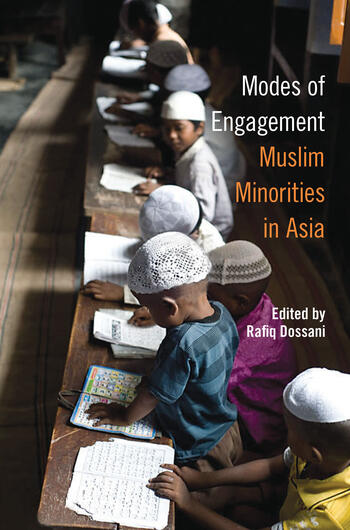
A new book, Modes of Engagement: Muslim Minorities in Asia, published by the Walter H. Shorenstein Asia-Pacific Research Center (APARC) and distributed through The Brookings Institution, offers leading research on this topic and places it in a geographic perspective. Edited by Rafiq Dossani, a senior researcher at the RAND Corporation and Professor at the Pardee RAND Graduate School of Public Policy, the book paves new paths to understanding the paradox of Muslim minorities in Asia. 

Dossani was at Stanford University for nearly fifteen years as a senior research scholar at Shorenstein APARC and as the executive director of the South Asia Initiative, studying the plight of Muslims and higher education in India, among other topics. The book is a result of a seminar series with the book’s contributors.

“Since the 1970s, especially in China, Asia’s growth rate has been unprecedented within Asia’s own history,” Dossani says. Mainstream Asia has seen a rise in job opportunities and income levels, and as a result, an individual ability to accumulate wealth and commit resources to long-term investments, such as education and innovation activities.

However, not all people have found benefit from this modern, economic transformation. Most notably, Muslims have seen a severe decline in their social and political space, as well as a narrowing of their identity.

Analysts find this surprising because history reflects a narrative that says Muslims should have profited along with the rest. “It wasn’t expected that Muslims would lose out in the countries in which they were minorities,” he says.

The volume investigates this puzzle through three case studies: the Philippines, India, and China. In each country, Muslims are at least 5 percent of the population, the largest number being in India. Dossani weaves together common threads that define the Muslim minority experience. Similarities include the impact of state-led ethnic nationalism and forced assimilation. He also writes that Muslims have been unable to use protest to secure any significant, long-term gains.

Given this dire reality, what prospects lie ahead for Muslim minorities? In conversation, Dossani suggests a few policy priorities gathered from the case studies featured in the volume.

Democracy is not the answer

Democracy, a form of governance that is often championed for its equal civic participation, has not facilitated a level playing field for Muslims when theory dictates it should.

“Democracy is not the answer to handling these problems,” says Dossani, emphasizing, “it is a most inadequate answer.”

This situation is evident in the case of India where Muslims have probably done the worst, compared to the Philippines, which also shares a legacy of colonial rule and transition to democracy.

Muslims in India, who have attempted to elevate their interests on the national stage, are stopped by coalition politics. Larger interests of the group can subsume their own, encroached upon further by caste issues, language barriers and other dividing factors. China’s Hui have found a significantly better experience than the Uyghurs, who were separated from mainland China early on and excluded from opportunities afforded there (the Uyghurs reside in a northwest region, Xinjiang). In the case of India, Muslims make up only ten to fifteen percent of the population in almost every state, thus their voice fails to find leverage in the political sphere, and effectively lose out.

Furthermore, democracy is not a panacea when states are vulnerable.

“When you have very weak and fragile states, where intuitions are subject to capture easily, democracy doesn’t work,” Dossani explains. Muslim minorities are unable to gain clout because the majorities, and elites attempting to fill a power vacuum, crowd them out.

Thus, collective interest and concerted efforts on the part of governmental and non-governmental organizations – a larger nexus of individuals working toward common goals – are essential to create momentum and staying power behind Muslim issues.

“You need civil society where it explicitly deals with the issues of minority populations and tries to convince the national government and state governments that improving the lots of minorities should be a national project with commitment to their improvement,” he says.

Development as a way forward

Some national projects were developed to openly address Muslim issues, but this led other internal ethnic and religious groups to ask, “Why are you appeasing the Muslims?”

Especially since 9/11, governments have increasingly come under pressure. Stigmas that narrow Muslim identity into “extremists” and “terrorists” are more progressively shared, making it near impossible for governments to explicitly offer a helping hand to Muslims without domestic backlash. 

But even with the odds against them, Muslim minorities still have a way forward.

In the three countries studied, Muslims have found traces of success, and in other Asian nations such as Sri Lanka and Nepal, there has been considerable accommodation of Muslims. Across all circumstances, “Muslims have done best in countries where the state has focused on education for all,” Dossani says.

Instead of providing ethnic-based aid, governments should focus on resource availability as a main qualifier for assistance. State-sponsored education and health care initiatives that capture the poorest populations help Muslims who inherently fall into this category. 

“Any wise government would say ‘look we want to connect education to development and focus on the poorest, no matter who they are.’ If they do that, Muslims will automatically get their fair share,” he says. The Philippines has already recognized this reality, and begun to implement development projects that naturally include Muslims.

Regime change can also motivate Muslim accommodation, either directly or indirectly, as is likely in the case of India.

Newly appointed Prime Minister Narendra Modi, although said to have an anti-Islamic stance in the past with the Bharatiya Janata Party, may in fact create policies that favor Muslims because it fits in with a grander vision of national growth. 

Referring to Prime Minister Modi, Dossani says, “It’s not clear that he cares about Muslims, but in some ways, he cares about development.

“At some point, any development-conscious person will realize that no country can progress if 15 percent of the country hangs behind.”

Diaspora matters

The swell of migration in the globalized era has made the formation of diaspora communities, dispersed populations outside of country of origin, a common phenomenon. Muslim minorities are a large part of this movement, seeking opportunity and using their ethnic or religious connections to establish a new life elsewhere.

Muslims of Asian origin are located beyond Asia – in the Middle East, North Africa and Southern Europe, among other areas. But despite being removed from their native soil, an allegiance and interest in the homeland typically remains.

“Diaspora exists in a very big way,” Dossani explains. Their influence should not be underestimated, both financially and politically. The Muslim diaspora provides an important channel of support that helps struggling Muslim populations.

Remittances from relatives overseas can bring in substantial transfers of money and support to populations that may not otherwise have enough resources, or be supported by the government. For several years now, one of the single largest inflows of money into the Philippines has been from these outside sources. India’s Muslim diaspora has a strong diasporan foundation with codified institutions set-up to organize relations. China’s experience is less documented, Dossani says, although he conjectures that some diasporan support exists, whether formally or informally.

Diaspora organizations, often led and supported by expatriates, appear to be growing worldwide, and can play a crucial role in the formation of Muslims’ global identity and network of support. Neighboring countries with Muslim majorities, such as Malaysia and Indonesia, have also offered themselves as diplomatic partners in resolving conflicts over Muslims’ conditions, given their own long histories of addressing them internally.

Hero Image
india muslim children tehelka
Muslim children read the Quran at an Indian madrassa.
Vijay Pandey
All News button
1
Paragraphs
Image
Modes of Engagement front cover.

Of Asia’s 800 million Muslims, 215 million are minorities within their countries. These Muslim minorities have experienced a persistent decline in their socioeconomic and political status. Along with this decline, they are increasingly identified by their faith and largely accorded no other identity for civic relations. Why have these Muslim minorities been particularly affected during a time of unprecedented opportunities for the mainstream in Asia’s unprecedented era of growth and rising freedoms?

Using detailed analyses of China, India, and the Philippines, Modes of Engagement argues that key factors in this phenomenon include the linkage between socioeconomic decline, loss of political power, and narrowing of identity; nationalism and its associated connotations of the assimilation of minorities; the weakness of civil society generally in Asia; and the rise in regional and global alliances for security and trade.

Contributors include Wajahat Habibullah (National Commission for Minorities and National Institute of Technology, India), Rakesh Basant (Indian Institute of Management), Dru C. Gladney (Pomona College), and Joseph Chinyong Liow (Nanyang Technological University’s S. Rajaratnam School of International Studies, Singapore).

Rafiq Dossani is a senior economist at the RAND Corporation. His research interests include regional integration, security, and education. Previously, Dossani was a senior research scholar at the Shorenstein Asia-Pacific Research Center and director of the Stanford Center for South Asia.

Examination copies: Shorenstein APARC books are distributed by Stanford University Press. Contact them for information on obtaining examination copies.

All Publications button
1
Publication Type
Books
Publication Date
Subtitle

Muslim Minorities in Asia

Book Publisher
Shorenstein APARC
Authors
Lisa Griswold
News Type
News
Date
Paragraphs

The Obama administration’s policy of “re-balance” toward Asia, that began as early as 2009, is now increasingly under stress, as those in the region question American staying power and China emerges as a challenger to U.S. dominance. As the territorial disputes in the East and South China Seas in recent months have demonstrated, China’s relations with the region and the United States have become visibly strained, bringing the U.S. re-balance policy into question and raising concerns about security tensions and the danger of conflict. 

U.S.-China relations are heading, for the foreseeable future, into “a very scratchy time,” predicted Kenneth Lieberthal, a respected senior China scholar at The Brookings Institution, in his keynote speech delivered at the annual Oksenberg Lecture on June 3 at the Shorenstein Asia-Pacific Research Center.

Lieberthal told a standing room audience in Encina Hall that while the U.S. attempt to temper its relations with China and others has “worked quite well over time,” now, “at a geostrategic level, we seem to be sliding with increasing speed toward an inflection point in U.S.-China relations.”

Lieberthal was joined by a panel of China experts, including Cui Liru of the China Institutes of Contemporary International Relations (CICIR), and Stanford’s Karl Eikenberry and Thomas Fingar, distinguished fellows at the Freeman Spogli Institute for International Studies, and Jean C. Oi, director of the Stanford China Program.

The discussion was part of the Oksenberg Lecture, an annual dialogue that functions as a policy workshop on U.S.-Asia relations, named in honor of late professor and senior fellow Michel Oksenberg (1938–2001). Oksenberg was a noted China specialist, who served as a senior member of the National Security Council and is credited as the architect of the normalization of relations with China under the Carter administration in the late 1970s.

Points of tension in the U.S.-China relationship have been increasingly visible. Senior American officials have assailed China for its aggressive actions toward its neighbors over the Diaoyu/Senkaku Islands and in South China Sea, including its latest altercations with Vietnam and the Philippines. The United States recently indicted five members of China’s People’s Liberation Army for carrying out cyber espionage against U.S. technology companies.

Incidents like these have prompted both countries to throw harsh words at each other, leading to a situation of brinkmanship. However, Lieberthal pointed out that tense relations between the United States and China are certainly not new. Most notably, relations took a nosedive in 1989 when China cracked down on democratization protests at Tiananmen Square, in 1999 after the accidental bombing of the Chinese Embassy in Serbia, and in 2008, in response to the global financial crisis.

The U.S.-China relationship has been riddled with periods of distrust in the past. But now, “the speed and scale of China’s economic growth, especially over the last two decades, has also increased concerns, on all sides, that the evolving distribution of power may create new frictions and suspicions,” Lieberthal said.

Yet, refusing to work with each other is not an option, the senior scholar, who also served in the Clinton administration, told the audience. Without the United States and China in conversation, progress in multilateral areas such as climate change and trade would falter, he argued. Given the two countries’ position as the world’s largest economies, the international system would effectively be constrained if the two were entrenched in long-term bitterness.

Lieberthal recognized the common admonition, “if we treat China as an enemy, it will surely become one,” saying this warning could be applied to both sides. China and the United States must make greater efforts to manage and mitigate tensions.

“The question is whether we can prevent bad things, not only specific conflicts, but the political tensions and politics that make cooperation on major issues very, very difficult at best.”

He then outlined a few steps that could help China and the United States sort out their disputes. His recommendations began with the need for strong determination on the part of top political leaders to move things forward and the importance of clear, consistent use of vocabulary when discussing issues.

As a final point, but one that was offered as a contingent factor to success, Lieberthal said U.S.-China relations and both countries’ roles in greater Asia will depend on “how effective each of us is in dealing with domestic reforms,” because, “that will determine how dynamic, how vibrant, how innovative, and how secure we feel.”

______________________________________________________ 

During the lecture, Ret. Lt. Gen. Karl Eikenberry shared his observations from the Shangri-La Dialogue, an inter-governmental security forum held from May 30 – June 1 in Singapore. The Dialogue has in recent years become a gathering of premiere defense ministers to discuss security issues in Track I and “quasi-track” meetings.

Afterward, Eikenberry talked with Shorenstein APARC about key highlights and implications that emerged from the Dialogue:


IISS Photo KEikenberry Gallery Shangri-La Dialogue

Photo credit: Flickr/The International Institute for Strategic Studies 

Media reported a tense environment overlaid the Dialogue. What was the general atmosphere there?

The remarks at the Shangri-La Dialogue by Japanese Prime Minister Abe and U.S. Defense Secretary Hagel on the one hand, and Chinese General Wang Guanzhong, made clear very different views on the causes for tension surrounding various maritime sovereignty claims in the East and South China Seas. Still, if you read the full text of all three speeches and the Q&As that followed, there is still great emphasis placed on dialogue and common interests. And in the many meetings that took place between national delegations on the margins of the conference events, the emphasis was on cooperation. 

What revelations at the Dialogue were surprising?

I think the degree to which dissatisfaction with China’s assertive behavior in pursuing its maritime claims was expressed by many of the participants – not just the United States and Japan. Vietnam, the Philippines and India were explicit. Analysts have said the only China (through threatening behavior) could contain China by catalyzing a counterbalancing response. From the results of the Dialogue, I think this is correct.   

Japanese Prime Minister Shinzo Abe emphasized values and international law throughout his keynote speech. What is your take on this?

The Prime Minister did emphasize both democracy and rule of law during his prepared remarks and answers to questions from conference participants. He was drawing an obvious distinction between Japan’s and China’s political systems and commitment to approaches to resolving territorial disputes. I think the Prime Minister is trying to establish Japan as a leader in East and Southeast Asia, and wanted to make clear what he views as important differences between the Japanese and Chinese “models.” 

U.S. Defense Secretary Chuck Hagel referenced China’s suspension of the U.S.-China Cyber Working Group. What direction do you think the cybersecurity dialogue will go now?

It was unfortunate that China suspended its participation in the U.S.-China Cyber Working Group after the U.S. Government’s indictment of five People’s Liberation Army officers for alleged cyber theft. The U.S. Government has been providing the PRC Government with evidence of cyber theft being conducted by entities in China and has failed to receive any meaningful response so the indictments seem warranted. It would seem that the Cyber Working Group is precisely the forum to discuss this matter and the many related to managing the cyber domain with agreed rules and procedures. Working Groups provide a forum to address disagreement and disputes. I think China’s response was counterproductive and hope the government will indicate a willingness to resume the dialogues in the near future.

Where do you see the regional security conversation heading next?

The risk is that security dialogues will be divided into two camps – one led by the United States and its close allies and partners, and the other by China – somewhat isolated at this time but seeking to entice Asian nations to bandwagon to its side. Perhaps further regional economic integration can facilitate a more common approach to security, but this year’s Shangri-La Dialogue is perhaps a warning that trends, for now, are not heading in a positive direction.

Hero Image
oksenberg lecture 2014 headline 2
Kenneth Lieberthal of The Brookings Institution delivered the keynote speech at the annual Oksenberg Lecture on June 3.
Irene Bryant/Debbie Warren
All News button
1
News Type
News
Date
Paragraphs

Ambassador Kathleen Stephens, the Koret Fellow at the Walter H. Shorenstein Asia-Pacific Research Center in the Freeman Spogli Institute for International Studies, has been named the United States’ chargé d’affaires to India. Stephens was asked to step in to replace retiring Ambassador Nancy Powell at a critical moment, with the formation of a new government in India following the sweeping election victory of the Bharatiya Janata Party led by Narendra Modi.

Stephens will assume the position in June and remain until a new ambassador is nominated and confirmed by the U.S. Senate, the State Department said in a press briefing.

“I look forward to being in India during a momentous and promising time, and to working to deepen the relationship between the United States and India. My time at Stanford allowed me to engage with extraordinary colleagues and students at APARC and beyond, and will stand me in good stead as I take on new challenges in India,” Stephens said.

Stephens served as acting under secretary of state for public diplomacy and public affairs in 2012. She was the U.S. ambassador to South Korea from 2008 to 2011, and principal deputy assistant secretary of state for the Bureau of East Asian and Pacific Affairs between 2005 and 2007. Her connection to Asia began in the 1970s when she was a Peace Corps volunteer in South Korea.

She has been in residence at Shorenstein APARC for the academic year, conducting research and participating in projects related to U.S.-Korea relations and greater Asia. Stephens also taught a course for Stanford students while here.

Shorenstein APARC Director Gi-Wook Shin said Stephens’ appointment reinforces the Center’s tradition of scholarship and promotion of bipartisan interaction with governments.

“We’re delighted by the news of Kathy’s appointment. Her long-standing ties with Asia and foreign affairs experience will serve her well in this important position. Kathy’s presence greatly enhanced our Center’s work and research agenda, and we wish her well as she heads to India,” Shin said.

Hero Image
stephens shin photo 2
Ambassador Kathleen Stephens pictured with Shorenstein APARC Director Gi-Wook Shin.
Shorenstein APARC
All News button
1
-

Keynote Speakers

WANG YIMING, Deputy Secretary General, National Development and Reform Commission (NDRC)

The Institutional Problems in China’s Urbanization Process

CAI FANG, Director, Institute of Population Studies, China Academy of Social Sciences

Urbanization and Labor Markets in China

LI SHUZHUO, Director, Institute for Population and Development Studies, School of Public Policy and Administration, Xi’an Jiaotong University

Fertility, Sex Ratio, and Family Planning Policies in China

Stanford Center at Peking University

Conferences
Authors
Lisa Griswold
News Type
News
Date
Paragraphs

In conversation with Shorenstein APARC, Karen Eggleston, center fellow and director of the Asia Health Policy Program, reflects on her initial draw to Asian studies and eventual focus on comparative Asia health policy. She also shares perspectives on health reform in China and demographic change across East Asia, and talks about related upcoming activities.

How did you begin in Asia health policy?

I have long been interested in Asia in general. My initial appeal to the region came from my family’s roots (my grandfather taught Korean history at Berkeley) and early international travel. Only much later in graduate school did I come to the area of economics as a discipline and health policy as my specialty; however, I had been attracted to economic development and social policy in Asia earlier on. I started with an undergraduate degree in Asian studies, which followed with a Masters degree in Asian studies specifically focused on China and Korea. During graduate school, my father-in-law introduced me to unique perspectives, as he was a physician in China. When he visited the United States to present his work, I helped translate his findings. As my career developed, I had the privilege of working with many inspiring health economists, and economists interested in health policy, some of whom acted as my mentors at Harvard and here at Stanford - János Kornai, Victor Fuchs, Joseph Newhouse, Richard Zeckhauser, and Jay Bhattacharya, to name a few. These experiences helped to further narrow my focus and interests.

What led you to Stanford?

It was extremely exciting when the opportunity arose to come to Stanford. The university is a world-class learning environment and is unique in having a health policy program focused on Asia. I was recruited to the Shorenstein Asia-Pacific Research Center at the founding of the Asia Health Policy Program. The Program is distinctive given its comparative approach focusing on the Asia-Pacific region, which differs from most other institutions. The west coast is also geographically closer to Asia, so you get a ‘flavor’ and infusion of Asian studies here more so than on the east coast. Not to mention, it was a delight to come back to my home state of California after many long years of New England winters.

To be a successful scholar of global health policy, what tools or perspectives should one be informed about?

Global health policy is a very complex field, and can be approached many ways. This, of course, makes it both exciting and challenging. My own approach is through the lens of economics. If you are looking at research and evidence-based policy, it can be beneficial to have either a social science background or a medical-clinical discipline (or both), perhaps combined with a specific geographic focus. Knowing about the history, culture, and institutions are very important for understanding health policy challenges. It also helps to build capacity within that region of focus. Partnering with practitioners and scholars in the country or region allows you to know what is really happening on-the-ground, and feed the research back into local policy decisions. I also think it is important to emphasize evidence over ideology – for example, to keep clear in your mind whether you are more of a policy advocate or academic. A scholar can play varying roles at different times in their careers, but it isn’t easy to do both fully at once. 

As China’s population and social inequalities continue to grow, are its current governance structures sustainable?

Even though political economy is not my expertise, institutions and how they adapt to a society’s needs is pertinent to anyone looking at health reform. For example, in China, there has been a lot of debate since the leadership transition and its implications for national health administration. Should health policy be led solely by the Ministry of Health, now the Health and Family Planning Commission? The Ministry runs the hospitals but is not in charge of the urban insurance system – this falls to Labor and Human Resources. Other branches of government administer regulation, pricing and other aspects of health policy. And of course the Ministry of Finance, and National Development and Reform Commission, play key roles. Like many countries, China has over 14 different ministries and agencies that are involved in the organization of its health system. Thus a relevant question is: who is in charge of taking the next step and coordinating between those entities? A health reform office was established directly under the State Council. Population aging is another issue that spans multiple sectors and policymaking entities. The Chinese government will be impelled to adapt its policies to face new challenges.

What are the connections between health policy and demographic change? Can you tell us about your upcoming work?

One important connection between health policy and demographic change is that the burden of disease changes as the population changes. A country with a large young population (like India) will have a different burden of disease than a country with a large older population (like Japan). If fertility and mortality rates decline, the burden of disease shifts toward chronic, non-communicable disease incidence. Partly, this trend reflects a ‘triumph’ from control of infectious disease and the demographic transition (with longer lives and lower fertility), but then it presents a new set of challenges for society to deal with problems of that older population. Some of my work compares China and India, which have similarities in size and socio-economic diversity. This May, I am helping to organize a conference at the Stanford Center at Peking University in Beijing with my Stanford colleagues Jean Oi, Scott Rozelle and Xueguang Zhou, and our collaborators at the PRC National Development and Reform Commission. The conference will compare urbanization and demographic trends in China and India. It is envisioned that the conference will lead to two separate book projects – one on urbanization in China in comparative perspective and another on demographic change in China and India. We will also present findings that were an outcome of a three-year research project, with initial findings published in The Journal of Asian Studies.

Tell us something we don’t know about you.

In my youth, I was very much into equestrian vaulting and played the violin. As one of my mentors said to all his students, ‘you might not be the world’s best at any one category, but if you look at the overlap between different categories, you could be distinctive.’ So I might very well be one of the world’s only horse-vaulting, violin-playing health economists, for what it’s worth.

The Faculty Spotlight Q&A series highlights a different faculty member at Shorenstein APARC each month giving a personal look at his or her scholarly approaches and outlook on related topics and upcoming activities.

Hero Image
EgglestonKaren Logo
All News button
1
Subscribe to India