Shorenstein APARC
Stanford University
Encina Hall, E301
Stanford,  CA  94305-6055

0
Visiting Scholar at APARC, 2022-23
Nirvikar_Singh.jpg Ph.D.

Professor Nirvikar Singh joined the Walter H. Shorenstein Asia-Pacific Research Center (Shorenstein APARC) as a Visiting Scholar for the 2022-2023 academic year. Singh serves as a Distinguished Professor in Economics at the University of California, Santa Cruz. While at APARC, he researched the political economic dynamics of India and the role of innovation in driving economic growth, especially in Asia.

Shorenstein APARC
Stanford University
Encina Hall, E301
Stanford,  CA  94305-6055

0
Visiting Scholar at APARC, 2022-23
Erin_Mello.jpg M.A.

Erin Mello joined the Walter H. Shorenstein Asia-Pacific Research Center (Shorenstein APARC) as Visiting Scholar for the 2022-2023 fall quarter. Mello currently serves as analyst for US INDOPACOM and USAF/Hawaii Air National Guard. While at APARC, Mello conducted research on building integrated deterrence in the Indo-Pacific, examining barriers to U.s.-India security cooperation and how to overcome theme.

0
Global Affiliate Visiting Scholar, 2022-23
Reliance Life Sciences
Jitukrushna Swain

Jitukrushna Swain is a global affiliate visiting scholar at the Walter H. Shorenstein Asia-Pacific Research Center (Shorenstein APARC) for 2022-23. Swain has over thirteen years of experience in business development, core scientific research and project management of pharmaceutical products and has been with Reliance Life Sciences Pvt. Ltd., India since 2015. Currently, he is designated as Senior Manager in the Corporate Development team. His current responsibilities include business development for international regulated market (including out-licensing deals for Finished Dose Formulations and client management); cross-functional coordination for product registration and market launch; portfolio management; sales and distribution network development for pharmaceutical products; and supporting the international clients by query response to techno-commercial requirements. Swain received his master's degree in bio-technology with specialization in industrial microbiology and fermentation technology from Sambualpur University, India in 2009.

Date Label
-
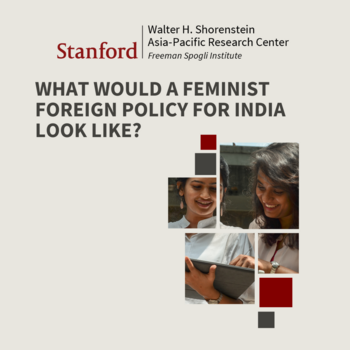
Flyer for the webinar "What Would a Feminist Foreign Policy for India Look Like?"

May 17, 5- 6 p.m. Pacific Time
May 18, 5:30 - 6:30 a.m. Indian Standard Time

India has long portrayed itself as having a foreign policy guided by principles of justice. For decades, it stood above the ruthless geopolitics of the Cold War – in word if not in deed – and instead fashioned itself as a champion of decolonization and international equality. Today, with nonalignment apparently passé, several states have begun to embrace feminism and related principles as a basis for a normative, or principled foreign policy. This webinar will examine what a feminist foreign policy would look like for India. In such a foreign policy, how would feminism intersect with other values, such as environmentalism; to what extent would it clash with or reinforce national interests; and does India have the domestic political foundations to sustain such a normative policy?


Panelists

Image
Square photo portrait of Ambika Vishwanath
Ms Ambika Vishwanath is the Co-Founder and Director of the Kubernein Initiative, a geopolitical advisory group. Ambika is a geopolitical analyst and water security specialist with experience in the field of governance and foreign policy. She has led Track 2 diplomacy efforts and consulted with several governments and international organizations in the Middle East, Europe, and South Asia, and helped shape their policies in the field of conflict resolution, water diplomacy, and security. At Kubernein, she leads their flagship program on Gender and Indian Foreign Policy and projects on water, climate, and security. The first Indian to be invited as a member of the prestigious Munich Young Leaders Network, she is also a China-India Visiting Scholars Fellow, 2020 – 2021, Ashoka University, and a Non-Resident Fellow with the Agora Institute, Germany.

Moderator

Image
Square photo portrait of Arzan Tarapore
Arzan Tarapore is the South Asia research scholar at the Shorenstein Asia-Pacific Research Center at Stanford University, where he leads the newly-restarted South Asia research initiative. He is also a senior non-resident fellow at the National Bureau of Asian Research. His research focuses on Indian military strategy and contemporary Indo-Pacific security issues. Prior to his scholarly career, he served as an analyst in the Australian Defense Department. Arzan holds a Ph.D. in war studies from King’s College London. 


Image
Square event banner with text "What Would a Feminist Foreign Policy for India Look Like?", featuring a photograph of two Indian women conversing while looking at a tablet
This event is part of the 2022 Spring webinar seriesNegotiating Women's Rights and Gender Equality in Asia, sponsored by the Walter H. Shorenstein Asia-Pacific Research Center.

Arzan Tarapore

Via Zoom Webinar

Ambika Vishwanath Co-Founder, Co-Director Kubernein Initiative
-
Logo of APARC South Asia Initiative's May 6, 2022 conference, 'A New Agenda for Indian Competitiveness'

This Conference will be held in person on our Stanford University Campus.
Only register if you are attending the Conference in person.

About the Conference

The inaugural conference of the South Asia Initiative at Stanford University's Shorenstein Asia-Pacific Research Center (APARC) focuses on the role that critical and emerging technologies can play in India’s national security. These technologies promise to deliver enormous advantages as powers like India and China compete for security and influence. India’s ability to deploy critical and emerging technologies will shape not only its military power but also its resilience and self-sufficiency, which the Indian government sees as key national goals in a post-pandemic world. To develop these technologies, India’s national security establishment will need new policy settings – including new relationships with private industry – and new ways of cooperating with key partners, especially the United States.

Our conference will be a unique forum bringing together academic experts, senior policymakers, and leading industry representatives to develop this critical policy agenda. Keynote speeches and panel discussions will contemplate the changing character of national security, the imperatives for public-private cooperation on technology policy, and the implications for national and foreign policy. In keeping with our policy-focused mission, we look forward not only to fostering important dialogues but also to convening problem-solvers with different perspectives, to understand and act on new technologies’ role in strategic competition.

Image
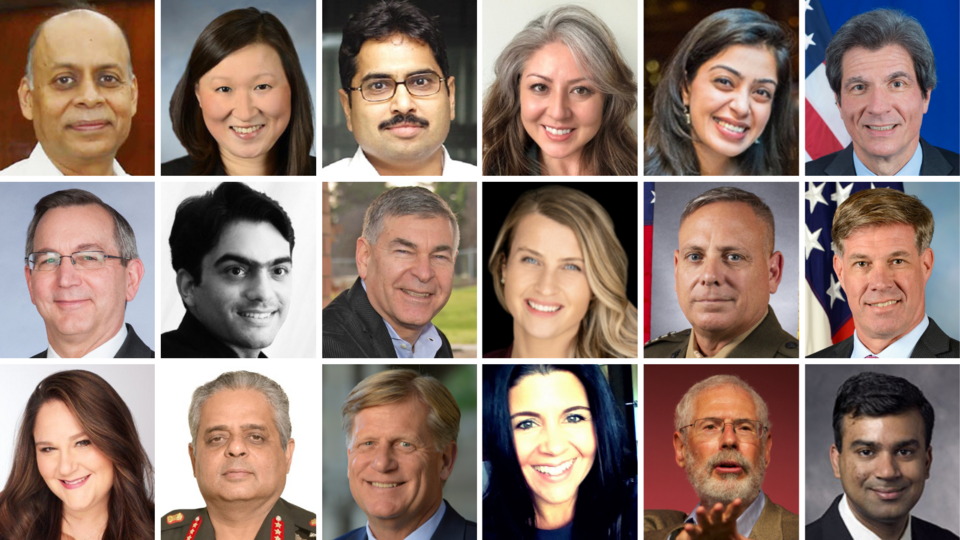
A photo collage of headshot portraits of 18 guest speakers participating at the Shorenstein APARC South Asia Initiative Conference "A New Agenda for Indian Competitiveness"


Conference Agenda


8:30-8:45 a.m.
Opening and Welcome Remarks

Prof. Gi-Wook Shin, Director of Asia-Pacific Research Center and Korea Program, Stanford
Dr. Arzan Tarapore, Research Scholar, Asia-Pacific Research Center, Stanford


8:45-9:30 a.m.
Keynote address: “Technology’s Role in Managing India’s Security Challenges.”


Dr. Ajay Kumar, Defence Secretary, India
Introduction by Prof. Michael McFaul, Director of the Freeman Spogli Institute for International Studies, Stanford


9:30-10:45 a.m.
Panel 1: Redefining the Military’s Relationship with Technology


Moderated by Dr. Arzan Tarapore, Research Scholar, Asia-Pacific Research Center, Stanford

LtGen Stephen D. Sklenka, Deputy Commander, U.S. Indo-Pacific Command
LtGen (ret.) Raj Shukla, ARTRAC
Ms. Kari Bingen, Hawkeye 360
Ms. Heather Richman, BMNT


10:45-11:00 a.m.
Coffee Break


11:00 a.m. -12:15 p.m.
Panel 2: The Way Forward in Defense Innovation

Moderated by Mr. Steve Blank, Adjunct Professor, Management Science and Engineering, Stanford

Mr. Sanjay Jaju, Director iDEX (Virtual)
Mr. Mike Brown, Director DIU
Ms. Colleen Laughlin, Defense Innovation Board
Ms. Lauren Bedula, Silicon Valley Defense Group


12:15-2:00 p.m.
Lunch

Fireside chat: "Looking Forward: Critical and Emerging Technology in the U.S.-India Relationship"


Mr. Jose W. Fernandez, Under-Secretary of State for Economic Growth, Energy, and Environment (virtual)
Introduction by Amb. Scot Marciel, Visiting Practitioner Fellow on Southeast Asia, Stanford

Fireside chat: "A New Agenda for US-India Relations"

Amb. Atul Keshap, USIBC (Virtual)
Mr. Vikram Singh, USIP and USISPF

With Dr. Joe Felter, Gordian Knot Center for National Security Innovation, Stanford


2:00-2:15 p.m.
Coffee Break


2:15-3:45 p.m.
Panel 3: Start-Up Success Stories

Moderated by: Sridhar Narayanan, Professor of Marketing, Stanford Graduate School of Business
 

Mr. Vinayak Dalmia, 3rditech
Ms. Vrinda Kapoor, 114AI (Virtual)
Mr. John Martellaro, Skanda Defense
Ms. Jacqueline Tame, GameBreaker AI


3:45-4:00pm
Concluding Remarks

Breakfast, lunch, and afternoon refreshments will be served at the conference.

Parking information can be found on our Shorenstein APARC Contact Us page.

Conferences
Paragraphs
Radhika Jain and Pascaline Dupas with a screenshot of the cover of their Social Science & Medicine journal article

Highlights

  • India's nationwide COVID-19 lockdown severely disrupted critical chronic care.

  • Non-COVID-19 morbidity and mortality increased sharply in the subsequent months.

  • Socioeconomically disadvantaged patients were worst affected.

  • Indirect health effects increase the toll of pandemics and worsen health inequality.

  • Pandemic control policies must ensure critical health services continue.

Abstract

India's COVID-19 lockdown, one of the most severe in the world, is widely believed to have disrupted critical non-COVID health services. However, linking these disruptions to effects on health outcomes has been difficult due to the lack of reliable, up-to-date health outcomes data. The authors identified all dialysis patients under a statewide health insurance program in Rajasthan, India (N = 2110), and conducted surveys to examine the effects of the lockdown on non-COVID care access and health outcomes. Post-lockdown mortality was their primary outcome and morbidity and hospitalization were secondary outcomes.

63% of patients experienced a disruption to their care. Transport barriers, hospital service disruptions, and difficulty obtaining medicines were the most common causes. We compared monthly mortality in the four months after the lockdown with pre-lockdown mortality trends, as well as with mortality trends for a similar cohort in the previous year. Mortality in May 2020, after a month of exposure to the lockdown, was 1.70 percentage points (95% CI 0.01–0.03) or 64% higher than in March 2020 and total excess mortality between April and July was estimated to be 22%. A 1SD increase in an index of care disruptions was associated with a 0.17SD (95% CI 0.13–0.22) increase in a morbidity index, a 3.1 percentage point (95% CI 0.012–0.051) increase in hospitalization, and a 2.1 percentage point (95% CI 0.00–0.04) increase in probability of death between May and July. Females, socioeconomically disadvantaged groups, and patients living far from the health system faced worse outcomes. The results highlight the unintended consequences of the lockdown on critical, life-saving non-COVID health services that must be taken into account in the implementation of future policy efforts to control the spread of pandemics.

All Publications button
1
Publication Type
Journal Articles
Publication Date
Subtitle

Evidence from Dialysis Patients

Journal Publisher
Social Science & Medicine
Authors
Radhika Jain
-

Time:  7:30am-8:45am  California, USA 2 March 2022 
9:00pm-10:15pm New Delhi, India 2 March 2022
 

India’s international position has evolved sharply in the first two decades of the 21st century, and it is poised to become only more consequential in coming decades. Its strategic interests and influence have now stretched into the distant reaches of the Indo-Pacific, it has emerged as a central actor in managing global governance challenges like climate change, and it may have the capacity to take a commanding position in some key leading-edge technologies. In this webinar, veteran journalist Indrani Bagchi, who spent nearly two decades covering India’s foreign relations for the Times of India, will reflect on India’s recent trajectory and its prospects. Through the prism of some key episodes and issues of India in the 21st century, the webinar will examine India’s capacity and approach to manage international issues, as well as the constraints and challenges Indian policymakers must face. 

Speaker: 

Image
Headshot photo of Indrani Bagchi
Indrani Bagchi is CEO-designate at Ananta Aspen Centre, India. She was Associate Editor with the Times of India, where she reported and analyzed foreign policy issues for the newspaper from 2004 until 2022. As Diplomatic Editor, Indrani covered the Ministry of External Affairs (MEA) on her news beat, and interpreted and analyzed global trends with an Indian perspective. Earlier, Indrani worked with India Today, the Economic Times and The Statesman, and has held fellowships at Oxford University and the Brookings Institution. She is a Fellow of the Kamalnayan Bajaj Fellowship Class 3 of the Ananta Aspen Centre and a member of Aspen Global Leadership Network. She graduated from Loreto College, Calcutta University with English honors. 

Moderator:

Image
Photo Portrait of Arzan Tarapore
Arzan Tarapore is the South Asia research scholar at the Shorenstein Asia-Pacific Research Center at Stanford University, where he leads the newly-restarted South Asia research initiative. He is also a senior nonresident fellow at the National Bureau of Asian Research. His research focuses on Indian military strategy and contemporary Indo-Pacific security issues. Prior to his scholarly career, he served as an analyst in the Australian Defense Department. Arzan holds a PhD in war studies from King’s College London. 


This event is co-sponsored by Center for South Asia

Via Zoom  Register at:
https://bit.ly/3HXiwTy

Indrani Bagchi, CEO-designate, Ananta Aspen Centre, India<br> Panelist
<br>Arzan Tarapore, South Asia Research Scholar, Shorenstein APARC Moderator South Asia Research Scholar, Shorenstein APARC
Seminars
Authors
Noa Ronkin
News Type
News
Date
Paragraphs

As the COVID-19 pandemic remains a crucial global public health threat, pandemic control measures such as lockdowns and mobility restrictions continue to disrupt the provision of health services, leading to reduced healthcare use. Indeed, evidence shows the pandemic has emerged as a particular challenge for people with chronic conditions such as diabetes and hypertension. Yet there is limited data comparing the pandemic’s impact on access to care and the severity of chronic disease symptoms at the population level across Asia.

Now a new collaborative study, published by the Asia Pacific Journal of Public Health, addresses this limitation. The study co-authors, including APARC’s Asia Health Policy Program Director and FSI Senior Fellow Karen Eggleston, offer the first report comparing the impacts of the COVID-19 pandemic and its associated mobility restrictions on people with chronic conditions at different stages of socio-demographic and economic transitions in five Asian regions — India, China, Hong Kong, Korea, and Vietnam.

The findings show that the pandemic has disproportionately disrupted healthcare access and worsened diabetes symptoms among marginalized and rural populations in Asia. Moreover, the pandemic’s broad social and economic impact has adversely affected population health well beyond those directly suffering from COVID-19, with the resulting delayed and foregone care leading to uncertain longer-term effects.


 [Sign up for APARC newsletters to receive the latest research by our scholars]


Unintended Adverse Consequences

Routine screening, risk factor control, and continuity of care for non-communicable diseases are a global challenge. The COVID-19 pandemic has exacerbated the challenge even further. Existing reports show the pandemic has particularly adverse impacts on essential prevention and treatment services for people with chronic conditions. These reductions in health services arose from pandemic-associated factors such as mobility restrictions, lack of public transport, and lack of health workforce.

Eggleston and a group of colleagues set out to provide evidence on how the pandemic has impacted chronic disease care in diverse settings across Asia during COVID-19-related lockdowns. Using standardized questionnaires, the researchers surveyed 5672 participants aged 55.9 to 69.3 years with chronic conditions in India, China, Hong Kong, Korea, and Vietnam. The researchers collected data on participants’ demographic and socio-economic status, comorbidities, access to healthcare, employment status, difficulty in accessing medicines due to financial and nonfinancial (COVID-19 related) reasons, treatment satisfaction, and severity of their chronic condition symptoms.

If no immediate actions are taken to mitigate pandemic impacts, the Asia-Pacific region will struggle to achieve the 2030 Sustainable Development Goal target 3.4 to reduce premature mortality from non-communicable diseases […] and to promote mental health and wellbeing.
Karen Eggleston et al.

The results show that the pandemic’s broad social and economic impact has adversely affected population health well beyond those directly suffering from COVID-19. Study participants with chronic conditions faced significant challenges in managing their symptoms during the pandemic. They experienced a loss of income and difficulties in accessing healthcare or medications, with the resulting delayed and foregone care leading to uncertain longer-term effects. For a nontrivial portion of participants, these factors are associated with the worsening of diabetes symptoms. The threat is twofold among people living in rural populations with limited access, availability, and affordability of healthcare services.

A Global Health Priority

The unintended adverse consequences of the COVID-19 pandemic on chronic disease care may also further aggravate inequality in health outcomes. “If the trend continues and no immediate actions are taken to mitigate pandemic impacts,” Eggleston and her colleagues caution, then “the Asia-Pacific region will struggle to achieve the 2030 Sustainable Development Goal (SDG) target 3.4 to reduce premature mortality from non-communicable diseases by a third relative to 2015 levels and to promote mental health and wellbeing.”

Addressing the pandemic’s unintended negative social and economic impacts on chronic disease care is a global health priority, determine the researchers. They propose several measures to help provide timely care for people with chronic conditions in resource-constrained settings. These include implementing innovations in healthcare delivery models to improve the adoption of healthy lifestyle changes and self-management of chronic disease and mild COVID-19 symptoms, increasing investment in interventions to provide social and economic support to disadvantaged populations, and strengthening primary healthcare infrastructure and support of healthcare providers.

The study was supported in part by funding from Shorenstein APARC’s faculty research award, Stanford King Center for Global Development, and a seed grant from the Stanford Center for Asian Health Research and Education.

Read More

 A woman at a desk in a village medical clinic in China.
News

Strengthening the Frontline: How Primary Health Care Improves Net Value in Chronic Disease Management

Empirical evidence by Karen Eggleston and colleagues suggests that better primary health care management of chronic disease in rural China can reduce spending while contributing to better health.
Strengthening the Frontline: How Primary Health Care Improves Net Value in Chronic Disease Management
Closeup on hands holding a glucometer
News

A New Validated Tool Helps Predict Lifetime Health Outcomes for Prediabetes and Type 2 Diabetes in Chinese Populations

A research team including APARC's Karen Eggleston developed a new simulation model that supports the economic evaluation of policy guidelines and clinical treatment pathways to tackle diabetes and prediabetes among Chinese and East Asian populations, for whom existing models may not be applicable.
A New Validated Tool Helps Predict Lifetime Health Outcomes for Prediabetes and Type 2 Diabetes in Chinese Populations
money
News

Bargaining Behind Closed Doors: Why China’s Local Government Debt Is Not a Local Problem

New research in 'The China Journal' by APARC’s Jean Oi and colleagues suggests that the roots of China’s massive local government debt problem lie in secretive financing institutions offered as quid pro quo to localities to sustain their incentive for local state-led growth after 1994
Bargaining Behind Closed Doors: Why China’s Local Government Debt Is Not a Local Problem
Hero Image
A makeshift barricade is seen in front of a residential area to restrict movement and control COVID-19 spread in Hanoi, Vietnam.
A makeshift barricade is seen in front of a residential area to restrict movement and control COVID-19 spread, September 2021, Hanoi, Vietnam.
Linh Pham / Getty Images
All News button
1
Subtitle

In the first report of its kind comparing the impacts of the pandemic on people with chronic conditions in five Asian regions, researchers including APARC’s Karen Eggleston document how the pandemic’s broad social and economic consequences negatively affected population health well beyond those directly suffering from COVID-19.

-

This is a virtual event. Please click here to register and generate a link to the talk. 
The link will be unique to you; please save it and do not share with others.


What is the relationship between internal development and integration into the global economy in developing countries? How and why do state–market relations differ? And do these differences matter in the post-Cold War era of global conflict and cooperation? Drawing on research in China, India, and Russia and examining sectors from textiles to telecommunications, Micro-Institutional Foundations of Capitalism introduces a new theory of sectoral pathways to globalization and development. Adopting a historical and comparative approach, Hsueh's Strategic Value Framework shows how state elites perceive the strategic value of sectors in response to internal and external pressures. Sectoral structures and organization of institutions further determine the role of the state in market coordination and property rights arrangements. The resultant dominant patterns of market governance vary by country and sector within country. These national configurations of sectoral models are the micro-institutional foundations of capitalism, which mediate globalization and development.


Image
Portrait of Roselyn Hsueh
Roselyn Hsueh is an associate professor of political science at Temple University, where she co-directs the Certificate in Political Economy. She is the author of Micro-Institutional Foundations of Capitalism: Sectoral Pathways to Globalization in China, India, and Russia (Cambridge University Press, forthcoming, 2022), China’s Regulatory State: A New Strategy for Globalization (Cornell University Press, 2011), and scholarly articles on states and markets, comparative regulation and governance, and political economy of development. She is a frequent commentator on politics, finance and trade, and economic development in China and beyond. BBC World News, The Economist, Foreign Affairs, National Public Radio, and The Washington Post, among other media outlets, have featured her research. Prestigious fellowships, such as the Fulbright Global Scholar Award, have funded international fieldwork and she has served as a Visiting Scholar at the Institute of World Economics and Politics, Chinese Academy of Social Sciences. She holds a B.A. and Ph.D. in Political Science from the University of California, Berkeley.


Via Zoom Webinar. Register at: https://bit.ly/3zoAafx

Roselyn Hsueh Associate Professor of Political Science, Temple University
Seminars
Paragraphs
Cover of book "Drivers of Innovation"

Innovation and entrepreneurship rank highly on the strategic agenda of most countries today. As global economic competition intensifies, many national policymakers now recognize the central importance of entrepreneurship education and the building of financial institutions to promote long-term innovation, entrepreneurship, and economic growth. Drivers of Innovation brings together scholars from the United States and Asia to explore those education and finance policies that might be conducive to accelerating innovation and developing a more entrepreneurial workforce in East Asia. 

Some of the questions covered include: How do universities in China and Singapore experiment with new types of learning in their quest to promote innovation and entrepreneurship? Is there a need to transform the traditional university into an “entrepreneurial university”? What are the recent developments in and outstanding challenges to financing innovation in China and Japan? What is the government’s role in promoting innovative entrepreneurship under the shadow of big business in South Korea? What can we learn about the capacity of services to drive innovation-led growth in India? 

Drivers of Innovation will serve as a valuable reference for scholars and policymakers working to develop human capital for innovation in Asia.

Contents

  1. Educating Entrepreneurs and Financing Innovation in Asia 
    Fei Yan, Yong Suk Lee, Lin William Cong, Charles Eesley, and Charles Lee
  2. Fostering Entrepreneurship and Innovation: Education, Human Capital, and the Institutional Environment 
    Charles Eesley, Lijie Zhou, and You (Willow) Wu
  3. Entrepreneurial Scaling Strategy: Managerial and Policy Considerations 
    David H. Hsu
  4. Innovation Policy and Star Scientists in Japan 
    Tatsuo Sasaki, Hiromi S. Nagane, Yuta Fukudome, and Kanetaka Maki
  5. Financing Innovation in Japan: Challenges and Recent Progress 
    Takeo Hoshi and Kenji Kushida
  6. Promoting Entrepreneurship under the Shadow of Big Business in Korea: The Role of the Government 
    Hicheon Kim, Dohyeon Kim, and He Soung Ahn
  7. The Creativity and Labor Market Performance of Korean College Graduates: Implications for Human Capital Policy 
    Jin-Yeong Kim
  8. Financing Innovative Enterprises in China: A Public Policy Perspective 
    Lin William Cong, Charles M. C. Lee, Yuanyu Qu, and Tao She
  9. Forging Entrepreneurship in Asia: A Comparative Study of Tsinghua University and the National University of Singapore 
    Zhou Zhong, Fei Yan, and Chao Zhang
  10. Education and Human Capital for Innovation in India’s Service Sector 
    Rafiq Dossani
  11. In Need of a Big Bang: Toward a Merit-Based System for Government-Sponsored Research in India 
    Dinsha Mistree
  12. The Implications of AI for Business and Education, and Singapore’s Policy Response 
    Mohan Kankanhalli and Bernard Yeung


All Publications button
1
Publication Type
Books
Publication Date
Subtitle

Entrepreneurship, Education, and Finance in Asia

Authors
Yong Suk Lee
Fei Yan
Book Publisher
Shorenstein APARC
Subscribe to India