-
Flyer for the 2023 Shorenstein Journalism Award with speaker headshots.

The 2023 Shorenstein Journalism Award Honors Indian Magazine The Caravan at a Discussion Featuring Hartosh Singh Bal, Executive Editor of The Caravan


A soft tyranny is a state that maintains the façade of constitutional processes, retaining their structure while foregoing their spirit. For those looking at India from the outside, it appears elections are held regularly, judicial processes are in place, and a large and diverse private media continues to thrive. The reality, however, is that in India today, the Constitution is subservient to a ruling ideology that is majoritarian and violative of its spirit. The government acts according to this new set of values, while institutions meant to check its overreach have largely been rendered powerless.

Join APARC as we honor The Caravan, India’s reputed long-form narrative journalism magazine of politics and culture, winner of the 2023 Shorenstein Journalism Award. The Shorenstein Award recognizes outstanding journalists and news organizations for excellence in coverage of the Asia-Pacific region. The 2023 award honors The Caravan for its steadfast coverage that champions accountability and media independence in the face of India's democratic backsliding.

The award discussion will feature Hartosh Singh Bal, executive editor of The Caravan.

Mr. Bal's keynote will be followed by a conversation with two experts: Kalyani Chadha, an associate professor of journalism at Northwestern University's Medill School for Journalism, Media, and Integrated Marketing Communications, and Larry Diamond, Mosbacher Senior Fellow in Global Democracy at the Freeman Spogli Institute for International Studies and William L. Clayton Senior Fellow at the Hoover Institution, Stanford University. The event will conclude with an audience Q&A session.

Moderator: Raju Narisetti, publisher at McKinsey Global Publishing, McKinsey and Company, who is also a member of the selection committee for the Shorenstein Journalism Award.


Speakers   
 

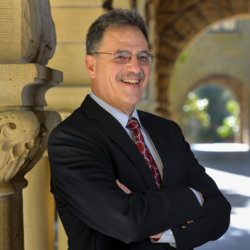
Portrait of Hartosh Singh Bal

Hartosh Singh Bal is the executive editor at The Caravan. He formerly worked as the magazine’s political editor for ten years. He has worked with a number of Indian publications including The Indian Express and Tehelka. He has written for The New York Times, The Guardian, and Foreign Affairs, and is the author of Waters Close Over Us: A Journey Along the Narmada and the co-author of A Certain Ambiguity, A Mathematical Novel. He is trained as an engineer and a mathematician.


Portrait of Kalyani Chadha

Kalyani Chadha is an associate professor of journalism at Northwestern University's Medill School for Journalism, Media, and Integrated Marketing Communications. Her research is primarily centered around the examination of journalistic practice as well as the societal implications of new media technologies in varied contexts. Informed by critical and sociological theorizing, her scholarship is international in its orientation, with a particular emphasis on journalism-related developments in India and media globalization in Asia. Her recent work focuses on the implications of the rise of right-wing media in India. Additionally, she is also co-editing a collection on journalism and precarity.

Chadha’s work has appeared in a variety of journals such as Journalism Studies, Journalism Practice, Digital Journalism, Journal of Media Ethics, the International Journal of Communication and Media, Culture and Society, as well as several edited anthologies and encyclopedias. Chadha currently serves on the editorial boards of Journalism Practice and Digital Journalism and is vice-head of AEJMC’s Mass Communication and Society Division.

Prior to joining Medill, Chadha was on the faculty of the University of Maryland’s Merrill College of Journalism. While at Maryland, she directed the Media, Self and Society program, a living-learning community for academically talented undergraduates and was awarded the Annual Undergraduate Studies Teaching Award in 2015.

Larry Diamond headshot

Larry Diamond is the William L. Clayton Senior Fellow at the Hoover Institution, the Mosbacher Senior Fellow in Global Democracy at the Freeman Spogli Institute for International Studies (FSI), and a Bass University Fellow in Undergraduate Education at Stanford University. He is also professor by courtesy of Political Science and Sociology at Stanford. He leads the Hoover Institution’s programs on China’s Global Sharp Power and on Taiwan in the Indo-Pacific Region. At FSI, he leads the Program on Arab Reform and Democracy, based at the Center on Democracy, Development and the Rule of Law, which he directed for more than six years. He also co-leads with (Eileen Donahoe) the Global Digital Policy Incubator, based at FSI’s Cyber Policy Center. He is the founding co-editor of the Journal of Democracy and also serves as senior consultant at the International Forum for Democratic Studies of the National Endowment for Democracy.

His research focuses on democratic trends and conditions around the world and on policies and reforms to defend and advance democracy. His most recent book, Ill Winds: Saving Democracy from Russian Rage, Chinese Ambition, and American Complacency, analyzes the challenges confronting liberal democracy in the United States and around the world at this potential “hinge in history,” and offers an agenda for strengthening and defending democracy at home and abroad. He has also edited or coedited more than forty books on democratic development around the world.

Moderator


Raju Narisetti

Raju Narisetti is a career journalist who has served as publisher at McKinsey Global Publishing, McKinsey and Company since 2020. From July 2018 to December 2019, he was a professor of professional practice and director of the Knight-Bagehot Fellowship Program at the Columbia University Graduate School of Journalism. His journalism career spans roles with major international news and media organizations. At The Wall Street Journal, he served as a reporter, deputy national editor of the American edition, managing editor and editor of The Wall Street Journal Europe, and deputy managing editor in charge of Europe, the Middle East, and Africa for the newspaper's global brand. He was also managing editor, digital at The Washington Post, and senior vice president of growth and strategy for News Corporation. He was the founding editor of Mint and facilitated the publication's emergence as India's second-largest business newspaper.    

Narisetti photo by Niccolò Caranti, CC BY-SA 4.0.

Raju Narisetti


Stanford Alumni Center, Fisher Conference Center
Lane/Lyons/Lodato Room
326 Galvez St., Stanford, CA

Hartosh Singh Bal
Kalyani Chadha
Larry Diamond
Panel Discussions
Date Label
Authors
News Type
Commentary
Date
Paragraphs

This essay was first published by Foreign Affairs magazine.


Over the last two decades, successive U.S. administrations have sought to cultivate a strong relationship with India. As the world’s most populous country, with the second-largest military and the fifth-largest economy, India is uniquely positioned to counterbalance China’s growing influence in the Indo-Pacific. Yet as Ashley Tellis argued in Foreign Affairs earlier this month (”America’s Bad Bet on India,” May 1, 2023), there are limits to what the United States can expect from this partnership. New Delhi will not rush to Washington’s side in the event of a security crisis with Beijing unless its interests are directly threatened. India is not a sheriff of the international order or a treaty-bound defender of U.S. interests. In Tellis’s view, this makes the U.S. policy of cultivating India as a strategic partner a bad bet.

But India has never pretended it would behave like a treaty ally of the United States, and the occasional divergences between New Delhi’s and Washington’s interests do not mean the U.S. investment in the bilateral relationship is misguided. Still, the United States can make an even better bet when it comes to its partnership with India—one that is more realistic than a security pact and that still contributes meaningfully to advancing shared interests in a free and open Indo-Pacific.


Sign up for APARC newsletters to receive our scholar's commentary and analysis >


 Imperfect Alignment

India has a long history of conflict and competition with China. After a shocking and bruising war in 1962, the two countries waited until the 1980s to restore diplomatic relations, gingerly constructing a modus vivendi through a series of confidence-building agreements. Their border remains unsettled and the scene of sporadic local crises; a major Chinese incursion in 2020 into territory claimed by India led to a deadly skirmish and another rupture in bilateral relations. India also remains anxious about China’s creeping influence across the Indian Ocean region, where China plans to maintain a permanent military presence supported by a growing network of bases.

But India’s competition with China does not mean it is perfectly aligned with the United States. Although India accelerated military cooperation with the United States after the 2020 crisis, the two countries remain divided over key regional and global issues. On Afghanistan, for instance, India was dismayed by the precipitous U.S. withdrawal, while in Myanmar it continues to engage the military junta that Washington has shunned. The differences between New Delhi and Washington have been displayed most prominently during the war in Ukraine, where India has been reluctant to alienate Russia, on which it depends for military equipment and cheap energy.

Even when it comes to their shared interest in preventing Chinese hegemony in Asia, India and the United States sometimes have differing policy priorities and use different tactics to achieve similar goals. For New Delhi, Chinese moves on the Himalayan land border naturally matter more than a potential attack on Taiwan. And as India’s foreign minister has conceded, the country’s options against its much stronger rival are limited.

These differences do not make India an outlier among Washington’s global partners. Even formal U.S. allies—those with written security guarantees—do not see eye to eye with Washington when it comes to China. Japan’s vaunted new security strategy, including its bold plan for a long-range missile arsenal, is designed for self-defense, not as a playbook for assisting the United States in the event of a conflict over Taiwan or some other crisis. France’s President Emmanuel Macron has gone further and preemptively ruled out acting in support of the “U.S. agenda” in a Taiwan crisis. The United States would be churlish to expect India to unreservedly take its side during a global crisis when it cannot expect the same from long-standing allies bound to it by formal treaties.

If Washington cannot expect India to contribute military forces in a crisis, then what is the point of the U.S.-Indian partnership? The answer involves accepting that partnerships are about more than planning for emergencies. U.S. policymakers recognize that a stronger India, one that is more capable of resisting Chinese coercion, serves U.S. interests. But in the absence of clearly defined policy goals, India’s cheerleaders in Washington may conjure up unrealistic expectations—and then sour on the partnership when they learn India will not fight for Taiwan. In addition to bolstering economic and interpersonal ties between the two countries, Washington should focus on deepening cooperation in three specific arenas in which India is willing and potentially able to assist it in constraining Beijing’s expansive regional ambitions.

Sea Change

India has a formidable geographic advantage in the Indo-Pacific region. It dominates trans–Indian Ocean trade and energy routes, which Chinese strategists recognize as a vexing vulnerability. As the Chinese navy quickly builds its strategic presence in the Indian Ocean, India and the United States risk finding their interests routinely contested in the region. Greater Chinese influence over regional countries’ security policies would give it greater leverage to coerce them, predatorily extract resources, or limit others’ freedom of navigation. In times of crisis, a larger Chinese naval presence, supplemented with more port access, would give Beijing greater capacity to strike or intimidate Indian forces.

The United States, therefore, should support India’s efforts to extend its military posture in the Indian Ocean region, including by upgrading its base infrastructure and military equipment. It should also support new training procedures among partners—especially among U.S., Indian, and Australian forces—that make use of each other’s facilities. India’s military already dominates the northeastern Indian Ocean and the western approaches to the Strait of Malacca, a vital shipping lane that links the Indian and Pacific Oceans. With upgraded basing in the Andaman and Nicobar Islands archipelago and bases on Australia’s northern coast and Cocos (Keeling) Islands, the three partners would be better able to host reciprocal visits and, eventually, rotational deployments.

The United States should invest in further combined military activities with India in the eastern Indian Ocean, bolstering both countries’ capacities to track and, if necessary, target Chinese forces. This would not only be a boon for Indian security, but it would also change the strategic geometry of the Indo-Pacific. A more potent force within striking distance of Chinese facilities and assets in the South China Sea would severely complicate Beijing’s military planning for any invasion of Taiwan. All aspects of the Indo-Pacific theater are ultimately linked: by taking prudent steps to improve their military posture in the Indian Ocean, India and the United States can also create a ripple of added deterrence in the western Pacific. In this way, India can shape Beijing’s decision-making even without engaging directly in a Taiwan conflict.

Finding a Niche

The United States should also support India’s development of high-value niche military capabilities. The wholesale recapitalization of India’s ponderously large military is overdue, but replacing legacy Russian-origin kit with U.S. equipment would be slow and prohibitively expensive. The Indian military, however, does not need to replace its entire order of battle with new planes, tanks, and ships. Indeed, India’s recent acquisition of a relatively small numbers of U.S.-made transport aircraft has given it a new and valuable ability to execute high-profile humanitarian relief and evacuation operations in Turkey and Sudan.

As the war in Ukraine has shown, excellence in a niche military capability can have a disproportionate effect on the battlefield. Military modernization need not produce a standardized, wholly modern military, especially when resources are scarce. Instead, it could produce pockets of highly effective capabilities, using high technology in highly specialized roles. Rather than trying to match China’s comprehensive and resource-intensive modernization, India should tailor its capabilities to repel specific types of enemy aggression in specific theaters—and Washington should help it do so.

India faces threats from China’s incremental encroachment on its land border and gradually expanding presence in the Indian Ocean. To deter a fait accompli land grab in the Himalayas, India needs high-quality intelligence and surveillance capabilities to detect incursions early and highly mobile reaction teams to deny them. To deter a roving group of maritime militia vessels or submarines, India would benefit from long-range and long-endurance undersea drones and more air-launched antiship missiles. These are just two examples of how the United States can bolster India’s military capabilities without selling it a large fleet of F-35 fighter jets. Selective projects for weapons co-development or transfers can have outsize deterrent or combat effect. And over time, they can become a key pillar of the U.S. and Indian militaries’ ability to operate together.

A Diplomatic Offensive

Finally, the United States should enhance its diplomatic coordination with India. Washington and New Delhi exert diplomatic influence over different groups of countries. In some cases, this has been a source of frustration or friction—most acutely, when India’s relationship with Russia prompted it to take a more neutral position on the Ukraine war. But in the context of strategic competition with China, such links may prove to be an asset that Washington lacks.

India brings well-developed connections to countries of the global South, mostly in Africa and Asia. Washington has traditionally neglected such states, in part because policies tailored to win influence in the developing world are not vote-winners in the United States. In today’s Washington, bellicosity on China is a much surer way to win and remain in office than investing in renewable-energy infrastructure in Africa. In contrast, India’s influence is based on a historical legacy of diplomatic leadership, diaspora links, and a perceived affinity of interests. And it is devoid of Washington’s alien-sounding appeals to a global contest between democracy and autocracy.

Whereas China has built global influence through its investment largesse, India retains a reservoir of goodwill based on its legacy as a champion of the globe’s marginalized countries. Last week, Papua New Guinea’s prime minister, James Marape, welcomed Indian Prime Minister Narendra Modi for a visit by declaring, in an echo of the Cold War’s Non-Aligned Movement, “We need a third big voice” on the global stage. In return, he pledged, the island nations of the Pacific “will rally behind your leadership.” This is far from a zero-sum contest for favor; the United States signed a new security agreement with Papua New Guinea at the same time. But India can often serve as an indispensable bridge—a “South Western power”—to build consensus when U.S. demands may be polarizing. At the G-20 summit in Bali last November, Indian diplomats cobbled together a joint communiqué mildly rebuking Russia’s invasion of Ukraine, declaring that this is “not an era of war.” The term, which was coined by Modi months earlier, certainly does not represent a full-throated denunciation of Moscow’s actions—but it was better than nothing.

In times of crisis, U.S. and Indian diplomatic messaging may not be identical—but it can be complementary. A coordinated diplomatic campaign that includes India would extend a political consensus against Chinese coercion far beyond what Washington could achieve alone.

A Better Bet

In the coming years, India will play a bigger role in containing China’s growing power—but on its own terms. As Tellis rightly notes, New Delhi’s limited power and its strategic priorities mean that it will refuse to be an appendage of the United States. But it will remain a potent competitor to China as it seeks to safeguard its interests and reduce its vulnerabilities. If Washington works with New Delhi to reinforce their combined posture in the Indian Ocean, helps it develop niche military capabilities, and collaborates with it in rallying international support for a free and open Indo-Pacific, the U.S.-Indian partnership can play a pivotal role in regional security.

Together, these efforts represent a better bet on India. They would make a meaningful contribution to preserving the status quo without requiring far-fetched obligations from India to support the United States in a crisis. They are also politically and practically feasible because they would not represent an offensive threat to China or require India to dramatically increase the resources it devotes to defense. But they do require that Washington and New Delhi share in-depth assessments on Chinese intent and capability, and periodically review how they could collectively meet new strategic challenges. U.S. defense policy toward India should focus on jump-starting these tasks, rather than preparing for coalition warfare.

India is an intrinsically important country that is rapidly strengthening its ties to the United States. The growing flows of trade, investment, and people between the two countries has obvious mutual benefits. But the defense relationship often suffers wild oscillations of expectations. As Washington feverishly convinces itself that it is hurtling toward war with China, some will be tempted to judge allies and partners based on their willingness to sacrifice blood and treasure in a potential conflict over Taiwan. But Washington will find itself very lonely if it imposes such an unreasonable litmus test. It has a chance, instead, to build a more realistic and resilient strategic partnership with India that will outlast a Taiwan crisis—and may even help to deter one.

Read More

Vinod Khosla and Laura Stone
News

Vinod Khosla Shares Insights Into Future of Sino-American Tech Competition

Emergent technology such as artificial intelligence will shape the next several decades. APARC’s China Program spoke with Vinod Khosla, co-founder of SUN Microsystems, who believes that the rapid pace of technological advance is bringing us to the brink of a "tech war."
Vinod Khosla Shares Insights Into Future of Sino-American Tech Competition
Logo of The Caravan with text "Winner, 2023 Shorenstein Journalism Award"
News

India’s Caravan Magazine Wins 2023 Shorenstein Journalism Award

Sponsored by Stanford’s Shorenstein Asia-Pacific Research Center, the 22nd annual Shorenstein Journalism Award honors The Caravan, India’s reputed long-form narrative journalism magazine of politics and culture, for its steadfast coverage that champions accountability and media independence in the face of India's democratic backsliding.
India’s Caravan Magazine Wins 2023 Shorenstein Journalism Award
Ryosei Kokubun, the Spring 2023 Payne Distinguished Fellow and panelists Oriana Skylar Mastro, Kiyoteru Tsutsui, and Thomas Fingar
News

Payne Distinguished Fellow Explores Japan’s Deterrence Dilemma Amid Rising Asia-Pacific Security Threats

As Japan looks to increase military spending to levels not seen since World War II, Professor Ryosei Kokubun, the Spring 2023 Payne Distinguished Fellow, considers Tokyo’s security policy and how it can balance deterrence and interaction to maintain stability in the era of U.S.-China strategic competition.
Payne Distinguished Fellow Explores Japan’s Deterrence Dilemma Amid Rising Asia-Pacific Security Threats
Hero Image
Soldiers from the Madras Sappers of the Indian Army participate in a full dress rehearsal parade to celebrate India’s Republic Day on January 24, 2023 in Bengaluru, India. Abhishek Chinnappa/ Getty Images
All News button
1
Subtitle

How Washington and New Delhi Can Balance a Rising China

Authors
Noa Ronkin
News Type
News
Date
Paragraphs

Stanford University’s Walter H. Shorenstein Asia-Pacific Research Center (APARC) announced today, May 3, World Press Freedom Day, that The Caravan, India’s premier magazine of long-form narrative journalism, is the winner of the 2023 Shorenstein Journalism Award. The Caravan publishes reportage, commentary, investigations, and literary criticism spanning the worlds of politics, culture, and society. It is known for its exhaustive stories that shine a light on India’s socio-political realities and for demonstrating an unflinching commitment to truth-telling amid India’s democratic erosion and declining press freedom. APARC will present the Shorenstein Award to Hartosh Singh Bal, the magazine’s executive editor, at a public ceremony and discussion at Stanford in autumn quarter 2023.

Sponsored by APARC, the annual Shorenstein Award honors journalists or journalism organizations that have contributed significantly to a greater understanding of Asia through outstanding reporting on critical issues affecting the region. Emulating this purpose, The Caravan and its editors and reporters have unveiled groundbreaking stories with persistence and courage, taking on issues such as the persecution of religious minorities in India, farmer suicides, labor rights, and the increasing threats to democratic institutions.

The Caravan was established in 1940 as a general-interest magazine and was favored by India’s intellectual elites before it shut down in 1988. Two decades later, it was relaunched by Anant Nath, the grandson of the founder of its publisher, Delhi Press, as a monthly on politics, art, and culture, drawing inspiration from long-form American magazines at a time when long-form journalism was relatively unheard of in India. In addition to a monthly print issue, the magazine presents web-exclusive stories on its website, as well as multimedia features and a Hindi section. Since the rise of the Bharatiya Janata Party under Narendra Modi in national politics, The Caravan has garnered recognition for its political investigations and daring commentary.

The Caravan's team of intrepid editors and reporters demonstrates the highest level of journalistic integrity and excellence. It is our honor to recognize it with the 2023 Shorenstein Journalism Award.
Gi-Wook Shin
Director, APARC

The decline in press freedom and growing threats to democratic institutions in India under the Modi government have been well-documented. “The violence against journalists, the politically partisan media, and the concentration of media ownership all demonstrate that press freedom is in crisis in ‘the world’s largest democracy,’” according to Reporters Without Borders’ latest World Press Freedom Index, which ranks India as “one of the world’s most dangerous countries for the media.” In this environment, where media organizations are under constant pressure to toe the government line and critical reporting is often suppressed, The Caravan has kept its commitment to editorial independence. Facing violence, sedition charges, and imprisonment, the magazine has continued to produce investigations exposing Hindu extremist terrorism, political assassinations, gender and caste inequality, and ethnic violence against the Muslim minority in the country.

“Despite intimidation and harassment from the government, The Caravan continues to document the erosion of democracy and human rights in India,” said Stanford sociologist Gi-Wook Shin, the William J. Perry Professor of Contemporary Korea and the director of APARC. “The magazine’s team of intrepid editors and reporters demonstrates the highest level of journalistic integrity and excellence. It is our honor to recognize it with the 2023 Shorenstein Journalism Award.”

Portrait of Hartosh Singh Bal
Hartosh Singh Bal

The award also recognizes the contributions of The Caravan’s executive editor, Hartosh Singh Bal, who formerly worked as the magazine’s political editor for ten years. An incisive commentator on Indian politics and society, Bal was the political editor of Open magazine and has worked with The Indian Express, Tehelka and Mail Today. He is the author of Waters Close Over Us, A Journey Along the Narmada and co-author of A Certain Ambiguity, A Mathematical Novel. He is trained as an engineer and a mathematician.

Presented annually by APARC, the Shorenstein Award, which carries a $10,000 cash prize, honors the legacy of APARC’s benefactor, Mr. Walter H. Shorenstein, and his twin passions for promoting excellence in journalism and understanding of Asia. The selection committee for the award, which chose The Caravan as the 2023 honoree, noted that the magazine and Mr. Bal have led the last bastion of bold investigative journalism in India under extreme duress.

The committee members are William Dobson, co-editor of the Journal of Democracy; Anna Fifield, Asia-Pacific Editor of The Washington Post and recipient of the 2018 Shorenstein Journalism Award; James Hamilton, Hearst Professor of Communication, chair of the Department of Communication, and director of the Stanford Journalism Program, Stanford University; Louisa Lim, senior lecturer, Audio-Visual Journalism Culture and Communication, University of Melbourne; and Raju Narisetti, Publisher, McKinsey Global Publishing, McKinsey and Company.

Twenty-one journalists previously received the Shorenstein award, including most recently Emily Feng, NPR’s Beijing correspondent; Swe Win, editor-in-chief of the independent Burmese news organization Myanmar Now; Tom Wright, co-author of the bestseller Billion Dollar Whale and a veteran Asia reporter; and Nobel Laureate Maria Ressa, CEO and executive editor of the Philippines-based news organization Rappler.

Information about the 2023 Shorenstein Journalism Award ceremony and panel discussion featuring Mr. Bal will be forthcoming in the fall quarter.

Read More

Emily Feng speaking at the 2022 Shorenstein Journalism Award.
News

Shorenstein Journalism Award Winner Emily Feng Examines the Consequences of China’s Information Void and the Future of China Reporting

The challenges facing foreign correspondents in China are forcing the West to reconfigure its understanding of the country, creating opacity that breeds suspicion and mistrust, says Emily Feng, NPR’s Beijing correspondent and recipient of the 2022 Shorenstein Journalism Award. But China seems to want the appearance of foreign media coverage without getting to the heart of what happens in the country.
Shorenstein Journalism Award Winner Emily Feng Examines the Consequences of China’s Information Void and the Future of China Reporting
Submarine with operators standing atop tower.
Commentary

What the Quad Could Learn From AUKUS

If the four powers decide to adopt a greater security role, they should go beyond empty signals.
What the Quad Could Learn From AUKUS
South Korean President Yoon Suk-yeol speaks during the 104th Independence Movement Day ceremony on March 01, 2023 in Seoul, South Korea.
Commentary

Gray Skies Ahead

Prospects for Korea’s Democracy
Gray Skies Ahead
Hero Image
Logo of The Caravan with text "Winner, 2023 Shorenstein Journalism Award"
All News button
1
Subtitle

Sponsored by Stanford’s Shorenstein Asia-Pacific Research Center, the 22nd annual Shorenstein Journalism Award honors The Caravan, India’s reputed long-form narrative journalism magazine of politics and culture, for its steadfast coverage that champions accountability and media independence in the face of India's democratic backsliding.

-
U.S. and India flags with event title "U.S.-India Relations in 2030: The Future of Strategic Technologies”

This event has reached capacity. Registration is now closed.

The sixth installment in a special event series on the occasion of Shorenstein APARC's 40th Anniversary, "Asia in 2030, APARC@40"


How will key technologies shape India’s strategic capacity, and its relationship with the United States, in the years ahead? The Indian and U.S. governments both recognize that critical and emerging technologies, from artificial intelligence to synthetic biology, are increasingly vital for national security and global influence. Effectively harnessing those technologies requires the right mix of state policy, academic research, and private-sector-led innovation. The South Asia Initiative will bring together leading researchers and practitioners to better understand India’s approach to applying technologies in its defense industrial base, and the evolution of US-India cooperation on strategic technologies. 

An initial keynote session will provide an overview of key trends and policy priorities for India and the bilateral relationship. Two research presentations will then examine how India has sought to develop its defense industrial sector, with new partnerships and private sector involvement, and an aspirational goal of indigenization; and how the major powers including the US and India have traditionally managed the expectations, conditions, and anticipated returns of high technology transfers. The research will be critically evaluated by dedicated discussants who draw from both academic scholarship and personal experience as technology-sector practitioners. By the end of the workshop, we anticipate setting a rigorous baseline appreciation of how India and the US-India relationship approach the strategic applications of key technologies, and generating important new cues for future research and public-private collaboration. 


Agenda

8:30-9 a.m. ~ Coffee and Tea Served


9-9:30 a.m. 

Welcome Remarks

Gi-Wook Shin
Director of Shorenstein APARC and the Korea Program
William J. Perry Professor of Contemporary Korea
Professor of Sociology
Senior Fellow at the Freeman Spogli Institute for International Studies
Stanford University

Arzan Tarapore
South Asia Research Scholar at Shorenstein APARC 
Stanford University


9:30-10:30 a.m.

Keynote Conversation: "The Future of U.S.-India Tech Cooperation" (virtual)

Rudra Chaudhuri
Director of Carnegie India
Carnegie Endowment for International Peace

Helena Fu
Director for Technology Alliances
National Security Council


10:30-10:45 a.m. ~ Coffee and Tea Break


10:45 a.m.-12:15 p.m. 

Panel: "The Evolution of India's Defense Industrial Base: Trends, Trade-offs, and Technologies"

Speaker

Joshua T. White
Professor of the Practice of International Affairs
Johns Hopkins School of Advanced International Studies

Discussants

S. Paul Kapur
Professor at the U.S. Naval Postgraduate School 
Visiting Scholar at the Hoover Institution 
Stanford University

Sarah Hess
West Coast Director
Silicon Valley Defense Group


12:15-1 p.m. ~ Lunch Break


1-2:30 p.m. 

Panel: Transactionalism Revisited? Unpacking the Logic of Major Power Technology Transfers"

Speaker

Sameer Lalwani
Senior Expert of South Asia Programs
U.S. Institute of Peace

Discussants

Julie George
Predoctoral Fellow at the Center for International Security and Cooperation
Stanford University

Akhil Iyer
Vice President
Shield Capital


2:30-3 p.m. 

Concluding Discussion


Image
Headshot for Rudra Chaudhuri

Rudra Chaudhuri is the director of Carnegie India. His research focuses on the increasingly important role of emerging technologies in diplomacy and statecraft. He works on comparative models of cross-border data flows and how data is treated by national capitals in inter-state and multilateral negotiations. He is the author of Forged in Crisis: India and the United States Since 1947, and the editor of War and Peace in Contemporary India. He is also a visiting professor of international relations at Ashoka University, New Delhi. From 2009 to 2022 (on leave since 2018), Rudra was  a lecturer and a senior lecturer at the Department of War Studies at King’s College London, and in 2012, he established the U.K. Foreign, Commonwealth, and Development Office's (FCDO) Diplomatic Academy for South Asia at King’s College London. He holds a PhD in War Studies from King’s College London.

Image
Headshot for Helena Fu

Helena Fu, Director for Technology Alliances, National Security Council

Image
Headshot for Joshua White

Joshua T. White is Professor of the Practice of International Affairs at The Johns Hopkins University School of Advanced International Studies (SAIS) in Washington, and serves as the inaugural director of the U.S.-ASEAN and U.S.-Pacific Institutes for Rising Leaders. He is also a Nonresident Fellow in the Foreign Policy program at The Brookings Institution. He previously served at the White House as Senior Advisor & Director for South Asian Affairs at the National Security Council, where he staffed the President and National Security Advisor on the full range of South Asia policy issues pertaining to India, Pakistan, Afghanistan, and the Indian subcontinent, and led efforts to integrate U.S. government policy planning across South and East Asia. Prior to joining the White House, White was a Senior Associate and Co-Director of the South Asia program at The Stimson Center and, previously, Senior Advisor for Asian and Pacific Security Affairs in the Office of the Secretary of Defense, a position he held in conjunction with an International Affairs Fellowship from the Council on Foreign Relations. White has written on a wide range of issues including defense policy, electoral politics, Islamic movements, and nuclear deterrence.

Image
Headshot for Sameer Lalwani

Sameer Lalwani is a senior expert on South Asia at the U.S. Institute of Peace. He is also a non-resident senior fellow with the Center for Strategic and Budgetary Assessments. Lalwani’s research interests include nuclear deterrence, interstate rivalry, alliances, crisis behavior, counterinsurgency and Indo-Pacific security. He has conducted field research in India, Pakistan and Sri Lanka. Lalwani is a term member with the Council on Foreign Relations, and a contributing editor to War on the Rocks. He earned his doctorate in political science from the Massachusetts Institute of Technology and was an affiliate of the MIT Security Studies Program. From 2015 to 2022, Lalwani was a senior fellow for Asia strategy and the director of the South Asia program at the Stimson Center. He was also as an adjunct professor at George Washington University’s Elliott School of International Affairs and a Stanton nuclear security postdoctoral fellow at the RAND Corporation.

Rudra Chaudhuri
Helena Fu
Joshua White
Sameer Lalwani
Authors
Gi-Wook Shin
News Type
Commentary
Date
Paragraphs

This essay originally appeared in Korean on January 3 in Sindonga (New East Asia), Korea’s oldest monthly magazine (established 1931), as part of a monthly column, "Shin’s Reflections on Korea." Translated by Raymond Ha. A PDF version of this essay is also available to download


Kanwal Rekhi is regarded as a pioneer of the Indian diaspora in Silicon Valley. After studying at IIT Bombay, Rekhi completed his graduate studies at Michigan Tech and moved to San Jose in 1982, where he co-founded Excelan. The company went public on Nasdaq in 1987. It was the first time that immigrants from India had created a company and succeeded in listing it on a U.S. stock exchange.[1]

Since having found success as an entrepreneur, Rekhi has sought to give back to the diaspora community and his home country. In 1992, he co-founded The IndUS Entrepreneurs (TiE), a non-profit that supports Indian entrepreneurs seeking to create startups. Rekhi explained to me that “there were many young Indians who wanted to start businesses, but they lacked the know-how and the networks.” TiE was intended to fill that gap. Rekhi also made a sizable donation to his alma mater, and he has advised the Indian government on policy issues. Moreover, he has supported the work of various universities in the United States, including Stanford.

The Story of India’s Diaspora

Rekhi belonged to the first generation of Indian immigrants to establish a foothold in Silicon Valley. Countless others, including Google CEO Sundar Pichai, have since followed in his footsteps. Upon graduating from the Indian Institutes of Technology (IITs), these individuals pursued further studies in the United States, where they successfully created startups or climbed the ladder to become C-level executives at major companies. They also maintain and cultivate close ties with their home country. Indian immigrants have been integral to Silicon Valley’s explosive growth, and they are now also contributing to India’s rise as a major economic power. India has now overtaken the United Kingdom, its former colonial ruler, with the fifth-largest GDP in the world.

It would not be an exaggeration to say that the Indian diaspora now has greater influence and impact in Silicon Valley than the Chinese diaspora.
Gi-Wook Shin

The Indian diaspora has made its presence felt beyond the economic sector. Numerous graduates of the All India Institutes of Medical Sciences (AIIMS) practice medicine in the United States, and renowned scholars of Indian heritage serve on the faculty of elite American universities. For instance, Stanford selected Dr. Arun Majumdar to serve as the inaugural dean of the Doerr School of Sustainability, which opened its doors in the fall of 2022. Majumdar completed his undergraduate studies at IIT Bombay and obtained his PhD from UC Berkeley in 1989. His career has spanned the public and private sectors, and he now spearheads Stanford’s first new school in 70 years—an ambitious effort to “tackle urgent climate and sustainability challenges facing people and ecosystems worldwide.”[2] It would not be an exaggeration to say that the Indian diaspora now has greater influence and impact in Silicon Valley than the Chinese diaspora.

Moreover, India plays a central role in Washington’s Indo-Pacific Strategy, which has become the focal point of American foreign policy. New Delhi was the leader of the non-aligned movement during the Cold War, but it is now building closer ties with liberal democracies around the world. Unlike China, India is not locked in a strategic competition with the West. High English proficiency among Indians also facilitates relations and exchanges at all levels. It is also worth noting that there are now influential politicians of Indian heritage in major countries, including Kamala Harris in the United States and Rishi Sunak in the United Kingdom. India prides itself on being the most populous democracy in the world, and its stature in the international community is only likely to grow in the coming decades.

Despite these developments, Korean public sentiment toward India is largely negative. There is broad awareness of the legacy of historical figures like Mahatma Gandhi and cultural achievements such as the Taj Mahal. However, many Koreans still perceive India as a poor and chaotic country with rigid and obsolete customs, including the caste system. There are substantial cultural, social, and historical differences between Korea and India, but it is time for Korea to cast aside any prejudices and take a clear-eyed view of India. It is encouraging to see the Yoon Suk-Yeol administration stress in its recently announced Indo-Pacific Strategy that Korea “will advance [its] special strategic partnership with India, a leading regional partner with shared values.” The document also rightly notes the importance of “enhanced economic cooperation” between the two countries.[3]

[India’s] overseas diaspora also plays a unique role in catalyzing economic growth. Korea should learn from the successes of India’s diaspora and build closer ties with such networks.
Gi-Wook Shin

In this context, it is especially vital for Korea to pay attention to the rise of the Indian diaspora in the United States and beyond. They are a force to be reckoned with in the global market. Unlike the state-driven development models of East Asia, India has pursued a market-driven policy since liberalizing its economy in 1991. The country’s overseas diaspora also plays a unique role in catalyzing economic growth. Korea should learn from the successes of India’s diaspora and build closer ties with such networks.

The Rise of Japan, China, and India

Japan was the undisputed leader of the Asia-Pacific in the 1980s, and China has taken on this mantle since the dawn of the 21st century. As China closes its doors amidst its intensifying strategic competition with the United States, India is emerging as the new regional leader. A close examination of the rise of these three countries reveals crucial differences. The contributions of the overseas diaspora to economic development, as noted above, are a distinguishing factor.

Let us begin with Japan. Relying on a well-educated workforce and meticulous training within companies, Japan built upon proprietary technology from the West to achieve incremental innovation. Sony’s worldwide success in consumer electronics, for example, can be attributed to sophisticated engineering and attention to detail in product design, not to significant advancements in the underlying technologies. Furthermore, Japan took great advantage of short-term overseas training programs to learn and utilize advanced technologies to further its own economy. This strategy enabled Japan to increase its economic heft without suffering a “brain drain,” to the point of challenging U.S. dominance over the global economy in the 1980s. There were, however, disputes with the United States over intellectual property rights (IPR).

Throughout this process, Japan’s diaspora did not play a visible role. Many Japanese abroad had already assimilated into their countries of residence, and the few that contributed only provided low-skilled labor. Japanese Americans, for example, have largely assimilated into American society despite the traumatic experience of forced internment during World War II. Contact with their home country was fairly limited. Some Japanese immigrants who settled in South America later returned to Japan, but most of these returnees were low-skilled laborers. After experiencing hardships and discrimination, however, they went back to South America once again after the 2008 global financial crisis.

China took a different path. The Chinese diaspora has a long history centered on Southeast Asia, and its role in enabling China’s reform and opening by providing much-needed capital is well known. In the 1980s, China adopted an “open door” policy and enabled large numbers of students to study abroad. It also proactively pursued a policy of “brain circulation” by inviting these students to return to China and contribute their talents to the country’s development. No country has sent more students abroad than China. With rapid economic growth in the 2000s, over 80% of these students returned. These individuals are called haigui (sea turtles) in China.[4] In Beijing’s Zhongguancun, China’s Silicon Valley, there are a plethora of programs and facilities tailored to haigui. They have not only spearheaded China’s technological innovation, but also made important contributions to the economy, scientific research, and higher education.

China’s pursuit of “brain circulation” has seen some success, but it also created friction with the United States. After studying and gaining work experience in the United States, Chinese talent returned home and directed their know-how toward accelerating China’s rise. However, U.S. authorities began to suspect that China’s talent policy was being misused for industrial espionage, especially in advanced technologies. For example, the Pentagon stated in 2018 that China’s Thousand Talents Program was a “toolkit for foreign technology acquisition.” U.S. intelligence officials added that the program was “a key part of multi-pronged efforts to transfer, replicate and eventually overtake U.S. military and commercial technology.”[5]

India has taken yet another path, although it resembles China’s experience in some respects. Like China, India experienced an enormous brain drain. It is second only to China in the number of overseas students. In terms of highly skilled emigration, it has seen the largest outflow of any country. Unlike Chinese talent, Indian immigrants tended to settle down in host countries, where they have built successful careers. During the 1980s, over a third (37.5%) of IIT Bombay graduates went abroad, and 82% of these individuals stayed abroad.[6] Between 2004 and 2016, 30% of grantees in Optional Practical Training (OPT), a temporary employment visa for F-1 students in the United States, were students from India.[7] Many of these students arrived in America after receiving a rigorous education in STEM or medicine in India. Their native fluency in English is also an important asset. Since India itself is extremely diverse in terms of religion, ethnicity, and culture, prior experience with diverse settings also gives Indian students an advantage for studying and living in America.

Indian talent… abroad… create “brain linkages” through extensive interaction with their home country. They bring young talent from India to overseas universities and companies, support start-up entrepreneurs in India, and connect global companies to India's…high-quality workforce
Gi-Wook Shin

Even if Indian talent mostly stays abroad, they create “brain linkages” through extensive interaction with their home country. They bring young talent from India to overseas universities and companies, support start-up entrepreneurs in India, and connect global companies to India’s low-cost, high-quality workforce.

Immigrants from India make up the bulk of H-1B visa recipients in the United States. In fiscal year 2021, 74% consisted of Indian nationals.[8] Unicorn companies formed with diaspora support are appearing left and right in Bangalore, the hub for India’s high-tech industry. The total investment in Bangalore’s tech sector has jumped from $550 million in 2010 to $2 billion in 2017, spread across 6,000 start-ups.[9] This amount is projected to reach $30 billion by 2025.[10] Furthermore, unlike China, India is not currently engaged in disputes with the United States or other major economies over talent policy or IPR in advanced technologies.

Modi’s Visit to Silicon Valley

In 2015, India’s Prime Minister Narendra Modi spoke to a crowd of 20,000 at the Shark Tank in San Jose. Many in the diaspora community gathered for the occasion. Modi asserted that “what looks like brain drain is actually a brain deposit.”[11] He also met with leaders of the Indian diaspora during his visit, including Sundar Pichai (Google) and Satya Nadella (Microsoft), and secured support for the government’s “Digital India” initiative.[12] Naren Gupta, a member of India’s diaspora and the co-founder of Nexus Venture Partners, played an instrumental role in planning the visit. Modi’s tour of Silicon Valley encapsulated the power and influence of the Indian diaspora in America. It also revealed the strength of the brain linkages that the community had built with its home country.

The Indian diaspora is a force to be reckoned with in Silicon Valley. Of all engineering and tech start-ups formed in America by immigrants between 2006 and 2012, 33.2% were created by individuals of Indian origin.[13]This exceeds the total number of companies created by entrepreneurs from China, the United Kingdom, Canada, Germany, Israel, Russia, and Korea combined. Indian immigrants are also filling executive-level positions in major American IT companies. Those of Indian origin make up “just about 1% of the U.S. population and 6% of Silicon Valley’s workforce.”[14] However, they have an outsized impact. Immigrants from India to the United States tend to be highly educated, with over 70% possessing at least a bachelor’s degree.[15] This is markedly higher than the corresponding proportion for the U.S. population, which reached 37.9% in 2021.[16] Various factors help explain the Indian diaspora’s success in the United States: high levels of technical competence, a robust professional network, and strong communication skills based on native English fluency and familiarity with Western culture.

Moreover, Indian immigrants are very much willing to acquire citizenship in their host countries. In recent years, the number of Indian nationals who acquired U.S. citizenship through naturalization has been almost twice the number of Chinese nationals who were naturalized.[17] Indians reportedly do not have qualms about renouncing their Indian citizenship. Modi’s 2015 speech in San Jose, referenced above, clearly reflects how those in India view the overseas diaspora. Regardless of one’s citizenship or place of residence, there is a prevailing mentality of “once an Indian, always an Indian.” Leaders in India’s modern history, including Nehru and Gandhi, were also members of the diaspora. The tightly knit diaspora community gives rise to robust and mutually supportive professional networks, which helps elevate the presence of Indian immigrants in host countries. This is certainly the case in the United States.

Unlike China, India does not have a government-led policy to attract talent. Nevertheless, members of the overseas diaspora can temporarily return to India and engage in various activities with relative ease. There are also institutions that facilitate such endeavors. One is the legal status of “non-resident Indians” that is given to Indians who reside overseas for over 183 days in a given year. This status accords short-term diaspora visitors with legal and economic rights similar to that of resident citizens.

Since 2003, the Indian government has also officially recognized Non-Resident Indian Day (Pravasi Bharatiya Divas) on January 9, which commemorates the day of Gandhi’s return from South Africa to Mumbai in 1915. To mark the occasion, the Indian government presents an award to individuals in the diaspora community who have made significant achievements in their respective fields. Past recipients include Satya Nadella and Kalpana Chawla, an Indian American astronaut who posthumously received the award as the first person of Indian origin to go to space. By taking such steps, the Indian government promotes and strengthens solidarity between India and its diaspora, no matter where its members reside.

The New Argonauts

Members of the Indian diaspora are actively building ties to their home country. In 2021, they sent $87 billion in remittances to India. China’s diaspora came second with $53 billion.[18] This includes money earned by Indian immigrants in the United States, China, and other countries. Overseas Indians in the business sector not only invest in start-ups and real estate in India, but also give policy recommendations to their home government and provide support for higher education. They also organized charity fundraisers to assist COVID-19 response and recovery efforts, responding to the devastation that the pandemic wreaked across the country. According to my own analysis, 42% of 97 major Indian diaspora organizations in the United States maintain close ties with India. As a whole, they are even more active than Chinese diaspora organizations.

The IndUS Entrepreneurs (TiE), founded in Silicon Valley, is one of the best examples. It was established in 1992 with the goal of facilitating networking between entrepreneurs from South Asia, providing mentoring for the next generation, and incubating and investing in start-ups. As of 2020, TiE had 61 branches across 14 countries, with 20 offices in the United States and 23 in India, and boasted a membership of 15,000. To date, it has supported around 10,000 start-ups founded by entrepreneurs of Indian origin. The total valuation of these start-ups is approximately $200 billion. With offices in Mumbai, Bangalore, and Chennai, TiE has acted as a conduit for successful Indian businesspeople in Silicon Valley to interact with their home country. These individuals emphasized the importance of entrepreneurship to youth in India. They acted as role models, mentors, and investors at a time when there was little support to be found elsewhere. TiE continues to serve as a vital link between Silicon Valley and India.

The American Association of Physicians of Indian Origin (AAPI), founded in 1982, plays an essential role in creating brain linkages in the field of medicine. AAPI has 80,000 doctors and 40,000 students, residents, and fellows as members. It fosters closer ties between its members and pursues opportunities for cooperation with Indian medical schools. Since 2007, it has hosted an annual global healthcare summit in India. AAPI also operates 19 clinics across India and established a charitable foundation to provide medical relief. During the height of COVID-19, AAPI sent medical supplies and held various activities to help India overcome the pandemic. It is said that those in the diaspora community view such actions as a responsibility, not just as a charitable activity.

Furthermore, the Indian diaspora is heavily engaged in supporting higher education back home. Consider IIT Kharagpur, which opened its doors in 1951. Vinod Gupta graduated from this school, found success in the United States, and helped launch the Vinod Gupta School of Management at his alma mater in 1993. Arjun Malhotra, another IIT Kharagpur graduate, was involved in the creation of the G. S. Sanyal School of Telecommunications and the M. N. Faruqui Innovation Centre. In another example, leaders from the diaspora community joined forces in 2014 to establish Ashoka University, a private school modeled after American liberal arts colleges, a rarity in a higher education landscape dominated by public universities. Ashok Trivedi, one of the school’s founders, earned his bachelor’s and master’s at the University of Delhi before pursuing an MBA at Ohio University and subsequently co-founding IGATE, an IT services company. As these cases illustrate, leaders in the Indian diaspora community donate to their alma maters and even create new schools altogether. They also facilitate academic exchanges between prominent U.S. and Indian universities, including student exchange programs.

AnnaLee Saxenian, a professor at UC Berkeley’s School of Information, has referred to these immigrant entrepreneurs who maintain ties with their home country after building successful careers overseas as the “new argonauts.” Just like the Argonauts of Greek mythology who set sail across the Mediterranean in search of the Golden Fleece, these individuals have crossed oceans aboard their own Argo to seek success in the 21st century. Kanwal Rekhi emphasized to me that “the diaspora led India’s independence movement in the past, but now it is playing an important role for India’s economy.”

India lags far behind China in… national power, [but] has a much younger population and its rate of economic growth will likely exceed China’s for the foreseeable future. India is the only country [whose] supply of highly skilled labor in the tech sector exceeds domestic demand.
Gi-Wook Shin

Will India Surpass China?

In a previous essay in this series, I argued that “China will not surpass the United States in our time.”[19] We could ask, in a similar fashion, whether India could overtake China in the future. While there are significant challenges on the road ahead, India could become a formidable competitor for China if current trends continue. At present, India lags far behind China in terms of overall national power. India has a much younger population, however, and its rate of economic growth will likely exceed China’s for the foreseeable future. India is the only country where the supply of highly skilled labor in the technology sector exceeds domestic demand. In addition to IITs and AIIMS, there are excellent engineering and medical schools across all regions of India. These institutions are an important source of talent for the global economy.

China is gradually closing its doors as the Sino-U.S. competition intensifies. In terms of its economy and trade relations, it is at risk of falling into a quagmire similar to Japan’s “Two Lost Decades.” Beijing must also contend with strong anti-China sentiment, especially among developed countries, and it must overcome the challenges that come with diplomatic isolation. India does not face the same geopolitical risks. As one of the four corners of the Quad, New Delhi is pursuing a foreign policy that includes various forms of cooperation with countries across the Indo-Pacific region in both economic and security issues. At the same time, the power and influence of the Indian diaspora only continues to grow. In an October 2022 op-ed on the subject, Tyler Cowen notes that Rishi Sunak is only one example of a much wider phenomenon. “It is now impossible to deny what has been evident for some while,” he says. “Indian talent is revolutionizing the Western world far more than had been expected 10 or 15 years ago.”[20]

To be sure, India faces a complex set of challenges at home. Poverty remains widespread, along with ethnic and religious conflicts. The Modi government has taken an authoritarian turn in its pursuit of Hindu nationalism, and there are serious governance challenges associated with corruption in both government and the private sector. Ajantha Subramanian, a professor of anthropology at Harvard, has pointed out that successful members of the Indian diaspora in Silicon Valley largely come from the upper castes. Some criticize these individuals for amplifying caste-based inequality overseas through their exclusive professional networks in ways that are no longer as prevalent in India. While accounting for such criticism and taking an honest look at India’s domestic issues, it would also be unwise for Korea to discount the importance of India and its diaspora in the coming decades.

To Become Asia’s Small Giant

A few years ago, I gave a lecture on Korea’s development at a leading university in New Delhi. I was deeply impressed by the passion and enthusiasm of the students who came to listen. There is growing interest in India about the story of Korea’s remarkable economic development, as well as K-pop and Korean dramas. Unfortunately, this has not always been reciprocated. In 2017, a bar in Itaewon, an area of Seoul famous for its multicultural atmosphere, drew controversy when it denied entry to a student from India.[21] In 2009, in another incident, an Indian research professor and a female Korean companion were harassed by a fellow bus passenger.[22] Such inexcusable acts of discrimination are ultimately rooted in prejudices and negative stereotypes about India in Korea.

Building closer ties with India is a foreign policy imperative under the Yoon administration’s Indo-Pacific Strategy, but high-level policies alone will not be enough. It is vital for civil society to enhance mutual understanding by strengthening… people-to-people ties.
Gi-Wook Shin

I once had the opportunity to speak to Indian engineers who work in Korea. They told me that while they enjoyed working for Korean companies such as Samsung or SK, prejudice among Koreans toward India often made life difficult.[23] Building closer ties with India is a foreign policy imperative under the Yoon administration’s Indo-Pacific Strategy, but high-level policies alone will not be enough. It is vital for civil society to enhance mutual understanding between Korea and India by expanding cultural exchanges and strengthening people-to-people ties. The private sector also has an important role to play, as they can augment efforts by government-run Korean cultural centers and public entities such as the Korea Foundation.[24]

Indian talent could play an important role in Korea’s economic future. Korea will soon face significant labor shortages due to “a crisis on three fronts: a plummeting birth rate, an aging population, and a serious brain drain.”[25]On the other hand, India has a relatively young population and a large, highly skilled workforce. According to one estimate, “India is projected to have a skilled-labour surplus of around 245.3 million workers by 2030.”[26] There is also a natural synergy between the two economies. India excels in software, whereas Korea’s strength lies in hardware. If China provided opportunities for Korean manufacturers to export intermediate goods, India could provide the talent that Korea’s economy will increasingly rely on in the coming years.

Cowen argues that “India is by far the world’s most significant source of undiscovered and undervalued talent.” Anyone who is concerned about “the future of their own nation” in today’s world, he adds, “really should be focusing on India.”[27] Korea would do well to heed his advice.

While seeking ways to strengthen cooperation with India, Korea should also strive to build closer ties with the Indian diaspora and its networks. East Asian countries, including Korea, adopted a state-centered model of economic development. India took a different path, and its overseas diaspora has played a unique role in driving India’s economic growth. The ever-increasing influence of India’s new argonauts extends beyond Silicon Valley. Australia and Germany have sought to attract Indian talents and draw on their professional networks. The same goes for countries in the Middle East, including the United Arab Emirates. Korea could form closer partnerships with the extensive global networks of India’s diaspora community as it seeks to attract Indian talent and pursue new economic opportunities.

During the Cold War, Korea looked east toward the United States and Japan. As the Iron Curtain fell in the 1980s, Korea pursued Nordpolitik by normalizing ties with Moscow and Beijing. It is now time for Korea to look south. Even as Southeast Asia grows in importance, Korea must keep its eyes fixed on India. If Korea aims to become Asia’s small giant in this turbulent era, it would be wise for Seoul to use prevailing geopolitical currents to its favor.


[1]This essay draws on ongoing research by the author, which will be published in an upcoming book tentatively titled Talent Giants in the Asia-Pacific Century: A Comparative Analysis of Japan, Australia, China, and India.

[2] Amy Adams and Anneke Cole, “Stanford Doerr School of Sustainability, University’s First New School in 70 Years, Will Accelerate Solutions to Global Climate Crisis,” Stanford University, May 4, 2022, https://news.stanford.edu/2022/05/04/stanford-doerr-school-sustainability-universitys-first-new-school-70-years-will-accelerate-solutions-global-climate-crisis/.

[3] Republic of Korea Ministry of Foreign Affairs, Strategy for a Free, Peaceful, and Prosperous Indo-Pacific Region, December 28, 2022, 17, https://www.mofa.go.kr/eng/brd/m_5676/view.do?seq=322133.

[4] The terms “sea turtle” () and “return from overseas” () are homophones for each other.

[5] Anthony Capaccio, “U.S. Faces ‘Unprecedented Threat’ from China on Tech Takeover,” Bloomberg, June 22, 2018, https://www.bloomberg.com/news/articles/2018-06-22/china-s-thousand-talents-called-key-in-seizing-u-s-expertise.

[6] S. P. Sukhatme and I. Mahadevan, Pilot Study on Magnitude and Nature of the Brain-Drain of Graduates of the Indian Institute of Technology, Bombay (Bombay: Indian Institute of Technology, 1987).

[7] Neil G. Ruiz and Abby Budiman, “Number of Foreign College Students Staying and Working in U.S. After Graduation Surges,” Pew Research Center, May 10, 2018, https://www.pewresearch.org/global/2018/05/10/number-of-foreign-college-students-staying-and-working-in-u-s-after-graduation-surges/.

[8] Lubna Kably, “Indians Bagged 3.01 Lakh H-1B Visas During Fiscal 2021–74% of the Total,” Times of India, April 14, 2022, https://timesofindia.indiatimes.com/world/us/indians-bagged-3-01-lakh-h-1b-visas-during-fiscal-2021-74-of-the-total/articleshow/90845244.cms.

[9] Indian Tech Start-Up Ecosystem: Approaching Escape Velocity (Noida: NASSCOM-Zinnov, 2018), 6; Manish Singh, “Indian Tech Startups Raised a Record$14.5B in 2019,” TechCrunch, December 30, 2019, https://techcrunch.com/2019/12/29/indian-tech-startups-funding-amount-2019/.

[10] “HNIs to Invest $30 Billion in Indian Tech Startups By 2025: Report,” Economic Times, June 17, 2021, https://economictimes.indiatimes.com/tech/startups/hnis-to-invest-30-billion-in-indian-tech-startups-by-2025-report/articleshow/83607846.cms.

[11] “Narendra Modi’s Speech at the Shark Tank, Silicon Valley As It Happened,” Wall Street Journal, September 27, 2015, https://www.wsj.com/articles/BL-IRTB-30506.

[12] Chidanand Rajghatta, “Silicon Valley Stars Sign on to PM Modi’s ‘Digital India’ Vision,” Times of India, September 27, 2015, https://timesofindia.indiatimes.com/tech-news/silicon-valley-stars-sign-on-to-pm-modis-digital-india-vision/articleshow/49129060.cms.

[13] Vivek Wadhwa, AnnaLee Saxenian, and F. Daniel Siciliano, Then and Now: America’s New Immigrant Entrepreneurs, Part VII (Ewing Marion Kauffman Foundation, 2012), 3, https://www.kauffman.org/wp-content/uploads/2019/12/Then_and_now_americas_new_immigrant_entrepreneurs.pdf.

[14] Nikhil Inamdar and Aparna Alluri, “Parag Agrawal: Why Indian-born CEOs dominate Silicon Valley,” BBC News, December 4, 2021, https://www.bbc.com/news/world-asia-india-59457015.

[15] Jens Manuel Krogstad and Jynnah Radford, “Education Levels of U.S. Immigrants Are on the Rise,” Pew Research Center, September 14, 2018, https://www.pewresearch.org/fact-tank/2018/09/14/education-levels-of-u-s-immigrants-are-on-the-rise/.

[16] United States Census Bureau, “Census Bureau Releases New Education Attainment Data,” February 24, 2022, https://www.census.gov/newsroom/press-releases/2022/educational-attainment.html.

[17] U.S. Department of Homeland Security, 2020 Yearbook of Immigration Statistics (Washington, D.C.: U.S. Department of Homeland Security, Office of Immigration Statistics, 2022), 53–54, https://www.dhs.gov/immigration-statistics/yearbook/2020.

[18] “With $87 Billion, India Top Remittance Recipient in 2021: UN Report,” Economic Times, July 20, 2022, https://economictimes.indiatimes.com/nri/invest/with-87-billion-india-top-remittance-recipient-in-2021-un-report/articleshow/93012012.cms.

[19] Gi-Wook Shin, “Walking a Tightrope,” Shorenstein APARC, November 16, 2022, https://aparc.fsi.stanford.edu/korea/news/walking-tightrope.

[20] Tyler Cowen, “Rishi Sunak Shows the Growing Influence of Indian Talent in the West,” Bloomberg, October 28, 2022, https://www.bloomberg.com/opinion/articles/2022-10-28/rishi-sunak-shows-growing-influence-of-indian-talent-in-west.

[21] Ock Hyun-ju, “Itaewon Bar Accused of Discriminating Against Indian,” Korean Herald, June 7, 2017, https://www.koreaherald.com/view.php?ud=20170607000796.

[22] Park Si-soo, “Indian Accuses Korean of Racial Discrimination,” Korea Times, August 3, 2009, http://www.koreatimes.co.kr/www/news/nation/2009/08/117_49537.html; Paul Kerry and Matthew Lamers, “Setting a Precedent on Racism,” Korea Herald, March 30, 2010, https://www.koreaherald.com/view.php?ud=20091106000044.

[23] Gi-Wook Shin and Joon Nak Choi, Global Talent: Skilled Labor as Social Capital in Korea (Stanford University Press, 2015).

[24] For more information about the Korea Foundation, see the organization’s “About Us” page at https://www.kf.or.kr/kfEng/cm/cntnts/cntntsView2.do?mi=2126.

[25] Gi-Wook Shin, “Demographic Headwinds,” Shorenstein APARC, December 15, 2022, https://aparc.fsi.stanford.edu/news/demographic-headwinds.

[26] “India to Have Talent Surplus of 245 Million Workers by 2030: Study,” Economic Times, May 7, 2018, https://economictimes.indiatimes.com/news/economy/indicators/india-to-have-talent-surplus-of-245-million-workers-by-2030-study/articleshow/64064096.cms.

[27] Cowen, “Rishi Sunak Shows the Growing Influence of Indian Talent in the West.”

DOWNLOAD A PDF VERSION OF THIS ESSAY

Read More

Two elderly male South Korean job seekers fill out job applications at an elderly persons' job fair in Seoul, South Korea.
Commentary

Demographic Headwinds

Can Korea Avoid Japan’s Lost Decade?
Demographic Headwinds
South Korean President Yoon Suk-yeol speaks on the government supplementary budget at the National Assembly on May 16, 2022 in Seoul.
Commentary

Beyond Representation: How Diversity Can Unleash Korea’s Innovation

A social and corporate culture that values and enforces conformity surely cannot be a wellspring of creativity and innovation. Korean society must find a new source of vitality. Enhancing diversity to stimulate innovation and change could be the answer.
Beyond Representation: How Diversity Can Unleash Korea’s Innovation
World leaders gather at The Quad summit in Tokyo
News

India’s Strategic Balancing Act: The Quad as a Vehicle for Zone Balancing

In a new International Affairs article, APARC South Asia Research Scholar Arzan Tarapore introduces the concept of zone balancing, applies the theory to explain India’s embrace of the Quad, and identifies some of the minilateral partnership’s strategic limitations.
India’s Strategic Balancing Act: The Quad as a Vehicle for Zone Balancing
Hero Image
The IndUS Entrepreneurs (TiE) co-founder Kanwal Rekhi speaks in an office, next to a shelf of books.
The IndUS Entrepreneurs (TiE) co-founder Kanwal Rekhi speaks in the documentary "Brain Bridges," produced by Stanford University senior Dexter Sterling Simpson ’21.
Dexter Sterling Simpson / "Brain Bridges"
All News button
1
Subtitle

Opportunities for Korea-India Relations

Paragraphs

Shorenstein APARC's annual report for the academic year 2020-21 is now available.

Learn about the research, publications, and events produced by the Center and its programs over the last academic year. Read the feature sections, which look at APARC's research on democratic decline in South Korea, the continuing crisis in Myanmar, and U.S.-China tensions; learn about the research our postdoctoral fellows engaged in; and catch up on the Center's policy work, education initiatives, and policy outreach. Download your copy or browse below:

All Publications button
1
Publication Type
Annual Reports
Publication Date
Graphics and text about Nov 14 webinar, "India and the United States: Overcoming the Russian Hurdle"

1700-1800 Palo Alto, 14 November 2022
0900-1000 Singapore, 15 November 2022

This event is OFF THE RECORD.

US-India relations appeared to hit a plateau in 2022. The two countries’ different responses to the Russian invasion of Ukraine exposed the depth of India’s long-standing defense dependence on Russia. That lingering relationship still inhibits the current-day US-India security partnership. How can the United States and India work to surmount this hurdle? This webinar presents research-in-progress by Erin Mello, a visiting scholar at APARC. It examines the impediments to deepening the US-India defense relationship, and each side’s current strategic priorities; and offers policy recommendations, at both the strategic and operational levels, to help offset India’s dependence on Russia.

Panelists

Image
Square photo portrait of Erin Mello
Erin Mello is a Visiting Scholar for the 2022-2023 fall quarter at the Walter H. Shorenstein Asia-Pacific Research Center (APARC) at Stanford University. Mello currently serves as an analyst for the United States Indo-Pacific Command, and is a member of the Hawaii Air National Guard. While at APARC, Mello is conducting research on building integrated deterrence in the Indo-Pacific, examining barriers to U.S.-India security cooperation, and how to overcome them.

Image
Square photo portrait of S. Paul Kapur
S. Paul Kapur is a professor in the Department of National Security Affairs at the U.S. Naval Postgraduate School and a visiting fellow at Stanford University’s Hoover Institution. He recently served in government, in the State Department’s Policy Planning Staff, working on issues related to South and Central Asia, Indo-Pacific strategy, and U.S.-India relations. He the author of two books, and coauthor of a third, and also consults for the US Department of Defense. He earned his PhD from the University of Chicago.

Image
Square photo portrait of Yogesh Joshi
Yogesh Joshi is a Research Fellow at the Institute for South Asia Studies at the National University of Singapore. His research focuses on India’s foreign and security policy, and especially the evolution of India’s military power and its approach to the use of force. He is the coauthor of three books, including two on India’s nuclear forces, policy, and doctrine. Prior to joining NUS, he was a post-doctoral fellow at the Center for International Security and Cooperation at Stanford, and he holds a PhD from Jawaharlal Nehru University.

Moderator:

Image
Square headshot photograph of Arzan Tarapore
Arzan Tarapore is the South Asia research scholar at the Shorenstein Asia-Pacific Research Center at Stanford University, where he leads the South Asia Initiative. His research focuses on military strategy, Indian defense policy, and contemporary Indo-Pacific security issues. Prior to his scholarly career, he served as an analyst in the Australian Defence Department. Arzan holds a PhD from King’s College London.

Virtual via Zoom

Shorenstein APARC
Stanford University
Encina Hall, E301
Stanford,  CA  94305-6055

0
Visiting Scholar at APARC, 2022-23
Erin_Mello.jpg M.A.

Erin Mello joined the Walter H. Shorenstein Asia-Pacific Research Center (Shorenstein APARC) as Visiting Scholar for the 2022-2023 fall quarter. Mello currently serves as analyst for US INDOPACOM and USAF/Hawaii Air National Guard. While at APARC, Mello conducted research on building integrated deterrence in the Indo-Pacific, examining barriers to U.s.-India security cooperation and how to overcome theme.

S. Paul Kapur U.S. Naval Postgraduate school, Shorenstein Asia-Pacific Research Center, Stanford University Department of National Security Affairs and Senior Fellow
Yogesh Joshi Research Fellow, Institute for South Asia Studies National University of Singapore
News Feed Image
sai_nov14_india_us.jpg
-
Banner image for webinar "Asian Perspectives on the U.S.-China Competition: Assessing India's Role", featuring photo portraits of speakers Suhasini Haidar, Arvind Subramanian, and Arzan Tarapore

India’s role and prospects as a strategic competitor to China come down to two broad factors: its intent and its capacity. In the midst of intensifying U.S.-China competition, this webinar examines India’s intent and capacity to be an effective player in the Indo-Pacific’s strategic competition. On intent, India has steadfastly insisted since 2020 that the bilateral relationship cannot progress unless “peace and tranquility” are restored to their unsettled border; but in recent months India has also engaged diplomatically with China. On capacity, India’s economic performance lies at the core of its national power, but reforms have been haphazard and its recent economic performance has attracted doubts over its long-term potential. Has India struck the right balance of defiance and conciliation in its foreign policy? Is it doing enough to unleash its enormous economic and demographic potential? In both dimensions, how robust is – and should be – coordination with the United States?


Speakers:

Image
Square headshot of Ms Suhasini Haidar
Suhasini Haidar is the Diplomatic Editor of The Hindu, one of India’s oldest and most respected national dailies, and hosts a weekly online show "WorldView with Suhasini Haidar." Over the course of her 28-year reporting career, Suhasini has reported from across the region and the world, including Kashmir, where she was injured in a bomb blast. In India, she has covered the foreign affairs beat for over a decade, and was the recipient of the most prestigious Indian print journalism award, the Prem Bhatia. Suhasini began her career at CNN's United Nation's bureau in New York. She holds Bachelor's degree at Lady Shriram College in Delhi, and a Masters in Broadcast Journalism at Boston University

Image
Square headshot photo of Dr Arvind Subramanian
Arvind Subramanian is the Meera & Vikram Gandhi Fellow at the Saxena Center for Contemporary South Asia, and a Senior Fellow at the Watson Institute for International and Public Affairs, at Brown University. He was previously a professor of economics at Ashoka University, and the chief economic adviser to the Government of India between 2014 and 2018. Prior to that, he taught at Harvard, researched at the Peterson Institute for International Economics, and worked at the IMF and GATT. In 2018, Professor Subramanian published Of Counsel: The Challenges of the Modi-Jaitley Economy, reflecting on his time guiding India’s economy. He holds a DPhil from Oxford.

Moderator:

Image
Square headshot photograph of Arzan Tarapore
Arzan Tarapore is the South Asia research scholar at the Shorenstein Asia-Pacific Research Center at Stanford University, where he leads the South Asia Initiative. His research focuses on military strategy, Indian defense policy, and contemporary Indo-Pacific security issues. Prior to his scholarly career, he served as an analyst in the Australian Defence Department. Arzan holds a PhD from King’s College London.


This event is part of APARC’s 2022 Fall webinar series, Asian Perspectives on the U.S.-China Competition. 

Virtual via Zoom

Suhasini Haidar Diplomatic Editor The Hindu
Arvind Subramanian Meera & Vikram Gandhi Fellow Saxena Center for Contemporary South Asia
Seminars
News Feed Image
fall_2022_series_event_nov_1.png
Authors
News Type
Commentary
Date
Paragraphs

This commentary was first published in The Hindu.


India and China appear to be mending fences, gingerly. Relations have been icy since China launched multiple incursions across the Line of Actual Control (LAC) in eastern Ladakh in mid-2020. After years of inconclusive military talks and halting “disengagement” from sites of confrontation, the rivals made inching progress last week. They completed disengagement in an area known as Patrolling Point 15 (PP15), pulling troops back to create a demilitarized buffer zone, and their leaders met in person at the Shanghai Cooperation Organisation summit in Samarkand.

The tentative conciliatory steps between two nuclear-armed rivals are important; but they also carry risks, especially for India.


Sign up for APARC newsletters to receive our experts' commentary and analysis.


Despite the latest round of disengagement, the LAC remains deeply unsettled. Observers have pointed out that the buffer zones produced by the crisis inhibit India’s ability to patrol its own territory. And India and China have tacitly agreed to postpone settlement at two other confrontation sites, including a particularly tactically valuable area known as Depsang. The buffer zones and Depsang’s status both suit China’s objectives because they limit India’s military activities near the LAC, which analysts judge had partly motivated China’s initial incursions in 2020.

Even if future rounds of talks continue “disengagement and de-escalation,” and reduce those forces, returning to the status quo ante is now impossible.
Arzan Tarapore

Similarly, the military threat on the border is not only undiminished, but has actually grown over the course of the crisis. The reinforcements that each side deployed since 2020 have not returned to garrison. Even if future rounds of talks continue “disengagement and de-escalation,” and reduce those forces, returning to the status quo ante is now impossible. Both sides have raced to build permanent military infrastructure near the border, to help them surge forces to the border. Unsurprisingly, China seems to have outpaced India in building these roads, helipads, and communications nodes. 

China still claims Arunachal Pradesh as its own, and just as it has pressed its maritime claims once its growing capabilities permit, its military build-up may portend increasing pressure in coming years. Even without a deliberate attack, the increasing capabilities and mobility on both sides of the border means that a crisis can more quickly escalate to a large military stand-off anywhere on the LAC, and possibly even trigger a conflict.

Strategic implications
 

As vexatious as the tactical picture may be on the border, the strategic implications are more dire. For over two years, the land border has become the overwhelming priority in India’s military competition with China. India has reassigned one of three originally Pakistan-facing Strike Corps to the China front. It has deployed its newest artillery, fighter jets, and drones to the China border. 

With the border crisis, China seems to have successfully fixed India’s gaze to the land border, at the expense of that more consequential competition over the Indian Ocean.
Arzan Tarapore

At the same time, India has not significantly improved its capabilities or posture in the Indian Ocean region. Granted, a suite of impressive new capabilities — from cruise missile-equipped fighters and U.S.-origin naval helicopters to a brand-new indigenously-built aircraft carrier — are inching towards fruition. But these programmes were all initiated before the border crisis, when the Indian military was incrementally modernising its capabilities for the Indian Ocean.

Whether or not by design, this must delight Beijing. As India and China jostle for security and influence in Asia, the contest in the Indian Ocean will inevitably intensify. Their respective capabilities to project military force across the Ocean, to coerce or defend smaller regional States, and to establish an enduring strategic presence there, will determine the Asian balance of power. With the border crisis, China seems to have successfully fixed India’s gaze to the land border, at the expense of that more consequential competition over the Indian Ocean.

Disengagement at PP15, and especially continued “disengagement and de-escalation,” has the potential to ameliorate this strategic trap. A progressively less urgent threat will tempt New Delhi to de-emphasise military readiness on the border. This could be a golden opportunity for Indian planners to work towards long-term military modernisation and political influence across the Indian Ocean region. But a likelier and riskier outcome is that decision makers will prioritise other, more politically salient issues, like gaining quick wins in the campaign for Atmanirbharta in defence industry — which may come at the expense of modernisation.

Paradoxically, then, a cooling crisis on the border may teach India the wrong lesson: that the short-term expedient of greater readiness is enough to see off the Chinese threat. In fact, and especially for the strategic prize of the Indian Ocean region, the challenge posed by China cannot be met without long-term growth in Indian national capacity. That, in turn, requires coherent strategic assessments and the political will to balance readiness with modernisation.

Read More

hands on Iranian flag
News

Fixing Intelligence Failures: The Last Shah, the United States, and the View from Somewhere

Introducing a new conceptual framework for intelligence analysts, South Asia Research Scholar Arzan Tarapore offers an alternative to traditional intelligence-gathering axioms that helps explain the failure of U.S. assessments on the Iranian revolution and may benefit current policymakers in better leveraging intelligence to achieve strategic goals.
Fixing Intelligence Failures: The Last Shah, the United States, and the View from Somewhere
Kari Bingen discusses Indian national security
News

APARC’s South Asia Initiative Sets Forth a New Agenda for Indian Competitiveness

The inaugural conference of APARC's South Asia Initiative convened experts from the public and private sectors to examine the role that critical and emerging technologies can play in India’s national security and generate new pathways for U.S.-India cooperation.
APARC’s South Asia Initiative Sets Forth a New Agenda for Indian Competitiveness
Australian Navy submarine HMAS Sheean
Commentary

AUKUS Is Deeper Than Just Submarines

While the Australia-UK-US security pact shows a seriousness about naval power, the biggest story is the radical integration of leading-edge defense technology and a new approach to alliances, South Asia Research Scholar Arzan Tarapore argues.
AUKUS Is Deeper Than Just Submarines
Hero Image
Soldier of the Indian Army looks upwards Yawar Nazir/Getty
All News button
1
Subtitle

The tentative conciliatory steps between nuclear-armed rivals at the LAC are important, but come with riders for India.

-
Portraits of Sinderpal Singh and Arzan Tarapore with text about a webinar on the implications of the US-China competition for South Asia.

How is India posturing to manage strategic competition in the Indian Ocean? Thus far US-China security competition has been most acute in the western Pacific, but Chinese capability growth and strategic policies suggest that it also seeks a leading role in the northern Indian Ocean, in the not-too-distant future. India has traditionally considered itself the natural dominant power in the Indian Ocean region, but it has never faced the scale and types of competition that China will present. Does India have the wherewithal to maintain its leadership in the region? How will India work with the United States, bilaterally and through groupings such as the Quad, as they seek to maintain the status quo in the face of Chinese challenges? Is the Indian Ocean bound for militarized competition, or can India, the US, and China find a pathway to strategic coexistence?

Panelist

Image
Headshot photograph of Dr. Sinderpal Singh
Dr. Sinderpal Singh is Senior Fellow and Assistant Director, Institute of Defence and Strategic Studies, and concurrently Coordinator of the South Asia Programme at the S. Rajaratnam School of International Studies, Nanyang Technological University, Singapore. In the fall of 2022, he has been appointed as the McCain Fulbright Scholar in Residence at the United States Naval Academy. His research interests include the international relations of South Asia with a special focus on Indian foreign policy, the geopolitics of the Indian Ocean Region, and India-Southeast Asia relations. He is currently writing a book on India’s role in the Indian Ocean since 1992 and is the author of India in South Asia: Domestic Identity Politics and Foreign Policy from Nehru to the BJP (Routledge 2013). He received his Ph.D. from the University of Wales, Aberystwyth, his MA from the Australian National University, and his BA from the National University of Singapore.

Moderator

Image
Square headshot photograph of Arzan Tarapore
Dr. Arzan Tarapore is the South Asia research scholar at the Shorenstein Asia-Pacific Research Center at Stanford University, where he leads the newly-restarted South Asia Initiative. His research focuses on military strategy, Indian defense policy, and contemporary Indo-Pacific security issues. Prior to his scholarly career, he served as an analyst in the Australian Defence Department. Arzan holds a Ph.D. in war studies from King’s College London.

This webinar is co-sponsored by the Center for South Asia

Arzan Tarapore

Virtual via Zoom Webinar

Sinderpal Singh Institute of Defense and Strategic Studies, and South Asia Programme Senior Fellow, Assistant Director S. Rajaratnam School of International Studies, Nanyang Technological University
Subscribe to India